Centralia isn’t exactly a place most people would plan a vacation around. My friends and I ended up here because we were heading toward the Allegheny Mountains for a camping trip and thought it would make an interesting stop along the way. None of us expected much from it.
Surprisingly, we all agreed afterward that Centralia turned out to be one of the most memorable parts of the entire trip.
Centralia is an abandoned coal-mining town in Pennsylvania that became famous for the underground mine fire that has burned beneath the area for decades. The town has also become closely associated with Silent Hill, particularly the movie, which helped turn Centralia into something of a destination for people fascinated by abandoned places.
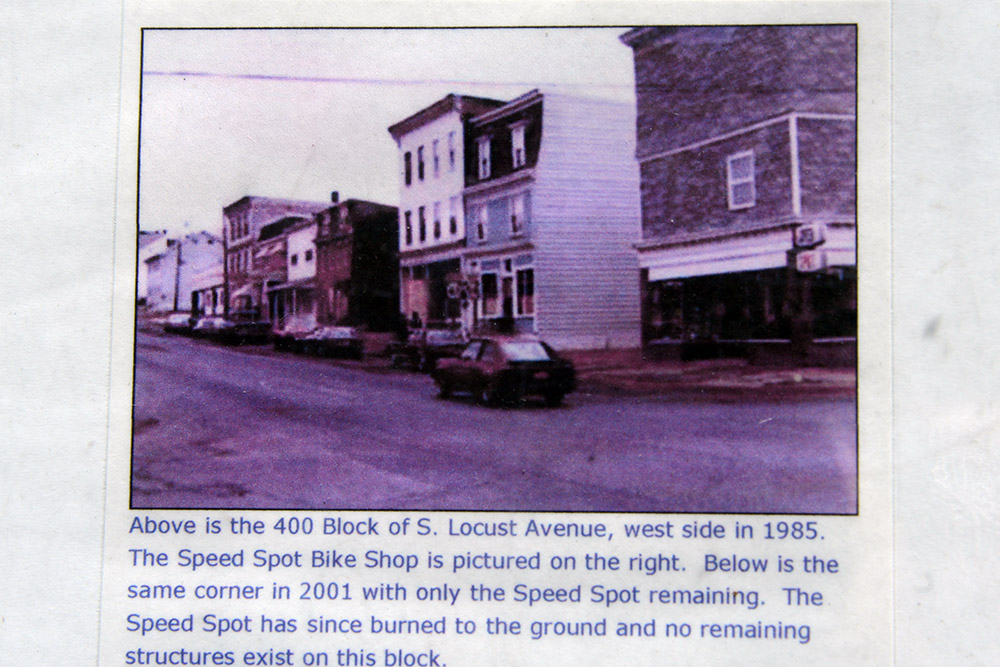
The Centralia Mine Fire
Centralia once looked like any other small coal-mining town in Pennsylvania. That changed after a fire began burning in the coal seams beneath the town in 1962.
Because the fire was deep underground, extinguishing it proved extremely difficult. It continued spreading beneath Centralia for years, eventually creating increasingly dangerous conditions above ground.
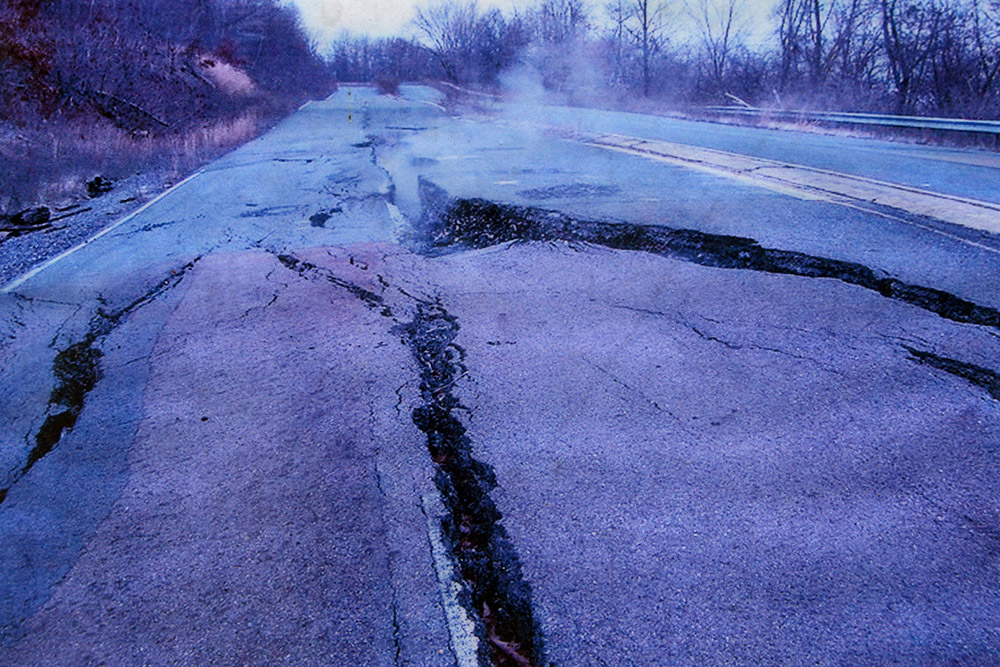
Cracks opened in roads, gases escaped from underground, and parts of the ground became unstable. The possibility that the earth itself could suddenly collapse made living here increasingly dangerous.
Eventually the government began relocating residents and demolishing buildings. Most people left, although a small number fought to remain.
Today, the Centralia that once existed is essentially gone.
The Church That Survived
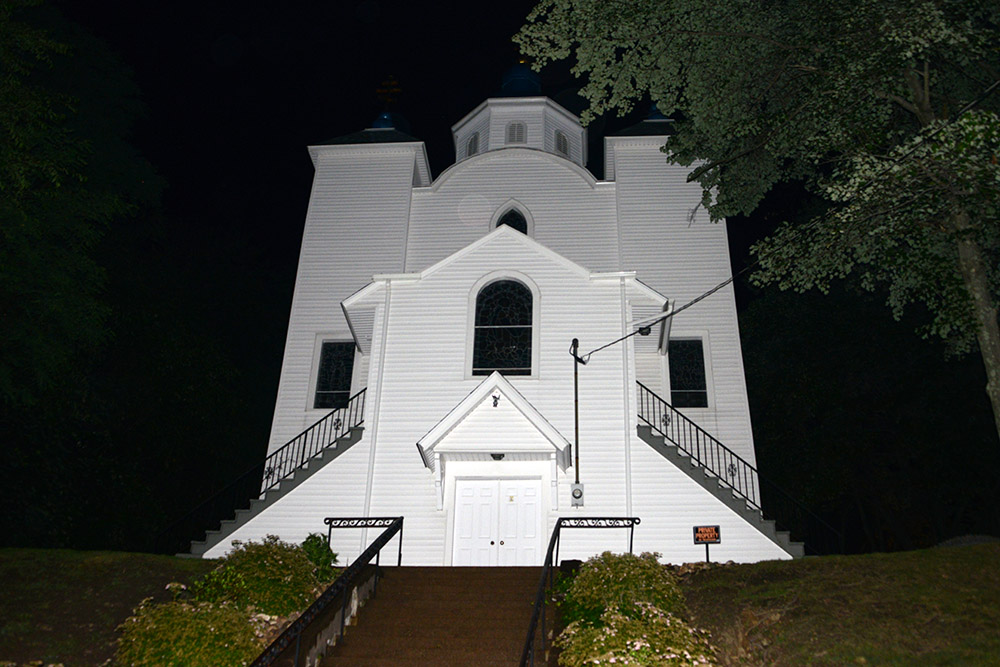
One of the most recognizable structures still standing near Centralia is Assumption of the Blessed Virgin Mary Church, built in 1911.
There’s an interesting coincidence here for anyone familiar with Silent Hill. In the movie, the church becomes a sanctuary from the evil consuming the town. In real life, a church also became one of the few major structures to survive while nearly everything around Centralia disappeared.
Entering Centralia After Midnight
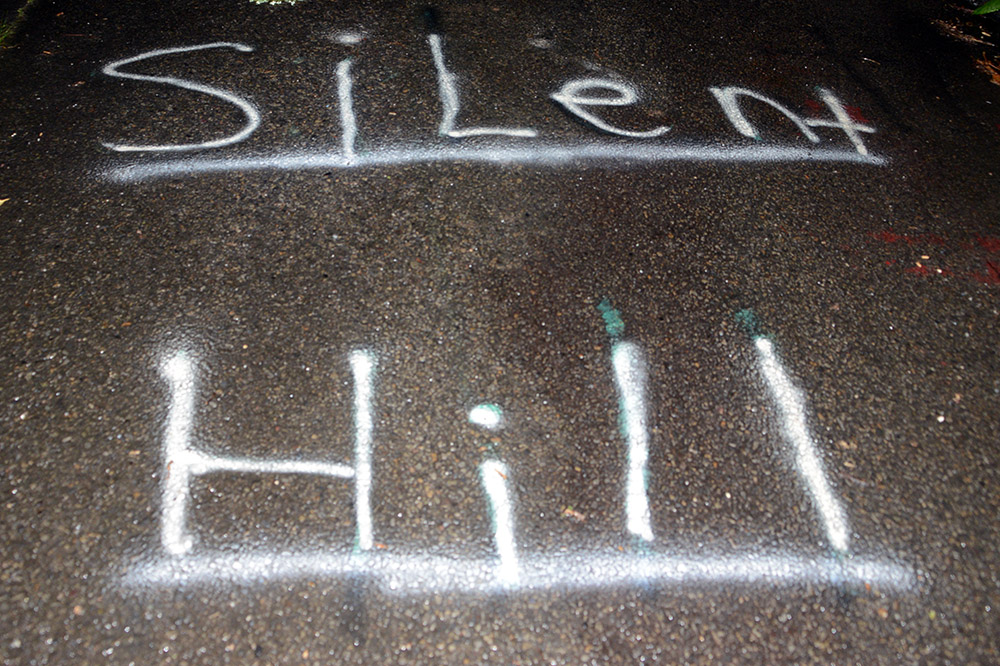
Knowing all of that backstory made the timing of our first visit either perfect or absolutely terrible.
We entered Centralia just after midnight.
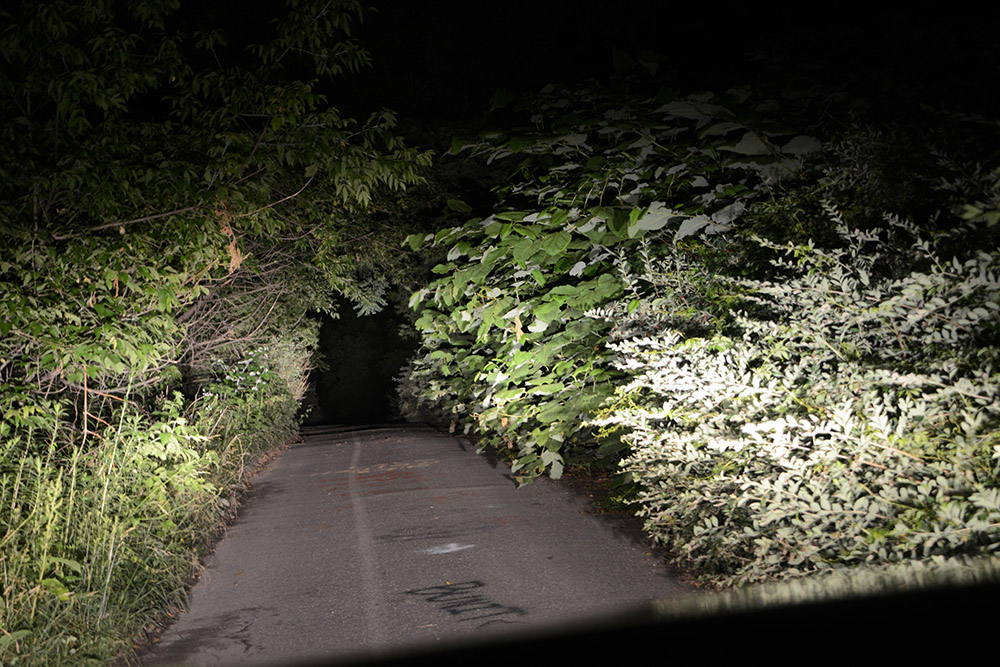
We drove along abandoned roads, some covered in graffiti and others being swallowed by vegetation. There were almost no buildings around us, and we weren’t even completely sure whether we were allowed to be there.
Then, less than fifteen minutes after we arrived, a siren started blaring.
It was incredibly loud.
For a second I thought I was imagining it. Then I wondered whether someone had spotted us and the siren meant we were trespassing and about to be arrested.
But there was another reason it was so unsettling.
In the Silent Hill movie, an air-raid siren warns everyone that the town is about to transform. Buildings decay, the ground splits apart, fire appears below, and everything goes to hell.
And now here we were, driving through the abandoned town that helped inspire the movie’s setting, after midnight, listening to a siren scream through the darkness.
The siren continued for several minutes before suddenly stopping.
We had absolutely no idea what had triggered it.
As we drove away from that part of town, we eventually encountered police and fire vehicles blocking a road and directing traffic around something. Whether that had anything to do with the siren, we never figured out.
I’ve backpacked through Congo and been hammered by hurricane-force winds high on Mount Everest, but somehow driving around an abandoned Pennsylvania mining town while that siren went off still ranks among my strangest travel experiences.
Finding Graffiti Highway
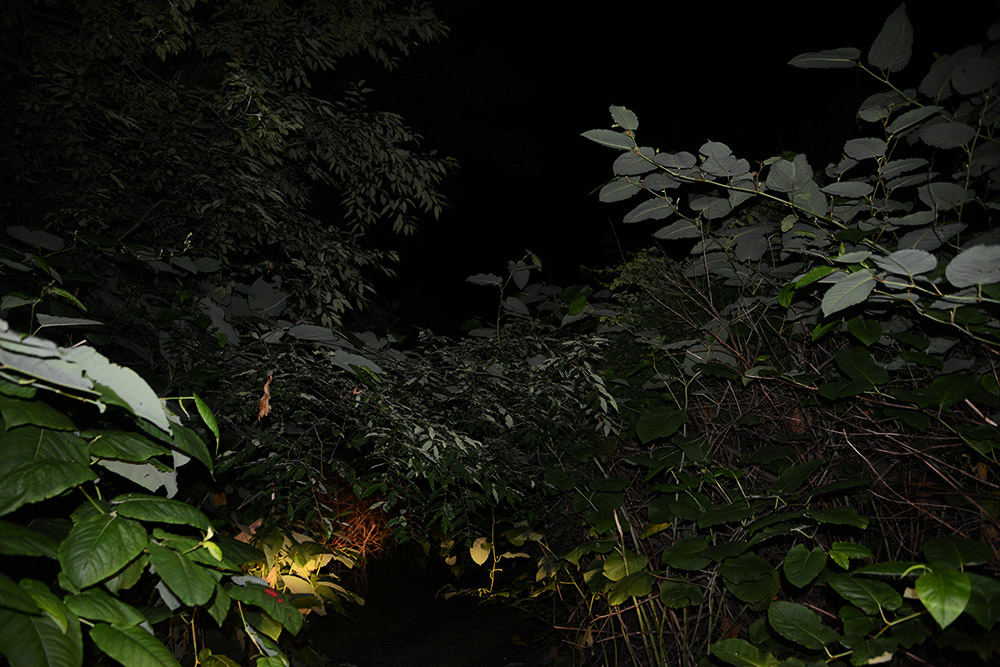
Before the siren interrupted everything, our main objective had been finding Centralia’s famous Graffiti Highway.
At first we thought we had found it. We hadn’t.
Once you reached the real Graffiti Highway, there was no mistaking it.
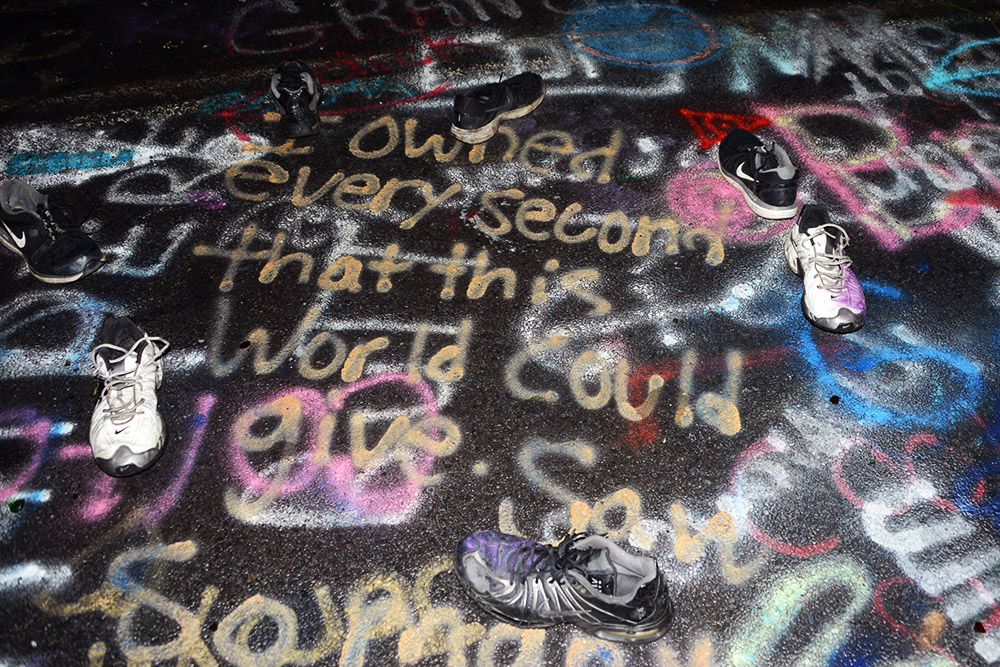
The abandoned highway was wide, with two lanes in each direction, and practically every piece of pavement was covered in graffiti.
Police appeared to be blocking the northern entrance that night, so we drove south and eventually found another way in. We still weren’t entirely sure whether we were supposed to be there.
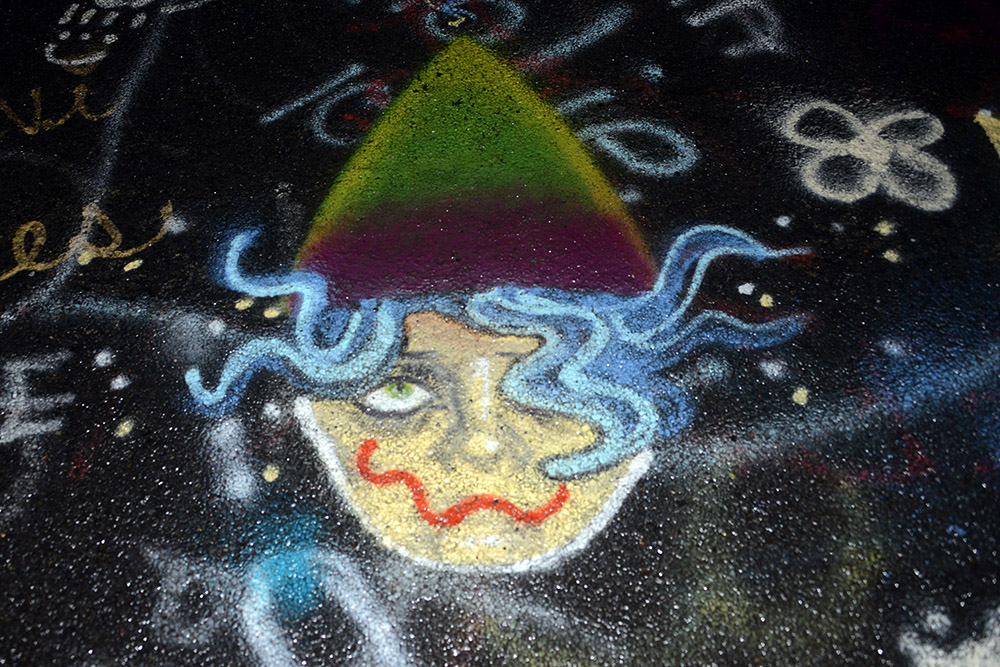
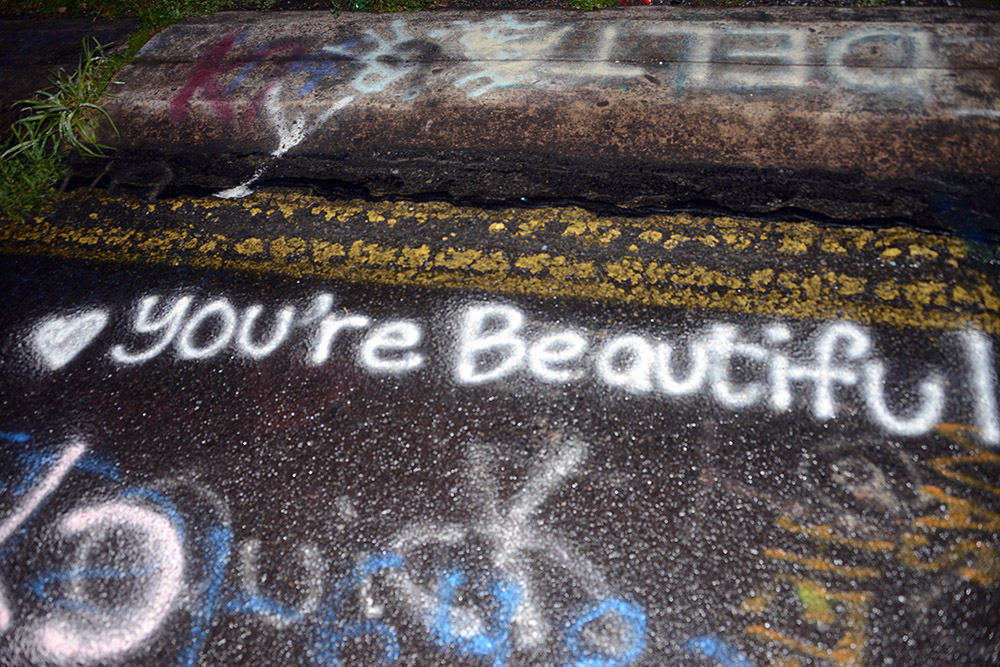
Most of what people had painted was random, vulgar, or completely meaningless. Every once in a while, though, you’d find something unexpectedly positive.
Beware of the Toads
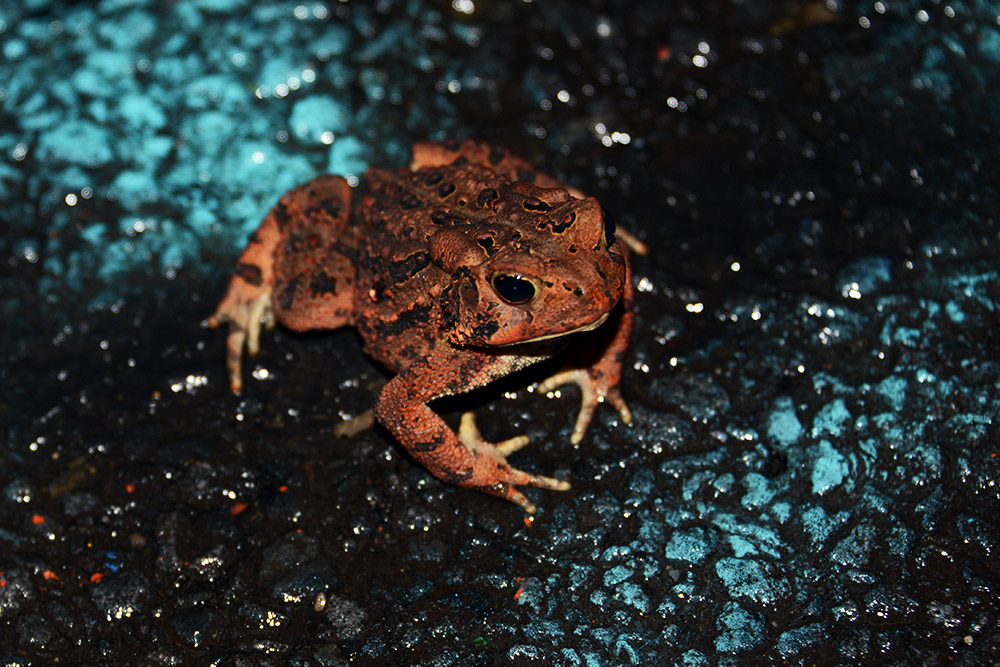
There was another nighttime hazard nobody had warned us about: toads.
They were everywhere.
Walking along an abandoned highway in complete darkness was already strange enough without constantly having to watch the ground because I nearly stepped on several of these guys.
Smoke on Graffiti Highway
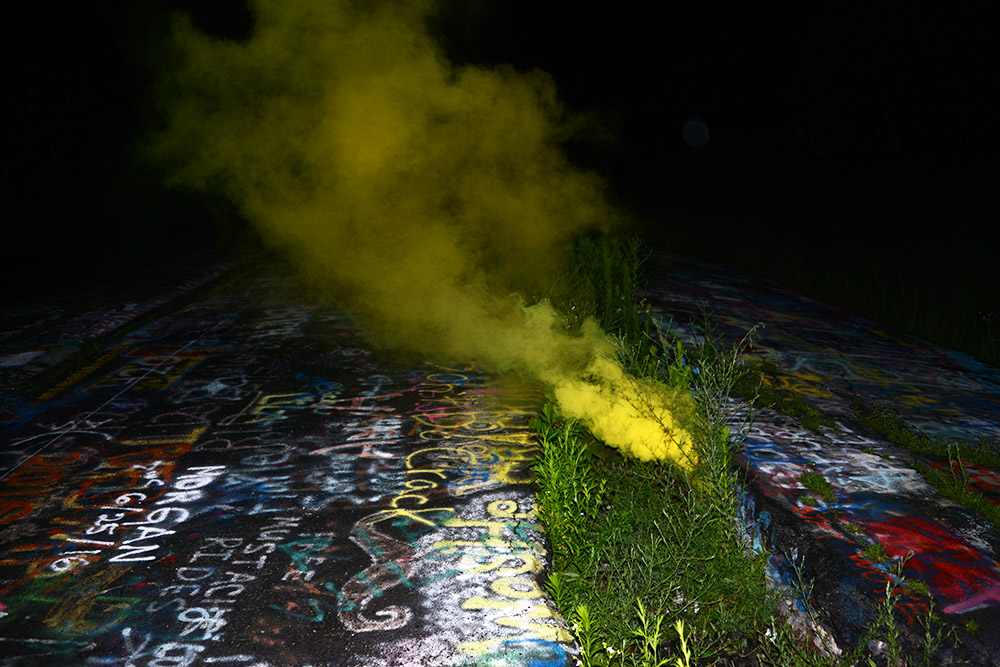
By the time I visited, seeing dramatic smoke pouring from cracks in the highway was much less common than it had been decades earlier.
Fortunately for the photographs — although perhaps not for historical accuracy — we happened to be visiting over the July Fourth weekend.
One of my friends had brought smoke bombs and fireworks, so we created some smoke of our own.
Centralia in Daylight
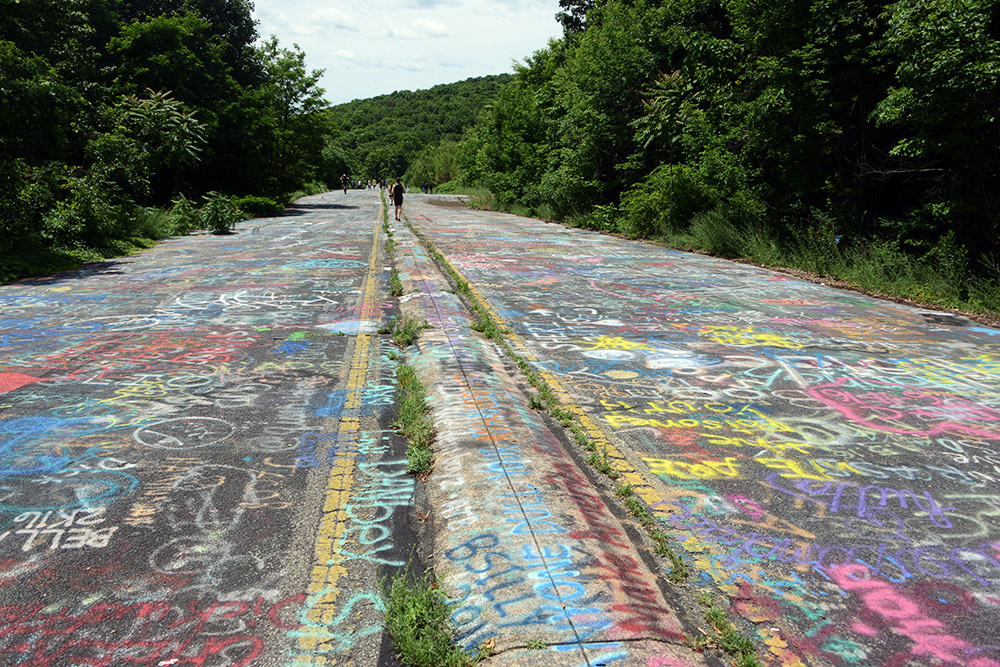
Graffiti Highway was much longer than I expected. At night it was impossible to appreciate its scale, so we returned the following morning to see everything in daylight.
And that’s when the atmosphere completely changed.
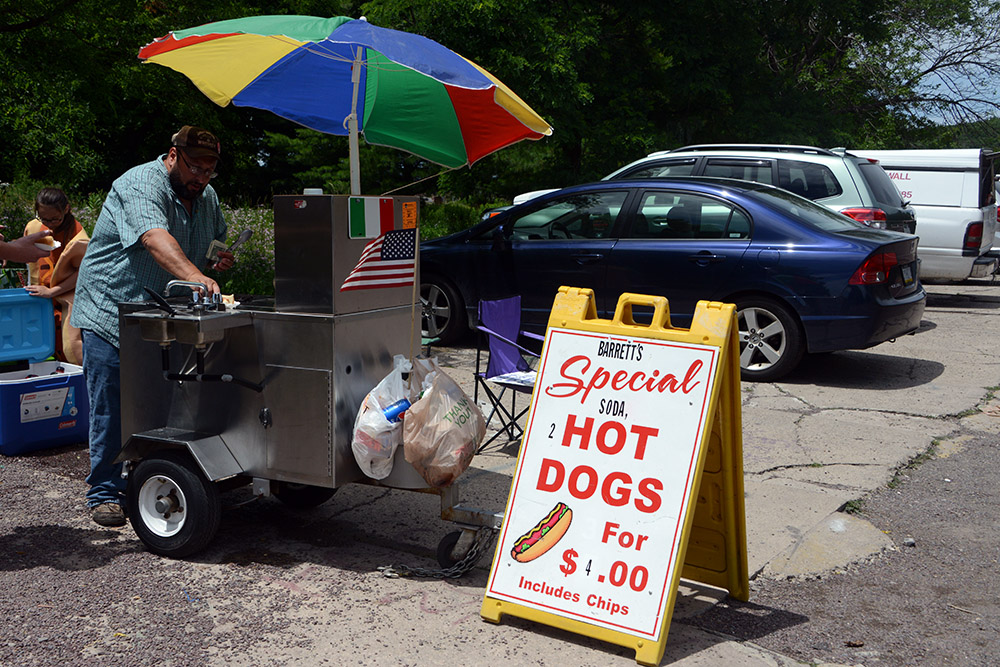
Twelve hours earlier, we had been creeping around in darkness wondering whether we were trespassing while a mysterious siren screamed in the distance.
Now there were people everywhere.
There was even a hot dog stand.
Some of my friends thought seeing the crowds ruined Centralia a little. Overnight it had gone from an unknown, creepy abandoned place to what felt almost like a tourist attraction.
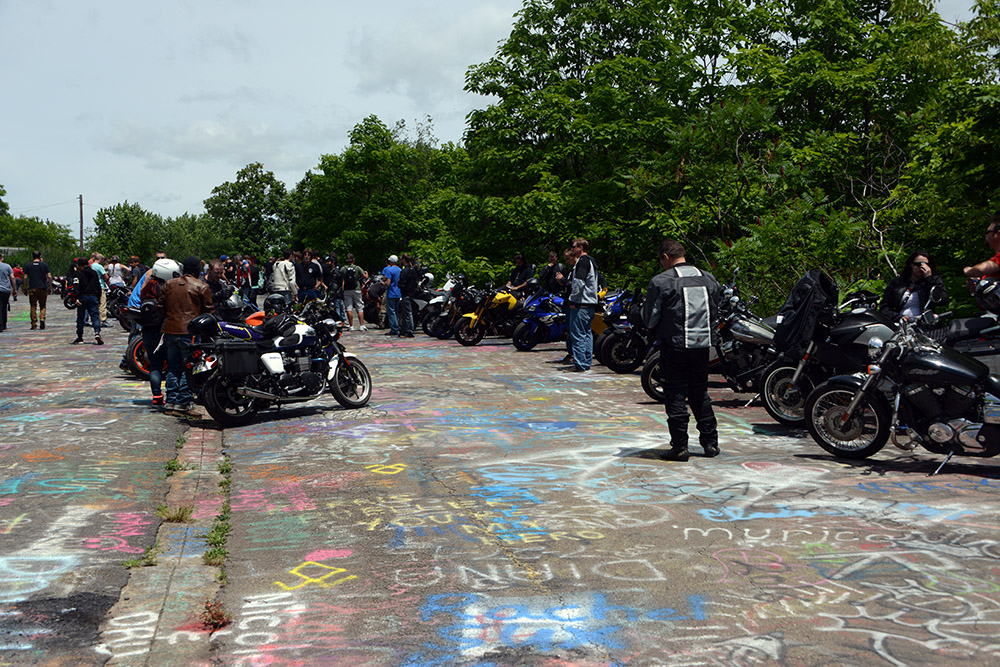
We even watched a large group of bikers enter from the same direction police had blocked the night before.
Centralia also has a cemetery, which I visited but didn’t photograph. It was another strange reminder that this empty landscape had once been someone’s hometown.
Frackville
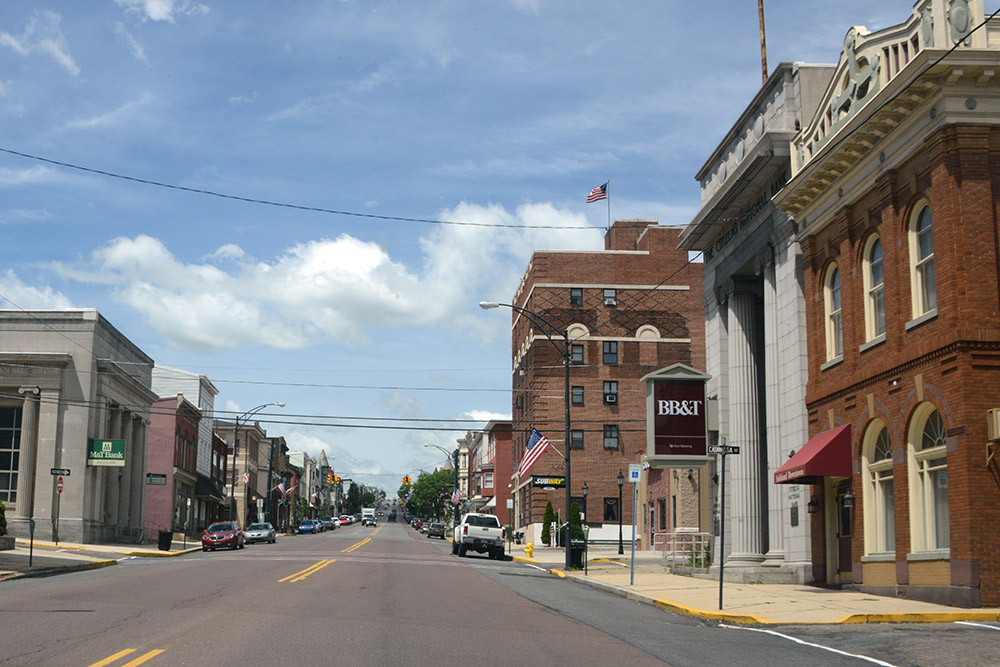
Something else that surprised me was how close Centralia was to normal civilization.
Just a few minutes away is Frackville, a small but very much functioning Pennsylvania town with shops, bars, hotels, and a main street.
We initially joked that its name must have something to do with fracking. It doesn’t. Frackville was named after early settler Daniel Frack long before modern hydraulic fracturing existed.
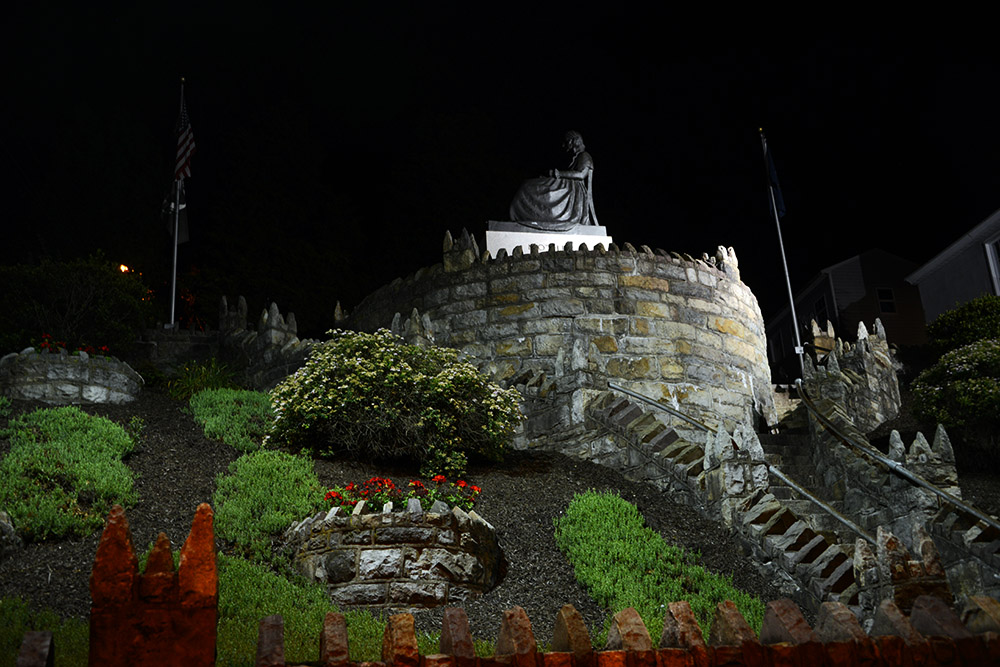
The surrounding communities grew around the same coal industry that created Centralia. In Frackville we found this memorial dedicated to the families and communities that supported miners through difficult times, particularly during the Great Depression.
Going Underground at Pioneer Tunnel
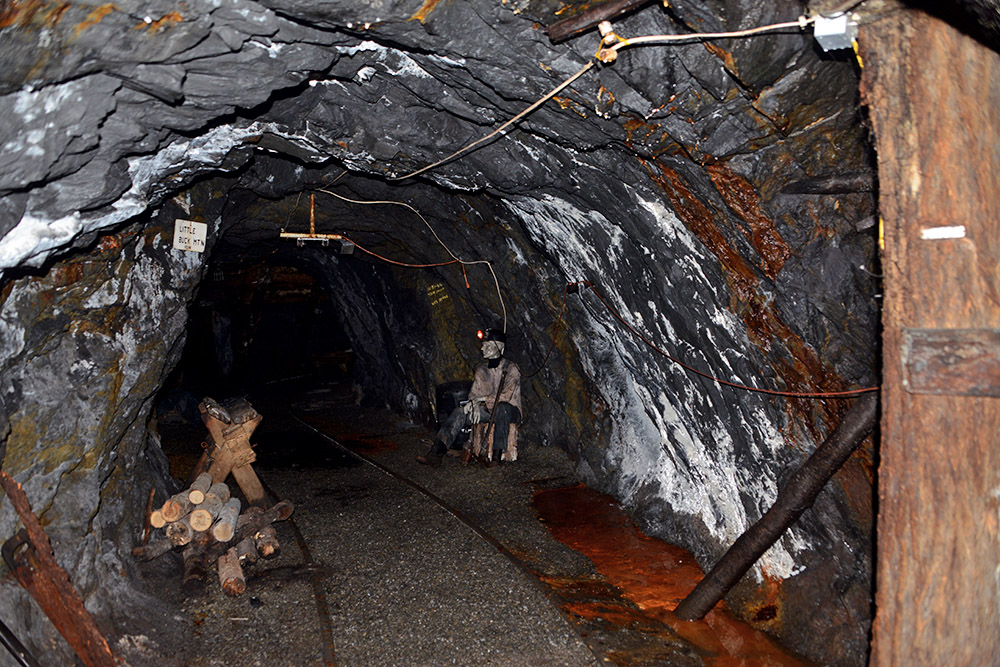
Obviously, entering the mine beneath Centralia itself isn’t an option. But nearby Ashland offered us a chance to experience what an old Pennsylvania coal mine was actually like.
We found Pioneer Tunnel almost by accident. There were historical displays outside discussing Centralia and its mine fire, including some of the old photographs I’d seen earlier.
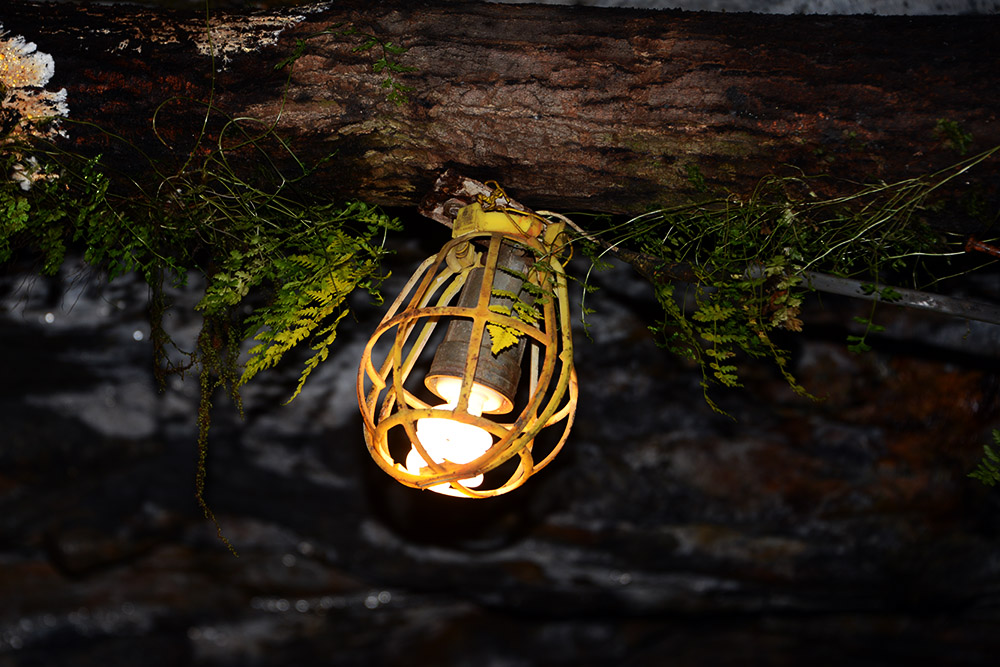
To enter the mine, we climbed aboard a small train that pulled several cars underground.
The tunnel was noticeably cooler than outside, and once underground the tour gave me a much better understanding of how generations of miners had worked beneath this part of Pennsylvania.
Inside an Anthracite Coal Mine
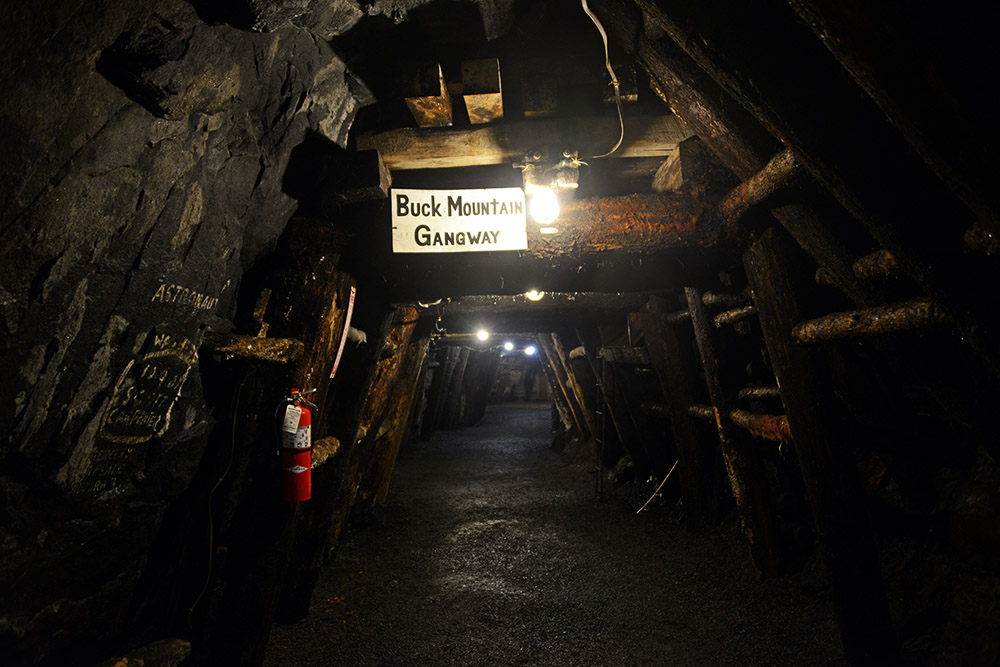
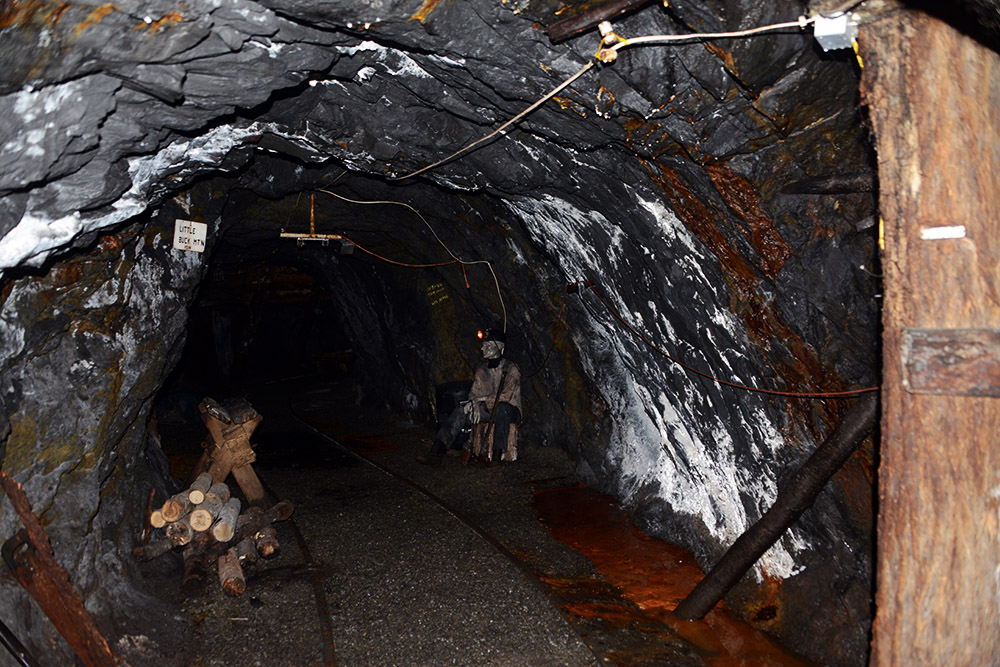
Pioneer Tunnel once operated as an anthracite coal mine. During the tour we learned how miners followed coal seams underground and used explosives to break apart sections of rock and coal.
The Mine Mules
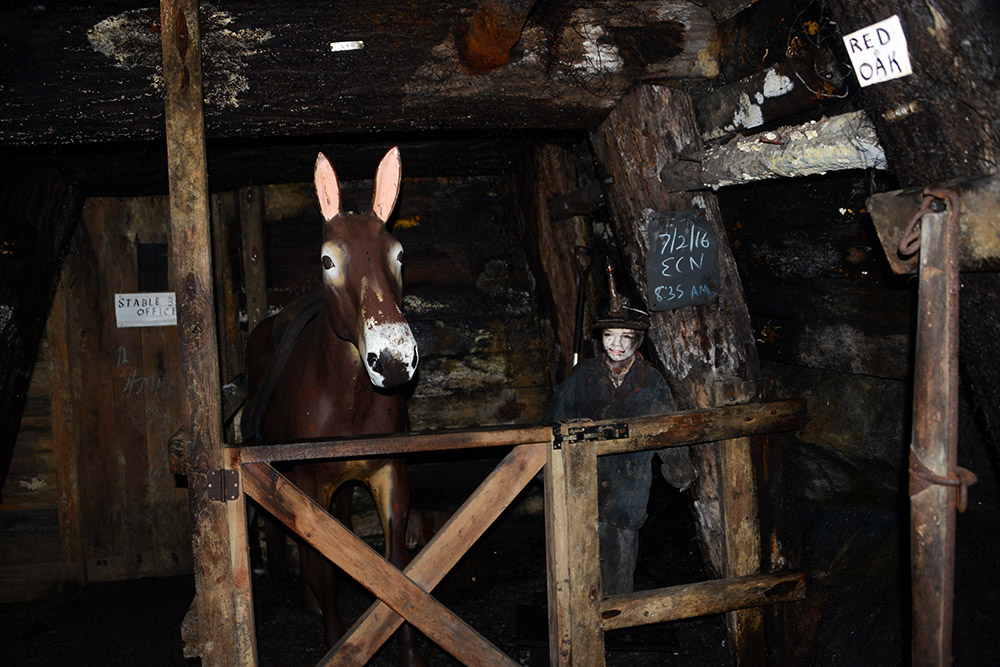
One of the more interesting things I learned was how important mules once were to mining operations.
The animals hauled enormous quantities of coal through the tunnels. Some spent long periods underground, with stables built directly inside the mines.
Because a good mine mule was valuable and essential to the operation, protecting the animals during emergencies was taken seriously as well.
Escaping a Collapsed Mine
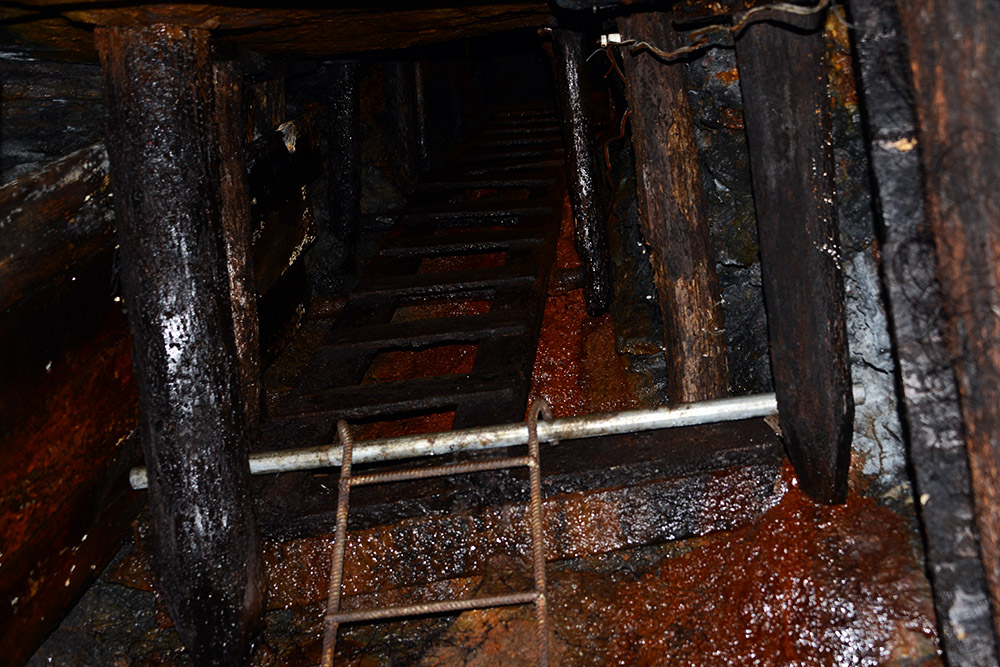
Mining obviously came with enormous risks. The tour showed us emergency escape routes that could provide another way toward the surface if portions of the mine became inaccessible.
After seeing what an underground coal mine actually looked like, the disaster beneath Centralia became much easier to comprehend.
Anthracite Coal
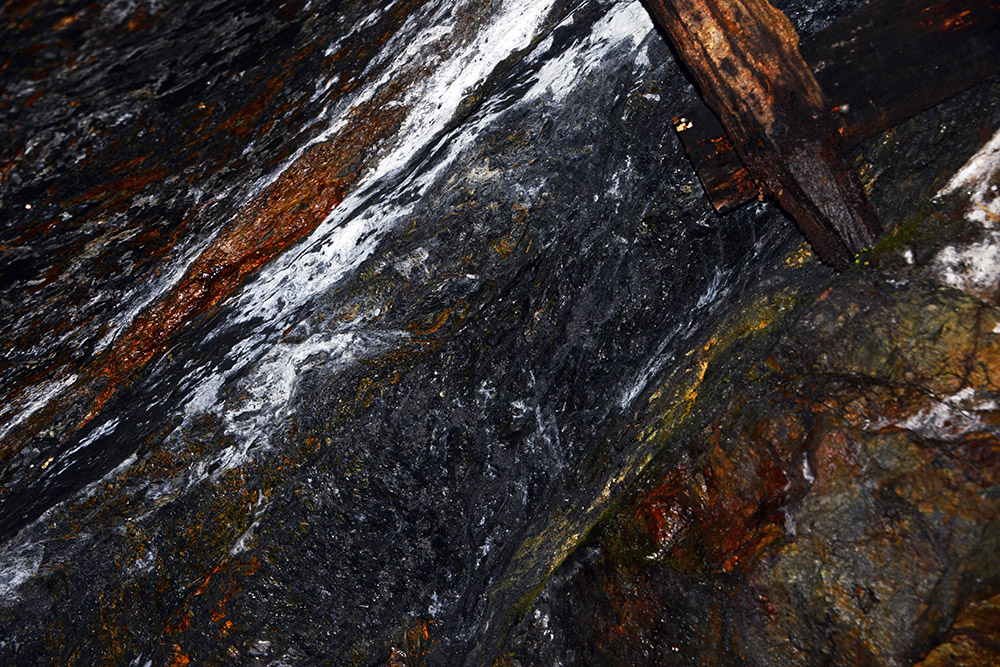
This region of Pennsylvania is famous for anthracite, a hard coal with a particularly high carbon content.
Coal formed from ancient plant material that was buried, compressed, and transformed over enormous periods of geological time. Later geological forces folded and tilted many of the coal seams running beneath Pennsylvania.
Standing underground and seeing the coal firsthand brought the trip full circle.
Centralia’s entire history was tied to this resource. Coal built the town, supported generations of families, and eventually the fire burning through coal beneath it helped destroy the community above.
My Time in Centralia
We originally planned Centralia as a quick stop on the way to somewhere else.
Instead, it became one of those travel experiences that worked precisely because we didn’t know what to expect.
We arrived at an abandoned town after midnight, heard a mysterious siren blaring through the darkness, wandered along Graffiti Highway, came back the following morning to discover a hot dog stand and crowds of visitors, and then went underground in a nearby coal mine to better understand the industry that created Centralia in the first place.
Explore More of Pennsylvania
Allegheny National Forest • Centralia • Gettysburg • Harrisburg • Lancaster • Philadelphia • Pittsburgh