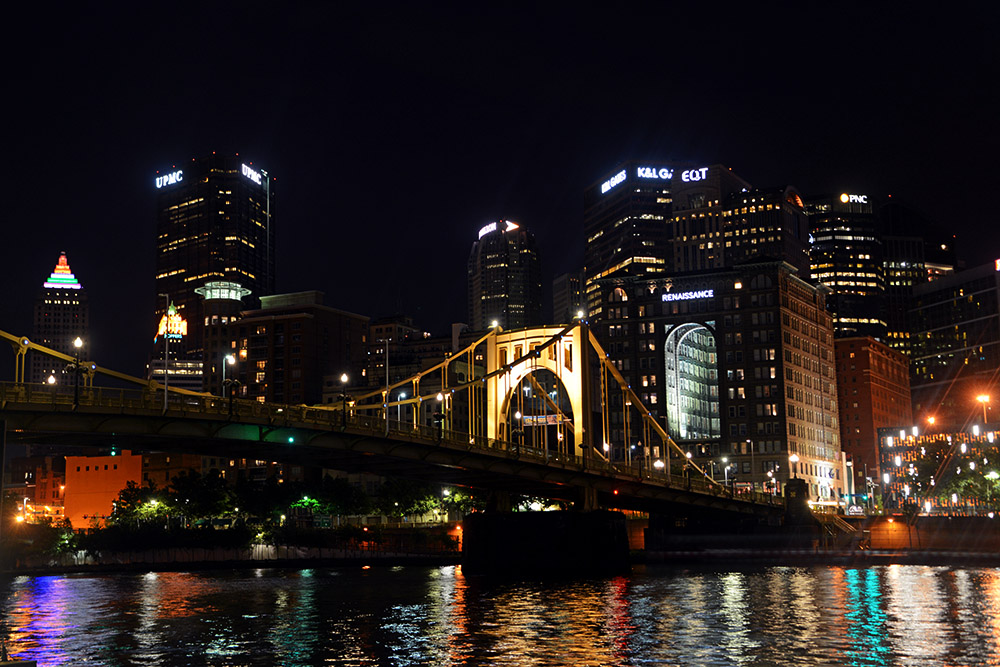
Pittsburgh was one of the last major cities in the northeastern United States that I had yet to visit. At its industrial peak, Pittsburgh was one of America’s most important cities, but despite being only about four hours from my home, I didn’t make it there until fairly late in my domestic travels. I also had no idea before arriving that scenes from The Dark Knight Rises had been filmed here, so it’s perfectly acceptable to think of Pittsburgh as Gotham City! The city has some of the most interesting architecture in the country, and you begin seeing it almost immediately as you enter across one of its many bridges.
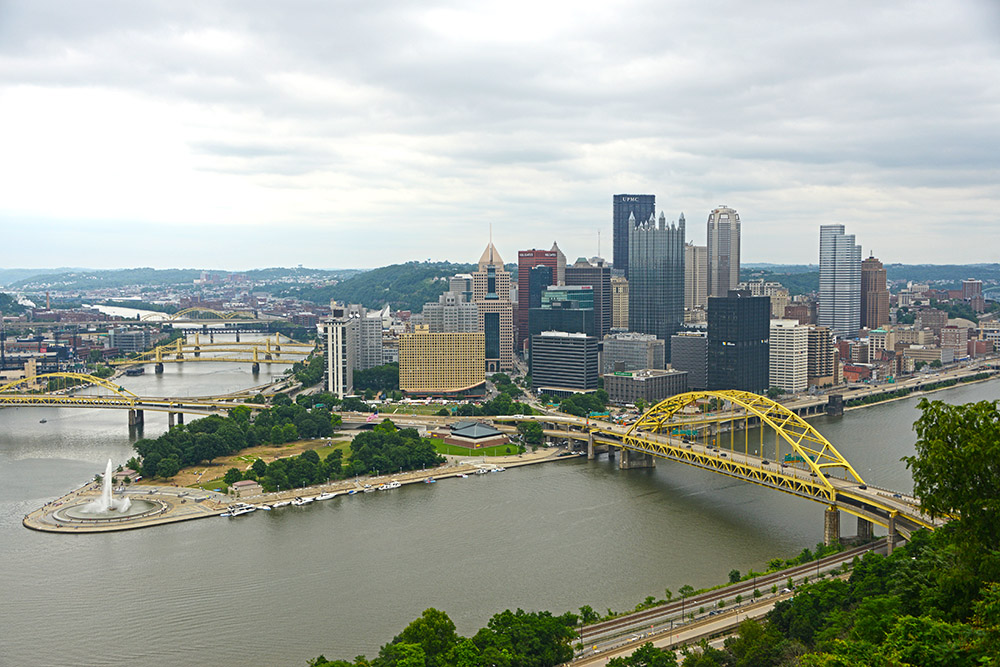
Pittsburgh is known for its skyscrapers, bridges, and beautiful views. One of the most scenic parts of the city is where its three famous rivers meet. The Monongahela and Allegheny rivers converge at the tip of downtown Pittsburgh to form the Ohio River, creating the distinctive landscape that has shaped the city throughout its history. With downtown squeezed between the rivers and steep hills rising around it, Pittsburgh has a setting unlike most other major American cities. There always seems to be another bridge, hillside, or overlook providing a completely different view of the skyline.
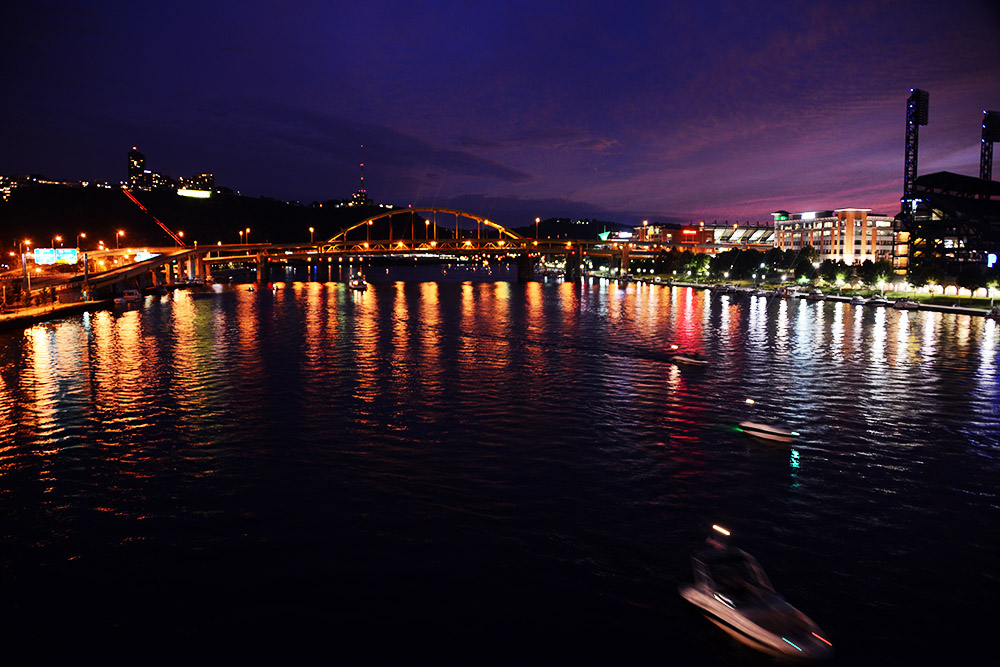
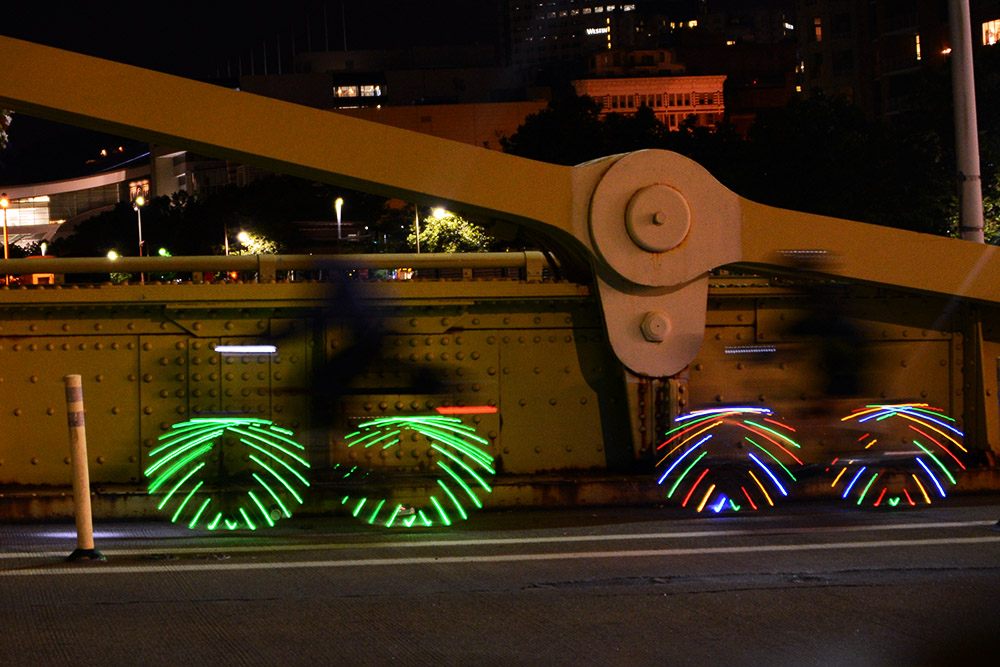
Pittsburgh seems to have more nicknames than just about any other American city I know. One of the most appropriate is the “City of Bridges,” and there are hundreds of them throughout the area. Some are small neighborhood crossings, while others are massive structures spanning the city’s rivers. My friends and I ended up crossing quite a few of them while walking around Pittsburgh. I took the photo above while crossing another bridge of similar size, and a few minutes later we were passed by this group of nighttime cyclists.
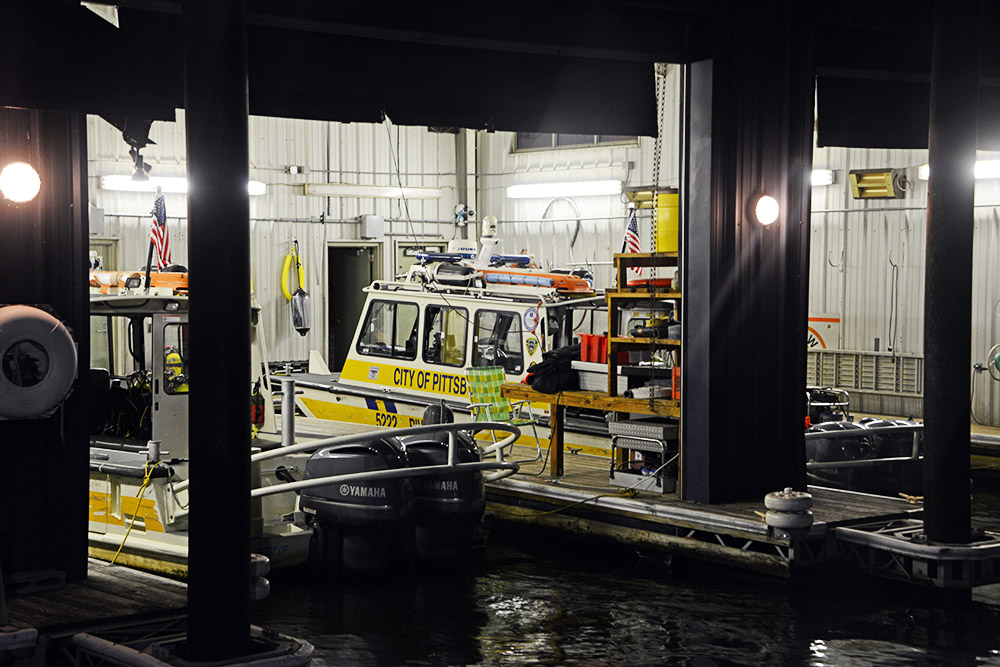
On the other side of the bridge, we found a nice waterfront park near PNC Park. There was a walkway along the river, and underneath the bridge we even came across a river police station. At first it seemed strange to me that a city so far inland would need police boats, but with three major rivers converging in Pittsburgh, it obviously makes perfect sense. The rivers aren’t simply scenery either; they divide Pittsburgh into distinct sections and are a constant part of exploring the city. Walking along the waterfront was also a nice change from being surrounded by buildings downtown.
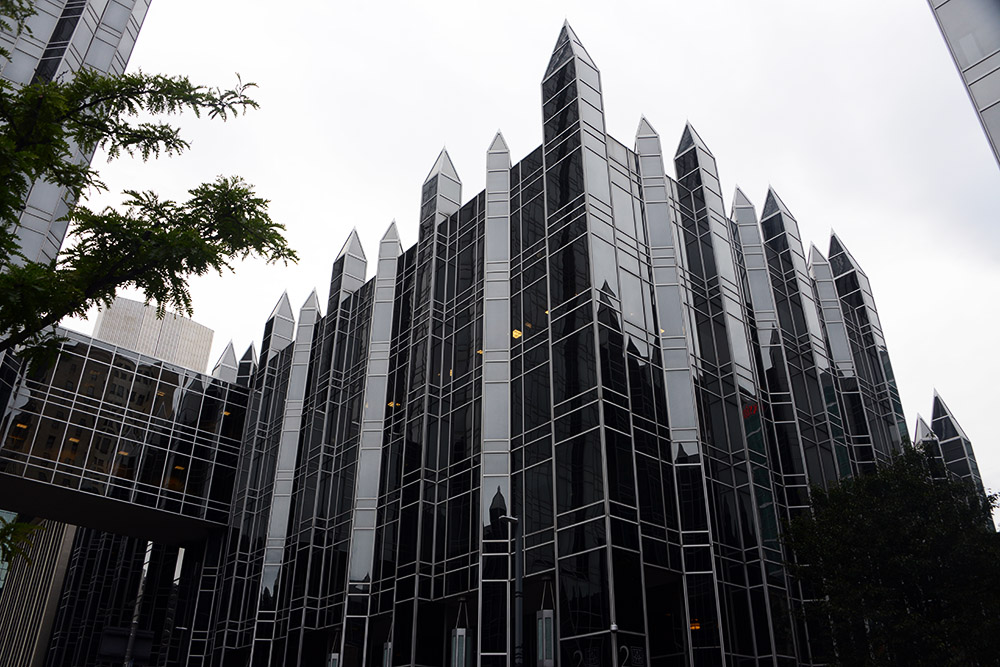
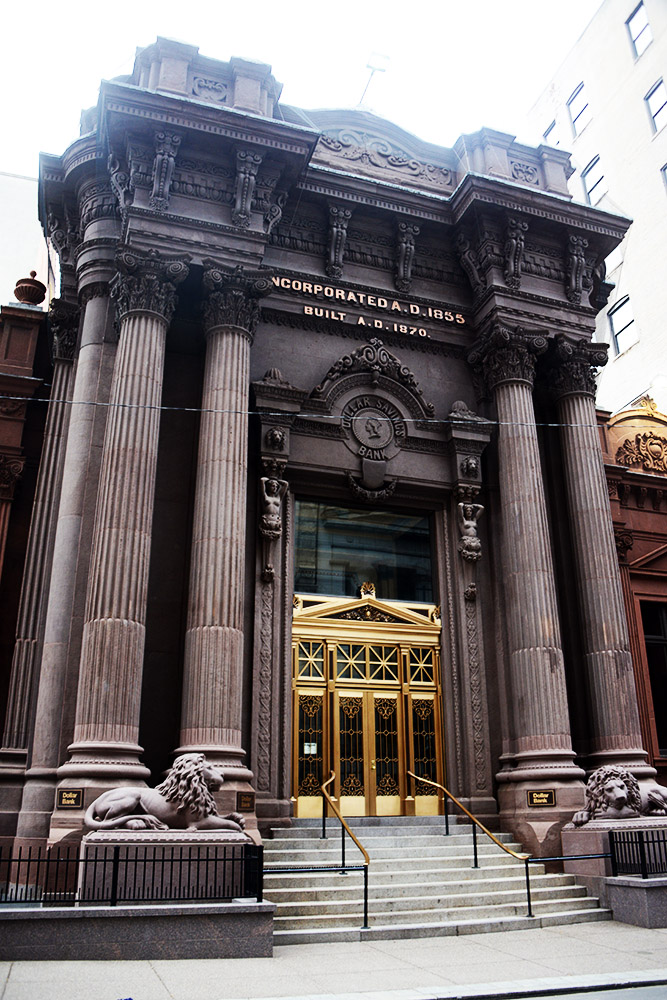
My favorite thing about Pittsburgh was definitely its architecture. Gothic-inspired towers, historic buildings, industrial structures, and modern skyscrapers are scattered throughout the city, so simply walking around is an attraction in itself. The building above shows the distinctive modern architecture of PPG Place, while the photo below shows an older bank with an elaborate Beaux-Arts design. After exploring Pittsburgh for only a few hours, I could understand why filmmakers thought parts of the city could pass for Gotham.
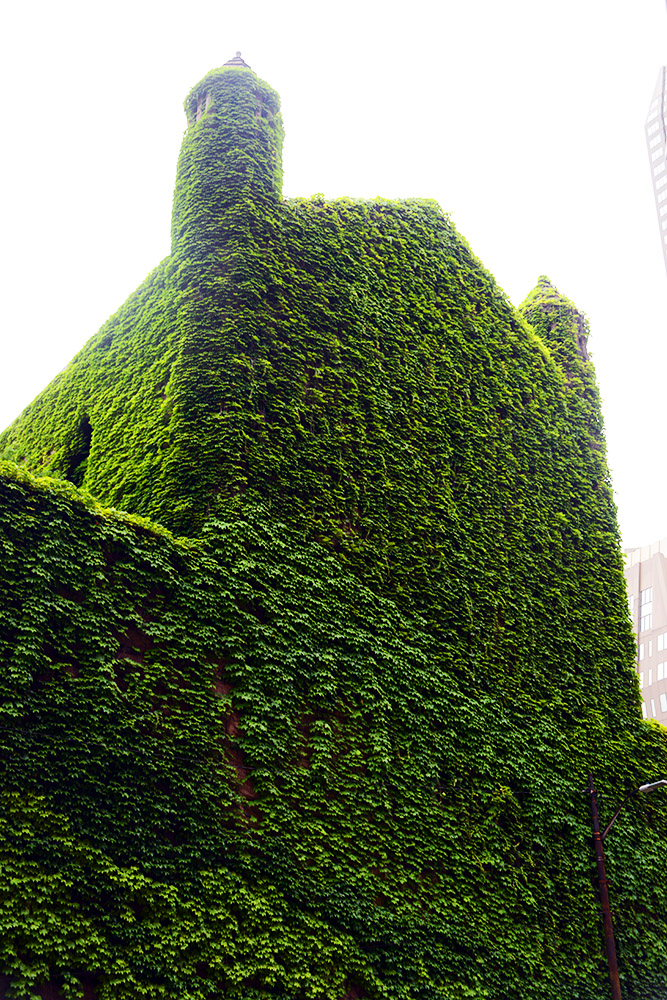
Another interesting sight was this castle-like structure almost completely covered in ivy. We never figured out exactly what the place was, and from where we stood it looked almost like a walled compound. Whatever its purpose, the combination of stone architecture and thick ivy made it one of the more unusual buildings we came across. Pittsburgh is full of buildings like this where even something you randomly encounter while walking around can be interesting enough to stop and photograph.
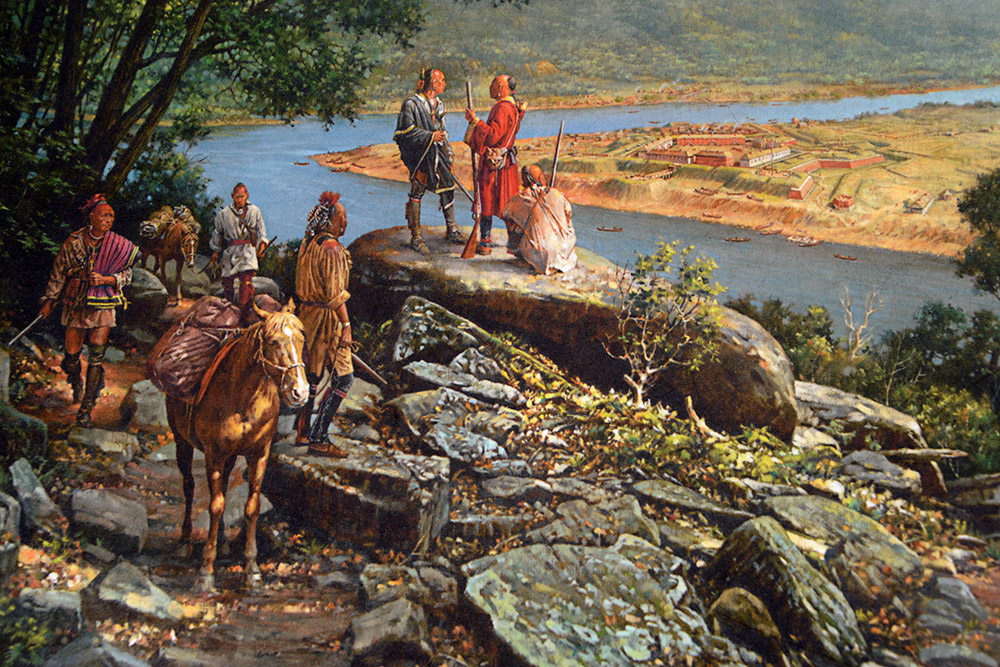
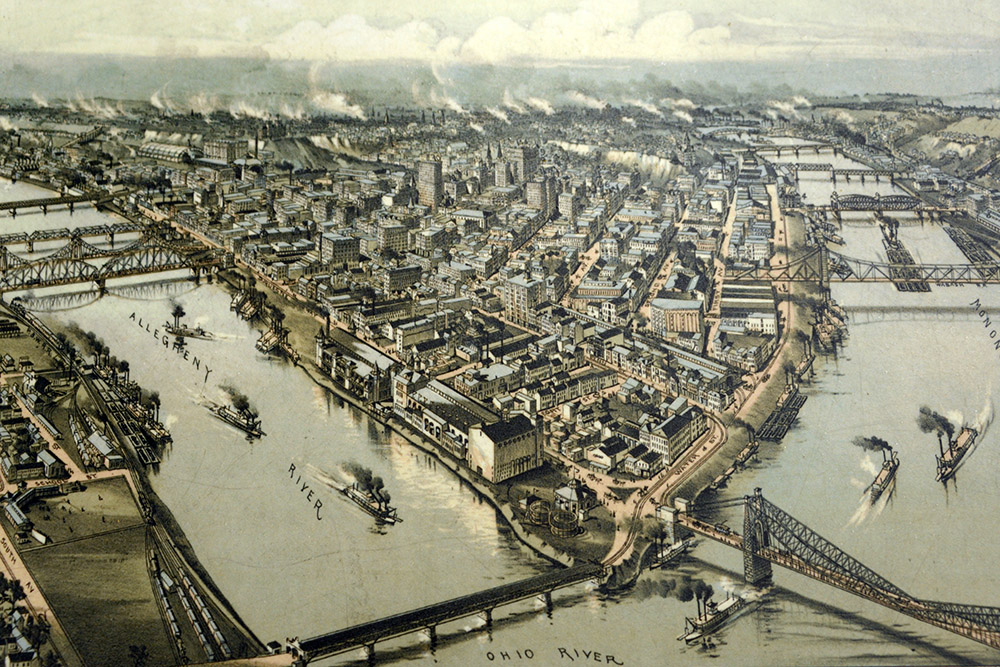
Pittsburgh’s colonial history dates back to the 1700s, when the French established Fort Duquesne near the convergence of the three rivers. During the French and Indian War, the French eventually abandoned and destroyed the fort as British forces approached. The British established Fort Pitt nearby, naming it after William Pitt. A settlement grew around the fort and eventually developed into Pittsburgh. The image above depicts Native Americans overlooking the early settlement, while the image below shows Pittsburgh in 1902, when it had already become one of America’s great industrial cities.
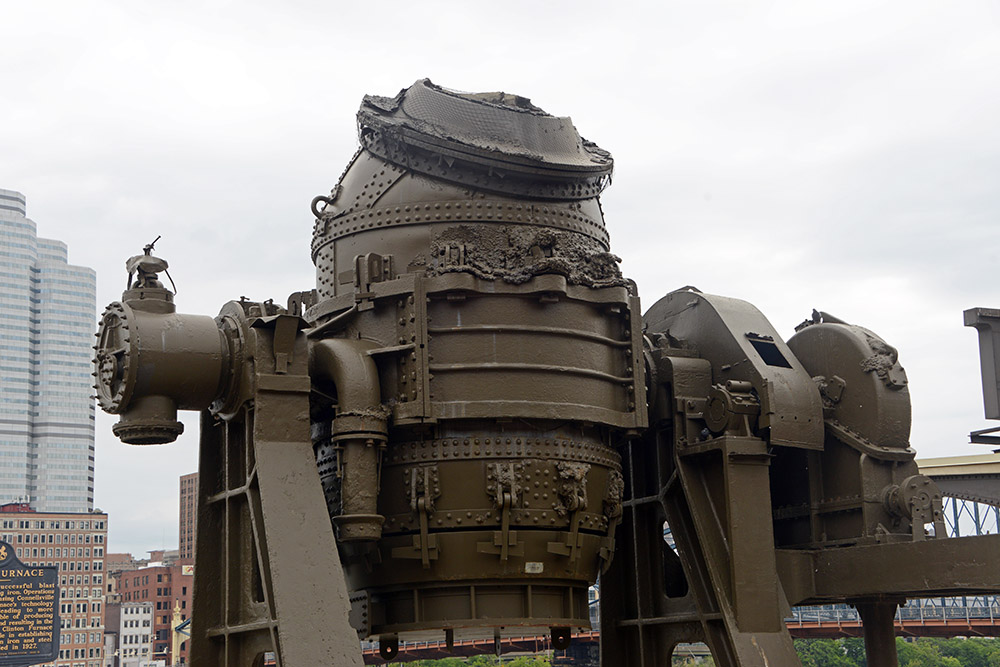
Pittsburgh’s location and access to rivers, railroads, coal, and other resources helped transform it into one of the world’s great industrial centers. Steel eventually became synonymous with the city, earning Pittsburgh its famous nickname, the “Steel City.” At its peak, the region produced an enormous share of America’s steel and helped fuel the country’s industrial expansion. The furnace above, displayed at Station Square, is a reminder of the heavy industry that once dominated Pittsburgh. The city’s economy has changed dramatically since those days, but its industrial heritage is still visible everywhere.
My friends and I stopped at Station Square after hearing it was a lively area with restaurants, bars, and a few interesting attractions connected to Pittsburgh’s industrial past. Our experience was considerably quieter. Much of the indoor area felt almost deserted, to the point that we briefly wondered whether we were even supposed to be inside. We did find a nice coffee shop and hung out there for a while. In Station Square’s defense, we visited on a Sunday during a holiday weekend, so our timing probably wasn’t ideal. I’ve seen photos from evenings when the area looks much livelier, so we probably didn’t give it a fair chance.
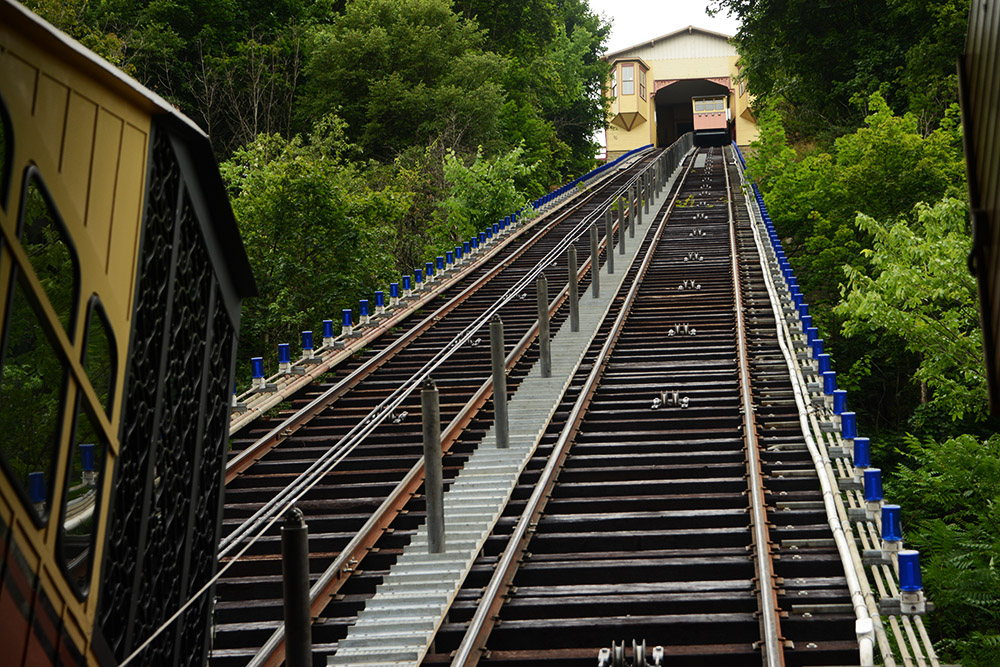
One of the main reasons we visited Station Square was its proximity to the Duquesne Incline, or tram as I like to call it. The incline dates back to the 1800s and was originally steam powered, carrying passengers and cargo up the steep slope of Mount Washington. Today it’s one of Pittsburgh’s most recognizable attractions and still carries passengers between the riverfront and Mount Washington. The neighborhood at the top is worth exploring on its own, with restaurants and overlooks providing some of the best views of downtown Pittsburgh. This is where we got our view of the three rivers converging, and from here we could even see the Cathedral of Learning in the distance, which became our next destination.
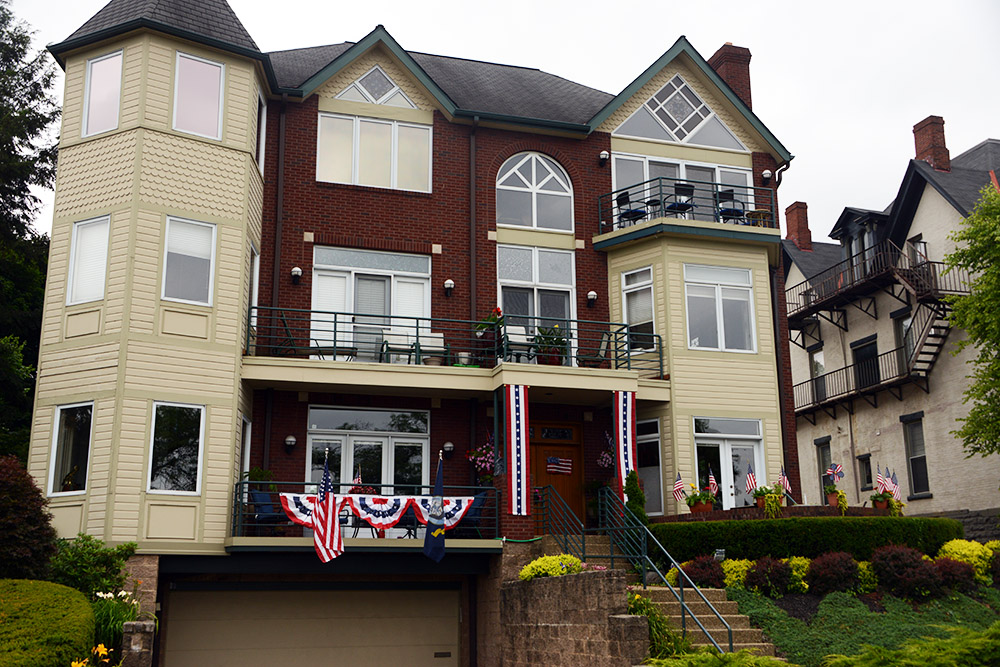
Mount Washington also gave us a look at one of Pittsburgh’s residential neighborhoods. With the city built across hills and river valleys, houses can sit surprisingly high above downtown while still being only a short distance away. Between the steep streets, older homes, and views over the rivers, even the residential areas have a lot of character.
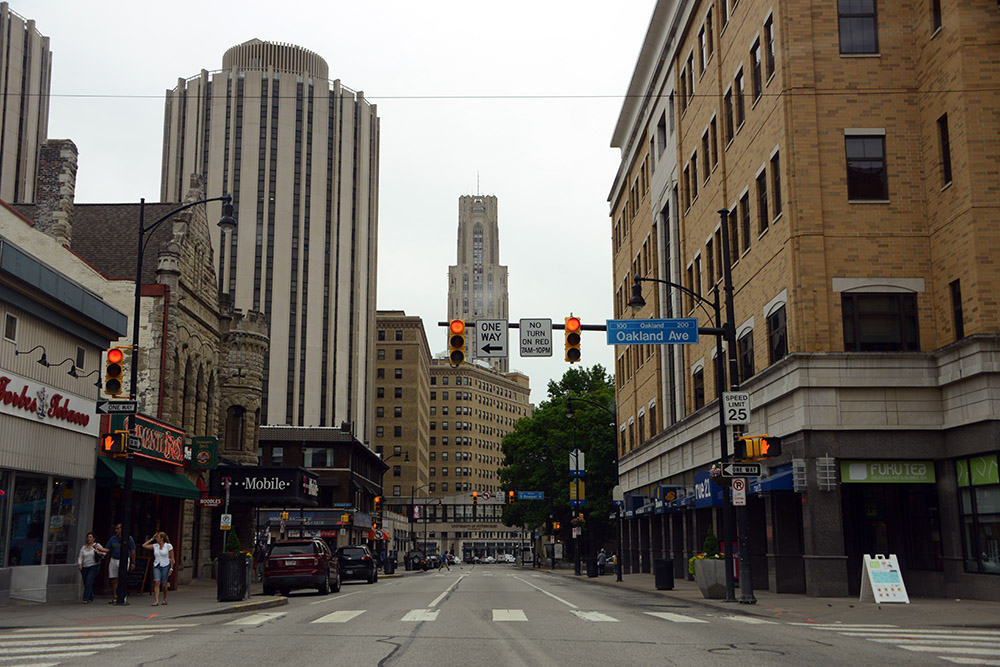
From Station Square we drove toward the Cathedral of Learning, which can be seen above as we passed through the Oakland neighborhood. Oakland has plenty to explore in its own right, with major universities, museums, historic buildings, restaurants, and several distinct areas packed into a relatively small part of Pittsburgh. With the University of Pittsburgh and Carnegie Mellon nearby, this part of the city also has a completely different atmosphere from the skyscrapers and older commercial buildings downtown.
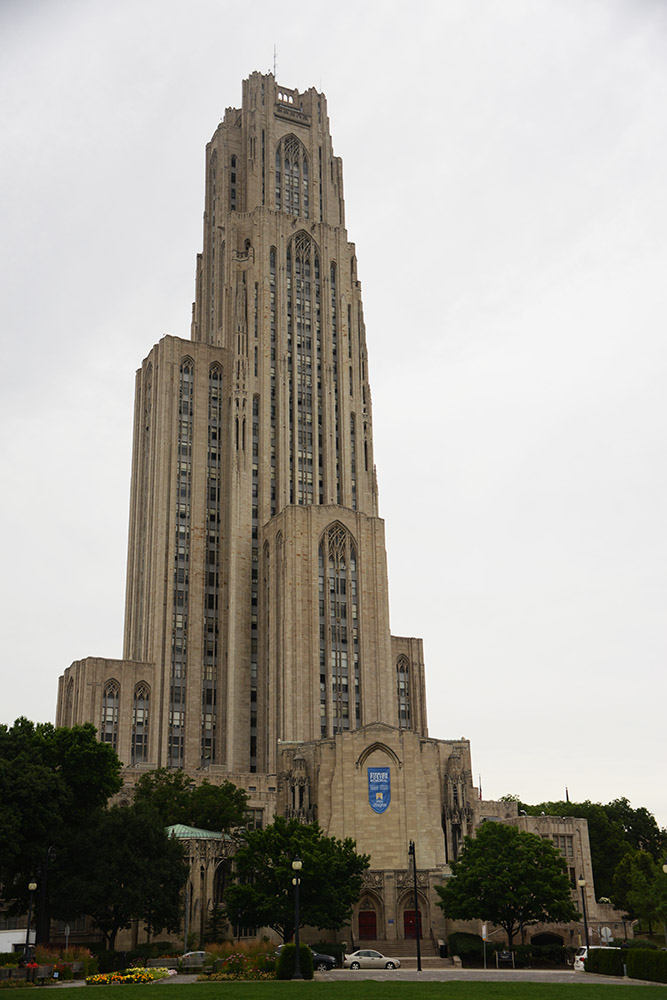
The weather wasn’t great by the time we arrived, but the Cathedral of Learning was impressive regardless. The enormous Gothic Revival tower is part of the University of Pittsburgh and has dominated the Oakland skyline since the 1930s. Rising more than 500 feet (160 meters), it’s one of the tallest university buildings in the world and looks more like something you’d expect to find in a medieval city than on an American college campus.
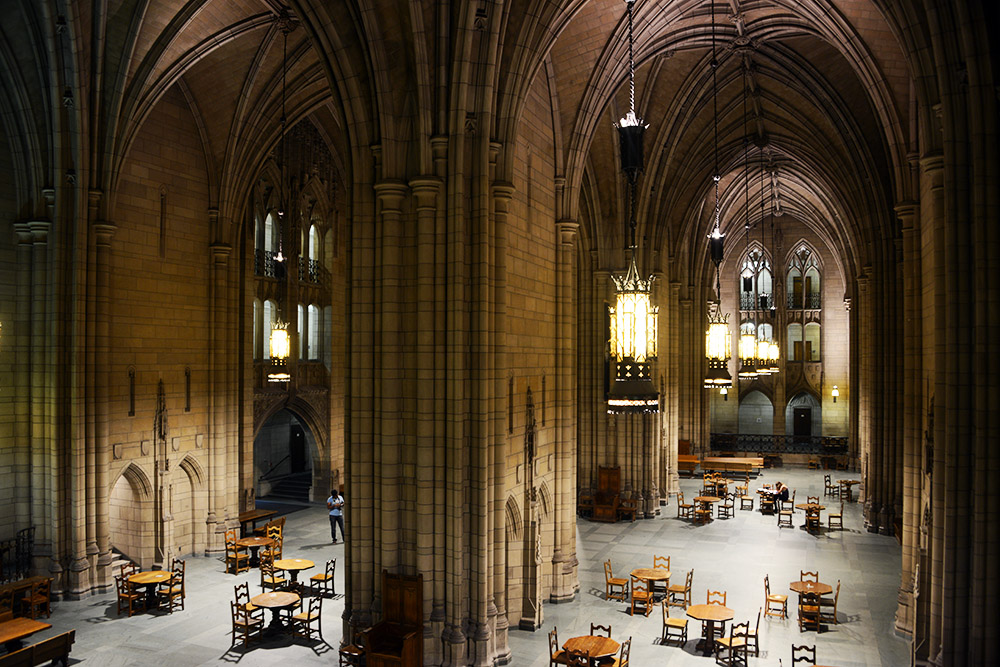
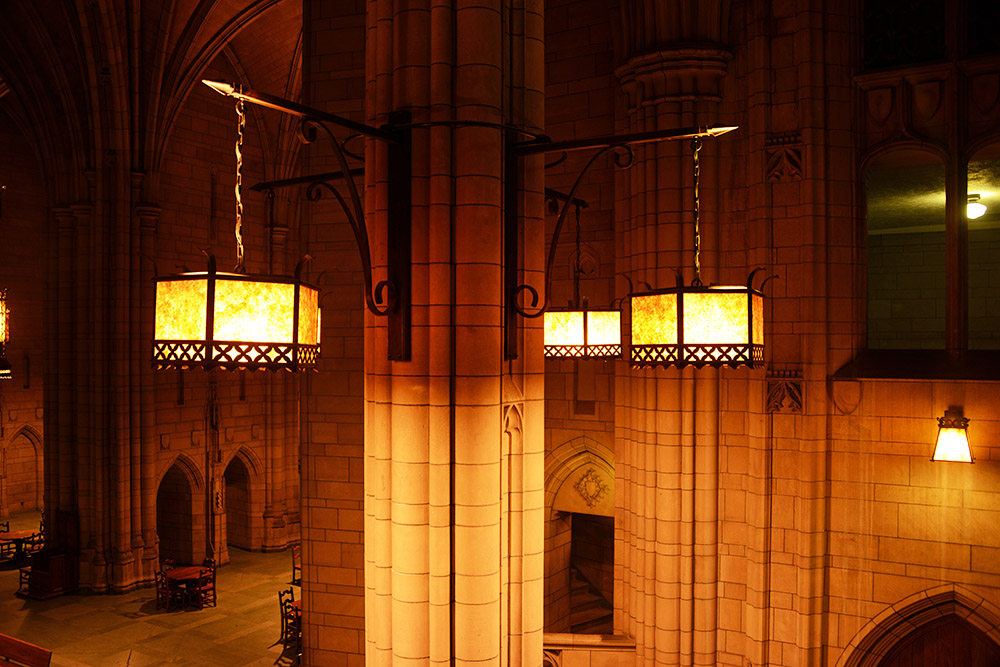
The interior was every bit as impressive as the outside. The massive Gothic halls make the building feel more like an actual cathedral than a university. We obviously didn’t have access to every part of the building, but we were able to wander through some of the public areas and eventually get high enough to find a nice view over the city. I would have loved to explore more of the building, especially its famous Nationality Rooms, which are designed to represent cultures from around the world.
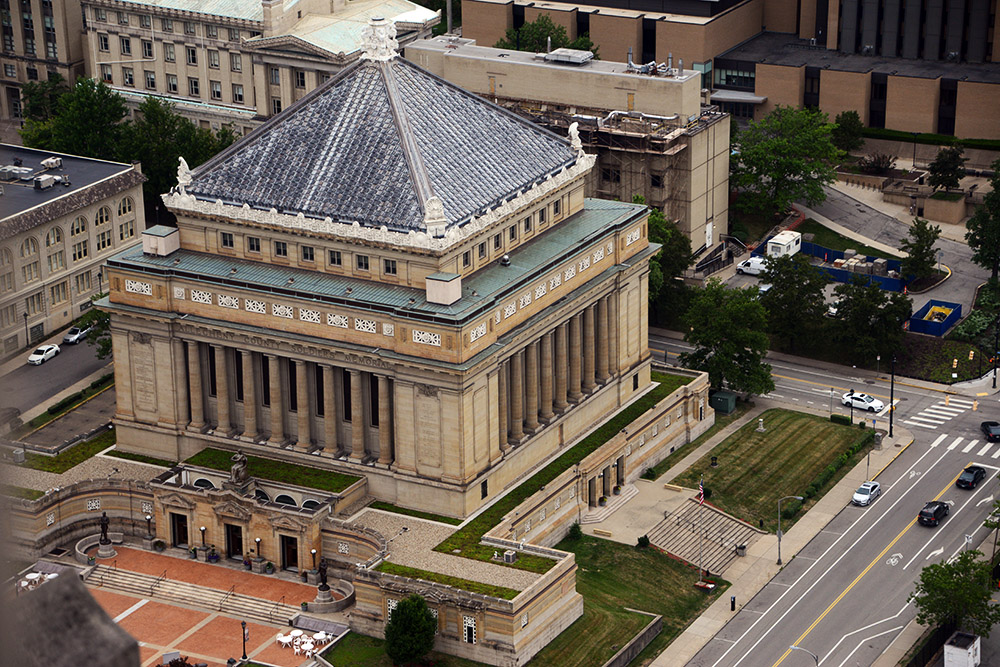
One of the buildings we could see from the Cathedral of Learning was Soldiers & Sailors Memorial Hall and Museum. Unfortunately it was closed because of the holiday weekend. The museum preserves the history and experiences of American service members from numerous generations and branches of the military. Having served in the Marines myself, I naturally would have liked to visit, but Pittsburgh is a large enough city that a single weekend was never going to be enough to see everything.
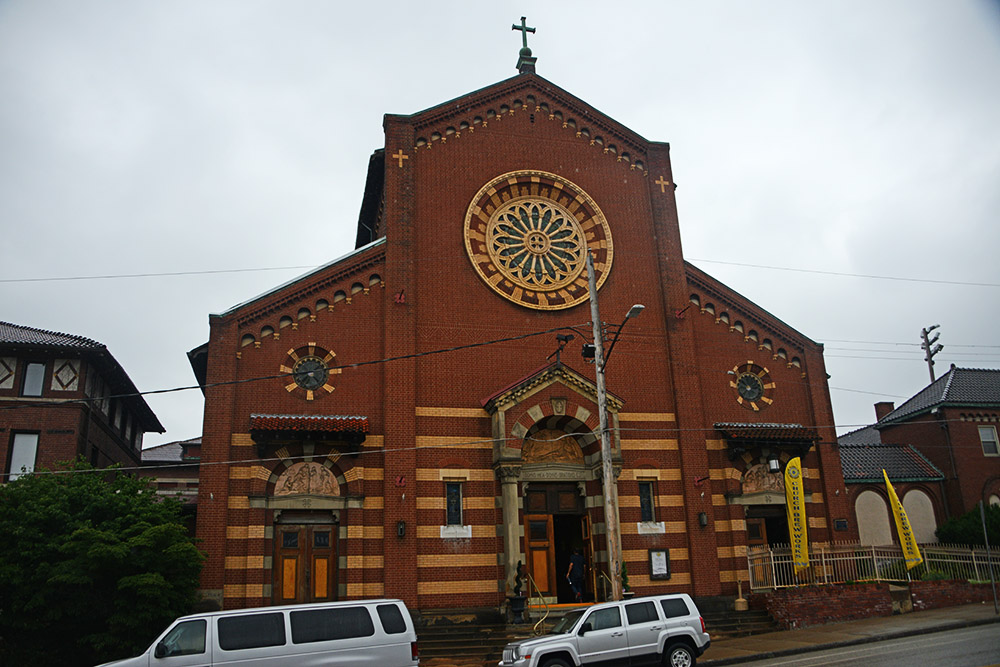
With the museum closed, we ended up visiting a very different kind of church—or former church, I should say. St. John the Baptist Church was converted into a restaurant and brewery known as Church Brew Works. I’m not particularly religious myself, although I can imagine it might feel strange for people who once worshipped here to see their former church transformed into a brewery. Either way, it’s certainly a unique place to visit, with the original church architecture creating an atmosphere unlike any normal restaurant. As you can see, by the time my friends and I arrived, we were also getting a little thirsty!
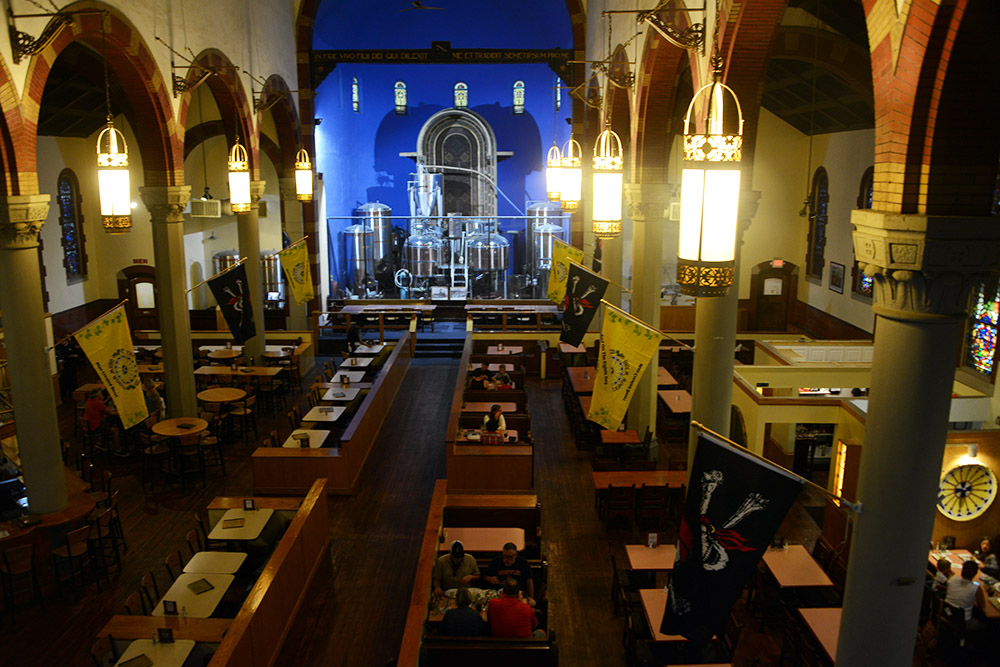
The photo above came with a little adventure of its own. We noticed the stairs leading toward the old organ loft and decided to head up for a quick look, despite a chain making it pretty obvious that the area wasn’t open to visitors. We didn’t make it very far before an employee spotted us and came running up the stairs to send us back down. She definitely wasn’t amused. Fortunately we’d already finished our beers and were getting ready to leave anyway, so our unauthorized exploration became our cue to head back into the city.
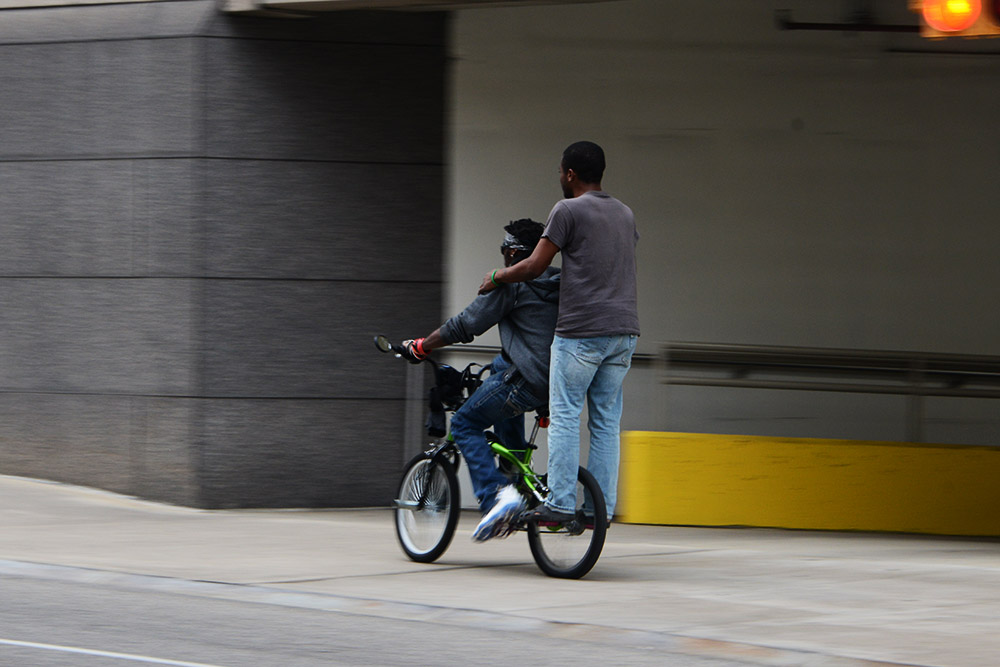
From Oakland, we decided to make the long walk back toward downtown. It turned out to be considerably farther than we’d expected, and by then riding bikes like these guys was starting to look like a much better idea. Still, walking gave us a chance to see neighborhoods we probably would have otherwise missed, and we had several friendly encounters with locals once we got away from the more touristy parts of the city. This is one of the reasons I usually prefer walking whenever possible; you end up seeing the ordinary parts of a city that you’d completely miss traveling from attraction to attraction by car.

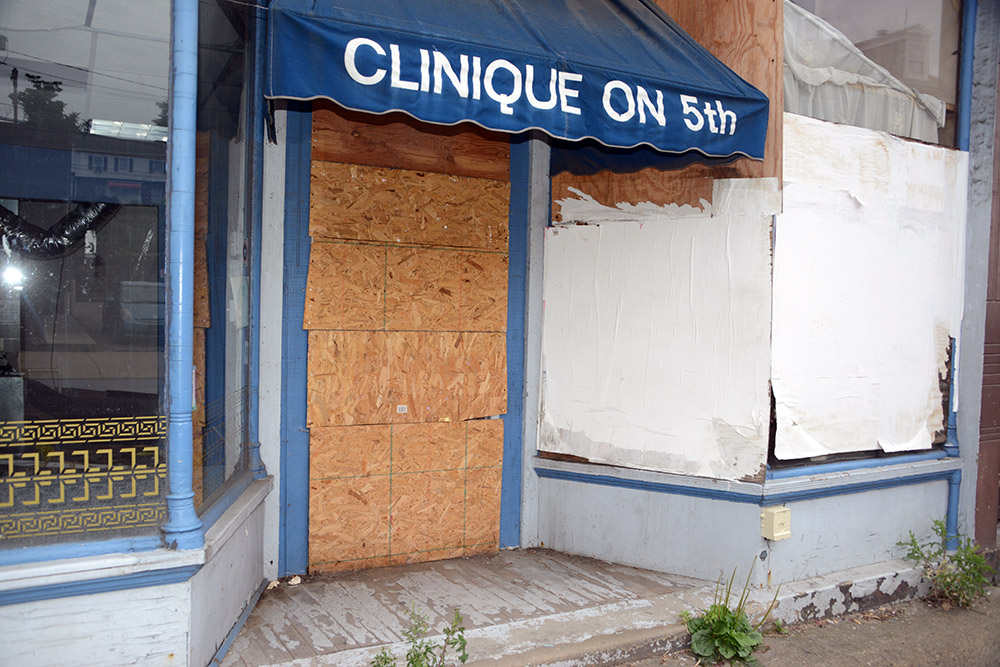
Somewhere between Oakland and downtown Pittsburgh, our walk took us through a long stretch of older and abandoned buildings. The area never felt particularly unsafe to us, but I was surprised to see so many vacant properties so close to some of Pittsburgh’s busiest neighborhoods. At the same time, it was interesting to see another side of a city that had gone through such enormous economic changes during the previous century. Pittsburgh’s transformation from a heavy industrial center into a city increasingly built around universities, medicine, technology, and other industries didn’t happen everywhere at once, and some neighborhoods still showed signs of that transition.
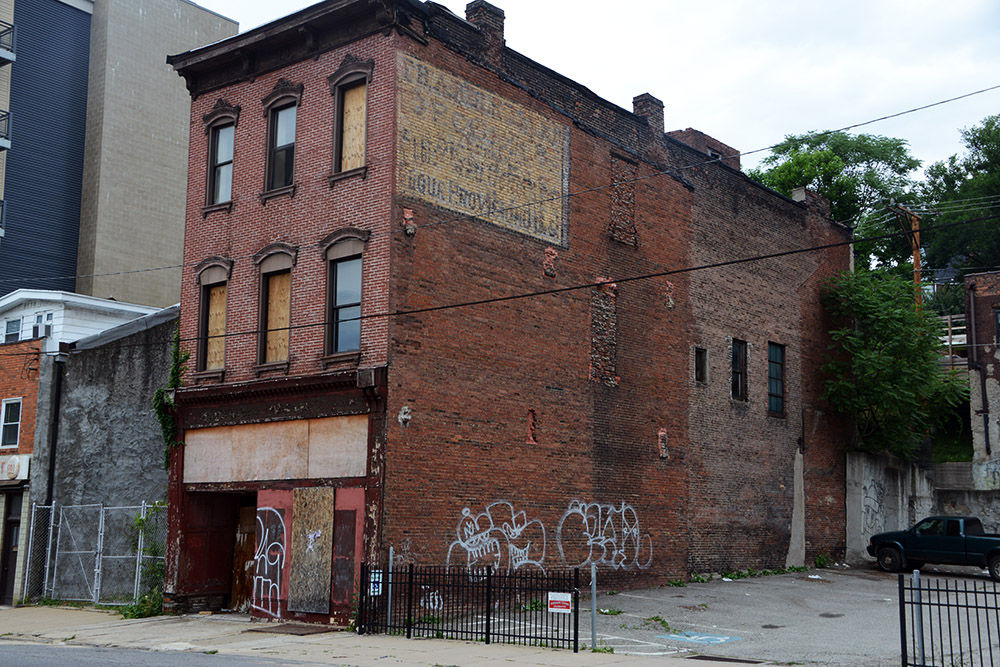
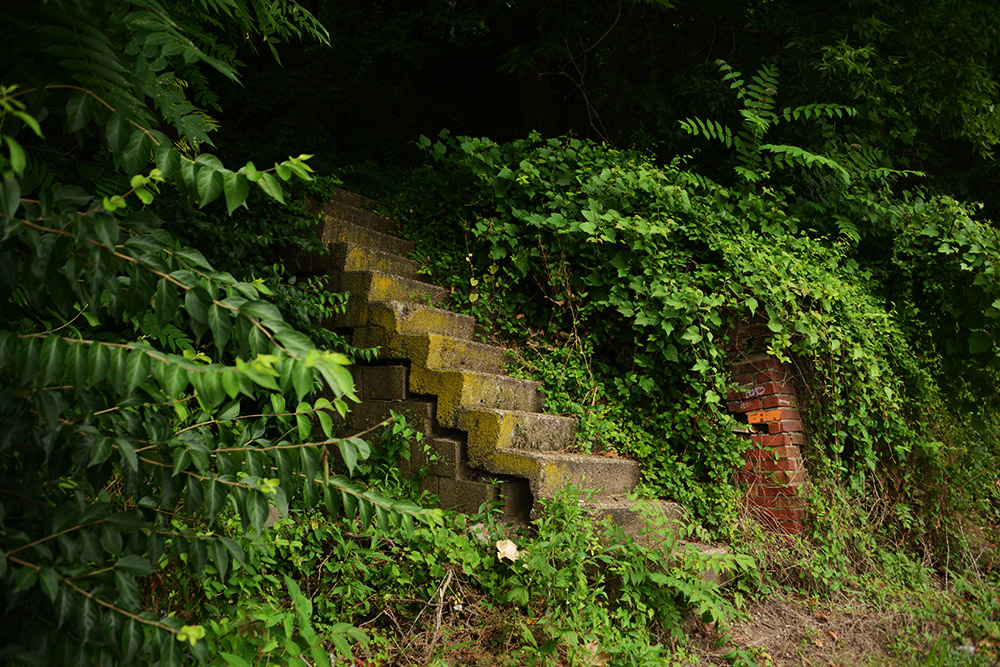
The older section seemed to continue for well over a mile, with operating businesses mixed among vacant storefronts and abandoned houses slowly being reclaimed by vegetation. Considering the location between major parts of Pittsburgh, I remember thinking that much of this could eventually become prime real estate if the neighborhoods were redeveloped. Along the way we encountered a few memorable characters as well, including someone who had apparently started drinking much earlier than we had and, for reasons I still can’t explain, Santa Claus hanging out in Pittsburgh in July.

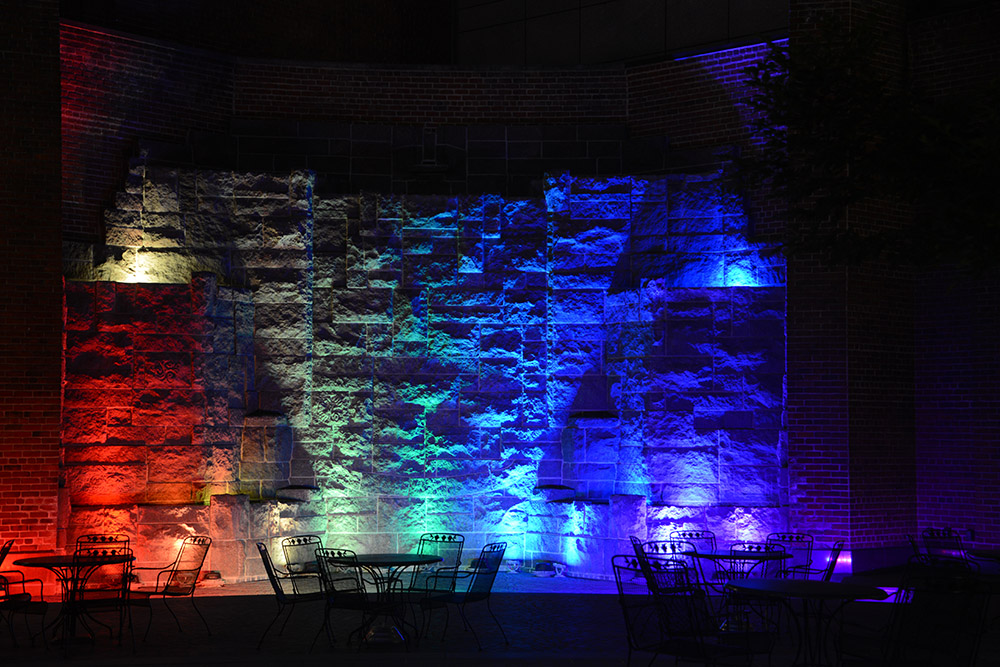
After what seemed like one empty street after another, we suddenly found ourselves approaching the busy parts of the city again. Restaurants, lights, and newer buildings began appearing, and eventually we reached downtown Pittsburgh, photographed below. After such a long walk through quiet neighborhoods, it almost felt like we’d entered a completely different city. That contrast ended up being one of the things I remembered most about Pittsburgh. Within a single day we had gone from riverfront parks and skyscrapers to university buildings, old industrial neighborhoods, residential streets, and back into a busy downtown.
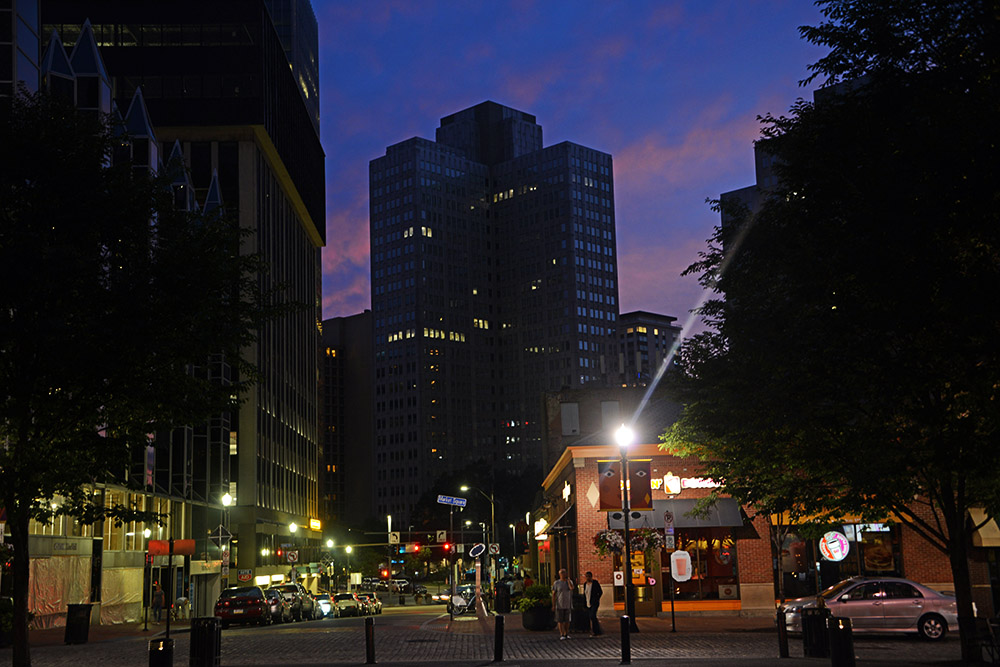
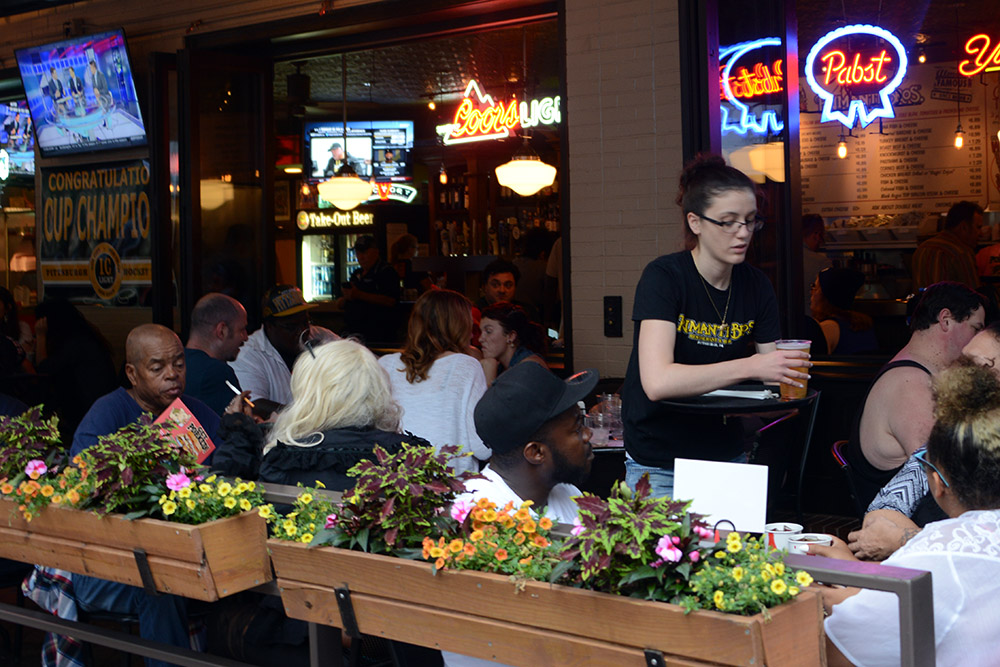
We eventually made our way to Market Square, which was easily the liveliest part of Pittsburgh we’d visited that day. The square was packed with restaurants, bars, and people enjoying the evening, making it the perfect place to finish our trip. After spending so much of the day walking across bridges, exploring neighborhoods, and wandering farther than we’d intended, some good food and drinks in the heart of downtown were exactly what we needed.
Pittsburgh ended up being considerably more interesting than I had expected. I knew about the city’s steel history before visiting, but I hadn’t expected the dramatic geography, the endless bridges, the variety of architecture, or how different its neighborhoods could feel from one another. We covered a surprising amount of the city during this trip, but there were still museums, neighborhoods, and attractions that we never reached. Pittsburgh is close enough to home that I really have no excuse not to return, and next time I’d like to spend a little more time exploring rather than accidentally walking halfway across the city!
Explore More of Pennsylvania
Allegheny National Forest • Centralia • Gettysburg • Harrisburg • Lancaster • Philadelphia • Pittsburgh