After visiting more than 50 countries, I believe West Papua is easily one of the most remote and unique places I have ever been to. Just getting to Carstensz Pyramid is a serious adventure by itself, and such a trip is nearly impossible to organize on your own. Attempting to independently obtain a permit may take over a year, and even then your permit might turn out to be invalid after your arrival. I’ve heard plenty of horror stories of people paying thousands of dollars for a climbing permit and beginning their trek to the mountain, only to be turned around by authorities because their permits were not accepted.
This is probably best left to an Indonesian operator with experience, local connections, and most importantly, a good reputation. This is what worked for me, and by doing so I had the burden taken off my shoulders and all I had to do was show up in West Papua. Showing up in West Papua wasn’t all that easy though. I had to bounce around more islands than you can imagine on my way there!
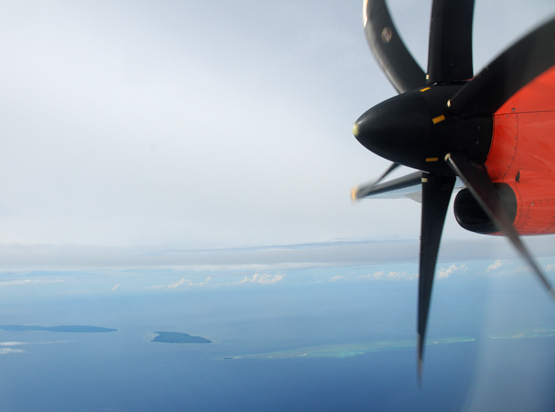
My travels began with a flight from Virginia to New York, to Vancouver, then Hong Kong, Jakarta, Makassar, Ambon, Sorong, and finally the port city of Nabire on a prop plane!
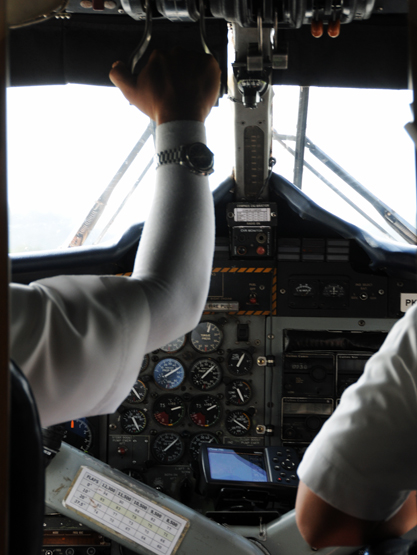
The flying definitely took a toll, and even from Nabire I needed one final flight on a chartered aircraft to the center of West Papua. Our destination was a small village known as Sugapa. My original plan on this trip was to fly to Timika instead of Nabire, and from there take a chartered flight to a village called Ilaga. Tribal and political violence had created fuel shortages in Timika, so it wasn’t possible to land there. I was already aware of protests and a military lockdown around Ilaga, and worried about a similar problem happening in Nabire.
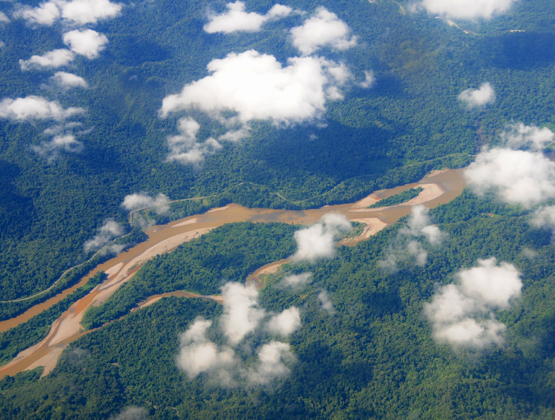
Fortunately, when I arrived in Nabire everything seemed perfectly normal. My only issue came after checking into the airport. We were told we had to pay $50 just to wait at our gate! We declined this generous offer and instead went to a restaurant to pass the time, returning right as the plane was ready for takeoff. We flew over an untamed and remote rainforest that stretched as far as I could see. Above and below are some photographs from the flight.
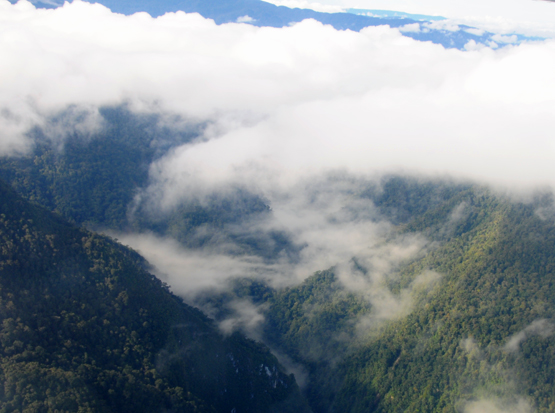
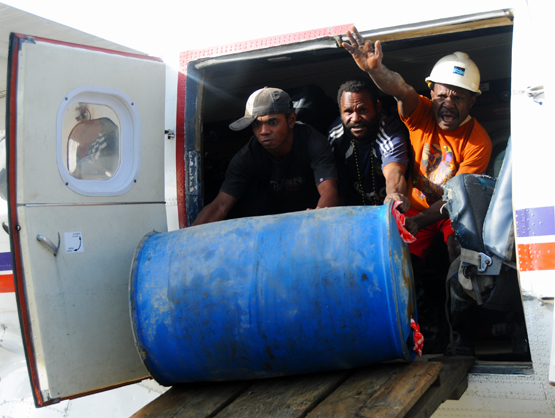
Since Sugapa is isolated by rainforest and mountains, planes are one of its main connections to the outside world. Almost every flight that comes in brings supplies for the villages as well. Motorbikes and your own two feet are about the only means of transportation once you arrive.
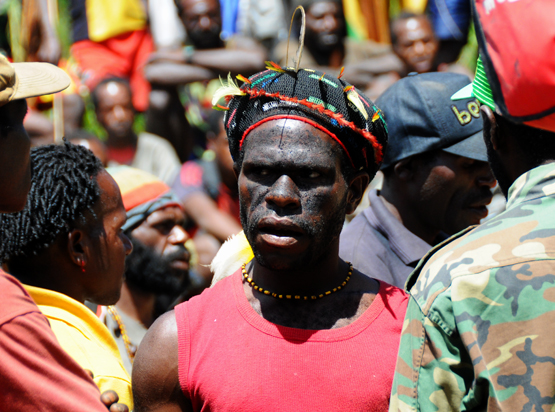
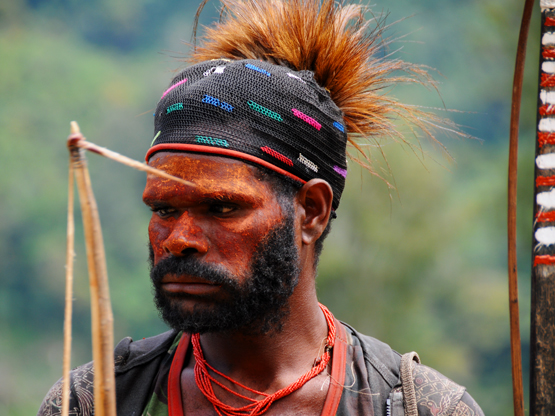
You could immediately see the cultural and physical differences between many of the local Papuan people and the Indonesians I had encountered in places like Nabire. The Indigenous peoples of New Guinea have lived on the island for tens of thousands of years and have their own distinct cultures and languages. Some of the guys initially looked intimidating to me, but many were quite nice once you tried to communicate with them.
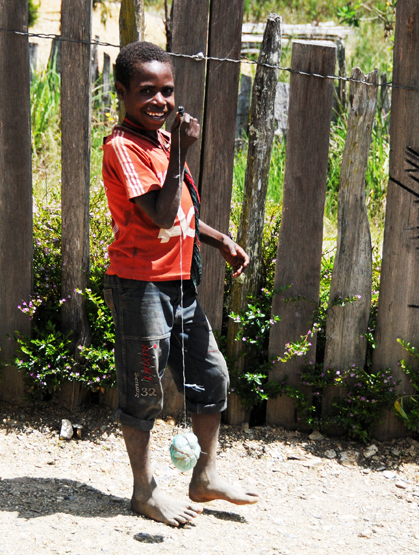
The children living in the villages were probably among the poorest I’ve ever seen. The kids had come up with some creative ways to have fun, such as making a ball from scraps and tying a string to it. I also saw several children who had taken vines and rolled them together to form a wheel, which they would chase down the steep hills.
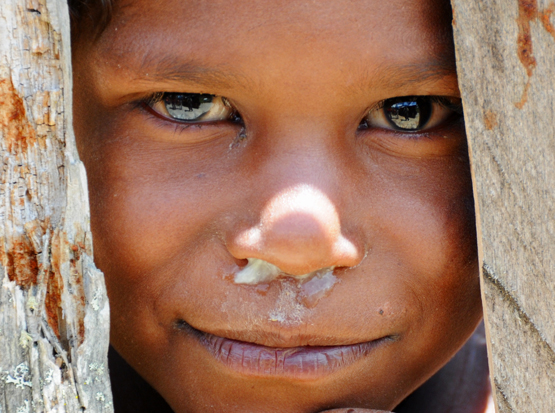
I also noticed that runny noses and congestion were extremely common among the children. I had no idea what the cause was, but I saw it constantly while the adults didn’t seem to have the same problem nearly as often.
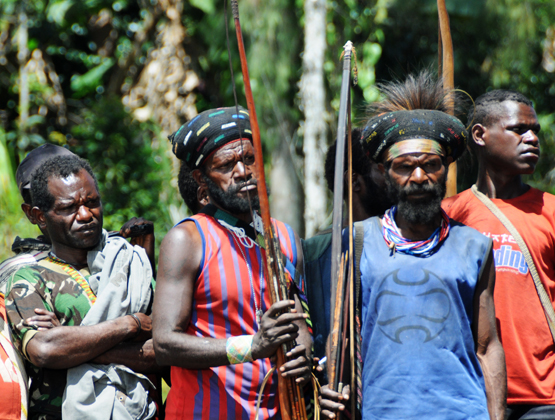
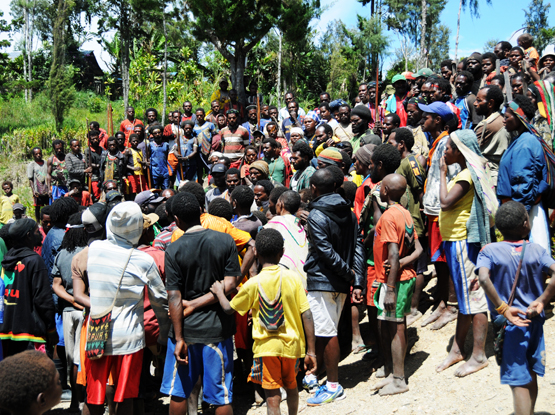
These communities rarely saw Western travelers. Most foreigners passing through seemed to be either climbing Carstensz Pyramid or involved in missionary work. These occasions did not happen often, so our arrival in Sugapa was a big deal to the locals. It wasn’t until later that I realized the huge village gathering outside our hut was actually for us.
Despite being isolated from the rest of the world, the local communities understood that foreign expeditions traveling through their land brought money and jobs. The only practical way to continue through the villages was to hire local people as porters. One of the photos above shows community leaders deciding who would join us for the journey to Carstensz Pyramid. There was a rumor that the porters were paid several hundred dollars each for the expedition, which was significant money locally.
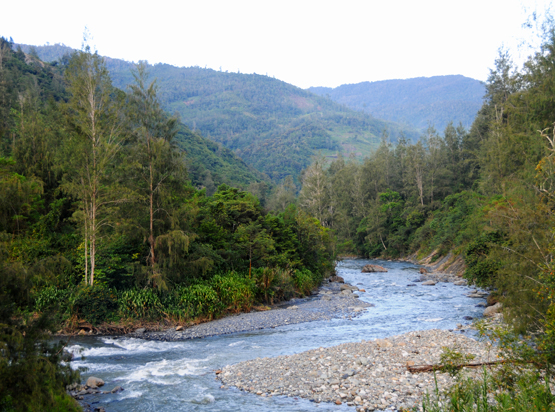
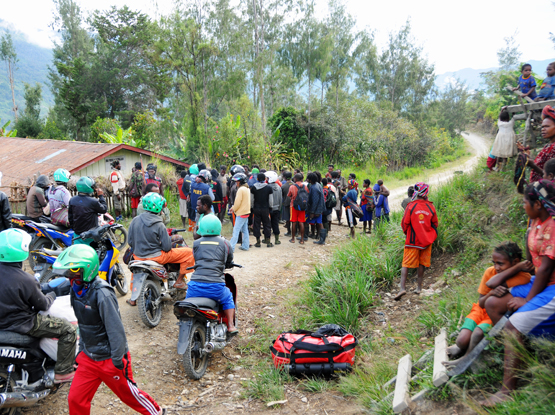
After the villagers seemed to have finished their debate, we were all taken down on motorcycles to be dropped off at the starting point of our long trek. The ride was fast and dangerous, but refreshing with the strong wind on the hot, dry day. Members of my team riding on other motorcycles had left before me, so I was surprised when I was dropped off by a river all alone.
From the second I was dropped off, I was nervous that something might have gone wrong. I passed the next 30 minutes thinking about a wide range of possible problems. Maybe someone had fallen off a motorcycle. Maybe I had been dropped off at the wrong place. Maybe the expedition had somehow continued without me. I attempted to ask the locals around me for information, but no one spoke English.
When I approached the bridge over the river, men with machetes and bows and arrows motioned for me to go away and sit down. Not only did I not know what was going on, I wasn’t being allowed to leave. After another long wait, a motorcycle finally came to pick me up and took me back to our hut. There we were told that local people were arguing over money again and had refused to let us pass through the village.
The debate continued until darkness came and a full day was wasted. We had no choice but to spend another night in Sugapa, which had never been part of the plan. The next morning we repeated the process. After only five minutes on the motorcycles we encountered a small roadblock. I saw one of our Indonesian guides hand over some cash, and then we proceeded to a much larger roadblock.
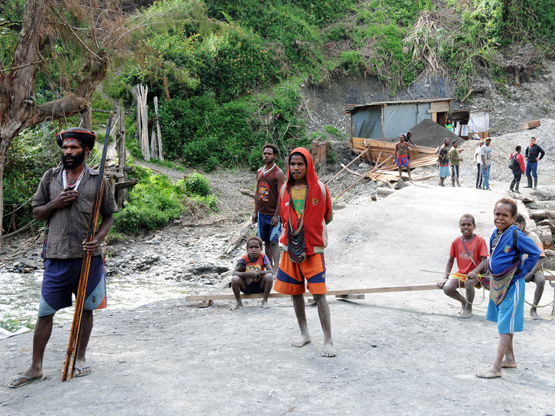
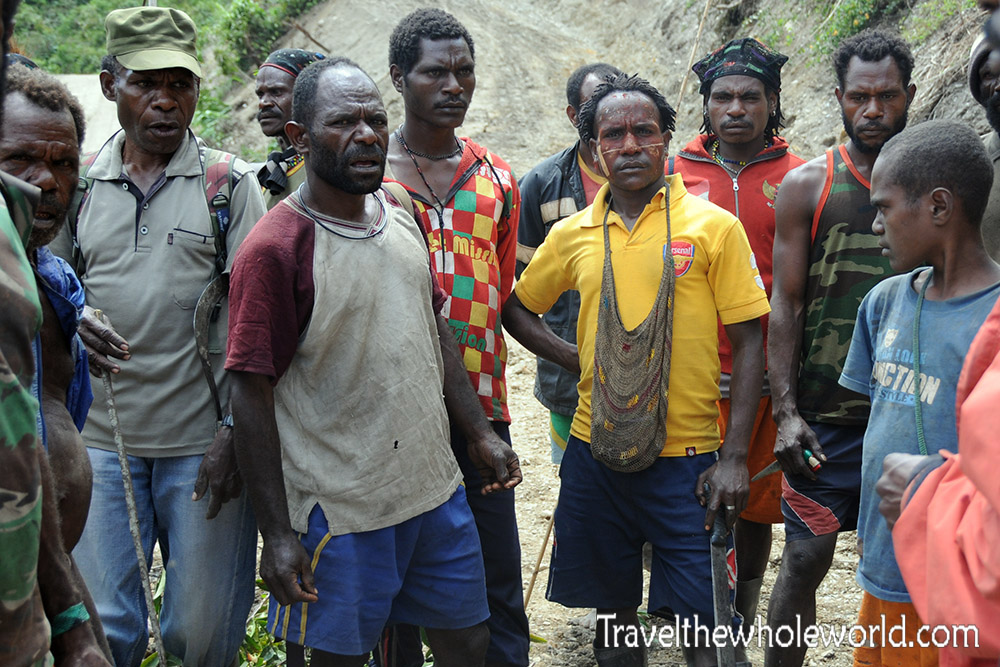
The next roadblock took some serious negotiating. We spent probably more than an hour waiting while people argued back and forth, including loud shouting at times. The photo above on the left is near the river where I had been dropped off the day before. From the bridge, we continued toward Carstensz Pyramid on foot.
Sugapa is close to 7,000 feet in elevation, but the motorcycles dropped us off around 5,000 feet, or about 1,500 meters. Despite being off the main road, the roadblocks continued to appear throughout the day and delay our progress. The photo above on the right is not the fourth or fifth roadblock, but actually the sixth one we encountered.
I can’t explain how frustrating it was to sit anywhere from a few minutes to hours waiting to find out whether we would be allowed to pass. A lot of us wondered if we would lose another day, or even worse, whether some type of escalation would prevent us from attempting the mountain at all.

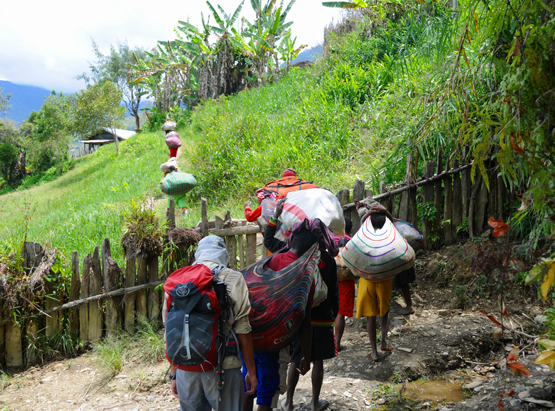
The road above was still being built and headed toward our goal of Suanggama village. The top of the hill was as far as it had progressed. It seemed that each roadblock had a different method of blocking the route. One had logs across the trail, another was guarded by men with bows and arrows, and at one roadblock a man simply took a leafy branch and stuck it into the dirt.
One of the roadblocks took place right beside a bulldozer. By that point I was actually disappointed that nobody started it up and tried to incorporate it into the blockade.
Once we got off the main road, we made it all the way to Suanggama village without any other problems. Because we had lost the previous day, the plan had been to hike to Suanggama early in the morning and continue directly to Camp I in the rainforest. Instead, the roadblocks turned what should have been about a two-hour hike into an eight-hour journey. It was impossible for us to make it to Camp I that day.

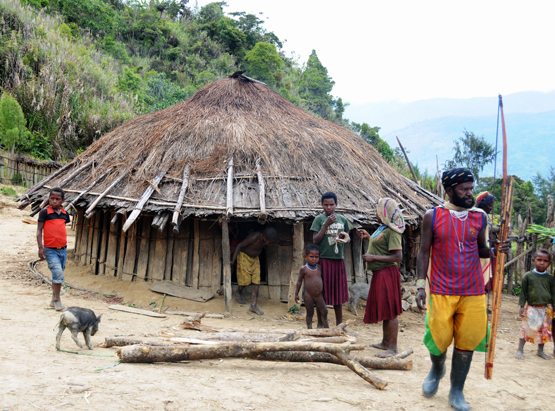
Staying in the village was an interesting cultural experience, minus the sleeping. During the evening we watched the villagers preparing meals and playing with their kids. We usually had a huge crowd watching us curiously. I wondered if the locals thought the six of us were out of our minds for wanting to hike through the rainforest and climb a mountain. They probably thought there were much more interesting things to be doing with life.
My biggest concern was sleeping in the hut at night. Loud noises and all kinds of creatures moved around inside after dark, and a few of them touched me. There were smooth things, furry things, and clicking things. At one point during the night, I stretched my arm out and felt something soft beside me that slowly moved away. Maybe because I was half asleep, I immediately took my hand out of the sleeping bag and tried to feel around where it had been, but whatever was there was gone. Needless to say, I was excited that I would be sleeping in a tent the next night!
Continue the Adventure: From the Villages to the Rainforest →
Explore More of Indonesia
Sugapa • Bali • Jakarta • Lombok • West Papua • Yogyakarta