Colombia is one of the most diverse countries I’ve traveled through in South America. With coastlines on both the Caribbean Sea and Pacific Ocean, the country has everything from tropical beaches and islands to rainforest, high mountains, and lush national parks. Its cities are just as varied, ranging from the historic streets of Cartagena to the sprawling capital of Bogotá and smaller towns filled with colonial architecture and centuries of history.
Beyond the scenery, what stood out to me was how much variety Colombia packed into a single trip. I could explore a huge modern city, walk through a colonial center, descend into an underground salt cathedral, hike through tropical forest, or spend time along the Caribbean coast. The food, music, nightlife, and culture added another dimension to a country where each destination felt noticeably different from the last.
Explore Bogotá
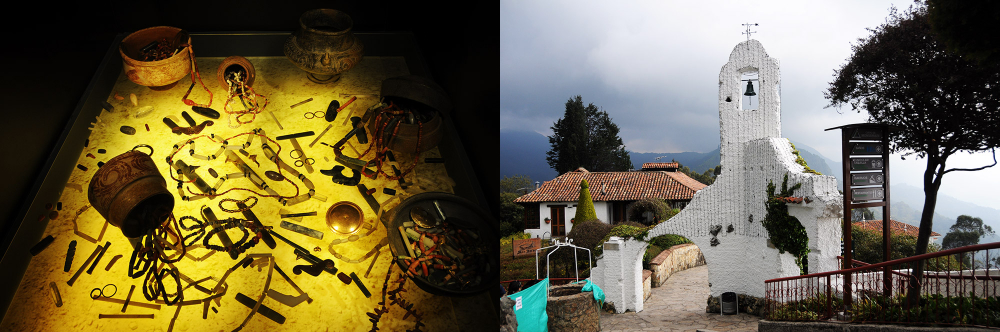
Bogotá is Colombia’s capital and largest city, a sprawling metropolis high in the Andes with a mixture of historic neighborhoods, modern districts, museums, churches, restaurants, and nightlife. La Candelaria forms the historic heart of the city, where colonial-era streets and architecture contrast with the much larger modern capital surrounding it.
One of Bogotá’s most recognizable landmarks is Cerro de Monserrate, which rises above the city and can be reached by cable car, funicular, or on foot. From the top, the enormous scale of Bogotá becomes much easier to appreciate, with the city spreading across the plateau below.
Explore Cartagena
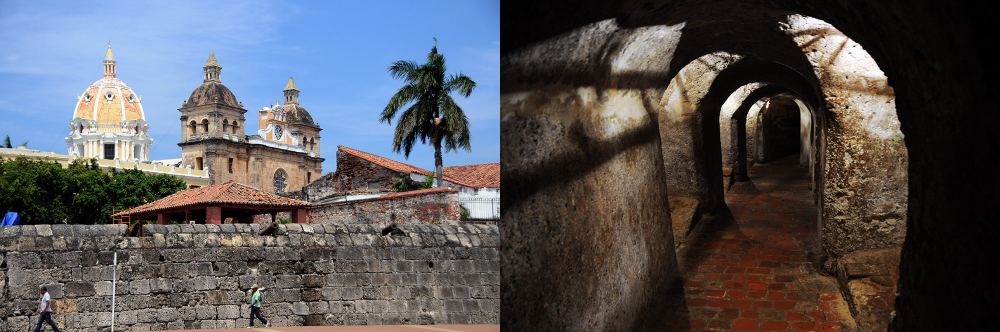
Cartagena is one of Colombia’s most famous destinations, known for its remarkably preserved historic center on the Caribbean coast. Massive Spanish fortifications surround much of the old city, while colorful colonial buildings, churches, plazas, balconies, and narrow streets fill the neighborhoods within the walls.
The city’s history and Caribbean setting give Cartagena a character completely different from inland Colombia. Historic sites and museums can be combined with beaches, restaurants, festivals, and nightlife, making it one of the country’s most varied destinations.
Explore Santa Marta
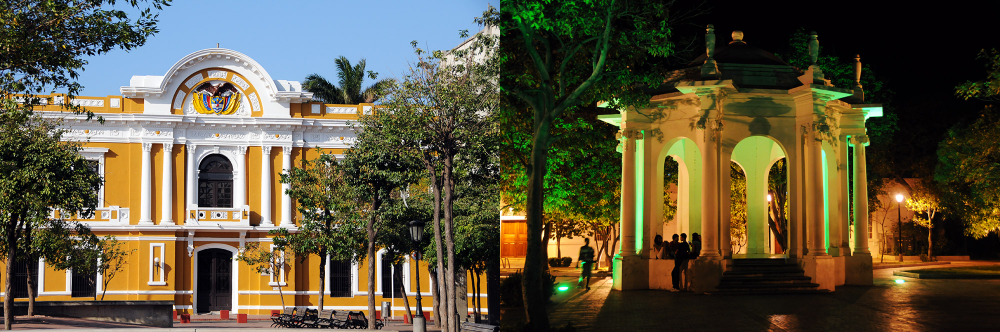
Santa Marta is another of Colombia’s historic cities along the Caribbean coast and one of the oldest surviving European-founded cities in South America. Its waterfront, historic center, and tropical setting are backed by the enormous Sierra Nevada de Santa Marta, creating a striking transition from the Caribbean coast to some of the highest coastal mountains in the world.
The city also serves as a gateway to beaches, mountain landscapes, and nearby Tayrona National Park. Santa Marta has an important connection to South American history as well: Simón Bolívar spent his final days at the Quinta de San Pedro Alejandrino outside the historic center and died there in 1830.
Explore Zipaquirá
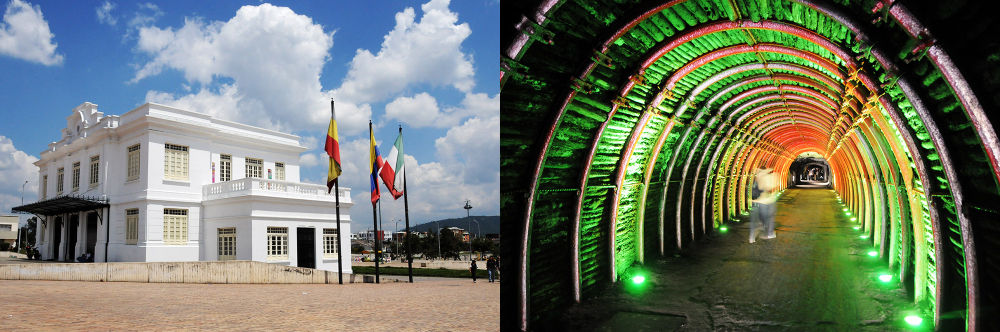
Zipaquirá is a historic town north of Bogotá whose development has been closely connected to the enormous salt deposits beneath the surrounding mountains. Salt was extracted in the region long before the arrival of Europeans, and mining continued to shape the town for centuries.
Its most famous attraction is the Salt Cathedral of Zipaquirá, an underground Roman Catholic church constructed within the tunnels of a former salt mine. Crosses, chapels, passageways, and enormous underground chambers carved into the salt-bearing rock make it one of Colombia’s most unusual landmarks.
Explore Tayrona National Park
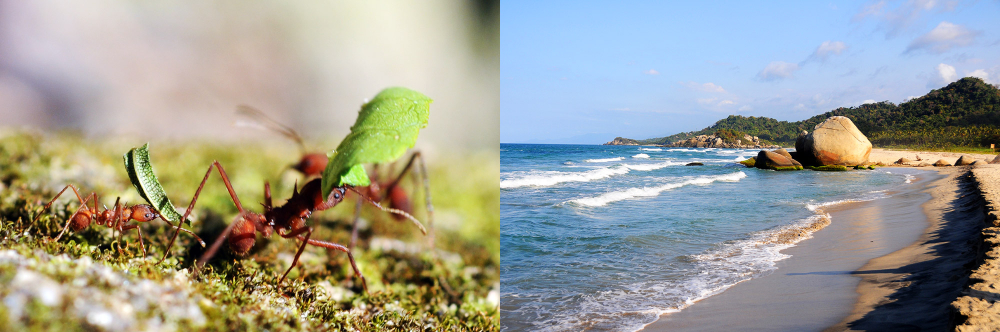
Tayrona National Park protects a spectacular section of Colombia’s Caribbean coast where tropical forest descends from the foothills of the Sierra Nevada de Santa Marta toward rocky headlands, coves, and beaches. Hiking trails connect different parts of the park, while its forests and coastal habitats support a wide variety of wildlife.
The landscape also has deep cultural importance to the Indigenous peoples of the Sierra Nevada de Santa Marta. Archaeological sites and ancient routes remain throughout the region, adding another layer to a national park already known for its beaches, forest, mountains, and wildlife.