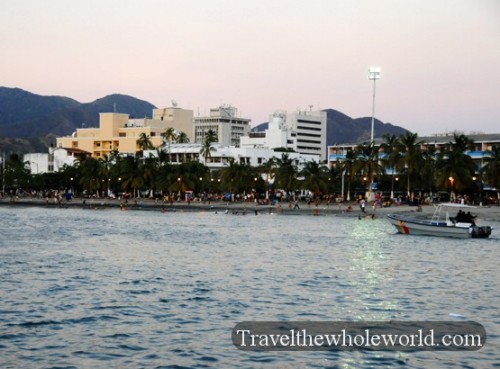
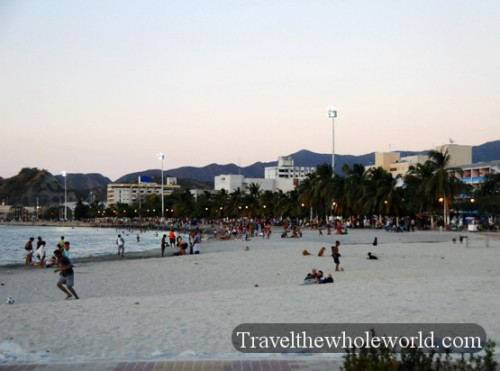
Another famous city on Colombia’s Caribbean coast is Santa Marta. There was an enormous difference to me between Santa Marta and Cartagena. I found Santa Marta more modern and relaxed, while also feeling less touristy. The city has several beaches within a 20-minute drive, including the main beach along downtown shown above. While I definitely enjoyed Cartagena, if I were offered a free trip back to one of the two, I’d pick Santa Marta.
Santa Marta at Night
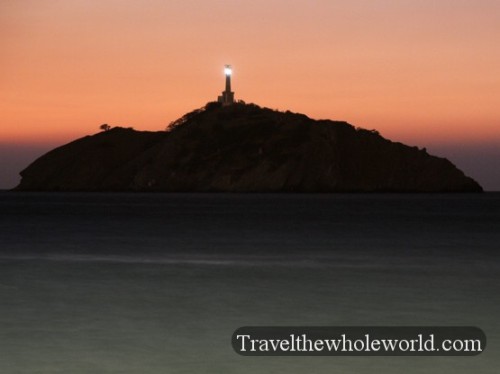
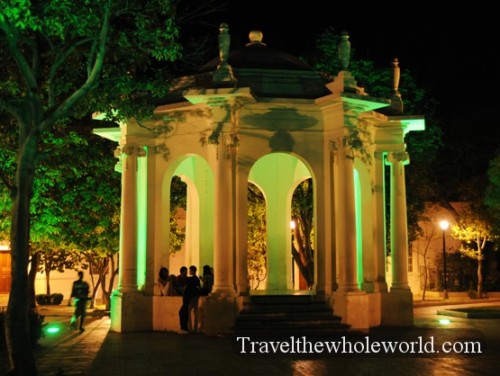
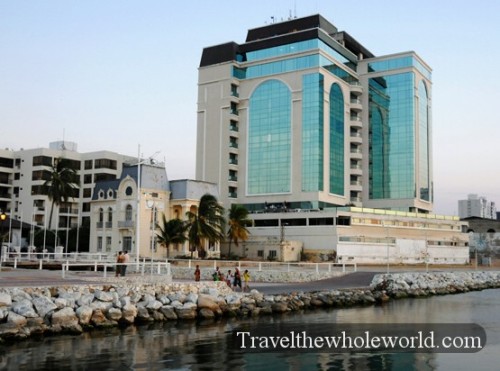
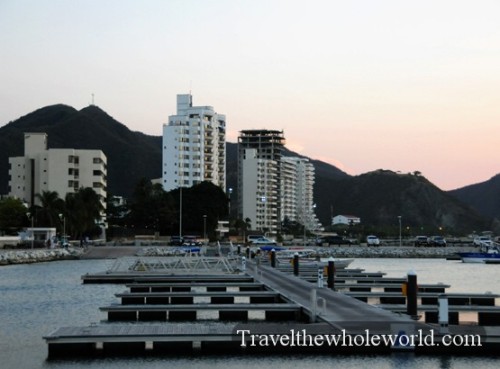
Santa Marta has some good nightlife and plenty of nice bars and restaurants to visit. On the left is the city’s lighthouse at sunset, photographed from the beach. The gazebo on the right was in one of several city parks and was surrounded by restaurants, food vendors, and live music.
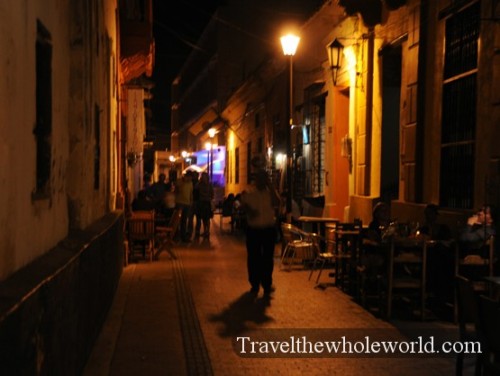

Above is one of the many pedestrian streets in Santa Marta lined with small cafes, bars, and restaurants. Most have outdoor seating and seem to be busiest at night. On the right is Ibiza Cafe, which appeared to be a brand-new bar when I visited but was on the expensive side. I felt bad for the owners because it looked like they had put so much effort into the place, yet it was always empty whenever I passed by. I seriously meant to have a drink there but never got around to it!
Around the City
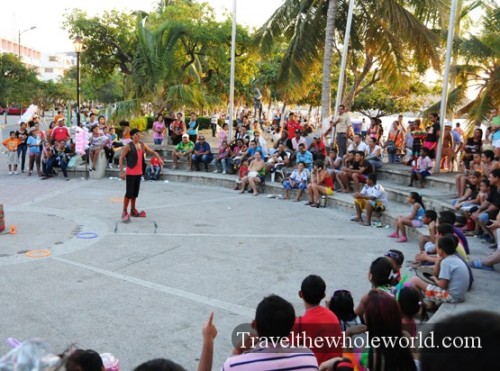
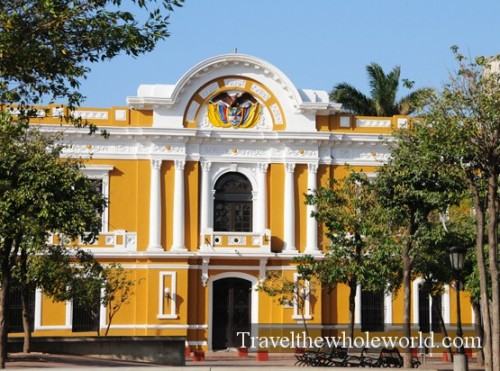
Santa Marta is just as enjoyable during the day as it is in the evening. On the left is a clown who had gathered a crowd as he entertained them with tricks and pulled random kids out to participate. On the right is an example of some of the architecture in the old city.
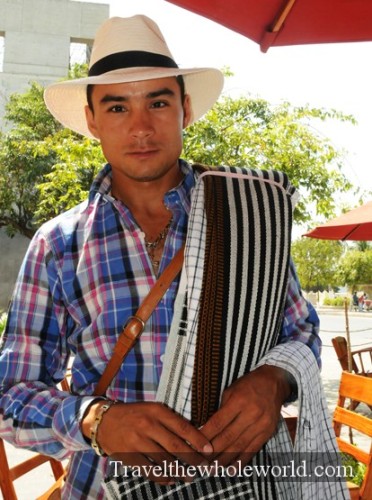
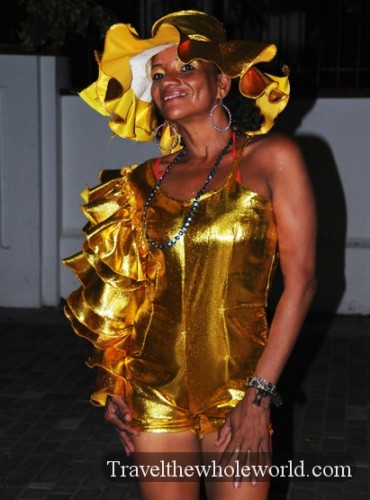
Here are two shots of some locals. On the left is a man who was selling scarves and Colombian-style hats. At first I wasn’t sure if the woman on the right was just out partying or some type of show dancer, but a local told me she was probably a professional dancer.
Simón Bolívar in Santa Marta
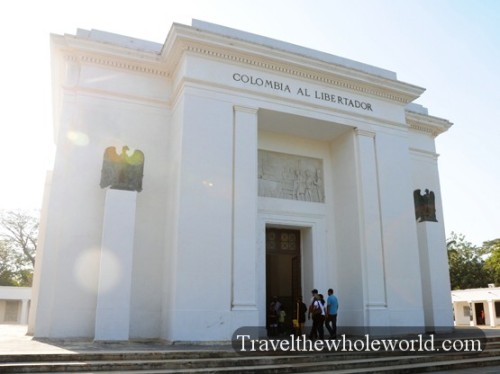
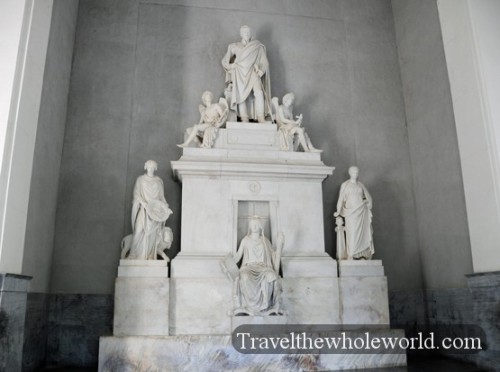
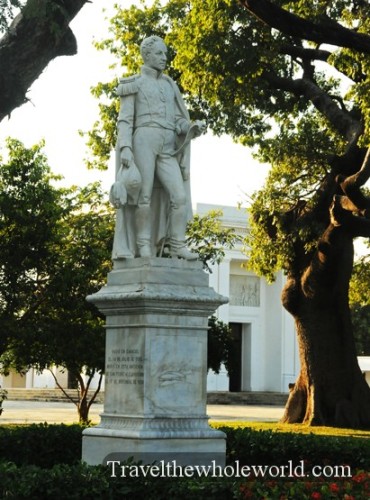
Santa Marta is also famous as the place where Simón Bolívar died in 1830. Bolívar led the independence campaigns that helped free much of northern South America from Spanish rule. He died near Santa Marta at only 47 years old, with tuberculosis generally accepted as the cause of death.
His remains were originally buried in Santa Marta before later being moved to Caracas. Just outside the main part of the city is a large memorial and park dedicated to Bolívar, with monuments and exhibits covering different parts of his life, death, and the struggle for independence from the Spanish Empire.
Iguanas in the Trees
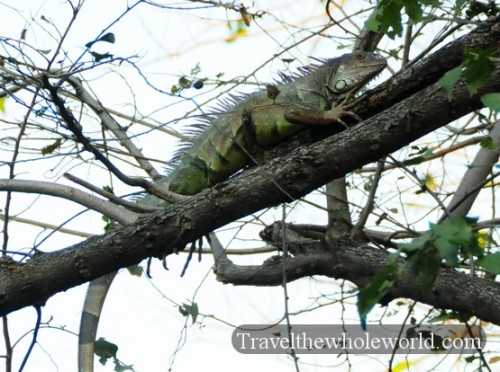
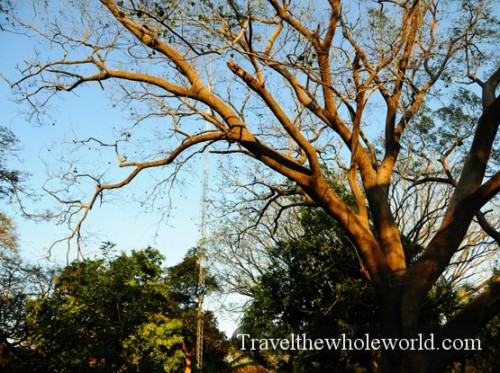
Within Bolívar’s memorial park is also a huge population of iguanas. The only reason I noticed the first one was because it made a loud noise after nearly falling out of a tree. Once I spotted it, I suddenly realized there were dozens, if not hundreds, of iguanas throughout the park, including many high in the trees.
I knew iguanas could climb, but I had always assumed they stayed fairly close to the ground. In the photo on the right, there’s an iguana about three-quarters of the way up one of the trees, sitting on a massive branch probably around 50 feet above the ground.