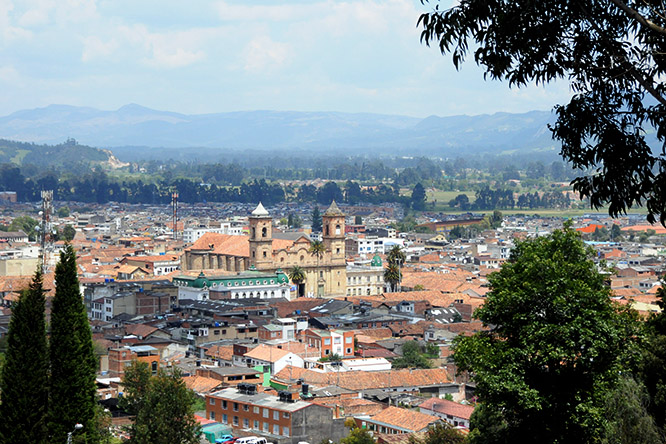
Just a short bus ride north of Bogota is the city of Zipaquira. The city is over 400 years old and full of history, making it a popular visit for both Colombians and travelers. With a population of over 100,000, it’s a perfect small city and a great day or weekend destination for anyone staying in Bogota.
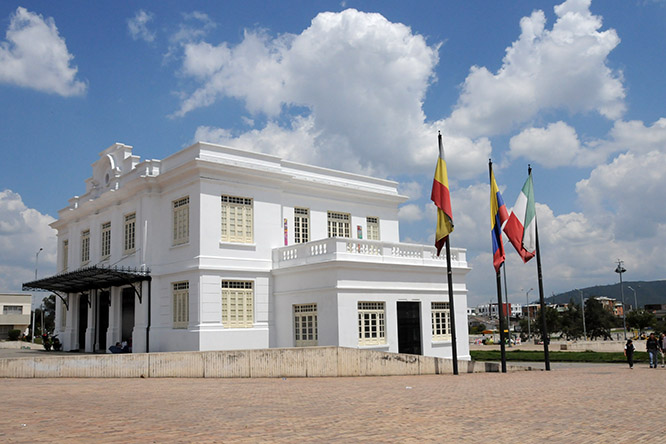
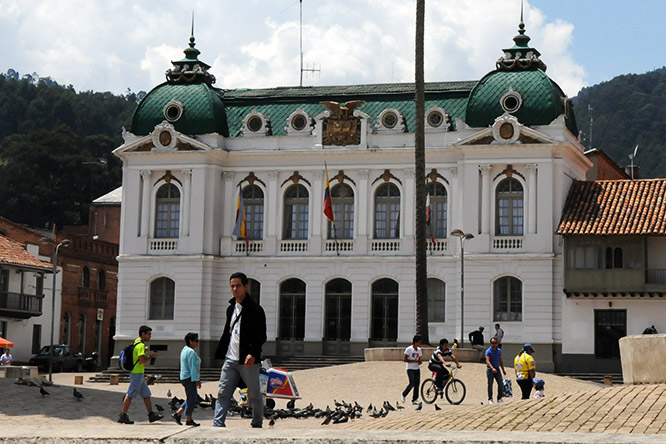
From these shots of the governor’s mansion above and the main plaza below, Zipaquira looks like a typical historic South American city. In many ways it is, but I have to admit that at times I felt more like I was in an amusement park than a city. Near the center I saw a small tourist train driving people through the streets, along with attractions like rock climbing walls that I didn’t expect to come across here.
Regardless, it’s a fun place to visit. The weather was perfect when I was here, and with plenty of restaurants and shops around the historic center, it’s definitely worth the easy trip from Bogota.
The Salt Cathedral
My main reason for visiting Zipaquira, and probably the reason for most visitors, was to see the famous Salt Cathedral. The history of salt mining here stretches back thousands of years, when the indigenous Muisca people extracted salt from the area long before the arrival of the Spanish. Mining continued for centuries afterward, eventually giving rise to the enormous underground complex that exists today.
The photo above shows the main entrance into the Salt Cathedral. I imagine it looks pretty different than the mines did thousands of years ago!
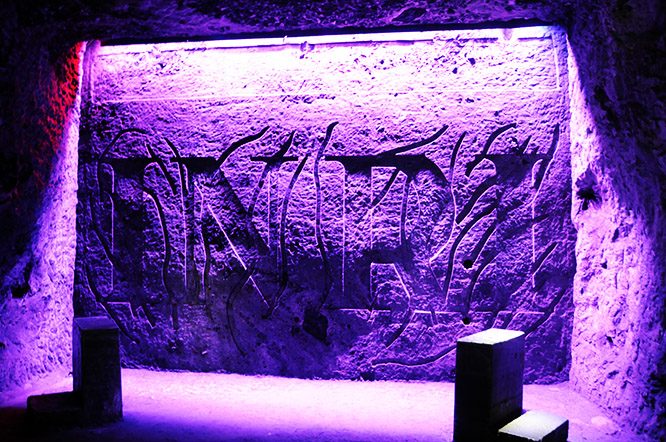
Near the entrance is this illuminated INRI sign. INRI is the traditional Latin abbreviation for Iesus Nazarenus, Rex Iudaeorum, meaning “Jesus of Nazareth, King of the Jews.”
Exploring the Mine
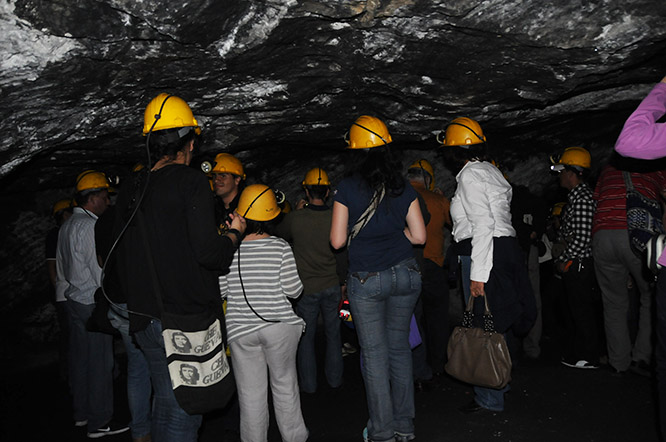
You can explore the cathedral on your own, but I joined a guided tour to explore more of the mine. We were given miners’ helmets with lights before heading into the darkness with a group of at least a dozen people.
The beginning of the tour was honestly one of the more annoying experiences I’ve had while traveling. It was overcrowded, and we spent what felt like forever waiting in complete darkness before we could get moving. We all had helmet lights and were told to keep them off, but every once in a while someone would randomly turn theirs on for a second, blinding everyone nearby.
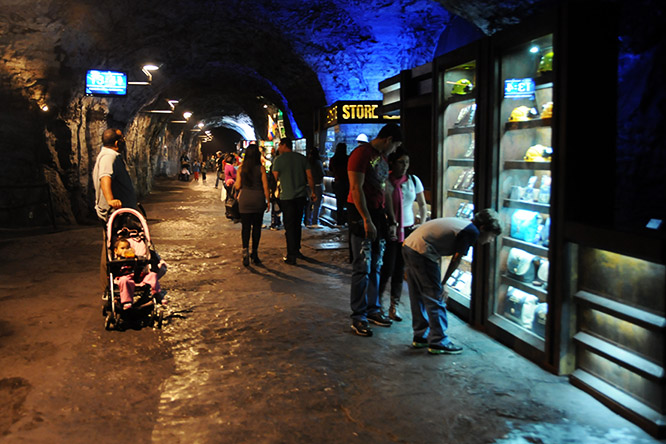
Once we finally got moving and entered parts of the old mine, the experience became much more enjoyable. They even let us swing a pick at the walls to see what mining was like, and we were allowed to keep a piece as a souvenir. If you don’t feel like earning your souvenir, the mine even has its own shop!
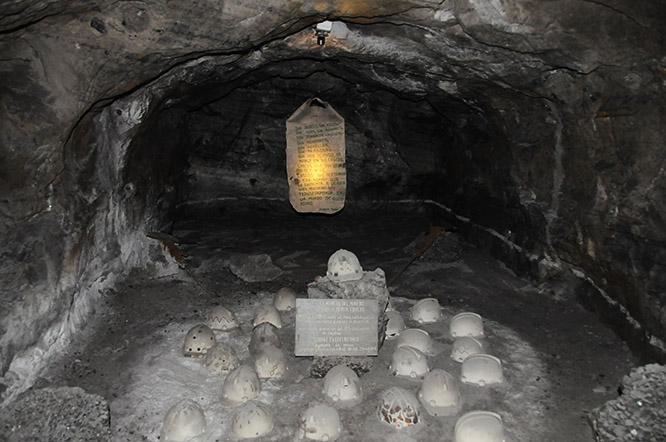
Before getting to the main cathedral, I came across this memorial dedicated to those who lost their lives working in the mines. Religious spaces had a long history within the mine, where miners created places to pray before beginning their dangerous work underground.
Inside the Salt Cathedral
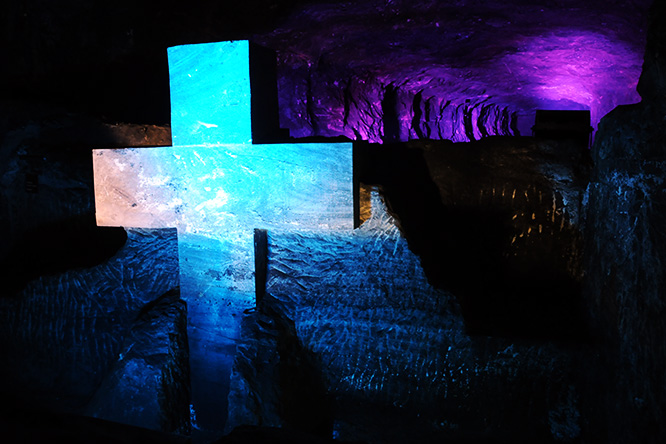
Although smaller religious spaces had existed within the mines for years, the first major Salt Cathedral was built in the 1950s. It was later closed and replaced by the present cathedral, which opened in the 1990s.
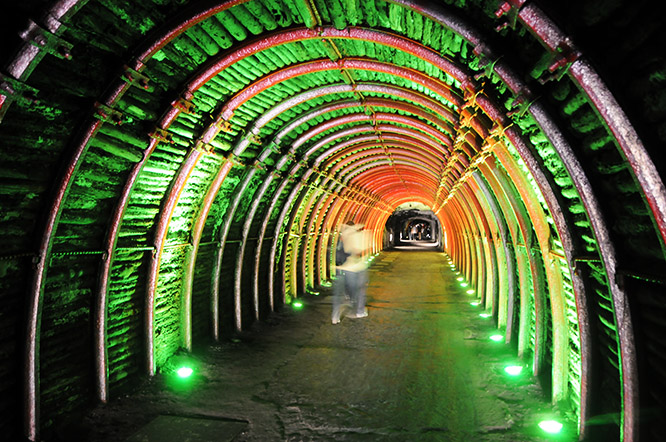
Somehow I only have two photos from the main Salt Cathedral, even though the underground complex is enormous. Above is a good example of what many of the passages look like today. Large crosses and other religious features have been carved into the rock and illuminated with colorful lights. One chamber even has a reflecting pool.
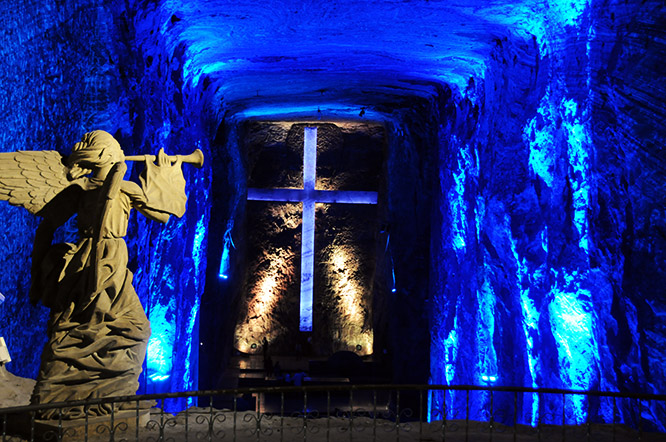
This final photo shows the main altar of the Salt Cathedral. Despite its name, the Salt Cathedral isn’t officially a cathedral of the Catholic Church because it doesn’t have a bishop. It is still an active place of worship and one of Colombia’s most unusual attractions. Other places to explore within the complex include exhibits on the history of salt mining, an auditorium, and the enormous underground chambers themselves.