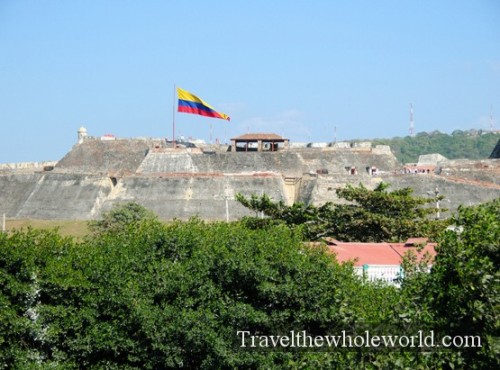
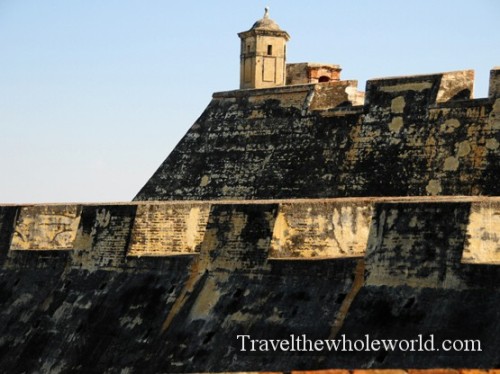
One of my first stops in Cartagena was Castillo San Felipe de Barajas. The name San Felipe sounded really familiar to me, and after looking it up I realized I’d come across other Spanish fortifications with similar names during my travels. This one was easily the largest I’d visited. Construction began in the 1600s, and the fortress was expanded over the years as Cartagena became one of Spain’s most important ports in the Caribbean.
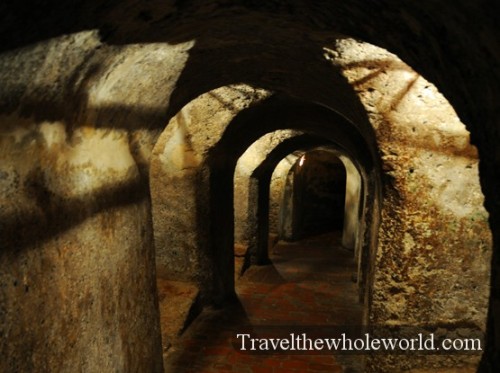
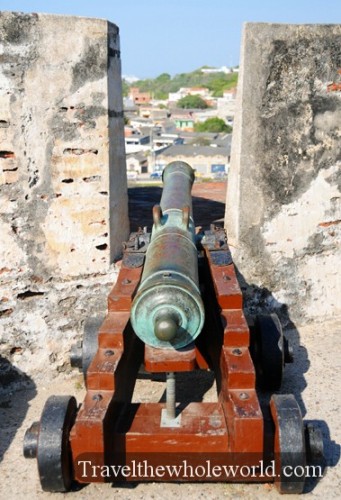
The fortress was attacked numerous times during its history, including during major battles between European powers competing for control of the Caribbean. Above on the left is one of the passageways forming a maze of tunnels within the fortress. On the right is a cannon overlooking Cartagena. Since the castle sits on a hill, it’s also a great place to get views over the city.

Cartagena’s Old City
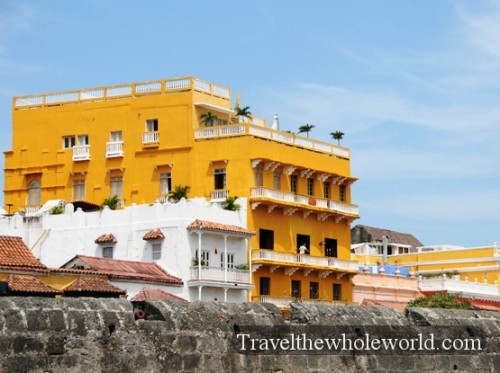
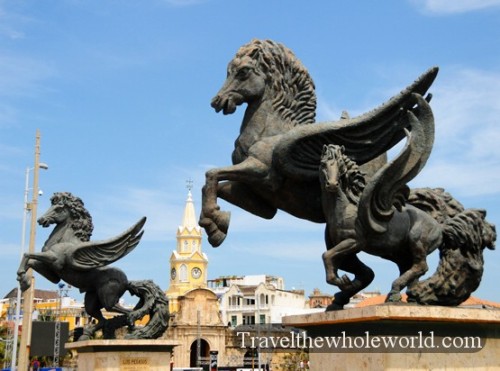
While San Felipe overlooks the city, Cartagena’s historic center is protected by its own massive system of walls and fortifications built during the Spanish colonial period. On the left you can see part of the old city behind the wall, while on the right are the Pegasus statues with the famous Clock Tower in the background.
Festivals and events regularly take place around the Clock Tower. A local told me I had just missed a film festival that had taken place over the weekend. My hostel was inside Cartagena’s old city, so I spent most of my time exploring this part of town.
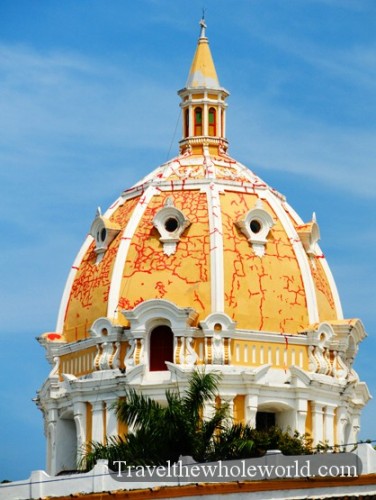
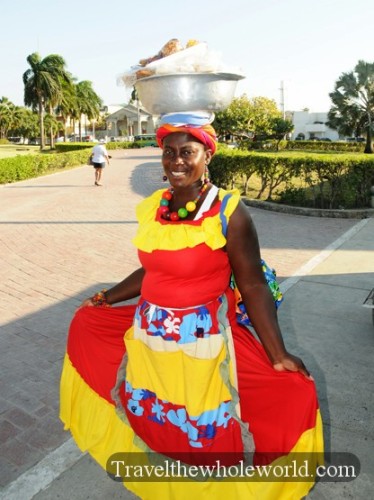
The architecture and culture in Cartagena are amazing. The historic center is filled with churches, colorful colonial buildings, balconies, plazas, and narrow streets. Cartagena was also one of the major ports of the transatlantic slave trade during the Spanish colonial period, and the African heritage that developed from that history remains an important part of the city’s culture today.
The woman above was selling homemade sweets on the street, so naturally I bought some from her. Below are a few more photos from Cartagena’s old city. Colonial balconies are everywhere, along with restaurants offering outdoor seating, small parks, and plenty of street vendors.
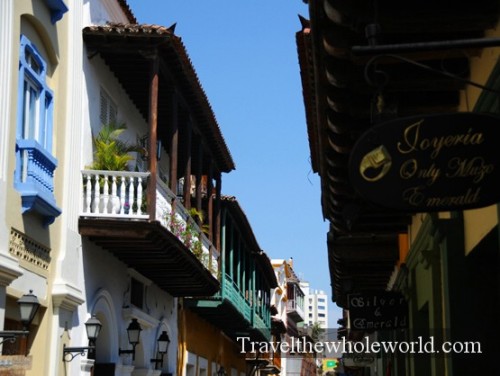
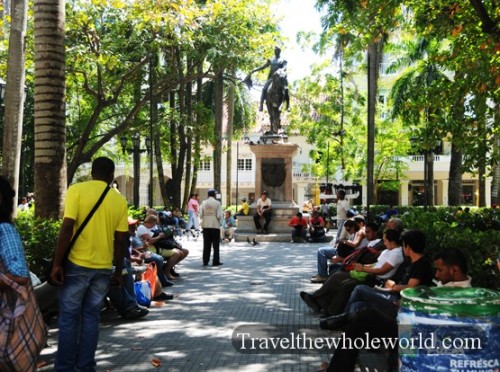
Cartagena’s History
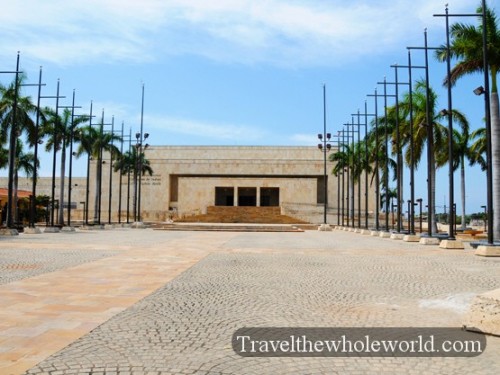
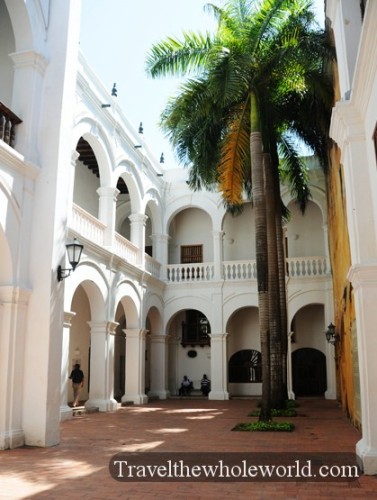
Above is a shot of the city’s convention center alongside the entrance to the historical museum housed in the Palace of the Inquisition. This was one place I really wanted to visit. The museum was smaller than I expected, but it was an excellent place to learn about Cartagena’s history.
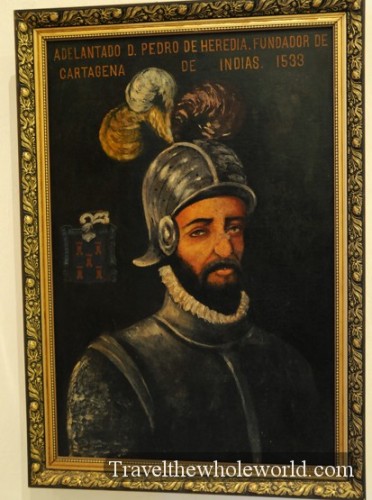
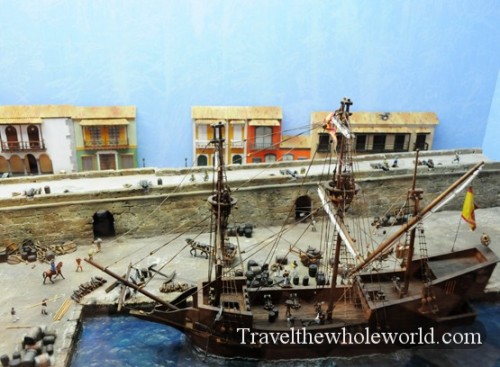
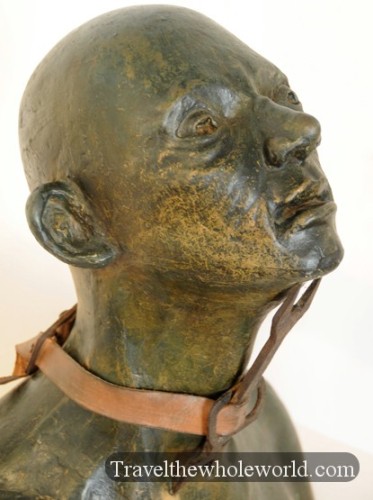
One section covered Pedro de Heredia, the Spanish conquistador who founded Cartagena in 1533. Other exhibits showed what Cartagena looked like during its early colonial period and explored the Spanish Inquisition and its history in the city.
Around Cartagena
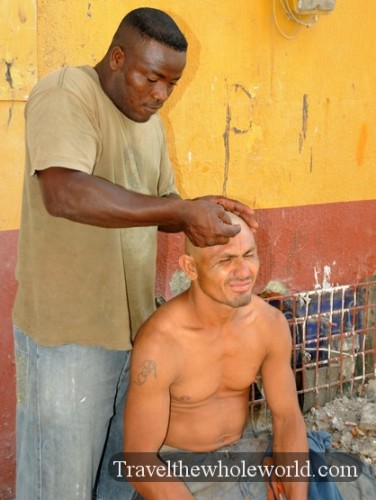
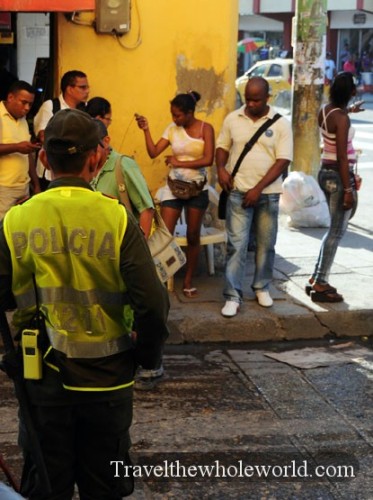
Cartagena felt busier and more energetic than Santa Marta, with travelers from all over the world mixed into the crowds around the historic center. Above is a man getting what looked like a painful haircut in an alley I walked through. On the right is a policeman watching over a busy street corner.
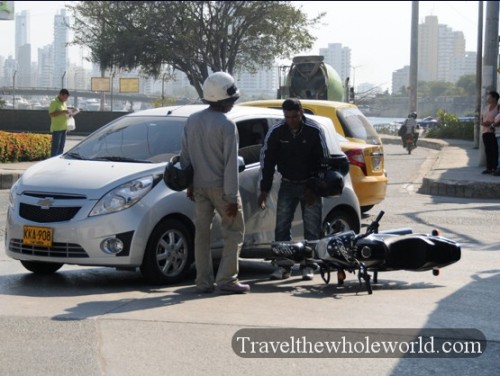
During one of my walks, a motorcycle had T-boned a car at an intersection. I’m not sure whose fault the accident was, but it seemed to inspire every driver within a mile to hold down their horn and created an extremely annoying atmosphere. It was one of those random little moments from traveling that somehow sticks in your memory.
Explore More of Colombia
Bogota • Cartagena • Santa Marta • Tayrona National Park • Zipaquira