Traveling in the Ecuadorian Amazon
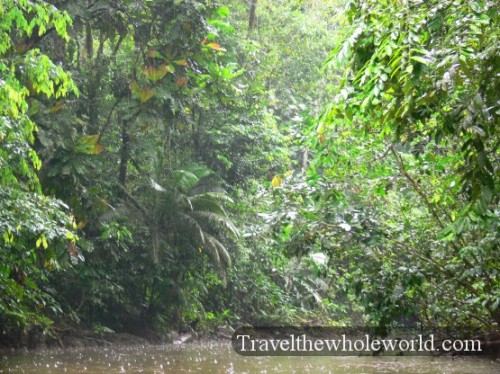
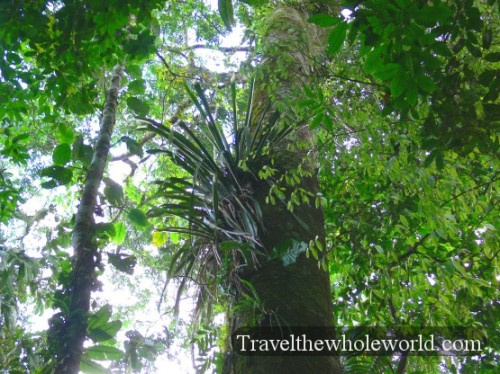
Since I have a big passion for the outdoors and nature, the Amazon has always been a mecca of adventure and wildlife to me. There’s good reason for that, because the Amazon rainforest is one of the most biologically diverse places on Earth. The Amazon spreads across eight countries and is home to an incredible variety of trees, plants, birds, reptiles, mammals, fish, and insects.
One of the biggest threats to the Amazon is deforestation, as areas of rainforest are cleared for ranching, farming, and other development. Much of this deforestation has historically occurred in Brazil, although the rainforest extends far beyond Brazil’s borders.
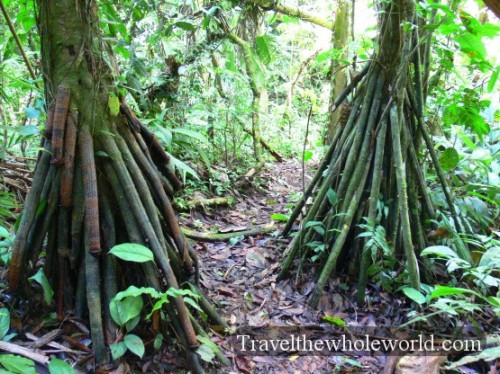
Above are some of the strange plants I encountered in the Amazon. On the left are the exposed roots of one of the rainforest trees. Some tropical trees even appear to slowly change position over time as new roots grow in one direction while older roots die away.
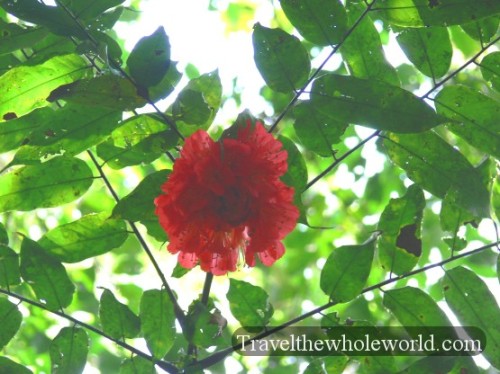
The flower on the right was growing surprisingly high above the ground among the branches of a tree.
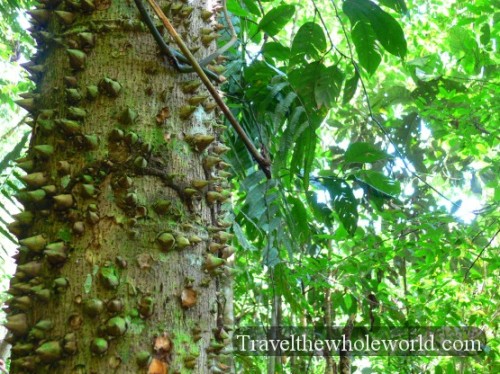

The first photo above shows a tree covered in spikes. At the time I wasn’t sure whether they were actually part of the tree or some strange type of external growth. On the right is a sunset over the Amazon Basin following a brief rainstorm.
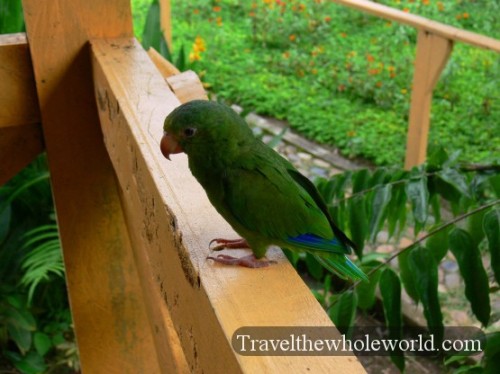
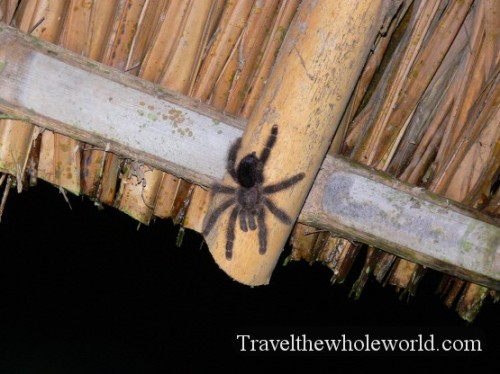
Here are examples of both welcome and unwelcome guests at the lodge where I stayed. On the left is a wild parrot that had become accustomed to people and usually paid us a visit during the daytime. On the right is a huge tarantula that I spotted one night on the ceiling of our lodge.
One of the best things about staying here was how remote it was. The lodge was more than an hour from the nearest town by boat. Once there, you basically got around by hiking through the forest or paddling in canoes. Electricity came from a generator, so power and hot water were available for only a few hours each day. At night it became pitch black, with the silence constantly interrupted by insects and strange animal noises coming from the forest.
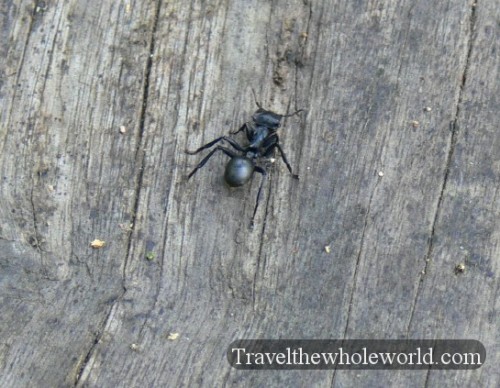
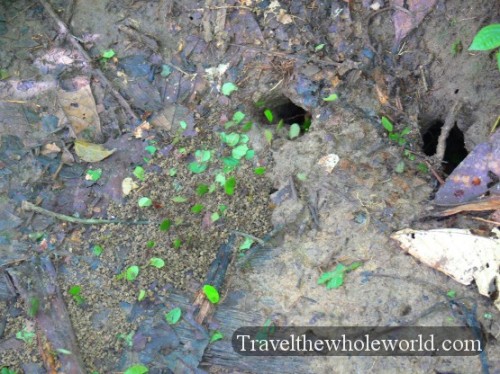
The huge ant on the left is locally known as a conga ant. It’s enormous compared with most ants and has a notoriously painful sting. On the right are leaf-cutter ants carrying pieces of leaves back toward their nest. The ants don’t actually eat the leaves themselves. Instead, they use the plant material to cultivate fungus inside their colony, which becomes their food.
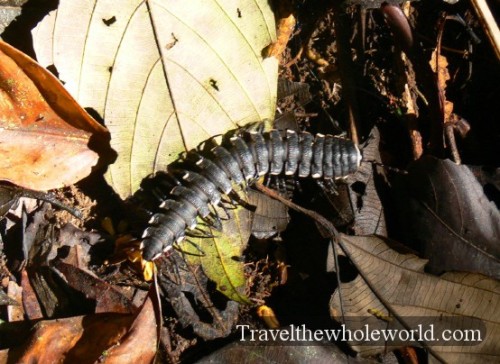
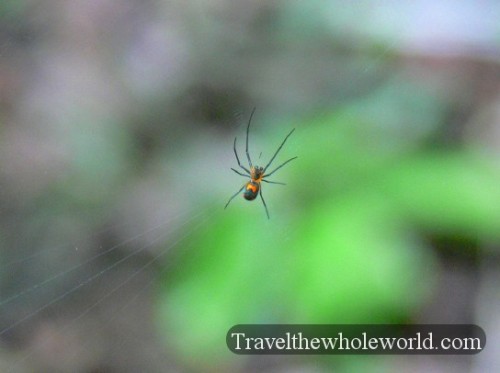
On the left is a huge centipede we saw walking across the forest floor. The small spider on the right is one that I almost walked directly into while hiking through the forest.
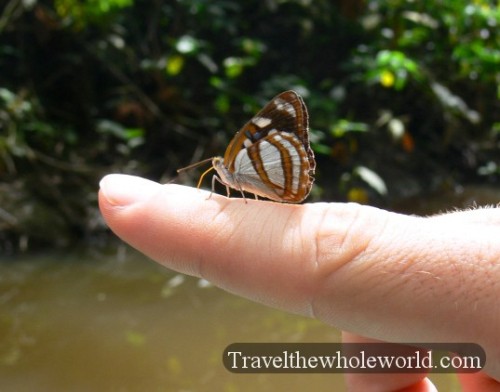
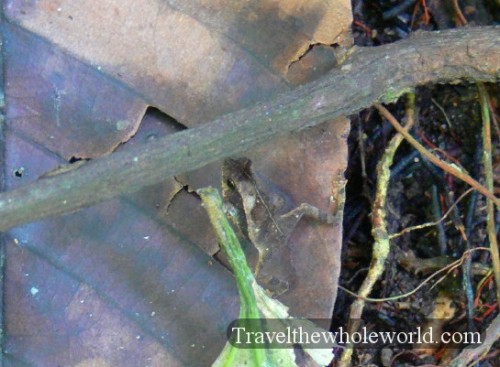
The next pictures are of a small butterfly and an extremely tiny frog. For some reason, the butterfly had absolutely no fear of me. It walked around my hand and didn’t fly away even when I brought it close to my face for a better look.
The tiny frog on the right had been hopping around before suddenly freezing when it noticed me. It’s extremely well camouflaged, but you can see it standing with one arm resting against the green stem.
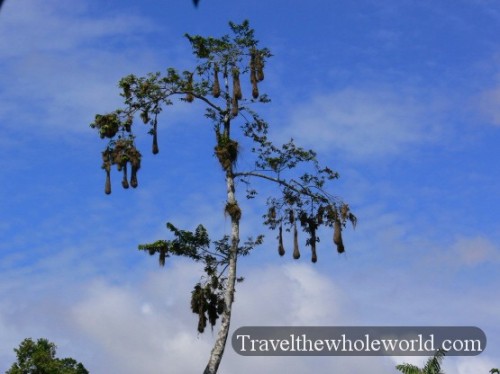
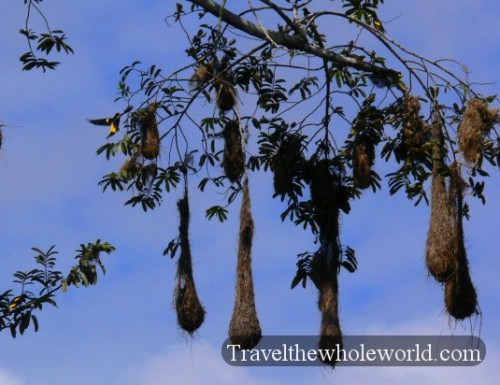
The strange objects hanging from the trees above are actually nests built by crested oropendolas. These birds construct their long hanging nests high in the trees, which looks like it must require some serious skill. You can also see several of the birds sitting among the branches.
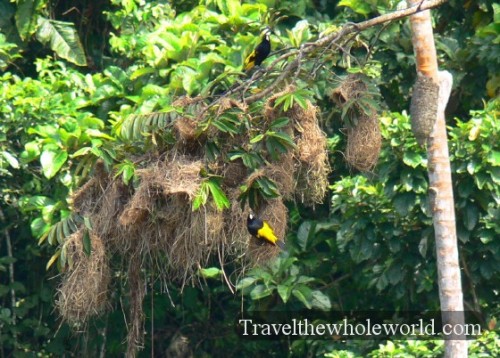
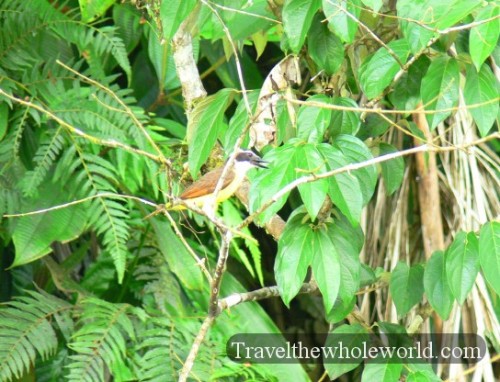
On the left is a closer view of one of the crested oropendolas. I wasn’t sure what species the bird on the right was, although I saw it in the same general area.
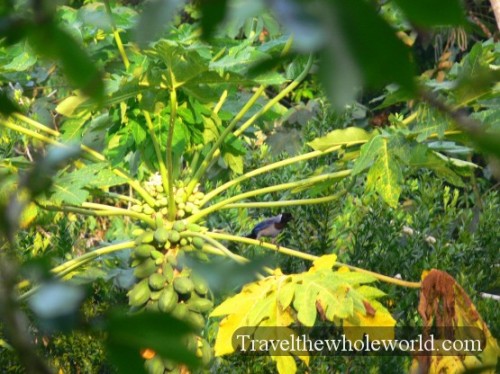
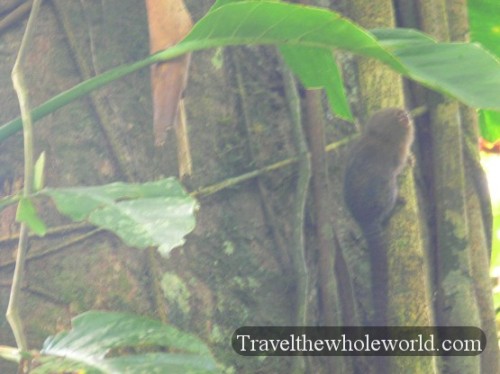
The bird on the left is another species that I wasn’t able to identify. On the right is unfortunately a pretty bad photograph of a pygmy marmoset, one of the smallest monkeys in the world.
The monkey was extremely high in the trees and staring down at me as I passed underneath. Even with the 12x zoom on my camera, I didn’t realize I’d actually photographed a monkey until I looked at the picture afterward.
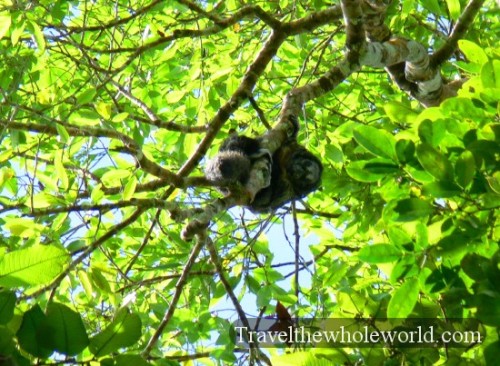
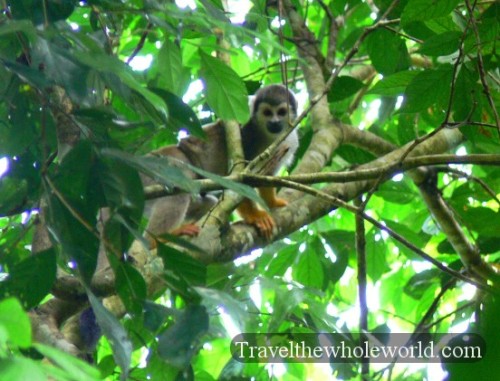
I also encountered groups of monkeys traveling through the forest canopy. At one point I watched around a dozen of them moving one after another through the trees.
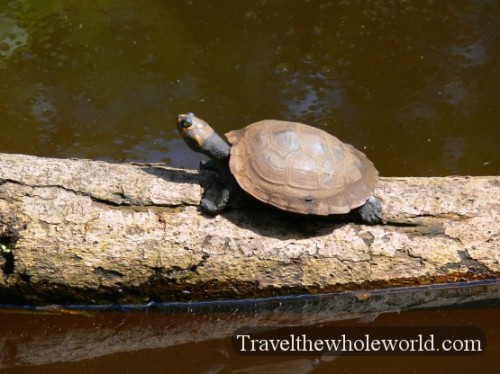
These final two photos are of some of the reptiles I encountered. Whatever species of turtle is pictured on the left seemed very common around the area where I stayed. There was a pond near the lodge where it was easy to spot several of them.
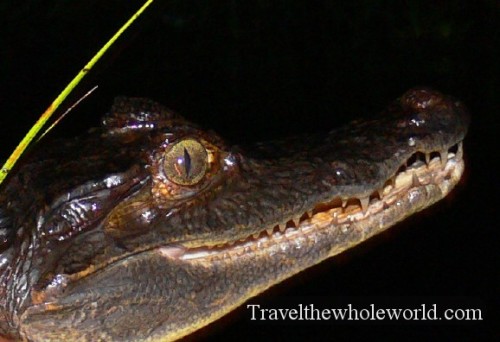
One night we took canoes onto a small lake about a mile or two from the lodge to search for wildlife. Along the shoreline were tiny glowing lights that helped us keep track of where the edge of the lake was in the darkness. Whenever we turned on our flashlights, every once in a while we’d see a pair of reddish eyes reflecting the light back at us.
Those eyes belonged to caimans. The photograph on the right shows one that we managed to spot during our nighttime trip.
Explore More of Ecuador
Cotopaxi National Park • Illiniza Refuge • the Ecuadorian Amazon • Ecuadorian Cloud Forests • Otavalo • Quito