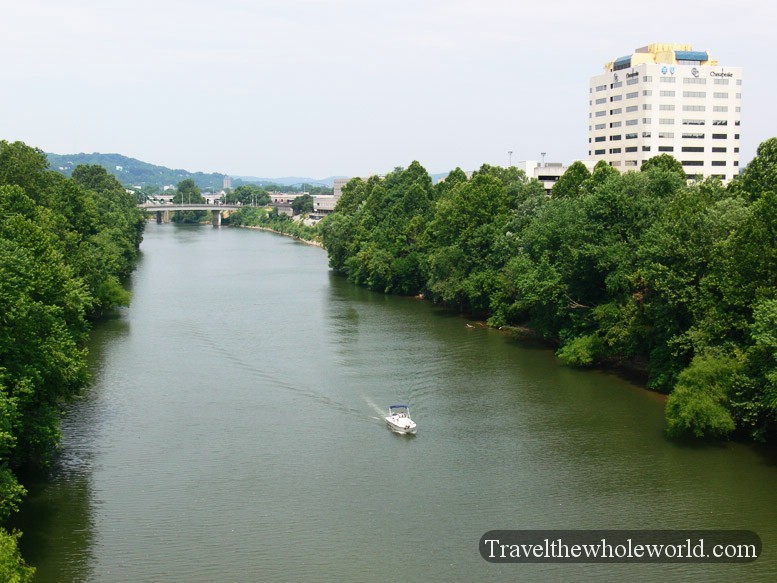
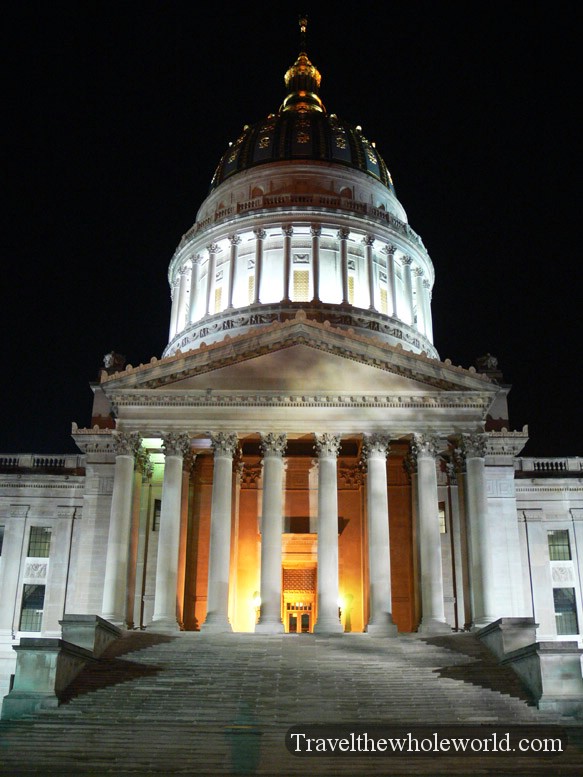
Charleston is the capital and largest city in West Virginia, although its population is relatively small compared to most state capitals. The surrounding metropolitan area is considerably larger, making Charleston one of the state’s main centers for government, business, entertainment, and culture. Two rivers meet in the heart of the city, with the Elk River flowing into the much larger Kanawha River. Above are a boat cruising along the Elk River and West Virginia’s impressive State Capitol building.
Charleston’s history as the state capital dates back to the creation of West Virginia during the Civil War. Before West Virginia separated from Virginia in 1863, the region was governed as part of Virginia from Richmond. Charleston eventually became the permanent state capital and grew into one of the most important cities in the Kanawha Valley. The Capitol itself, with its large gold-covered dome, is one of the city’s most recognizable landmarks.
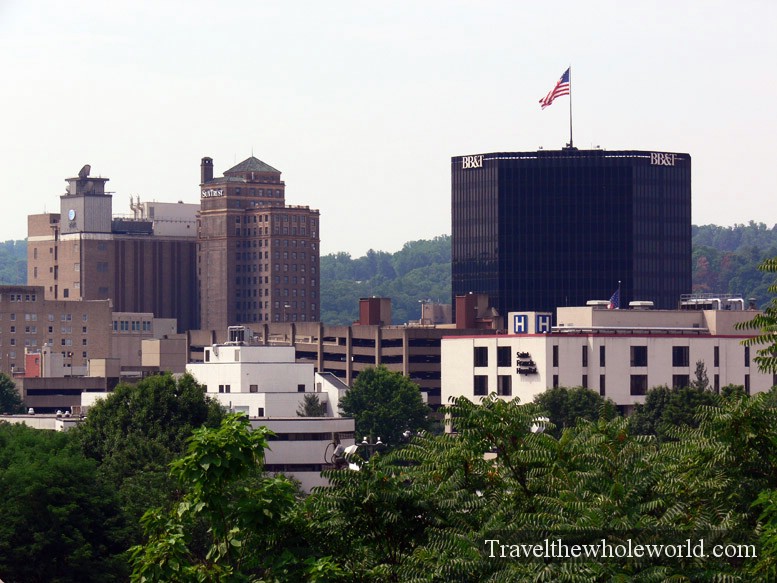
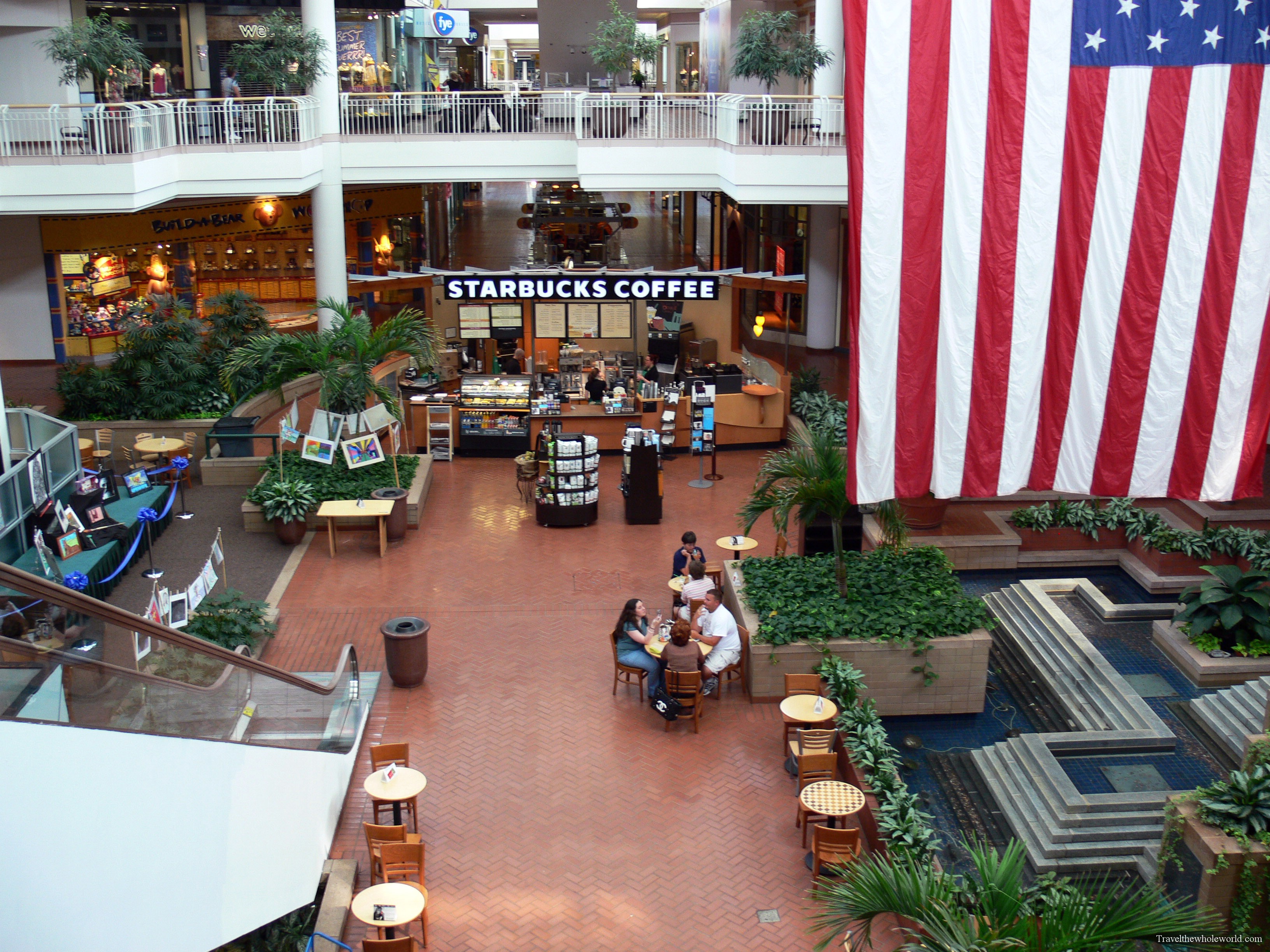
Above is a view of some of Charleston’s larger downtown buildings, along with the Charleston Town Center. When the mall opened in the early 1980s, it was one of the largest enclosed shopping malls located directly in a downtown district east of the Mississippi River. To me it seemed about average in size, or maybe a little above average, so I never would have guessed how significant it was when it first opened.
I actually did quite a bit while visiting Charleston and seriously can’t believe I left with only a handful of photos. One of my more memorable experiences happened while I was out at a bar. An intoxicated woman walked up to me and, completely out of nowhere, asked if I was from Lebanon. I’m half Lebanese, but most people assume I’m completely American, so I was amazed that she somehow guessed my background just by looking at me. Of all the places I’ve traveled, Charleston, West Virginia was probably the last place I expected that to happen!
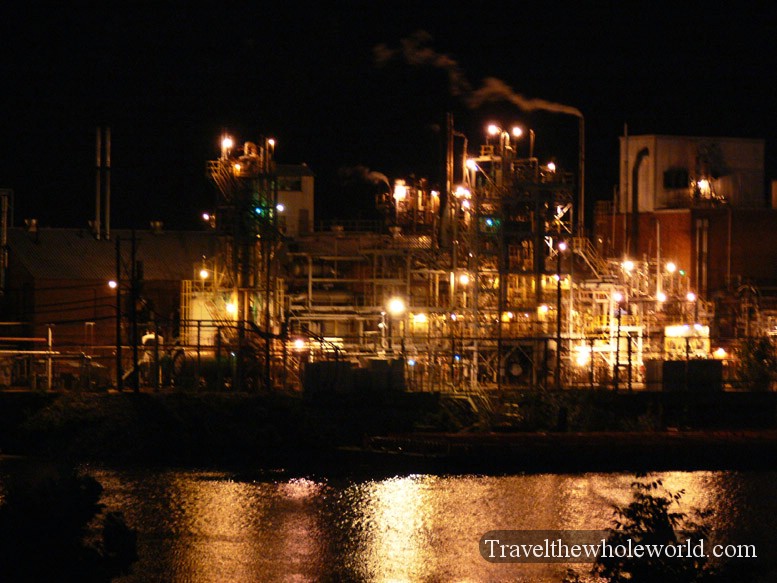
Charleston also sits in a part of West Virginia with a long industrial history. Coal has played an enormous role in the state’s economy, while the Kanawha Valley developed major chemical and manufacturing industries as well. Above is an industrial facility I passed about ten miles east of Charleston. Large industrial plants are a familiar sight along portions of the Kanawha River and are an important part of the region’s economic history.
My photographs definitely don’t do Charleston justice. Beyond the Capitol and downtown, the city has parks, museums, historic neighborhoods, restaurants, and plenty of places along the Kanawha River to explore. Being relatively close to Virginia, Charleston is also an easy city for me to return to, so I’ll eventually have to make another trip and give the city the photography it deserves.