Visiting Jamestown |
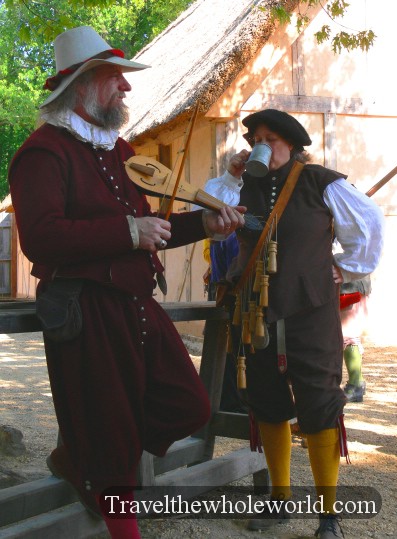 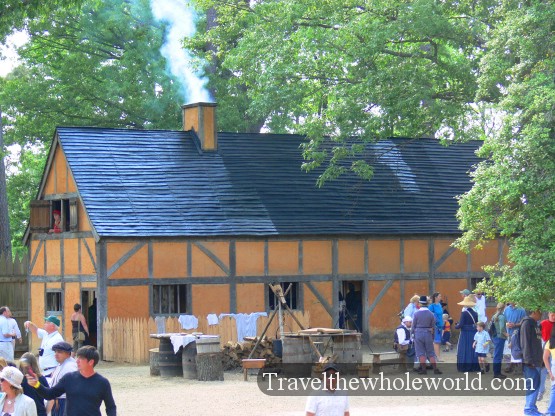 |
| The first permanent British colony was built in Jamestown Virginia in 1607. Jamestown is considered to be America’s oldest city and in 2007 it celebrated its 400th anniversary. The original settlement is for the most part destroyed from time, but a replica has been reconstructed in the area and is a major tourist attraction in Virginia. On the left you can see some people dressed up as the original settlers were, on the right is a large replica of a building that you are able to go inside and explore. |
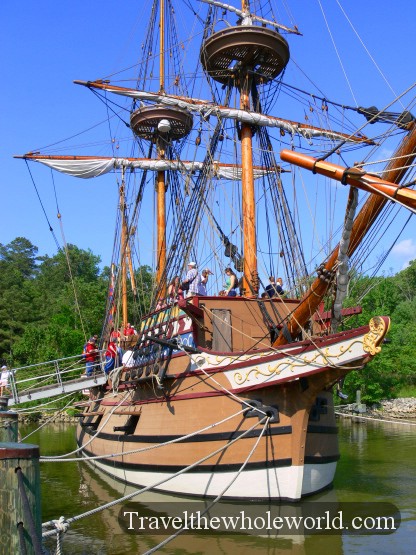 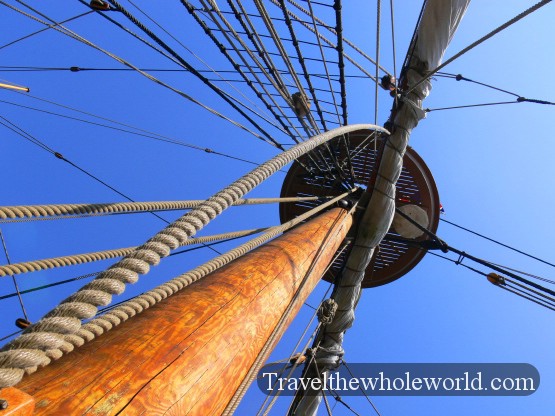 The first settlers travel to what is now Virginia aboard ships owned by privateer Christopher Newport of the Virginia Company. The voyage from Europe to the new world took 5 long months, nearly twice as long as average, landing Christopher at the mouth of the Chesapeake Bay. Above are replicas of the ships that the Virginia Company used to sail to the new world. The largest was called the Susan Constant, also known as the Sarah Constant, the Godspeed, and the Discovery. |
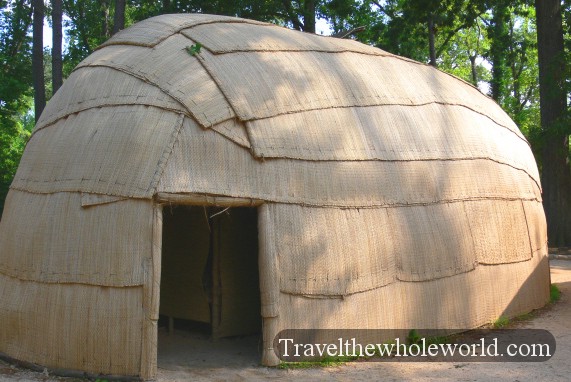 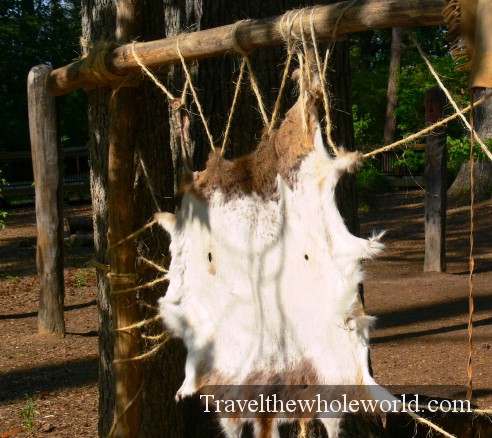 |
| The Jamestown location was selected because no native tribes were currently living in the area although there were significant populations nearby. The tribe that the settlers first had contact with where the Powhatans, whose capital was about 20 miles from Jamestown. The first decade and a half was peaceful with the Native Americans, but after the natives had concerns with the British settlers expanding colonies they launched an attack known as the massacre of 1622. Above is what a Powhatan hut looked like; on the right is fur being dried out in the sun. |
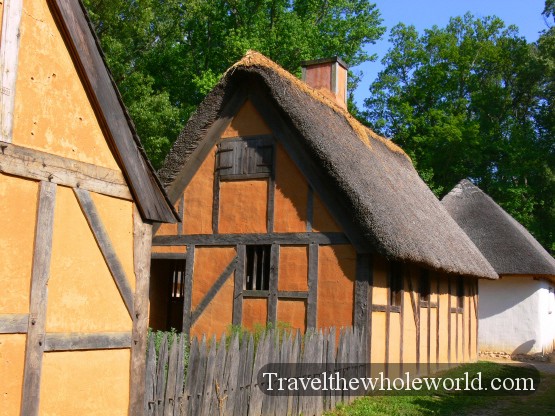 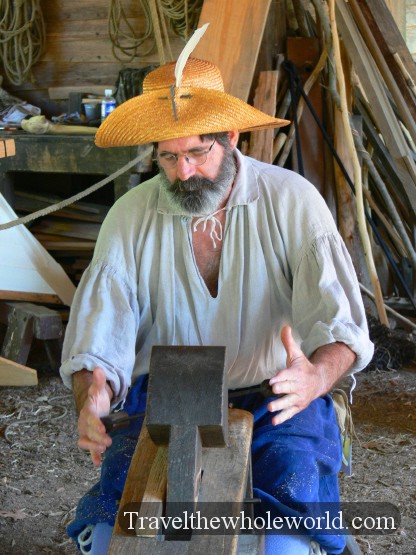 |
| The early colonists had a difficult time finding more people willing to move to Jamestown and to get further investments for the settlement. Other workers from different countries such as Italy and Germany also came to the colony in its early years. On the left is a photo of what early homes from Jamestown looked like, on the right is a craftsman doing some type of wood work. |