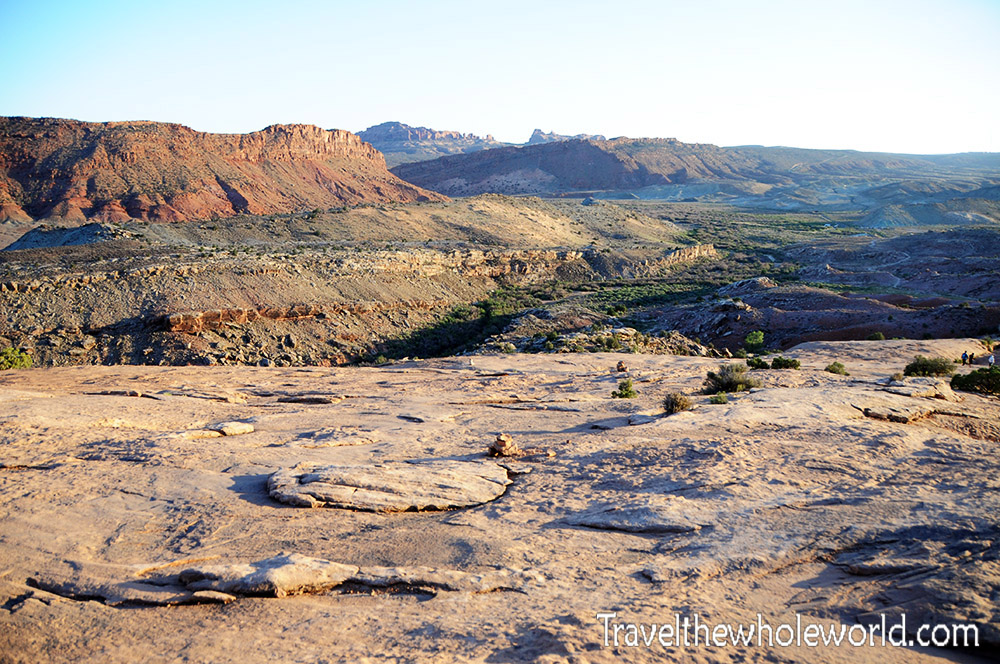
In eastern Utah, beyond the Uinta Mountains, begins the Colorado Plateau. This enormous desert region stretches across four states and contains some of the most dramatic landscapes in the American Southwest. I only had time to visit one national park in the area, so I chose Arches National Park just outside Moab. The photo above gives a good idea of the dry, open terrain that surrounds many of the park’s famous formations.
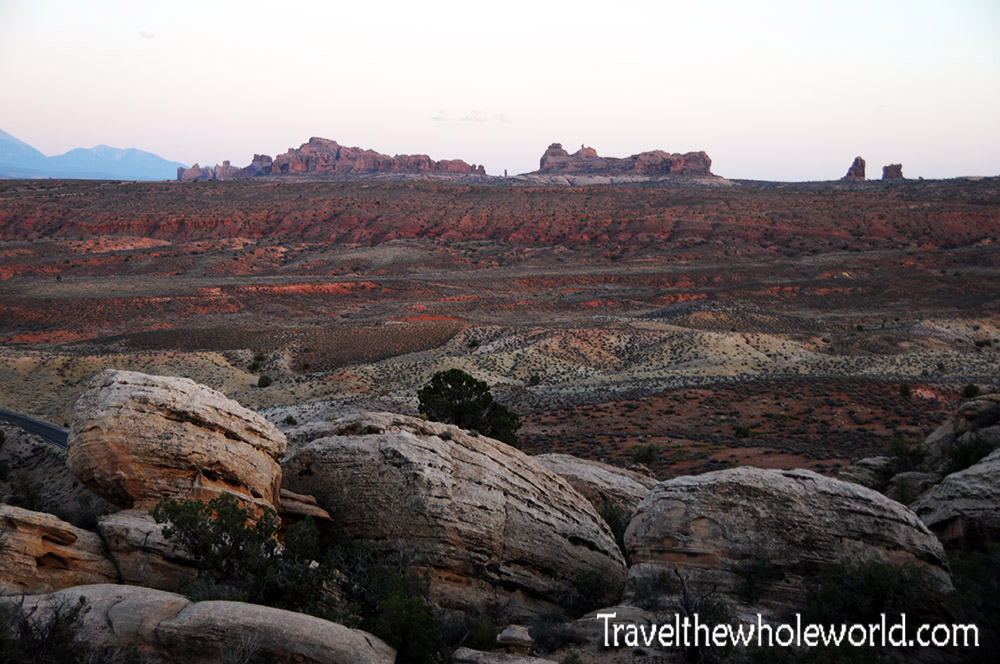
Here’s another view of the landscape. Even before reaching the major arches, the scenery is impressive, with broad desert valleys, sandstone fins, cliffs, and isolated rock towers scattered throughout the park.
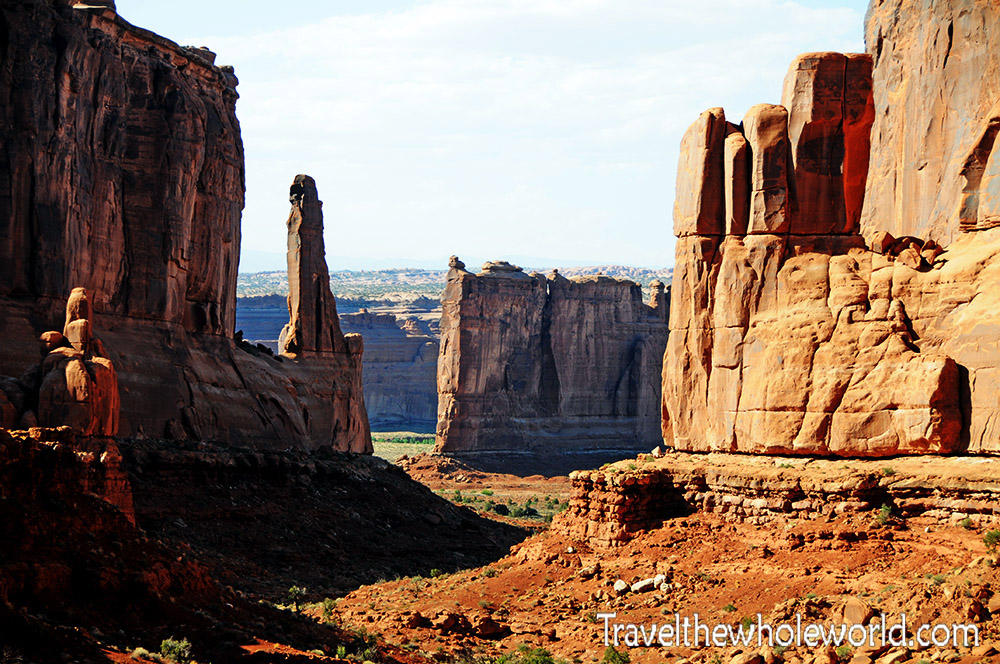
Arches National Park contains more than 2,000 documented natural stone arches, but the arches are only part of the scenery. As soon as I entered the park, I was impressed by the canyons and massive sandstone formations rising out of the desert.
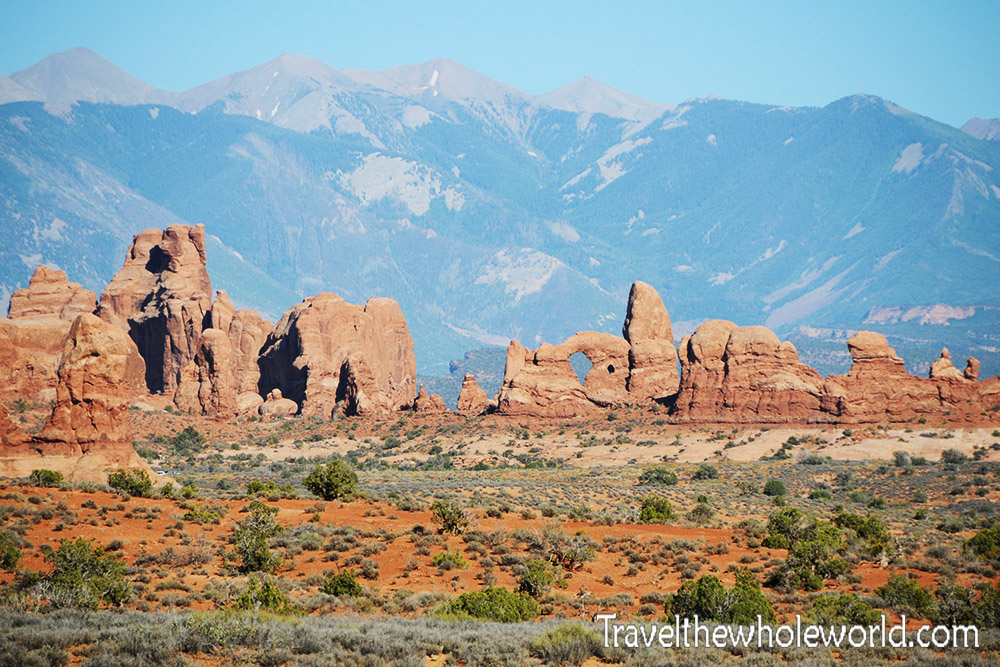
Deeper inside the park, some of the first arches began appearing in the distance. Looking back, I probably should have taken more photographs of the arches themselves, but there was enough variety in the landscape that I kept stopping for everything else too.
Petroglyphs & Wolfe Ranch
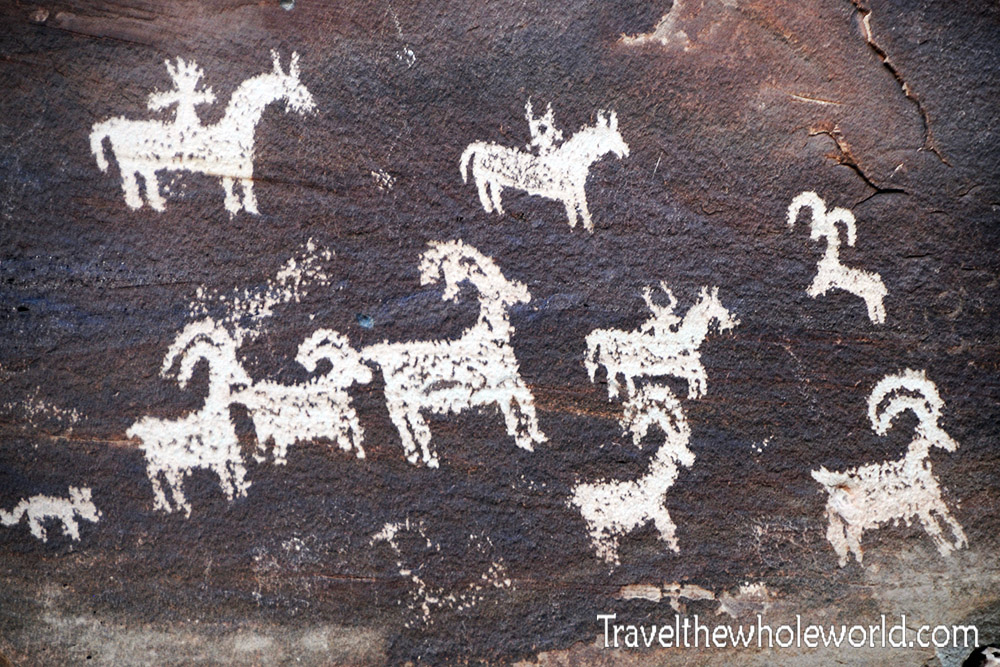
Before getting to more of the rock formations, I came across these Native American petroglyphs. People have lived and traveled through this region for thousands of years, and rock art can still be found in several places around the park. Some of the figures above show riders on horseback, which means those particular carvings must date from after horses were reintroduced to North America by Europeans.
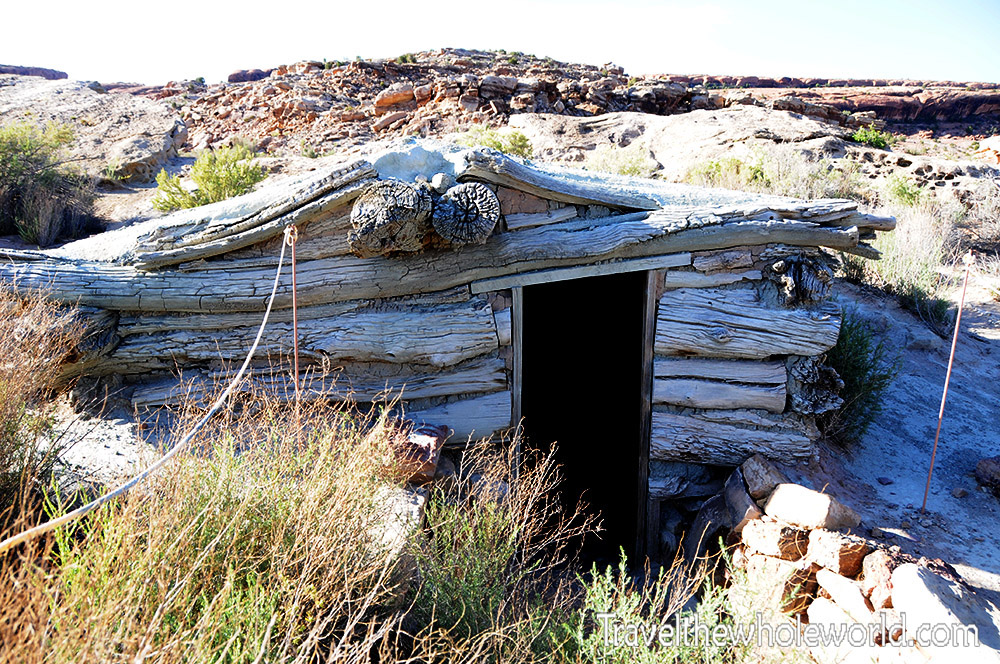
Nearby is Wolfe Ranch, a small cabin that gives a completely different look at the history of the area. John Wesley Wolfe, a Civil War veteran, settled here in the late 1800s after moving west in search of a drier climate. It’s difficult to imagine choosing such an isolated desert environment as a permanent home, especially with the extreme summer heat and cold winters.
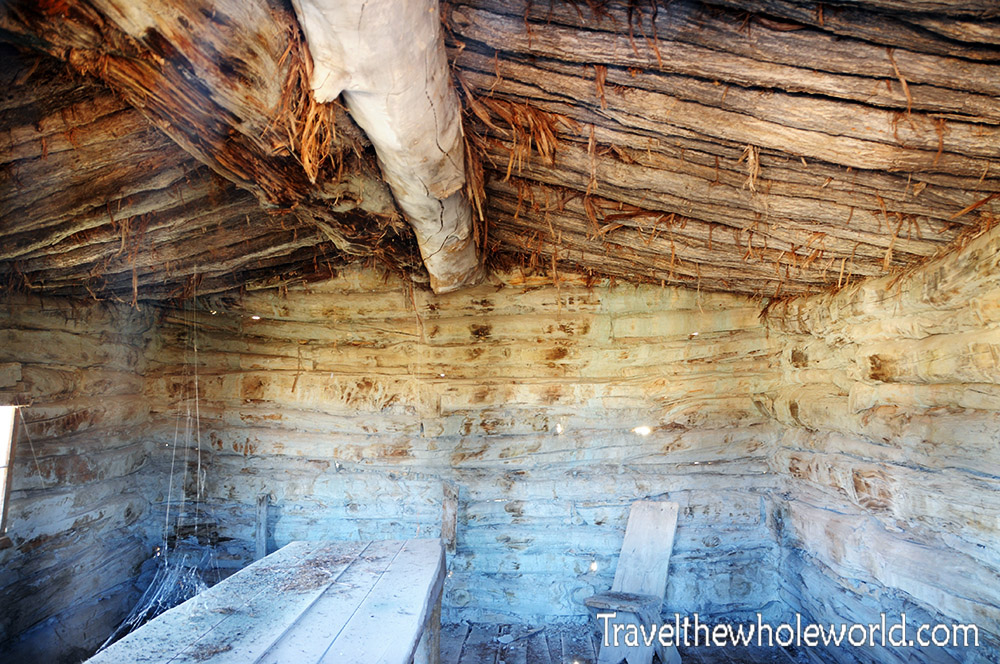
Above is a look inside the cabin. Even after Wolfe later improved the property for his family, life here would have been incredibly simple compared with modern standards.
Balanced Rock
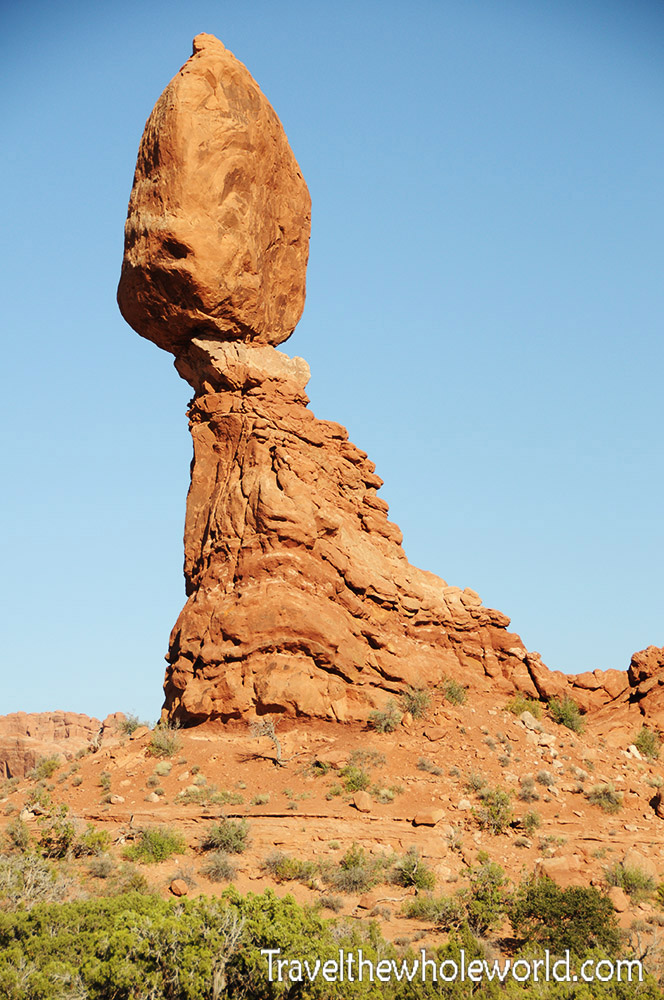
Back to the desert scenery. One of the park’s most recognizable formations is Balanced Rock, which rises about 128 feet (39 meters) above the surrounding terrain. The enormous boulder on top looks as if it could fall at any moment, although erosion has been shaping the formation for an extremely long time. Similar formations have existed elsewhere in the park and eventually collapsed, so one day Balanced Rock will probably meet the same fate.
Hiking Through Arches
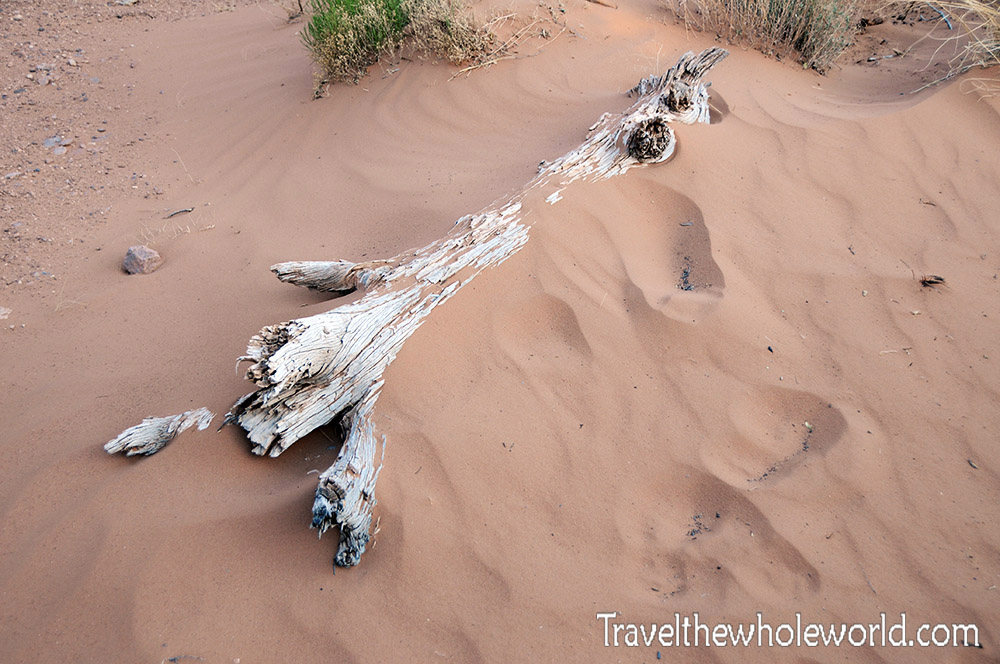
Balanced Rock and several of my earlier photographs were taken from areas close to the park road, but hiking is always my favorite way to explore. One of the first things that caught my attention on the trail was this dead tree. Normally that wouldn’t seem especially interesting, but in such a dry landscape even a large tree stands out.
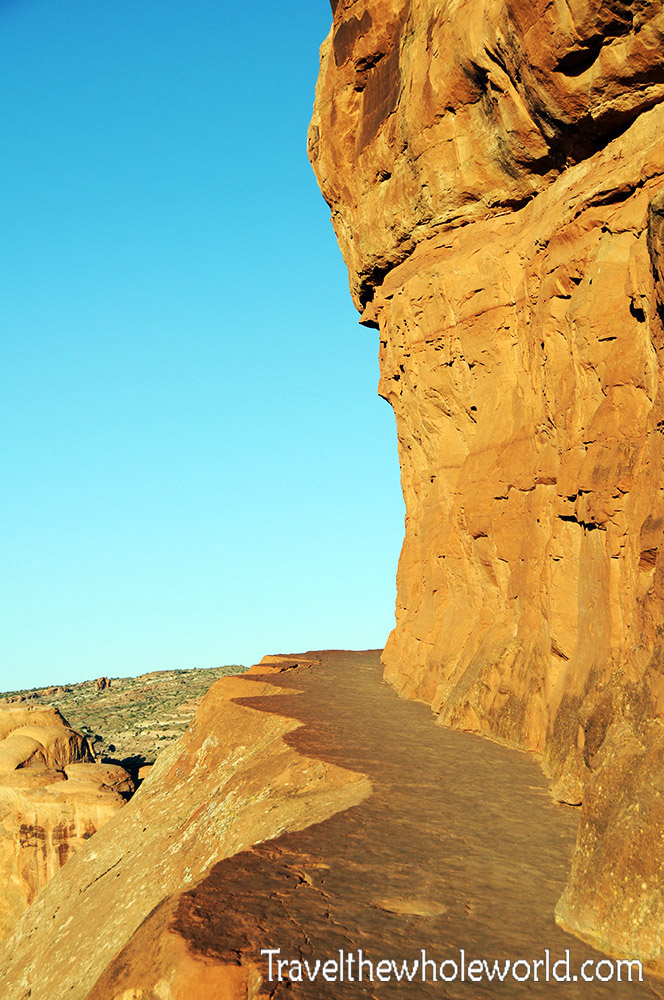
The trail crossed some interesting terrain, including broad sections of exposed sandstone like the one above. The route was officially considered strenuous, although I personally found it closer to moderate. The distance and desert conditions probably make it more difficult than the terrain itself.
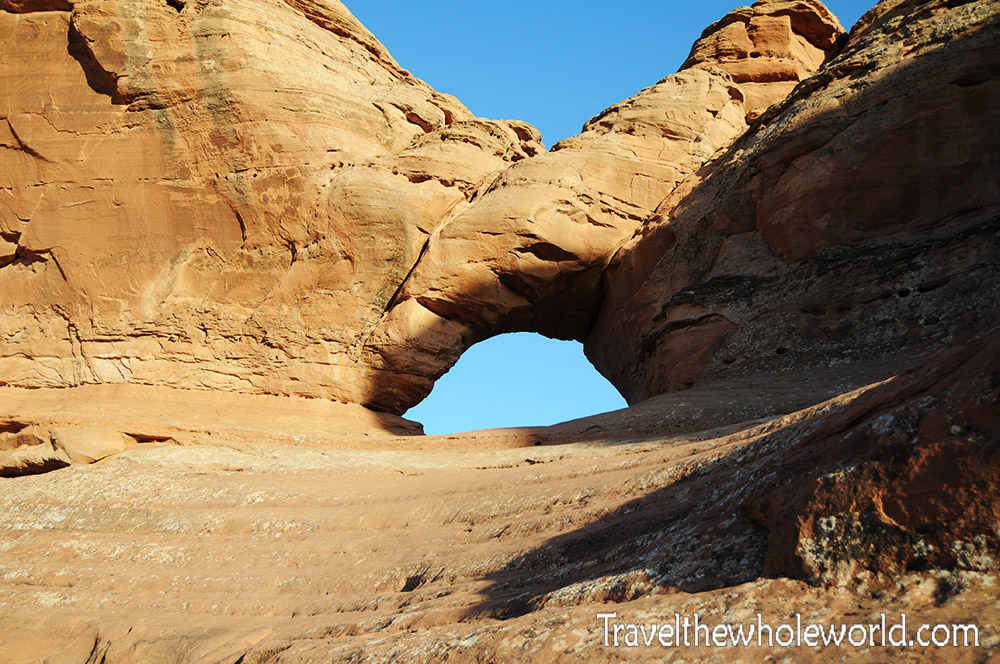
Along the way I passed several smaller arches like this one. Some were large enough to walk underneath, while others were small enough that you could almost crawl through them.
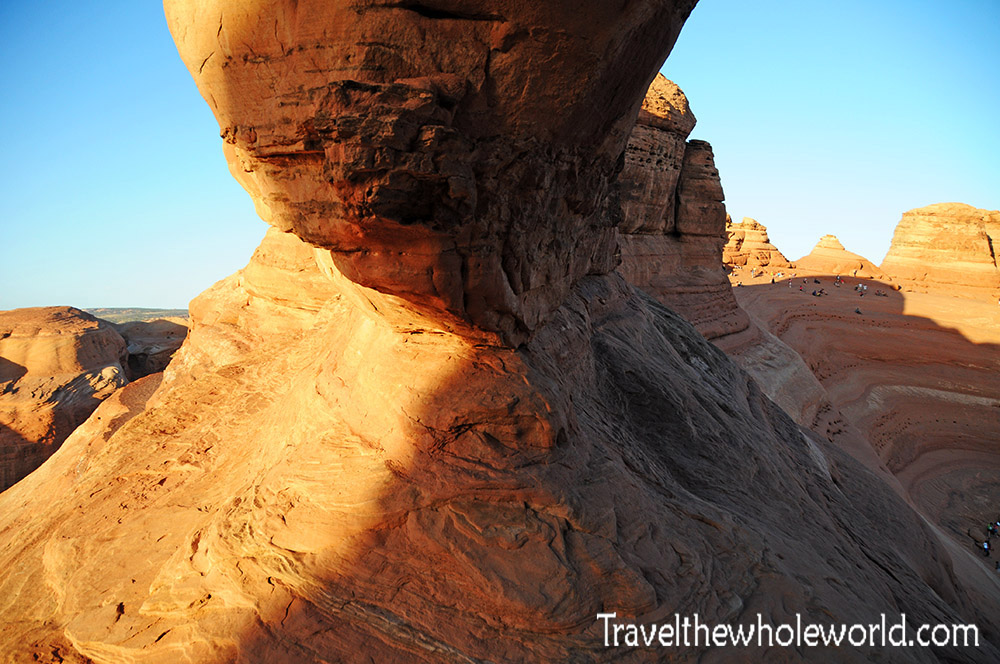
Above is a side view from inside one of the arches. Seeing these formations up close gives a much better idea of how thin some sections of sandstone actually are compared with the massive cliffs surrounding them.
Delicate Arch
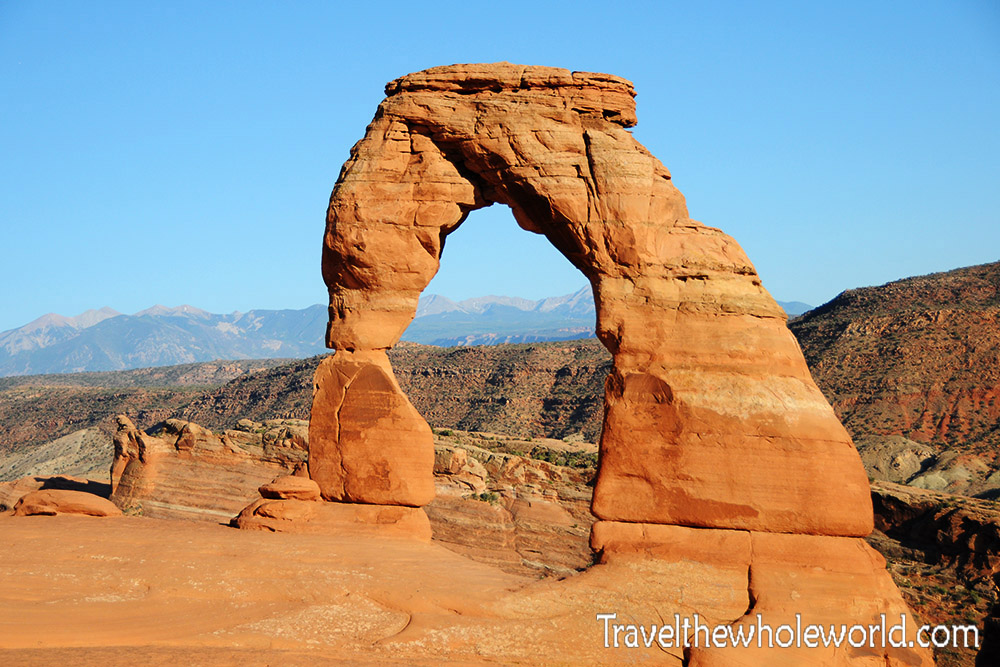
Eventually I reached Delicate Arch, probably the most famous natural arch in Utah and one of the most recognizable landmarks in the entire state. The arch stands about 60 feet (18 meters) tall and has become such an important symbol of Utah that it even appears on the state’s license plates.
I approached from a less direct angle and ended up traversing along rock with a much more intimidating drop below me. It was a fun way to reach the viewpoint and considerably less crowded than the main approach. Once I arrived, though, there were still dozens of people gathered around the arch, so I had to wait quite a while before I could get a photograph without someone standing directly underneath it.
Arches National Park turned out to be about much more than just the famous arches. Between the desert scenery, petroglyphs, pioneer history, strange rock formations, and hiking, there was enough variety here that I easily could have spent much more time exploring the park.
Explore More of Utah
Arches National park • Bryce Canyon • Salt Lake City • the Salt Lake • the Uintas Mountains • Zion National Park