Reaching the top of the world was a dream of mine for as long as I can remember. In 2016, I finally had the opportunity to attempt Mount Everest from Nepal. I had always been intimidated by the mountain, but once the expedition began I felt strong and well prepared.
My summit day ended very differently than I had hoped. With deteriorating weather and several deaths on the mountain, I made the difficult decision to turn around only about 300 feet below the summit. I knew the risks before ever setting foot on Everest, but coming that close made me even more determined to return.
I later went back to Everest from Tibet, climbing the completely different route up the mountain’s north side. The pages below follow both expeditions, from the trek into Nepal’s Khumbu Valley to the high camps and summit routes on both sides of the mountain.
Climbing Everest from Nepal
Hiking to Everest Base Camp
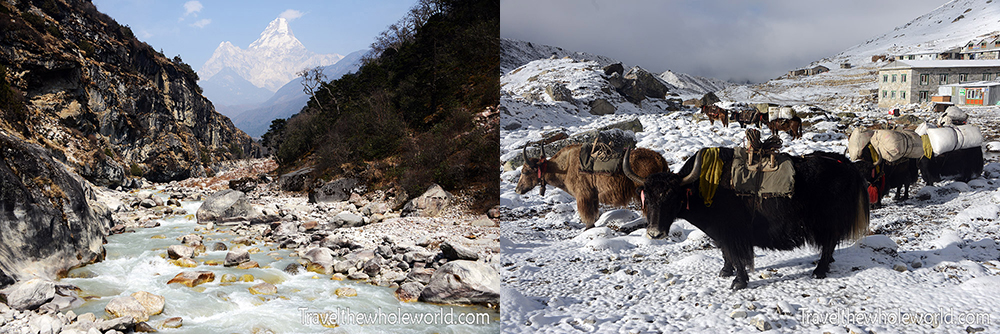
Before you can climb Mount Everest from Nepal, you first have to reach the mountain. Everest lies deep in the Himalayas, and getting there is an adventure by itself. The trek to Base Camp follows the Khumbu Valley through some of the most spectacular mountain scenery on Earth.
Because Everest Base Camp sits at about 17,500 feet (5,300 meters), the trek normally takes more than a week to allow time for acclimatization. Along the way, trekkers stay in teahouses or lodges, pass through Sherpa communities, and hike beneath famous Himalayan peaks such as Ama Dablam.
Nepal Everest Base Camp
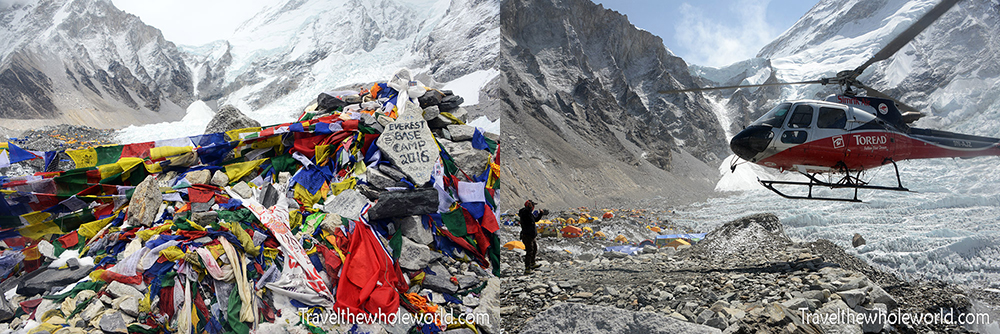
Nepal’s Everest Base Camp becomes a temporary mountaineering village during the spring climbing season. Hundreds of climbers, Sherpa climbing staff, expedition workers, and support personnel live here while preparing for the mountain, while thousands of trekkers visit Base Camp during the year.
For most people hiking through the Khumbu Valley, Base Camp is the final destination. For climbers, however, it is only the beginning.
Khumbu Icefall
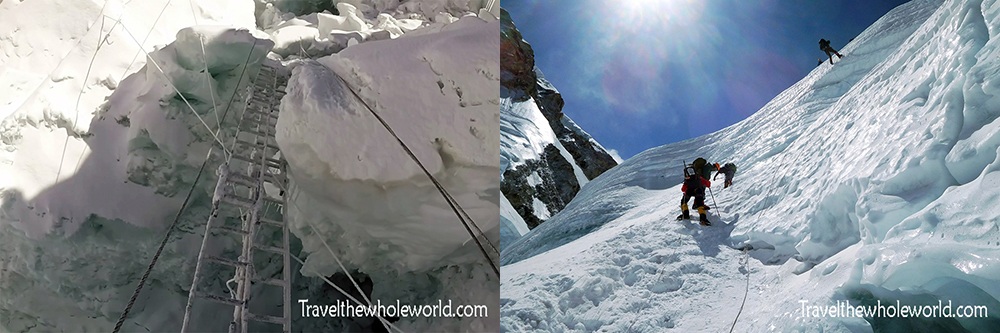
The first major challenge when climbing Everest from Nepal is also one of the most dangerous. The Khumbu Icefall begins just above Base Camp and climbs roughly 2,000 feet (600 meters) through an enormous field of constantly shifting glacial ice.
The route crosses deep crevasses and passes beneath unstable seracs and blocks of ice that can collapse with little warning. Despite the danger, the Khumbu Icefall was also one of the most spectacular parts of the mountain.
Western Cwm
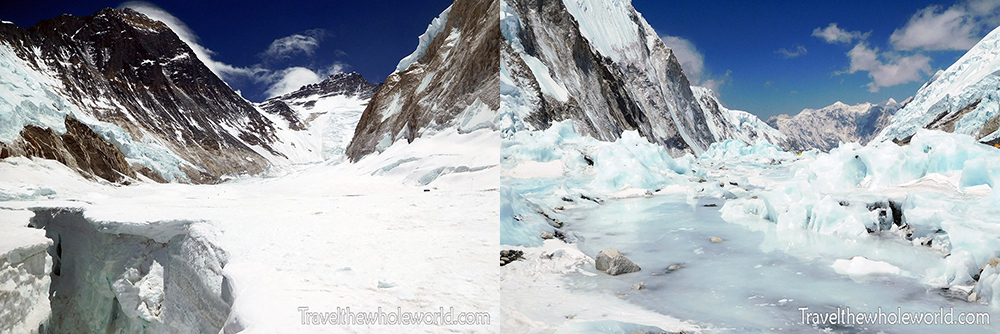
Above the Khumbu Icefall, the route enters the Western Cwm. Beginning near Camp I, the valley gradually climbs toward the enormous Lhotse Face. Compared with the icefall, the terrain is much less technical, although crevasses and avalanche hazards remain.
Surrounded by Everest, Lhotse, and Nuptse, the Western Cwm can also become incredibly hot when sunlight reflects from the surrounding snow and ice.
Lhotse Face
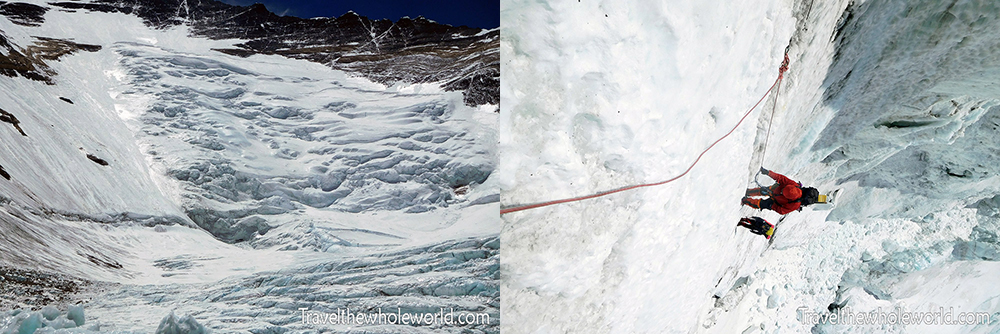
Beginning around 22,000 feet (6,700 meters), the Lhotse Face marks the transition into even more serious altitude. Camp III sits partway up the face at roughly 23,000 feet (7,000 meters), where many climbers begin using supplemental oxygen.
The face is steep, exposed, and covered in hard glacial ice. Climbers remain clipped to fixed ropes while ascending toward the Yellow Band and eventually the South Col.
Nepal Summit Day
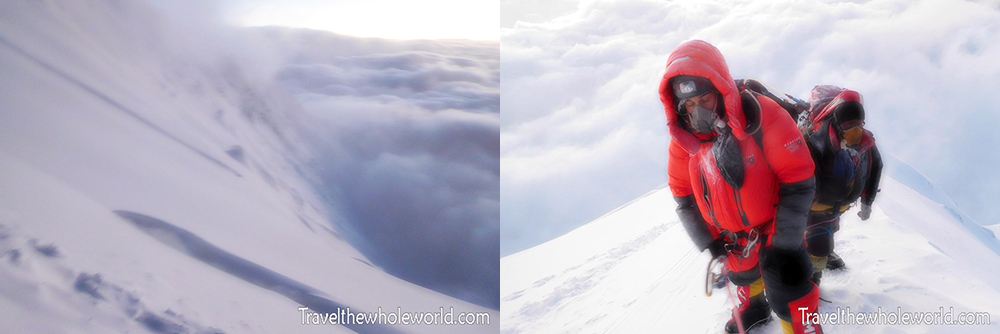
Climbers eventually leave the Lhotse Face and reach the South Col at nearly 26,000 feet (7,900 meters). After resting at Camp IV, most teams begin their summit attempt late that night.
The route climbs toward the Balcony, continues to the South Summit, and then follows the exposed summit ridge toward the highest point on Earth. Summit day can last well over 12 hours and takes place almost entirely within the mountain’s death zone.
Climbing Everest from Tibet
Tibet Everest Base Camp
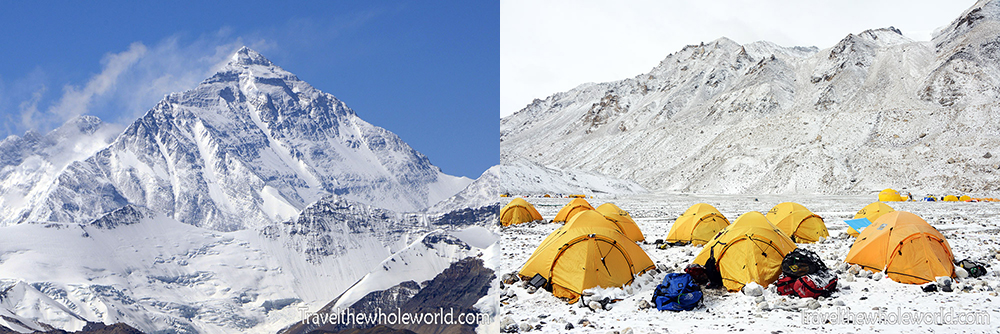
Reaching Base Camp from Tibet is completely different from approaching Everest through Nepal. Instead of hiking for more than a week through the Khumbu Valley, the Tibetan side can be reached by road.
The climbing base camp is much more isolated than Nepal’s, but it has one enormous advantage: Everest itself rises directly above the valley and remains visible from camp. Nearby Rongbuk Monastery is one of the highest monasteries in the world and sits beneath an incredible view of the mountain.
Tibet Advanced Base Camp Trek
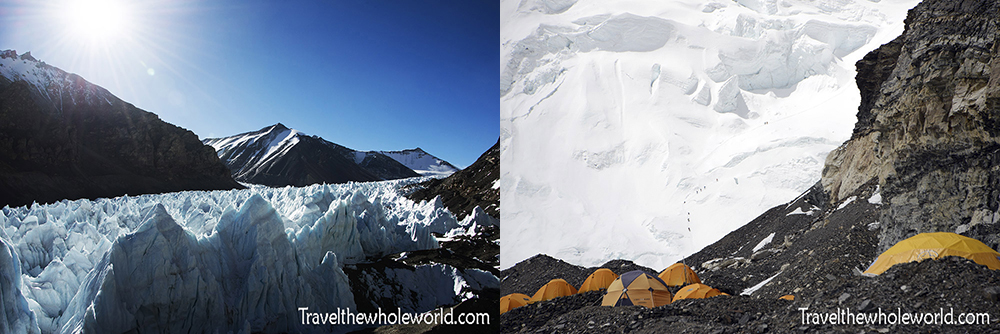
From Base Camp, the route continues roughly 15 miles (24 kilometers) toward Advanced Base Camp at approximately 21,000 feet (6,400 meters). Climbers normally spend a night at Interim Camp along the way as they continue acclimatizing.
The lower section follows the broad East Rongbuk Valley toward Everest before the terrain becomes increasingly rocky and glaciated. The scenery becomes more dramatic with every mile as the route approaches the mountain itself.
North Col & High Camps
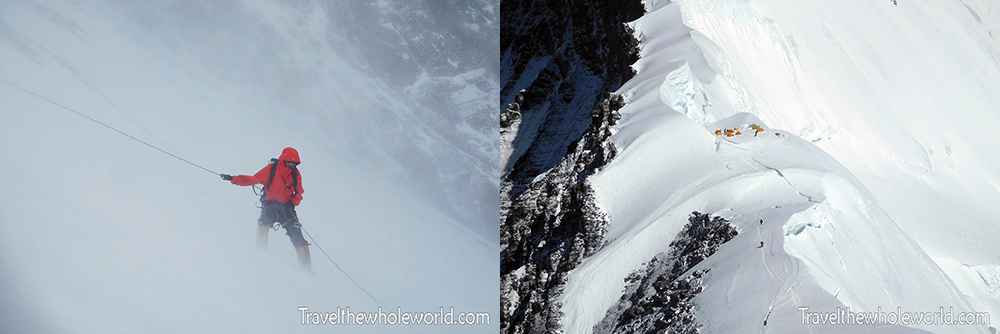
On the Tibetan side, reaching the North Col marks the transition from the long approach to the upper mountain. The North Col sits at roughly 23,000 feet (7,000 meters) and is reached by climbing a steep glaciated face on fixed ropes.
Above the North Col, climbers continue through progressively higher camps along the exposed north ridge. Supplemental oxygen is commonly used here as teams move toward their final camp and prepare for summit day.
Top of the World
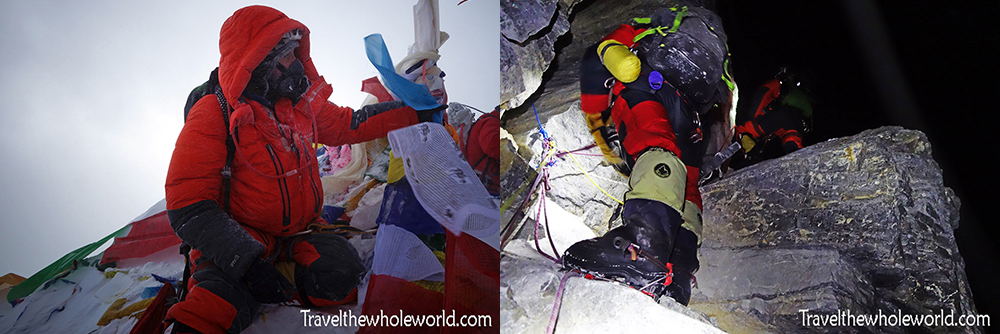
The final summit push from the Tibetan side begins high on Everest’s north ridge, usually late at night or early in the morning. Compared with the Nepal route, much of the upper north side is a mixture of rock, snow, and ice.
Climbers pass the famous First, Second, and Third Steps while moving along the Northeast Ridge. At this altitude, even relatively short technical sections become exhausting. Beyond the final obstacles, the ridge continues toward the summit and the highest point on Earth.
Special Thanks
I will always be grateful to the family and friends who supported me while I pursued this dream.
- John Tsang of Adventure Plus
- Dana Mahoney
- Faye Porter
- Gary Ervin
- Stephanie Thomas
- Mike Guild
- Caroline Agalheir
- Pong Tanthasindhu
- John Porter
- Al Barto
- Gary Flax
- Brad Hoen
- Seema Karim
- Rosemary Garcia
- Lindsey Rothrock