After spending almost a month traveling through Chile and Argentina, arriving in La Paz was a culture shock. Parts of Chile and Argentina had felt surprisingly European to me, both in their architecture and populations. The moment I reached La Paz, I remember thinking, “I’m back in South America!”
La Paz felt completely different from the cities I had just left. Indigenous culture was much more visible, the streets and markets were colorful and chaotic, and the entire city was built into an enormous valley high in the Andes. At around 3,650 meters (12,000 feet) above sea level, even walking around the city reminded me that I was somewhere unusual.
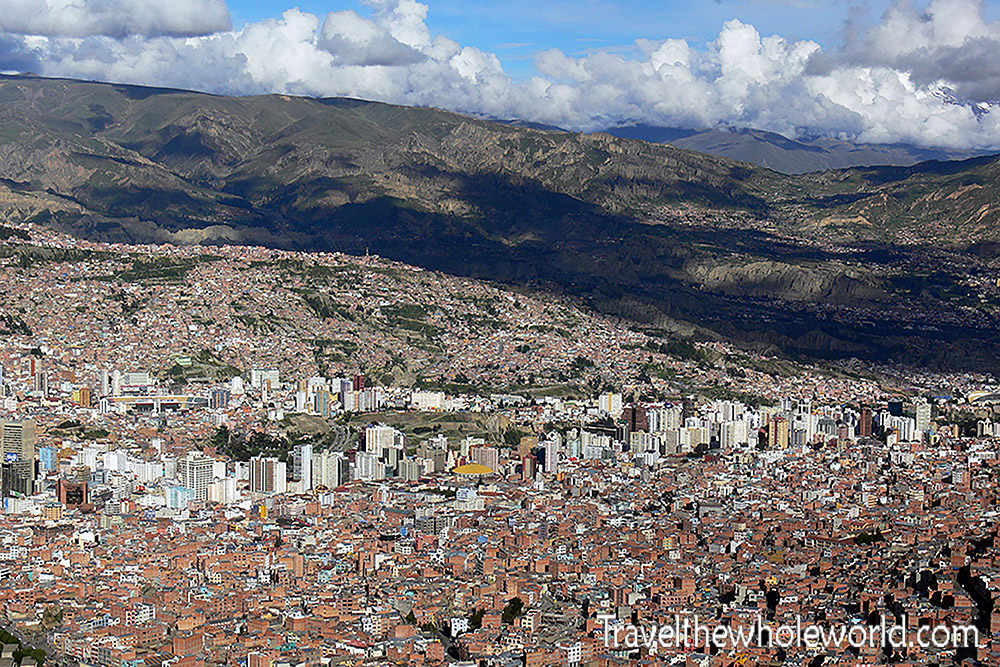
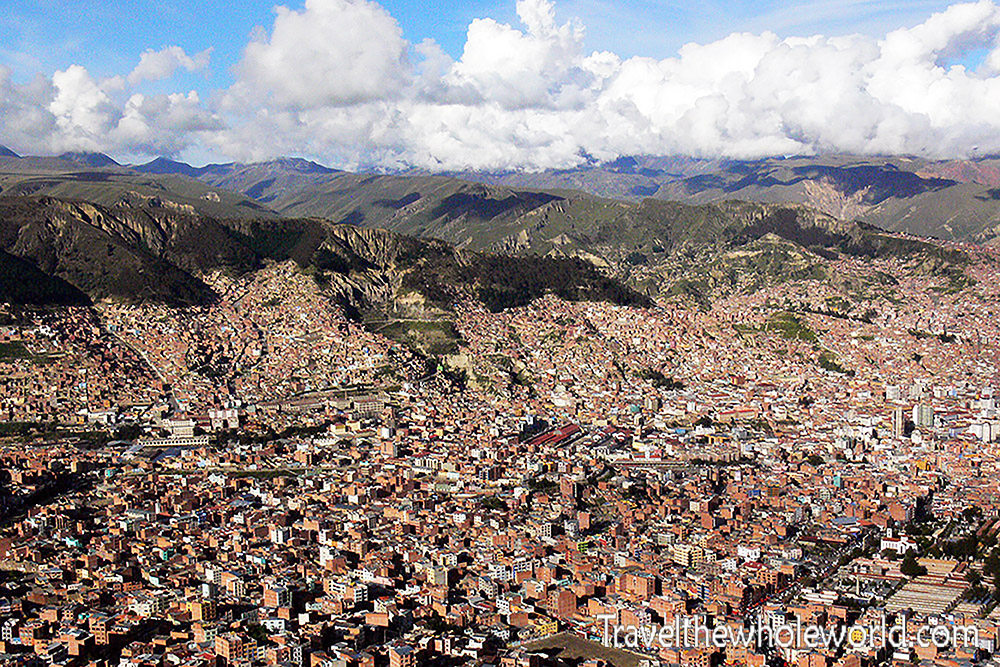
Downtown La Paz
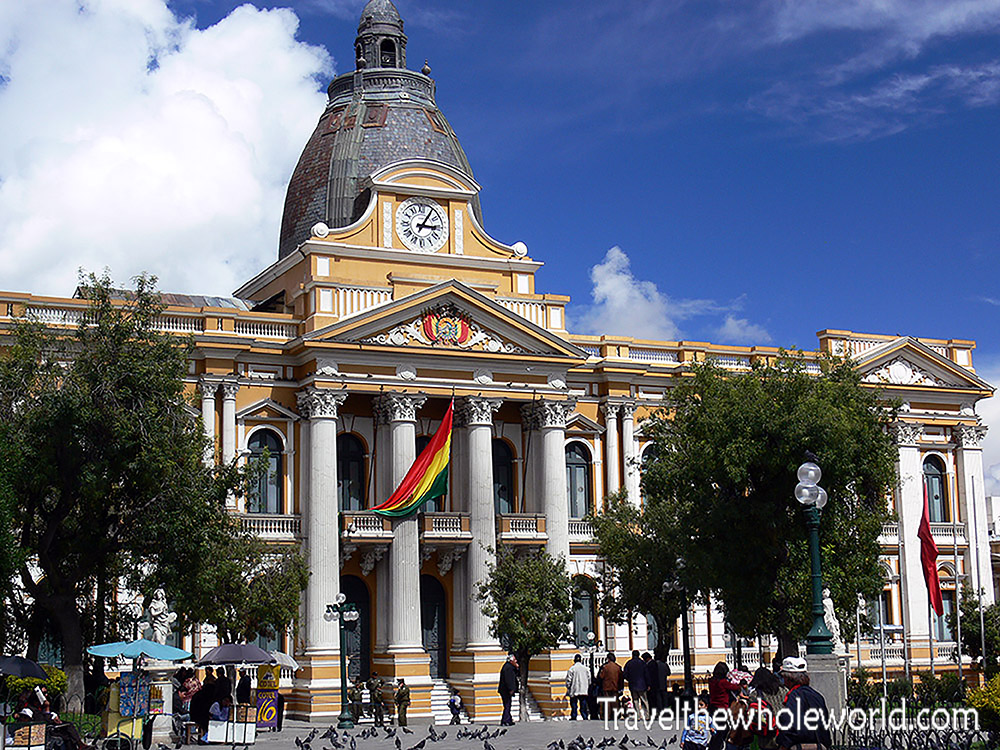
Downtown La Paz had attractive plazas, colonial architecture, restaurants, shops, and plenty of nightlife. Compared with some of the rougher-looking neighborhoods I passed through later, the center felt surprisingly polished.
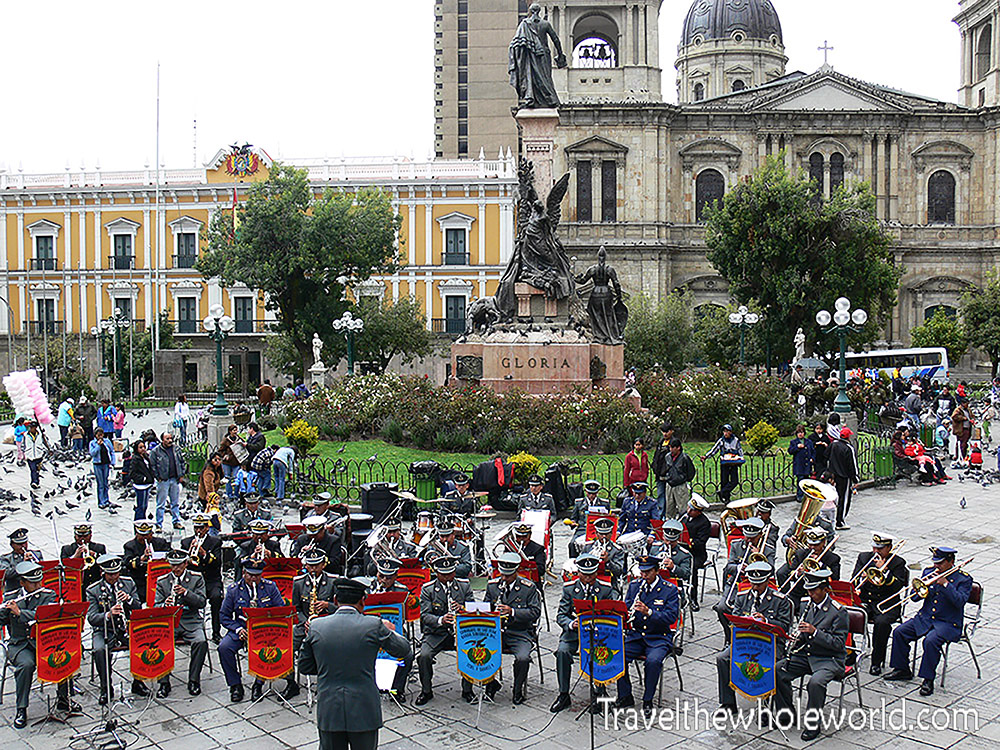
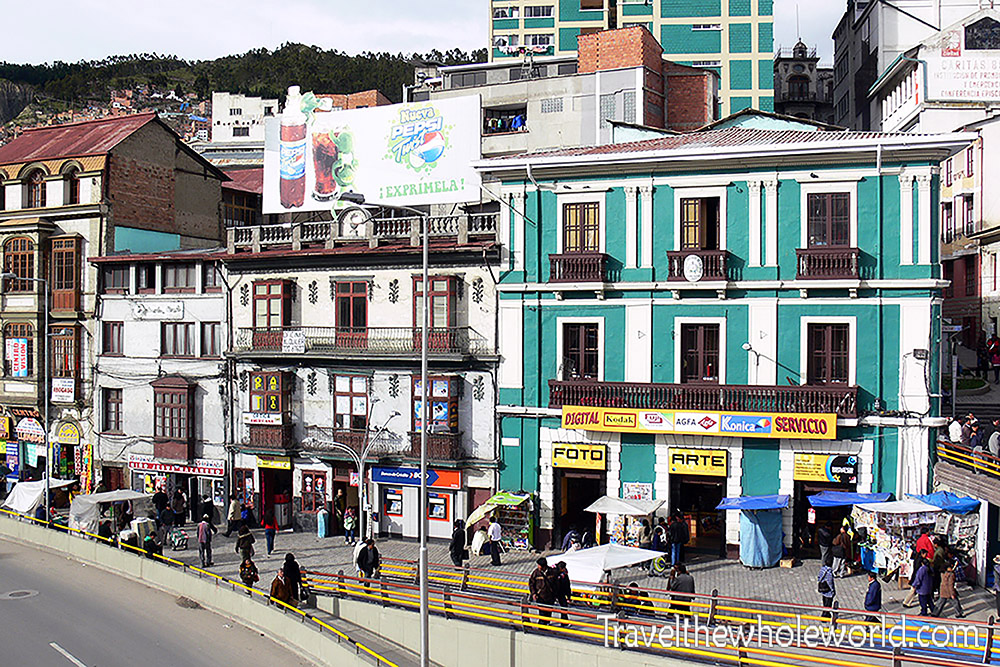
The streets around the center had plenty of inexpensive cafes, restaurants, and bars. I had been traveling and mountain climbing for weeks before reaching Bolivia, so having good food available for very little money was something I appreciated.
Traveling Cheap in My 20s
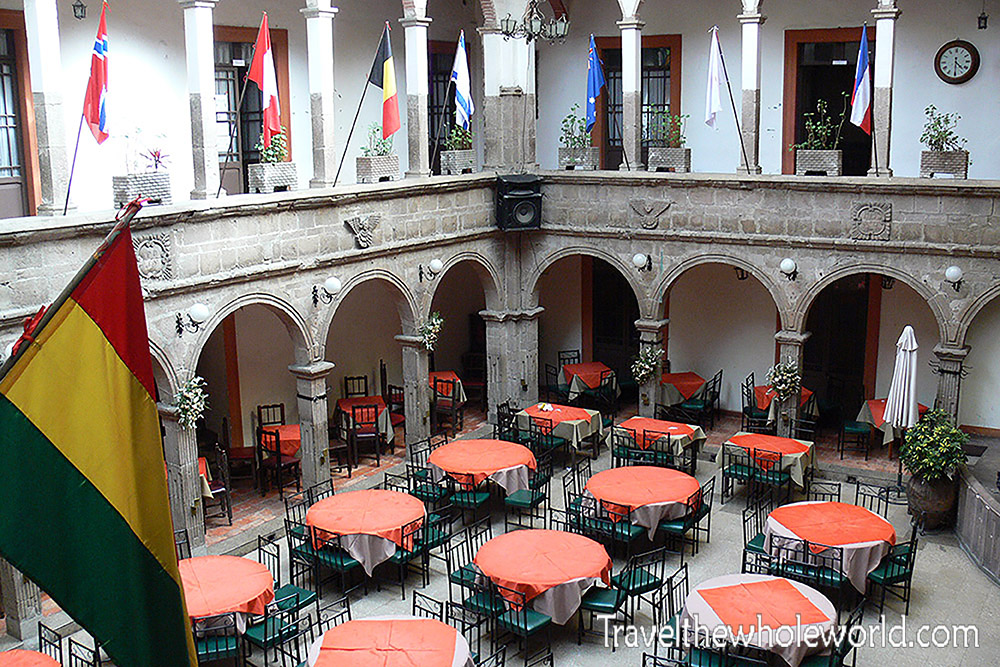
I visited Bolivia in my 20s, when fancy restaurants weren’t exactly high on my list of priorities. I was traveling alone, staying in cheap hostels, and trying to make my money last as long as possible.
I at least had enough appreciation to recognize that this looked like one of the nicer places to eat in La Paz and took a photograph of it.
La Paz ended up becoming one of my favorite cities in South America. If I return, I think I’ve finally reached the age where I can justify actually having dinner here.
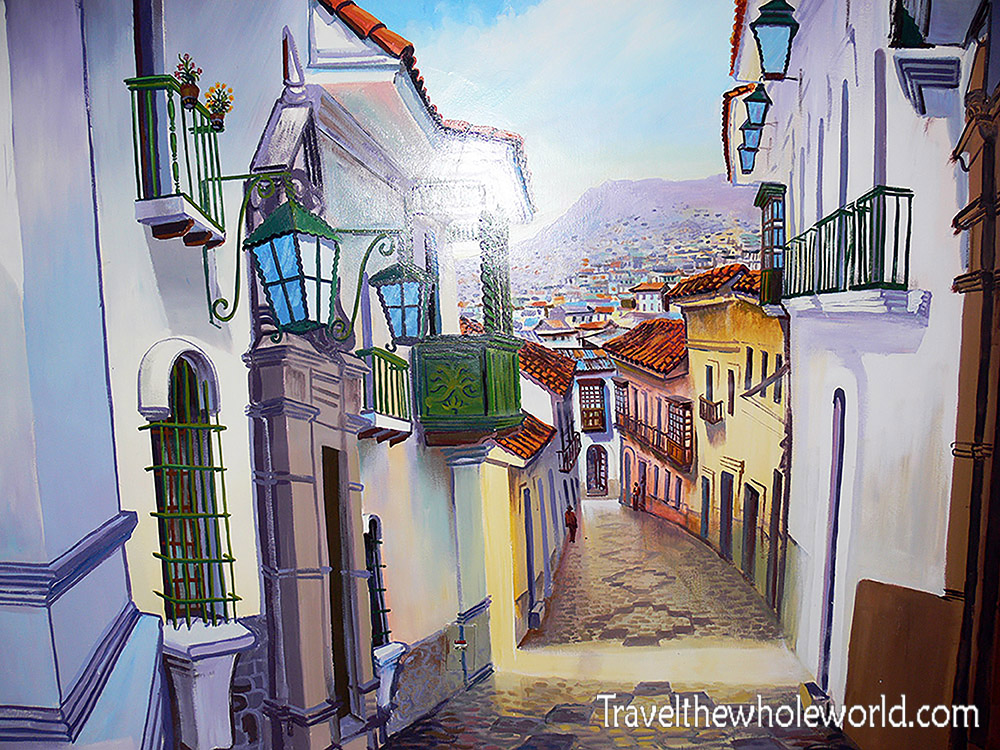
My hostel had this mural depicting the streets of La Paz. I’ve always liked photographing local artwork like this because it shows how people choose to portray their own city rather than how it appears in a travel brochure.
The Witches’ Market
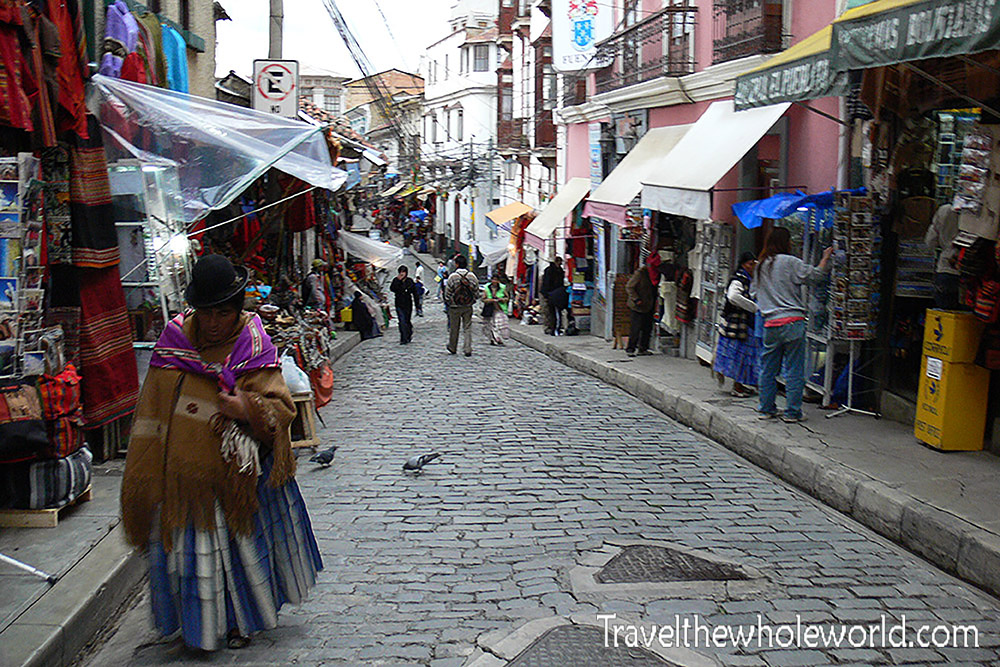
One of the things that made La Paz so interesting to me was the strength of its Indigenous culture combined with centuries of Spanish influence. Nowhere was that combination more obvious than around the Mercado de las Brujas, or Witches’ Market.
The shops sold everything from normal souvenirs and handicrafts to traditional medicines, ritual items, herbs, and dried or mummified animals. I really wish I had taken more detailed photographs because it was one of the most unusual markets I encountered anywhere in South America.
The Masked Shoe Shiners of La Paz
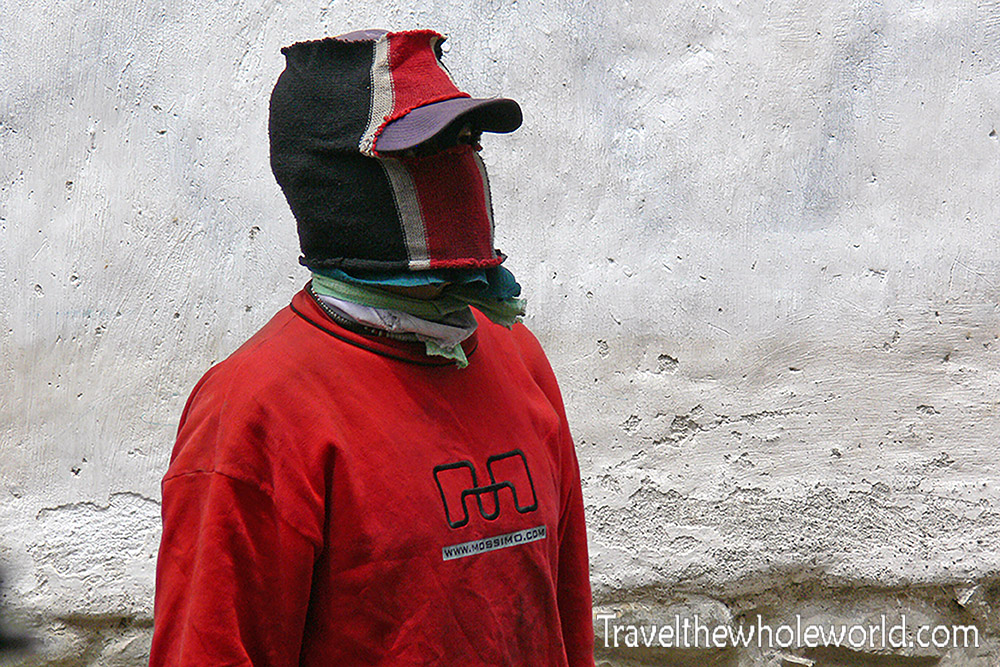
While walking around La Paz, I kept seeing men wearing masks or balaclavas like the guy above.
I had no idea who they were.
At first, seeing masked men around some of the rougher-looking streets made me wonder if they belonged to a gang or something else I should probably avoid.
Eventually I discovered the much less threatening answer: they were shoe shiners.
Many of La Paz’s shoe shiners traditionally conceal their identities because of the social stigma associated with the job. Once I knew what was going on, something that had initially looked sketchy became one of the more interesting details of the city.
El Alto
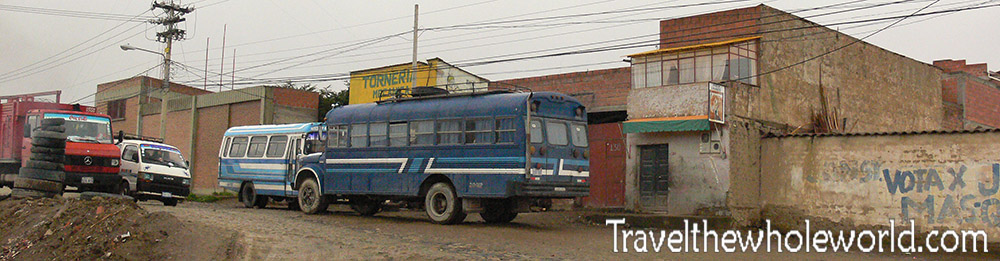
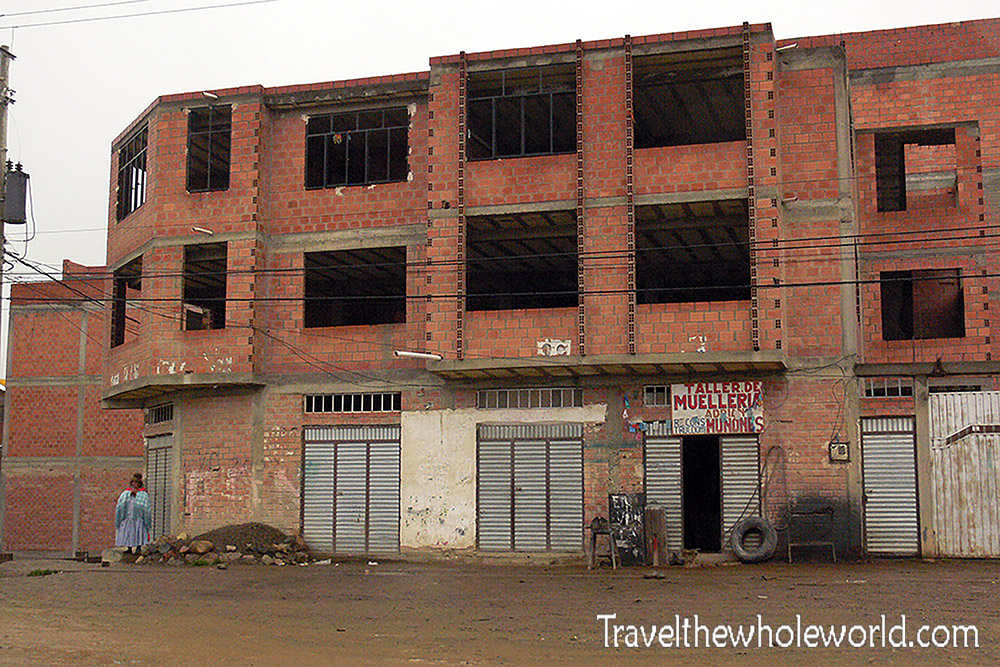
Above La Paz sits El Alto, an enormous high-altitude city of its own. The areas I passed through were noticeably poorer and rougher-looking than central La Paz, although there were also busy commercial streets and markets that looked completely different from the neighborhoods I photographed.
My most memorable experience there had absolutely nothing to do with sightseeing.
When My Taxi Driver Collapsed
I was riding through the area in a taxi when my driver suddenly pulled over and stopped for no apparent reason.
I waited.
After about a minute, I finally asked him what was wrong.
Then he went into convulsions.
He slumped over with blood and mucus coming from his mouth, and for a moment I seriously thought the guy had died right there in the driver’s seat.
I jumped out of the car and started trying to find someone who could help. My Spanish wasn’t very good, and somehow nobody around me seemed to know the number for an ambulance. Eventually another man got into the taxi and drove us to a hospital.
After several hours, the driver recovered enough that he could speak again.
I never found out exactly what had happened to him because of the language barrier, but thankfully he survived. It remains one of the nastiest and most surreal things I’ve witnessed while traveling.
The Andes Around La Paz
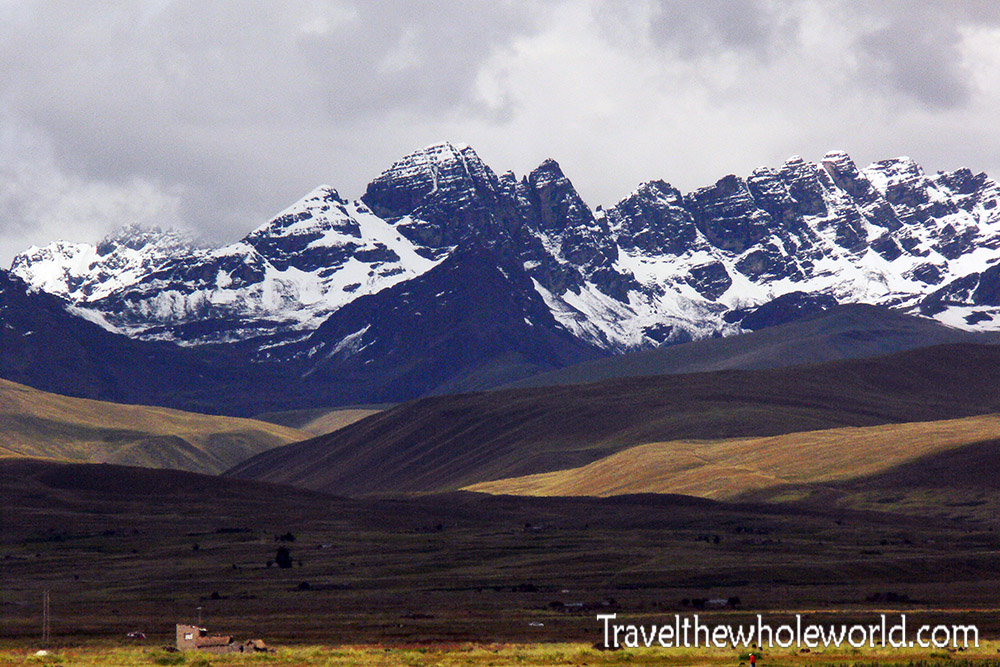
One of the best things about La Paz is that serious mountains are practically on the city’s doorstep.
The Andes don’t reach the extreme elevations of the Himalayas, but Bolivia still has numerous peaks above 6,000 meters, or nearly 20,000 feet. With snow-covered mountains visible from the city and enormous peaks within easy reach, La Paz is an incredible base for anyone interested in mountaineering.
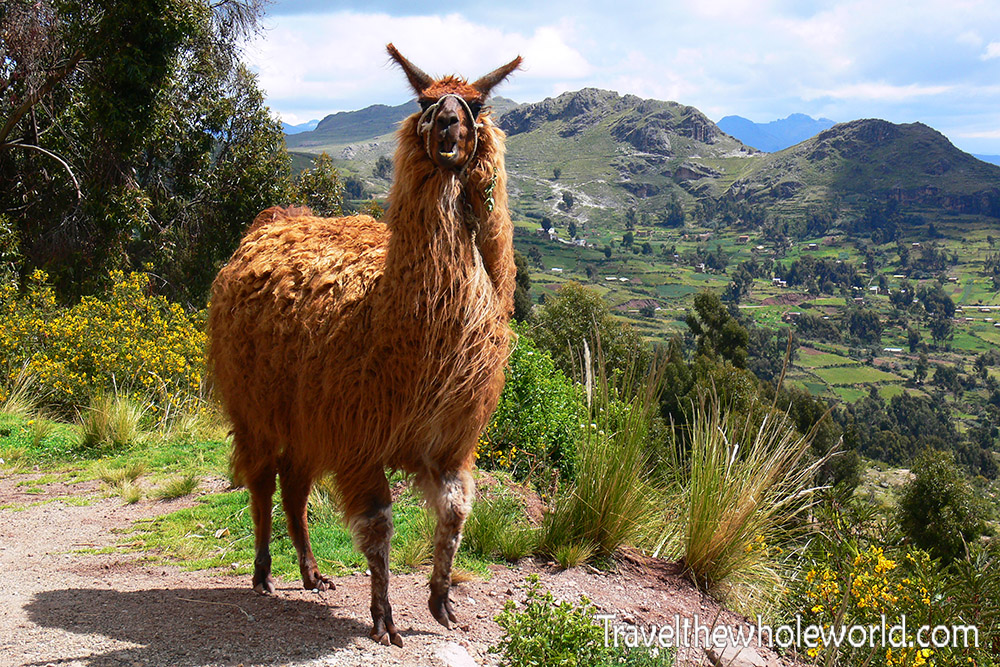
Coca Tea and Life at Altitude
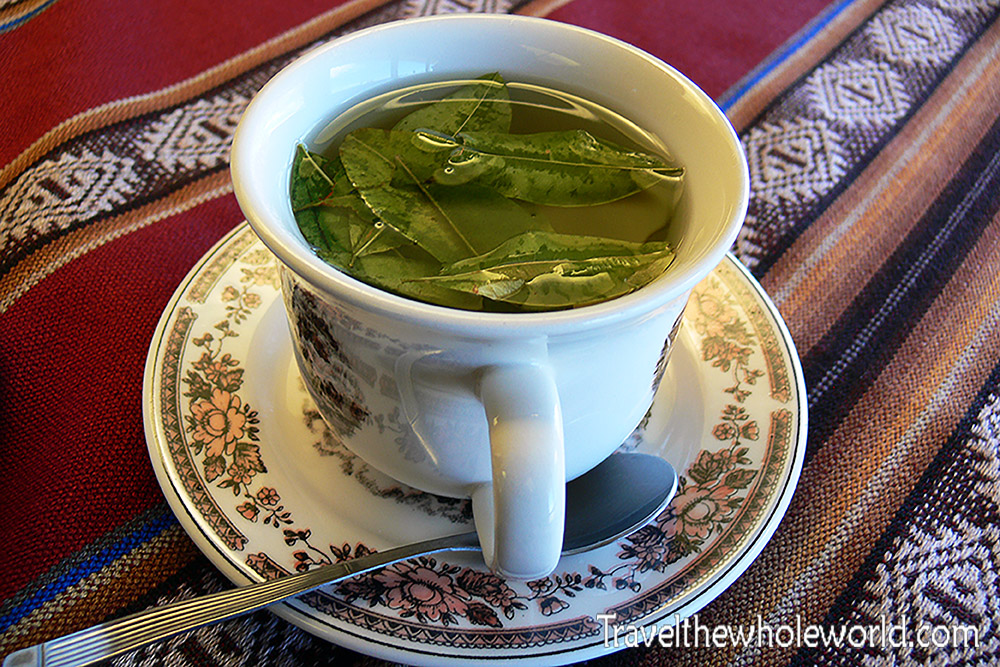
At around 12,000 feet above sea level, La Paz doesn’t experience the kind of heat you might expect from a city relatively close to the equator. Nights can get cold, and the altitude itself can be difficult for visitors who aren’t acclimatized.
Coca leaves have been used by Andean peoples for centuries, and coca tea was available all over La Paz. Locals traditionally chew the leaves or drink them as tea, particularly in high-altitude regions.
Traditional Weaving
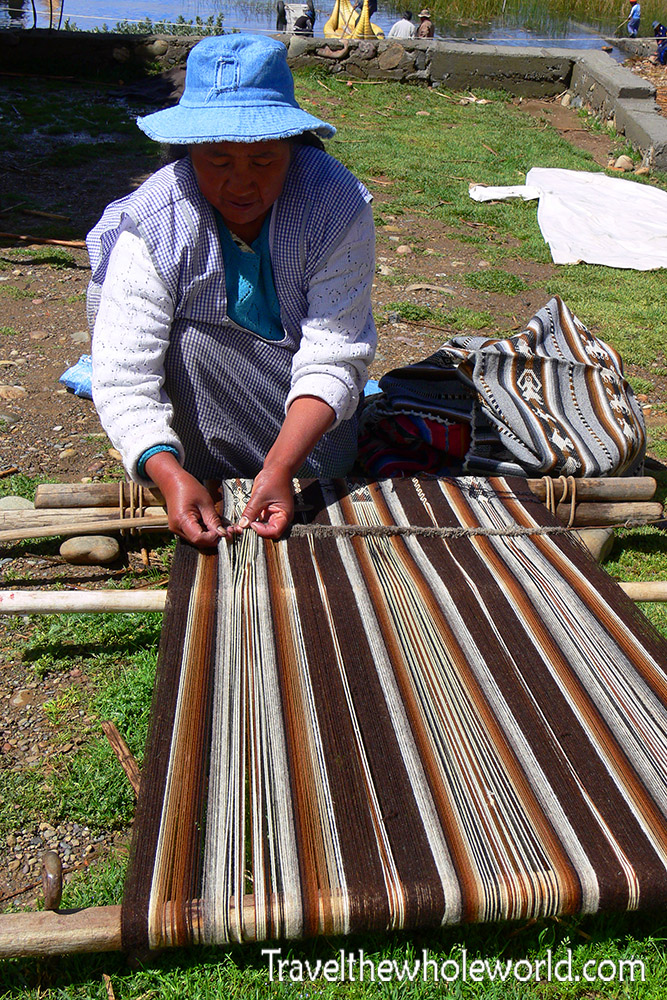
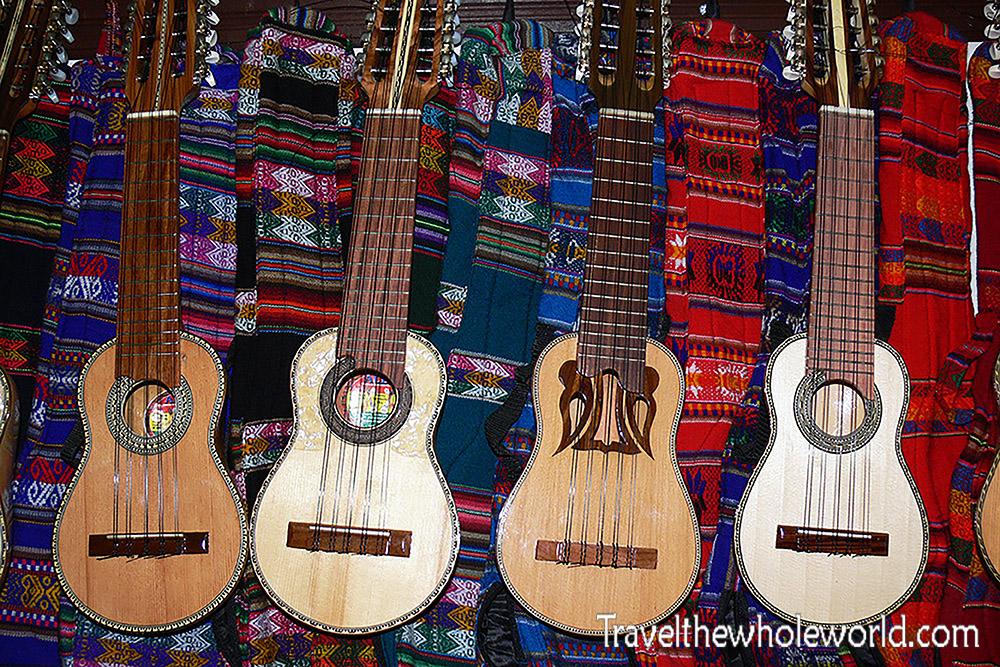
Traditional textiles were another visible part of Indigenous culture in and around La Paz. Clothing, blankets, bags, and other textiles were often woven in bright colors and distinctive patterns, with traditions varying between different communities and regions.
My Time in La Paz
La Paz became one of my favorite cities in South America because it didn’t feel like anywhere else I had visited.
I had arrived after weeks in Chile and Argentina and immediately felt that I had entered a completely different cultural world. Between the Witches’ Market, traditional music and clothing, masked shoe shiners, cheap restaurants, surrounding mountains, and streets climbing impossibly high into the Andes, the city constantly gave me something new to look at.
And then there was the taxi ride through El Alto, which I certainly hadn’t planned on adding to the itinerary.
I was traveling cheaply and alone in my 20s, so there are plenty of things I would experience differently if I returned today. That’s probably another reason I’d like to go back. La Paz is one of those places where I left feeling that I’d seen a lot, but nowhere near enough.