A great place to visit just north of Xi’an is the Zhouzhi wildlife rehabilitation center. Injured or sick animals that are native to China are taken in and nursed back to health. The vast majority of the animals here are exotic ones that would otherwise be hard to spot in the wild.
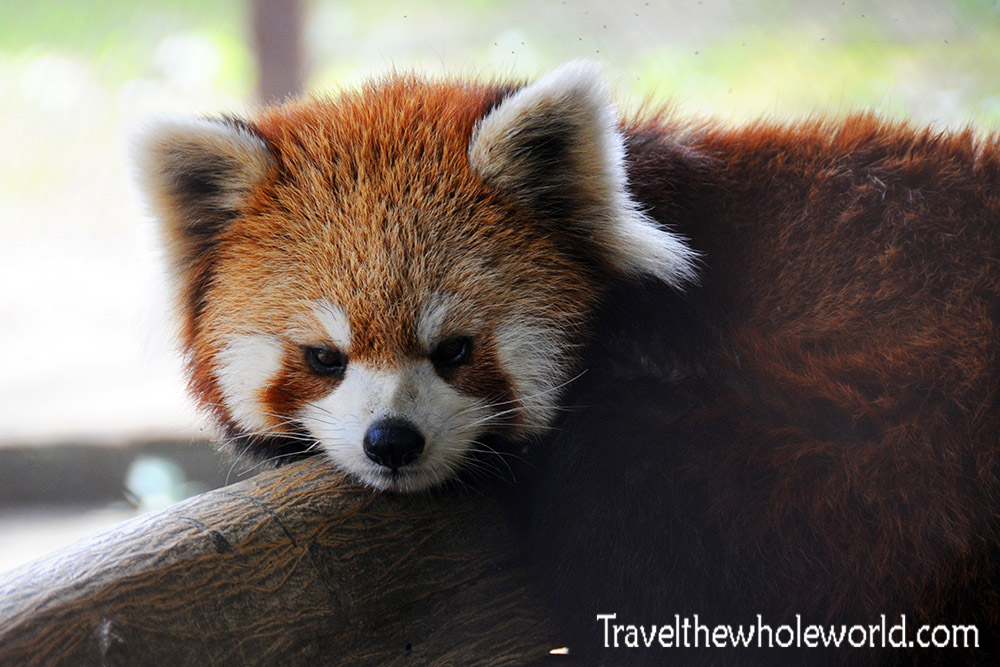
I thought this sleeping red panda looked more like a cross between a raccoon and a squirrel than an actual bear. Scientists once debated whether red pandas were more closely related to bears or raccoons, but today they are classified in their own family, Ailuridae. Despite their name, red pandas aren’t particularly close relatives of giant pandas.
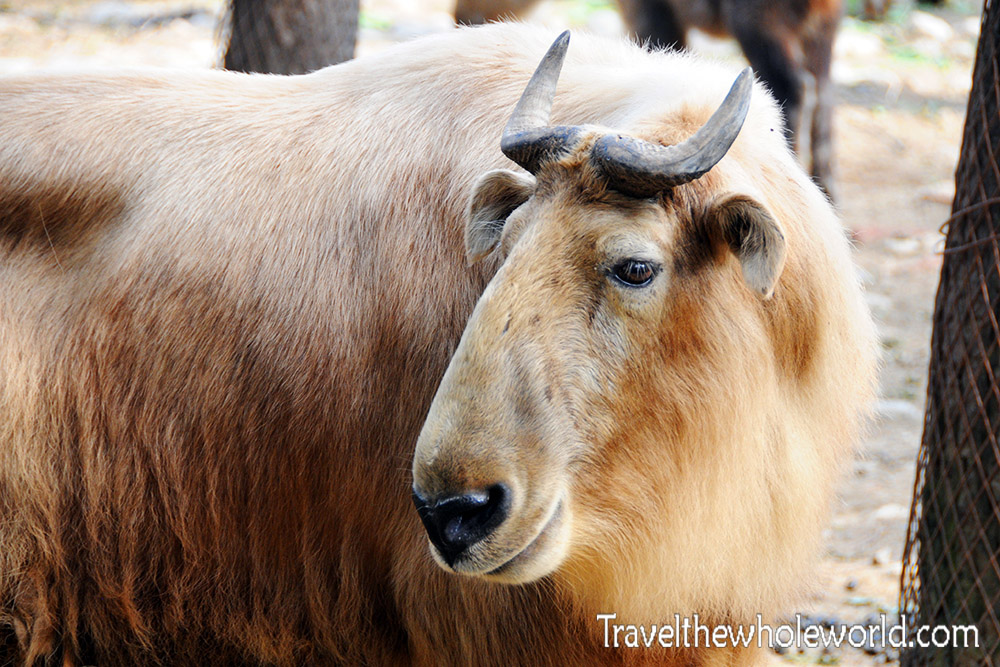
This next animal is the golden takin. With long hair like a yak but more of the face of a goat, the golden takin looks like it could be a rare find in the wild. These animals are native to the mountains of central China, with the golden takin being associated particularly with the Qinling Mountains of Shaanxi.
Like the red pandas, these high-altitude beasts are adapted to mountainous forests and alpine environments. Takins can move seasonally through a huge elevation range, climbing into high mountain country during the warmer months and descending into lower forests during winter.
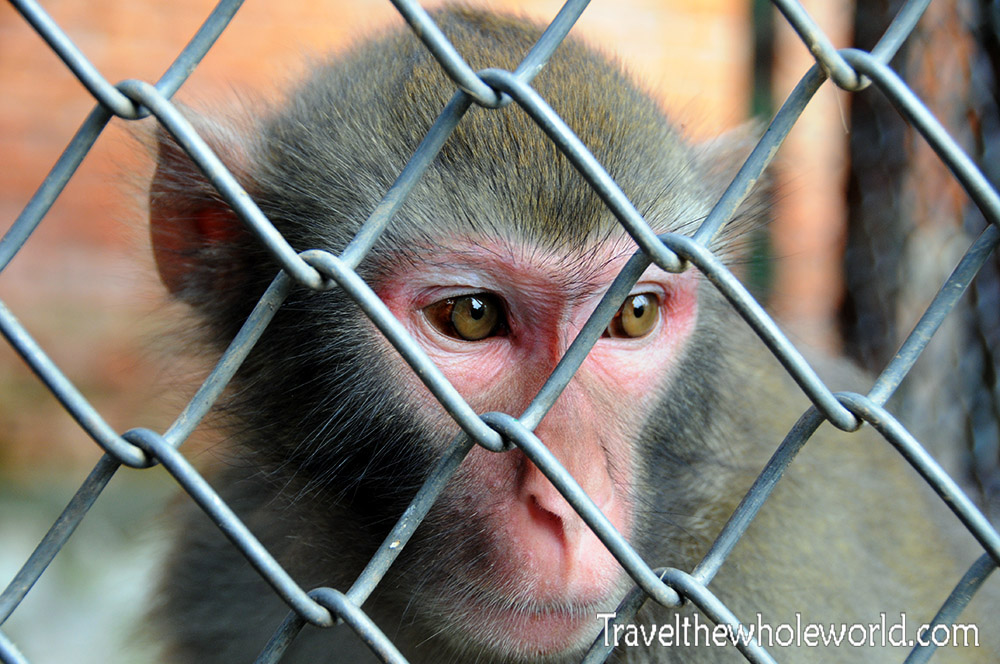
Two other small mammals I came across in the refuge are the monkey above and the animal below. The monkey deceptively looks calm and deep in thought. Right after I took the picture, some Chinese tourists approached it and the monkey started violently screaming and thrashing out from its cage.
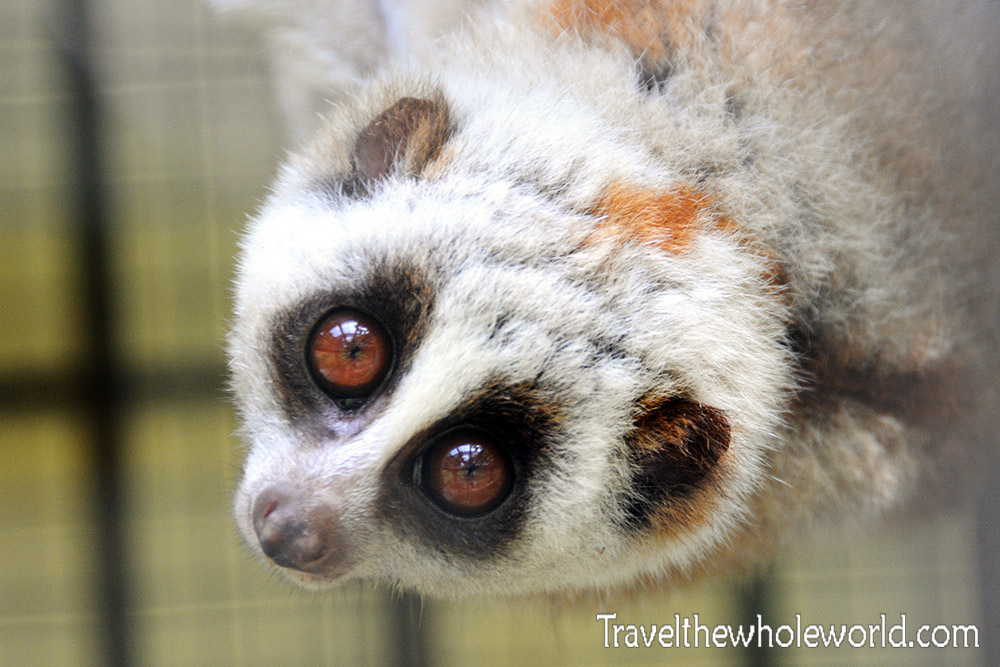
I originally identified this animal as a sloth, although looking back at the photograph I can’t confidently identify the species. Sloths are native to Central and South America rather than China, so my original identification was almost certainly wrong.
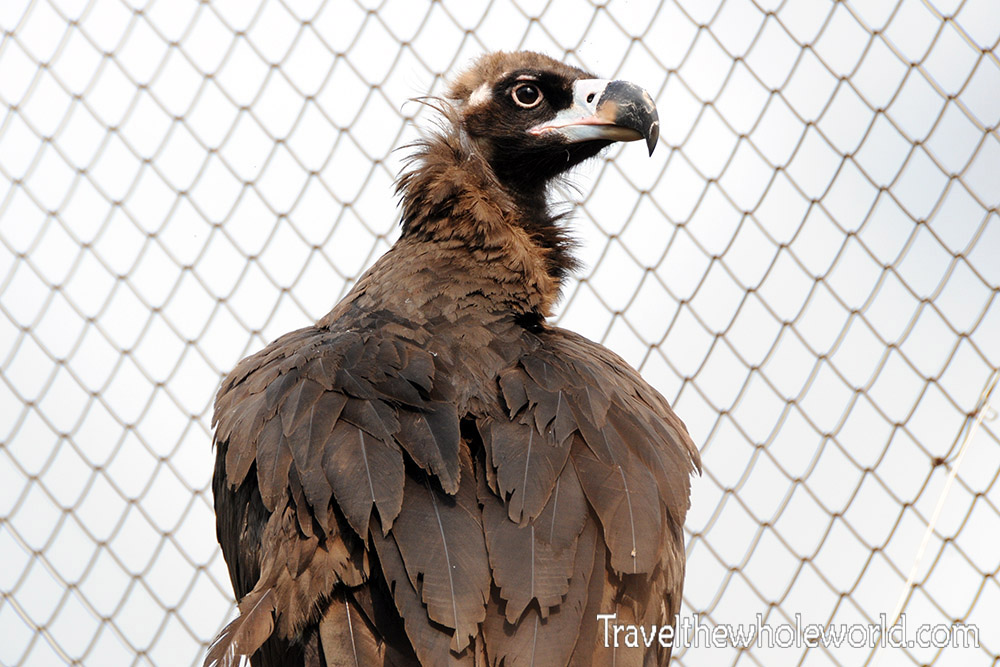
I tried but could not find out the species of this large bird above. You’d think it’d be easy to find, since there are only so many large vultures, eagles, and other birds of prey in this region of the world. I did have some close calls but none that I felt were good enough to say with confidence.
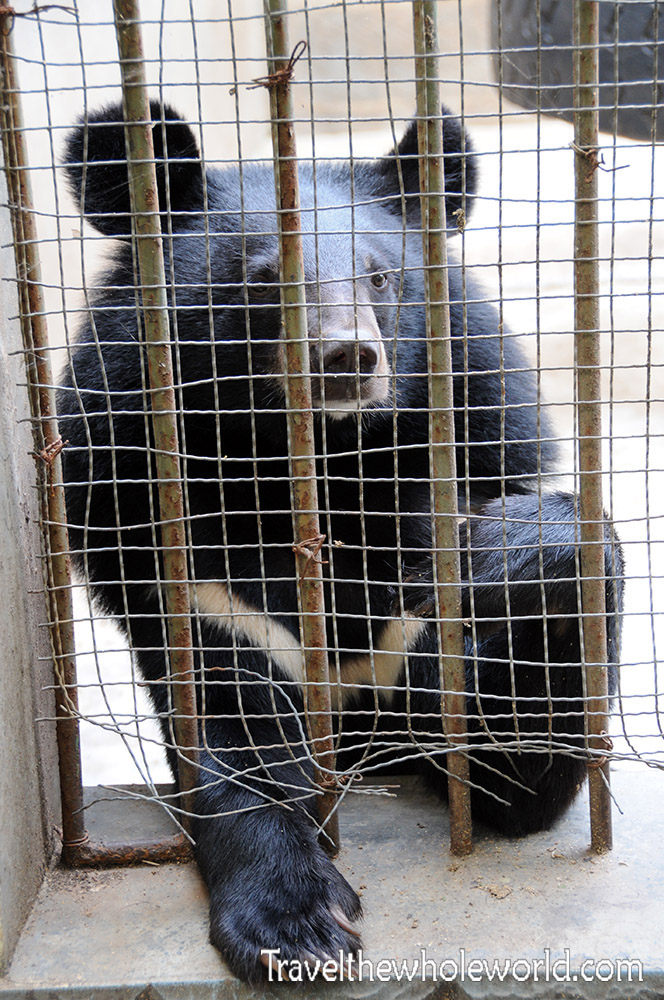
I am completely sure that this bear is the Asian black bear. There aren’t many species of bears in China, so that already makes it easier, but the distinctive pale crescent-shaped fur on the chest gives him away.
The Asian black bear has an incredible range. These guys can be found from parts of the Himalayas and the Indian subcontinent through China, Korea, Japan, and into the Russian Far East.
I felt most sorry for the bear since he had clearly made an attempt to escape. He seemed like he had recovered and was ready to move on in life to bigger and better things.
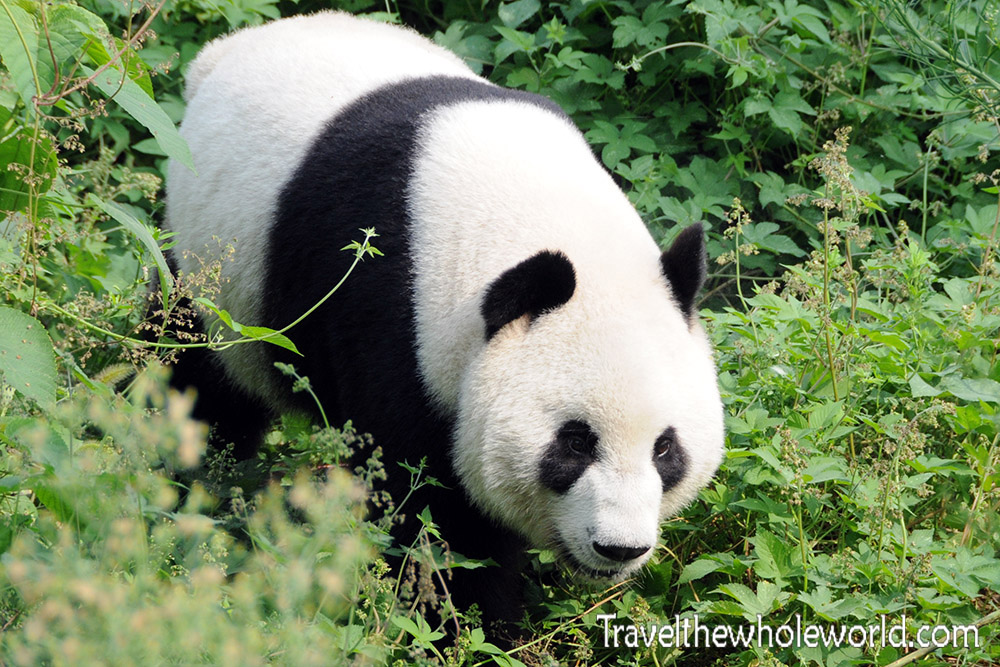
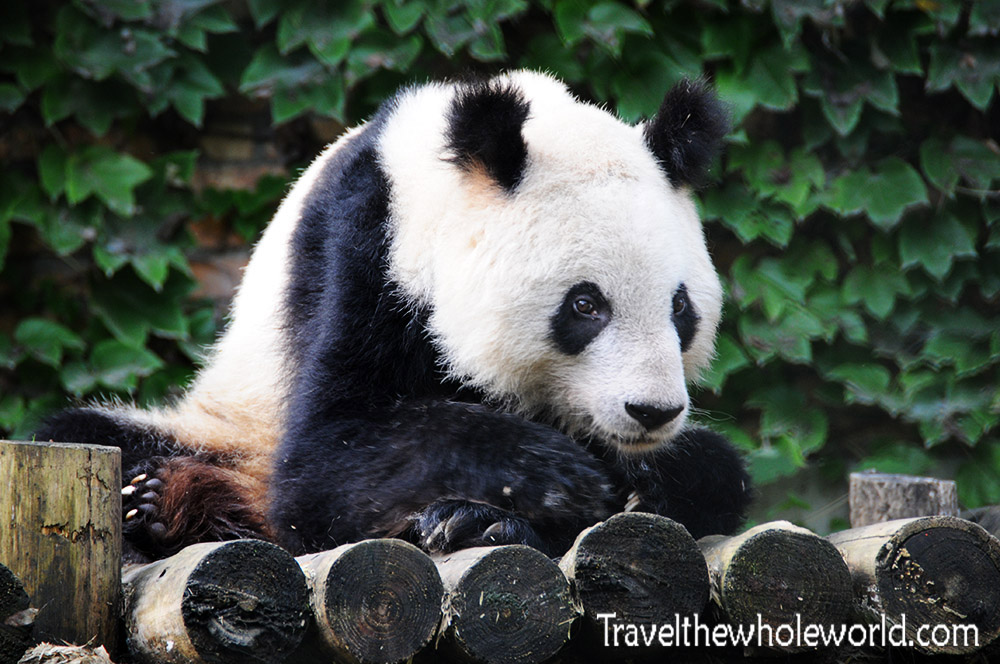
As you can see, the wildlife rehabilitation center supports several species of wildlife, but its most famous residents are the giant pandas. When I originally wrote this page, estimates of the world’s panda population were much lower and giant pandas were still officially classified as endangered.
Conservation efforts have produced some encouraging results since then. Surveys now estimate that more than 1,800 giant pandas live in the wild, with additional pandas living in conservation and breeding centers. In 2016, the giant panda’s conservation status was changed from Endangered to Vulnerable on the IUCN Red List. They’re still a threatened species with a restricted natural habitat, but their recovery is one of the better-known successes in modern wildlife conservation.
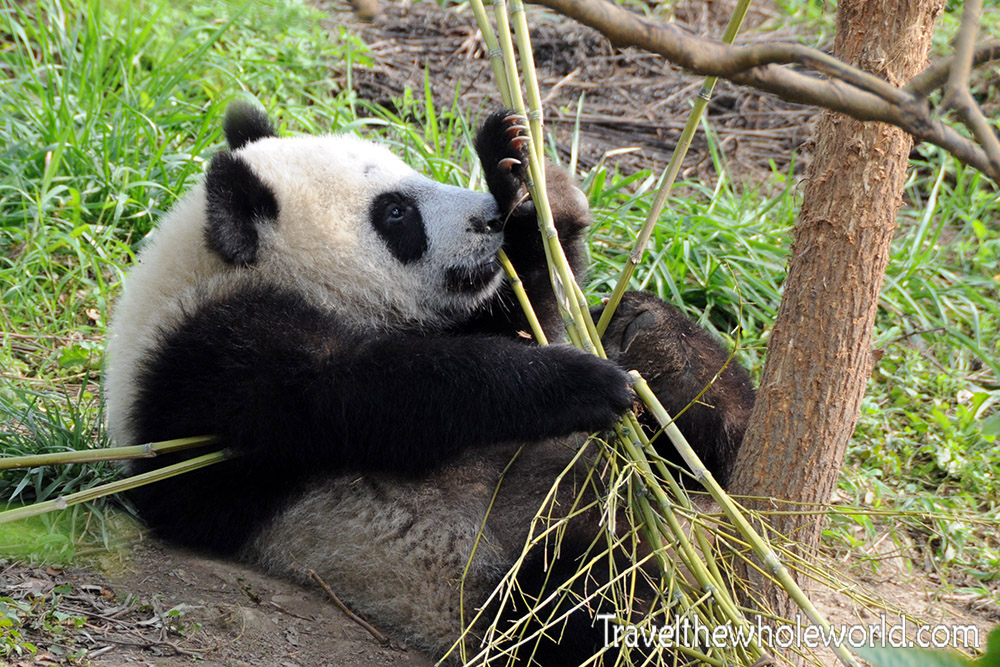
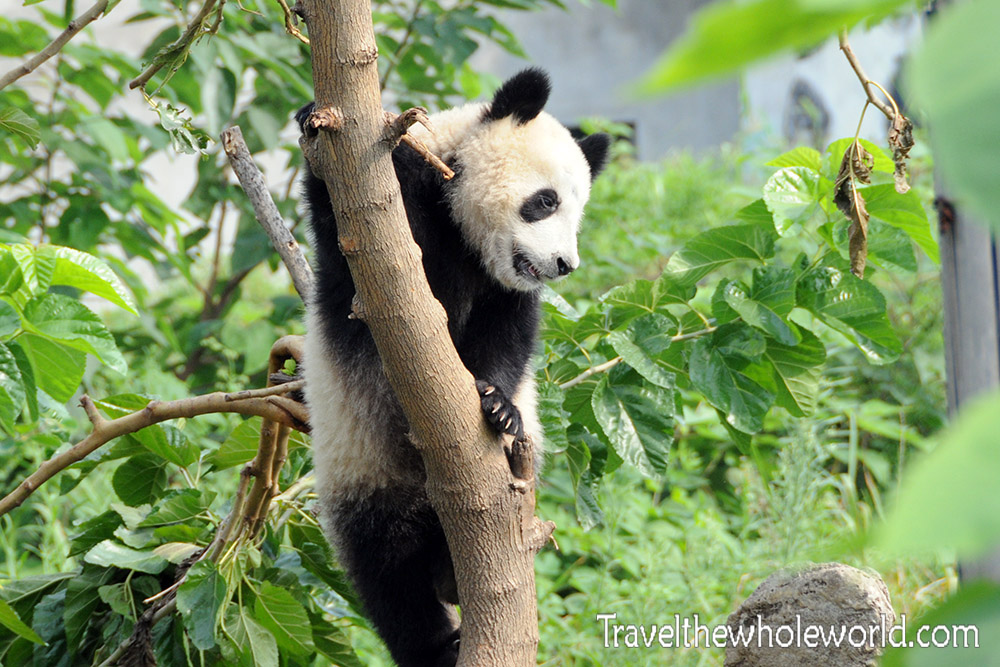
While with some of the animals here I questioned whether they had always been permanent residents or not, the pandas here were part of the center’s conservation work. There were over a dozen pandas at the Zhouzhi center when I visited, which was an impressive number considering how rare it is to ever encounter a giant panda in the wild.
My last photos of wildlife might not be pleasant for all, but these are my only “real” wildlife photos I have at the moment from China. I suppose one exception is years later on my way to Mt. Everest’s Advanced Base Camp, when I captured a photo of some strange high-altitude sheep above 17,000 feet (5,000 meters).
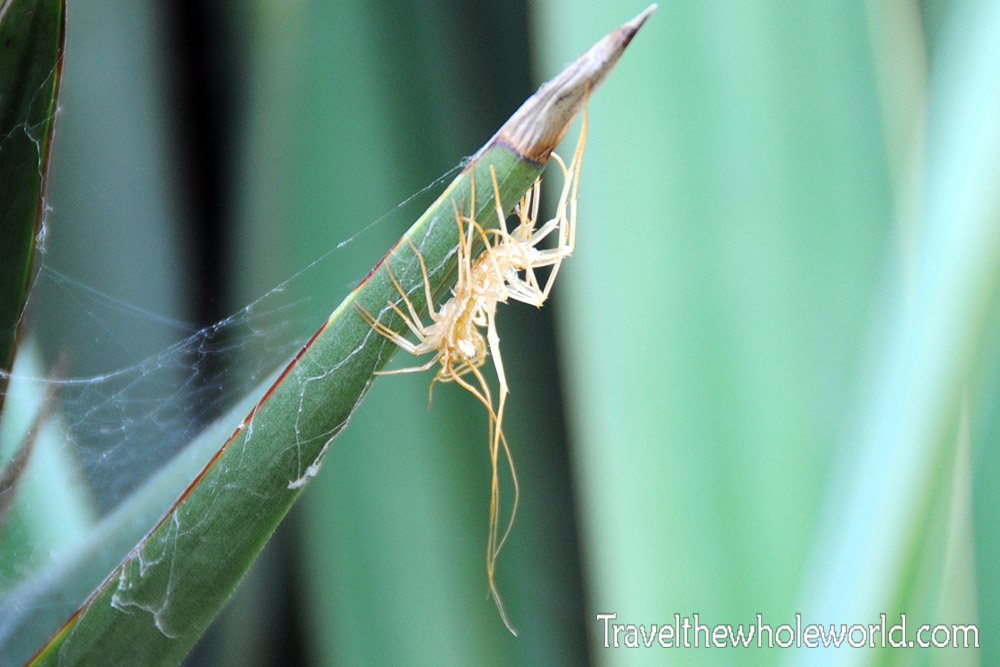
Since the larger animals were part of a wildlife rehabilitation center, I can’t really consider them natural shots, so these nasties are all I have to work with. For whatever reason, this place was crawling with all kinds of bugs. This centipede resembled a house centipede, which I have seen in the States before.
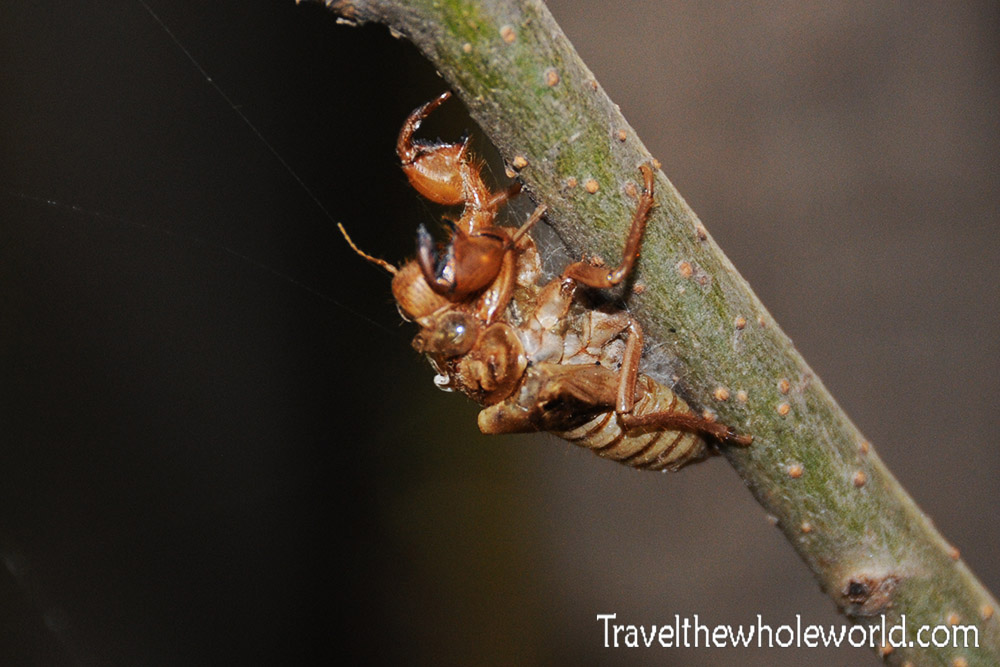
This empty shell resembles a cicada that also lives back in my home state of Virginia. Interestingly, I’ve seen hundreds of brown marmorated stink bugs in Virginia that were accidentally introduced from East Asia, including China. Sometimes I’d count dozens of them all over my front door or smothering my windows, but I didn’t come across a single one of them in their native range.
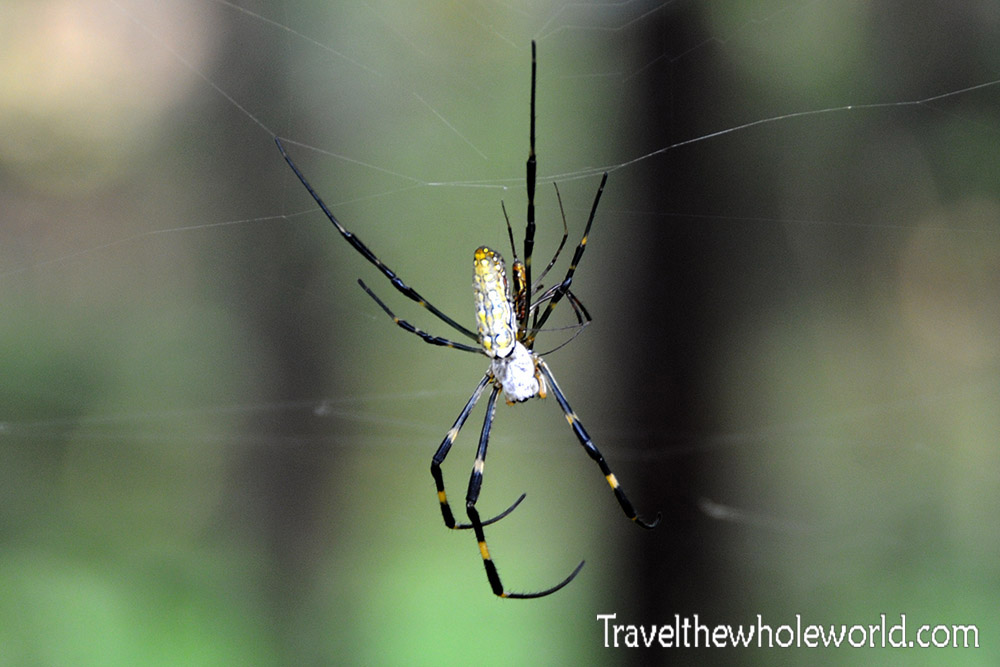
When I first saw these huge colorful spiders, I thought they were the same species as some that I saw in Japan half a decade earlier. After comparing my own pictures, I did see some obvious differences, so maybe at best they are closely related.
Their black and yellow colors certainly make them look intimidating, although coloration alone doesn’t tell you whether a spider is dangerous to humans. They were actually everywhere in this region. If I did serious hiking in the woods, I’d definitely be worried about walking face-first into one of their webs!
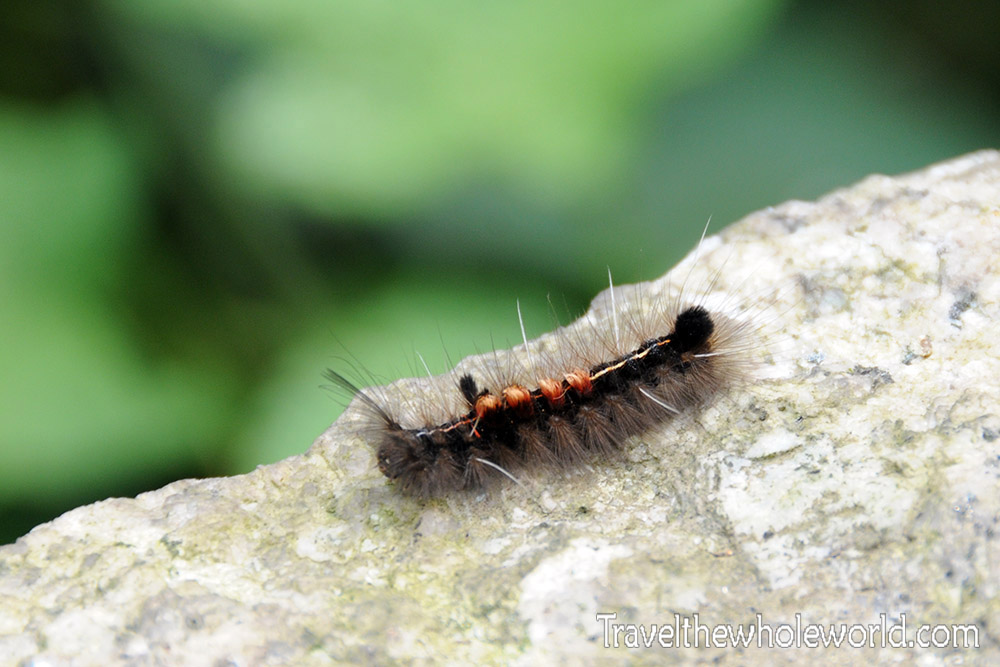
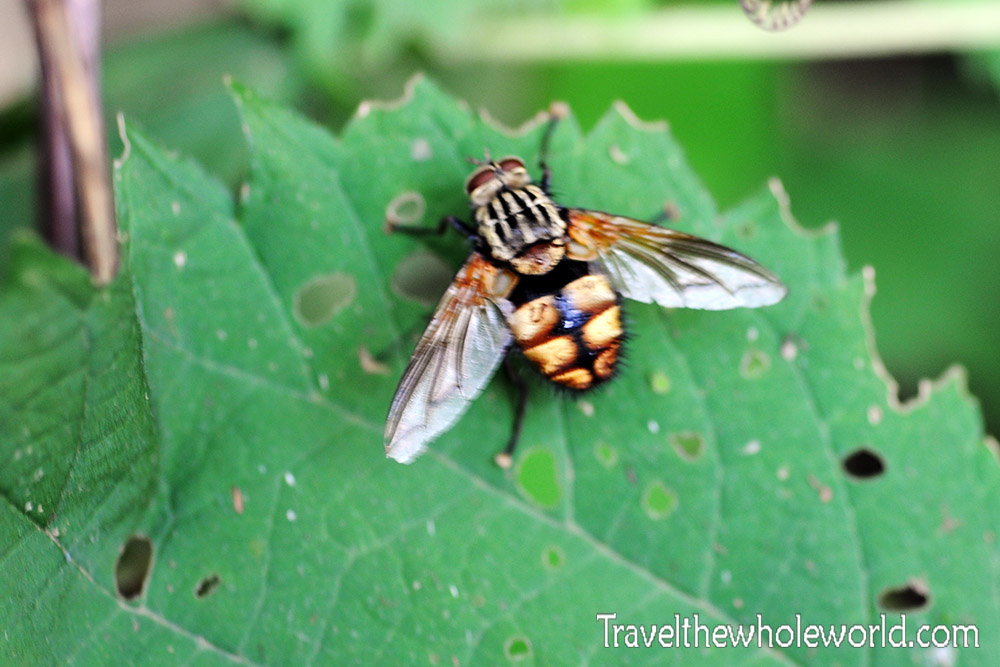
My two last photos show a hairy caterpillar and a huge fly, species that I’ve never seen before. I realize these aren’t the most interesting of subjects, but it’s what I came across.
Since I’ve visited a relatively small area of China, I still have a lot more exploring to do in this country. Next time I hope to come across more exciting wildlife. When I return, I plan to fly into Shanghai and from there visit parts of the south. I’d love to do some exploring in some of China’s tropical forests as well as the habitats that are native to giant pandas.
Explore More of China
Beijing • Mt. Huashan • the Great Wall of China • the Zhouzhi Wildlife Reserve • Xian