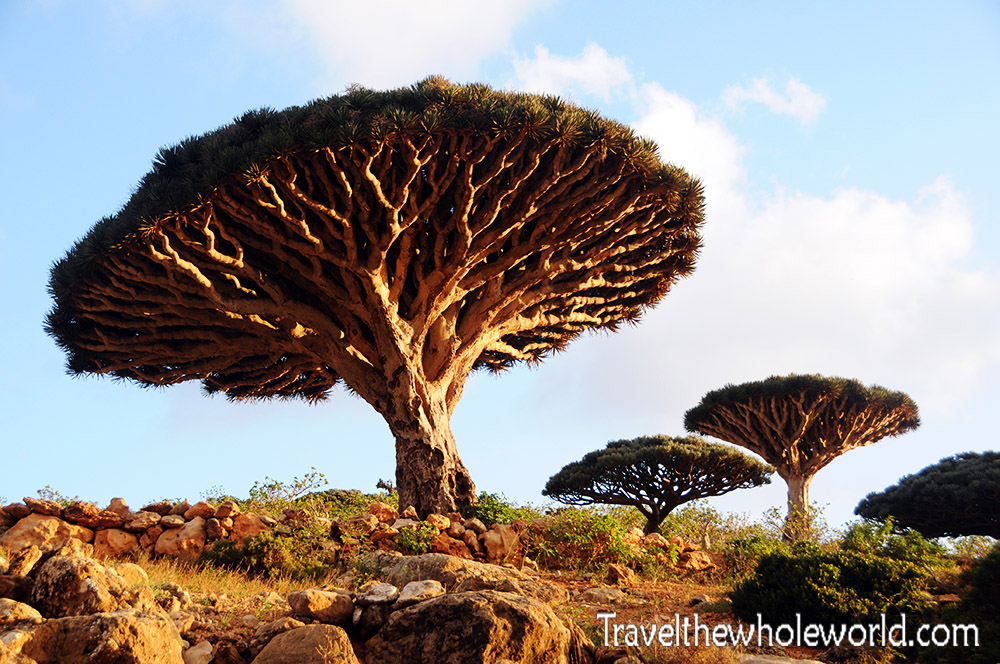
Despite being one of the most unique places I’ve ever been, the islands of Socotra seem largely unknown to the rest of the world. Socotra’s closest island to the mainland is just 50 miles northeast of Somalia and about 100 miles south of Yemen, to which the islands belong. Like the Galapagos Islands, Socotra stands out because a large percentage of its exotic plants and animals are found nowhere else in the world. Even the native Socotri language, which traditionally has no written form, is unique to the islands.
A Virtual Tour of Socotra
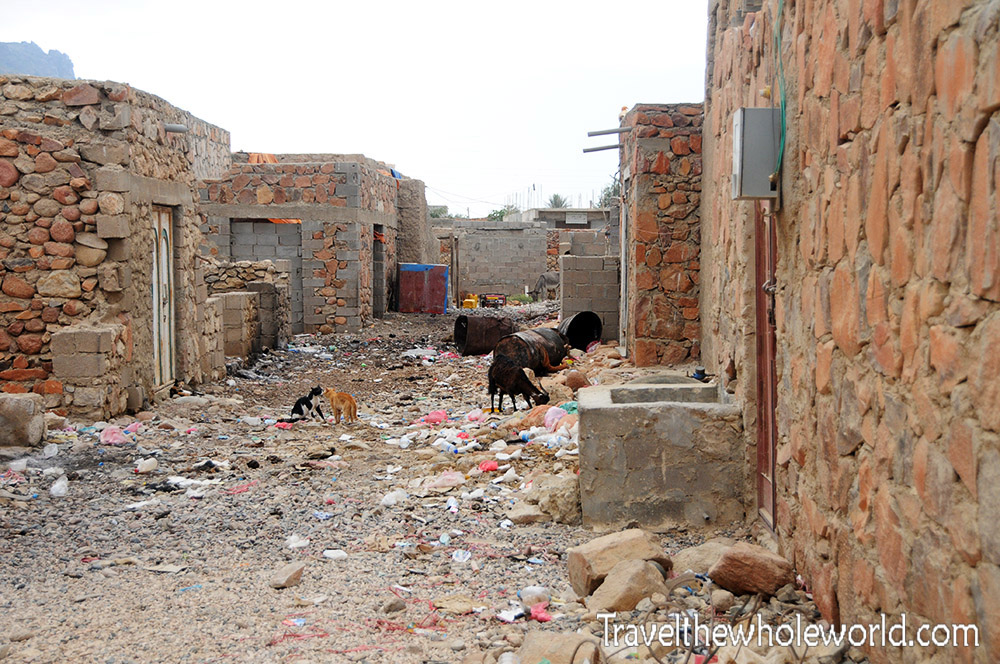
From mainland Yemen I flew to Socotra’s tiny airport. Once I grabbed my bags, I found my driver waiting for me and he greeted me by saying, “Hello, and welcome to the island!” I was excited to see Socotra’s famous dragon trees, but my first views were of the town of Hadiboh, photographed above.
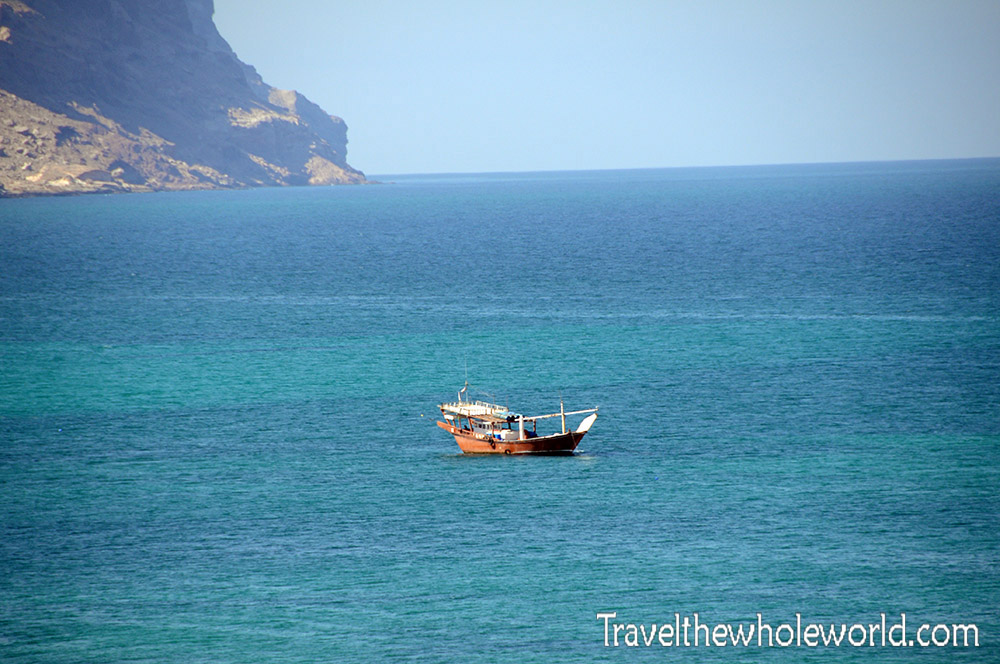
The towns weren’t really the highlight of Socotra for me. The smaller villages were more interesting and the coastal areas were beautiful, but some of the populated areas had a noticeable problem with litter. Once my driver stopped beside some beautiful scenery and, while I pulled out my camera, a man we had given a ride to thanked us by casually throwing all of our trash out the window.
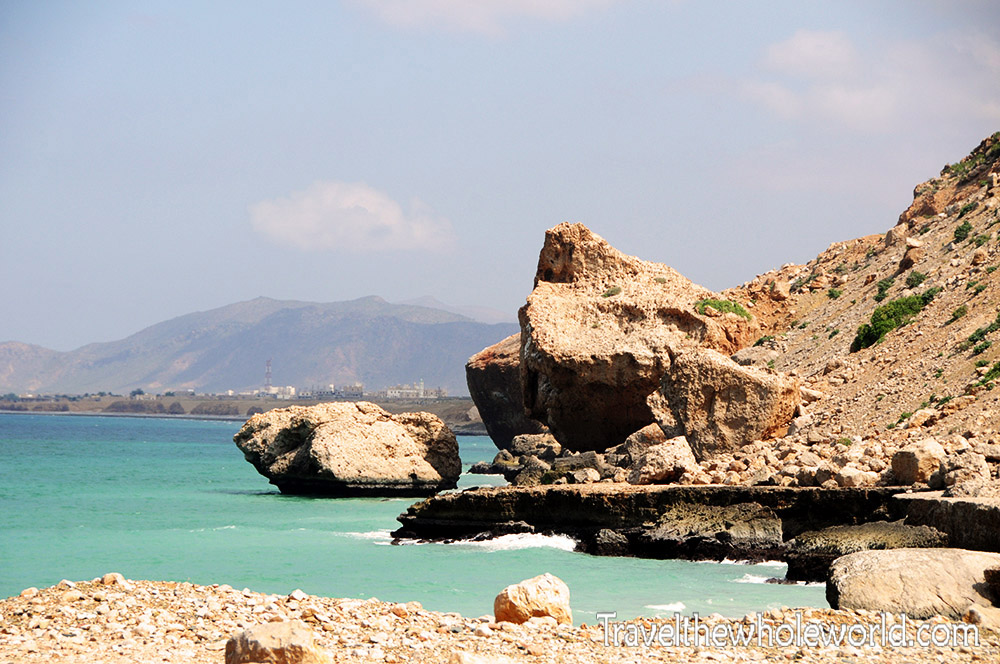
Fortunately, once outside the towns, the scenery quickly became the Socotra I had come to see. Much of the island is sparsely populated, and the combination of barren mountains, empty coastline, and unusual vegetation makes the landscape feel unlike almost anywhere else I’ve traveled.
Abandoned Tanks Around Socotra
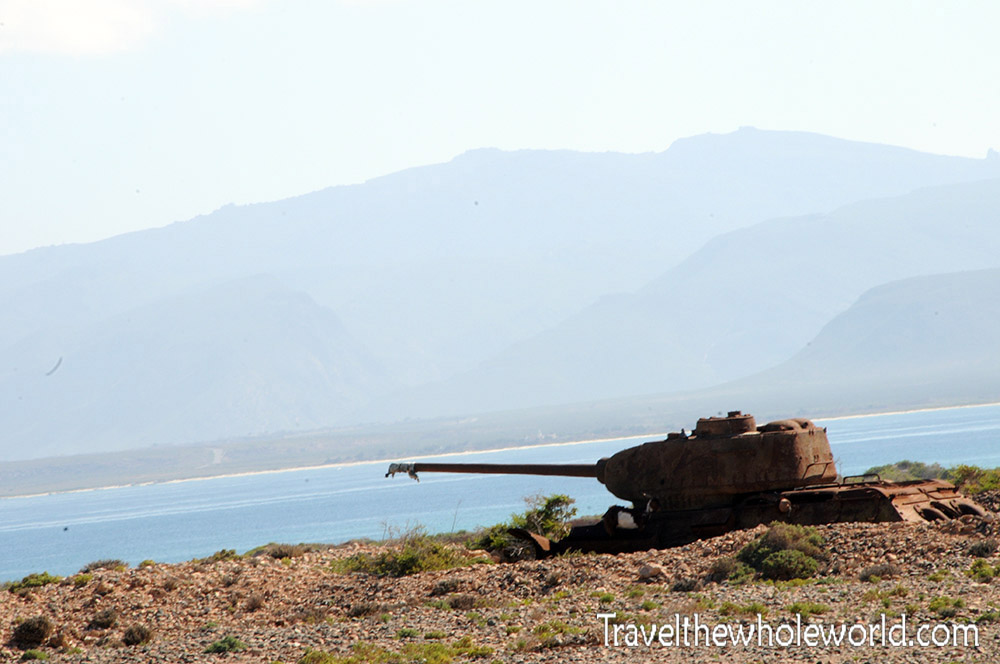
During my road trip around the island, I was surprised to find abandoned tanks along the coast. At the time I had no idea why they were there or whether they had ever actually been used in combat. My understanding was that they were old Soviet tanks positioned along the shoreline.
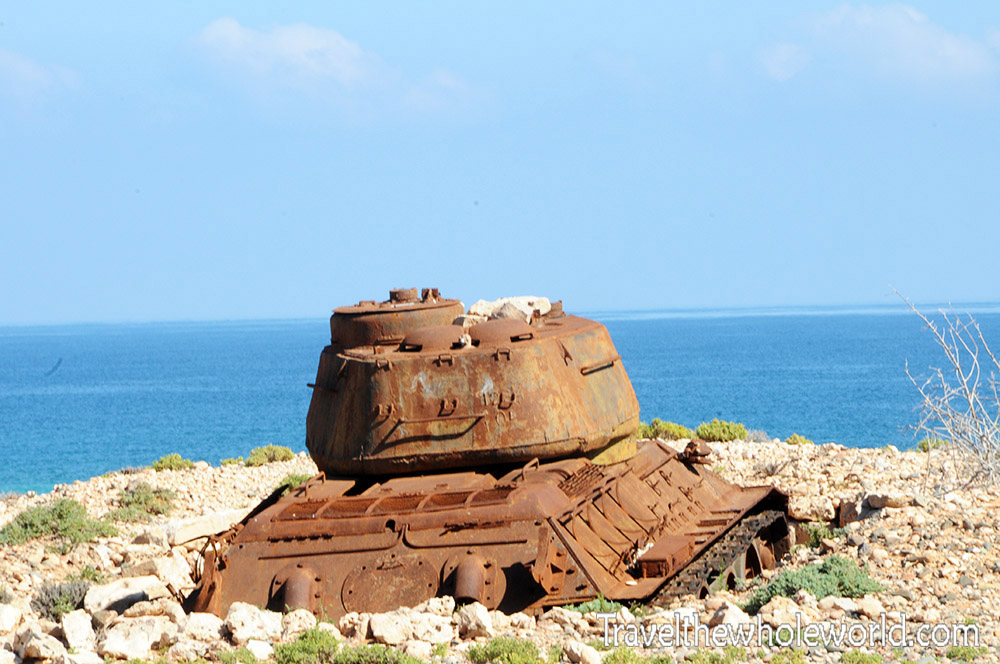
Above is another one I passed in a completely different part of the island. They appeared to have been dug into defensive positions and used more like stationary coastal guns than mobile tanks. I tried approaching one of them, but a local man stopped me. I wasn’t sure what the concern was, but being a guest on the island I didn’t argue.
People of Socotra
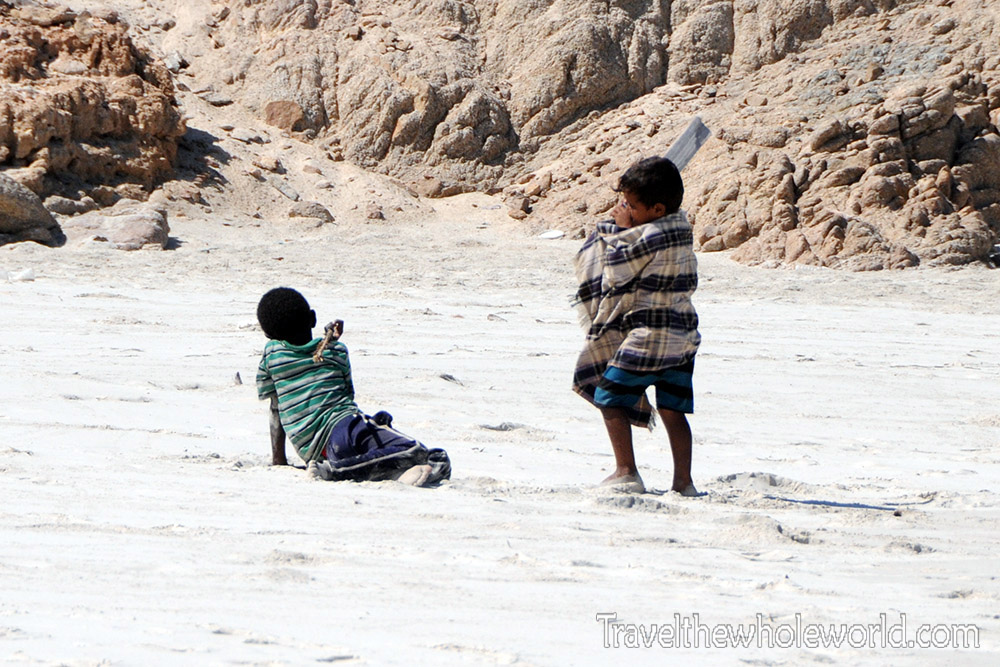
Above are some kids I saw playing near the beach. The more I explored the island, the more obvious it became that Socotra has its own distinct culture separate from mainland Yemen. Arabic is widely spoken, but the island also has its native Socotri language and traditions that developed in relative isolation.
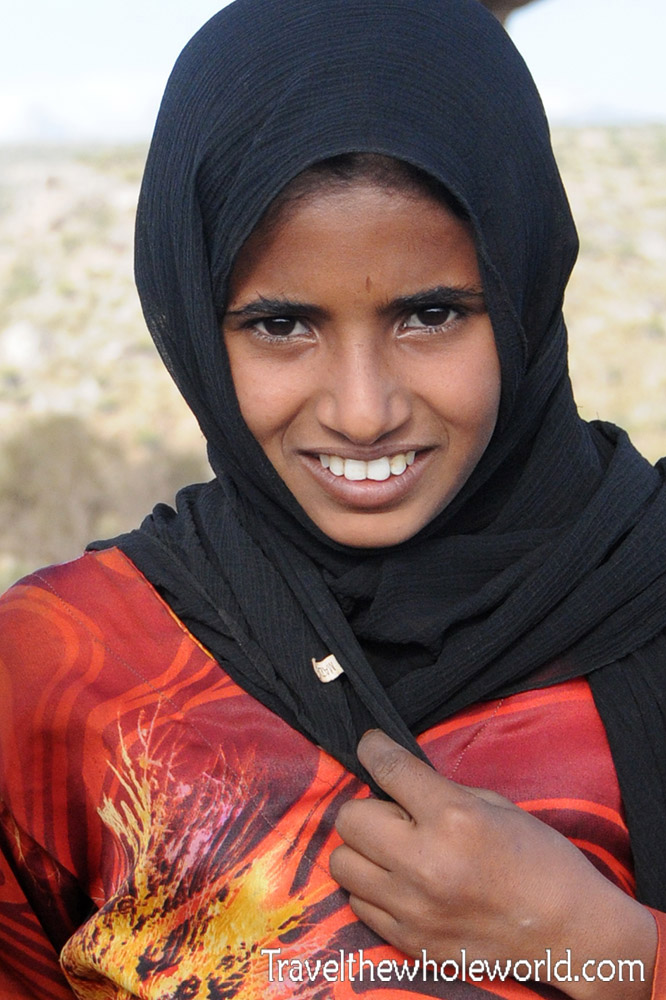
Above is a Socotri girl wearing the colorful traditional clothing that I saw throughout the island. The clothing, language, and even the appearance of many villages made Socotra feel culturally distinct from the parts of mainland Yemen I had visited.
Dragon’s Blood Trees of Socotra
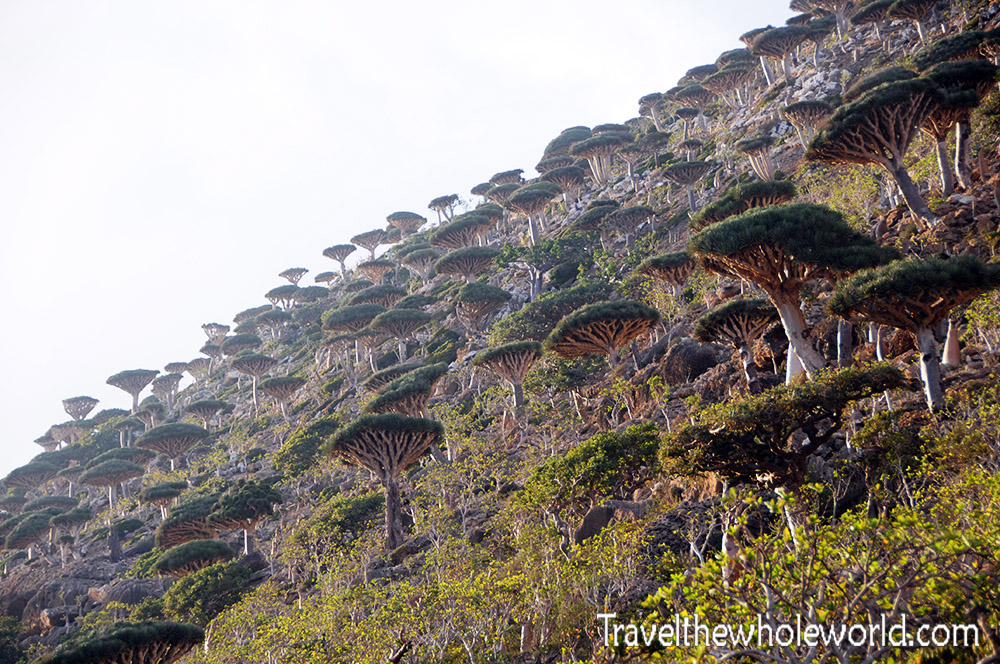
Now for the dragon trees! These were what I was most excited to see. Dragon’s blood trees are among Socotra’s most famous plants and get their name from the dark red resin inside them, which resembles blood. The resin is sold in local markets and was even offered by kids along the road.
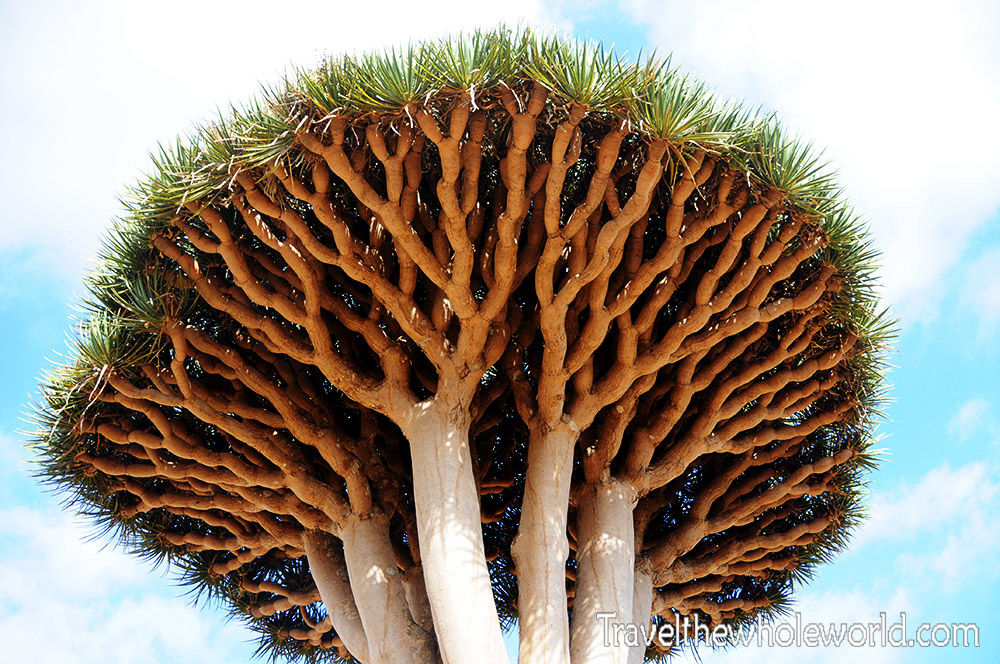
Standing underneath one gives a much better idea of their strange shape. Their branches spread outward into a dense umbrella-like crown, making even a single tree look almost artificial. While I don’t have a photograph of the red resin itself, you’ll have to take my word for it that it really does look like blood.
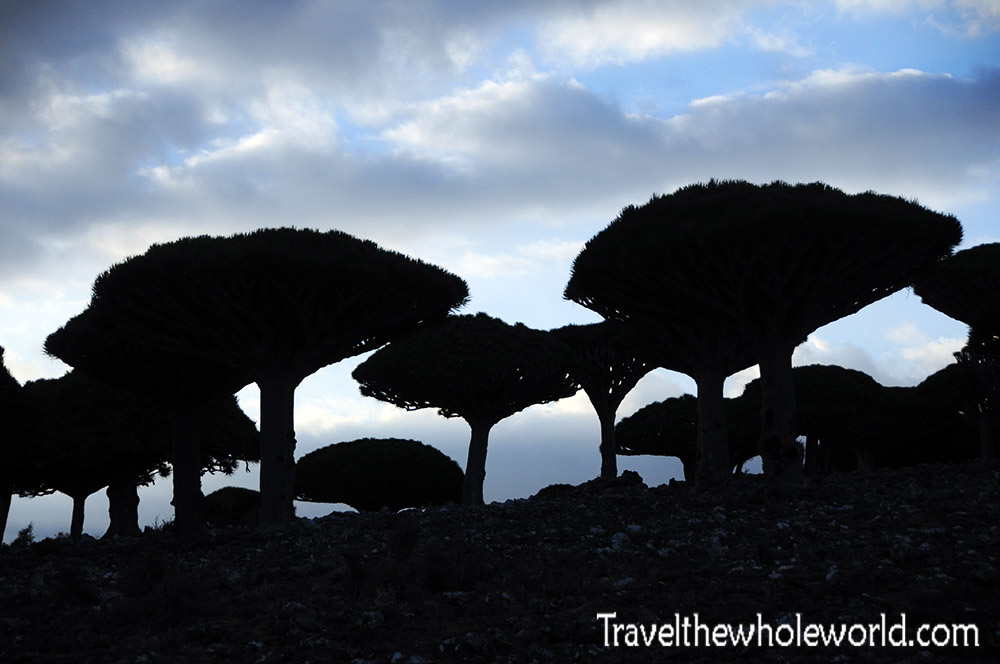
Most of the dragon trees I encountered were scattered across elevated parts of the island. Seeing them silhouetted at night made the landscape look even more unusual.
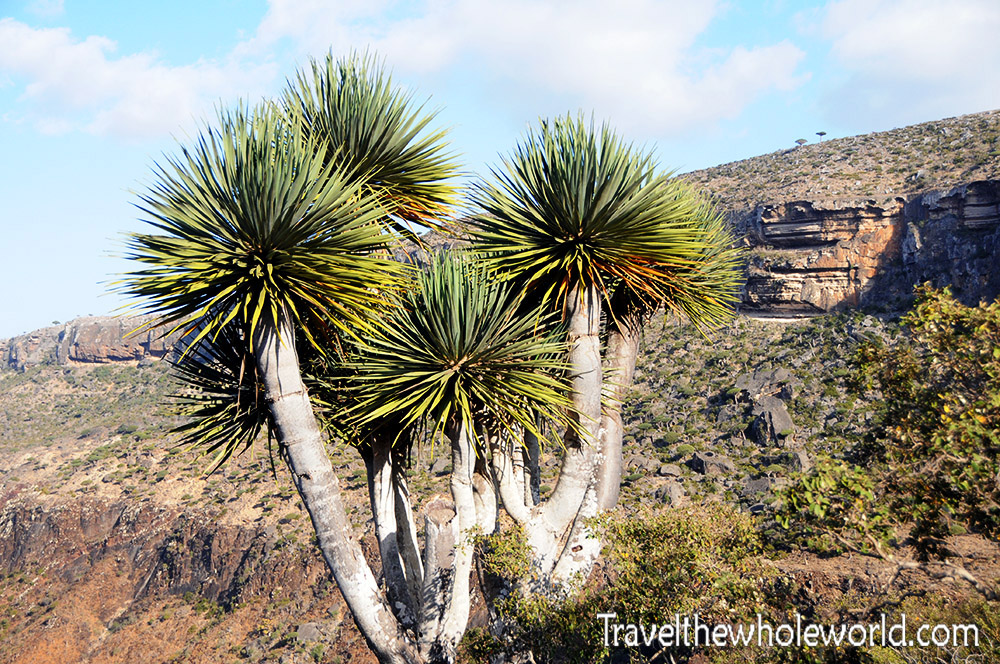
I occasionally saw isolated trees closer to lower elevations, but usually they became more common as I traveled higher into the mountains. For most of my trip I saw only a few together at a time, but on my final day I eventually reached areas where they covered entire sections of the landscape.
Other Unique Plants of Socotra
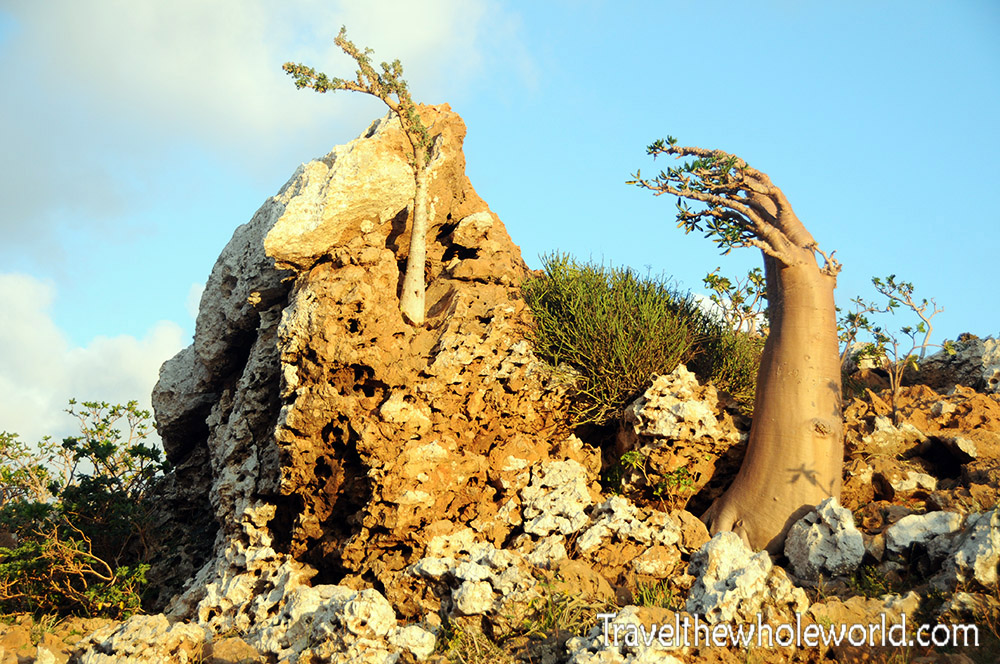
Dragon’s blood trees may be Socotra’s most famous plants, but they are far from the only unusual ones. I photographed several species that I wasn’t confident enough to identify at the time, including the strange plant above.
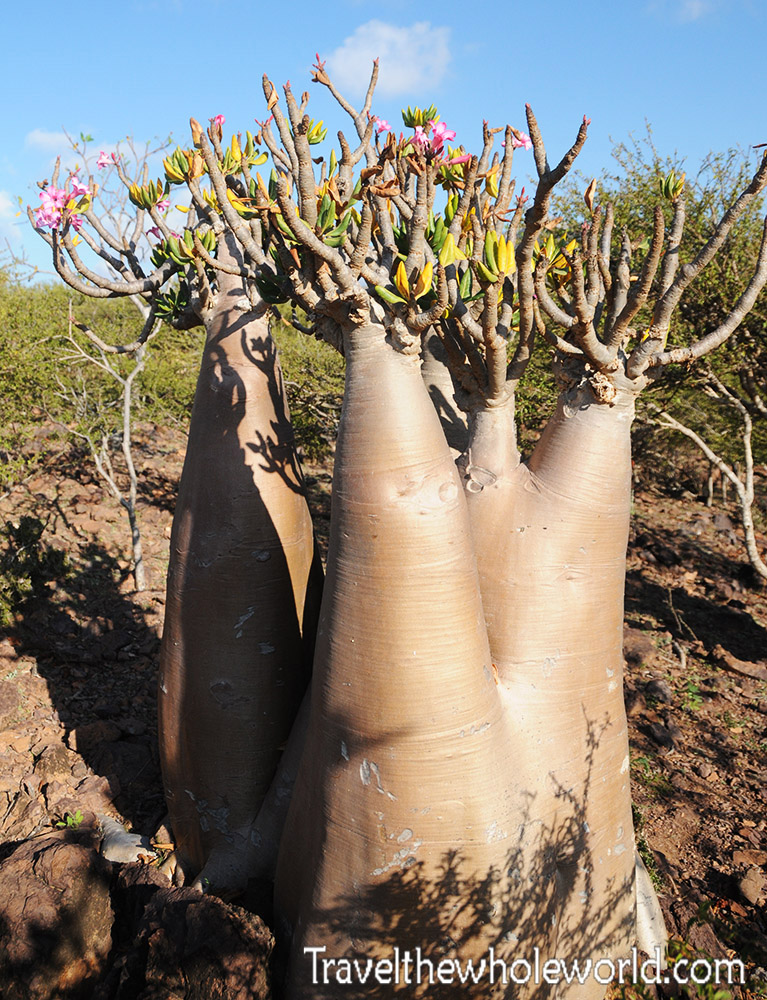
Depending on the season, some of Socotra’s normally strange-looking plants produce colorful flowers. I had heard that during the right time of year entire areas can be filled with blooming desert roses.
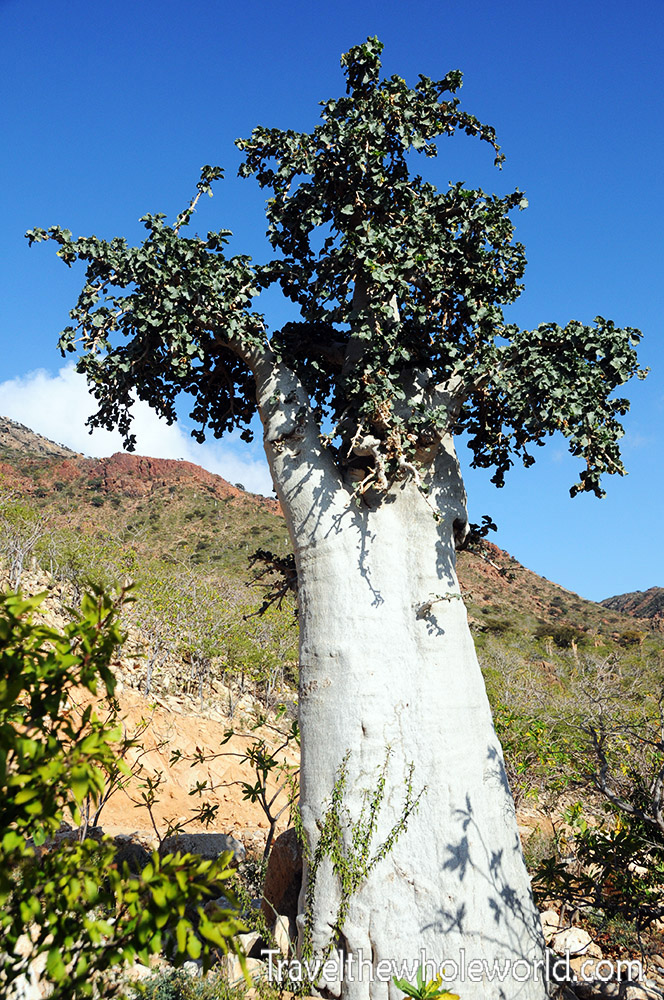
Above is one of the giant cucumber trees I came across. Some were enormous, reaching well over 20 feet in height. Their thick trunks store water, an obvious advantage on such a dry island.
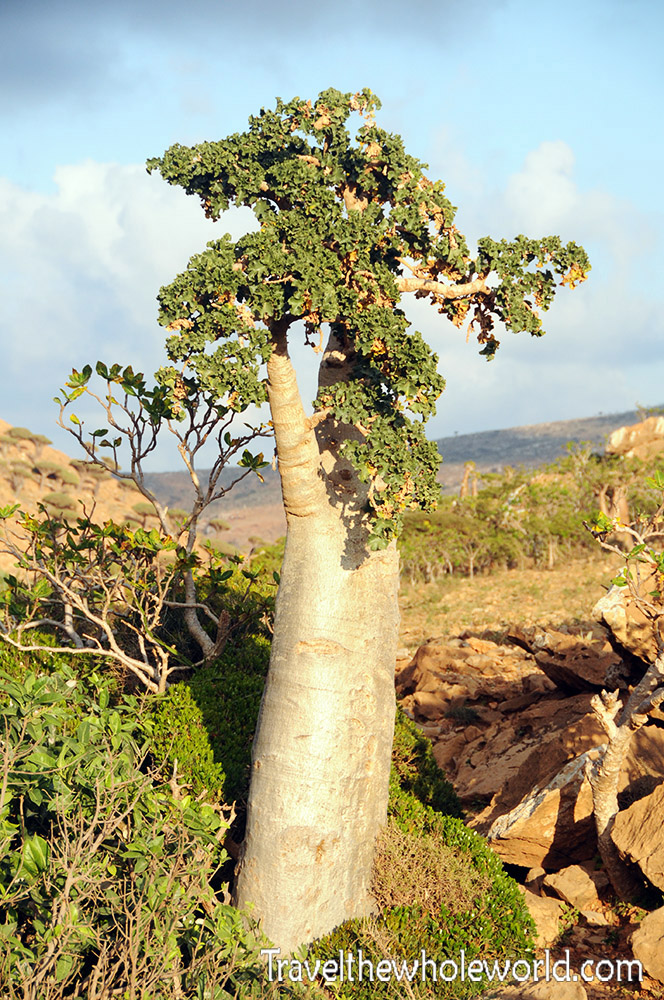
Here’s another view of one of the giant trees. Their oversized trunks and relatively small branches give them a completely different appearance from the vegetation I’m used to seeing elsewhere.
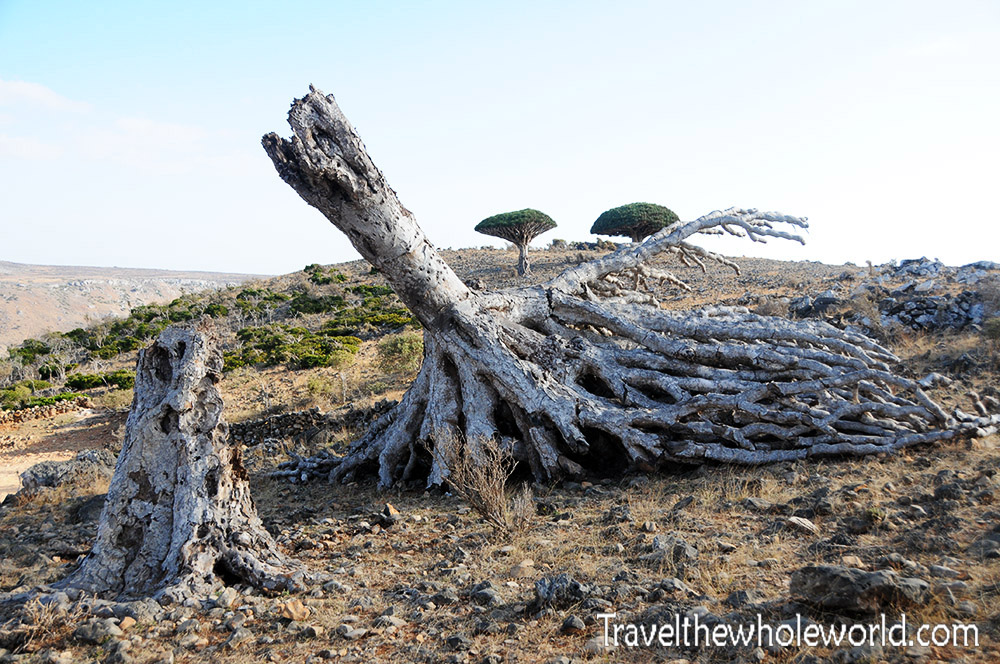
This fallen dragon tree gave me a different perspective on just how substantial the trunks and root systems can be. Most of my photographs show the distinctive canopy, but from the ground you can better appreciate the size of the entire tree.
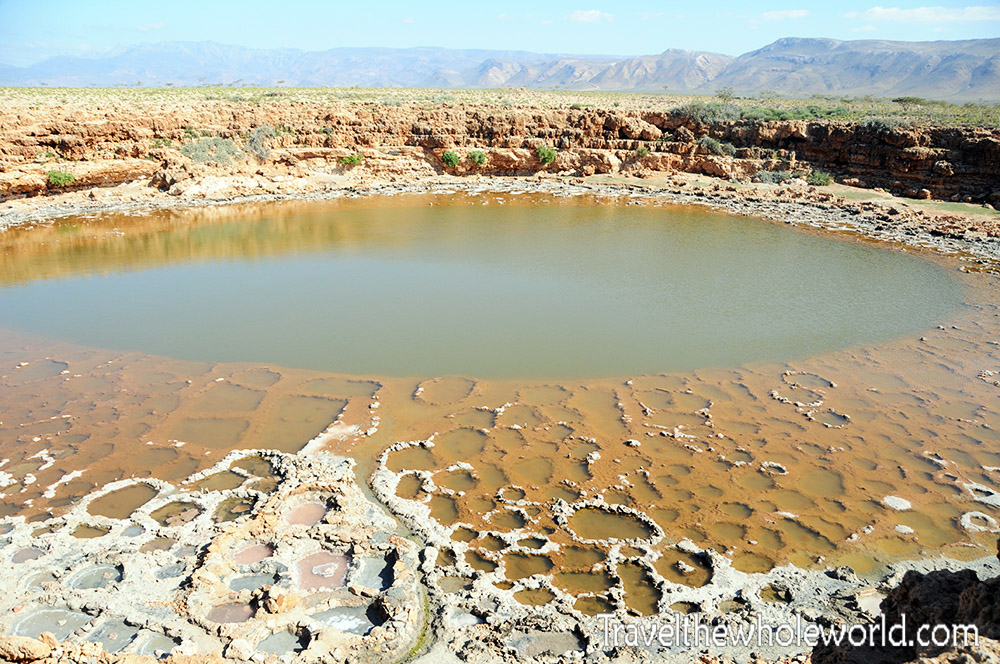
Above is an open salt depression I encountered while traveling through one of the drier parts of Socotra. Much of the island has an extremely arid appearance, especially at lower elevations.
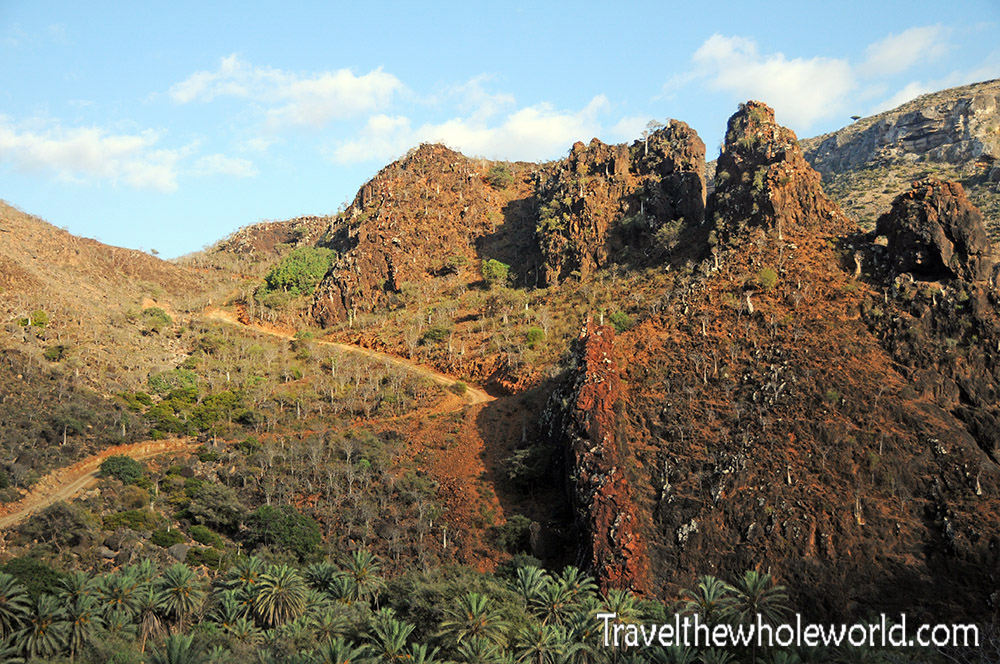
The oasis above was a dramatic exception. Even before I could see the water, I noticed that the soil was darker and the vegetation considerably richer than the surrounding landscape.
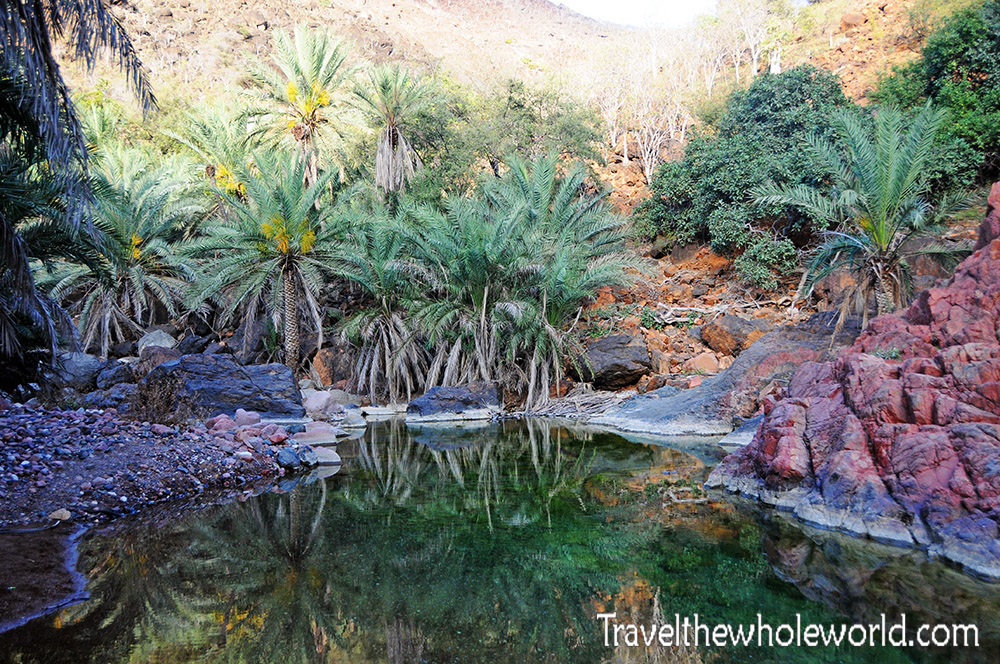
A freshwater stream fed several small pools here, including the one above. Locals were even swimming in some of them. After traveling through so much dry terrain, finding clear freshwater surrounded by vegetation felt almost completely out of place.
Wildlife of Socotra
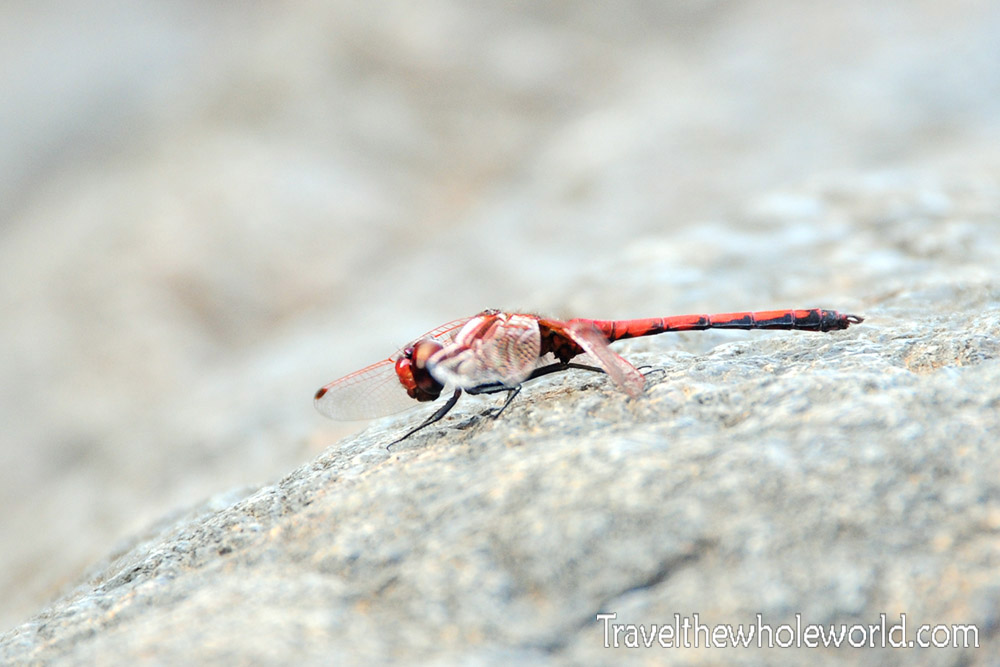
The oasis was densely packed with red dragonflies like the one above. They were probably the most obvious wildlife around the pools, although photographing them was another story since they rarely seemed to stay still.
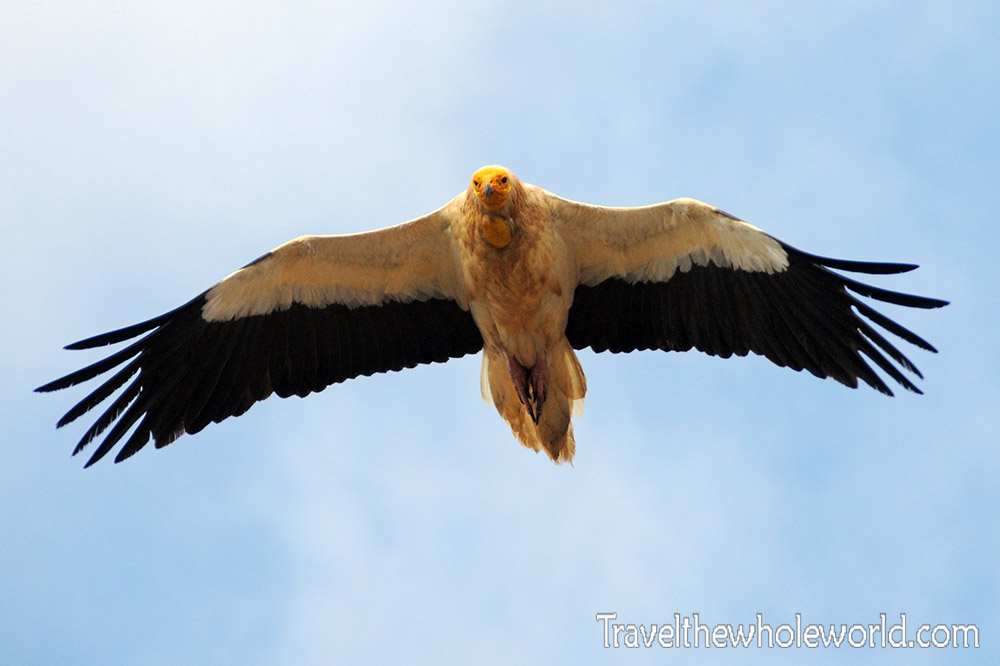
Above is an Egyptian vulture, one of the birds I saw frequently around Socotra. I’m not normally much of a vulture fan, but these were impressive birds and surprisingly easy to observe up close.
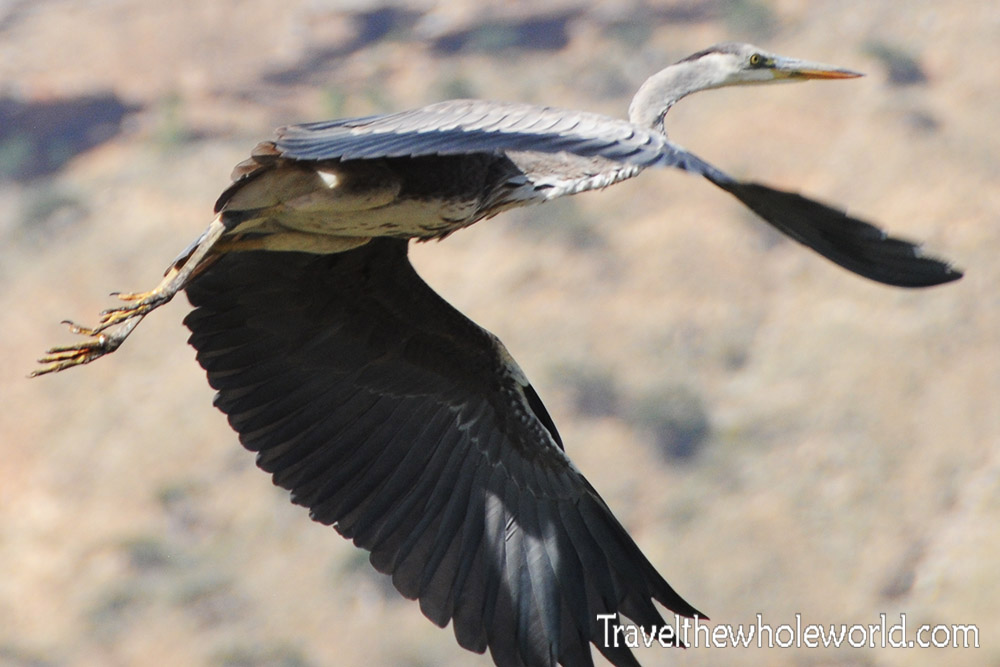
I also spotted plenty of herons around the island, especially near the coast and other areas with water. Above is one of the larger ones I managed to photograph.
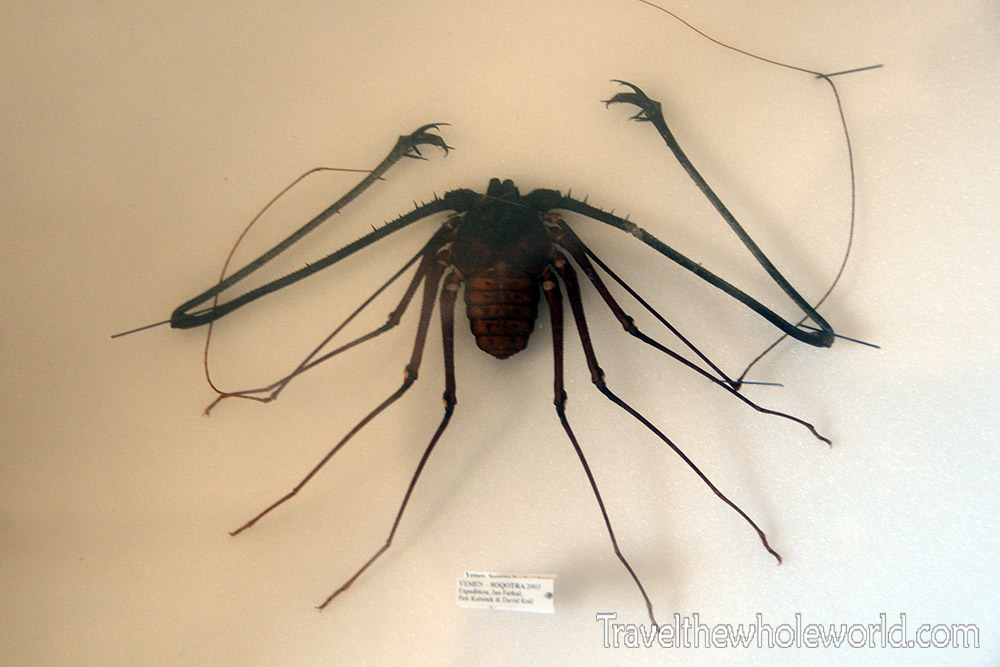
And then there was this thing. Above is a whip scorpion that I saw at a local museum. Despite the name, it isn’t actually a true scorpion. This one was nearly the size of my face and looked about as unpleasant as an animal possibly could.
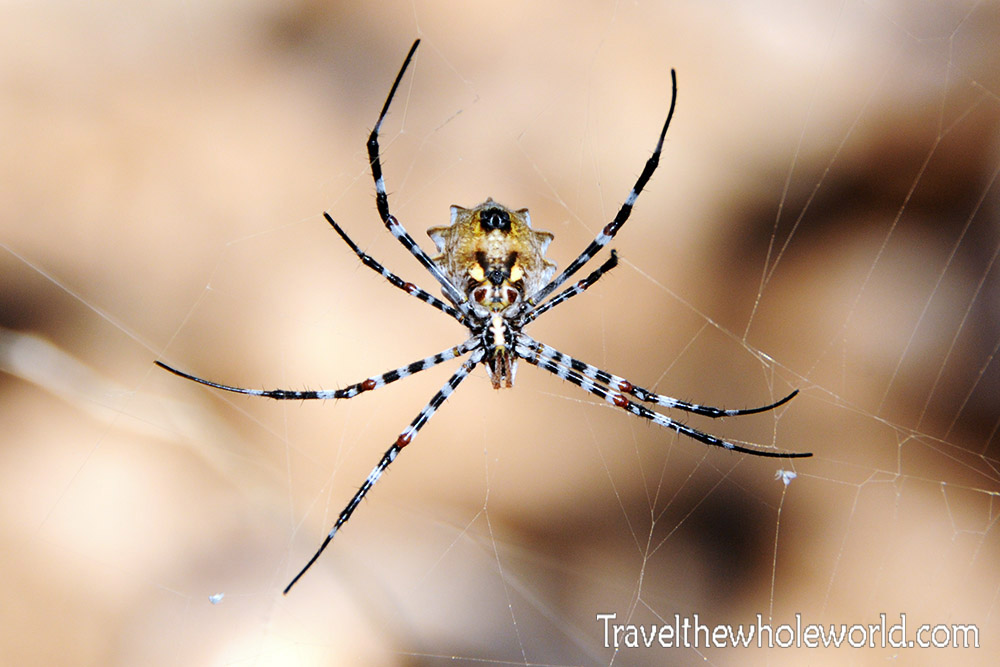
Socotra also had no shortage of large spiders and other insects. To properly search for the island’s more elusive wildlife, I imagine you’d need to spend much more time exploring the remote mountains and probably do some searching after dark.
One of the most fascinating things about Socotra is just how much of its wildlife and plant life developed in isolation. There are endemic reptiles, unique scorpions, and numerous plant species found nowhere else. The island’s only native land mammals are bats, which makes the abundance of unusual reptiles, birds, insects, and plants even more noticeable.
Beaches of Socotra
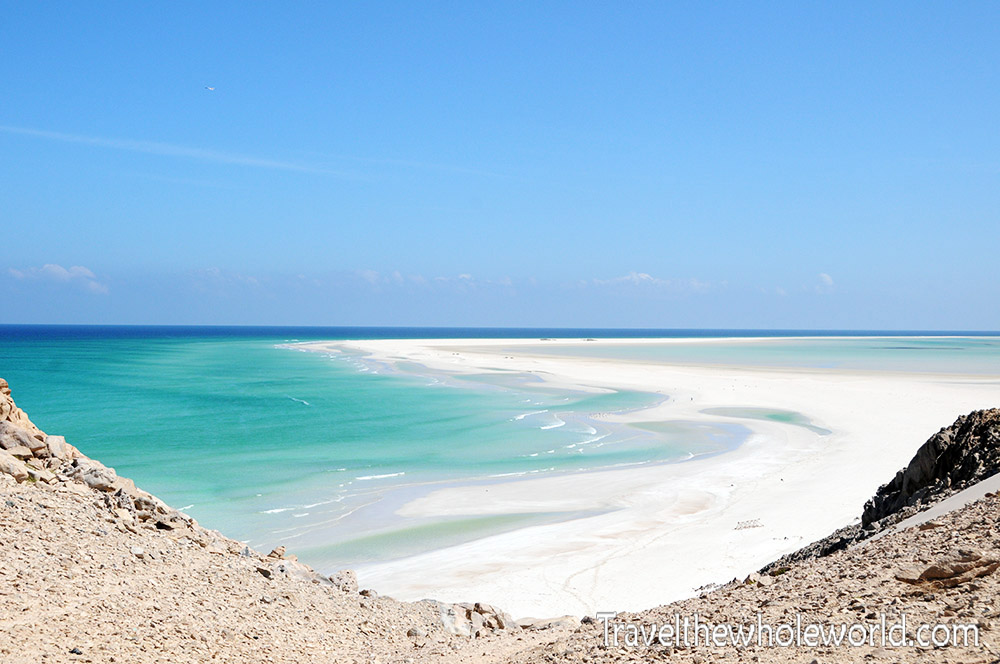
After exploring the interior of the island, I spent a full day along the coast. The beaches here are easily some of the most beautiful I’ve seen anywhere in the world.
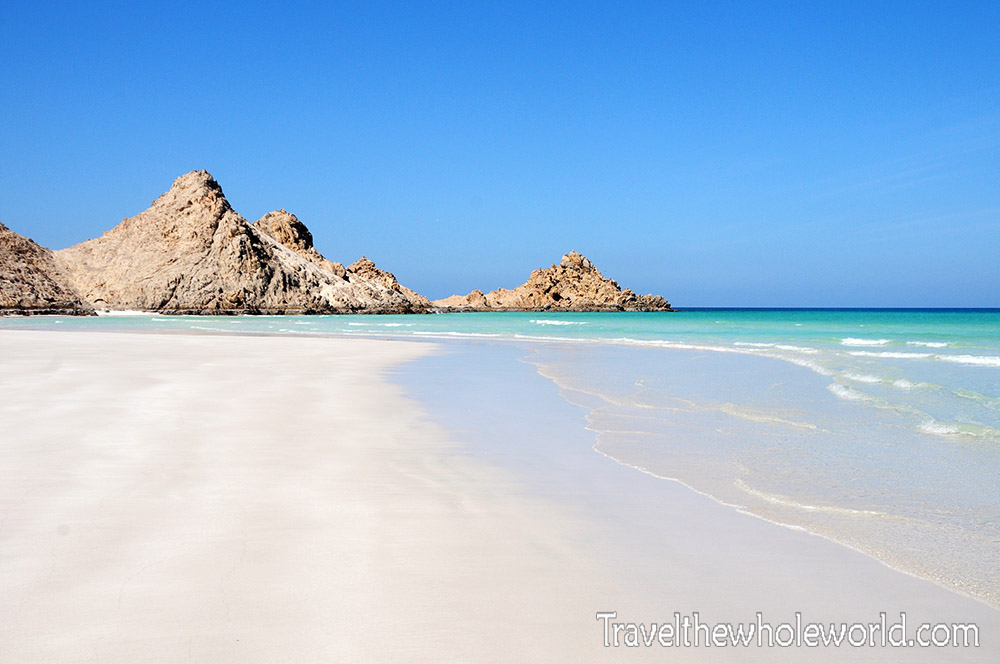
What makes them even more impressive is how empty they are. There’s very little tourist infrastructure, and in some places you can have a pristine beach completely to yourself without another person anywhere in sight.
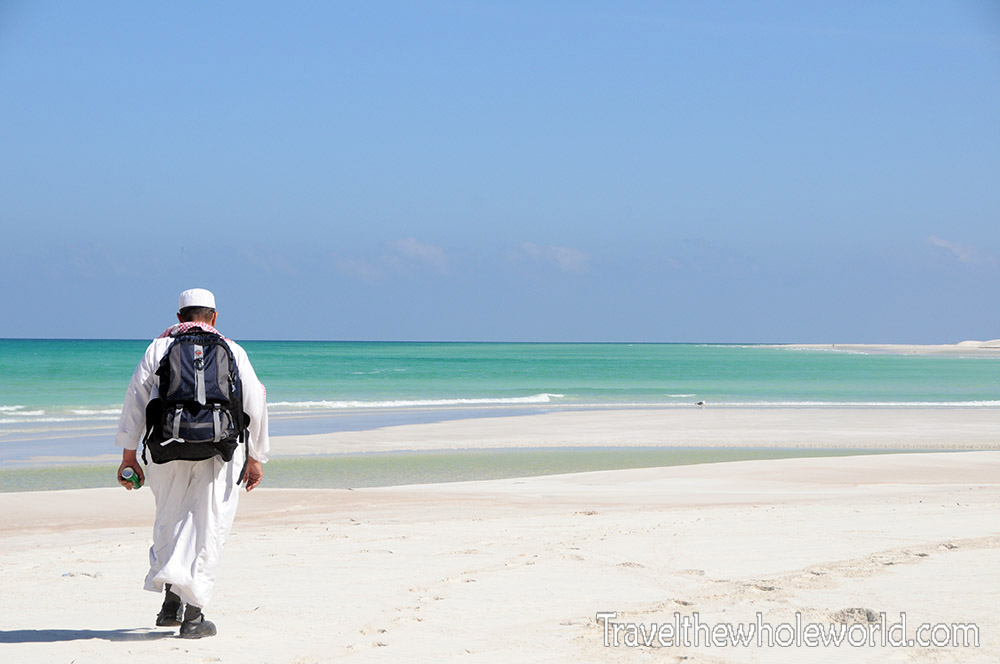
Of course the locals enjoy the beaches too. Above is one of the people I saw swimming along the coast. Even on the more accessible beaches, there were usually only a handful of people around.
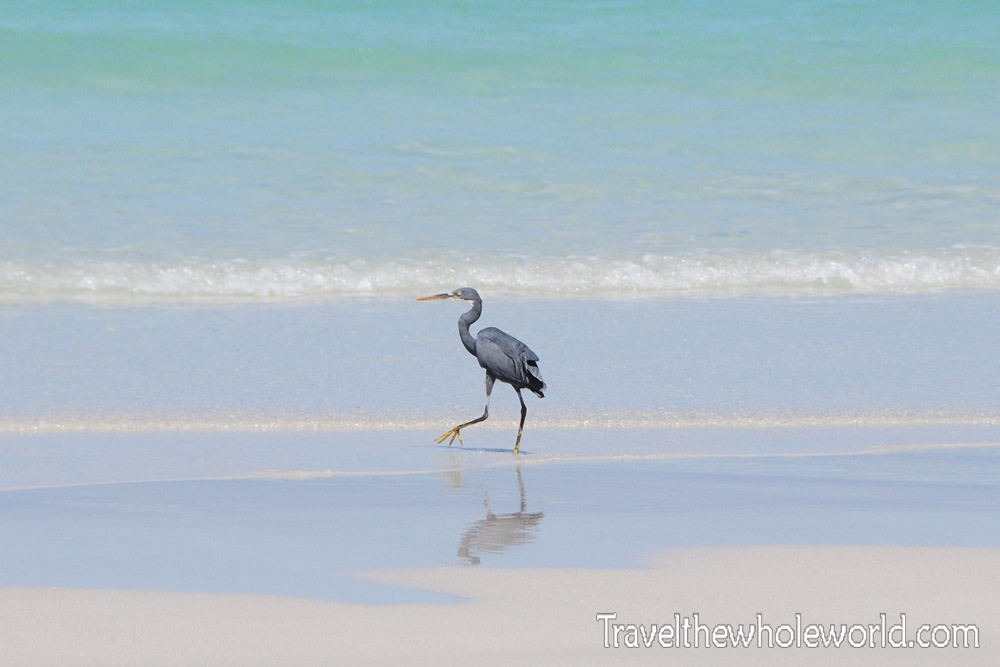
Before entering the water, I photographed this bird along the beach. Birds were common all along Socotra’s coastline, especially anywhere there was easy access to fish and shallow water.
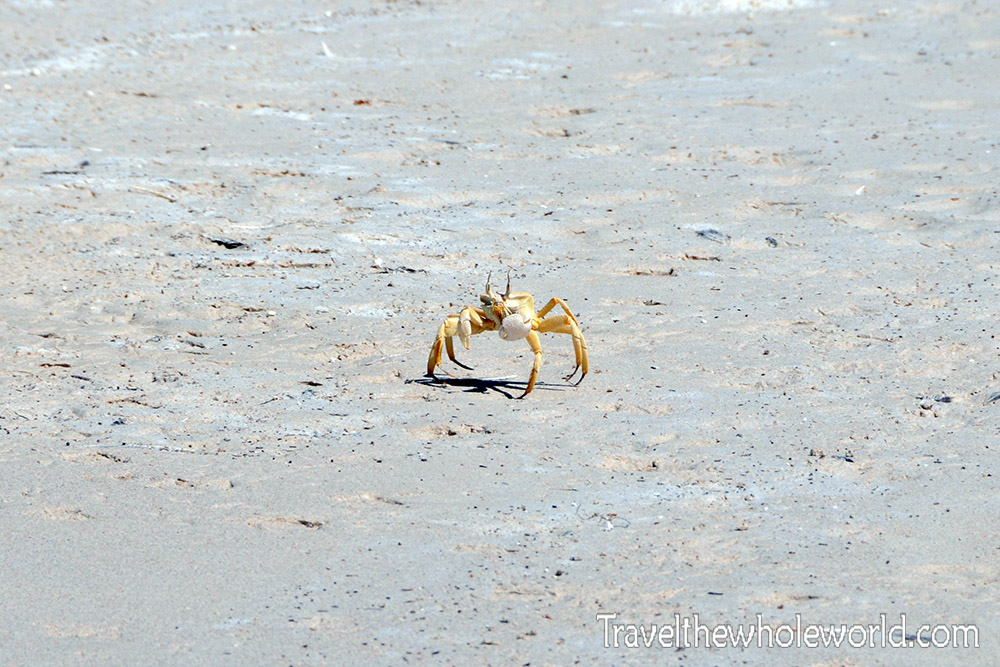
Above is one of the giant crabs I saw along the beaches. These things dug impressive tunnels into the sand. Some were deep enough that the surface would suddenly collapse several inches beneath your foot, giving you a good chance of face planting. Luckily the beaches were usually empty enough that nobody would be around to laugh!
Diving in Socotra
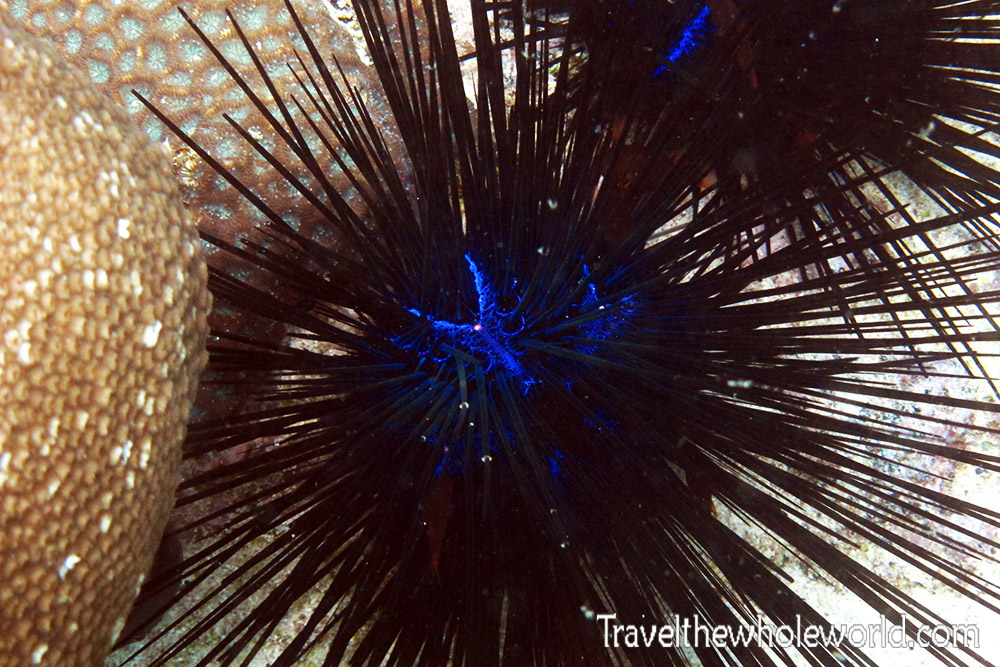
Socotra’s unusual flora and fauna continue underwater. Above is the strange blue spiky coral formation that immediately caught my attention during a shore dive. It was one of the strangest types of coral I had seen.
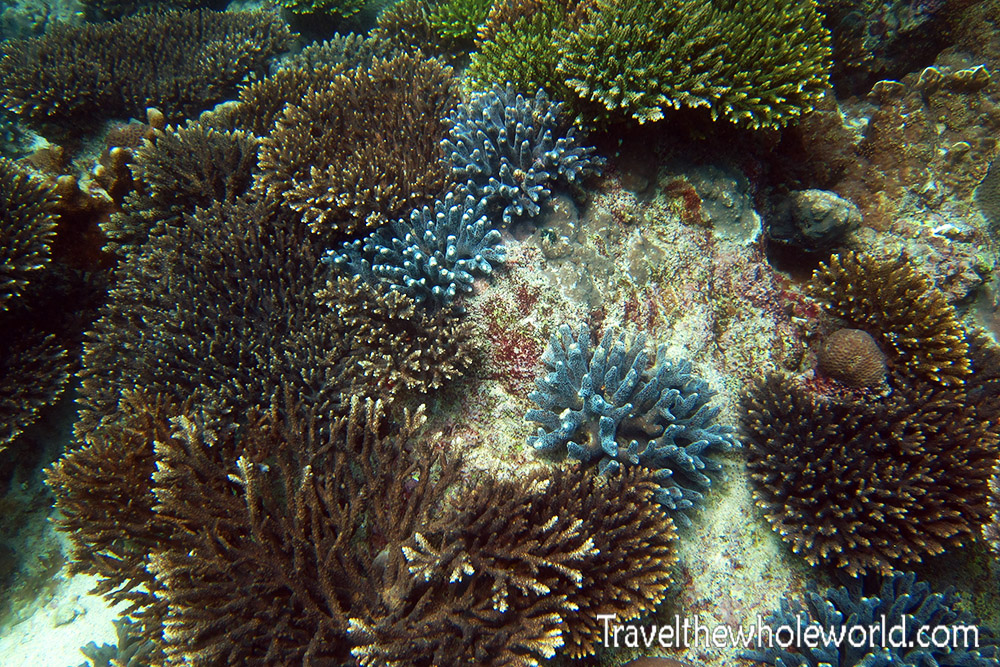
The surrounding reef had plenty of other coral as well. Unfortunately the light wasn’t ideal during this dive, so some of the colors didn’t photograph nearly as well as they looked underwater.
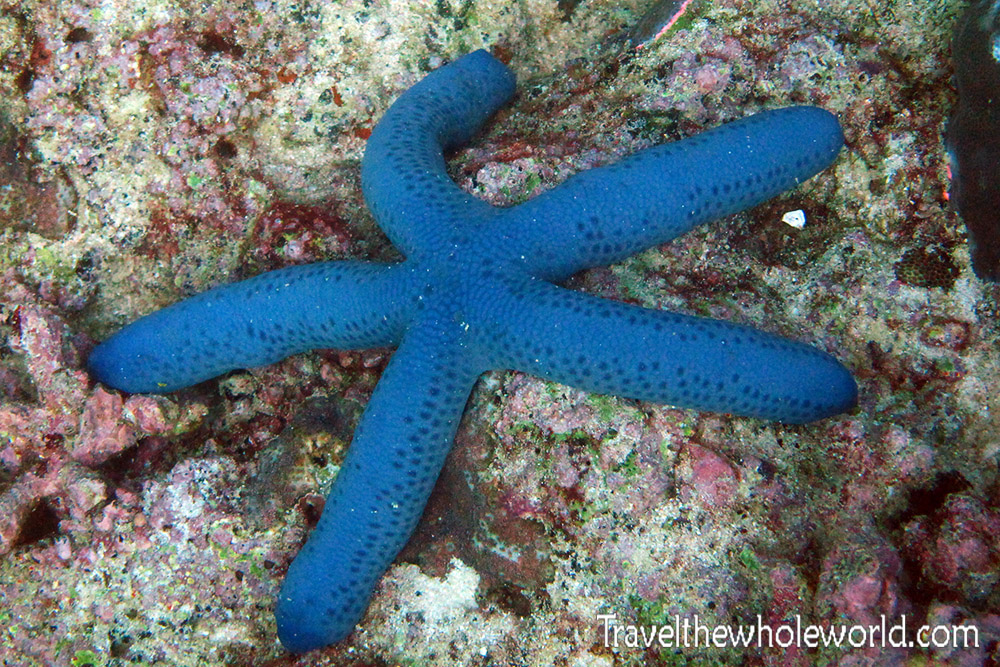
Above is one of the starfish I found along the reef.
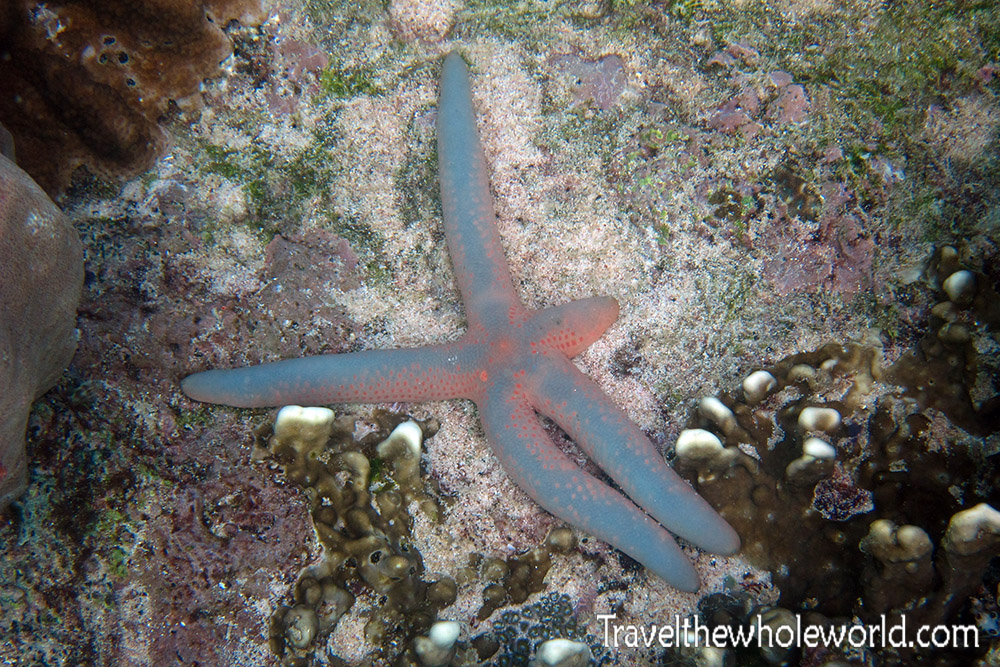
And here’s another starfish from the same dive. Even within a relatively small area there was a surprising variety of marine life.
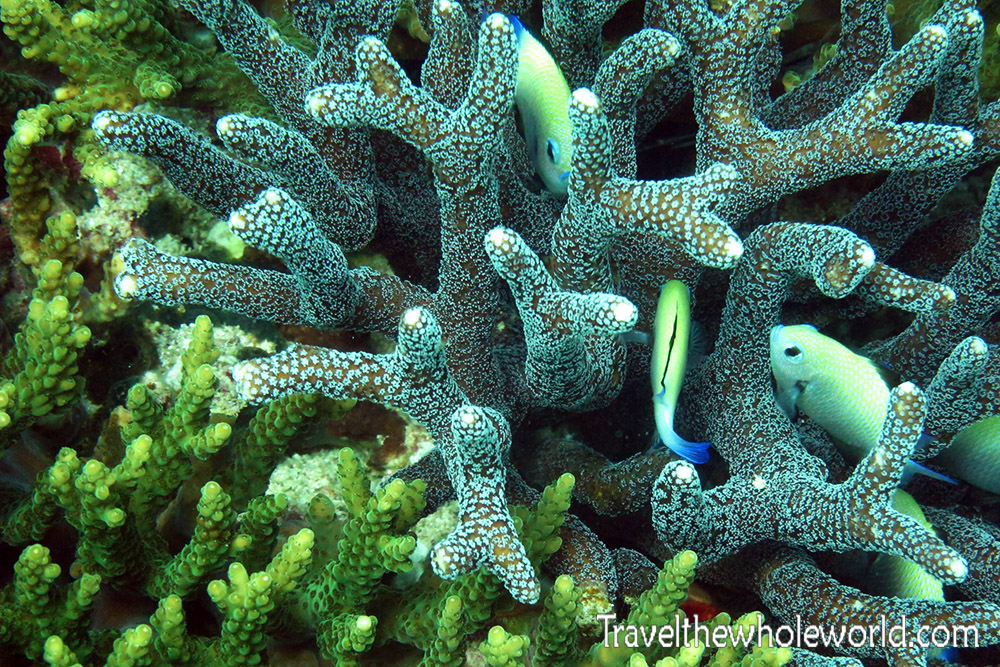
Fish were constantly moving through the coral, which made them much harder to photograph than most of the plants and animals I had seen on land.
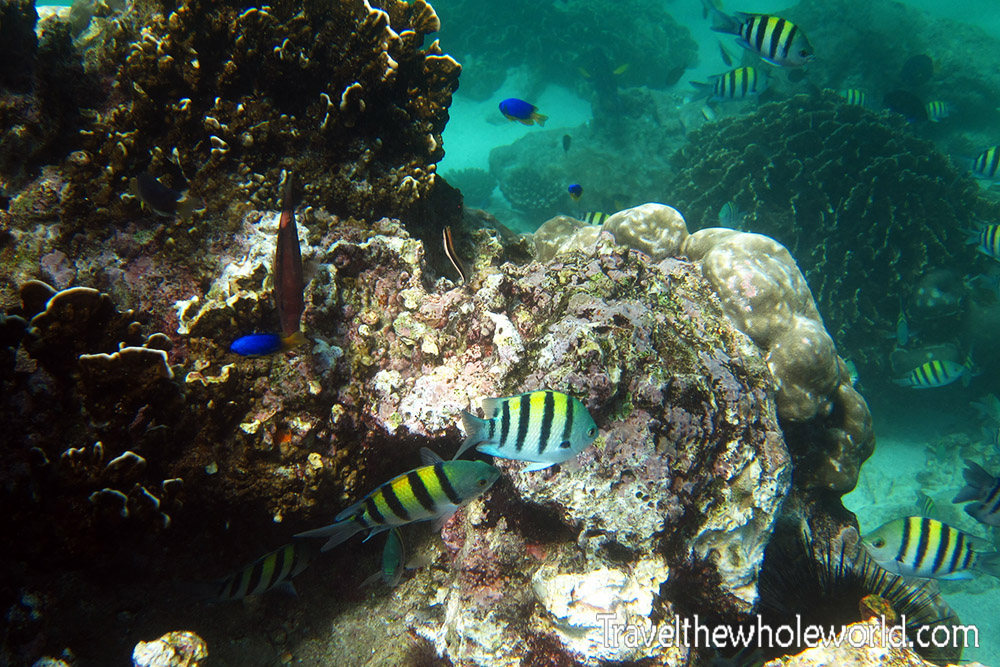
Above is one of the brighter fish I managed to photograph. Unfortunately the deeper I went, the more the natural colors disappeared from my photographs.
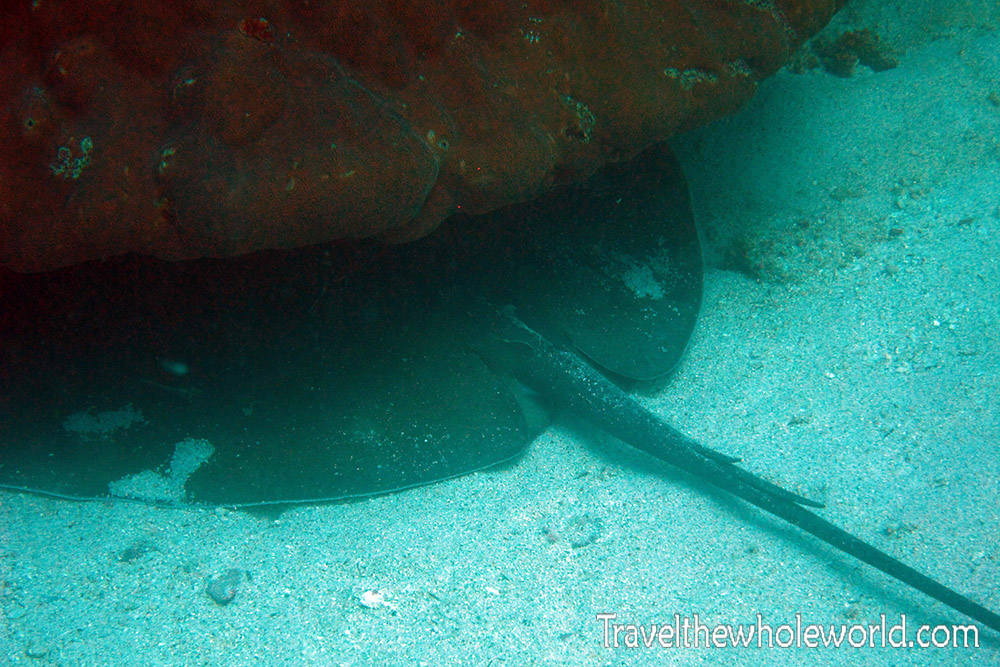
I also managed to photograph this stingray, although not from the most useful angle. Its tail is considerably easier to see than the rest of the animal!
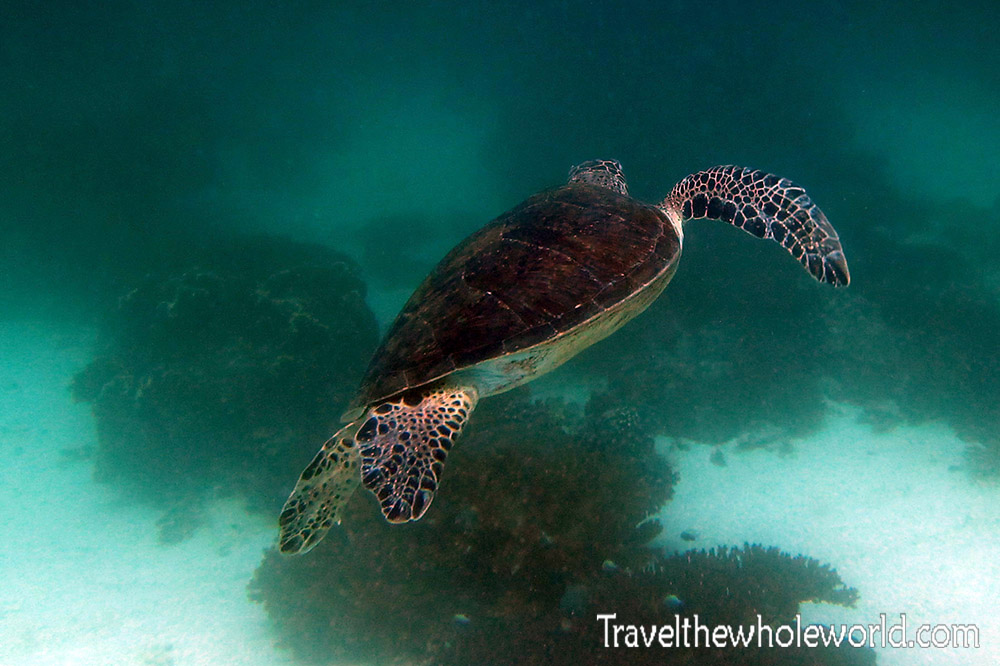
Above is a sea turtle I encountered during the dive. Seeing larger animals like this was a nice break from trying to photograph small fish moving around the reef.
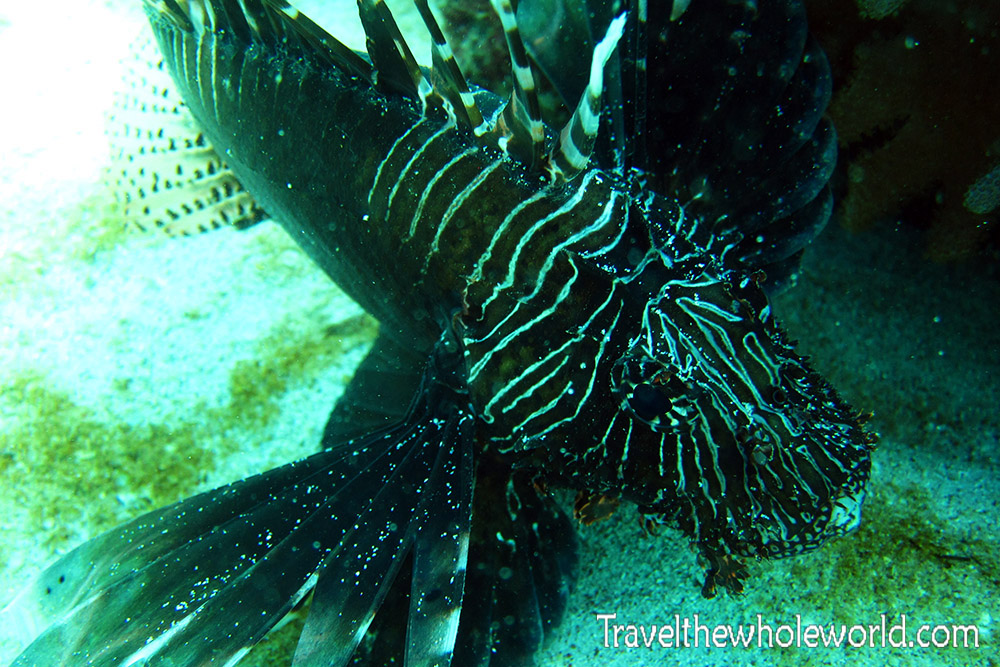
Above is a lionfish, easily one of the more recognizable fish I photographed underwater.
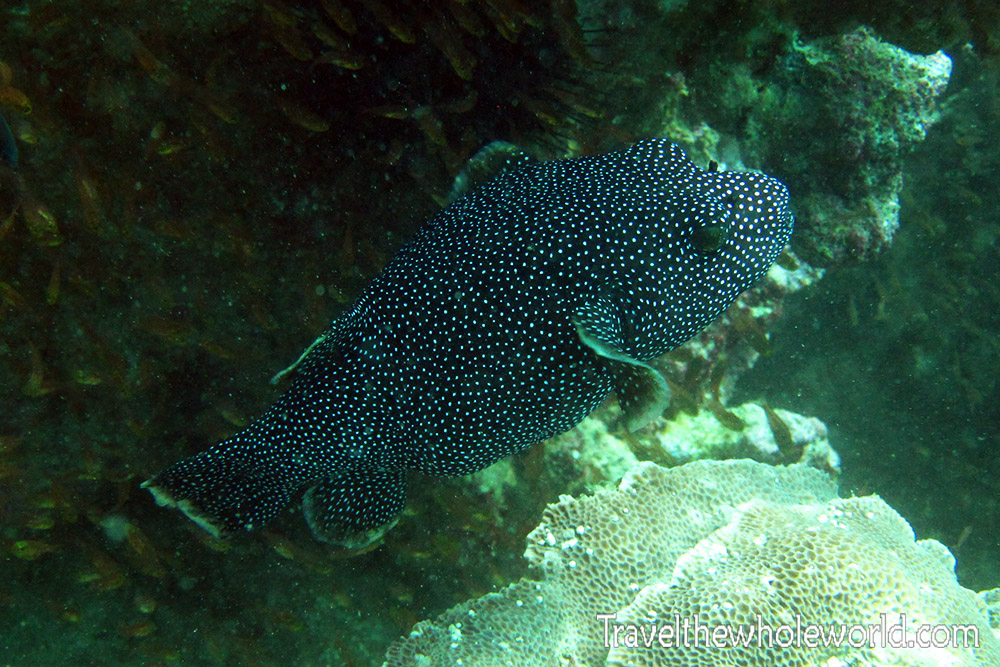
This spotted fish was another one that stood out among the reef. I didn’t identify every species I photographed, so for some of these I’m simply letting the photos show the variety of marine life I encountered.
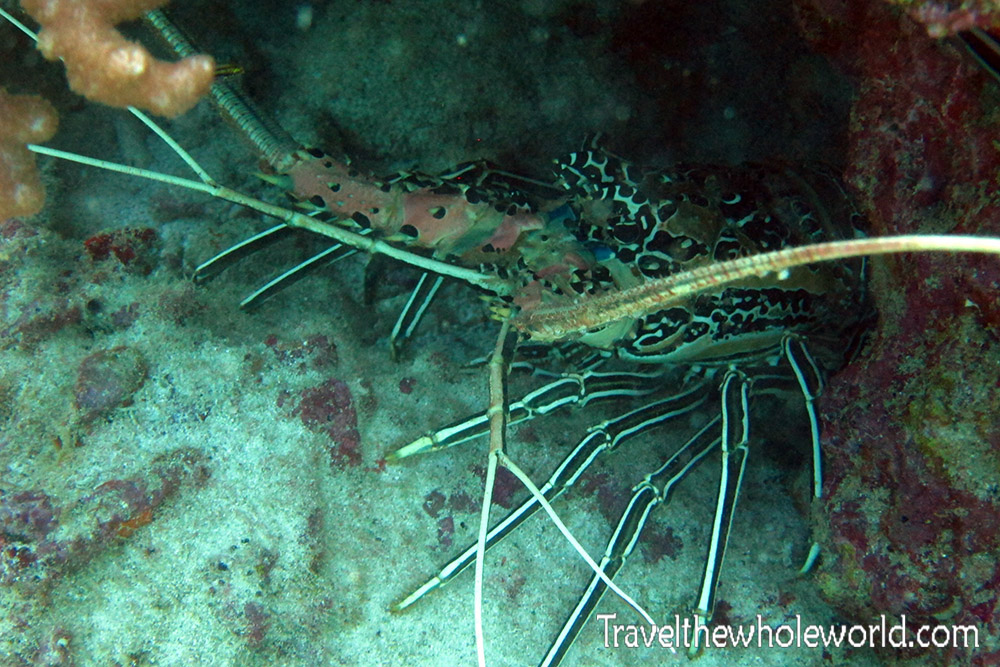
Above is a lobster hiding among the rocks and coral.
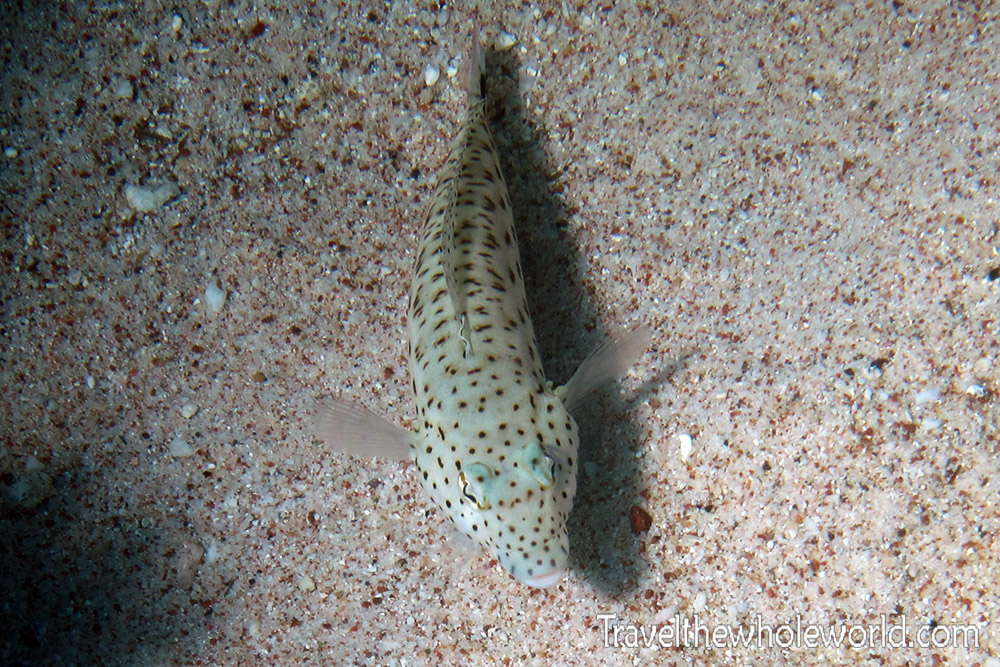
Some of the fish were much easier to miss because they blended almost perfectly into the reef, like the one above.
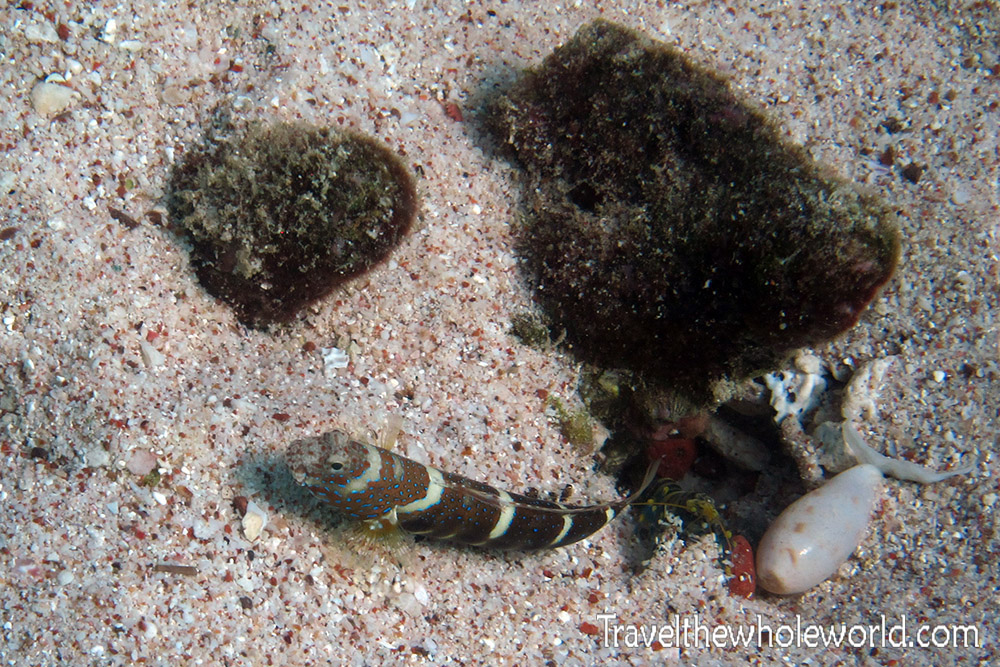
Here’s another example. Without movement, fish like these could disappear almost completely against the rocks.
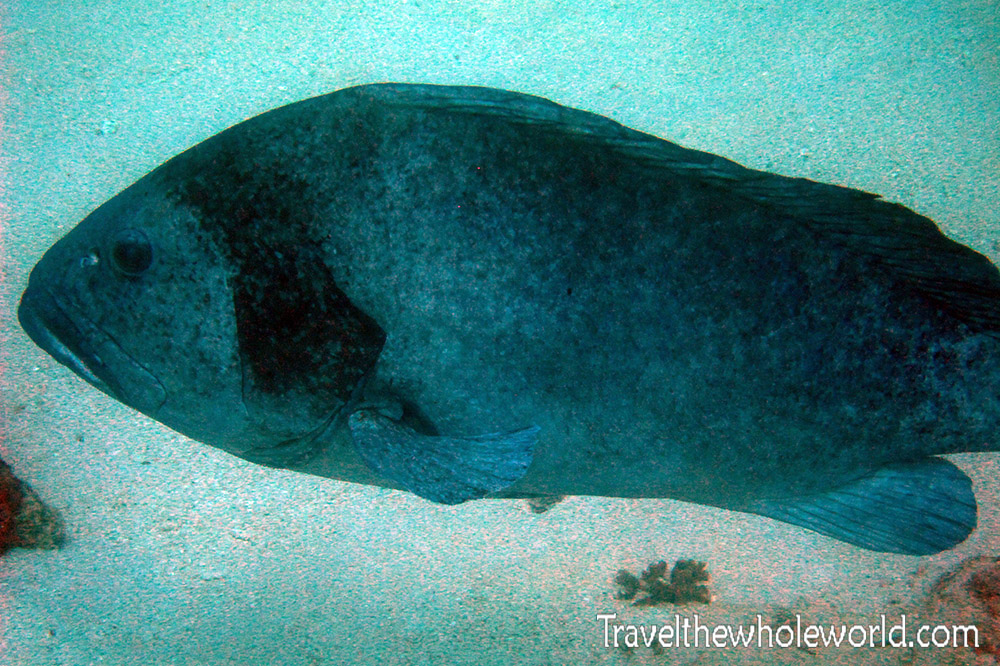
This was one of the larger fish I managed to get close enough to photograph during the dive.
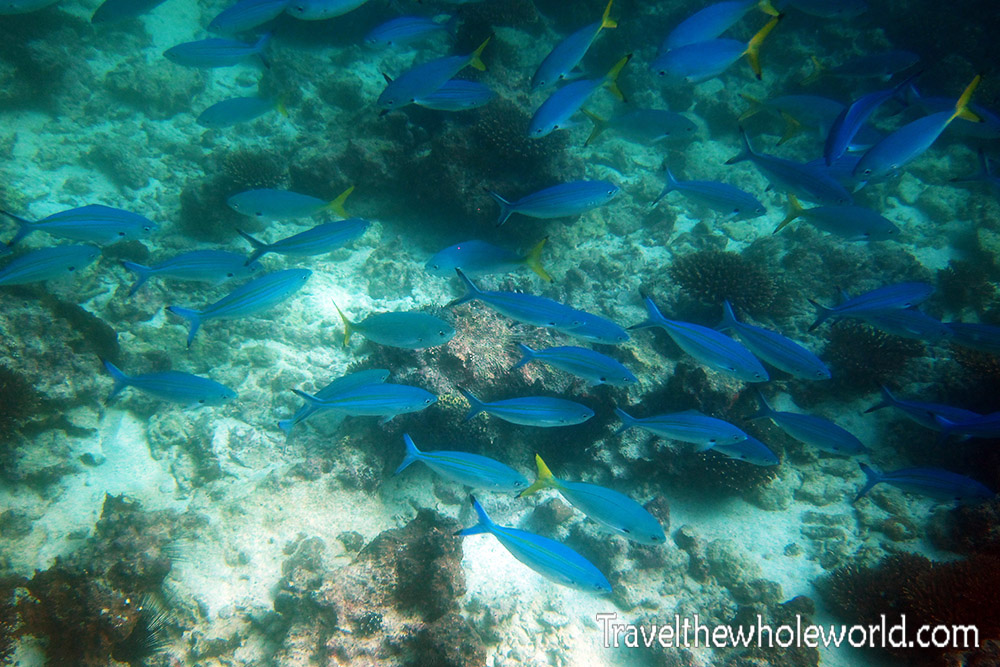
At other times the fish appeared in large schools, making the underwater environment feel considerably busier than the empty beaches directly above.
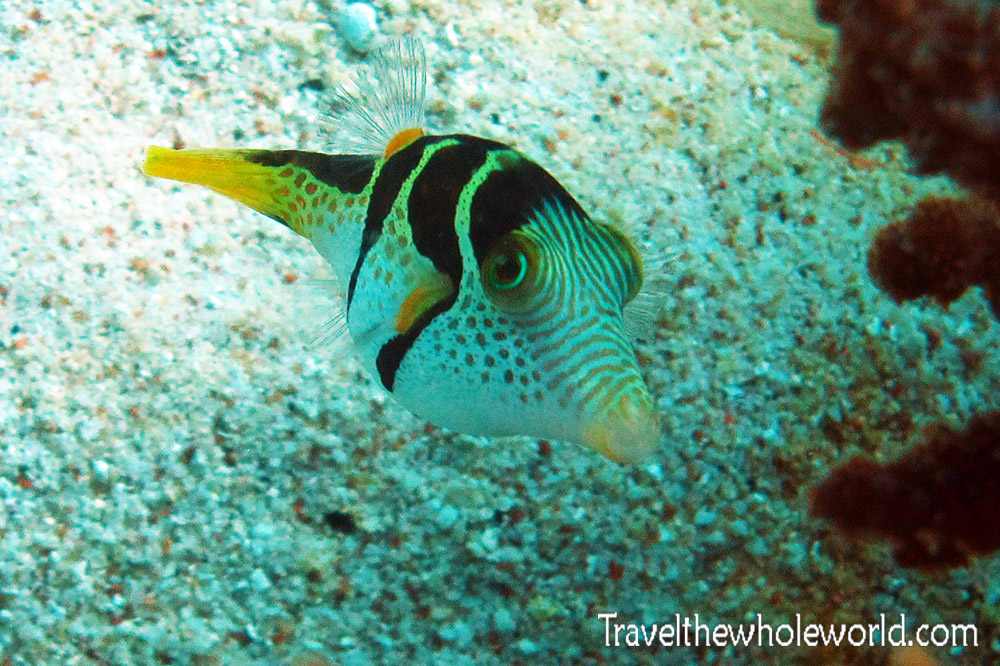
And finally, above is a pufferfish from the dive. I was disappointed with the lighting in several of these underwater photographs. I was only about 40 feet below the surface, but the sky had become overcast, which wasn’t a great combination for photography. Looking back, this was probably the trip that convinced me I eventually needed a proper strobe for my diving camera.