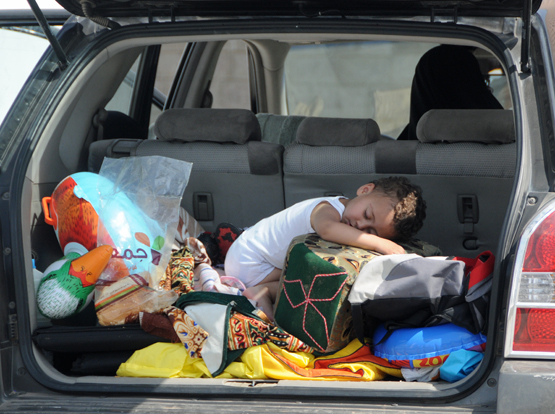
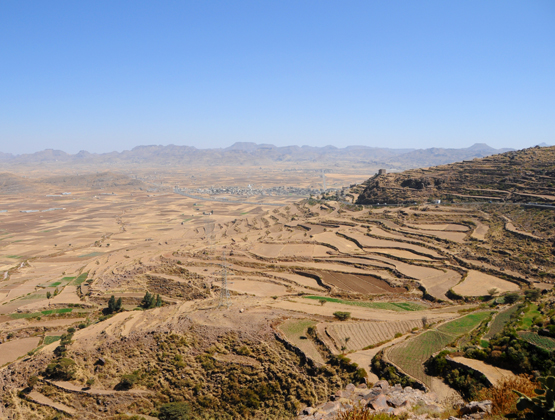
After I was done visiting Sana’a, I took a road trip south with the Arabian Sea as my eventual destination. Police roadblocks and impressive scenery kept me entertained almost the entire way toward Aden. Above is a family packing for a road trip of their own, while the second photo shows one of my first views of the countryside south of Sana’a.
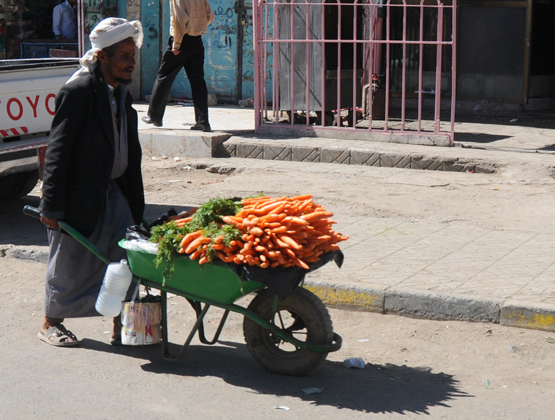
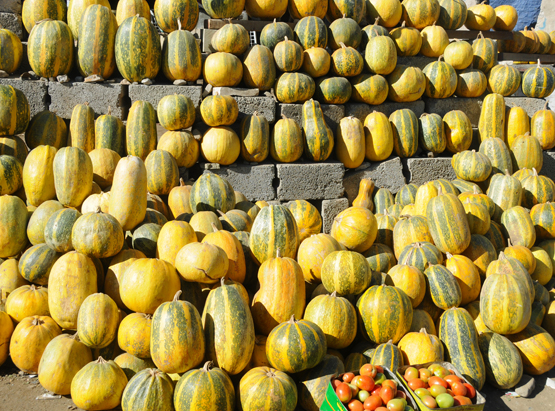
The small towns I passed through had plenty of roadside produce stands. For some reason carrots and large squash or pumpkins seemed especially common. I wasn’t expecting to see wheelbarrows full of carrots and piles of pumpkins lining the roads through Yemen, but they appeared over and over again.
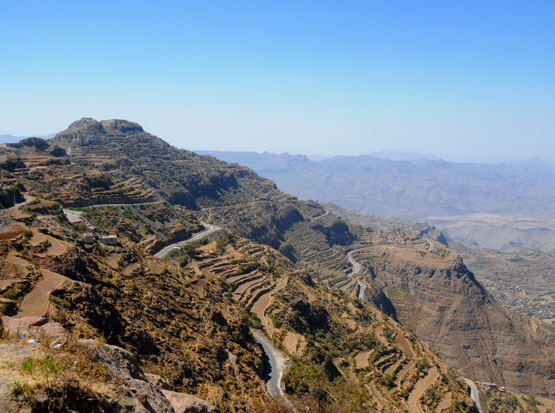
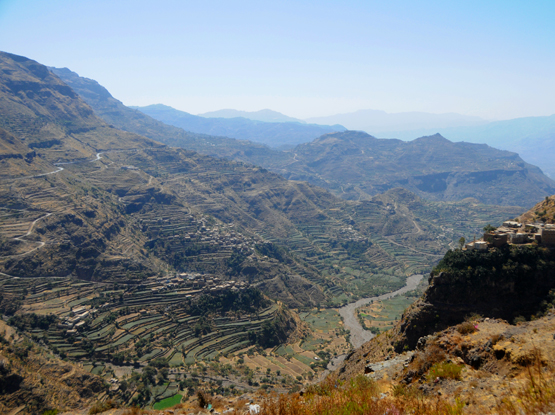
Some of the roads through the highlands climb to impressive elevations. I’m not sure exactly how high I was when I took these photos, but I was definitely well above the lowlands. The distance between Sana’a and Aden doesn’t look enormous on a map, but the twisting mountain roads make the journey much longer than you’d expect.
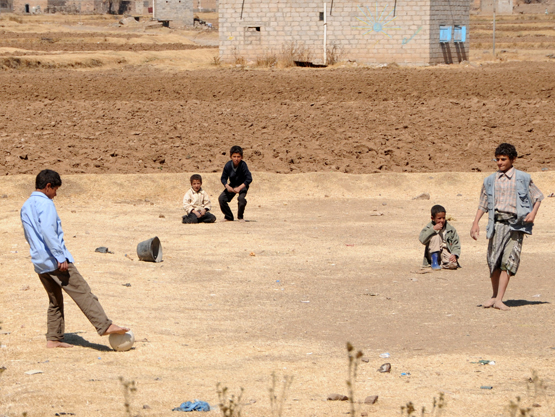
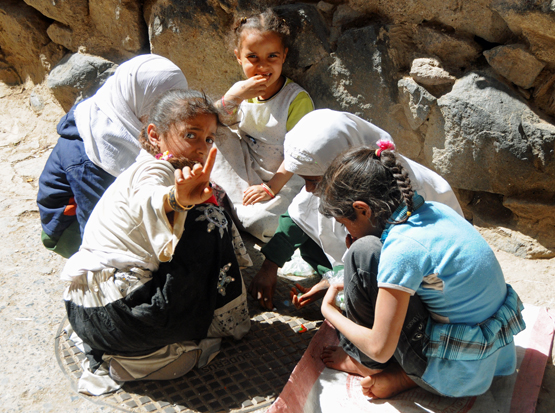
Soccer was just as popular here as almost everywhere else I’ve traveled. The boys on the left had a game going, while the kids on the right were playing something completely different. Their game involved rolling or tossing stones toward a sewer cover. At first I assumed the sewer lid was being used by coincidence, but later I saw other kids playing a similar game the same way.
Khat in the Highlands
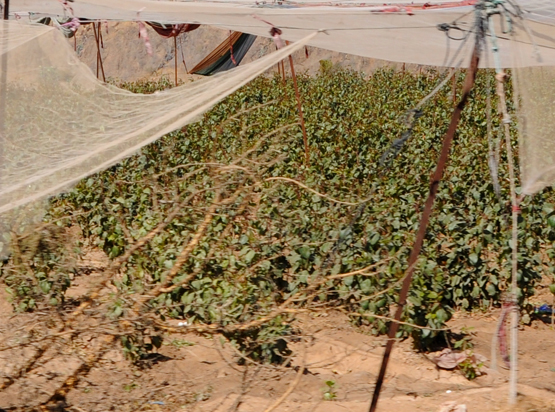
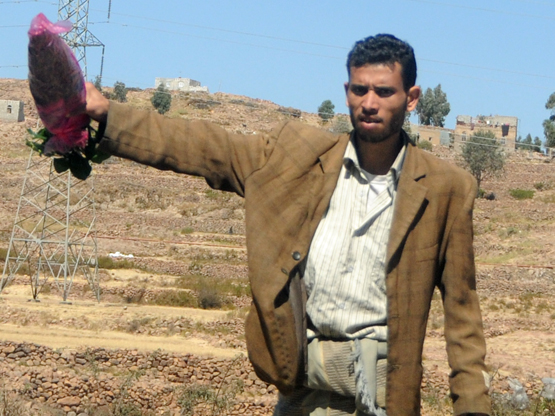
Just like in East Africa across the Red Sea, khat is extremely popular in Yemen. I had already seen it in Somalia, Djibouti, and Ethiopia, but I hadn’t realized before this trip just how extensively it was grown in Yemen.
The photo on the left shows some of the khat growing along my route, while on the right is one of several roadside sellers offering bundles to passing motorists. A local told me that he thought Yemeni khat was weaker than some of the varieties found in East Africa. I had tried it once in Ethiopia and didn’t have any desire to try it again here.
Jiblah & Ibb
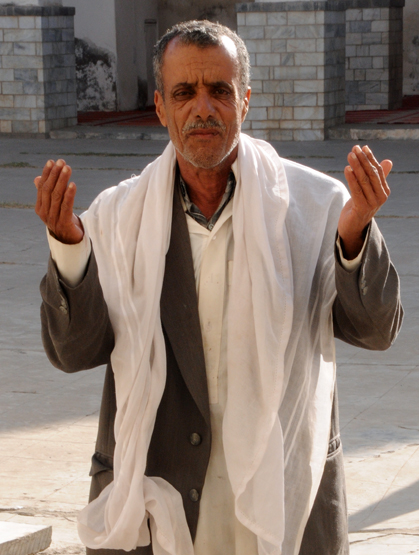
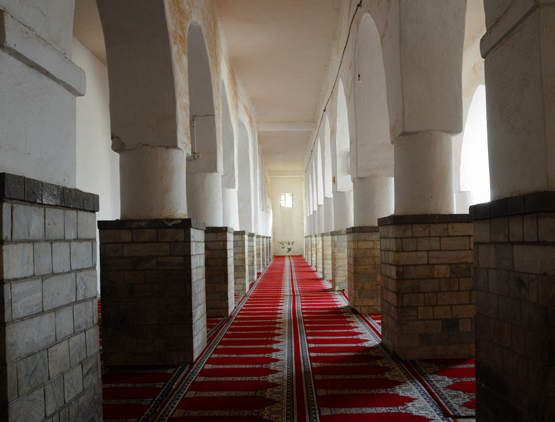
In many Muslim countries I’ve visited, entering mosques as a non-Muslim visitor wasn’t always encouraged. Jiblah and Ibb were completely different. In both towns, locals seemed determined to invite me inside and show me around.
Above is the mosque I visited in Jiblah, where one of the religious leaders gave me a quick tour. At that point I had been inside relatively few mosques during all of my travels through Muslim countries, so the openness here stood out to me.
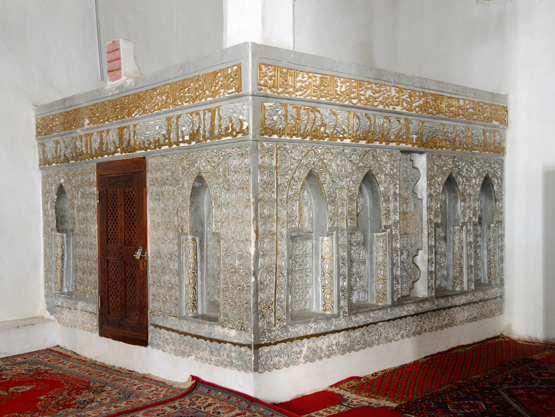
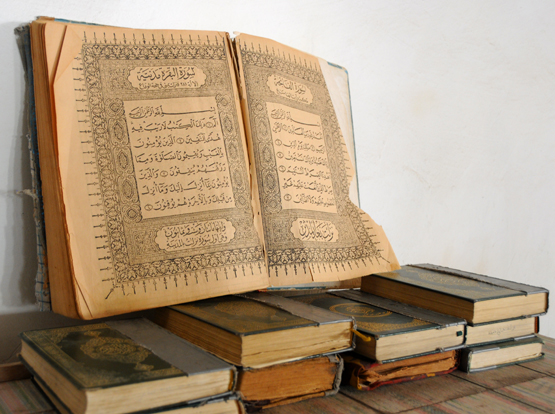
During another mosque visit in the Ibb/Jiblah area, I was shown the tomb associated with Queen Arwa as well as several old Qurans. One of the men there told me the books were roughly 500 years old. The experience reminded me of visiting ancient churches in Ethiopia, where locals had similarly brought out very old religious manuscripts for me to see.
Taiz
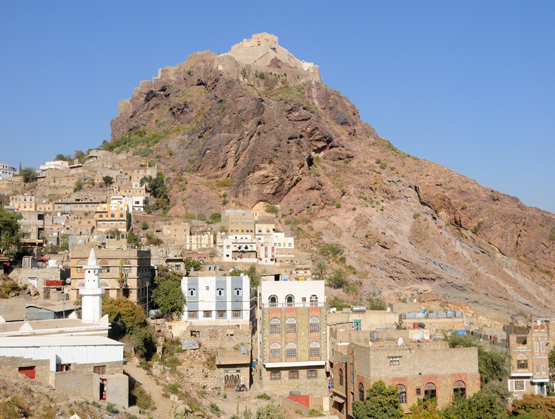
Taiz sits in Yemen’s highlands on the route between Sana’a and Aden. I originally treated it as little more than a stop along the drive south, but once I arrived I realized I should have given the city much more time.
The first thing that grabbed my attention was Al-Qahira Castle, perched high above Taiz on the mountain in the photo above. The city has been important through several periods of Yemeni history, and its old fortifications once extended dramatically across the surrounding slopes. On the right you can see part of the wall descending through the steep terrain.
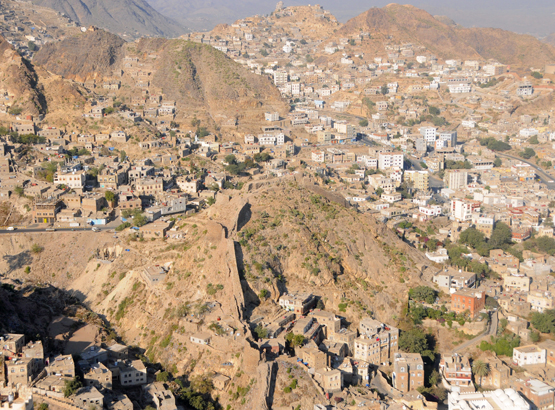
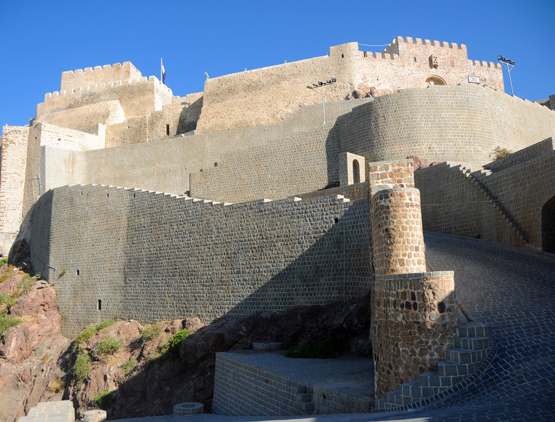
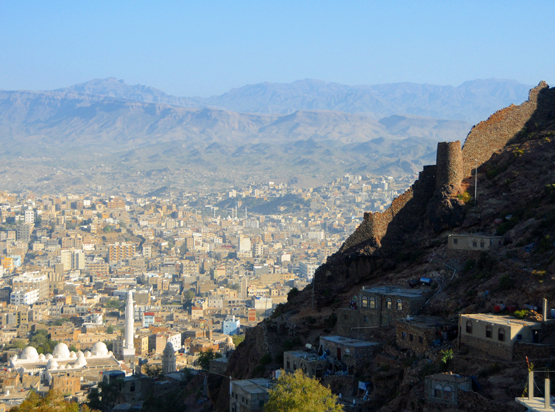
The photo on the left was taken from one of the highest points I reached above the city. You can see part of Taiz’s historic wall climbing up the center of the landscape before disappearing behind the smaller hill. On the right is one of the main sections of Al-Qahira Castle.
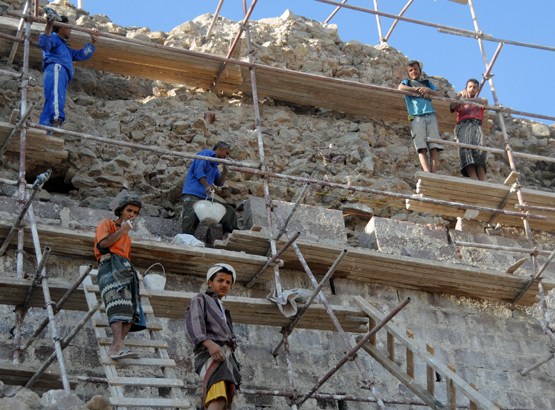
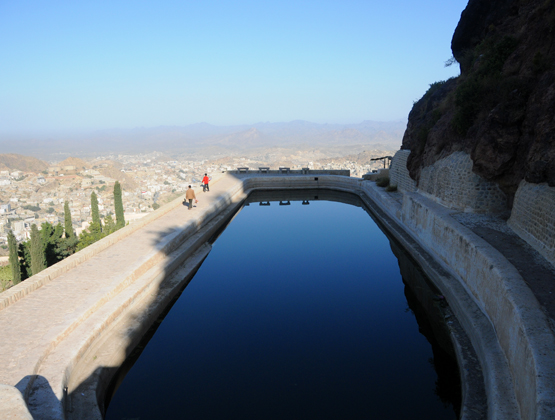
Large parts of Al-Qahira Castle were being restored when I visited. The workers on the left asked me to take their photo while they were hard at work. Some of what they were doing looked pretty intimidating, especially with simple scaffolding positioned beside steep drops.
The large water basin on the right was another feature that caught my attention. Having such a large pool of water built directly beside a sheer mountain wall made the setting especially dramatic.
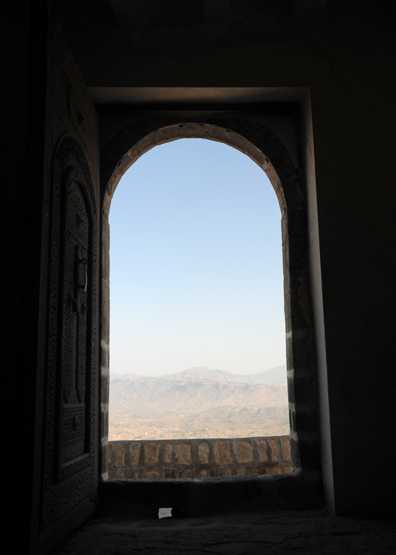
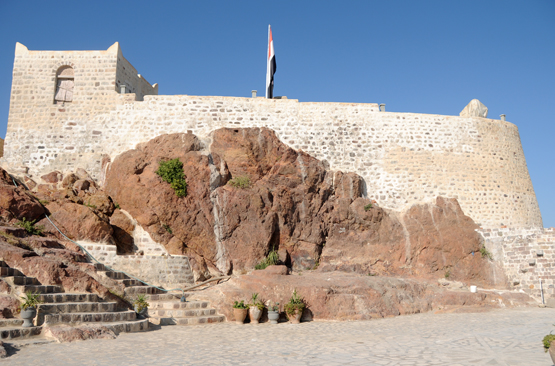
The top of the castle had incredible views over Taiz. Fortunately for me, much of the upper section had already been restored. The rooms and walkways looked almost brand new compared with the sections still under construction.
My favorite feature was the giant doorway on the left. Instead of opening into another room or corridor, it seemed to open directly into the sky.
Al-Ashrafiya Mosque
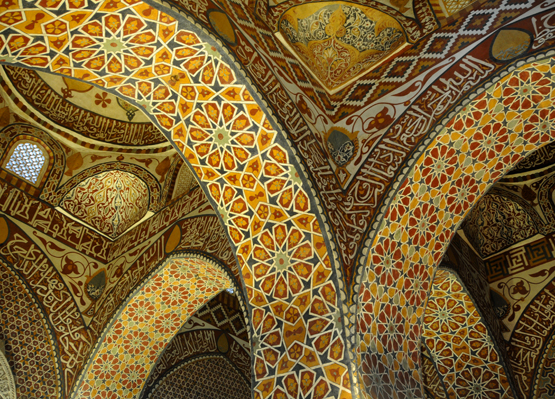
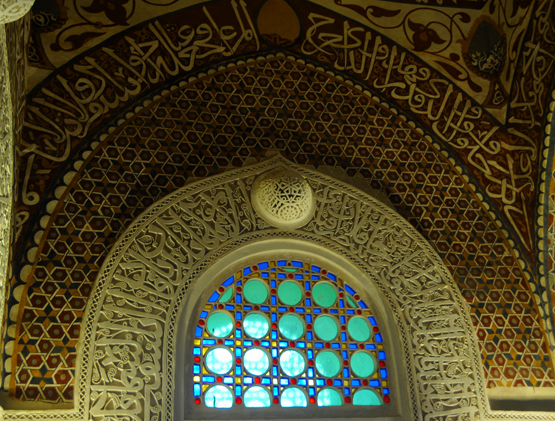
One other place I visited before continuing south was Al-Ashrafiya Mosque. Like Al-Qahira Castle, the mosque was undergoing major restoration at the time, so several areas weren’t especially photogenic.
The ceiling, however, appeared to be beautifully restored. Aside from the enormous mosque I had visited in Sana’a, this had some of the most impressive interior decoration I saw anywhere in Yemen.
I originally treated Taiz as a quick stop on the road to Aden, but looking back, that was a mistake. Between the mountain setting, Al-Qahira Castle, the old city walls, and Al-Ashrafiya Mosque, there was far more here than I managed to explore.