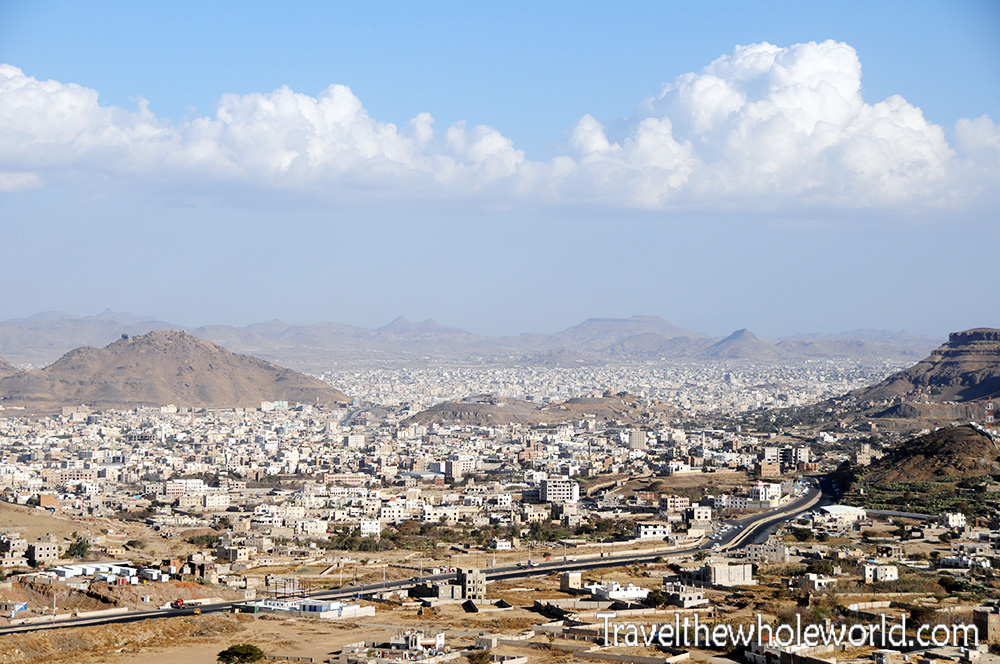
The capital of Yemen is Sana’a, located on the western side of the country high up in the mountains. At an altitude of 7,500 feet (2,300 meters), it’s one of the highest capital cities on Earth. Sana’a’s history goes back thousands of years, also making it one of the oldest continuously inhabited cities in the world. Above is a photo of one of Sana’a’s districts.
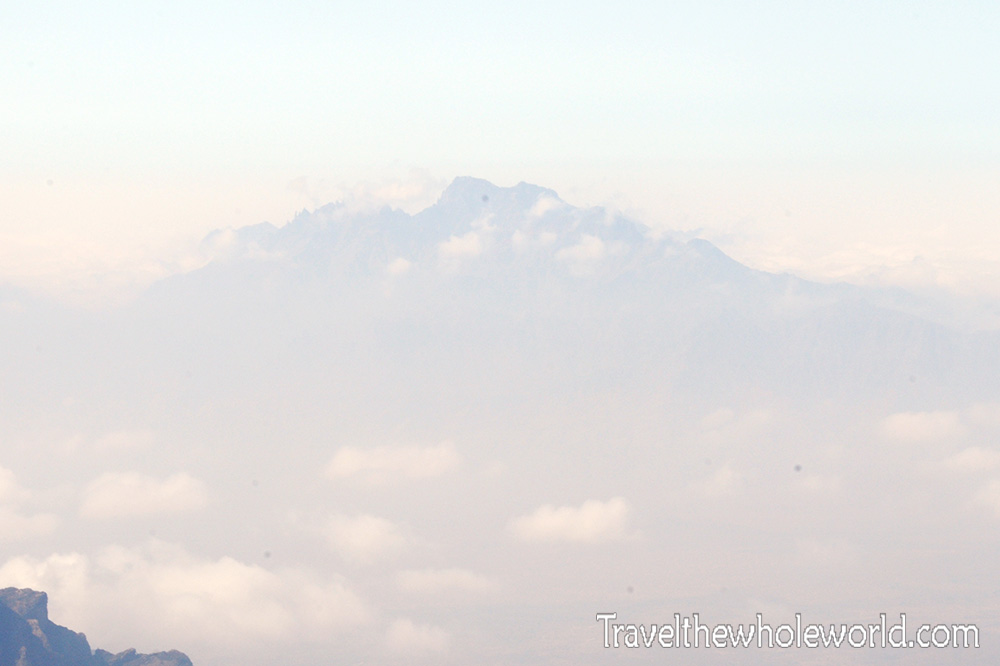
I never really thought of Yemen as a mountainous country before I visited. Even from the city though, the views of the mountains are amazing! Above is one of the highest peaks in the country. The highest mountain in Yemen is Jabal an Nabi Shu’ayb at an altitude of 12,028 feet (3,666 meters). It is also the highest mountain in the Arabian Peninsula.
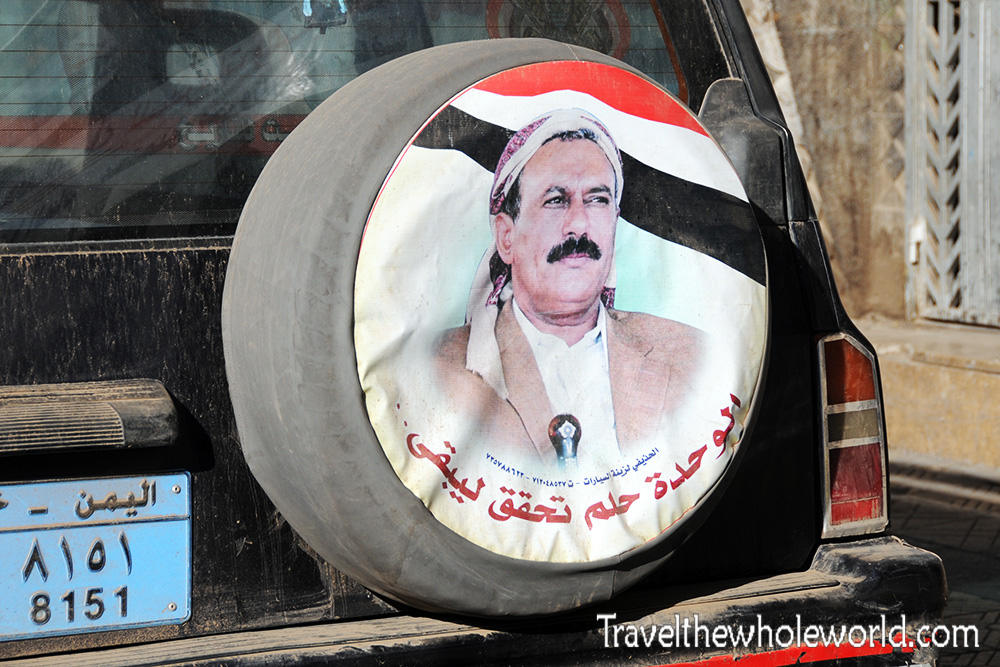
When I visited Yemen, its president was Ali Abdullah Saleh. Saleh had led North Yemen beginning in 1978 and then unified Yemen beginning in 1990, giving him more than three decades in power. At the time of my visit, the president’s picture was seen all over the capital, on cars, posted on walls, or framed inside shops. I visited Yemen at an interesting time. The president of Tunisia had just been overthrown, and as the locals told me, this was unheard of for an Arab leader. Support for Saleh seemed to be mixed, but it seemed the majority wanted him to move on after over three decades. Outside the capital, it was rare that I saw his picture. Only a month after my trip to Yemen, the Arab Spring arrived, eventually leading to his fall.
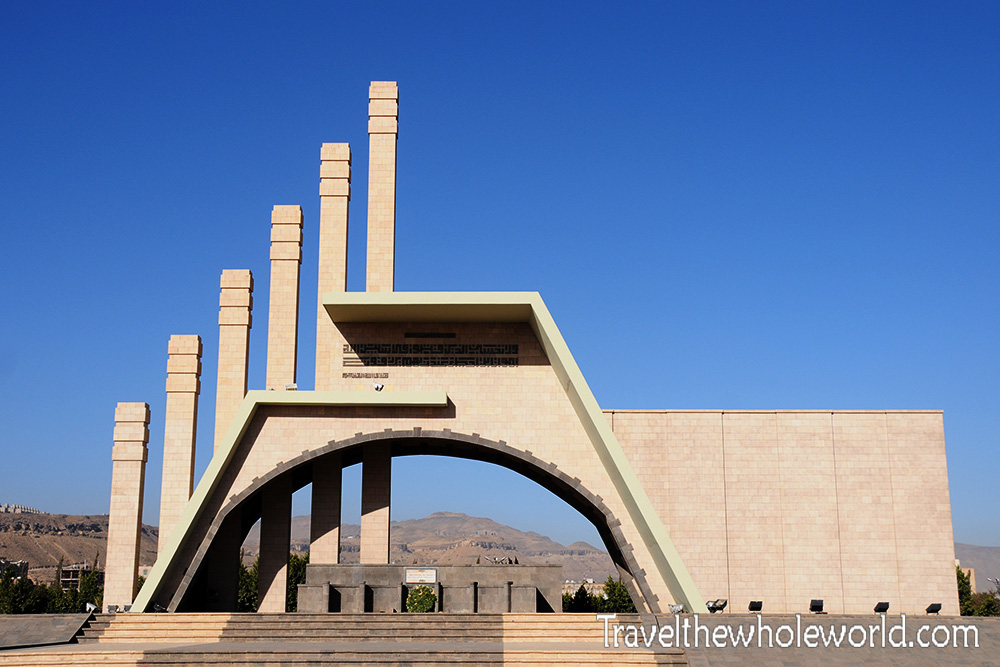
Before Saleh’s presidency, North Yemen had gone through a civil war during the 1960s that ended in 1970. Royalists of the Mutawakkilite Kingdom fought the Yemen Arab Republic, with both sides receiving support from other nations. The republicans eventually prevailed, but not before some serious fighting. The capital of Sana’a was even attacked and endured what’s known as the 70-day siege. This memorial above is dedicated to the siege of Sana’a and is located in Al Sabeen Square, one of the capital’s major public spaces.
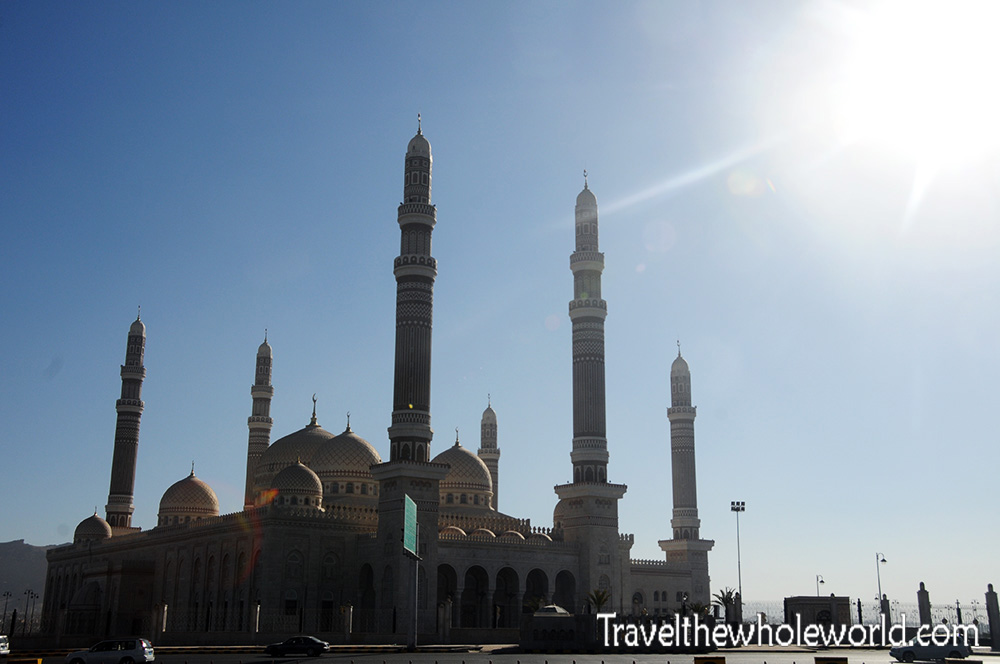
Something President Saleh did toward the end of his reign was build this enormous mosque. Known at the time as Saleh’s Mosque, it was completed in 2008 and covers a massive area of roughly 294,000 square feet (27,300 square meters). The mosque is also located near Al Sabeen Square.
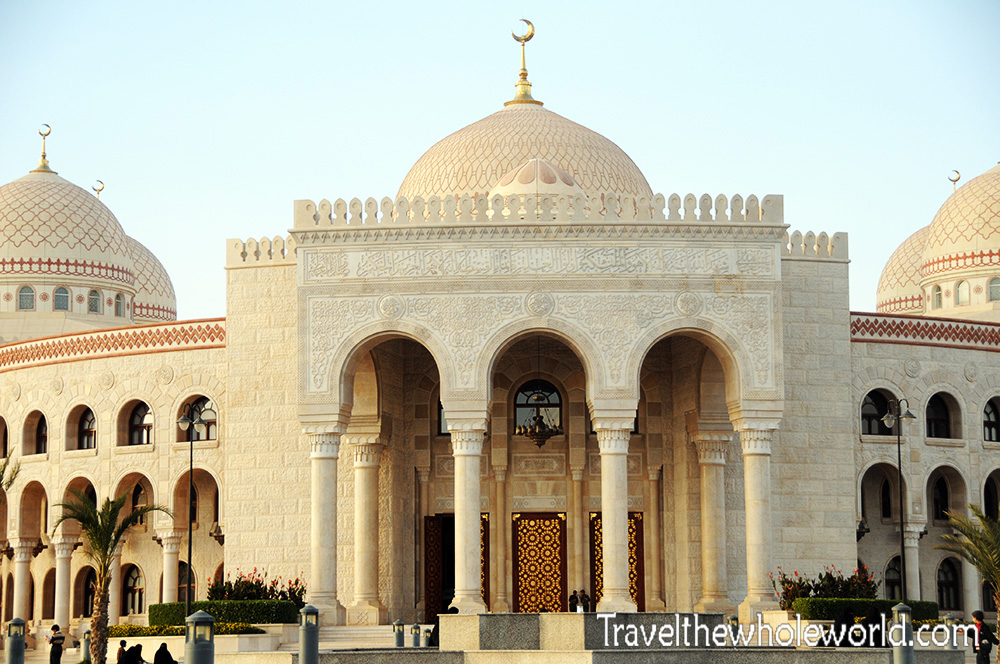
Above is a photo of the main entrance to the mosque, which had only recently been completed when I visited. With a capacity of tens of thousands of worshipers, this is the largest mosque in Sana’a and all of Yemen, and from what I saw once I entered, I assume it’s also the most beautiful.
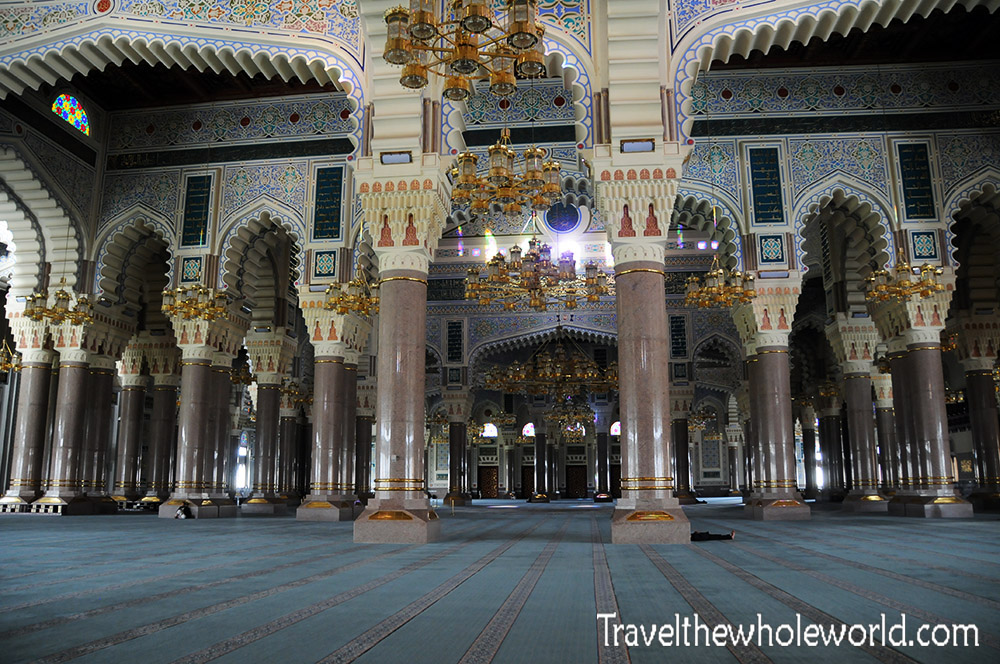
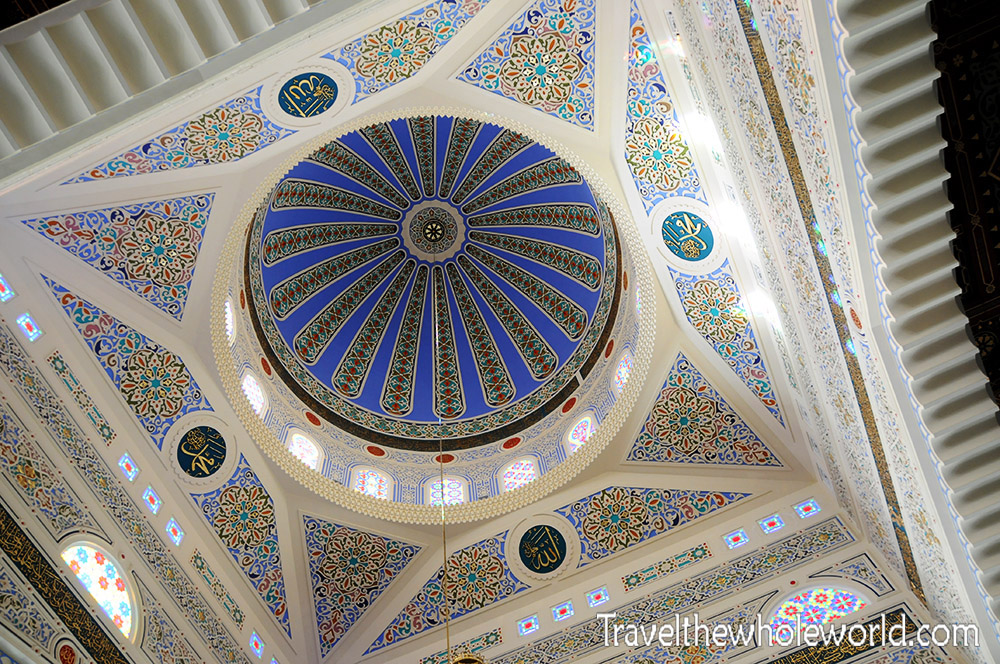
These surrounding photos were all taken from inside the mosque. This is seriously one of the most amazing religious buildings I’ve ever been in. The photo above was taken of the main interior where people gather to pray, and below is a photo looking up into one of the domes. I explored this place for a long time and even took some time to sit down and relax. I was enjoying myself until some guy approached me and asked if I was Muslim. I pretended like I didn’t understand and tried to dodge the question, but he was pretty persistent. Once I heard him asking others about my religion, I left.
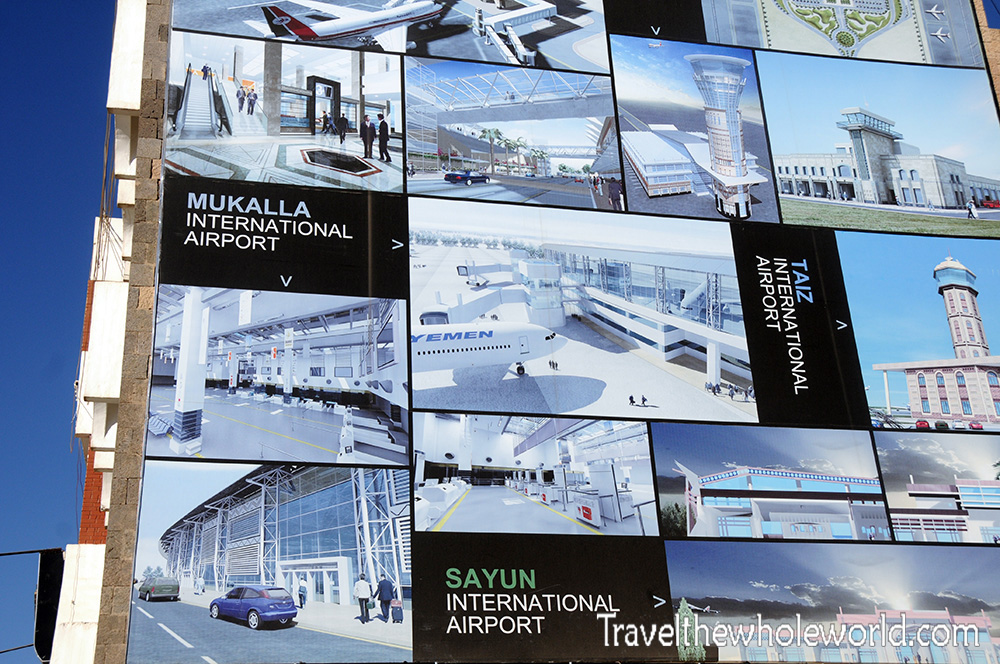
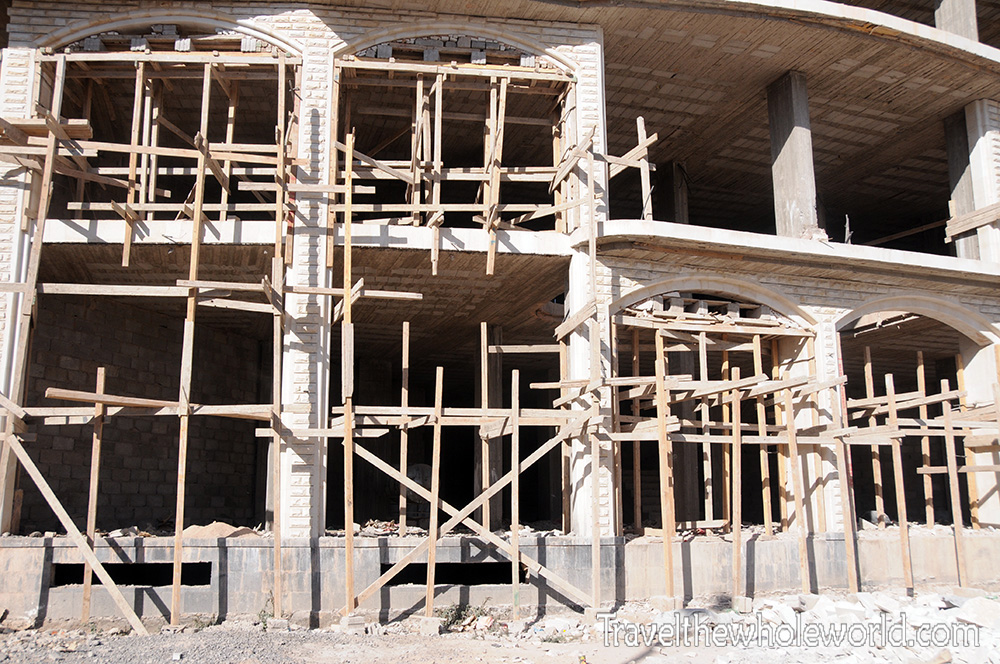
If I had just arrived in Yemen without any prior knowledge about the country, I’d have guessed its economy was growing rapidly based on some parts of the city. In almost all areas of Sana’a I visited, new buildings seemed to be under construction, brand new roads were in place, and advertisements for future projects lined the roads. The photo above is an advertisement showing what new airports were planned to look like. Below was one of many new buildings under construction. Before my trip, I had read about major foreign investment funding construction projects in Yemen. Sadly, much of the development I saw was soon overshadowed by the years of conflict that followed.
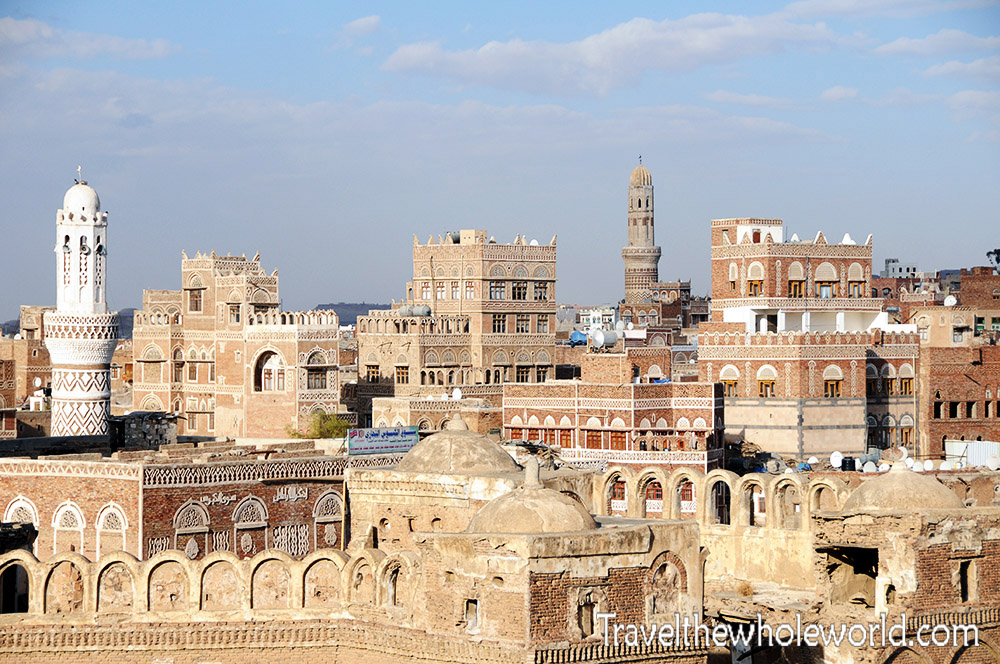
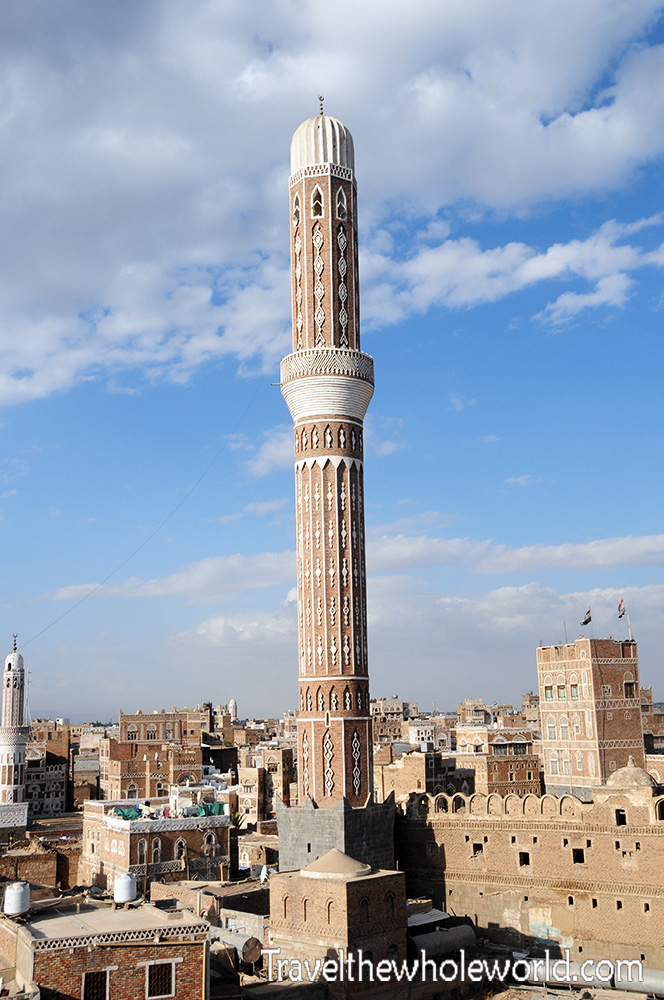
The rest of Sana’a is made up of countless districts, but the most impressive part by far is the old city. Old Sana’a was historically protected by a city wall and gates, with Bab al-Yemen remaining its most famous surviving gate. Above is a photo of the old city. The distinctive tower-house architecture is one of the things that makes Sana’a unlike almost anywhere else in the world. Below is a photo of one of the city’s ancient minarets.
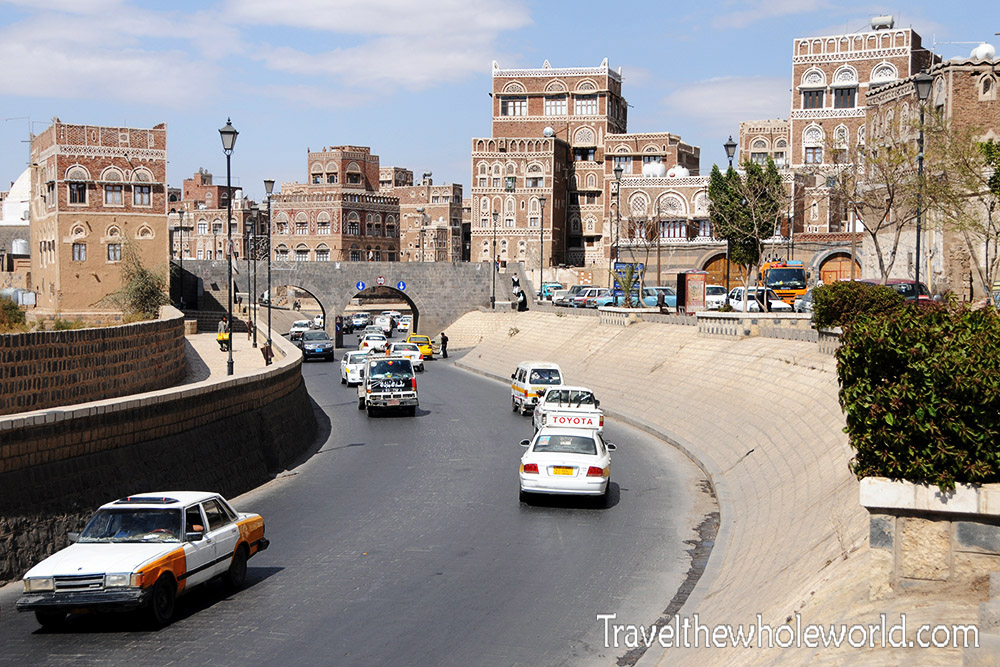
One of the main streets going through the Old City is River Road, photographed above. You can see that both sides of the road are banked upward with bricks and stones. When it rains hard in Sana’a, River Road becomes just that, acting as a channel to divert water through the city. Below is a shot of the entrance to the suq, or old city market. I took this picture while standing right in front of the old city’s gate.
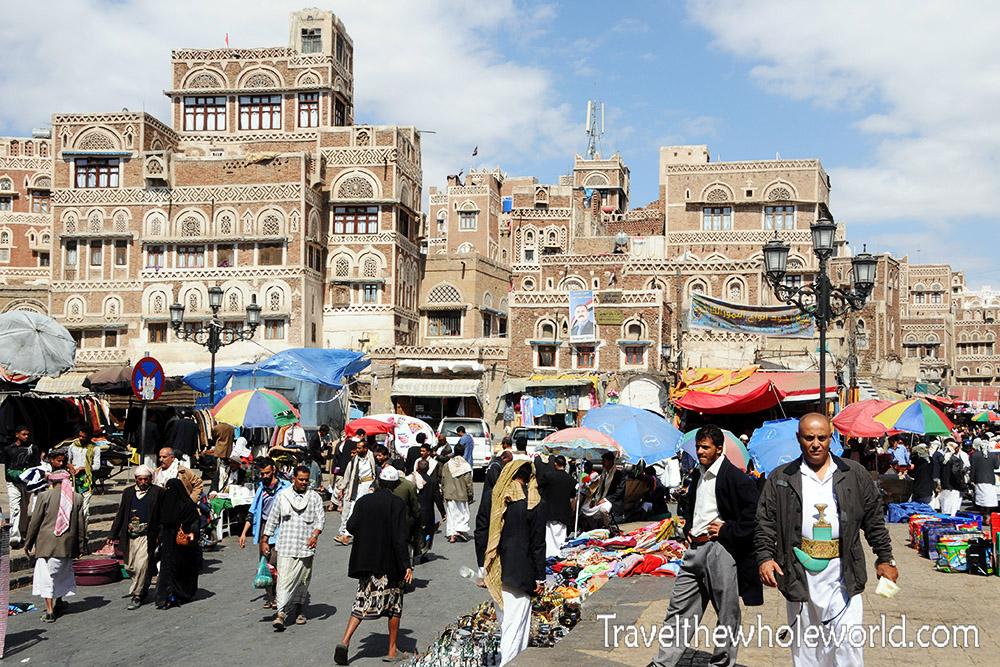
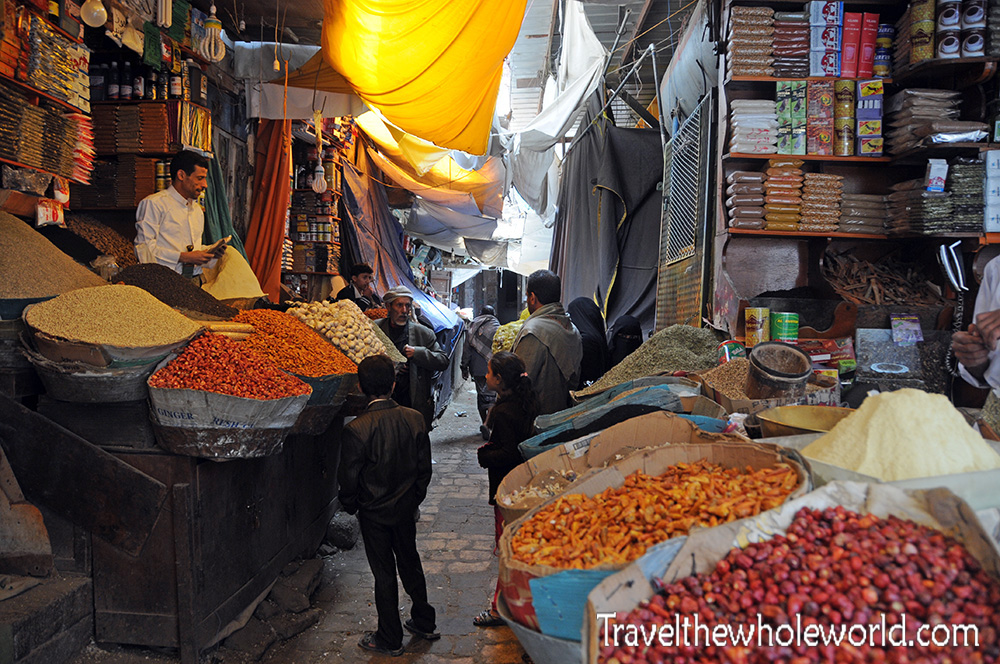
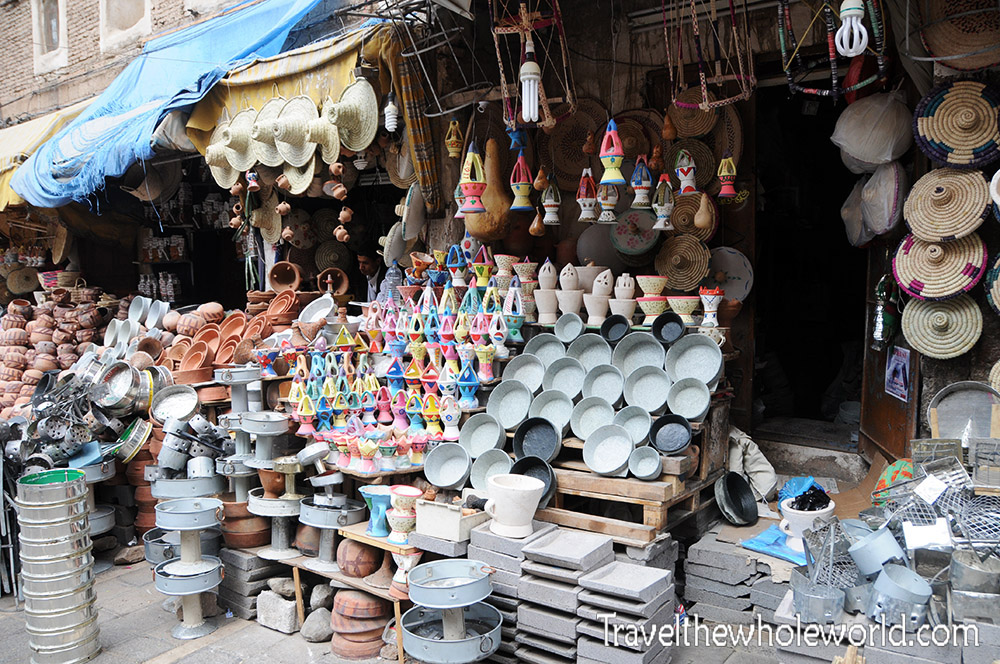
Above and below are two photos from the old city’s suq. The most impressive suq I’ve ever been to was in Omdurman, Sudan. I can’t say that any market in Yemen came even close, but they did sell similar items. Above are spices, nuts, and vegetables being sold. In the photo below are cooking utensils and likely some homemade pottery for sale. The market sells all kinds of items from meat and traditional daggers to silver, gold, and pretty much anything else you might need while in Yemen.
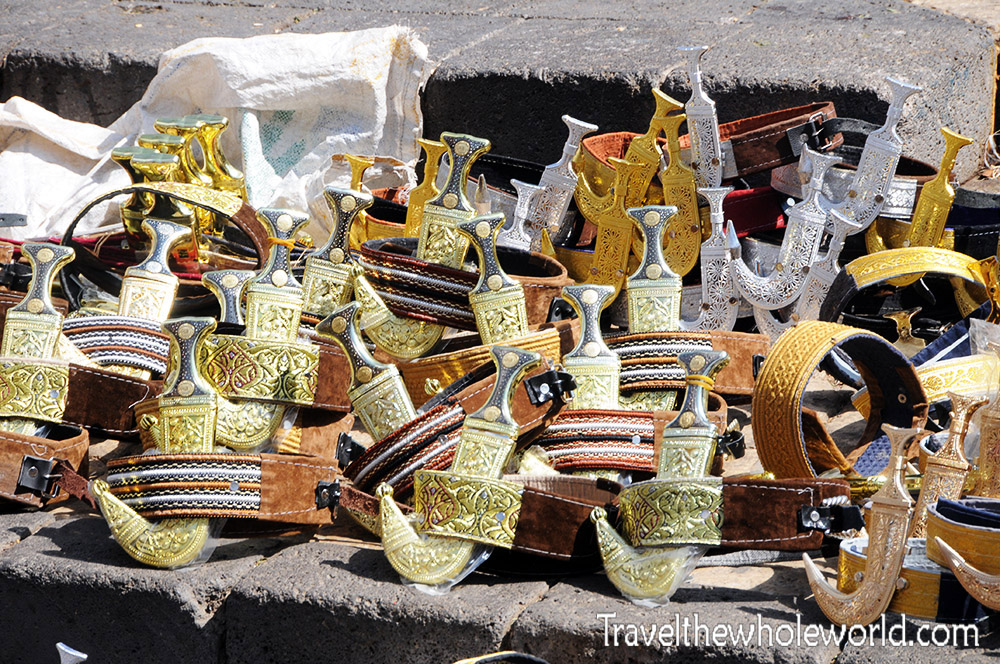
You’ll notice that in many of my photos of the Sana’a area, men carry the jambiya, or traditional dagger. The jambiya is one of the most recognizable parts of traditional Yemeni dress. I almost never buy souvenirs, but I had to pick up two myself to take home with me! Above you can see some jambiyas being sold in the old suq market.
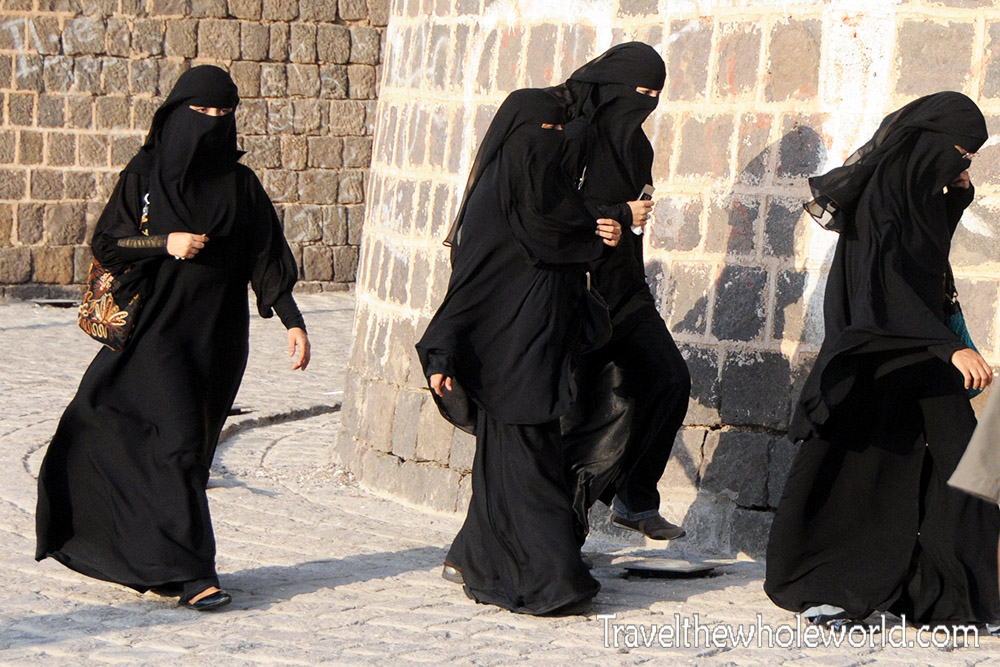
It was easy to get photographs of guys while traveling in Yemen, but photographing women was much more difficult. Yemen is one of the most conservative countries I’ve ever visited. During my time in Sana’a, nearly every woman I saw wore black clothing that covered most or all of the body and hair, with only a small percentage leaving their faces uncovered. In other parts of the country I saw some variation in colors and styles. A local told me that traditional Yemeni women’s clothing had historically been more colorful and that the prevalence of black clothing had increased through influence from other Gulf countries.
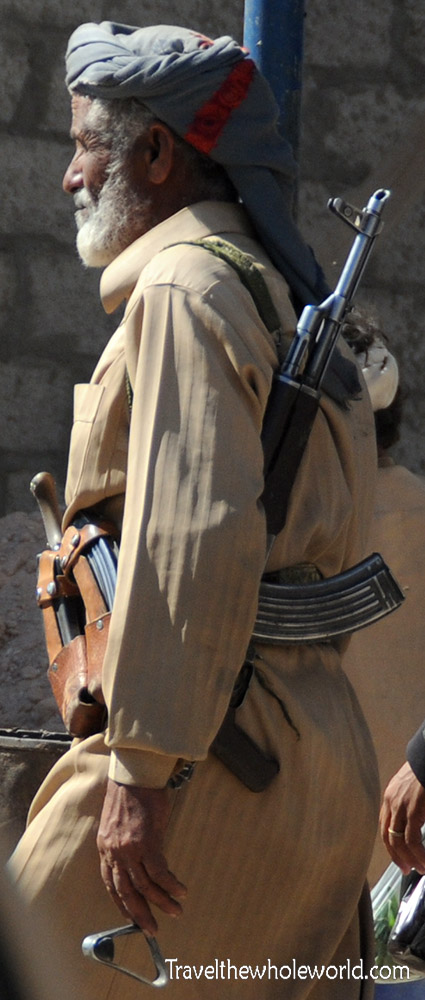
Something else that stood out to me about Yemen was how common privately owned weapons were. Above, a man passes through a market while carrying an AK-47. This seemed consistent in many parts of the country. In one market on the eastern side of Yemen, I counted four people carrying guns within about five minutes.
One guy in Yemen told me a story about two friends who were arguing when one took his pistol and slammed it against the other guy’s head, accidentally discharging a round into someone standing nearby. Thinking he had killed another one of his friends, he fled to the north of the country and went into hiding. When the family eventually got hold of him and told him that he’d only shot his friend in the shoulder and everything was fine, he suspected they were lying and wanted him to return to Sana’a so they could kill him in revenge. He eventually did go back and found out that his other friend was fine, so to the people telling me the story it turned into a funny story with a happy ending.
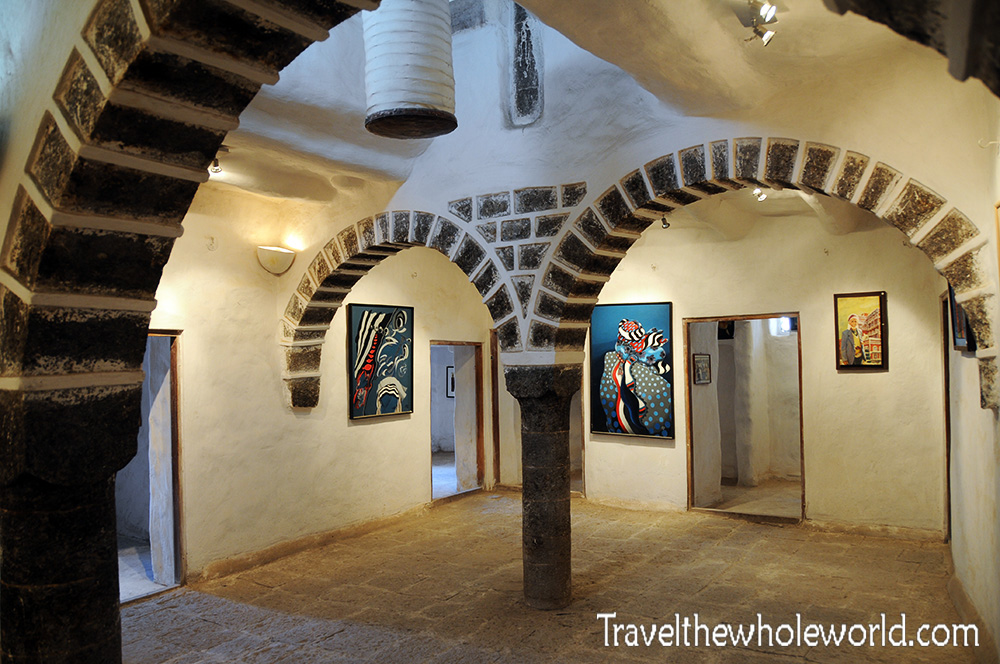
There was only one art gallery that I stopped by during my entire visit to Yemen. I’m not sure of the name, but it had some paintings created by local Yemenis. I wish I took more photos of the artwork once inside to share, but somehow this was the only photo I took. Sadly, I was the only one here! Since this place was free, there was no reason for anyone not to visit.
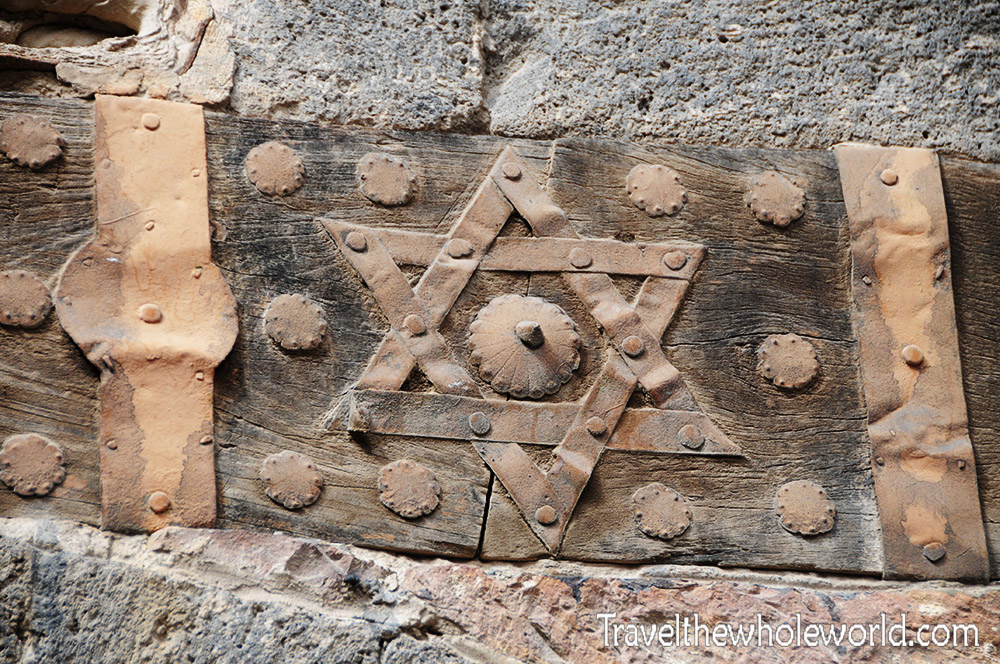
Really though, the entire city of Sana’a is a museum. This Star of David was left behind from the centuries when Yemen had a substantial Jewish population. After the creation of Israel, most Yemeni Jews eventually emigrated there. Several Yemenis I met distinguished between their views of Israel and their views of Judaism, and some still spoke of Yemeni Jews living abroad as fellow Yemenis.
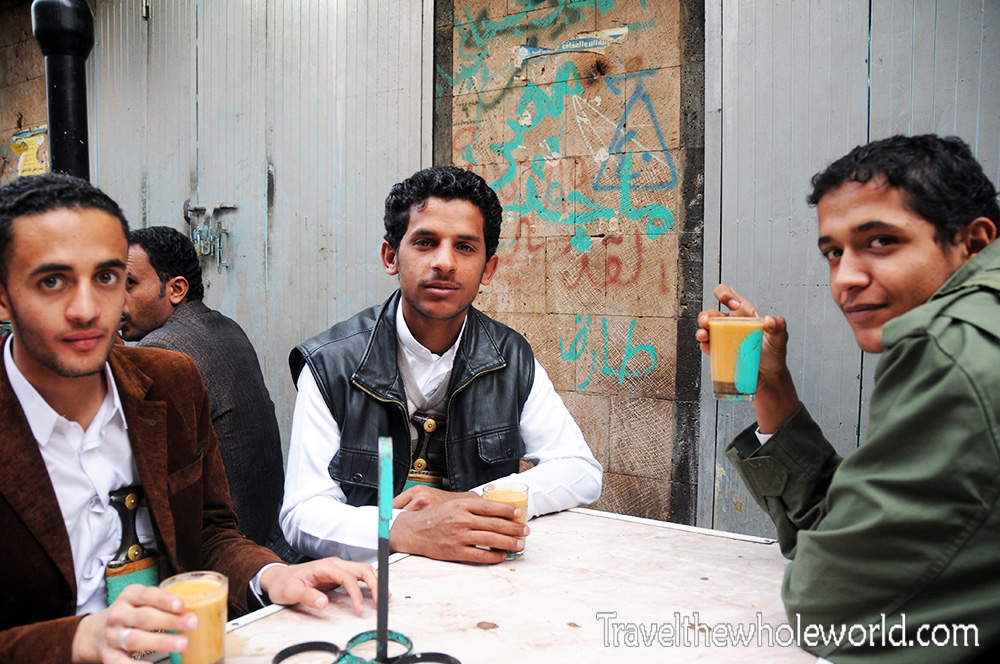
Another random experience I had was when I passed by an outdoor cafe. These guys were roughly my age and attempted to start a conversation with me. They invited me to sit with them for some tea, which of course I did. Unfortunately my Arabic was about as good as their English, so we weren’t able to have a real conversation. I would have loved to know their stories and opinions on the world. I also wonder if they participated in the uprisings that began only weeks later.
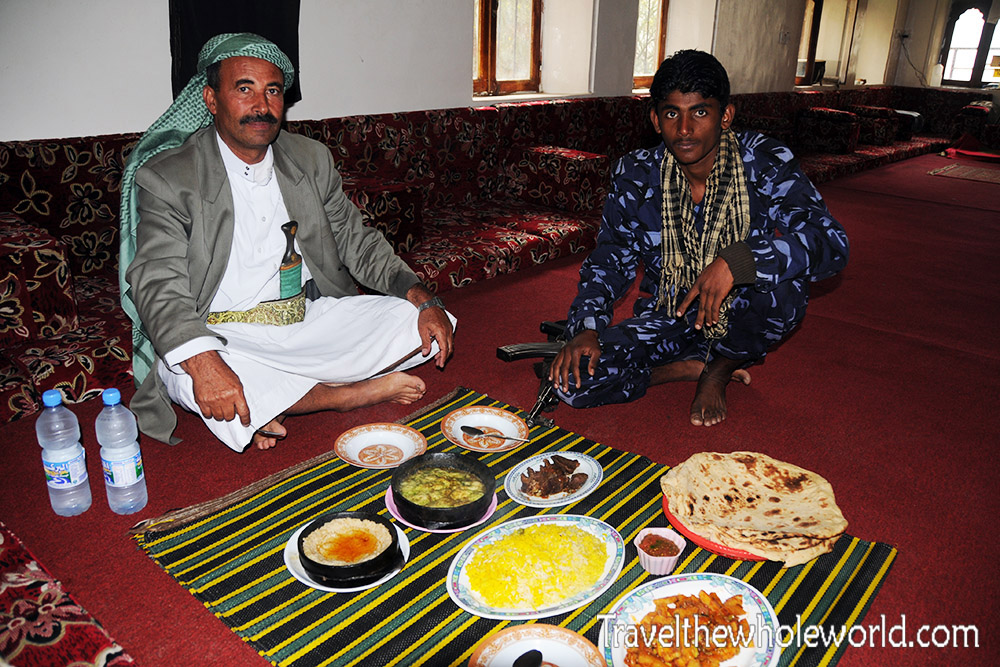
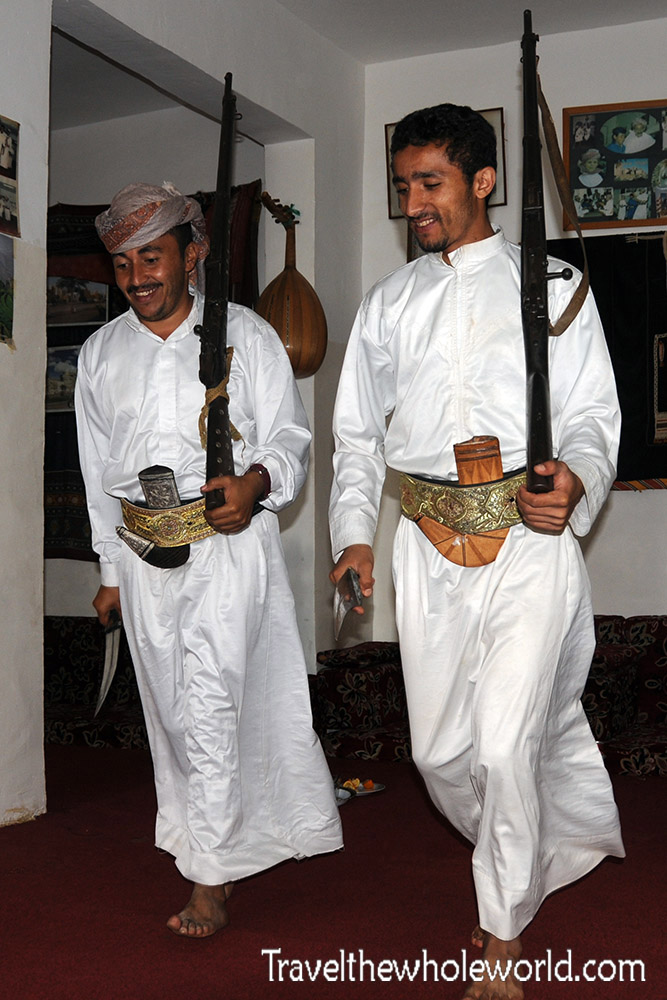
After exploring much of Sana’a, I did several day trips to areas nearby. This photo above is from outside Sana’a in a small town called Manakhah. In order to leave Sana’a, I was required to take an armed guard. Above is my driver on the left and my armed guard on the right. We had a traditional Yemeni lunch in Manakhah.
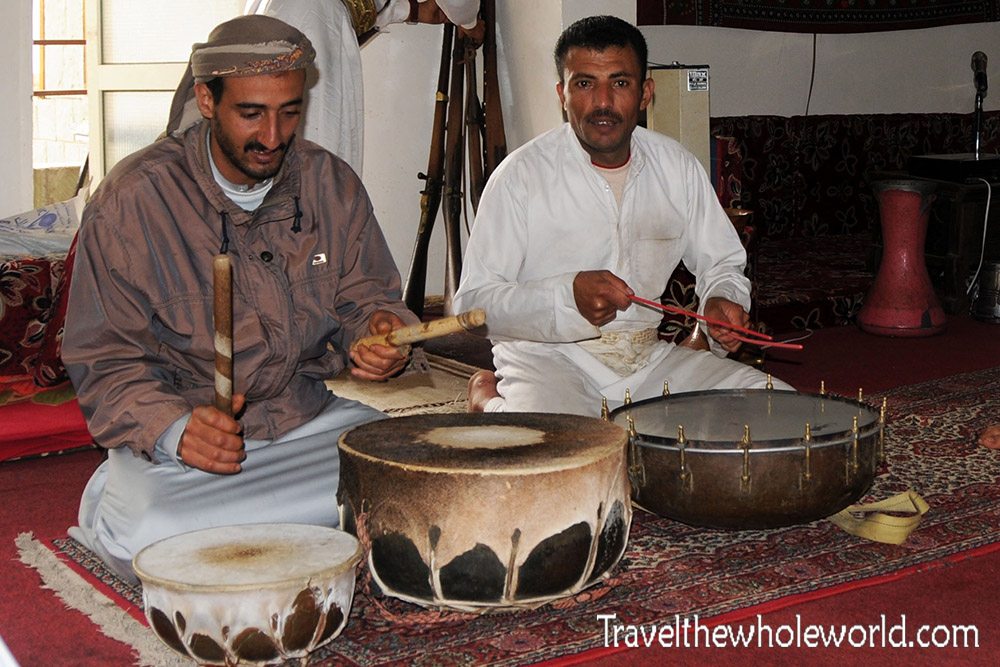
In Manakhah I had one of my favorite experiences in Yemen. We came to this small town to see the traditional drums and dancing that Manakhah is known for. These guys put on a good show and even forced me to join in at one point. This kind of music and dancing often takes place during weddings throughout Yemen. The guy playing the drum on the left was awesome and one of the most curious people I ever met while traveling. He had a million questions for me: How do people go scuba diving? What happens if you hit a rock while skiing? How are homes heated in the USA in the winter? I seriously wish I could have taken him with me!
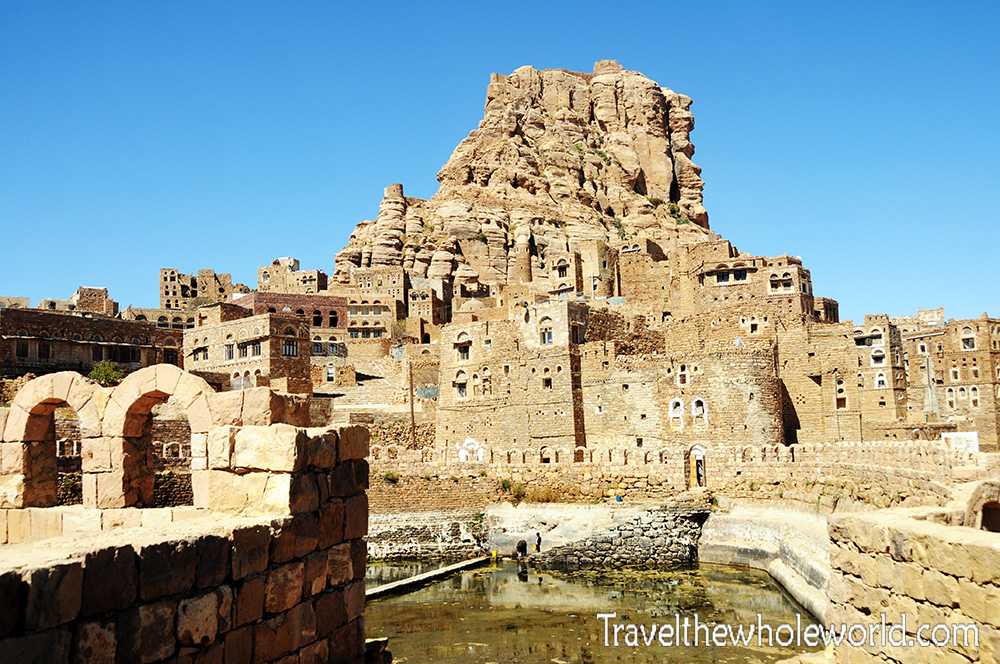
Another impressive town outside Sana’a is Thula, also called Thilla. The town is pretty small, but its history and architecture make it worth a visit if you’re in Sana’a. With a history stretching back many centuries, the great thing about the town is how well preserved it is. Yemen had also done some restoration, such as rebuilding parts of the fort and watchtowers. I spent lots of time hiking up the steep hills and exploring the small town.
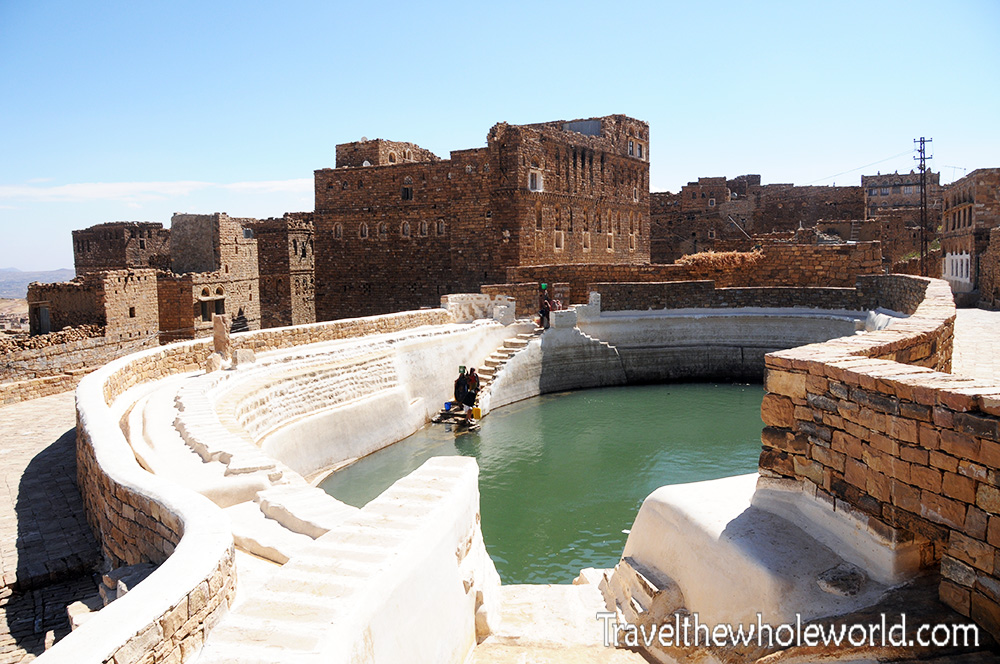
Also restored in Thula was this ancient cistern. You can imagine that in a dry environment this would have been a lifeline for the people living here. While hanging out by the cistern, I was approached by some interesting locals. They were pretty young, spoke English well, and had some very strong opinions on the world and Yemen. The leader of the group told me that Yemen had four problems that needed to be resolved. The first and biggest was Al Qaeda, second was the southern movement, third was tribal feuds, and finally the fourth was Yemen’s negative image in the media.
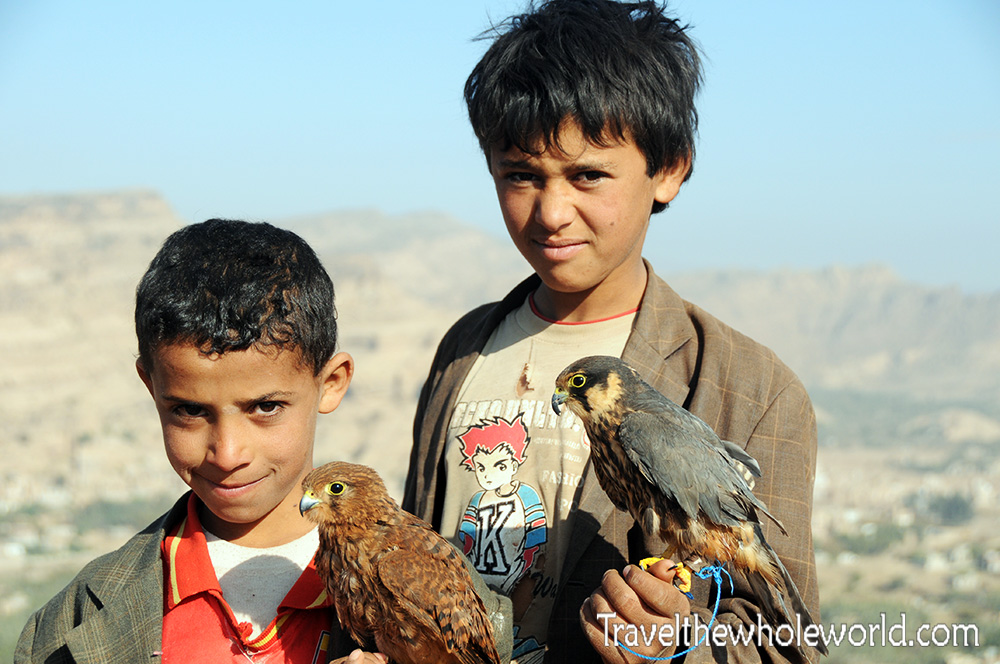
These kids above are from another small nearby town. Located by the desert canyon called Wadi Dhar, both kids had their own falcons. Besides the traditional use of falcons for hunting, the kids told me they used to show them to tourists and pose for pictures. An older kid who was here had broken glasses and told me his name was Harry Potter. Harry told me that they used to get 50 tourists here a day years back. “Now you are the only one,” he said. I regret not taking Harry Potter’s picture; his glasses were shattered because he had dropped them the day before, he told me.
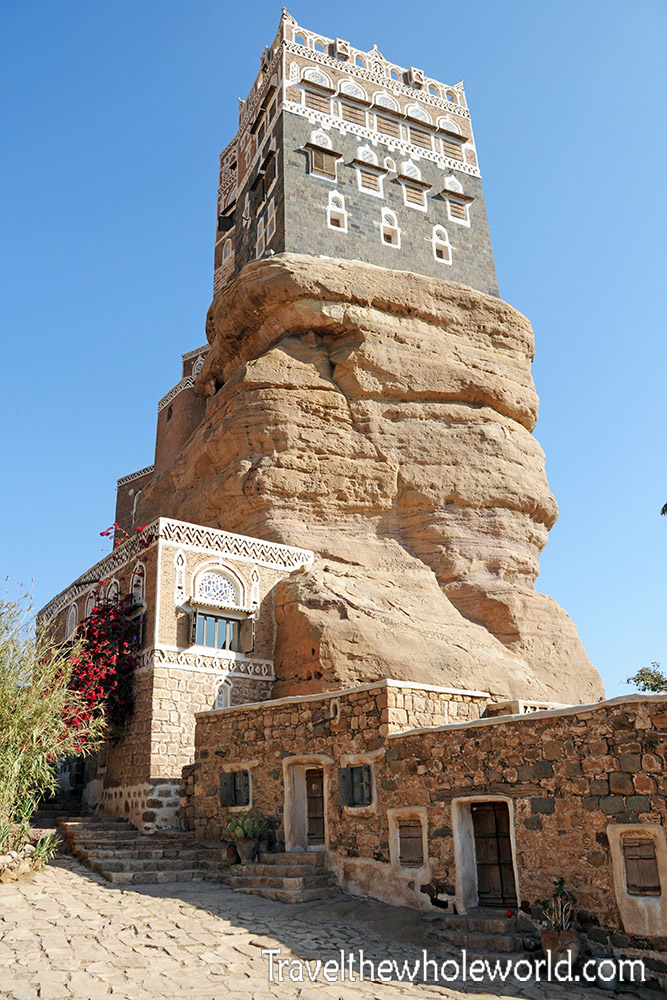
Before coming to Yemen, I saw several pictures of this unique building while researching my trip. I kind of assumed it was just a large and creatively built house, but it’s actually an enormous summer palace. Known as Dar Al Hajar, or the Rock Palace, it rises dramatically from the rock beneath it and was used as a summer residence by Imam Yahya in the early 20th century.
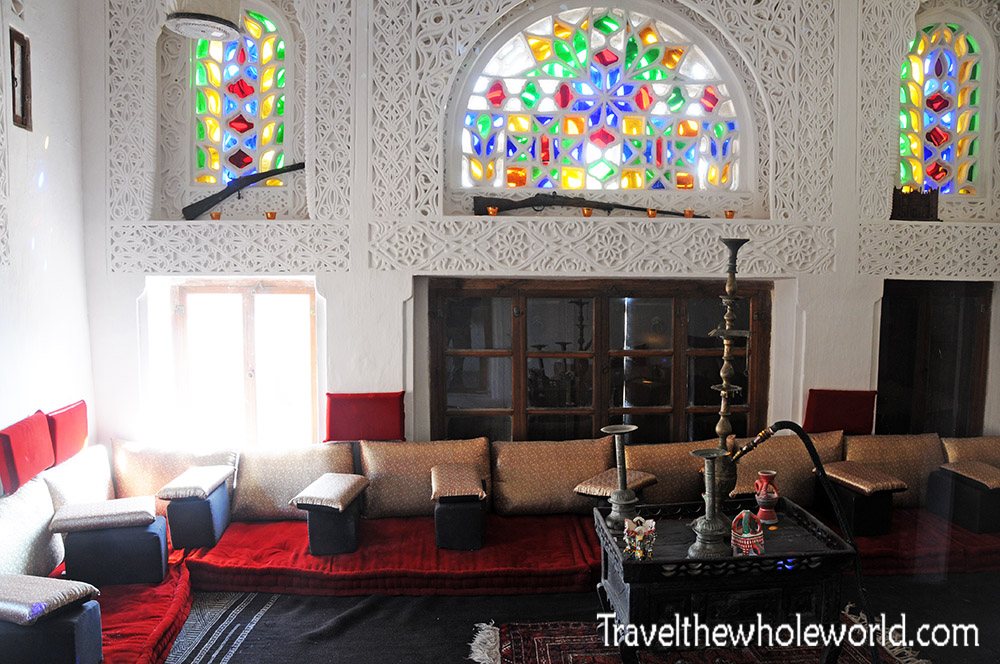
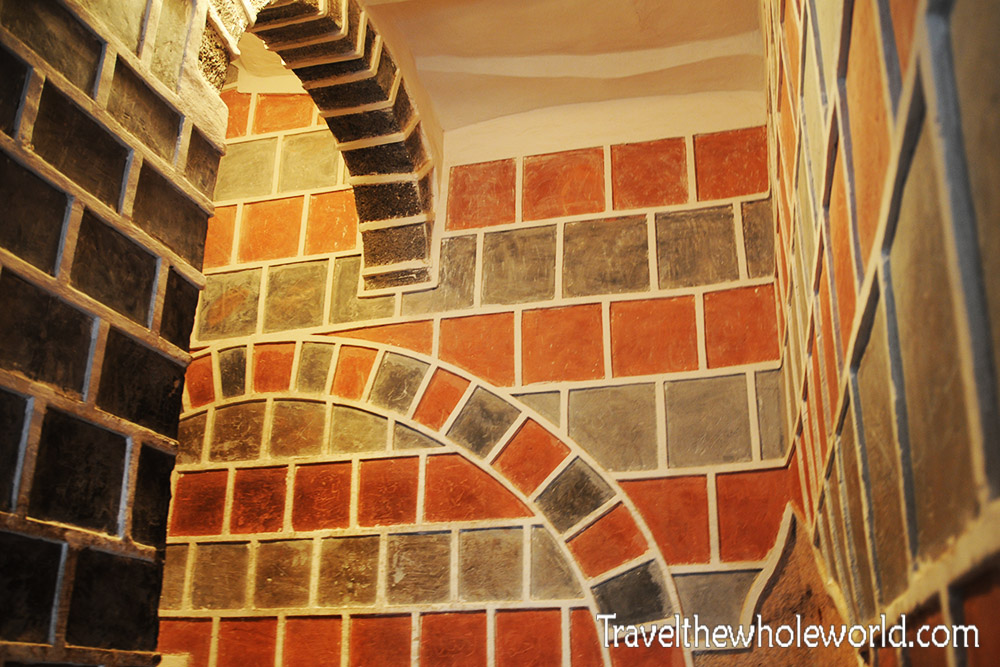
The inside of the palace has dozens of rooms ranging from a large kitchen to dining rooms, bedrooms, and servants’ quarters. I took a lot of photos of this place, but since I try to limit my pictures per country to around 100 and I’m closer to 150 for Yemen, I had to remove some. Above is a photo of one of the gathering areas where meetings or dinners would have taken place. The photo below shows one of the decorated stairwells that takes you to another floor. Today the complex can be explored as a museum.
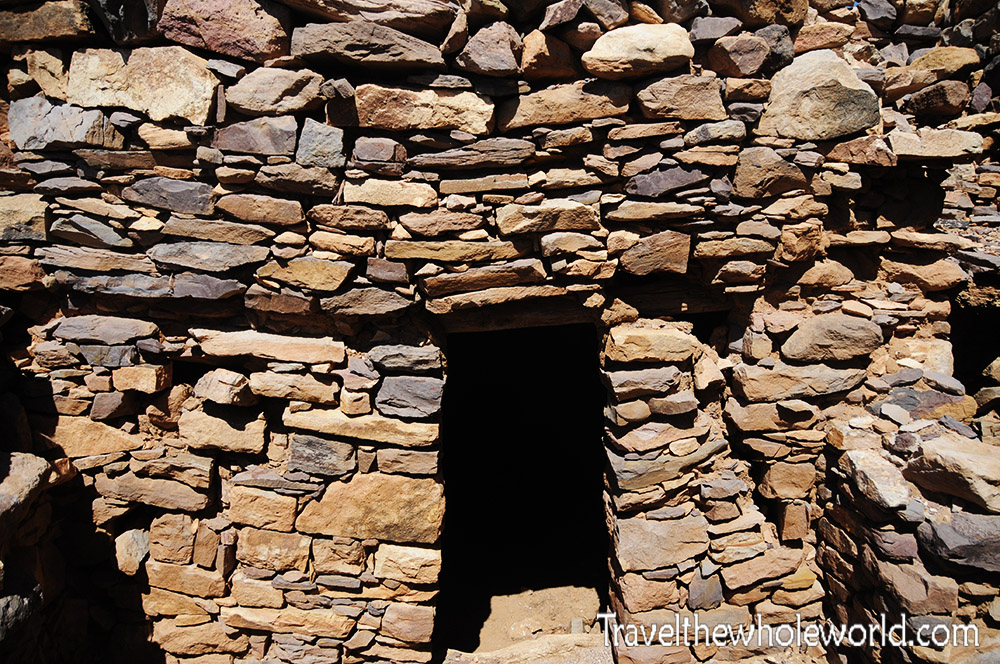
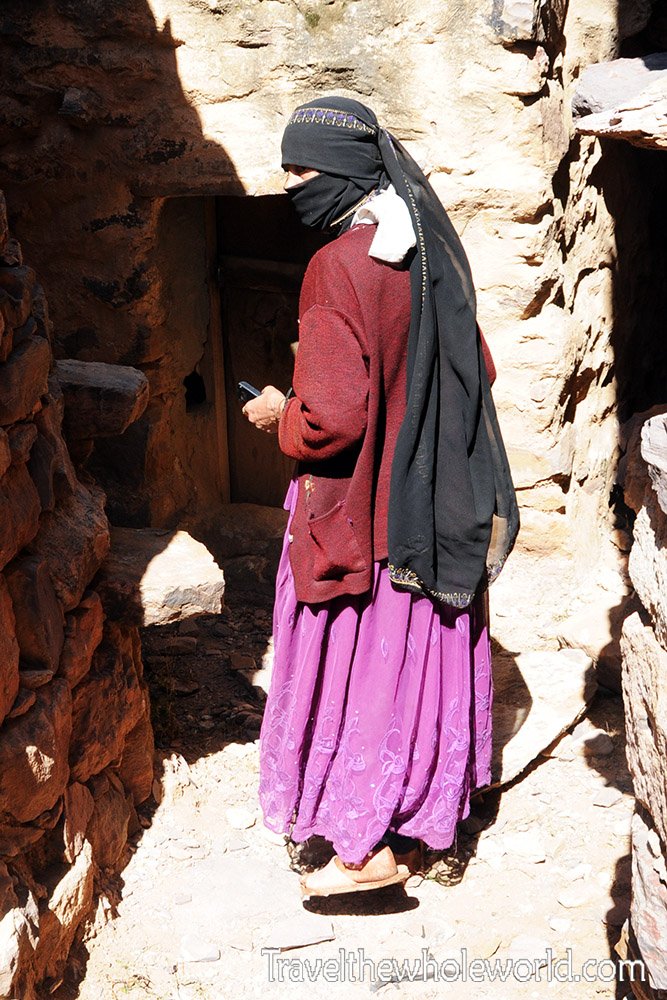
About an hour from Sana’a I visited my final fortress. I came here at the very end of my trip, and to be honest I came across so many old castles while in Yemen that I wasn’t too motivated about visiting this one. Once I arrived though, I was blown away by the fortress itself as well as the amazing views. What was unique about this fortress to me was that there were actually people still living here. As I wandered around I figured I had the whole place to myself. It wasn’t until I noticed people eyeing me from their homes that I realized I wasn’t alone. Above is a photo of one of the houses in the lower parts of the fortress. The upper parts were actually locked and I was afraid they were off limits. This old woman photographed below came out and, without speaking, took me up and unlocked the gate for me.
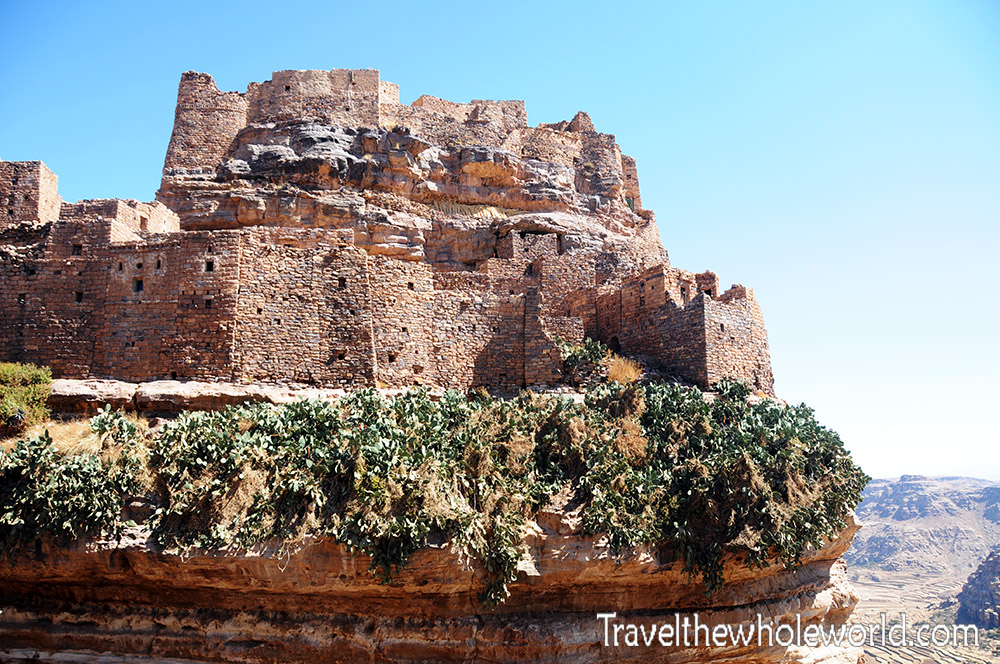
Above is a photo of the entire Zakati Fortress. Since I was alone here and wasn’t able to speak to the locals, I don’t know much about Zakati Fortress. All I know is that it’s ancient, high up in the mountains, and I’m glad I didn’t miss it.