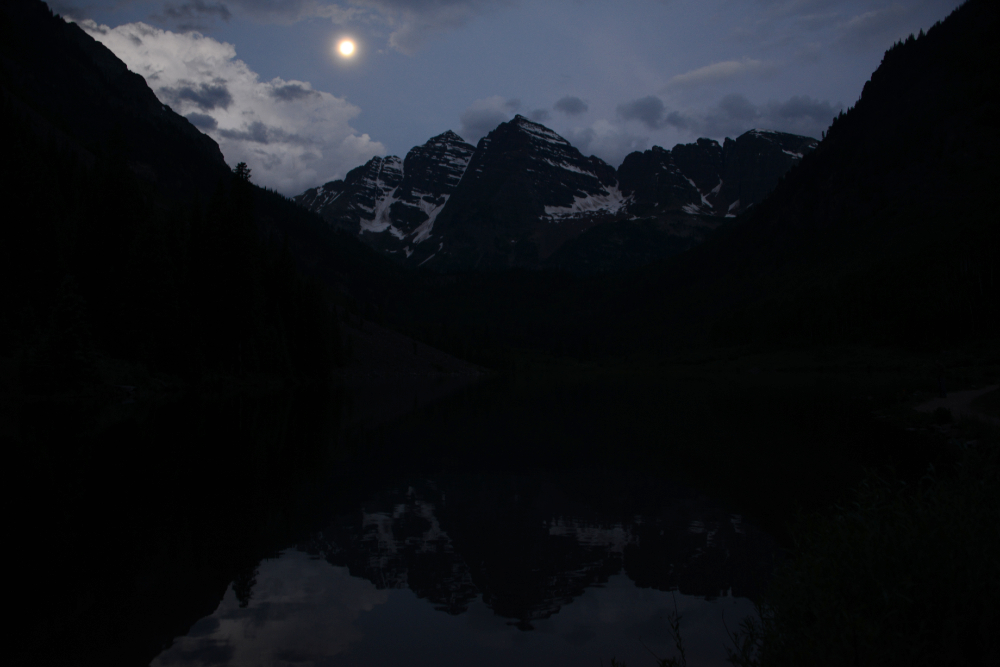
My friend and I began our climb up Pyramid Peak in darkness at 5am. Pyramid Peak is often considered one of the hardest of Colorado’s 14,000-foot mountains due to the exposure near the summit. This mini-adventure begins as a hike through the Snowmass Wilderness, with our very first view being another famous 14er: the Maroon Bells, photographed above.
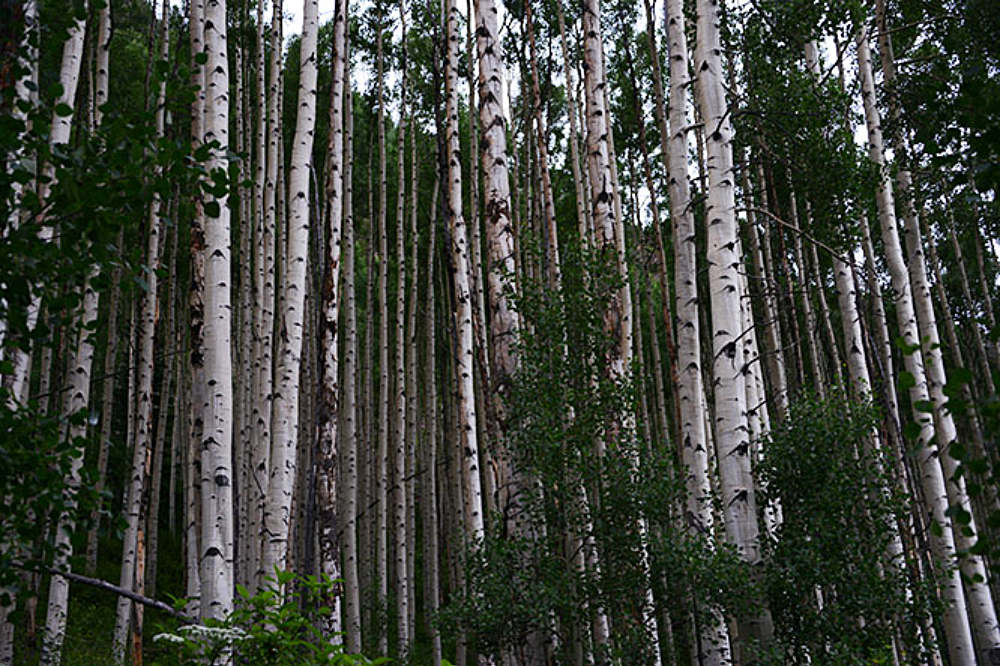
The hike continues toward the Maroon Bells before entering forests filled with aspen trees. As it turns out, there is a wide, popular trail that begins at Maroon Lake, leads through the forest, and eventually takes you to the base of Pyramid Peak. Somehow, in the darkness, we missed this trail and continued along a smaller footpath that eventually disappeared. We basically had to make our own trail through the woods that morning to reach the base of Pyramid Peak. It didn’t take long for the forest to thin out, and once we could clearly see Pyramid Peak in the distance, navigation was pretty easy.
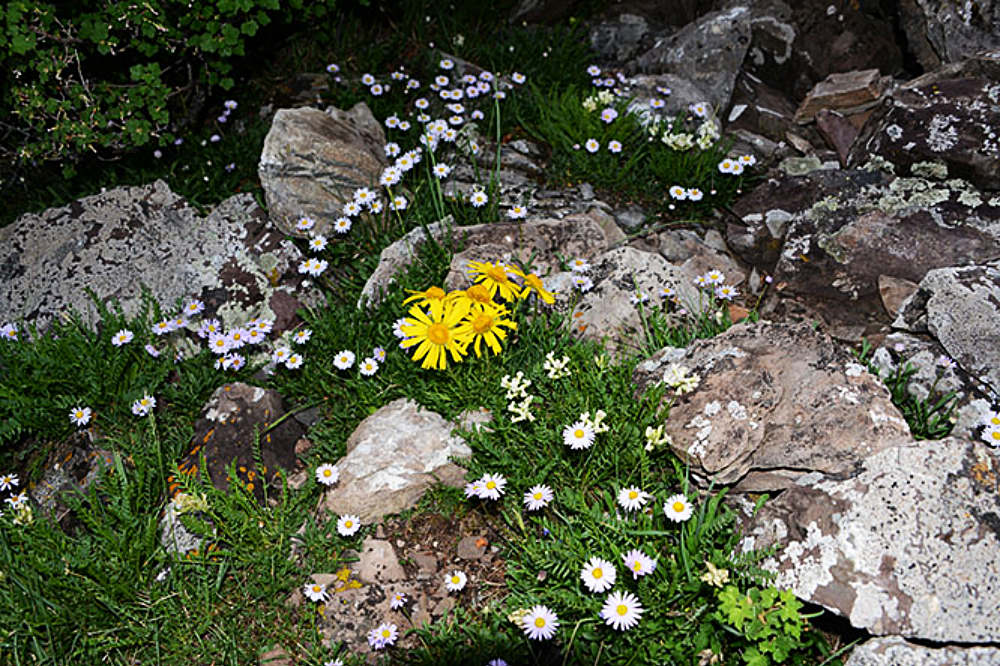
Once at the base of Pyramid Peak, you begin a pretty steep climb that changes back and forth from rocky terrain to a dirt trail. From here, you start getting some great views. As I climbed higher, I began to notice the ground becoming increasingly covered in flowers. There were a few areas filled with daisies and the yellow flowers seen above.
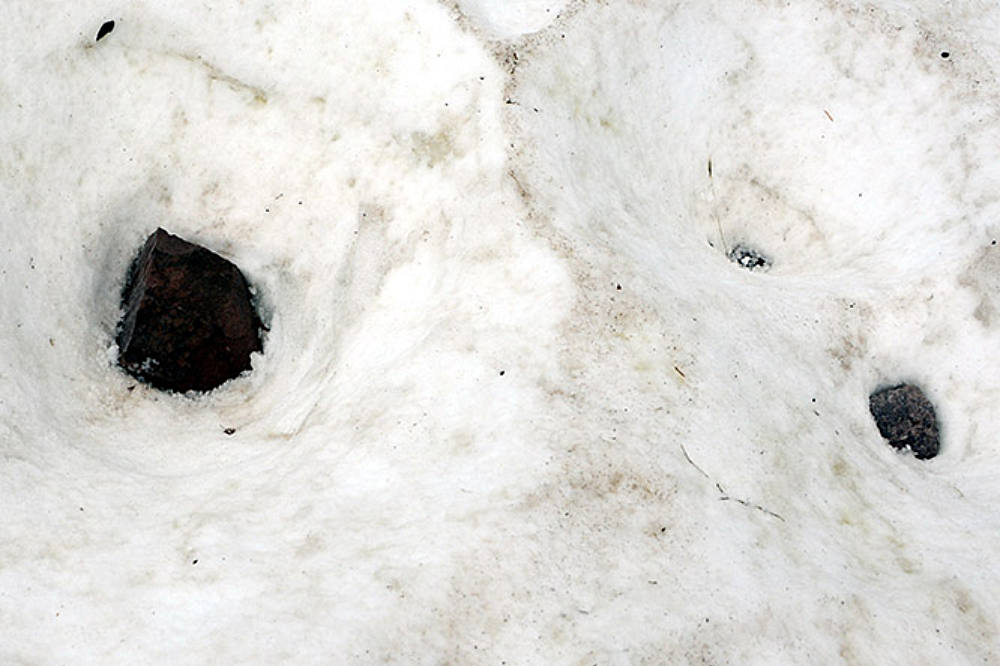
The steep trail levels off a bit after you enter the snowfield. Somehow, I didn’t photograph the snowfield itself until the very end. While hiking through it, I heard some loud crashing noises and saw giant rocks falling down the mountain. They’re a serious hazard here, and there isn’t much you could do if one came your way. When one of them hit the snow, it made a huge splash. The rock photographed above was one of the smaller ones. It’s difficult to tell from the photo, but it actually sank more than a foot into the snow from the impact.
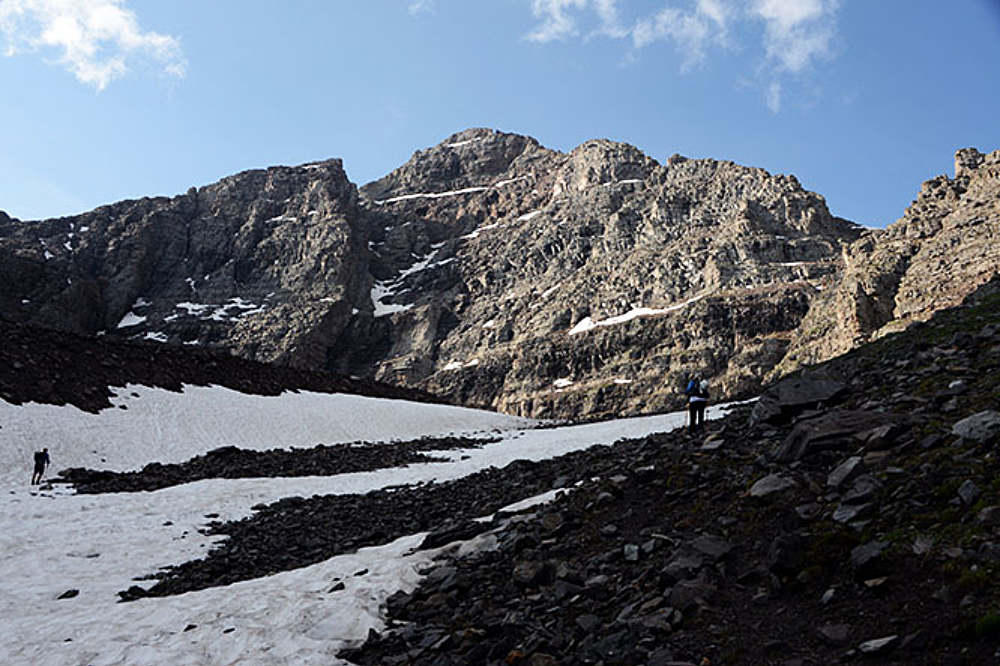
Since we had seriously just flown in from sea level two days earlier, my friend was feeling the effects of the altitude and decided not to continue. Fortunately for me, I met two great people near the end of the snowfield who I was able to tag along with. You can see the summit of the mountain here, and why it earns its name Pyramid Peak.
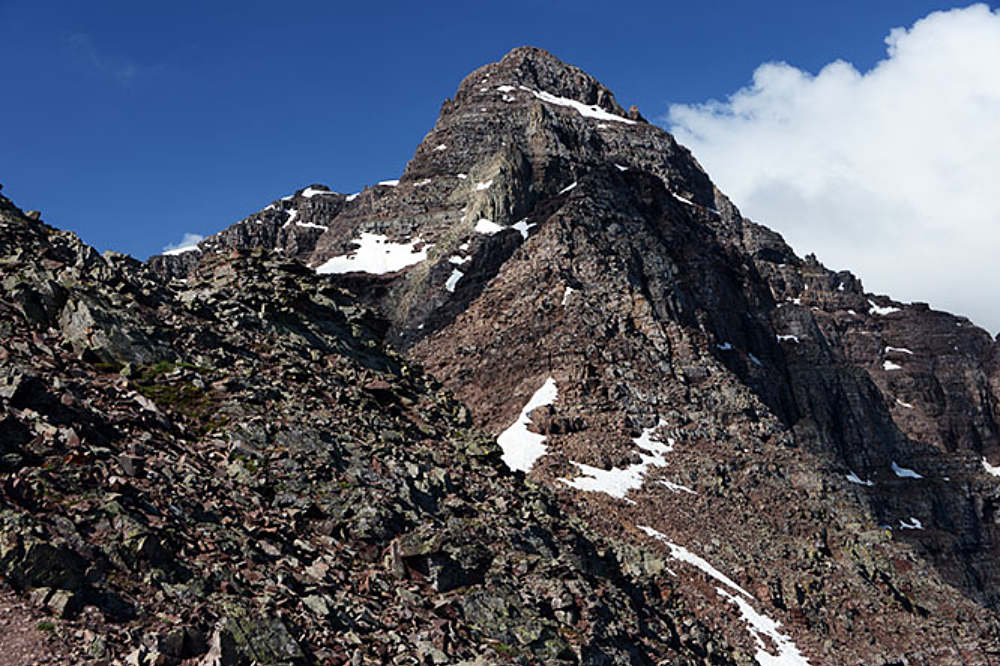
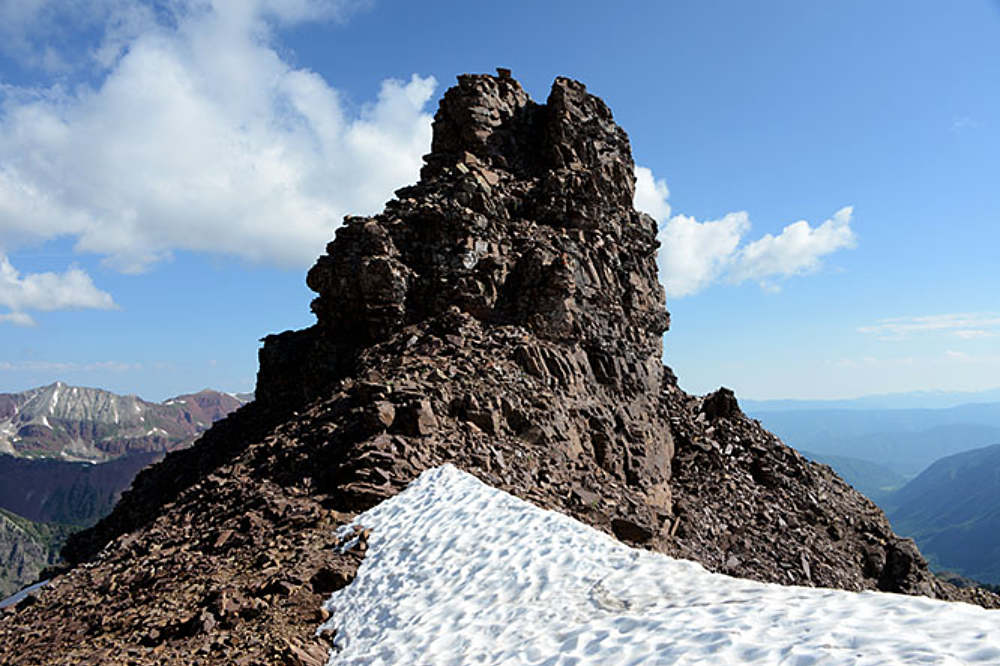
From the top of the snowfield, you hike to the left of the summit and then climb some very steep terrain to the top of the saddle. The saddle is located at about 13,000 feet (4,000 meters) and gives you another great view of Pyramid Peak’s summit. Below is a photo of one of the towering rock formations found at the top of the saddle. From this point forward, the ascent of Pyramid Peak changes from a hike to a very exposed climb!
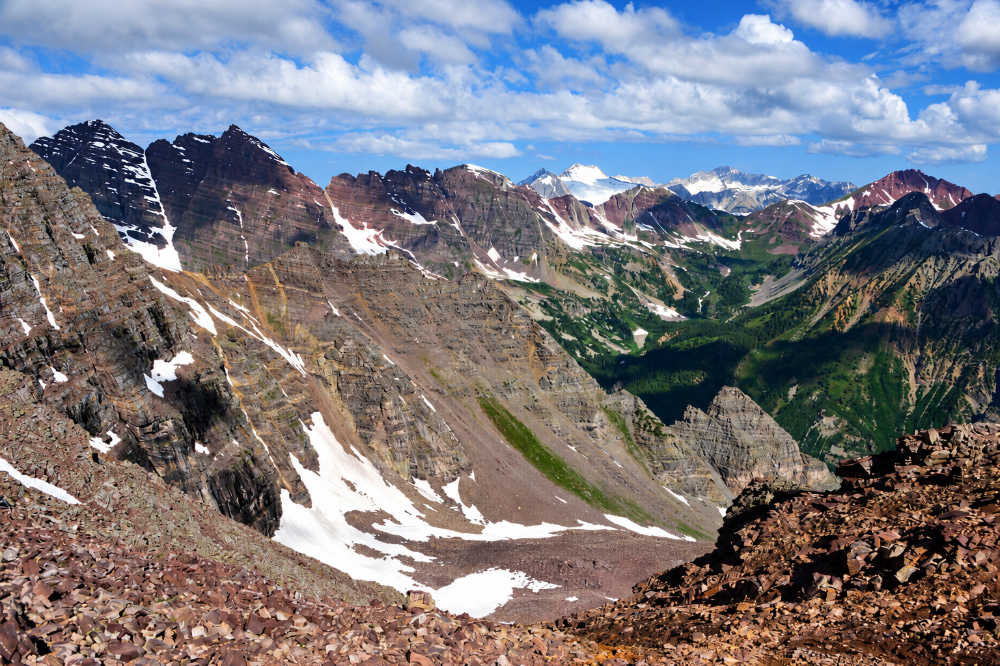
Before I continued with the climb, I took this photo looking back toward the snowfield and across mountains stretching as far as I could see. The Snowmass Wilderness is definitely one of the most beautiful places I’ve ever seen in the United States!
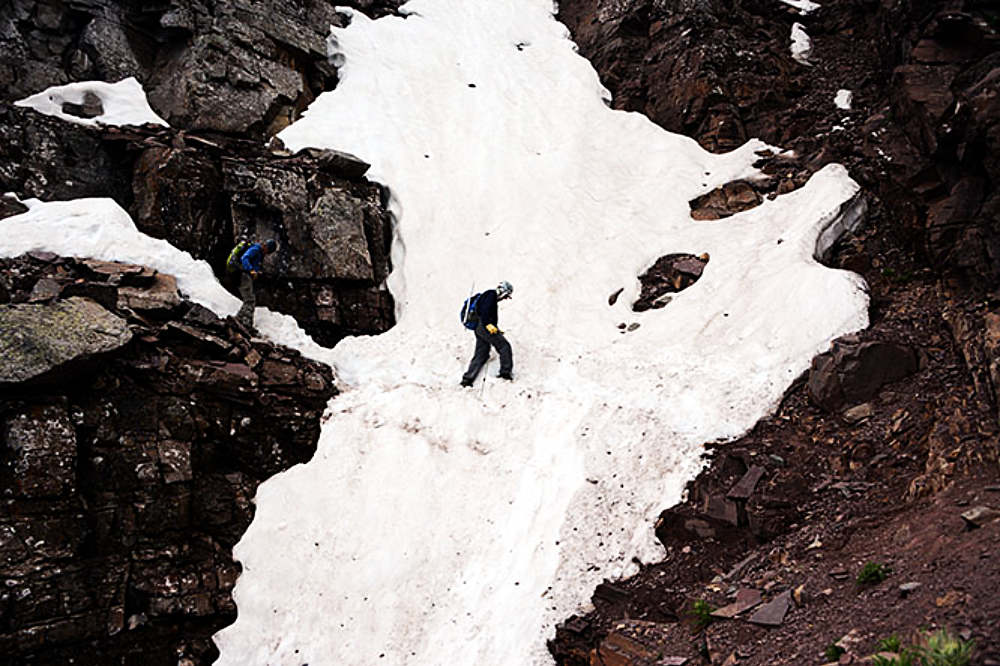
One of the first dangerous obstacles was what I called the snow slide. A steep section was filled with snow that required us to walk across it. There was nothing to hold on to, and since few people use ropes here, a slip could have had extremely serious consequences. I’m not scared of exposure, but I’m used to having some kind of backup system, so it was a bit uncomfortable. Trekking poles or even an ice axe would have been useful here.
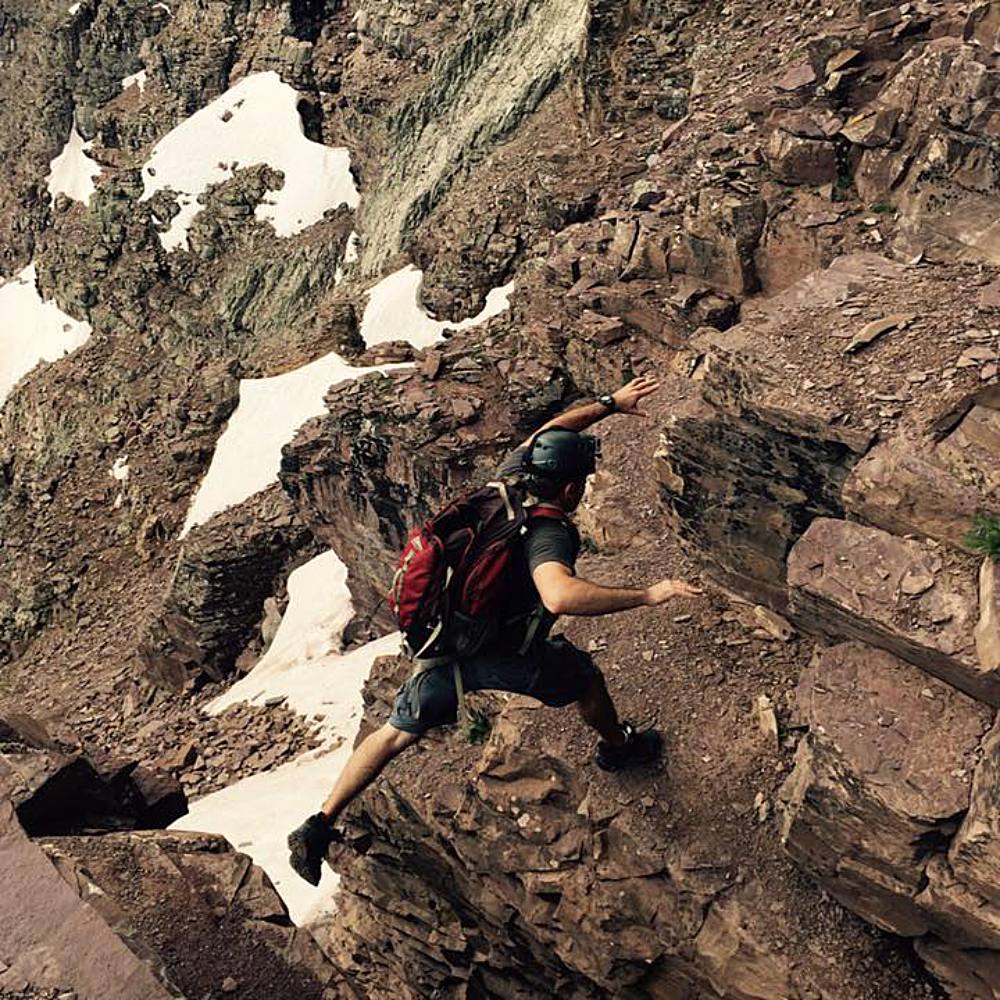
The famous sections of Pyramid Peak came shortly after this: the Leap of Faith followed by the Ledge. The Leap of Faith wasn’t bad, but it was farther than I expected. You truly do have to leap across it rather than simply taking a very long step. Following the Leap of Faith is the Ledge, where you hug the wall while moving along a narrow ledge about four stories off the ground. Both of these were fairly easy.
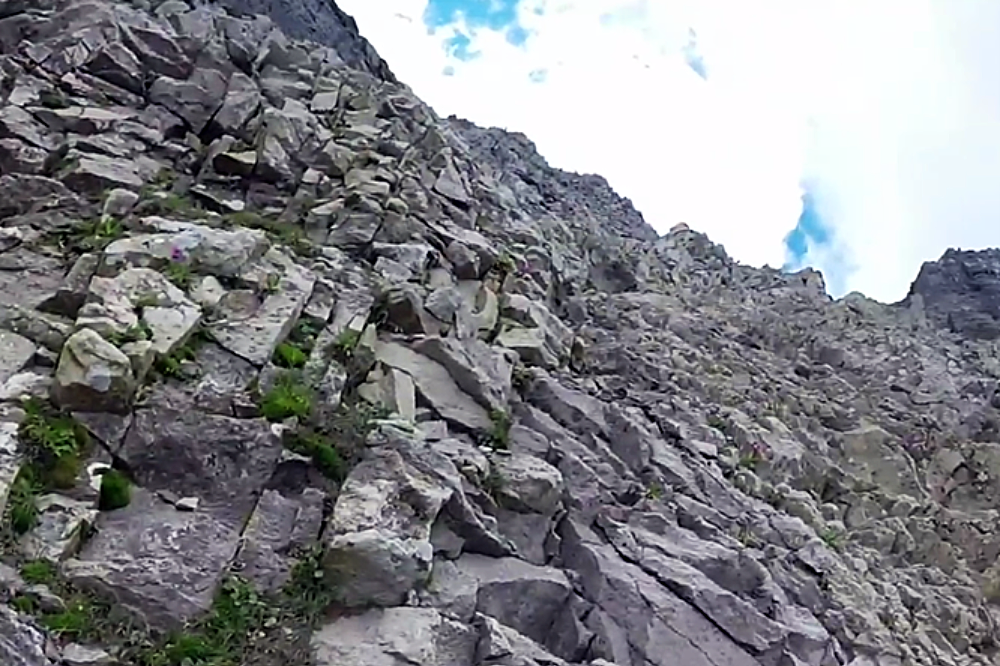
This photo was taken with my GoPro, which has a fisheye lens effect that exaggerates the terrain a bit. Regardless, this is very steep terrain that has to be climbed using your hands. Your grip is pretty good here, so while you’re unlikely to fall, the exposure makes it intimidating for sure.
The worst part of the trip came sometime after the Green Gully. We had made it high onto a ledge and found ourselves on very steep terrain covered in scree and sand that we would have to cross. To the right of the path was a drop where you couldn’t see the bottom. On the left was steeply angled shale that would come out in your hands if you grabbed it, offering basically no good holds. I found this part terrifying. If you started slipping, there seemed to be no way to stop yourself, and I truly felt like I was risking my life traversing that loose scree.
The two people I had met decided to turn around at this point. I seriously considered doing the same, but I was close to the summit and knew there was a climbing group ahead of me, so I continued. As it turns out, when I later met the other climbers, I learned that we had somehow gone off route and were not supposed to be on that scary ledge!
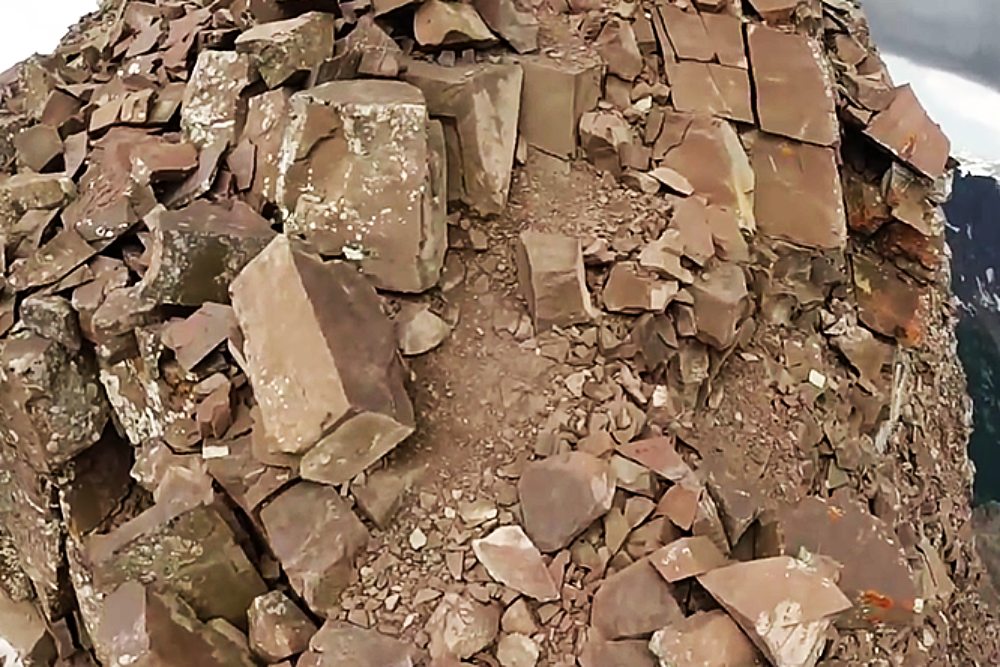
The final challenge was a little bit of climbing followed by this ridge leading to the summit. There are sharp drops on both sides, but this was actually one of the easiest parts because you had plenty of room compared with what I had just experienced. As a matter of fact, everything else going up, and even the entire climb back down, was a piece of cake compared with that ledge we had accidentally ended up on.
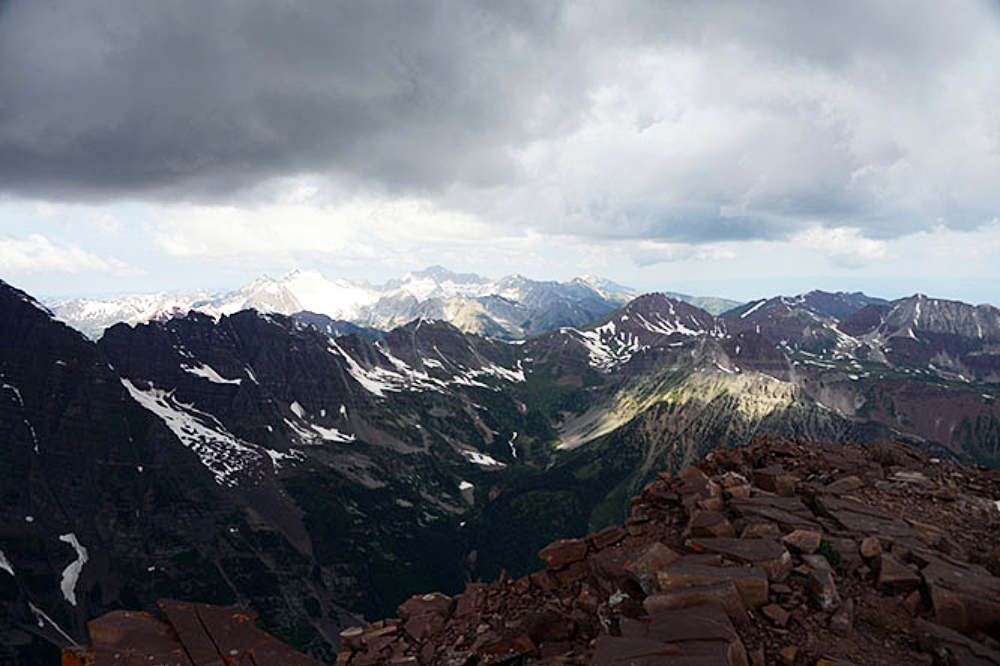
The summit views were amazing, but with some overcast weather rolling in, I actually had more scenic views from the saddle! Above is me at the top of Pyramid Peak, my first 14er!
Explore More of Colorado
Ellingwood Point • Mt. Elbert • Pyramid Peak • Mt. Evans & Bierstadt Traverse • Aspen • Denver • Grand Junction • the Snowmass Wilderness