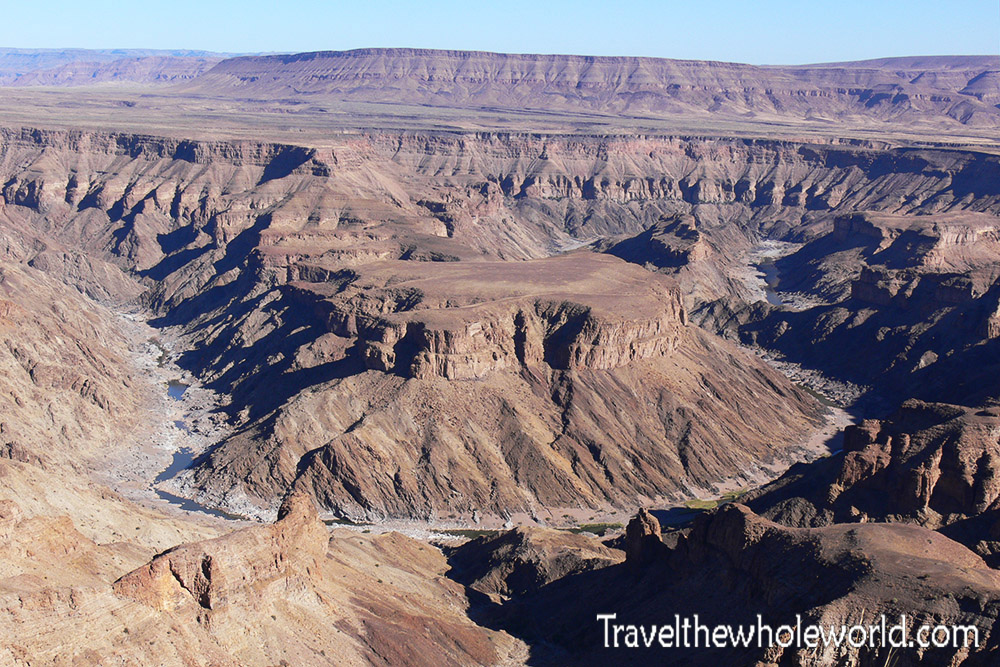
Namibia has some of the most vast and beautiful desert landscapes I’ve ever seen. Before traveling here, most of my experience with deserts had been in places like Arizona and Nevada. I’ve always been intrigued by seemingly lifeless terrain and endless expanses of sand, and Namibia took that fascination to another level.
One of my main goals was to see Fish River Canyon in southern Namibia. The enormous canyon cuts through an otherwise dry and barren landscape and can be explored on anything from short excursions to multi-day hikes.
I didn’t do an overnight hike through the canyon, but even during my shorter visit I came across three large kudu and several baboons. Somehow I still left with only a handful of photographs.
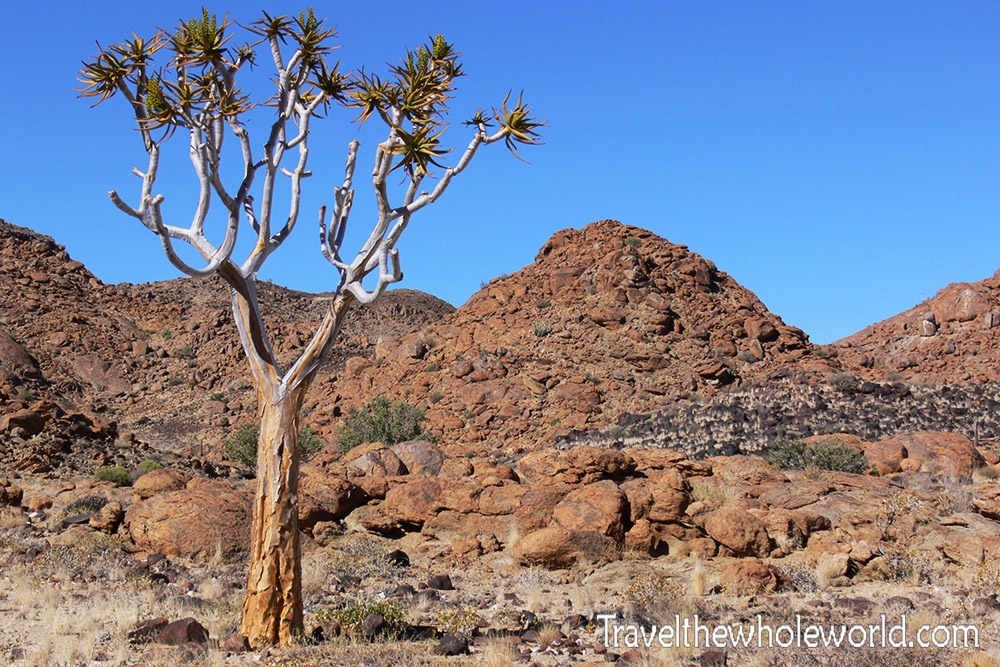
I took the photo above because this was one of the few living trees I saw in this part of Namibia. There were a few smaller thorny trees that looked almost dead, but this one still had plenty of leaves. It’s impressive that vegetation can survive in an environment this dry.
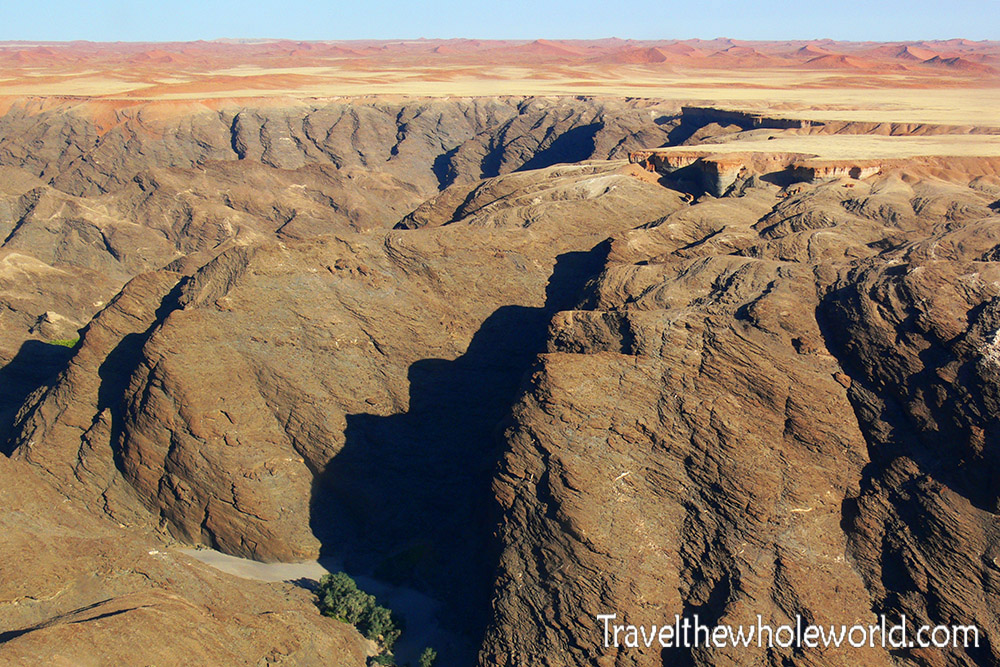
Fish River Canyon wasn’t the only dramatic canyon landscape I encountered. While traveling through Namibia I repeatedly came across smaller canyons, rocky valleys, and dry riverbeds cutting through the desert.
Namibia’s Changing Deserts
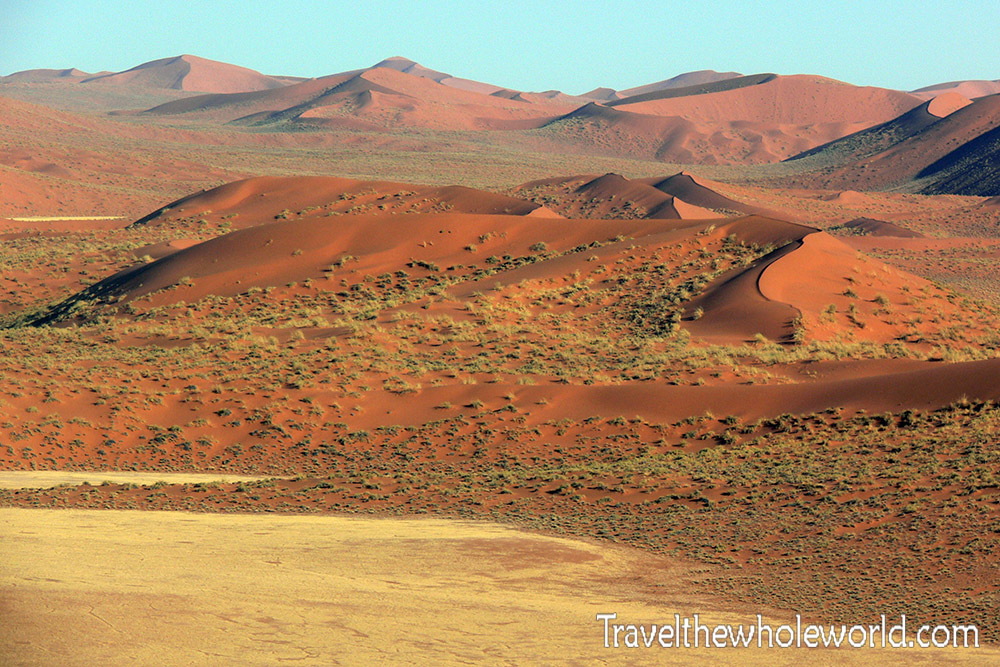
One of the things I found most interesting about Namibia was how much the desert changed from one region to another. Some areas were rocky and nearly devoid of vegetation, while others had reddish sand covered with scattered green shrubs.
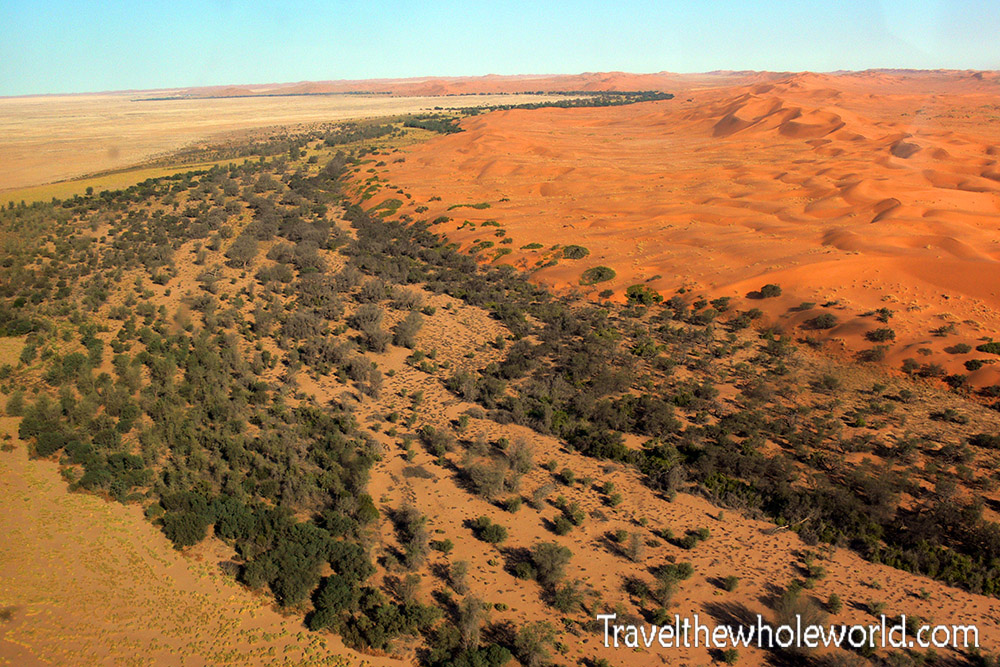
Here the landscape changed abruptly along what appeared to be a dry riverbed. Even a small seasonal source of water can completely transform the vegetation in an otherwise extremely dry environment.
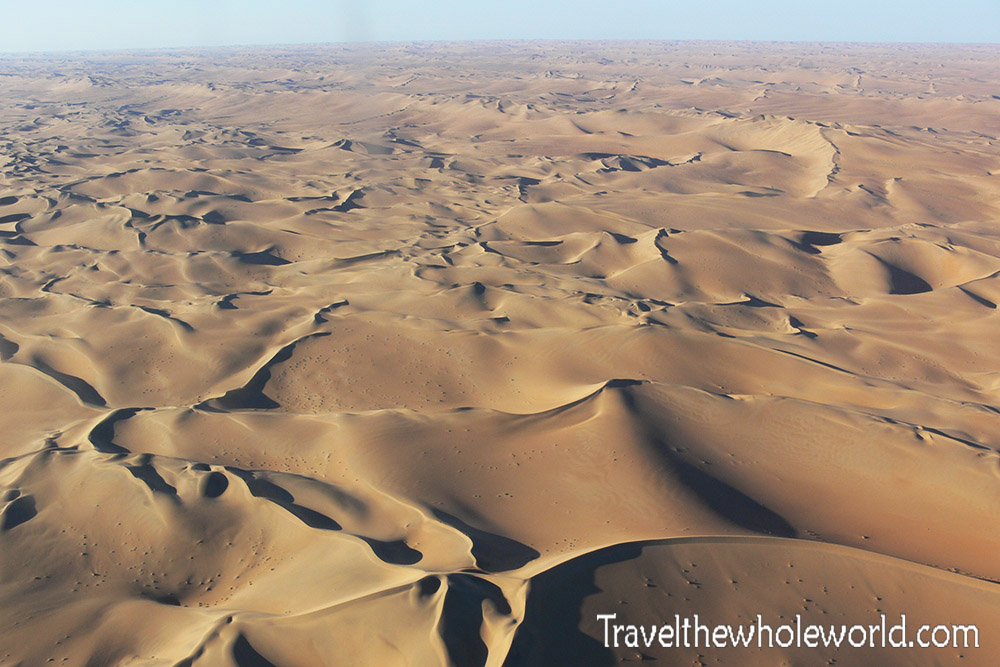
Namibia’s western side is dominated by the Namib Desert, and this was the first place in my life where I saw what looked like an endless ocean of sand dunes stretching in every direction. Some of the enormous dunes around Sossusvlei rise hundreds of meters above the surrounding desert.
Sossusvlei was one of the places I most wanted to reach. The region can be explored by hiking, driving through the dunes, and even sandboarding, but getting there didn’t work out quite as I had planned.
Taking to the Air
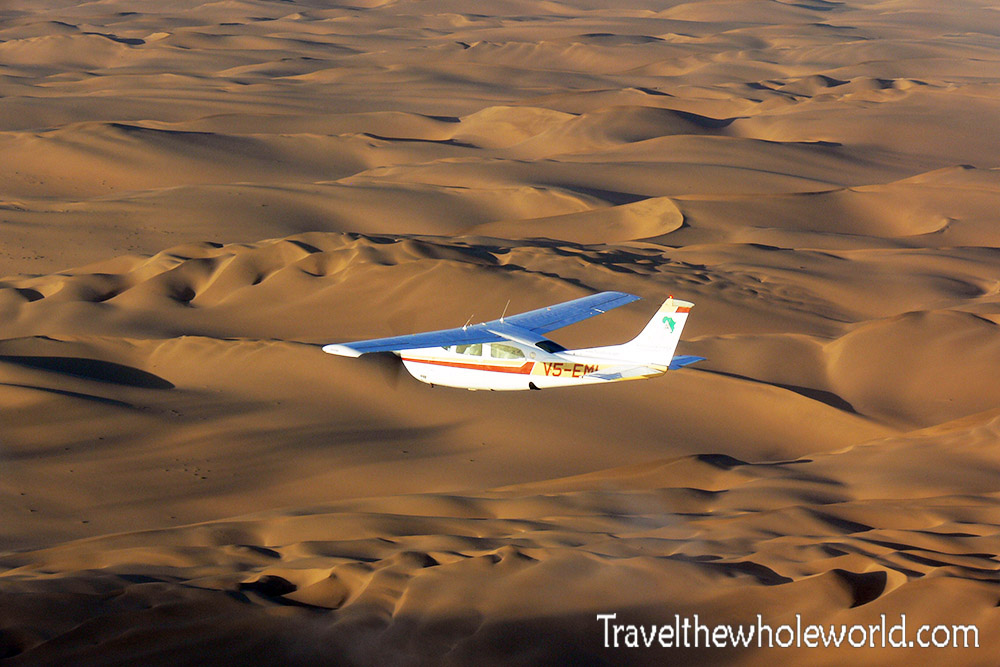
I attempted to drive toward Sossusvlei in my own car, but local police warned me that the vehicle probably wouldn’t make it over the rough roads ahead. They weren’t actually preventing me from continuing, but their advice was good enough for me.
At that point my options were to rent another vehicle, return to a larger town and arrange a tour, or find another way to see the desert. I chose the third option and decided to see it from the air.
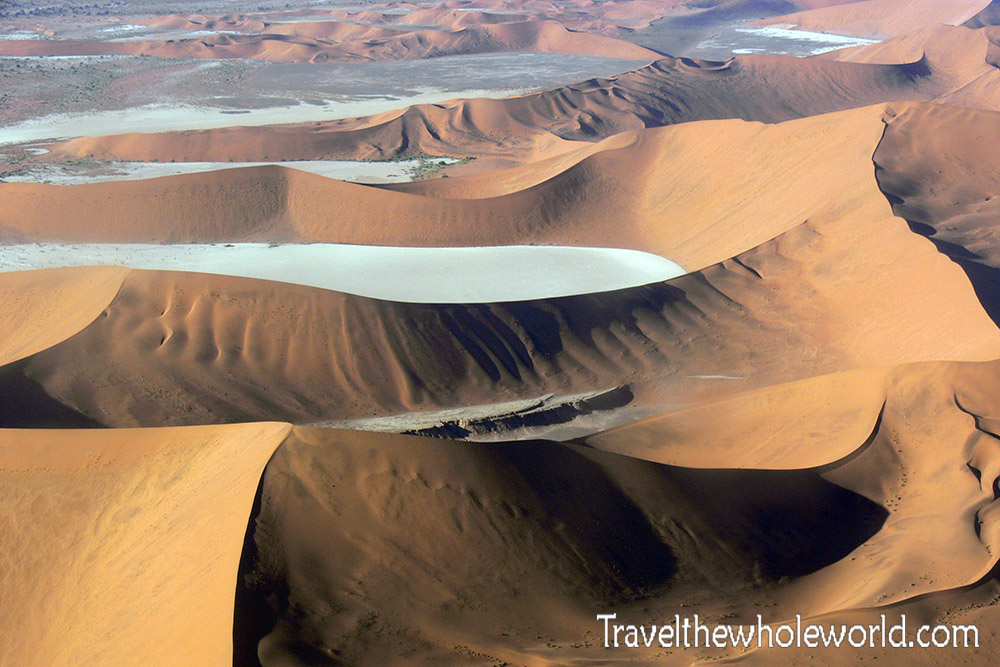
This ended up being one of my favorite scenic flights I’ve ever taken. From the ground, a dune can block everything beyond it. From the air, the scale of the Namib suddenly becomes obvious, with enormous waves of sand continuing toward the horizon.
I was never shown exactly where Sossusvlei was from the plane, but somewhere within this immense landscape was the region I had originally tried to reach by car.
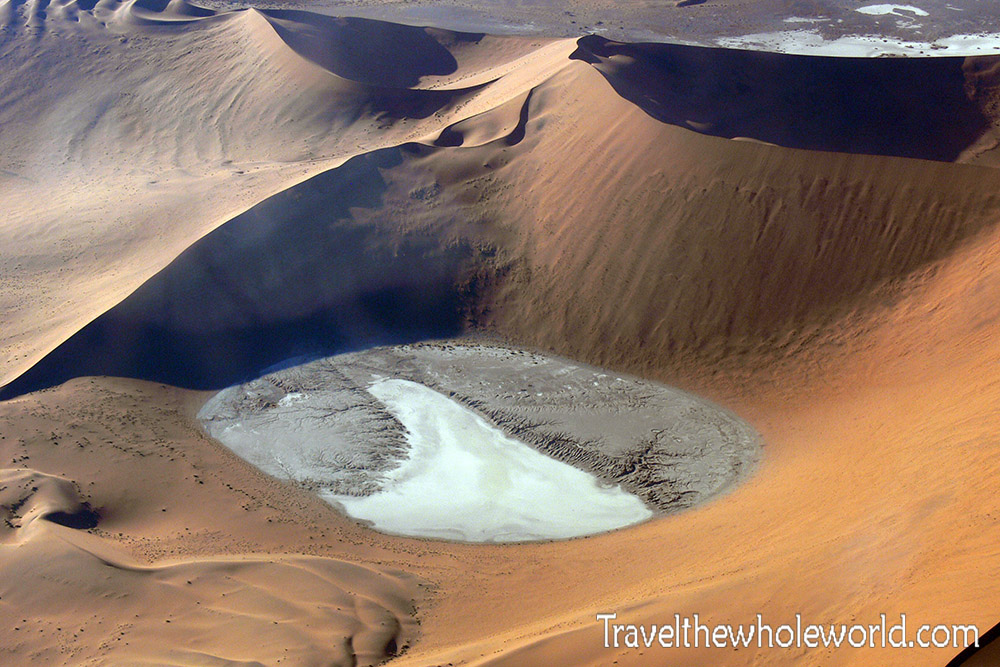
One unusual feature I noticed from above was this open patch surrounded by sand. I don’t know exactly what created it, but from the air it looked almost like the winds had carved an empty bowl into the surrounding dunes.
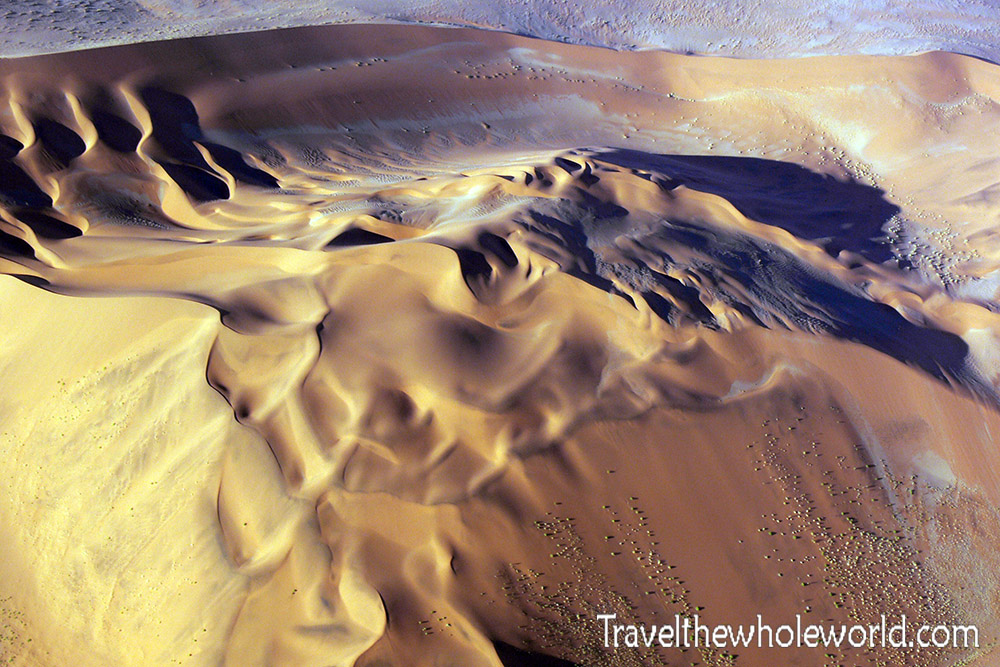
The red dunes were probably my favorite, but these strange beige dunes were a close second. From the air their smooth shapes almost looked like frosting rather than sand.
Riches Beneath the Desert
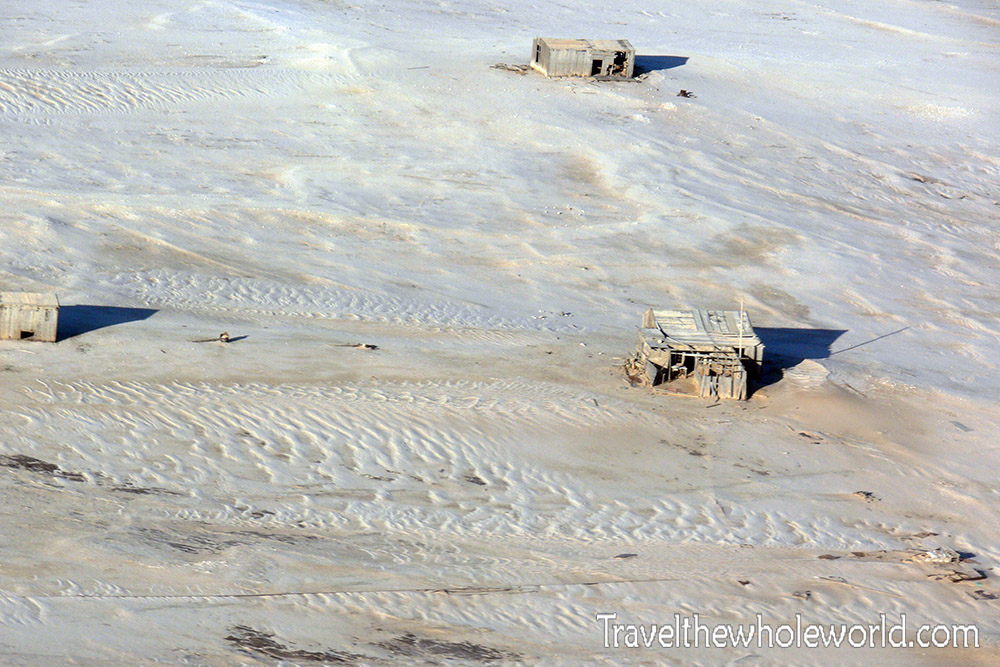
Despite landscapes that can look like nothing but empty sand, Namibia is rich in minerals and gemstones. At the time of my visit, the southwestern region known as the Sperrgebiet had a long history of extremely restricted access because of the diamonds found there.
Old maps made it very clear that travelers weren’t supposed to simply drive into the restricted mining areas. The region has since become part of a protected national park, although access to portions of it remains controlled.
Namibia is also known for uranium mining. During my scenic flight I was able to see parts of the country’s mining landscape from above, including buildings and industrial areas surrounded by an otherwise enormous empty desert.
The Skeleton Coast
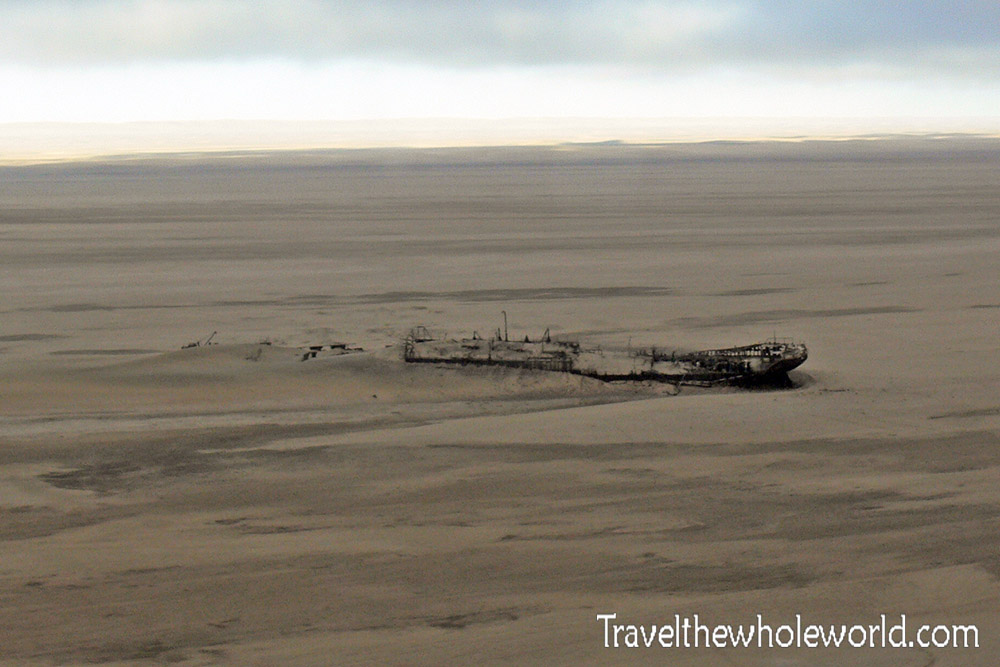
Namibia’s Atlantic coast is famous for its fog. Cold ocean water meeting the hot, dry environment creates thick coastal fog that historically made this an extremely dangerous place for ships. The many wrecks scattered along the shoreline helped give the region its famous name: the Skeleton Coast.
The landscape also makes these wrecks especially unusual. As dunes shift and the coastline changes, some old ships that once wrecked along the water can eventually find themselves surrounded by sand.
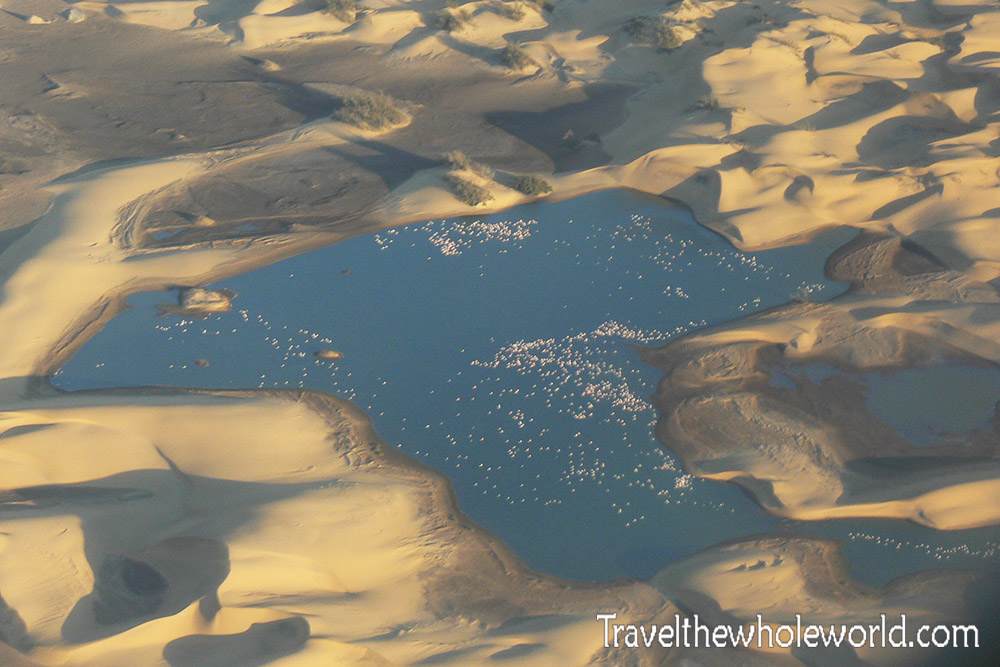
One of the most unexpected sights from the air was this coastal wetland filled with wildlife. Those tiny pink dots scattered across the water are flamingos.
From above the area looked incredibly isolated. Reaching places like this by land would be completely different from simply flying over them, with deep sand and huge stretches of undeveloped desert separating much of the coast from established roads.
Where the Desert Meets the Atlantic
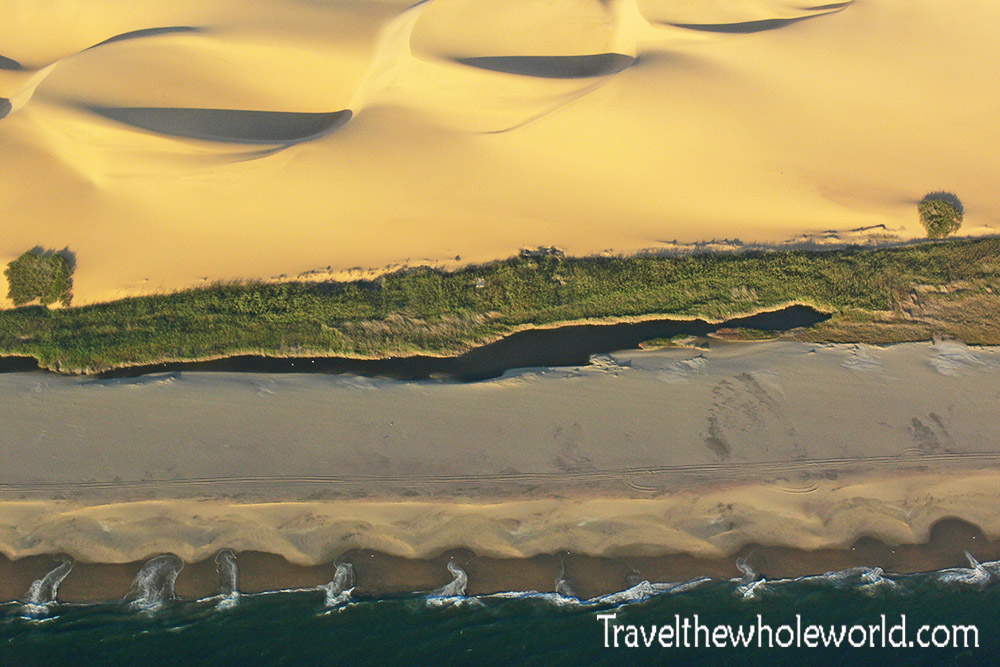
My favorite views of the entire scenic flight came when the desert finally reached the Atlantic Ocean. In places, enormous hills of sand seemed to continue all the way to the water, while elsewhere small patches of green appeared between the dunes and coastline.
I hadn’t seen rain during my trip, but as we approached the Atlantic I finally saw the famous coastal fog. From the air it formed a thick layer hugging the shoreline, creating a sharp contrast with the clear desert immediately inland.
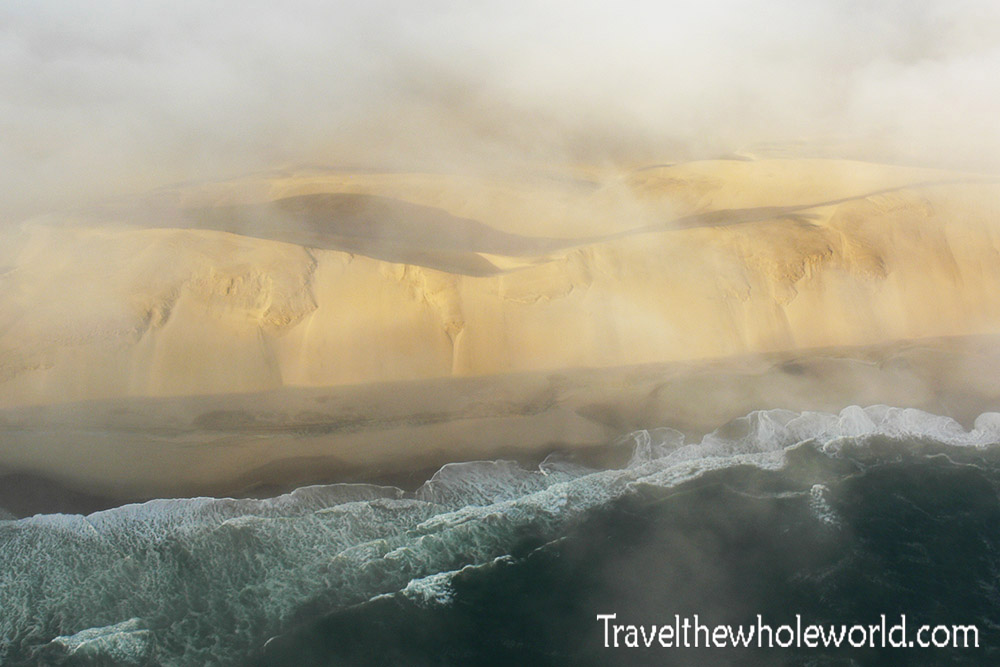
Seeing the Namib Desert meet the Atlantic was one of the most memorable landscapes of my entire trip. Namibia had already changed the way I pictured deserts, but seeing seemingly endless dunes terminate directly against the ocean was something completely different from anything I had experienced before.
I originally took the flight because I couldn’t reach Sossusvlei by car, but in the end that setback gave me a much broader view of Namibia’s deserts than I would have had from the ground. The canyons, red dunes, enormous sand fields, isolated wetlands, shipwrecks, mining regions, and Atlantic coastline showed just how varied a landscape that initially appears empty can actually be.