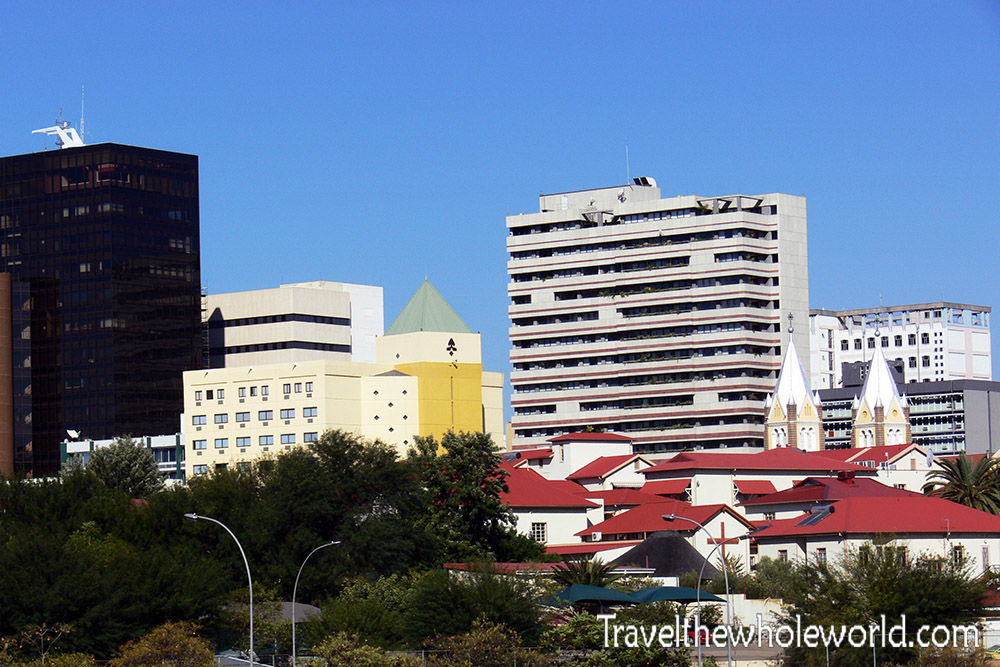
The capital of Namibia is Windhoek, located near the center of the country. Namibia became a German colony in the late 19th century, and some of that influence can still be seen in Windhoek’s architecture and culture. The city is by far the largest in Namibia and was my starting point for exploring much of the country.
I wish I had spent more time in the capital, but mostly I passed through it on my way to bigger adventures elsewhere in Namibia. One memory that has stuck with me was eating at Nando’s, where I somehow ended up with the hottest dish I had ever eaten in my life! Nearly ten years later, a Nando’s opened within walking distance of my house in Springfield, Virginia. I tried the hottest option there and it was nothing compared to what I had eaten in Namibia, where I had supposedly ordered mild! To this day, that meal in Windhoek remains the hottest dish I’ve ever eaten.
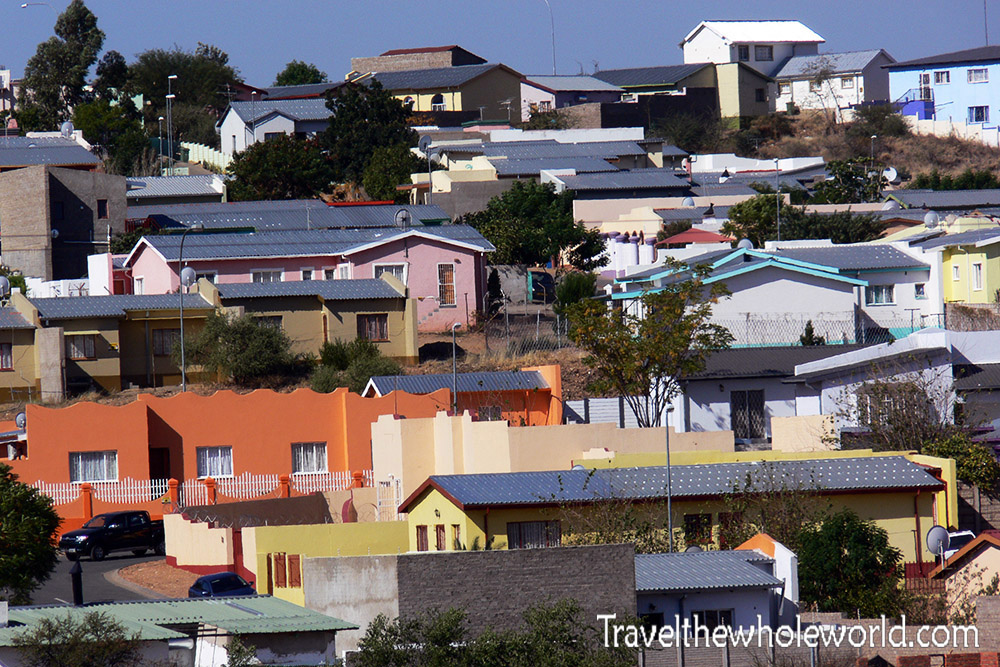
The photo above shows part of downtown Windhoek, while below are some of the colorful houses I came across while exploring the city.
Culture and Wildlife
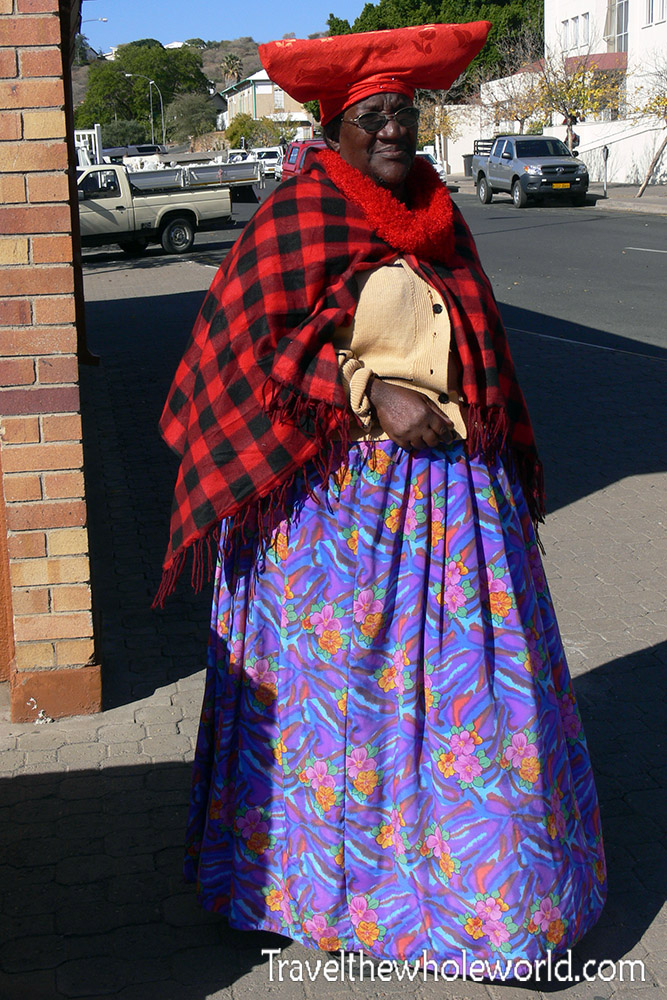
Windhoek was also a good place to get my first look at Namibia’s different cultures. Traditional clothing could still be seen around the city, including the elaborate dress worn by the woman photographed above.
Christianity is widespread in Namibia, and I saw churches throughout the country, including many reflecting its German colonial history. At the same time, Namibia is home to numerous ethnic groups with their own languages, customs, and traditions.
The area around Windhoek is also known for wildlife conservation. Several reserves and conservation centers outside the capital protect native animals, including some of Namibia’s famous big cats. For travelers arriving in Windhoek before heading deeper into the country, these areas provide an introduction to the wildlife that can be found throughout Namibia.
The Highlands Around Windhoek
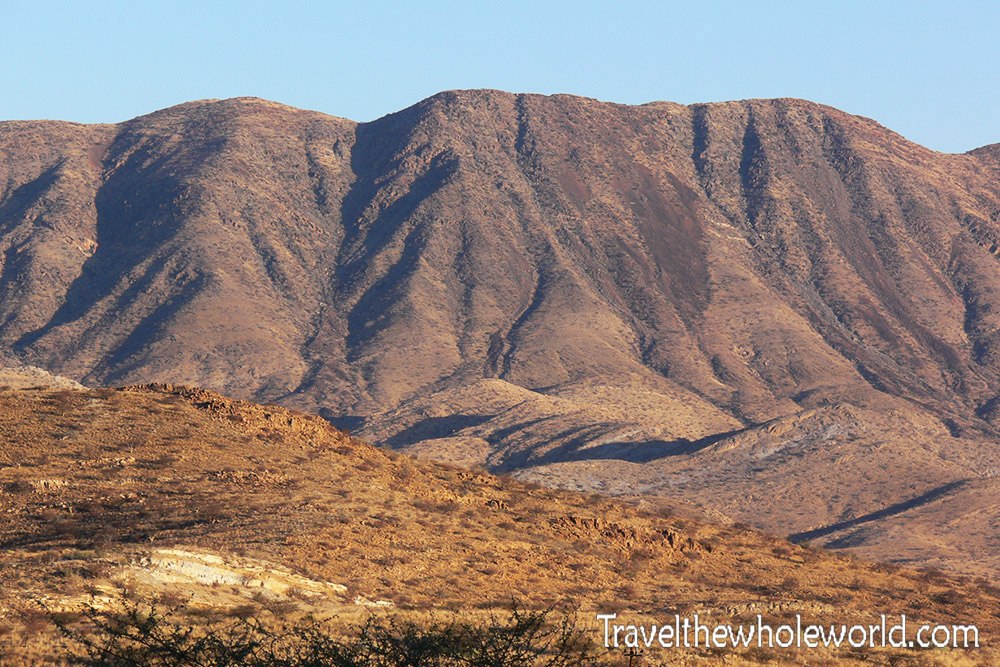
Most people who know a little about Namibia probably picture a country covered entirely by desert. Namibia does have some of the largest and most impressive desert landscapes in the world, but I also came across mountains, grasslands, and savanna.
The landscape around Windhoek was particularly beautiful. The capital sits in Namibia’s central highlands at an elevation of roughly 5,500 feet (1,650 meters), giving the surrounding countryside a completely different appearance from the enormous sand dunes farther west.
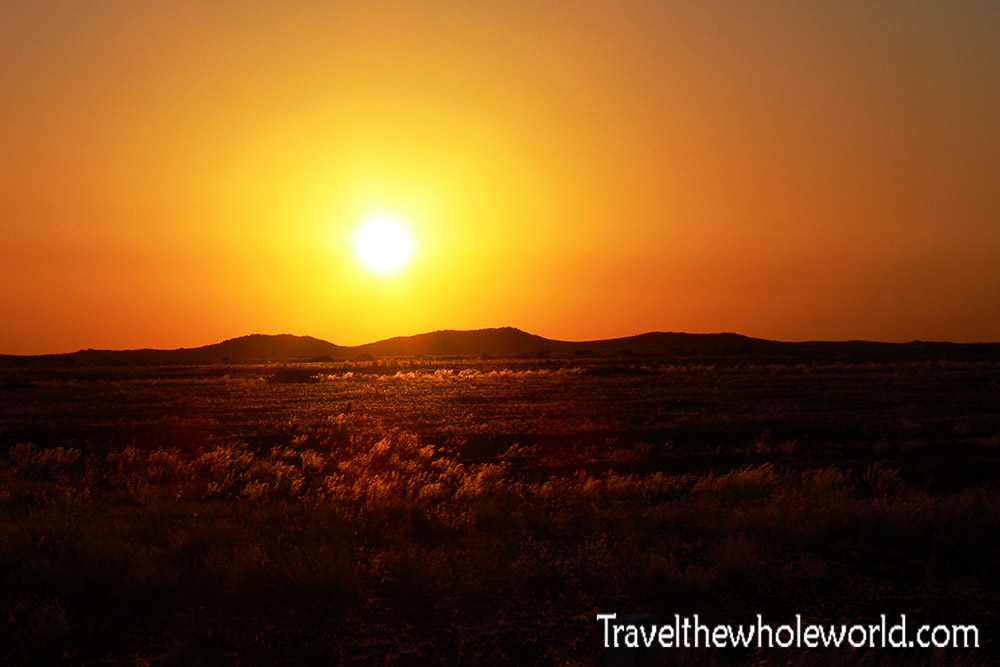
The hills and open landscape were beautiful during the day, but even better around sunset. Scenes like this were another reminder of how varied Namibia really is. Within the same trip I went from enormous deserts and Atlantic beaches to mountains, savanna, and wildlife-filled national parks.
The Hoba Meteorite
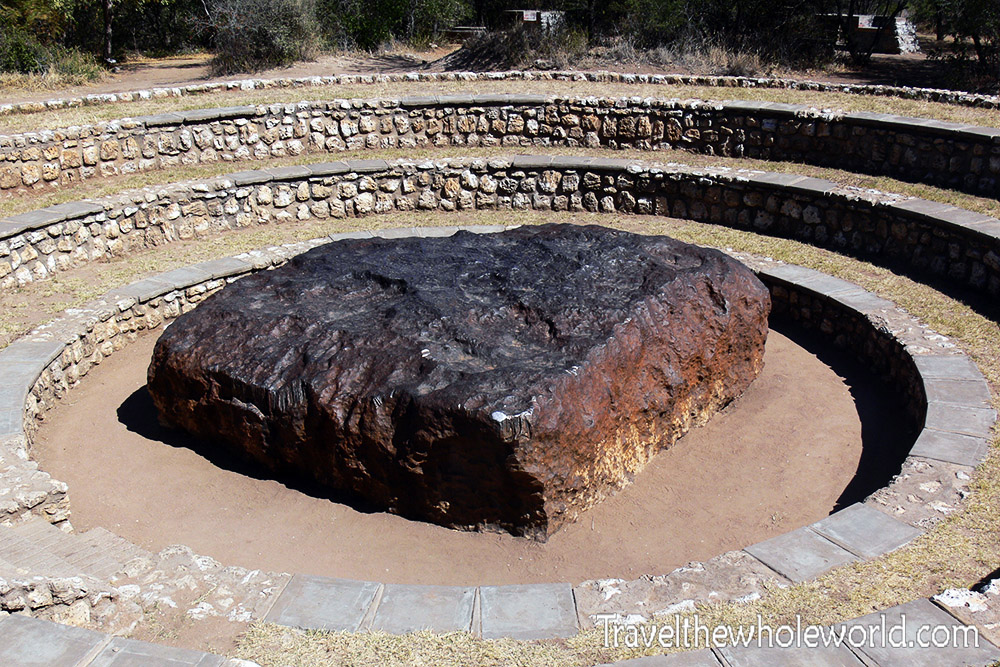
These last two photos aren’t actually from Windhoek, but from one of the places I visited after leaving the capital. Several hours north, near the town of Grootfontein, you’ll find one of Namibia’s strangest attractions: the Hoba meteorite.
Hoba is the largest known intact meteorite on Earth. It fell to the ground tens of thousands of years ago and is so massive that it has never been moved from the place where it was discovered. Unlike the rocky meteorites most people probably imagine, Hoba is composed primarily of iron and nickel.
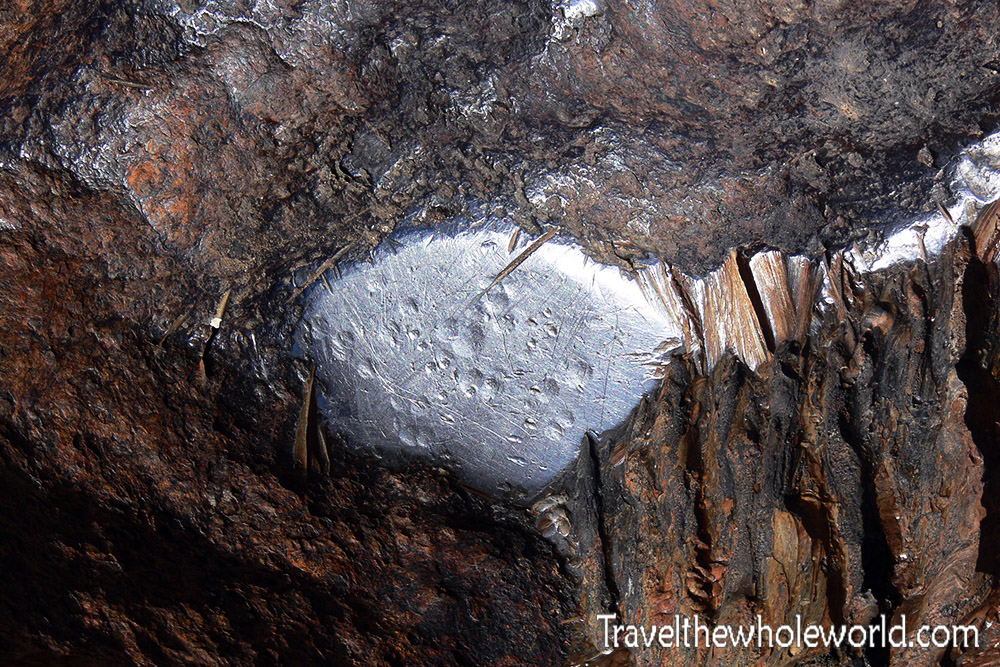
In the photo above you can see a polished section revealing just how metallic the meteorite really is. Standing beside the largest known meteorite on the planet was a pretty unusual roadside stop and a fitting example of the unexpected things I kept finding while traveling across Namibia.