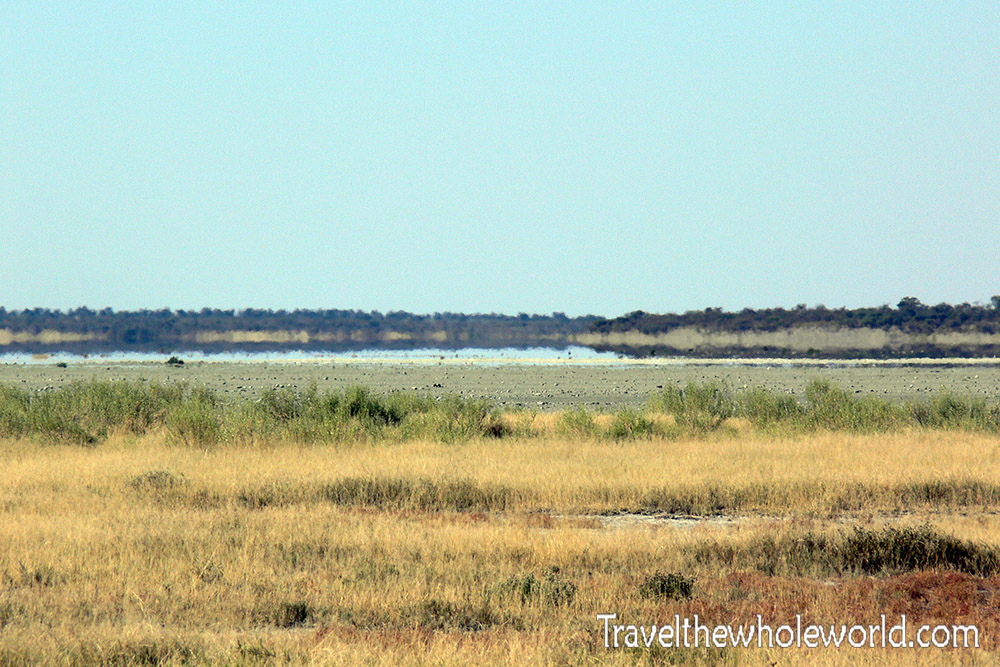
Etosha National Park was once much larger than it is today, but even after its boundaries were reduced, it remains one of Namibia’s greatest wildlife destinations. The landscape itself isn’t necessarily dramatic. Much of the park is made up of dry grassland, scattered trees, open plains, and waterholes surrounding the enormous Etosha Pan.
What makes Etosha special isn’t the scenery but the wildlife. At the time of my visit, this was easily the best wildlife experience I’d had anywhere in Africa. The open terrain also made animals much easier to spot than in dense forests, and the park’s waterholes concentrated wildlife into places where I could simply wait and watch.
Early Morning Wildlife
I started exploring Etosha early in the morning, when temperatures were cooler and wildlife was more active. Many animals avoid the hottest part of the day, while predators and scavengers often take advantage of the darkness and early morning hours.
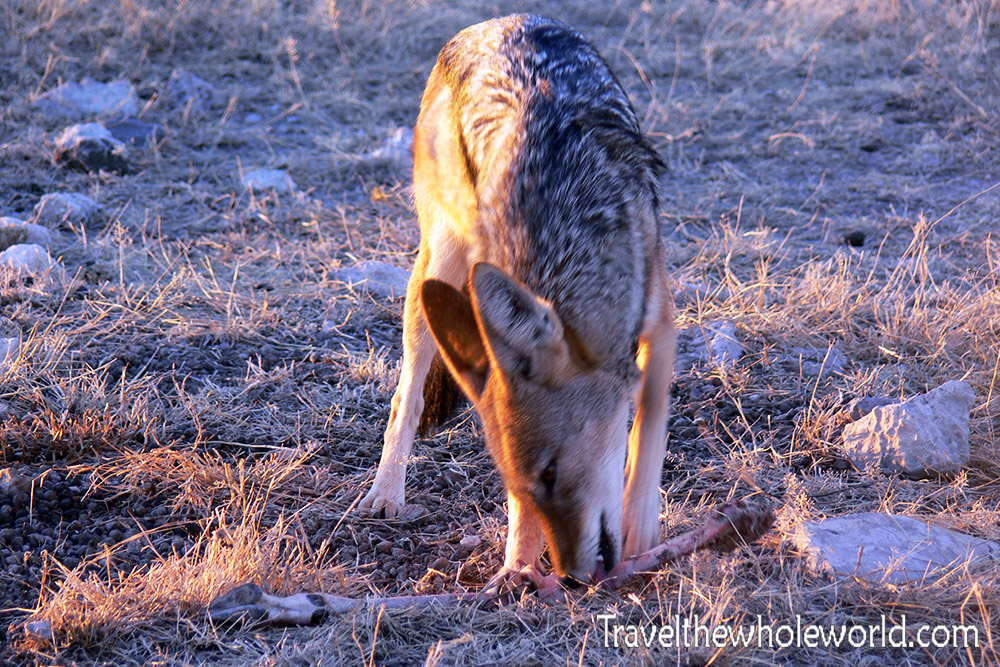
One of my first wildlife encounters was this jackal eating what looked like the remains of an impala leg. Whatever had killed the animal was long gone, but the jackal was more than happy to clean up what was left.
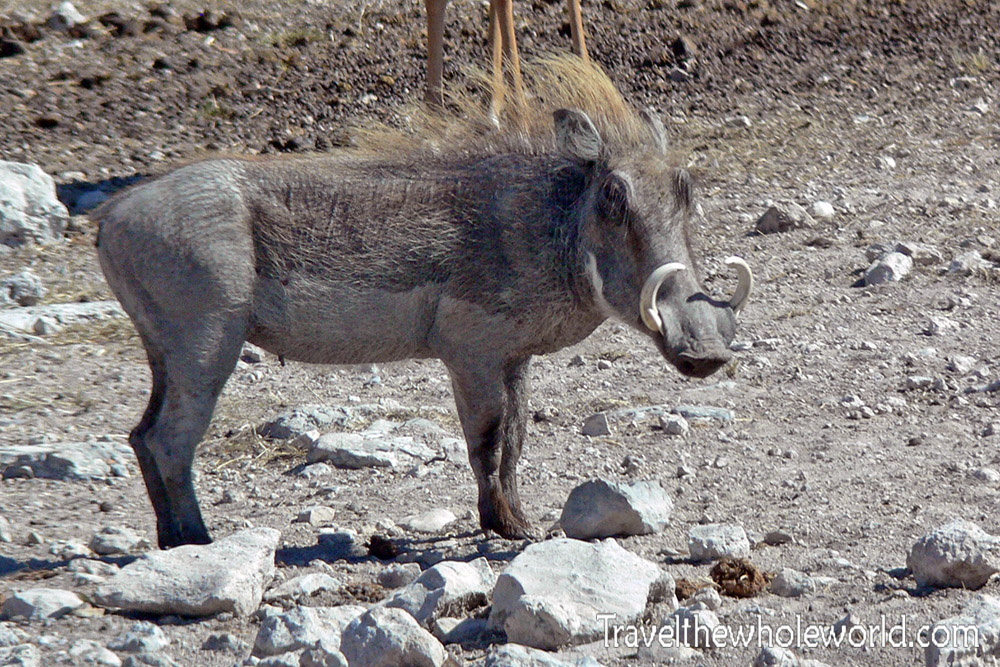
Soon afterward I came across this warthog. Etosha has such a variety of mammals that even animals I had already seen elsewhere in Africa continued appearing throughout the day.
Grazers of Etosha
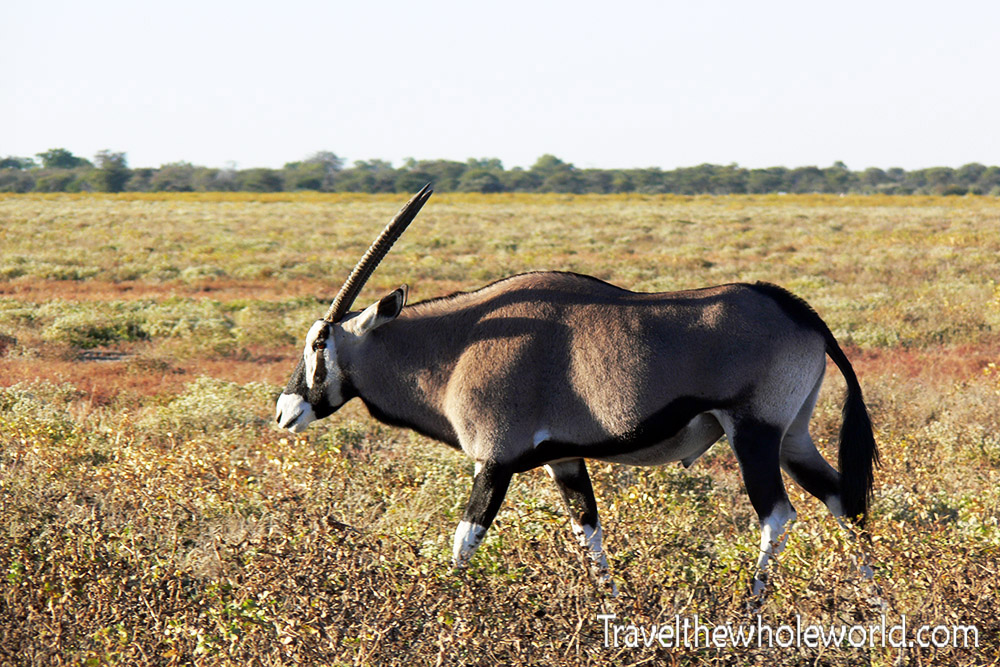
Gemsbok were among the most distinctive animals I saw in Namibia. Their long straight horns and black-and-white facial markings make them easy to recognize, and they’re extremely well adapted to the dry environments found throughout the country.
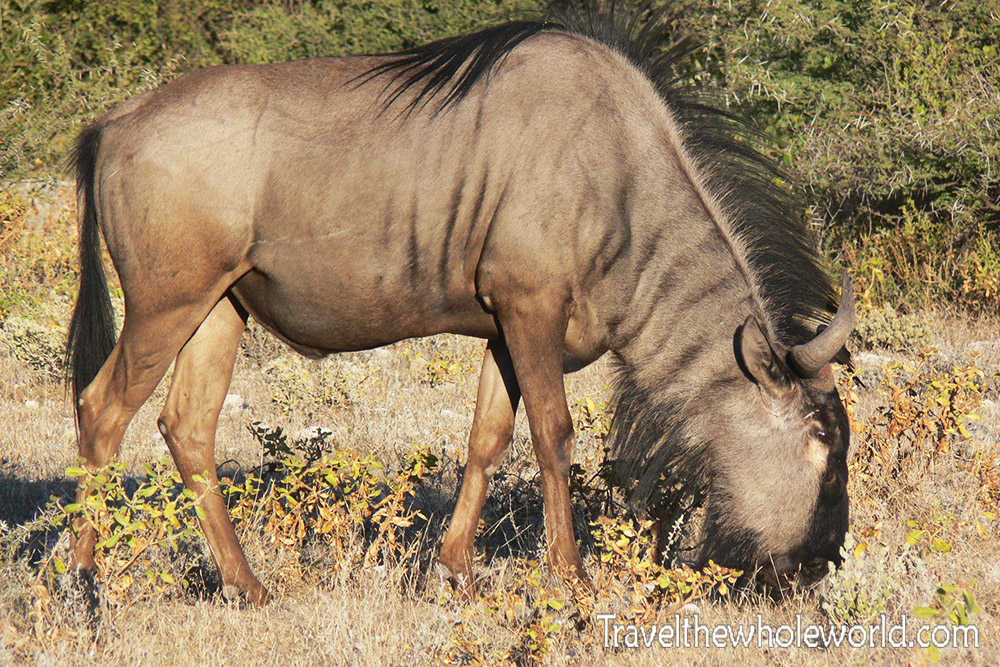
Blue wildebeest were another common sight. Unlike some of the more unusual species I encountered, wildebeest are widespread across southern and eastern Africa and were animals I would see repeatedly during my travels on the continent.
Elephants and Smaller Antelope
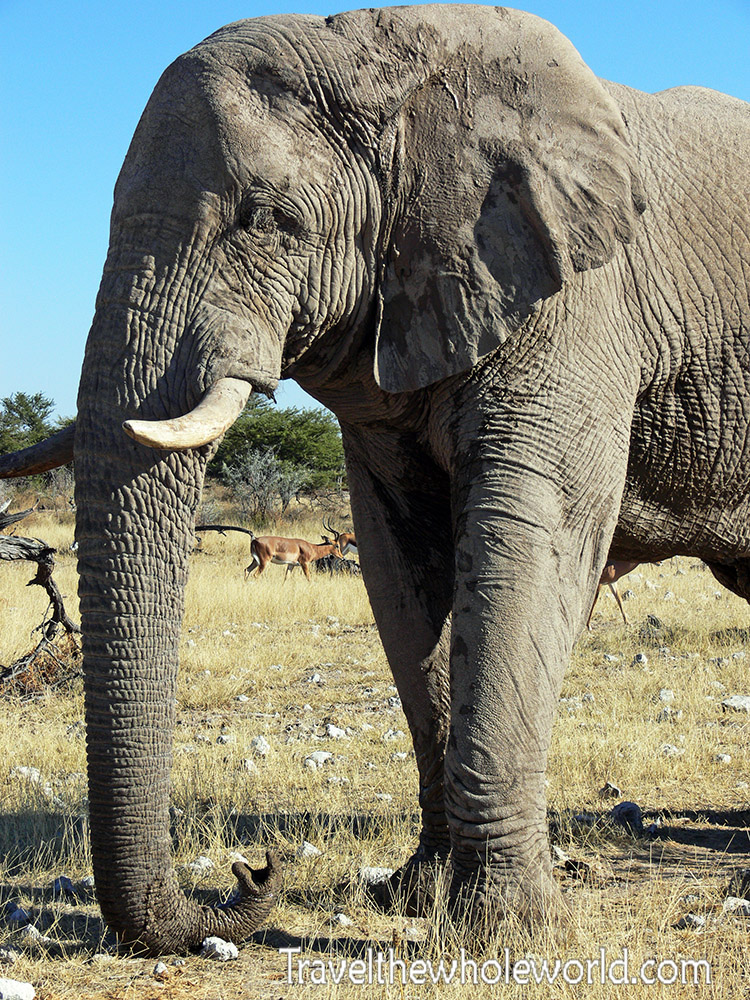
Etosha is also home to elephants, lions, rhinos, zebras, giraffes, and many of Africa’s other famous animals. Seeing an elephant this close really emphasized just how enormous they are. Until I took this photograph, I had never really noticed just how long an elephant’s trunk could appear when hanging almost all the way to the ground.
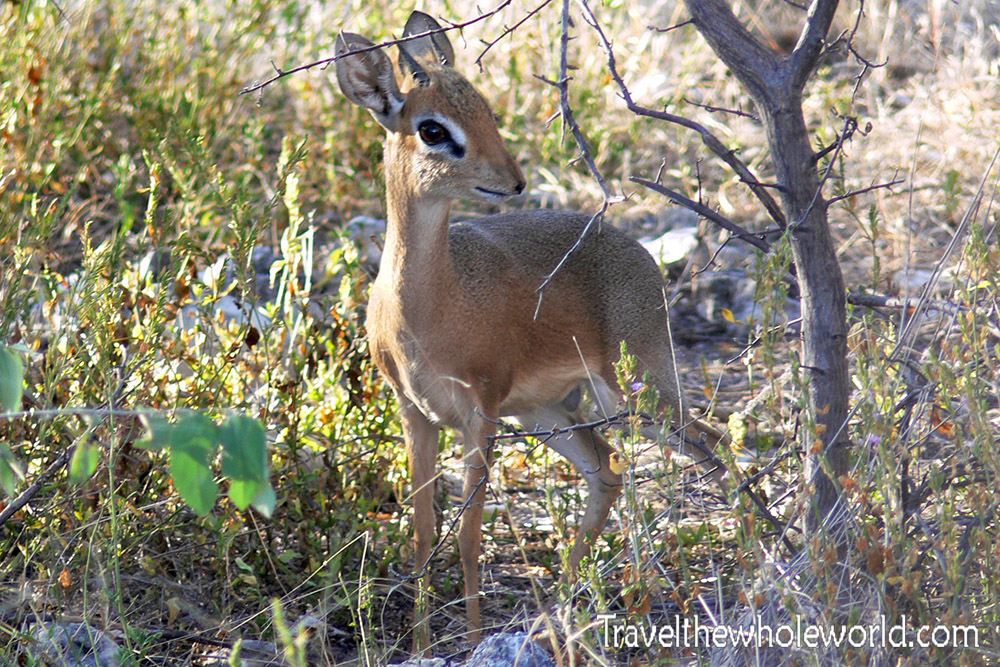
One of the smallest and most interesting mammals I saw was this dik-dik. After photographing so many large animals, seeing one of these tiny antelope wandering through the same environment felt almost strange.
Dik-diks survive by relying on camouflage, speed, and thick vegetation for cover. They may look fragile compared with the larger grazers around them, but they’re perfectly adapted to living in an environment filled with predators.
A Lion in the Grass
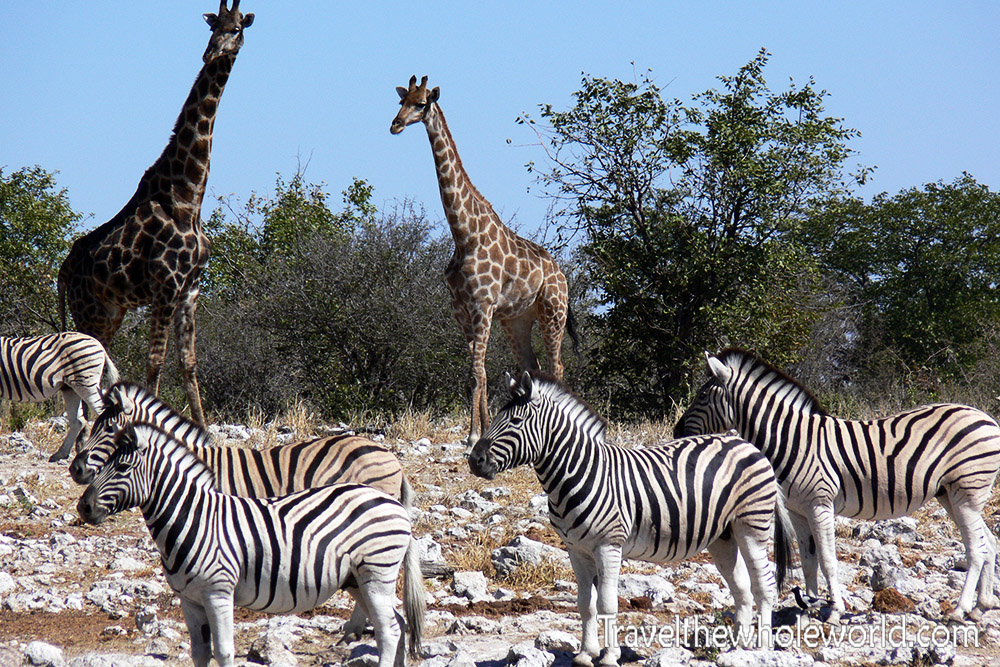
I actually did spot a lion in Etosha, although it was lying beneath a tree and hidden so well by thick vegetation that photographing it was nearly impossible. The reason I noticed the lion at all was because the surrounding animals clearly knew exactly where it was.
Zebras and giraffes kept staring toward the same patch of vegetation, obviously nervous, while the lion seemed far more interested in sleeping than hunting. Watching the prey animals monitor the predator was almost more interesting than watching the lion itself.
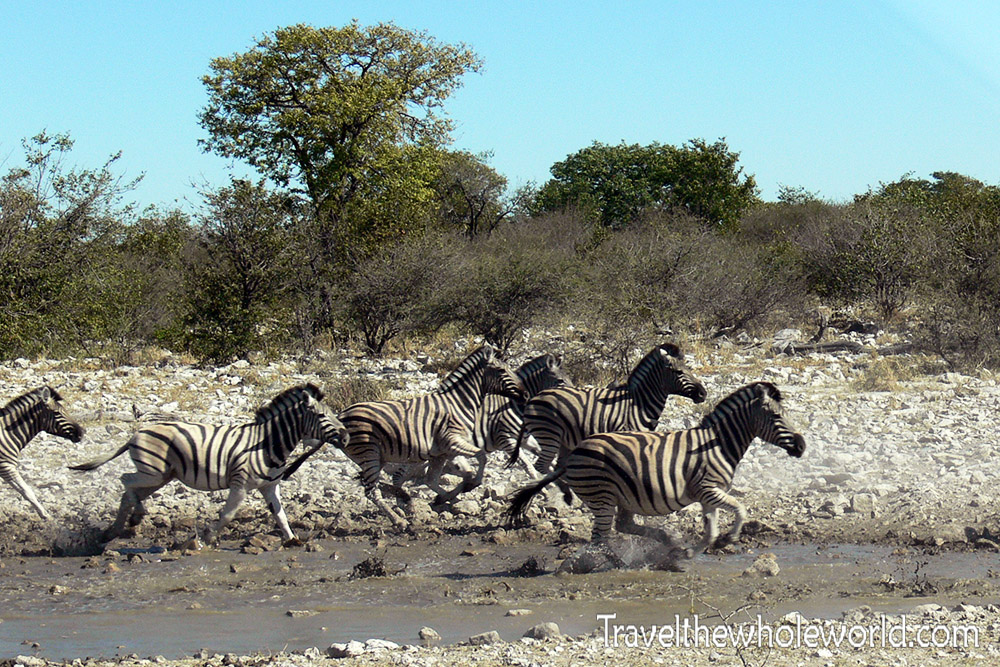
Eventually the lion shifted position, which was enough to convince the nearby zebras that standing around was no longer a good idea. They immediately took off running.
Giraffes
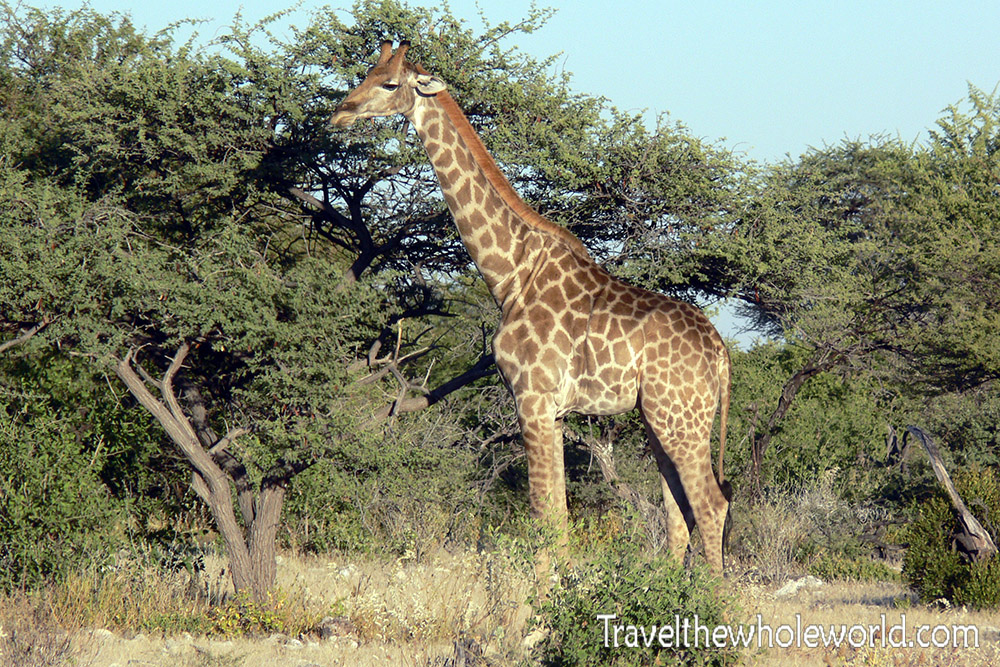
I saw plenty of giraffes throughout Etosha. Their height gives them a huge advantage when scanning the landscape for predators, and adult giraffes are formidable enough that attacking one can be dangerous even for lions.
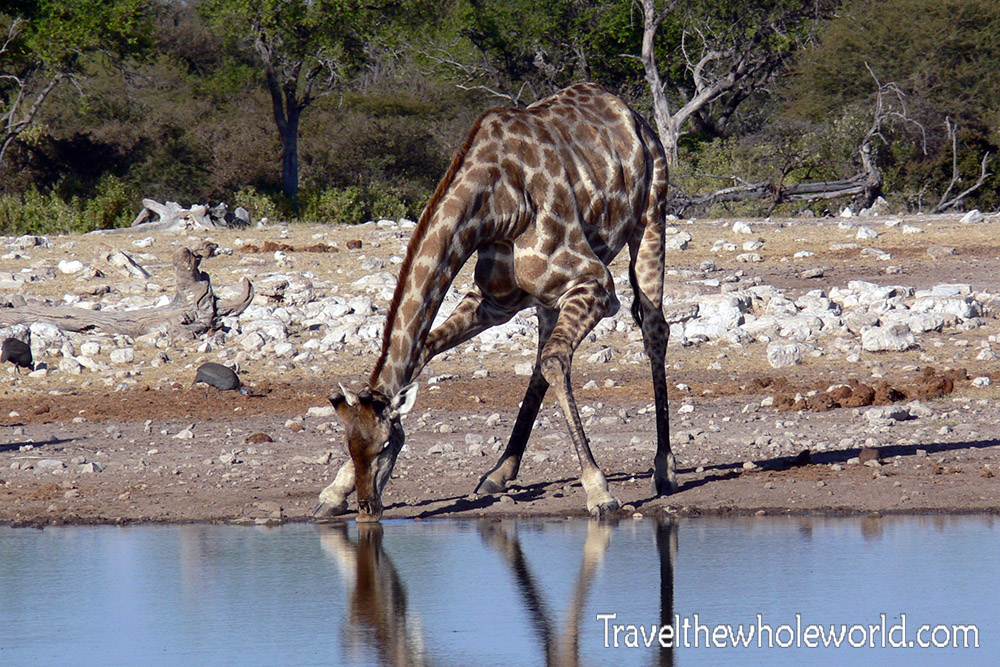
Drinking is a different story. A giraffe has to spread its front legs and lower its long neck toward the water, putting it into a much more awkward position. Watching one drink made it obvious why waterholes can be dangerous places despite being essential for survival.
Waterholes
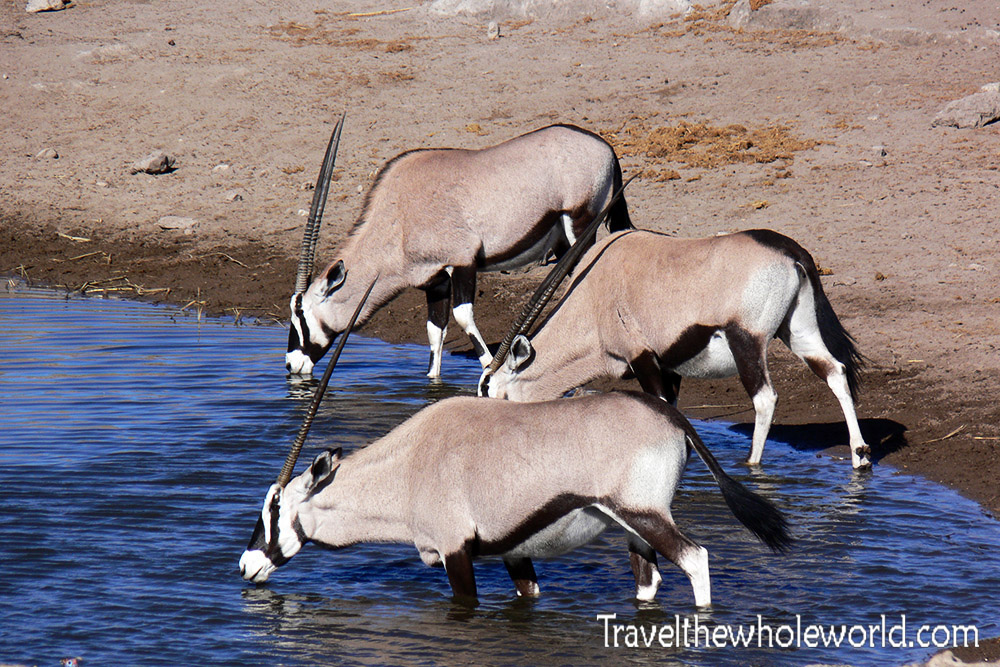
When looking for wildlife in Etosha, the waterholes were easily the best places to wait. During hot weather, animals eventually have to come in for a drink, and predators know that just as well as travelers do.
At this waterhole I watched several gemsbok gather together to drink.
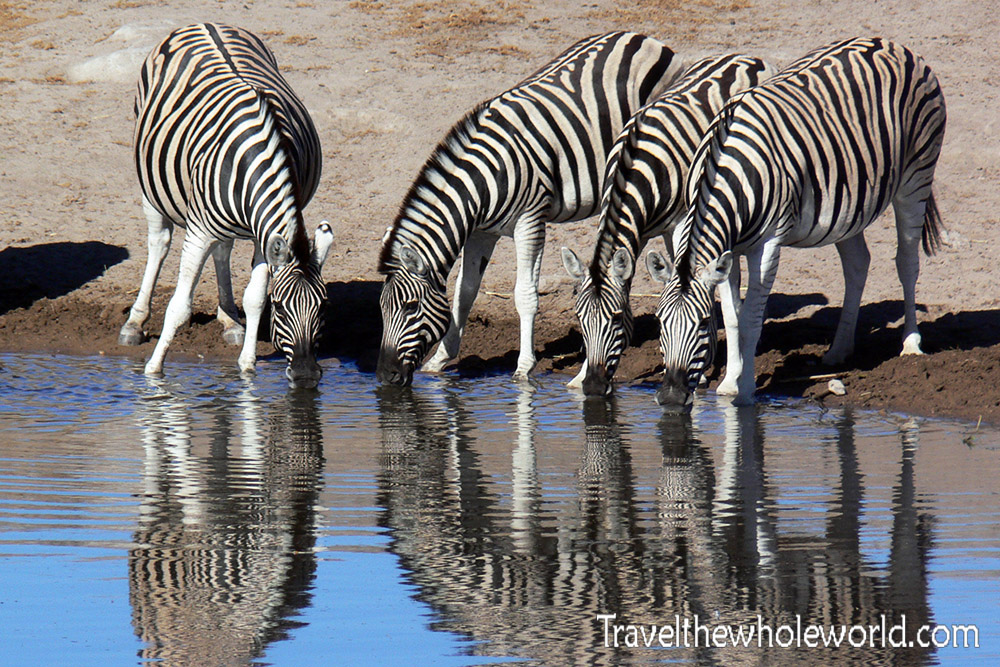
Zebras were another regular visitor. I remember thinking the zebra on the left looked unusually well fed compared with the others, although I had no idea whether it was actually overweight or simply photographed at an unflattering angle.
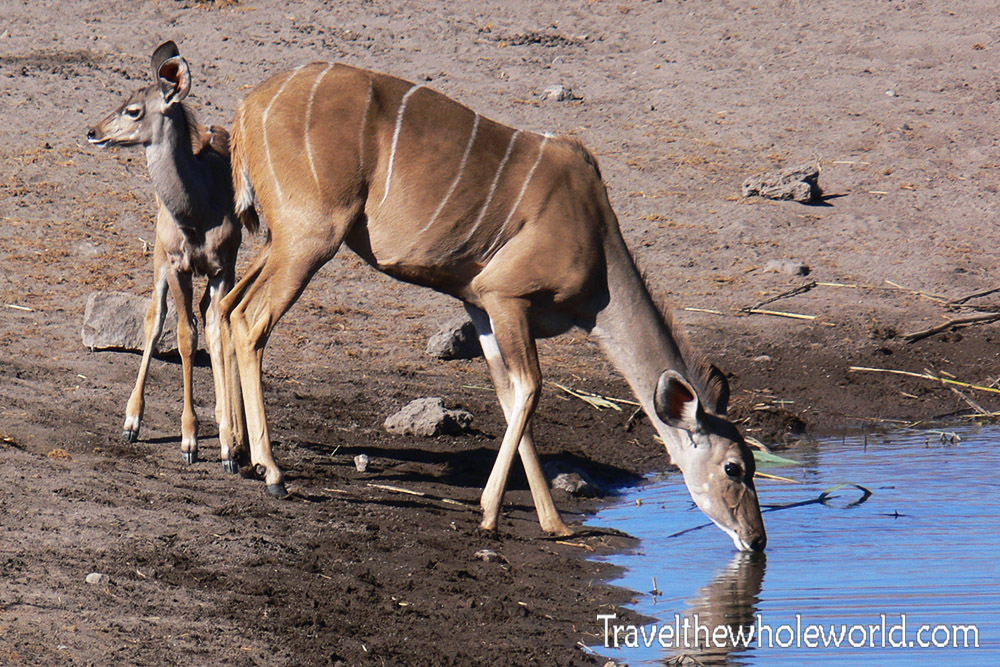
Nearby, this young kudu remained alert while the adult drank. Scenes like this were a good reminder that even something as simple as getting water requires animals to constantly pay attention to what’s happening around them.
Birdlife in Etosha
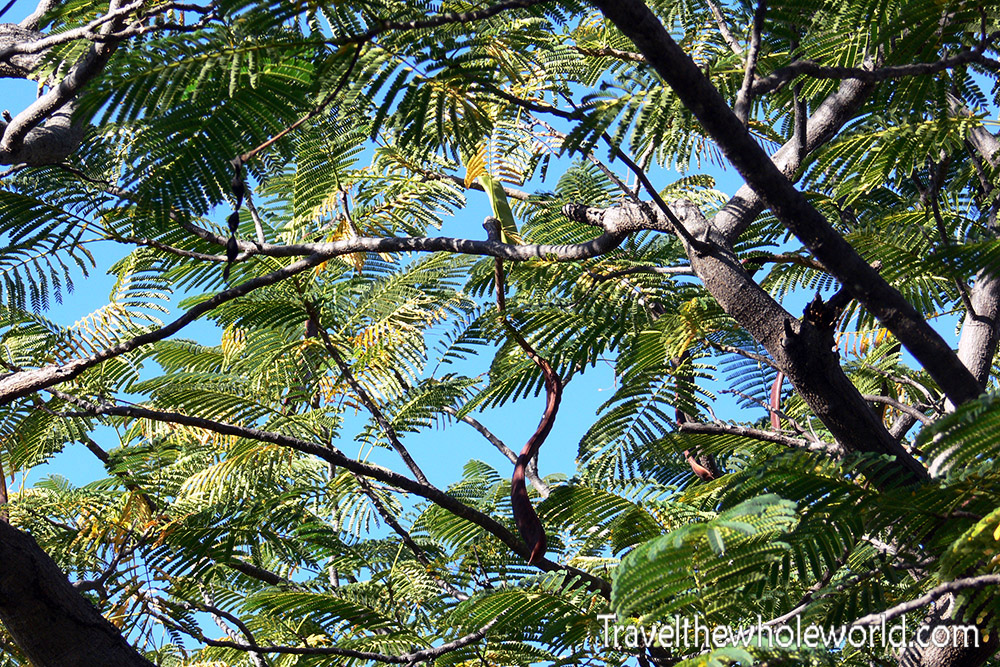
Etosha is mostly dry savanna, so before visiting I hadn’t expected it to be especially memorable for birdlife. I was completely wrong. I probably photographed more interesting birds here than almost anywhere else I had traveled at the time.
I explored the park in my own vehicle, which meant I could stop whenever I wanted and simply wait for wildlife to appear. The sparse vegetation actually made birdwatching easier. In areas with thick green foliage like the tree above, birds could disappear almost immediately, while the more open parts of Etosha gave me much clearer views.
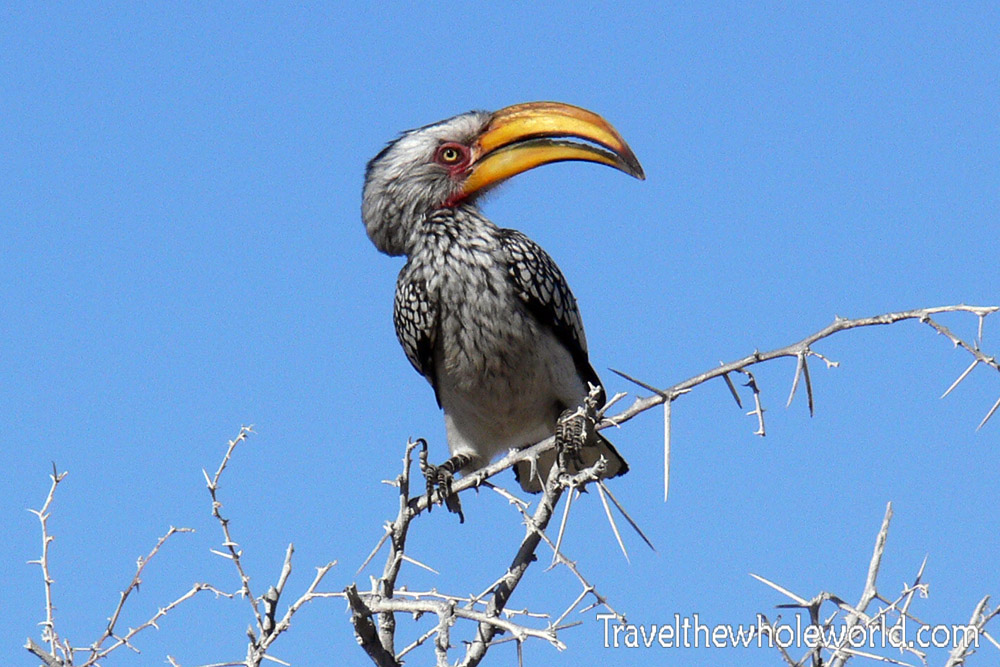
This southern yellow-billed hornbill looked almost prehistoric to me. Its oversized curved bill made it one of the most distinctive birds I photographed in the park.
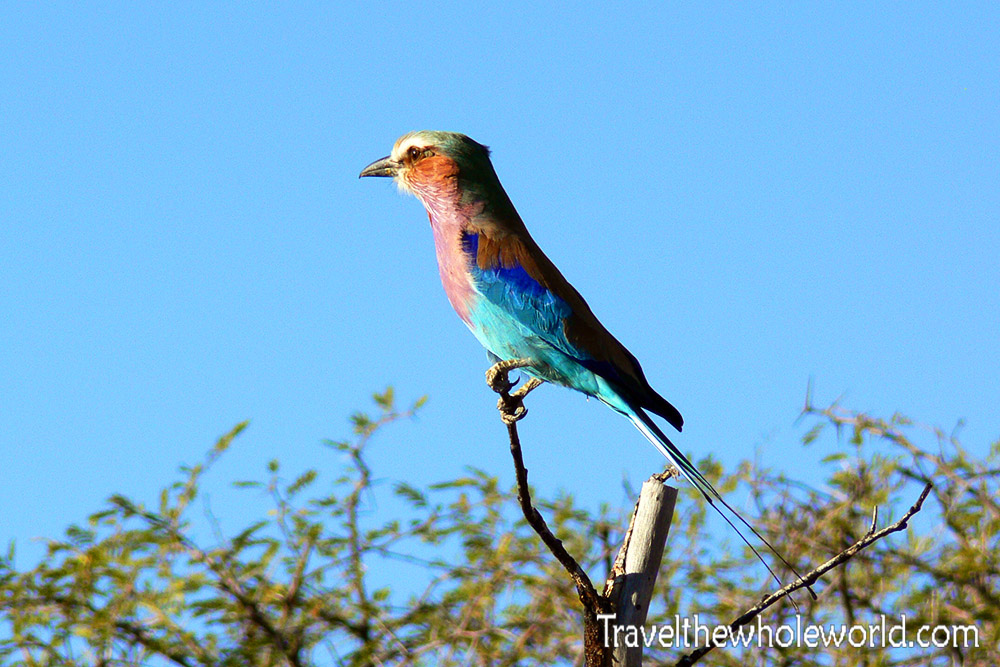
The colorful roller was easily one of my favorites. After spending so much of the day looking at animals colored to blend into dry grass and dirt, the bright blues and purples of birds like this really stood out.
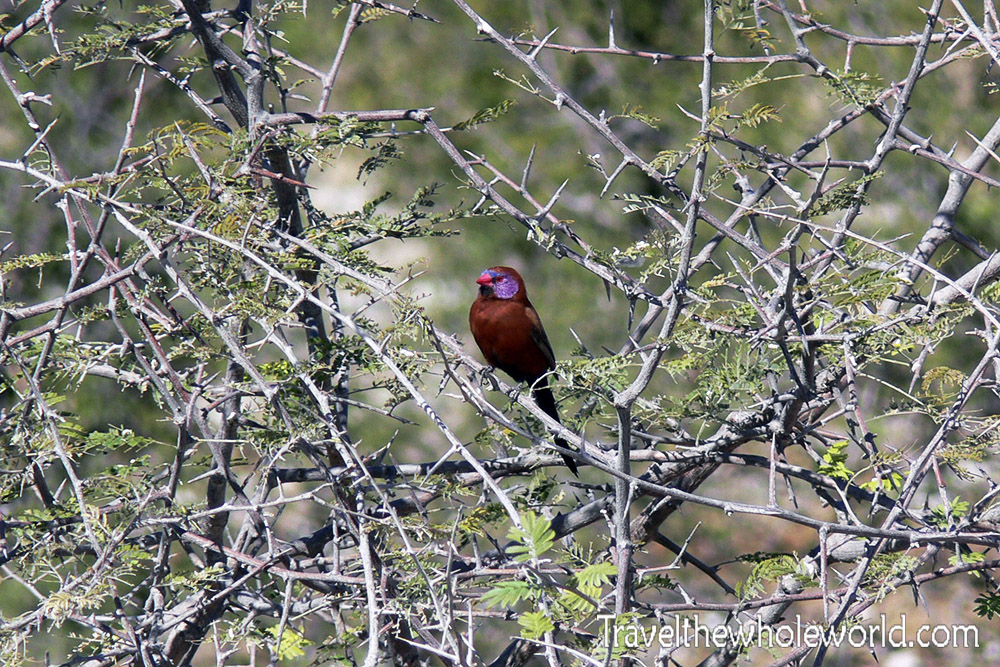
This much smaller bird was a purple waxbill. Etosha’s birdlife ranged from tiny colorful species like this to much larger birds of prey.
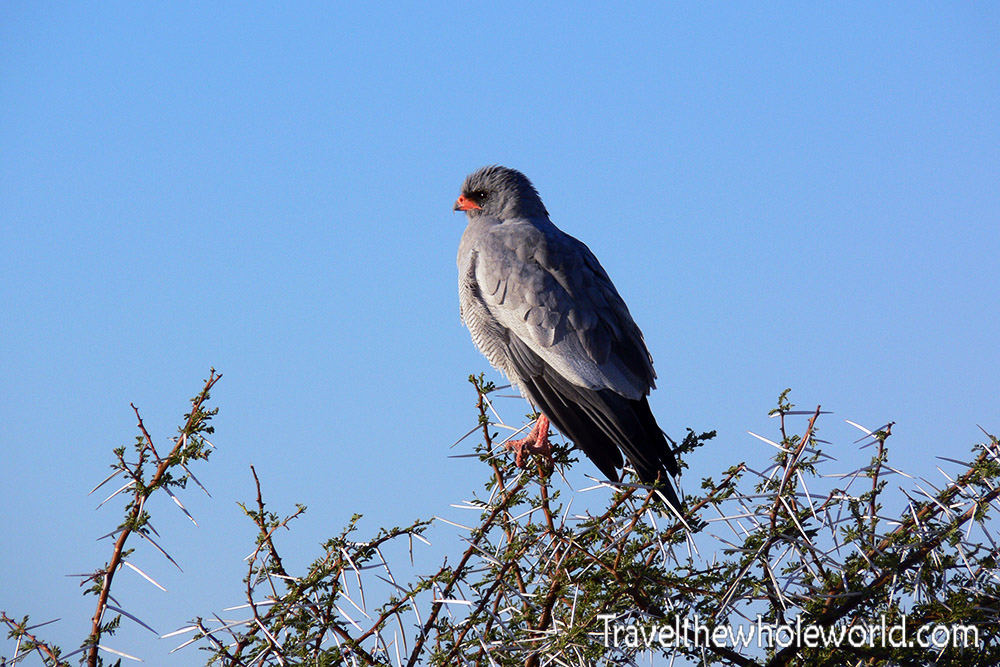
The last bird I photographed for this page was a pale chanting goshawk. These birds of prey hunt a wide variety of animals, including insects, reptiles, birds, and small mammals.
Etosha ended up being one of the highlights of my trip through Namibia. It wasn’t the dramatic landscapes that made the park memorable, but the constant wildlife encounters. Jackals, elephants, giraffes, gemsbok, zebras, kudu, lions, and an unexpected variety of birds seemed to appear throughout the day. For anyone traveling to Namibia primarily for wildlife, Etosha is the place I wouldn’t skip.