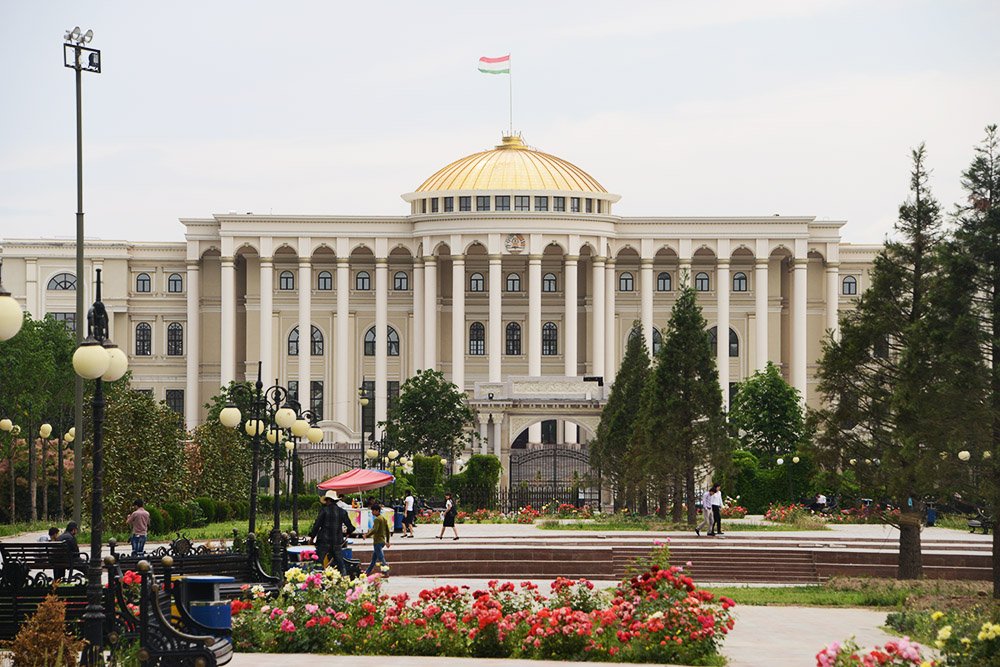
Emomali Rahmon had already led Tajikistan for decades by the time I visited Dushanbe. One of the most imposing government buildings in the capital is the Palace of the Nation, which serves as a major presidential and ceremonial complex. Coming from Virginia just outside Washington, D.C., I couldn’t help comparing its enormous scale with the White House.
I initially tried to photograph the building from near the gates, but a guard quickly pointed for me to leave. Fortunately, there was a large park across the street with a great view of the palace, and from there I was able to take all the photos I wanted.
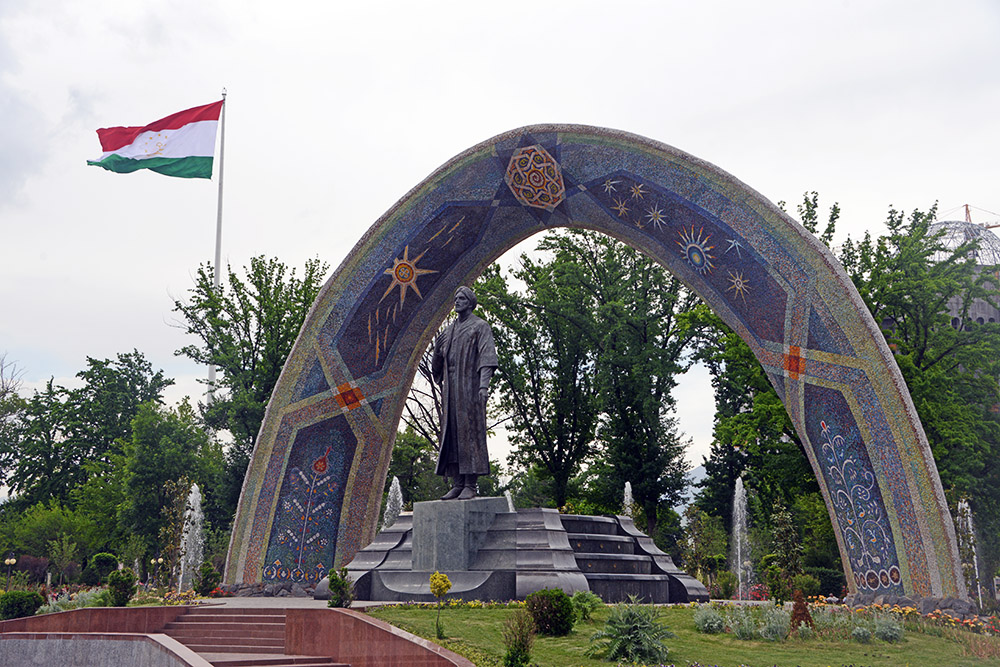
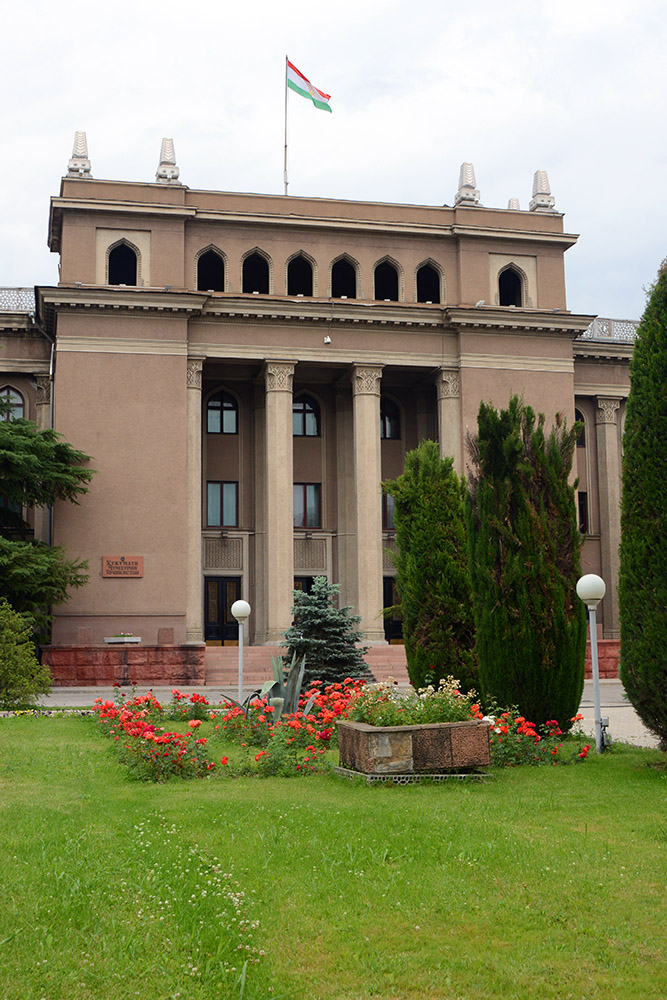
Dushanbe has gone through an enormous amount of redevelopment, with monumental new government buildings replacing parts of the older Soviet-era city. During my visit there was plenty of debate over what should be preserved and what should be demolished as the capital modernized. I found some of the older government buildings just as interesting as the newer ones because they reflected a completely different period of the city’s history.
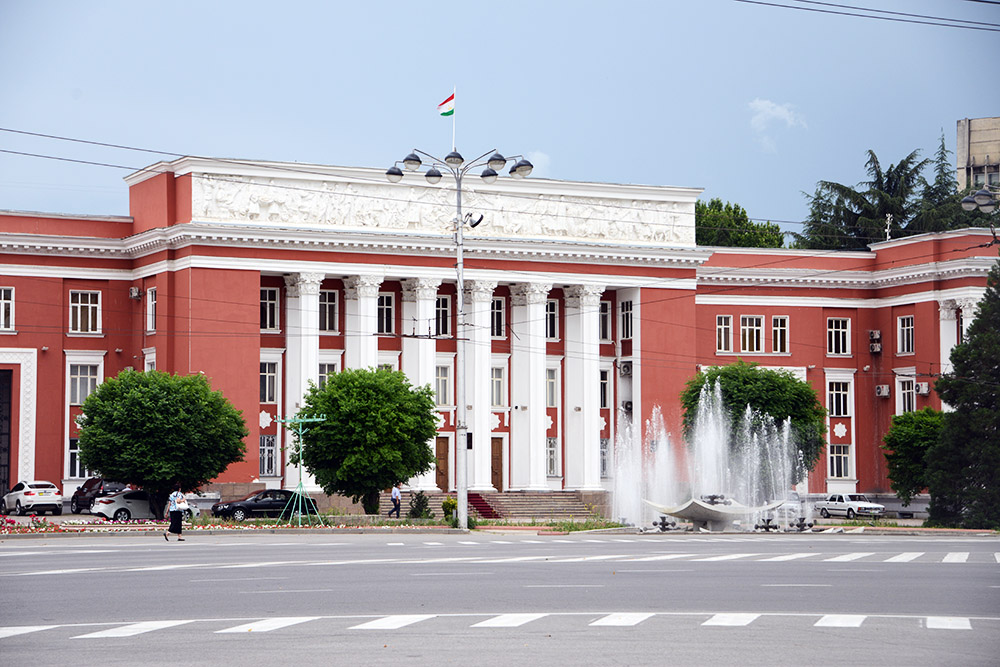
This was another government building that caught my attention. I didn’t understand its full history when I visited, so rather than repeat the very specific architectural story I was told at the time, I’ll simply leave it as one of the distinctive Soviet-era government buildings I photographed around central Dushanbe.
Ismail Samani Monument
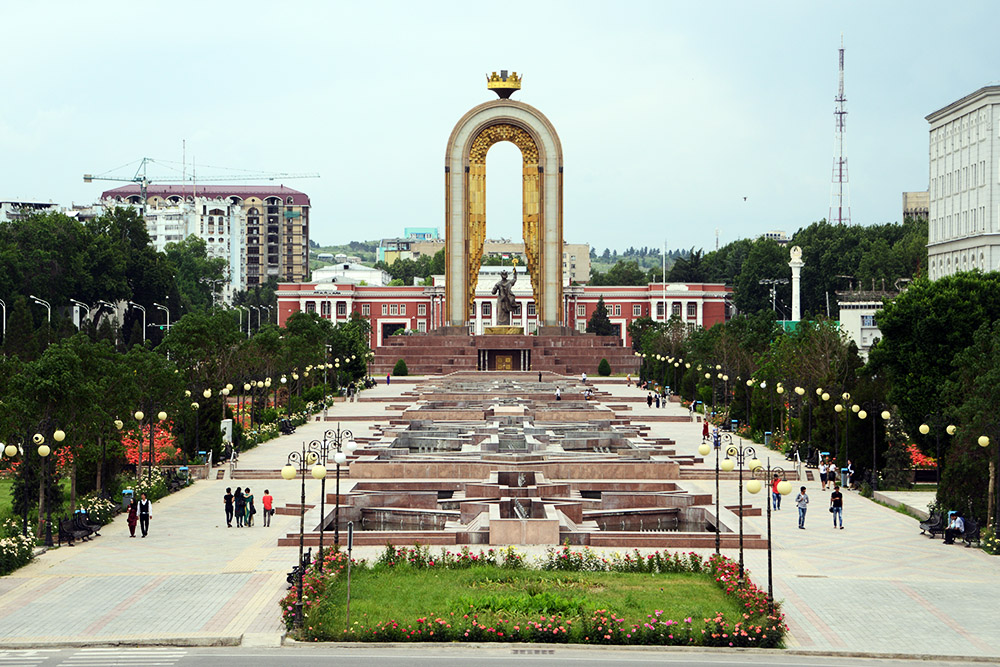
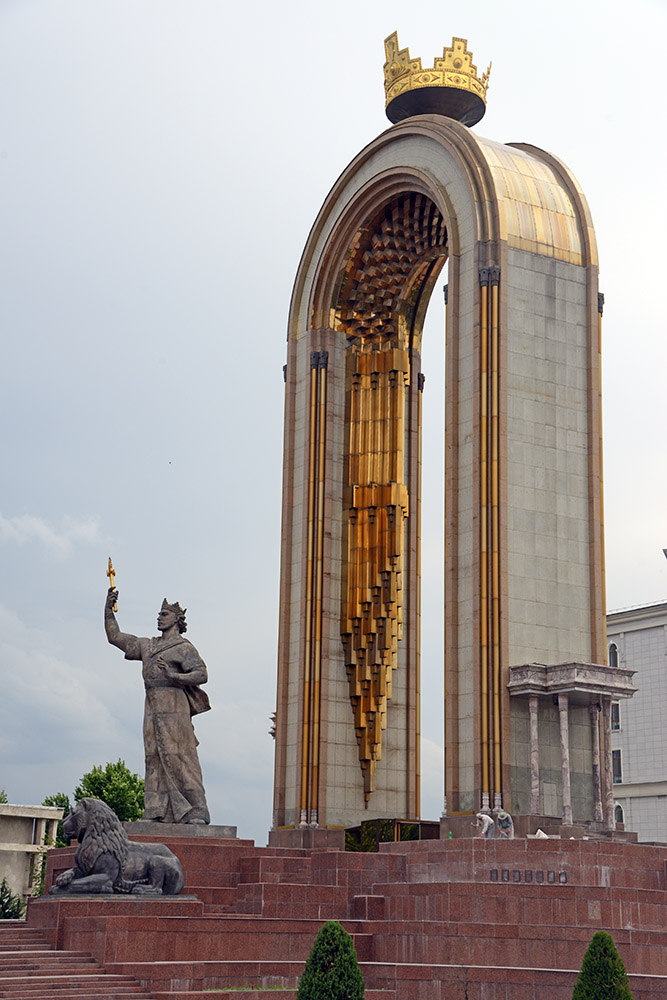
Near the heart of Dushanbe is one of the city’s most recognizable monuments, dedicated to Ismail Samani. He ruled the Samanid state during the late ninth and early tenth centuries, when Persian culture flourished across much of Central Asia.
Modern Tajikistan has adopted Ismail Samani as one of the great historical figures of Tajik identity. The country’s currency, the somoni, is named after him, and Tajikistan’s highest mountain is also named Ismoil Somoni Peak.
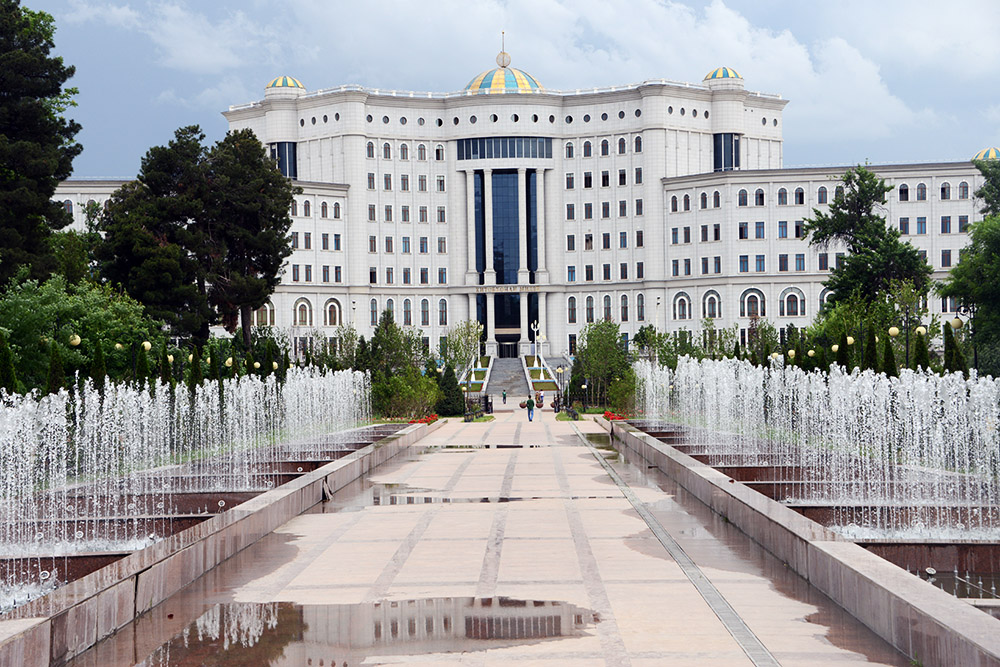
Also in this part of the city is this massive building. I initially assumed it had to be another palace or government ministry, but it’s actually the National Library of Tajikistan. The modern library opened in 2012 and is one of the largest buildings of its kind in Central Asia.
One of my regrets from Dushanbe is that I never got to see the inside. I tried visiting, but it was closed that day.
Military Presence
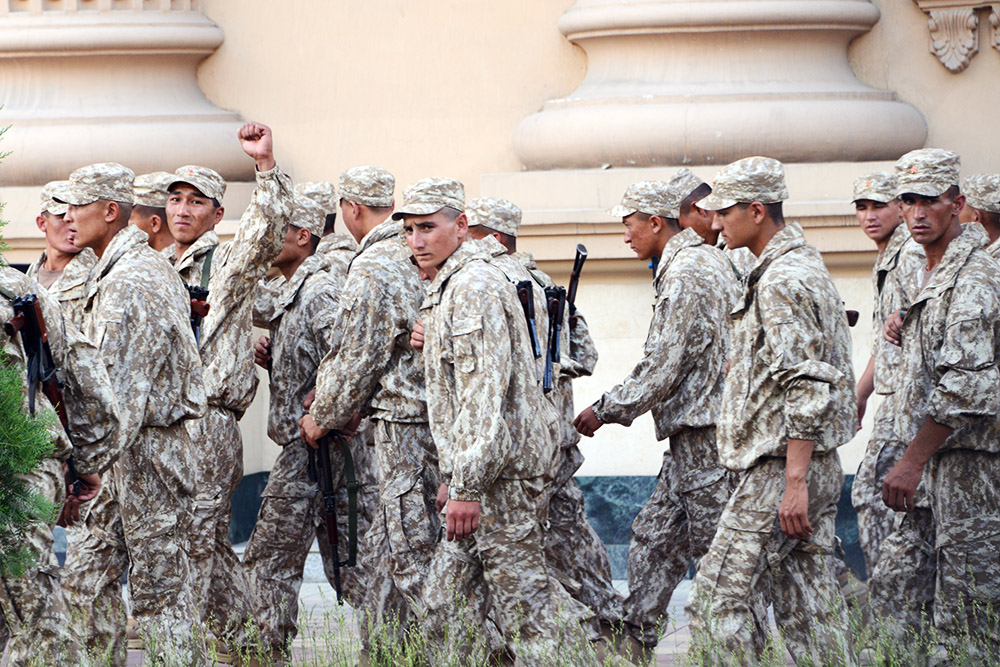
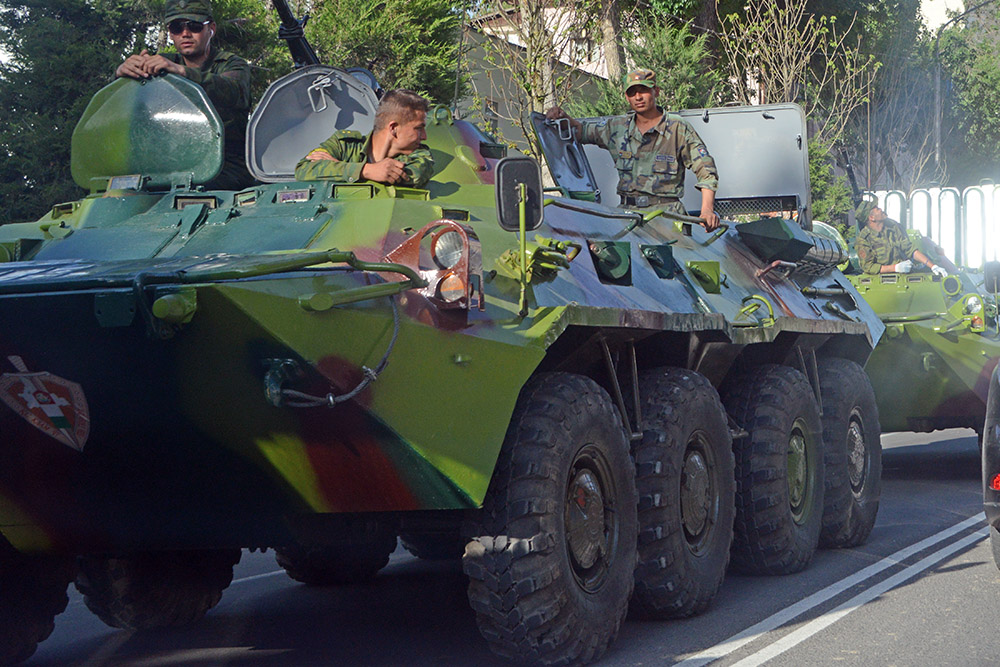
During my visit there was a noticeable military presence around Dushanbe. I saw armored vehicles moving through the streets and troops wearing several different types of camouflage. There had also been recent violence in the Pamir region, although I wasn’t in a position to know whether what I saw in the capital was directly connected to those events or simply part of another military activity.
Something immediately caught my eye about some of the uniforms: I could clearly see “USMC” printed into the camouflage pattern. Having spent five years in the Marines myself, I recognized it right away. Apparently Marine-pattern camouflage had traveled much farther than anyone designing it probably expected.
People of Dushanbe
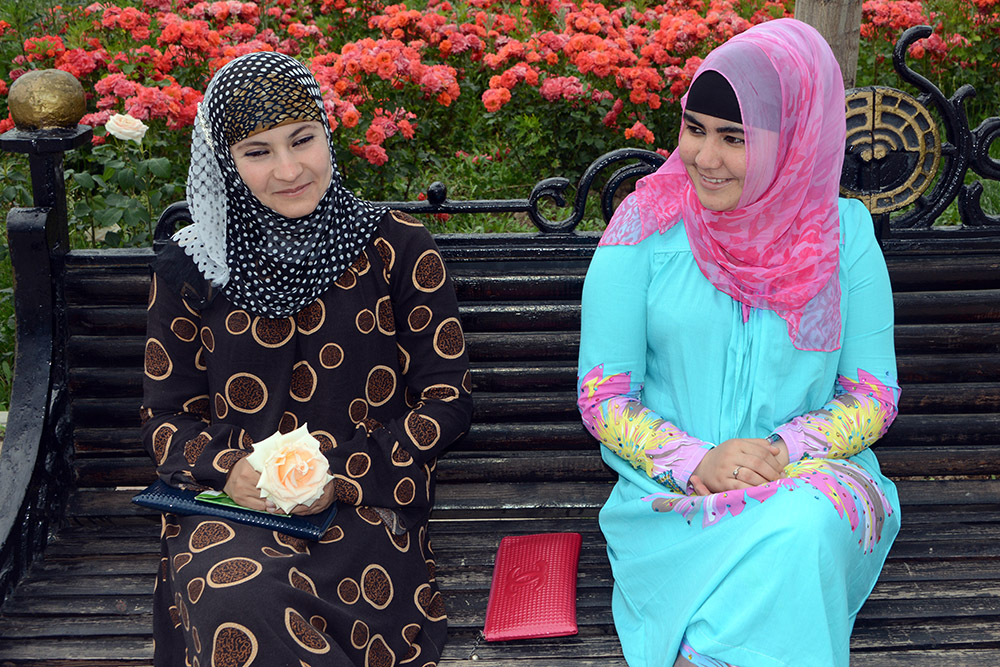
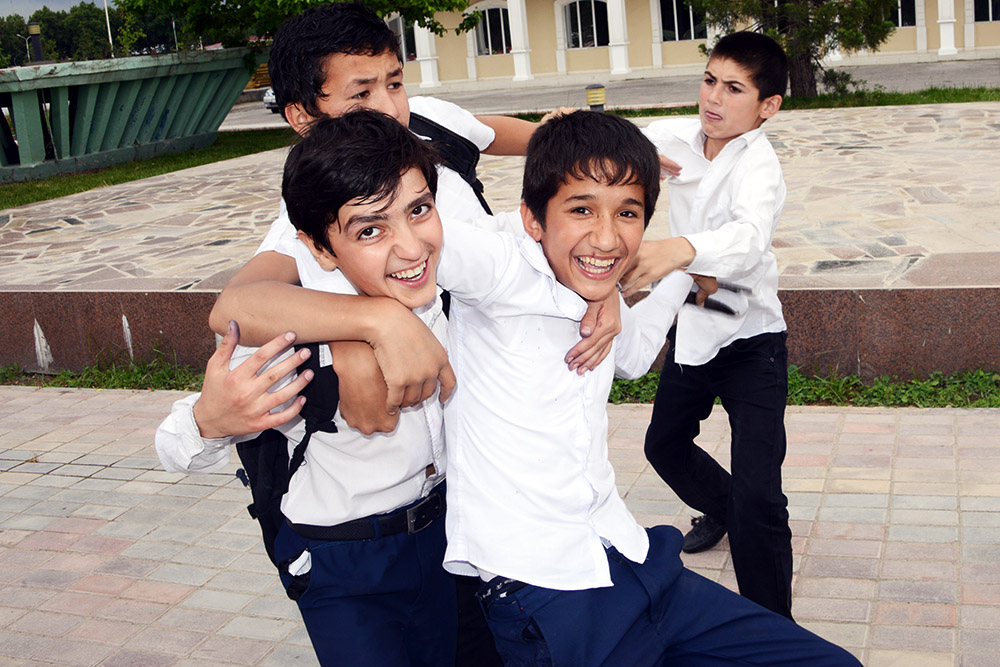
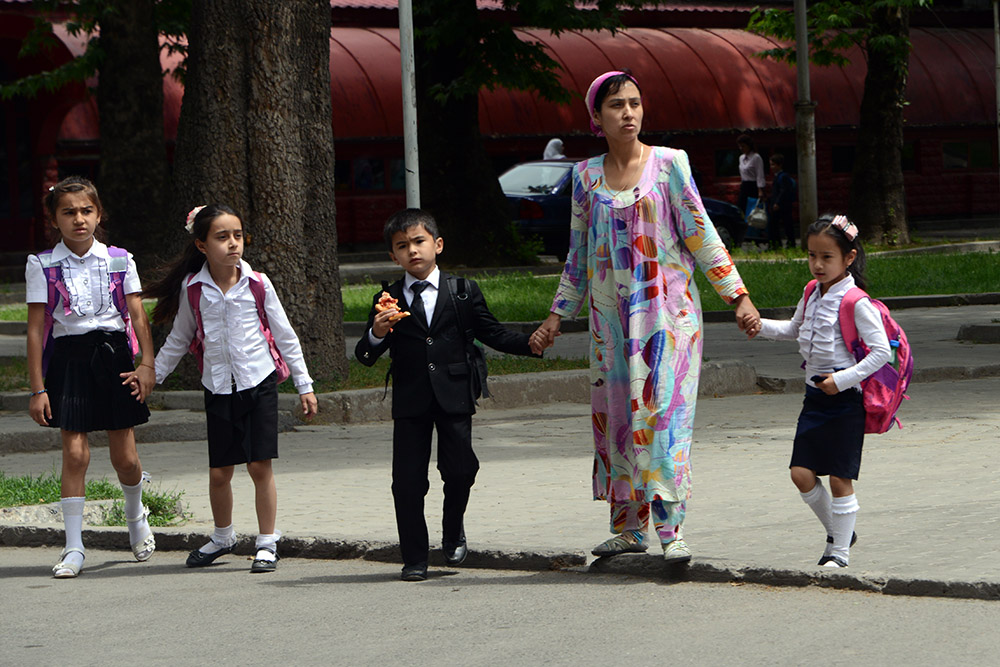
Something I quickly noticed was how open and friendly many of the people I encountered were. The two women above initiated a conversation with me as I was passing by, and the kids below did the same thing later.
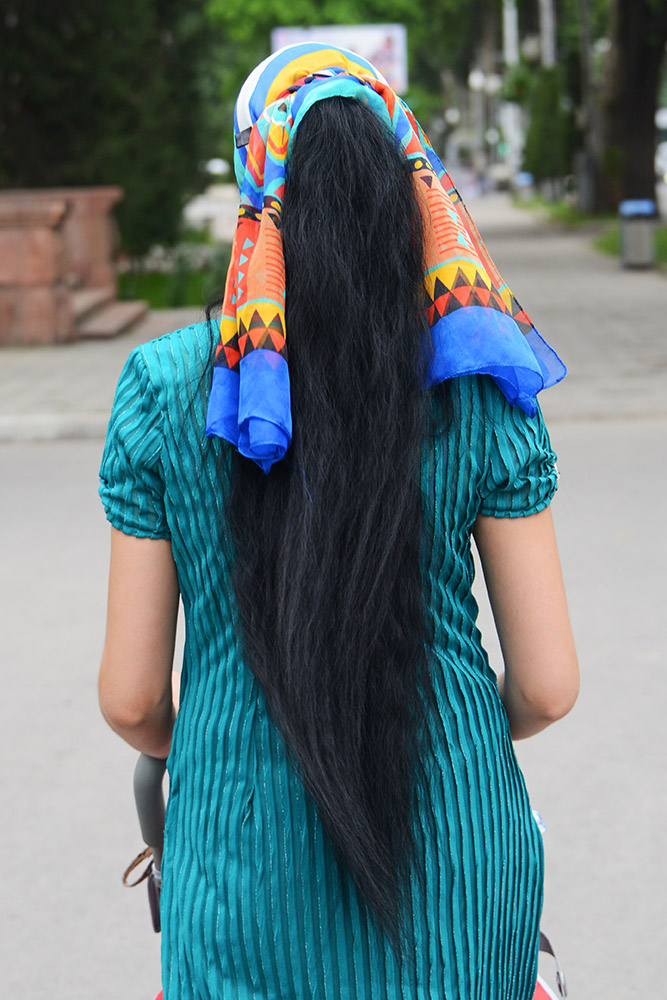
I also noticed a wide variety of clothing around the capital. Some people dressed in modern Western-style clothing, while others wore colorful traditional Tajik clothing. Rather than there being one obvious way everyone dressed, Dushanbe seemed to have a mixture of styles reflecting both modern city life and older cultural traditions.
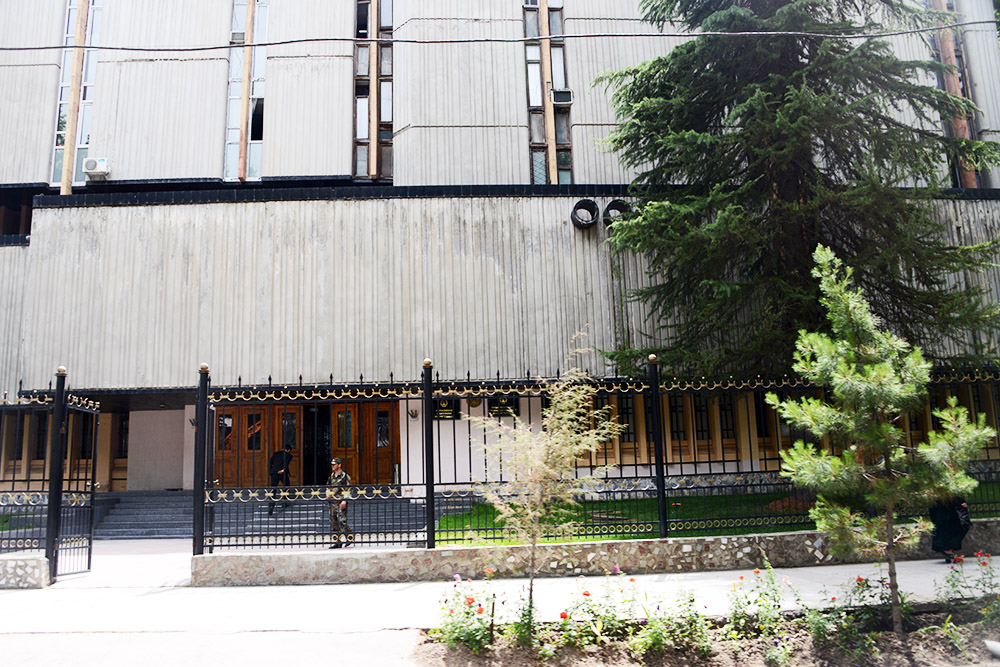
I took this photo while driving by, so unfortunately it doesn’t show the entire building. During the Soviet period this complex was associated with the KGB, while independent Tajikistan later developed its own state security institutions. Given the nature of the building, taking a quick photograph from the road seemed smarter than standing outside trying to get the perfect angle.
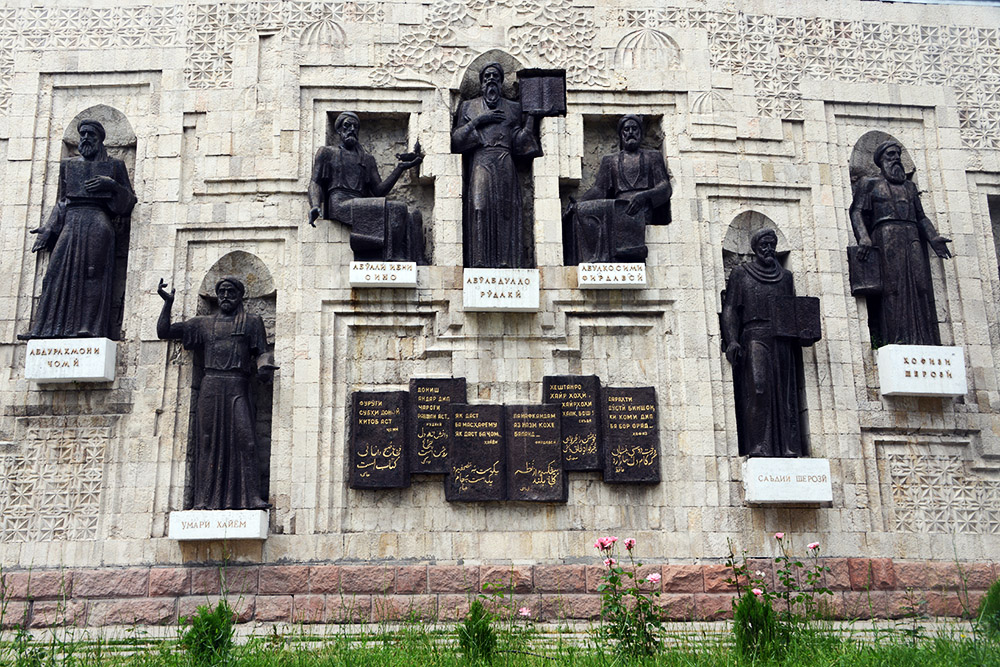
This building also caught my attention while I was walking through the city. The Writers’ Union building celebrates important Persian and Tajik writers and poets, with sculpted figures incorporated directly into its distinctive façade.
Food & Hotels
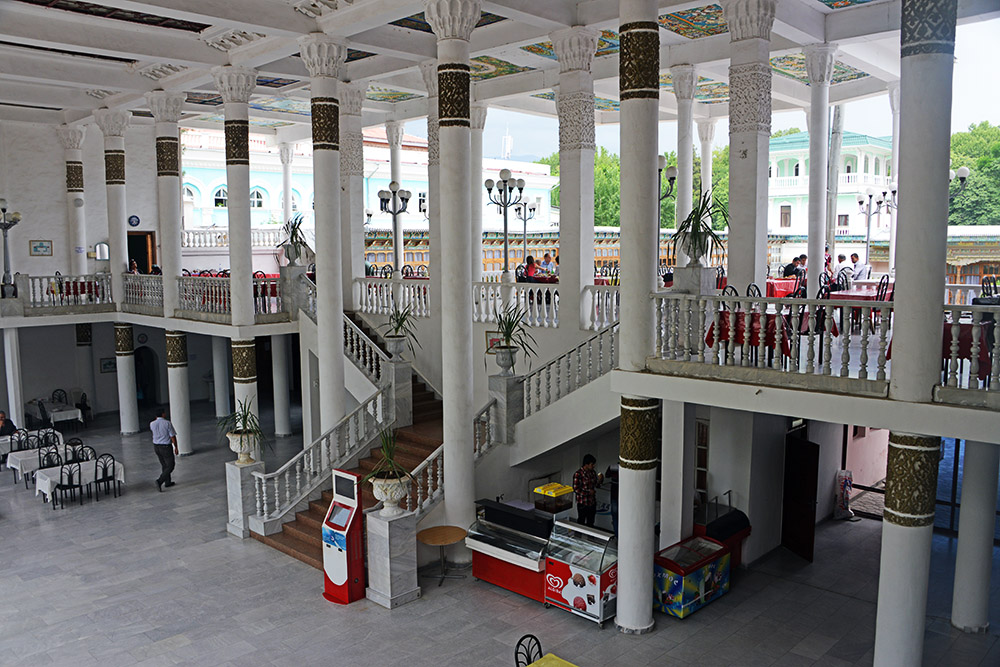
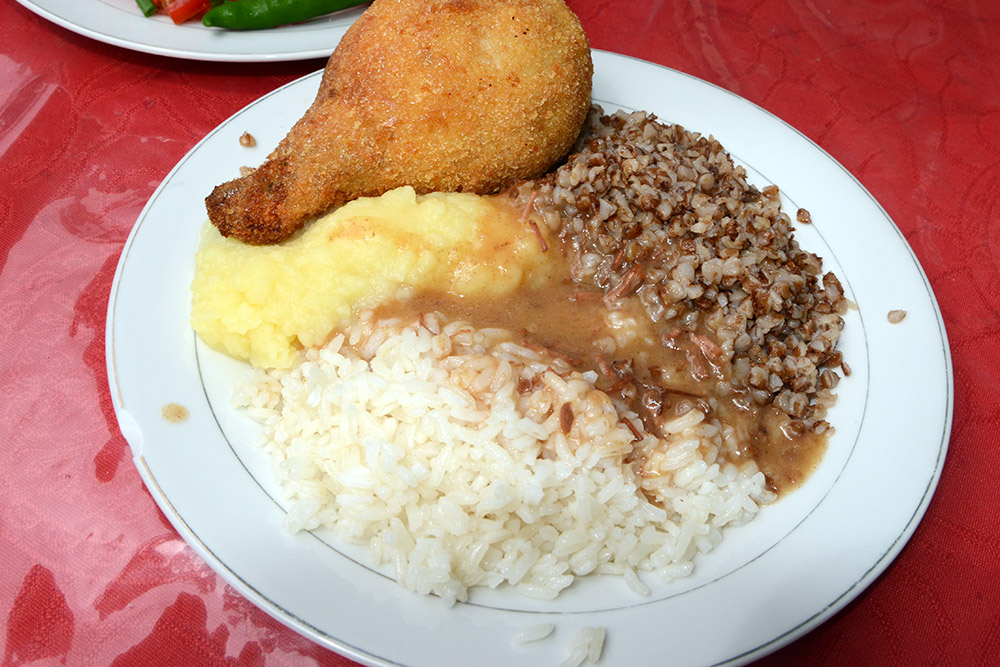
On my first day in Dushanbe I ate at this restaurant and ordered several local dishes. The food was excellent. One dish had chicken with the bones removed and the inside filled with a buttery sauce. I understood it to have influences from both local and Russian cuisine.
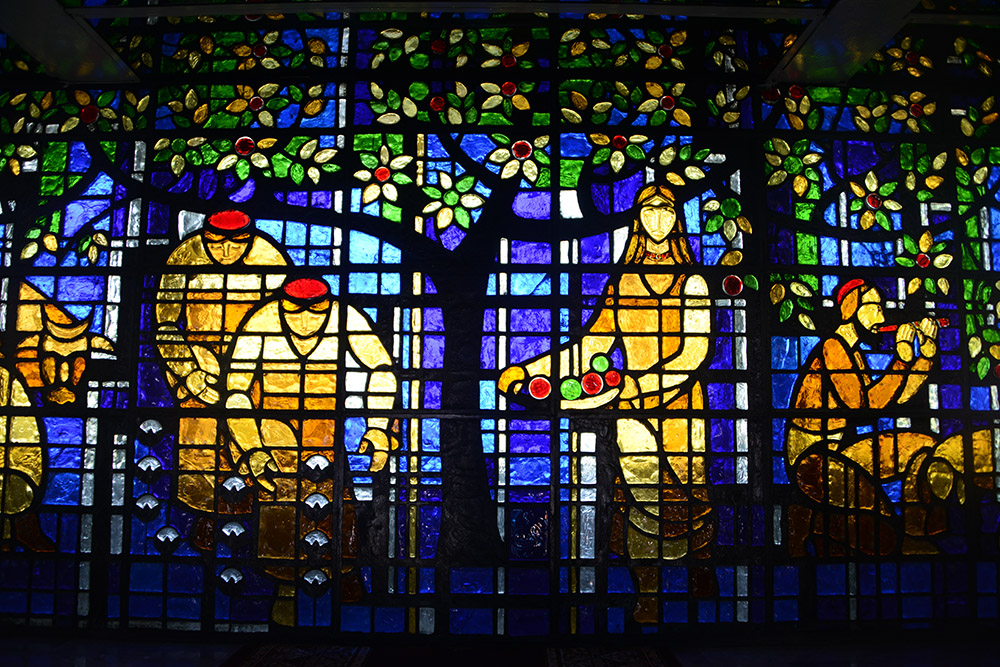
In Dushanbe I stayed in what felt like the epitome of an old Soviet-style hotel. The lobby had a huge stained-glass window, marble columns, and furniture that seemed like it hadn’t changed in decades.
Each floor had a desk with an attendant who would usually say something to me in Russian. About the only useful response I had was ne ponimayu—”I don’t understand.”
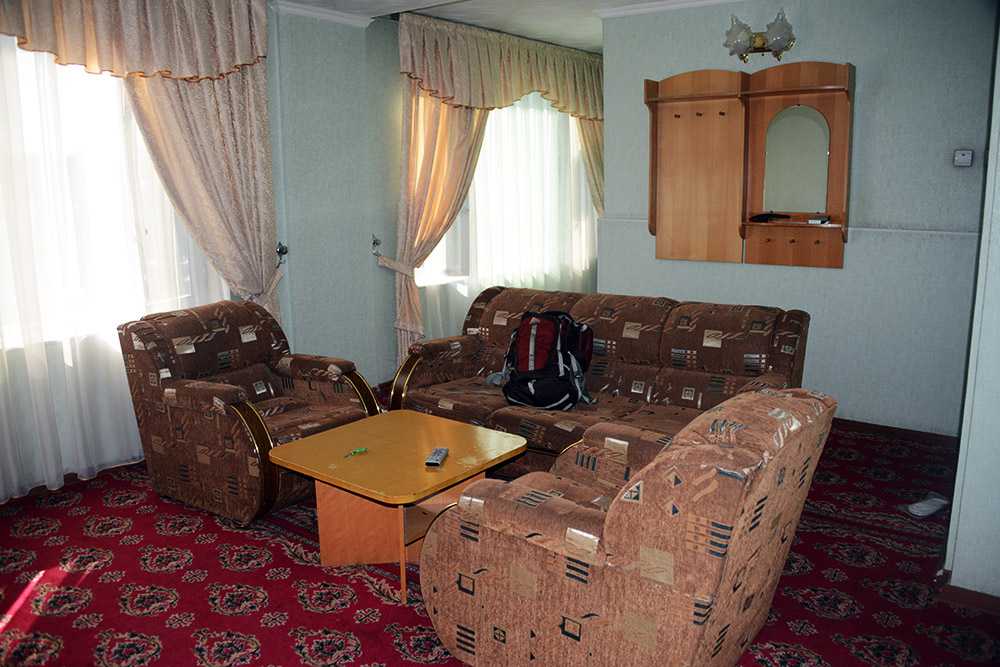
The rooms themselves were enormous. When I returned to Dushanbe later in the trip, I was placed in a wing that seemed almost completely empty. The hallways were barely lit, and I seriously wondered whether I was the only guest staying on that entire side of the hotel. With the dark corridors and creaking floors, it felt like something out of a haunted hotel.
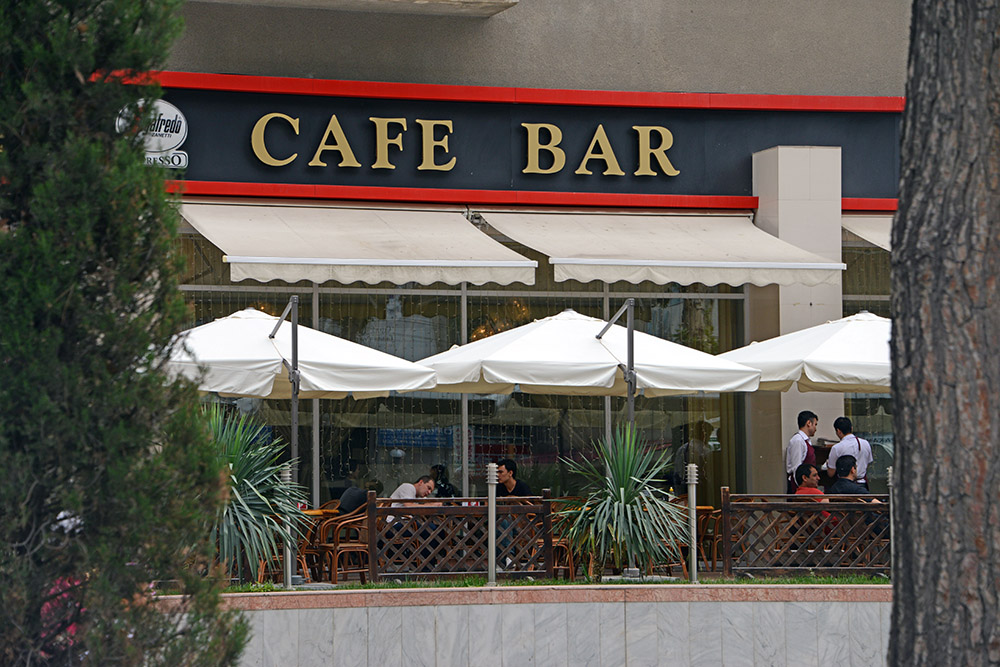
Dushanbe also had newer cafés, restaurants, and hotels catering to international visitors. I never made it inside this café-bar, but it seemed to be one of the more modern places in the city.
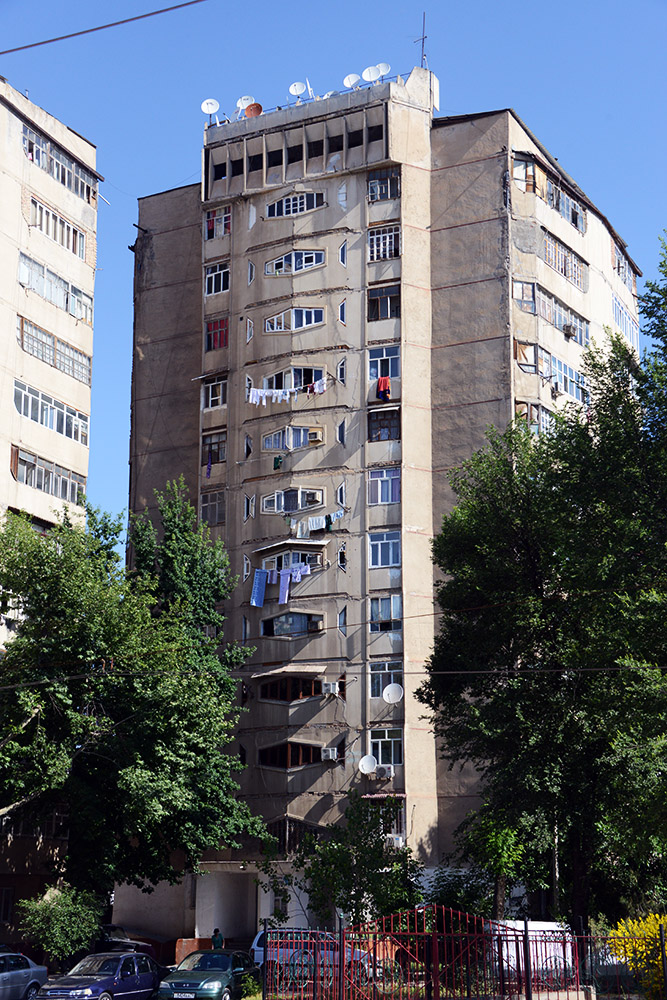
A Changing Capital
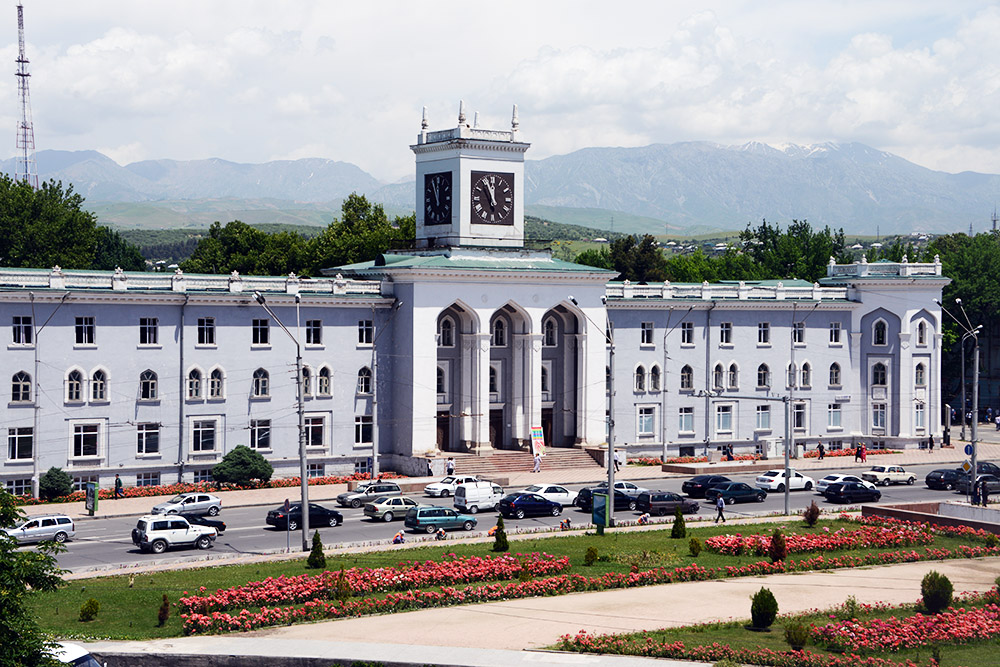
This was actually one of the first buildings I photographed after arriving in Tajikistan. I didn’t know what it was at the time, but it had previously housed the country’s national museum.
Dushanbe was in considerably better condition than I expected before my trip. There was major construction underway throughout the capital, with new buildings appearing alongside older Soviet-era architecture.
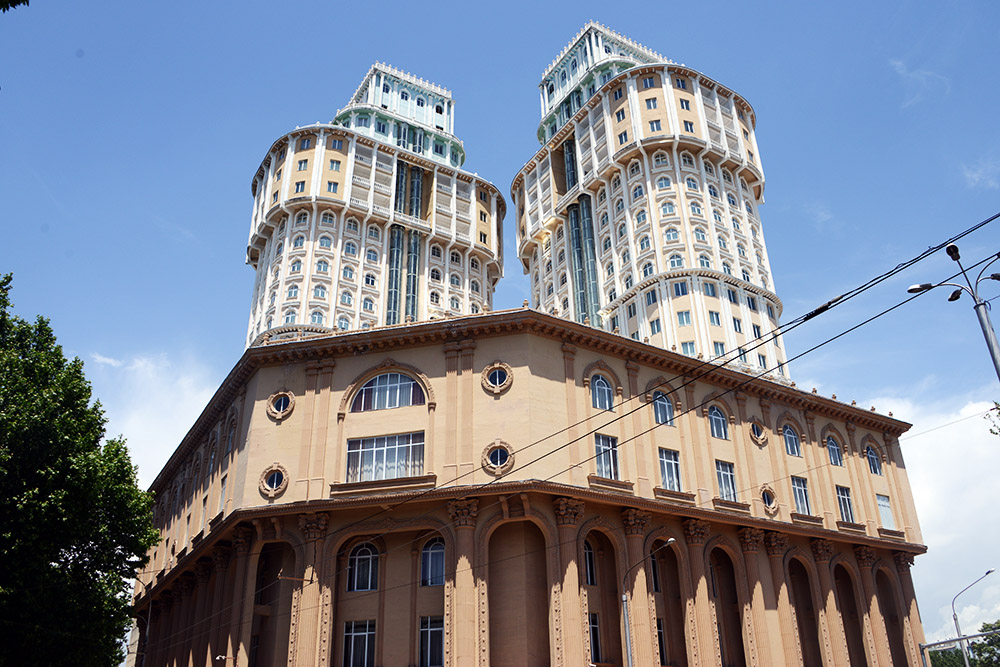
These large apartment towers had recently been completed when I visited. They were another example of how dramatically parts of Dushanbe were changing.
National Museum of Tajikistan
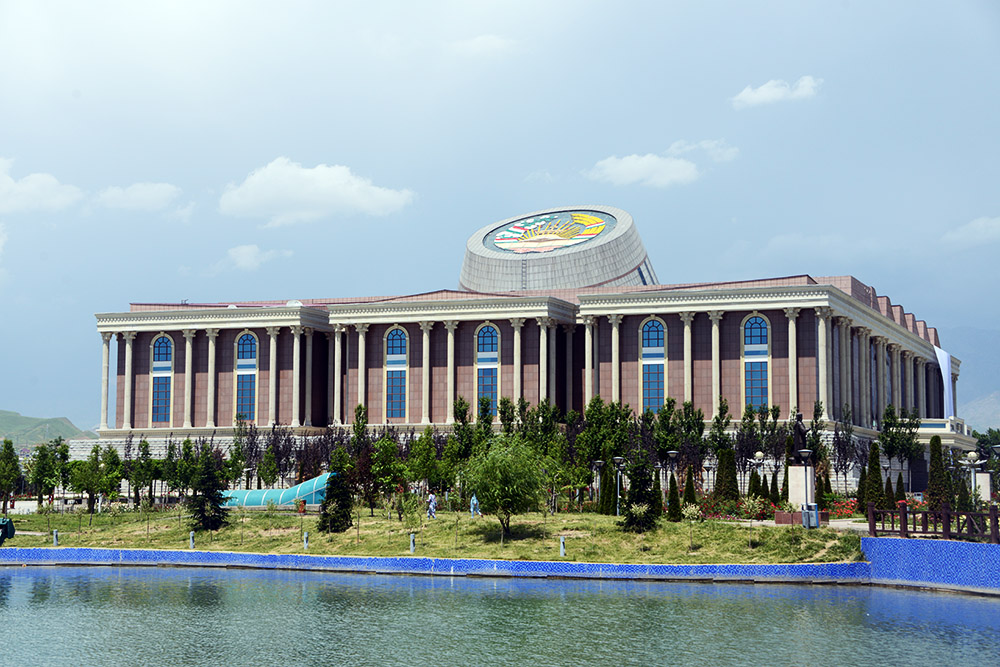
One of the newer landmarks in the capital was the National Museum of Tajikistan. The building is enormous compared with the country’s older museum facilities and contains exhibits covering Tajikistan’s natural environment, archaeology, history, and culture.
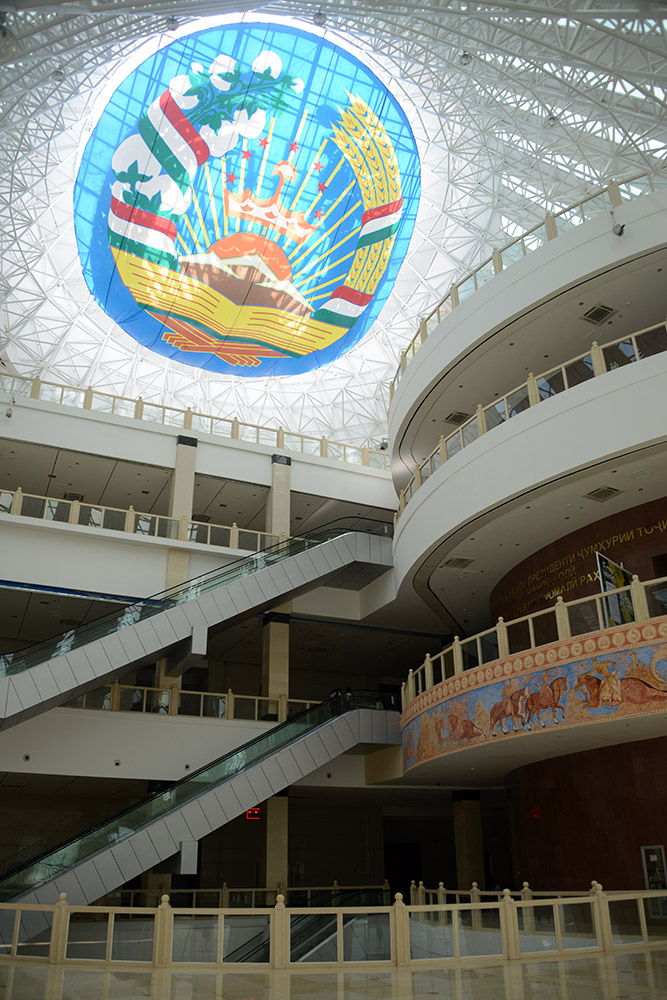
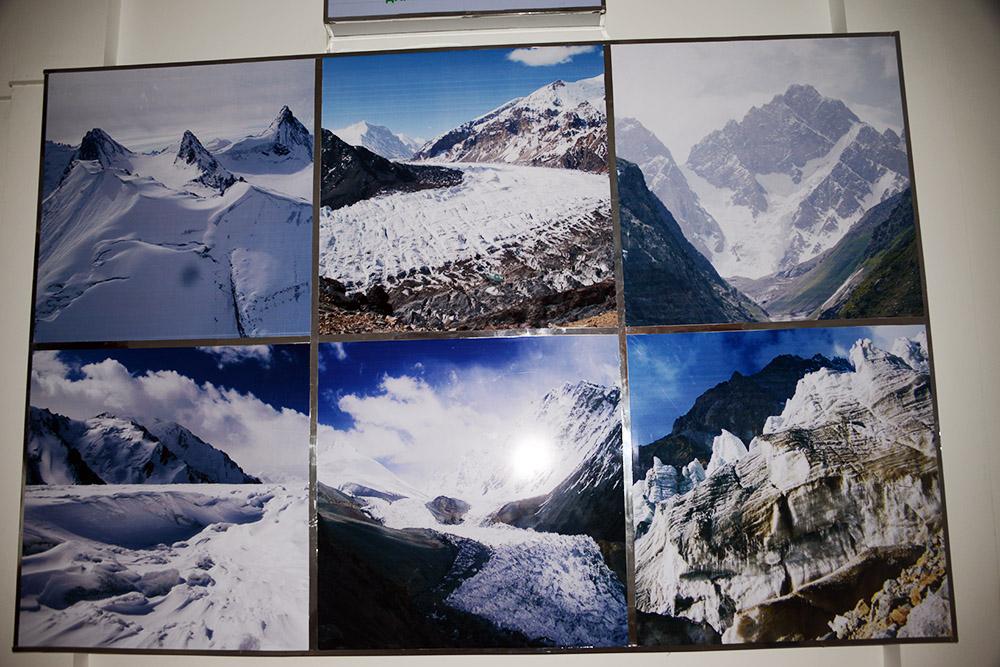
I had hoped to travel into the Pamir Mountains, but my visa had been issued for specific dates and my delayed arrival reduced the amount of time I had available. There had also been unrest in the Pamir region around the time of my trip, complicating travel even further.
The Pamirs were one of the parts of Tajikistan I most wanted to experience. Some of the country’s highest mountains rise above 7,000 meters, and the region supports wildlife adapted to the extreme high-altitude environment. Since I couldn’t make it there myself, the museum exhibits were the closest I got on this trip.
Ancient Religions of Tajikistan
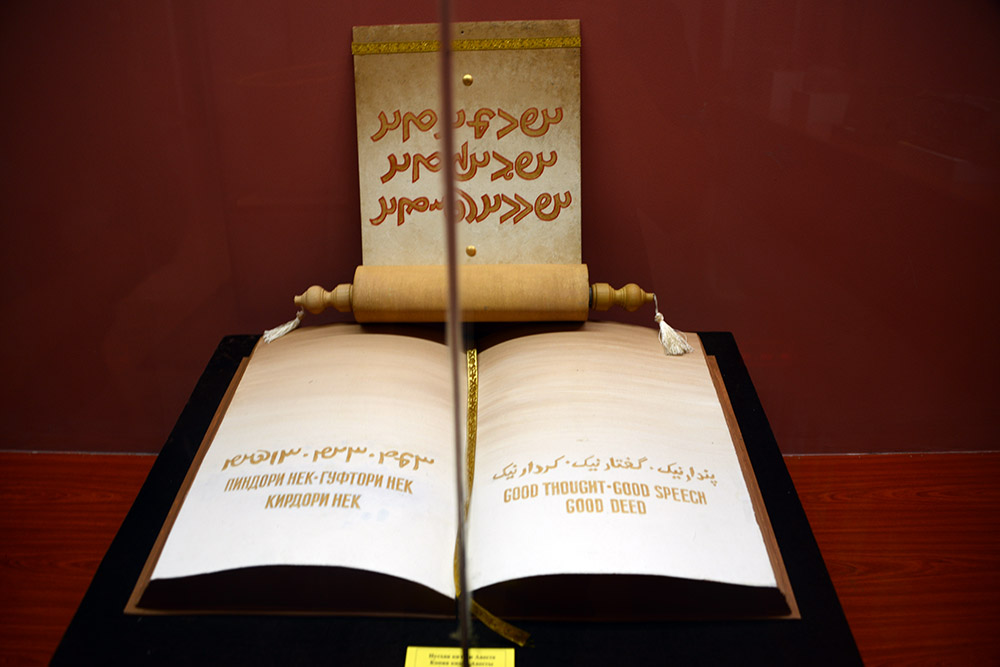
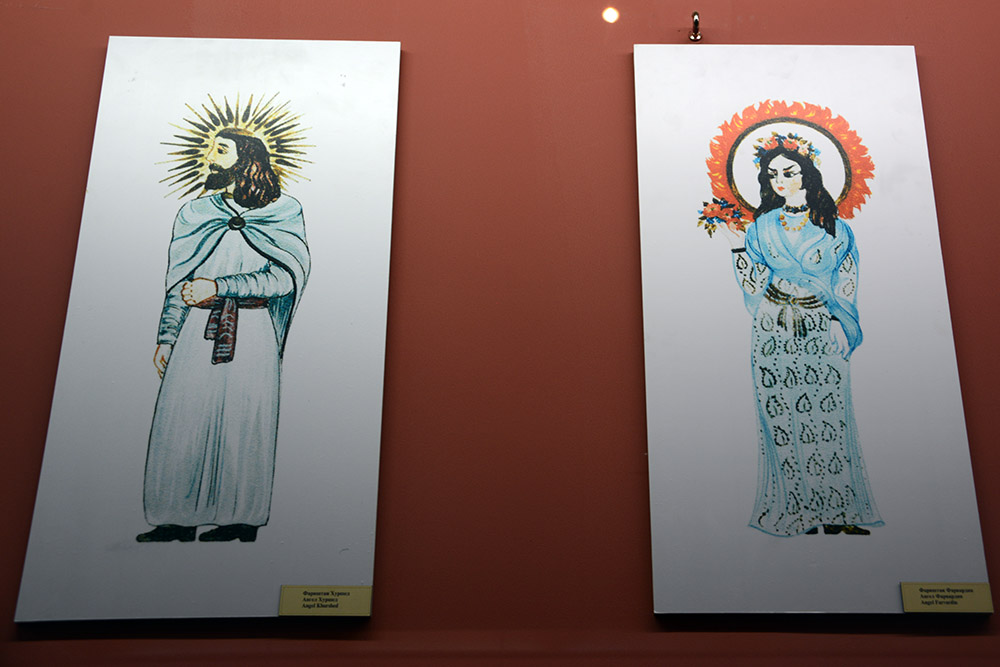
The museum also had extensive exhibits on the pre-Islamic religions and cultures that once flourished across Central Asia, including Zoroastrianism. I had visited Zoroastrian sites in Iran the year before, so I was interested to see how deeply the religion had also influenced the territory of modern Tajikistan.
The religious text associated with Zoroastrianism is the Avesta, rather than a “Zoroastrian Bible.” The exhibits helped put Tajikistan into the much larger Persian and Central Asian cultural world that existed long before today’s national borders.
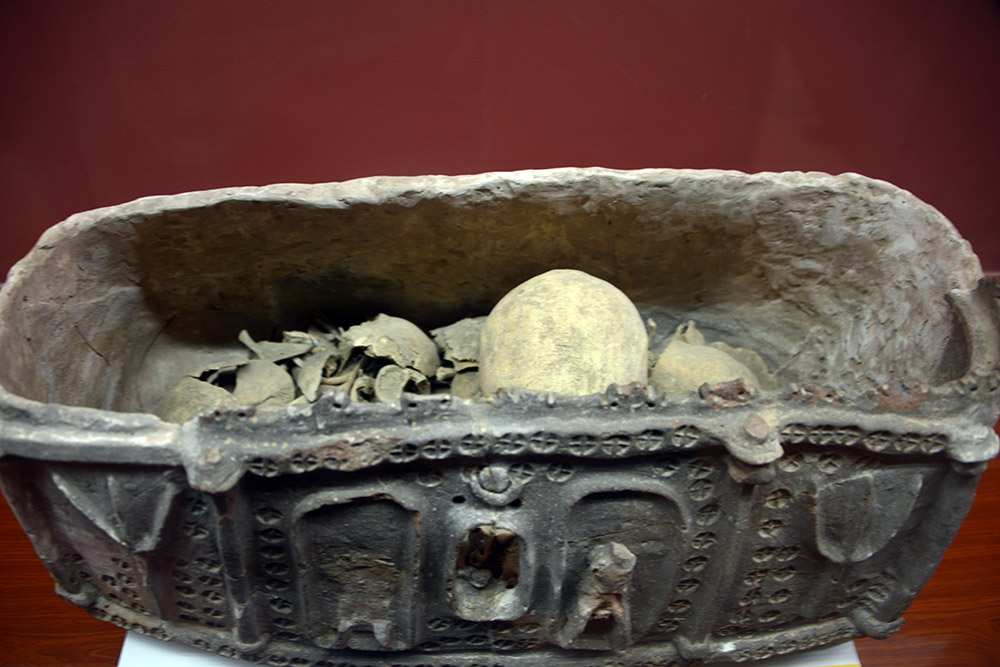
Some of the displays reminded me of what I had seen around Yazd, Iran, where traditional Zoroastrian funerary practices historically involved exposing bodies so that scavenging birds could remove the flesh without contaminating earth or fire. The remaining bones could then be placed in an ossuary.
National Museum of Antiquities
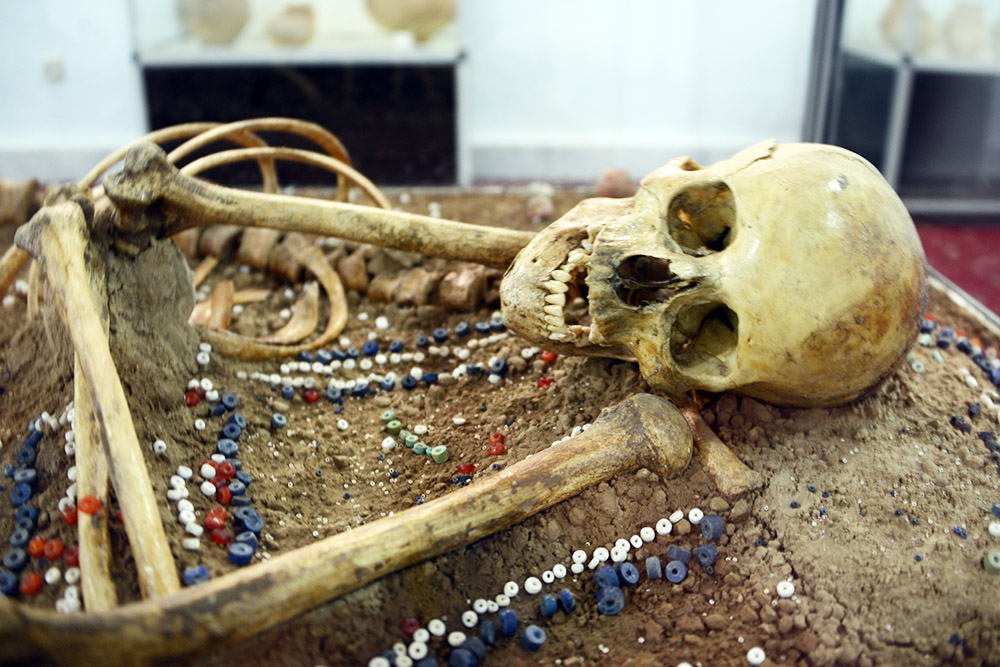
Another museum worth visiting in Dushanbe is the National Museum of Antiquities. It’s much smaller than the newer National Museum, but its archaeological collection contains some of the country’s most important ancient finds.
One of the most famous is the woman commonly known as the “Lady of Sarazm.” Her remains were discovered at the ancient settlement of Sarazm near Panjakent and date back to the fourth millennium BCE. She was buried with valuable jewelry and other objects, suggesting she held unusually high status within her community.
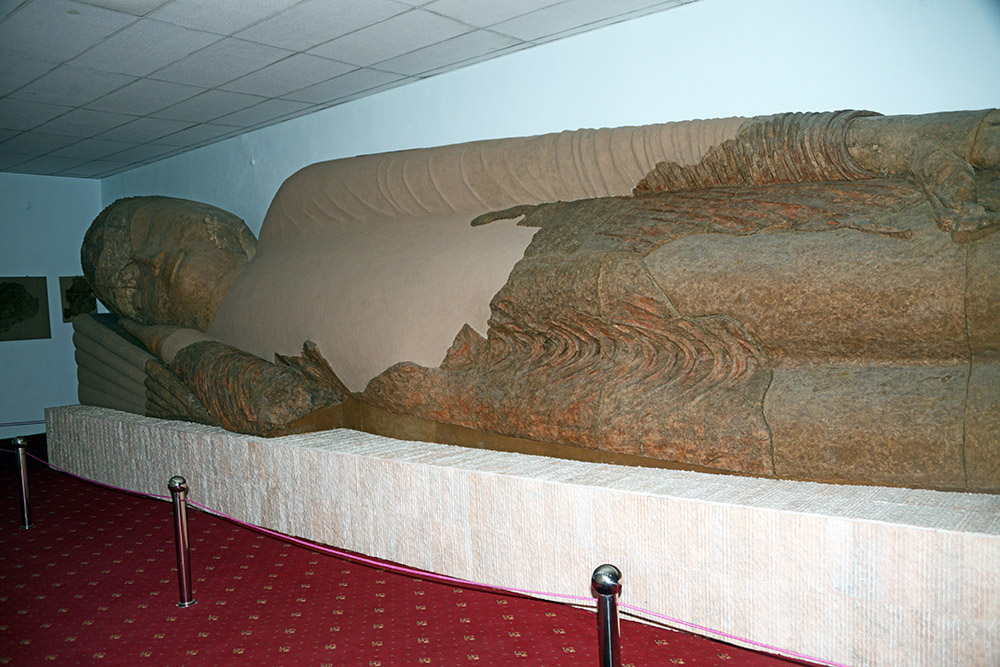
The museum’s most spectacular object is the enormous reclining Buddha discovered at the Buddhist monastery of Ajina Tepe in southern Tajikistan. The sculpture dates to around the seventh or eighth century and stretches roughly 12 to 13 meters in length.
Its existence is a reminder that Buddhism once had a major presence across parts of Central Asia. The monastery at Ajina Tepe was part of the broader Buddhist world connected by the Silk Roads, long before Islam became dominant in the region.
Dushanbe Gardens
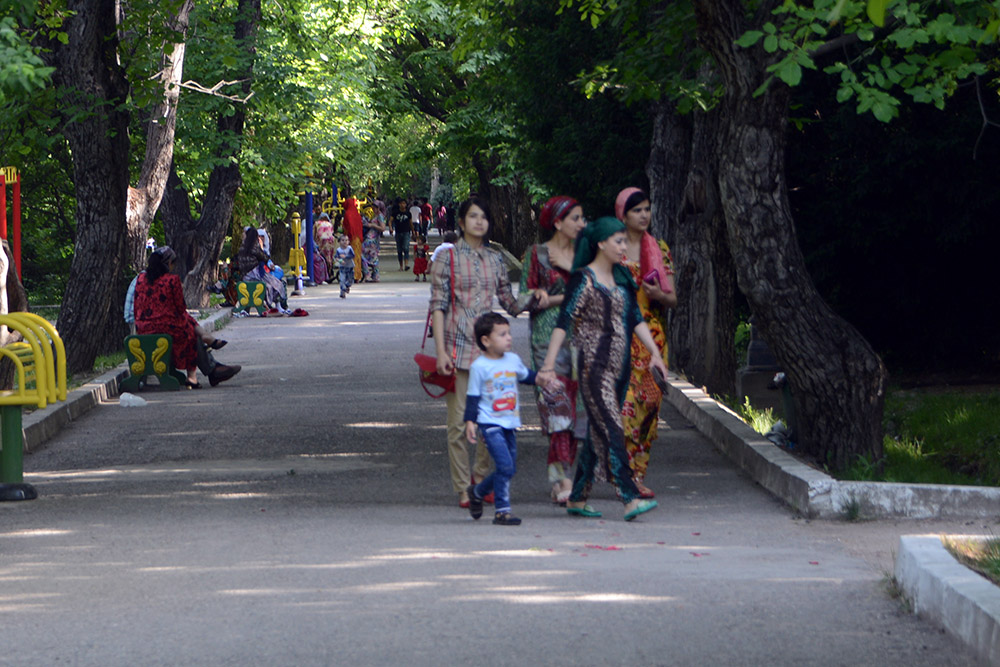
One of my favorite areas in Dushanbe was this enormous park and garden. I’m not sure exactly how large it was, but I walked along the main avenue for what felt like more than a mile.
The park was filled with exercise equipment, swings, walking paths, gardens, and plenty of families. I even saw two weddings taking place while I was there.
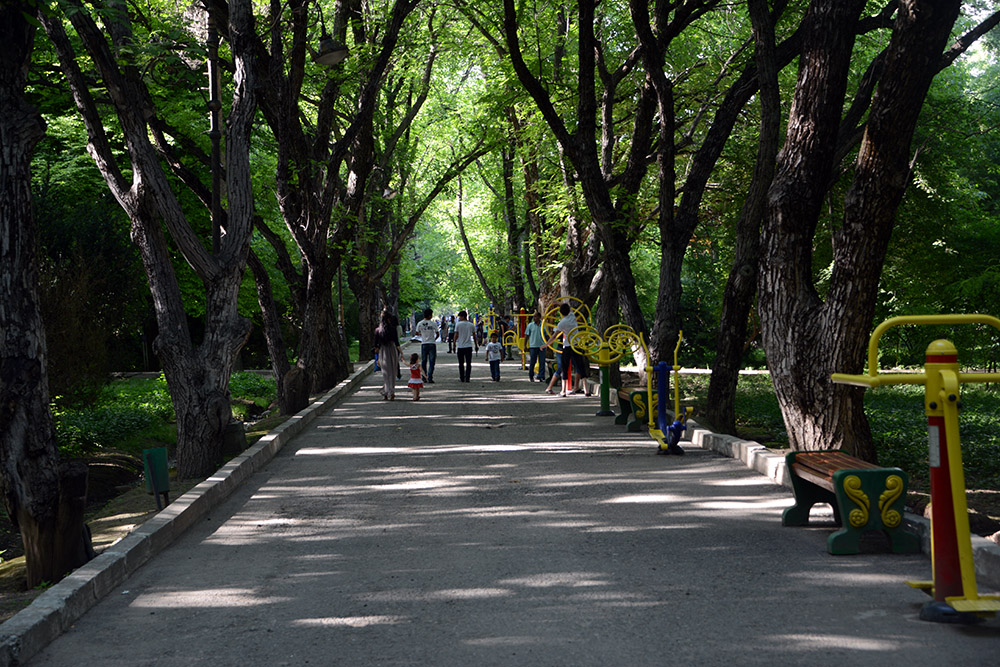
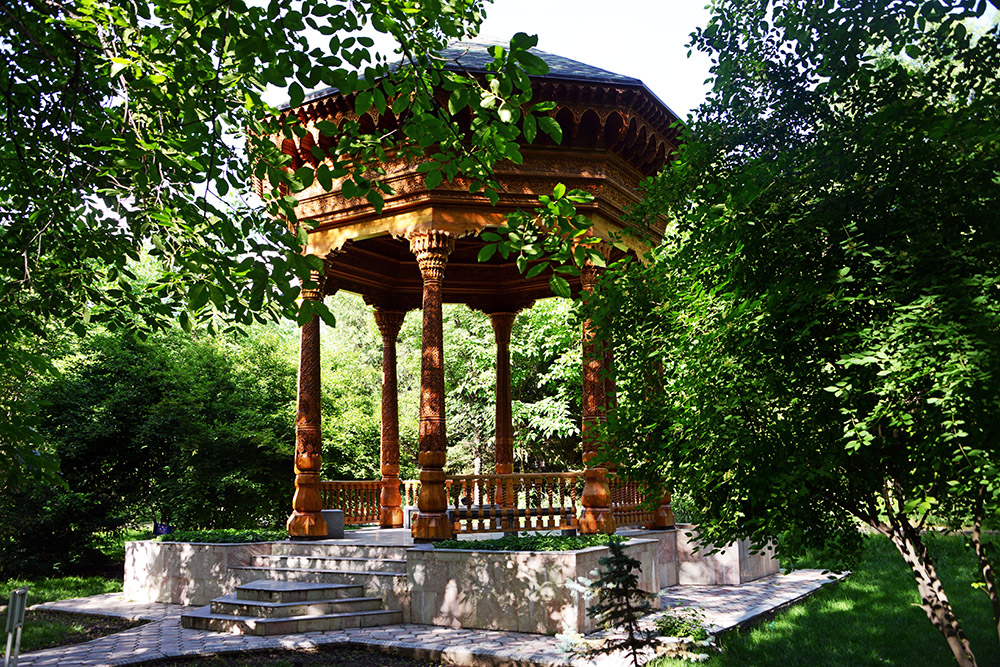
Several beautifully carved gazebos were scattered throughout the gardens. The combination of elaborate woodwork, fountains, landscaping, and huge shade trees made this one of the nicest places in the capital to simply walk around.
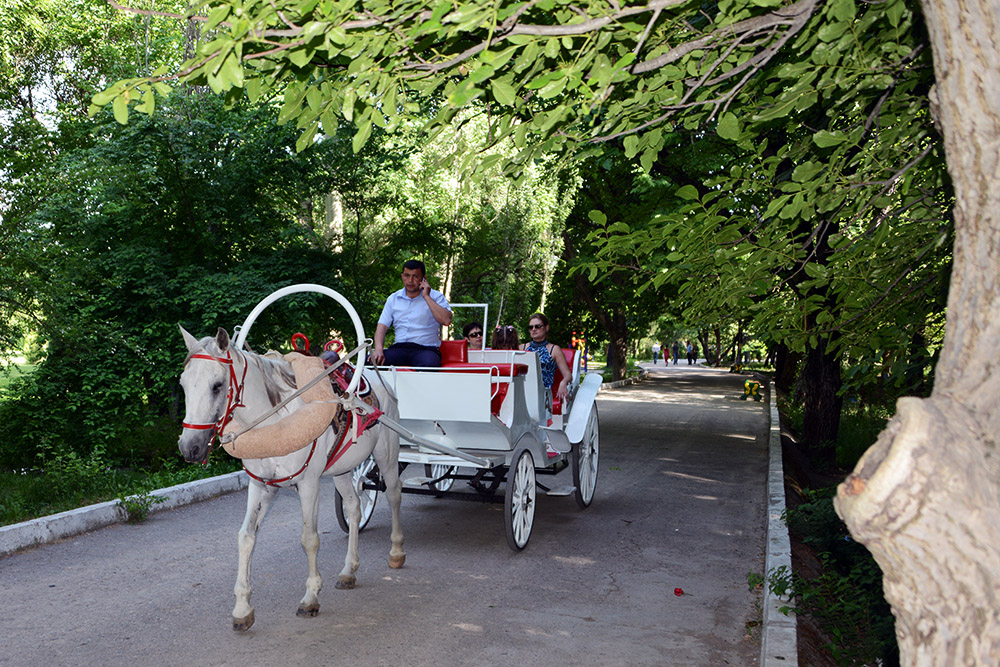
I also came across locals riding through the park in a horse-drawn carriage. The driver happened to be talking on his cell phone at the exact moment I took the picture, slightly ruining the old-fashioned effect.
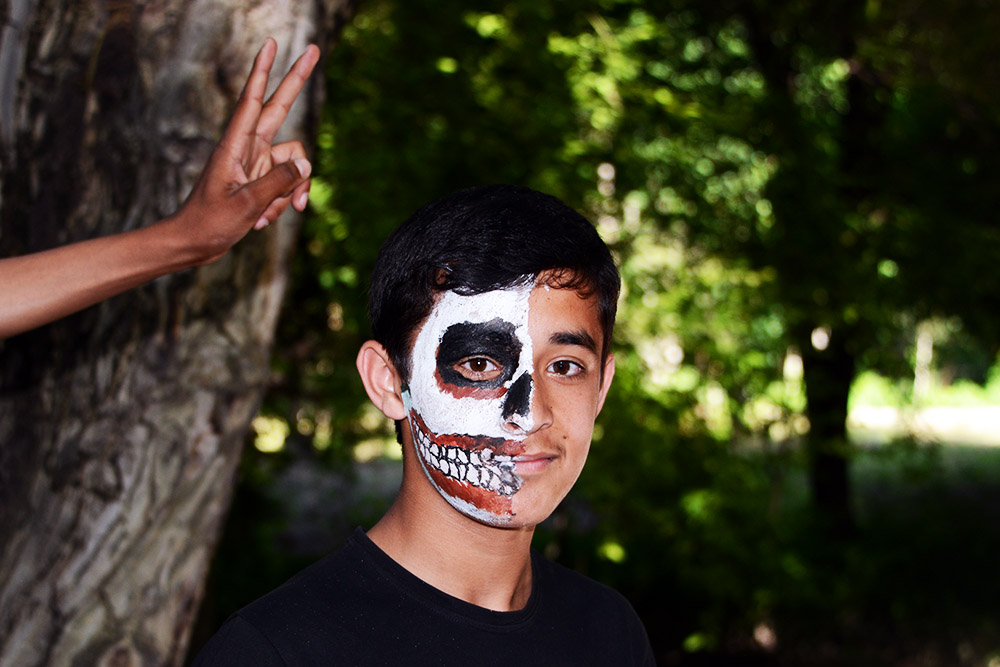
This kid was wandering around with skull face paint while seemingly no one else in the park was dressed up. I never figured out whether there was a birthday party, festival, or some other event going on nearby.
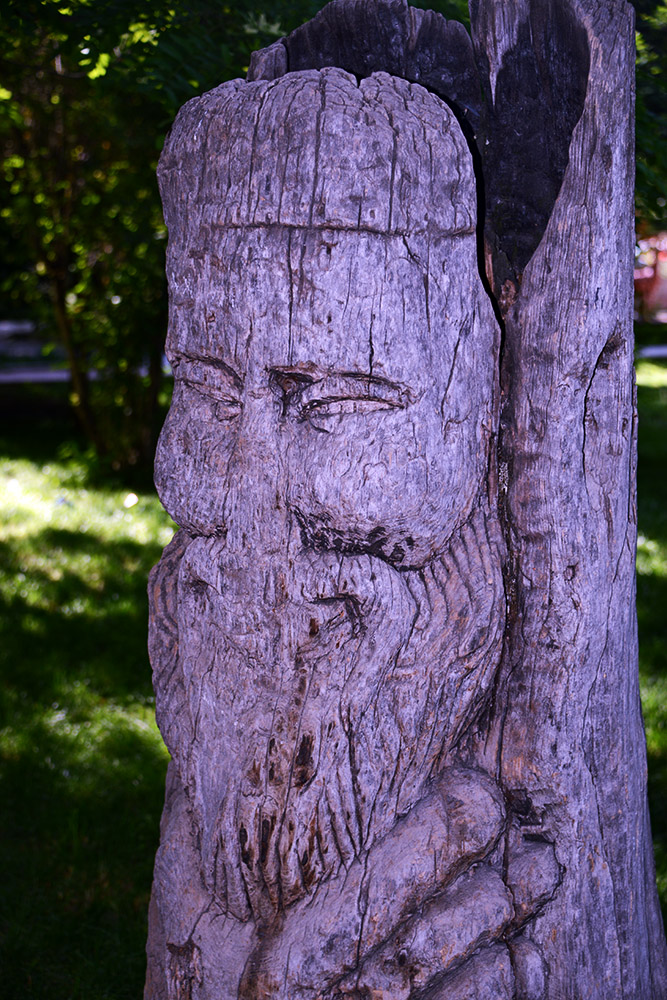
This carving near one of the enormous trees was my final photo from the gardens. Like the museums, I took far more pictures here than I could reasonably put on one page. Of everything I did inside Dushanbe itself, simply wandering through these gardens may have been what I enjoyed most.