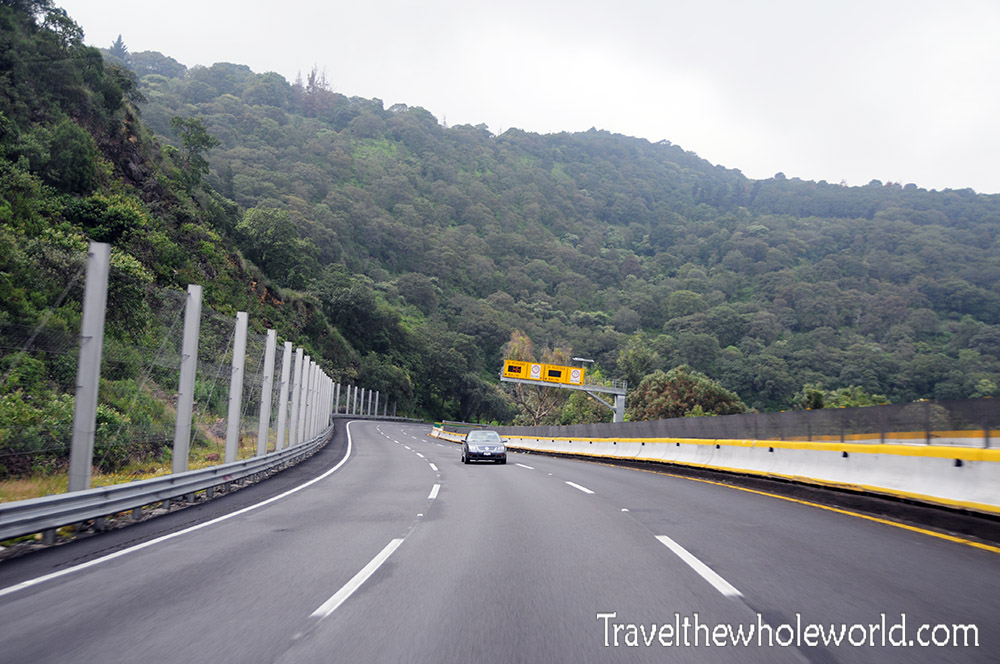
After visiting Mexico City and the nearby pyramids, I took a short road trip southwest toward Cuernavaca. It didn’t take long to leave the dense development of the capital behind and reach the countryside. Locals had warned me about the traffic, but compared with some of the traffic I’d experienced in places like India and Indonesia, I didn’t think it was too bad.
Once outside the city, the roads became surprisingly empty and looked almost brand new. They weren’t quite as smooth as they appeared, though. At the time I was taking classes and thought I could get some homework done during the drive, but the ride was so bumpy that writing was nearly impossible. Then again, maybe the road was fine and the bus just had terrible shocks.
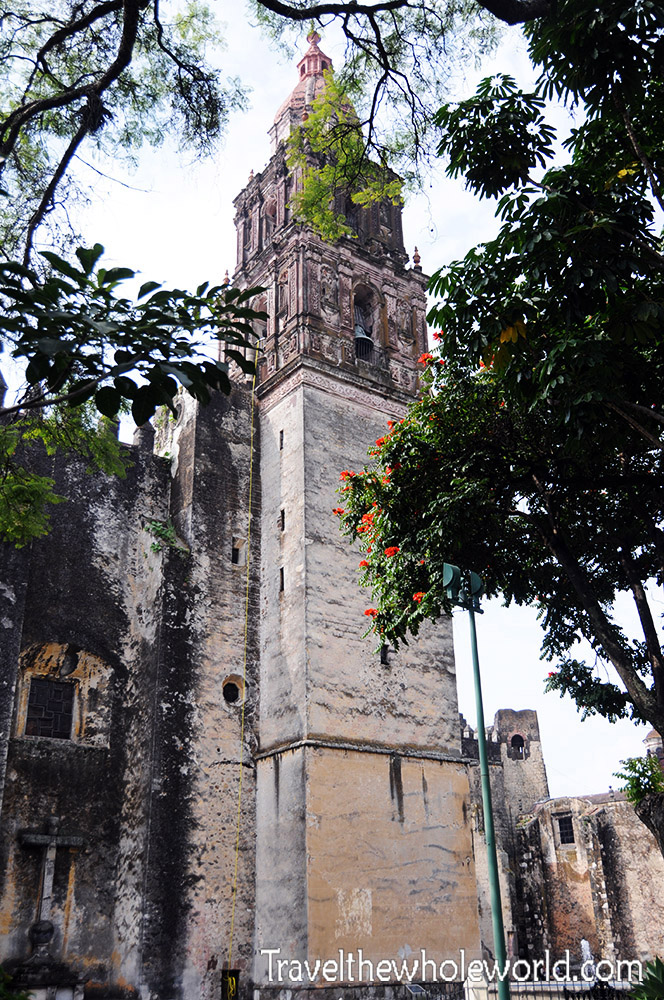
My first major stop southwest of Mexico City was Cuernavaca, a historic city famous for its mild climate. Often called the City of Eternal Spring, Cuernavaca stays relatively comfortable throughout the year and has long attracted people looking to escape the more extreme temperatures found elsewhere in Mexico.
I hadn’t planned my visit very well and didn’t realize until afterward how many historical places I had missed. Fortunately, I did make it to one of the city’s most important landmarks: Cuernavaca Cathedral.
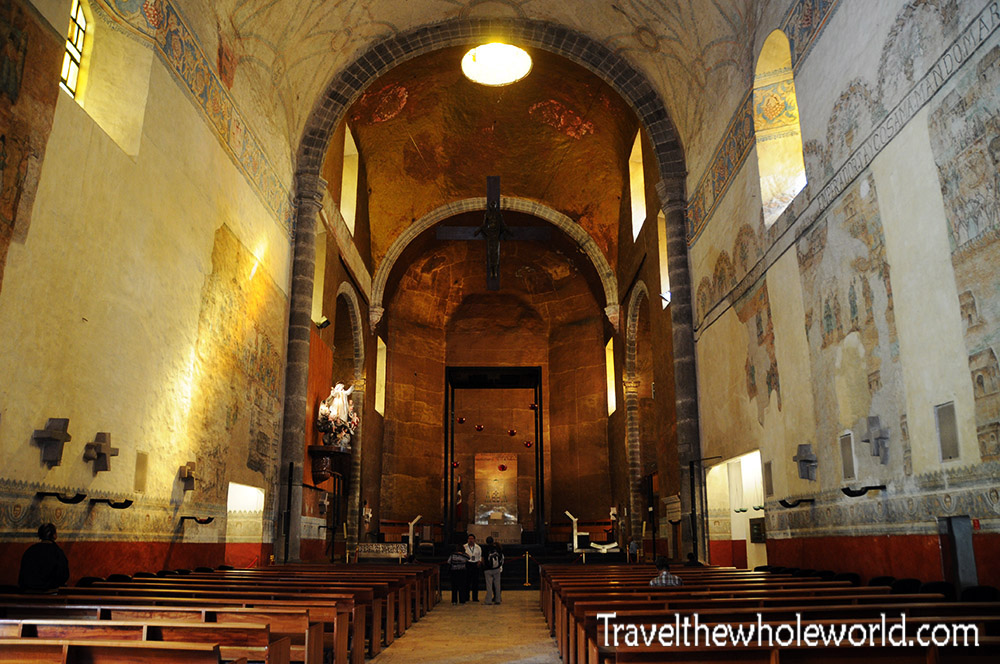
Cuernavaca Cathedral dates back to the early Spanish colonial period and is part of a monastery complex built during the 16th century. The cathedral and surrounding structures are large enough that I had trouble getting a good photograph of the entire complex from the grounds, so most of my photos focused on individual details and the interior.
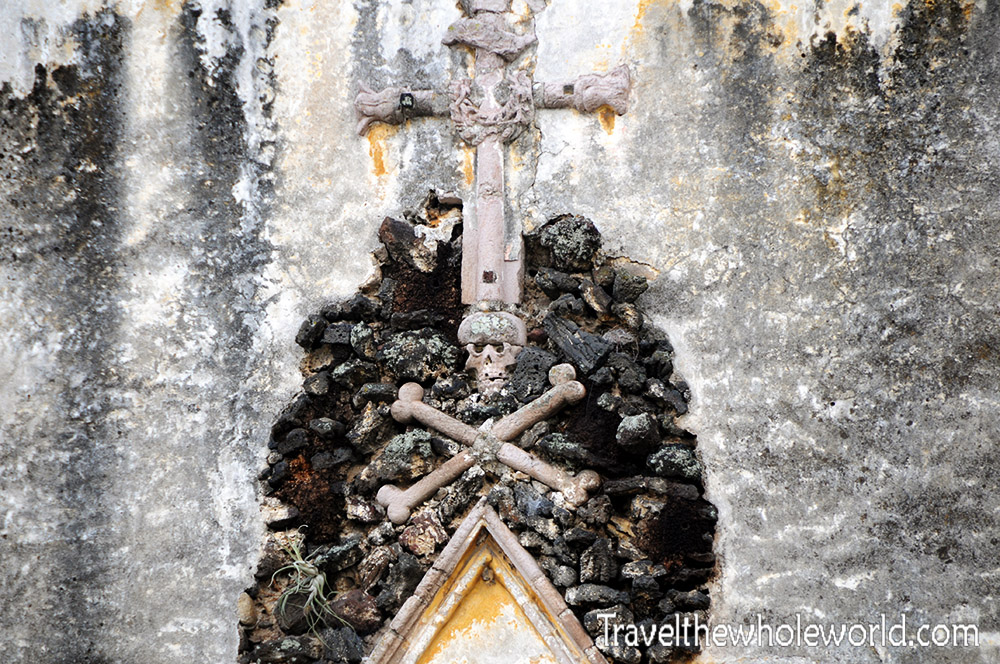
One detail that immediately caught my attention was this skull and crossbones decoration near the cathedral entrance. Christianity in colonial Mexico developed alongside existing Indigenous traditions, and religious art from this period can contain imagery that looks very different from what you might expect to find in a European cathedral.
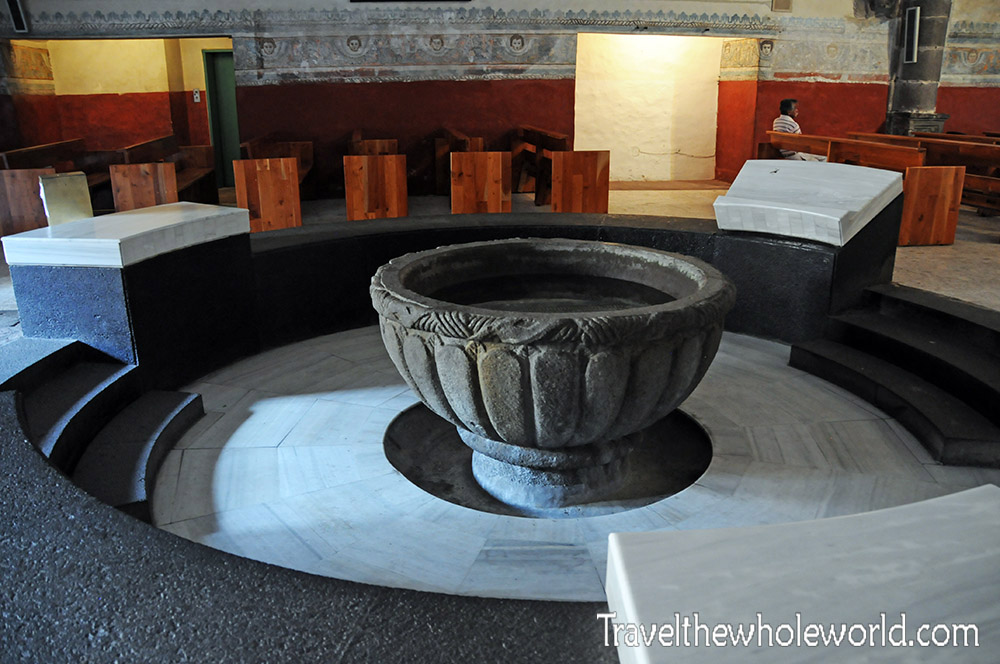
Inside the complex I also saw this old baptismal font. During the Spanish colonial period, missionaries converted large numbers of Indigenous people to Christianity, sometimes through coercive systems that accompanied the conquest. The font has survived for centuries and was still being used by the church when I visited.
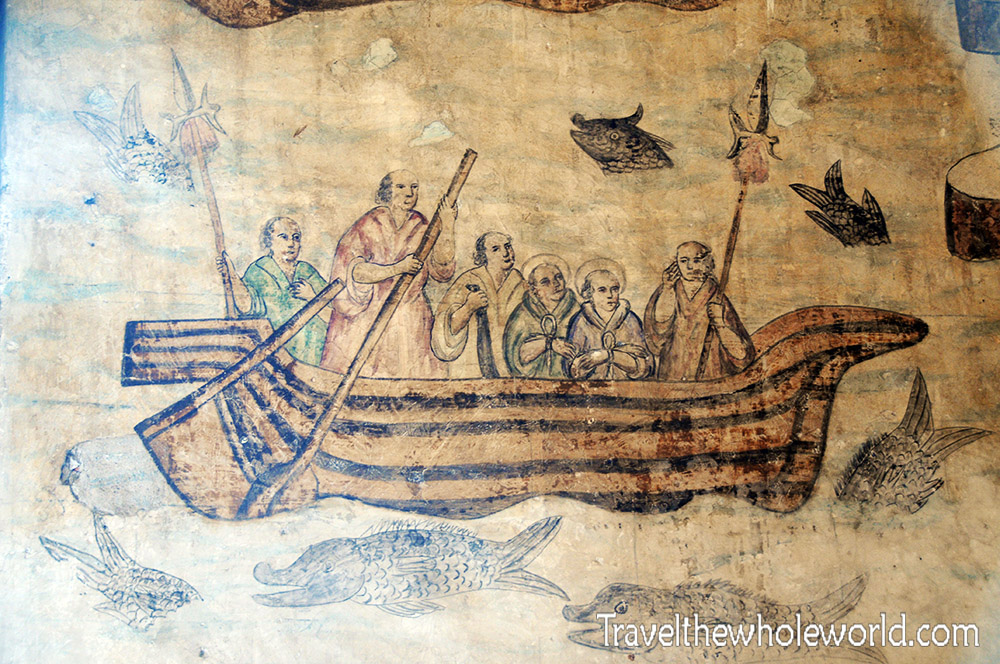
Some of the most interesting artwork inside the cathedral was found on its walls. This mural depicts the martyrdom of missionaries in Japan and reflects the remarkable connections that once existed between colonial Mexico and Asia. Spanish ships crossed the Pacific between Mexico and the Philippines for centuries, linking New Spain with a much larger network of trade, religion, and cultural exchange.
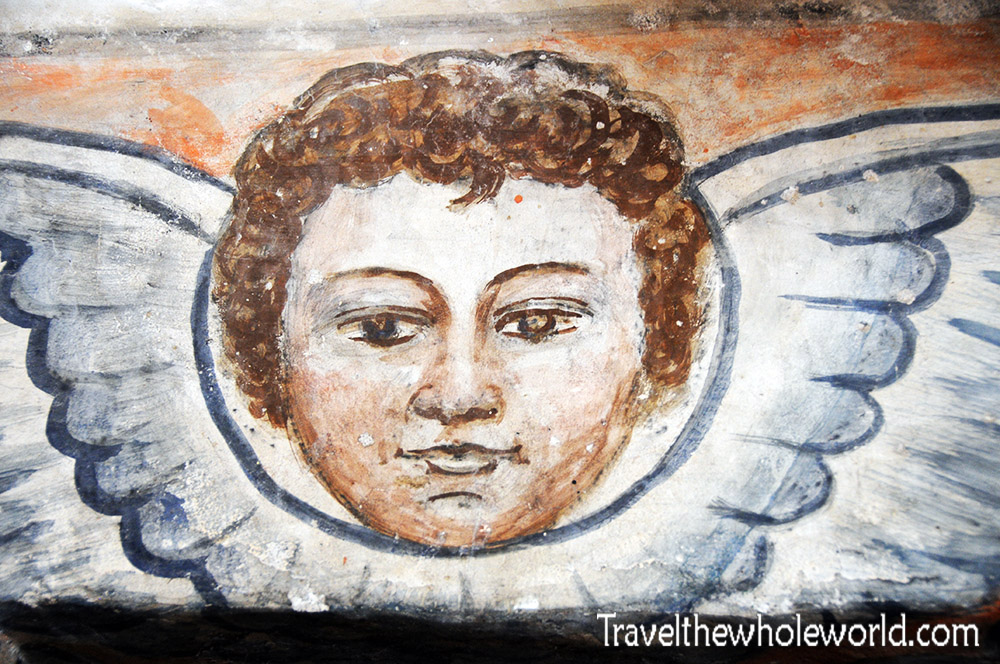
This restored angel was another piece of artwork that caught my attention inside the cathedral. I don’t know its exact age, but between the murals, old religious objects, architecture, and unusual decorative details, I ended up spending much more time exploring the cathedral than I had expected.
Unfortunately, I later discovered how much of Cuernavaca I had missed. The Palace of Cortés, the Teopanzolco archaeological site, museums, gardens, and other historic attractions would have given me a much broader look at the city. My visit ended up being mostly about the cathedral, but at least it gave me a reason to return someday and explore Cuernavaca properly.
Explore More of Mexico
Cuernavaca • Garibaldi • Mexico City • Taxco • Teotihuacan