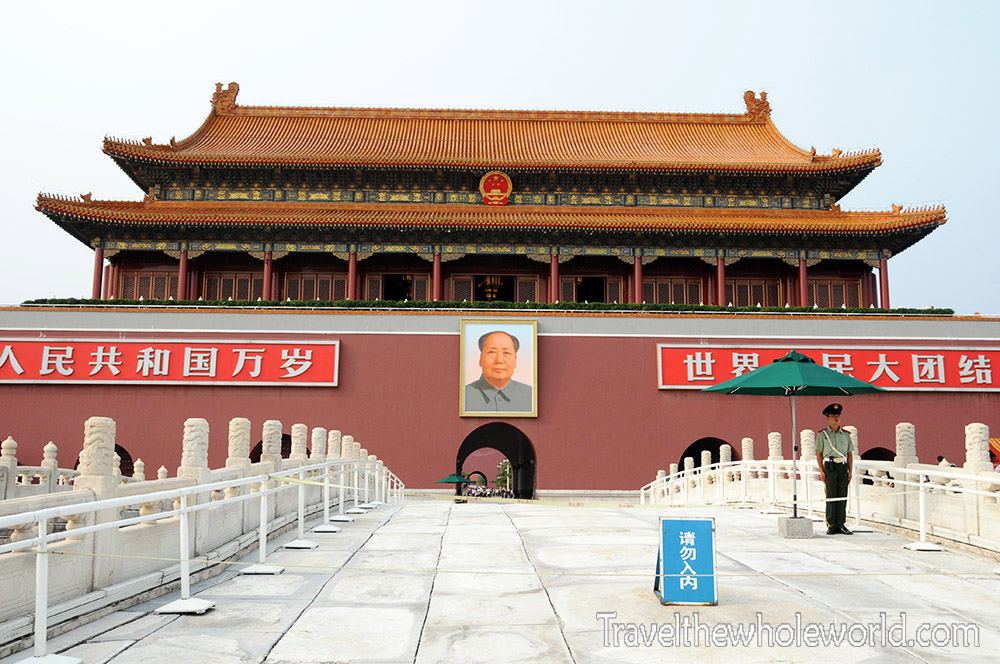
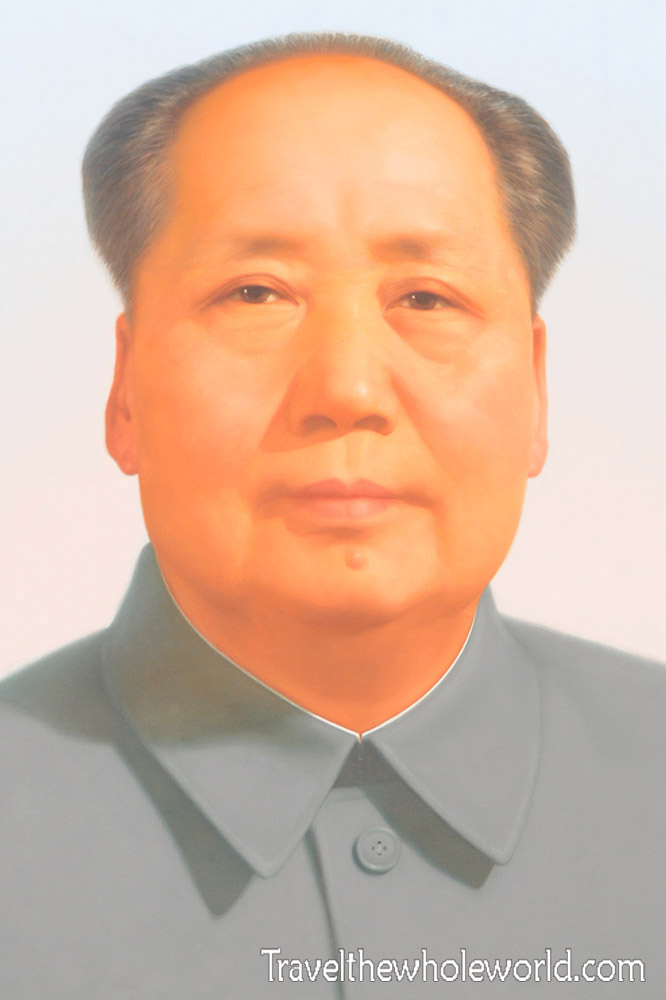
I began my travels in Beijing with Tiananmen Square. Here I viewed the famous portrait of one of China’s most well-known and influential leaders, Chairman Mao Zedong, who led the People’s Republic of China from its founding in 1949 until his death in 1976.
Although Mao is viewed with considerable controversy in the West and even within China, he is without question one of the most influential people of the 20th century. Mao and the Chinese Communist Party established the People’s Republic of China after decades of civil war, foreign invasion, and political instability. His leadership transformed China dramatically, although his rule also included enormously destructive events such as the Great Leap Forward and Cultural Revolution. Whatever your opinion of him, Mao Zedong played a central role in creating modern-day China.
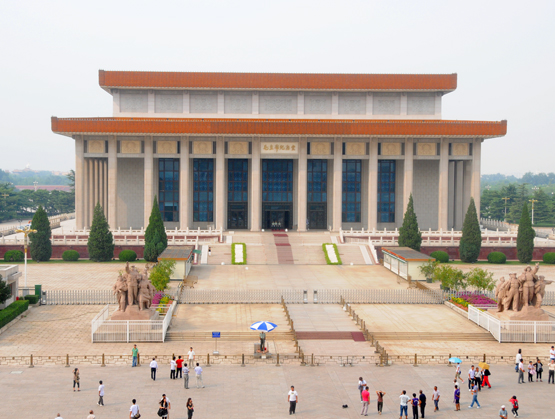
Above is Mao Zedong’s Mausoleum, also known as the Chairman Mao Memorial Hall. Nearby is the Monument to the People’s Heroes. While these monuments were built in the 20th century, Tiananmen Gate itself traces its history back to the Ming Dynasty.
Sadly, I didn’t enter the mausoleum. As a matter of fact, I was distracted by two girls I met here who later ended up scamming me. Out of all my travels, this is the only time I’ve ever been scammed!
They approached me claiming to want to hang out to learn English and said that they were visiting from another city themselves. They looked shy and innocent and were dressed respectably. I wasn’t naive about their intentions and figured they were probably up to something, but since I didn’t expect them to physically attack me, I thought I’d keep my belongings close and see what would happen.
I figured their tactic might be to lure me into an alley or some isolated place where others would rob me, so my main concern was to stay in populated areas. For several hours we hung out together and everything seemed quite normal. We ended up doing things that most people would do when traveling to a new city. I even began to wonder if I was wrong!
Of course, it was around that time when I was asked if I wanted some tea. We went to a simple tea shop and all was well until the shocking bill of $100 arrived. They said we should all split it, and the two girls put up their share.
Then the scam became obvious. There were “No Photography” signs on the walls and no other people were in the tea shop. They would no doubt return later and get their “share” back and then some.
I had never been scammed before, so instead of arguing I accepted defeat and just paid my portion as well. I’ve always known to check prices before committing to drinks, a taxi ride, or any kind of service, but as I said, I had let my guard down.
The funny thing about the whole situation is I never accused the girls of scamming me. They seriously thought I believed that all was well and we had just had bad luck at an expensive tea shop. After we left the tea shop, they repeatedly apologized and continued to hang out with me for the rest of the day.
I tried to make the most of this, and the way I saw it, I had paid for some translators and a tour by locals of Beijing. When we did go our own ways, they apologized many times about the expensive tea and even offered me their umbrella since it was raining.
Scam artists with a guilty conscience!

Most of the world is aware of the strict policies of the Chinese government and its censorship. The girls I had been hanging out with claimed that 80% of Chinese people were unaware of the famous “Tank Man” incident connected with the 1989 Tiananmen Square protests.
Their description wasn’t completely accurate. The famous video shows an unidentified man standing in front of a column of tanks and repeatedly blocking their path. He was not shown being run over, and what ultimately happened to him remains unknown. I also have no idea how accurate the girls’ claim about 80% of the population was, and even at the time that number seemed greatly exaggerated to me.
From my understanding, things had changed drastically in the previous few decades. There was still lots of information kept from the public, many events were censored, and several websites—including my own!!!—were blocked from general access inside China.
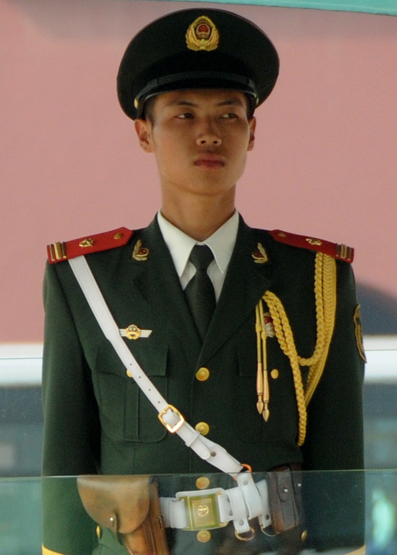
If I had been around in the 1970s or 1980s as a traveler, I probably would have been much more hesitant to take photos of guards and police. As a traveler, however, the country seemed relatively normal from my own experiences, and who knows how much more change China will see in another decade.
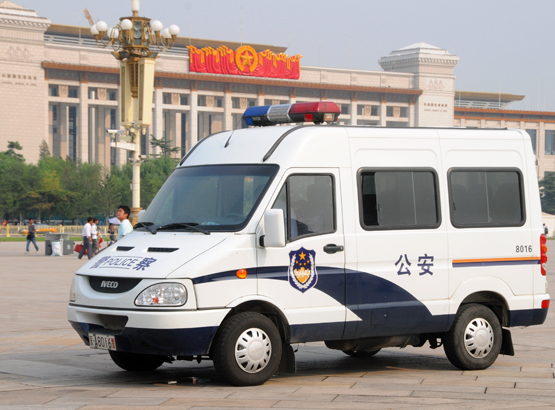
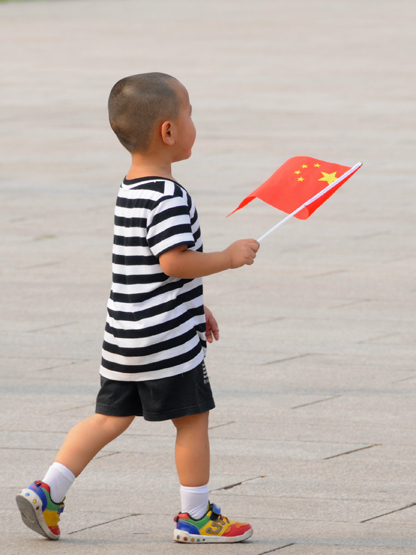
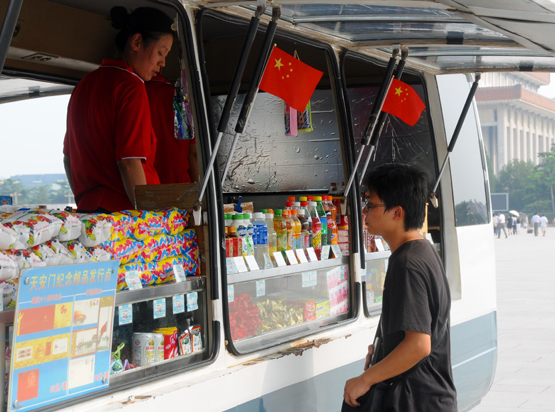
Patriotism was very high in Tiananmen Square. Above is a little boy with a Chinese flag, and nearby was a food stand selling drinks, snacks, and Chinese flags as well.
Of course, the patriotism isn’t limited to Beijing. Throughout China I saw people proudly displaying Chinese flags. Attitudes can vary considerably across such an enormous and diverse country, especially in regions with long-standing political and cultural tensions such as Tibet and Xinjiang.

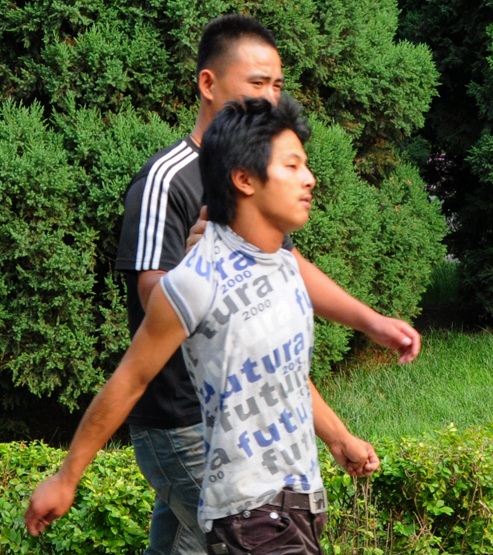
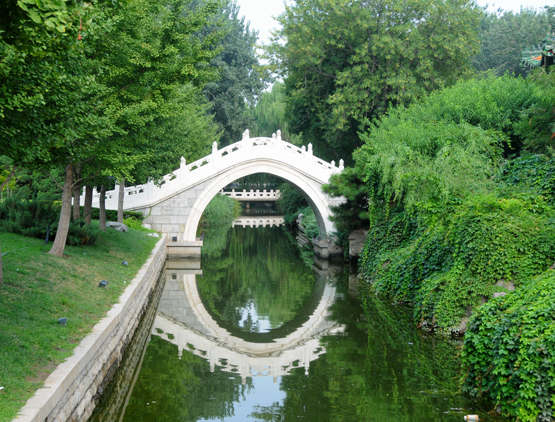
These surrounding photos are of a small park right outside Tiananmen Square. The parks were well taken care of and peaceful to walk through, giving me a break from some of the overcrowded, traffic-jammed streets.
The only exception to the peace in the park was when I heard some yelling and saw a kid sprinting through the park who dropped a bag along the way. Apparently he had tried to steal from someone but was caught by the man holding his shirt above.
I’ve no idea what kind of punishment he received. The guy below was also possibly breaking the rules; he had proudly gone fishing right here in the city park!

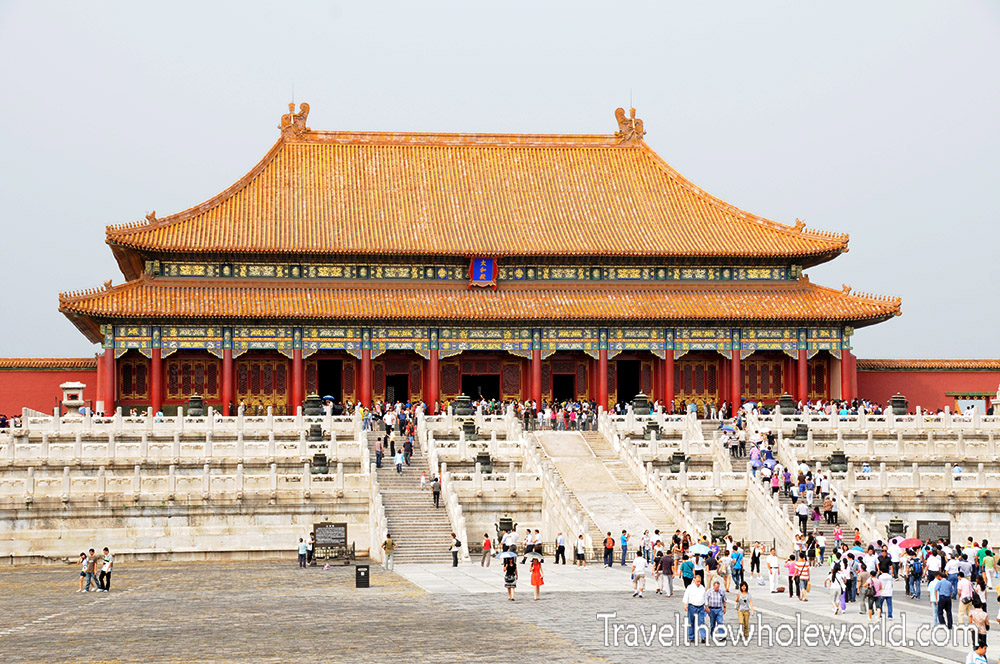
A short walk from Tiananmen Square is the famous Forbidden City. This massive palace complex contains nearly 1,000 surviving buildings and thousands of rooms. Completed in 1420 during the Ming Dynasty, it served as the imperial palace and political center of China through the Ming and Qing dynasties for roughly 500 years.
The final emperor associated with the Forbidden City was Aisin-Gioro Puyi, whose story marked a sad and complicated end to traditions that had spanned several centuries. Puyi formally abdicated as emperor in 1912 when the Qing Dynasty collapsed, although under an agreement with the new Republic of China he was initially allowed to continue living inside the inner court of the Forbidden City and retained some of the privileges and ceremony of an emperor.
Puyi briefly returned to the throne during a failed restoration attempt in 1917, but it lasted less than two weeks. In 1924 he was finally expelled from the Forbidden City following the Beijing Coup. The following year, in 1925, the Palace Museum officially opened, transforming the former imperial palace into a museum open to the public.
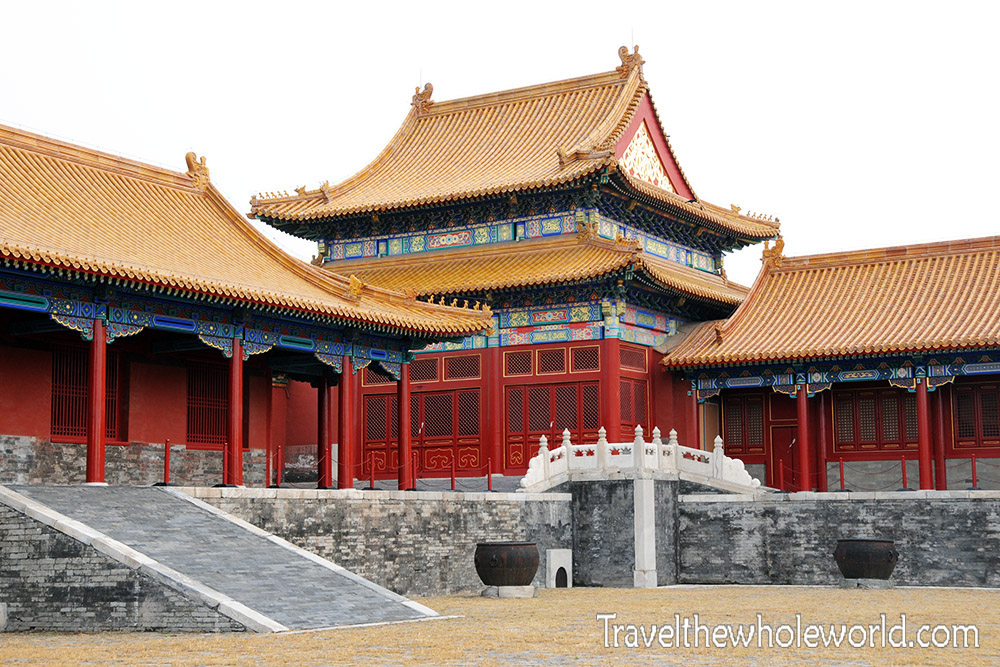
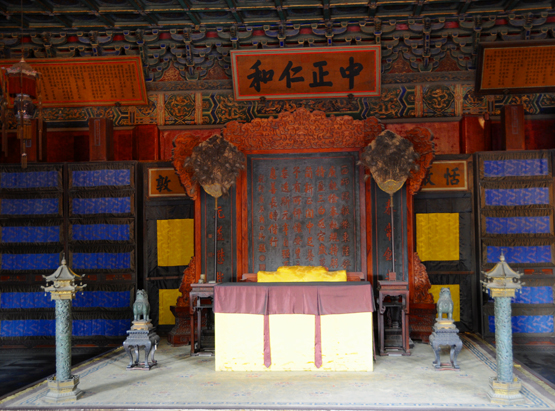
I was aware of the Forbidden City’s vast size but must admit that when I first entered and saw the huge open courtyards, I was a bit disappointed. Of course, it was stupid of me to make such an impression after only a few minutes inside the palace.
It wasn’t until I began to wander through the side alleys and different rooms that I realized how amazing this place was. What an achievement it was to build this enormous complex nearly 600 years ago and have so much of it survive for centuries.
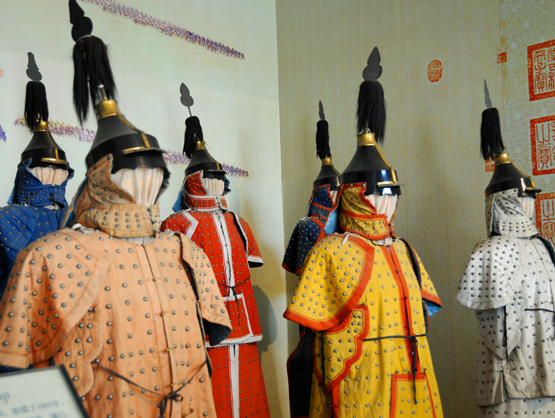
Above are examples of past clothing and the inside of one of the many rooms throughout the palace.
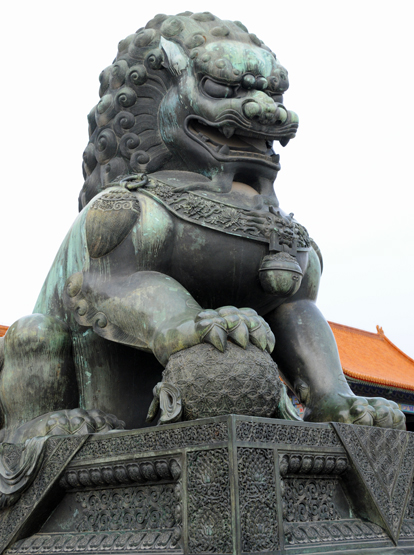
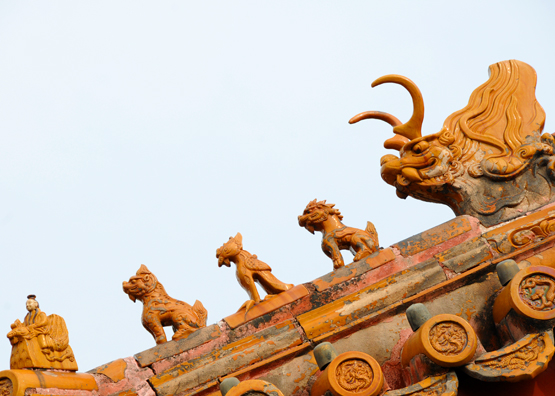
These surrounding pictures are all from the Forbidden City as well. Above are some examples of the architecture and sculptures they created: a dragon statue and smaller decorative figures lining the corner of a roof.
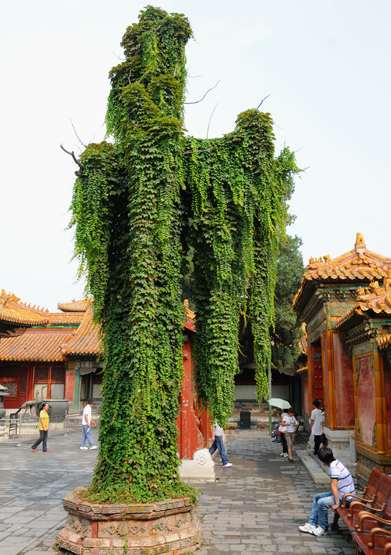
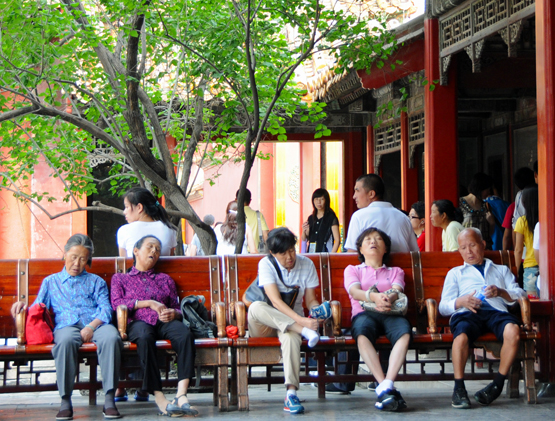
There are several courtyards and places to rest inside the Forbidden City. Below is a large ivy-covered tree and a group of older Chinese tourists who looked like they had their share of walking for the day.
With so much history in this place, I could easily dedicate an entire page solely to the Forbidden City.


As China interacted with outside powers and cultures, European religious influences also appeared in Beijing. St. Joseph’s Cathedral was first established on this site in 1655 after the Qing government permitted foreign Catholic missionaries to build a church here.
The church was destroyed and rebuilt several times because of earthquakes, fire, and political turmoil. The present cathedral was completed in 1904. The building is named St. Joseph’s Cathedral and is also called Wangfujing Cathedral after the district it’s located in.
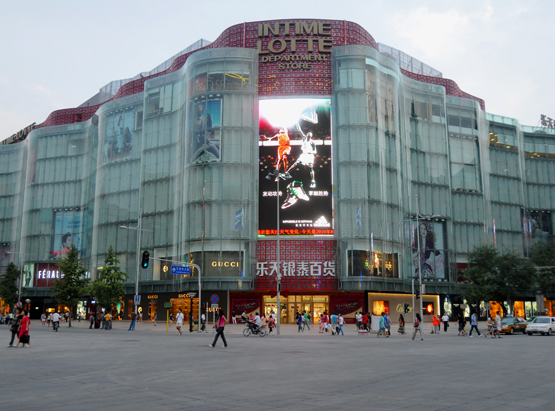
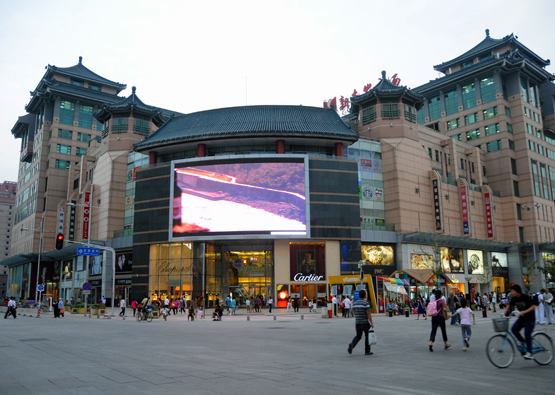
The Wangfujing district is one of Beijing’s most famous shopping and entertainment districts. Long before modern malls and international stores appeared, this area had already served as an important commercial district and was also home to wealthy and influential residents.
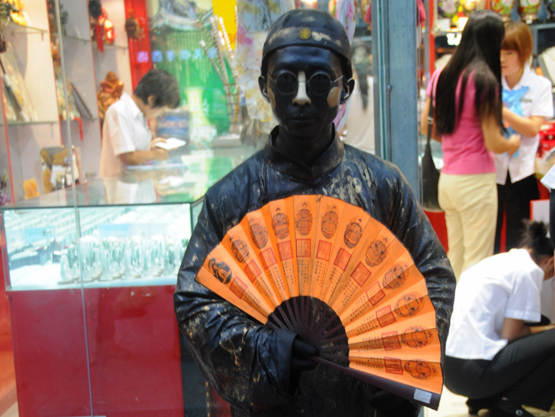
Above are two of the main buildings in the district. Below is a street performer and one of the streets lined with shops and restaurants.
I never did come out here past midnight, but I imagined there was always something going on in the Wangfujing district and you’d never be bored. The scam artist girls accompanied me through Wangfujing as well.
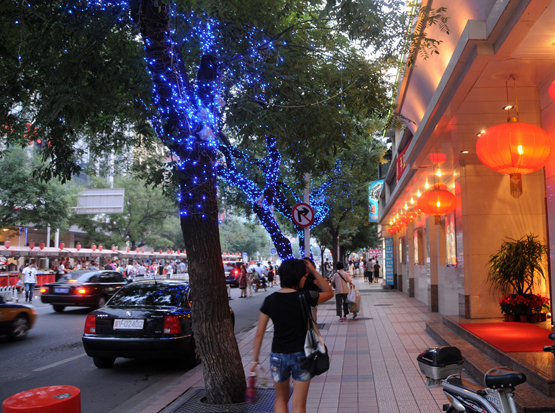
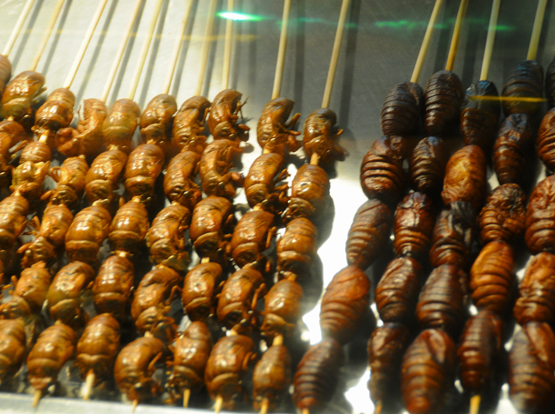

Also part of the Wangfujing area when I visited was a food market commonly called Snack Street. There was lots of exotic cuisine to choose from and many things you won’t normally find in the Western world.
The bugs are the most obvious “snack” you won’t see back home, along with the scorpions. The scorpions were all still alive and squirming about on their sticks. Once you purchased one, it was dipped into hot grease, and then it was all yours to enjoy.
Despite my travels, I’ve never been too adventurous when it comes to trying strange foods like deep-fried bugs. Some people might find this the highlight of their trip. To me, this area would have been more appropriately named Fear Factor Street rather than Snack Street.