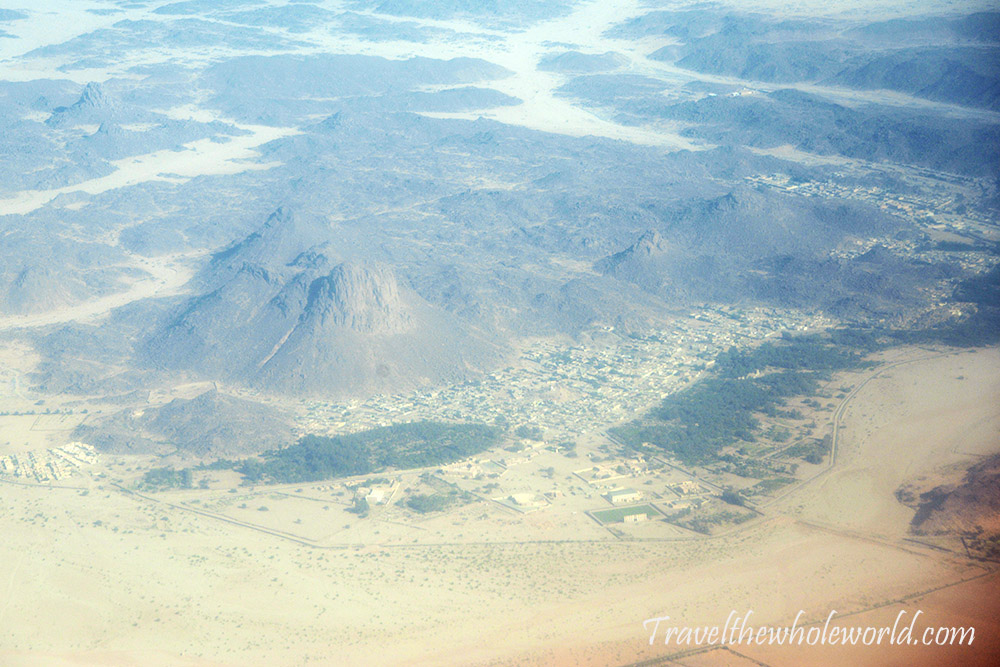
Tucked away in southeastern Algeria is the desert oasis town of Djanet. With only around 15,000 people, it would hardly stand out on a map if there weren’t so few other towns for hundreds of miles in every direction. Surrounded by mountains and the Sahara, Djanet feels incredibly isolated from the rest of Algeria.
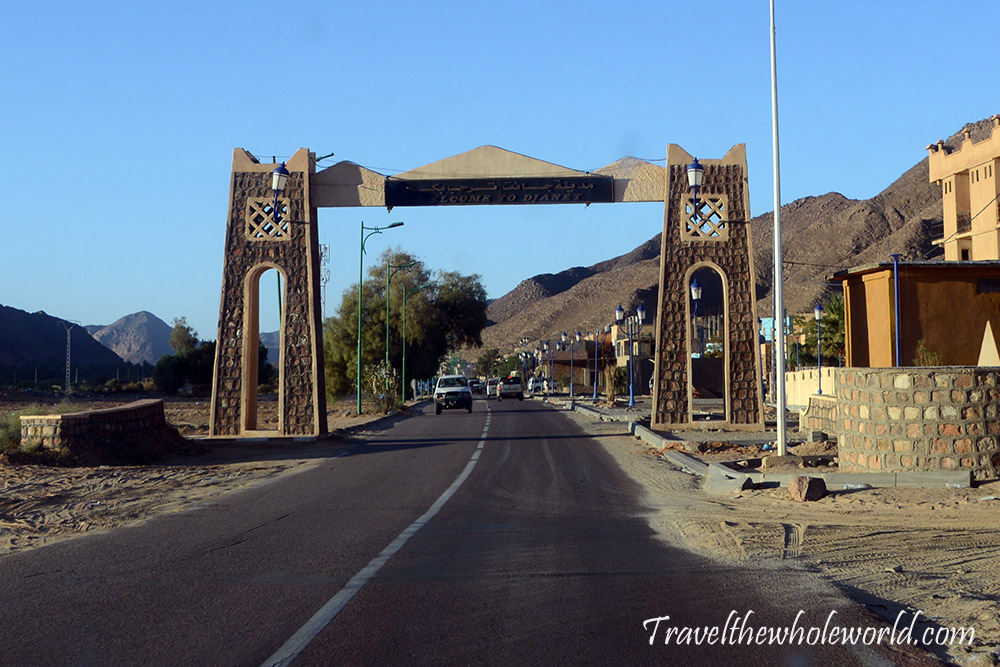
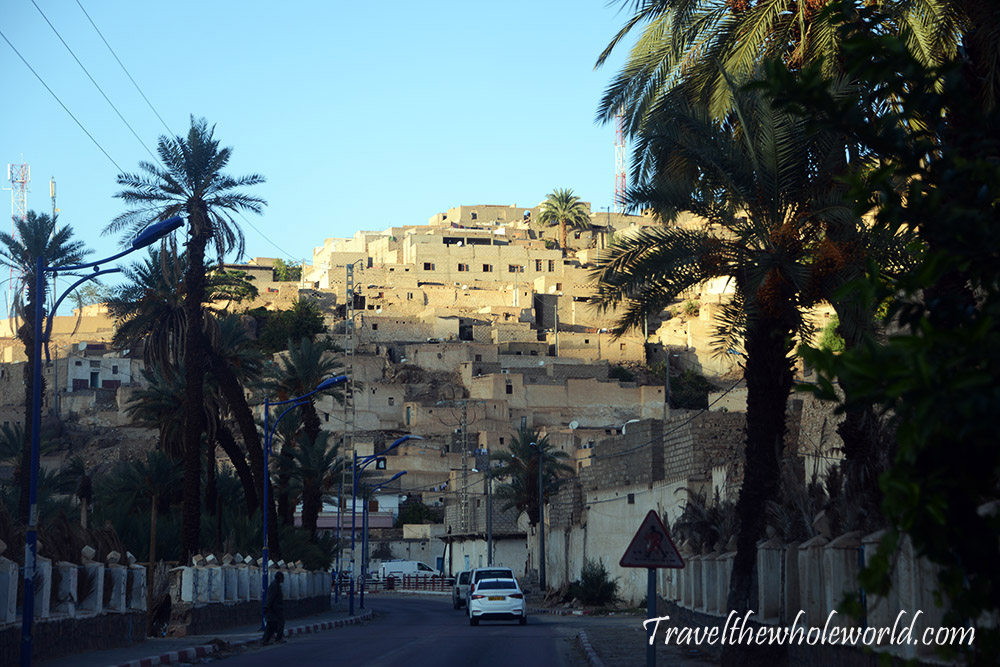
This was one of my first views of Djanet, and the town was considerably larger than I had expected. For most travelers, Djanet isn’t really the final destination. It’s the gateway to the Sahara—a place to fly into, organize supplies, find guides, and prepare before disappearing into the desert.
Still, I found the town itself worth exploring. The mountains surrounding Djanet give it a dramatic setting, and after spending days in the open Sahara, even its relatively small downtown felt busy.
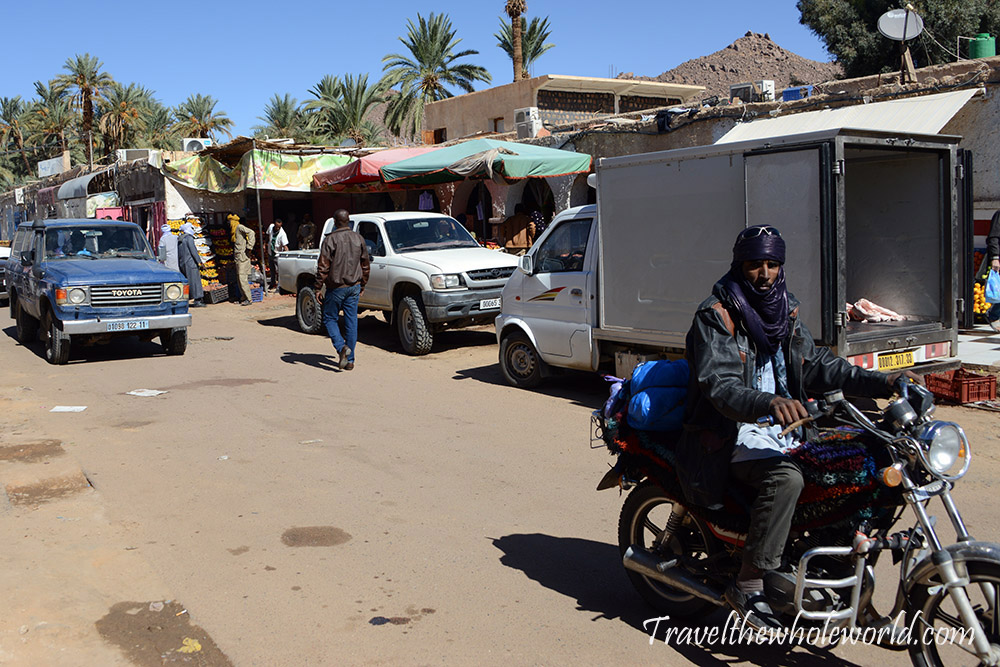
Although Djanet is small by population, the center of town always seemed to have plenty going on. Around the main market were restaurants, small businesses, shops, and people constantly moving through the streets.
I had dinner at a traditional restaurant where the owners seemed extremely excited that I wanted to photograph the place. They kept encouraging me to take pictures of everything—while somehow making it equally clear that they didn’t want to be in any of them.
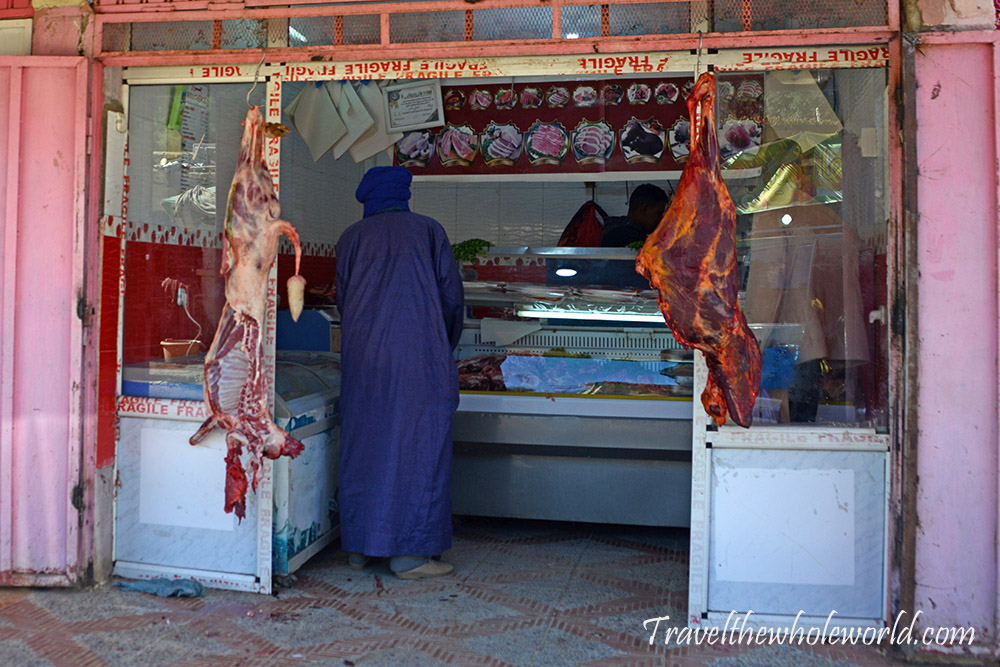
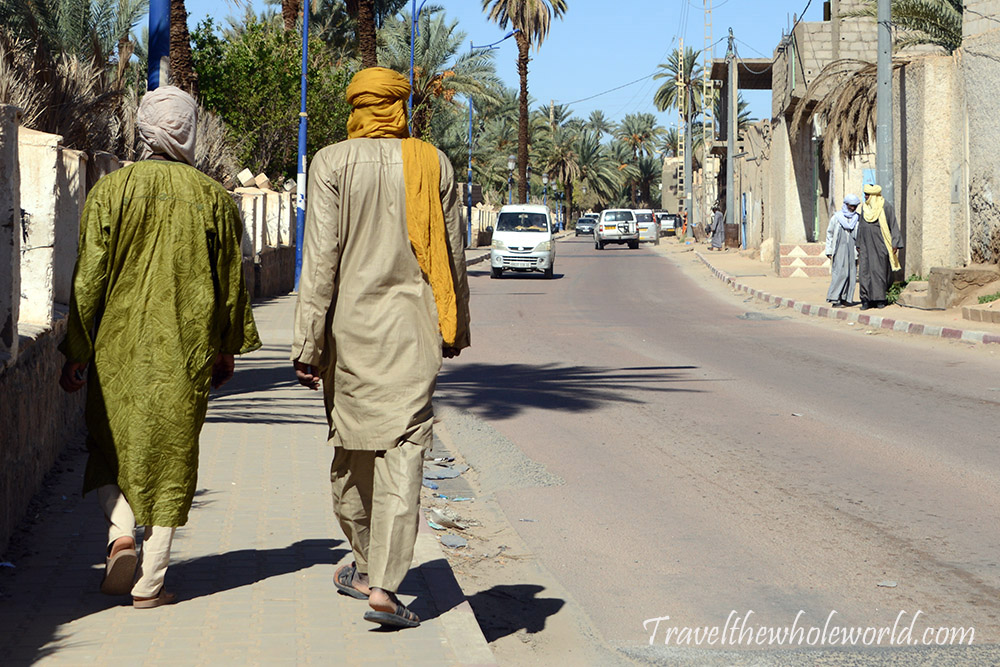
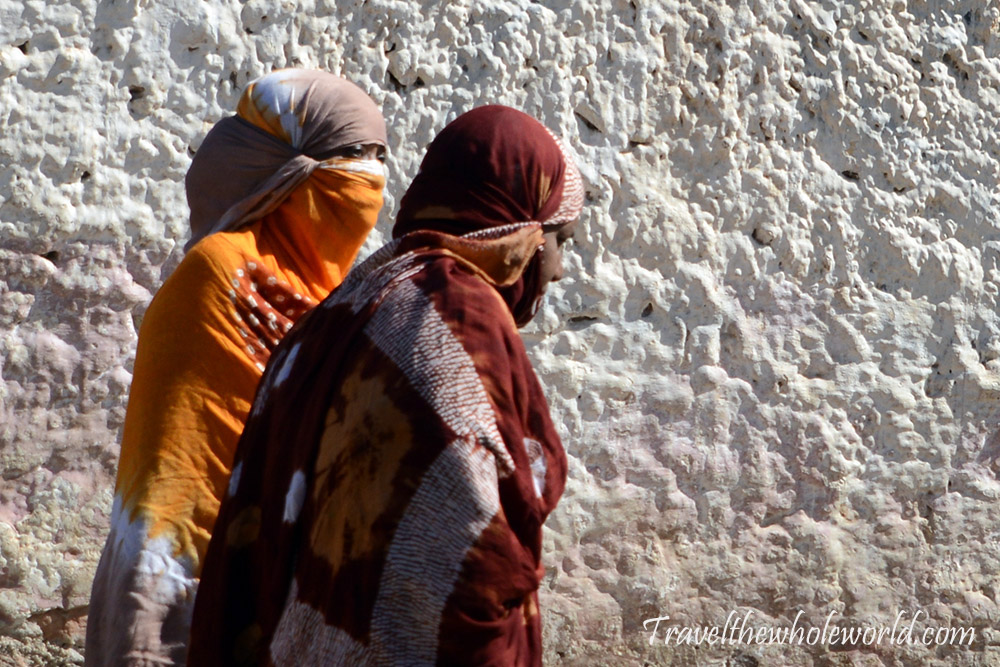
Djanet is located in Tuareg country, and traditional clothing was still a normal part of everyday life here. The Tuareg are one of the Indigenous Amazigh peoples of the Sahara, with communities spread across several countries in North and West Africa.
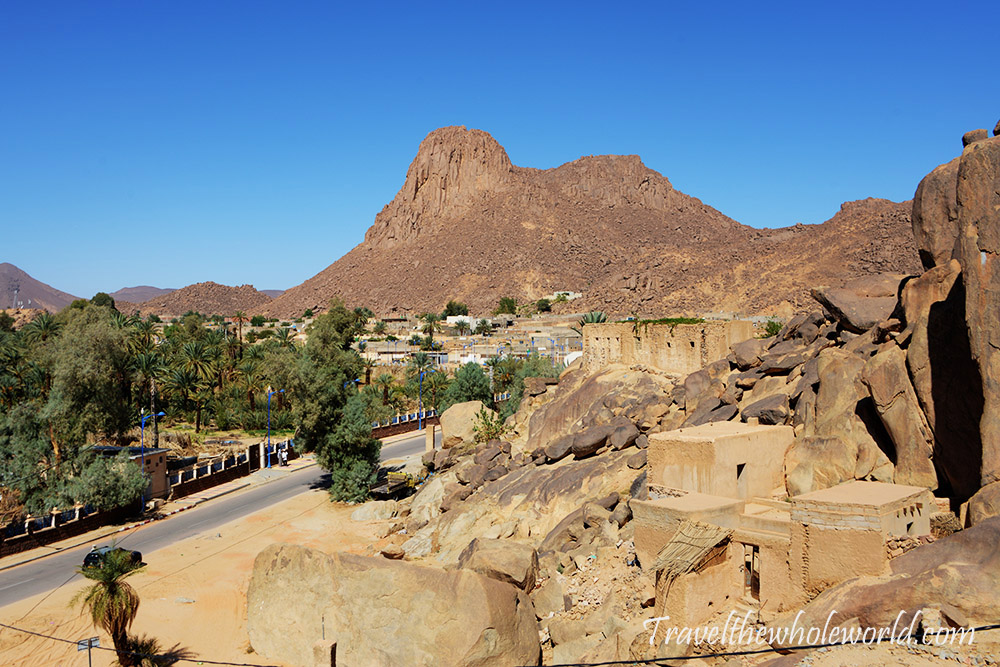
I was lucky to explore Djanet with local Tuaregs who took me to places I probably never would have discovered on my own. One of my favorite areas was the older settlement, where earth-colored houses seemed to disappear into the mountains behind them.
Seeing these homes almost camouflaged against the desert rock made visiting Djanet worthwhile even before heading deeper into the Sahara.
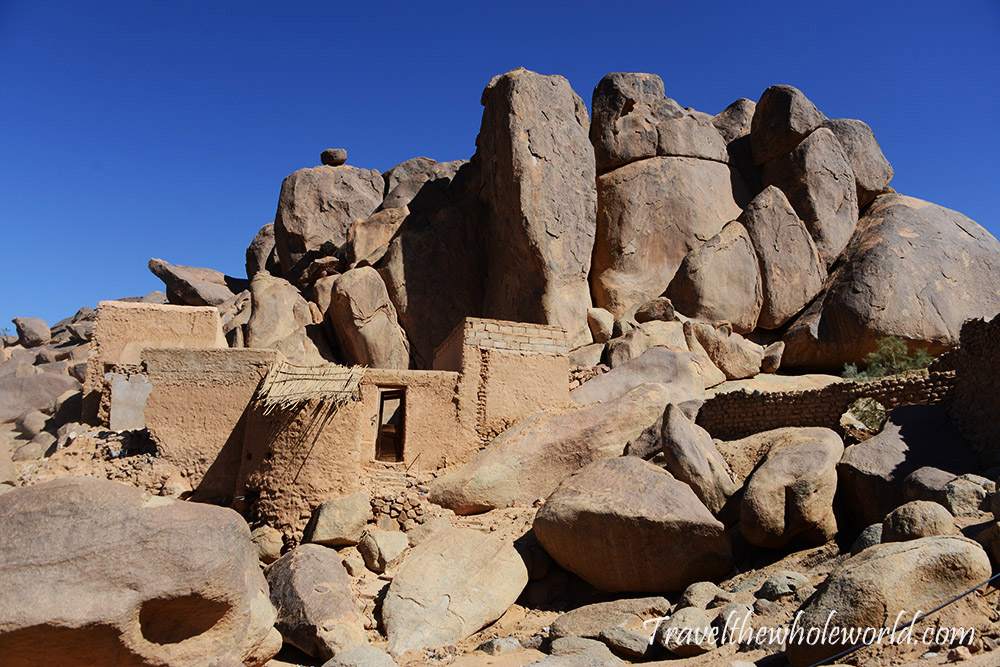
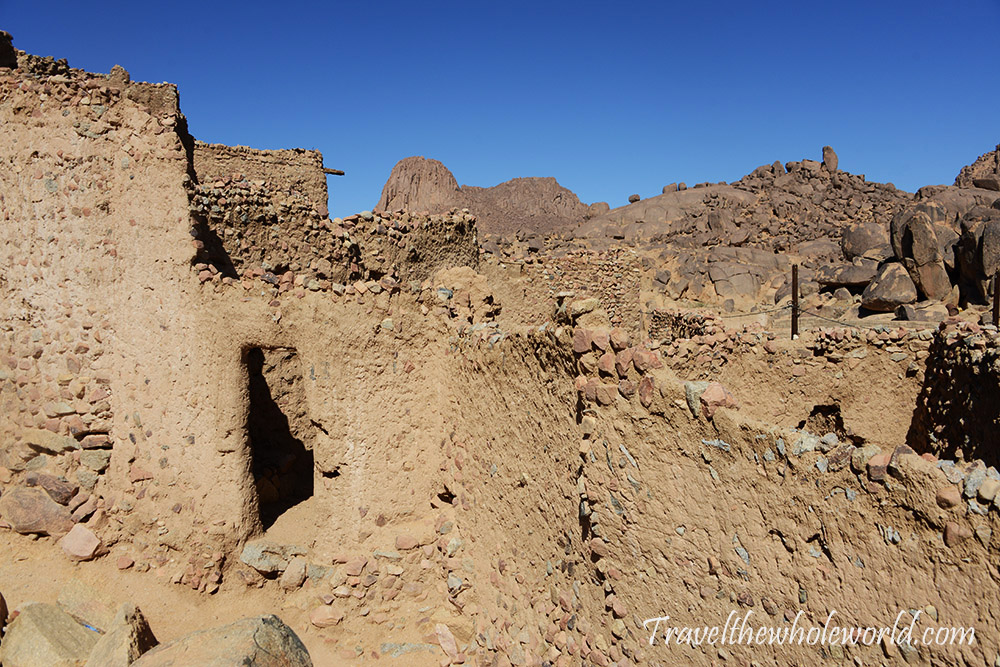
Some of the oldest settlement in this part of Djanet dates back centuries. Considering the harsh desert environment, I was impressed that so much remained at all.
Heavy rain the year before my visit had damaged parts of the old village, and many of the structures that appeared truly ancient were barely standing. Some of the better-preserved buildings in these photographs were probably reconstructed or much newer than the oldest ruins surrounding them.
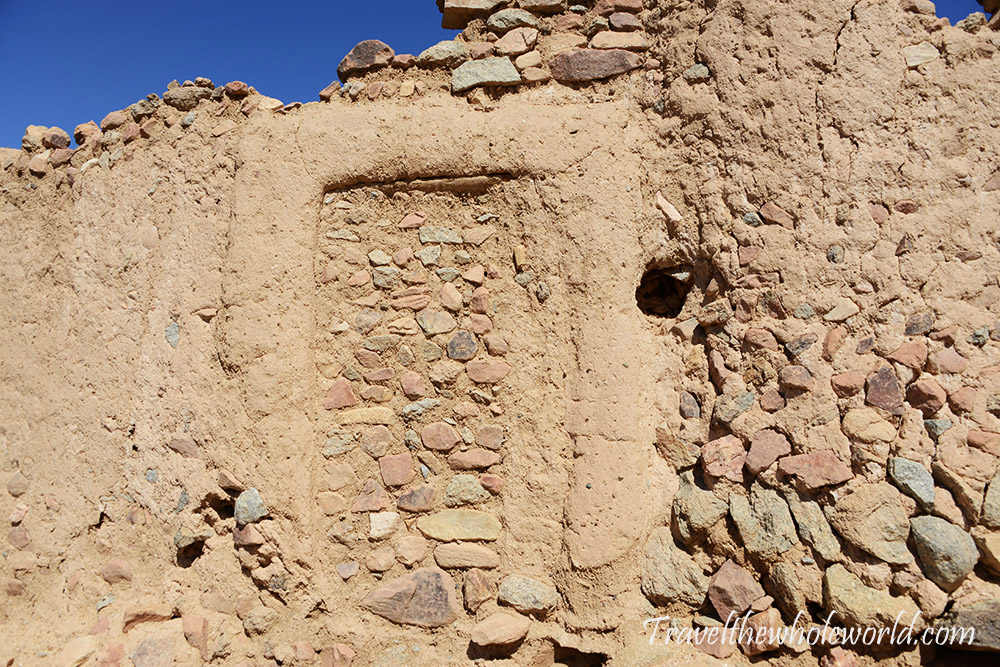
I never found out why someone had sealed this particular doorway. Compared with the surrounding walls, the work looked relatively recent, which only made me more curious about what had been behind it.
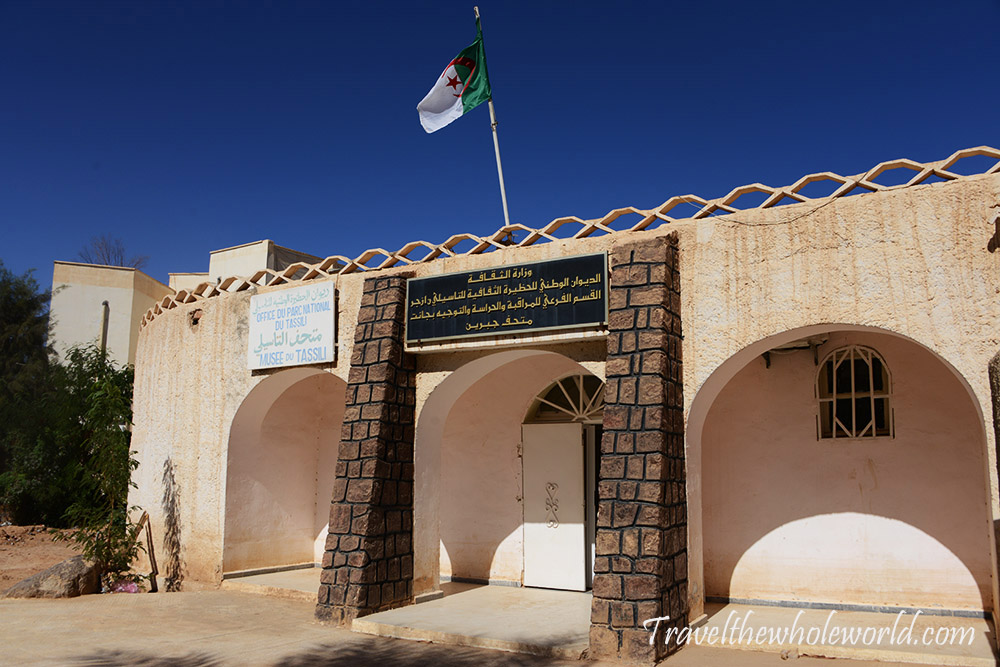
One of the few traditional tourist attractions in Djanet is the local museum. It’s small, inexpensive, and worth a quick visit if you’re spending time in town before or after a desert expedition.
Most of the exhibits focus on traditional life in the region, along with local archaeology, geology, and wildlife.
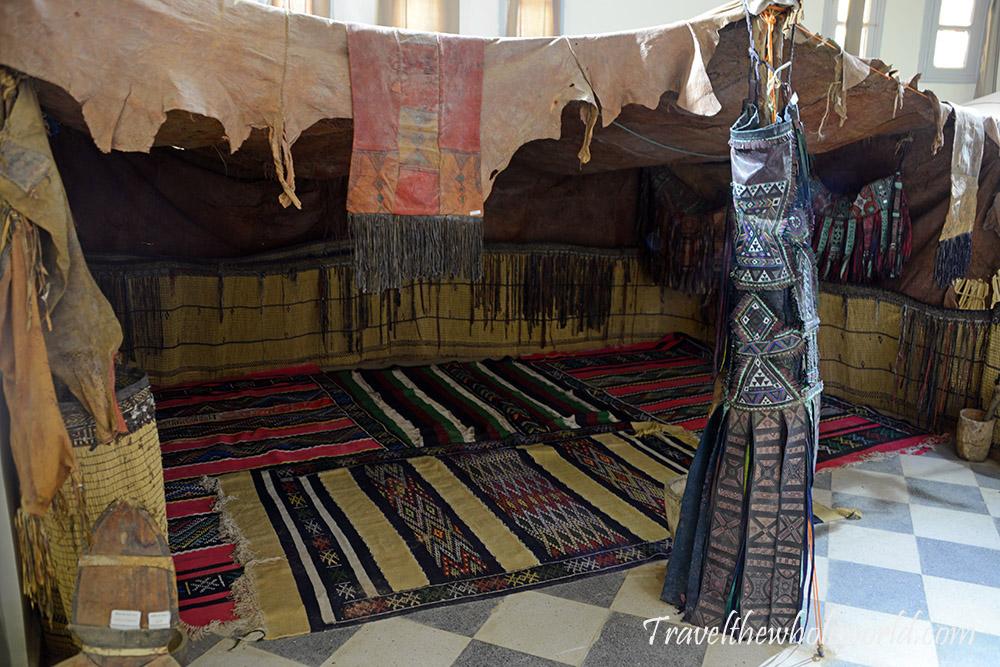
For some reason, photography was prohibited throughout most of the museum except around this more modern shelter. The staff were serious about the rule and seemed to follow me through the exhibits making sure I wasn’t taking pictures.
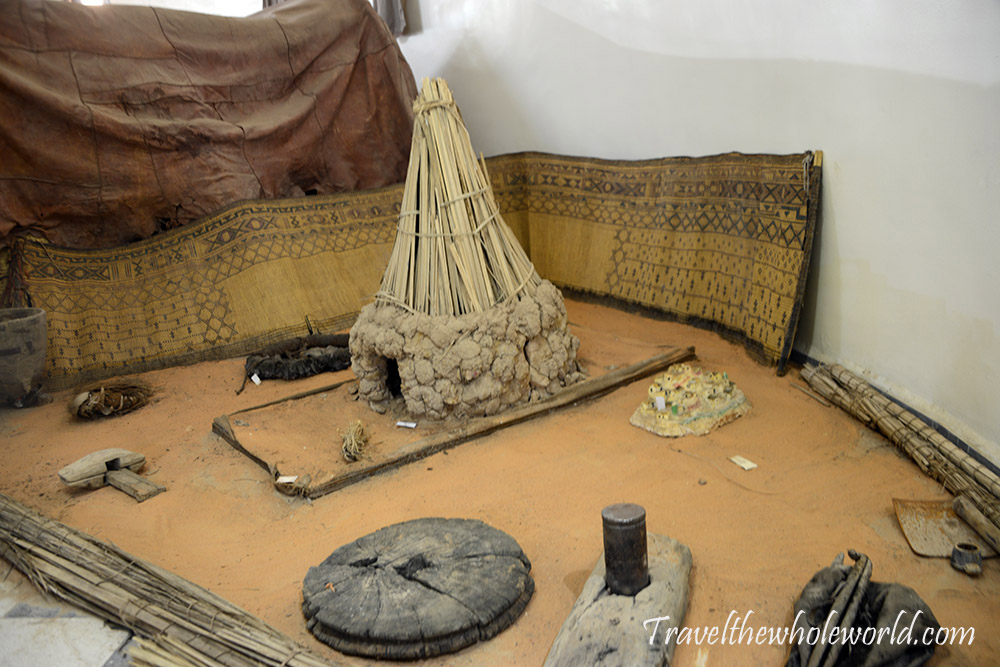
I did manage to take the photograph below, which shows some of the tools and equipment traditionally used for life in the desert. The biggest disadvantage for me was that most of the museum information was written only in Arabic or French, so there was quite a bit I couldn’t fully understand.
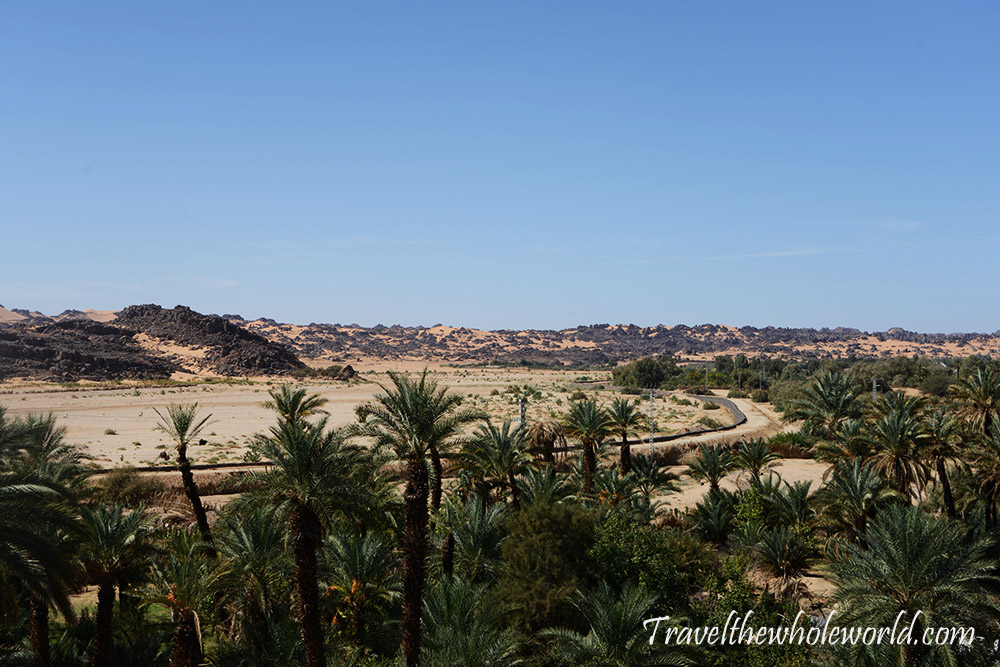
One feature you’ll probably notice around Djanet is the enormous dry riverbed running through the area, with surprisingly little development immediately beside it.
At first I wondered whether there was some cultural or spiritual reason people avoided building there.
I was way off.
The simple answer was flooding. It might look bone-dry most of the time, but desert rainstorms can suddenly send huge amounts of water through these channels. Locals wisely leave the floodplain mostly open rather than building homes directly in its path.
Closer to the riverbed I found palm groves used for growing dates. I stopped to photograph one of the wooden entrances below.
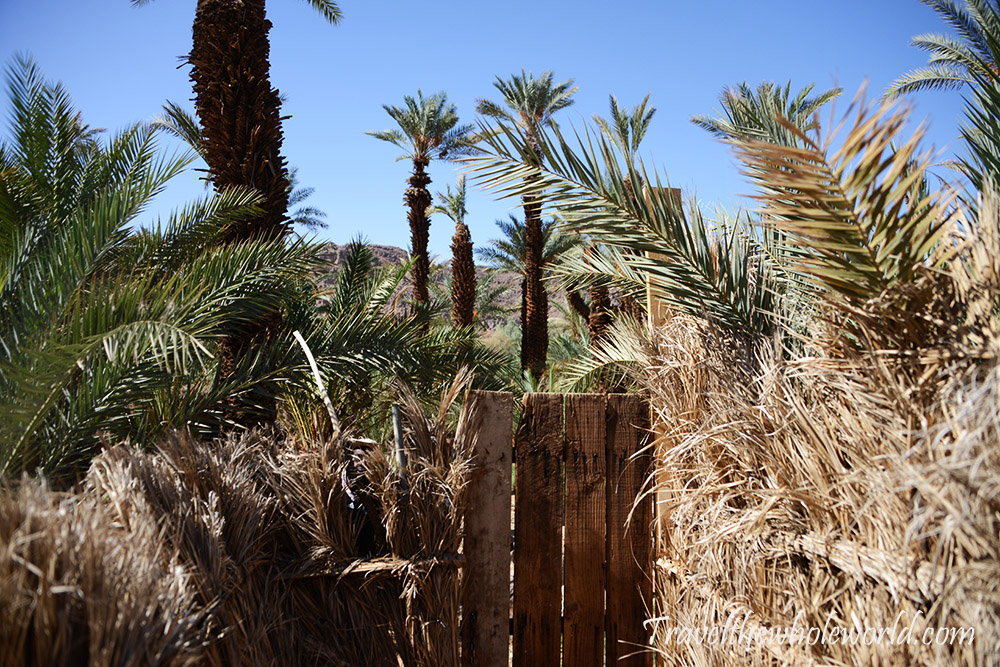
See the man standing about ten feet away staring directly at me?
I didn’t either—until he yelled at me.
Djanet was never going to compete with the Sahara itself for the most dramatic part of my trip, but I enjoyed the town far more than I expected. Between the old settlement, markets, palm groves, museum, and the mountains surrounding everything, it felt like much more than simply a place to refuel before heading back into the desert.
Explore More of Algeria
Algiers • Constantine • Djanet • the Sahara