Algeria is the largest country in Africa, stretching from the Mediterranean coast deep into the Sahara. Much of the country is desert, but Algeria’s landscape is remarkably varied, with enormous sand dunes, rugged mountain ranges, ancient rock formations, fertile northern regions, and cities shaped by thousands of years of history.
My trip took me from the Mediterranean coast into some of the most remote parts of the Sahara. Along the way I explored historic cities, oasis towns, dramatic ravines, prehistoric rock art, and desert landscapes that looked almost unreal. The contrast between the cities of northern Algeria and the immense Sahara farther south made this one of the most varied trips I’ve taken in North Africa.
Explore the Sahara
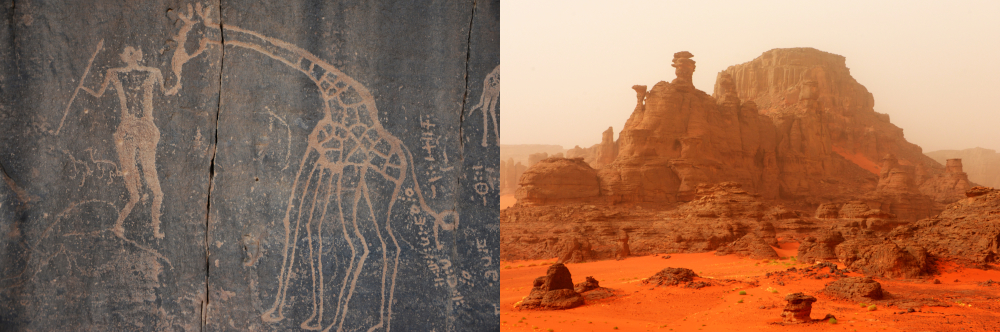
Algeria contains an enormous section of the Sahara, where the landscape ranges from vast fields of sand dunes to isolated mountains and dramatic sandstone formations. In the country’s southeast, towering rock formations rise above colorful expanses of desert, while prehistoric rock art preserves evidence of people and animals that lived here thousands of years ago.
The sheer scale and isolation of the Algerian Sahara make it one of the country’s greatest natural attractions, with landscapes that can change dramatically from one part of the desert to another.
Explore Djanet
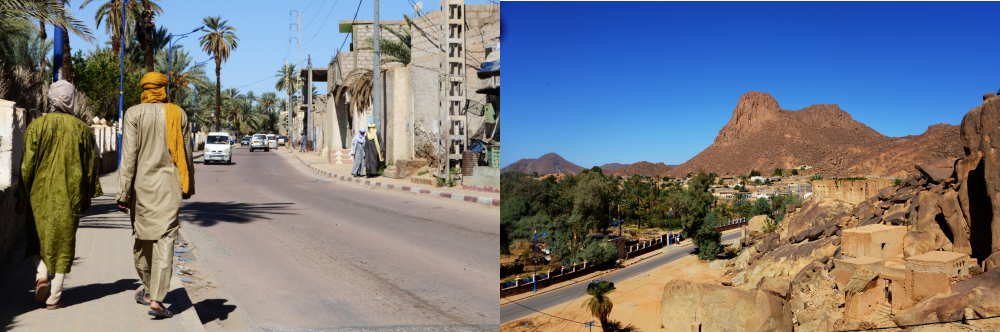
Djanet is an oasis town deep in southeastern Algeria and one of the principal gateways to the surrounding Sahara. Mountains and rocky desert rise around the settlement, while traditional architecture and palm-filled areas contrast with the immense arid landscapes beyond the town.
Its remote location gives Djanet a character very different from Algeria’s northern cities. For travelers heading into the Sahara, it serves as an important base for exploring the extraordinary desert landscapes and prehistoric sites of the surrounding region.
Explore Algiers
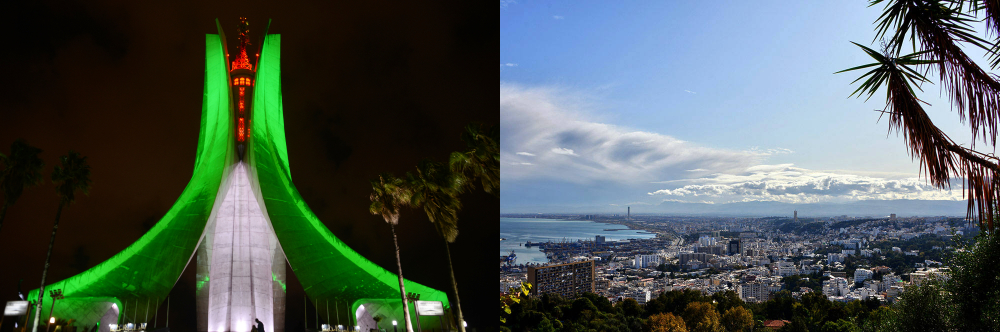
Algeria’s capital sits along the Mediterranean coast and feels completely different from the Sahara farther south. Algiers is a dense city of white buildings, steep streets, historic neighborhoods, mosques, museums, and architecture reflecting the many civilizations and empires that have shaped this part of North Africa.
Roman, Islamic, Ottoman, French, and modern Algerian influences all form part of the city’s history. Combined with its Mediterranean setting and famous hillside neighborhoods, they make Algiers one of the country’s most important cultural and historical destinations.
Explore Constantine
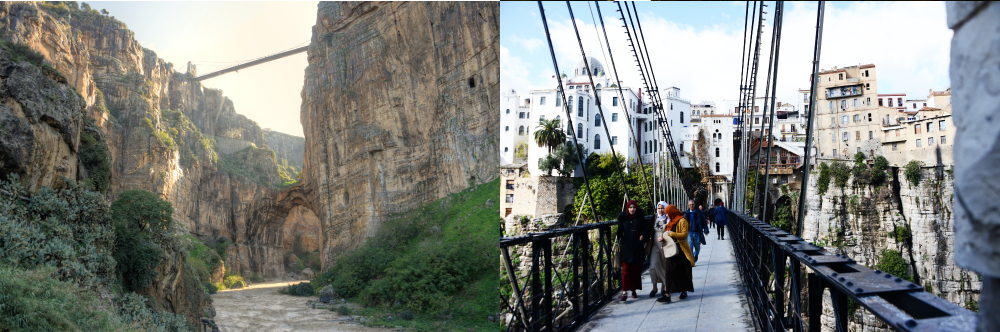
Constantine occupies one of the most dramatic settings of any city in North Africa. Much of the historic city stands above the deep Rhumel Gorge, with a series of bridges spanning enormous drops and connecting different sections of the city across the ravine.
With roots stretching back more than two thousand years, Constantine combines a long history with extraordinary geography. Its bridges and steep rocky setting have earned it the nickname City of Bridges, creating spectacular views throughout one of Algeria’s most distinctive cities.
