After what happened to me on Everest in Nepal the previous climbing season, I returned to the mountain a full year later to settle the score. This time I preferred to do a new route and have a new experience instead of repeating all the same steps I did the year before.
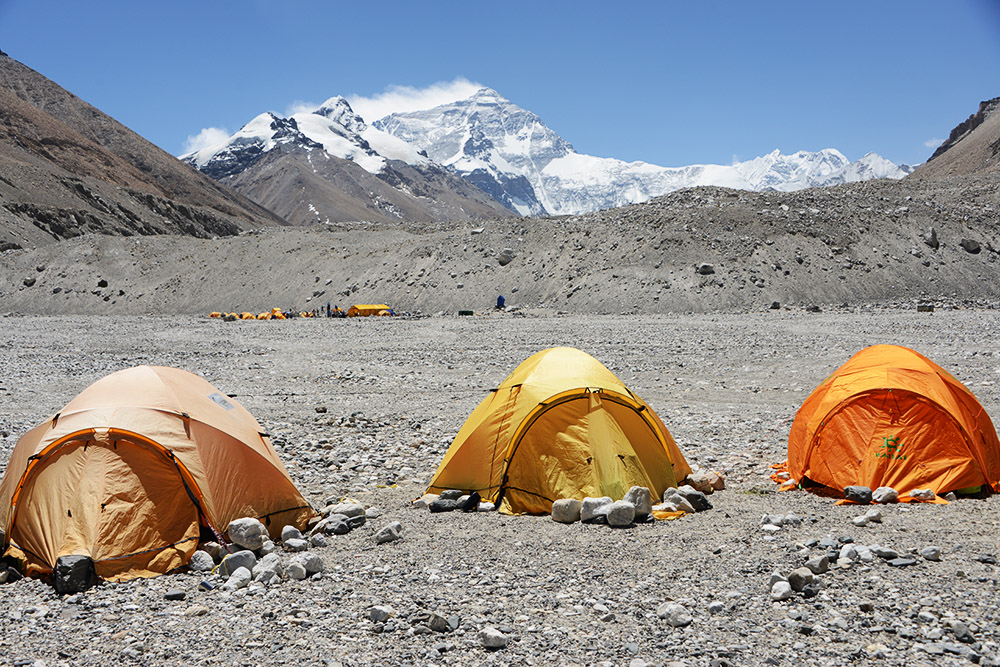
I arrived in Tibet in early April, and from day one things were vastly different. First off, you can actually see Mt. Everest from Base Camp, unlike on the Nepal side. The photo above shows my tent with the highest point on Earth in the background.
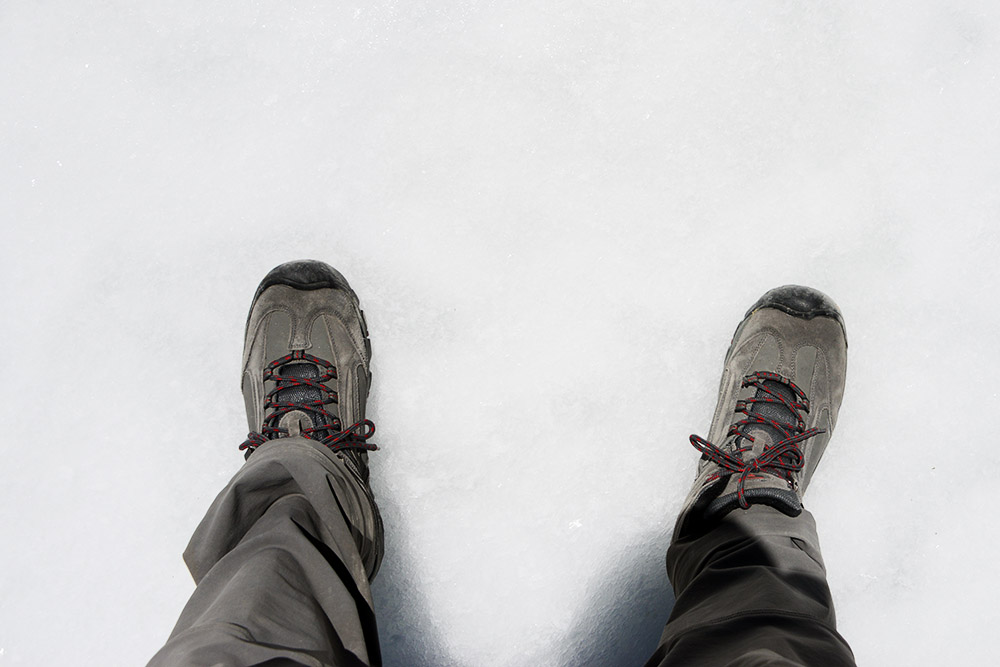
The Tibet side is much, much drier. There are a few patches of ice in Base Camp, like this one I walked across above, but for the most part it’s dirt. Unlike the Nepal side, where you’re actually camping on a slowly moving glacier that’s covered by rocks, Tibet’s Base Camp is situated on much drier ground.
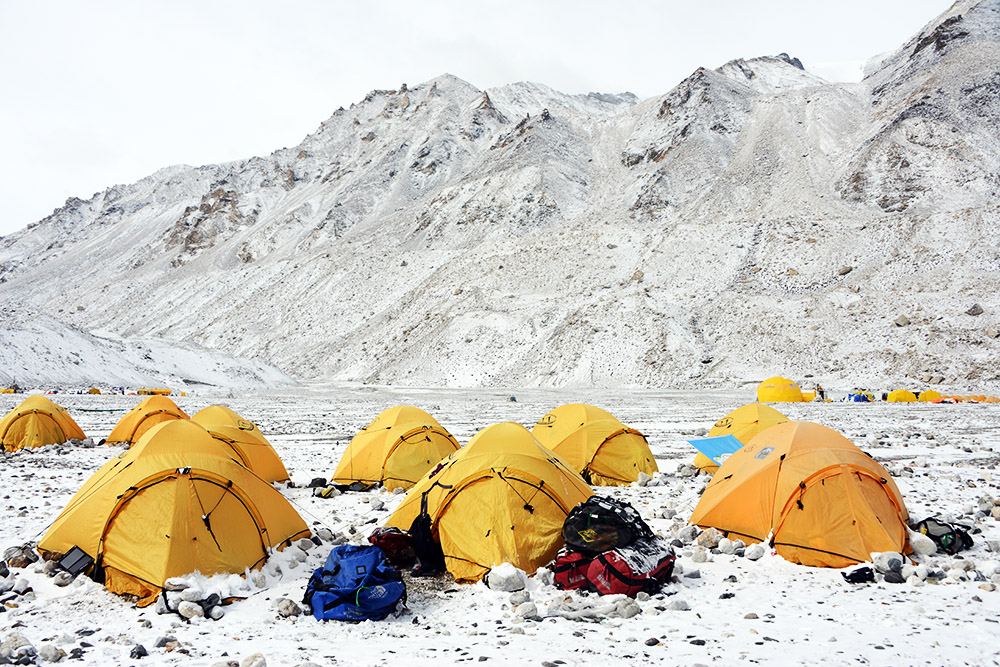
Even though the Tibet side is drier, it of course still gets snow and has some dramatic scenery. I have to admit that while the Tibet side has a view of Mt. Everest, the views in the other directions are not nearly as impressive as Nepal’s Base Camp. Nepal’s Base Camp is surrounded by glaciers and frequent avalanches, as well as the Khumbu Icefall that flows past camp.
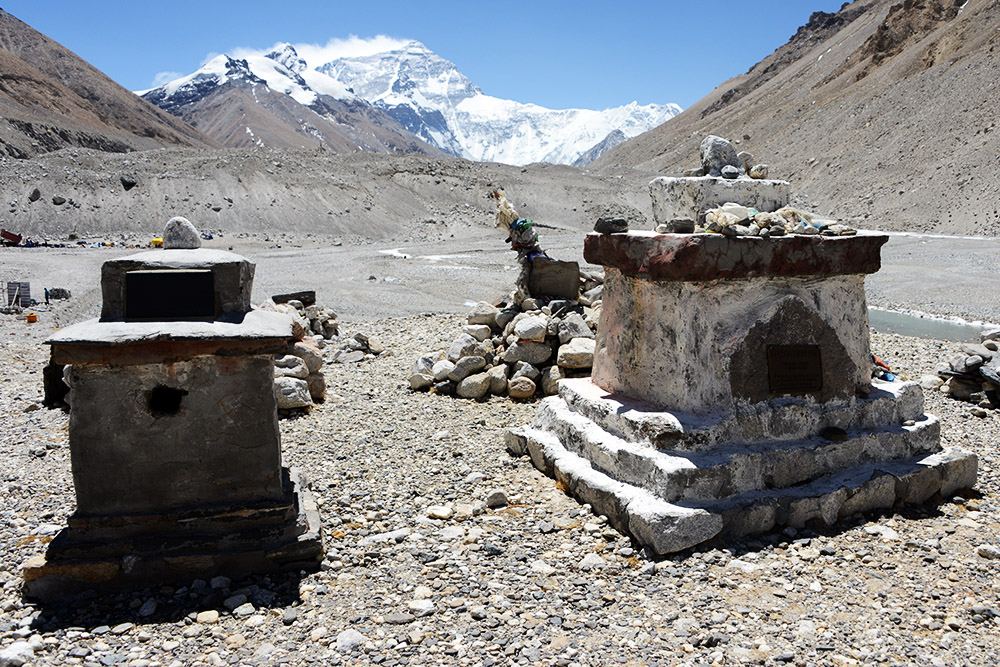
Nepal’s Everest Base Camp is more like a small city, while Tibet’s is a quiet village. There’s a climbers memorial directly in Base Camp that you can walk to. There were about a dozen memorials here, unlike the countless ones I had seen on the south side. A small memorial for George Mallory exists on the outskirts of camp as well.
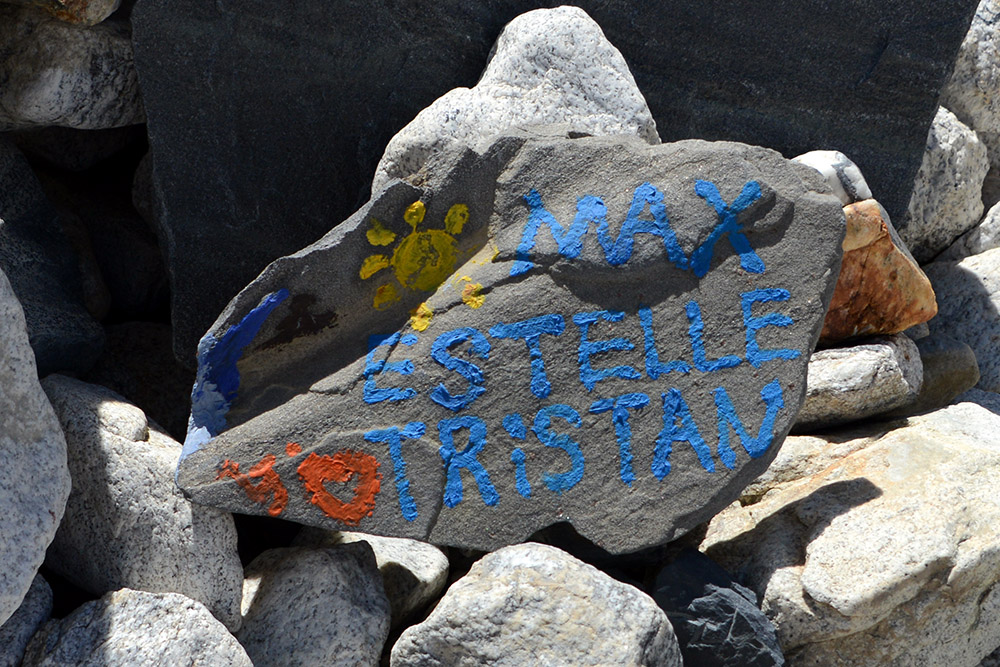
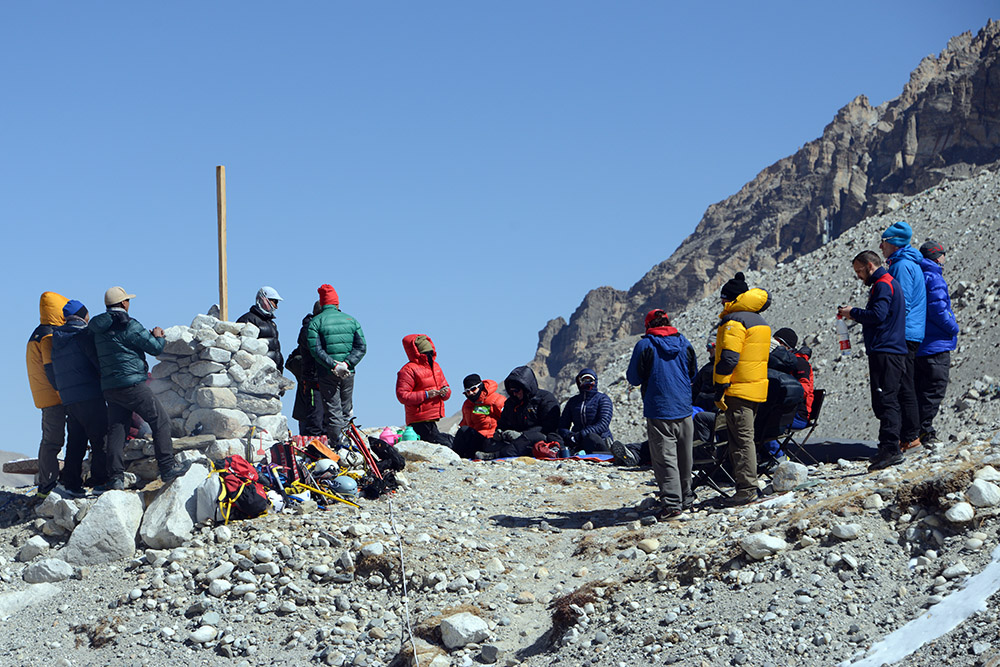
Maybe the only thing that both base camps share is their Buddhist puja ceremony. A Buddhist monk comes from a local monastery to bless the entire team and its climbing gear. The photo above shows members of my expedition team as the puja ceremony is about to begin.
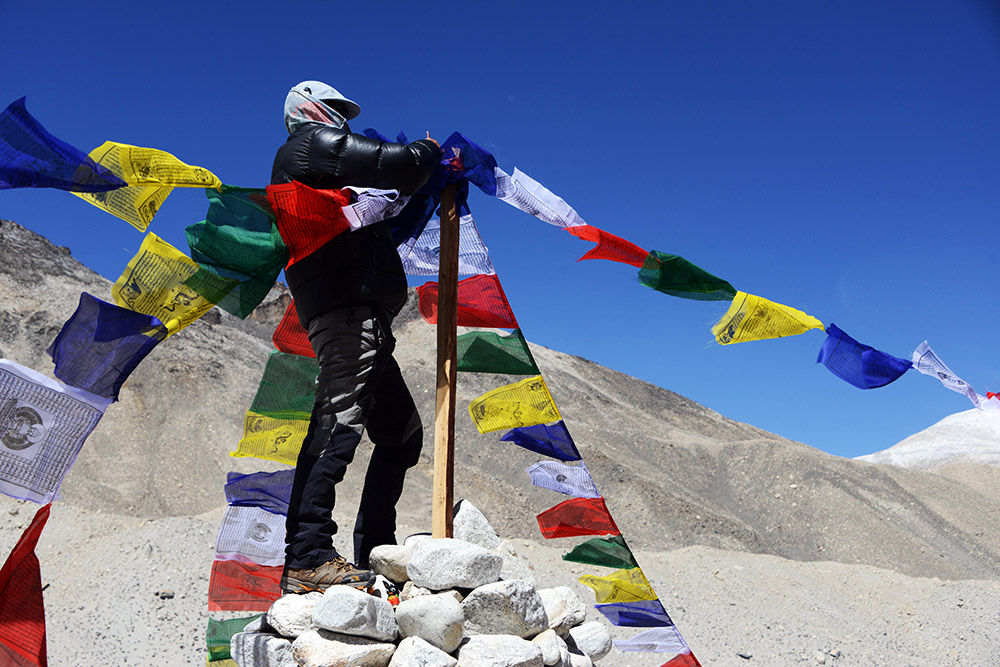
This year’s puja ceremony was much colder than the one the year before in Nepal. I think because of the cold and wind, we didn’t really have as much of an “after party” as we did after the previous puja ceremony.
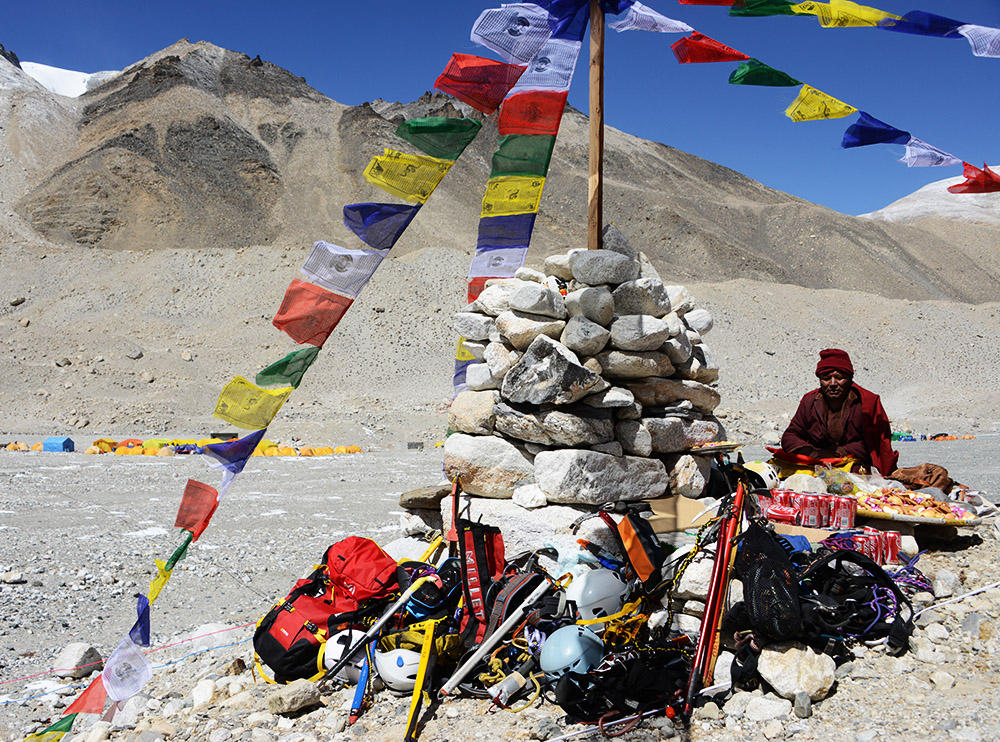
The ceremony begins with the monk chanting and blessing our gear. Maybe after 30 minutes, a Sherpa goes up and extends the prayer flags from a large column of rocks that had previously been built. The ceremony continues for another 30 minutes. Afterwards, we celebrate with alcohol, food, tea, and by throwing rice over our blessed gear.
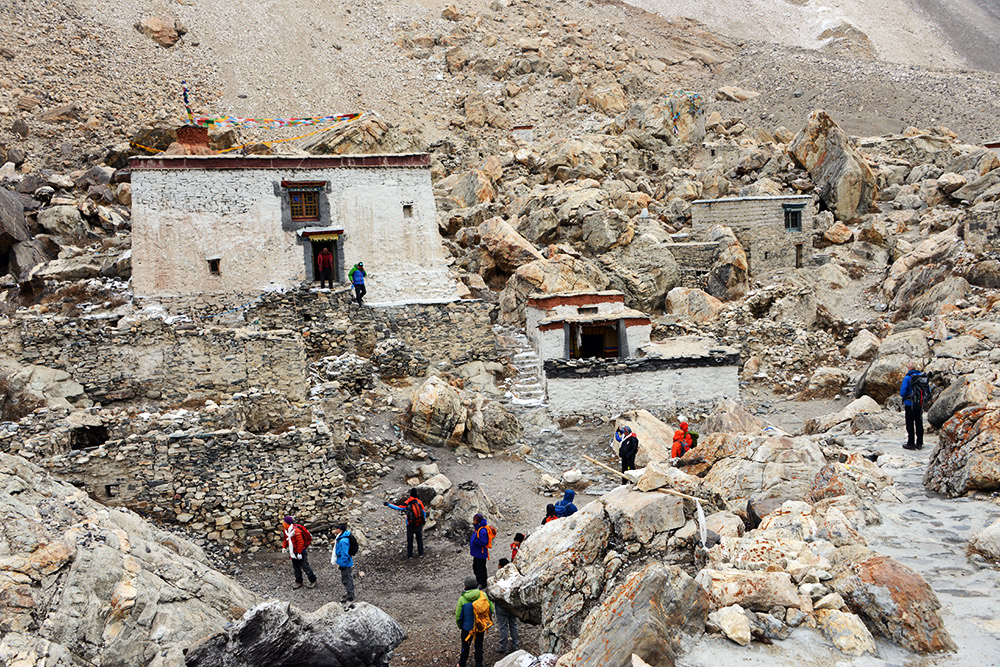
Just a short hike from Base Camp is the famous Rongbuk Monastery. Often described as the highest monastery in the world, it sits at an elevation of about 16,500 feet (5,000 meters). The monastery existed for years before the first serious attempts were made to climb Mt. Everest.
As a matter of fact, when George Mallory and the other members of the early British Everest expeditions first arrived in the region, they visited Rongbuk and received the blessing of the local religious leaders before continuing toward the mountain.
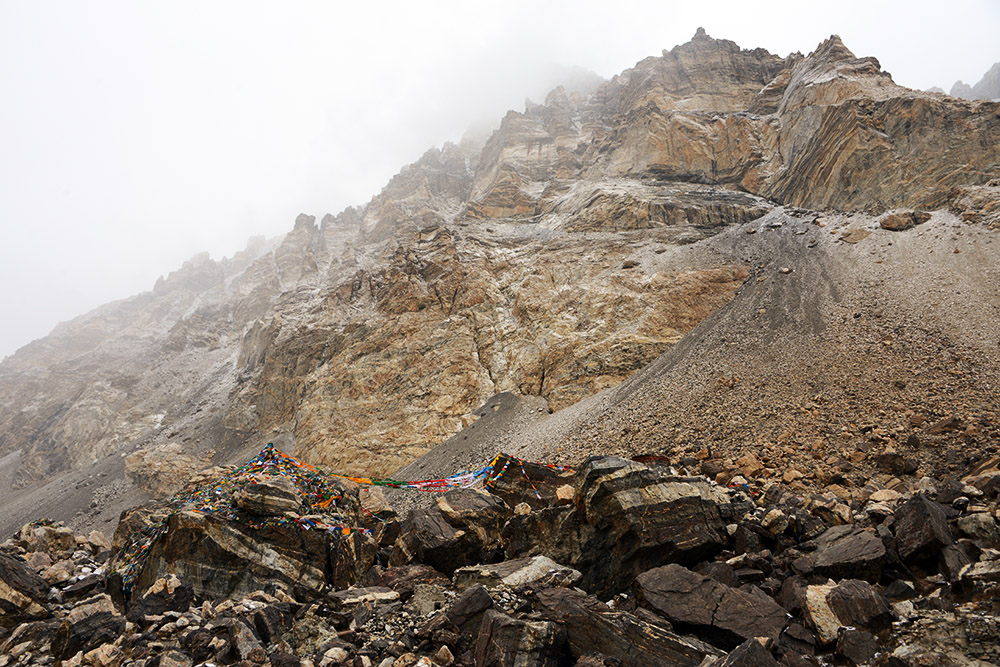
The monastery is built in a brutal high-altitude and cold environment. I can’t imagine what it must be like staying here over the winter. The photo above shows some of Rongbuk Monastery’s backyard, full of scraggly mountains with prayer flags at the bottom.
By the mid-2010s, Rongbuk Monastery had direct access to a normal road and power lines providing electricity, a dramatic change from the isolation experienced by the early Everest expeditions. Below are some tourists from China who were visiting and praying at the monastery.
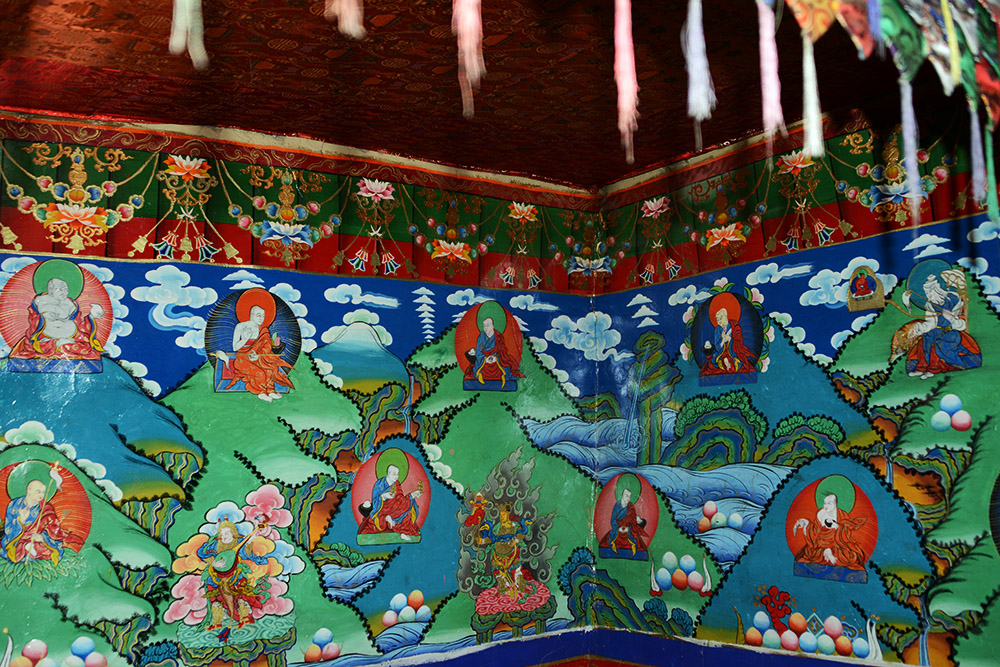
Inside, Rongbuk Monastery was much warmer and more colorful than the barren landscape outside. The rooms were filled with traditional Tibetan Buddhist decorations, religious artwork, and offerings. After spending so much time surrounded by rock, snow, and the muted colors of the high Himalayas, the bright colors inside really stood out.
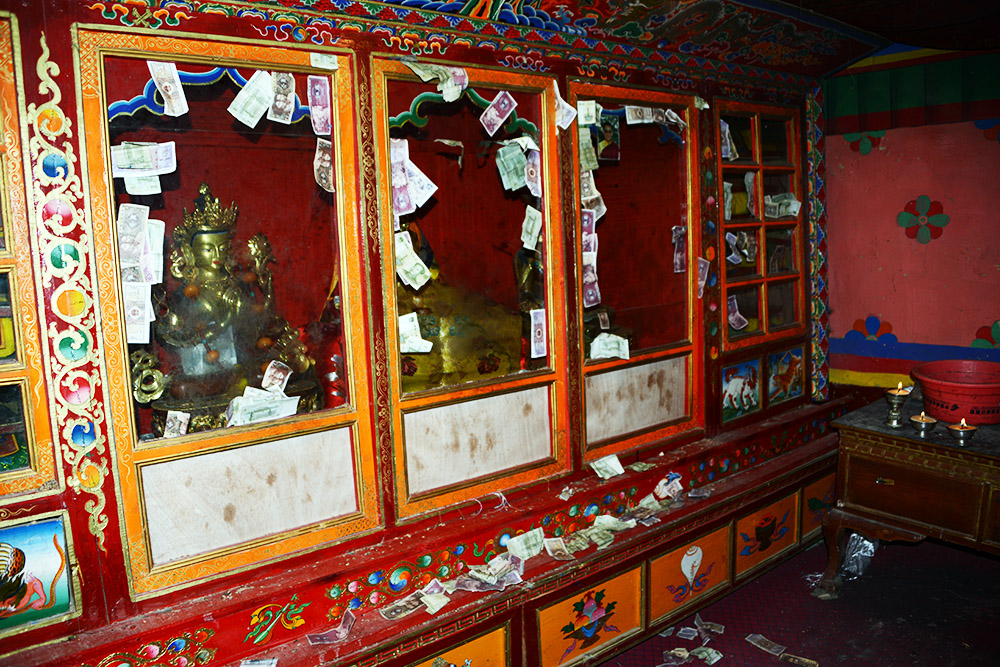
Walking through the monastery also made it easy to forget for a moment that we were at roughly 16,500 feet in one of the harshest environments on Earth. Despite its remote location, this was still an active place of worship rather than simply a historic site for visitors.
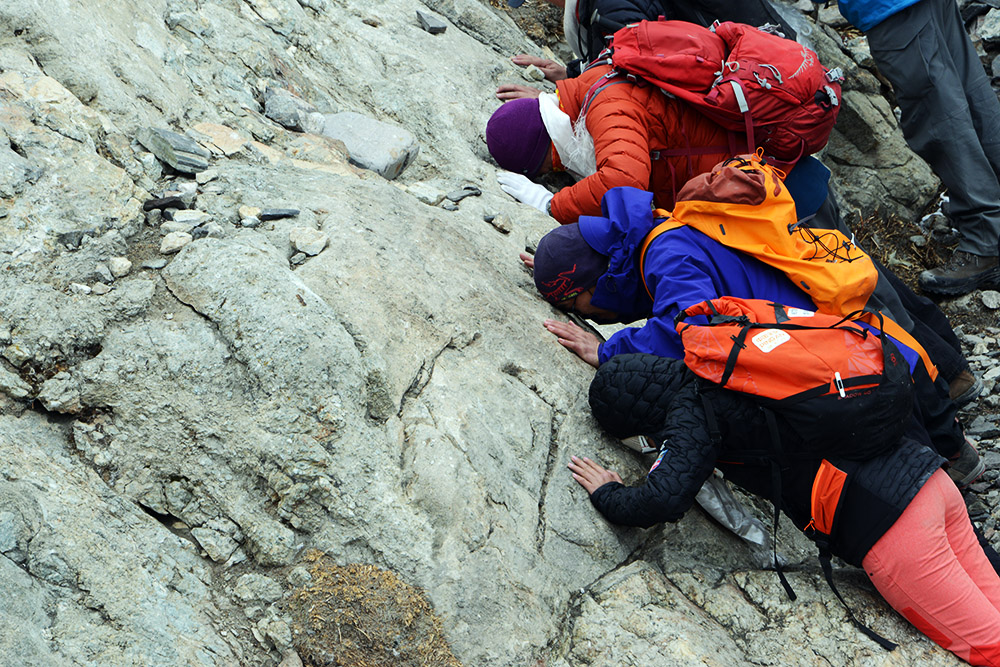
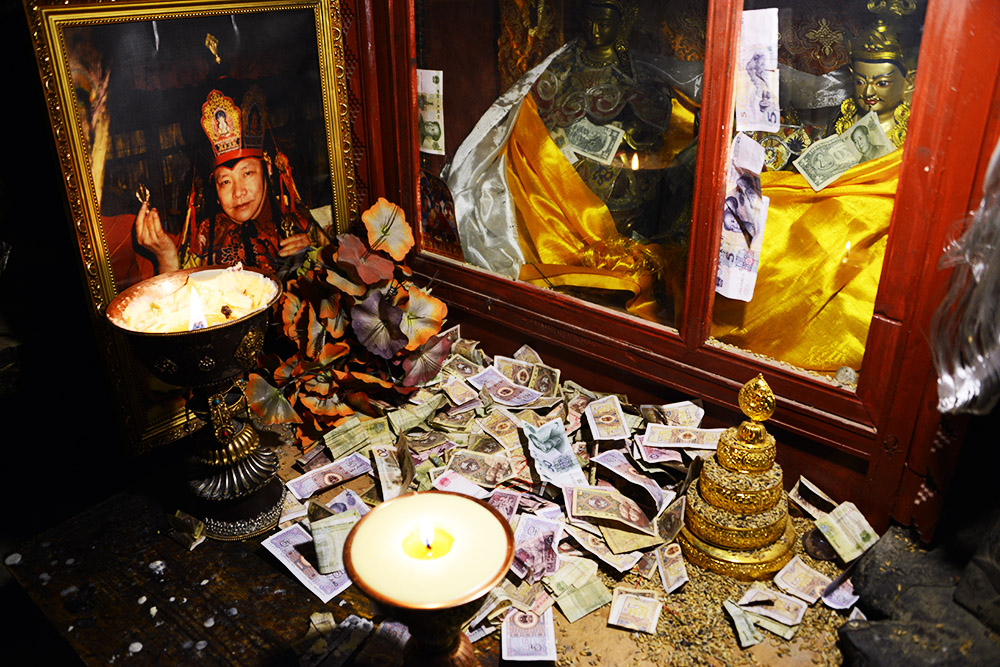
One of the unique parts of the monastery is an underground room that’s part of a cave.
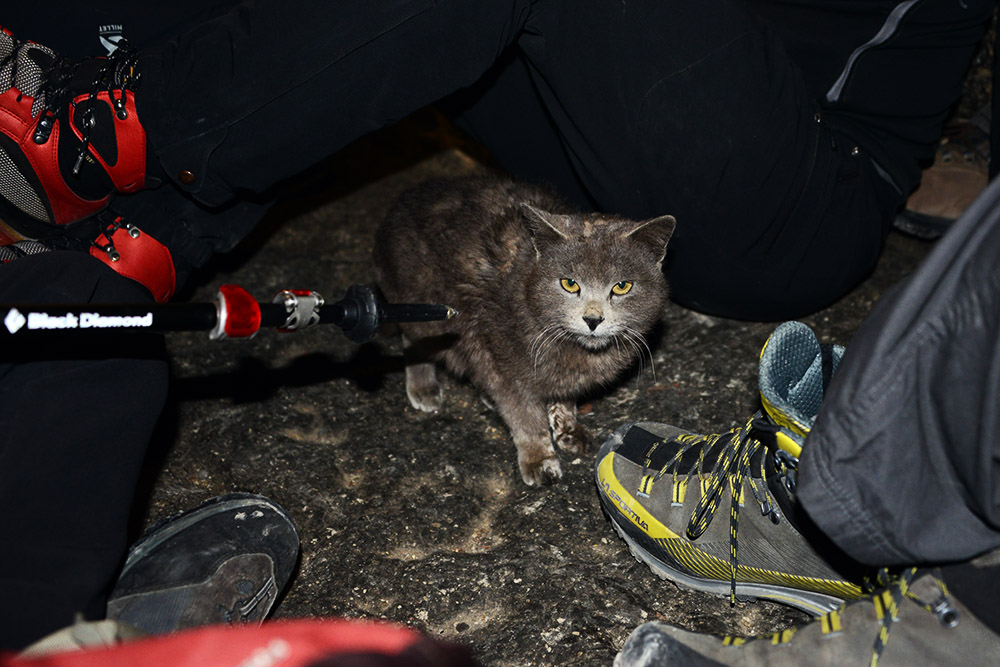
Somehow this cat we had seen outside made its way into the cave section of the monastery. Being that the vast majority of us get very sick early in the climb, everyone was freaked out by the cat and did their best to avoid touching it.
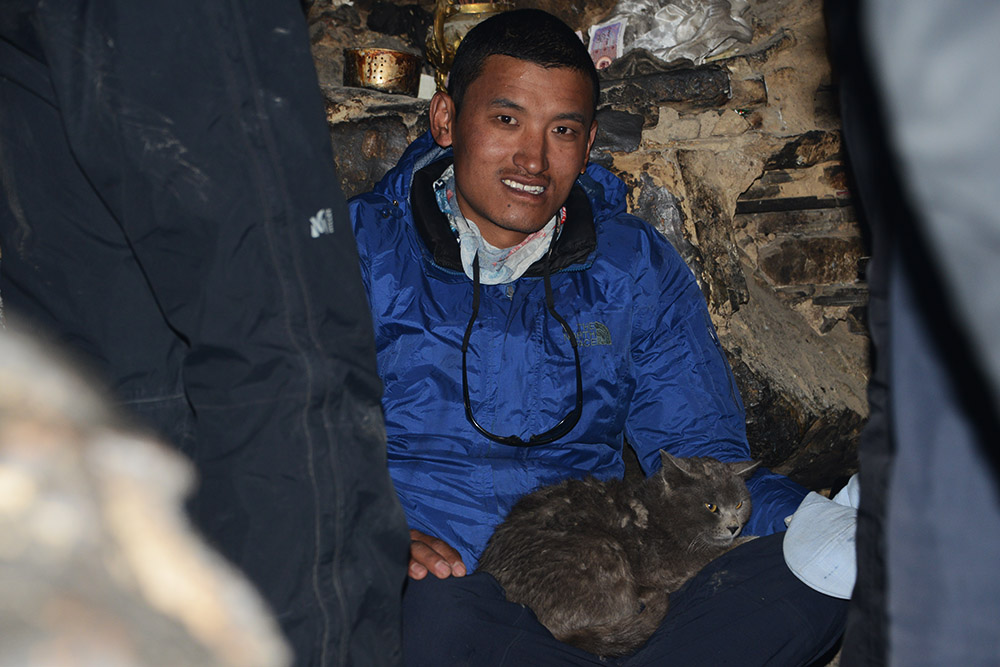
That is, of course, except for Tendu below! I knew Tendu from the year before on Everest and was happy to be with him again on the Tibet side. The cat just wanted to be loved, and Tendu was able to be that someone.
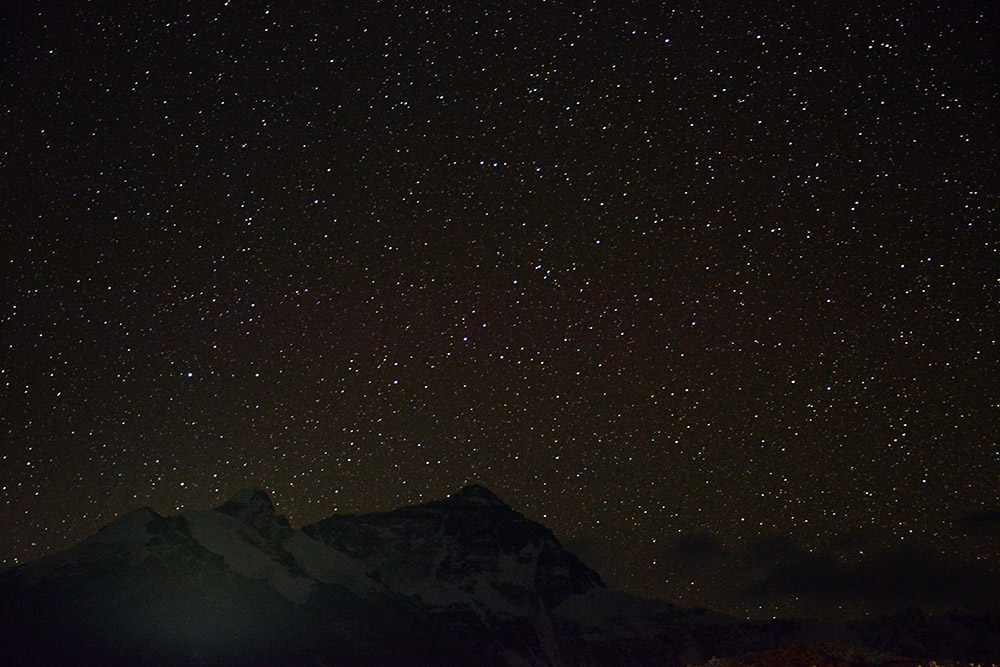
So although Tibet’s Everest Base Camp is much quieter than the Nepal side and doesn’t have much to do, there is a huge benefit. The lack of light pollution compared with the much busier Nepal side, combined with the drier air here, means extremely clear skies.
Both sides have excellent stargazing opportunities, but on the Tibet side I perhaps got the best view of the cosmos in my life!
Explore More of Mt. Everest
Everest Base Camp • Everest Nepal Summit • Khumbu Ice Fall • Lhotse Face • North Col • Summiting Mt. Everest • Tibet Everest ABC Trek • Tibet Everest Base Camp • Western Cwm