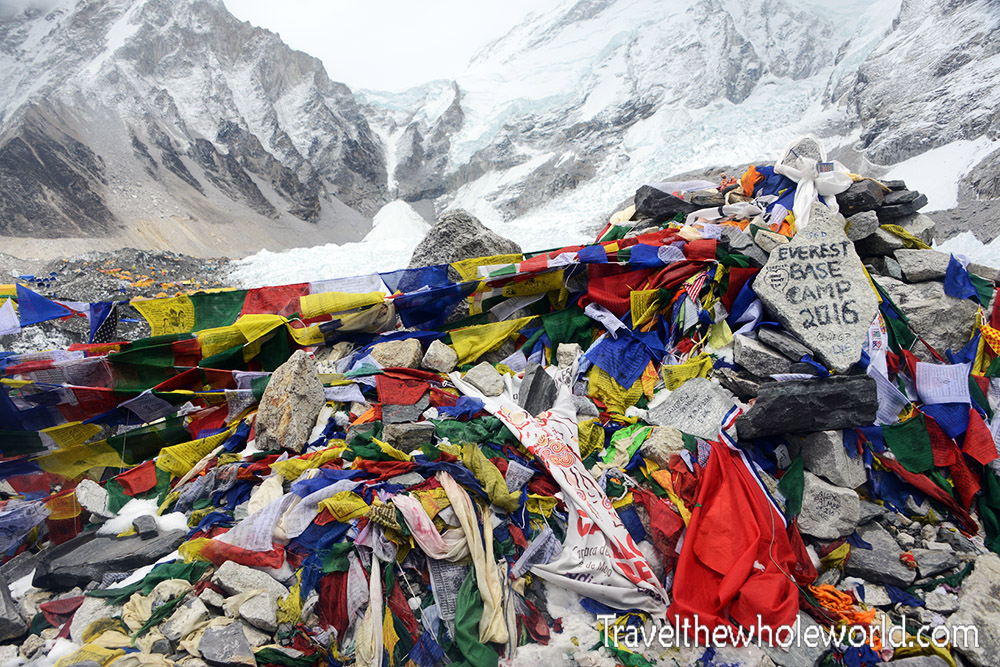
After arriving at the landing strip in Lukla, it took my team about a week to get to Everest Base Camp at 17,500 feet (5,300 meters). For the vast majority of trekkers in the Khumbu Valley, this is their final destination. For us, however, it was just the starting point to our big adventure!
We came and left Base Camp many times as we acclimatized and recovered in our attempt to get to the highest point on Earth. Somehow, the first time I entered Base Camp, however, I didn’t see this official welcome with the 2016 rock and prayer flags.
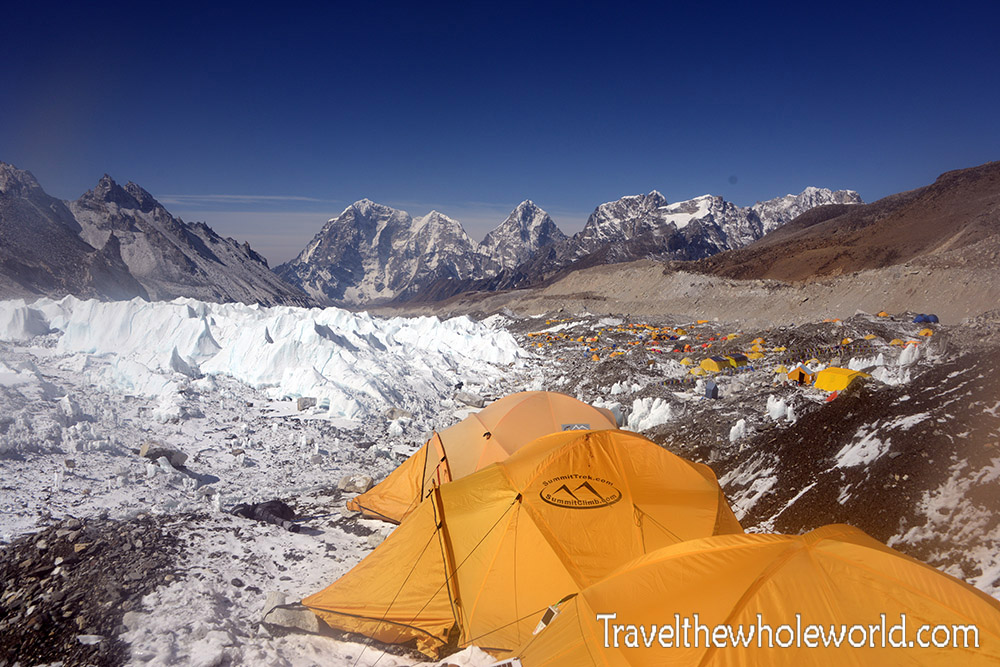
Everest Base Camp is pretty enormous, essentially becoming a temporary mountain village during the climbing season! Even after we entered camp, it still took us another 20 minutes to get to our tents. If you didn’t already know where you were going, it would be almost impossible to find your expedition’s site on your own.
These three tents above were part of my expedition’s camp, with my tent in the center. In the background of the photo, you can see how far Base Camp extends out, and our site was only halfway into Base Camp!
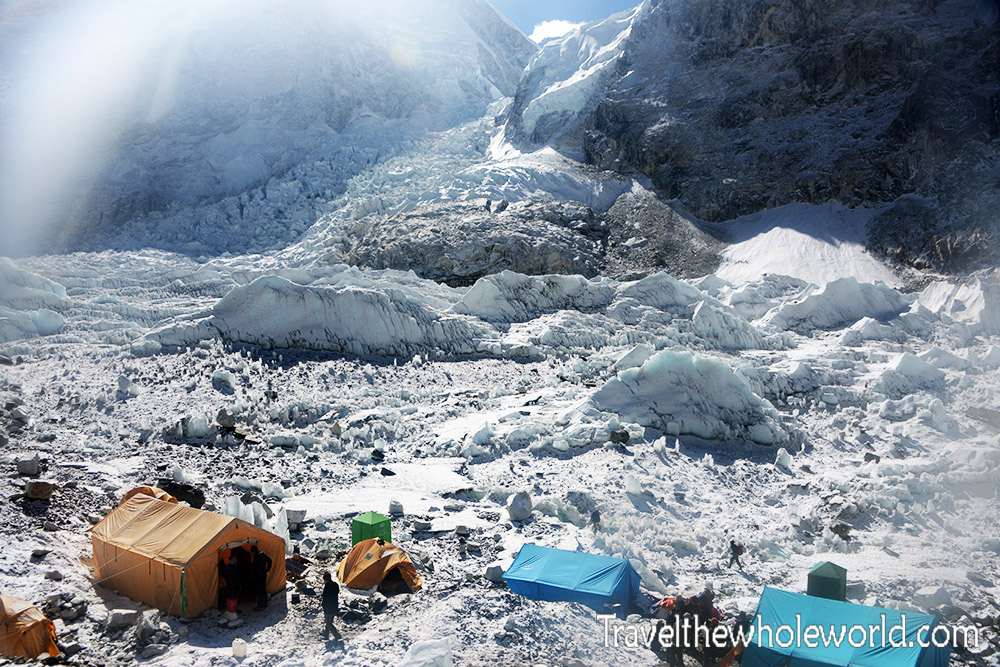
The photo above is a shot of another part of my expedition’s camp. You can see the beginning of the Khumbu Icefall in the background! The large yellow tent was our dining tent, and one of the blue tents acted as a storage place while the other blue tent was the cook tent.
We even had a small shower tent available here as well! The way it works is there’s a large hot bag of water that is hung from the top of the tent. You stand underneath it and wash yourself with a hose. When the water runs out, your shower is over.
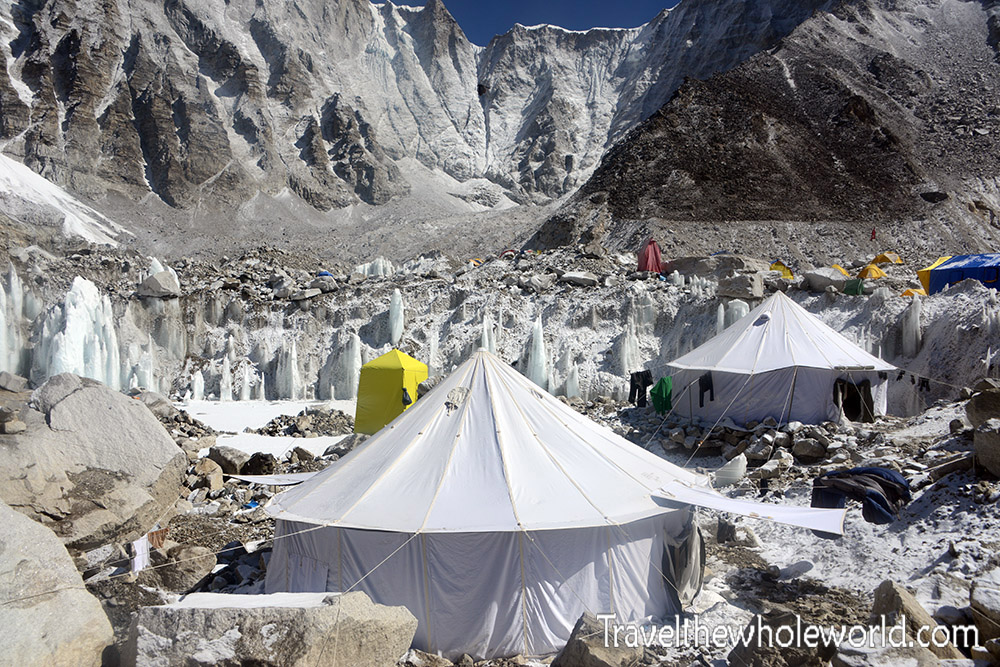
It’s a great feeling to take a shower after a week or two of being nasty. Surprisingly, the inside of the tents can get pretty damn hot when the sun is out. The tents trap the heat, and taking a shower can be relatively comfortable! Below is another shot of other parts of Everest Base Camp.
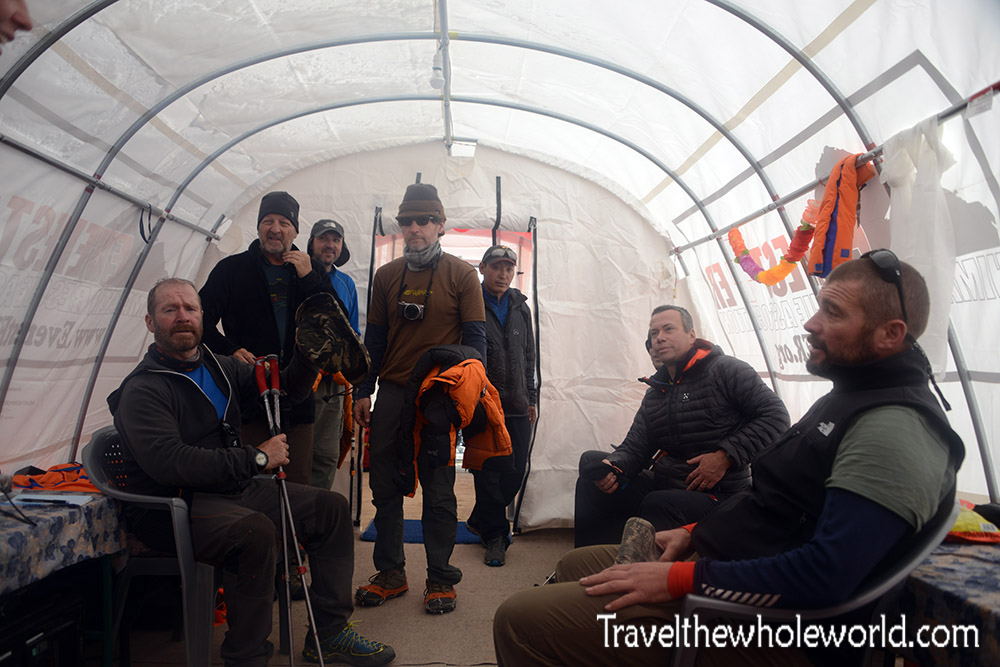
I kind of imagined that after arriving at EBC we’d take a few rest days, especially considering that we were now at 17,500 feet (5,300 meters). We actually stayed pretty busy, and on the second day after arriving we did some exploring and all went to the hospital tent.
At the time, the hospital program offered expedition members a season-long medical coverage arrangement for a $100 contribution. If you made the donation, you could return during the rest of the expedition for medical advice, treatment, and other services as needed. Of course, you could show up later with a medical issue and still get treated, but you’d have to pay separately for the treatment.
I figured I wouldn’t need their treatment, but I found myself donating $100 anyway. Nearly everyone on our expedition did. Above is my team in the hospital tent.
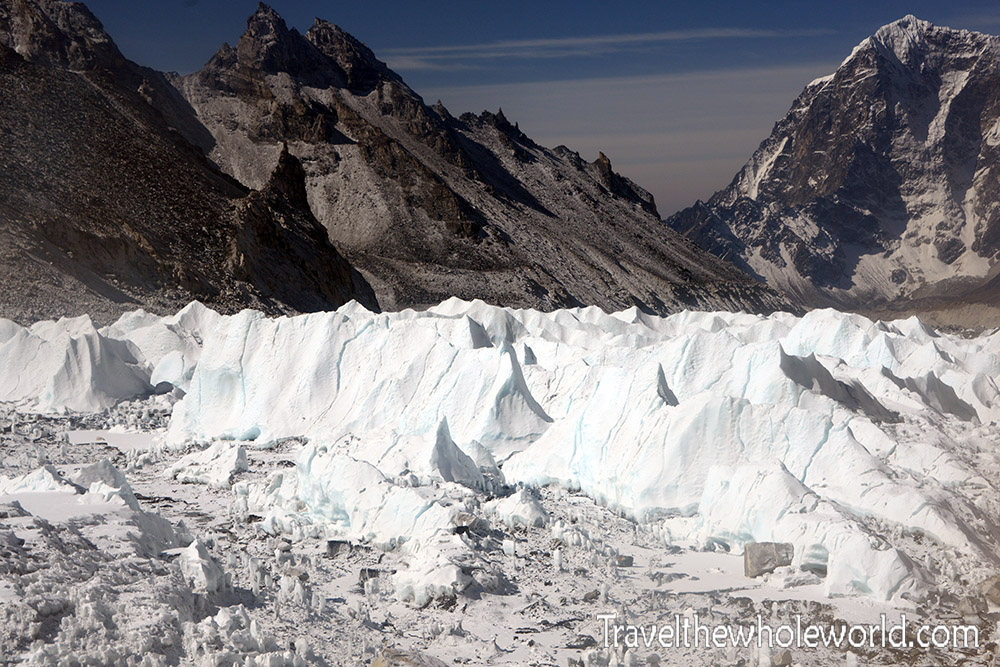
Coming back from the hospital, I got another good view of what I called the “Waves” that form alongside Base Camp. The Waves are part of the Khumbu Glacier and Icefall system, where the chaotic ice formations transition into the glacier beside Base Camp. I always thought they were one of the most beautiful places in the Khumbu Valley.
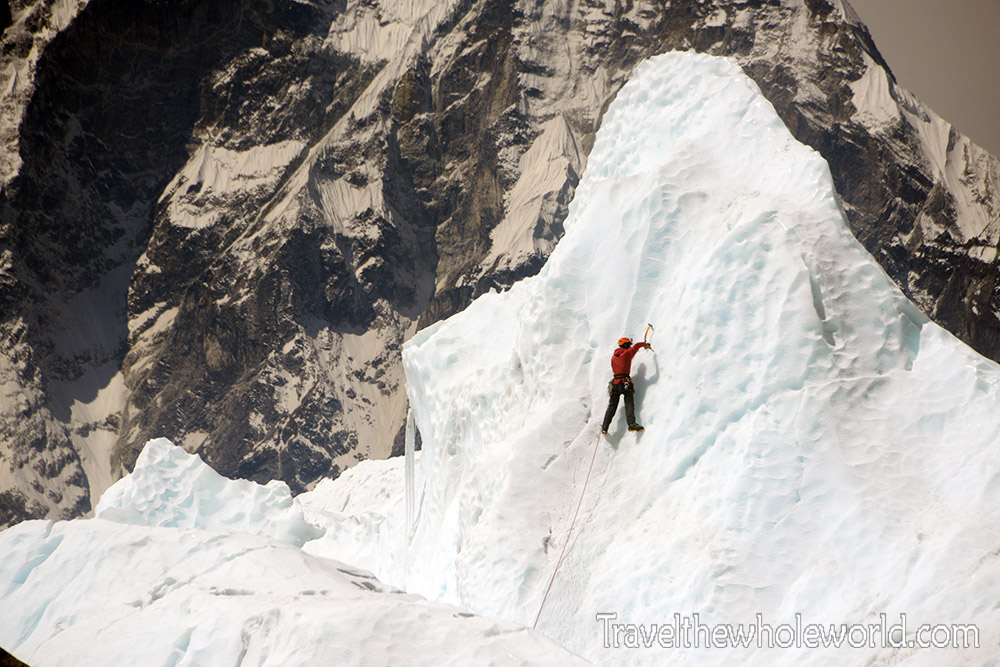
Aside from the natural beauty of the Waves, they provide an excellent place for training before heading up the mountain. Above is a shot I took of a random guy practicing his ice-climbing skills. Below is a shot of myself doing the same thing after spending a few days in Base Camp.
I felt absolutely great at this moment and had no altitude issues or any other problems. Climbing, I felt extremely strong physically, and everything was going perfectly for me.
That night, I woke up and was burning up in my tent despite the fact that ice had formed on the inside. A few hours later, I found myself to be extremely cold.
As it turned out, I got incredibly sick. Possibly the worst virus I’ve had in maybe five years or even ten. I felt so sick that I had no energy and didn’t even want to leave my tent. I had three or four books with me, but I was too tired to pick them up and read them.
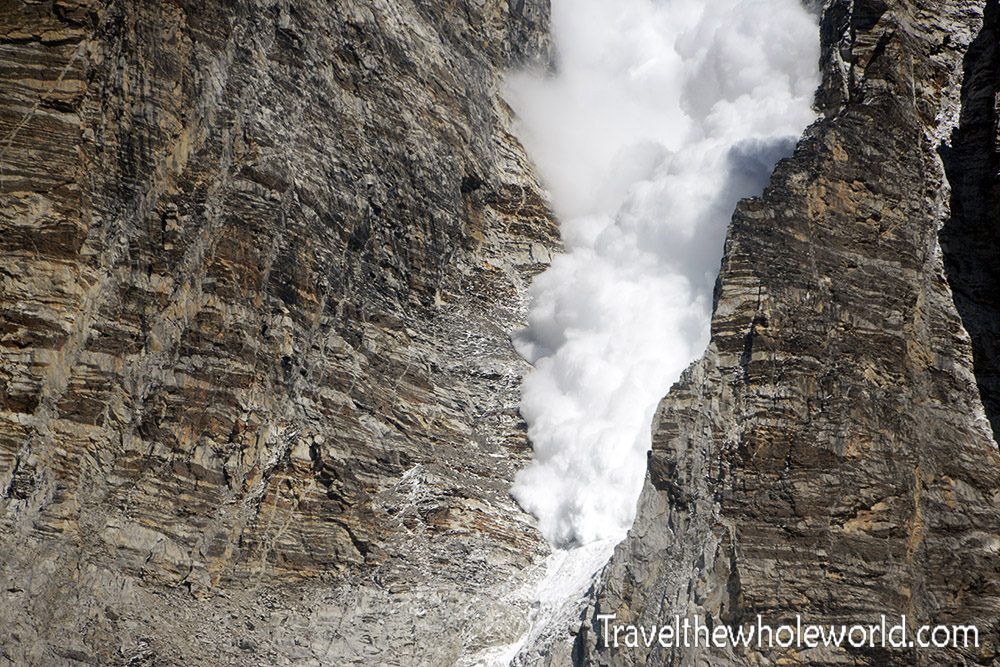
Normally cabin fever would drive me crazy, lying around and doing absolutely nothing, but as sick as I was, I was completely okay with it. The only form of entertainment I had was when a fellow expedition member came to visit me or the occasional avalanche outside that was visible from my tent!
Needless to say, I was pretty demoralized by now and seriously thought that this could be the end of my expedition.
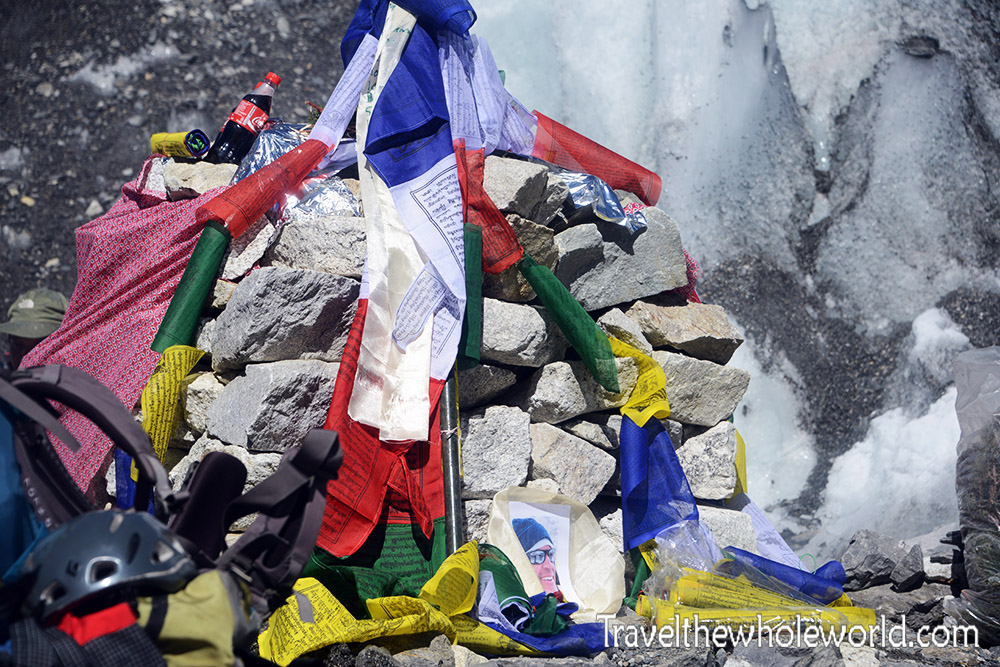
During the middle of my sickness, a monk came to Base Camp and performed the puja, a religious ceremony that blesses the team and even our gear so that we will have good luck on our expedition. The monk wore a traditional Buddhist robe, but on top of that he had a North Face jacket and normal mountain gear.
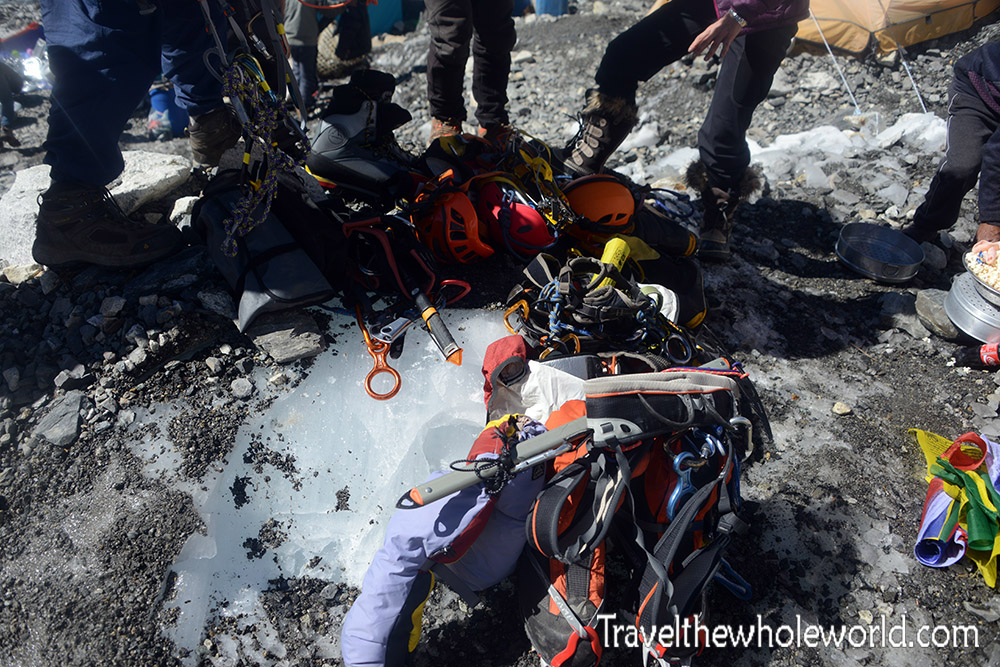
I was feeling much better than I had been with my sickness, but it was still a struggle to get out of my tent. The puja ceremony involves placing food, drinks, and personal items on the formation of rocks that had been created. Some people brought more gear than others. As for me, I only brought my ice axe.
In the photo above, you can see a photo of someone who died on the expedition the previous year from an avalanche. Below shows all of the climbing gear that members brought to be blessed.
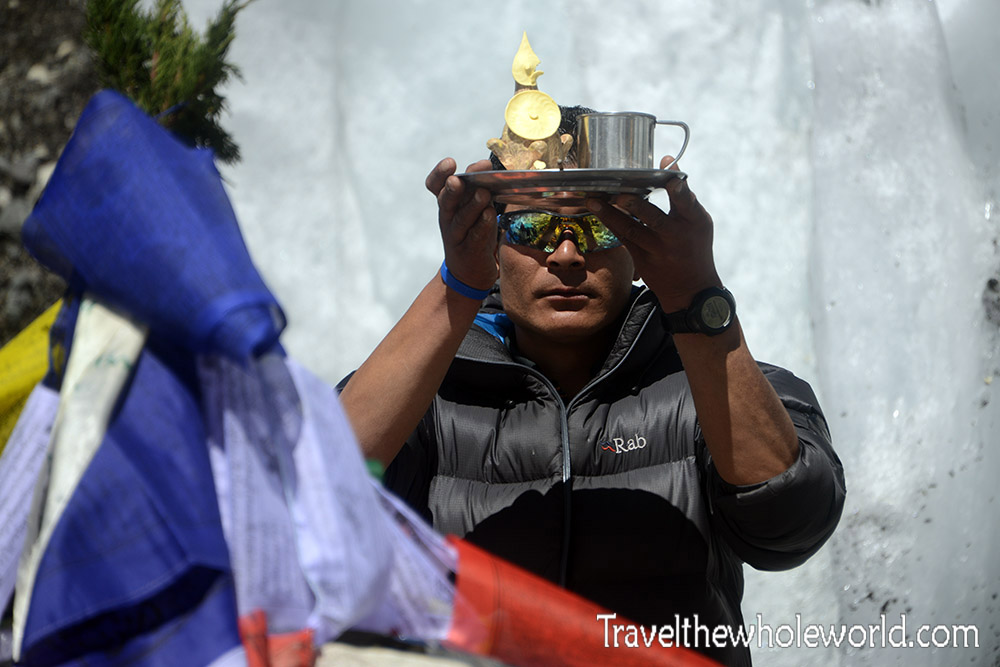
The monk performed a ritual for about 20 minutes that included a lot of singing and chanting. We gathered around in a circle and drank some local form of rice beer, although I thought it tasted more like rice liquor to me. I was scared to drink it since I was sick but had a full cup anyway.
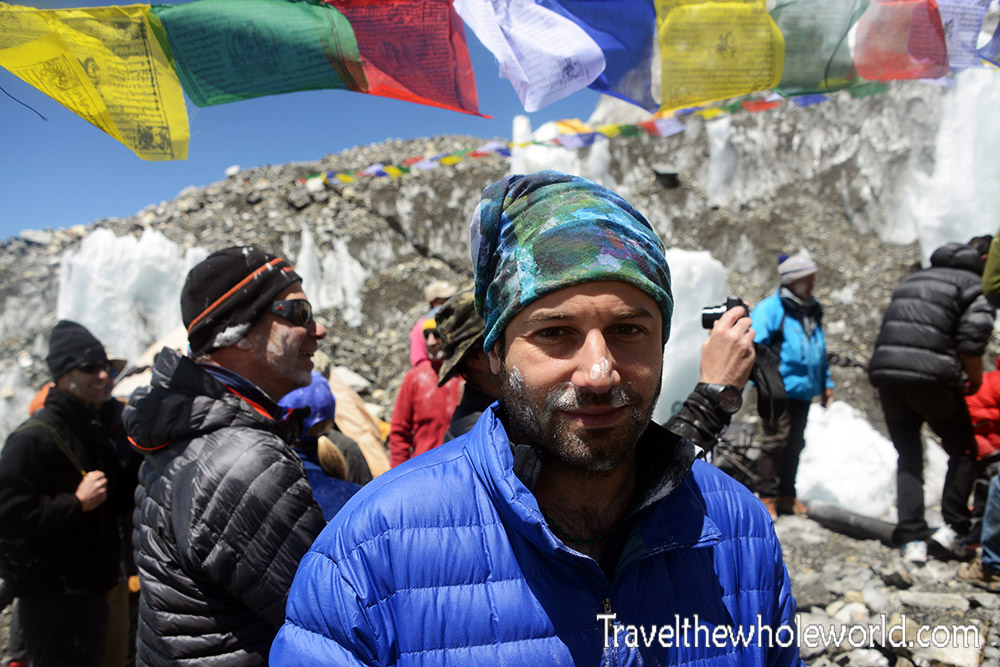
After this, prayer flags were extended from the center of the rock altar in all directions. We then had a bit of a celebration, and rice and holy water were thrown on us by the monk, and we were covered in white powder. Below is a shot of me in the puja ceremony.
That night, my sickness had come back in full force. I had gone to the hospital tent when I first didn’t feel well, and they attributed it to stress and being in the new environment. My expedition leader walked with me to the hospital tent again days later.
Without exaggerating, I felt that hiking those 15 minutes was much more difficult than hiking at 8,000 meters when healthy. This time when I went to the hospital, it turned out I had a fever of 102°F (39°C), among other symptoms.
I rarely take medicine, and foolishly I had medication with me the entire time that I had bought in Kathmandu. The medical staff told me to take the antibiotics as prescribed, so I did and returned to my tent to rest.
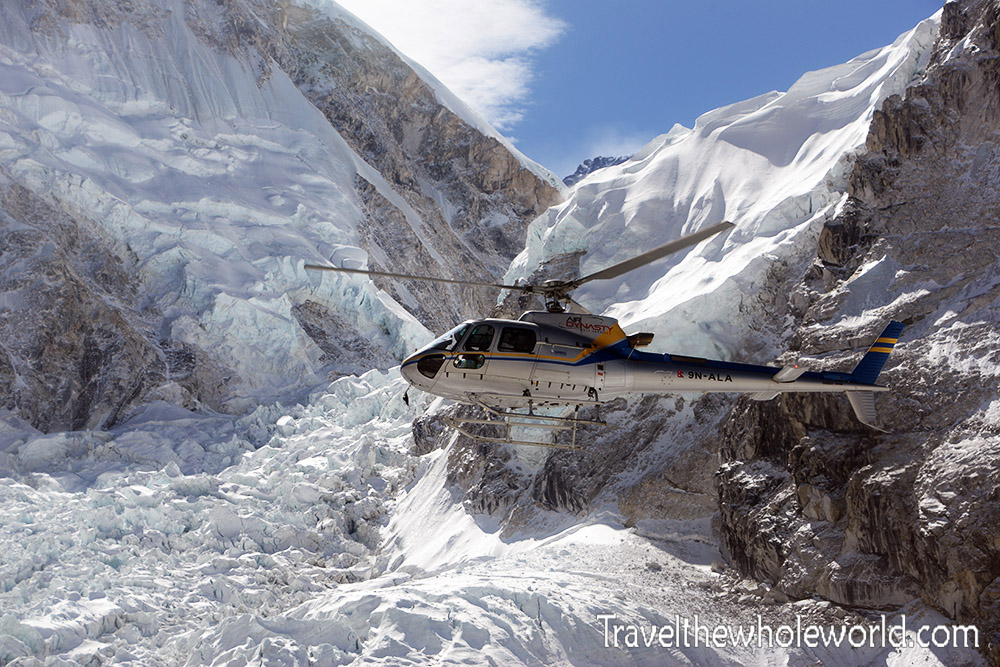
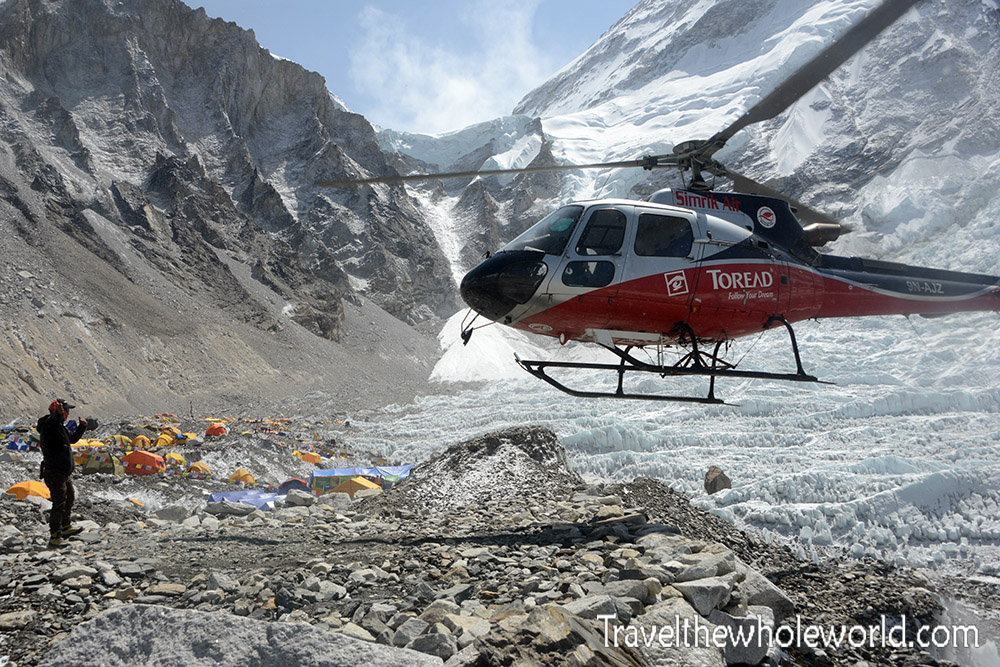
Meanwhile, other people were faring worse than I was, and helicopters were beginning to rescue people. Two hikers on different treks who were just visiting Base Camp had felt sick after arriving and died two days later. Fortunately for me, the medical staff did not believe altitude was the primary cause of my illness; I was dealing with a horrible infection.
The medicine I took made an incredible difference. The very next morning, I felt weak and fatigued but not sick anymore. The day after that, I felt exactly like myself again.
I had been too sick to join the team when they did acclimatization hikes to 20,000 feet (6,000 meters), so I was worried about my acclimatization. As it turned out, I proceeded up the mountain and had no issues at all. That part of the story continues on my other pages, starting with the icefall.
After a successful high-altitude climb, I returned to Base Camp in early May. My friend on the trip had developed HAPE, or High-Altitude Pulmonary Edema, which is a very serious condition where fluid accumulates in the lungs. The most important treatment is immediate descent to lower altitude, along with oxygen and medical care when available.
He took a helicopter down to Pheriche, which is about 3,000 feet (1,000 meters) lower than Base Camp. With extra room in the helicopter and a week of rest ahead of us, I took the ride with him!
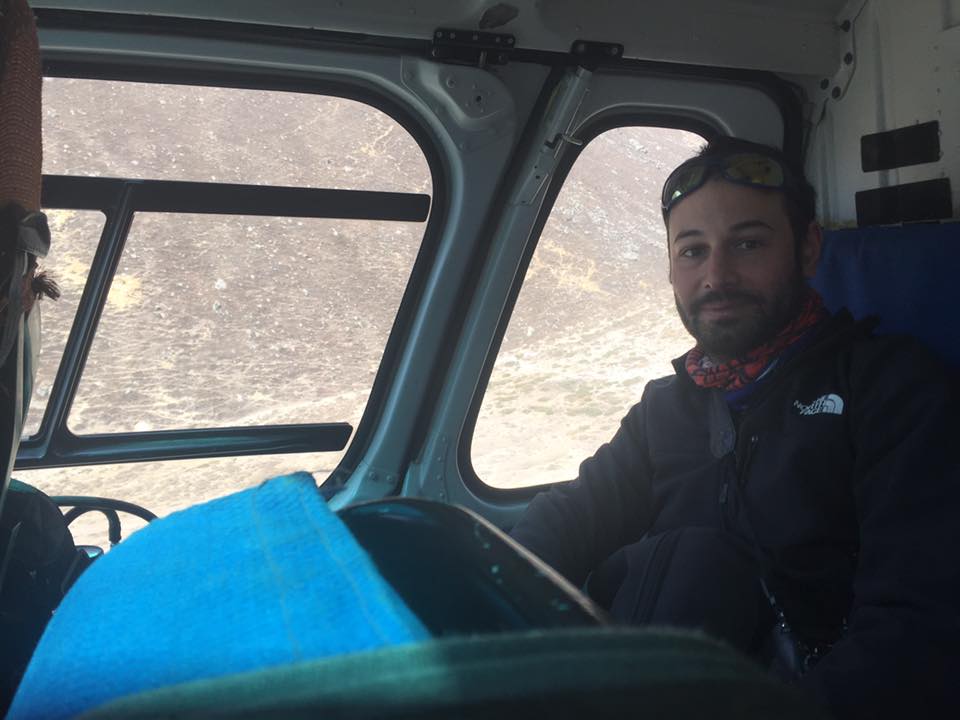
It was very strange to climb up to 23,000 feet (7,000 meters) and be in that brutal environment and then suddenly take a helicopter from Base Camp to a much lower elevation. To be honest, it really worried me that I’d lose my acclimatization being so much lower.
My friend and I stayed in Pheriche because there is a good clinic there, and he was able to get treatment and get better. There were, however, lots of other tourists and hikers going around, and it just felt like I was not supposed to be there at all.
After a few days, we hiked back to Lobuche, and after a full week there we finally returned to Base Camp. The photo above shows the glacier as you enter Base Camp. Now that it had been about a month since I was first in Base Camp, a lot had changed!
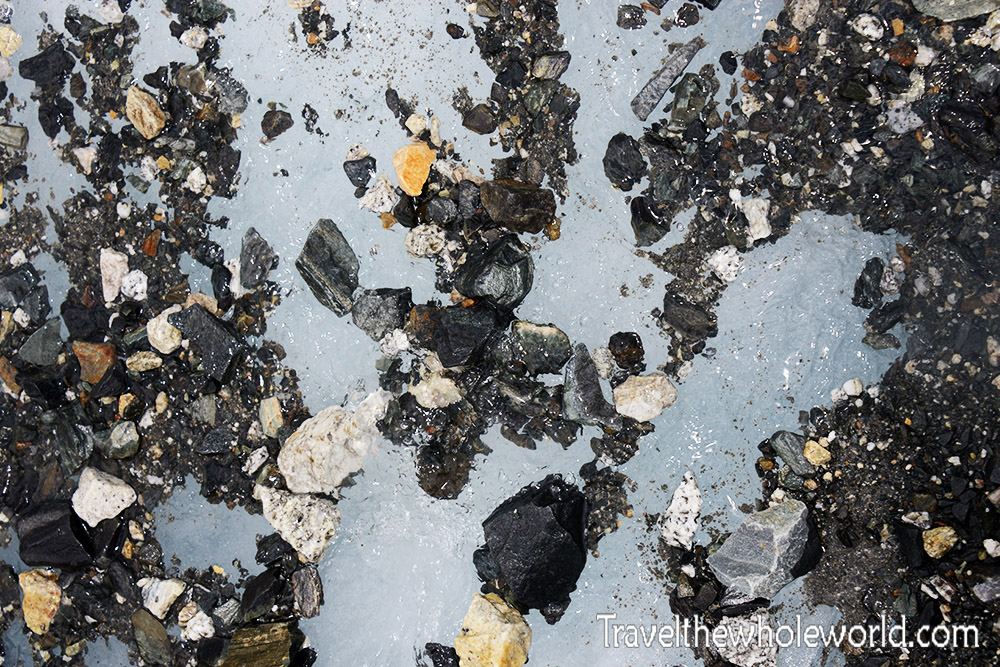
It snowed almost daily in Base Camp, but usually the sun was intense enough to make everything melt by the afternoon. The first time I ever arrived at Base Camp, I was a bit disappointed because it looked more like a rocky dirt pit than a glaciated valley.
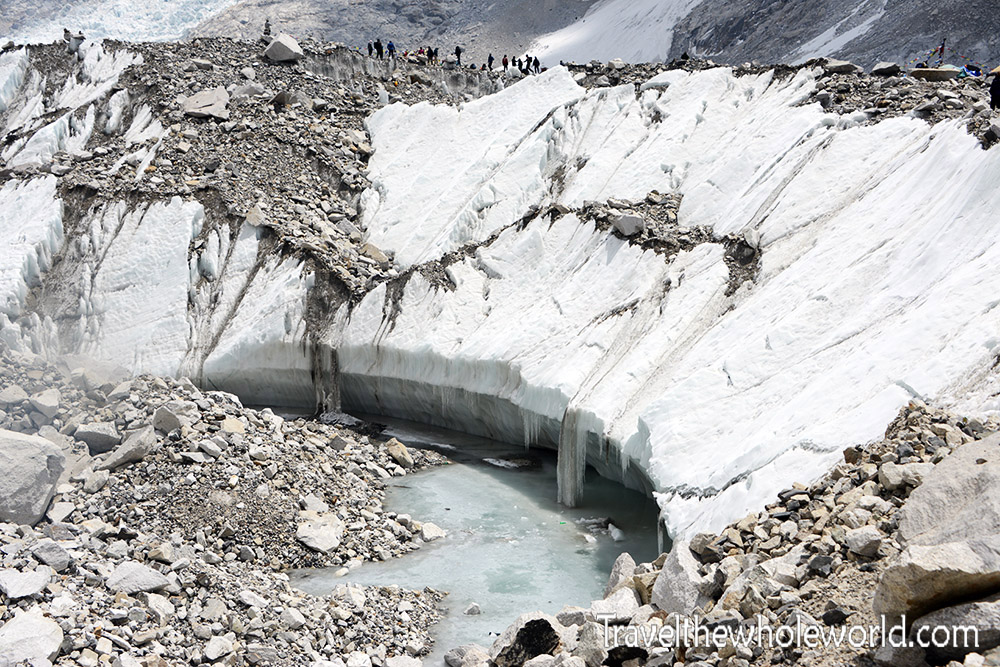
If you look below the rocks, like in this photo above, you can see all the ice underneath it. Everest Base Camp actually sits on the Khumbu Glacier, although the surface is covered with rock and debris.
As a matter of fact, by the time I returned, melting and movement of the glacier had changed the ground around our tents so much that they were protruding above the surrounding surface. It was actually kind of nice, though, because when I got back to my tent I could sit on the edge of it in the morning like a chair and put my boots on!

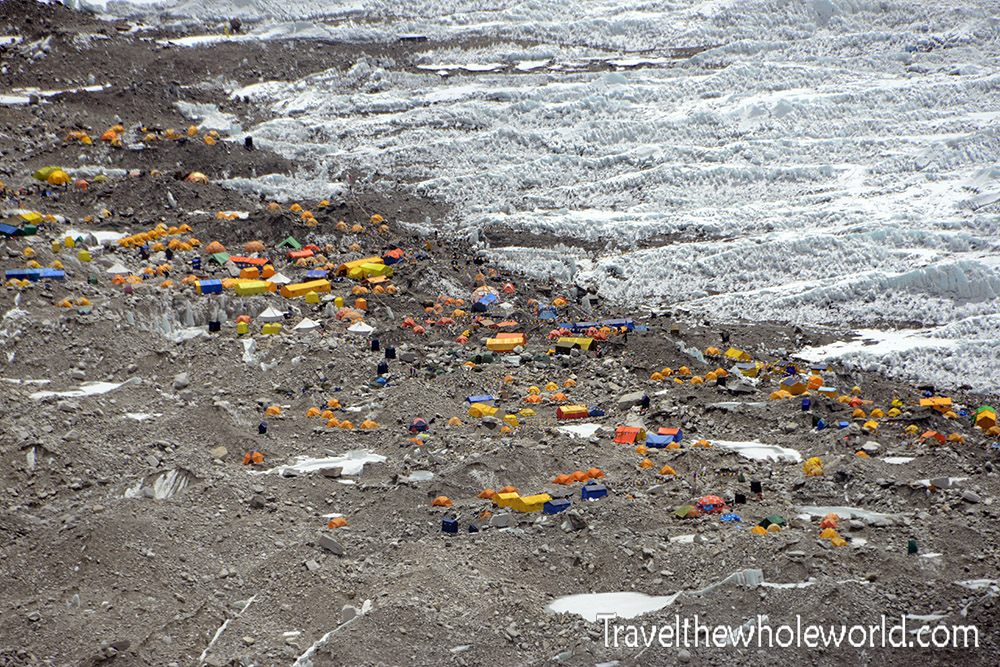
After getting back to Base Camp, I was anxious to get back up to high altitude again. Despite being well over 17,000 feet (5,000 meters), I felt like I was at sea level and was terrified I was losing my acclimatization.
After being in Base Camp for a few more days following my two-week hiatus from the higher parts of the mountain, a friend and I went for a hike up toward Pumori Base Camp. On the way up, I took this photo above, which shows the majority of Everest Base Camp.
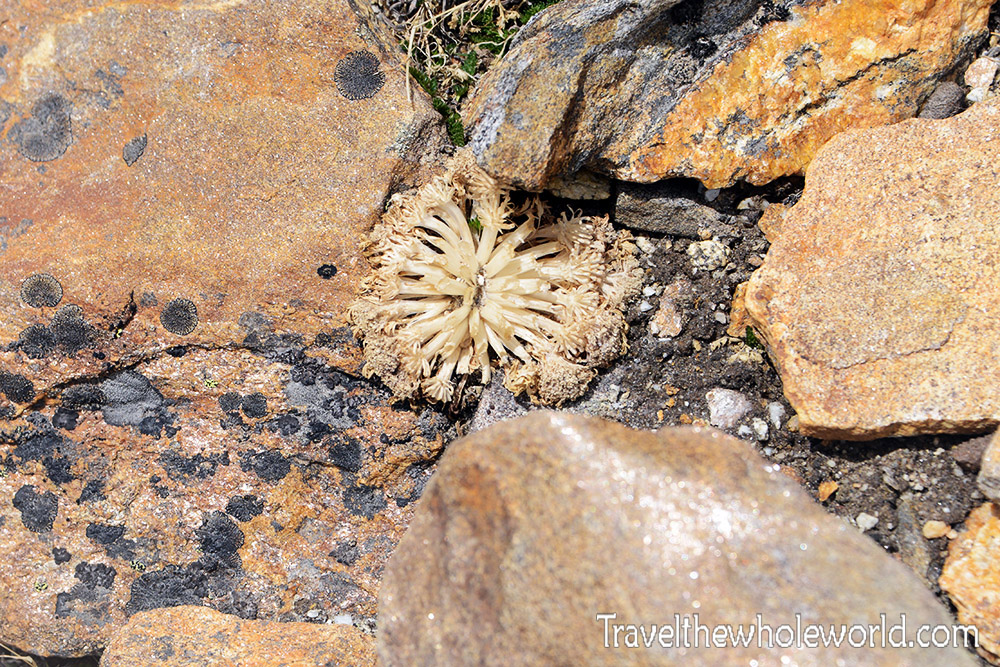
What was absolutely amazing to me was that I came across some strange plants here despite being close to 20,000 feet (6,000 meters)! It had seemed like Lobuche, which was much lower than here, was the cutoff for high-altitude plants.
Later on, I read online that lichens and other extremely hardy organisms have been documented at extraordinary elevations on Mt. Everest, including above 6,000 meters. Lichens aren’t technically plants, but at the time I couldn’t believe anything resembling vegetation could survive this high.
I’ve no idea what these particular species are, and it’s just amazing that they can survive out here in this brutal environment, especially through the winter.
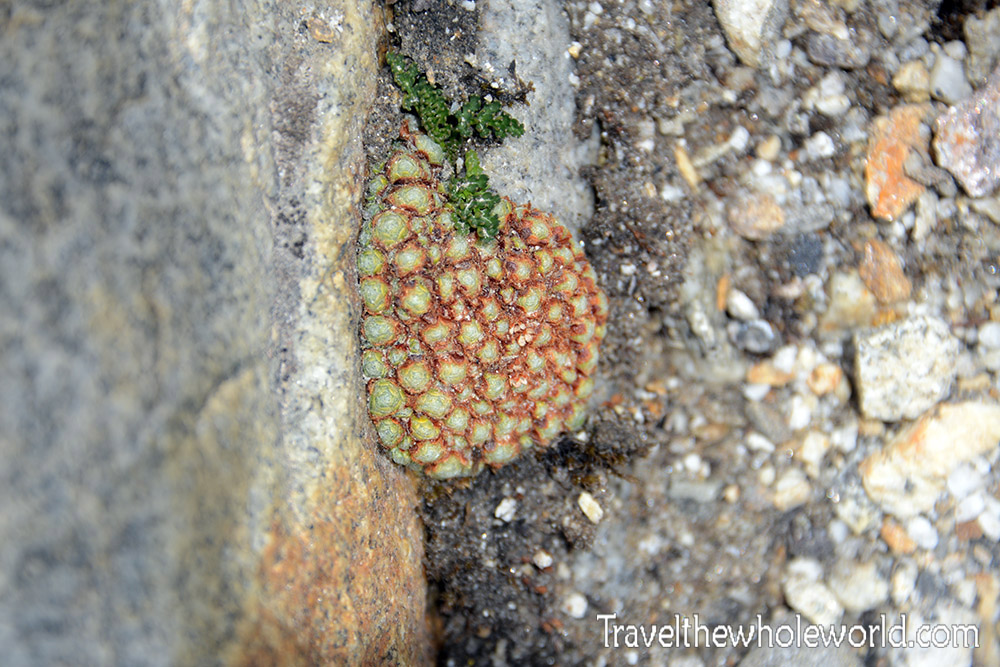
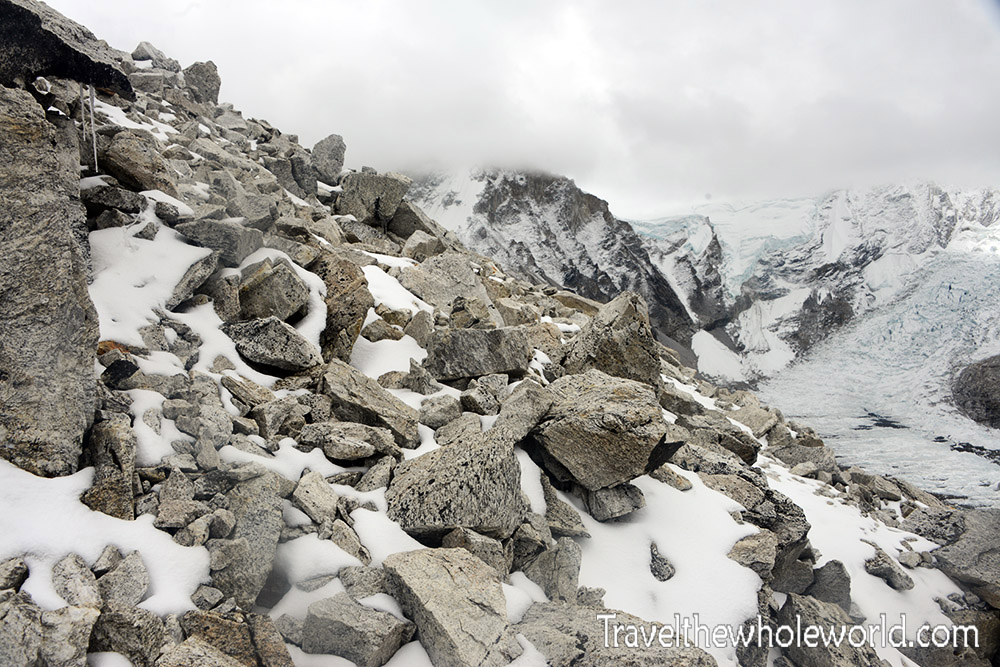
The hike was really enjoyable and a bit of a light scramble. The plants we had seen were already pretty rare, but eventually they completely faded out and we finally came up to snow again.
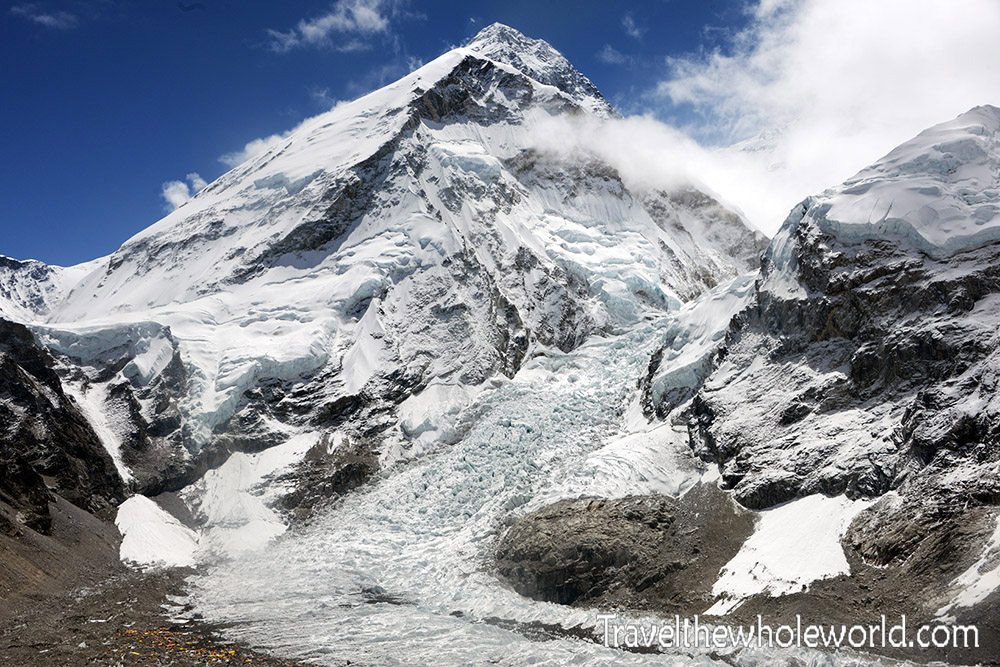
Since Everest isn’t viewable from Base Camp itself, the hike up toward Pumori Base Camp allows you to finally see the top of the world! As you can see in the photo above, Everest is blocked from Base Camp by the lower ridge and peaks in front of it.
When I was extremely sick, the rest of my team had hiked here without me, and I heard them all excited and describing how you could see the entire route from the South Summit. Finally, I was able to see it from this vantage point myself, although I had already had much better views from Camp II at 23,500 feet (7,100 meters).
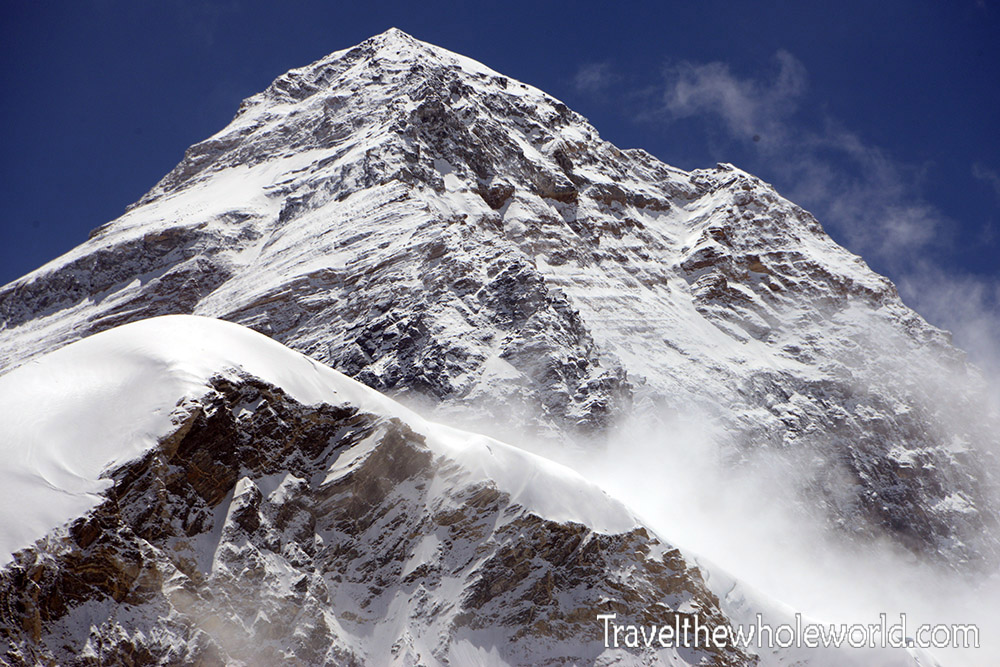
Below is a shot of the top of the world taken at full zoom.
Explore More of Mt. Everest
Everest Base Camp • Everest Nepal Summit • Khumbu Ice Fall • Lhotse Face • North Col • Summiting Mt. Everest • Tibet Everest ABC Trek • Tibet Everest Base Camp • Western Cwm