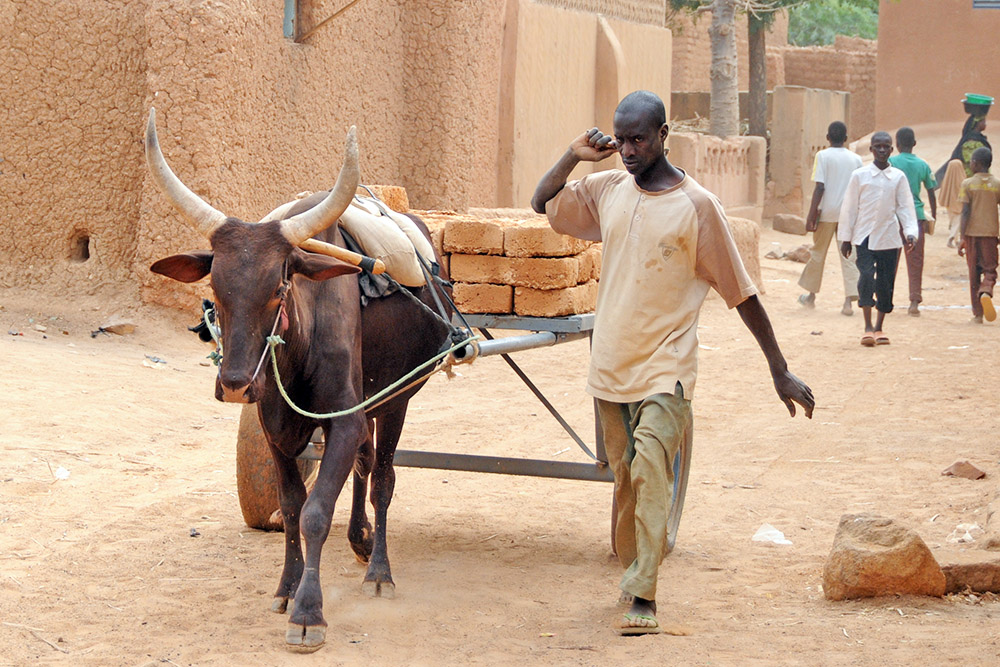
When I visited Niger, Zinder was my first stop after taking a bush taxi from Kano, Nigeria. The half-day ride was full of its own misadventures and ended with me arriving in Zinder at night without a place to stay. I’ll get to that later, but my first impressions of the city were fascinating. Zinder looked much like the traditional African city I had imagined. There were cars and electricity, but many buildings were still constructed from mud bricks and animals continued to do much of the heavy hauling. One of the first things I saw was this bull pulling a cart loaded with bricks that would be used to build new homes.
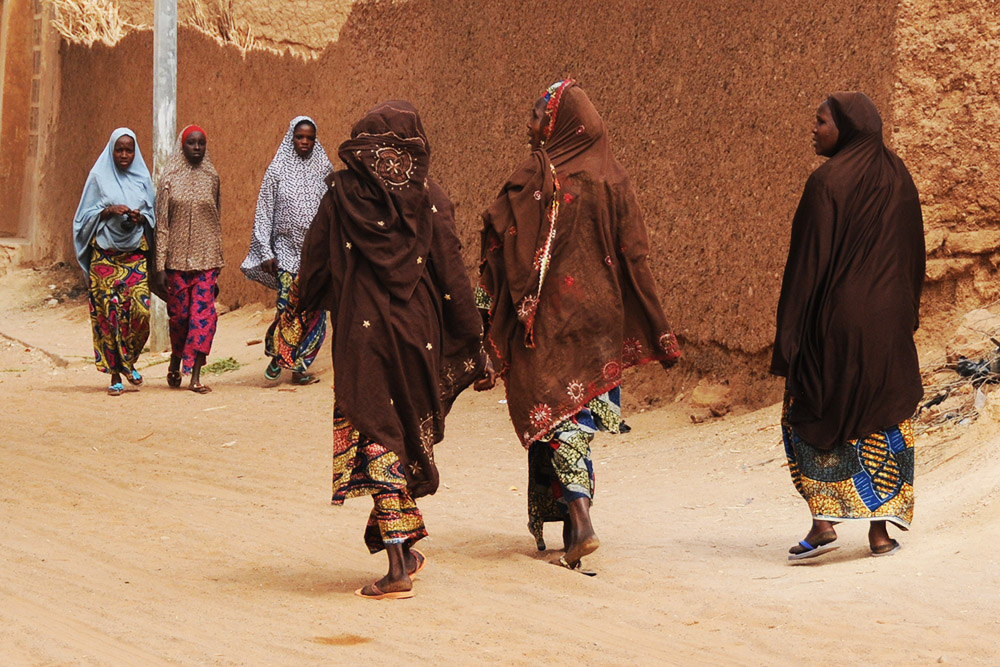
Having just arrived from northern Nigeria, I naturally compared Zinder with my experiences there. In Kano I rarely saw women walking around in public without men accompanying them. In Zinder, I noticed far more women independently going about their daily lives. From my limited experience as a visitor, the atmosphere felt considerably different from Kano, even though the two cities are only a few hours apart.
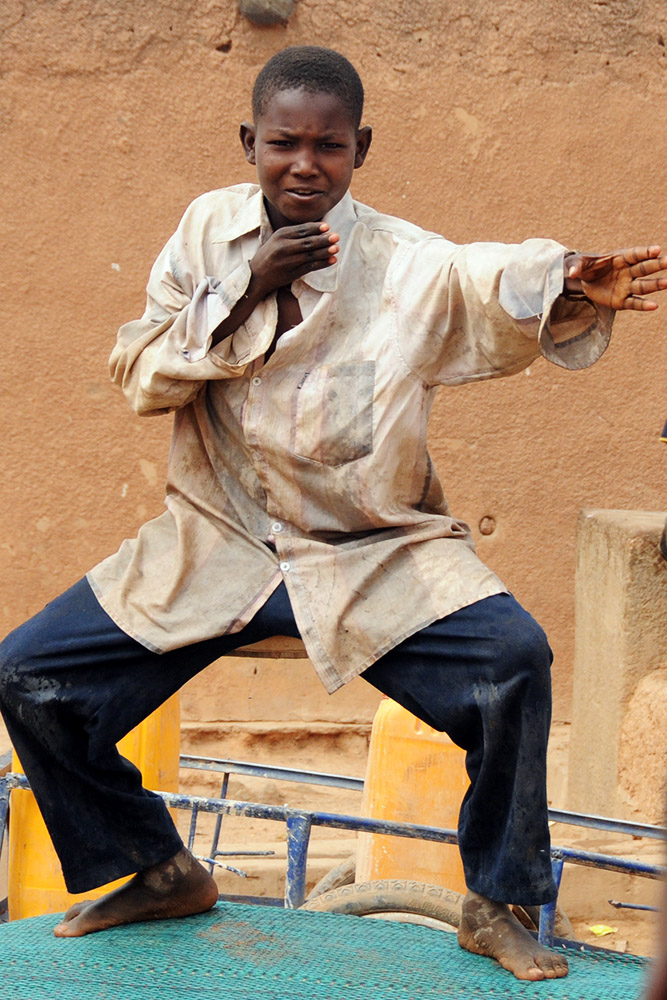
Walking around Zinder was an interesting experience because many of the locals weren’t shy around me at all. This boy apparently decided it was time to demonstrate his martial arts abilities and happily showed off a collection of poses for my camera. I have no idea where his inspiration came from, but he certainly took his performance seriously!
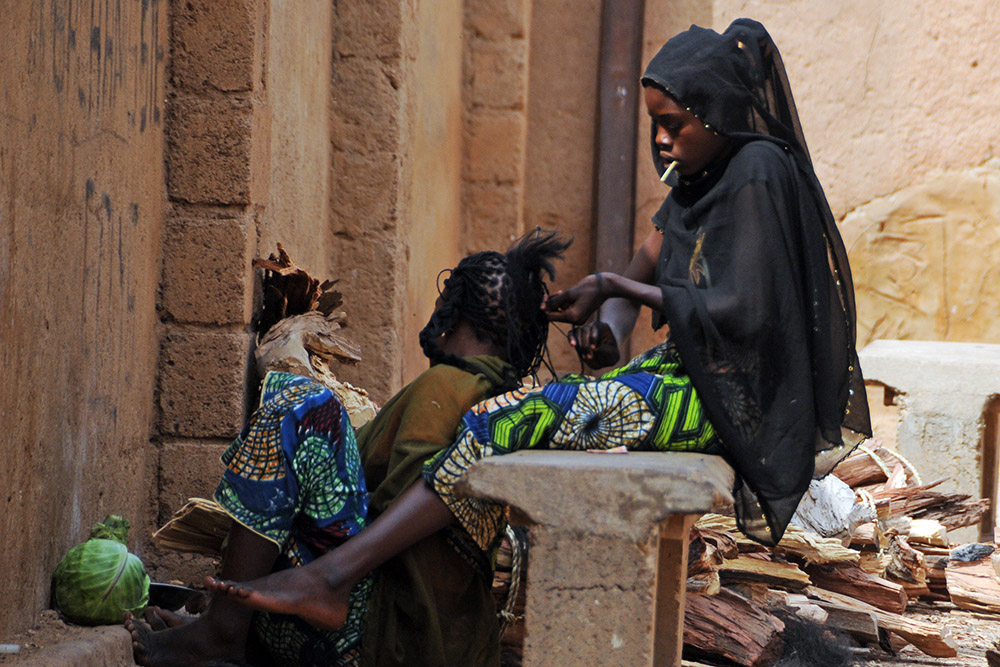
Elsewhere in the city I came across these two women braiding their hair along a small street. Scenes like this were part of what made simply walking around Zinder interesting. There was always something going on and everyday life often spilled directly into the streets.
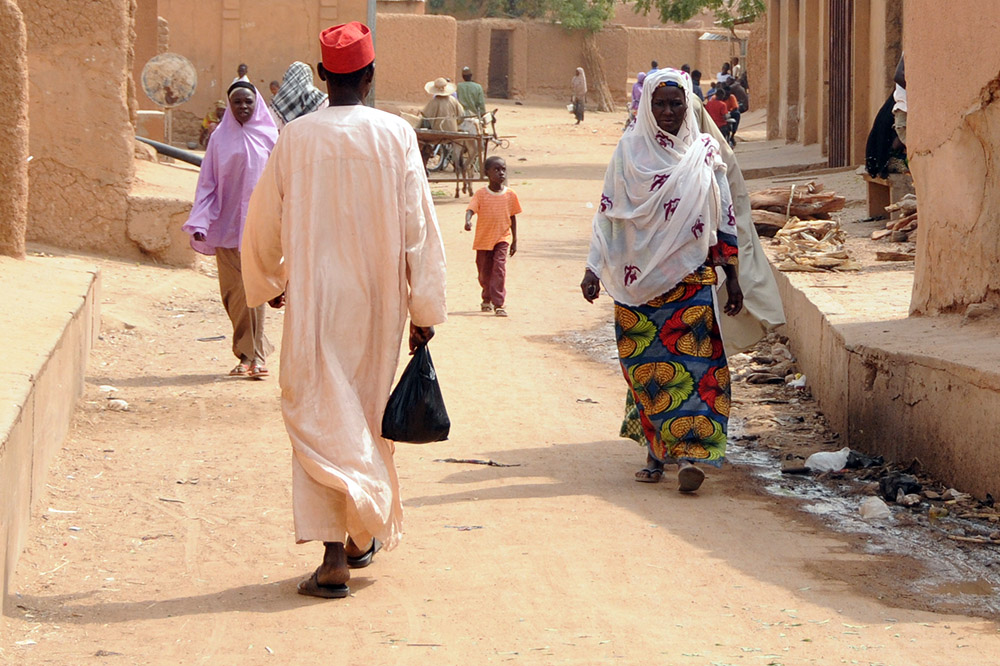
Much of my time in Zinder was spent simply walking through streets like this, where the city’s traditional buildings and everyday activity mixed together.
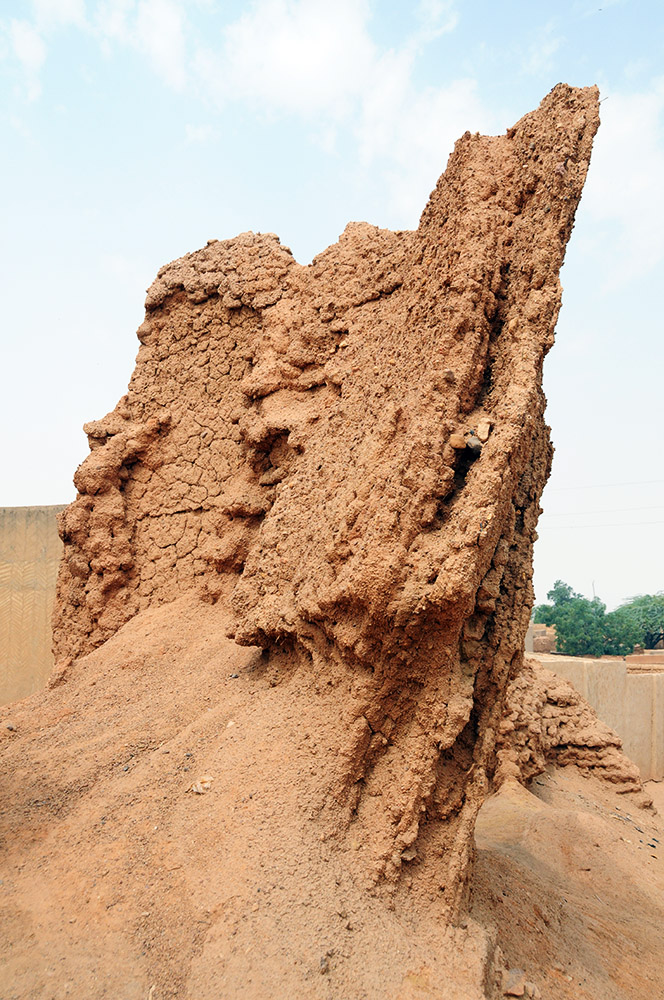
Like many ancient cities, the center of Zinder was once protected by massive mud-brick walls. Most have gradually eroded away, but sections of the old fortifications still survive. They reminded me of an ancient city I had visited in Afghanistan where centuries of erosion had almost made the mud-brick structures appear to melt back into the earth. Even in their deteriorated condition, the surviving walls give you an idea of how substantial Zinder’s defenses once were.
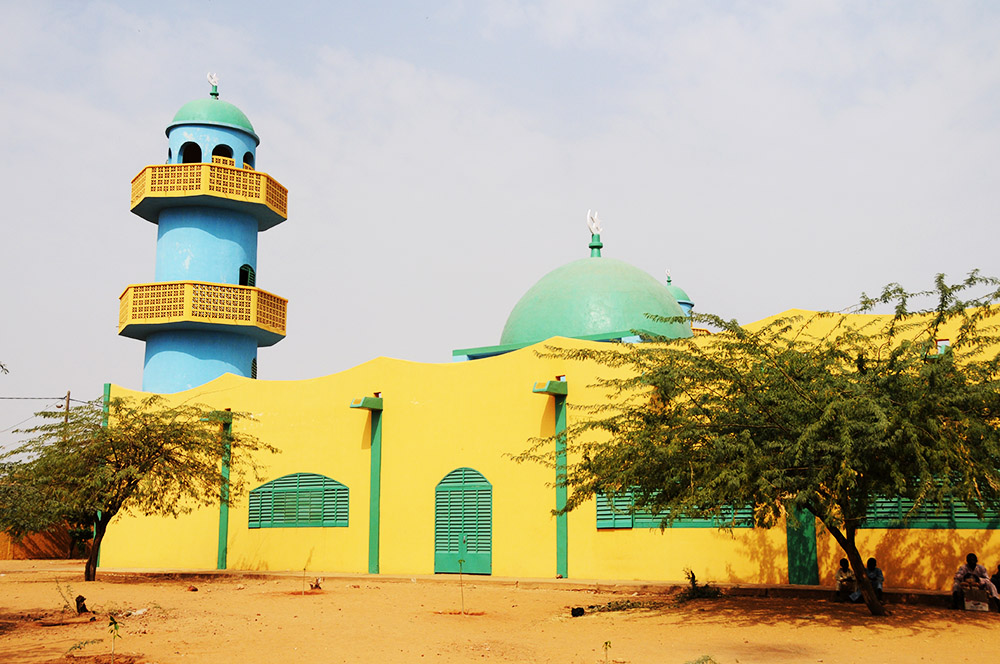
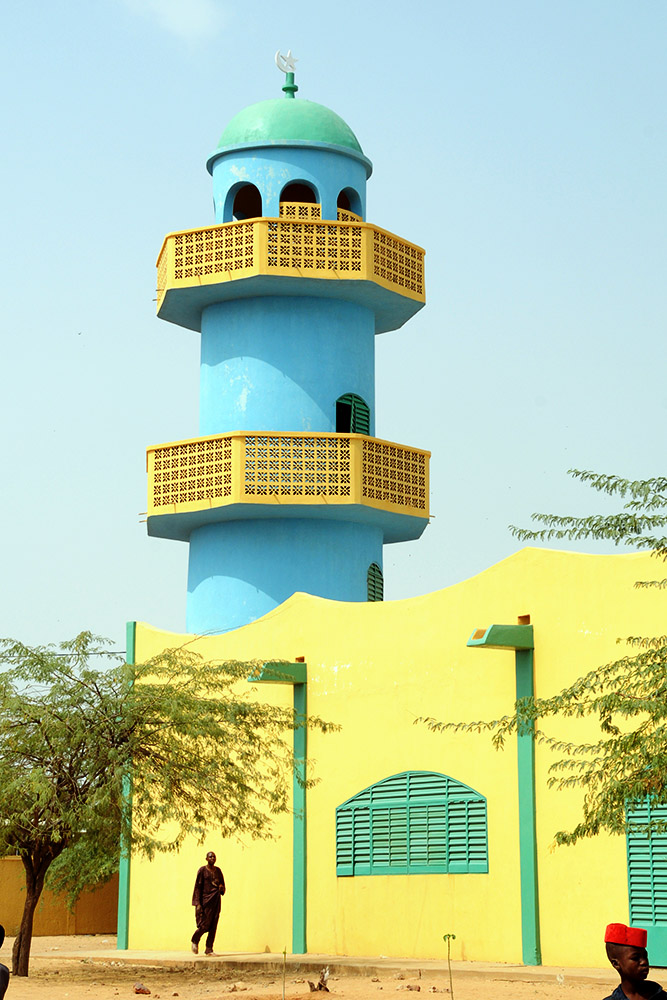
The mosque’s tall minaret was another example of the traditional architecture I saw around Zinder.
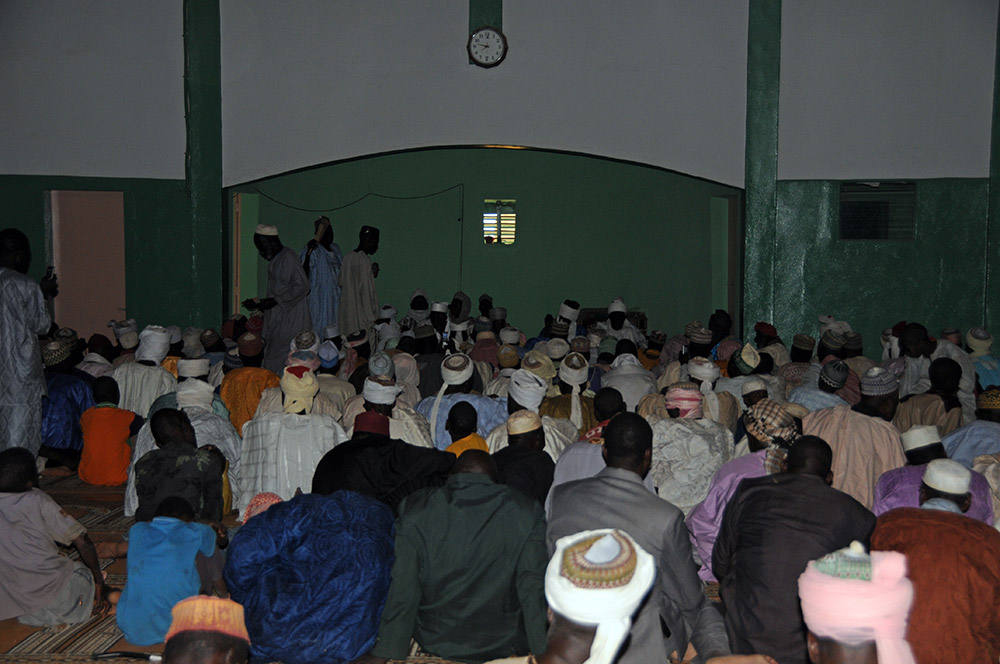
Islam dominates religious life in Zinder, and I came across numerous mosques and Islamic schools while exploring the city. Above is one of Zinder’s historic mosques, built in the traditional architectural style of the region. I happened to arrive around prayer time and was invited inside, giving me an opportunity to see the prayer area shown below.
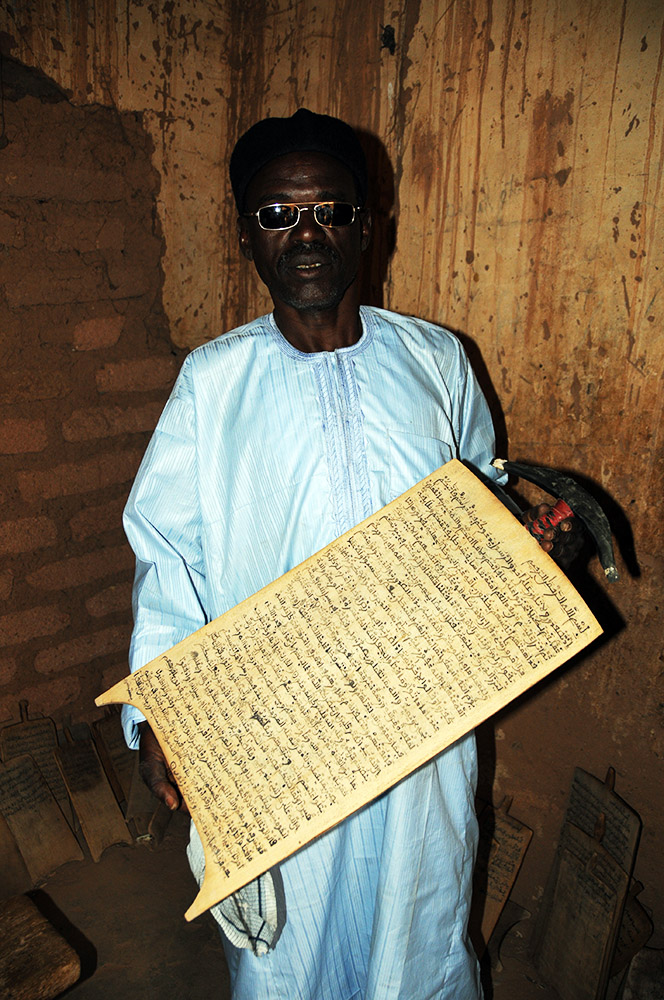
In another part of Zinder I was invited into an Islamic school. The school appeared to operate without many modern conveniences, and instead of printed books I saw numerous wooden tablets covered with Quranic writing. Outside, someone was studying from one of these tablets, while inside the school countless others were stacked along the walls. One of the teachers was kind enough to hold one up so I could photograph it.
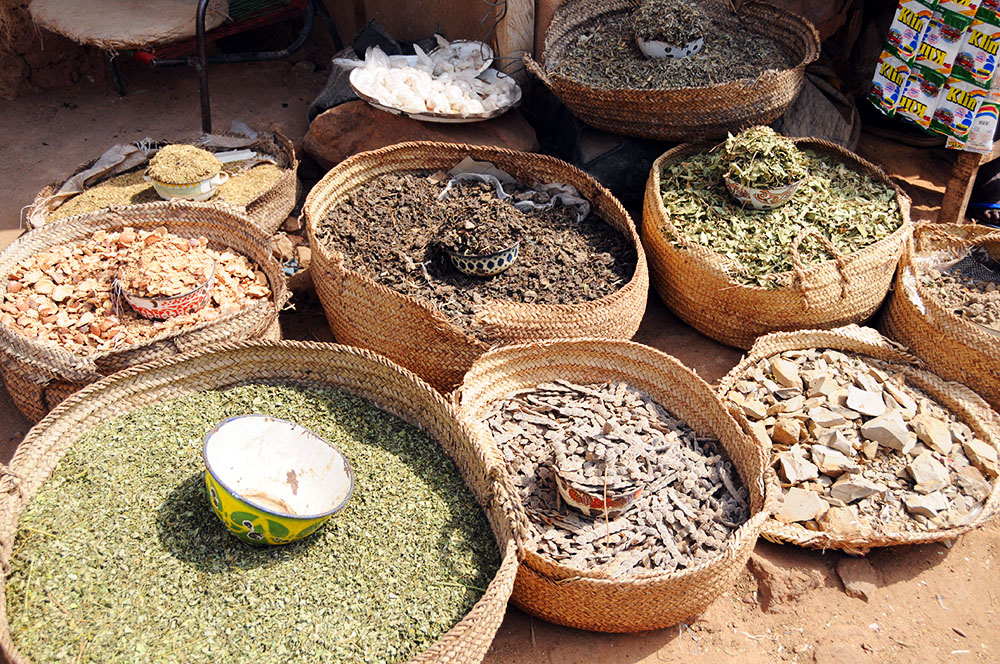
The market was packed with everyday goods and food, including displays of spices like these.
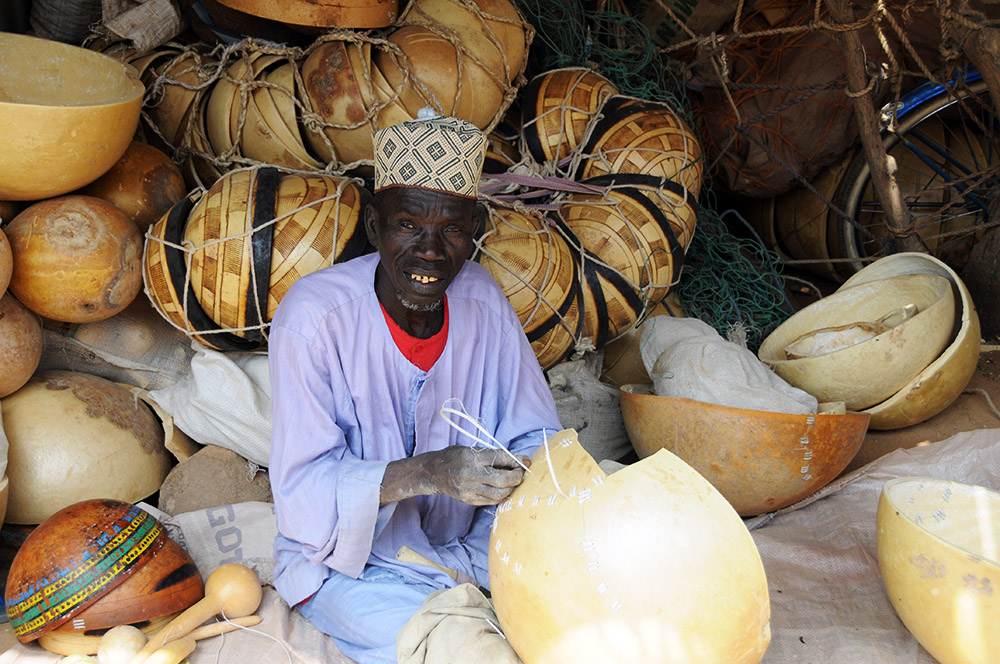
I almost skipped Zinder’s market because I had already visited so many markets while traveling through Nigeria. Fortunately I didn’t make that mistake. Zinder’s market had its own character and plenty of handmade goods, including intricately woven baskets. I have no idea how long some of these take to make, but the amount of patience and skill involved was obvious.
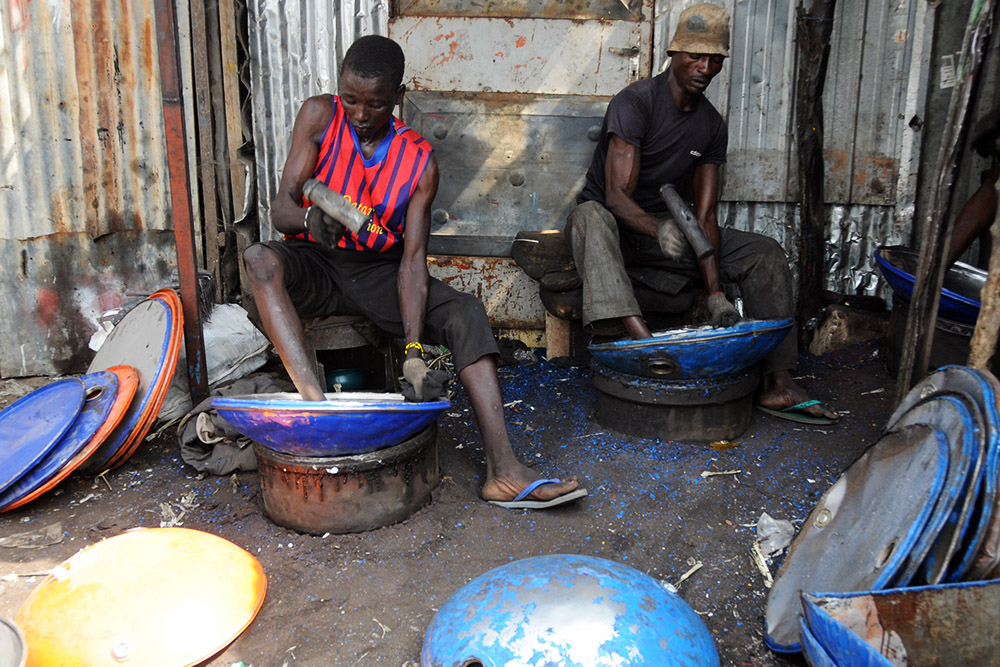
One of the most interesting sections was an enormous metalworking area. Men were forging and hammering metal with virtually no protective equipment. The noise was incredible. I watched two workers repeatedly hammer old fuel-drum lids, gradually transforming them into smooth metal bowls. After several minutes of watching, I could barely see any change in the pieces they were working on, yet some of the finished bowls were surprisingly smooth. It gave me a new appreciation for how much labor went into producing such a simple object.
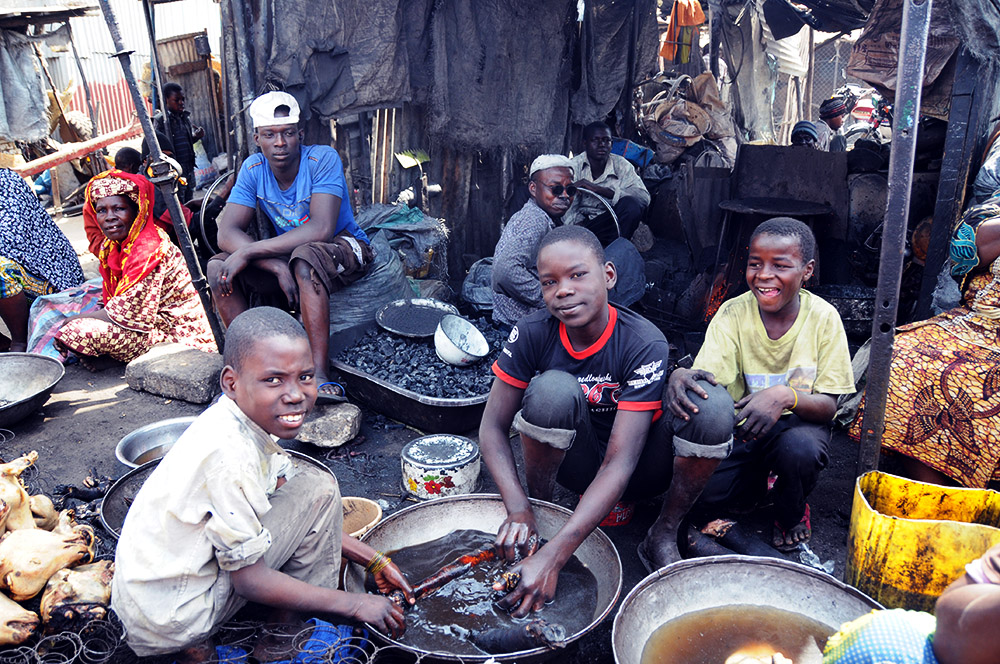
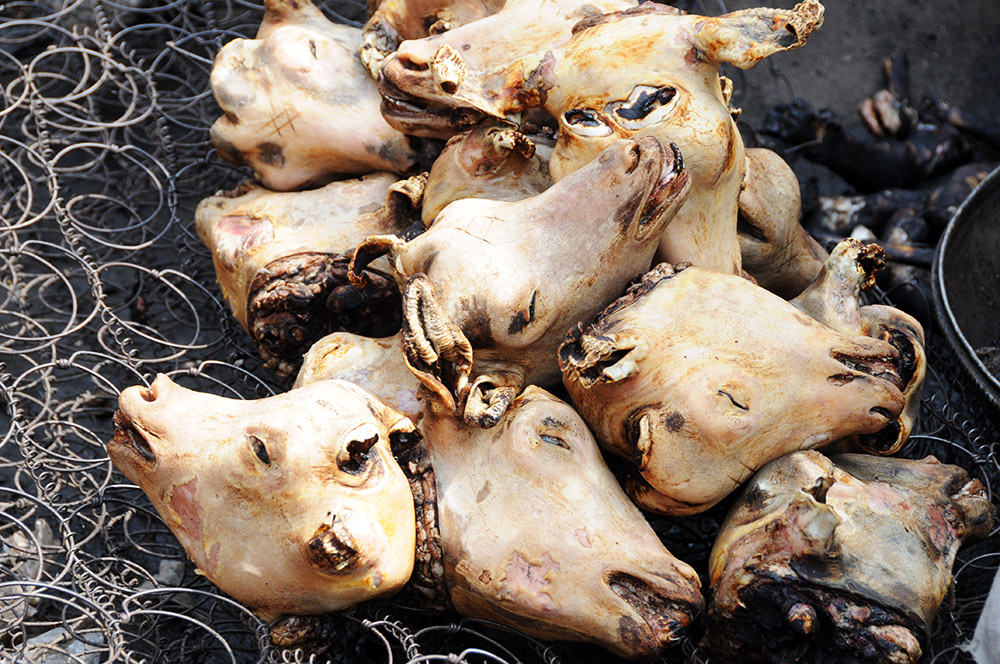
Other parts of the market were a little more difficult to interpret. I wasn’t sure exactly what these kids were doing, although they appeared to be cleaning animal parts. Nearby was the rather morbid display below: a collection of cooked goat heads arranged for sale.
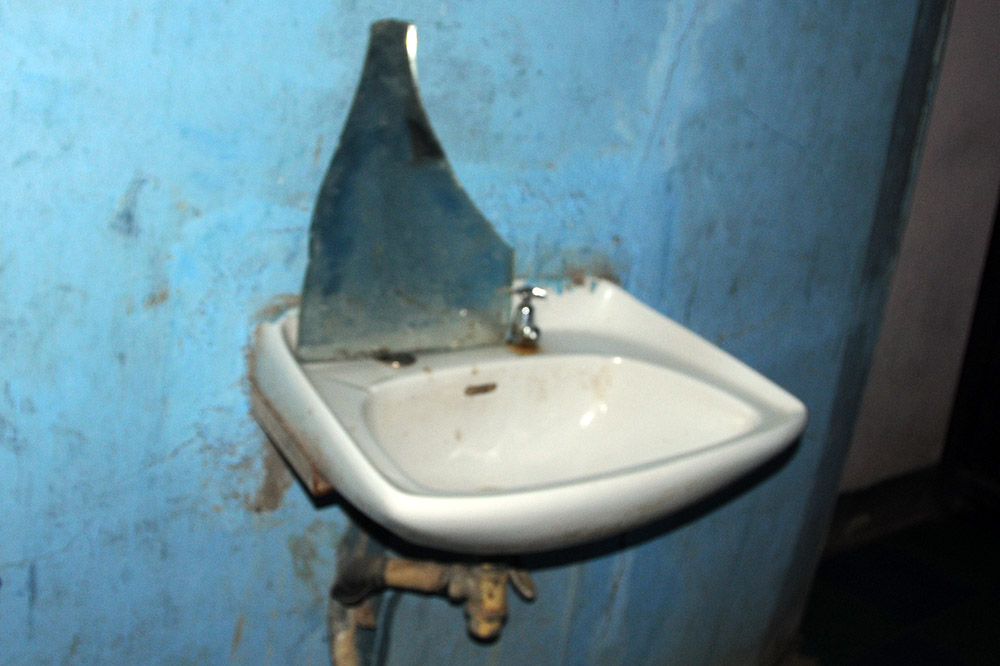
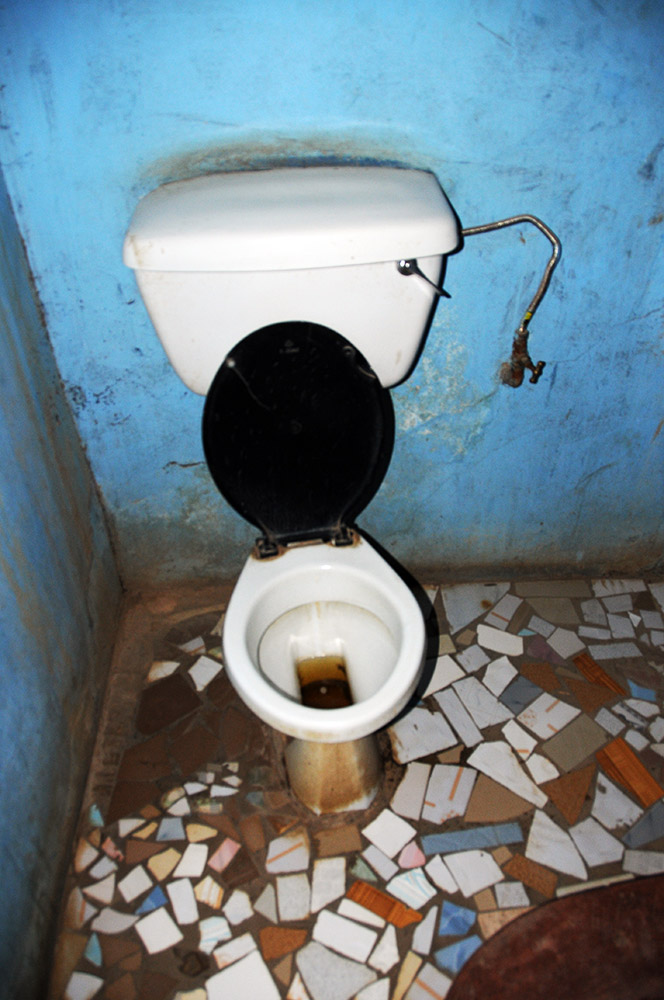
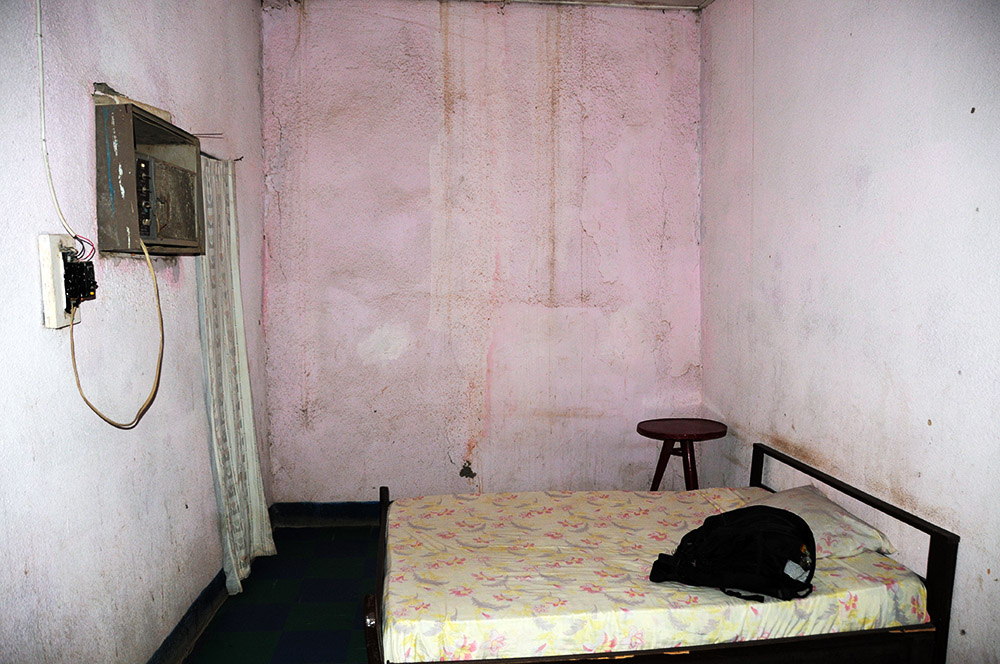
My first night in Zinder turned into an adventure of its own. The place where I had originally planned to stay had apparently closed long before I arrived. Since it was already dark, I took whatever accommodation I could find. The room was cheap, and I definitely got what I paid for. It wasn’t clean, and the bathroom didn’t even have working water or electricity. I needed the flash on my camera just to photograph the sink.
The hotel also had a large bar packed with locals who continued partying until around two in the morning. Later, while trying to sleep, I could hear enormous rats running around. In my half-awake state I became convinced that one of them was eventually going to jump onto my bed. To finish off the experience, I managed to cut myself on the bed frame while getting up the next morning. I found a better hotel the following day, where locals told me the first place wasn’t somewhere I should have been staying in the first place.
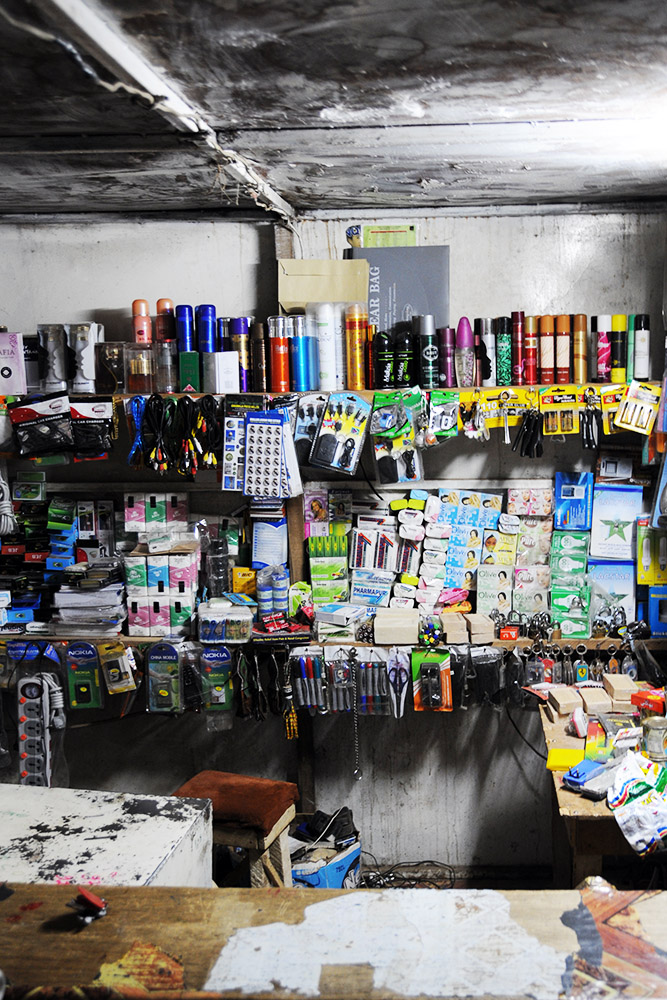
Some of the shops and restaurants around Zinder were almost as basic as my first hotel. This was a small store where I stopped to buy a few simple items. Despite the condition of the building, the owner was extremely polite, which was typical of many of the interactions I had while exploring the city.
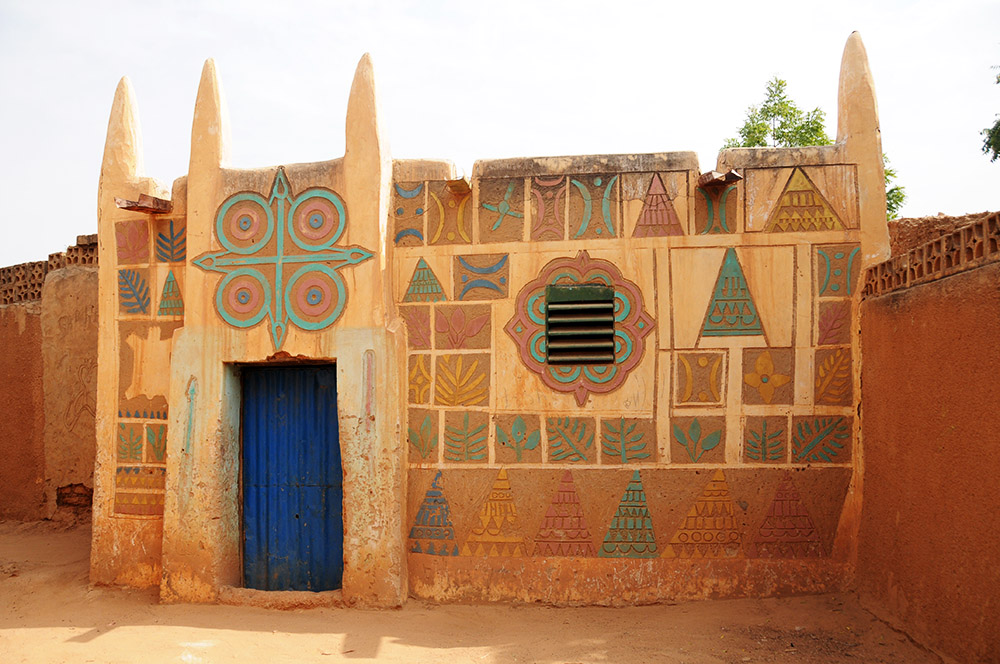
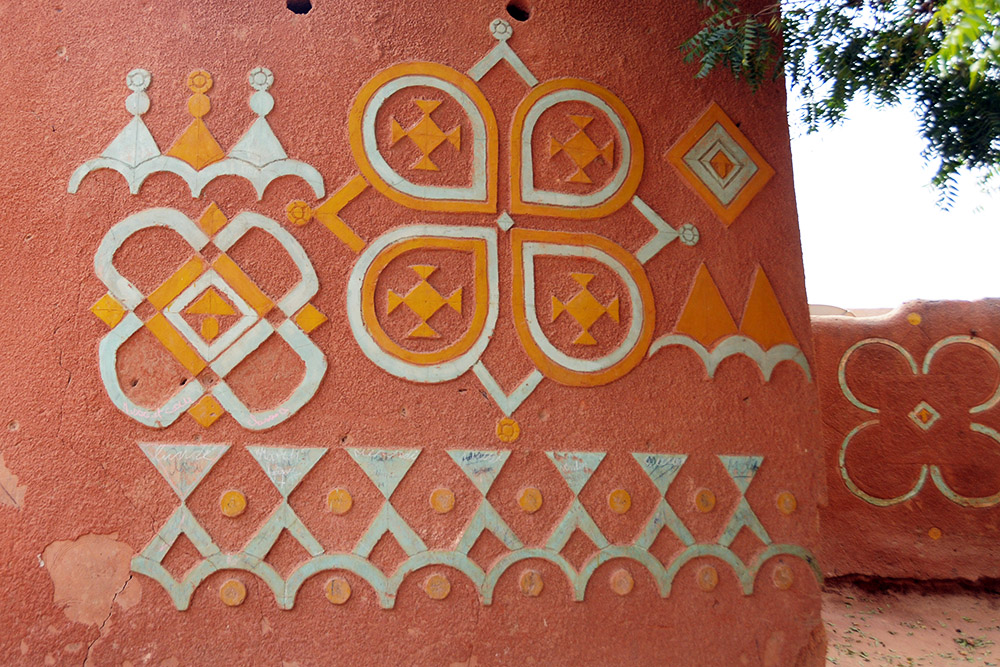
One of my main reasons for visiting Zinder was its reputation as a cultural center of Niger. The city is particularly known for its traditional architecture and decorative designs. Many buildings are constructed from earth in a style well suited to the dry climate, but some of Zinder’s homes take the architecture much further with elaborate patterns, raised designs, and colorful decoration.
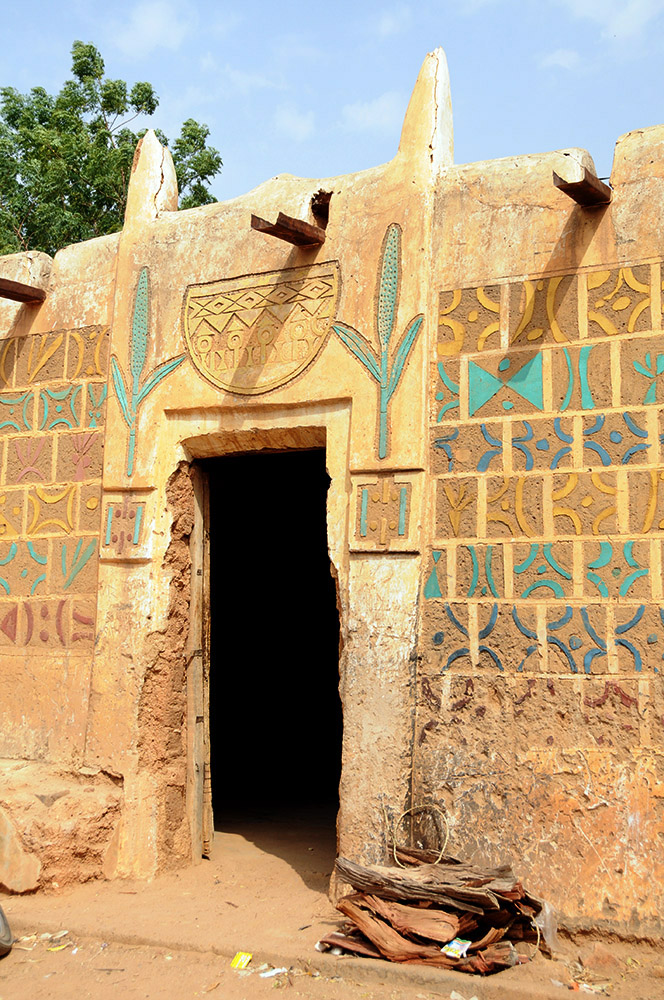
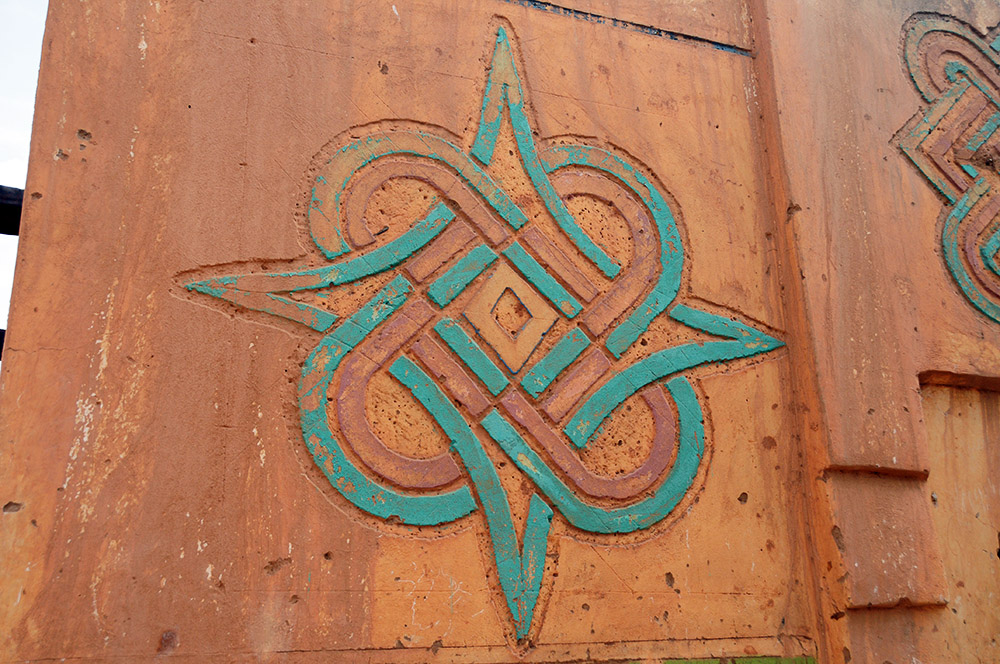
The photos above and below show some of the details incorporated into Zinder’s traditional buildings. This style is associated with the Hausa culture found across this part of West Africa, but Zinder had the largest concentration of these decorated structures that I encountered during my travels through Niger.
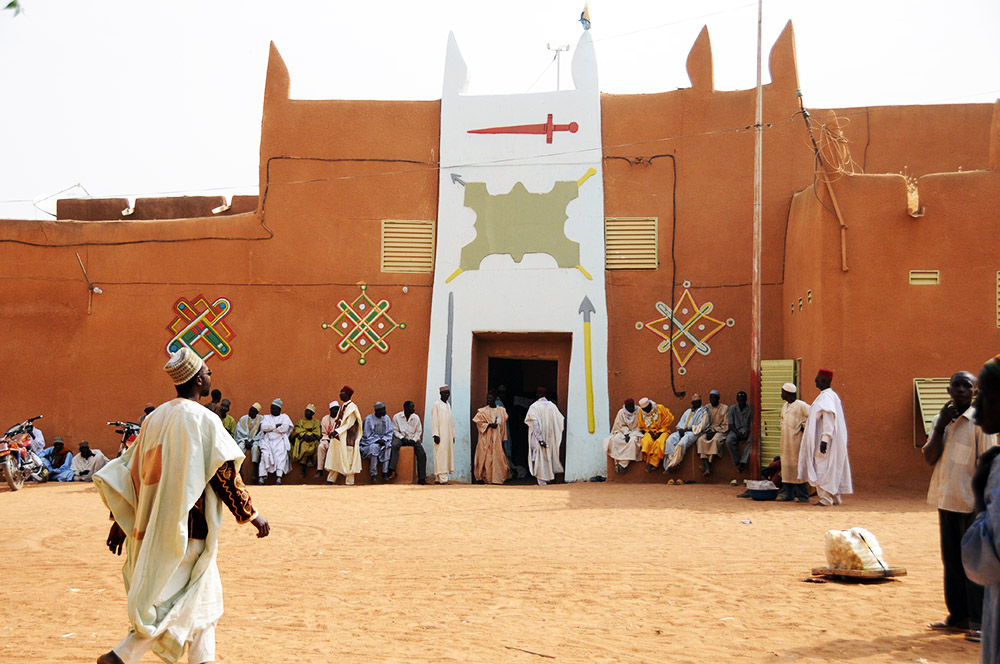
By far the most amazing place I visited in Zinder was the Sultan’s Palace. Before arriving, all I really knew was that the palace existed. I expected to find a small collection of historic buildings that had been converted into a museum. Instead, I discovered an enormous complex that was still very much in use. Above is the main entrance through the palace walls.
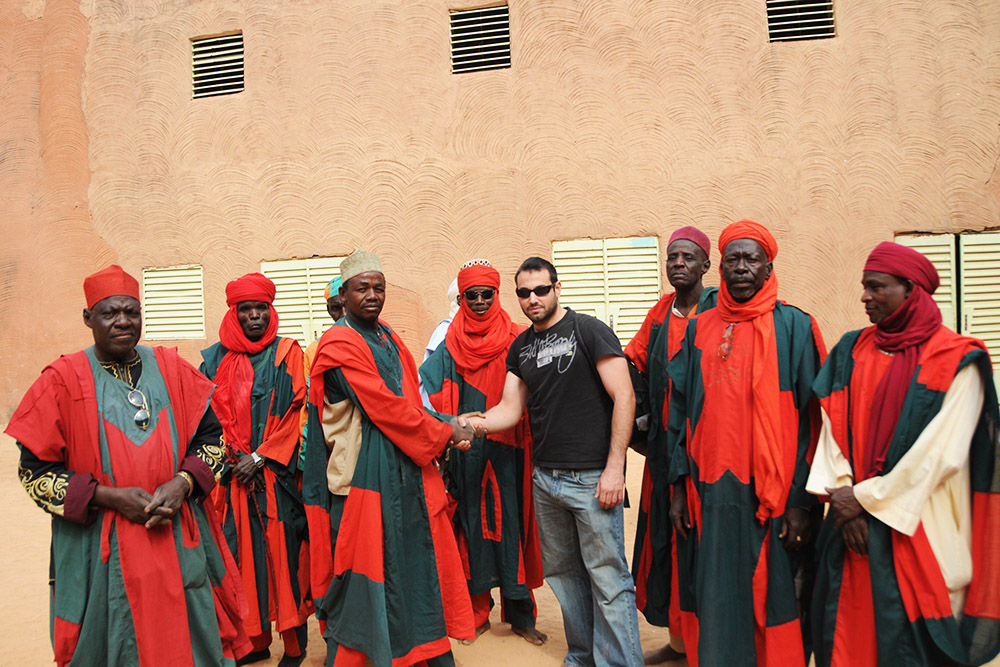
The photo above shows me with some of the palace guards. After entering, I came across what appeared to be a television crew filming inside the complex. Since we couldn’t really communicate, they simply had me stand beside the reporters while they spoke to the camera for several minutes and occasionally pointed toward me. I never found out what they were saying, so hopefully it was all good things!
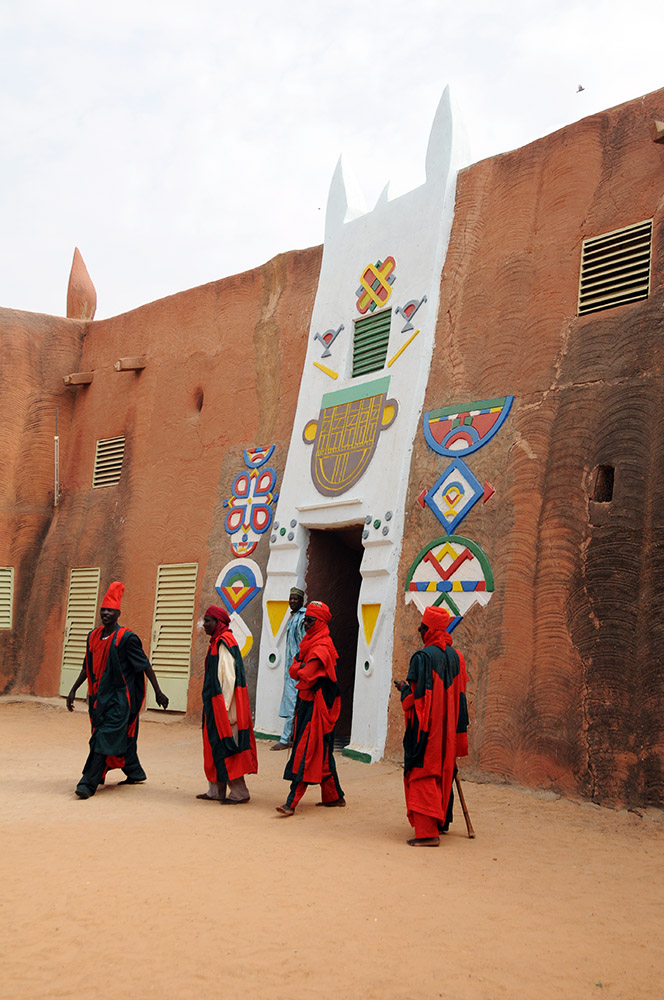
After passing through the first gate, I was asked to remove my shoes and continued barefoot through the palace. A second entrance was guarded by more of the Sultan’s attendants, dressed in distinctive red and black robes. From there I was taken deeper into the complex.
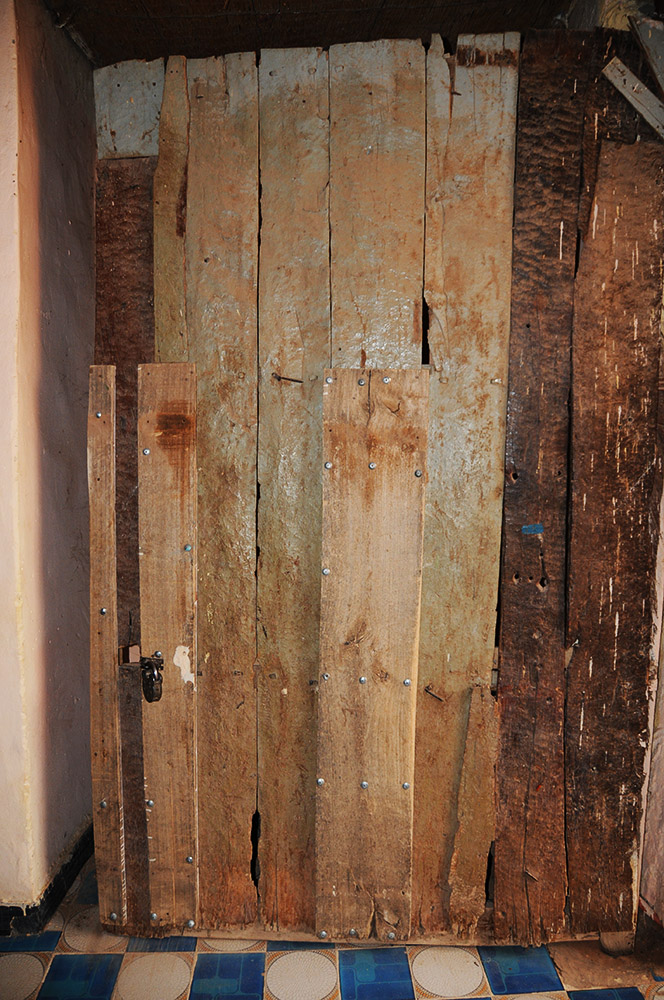
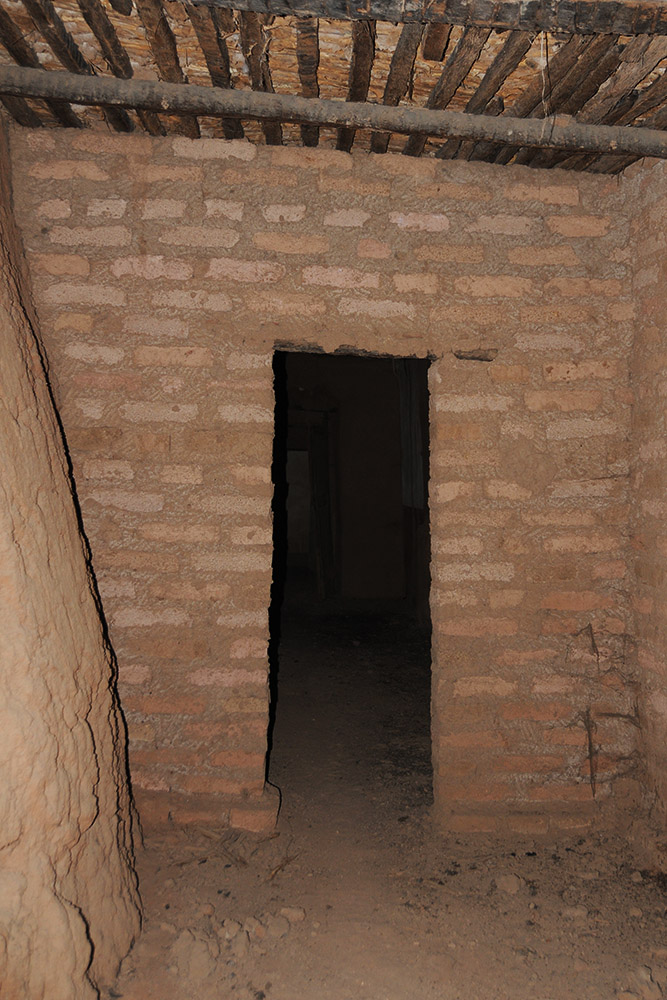
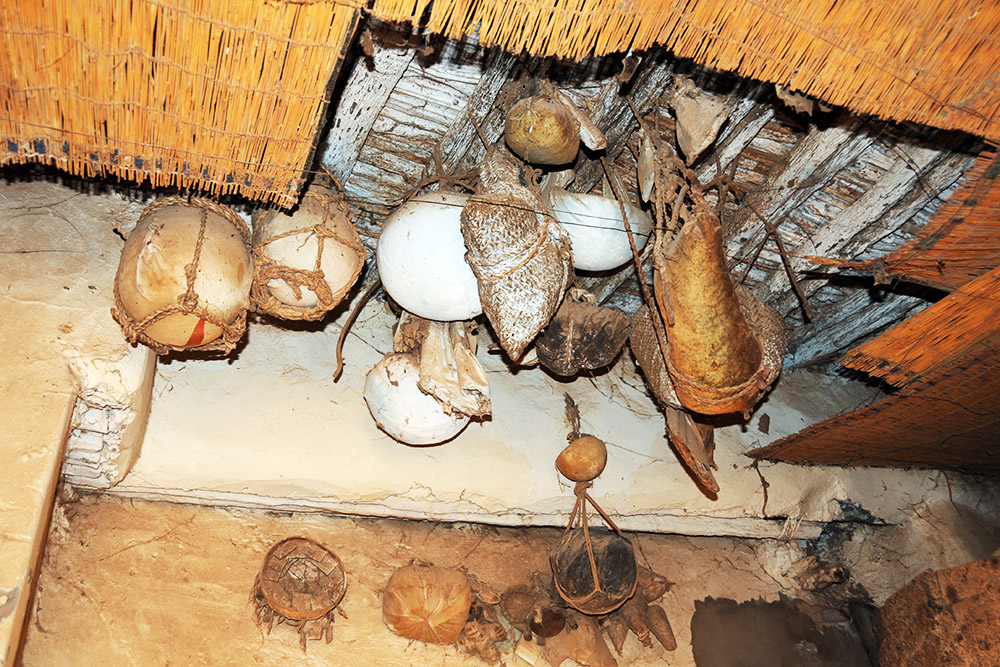
I passed through several rooms and open passageways, some containing old wooden doors and other traditional architectural details. One room had numerous objects suspended from the ceiling. I was told they were kept there for protection. At first I wondered whether there was some spiritual significance to this, although it’s also possible they were simply being kept away from animals and pests.
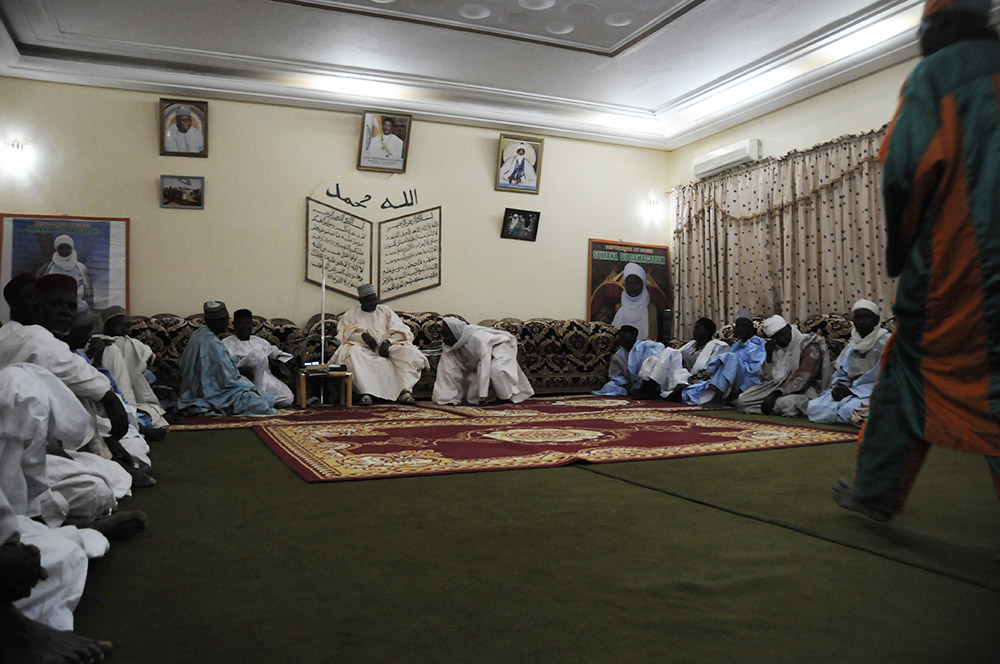
The biggest surprise came when I discovered that the Sultan himself was there. I had assumed the palace was primarily historic, but the traditional institution was still active. The Sultan sat in the center of the room while visitors entered, faced him, knelt on the carpet, and then took their seats. Since everyone else was doing it, I followed along.
I wasn’t exactly sure what was happening or whether I was supposed to be there, and the Sultan didn’t seem particularly interested in my presence. For me, that made the experience even more surreal. I had walked into the palace expecting a historic attraction and somehow ended up sitting barefoot in a room with the Sultan of Zinder.
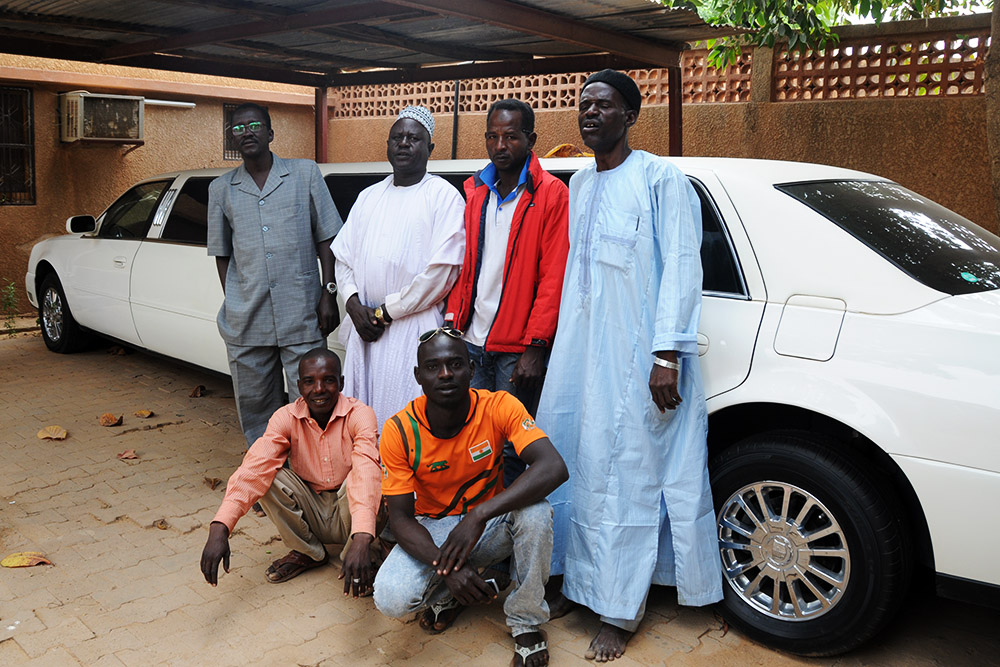
I didn’t stay with the Sultan for very long. Sitting around during an event I hadn’t actually been invited to felt a little awkward, so eventually I made my way back outside. My final photo from Zinder was this group posing beside the Sultan’s limousine. It was an appropriately unexpected ending to one of the most interesting cities I visited in Niger.