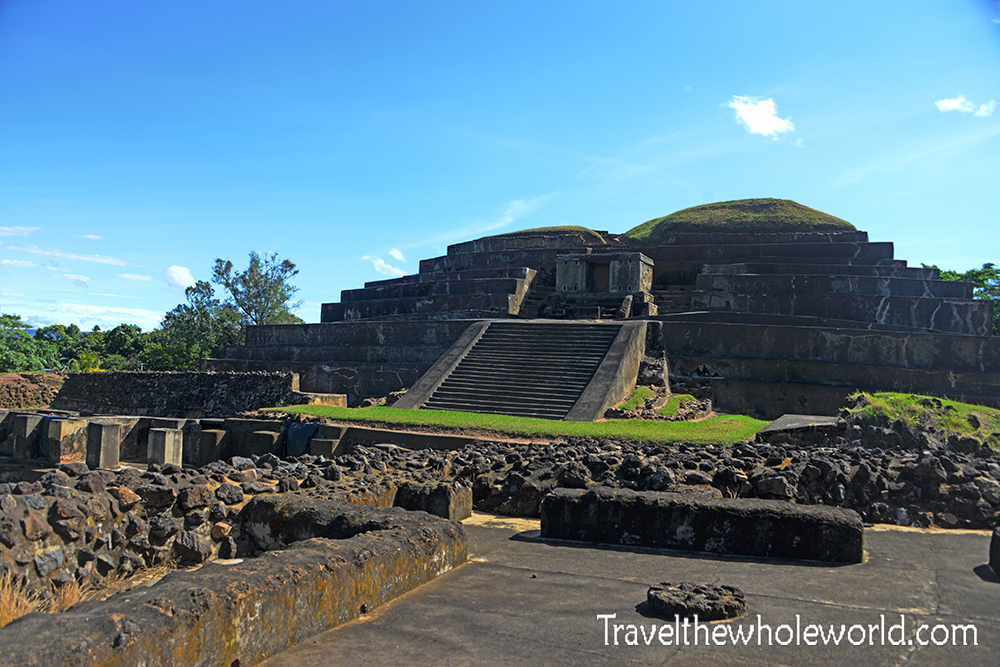
In the northwest of El Salvador are the country’s most famous Maya ruins. Tazumal is more than 1,000 years old, although the site developed over a long period of time. When archaeologists began excavating Tazumal in the 1940s, much of it was covered by vegetation and appeared more like a giant mound of dirt. Several years of excavation and restoration were needed to reveal the structures visitors see today.
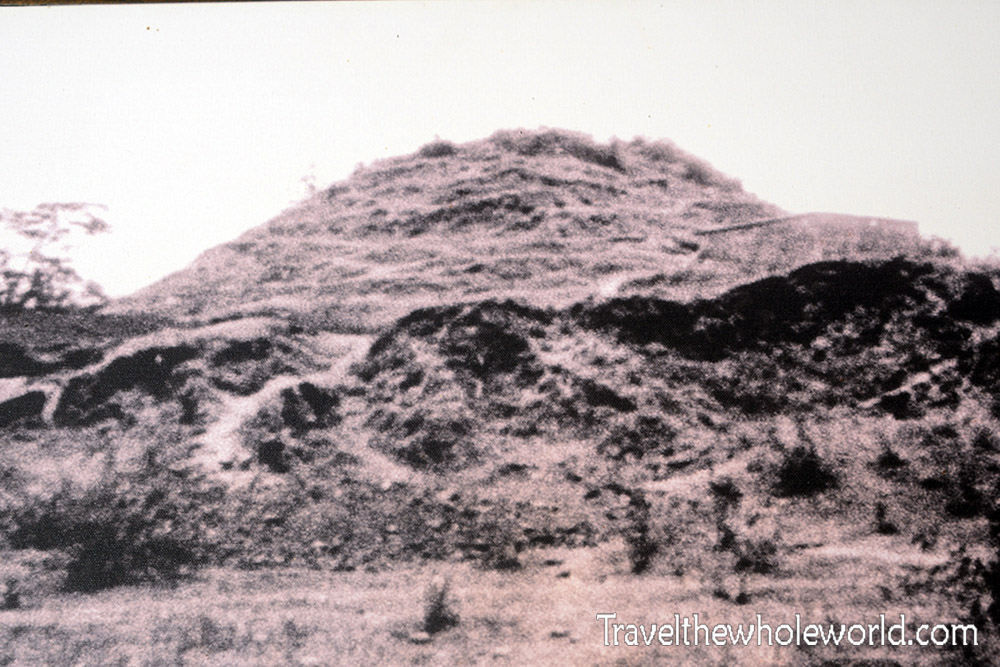
This photo shows what Tazumal looked like during its early excavation. It’s amazing to compare this with the main pyramid as it appears today.
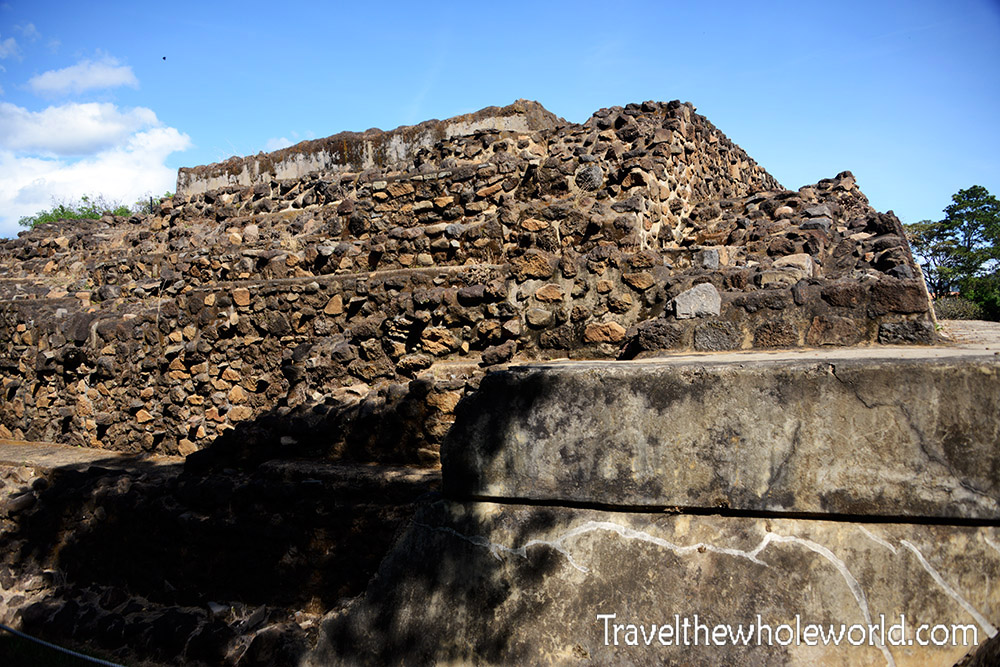
The first photo on the page shows the main pyramid of Tazumal from the front, while this photo shows the backside. You’re not allowed to enter the main pyramid or stand on it, but there is a trail that goes around all sides. You can also get a closer look at the construction of the structure, which is very different from the giant stone blocks most people associate with the Egyptian pyramids.
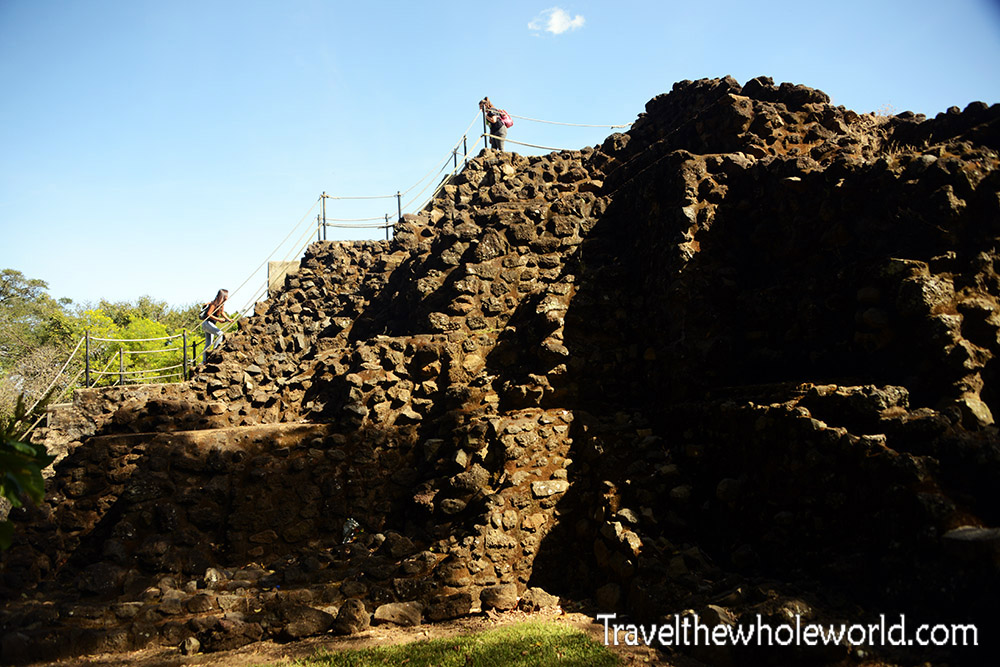
You’re allowed to climb one of the smaller structures at Tazumal, known as B1-2, which gives you a great view of the main pyramid. The remains of an ancient ballcourt are also at the site. Mesoamerican ballgames had important ceremonial and religious roles, although the popular idea that the losing team was routinely sacrificed is an oversimplification and wasn’t a universal rule.

There is a small museum on site with a collection of Maya artwork and artifacts, along with information about the history of Tazumal. This giant statue was my favorite object in the museum.
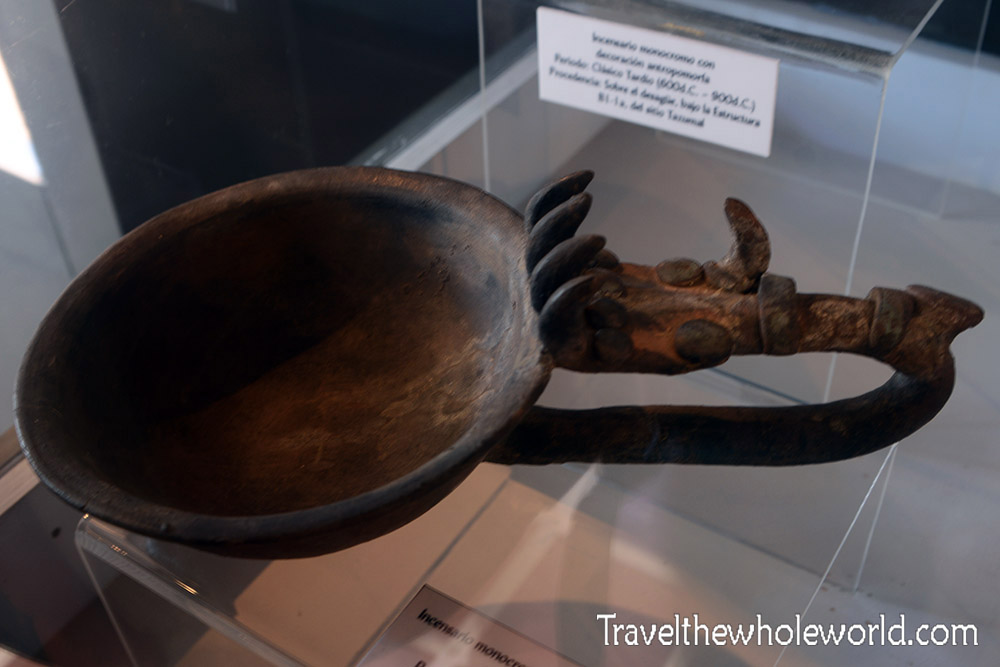
I’m not usually a fan of pots and pans in museums, but the Maya definitely created some interesting ones that I wouldn’t mind adding to my kitchen collection. This claw-hand pan was probably my favorite.
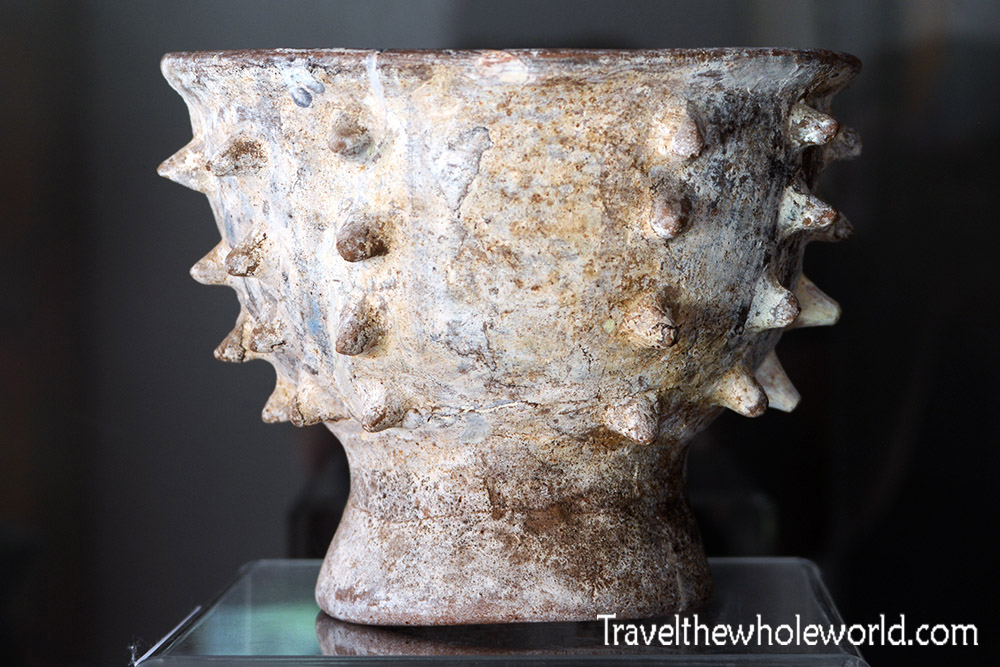
This spiky pot was probably a close second. Even some of the everyday objects in the museum had surprisingly elaborate designs.
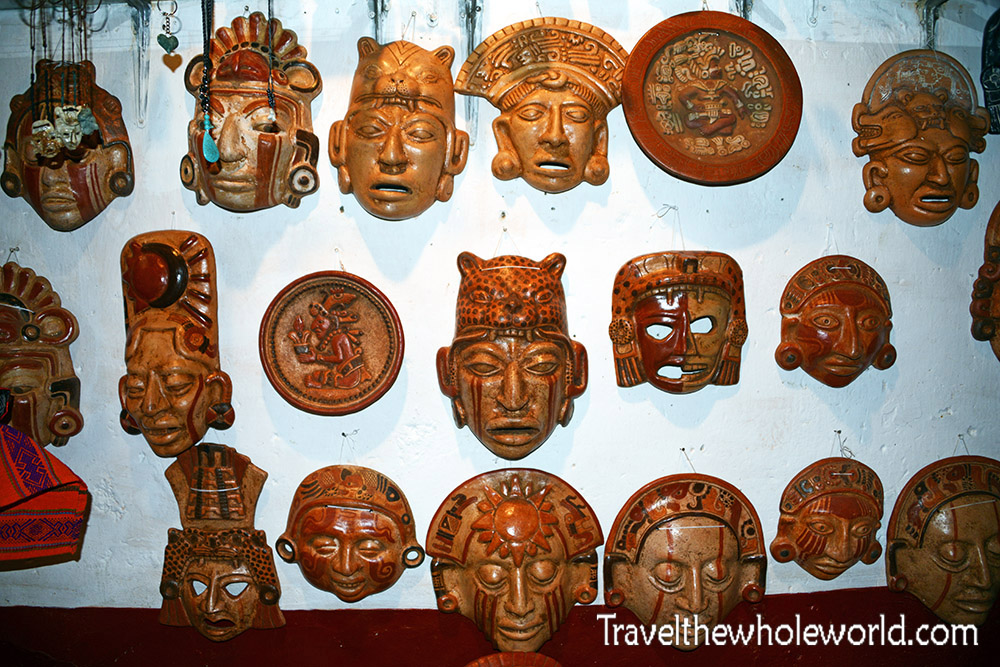
Of course you can’t take anything from the museum, but if you’re interested in replicas of Maya art there are plenty right outside Tazumal. There’s a long line of vendors on the main street selling everything from horchata to Maya-style face masks. They were so cheap, only a few dollars apiece, that I had to take some home with me!
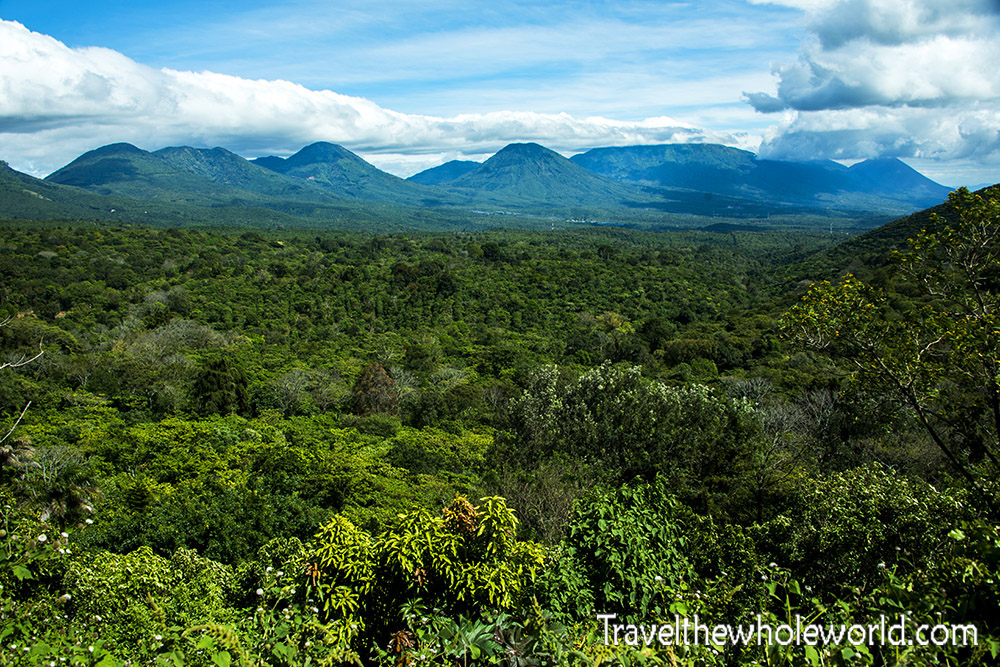
Another famous experience in western El Salvador is the Ruta de las Flores, or Route of the Flowers. I decided to include it on this page because it fit naturally into my trip to Tazumal. The route passes through some beautiful mountain scenery as well as a series of small towns along the way.
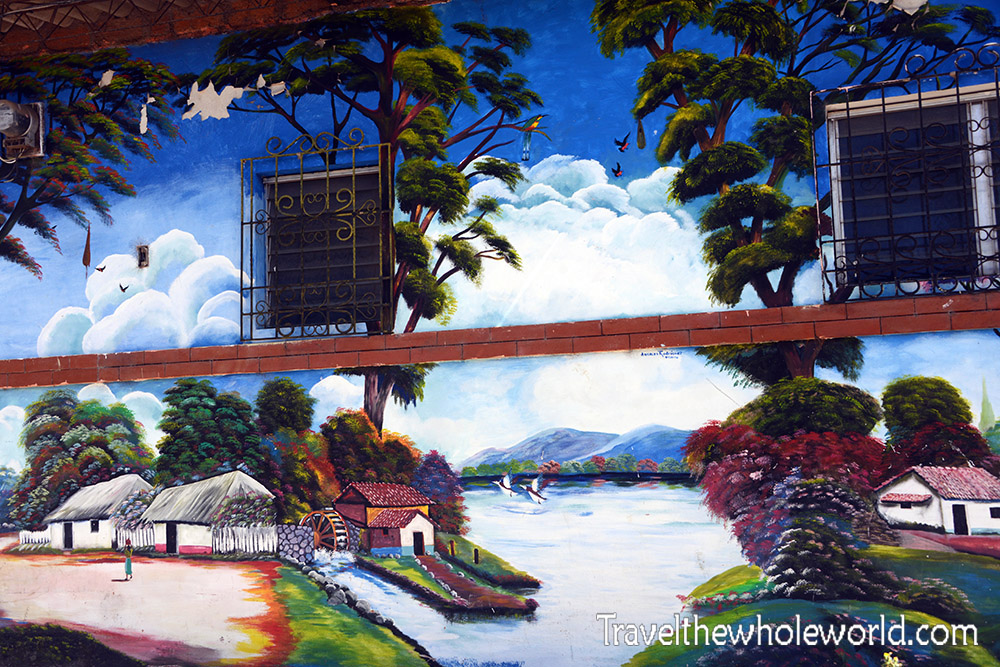
The Ruta de las Flores is known for its colorful towns, flowers, and painted buildings. Murals like this one add even more color to the streets.
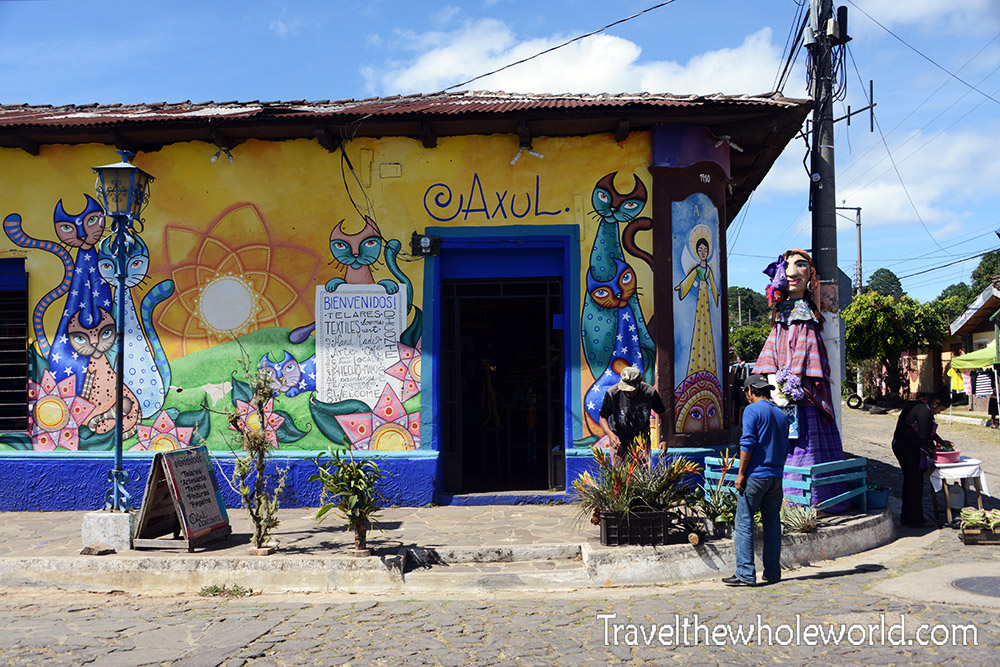
Walking around the towns was part of the experience itself. Between the colorful buildings, cobblestone streets, flowers, shops, and restaurants, there was always something interesting to see.
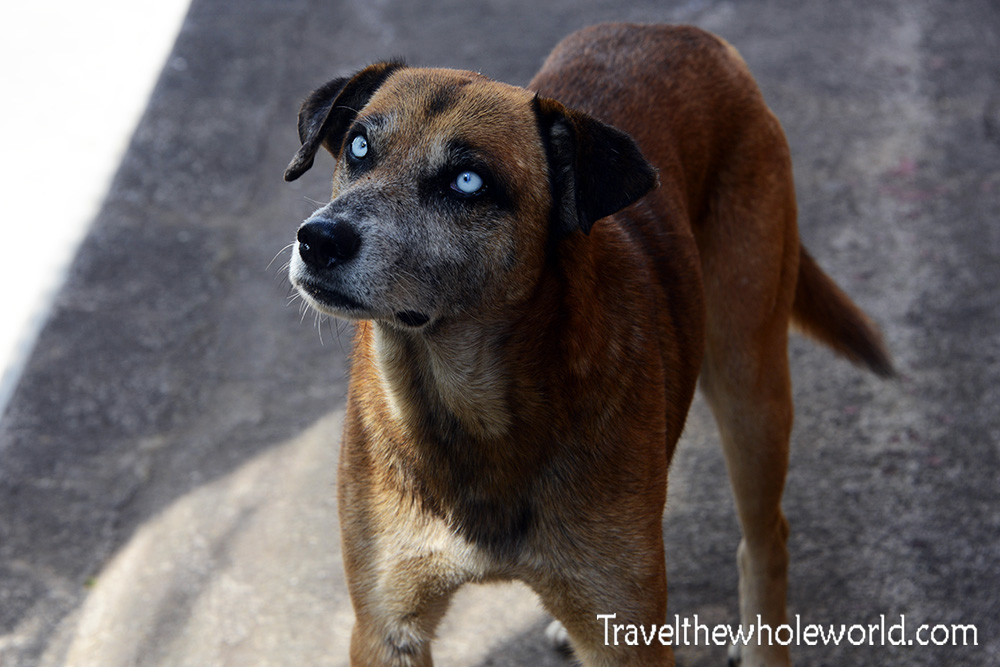
Even the dog I came across along the Ruta de las Flores had colorful eyes! At first I wondered if the dog might be blind, but it clearly wasn’t. A friend of mine back in Virginia has a Husky, and as she pointed out, this dog could have some Husky ancestry as well.
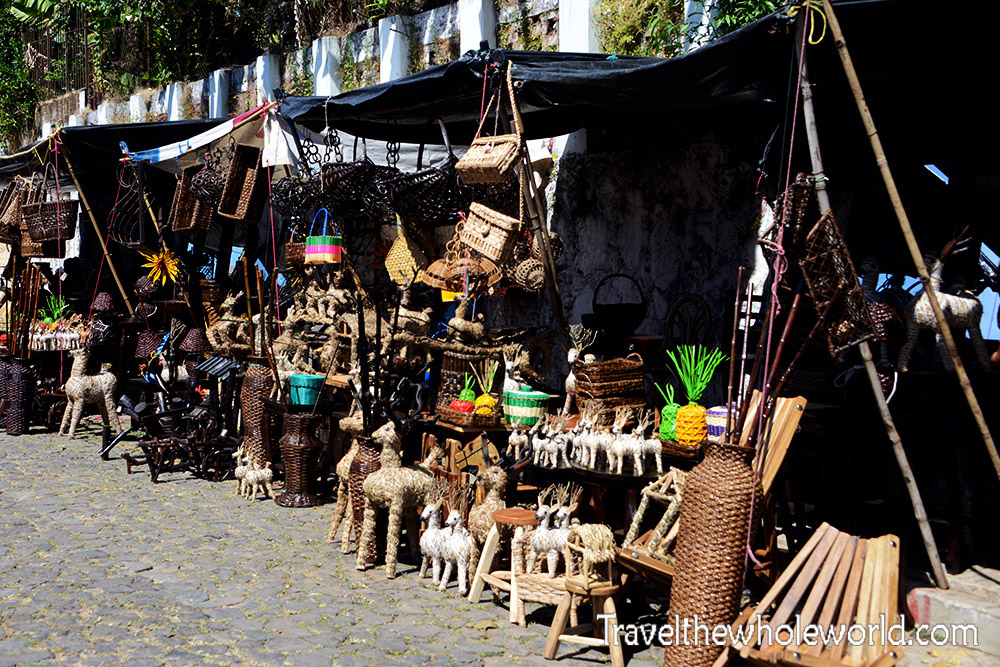
The Ruta de las Flores is one of El Salvador’s better-known tourism regions, and you’ll find plenty of souvenir stands throughout the towns. Some sell traditional crafts while others have the usual assortment of gifts aimed at travelers.
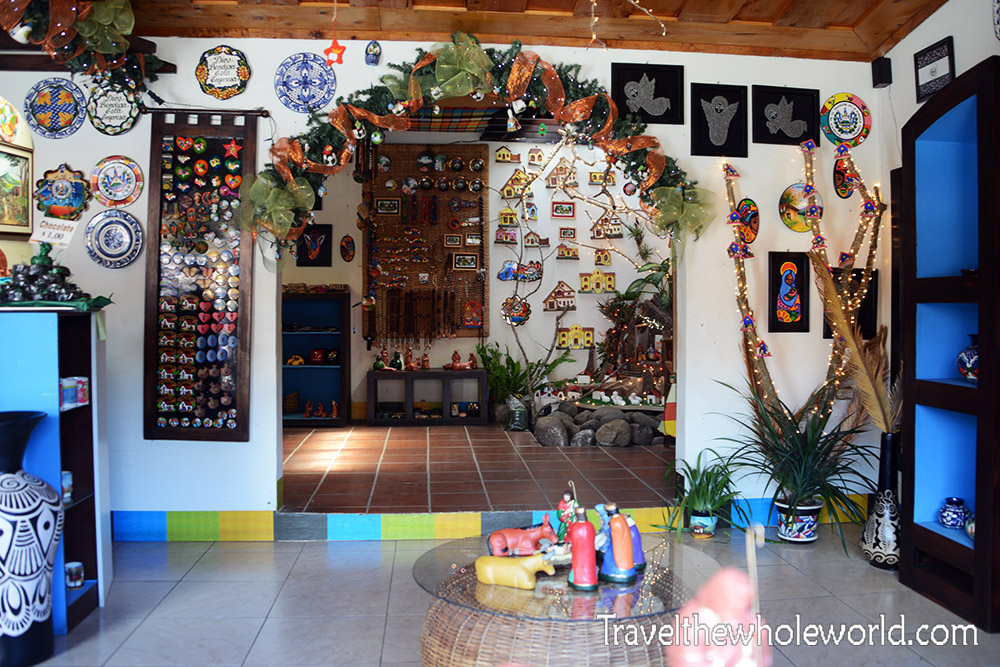
There are also plenty of small stores selling local products and crafts. Even though this is one of the country’s more popular tourist routes, the towns still felt much quieter than major tourist destinations I’ve visited elsewhere.
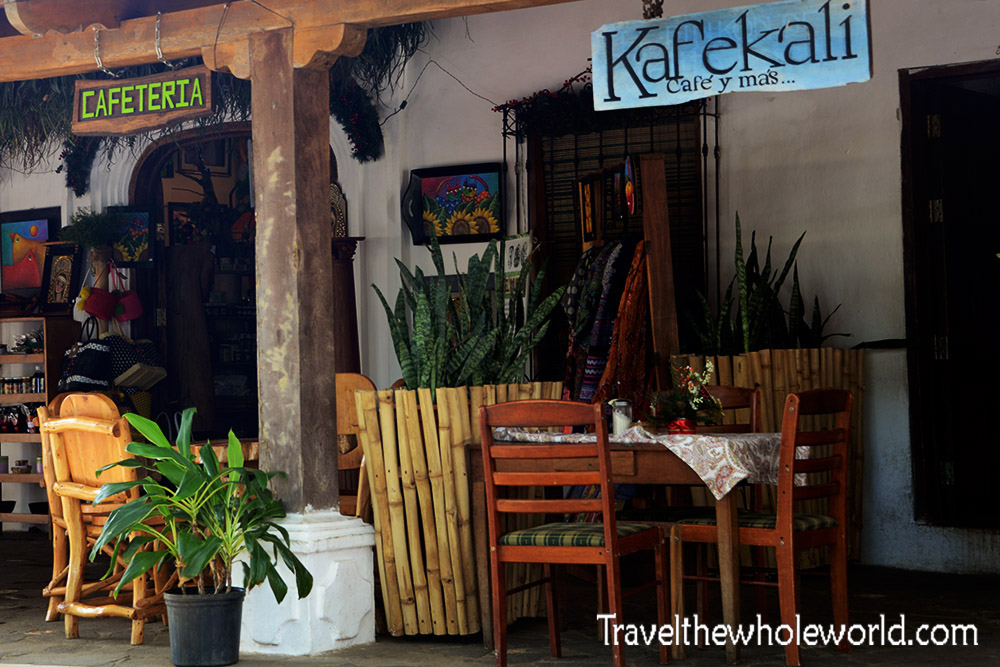
Probably the best thing about visiting the Ruta de las Flores is its cafes and restaurants. I stopped at one for a drink and some appetizers with a friend. There are so many places to choose from, and the ones I visited were excellent.
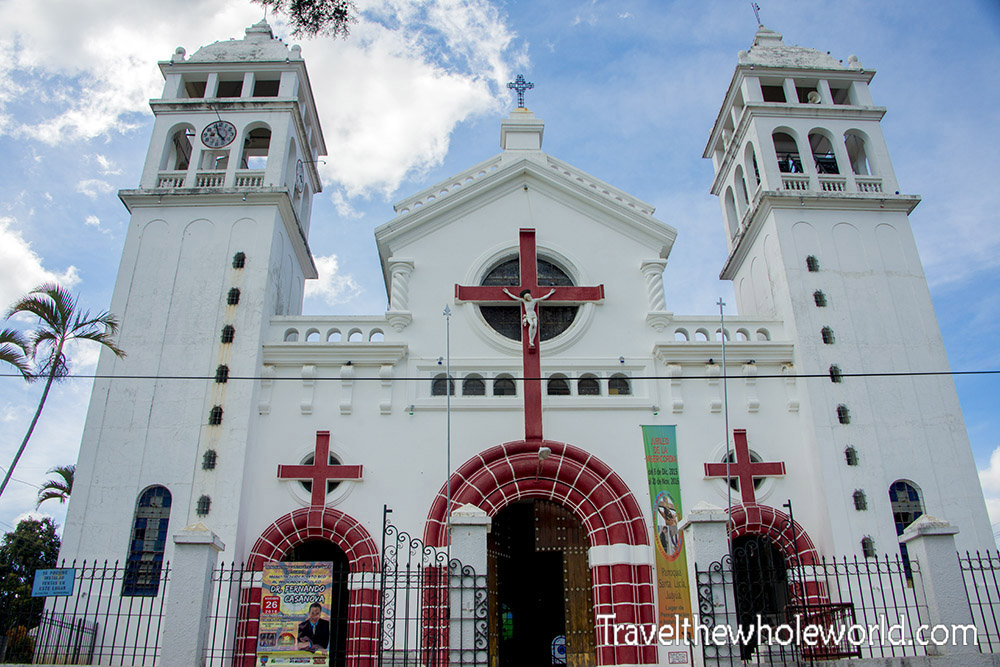
As far as sightseeing goes, churches are another major feature of the towns along the Ruta de las Flores. I didn’t catch the names of all the churches I visited, but this large one was among several that stood out.
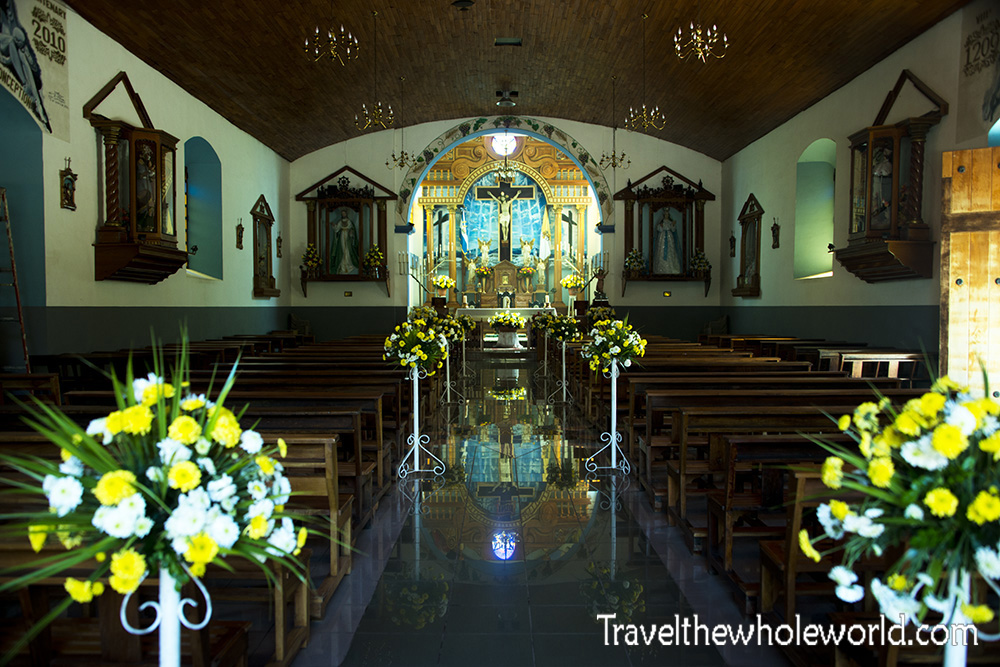
This was the interior of a different church in the first town I visited. Of the churches I saw along the route, this one had my favorite interior.
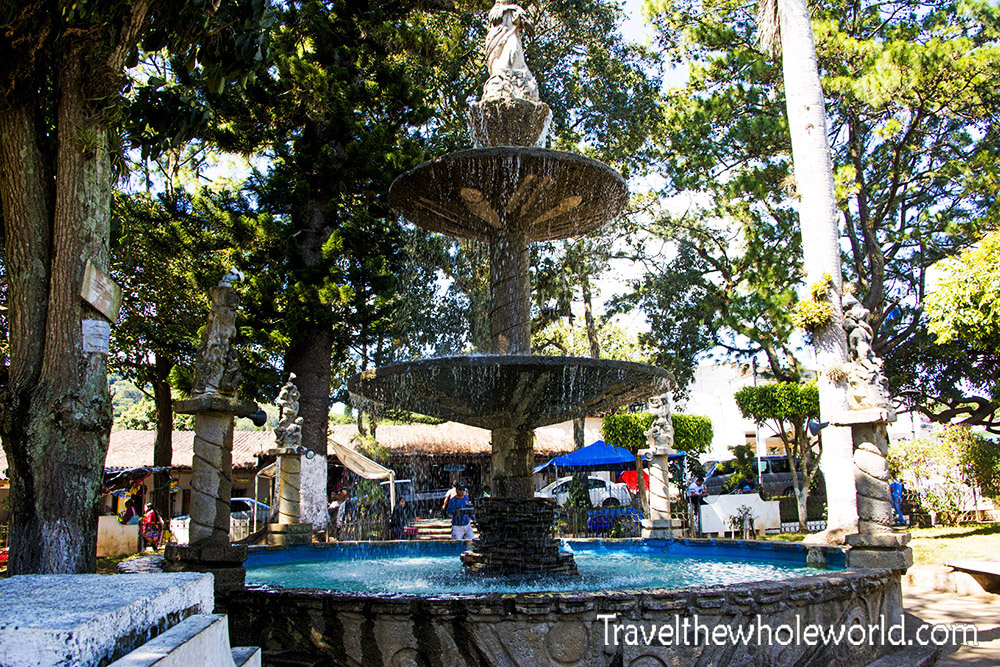
Several towns are commonly visited as part of the Ruta de las Flores circuit, and almost all of them have a central square. Some were pretty small and quiet, while others had festivals and events going on. This one had my favorite fountain of those that I visited.
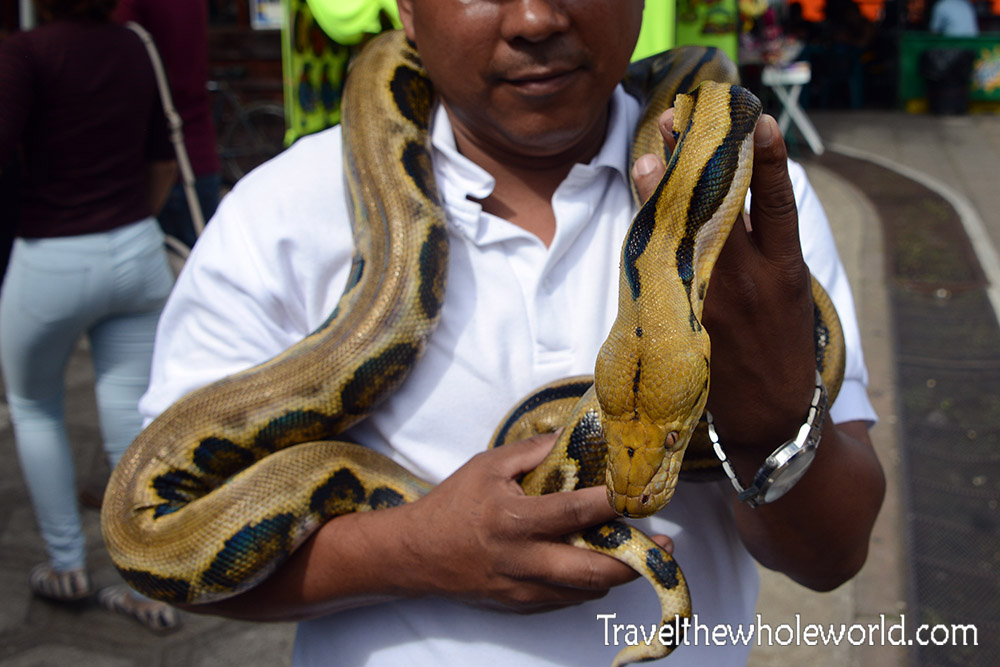
This guy was walking around one of the squares with a large snake. I’m not sure if it was simply his pet or if he was allowing people to pose with it for photos, but it certainly got everyone’s attention.
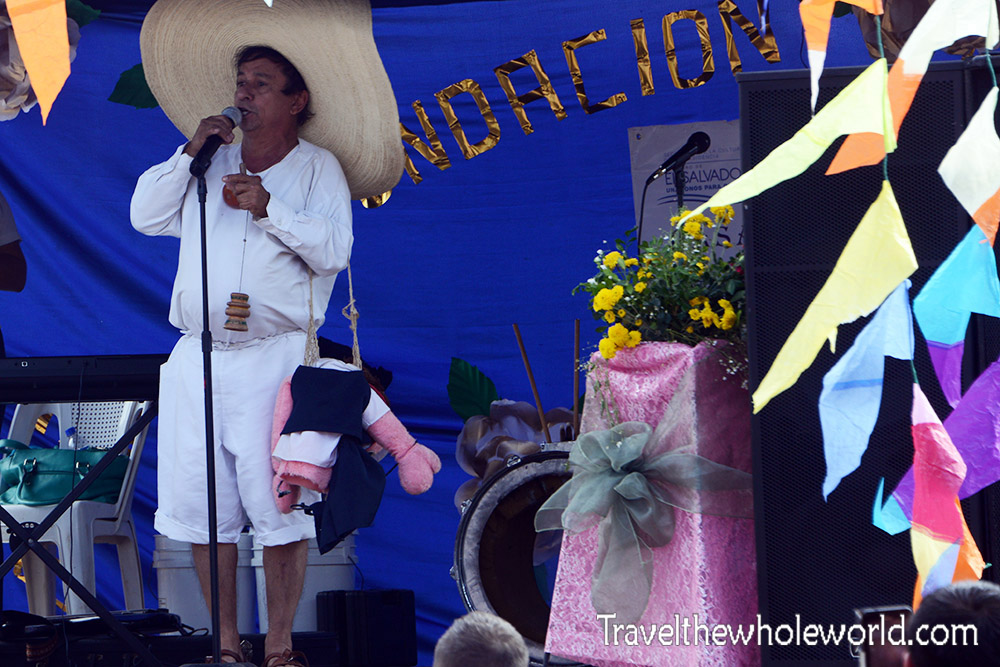
Probably the best experience along the Ruta de las Flores was this singer and comedian. My Spanish wasn’t good enough to understand everything he was saying, but the guy’s voice was so high-pitched and the laughter he got from the crowd made it obvious he was telling funny stories. When I first heard his voice, I imagined a really old lady singing and was surprised to see this guy on stage. I don’t know why, but I got the feeling he was eventually going to pull someone out of the crowd for some embarrassing stunt!
Explore More of El Salvador
Cerro Verde • Joya de Ceren & San Andreas • La Libertad • San Salvador • Tazmul & Ruta de las Floras