Osh was one of the most interesting cities I visited in Kyrgyzstan. Located in the Fergana Valley near the border with Uzbekistan, it has been an important trading center for centuries and remains one of the country’s largest cities. Although Bishkek is the national capital, Osh has a very different character, with a stronger connection to the cultures and history of southern Central Asia.
Before arriving, I had imagined a dusty city filled with traditional houses and relatively little modern development. Instead, I found a surprisingly green and lively place, with bustling markets, museums, parks, restaurants, and a sacred mountain rising directly above the city center. I spent much of my time exploring Sulaiman-Too, but I also discovered that Osh had plenty of interesting places beyond its most famous landmark.
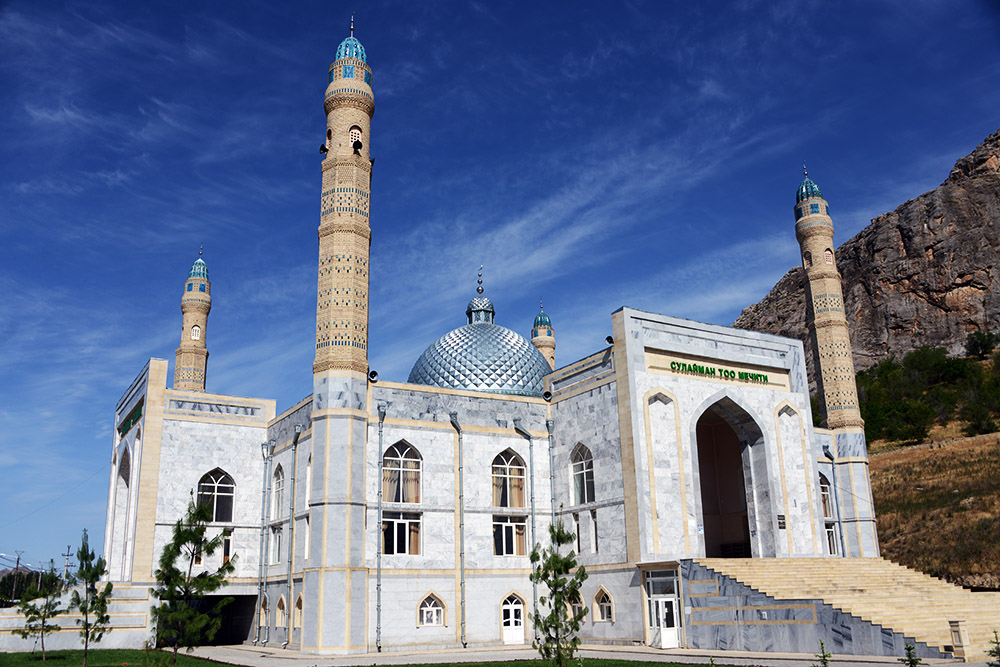
Exploring Sulaiman-Too Sacred Mountain
The first place I visited in Osh was Sulaiman-Too Sacred Mountain, the enormous rocky landmark rising above the city. The mountain has been a place of spiritual importance for centuries, attracting pilgrims from Kyrgyzstan and neighboring countries. It contains sacred caves, petroglyphs, historic religious sites, and museums. In 2009, Sulaiman-Too became Kyrgyzstan’s first UNESCO World Heritage Site.
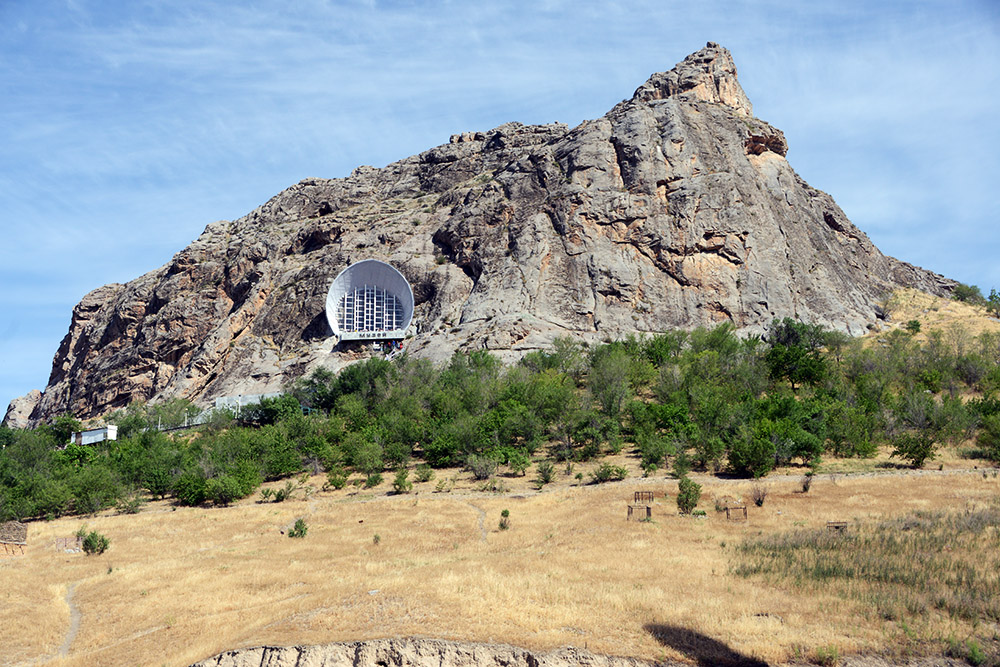
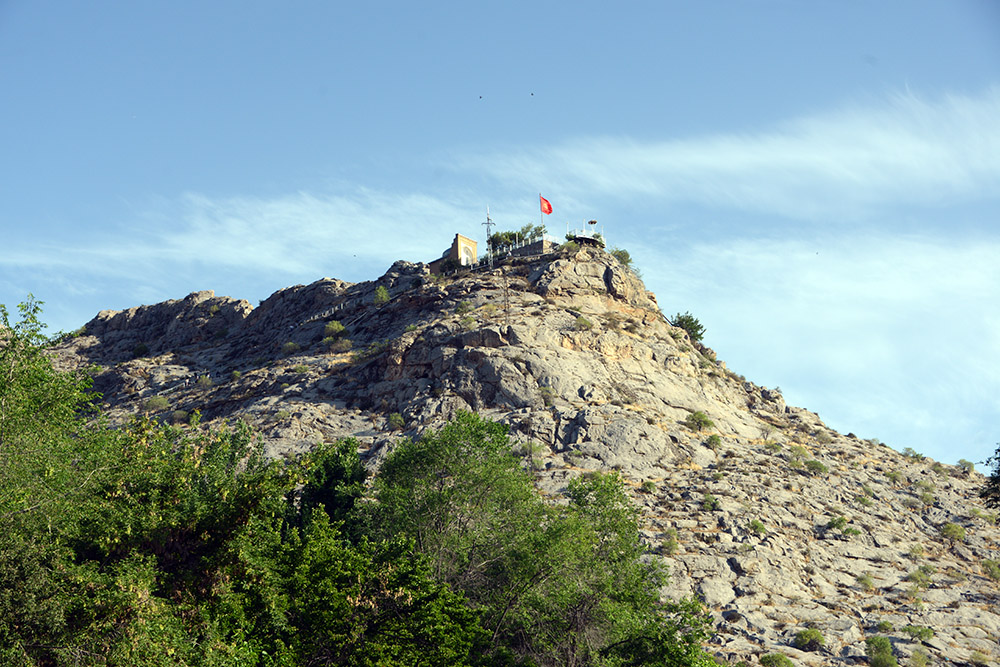
Several trails cross the mountain. The main paths are relatively easy to follow and connect the museums, religious sites, and popular viewpoints. Other routes climb across rougher terrain and lead to less-visited sections of the mountain, including areas with ancient rock carvings.
I enjoyed exploring the different trails, especially because the mountain combined natural scenery with so many layers of history. One moment I was walking past a museum, and the next I was scrambling across rocky slopes or looking into a cave used by local pilgrims.
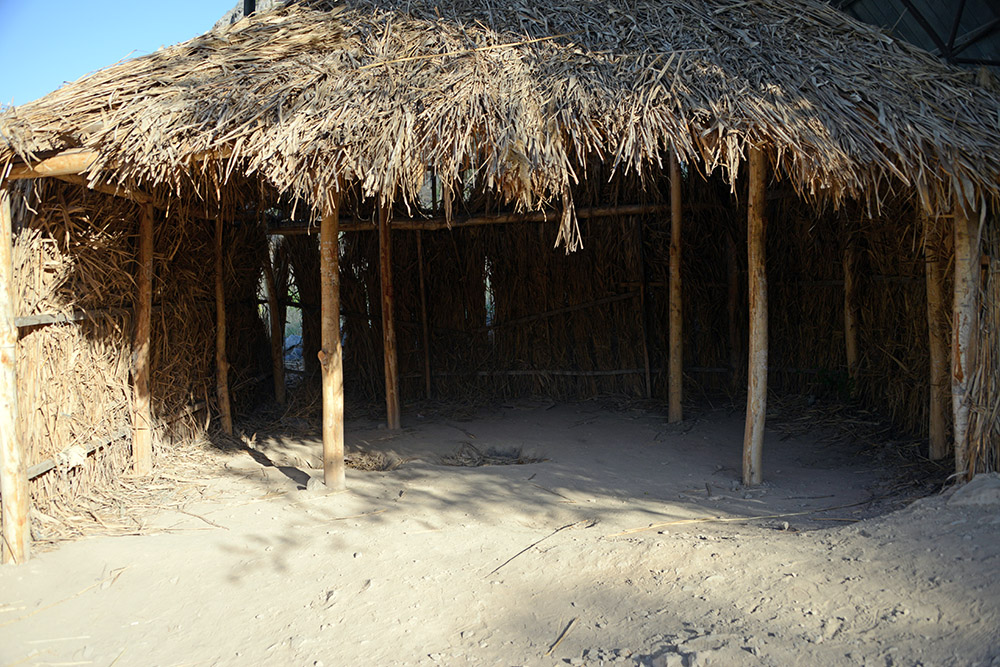
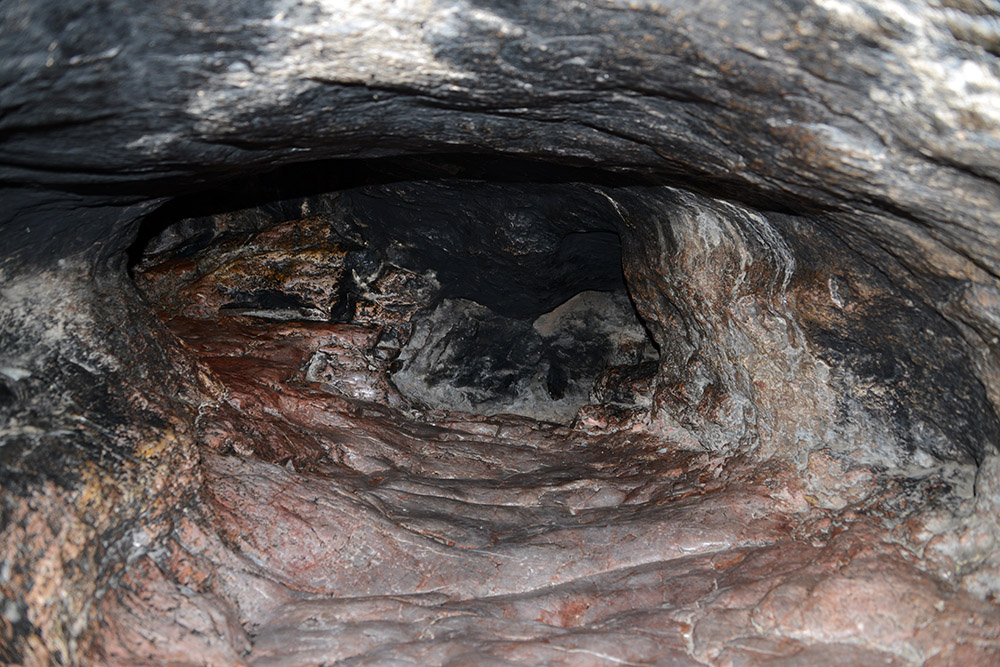
Along one trail, I passed a reconstructed wooden shelter representing an older style of dwelling. Nearby was a small sacred cave where visitors could crawl inside. As I approached, several middle-aged women were emerging from the opening. One of them started a conversation with me and unexpectedly handed me a large piece of Kyrgyz bread.
It was a particularly welcome gift because I had skipped breakfast that morning. Encounters like that were among my favorite parts of traveling through Central Asia. Even when there was a language barrier, people often found simple ways to be friendly and welcoming.
Ancient Petroglyphs and Modern Graffiti
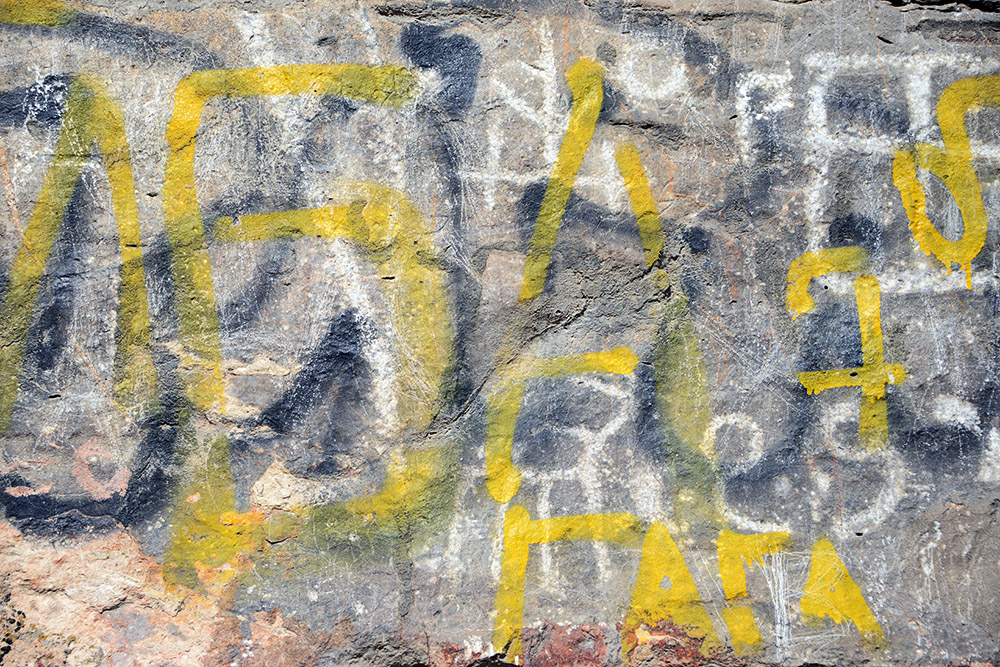
One of Sulaiman-Too’s most important historical features is its collection of ancient petroglyphs. These rock carvings are scattered across the mountain and provide evidence of its long history as a sacred landscape. Signs along the trails pointed toward several locations, and the museums contained additional information about the carvings.
Unfortunately, finding undamaged petroglyphs was more difficult than I expected. Graffiti covered large sections of the rocks, and in some places modern spray paint had been applied directly over ancient carvings. I was surprised by how extensive the damage was, especially at a site with such significant cultural and historical value.
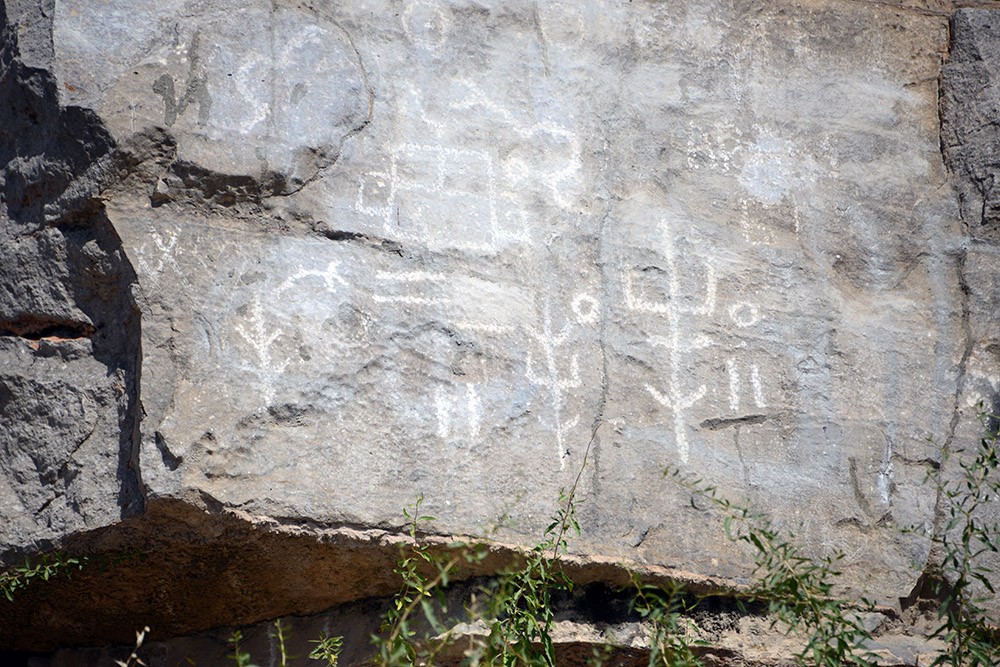
Eventually, I found an area where the carvings were still visible without being obscured by graffiti. It was rewarding to see them in person, but disappointing that so many nearby rocks had been vandalized. The contrast between the ancient markings and modern paint was a reminder of how vulnerable archaeological sites can be, even when they are internationally recognized.
Pilgrims, Visitors, and Views Over Osh
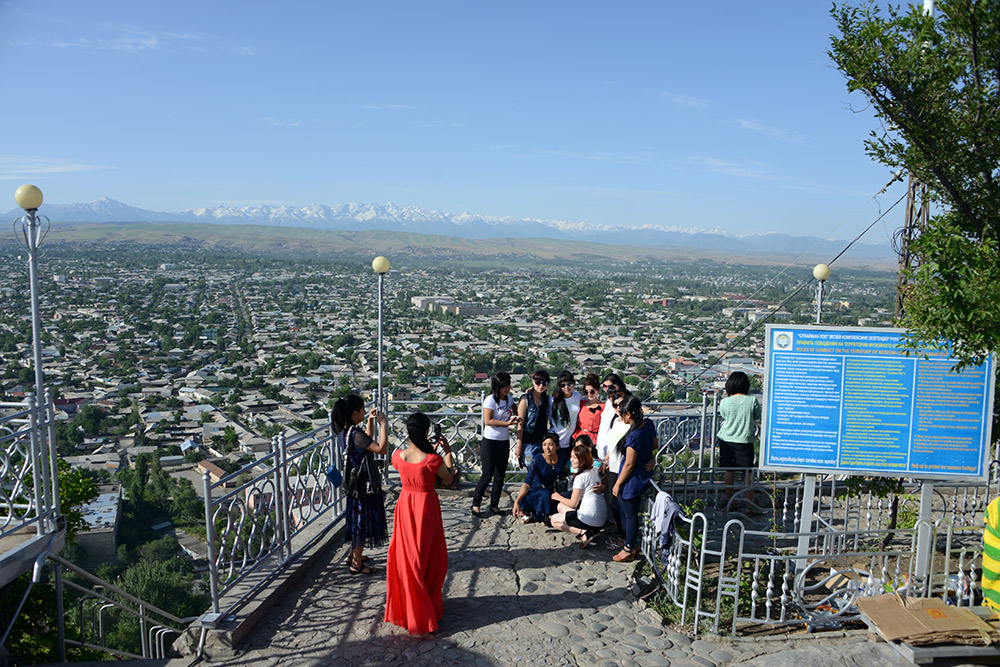
The mountain was busy during my visit. I encountered a group of roughly twenty young women and another group of fifty or more children who appeared to be on a school excursion. Although Sulaiman-Too is an important pilgrimage destination, it is also a popular place for local residents and students to explore.
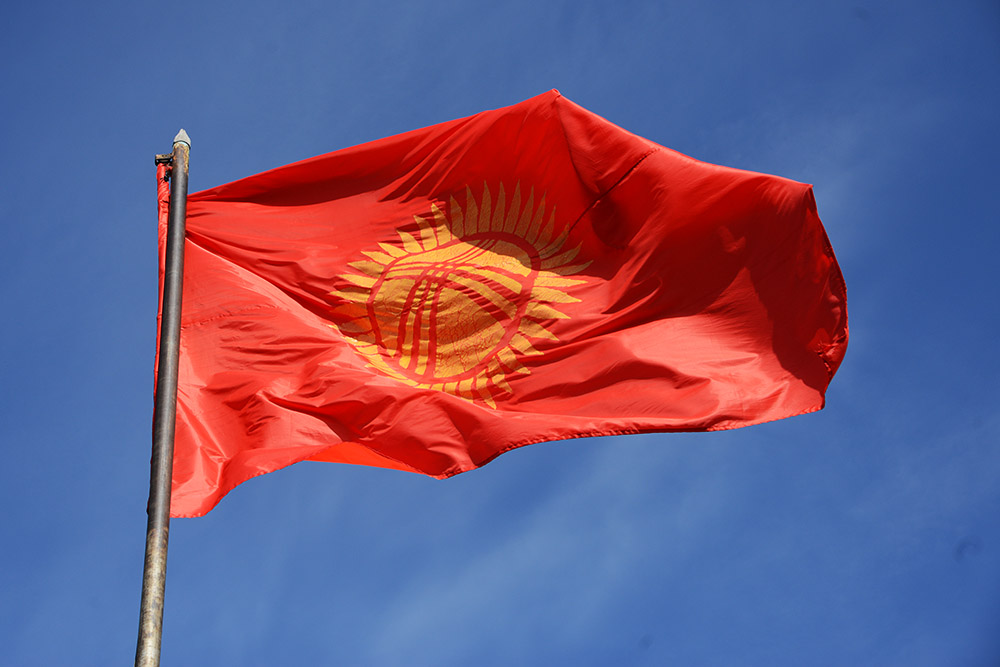
Near one of the higher viewpoints, the national flag of Kyrgyzstan flew above the city. From here, the contrast between the rocky mountain and the green urban landscape below was particularly striking.
Babur’s House
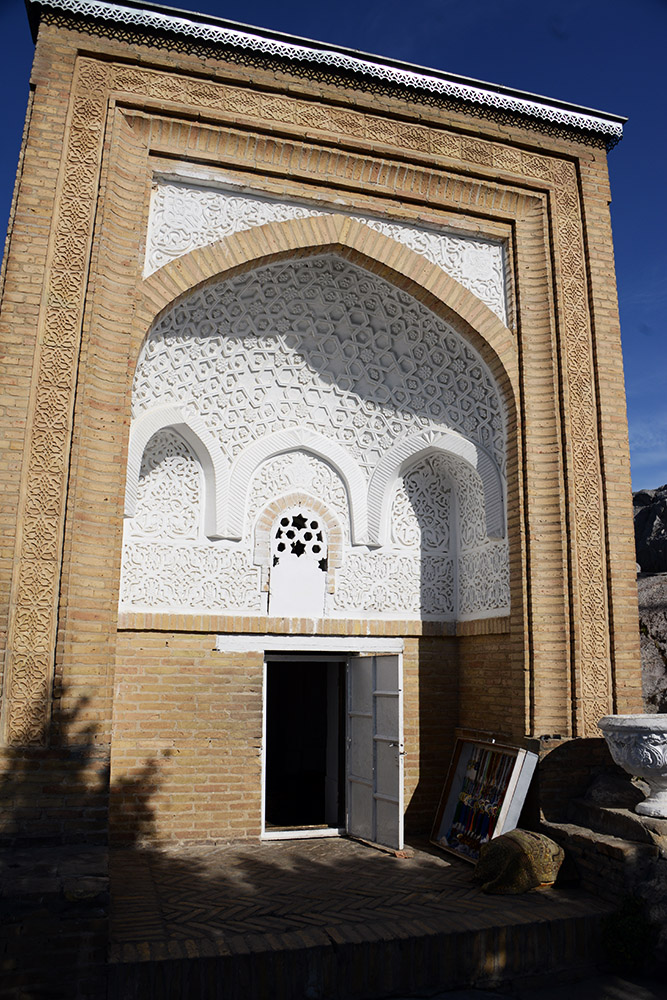
One of the mountain’s best-known historical landmarks is Babur’s House, a small structure associated with Zahir-ud-din Muhammad Babur. Born in 1483, Babur became ruler of Fergana while still a teenager and later founded the Mughal Empire in India in 1526.
Babur had connections to Osh and described the area in his memoirs. The small building standing on the mountain today commemorates that association, although it is a reconstruction rather than an intact structure from his lifetime.
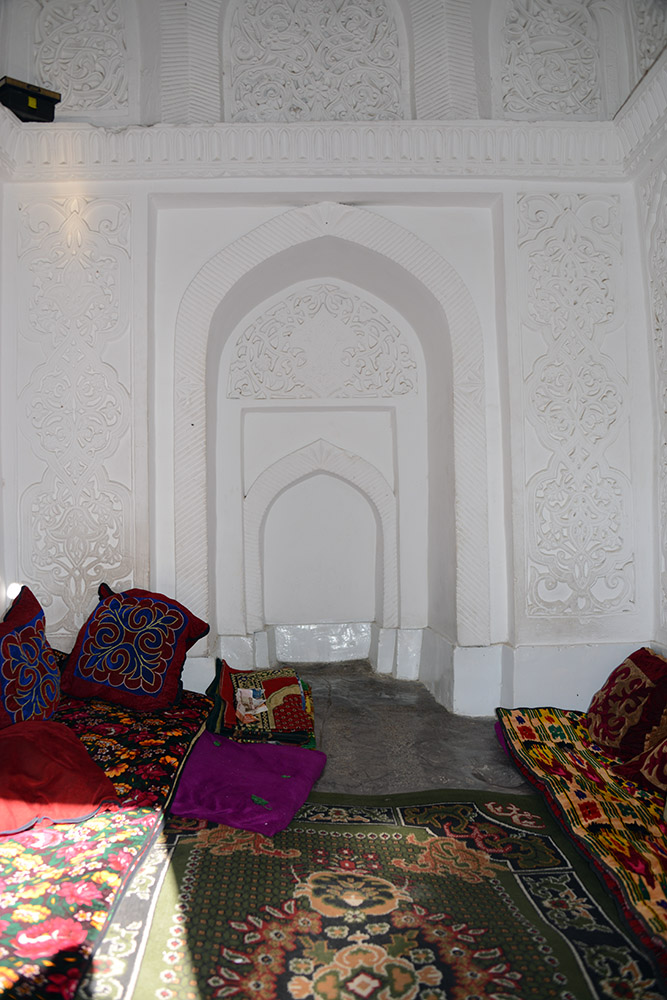
The building was much smaller than I expected, consisting essentially of a single decorated room. Despite its modest size, its historical associations and elevated setting made it worth visiting.
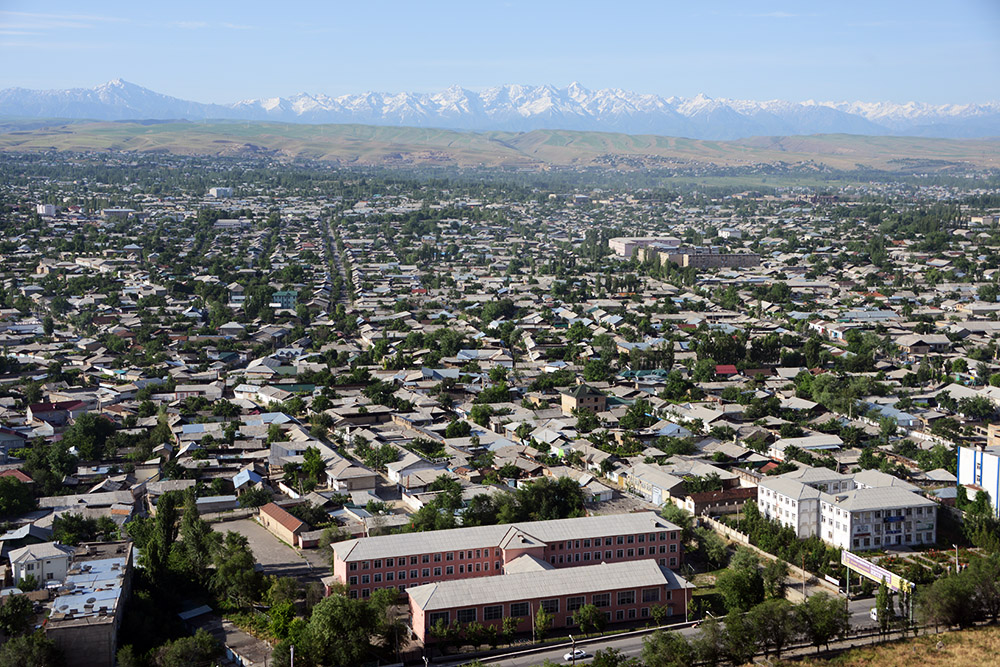
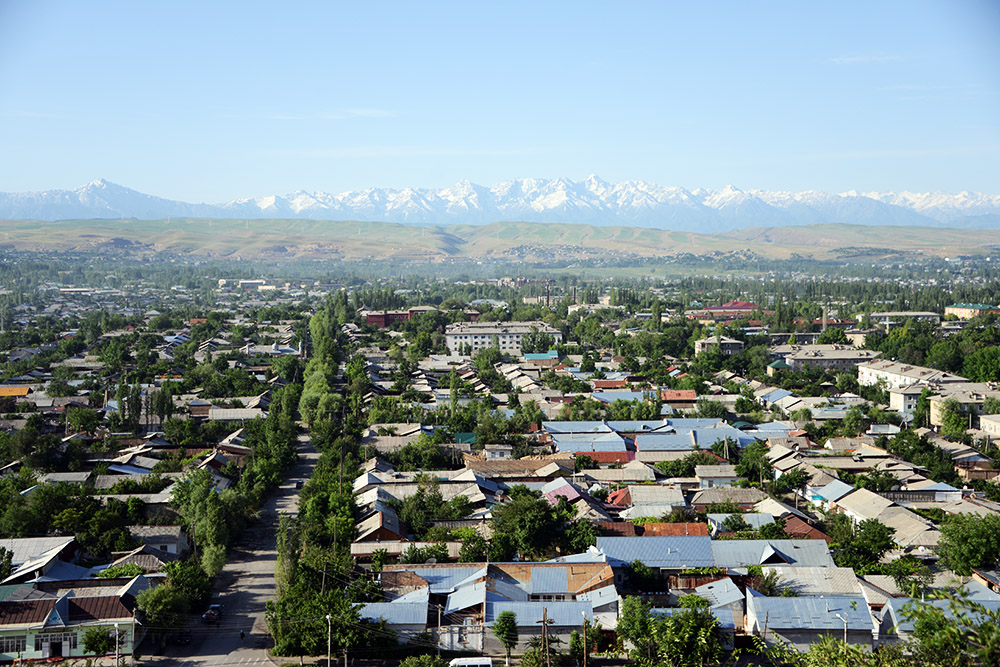
The views from this part of Sulaiman-Too were excellent. Osh is relatively flat and has few tall buildings, so the city stretches across the valley in every direction. I was surprised by how green it appeared, especially with high, snow-covered mountains visible in the distance.
Sulaiman-Too Cave Museum
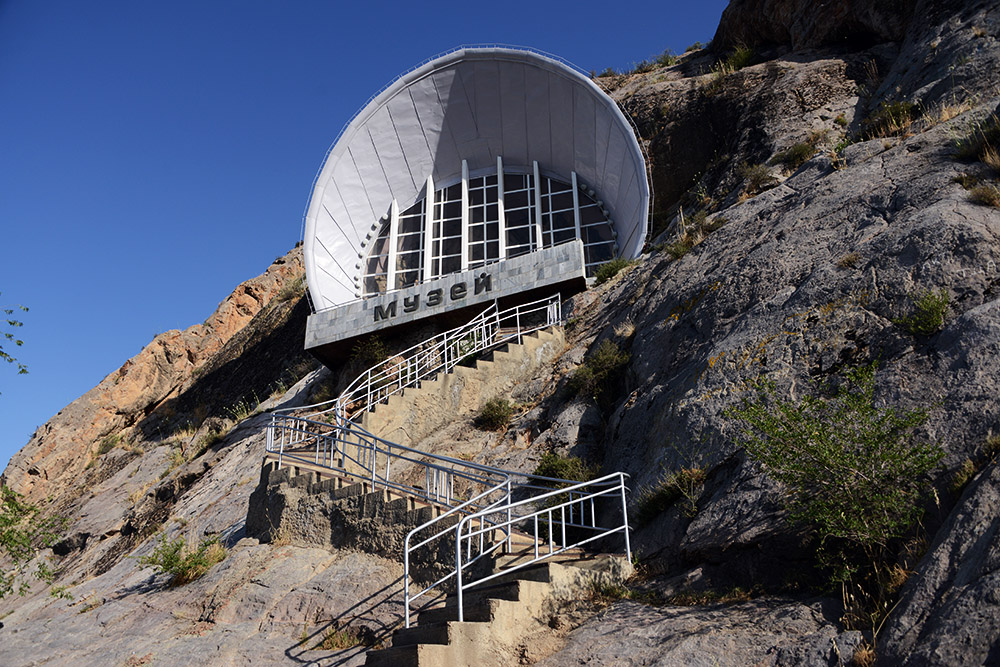
One of the mountain’s most unusual attractions is the Sulaiman-Too Cave Museum, which is built directly into the rock. The museum contains exhibits about the region’s history, religion, culture, and natural environment, with passageways connecting rooms inside the mountain.
The difference in temperature was noticeable immediately. It was hot outside, but the interior of the caves was surprisingly cool. I followed the main passage through several smaller exhibit rooms while a woman walked around spreading a strong-smelling incense.
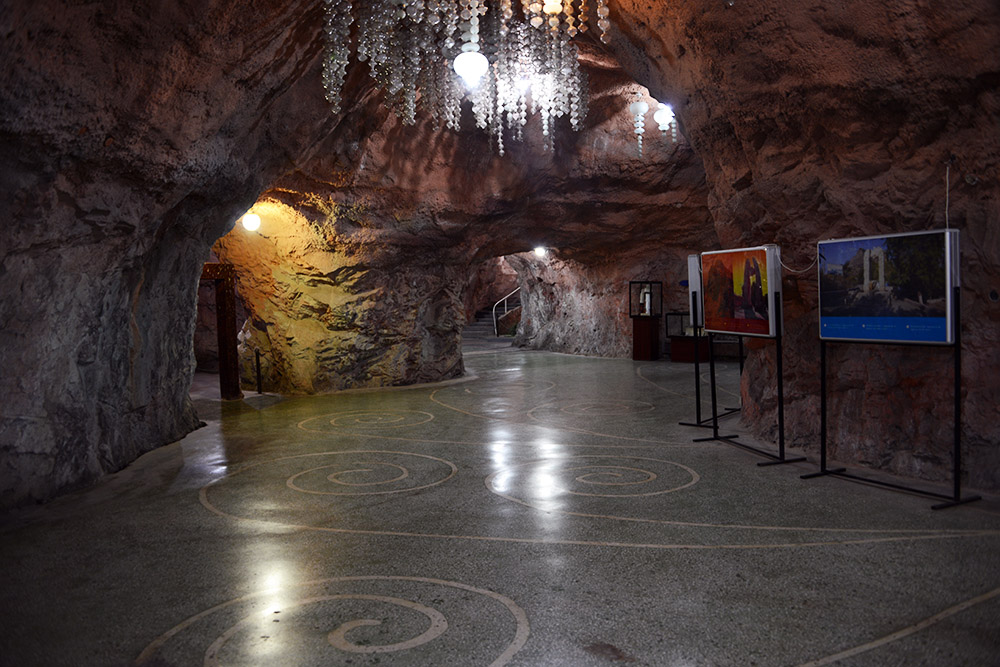
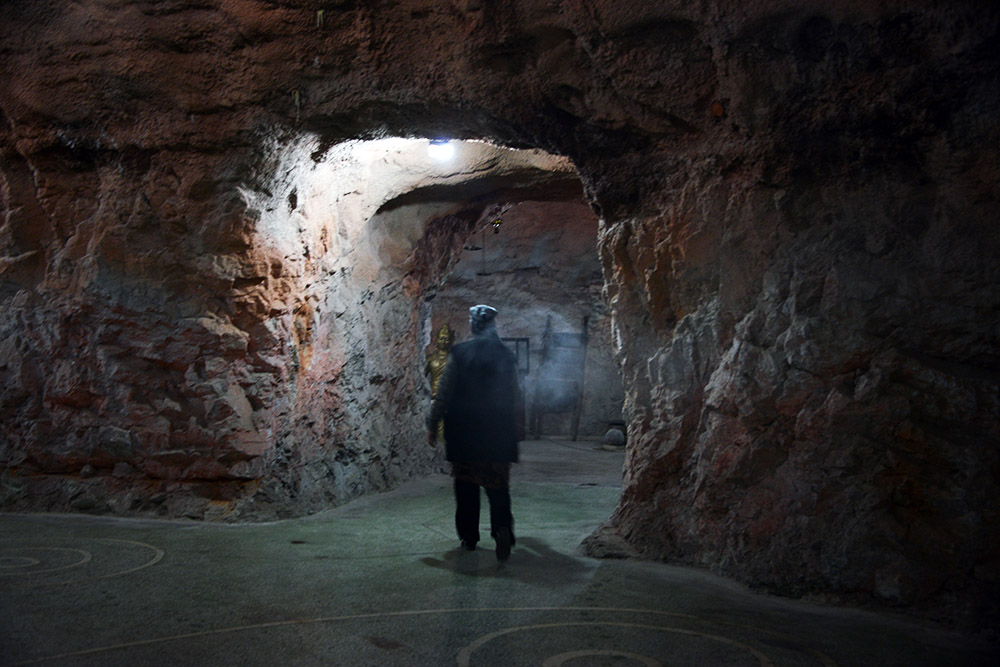
Some exhibits explored religious traditions that predated or existed alongside Islam in Central Asia. Among them were displays associated with Zoroastrianism, the ancient Iranian religion that influenced parts of the region’s history.
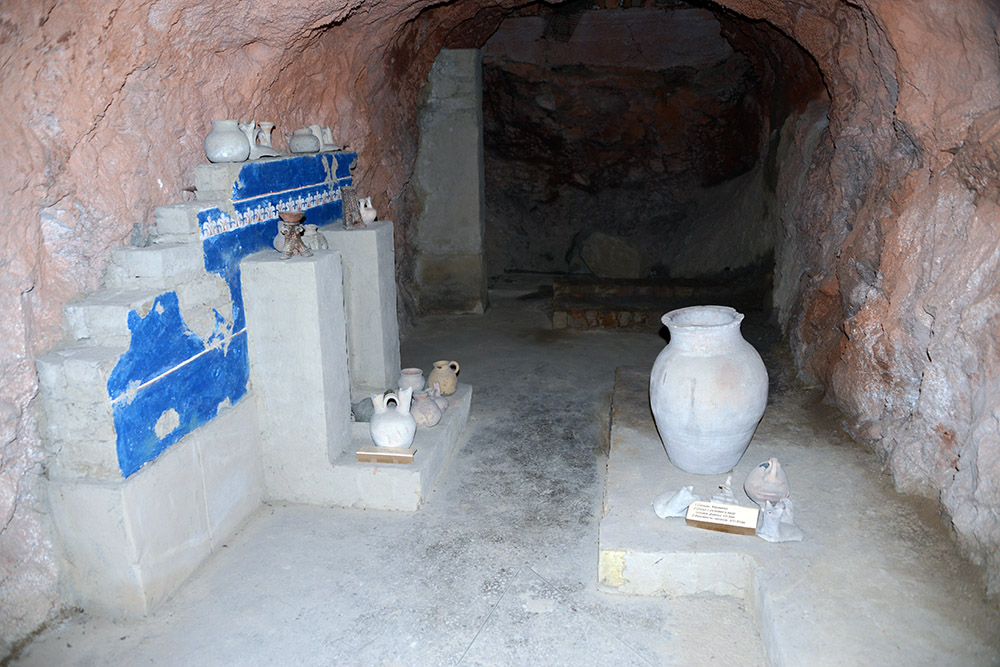
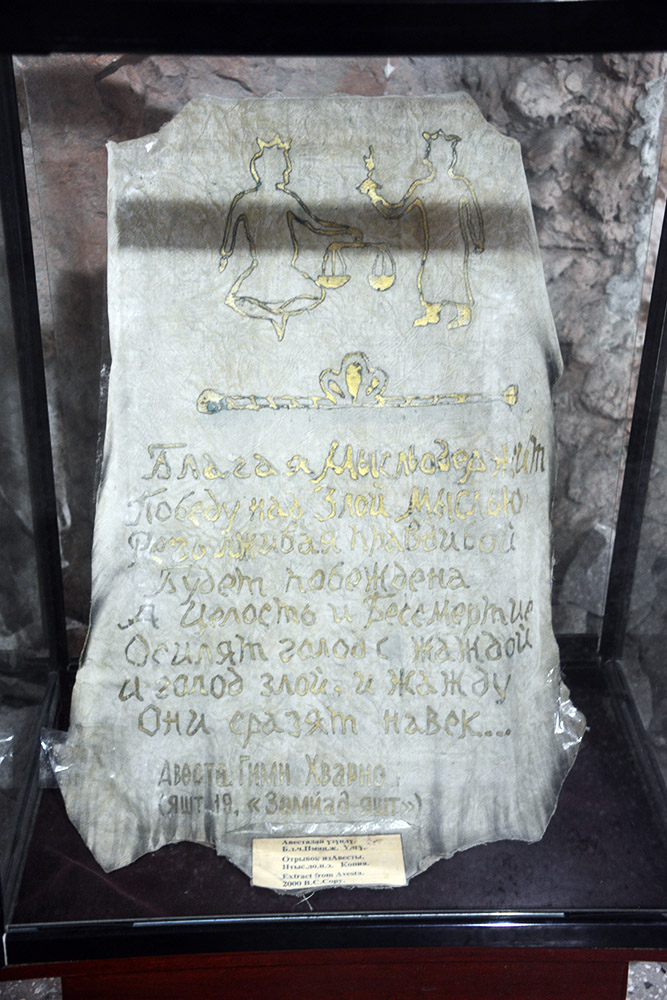
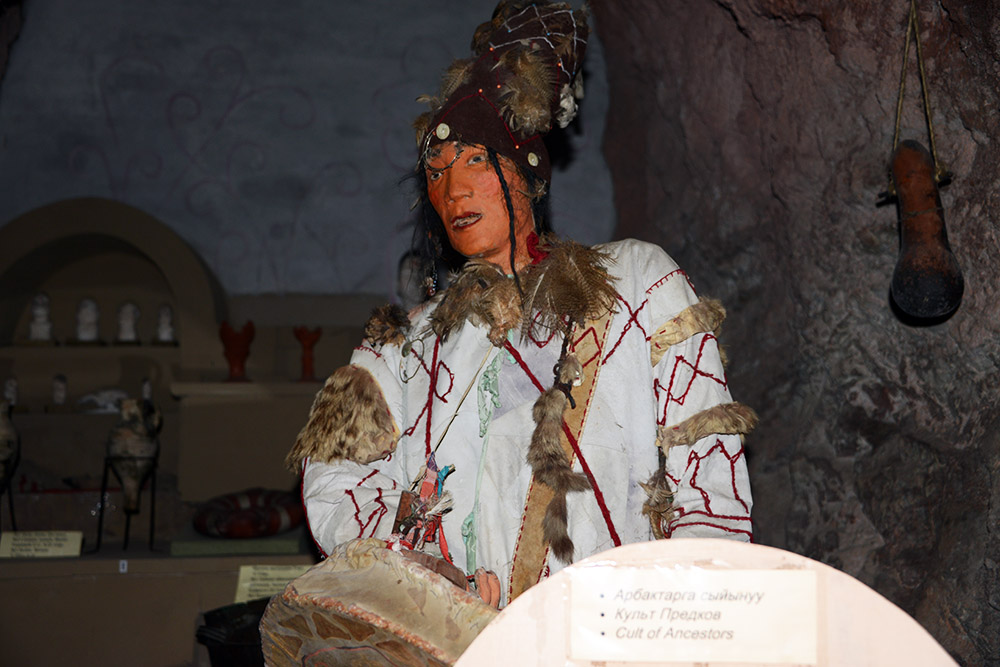
Other displays presented traditional Kyrgyz clothing and aspects of local cultural life. I particularly enjoyed how the museum combined these exhibits with the natural rock walls, making the setting itself part of the experience.
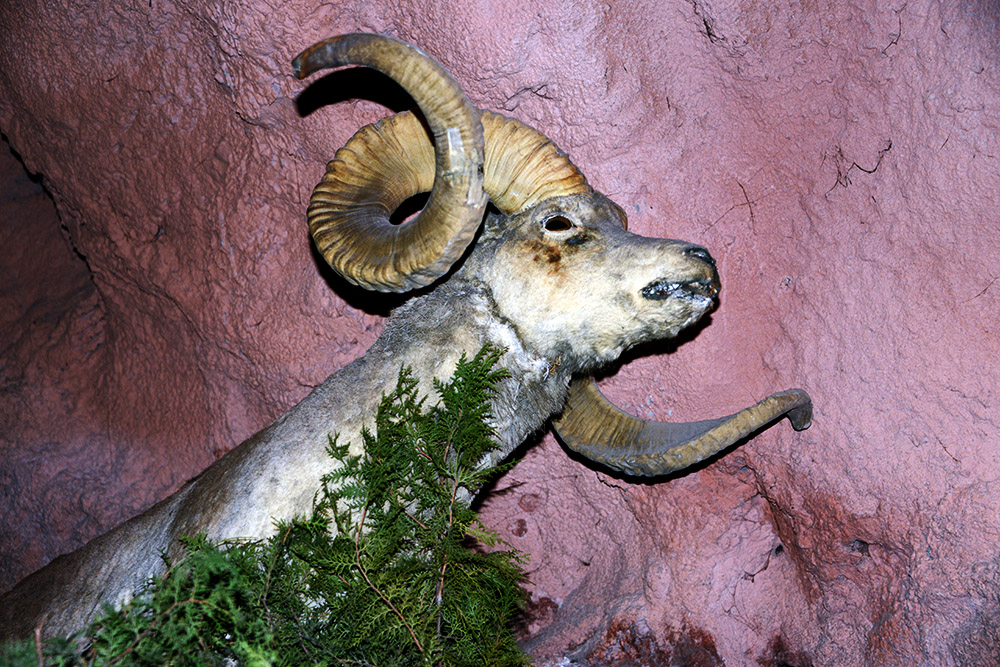
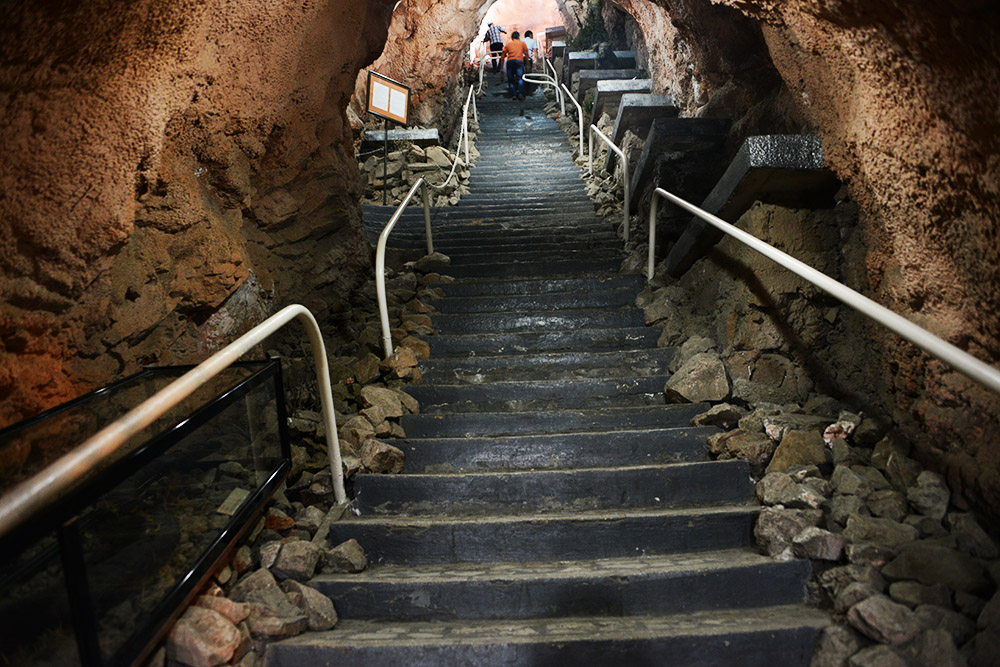
After exploring the lower galleries, I climbed a long flight of stairs lined with preserved animals. The stairs eventually led to an upper level where daylight poured through a large opening in the mountain. After spending so much time in the dimly lit cave, the sudden brightness was almost blinding.
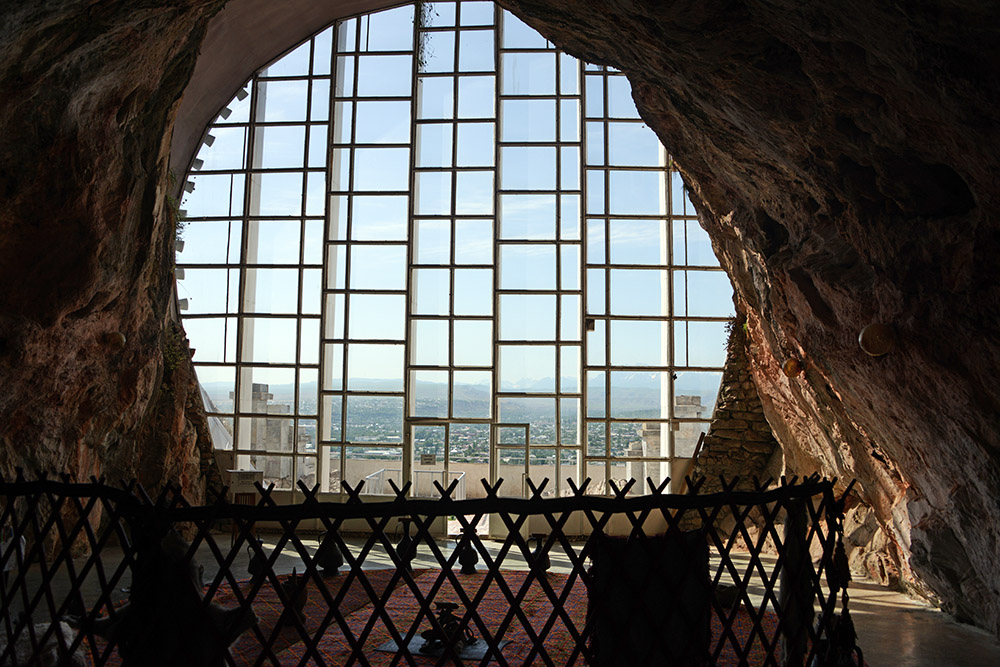
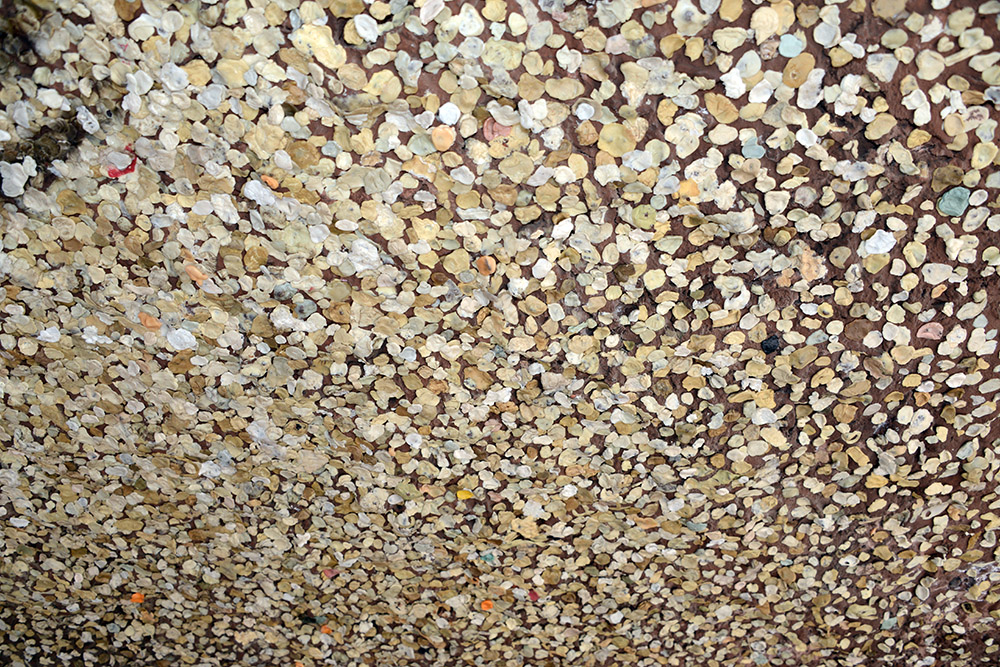
Near the exit, the route passed beneath a small bridge. For some inexplicable reason, the ceiling underneath was covered with hundreds of pieces of chewing gum. It was a strange and rather disgusting ending to an otherwise fascinating museum visit.
Osh Historical Museum
At the base of Sulaiman-Too are additional museums and an art gallery. I visited the historical museum next, where exhibits covered different periods of Kyrgyzstan’s past, including regional history, traditional culture, and the Soviet era.
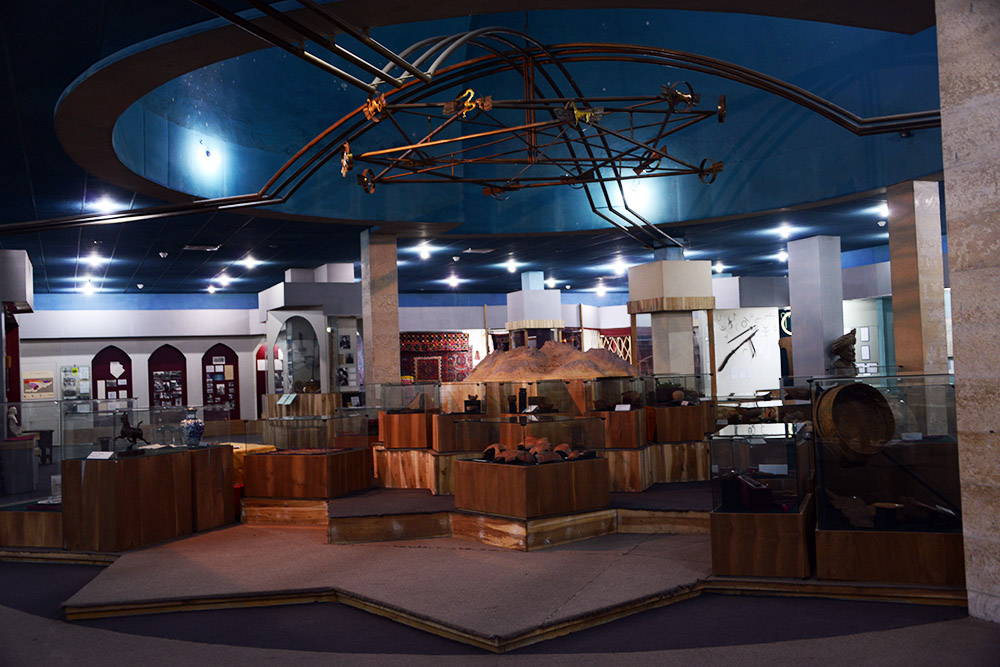
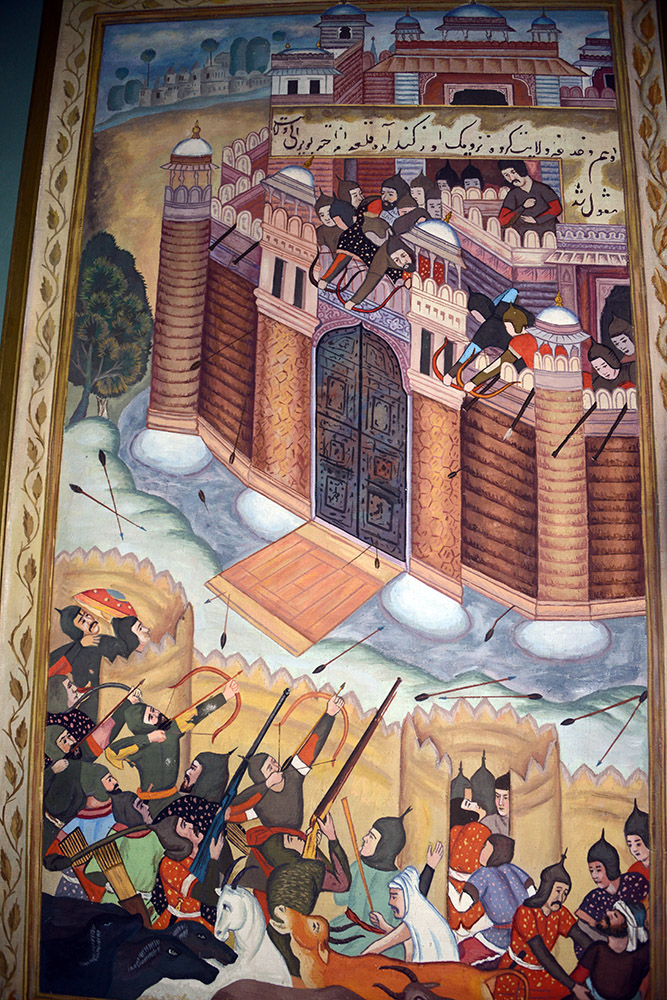
Photography rules were a little unusual. The Cave Museum had displayed a sign advertising a charge of ten som per photograph, although nobody there had enforced it. At the historical museum, however, I actually had to pay for each picture I took. Since I only photographed a handful of exhibits, the total was still inexpensive.
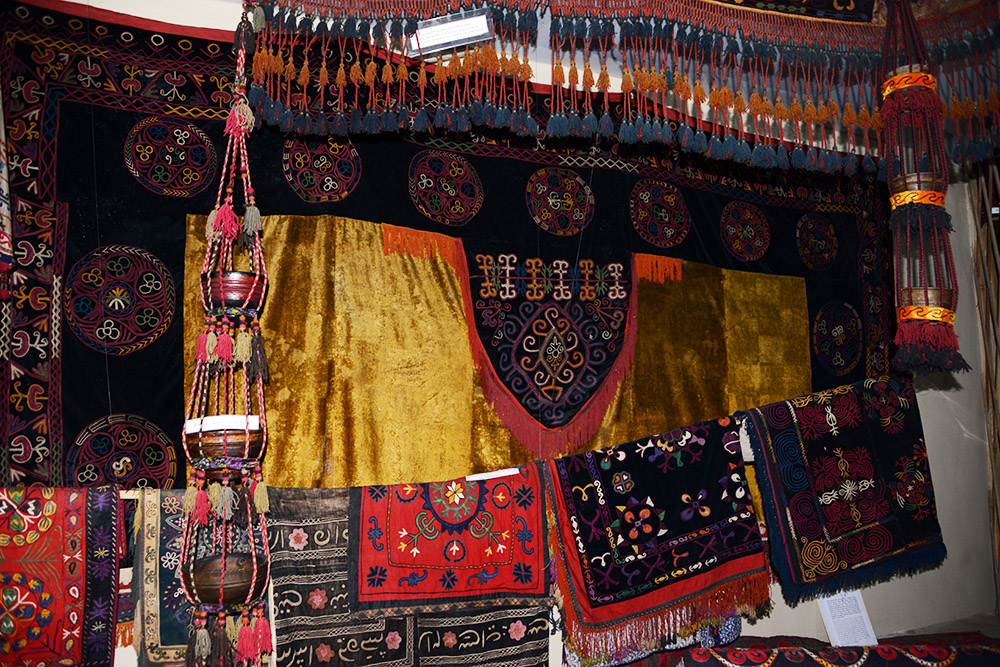
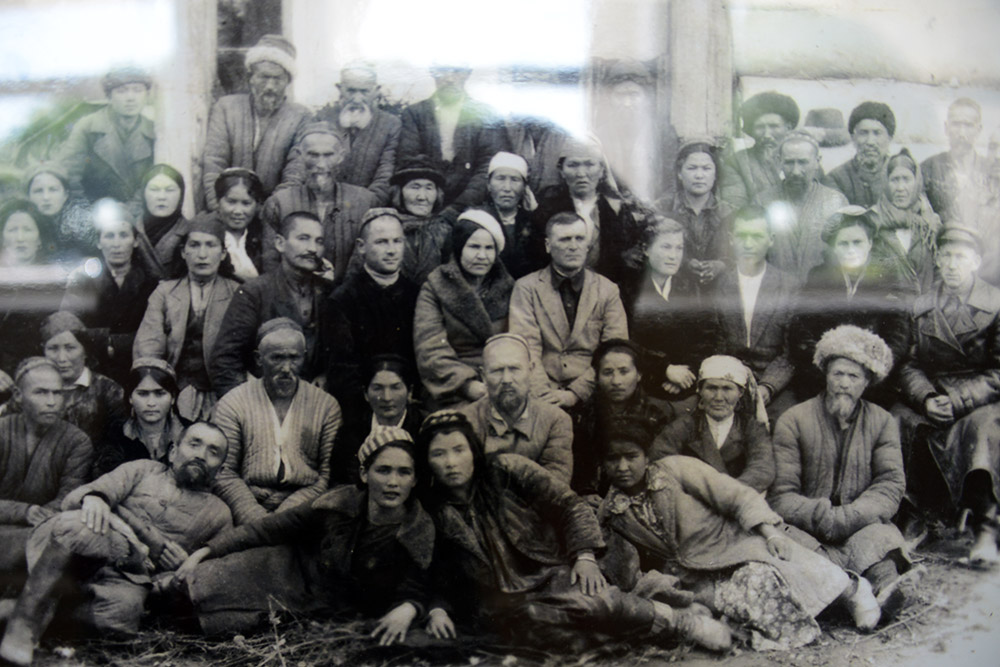
One of the most interesting displays was a large depiction of a medieval battle. Other rooms contained traditional textiles, historical photographs, minerals, and material from the Soviet period.
Osh Art Gallery
After the historical museum, I visited the nearby art gallery. The woman working at the desk was exceptionally friendly and proceeded to give me what seemed like a personal explanation of almost every painting. Unfortunately, she spoke Russian and I couldn’t understand a word of it, but I appreciated the effort.
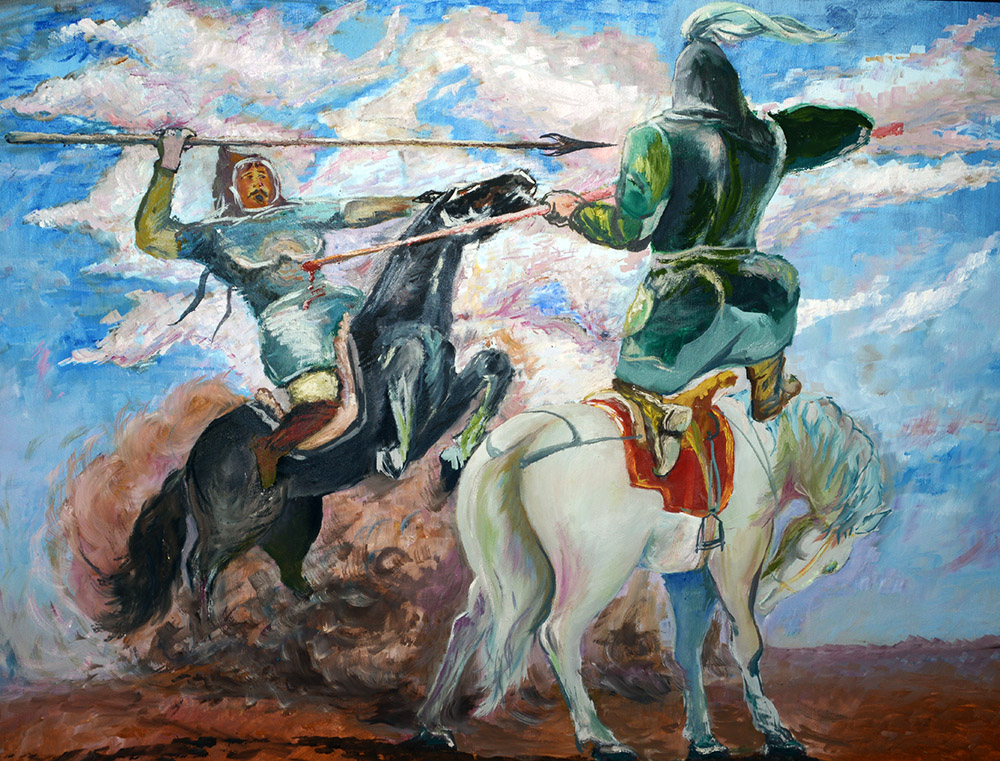
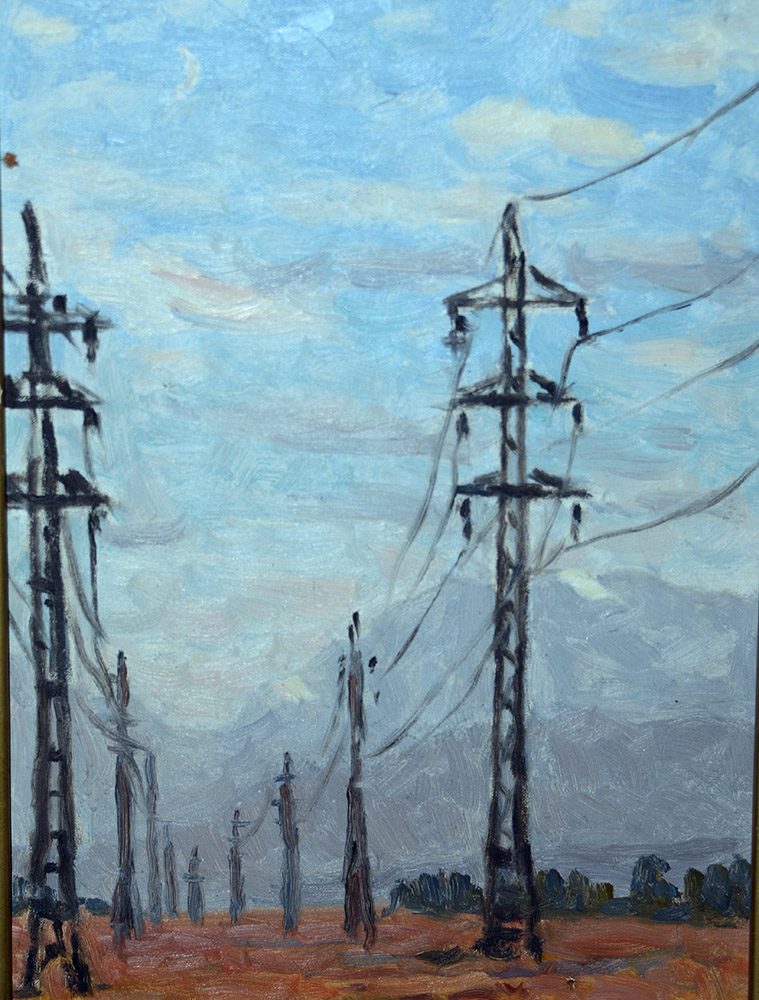
I enjoyed the range of subjects, particularly the paintings depicting ordinary modern life. One artwork stood out because it focused on electrical power lines. Whenever I take travel photographs, I often try to find an angle that excludes power lines from the composition. This artist had done the exact opposite, making them the central subject. It was an interesting reminder that something I usually consider a visual distraction can become the subject of a compelling piece of art.
Inside the Three-Story Yurt Museum
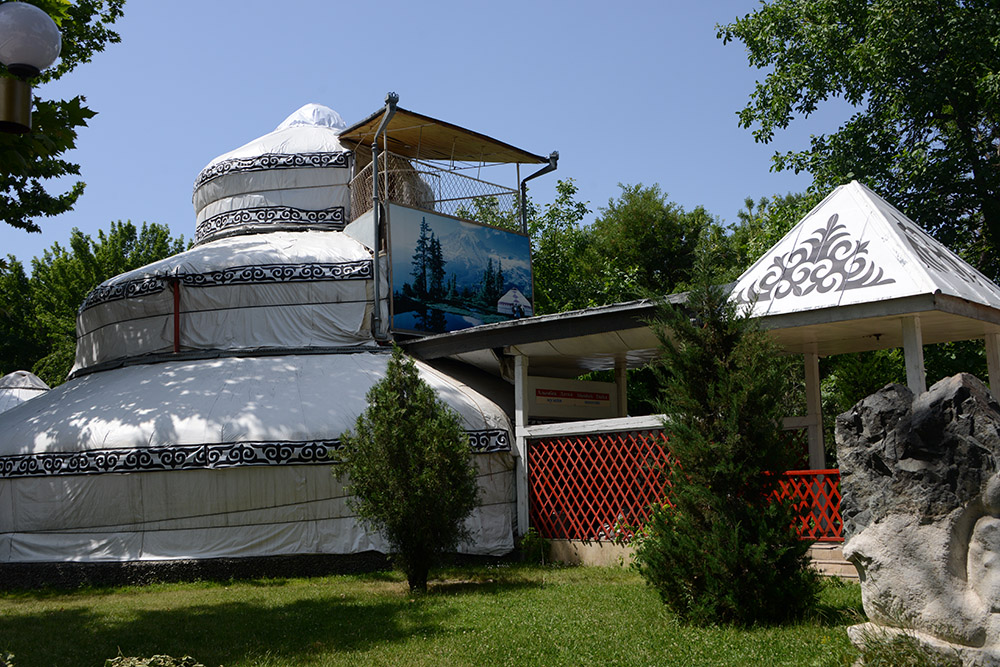
By the time I reached the yurt museum, I was getting tired of visiting museums. I had already spent much of the day exploring exhibits and nearly decided to skip this final stop.
I had heard about Osh’s unusual three-story yurt before arriving, but its exterior was a little disappointing. Despite being three stories tall, it looked smaller than I’d imagined, and the plastic covering made it resemble an enormous inflatable playhouse rather than a traditional Kyrgyz dwelling.
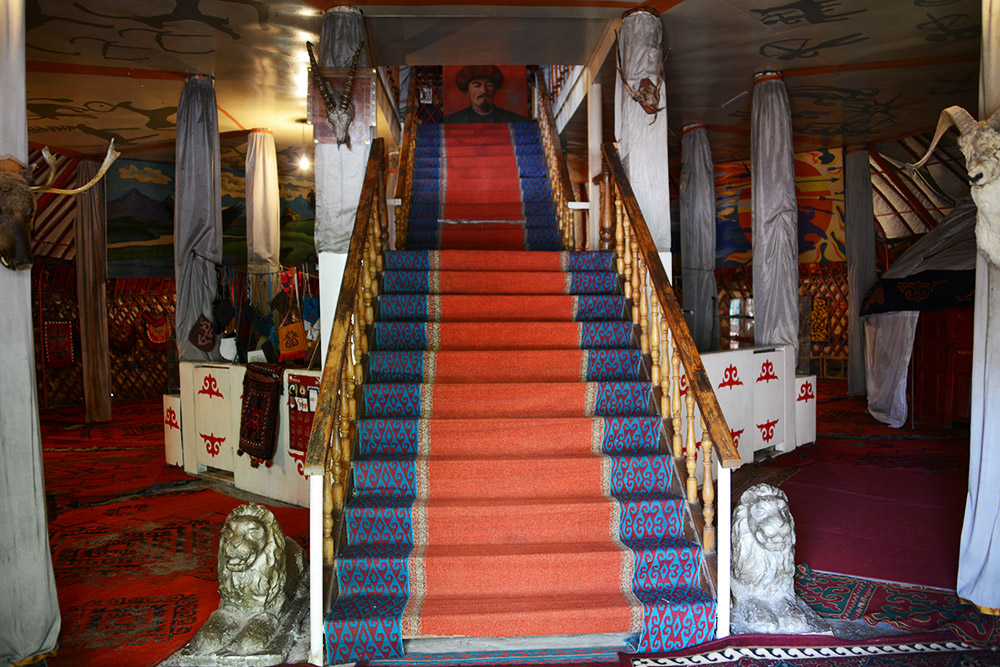
Fortunately, I decided to go inside. The interior was completely different from the exterior and immediately changed my opinion of the place. Wooden structural elements, colorful textiles, decorative patterns, and artwork covered much of the interior, creating a much more traditional atmosphere.
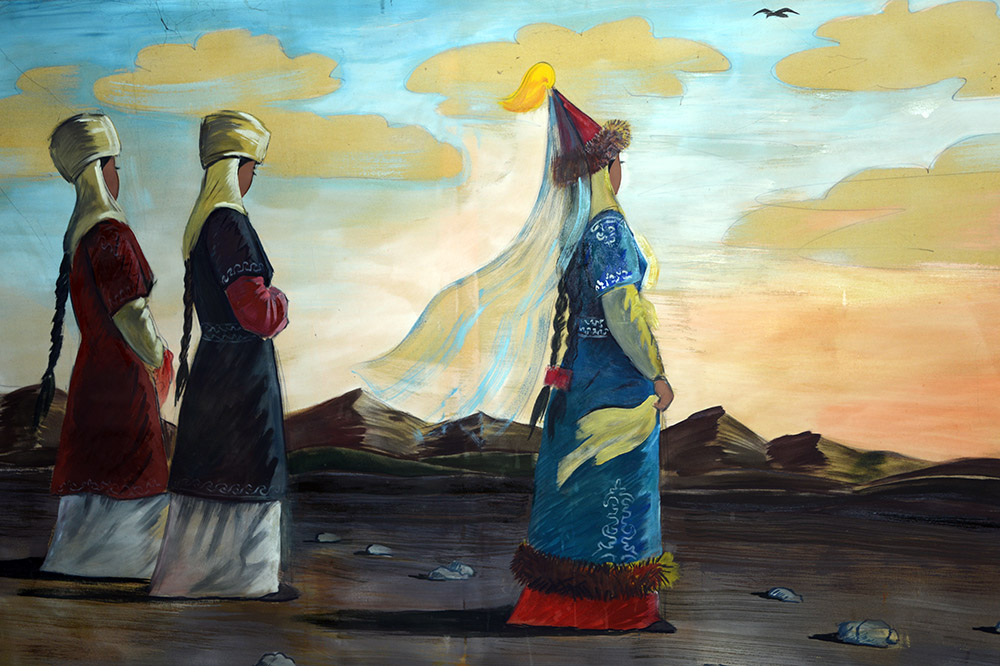
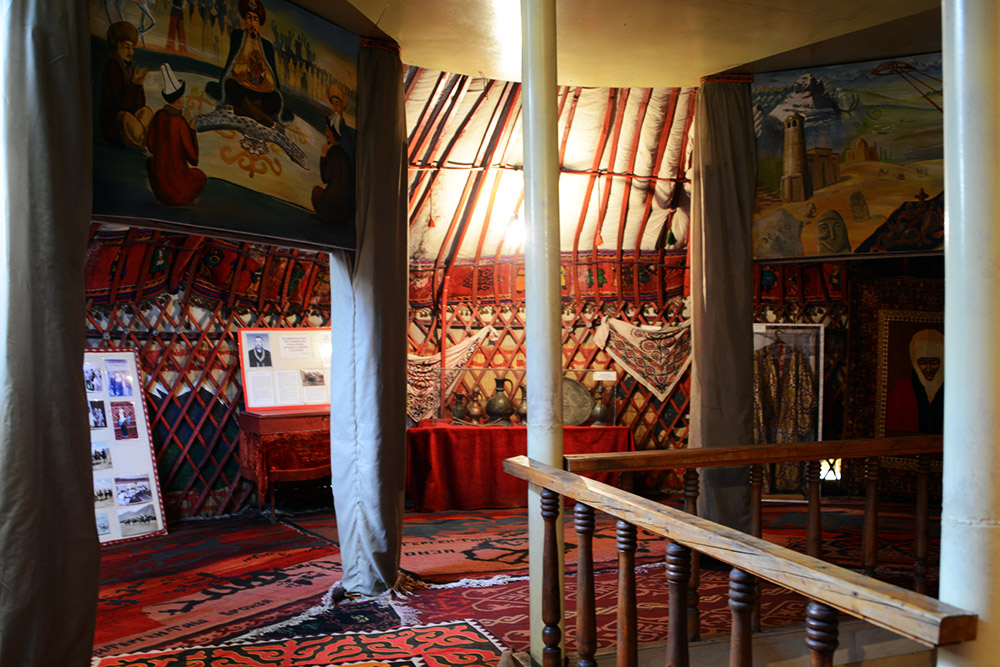
The museum presented traditional clothing, textiles, and artwork connected to Kyrgyz culture. Moving between the different floors also gave me a chance to appreciate the construction and elaborate interior decorations.
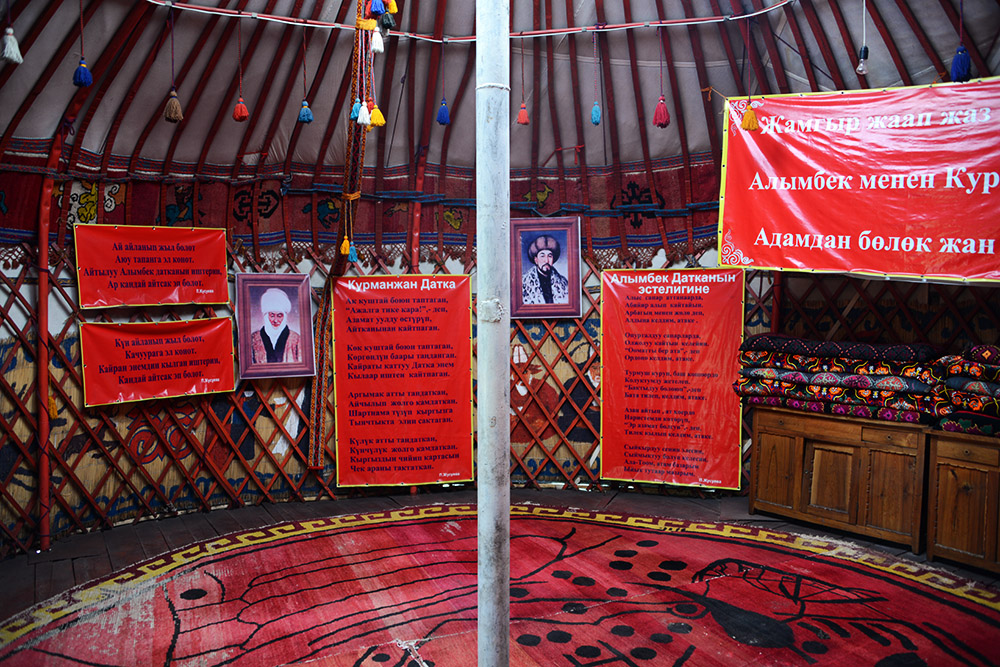
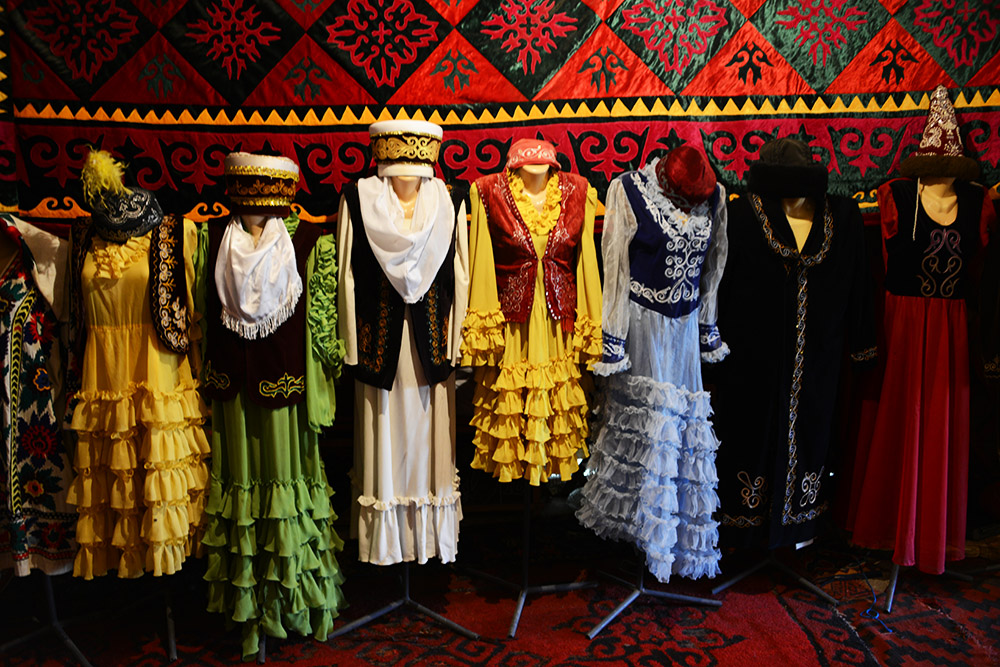
Although it was the last museum I visited, it ended up being one of the most memorable. The exterior hadn’t impressed me, but the craftsmanship and cultural displays inside made the visit worthwhile.
Exploring Osh Bazaar
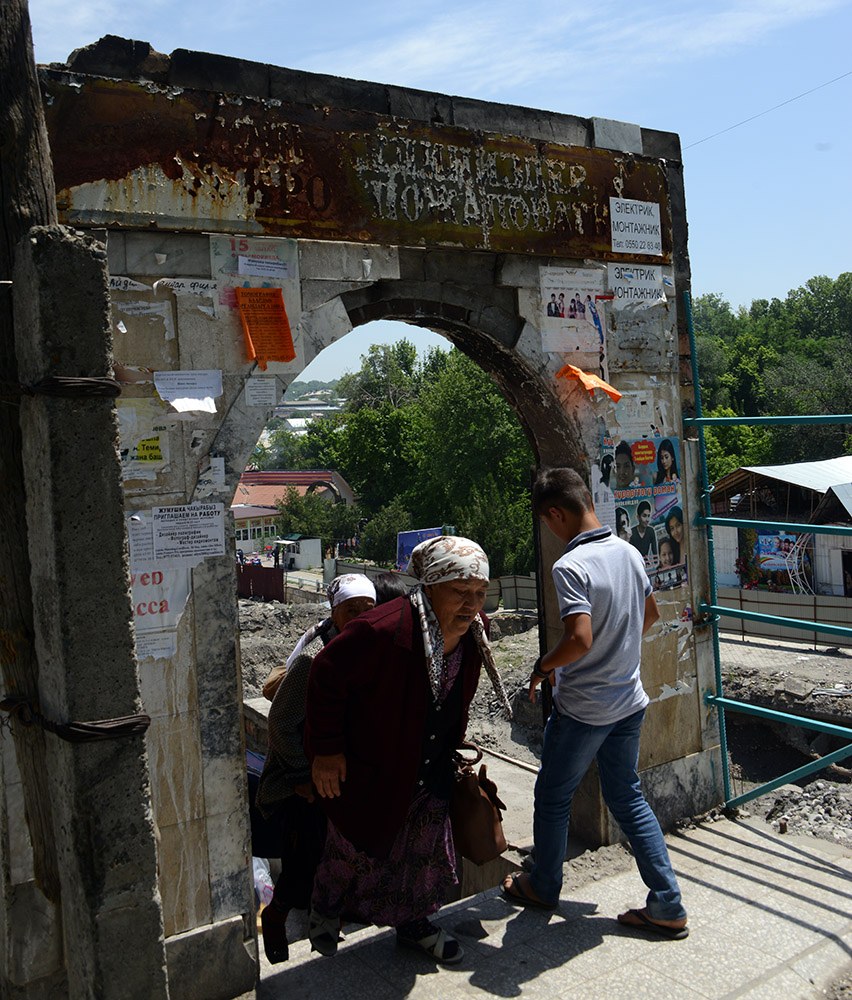
Beyond Sulaiman-Too, one of the best places to explore in Osh was its enormous bazaar. The market stretches through a large commercial district and has long been an important trading center in the Fergana Valley. Vendors sell food, clothing, household goods, and practically anything else someone might need.
I had an additional reason to visit. After leaving Tajikistan, I discovered that exchanging my remaining Tajik currency was much more difficult than expected. I assumed banks in Kazakhstan or Kyrgyzstan would accept it, particularly because the countries were relatively close to one another. Even in Osh, however, the banks wouldn’t exchange my money. Instead, they suggested trying the bazaar.
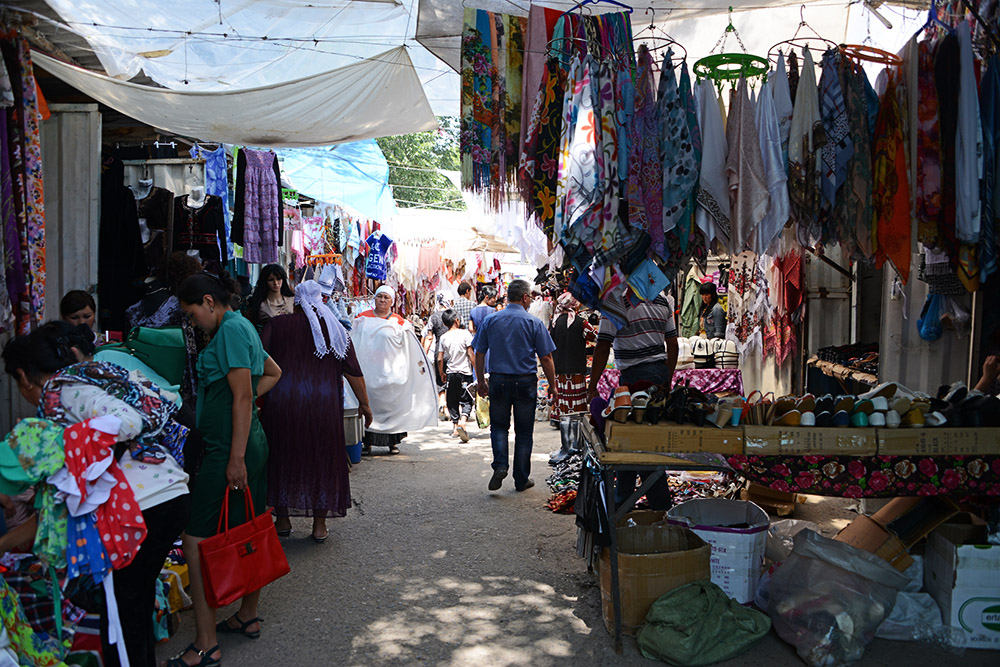
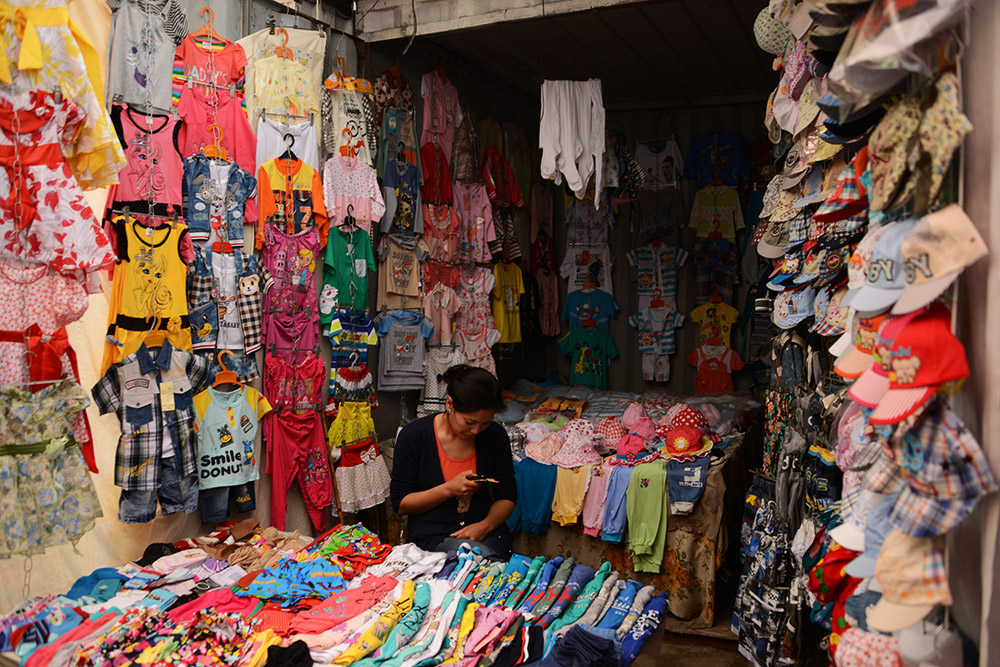
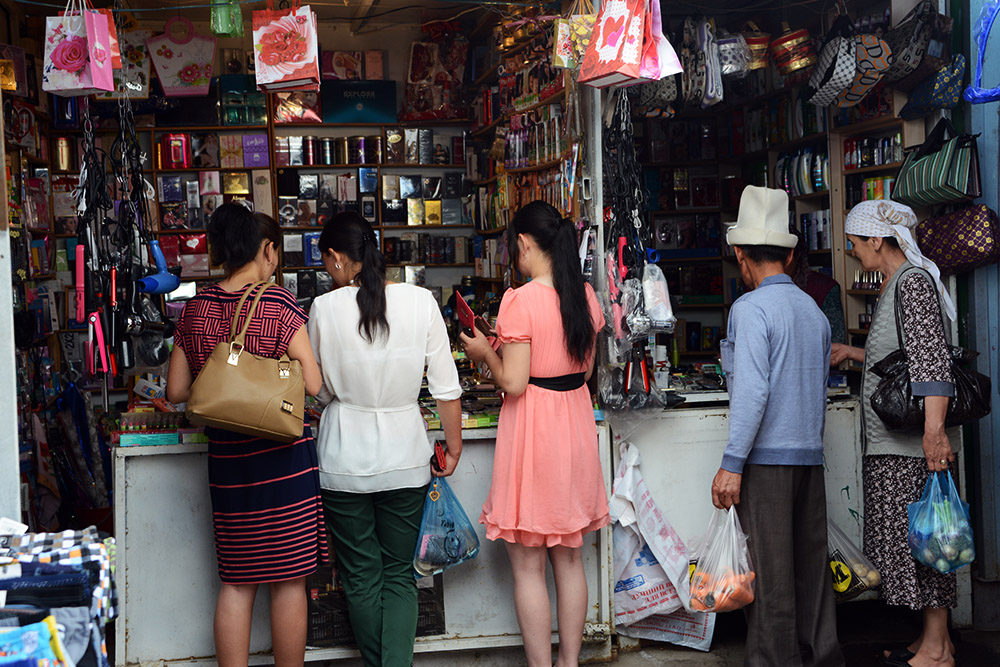
Some sections of the market were crowded and busy, while others were remarkably quiet. I passed shopkeepers texting on their phones, chatting with neighbors, and even sleeping while waiting for customers. I also bought a replacement pair of sunglasses because I’d broken my previous pair while hiking earlier in the trip.
Pool Tables and a Beekeeper at the Bazaar
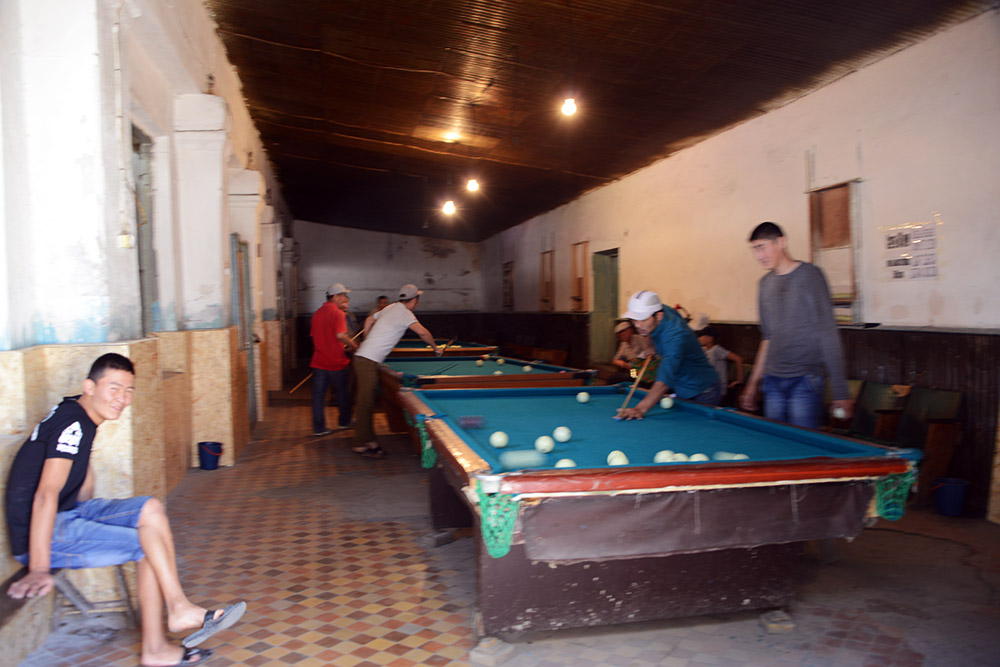
While walking through the market, I heard what sounded like people playing pool. It seemed like an unusual place for a billiards hall, but when I turned the corner, there it was: several pool tables tucked into the bazaar.
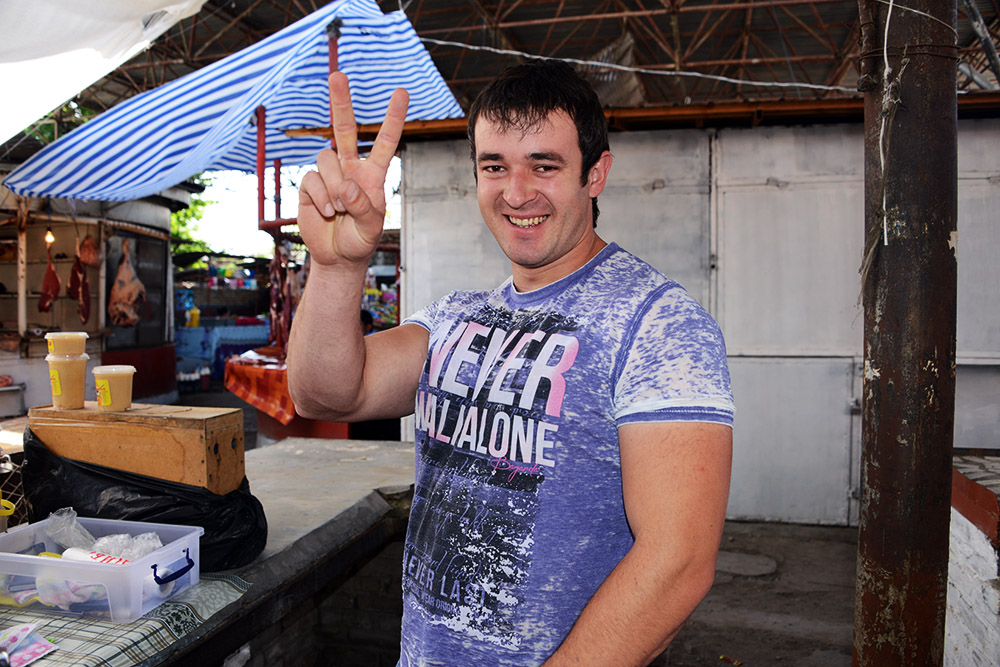
Another memorable encounter happened when a man named Evgeniy started talking to me. He was ethnically Russian but had been born and raised in Osh. His family worked in beekeeping and produced honey.
We had a great conversation, and before I left, he gave me some honey for free. He described it as “a gift from my heart.” It was a simple but memorable act of generosity, and one of the reasons I enjoyed wandering through the market rather than just visiting the city’s major attractions.
Meerim Park and the Amusement Rides
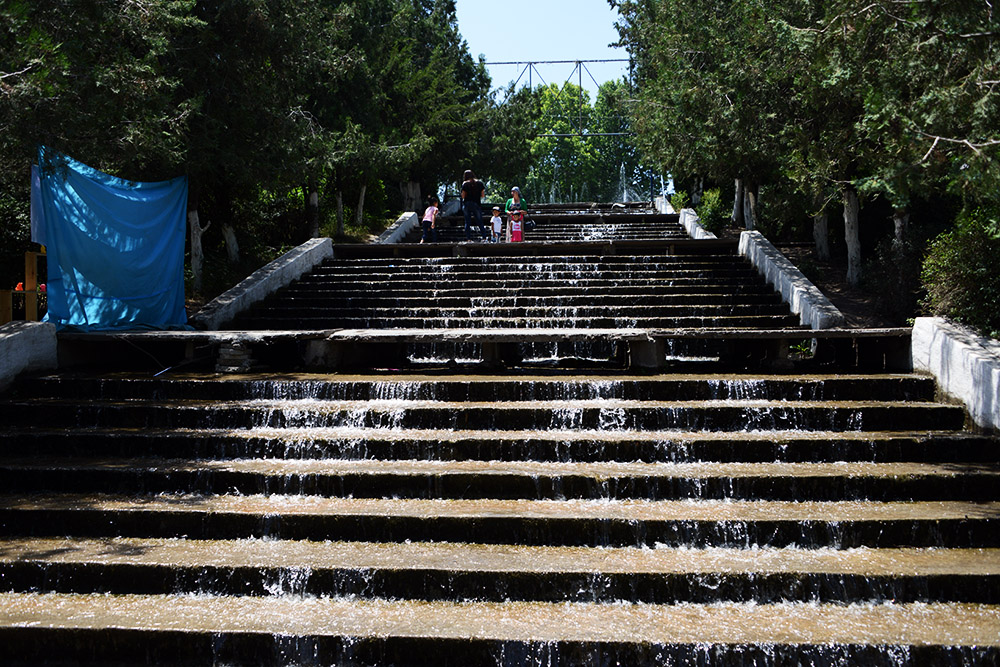
After exploring the bazaar, I came across a set of steps covered in flowing water. They led toward an old airplane displayed nearby. My hiking shoes had been destroyed during earlier adventures in the Tian Shan Mountains, leaving me with only flip-flops, so walking through the water wasn’t much of a problem.
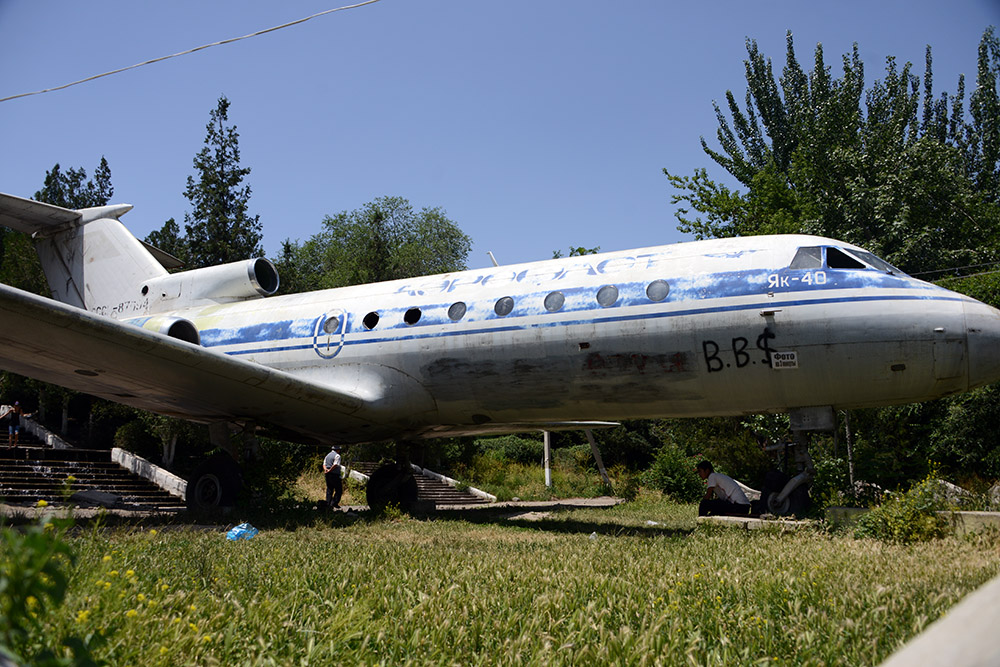
A photographer was offering pictures beside the airplane, and I soon realized I’d reached an entrance to Meerim Park. At first, I thought it was simply another public park, but farther inside I found amusement rides, games, and crowds of families enjoying the day.
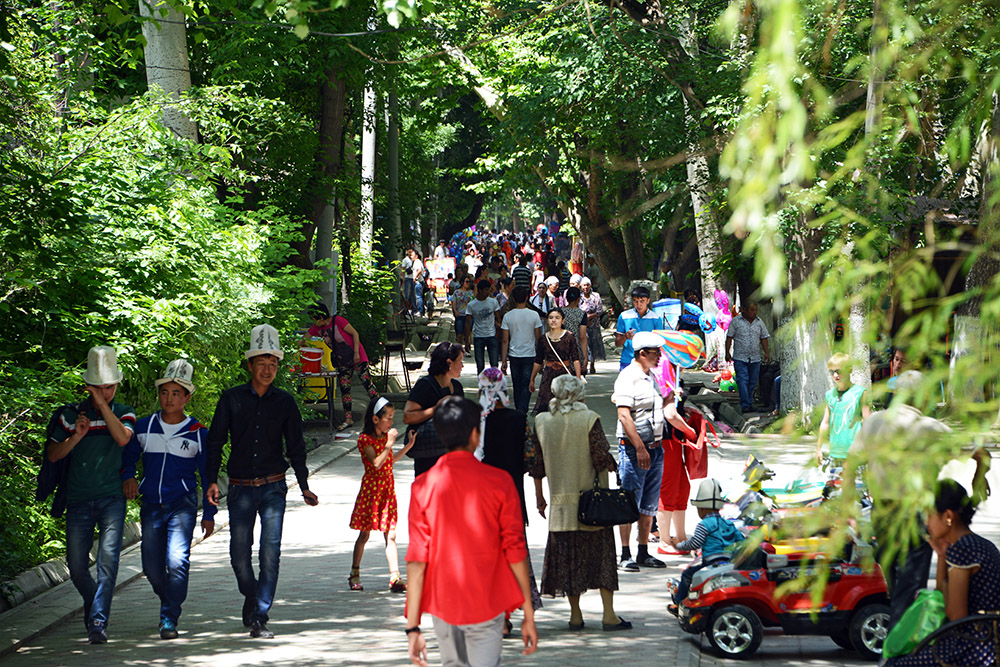
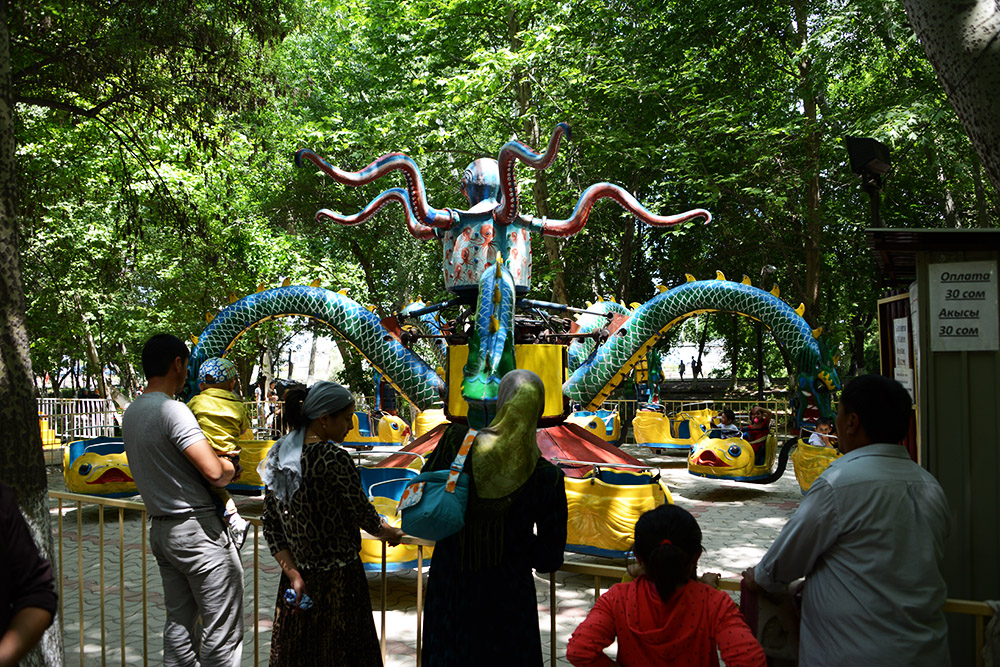
Most of the rides seemed intended for younger children, so I didn’t go on any myself. Instead, I walked through the park, surprised by both its size and the number of visitors. Eventually, the amusement rides gave way to a quieter, more natural area where couples were picnicking among the trees.
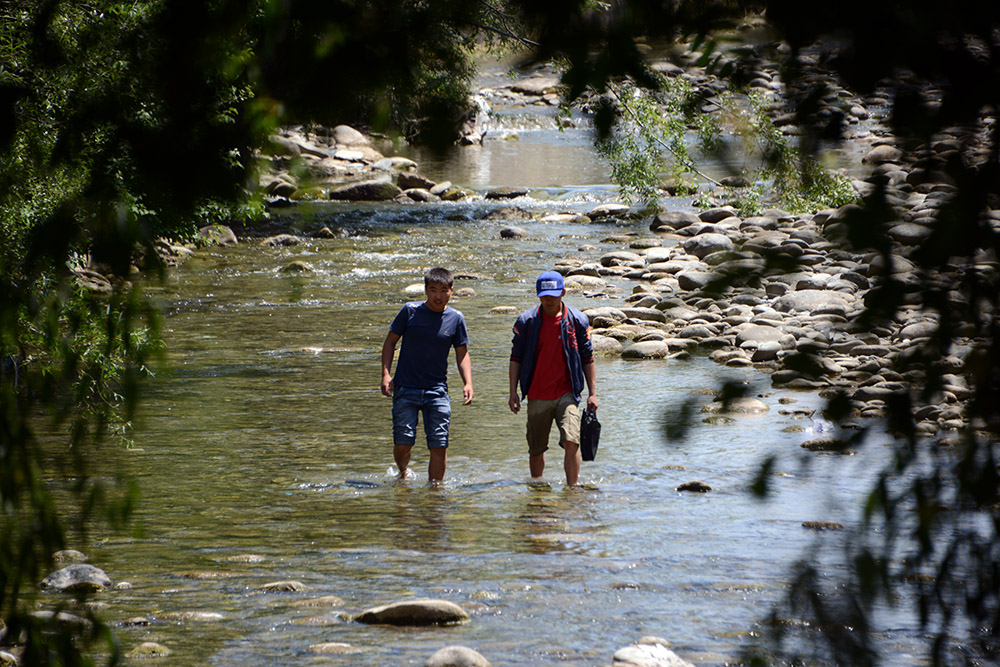
I continued walking until I reached the river, where several people were wading through the water. It was a pleasant place to finish the afternoon and another example of how much greener Osh was than I’d expected.
Everyday Life Around Osh
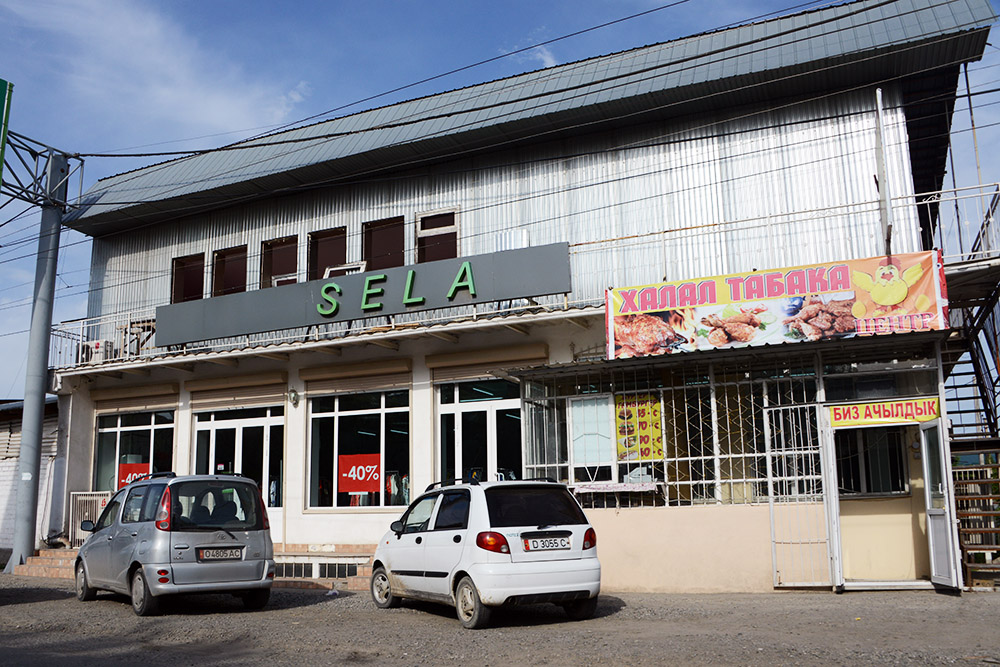
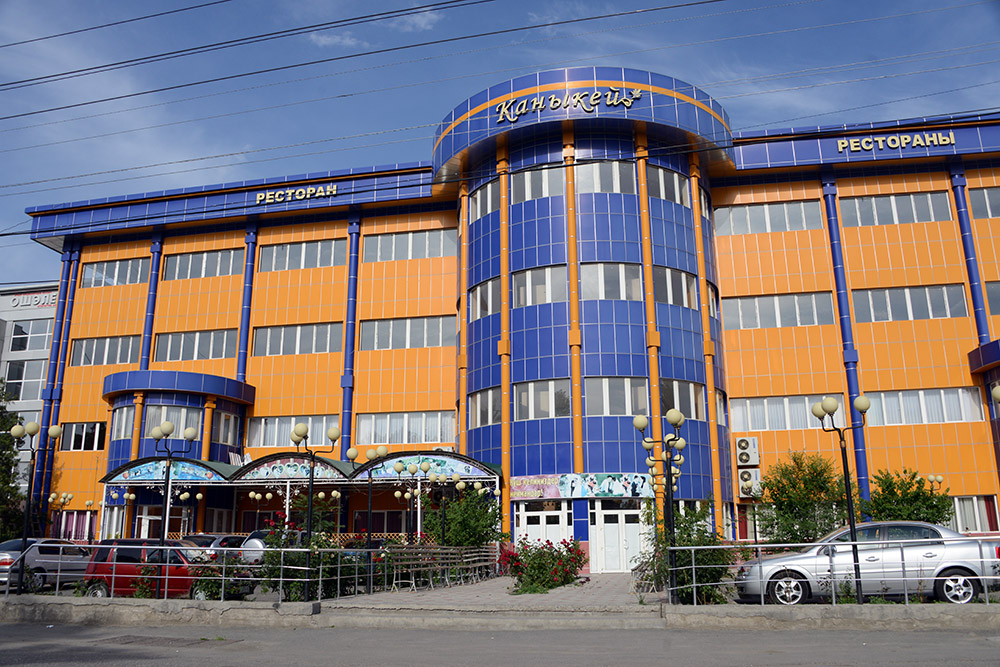
Outside the main attractions, I spent time exploring ordinary neighborhoods and commercial streets. Much of the city consisted of houses, small shops, and local businesses. Although these areas didn’t necessarily have major tourist landmarks, they gave me a better sense of everyday life in Osh.

Despite expecting Osh to feel relatively isolated, I found modern restaurants, cafés, and bars alongside its traditional markets. The city also retained visible traces of its Soviet past, although these seemed less prominent than what I’d seen in Bishkek and Karakol.
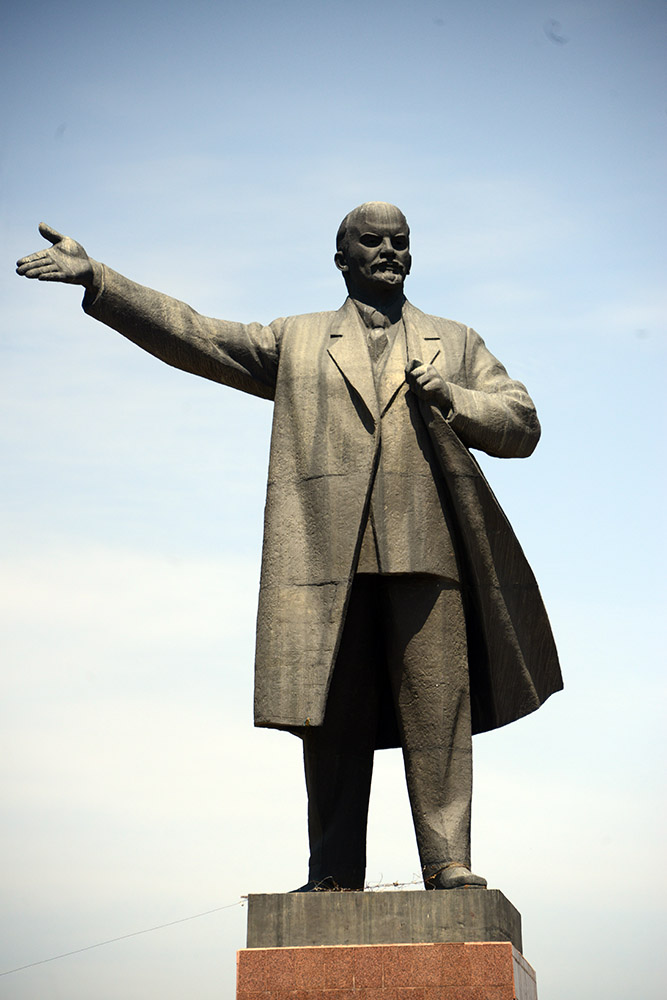
One of those reminders was a statue of Vladimir Lenin. Monuments like this remain visible in parts of Kyrgyzstan, reflecting the decades when the country formed part of the Soviet Union.
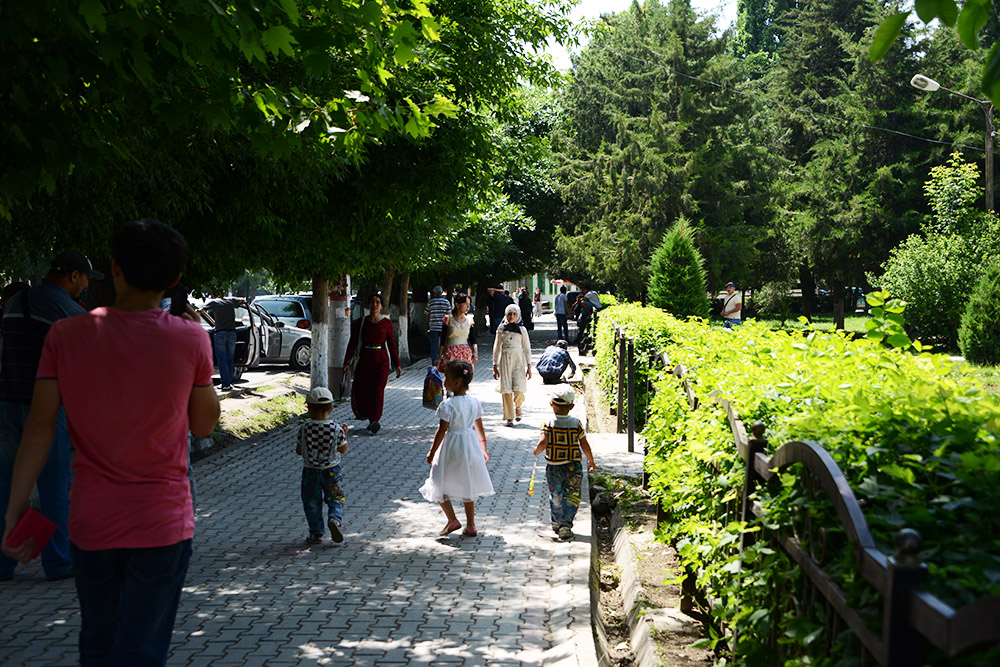
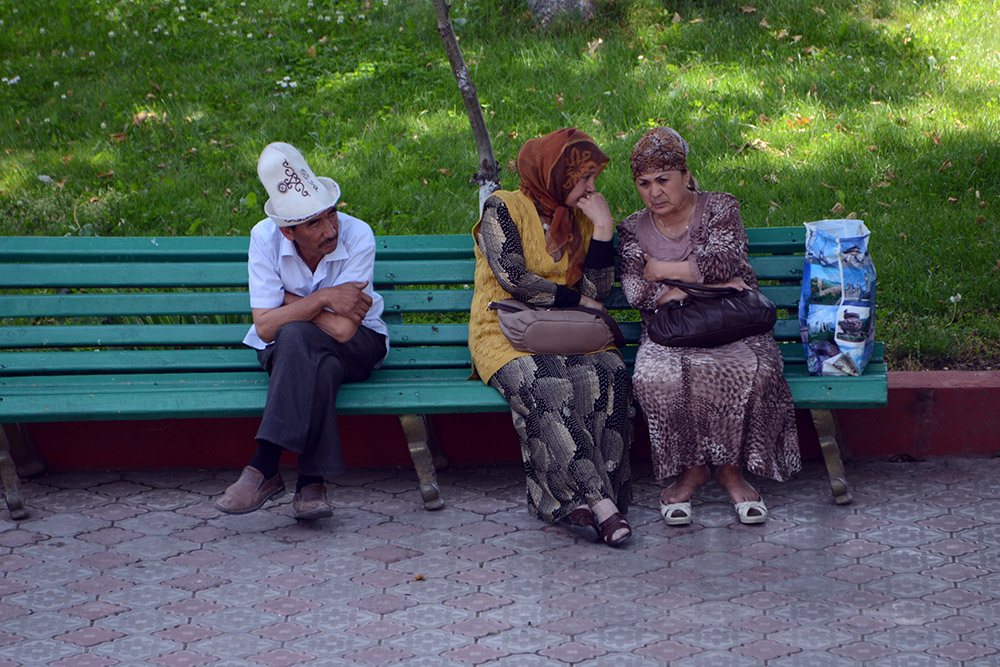
Overall, I was pleasantly surprised by the city. Rather than the dusty and undeveloped place I’d imagined, Osh had attractive streets, green spaces, modern businesses, and a lively atmosphere. Its combination of everyday urban life and historical sites made it one of the more distinctive cities I visited in Central Asia.
Osh’s Recent History and Meeting Uzbek Visitors
Before arriving, I was aware of the ethnic violence that had affected Osh and other parts of southern Kyrgyzstan in June 2010. Clashes involving Kyrgyz and Uzbek communities killed hundreds of people and displaced many more. The violence was an important part of the city’s recent history, even though everyday life appeared calm during my visit.
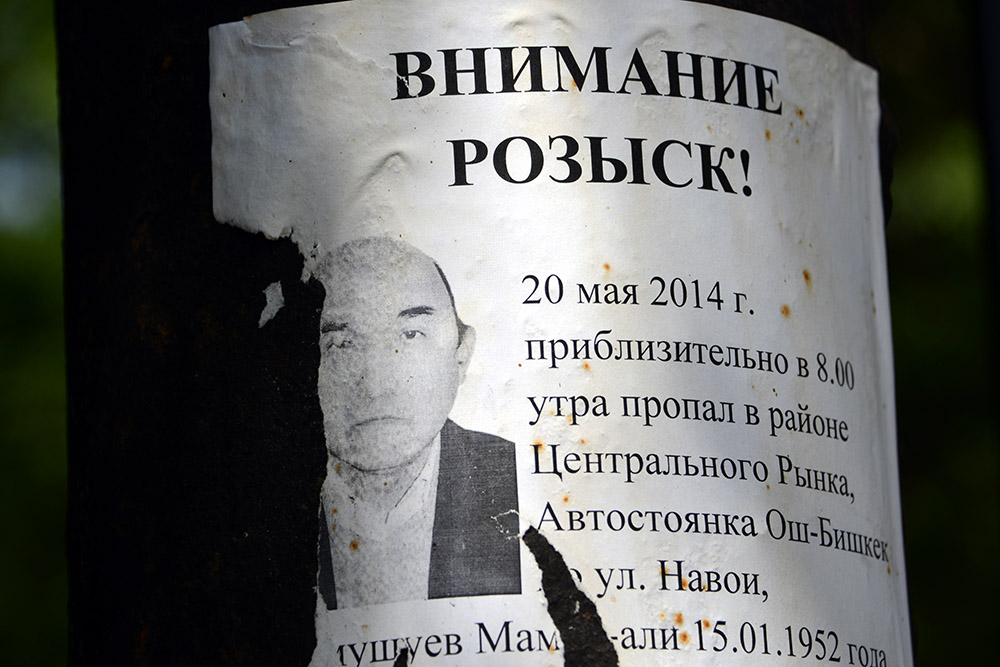
I felt safe walking around Osh, including in its markets and residential neighborhoods. I did notice posters around the city that I assumed were wanted notices, although I couldn’t confirm their purpose.
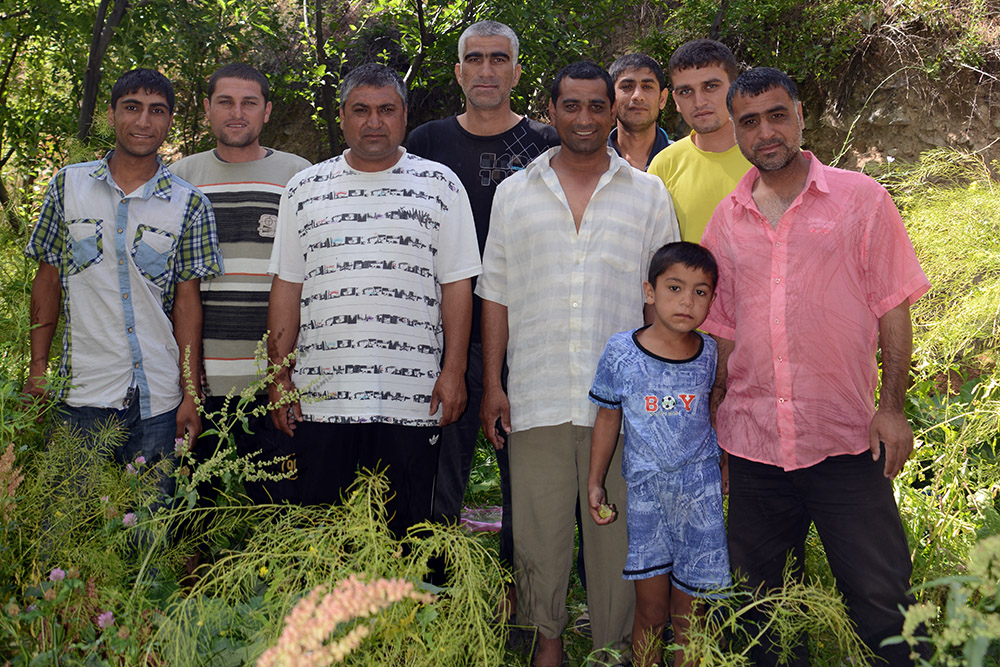
One of my most memorable encounters happened while walking along a trail on Sulaiman-Too. A group of men called me over, and at first I wasn’t sure what they wanted. I approached anyway and discovered they were Uzbek tourists visiting the sacred mountain.
None of them spoke English, but they were friendly and enthusiastic. They wanted me to take their photograph and even invited me to have tea with them. It was a fitting final memory of Osh: a city whose history includes serious tensions, but where my own experiences were filled with friendly conversations, unexpected generosity, and interesting encounters.
Between the sacred mountain, the unusual museums, the sprawling bazaar, and the everyday life of its streets, Osh turned out to be far more interesting than I’d anticipated. Sulaiman-Too alone would have justified a visit, but the people I met and the places I discovered around the city made the experience particularly memorable.
