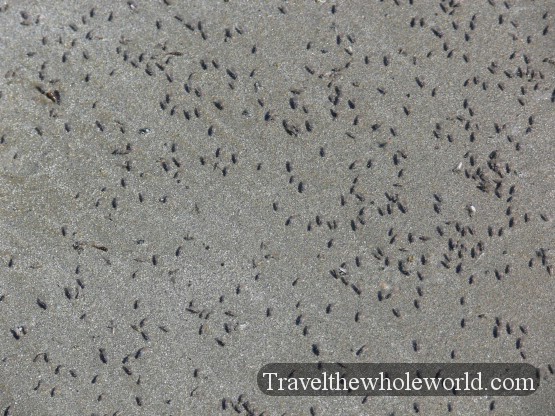
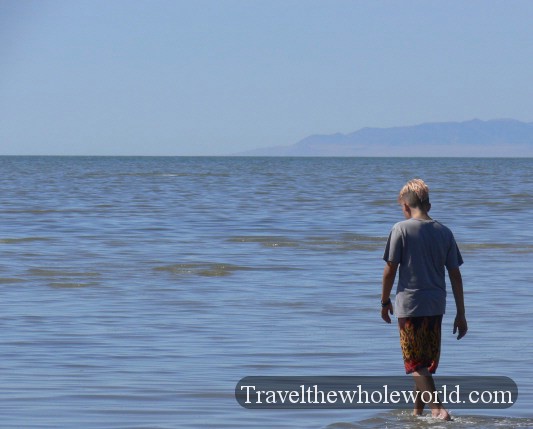
Just outside Salt Lake City is the Great Salt Lake, the largest saltwater lake in the Western Hemisphere. Despite covering thousands of square miles, the lake is surprisingly shallow, with an average depth of only around 14 feet (4 meters). Its extremely high salt content also makes swimmers unusually buoyant, which is one of the experiences that attracts visitors to the lake.
Since I’m a scuba diver, I naturally wondered whether there was anything worth diving for. The answer is not much! The lake has no fish, but its unusual ecosystem supports enormous populations of brine shrimp and brine flies, which in turn attract huge numbers of birds. I visited the Great Salt Lake twice, and on my first trip the photos above pretty much summed up my experience. I didn’t see much wildlife other than the brine flies, which covered parts of the shoreline and erupted into clouds whenever I walked too close.
Most visitors come to swim, sail, or simply experience such an unusual body of water. My first impression wasn’t particularly great. Parts of the shoreline were muddy, the flies were everywhere, and there was a noticeable smell in places. Fortunately, I returned four years later and discovered a completely different side of the lake.
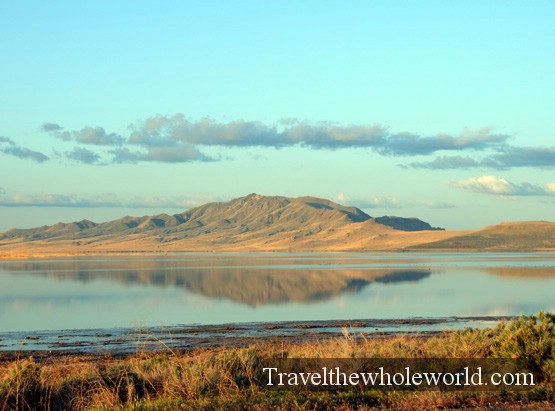
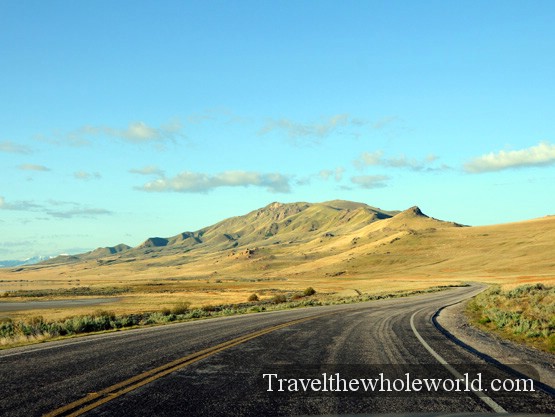
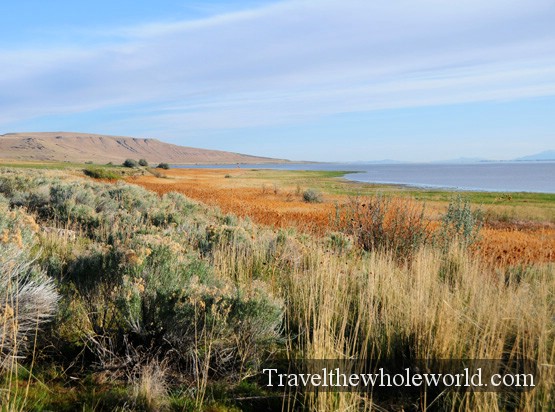
The highlight of the Great Salt Lake, in my opinion, is Antelope Island. This enormous island is about 15 miles (24 kilometers) long and nearly 5 miles (8 kilometers) wide, with mountains rising thousands of feet above the lake. The first photo above shows Antelope Island from the mainland, while the second shows one of the roads cutting through its open landscape.
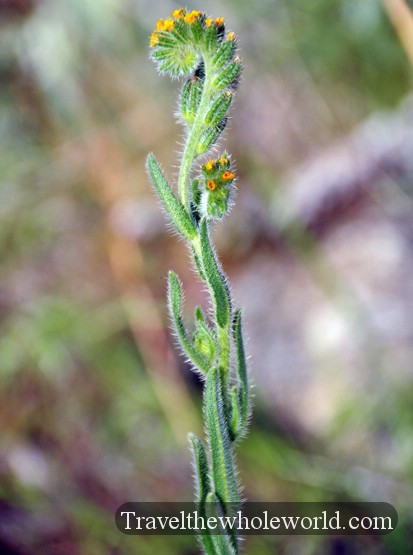
The natural beauty of Antelope Island makes the trip worthwhile even before you see any wildlife. The landscape ranges from marshy shoreline to dry grasslands and rocky mountains, so the vegetation changes considerably as you explore the island. I’ve no idea what the plant above is, but apparently I thought it looked interesting enough to deserve its own photograph on my website!
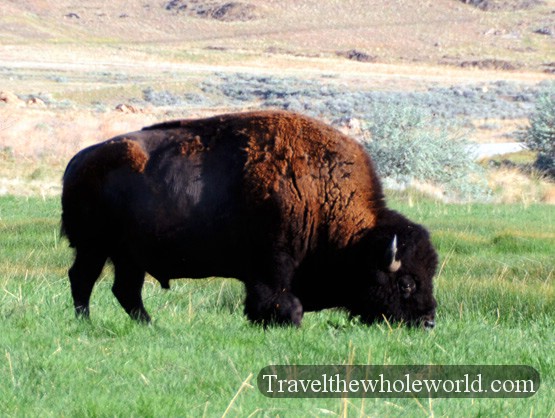
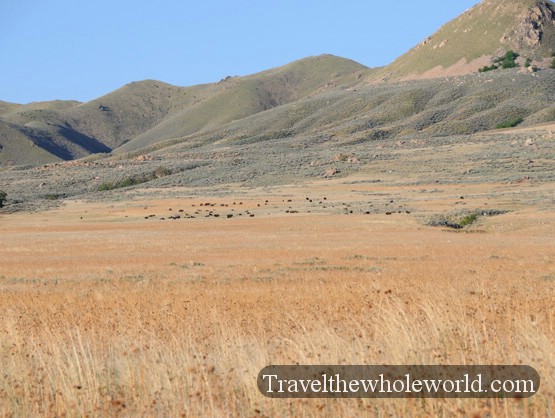
Antelope Island received its name after early explorers encountered pronghorn here, but today the island is probably better known for its large herd of American bison. Above is about as close as I was willing to get to one. I used the full zoom on my camera, so I wasn’t nearly as close as the photograph makes it appear. These animals may be accustomed to seeing visitors, but they’re still wild animals and definitely deserve some distance.
The second photo shows the island’s open grasslands with a herd of bison in the distance. With so much open terrain and relatively few places for large animals to disappear, Antelope Island turned out to be one of the easiest places I’d visited to see wildlife.
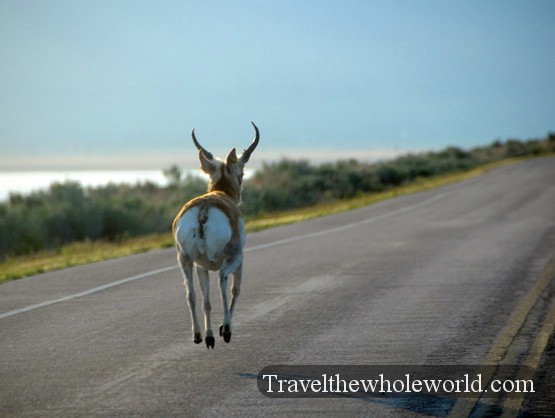
This male pronghorn ran along the road in front of me for several minutes, apparently determined to outrun me rather than simply stepping off to the side. Eventually he figured it out and disappeared toward the mountains.
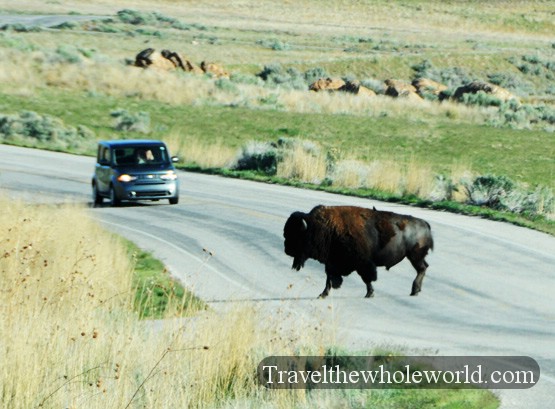
The bison above had the opposite attitude. He was certainly big enough to take his time crossing the road, and everyone else could wait.
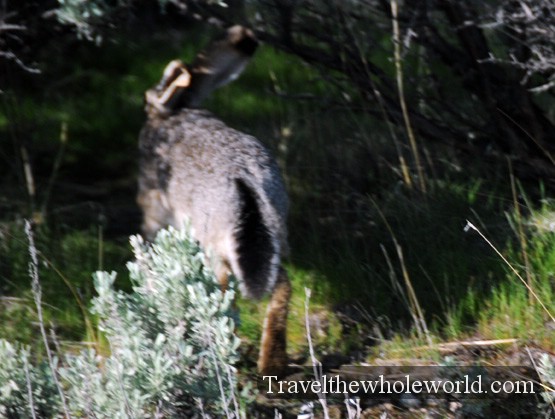
Smaller animals were common as well. I saw dozens of rabbits darting across the roads, usually moving considerably faster than the bison.
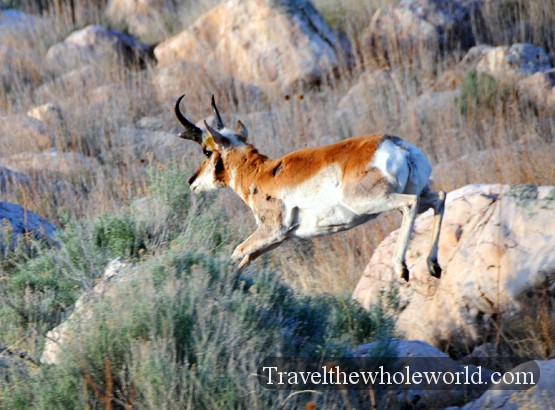
Another male pronghorn is photographed above. They’re commonly called antelope in North America, which is where Antelope Island gets its name, although pronghorn are actually a completely different animal from the true antelopes of Africa and Asia.
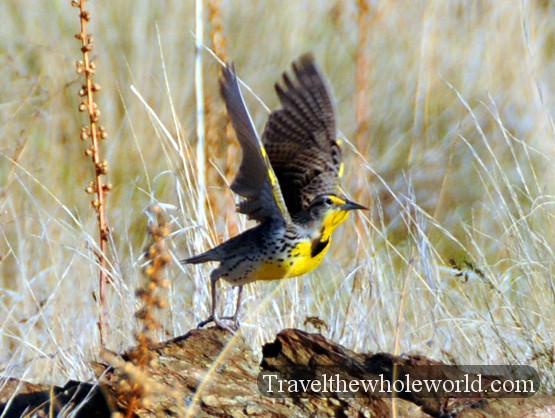
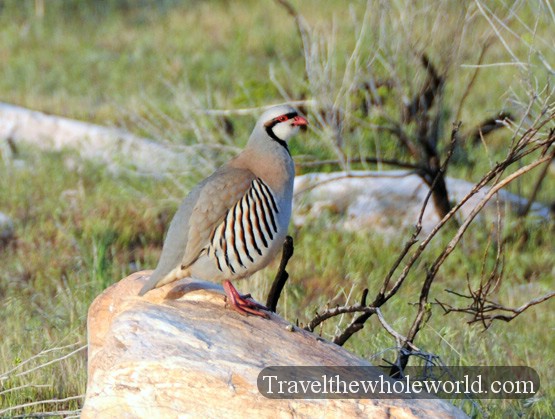
The island also has plenty of birdlife. Above are two species I encountered during my visit: a western meadowlark and a chukar. Coming from the East Coast, these were birds I wasn’t accustomed to seeing and were completely new to me at the time.
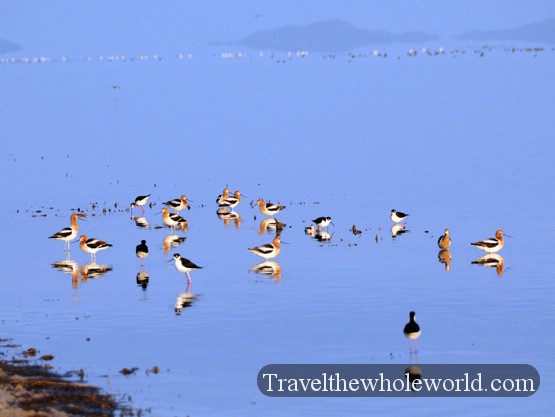
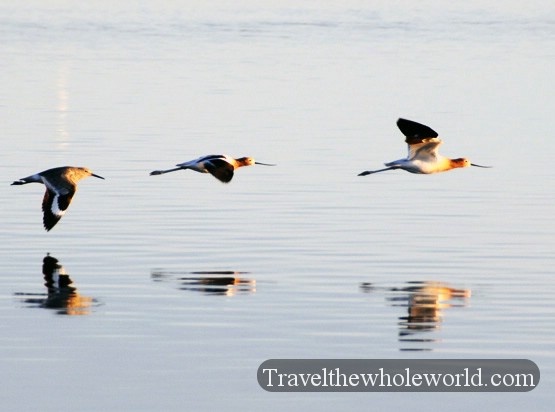
The Great Salt Lake itself supports enormous numbers of birds, despite having so little visible life beneath the water. Brine shrimp and other small organisms provide an important food source for migrating and nesting birds. Above are some of the waterfowl I encountered, including American avocets. Seeing this side of the lake on my second visit completely changed my first impression. Antelope Island in particular turned what I initially found to be a rather strange and uninviting lake into one of the more interesting natural areas I visited in Utah.
Explore More of Utah
Arches National park • Bryce Canyon • Salt Lake City • the Salt Lake • the Uintas Mountains • Zion National Park