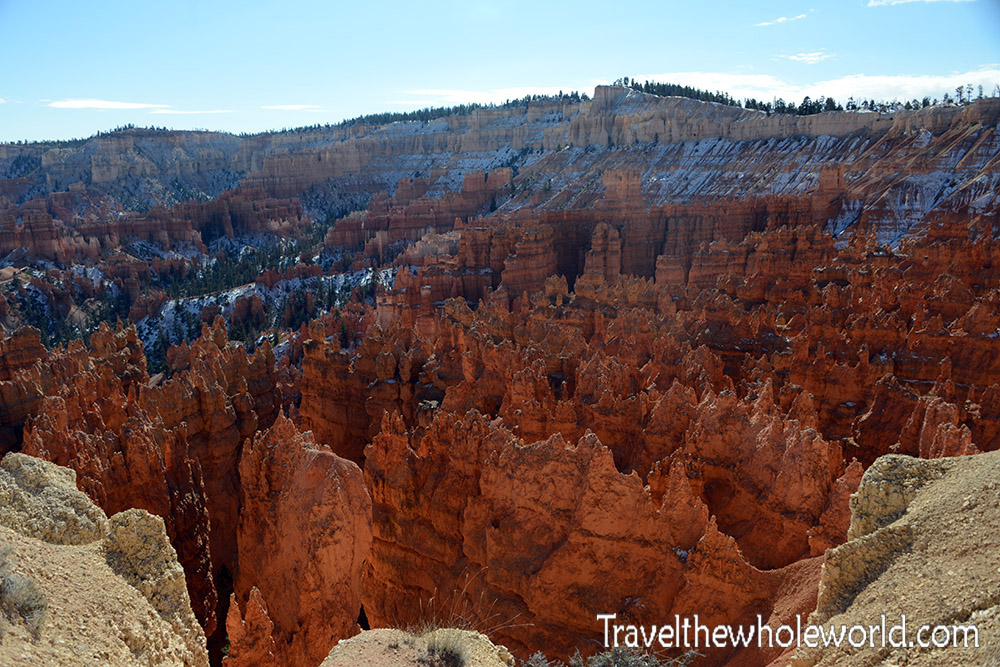
My very first view in Bryce Canyon was the famous Amphitheater. Despite the name, Bryce Canyon isn’t really a single canyon so much as a collection of enormous natural amphitheaters filled with some of the strangest rock formations in the country. I hadn’t yet discovered HDR photography on this trip, and looking back I definitely could have done a better job capturing the colors. Even so, the photo above gives a good idea of how unusual the landscape is.
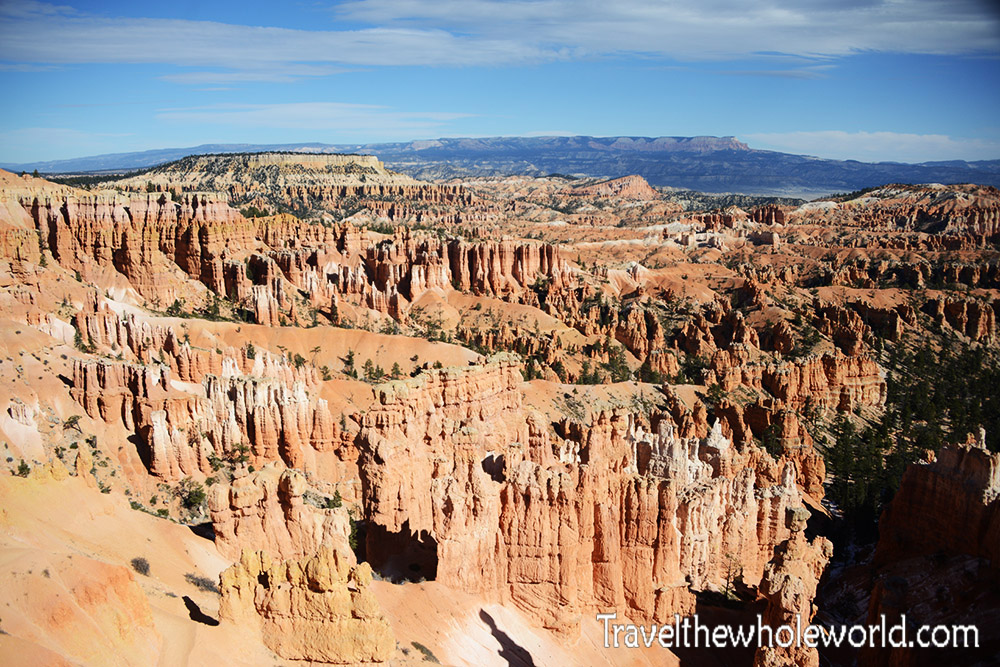
Above is another view into the Amphitheater, where the landscape is packed with the tall rock spires Bryce Canyon is famous for.
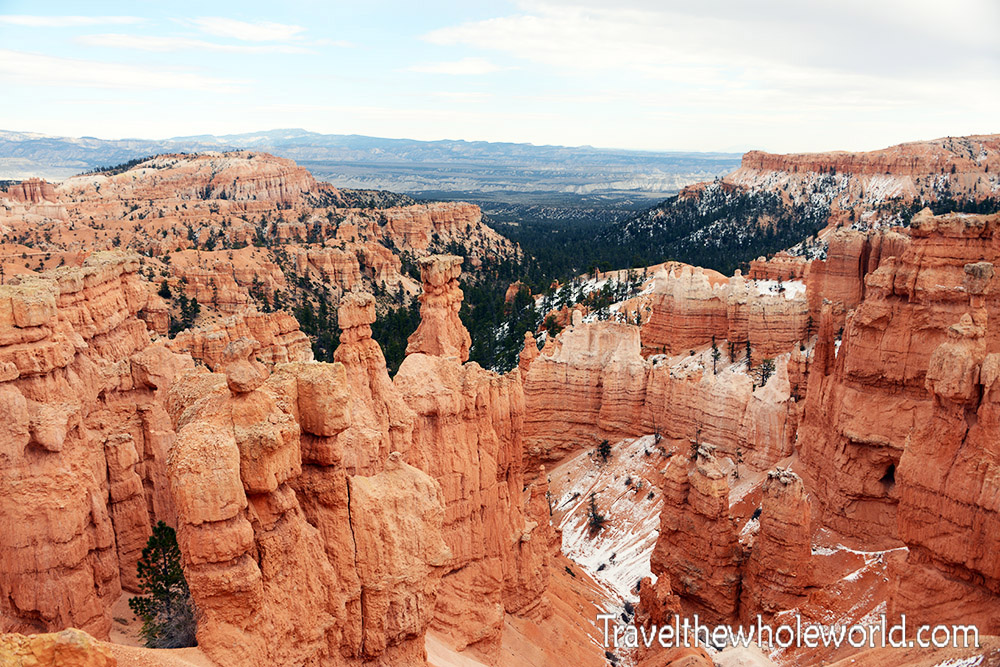
These rock towers are known as hoodoos. They form over enormous spans of time as erosion slowly breaks apart the softer layers of rock. One of the most important forces at Bryce is frost wedging. Water seeps into cracks in the rock, freezes during cold nights, expands, and gradually forces those cracks farther apart. Over repeated freeze-and-thaw cycles, pieces of rock eventually break away and leave behind the narrow towers that dominate the park.
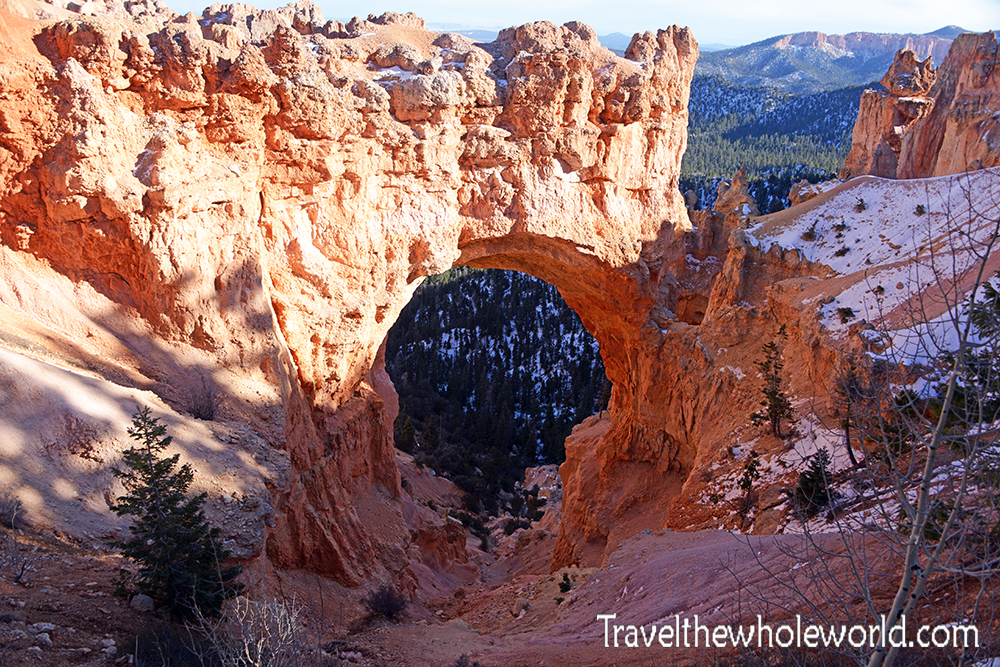
The same erosion that creates hoodoos also produces natural arches and windows like the one above. Over time, weaker sections of rock are worn away while stronger sections remain standing.
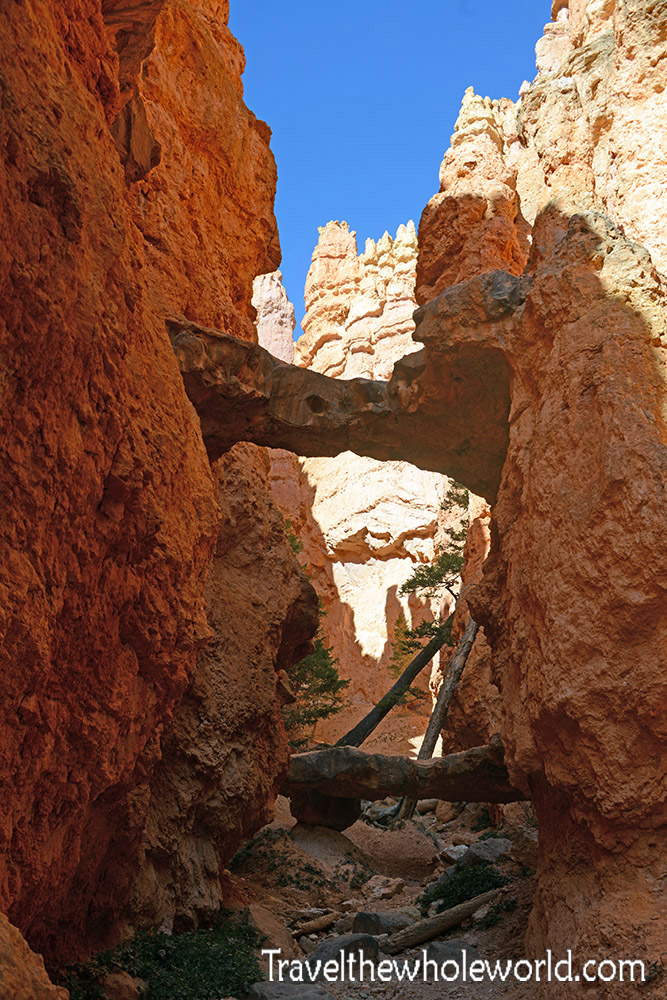
Above is Natural Bridge, one of the park’s best-known rock formations. Despite the name, it’s technically a natural arch rather than a true bridge because it wasn’t carved by a flowing stream. Like the rest of Bryce’s formations, it continues to change slowly as weather and erosion wear away the rock.
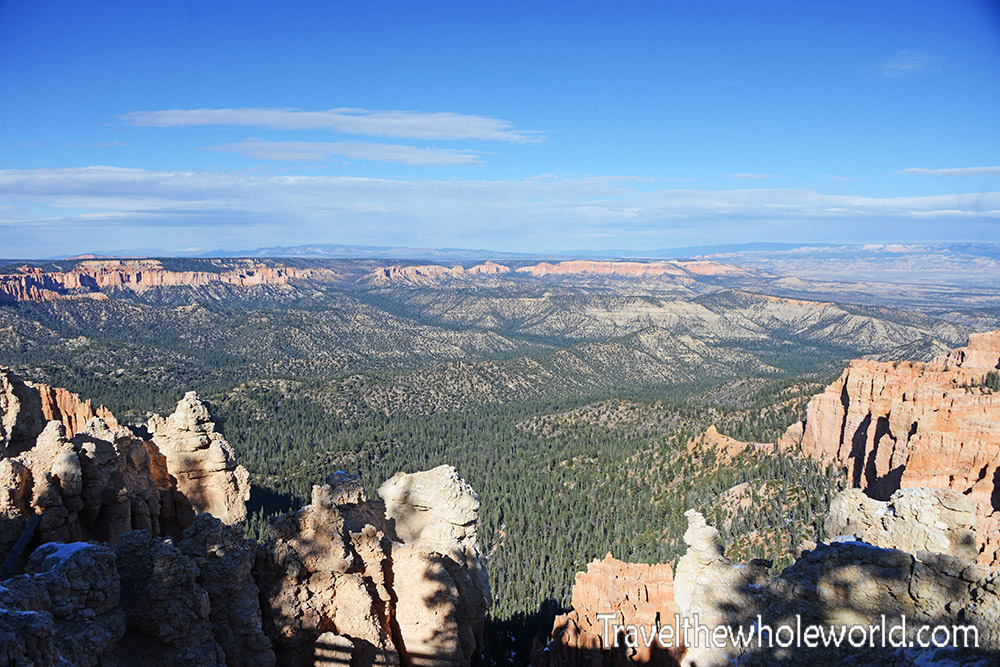
On this trip to Utah I visited Bryce Canyon and Zion back to back. I thought both were equally impressive in completely different ways. Zion had the better hiking for me, while Bryce was more about moving between overlooks and taking in one dramatic view after another. The area above reminded me of a giant bowl carved into the landscape and even brought back memories of a similar view I had seen in Big Bend, Texas.
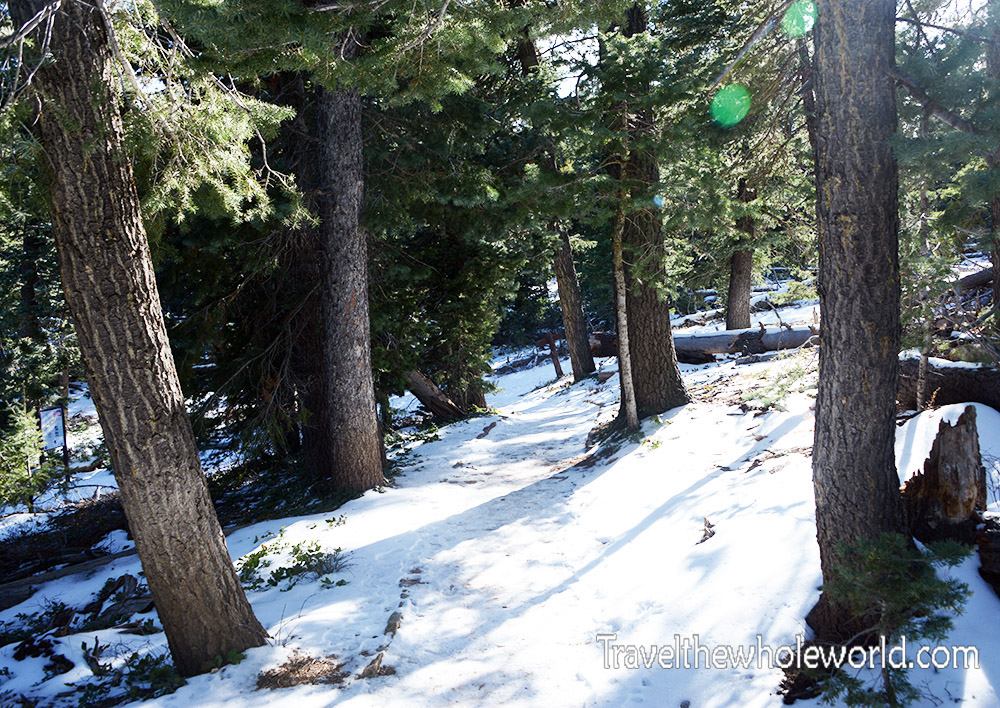
One thing that surprised me was how different the weather was from nearby Zion. Zion had been fairly warm even though it was already mid-November, while Bryce sits at much higher elevations and was noticeably colder. Several viewpoints are close to 9,000 feet (2,700 meters), and when I visited there was still plenty of snow along the higher trails and overlooks.
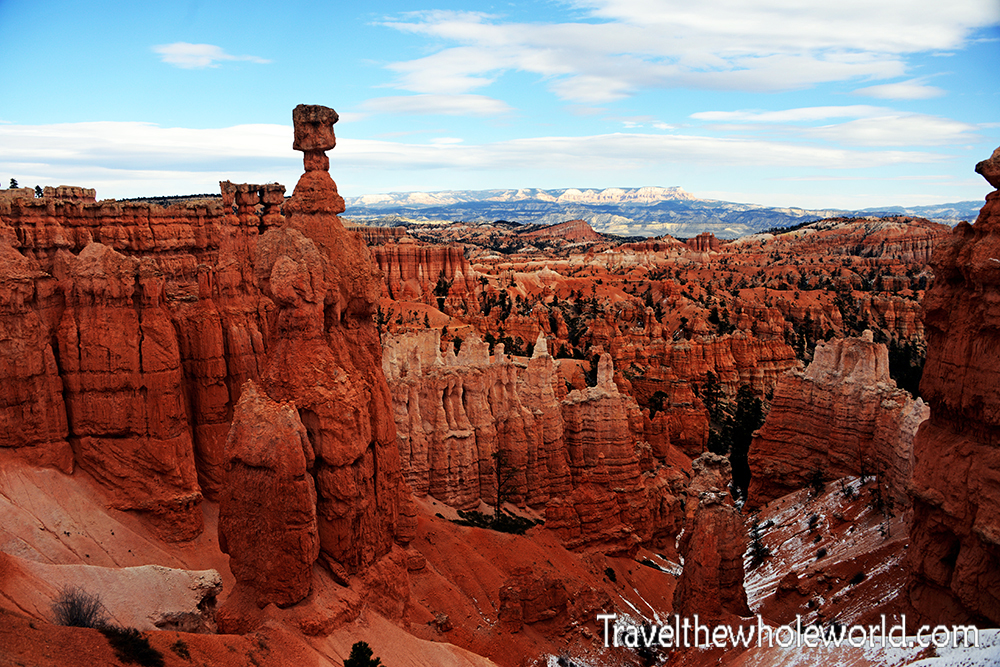
This final photo shows my favorite formation in Bryce Canyon: Thor’s Hammer. Reaching it involves a relatively short but steep hike down into the Amphitheater, where you can see the hoodoo from a completely different perspective than from the rim. Thor’s Hammer has become one of the most recognizable symbols of Bryce Canyon, and after seeing it in person it’s easy to understand why.
Bryce Canyon doesn’t need long hikes to make an impression. Between the enormous amphitheaters, thousands of hoodoos, natural arches, snow-covered high country, and constantly changing viewpoints, it felt unlike anywhere else I had visited in Utah.
Explore More of Utah
Arches National park • Bryce Canyon • Salt Lake City • the Salt Lake • the Uintas Mountains • Zion National Park