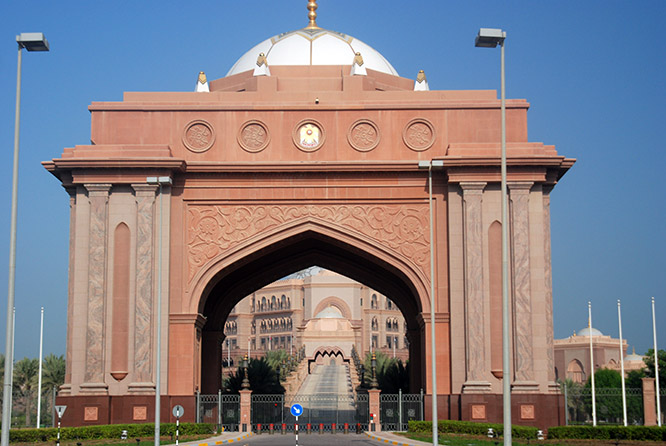
Abu Dhabi is the capital of the United Arab Emirates and sits along the Persian Gulf on the country’s northern coast. Dubai tends to receive most of the international attention, but Abu Dhabi is an impressive city in its own right, with modern skyscrapers, enormous public works projects, beaches, parks, mosques, and some of the country’s most extravagant architecture. When I first came across the Emirates Palace seen above, I honestly thought it was a government building or a residence for the royal family. As it turns out, it’s actually a luxury hotel! I couldn’t imagine what a room cost per night when I visited, but I had a feeling the same amount of money could probably fund one of my backpacking trips through an entire region of the world.
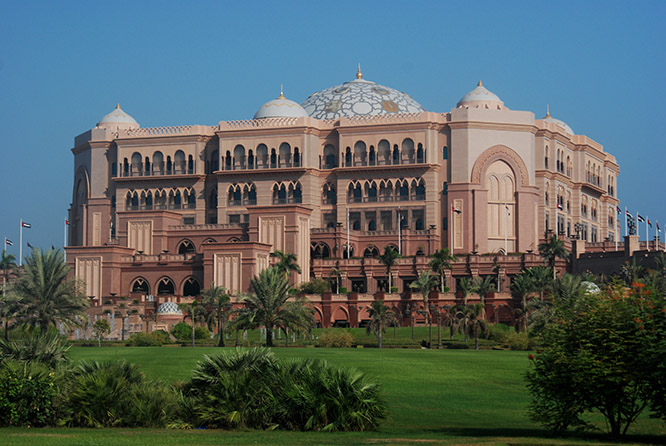
The Emirates Palace certainly lives up to its name. Its enormous grounds, elaborate entrance, and location near government buildings make it easy to mistake for an actual royal palace. The scale of places like this was one of my first impressions of Abu Dhabi. This is a city where buildings aren’t simply designed to be functional; many are intended to make a statement.
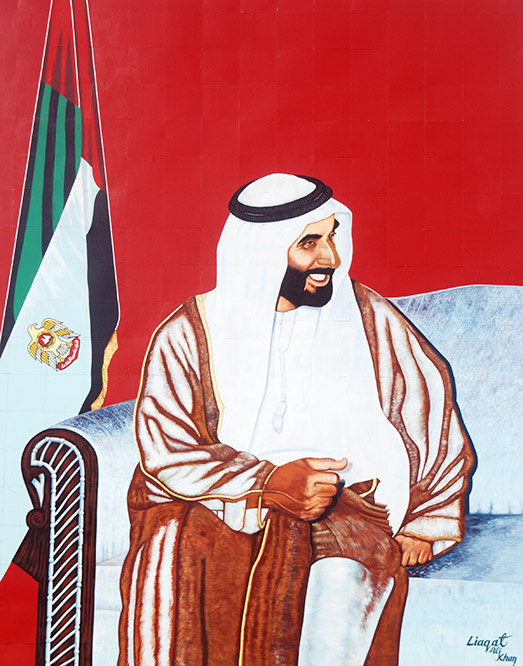
Near the hotel was this large portrait of Sheikh Zayed bin Sultan Al Nahyan. Seeing his portrait nearby probably contributed to my original assumption that the Emirates Palace was an actual royal residence. Sheikh Zayed was the founding president of the United Arab Emirates and ruler of Abu Dhabi, and he played the central role in bringing the emirates together to form the UAE in 1971. He also oversaw much of the country’s transformation during the early decades of its development, and his name and image can still be seen throughout Abu Dhabi.
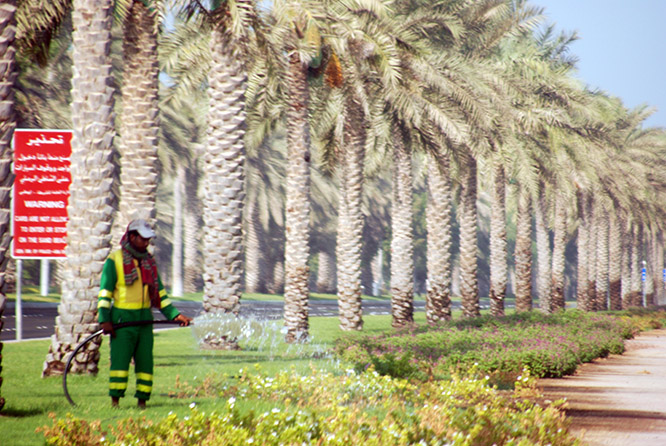
Above is a worker maintaining the gardens around the Emirates Palace. One thing that immediately stood out to me throughout the UAE was how clean and organized everything seemed. Maintaining elaborate gardens in an extremely dry climate obviously requires a tremendous amount of work and water, yet landscaped parks, trees, flowers, and green spaces can be found throughout Abu Dhabi. The attention given to public spaces was something I noticed almost everywhere I went.
The UAE is an Islamic country, but because of its large international population and close connections with the Western world, I wasn’t sure how traditional everyday life would feel before I arrived. I visited during Ramadan, when Muslims fast from dawn until sunset, and it was interesting seeing how the country balanced its religious traditions with such a large non-Muslim population. Eating and drinking publicly during fasting hours was restricted, while food was still available to non-Muslims in more discreet settings.
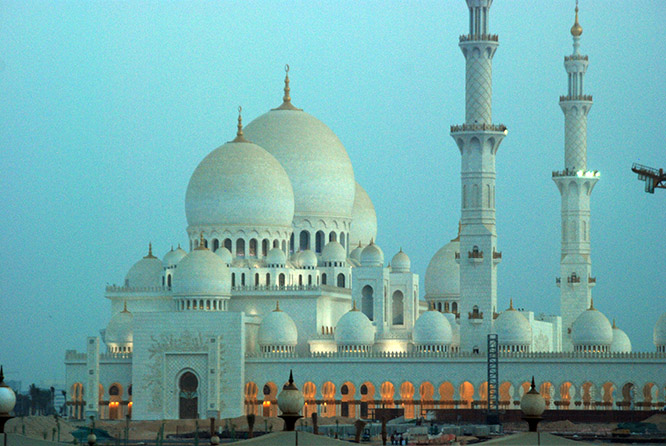
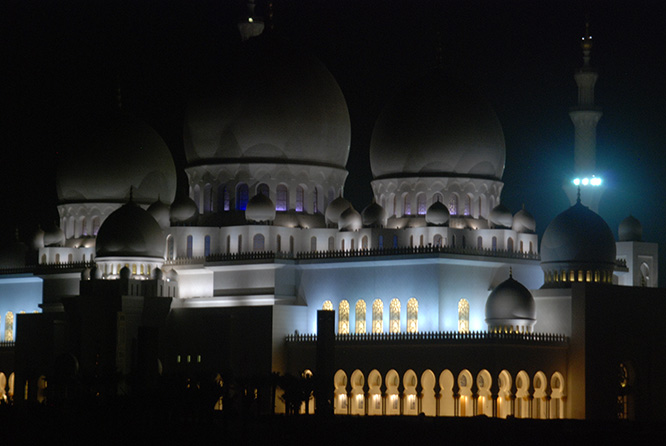
Above and below is the Sheikh Zayed Grand Mosque, one of Abu Dhabi’s most recognizable landmarks and one of the largest mosques in the world. I passed it several times while driving around the area and was able to see it under completely different conditions. The photograph above was taken during the day, while the one below shows the mosque illuminated at night. Its white domes and minarets are impressive during the day, but I thought the building looked especially dramatic after dark.
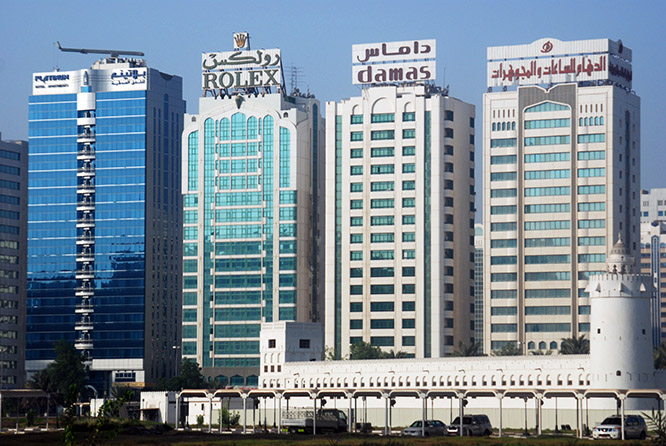
Downtown Abu Dhabi is filled with modern high-rise buildings, wide streets, hotels, offices, and shopping areas. Luxury brands seemed to be everywhere, with names like Rolex and Damas displayed prominently across buildings and storefronts. The city felt wealthy without being quite as flashy as Dubai, and despite all the modern development, Abu Dhabi seemed more relaxed and spread out.
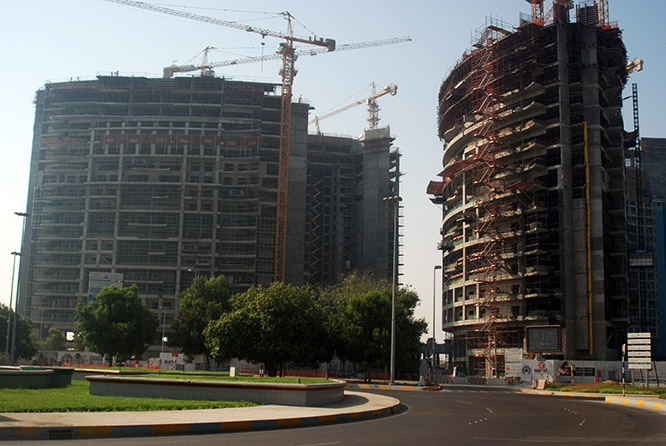
I visited during a period when construction seemed to be taking place everywhere. New towers, roads, hotels, and entire developments were appearing throughout the UAE as the country continued investing its oil wealth into infrastructure and diversifying its economy. Cranes were such a common part of the skyline that construction itself became part of the scenery.
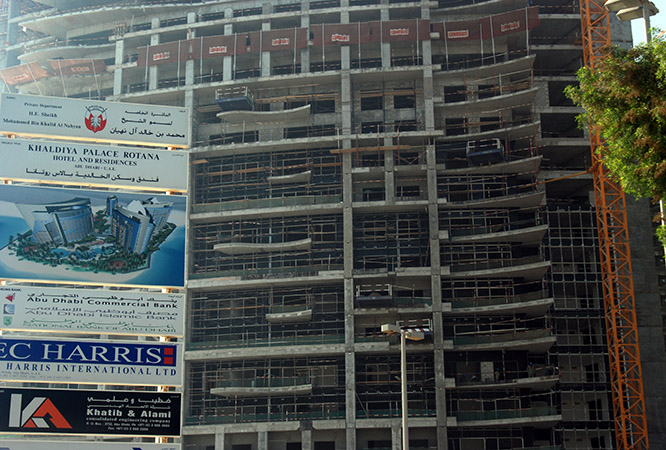
The global financial crisis eventually slowed some of the enormous development boom taking place across the UAE, particularly in Dubai, and a number of ambitious projects were delayed or reconsidered. Abu Dhabi’s enormous oil reserves gave the emirate considerable financial strength, however, and development continued transforming the capital in the years that followed. Looking back at these photos now, it’s interesting knowing how much more of the city’s skyline has been built since my visit.

One place I passed but didn’t properly explore was Abu Dhabi’s Heritage Village. The site recreates aspects of traditional Emirati life before the country’s rapid modernization, with examples of older homes, workshops, tools, and techniques used to survive in the surrounding desert environment. I was already planning to visit similar historical sites in Al Ain, so I only stopped briefly here. Considering how dramatically life in the UAE changed within just a few generations, places like this provide an interesting contrast to the skyscrapers and luxury hotels found throughout modern Abu Dhabi.
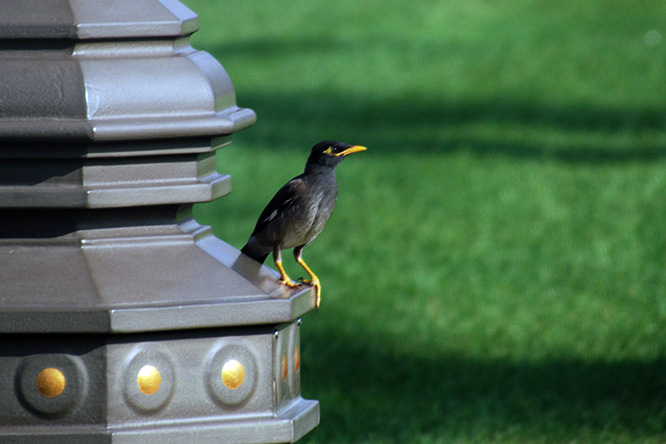
Some of the city’s projects are much more practical for the average traveler. Abu Dhabi has numerous parks and landscaped public spaces, which I especially appreciated while doing a lot of walking in the summer heat. Finding some trees and shade could make a huge difference when spending hours outside. The parks weren’t exactly teeming with wildlife, but the bird above seemed common throughout the country, almost like seeing a crow or sparrow back in the United States.
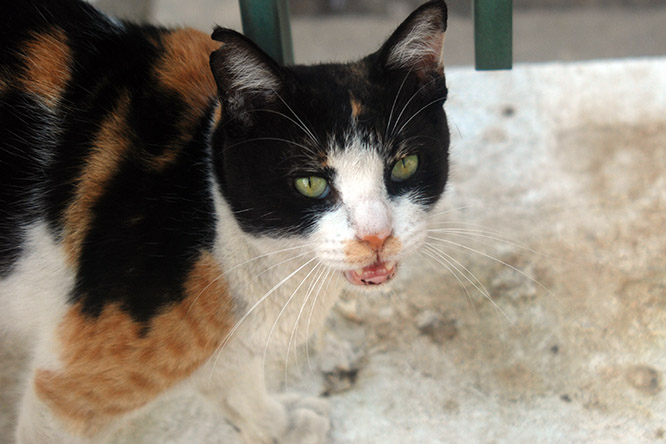
Cats were another common sight throughout Abu Dhabi’s parks and streets. At first I wondered how they managed in such intense heat, but cats have lived alongside people in hot and arid parts of the world for thousands of years and seemed perfectly comfortable finding shady places to escape the midday sun. Between the landscaped parks, monumental architecture, mosques, and constantly changing skyline, Abu Dhabi turned out to have much more to explore than I had expected from a city that often sits in Dubai’s shadow.