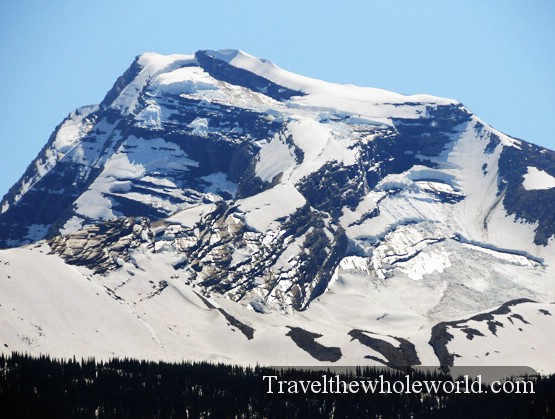
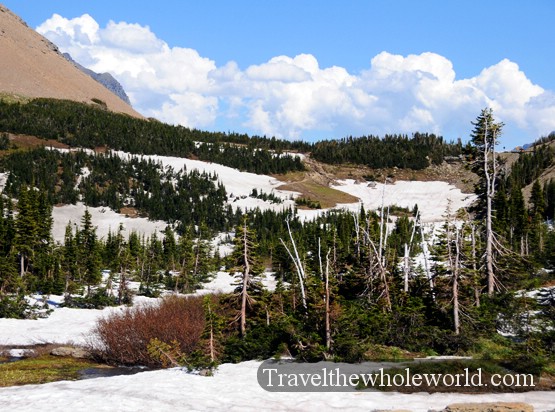
This remote region along the Canadian border can be a little frustrating and sometimes expensive to reach, but that isolation is part of what makes Glacier National Park such an amazing place. Large portions of the park remain wilderness, providing habitat for grizzly bears, gray wolves, black bears, elk, mountain goats, bighorn sheep, and many other animals. Wildlife can always be difficult to find, but the spectacular scenery can’t be missed. Snow-covered mountains, forests, lakes, rivers, and hundreds of miles of trails make Glacier one of the most beautiful places I’ve visited in the United States.
As its name suggests, glaciers are one of the park’s most famous features. I visited in July, and even in the middle of summer there was still plenty of snow at the higher elevations. The glaciers have been retreating significantly over time, but seeing these remaining sheets of ice surrounded by rugged mountains was still one of the highlights of my trip.
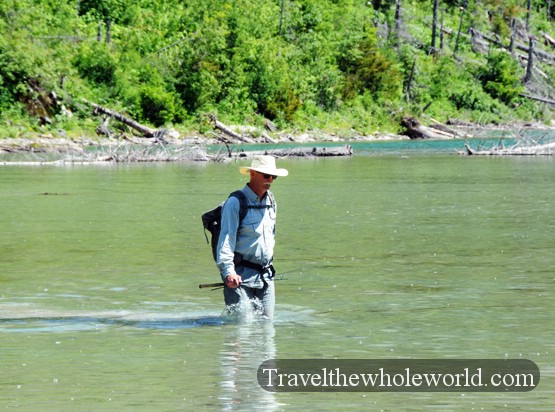
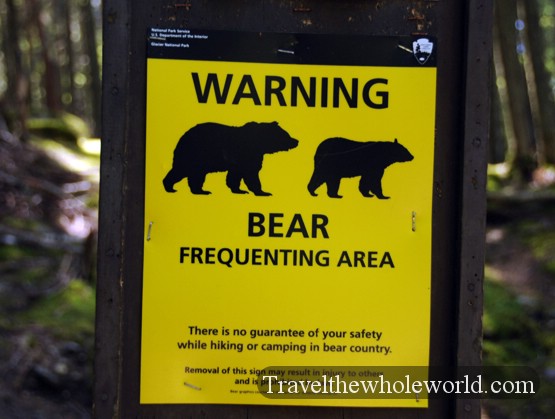
Seeing the glaciers is only one reason to visit the park. There are enough outdoor activities here to keep someone busy for weeks, from fishing and hiking to simply driving through the mountains. The photo on the left shows a fisherman at a higher elevation, while the sign on the right was one I encountered while hiking alone. Glacier has a large population of grizzly bears, although probably for the best, I didn’t run into one during my visit. I’d still love to see a wild grizzly someday—preferably from a safe distance.
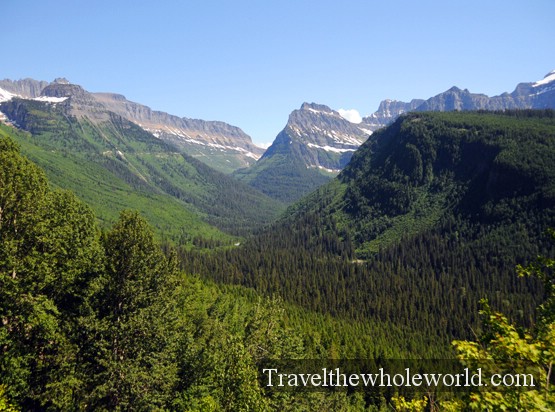
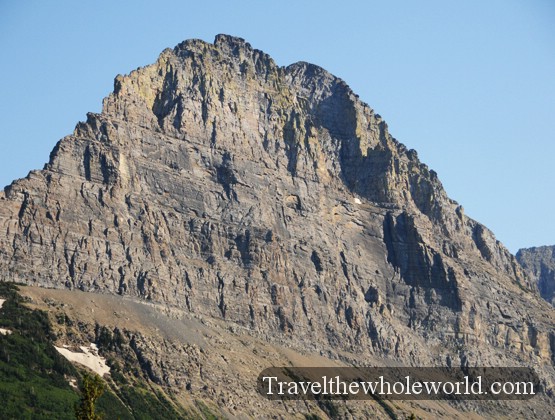
These two scenes give an idea of the general landscape of Glacier National Park. Mountains and forests seem to continue as far as you can see, with several peaks in the park rising above 10,000 feet.
Going-to-the-Sun Road
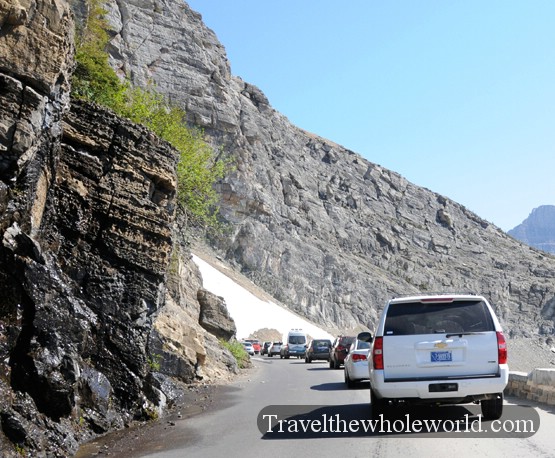
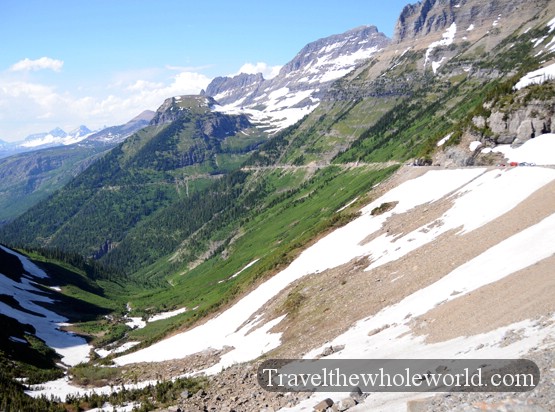
Glacier is famous for Going-to-the-Sun Road, which crosses through the heart of the park from west to east. This is the main road through Glacier, and once I started driving it I could see why the route is so famous. On the left is a line of cars ascending one of the steeper sections, while the photo on the right shows the road traversing the mountains near the Garden Wall.
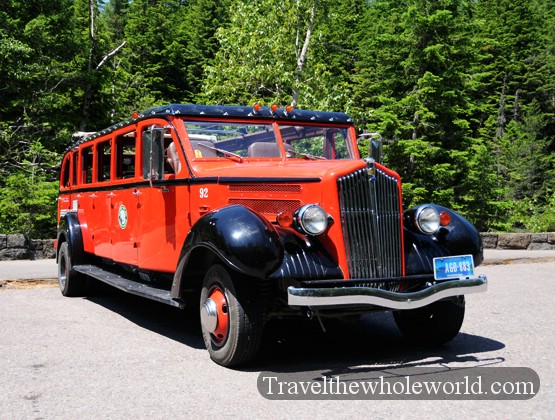
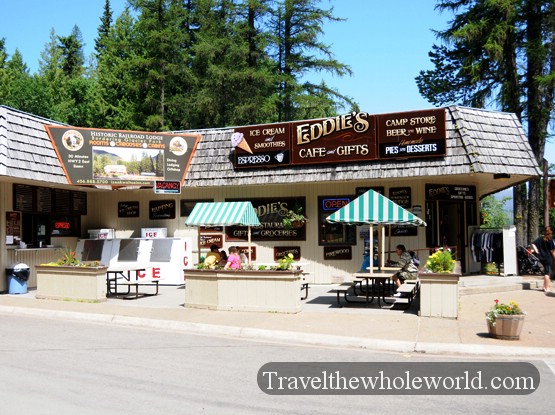
For visitors who don’t want to drive themselves, Glacier’s famous Red Buses offer another way to explore the park. Despite how remote Glacier feels, there is a surprising amount of visitor infrastructure, including lodging, restaurants, gift shops, and other services.
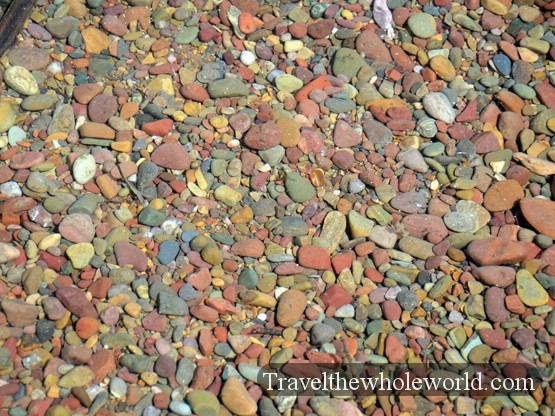
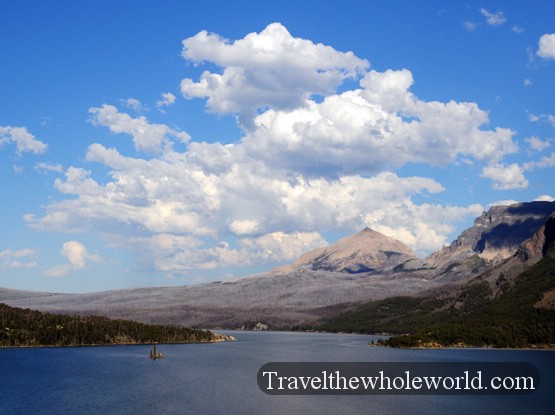
The lakes in Glacier were incredibly clear, but what really caught my attention were the colorful rocks visible beneath the water. On the left you can see some of the pebbles just below the surface, while the photo on the right shows St. Mary Lake during the perfect weather I had that day.
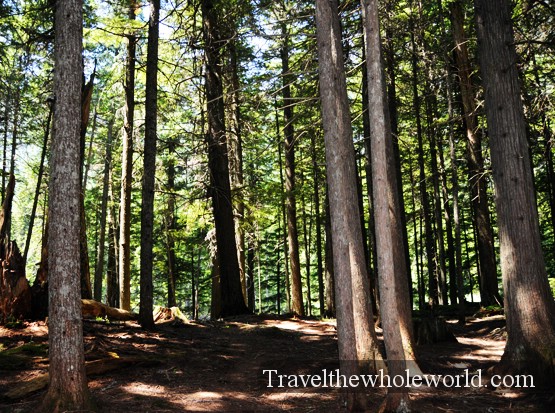
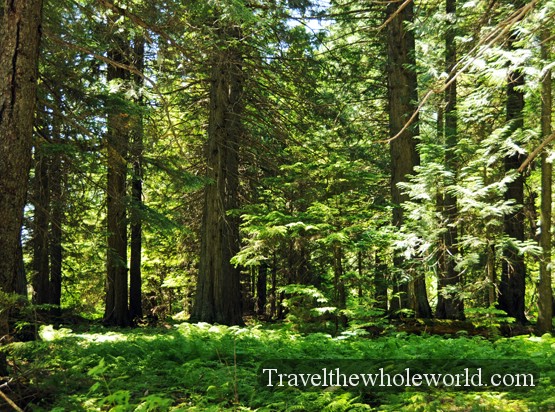
These forests are home to some of North America’s largest wild animals, including grizzly bears, black bears, elk, deer, and gray wolves. Even when I didn’t see wildlife, simply walking through forests like these made it obvious how wild much of Glacier still is.
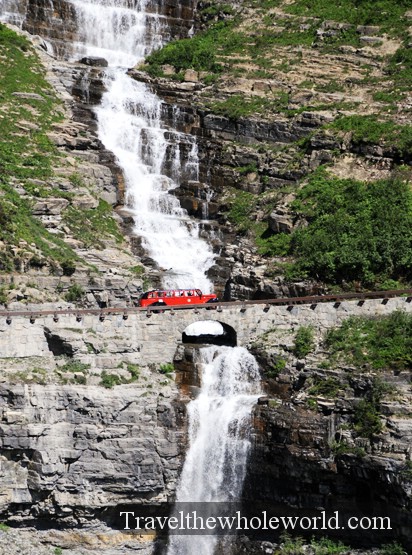
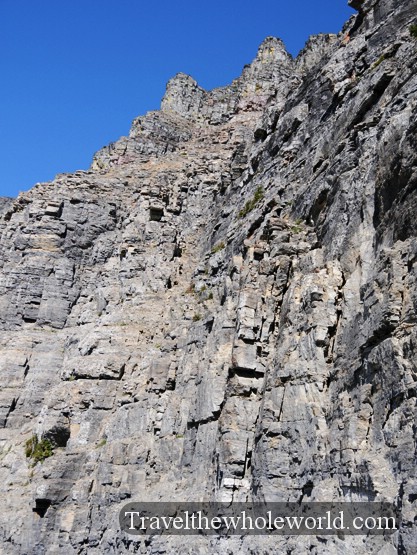
I’ve rarely visited a national park where simply driving the road was one of the highlights. Usually the best experiences come after leaving the car to hike or explore the wilderness, but Going-to-the-Sun Road was different. I passed waterfalls and dramatic rock cliffs right alongside the pavement. One section was covered in glacial runoff that created a shower of water along the side of the road. On such a hot day, the cold spray coming into the car actually felt great.
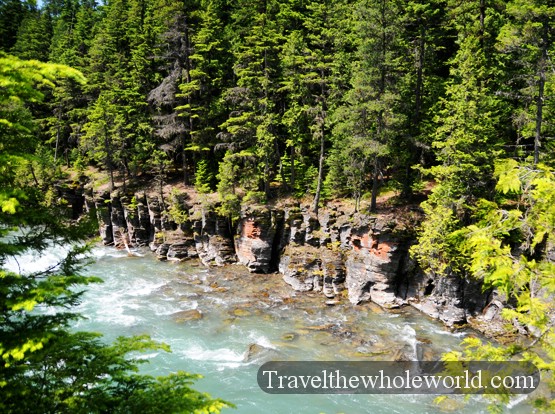
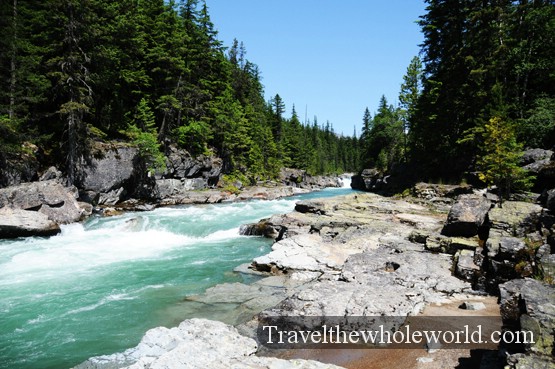
This was one of the first viewpoints where I stopped in the park. The rushing turquoise water was quite a sight, especially against the red and black stones along the carved banks. I eventually left the viewing area and climbed down closer to the river. Like a river I had visited in Armenia, this one also managed to consume a lens cap that I dropped.
Hiking to Avalanche Lake
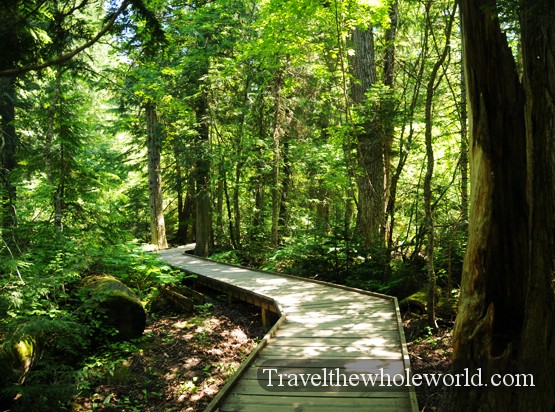
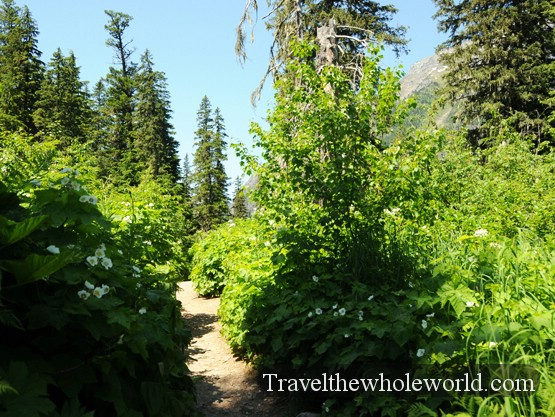
There are mountains I’d like to climb in Glacier, but I would need several days and better equipment than I had with me on this trip. Instead, I did a hike of about five miles. A sign at the trail recommended bringing water, food, sunscreen, insect repellent, and sturdy hiking boots. Since it was only five miles, I brought my camera and ignored everything else. I even traded hiking boots for a pair of $10 flip-flops, which somehow served me well.
The photo on the left shows the beginning of the hike through dense forest, while the trail eventually opened up into areas surrounded by thick vegetation.
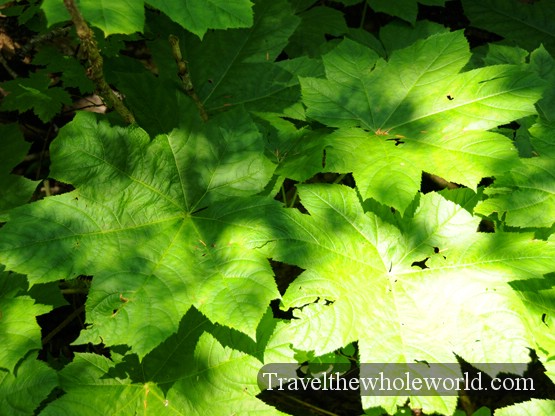
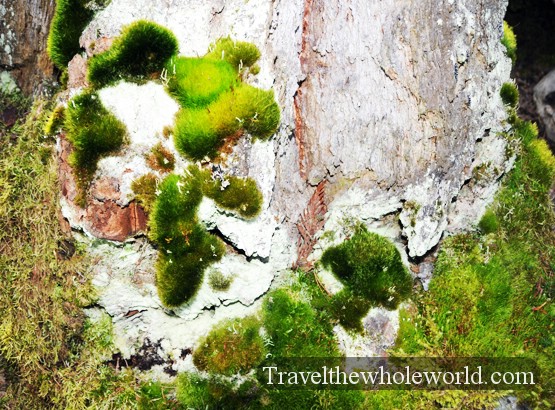
The lower forest was lush and surprisingly green, with giant leaves and thick moss growing throughout the shaded sections of the trail.
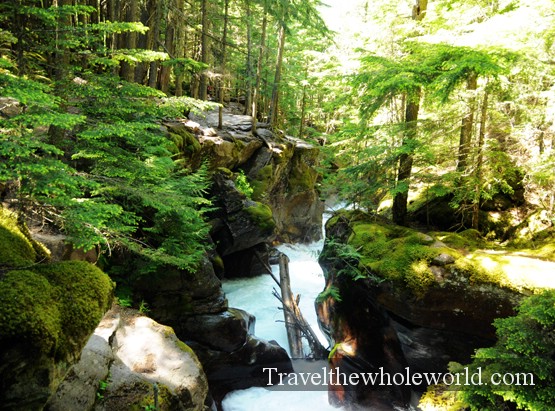
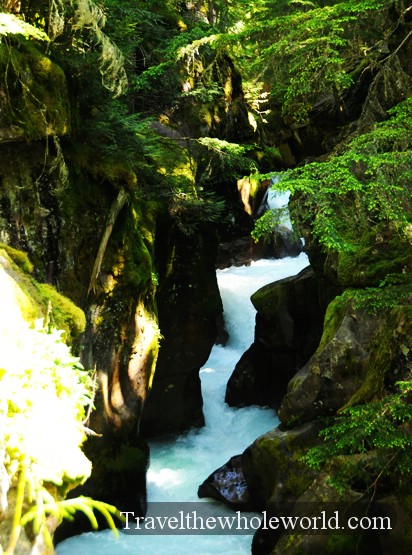
The hike followed Avalanche Creek, which I have to admit was anything but boring. The creek quickly transformed into rushing water squeezed through a narrow canyon it had carved through the rock. You’d really need a video to appreciate how fast the water was moving, but it was absolutely beautiful and one of the most impressive things I saw in the park.
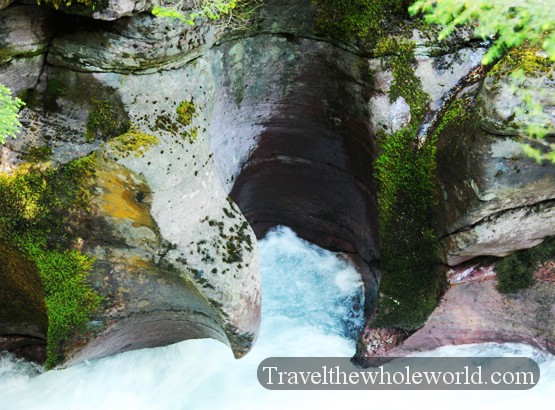
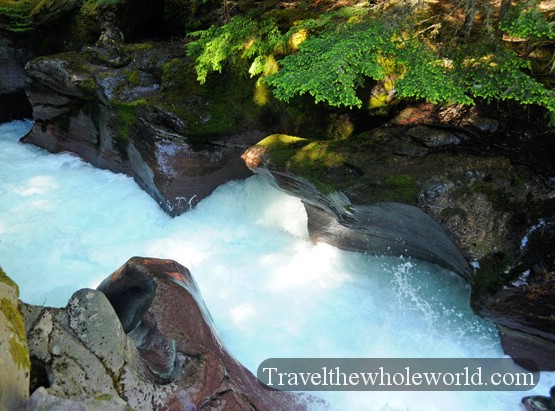
A nearby sign warned about the danger of falling into the water. Looking down into the narrow channel made it easy to understand why. The force of the creek had carved smooth shapes into the rock, while the water rushed through the canyon below.
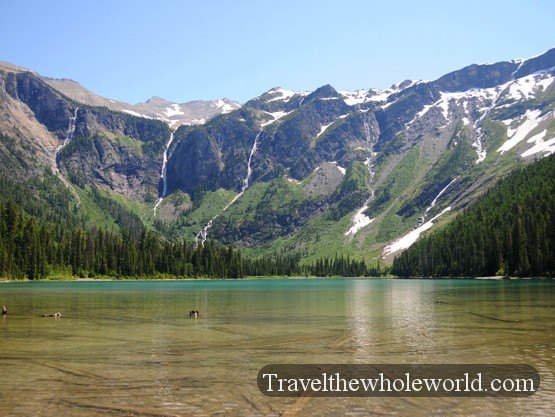
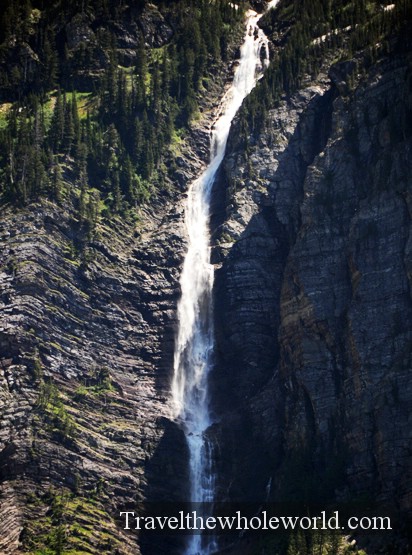
At the end of the hike I reached the source of the creek, Avalanche Lake. The lake itself was nice, but the real highlight was the wall of mountains surrounding it. Melting snow and ice created enormous waterfalls pouring down the cliffs. Some of these were among the highest waterfalls I had seen in my travels at the time.
Wildlife in Glacier
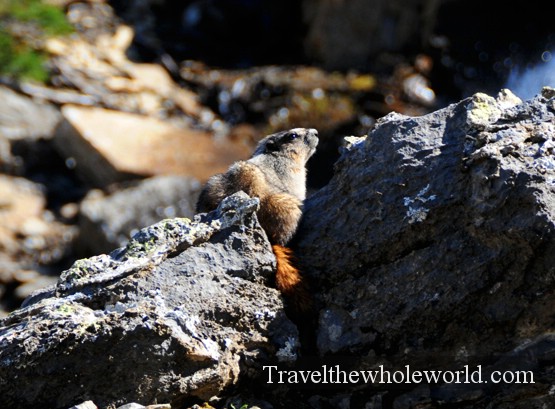
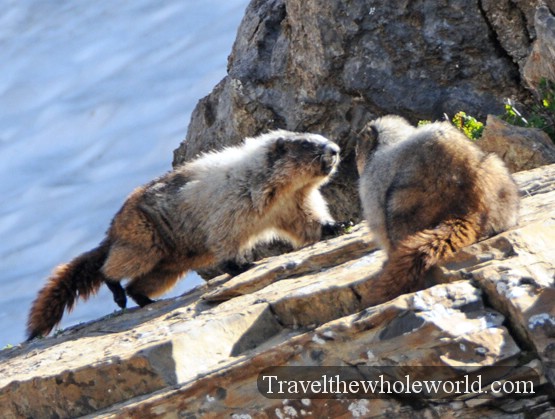
I had no idea what these furry creatures were until I looked them up. When I first saw them, I thought they looked like some kind of mountain version of a beaver. They were actually hoary marmots. I watched this pair sunning themselves on the rocks before they eventually climbed away.
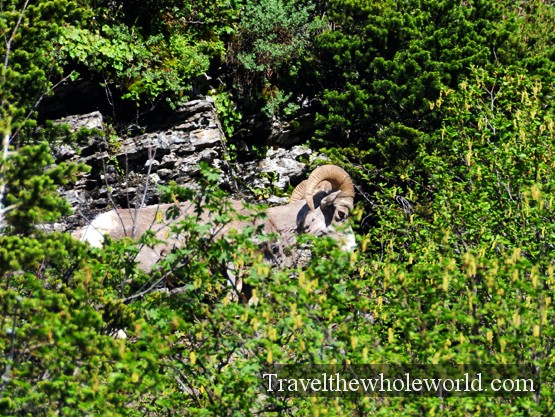
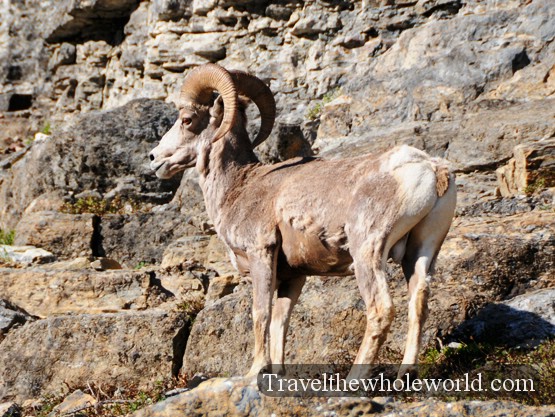
I was also lucky enough to spot this bighorn sheep when it briefly came out of the woods and stood on an exposed section of rock. I saw it from a distance while I was outside my car and jogged closer, managing to take these two photos before it disappeared.
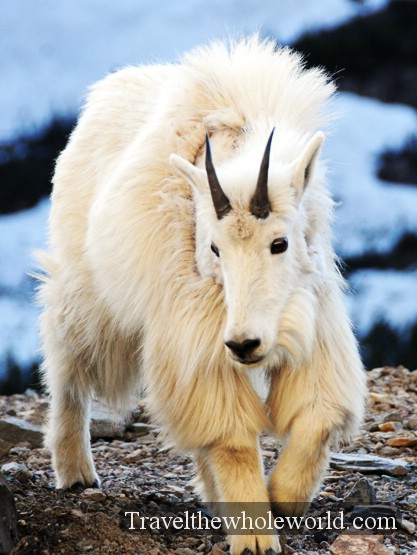
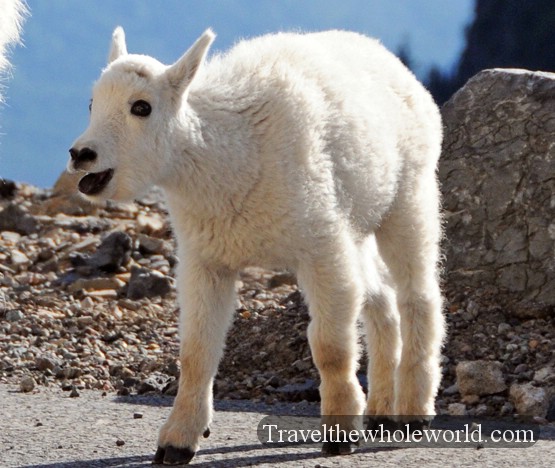
The wildlife highlight of my trip was definitely the mountain goats. I first came across three near Going-to-the-Sun Road, including an adult and the kid photographed above. I didn’t want to get too close and risk upsetting them, especially with a steep mountainside nearby, so I kept a good distance. For the most part they seemed comfortable with my presence.
I saw them around Logan Pass at roughly 7,000 feet above sea level, near the same area where I found the hoary marmots. There was still quite a bit of snow even though it was July. Most of the adult goats were also shedding their winter coats. At first I thought one of them might have been sick or injured until I noticed the others losing their thick fur as well.
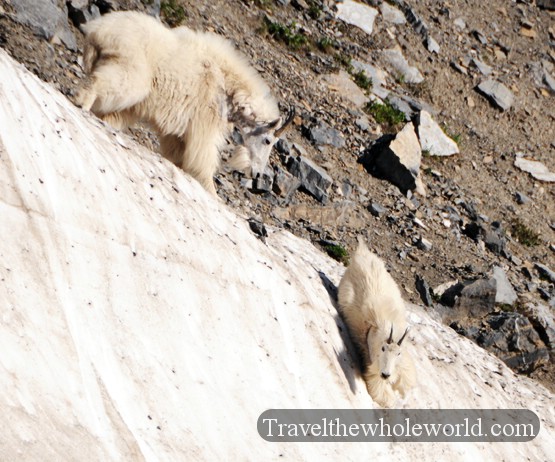
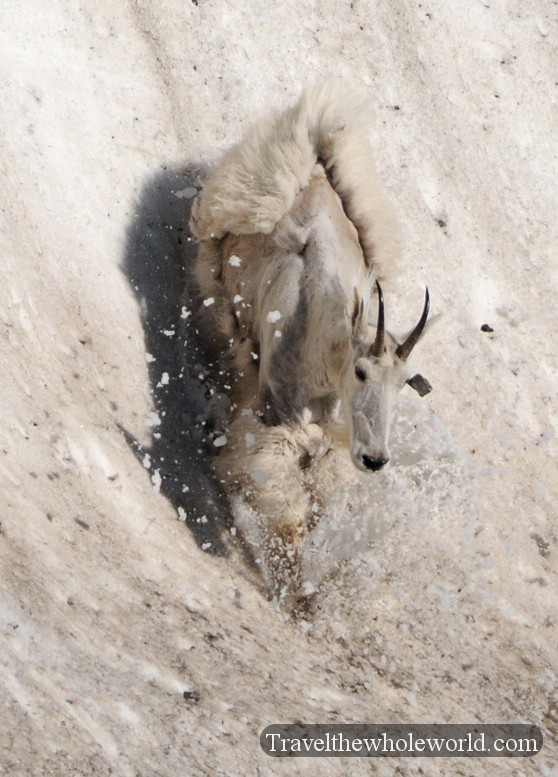
While I watched the three goats, several more appeared in the distance and started making their way down to join them. Instead of carefully walking down the snow, they actually slid down the steep snowbanks. Watching mountain goats slide down a mountain wasn’t something I expected to see that day, but they seemed completely at home on the steep terrain.
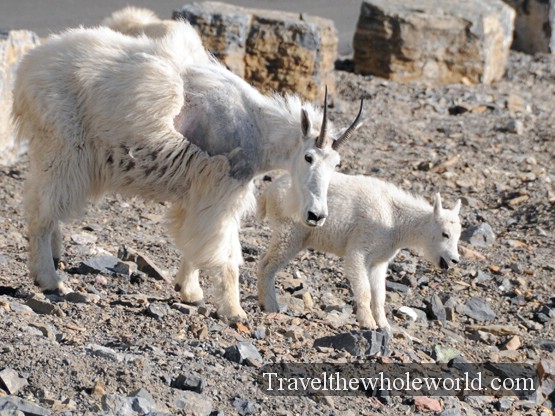
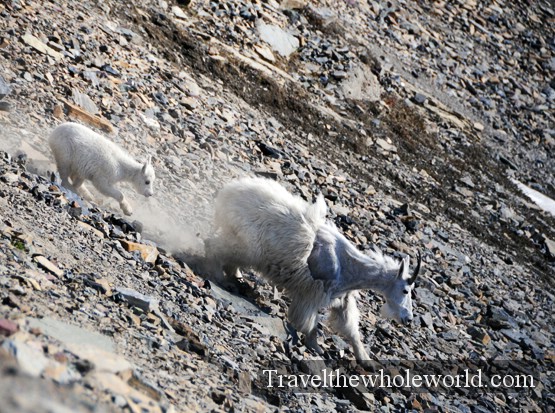
I ended up spending about 45 minutes watching the goats before the original group decided to continue down the steep rocky mountainside. The kid seemed less enthusiastic about the idea and hesitated while looking down at what was ahead. Eventually it followed the adult and disappeared down the mountain with the rest of the group. It was a perfect ending to my visit and easily one of my favorite wildlife encounters in Montana.
Explore More of Montana
Butte • Bannack • Billings • Glacier National Park • Helena • Rural Montana • the Absaroka Beartooth Wilderness