Exploring the Landscapes of Central Georgia
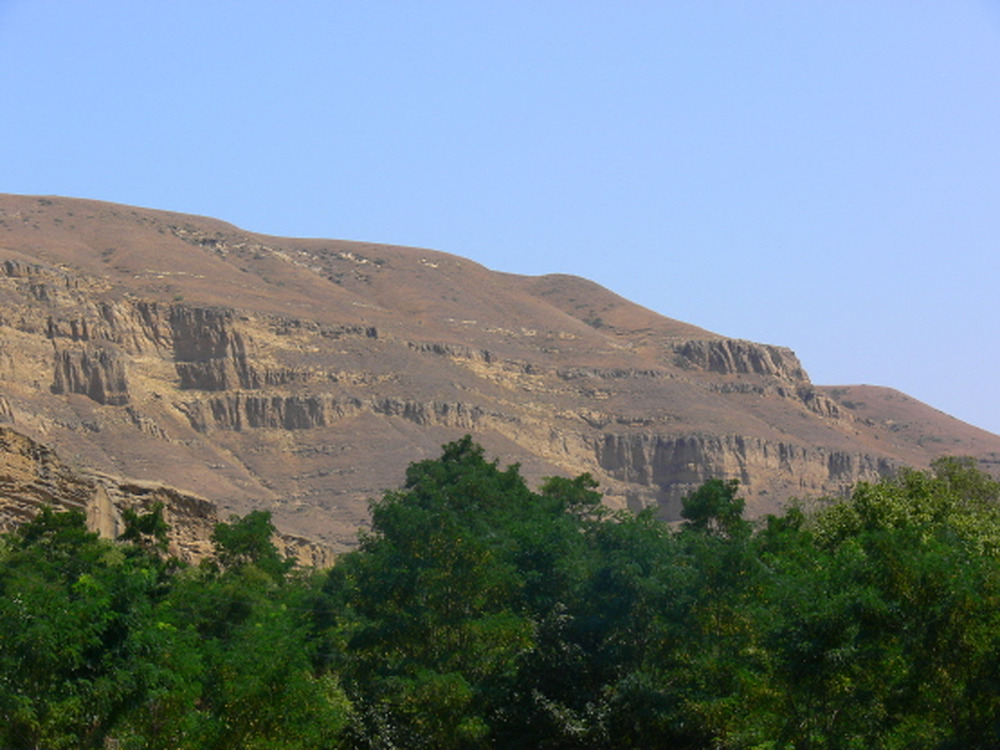
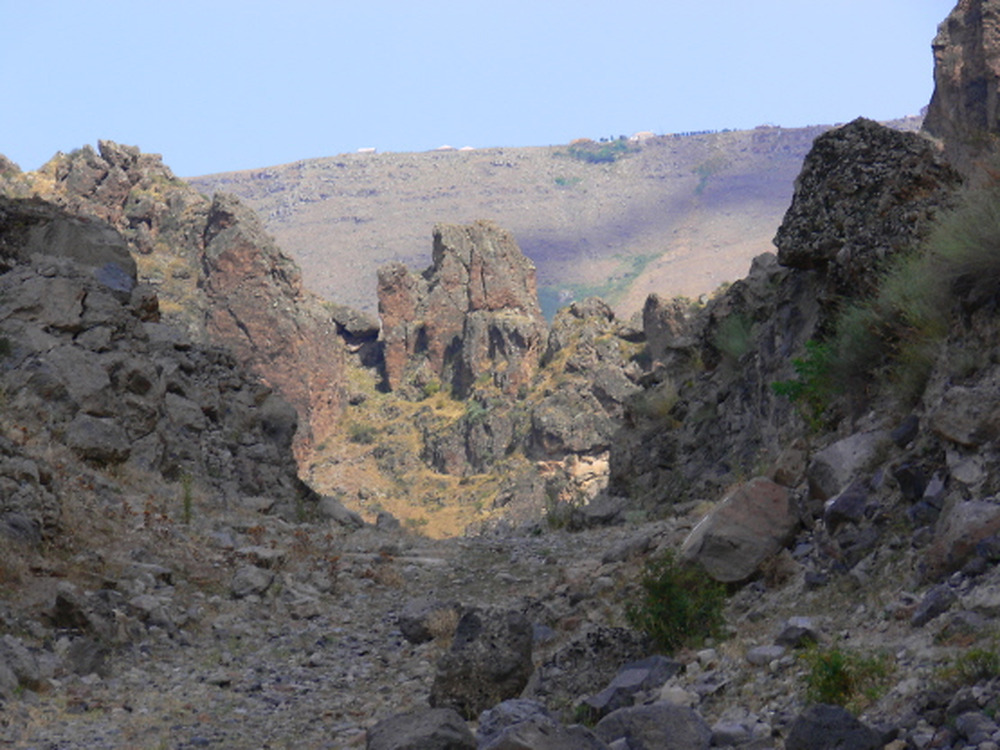
One of the things that surprised me most about Georgia was how dramatically the landscape could change over relatively short distances. The country has everything from thick deciduous forests and green mountain valleys to dry, rocky hillsides that look almost desert-like. In some places, densely wooded slopes rise directly beside mountains with very little vegetation, creating a striking contrast.
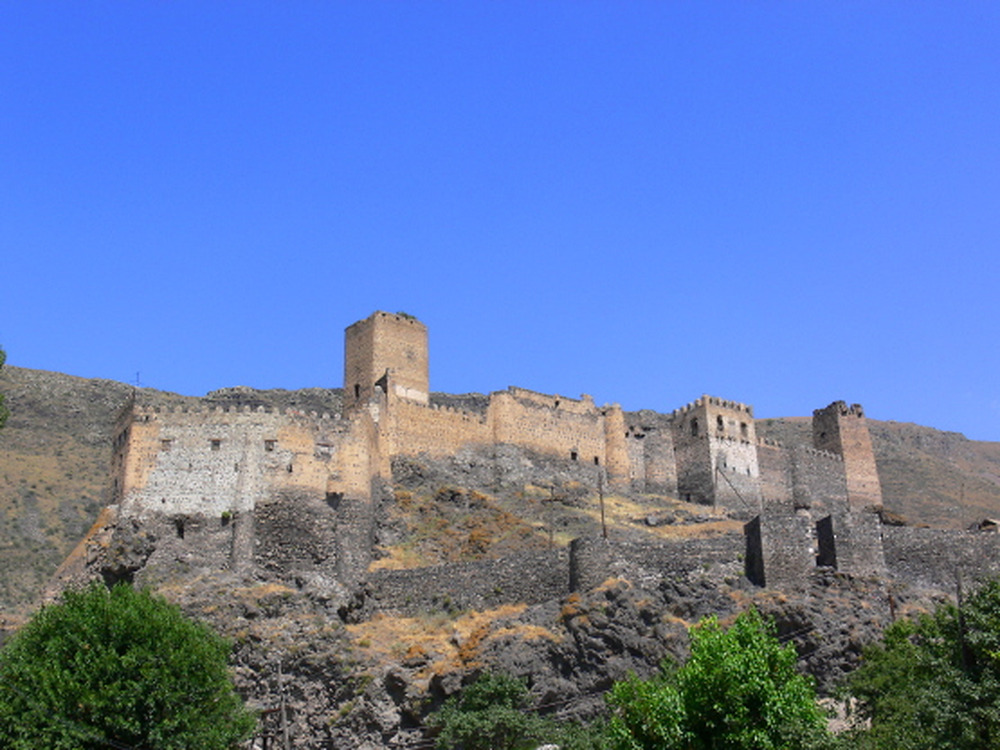
Traveling through central Georgia, I passed through sparsely populated stretches of rugged terrain where there were few signs of modern development. Yet scattered among the hills were reminders that people have occupied this region for thousands of years. One of the more interesting sights along the way was an old castle standing against the mountainous landscape. Historic fortifications like these are found throughout Georgia, reflecting the country’s long history of competing kingdoms, invasions, and shifting borders.
Uplistsikhe: Georgia’s Ancient Rock-Cut City
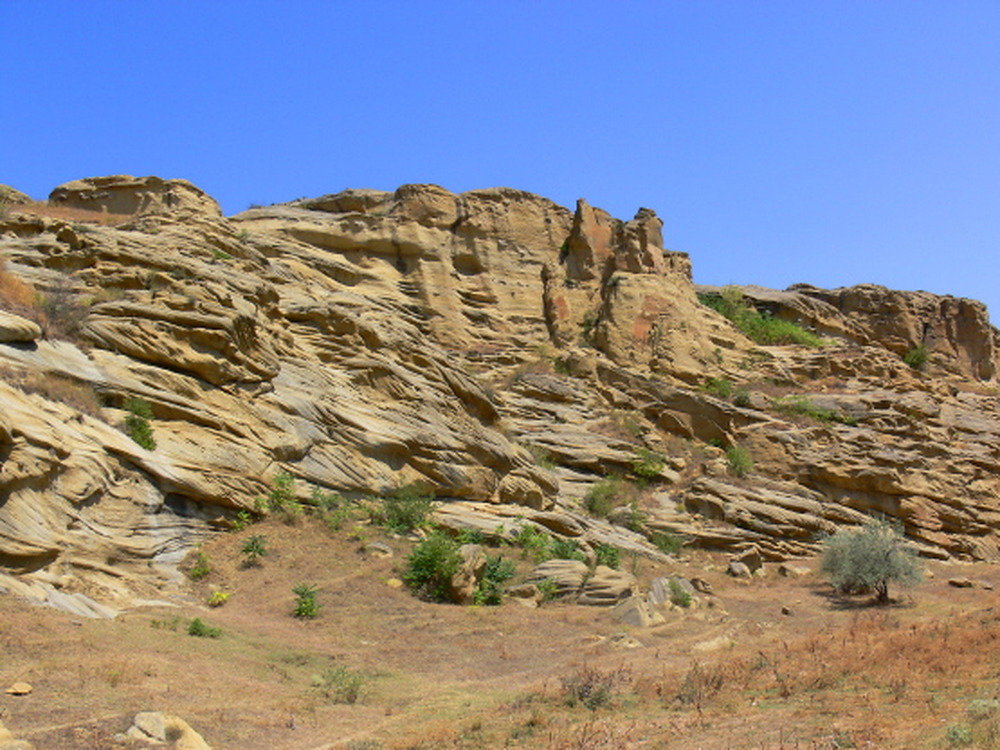
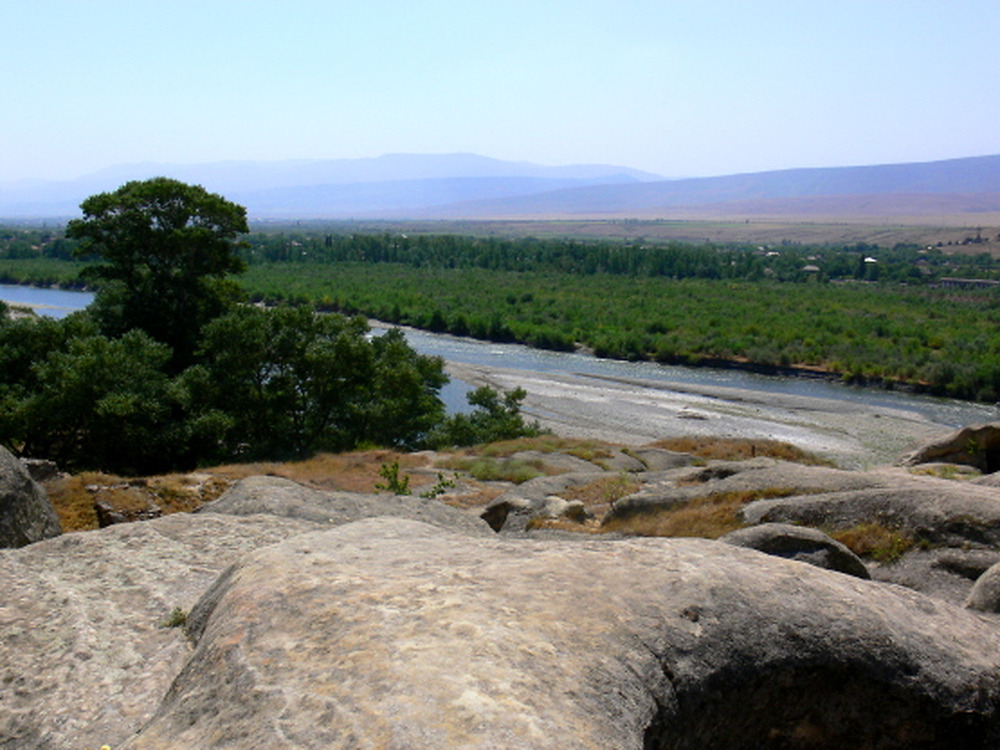
One of the most fascinating historical sites I visited in Georgia was Uplistsikhe, an ancient city carved directly into the sandstone cliffs near Gori. Its origins date back to the first millennium BC, making it one of the country’s oldest urban settlements. Long before Christianity became Georgia’s dominant religion, Uplistsikhe was an important political, religious, and commercial center in the ancient kingdom of Iberia.
The surrounding landscape is relatively dry and rocky, but the city occupies a strategic position overlooking the Mtkvari River. The river provided water and helped connect settlements along an important route through central Georgia. From the elevated sandstone cliffs, the inhabitants would have had extensive views of the surrounding valley.
Walking Through the Ancient Cave City
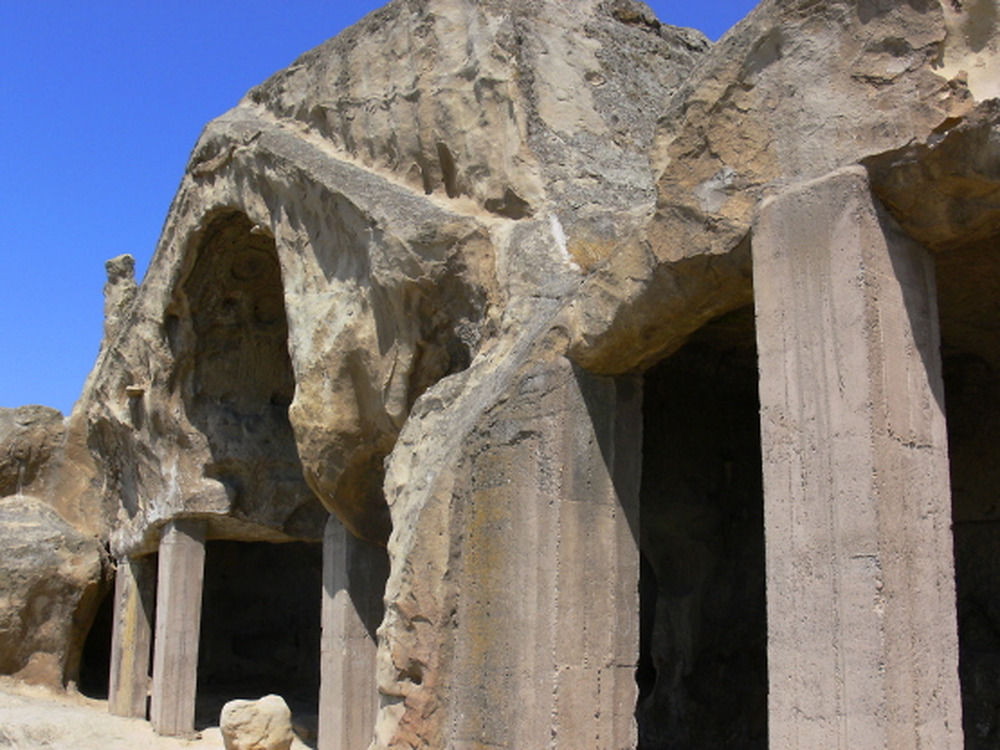
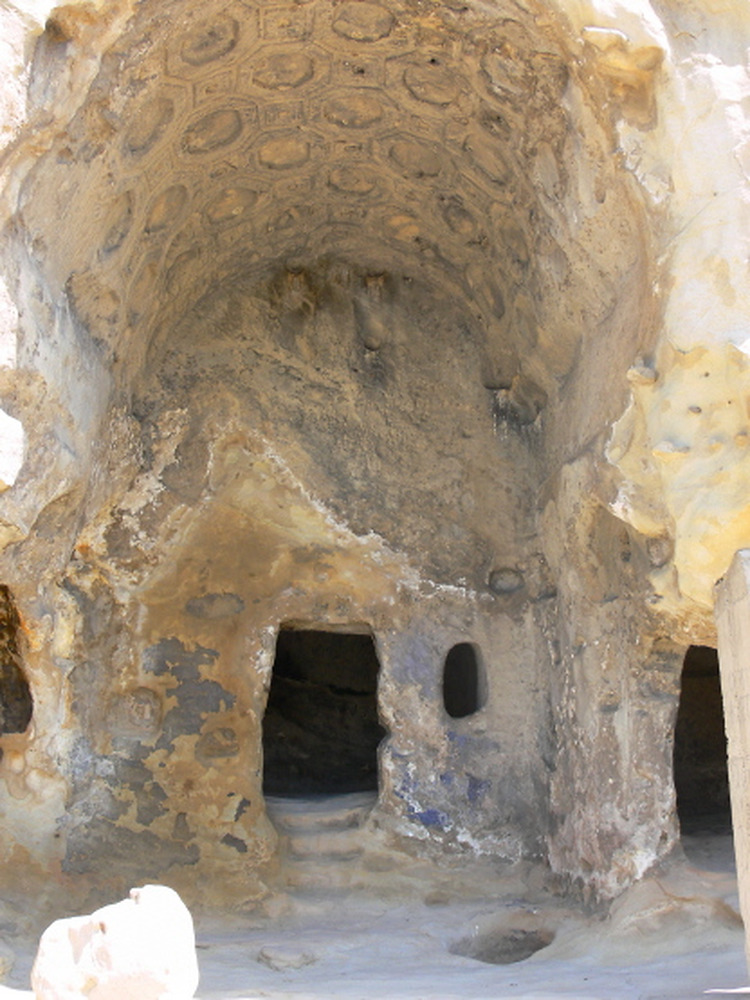
What makes Uplistsikhe remarkable is the extent to which its buildings were carved directly into the natural rock. Instead of constructing an entire city from individual stone blocks, its inhabitants excavated chambers, halls, corridors, and passageways into the sandstone itself. Walking through the site, I could still enter many of these spaces and see the craftsmanship involved in creating an entire settlement out of solid rock.
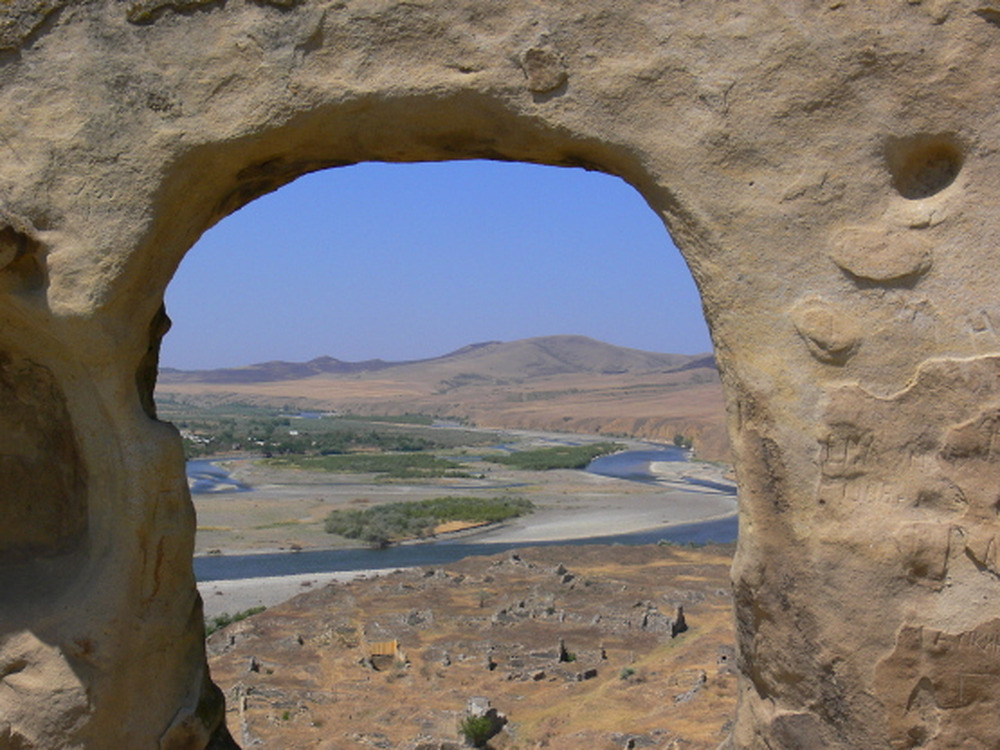
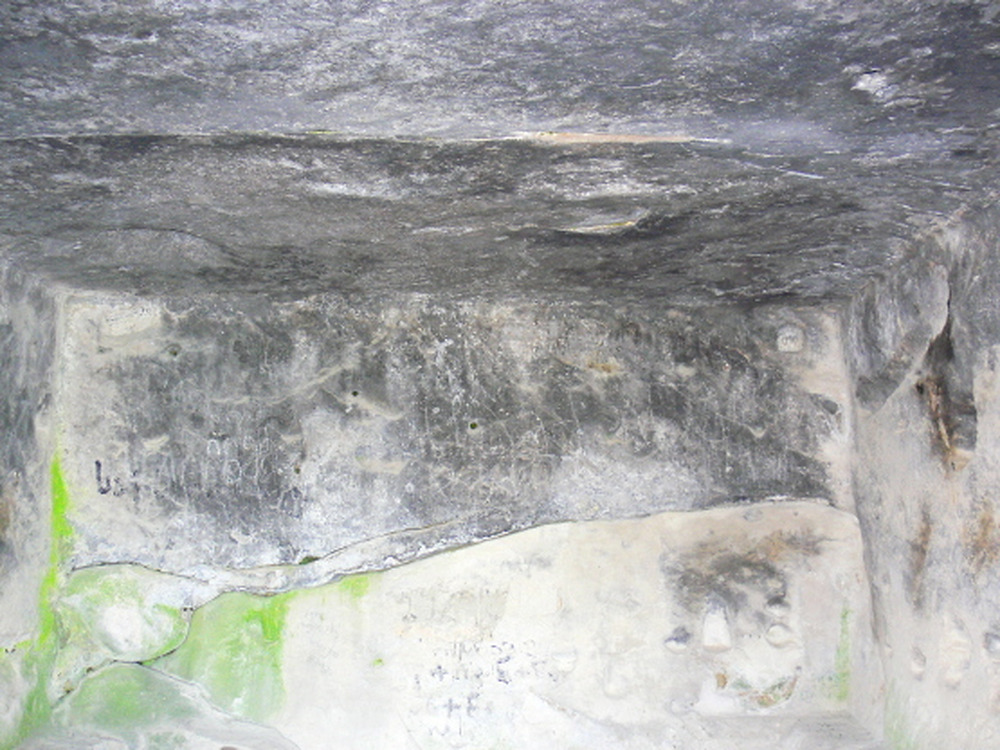
The ancient city contained residential spaces, ceremonial areas, storage rooms, and other structures serving different purposes. Some chambers have carefully shaped entrances and architectural details that reveal how much effort went into carving the site. Although centuries of erosion and destruction have altered the original settlement, enough survives to make it possible to imagine the scale of the city when it was inhabited.
Uplistsikhe also reflects Georgia’s transition from its pre-Christian religious traditions to Christianity. The settlement continued to be used after the country’s conversion, and later Christian structures became part of a landscape that had originally been shaped by much older beliefs and practices.
Ancient Stone Features and Burial Sites
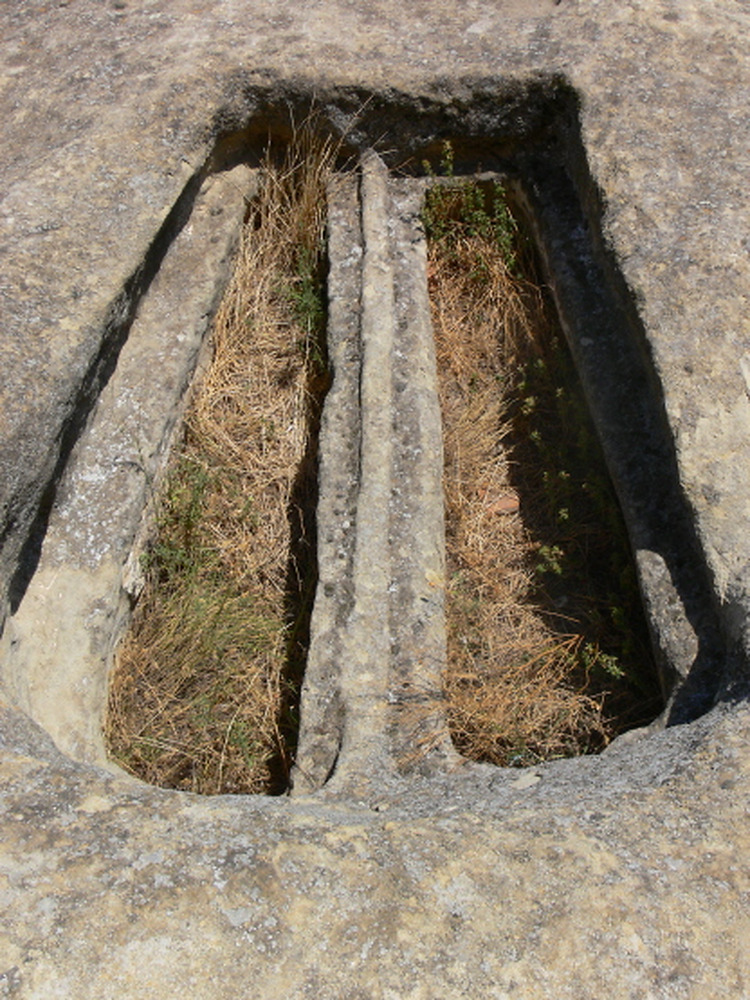
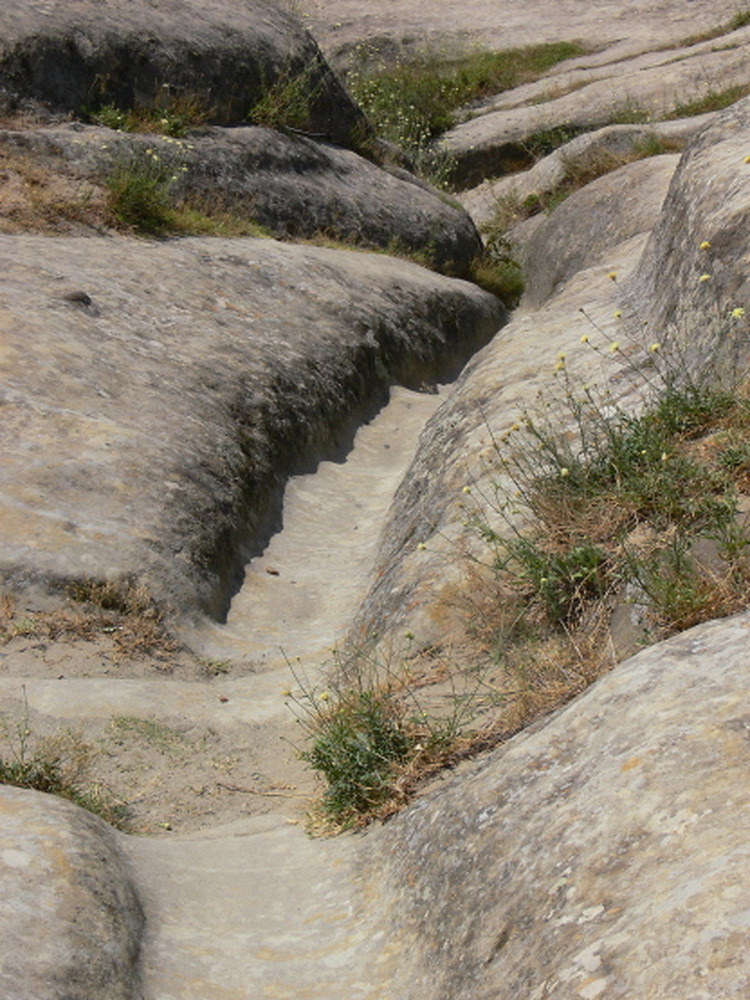
Beyond the larger chambers and passageways, I also photographed smaller features of the archaeological site, including what appeared to be a grave and a carved stone channel. These details were interesting because they showed that Uplistsikhe was much more than a collection of caves. Its inhabitants had to organize daily life, manage water, and adapt the natural sandstone to serve a functioning community.
Looking at these features up close made me appreciate the practical engineering involved in building a settlement directly into a rocky hillside. Even relatively simple channels and openings would have required careful planning and considerable manual labor.
Exploring Uplistsikhe’s Underground Tunnel
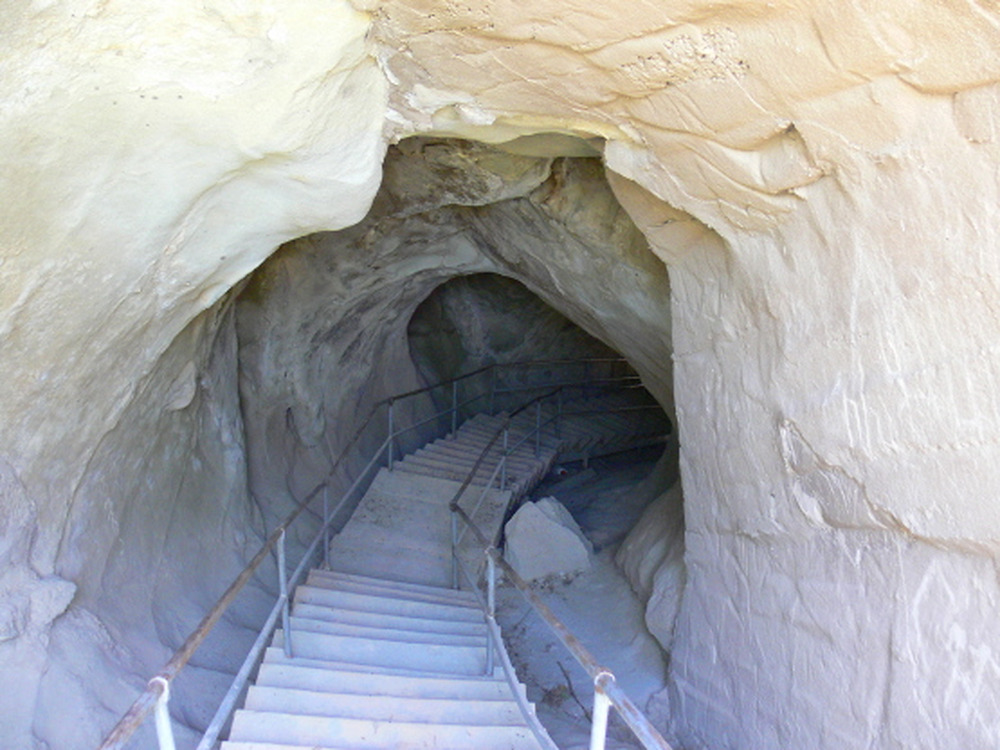
Like many ancient fortified settlements, Uplistsikhe needed ways to defend itself and maintain access to the outside world. One of its most interesting features is a tunnel cut through the rock, traditionally associated with access to the river and providing a route that could be used during emergencies or attacks.
Exploring this tunnel was one of the most memorable parts of my visit. I descended into the darkness, and almost immediately I could hear what sounded like hundreds of bats moving around somewhere inside. Their wings and noises echoed through the enclosed space, making the tunnel feel much more alive than I had expected.
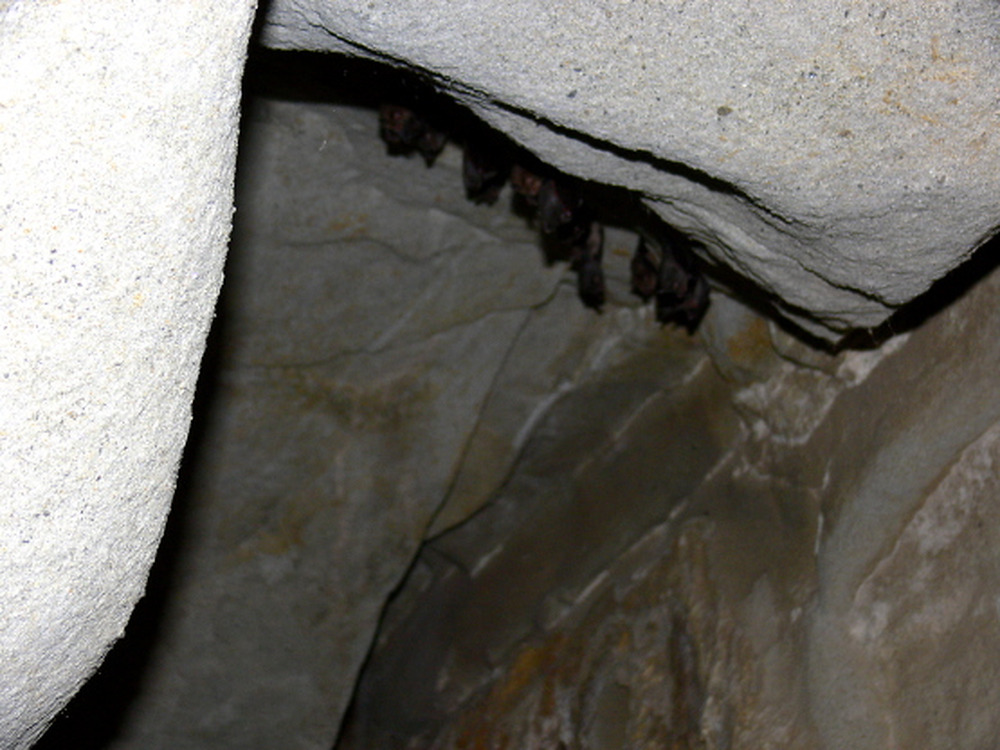
Hearing so many bats while exploring an ancient underground passage certainly added some excitement to the experience. Between the mysterious chambers, the rugged sandstone landscape, and the unexpected wildlife, Uplistsikhe felt very different from the more conventional historic sites I had visited elsewhere in Georgia.
What impressed me most was that the city had been carved out of the rock so long ago, yet so much of it remained accessible. Uplistsikhe offered a fascinating look at Georgia’s ancient history, and the opportunity to walk through its tunnels and chambers made it one of the more memorable archaeological sites of my trip.
