Exploring Tbilisi, Georgia’s Capital
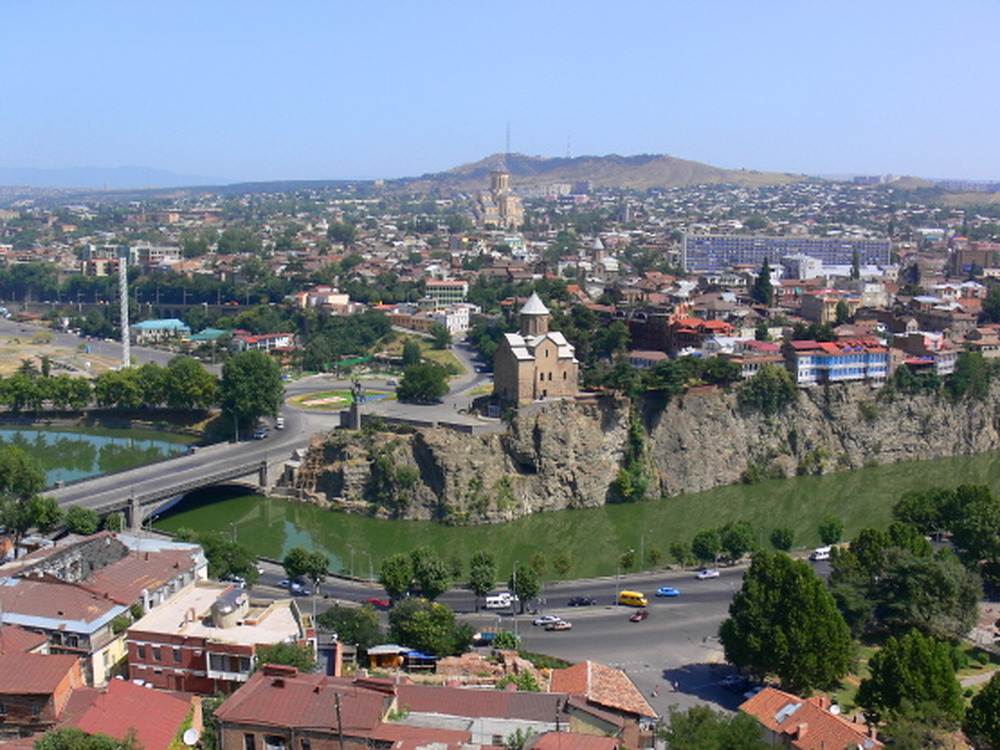
Tbilisi, the capital of Georgia, is one of the most interesting cities in the Caucasus. The Mtkvari River, also known as the Kura River, winds through the city, with historic churches, houses, and modern buildings rising along its steep banks. The surrounding hills give Tbilisi a distinctive appearance, particularly when viewed from above.
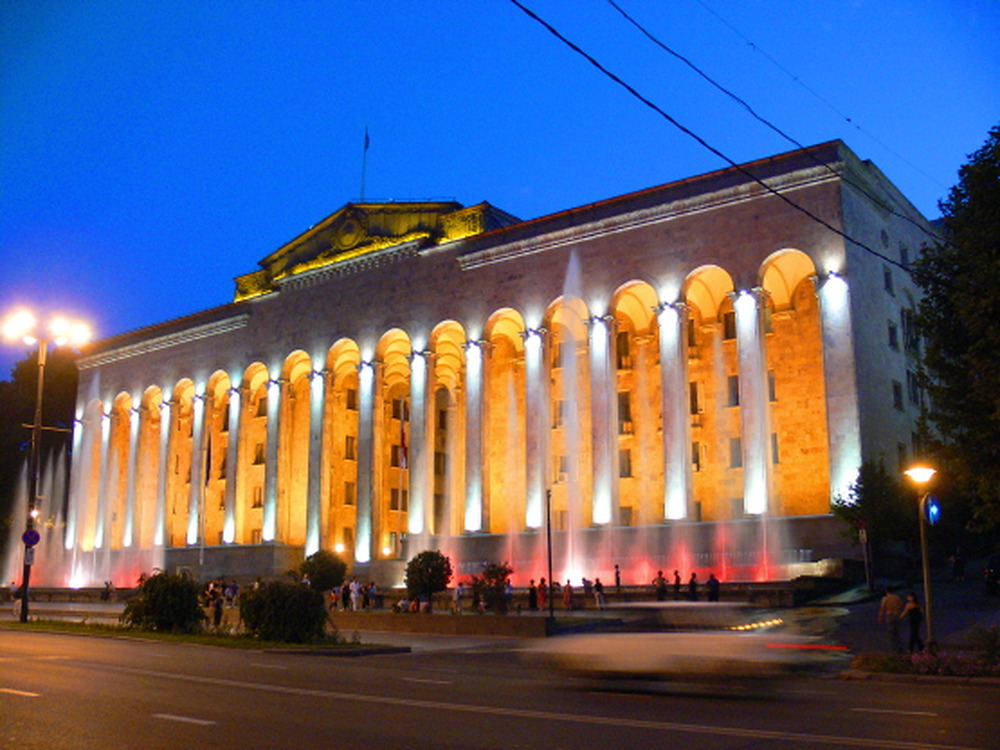
When I visited in 2006, I enjoyed exploring the city center, where historic architecture stood alongside government buildings and lively public squares. In the evenings, colorful lights and fountains attracted families and groups of friends, creating a relaxed atmosphere where people gathered to socialize.
Narikala Fortress and Tbilisi at Night
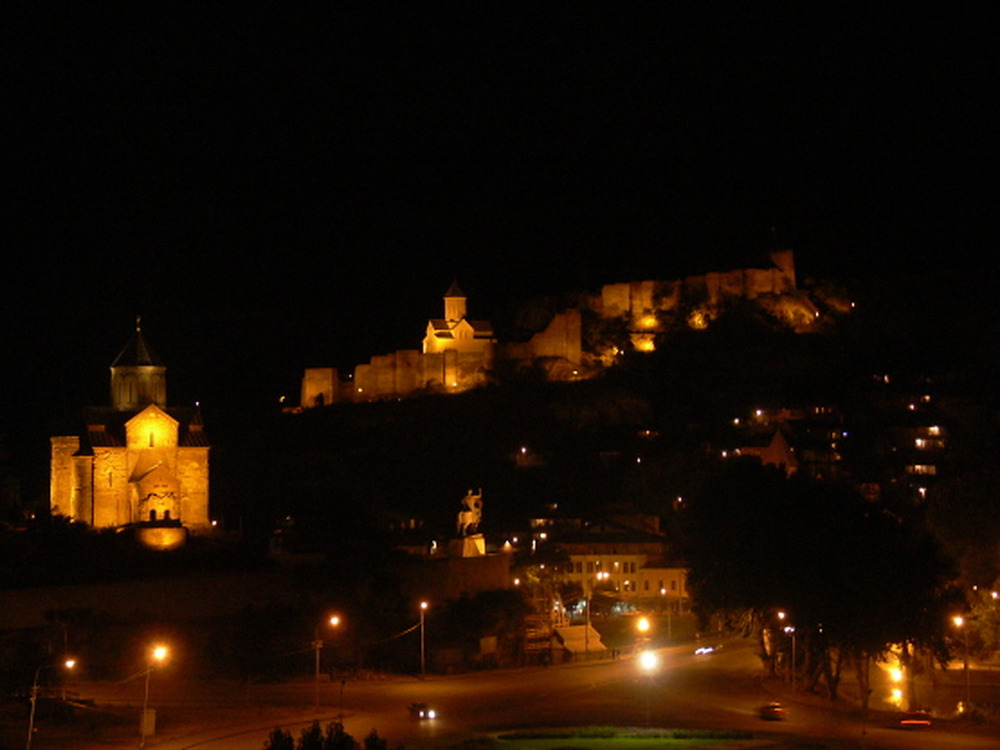
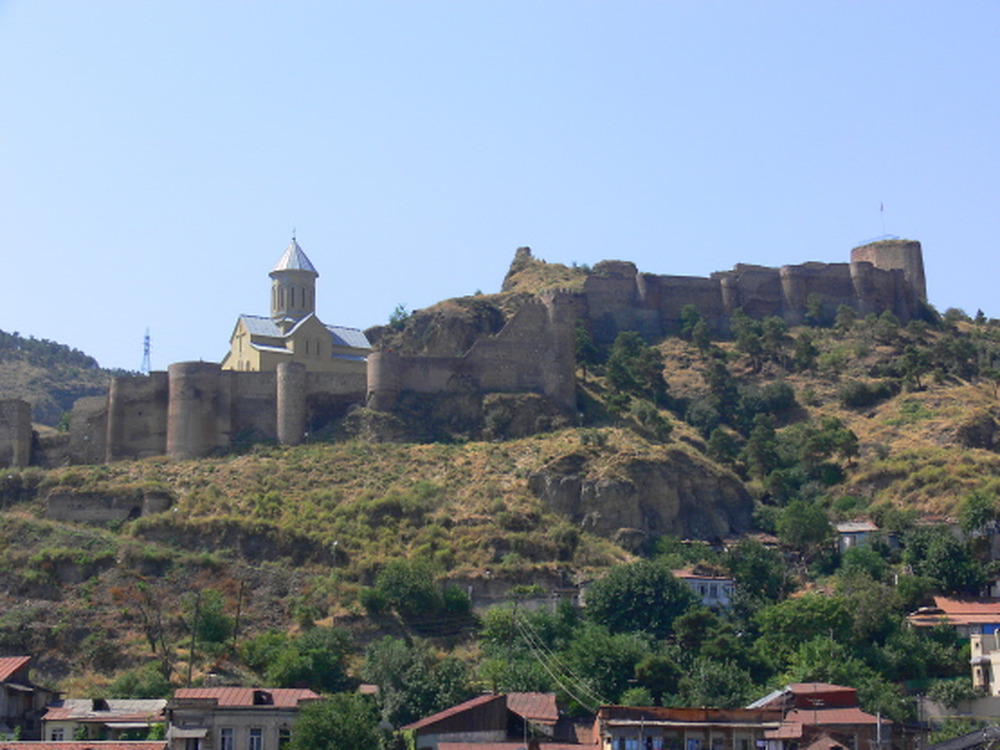
One of Tbilisi’s most recognizable landmarks is Narikala Fortress, which overlooks the old city from a steep hillside. The fortress has roots extending back to the city’s earliest centuries, although its walls have been rebuilt and altered by successive rulers. Its commanding position above the river made it an important defensive stronghold throughout much of Tbilisi’s history.
At night, the illuminated fortress and churches create an especially attractive skyline. Tbilisi has a history stretching back more than 1,500 years, and its mixture of fortifications, religious buildings, and traditional neighborhoods reflects the many cultures and empires that have influenced the city.
Holy Trinity Cathedral of Tbilisi
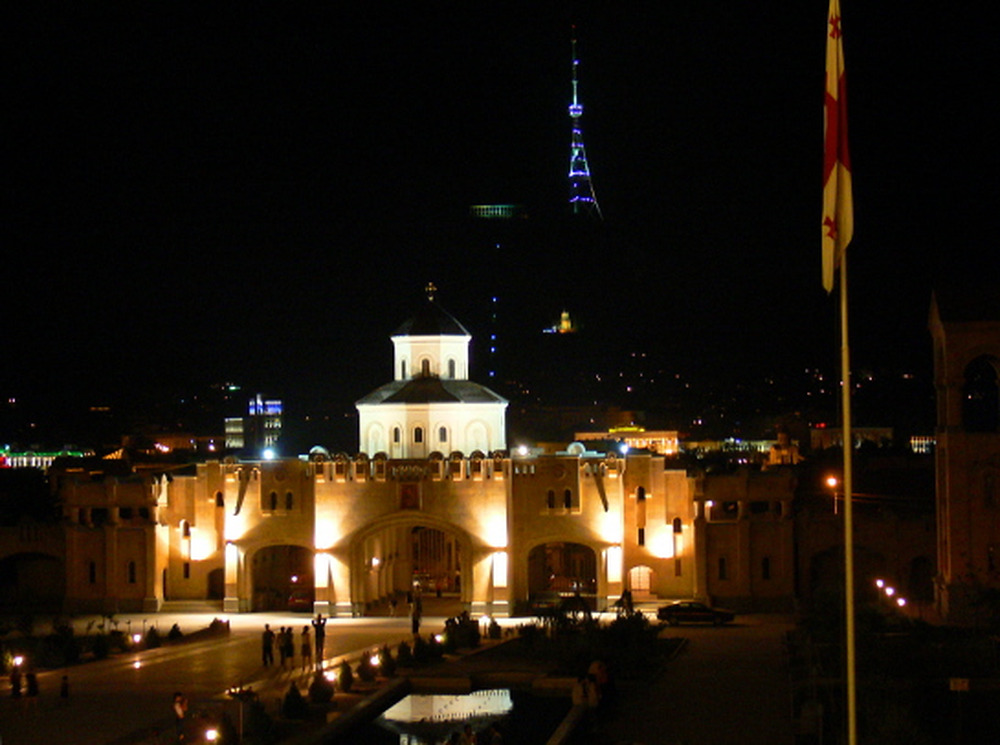
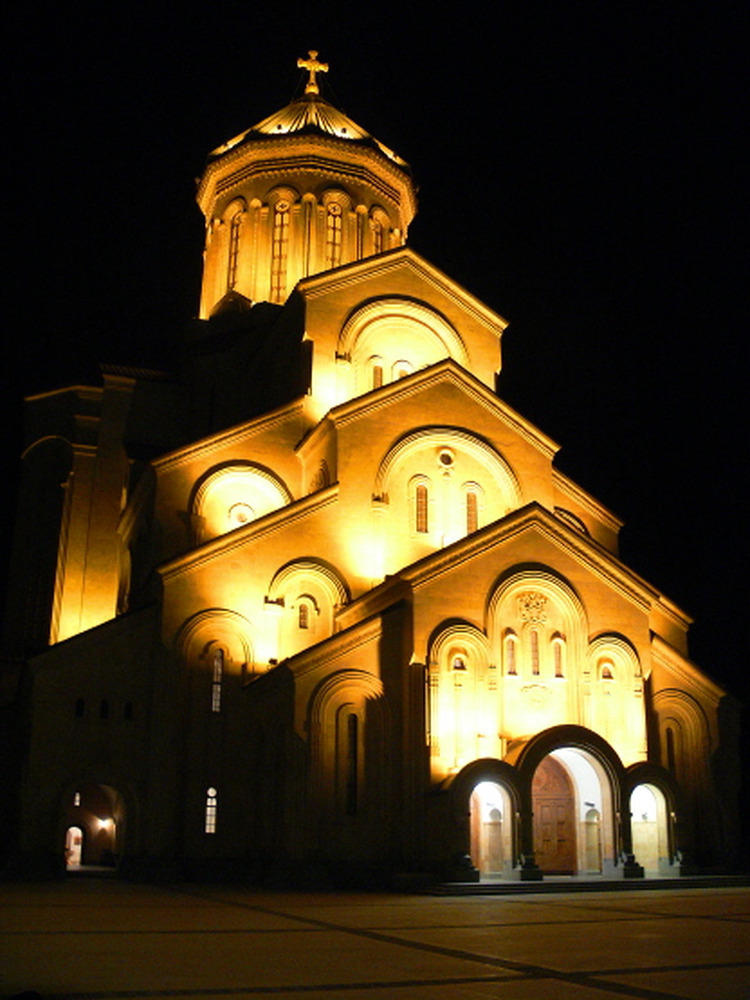
One of the most impressive religious buildings I visited was the Holy Trinity Cathedral of Tbilisi, commonly known as Sameba. Completed in 2004, the cathedral was still practically brand new when I traveled to Georgia in 2006. Its enormous central dome dominates the surrounding skyline, making it visible from many parts of the capital.
The complex includes the main cathedral, smaller chapels, gardens, and a bell tower. Built in a traditional Georgian Orthodox architectural style, Sameba is among the largest Orthodox cathedrals in the world. Its scale is particularly striking when walking through the courtyard and approaching the main entrance.
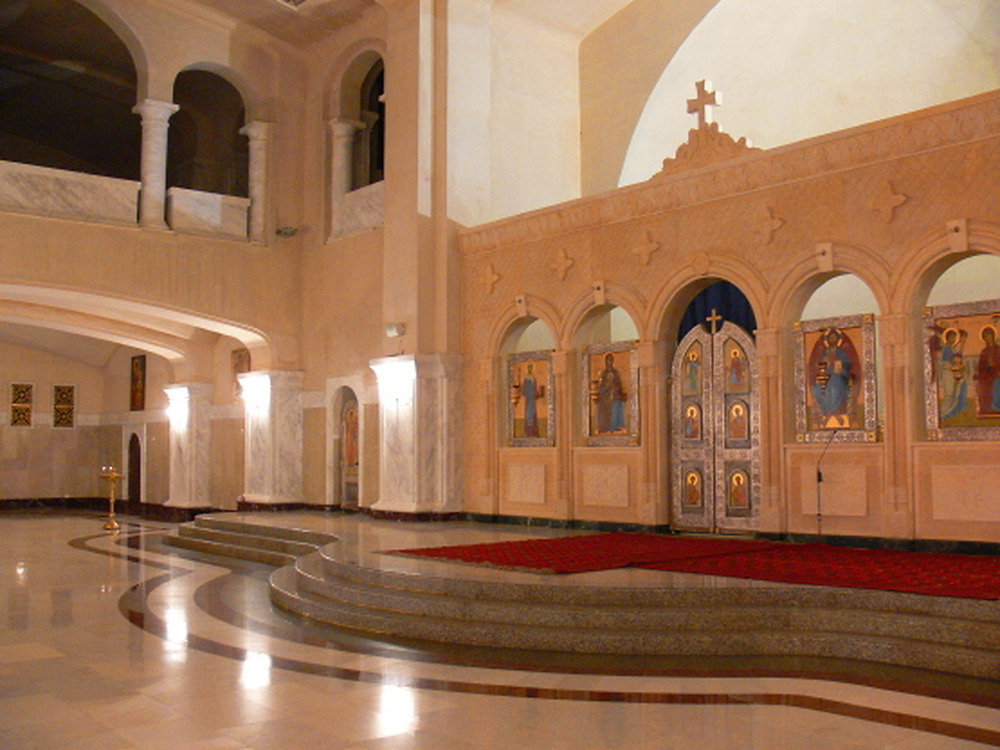
Inside the cathedral, the spacious interior reflects the importance of the Georgian Orthodox Church in the country’s religious and cultural identity. Christianity has played a central role in Georgian history since the fourth century, and Sameba represents a modern continuation of that long tradition.
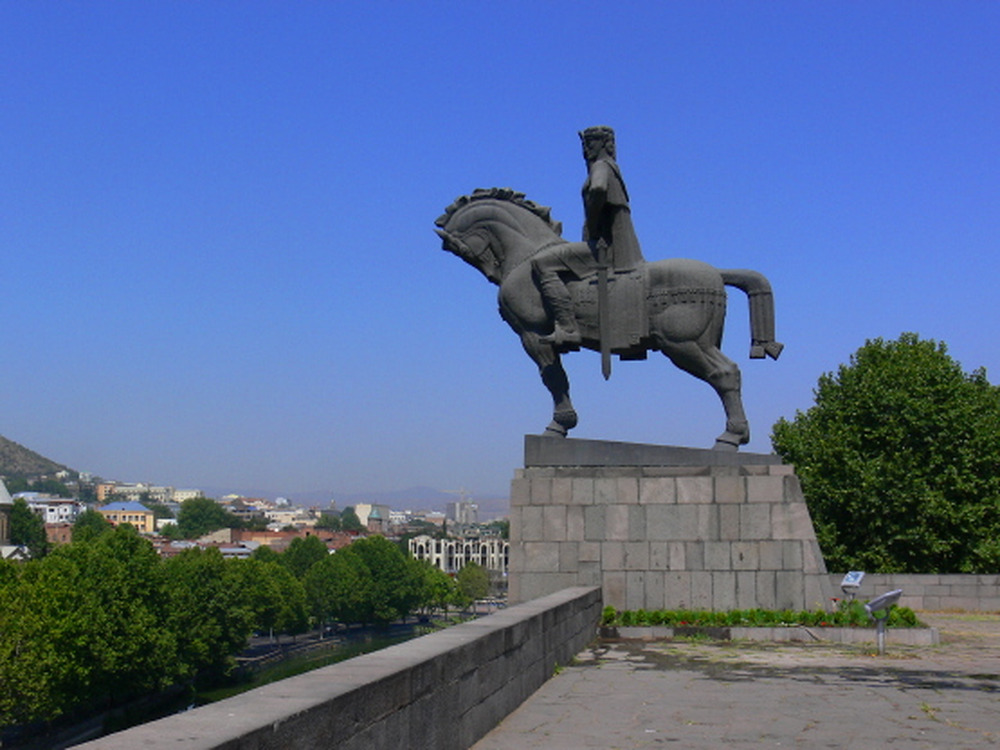
Near another historic church, I came across a statue of King Vakhtang Gorgasali, the fifth-century Georgian ruler traditionally credited with founding Tbilisi. According to local tradition, his discovery of the area’s hot springs helped inspire the establishment of the city. He remains an important figure in Georgian history, and one of the country’s military decorations bears his name.
Tbilisi’s Public Squares and American Connections
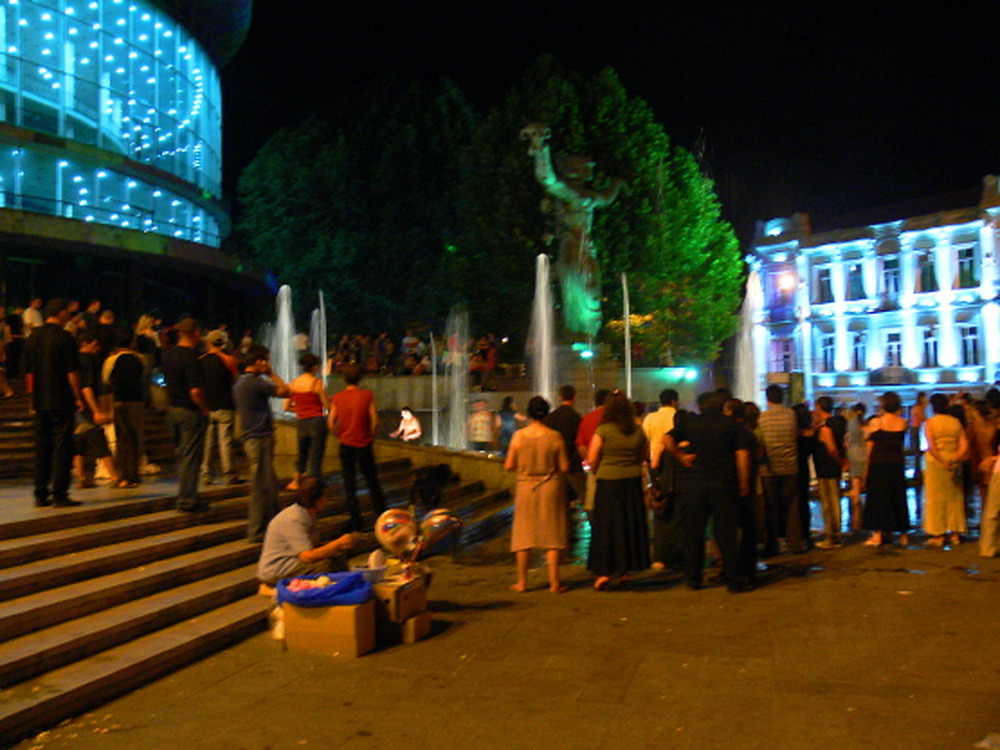
One evening, I came across a small gathering near a fountain, where children were playing in the water while music played nearby. It was a pleasant scene and gave me a chance to experience the everyday social atmosphere of Tbilisi rather than simply visiting its historic landmarks.
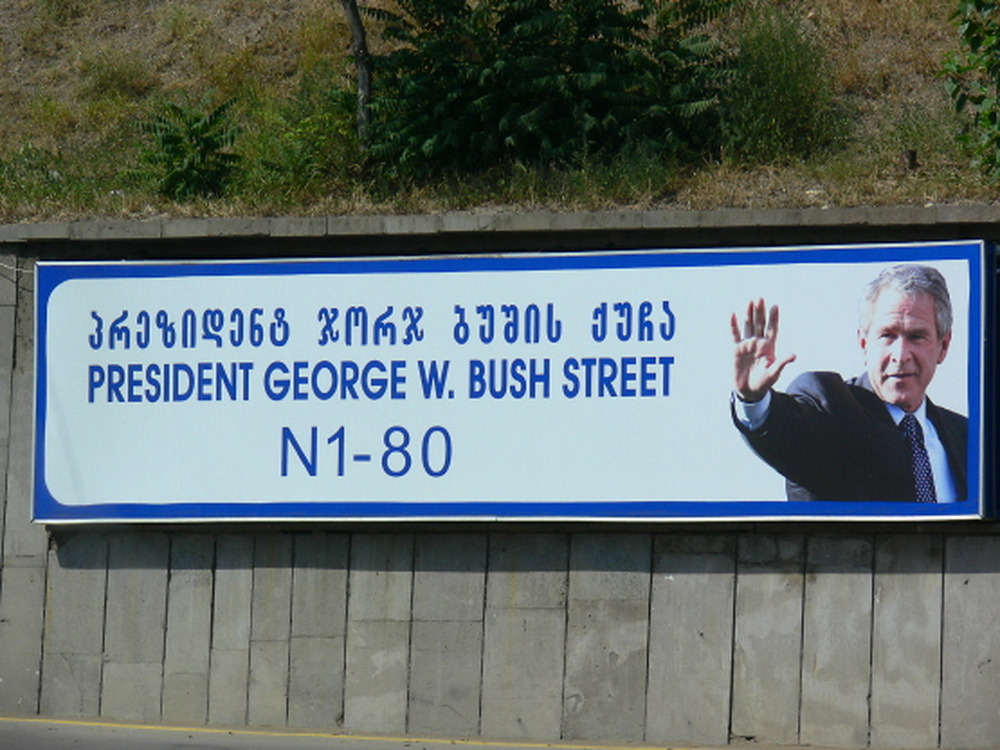
When I visited Georgia in 2006, George W. Bush was president of the United States, and Georgia was strengthening its political relationship with the West. President Mikheil Saakashvili’s government received considerable American support, particularly as Georgia sought closer ties with Western institutions.
Following President Bush’s historic visit to Tbilisi in 2005, a major road was named George W. Bush Street in his honor. I found it interesting to encounter a street named after the sitting American president while traveling through a country that had once been part of the Soviet Union.
Traditional Architecture Along the Mtkvari River
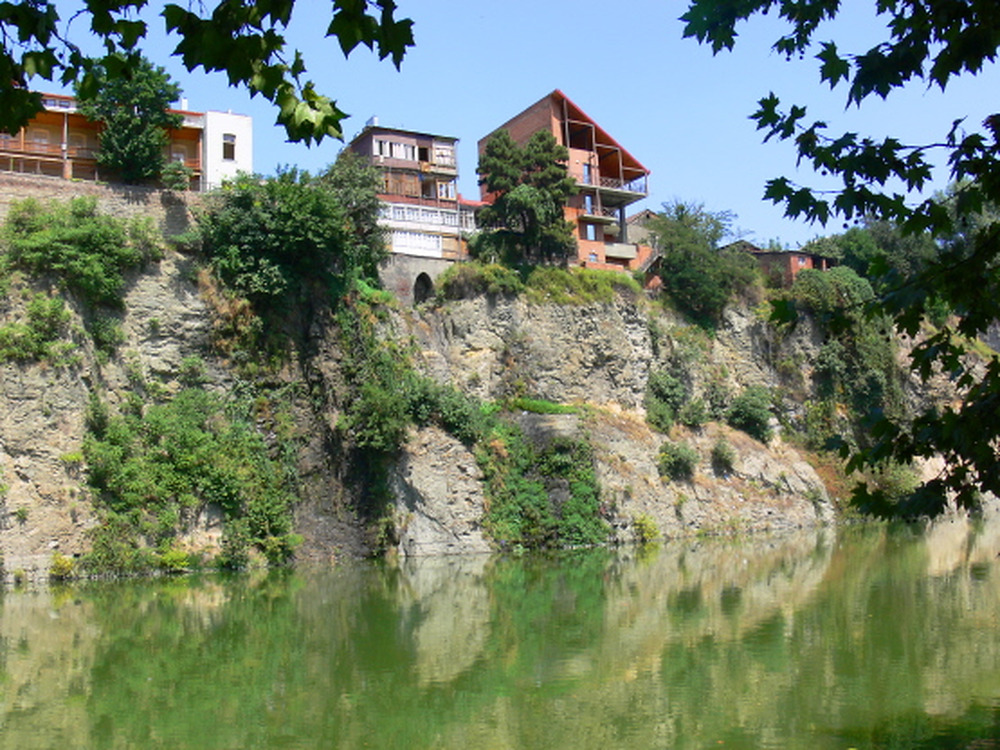
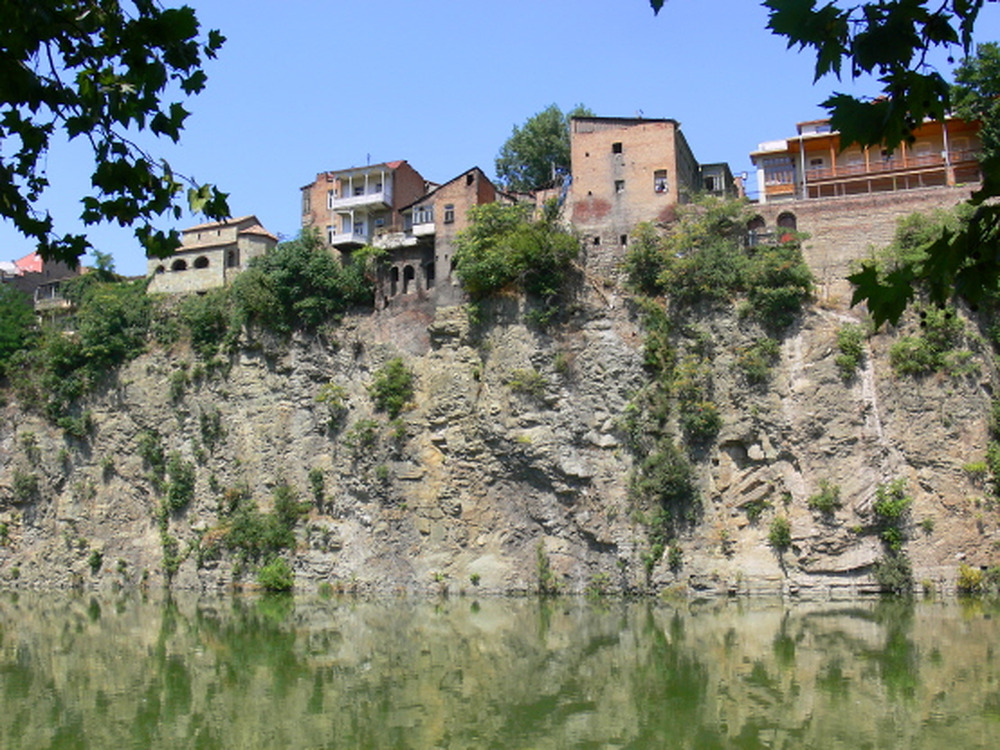
Some of the most unusual architecture I encountered in Tbilisi was along the steep banks of the Mtkvari River. Historic houses appear to cling to the cliffs, with certain buildings positioned almost directly above the water. The combination of stone foundations, wooden balconies, and dramatic terrain makes these neighborhoods particularly photogenic.
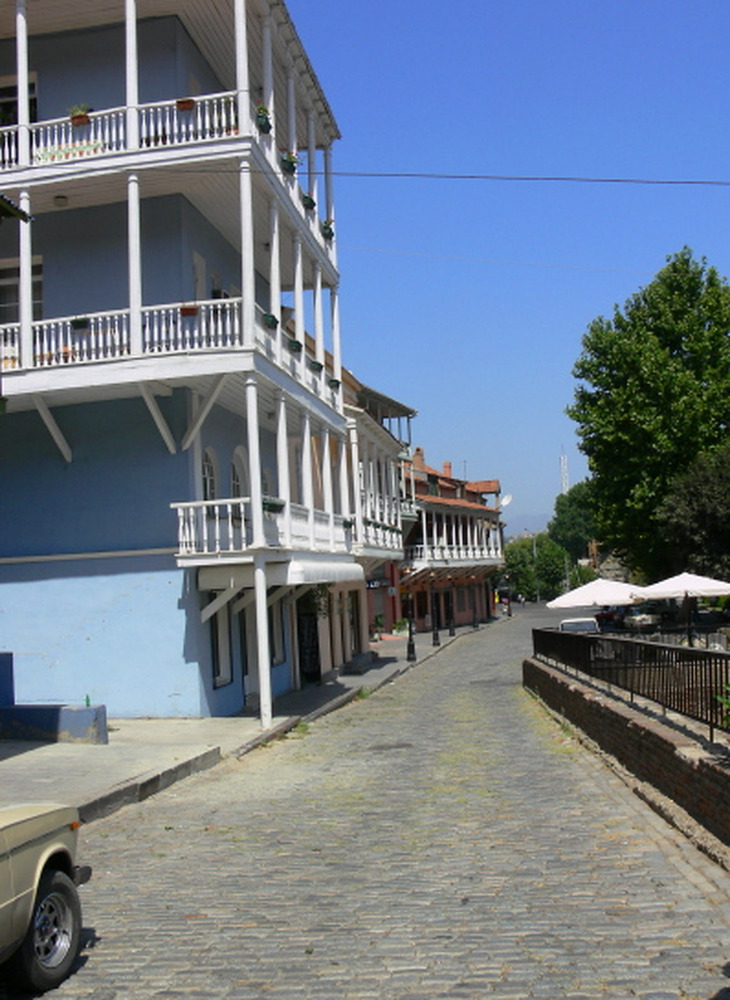
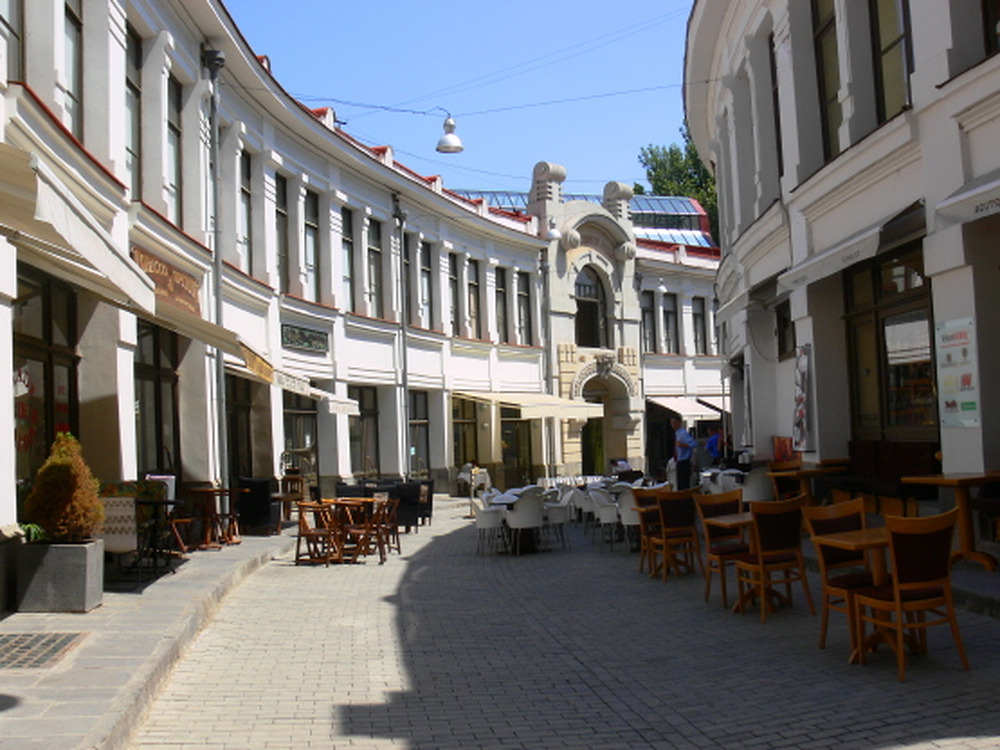
Traditional wooden balconies are among the most distinctive architectural features of old Tbilisi. Many historic buildings have enclosed or open balconies extending over narrow streets, adding character to the city’s older neighborhoods. Restaurants and cafés occupy some of these attractive areas, making them enjoyable places to explore on foot.
This was definitely one of my favorite parts of Georgia. The combination of historic architecture, restaurants, and the relaxed atmosphere made Tbilisi a city where I enjoyed spending time beyond visiting the major attractions.
Georgian Food and Traditional Khinkali
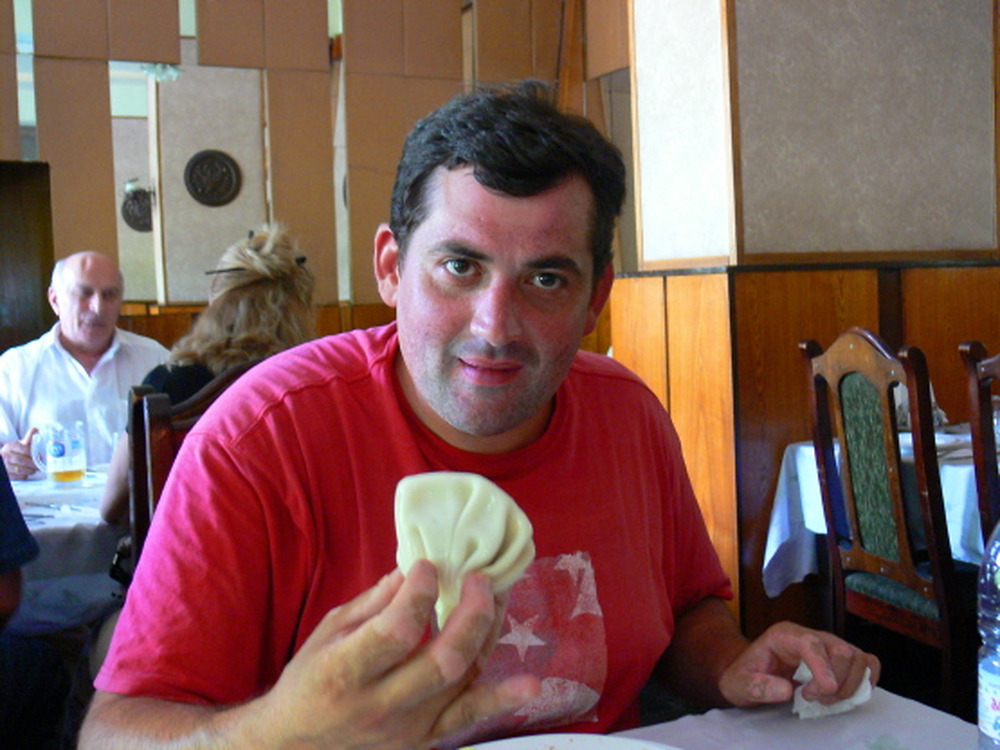
Georgian cuisine was another memorable part of visiting Tbilisi. One of the country’s best-known traditional dishes is khinkali, large dumplings typically filled with seasoned meat and broth, although other fillings are also common. They are traditionally eaten by hand, with the doughy top serving as a handle.
In this photograph, a Georgian man is enjoying khinkali at a restaurant in Tbilisi. Georgian food has a distinctive identity, combining influences from the Caucasus with culinary traditions developed over centuries. Sharing meals and spending time in restaurants is an important part of the country’s hospitality and social culture.
Visiting Mtskheta, Georgia’s Ancient Capital
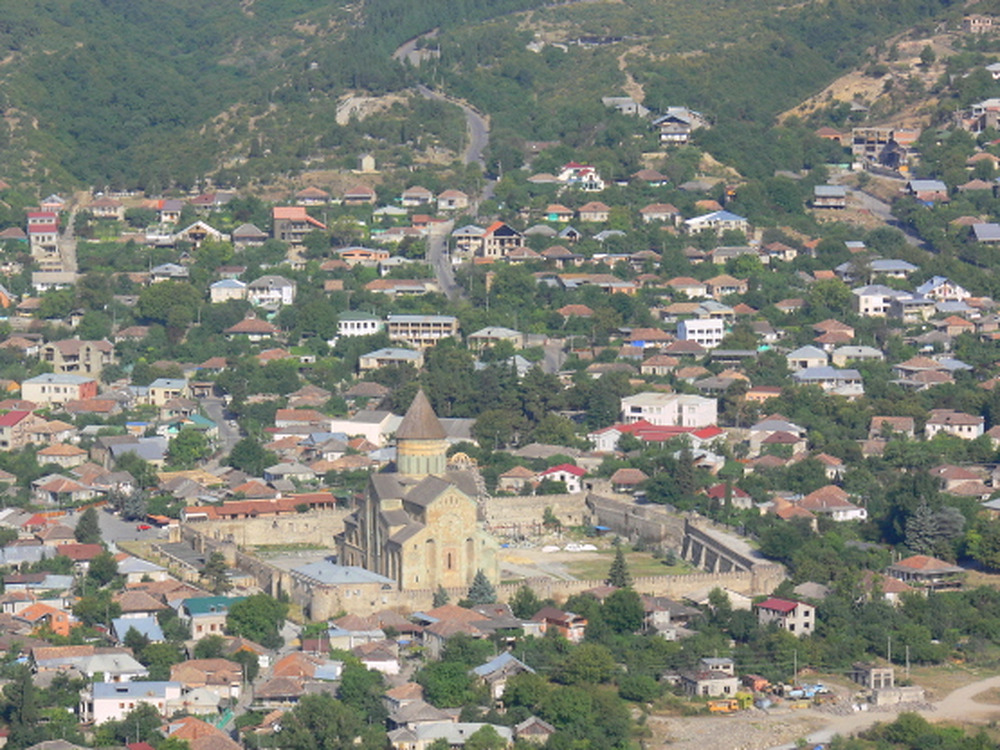
Just outside Tbilisi, I visited Mtskheta, one of Georgia’s oldest and most historically significant cities. Located near the meeting of the Mtkvari and Aragvi rivers, Mtskheta served as the capital of the ancient eastern Georgian kingdom of Iberia and remains an important religious center today.
The city’s historic churches and monuments reflect Georgia’s early adoption of Christianity during the fourth century. Several of Mtskheta’s religious landmarks are recognized together as a UNESCO World Heritage Site, making the area one of the country’s most important destinations for understanding its early Christian history.
Jvari Monastery Above Mtskheta
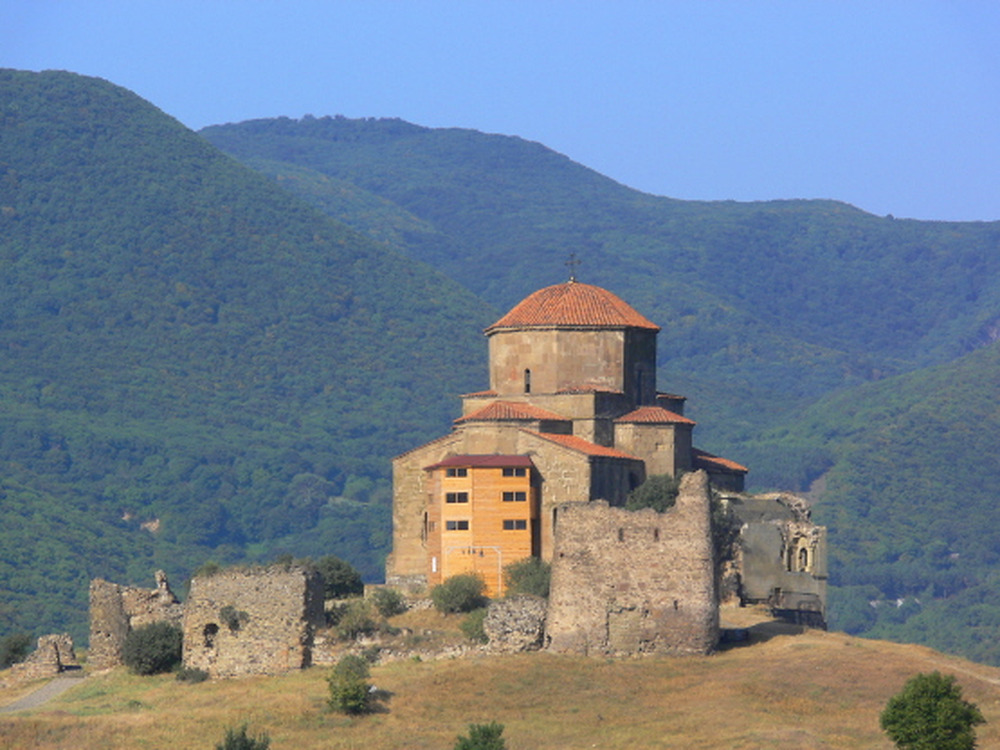
One of the most important religious landmarks near Mtskheta is Jvari Monastery, perched on a hill overlooking the ancient city and the confluence of the Aragvi and Mtkvari rivers. Its elevated location gives it a commanding position above the surrounding landscape.
The present church dates to the late sixth and early seventh centuries and is one of the outstanding surviving examples of early Georgian church architecture. According to tradition, Saint Nino, who played a central role in bringing Christianity to Georgia, established a wooden cross on this hill during the fourth century. The name Jvari itself means “cross” in Georgian.
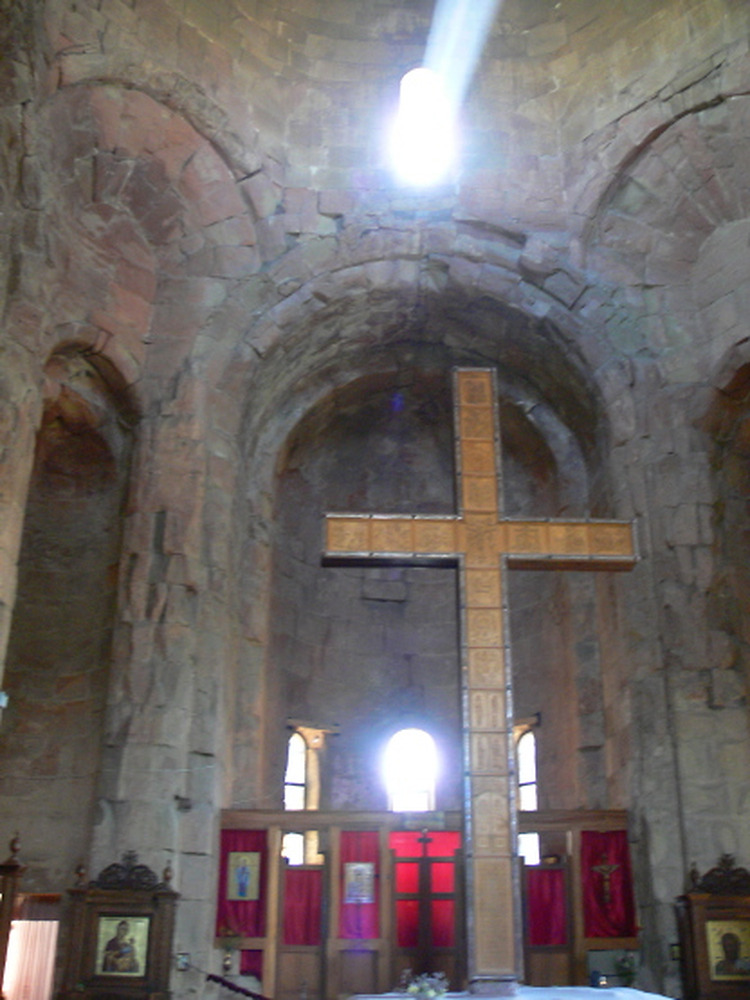
Inside Jvari Monastery, the architecture is considerably simpler and more intimate than the enormous Holy Trinity Cathedral in Tbilisi. Its ancient stone construction and compact interior reflect a much earlier period of Georgian Christianity. Together, the two churches provide an interesting contrast between the country’s early religious architecture and its modern Orthodox traditions.
More Sights Around Mtskheta
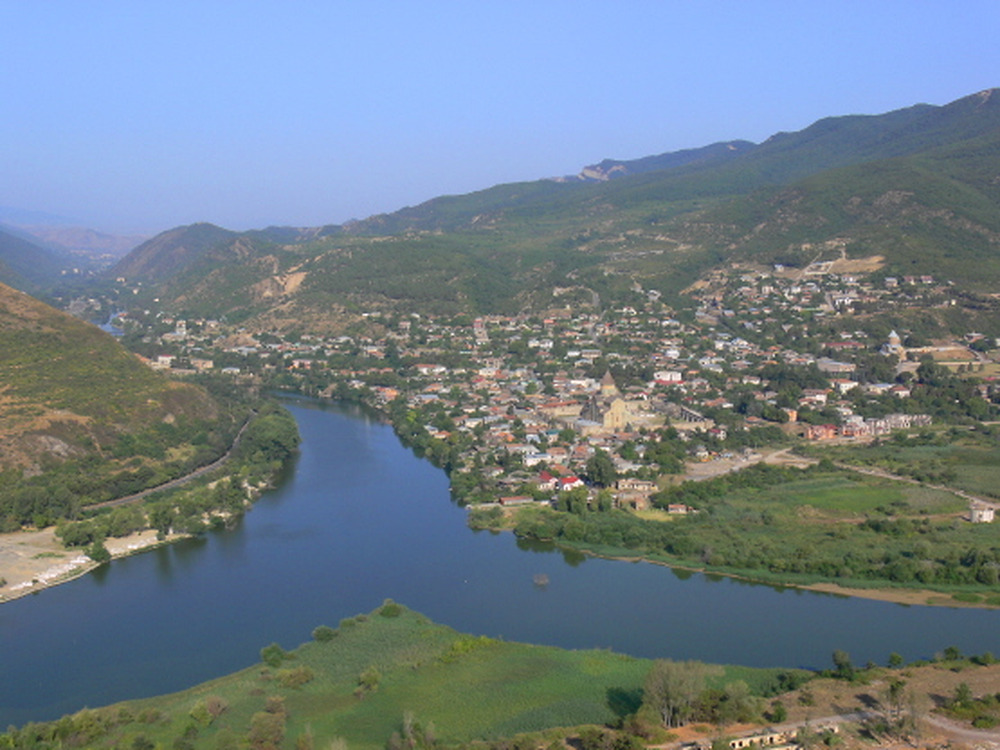
Not everything around Mtskheta dates back to the ancient kingdoms. I also came across colorful apartment buildings that reflected the Soviet-era architecture still found throughout Georgia. The contrast between modern residential buildings and the country’s centuries-old religious monuments was another reminder of Georgia’s complicated history.
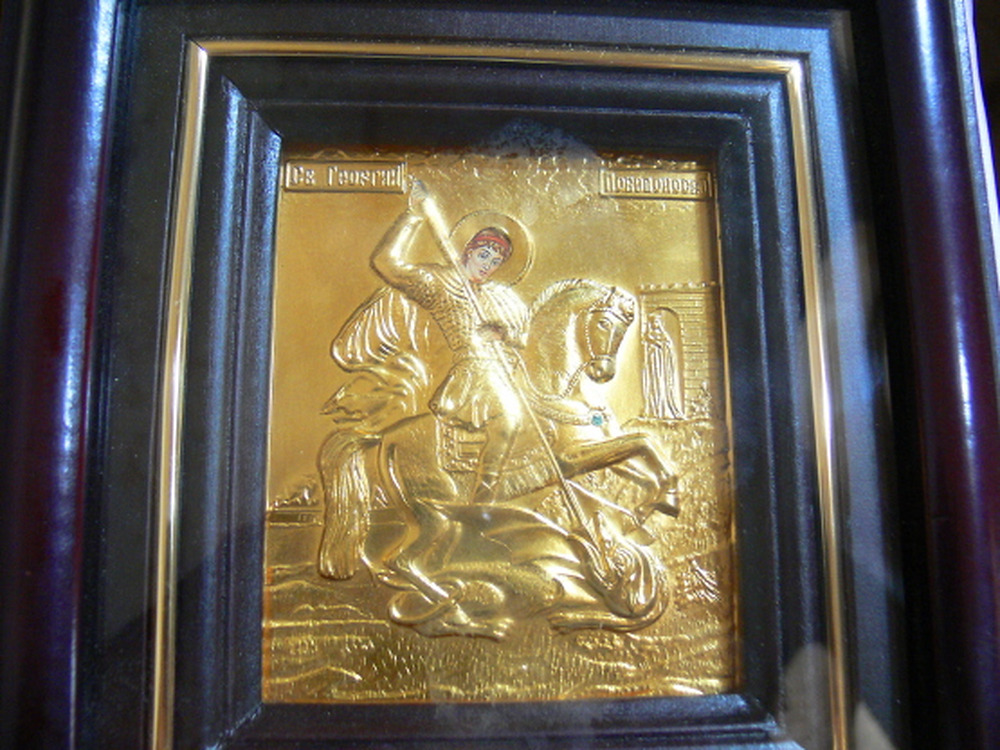
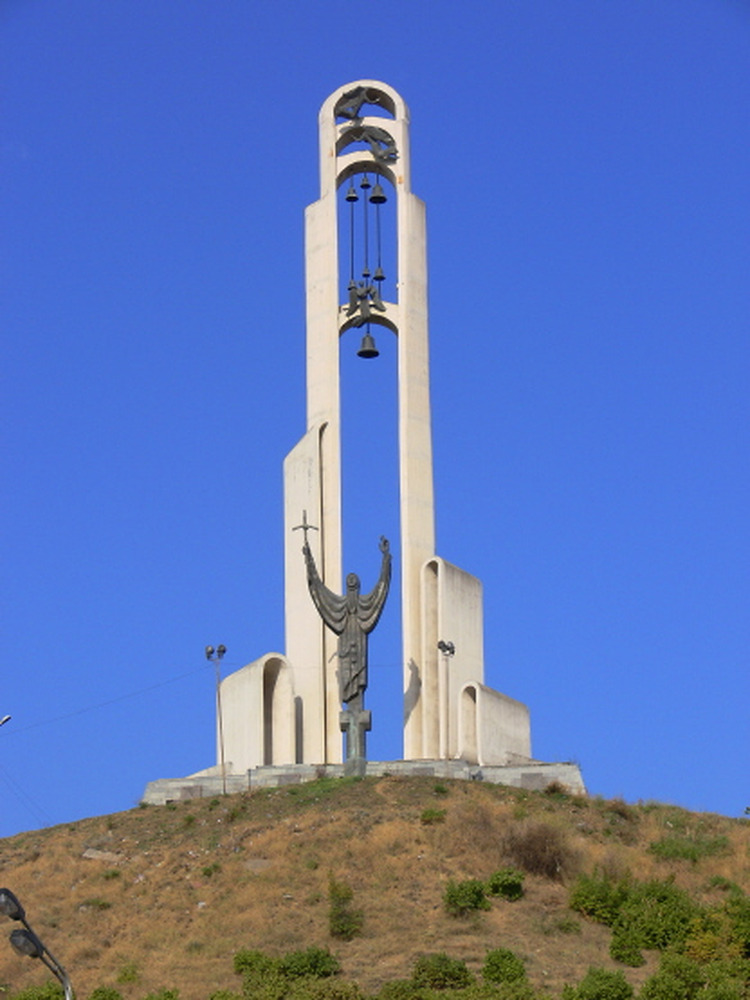
Traveling outside Tbilisi, I encountered numerous Christian symbols, churches, and bell towers. Georgia has one of the oldest continuous Christian traditions in the world, and its religious heritage remains visible throughout the country. These photographs show a Christian plaque and a bell tower from places I visited near the capital.
Between the lively streets of Tbilisi, its historic riverside architecture, the enormous Sameba Cathedral, and the ancient religious monuments of Mtskheta and Jvari, this region offered an impressive introduction to Georgia’s history and culture. I especially enjoyed seeing how the country’s ancient Christian heritage existed alongside its Soviet past and the changes taking place during my visit in 2006.
Explore More of Georgia
Borjomi • Gori • Tbilisi • Uplistsikhe • Vardzia
