Bandar Seri Begawan was unlike any other capital I had visited in Southeast Asia. Brunei’s oil wealth was obvious almost immediately, especially in the scale of its mosques, royal buildings, hotels, and modern infrastructure.
At the same time, the city itself was surprisingly quiet. It wasn’t a huge, crowded capital like Bangkok or Manila. Instead, it felt compact and relaxed, with monumental architecture appearing almost suddenly between ordinary neighborhoods, commercial areas, and tropical waterways.
What I remember most was how quickly the city changed depending on where I went. I could stand beside an enormous gold-domed mosque, cross the river into neighborhoods built above the water, and then continue by boat into mangrove forest looking for wildlife.
Omar ‘Ali Saifuddien Mosque
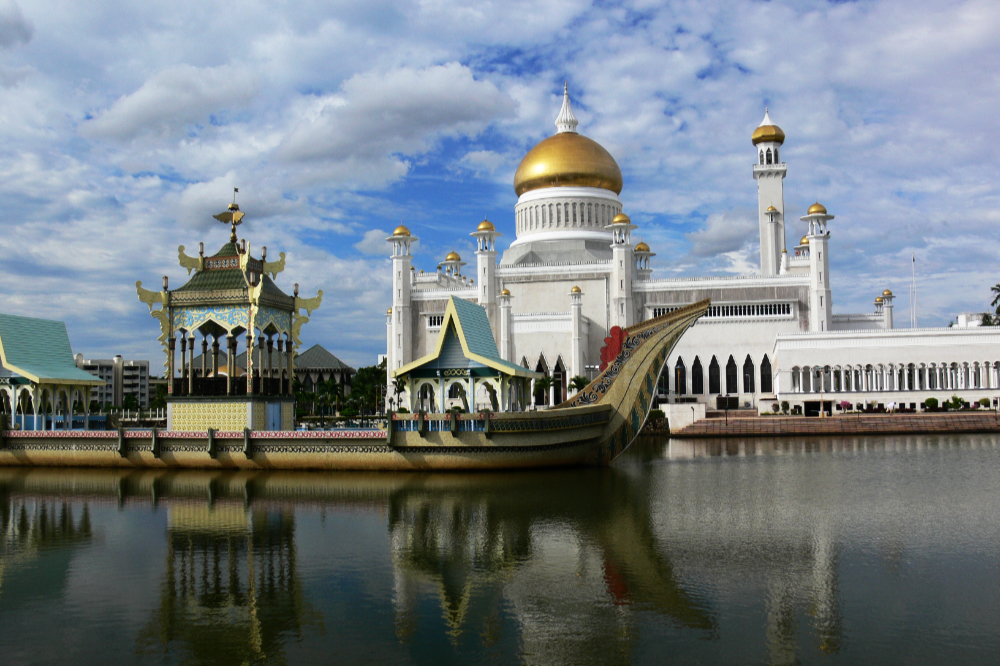
Omar ‘Ali Saifuddien Mosque was one of the first places that showed me the scale of Brunei’s architecture. Completed in 1958 and named after the country’s 28th sultan, Omar ‘Ali Saifuddien III, the mosque stands beside a lagoon in the center of the capital.
Its golden dome, marble columns, stained glass, landscaped surroundings, and elaborate interior make it one of the defining landmarks of Bandar Seri Begawan.
Jame’ ‘Asr Hassanil Bolkiah Mosque
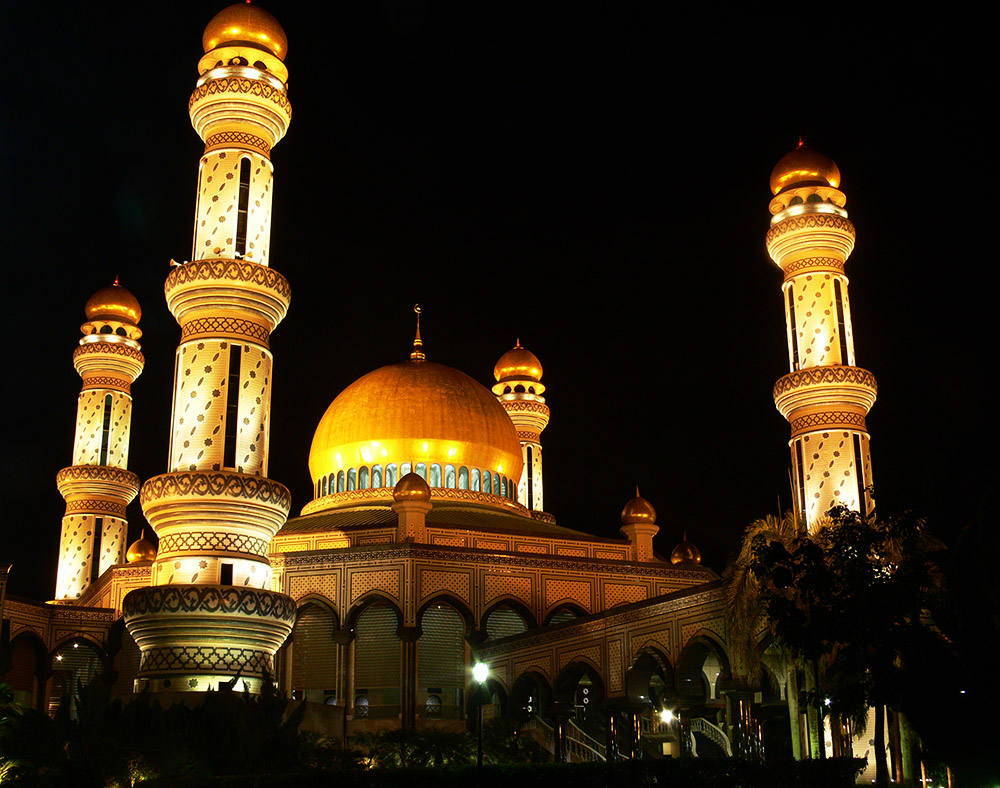
The second major mosque I visited was Jame’ ‘Asr Hassanil Bolkiah Mosque. Completed in 1994, it was built to commemorate the Silver Jubilee of Sultan Hassanal Bolkiah’s reign.
Its 29 golden domes represent Hassanal Bolkiah’s position as Brunei’s 29th sultan. Together with its landscaped gardens, fountains, mosaics, and monumental scale, it was another striking example of the architecture I encountered around the capital.
A Small Capital

Bandar Seri Begawan wasn’t a sprawling metropolis. The capital felt compact and easy to explore, especially compared with many other cities I had visited in Southeast Asia.
That relatively small scale made the city’s monumental mosques, palace grounds, and luxury hotels stand out even more.
The Sultan and His Palace
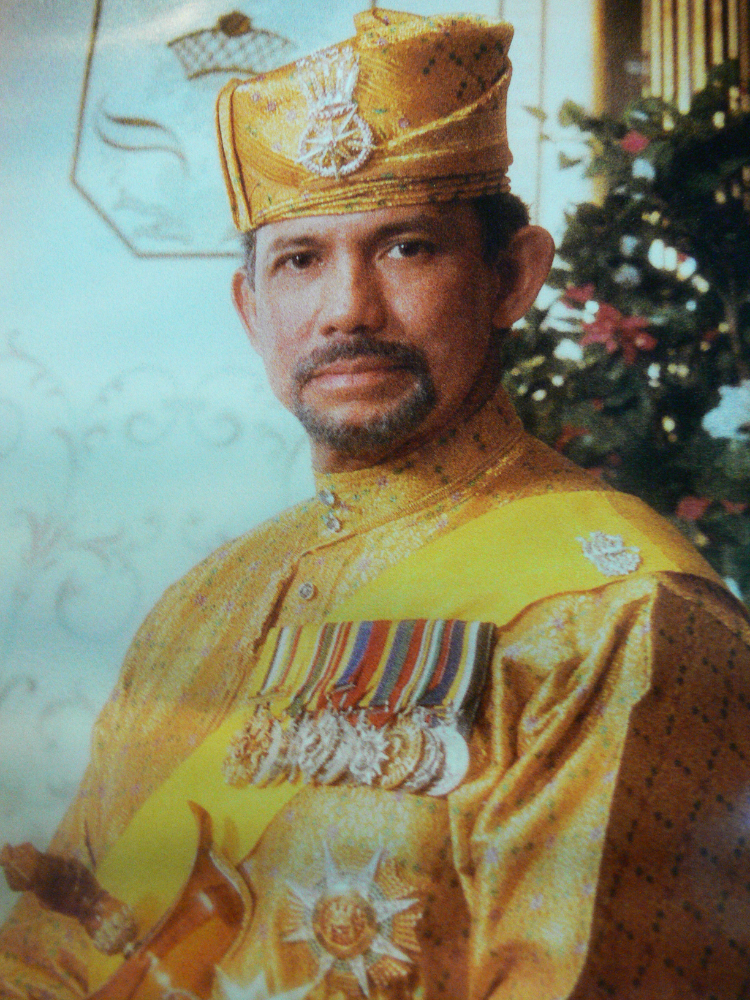
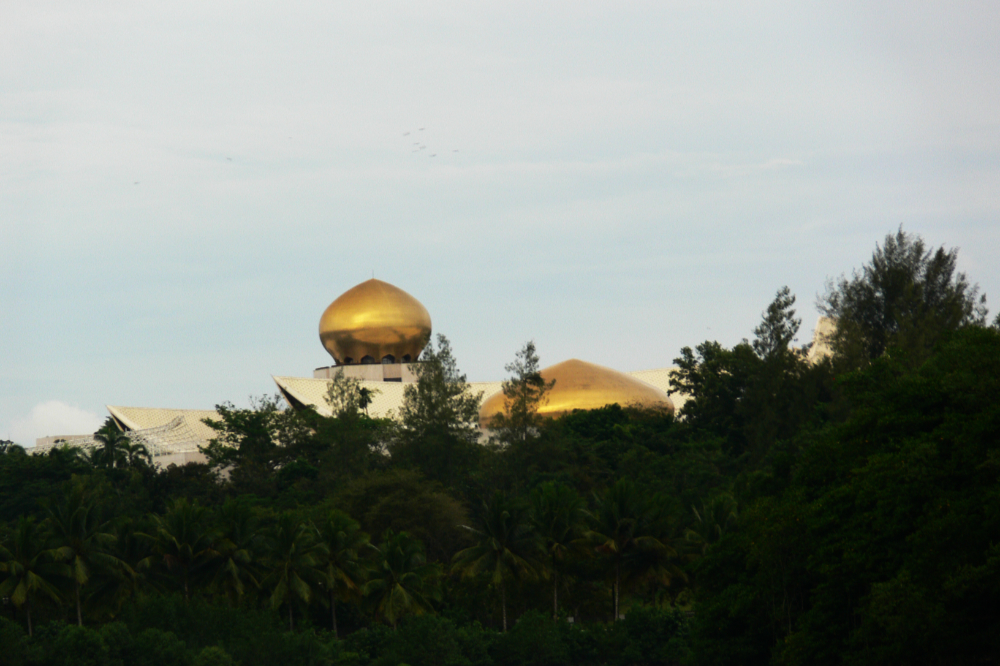
Brunei’s monarchy is a prominent part of the country’s identity, and that presence is particularly visible around the capital. Sultan Hassanal Bolkiah has reigned since 1967, and his official residence, Istana Nurul Iman, is one of Bandar Seri Begawan’s best-known landmarks.
The palace grounds are extensive, although during an ordinary visit there was only so much I could see from outside.
Royal Tombs
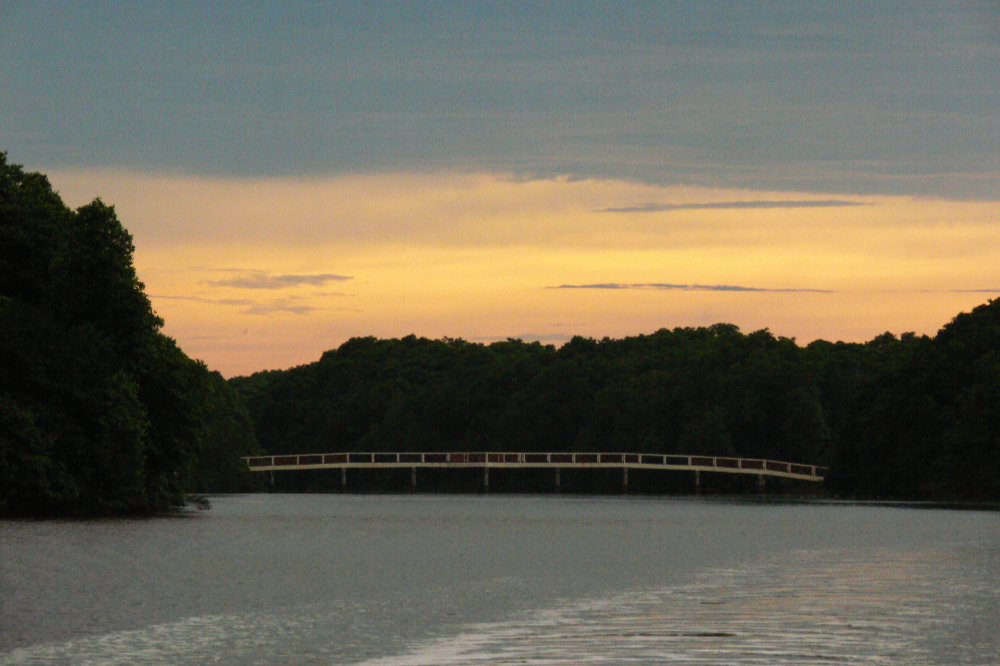
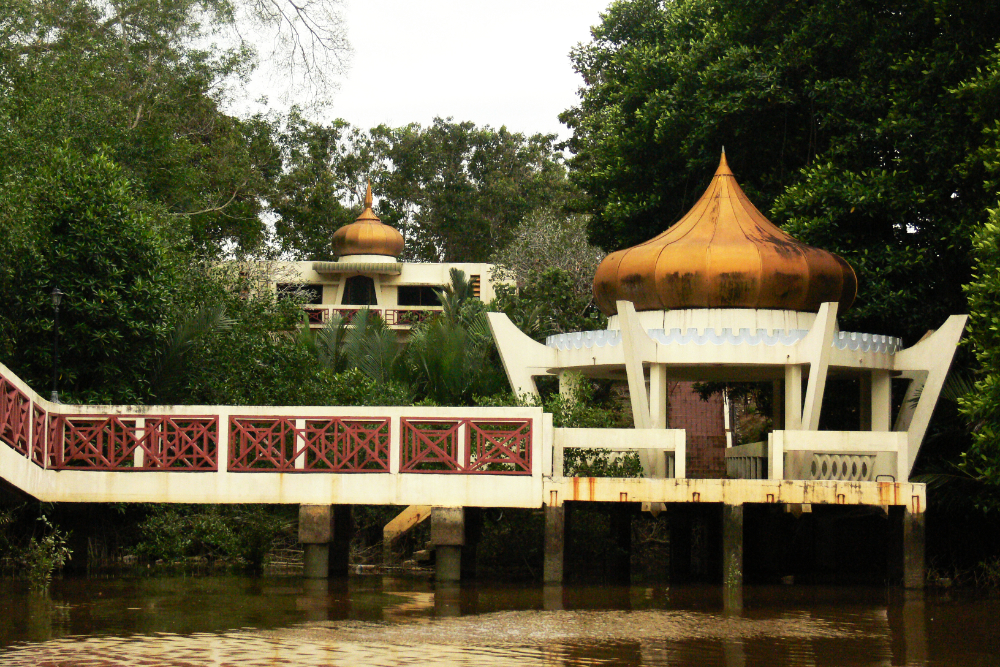
Brunei’s royal history extends far beyond its present-day palace and mosques. Mausoleums associated with earlier sultans can be found around the waterways near the capital, preserving another layer of the country’s long history.
People Around the Capital
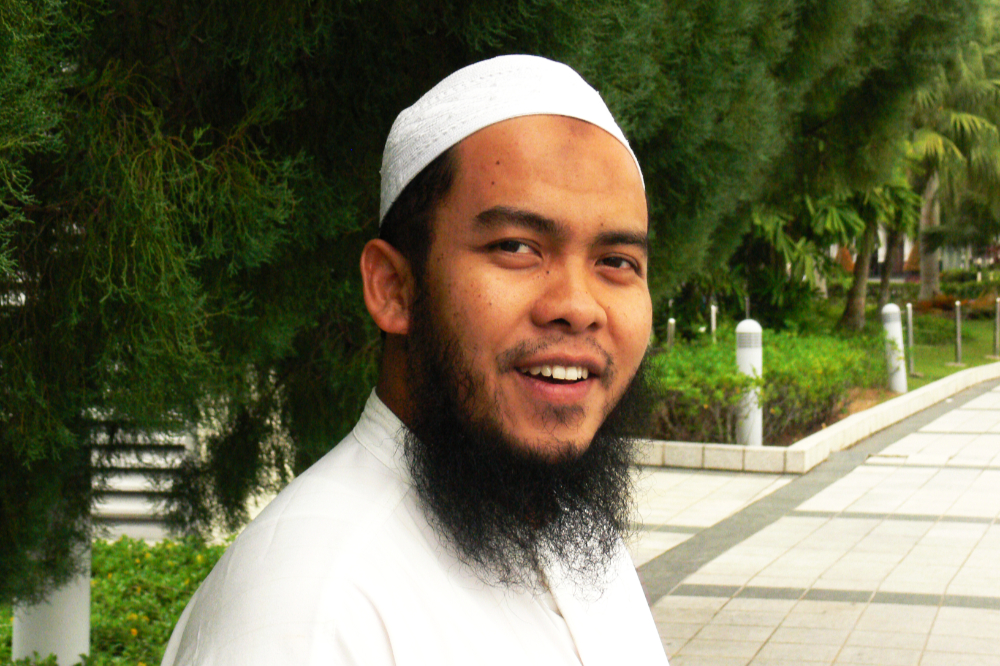
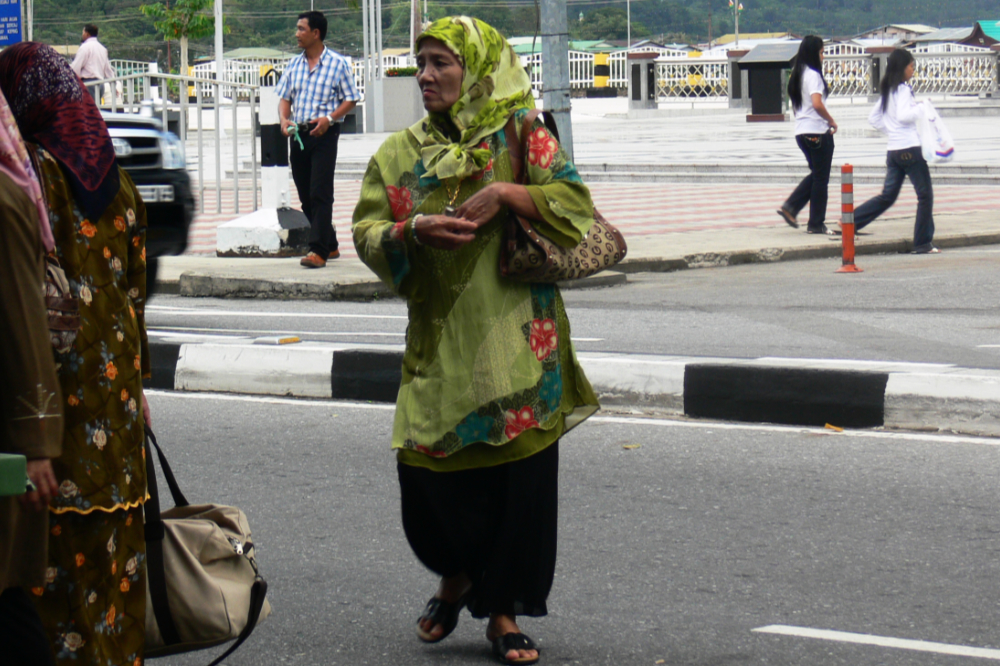
Islam is Brunei’s official religion, and its influence was visible throughout the capital, particularly in its architecture and everyday life.
While exploring, I also met people who had come to Brunei from neighboring countries. After taking one of these photographs, I was briefly stopped by security and asked what I was doing in the area. By coincidence, they were working for the U.S. Embassy. After a couple of questions, they sent me on my way.
Shopping in Bandar Seri Begawan
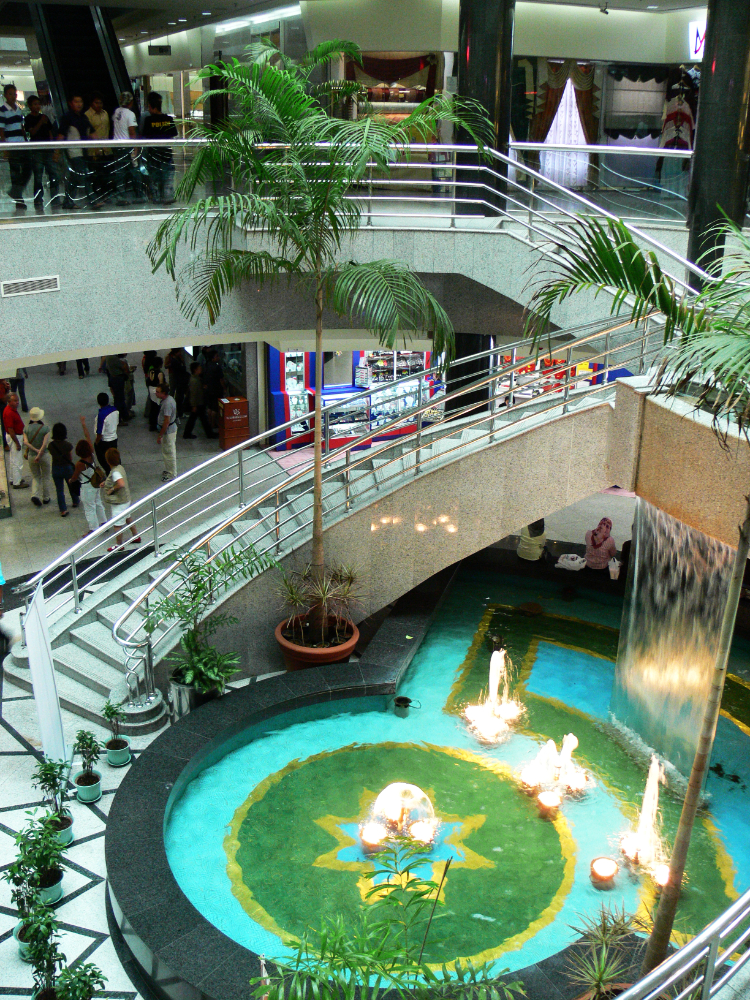
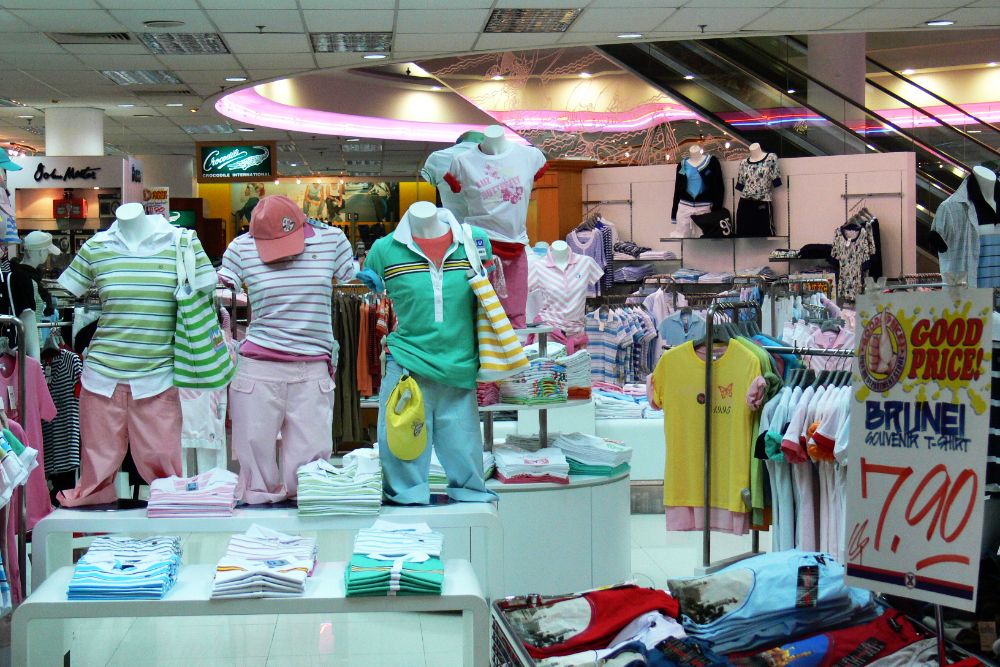
Bandar Seri Begawan and the surrounding urban area had modern shopping centers, restaurants, and commercial districts. One of the main shopping complexes was simply called “The Mall,” which was refreshingly straightforward.
The Empire Hotel
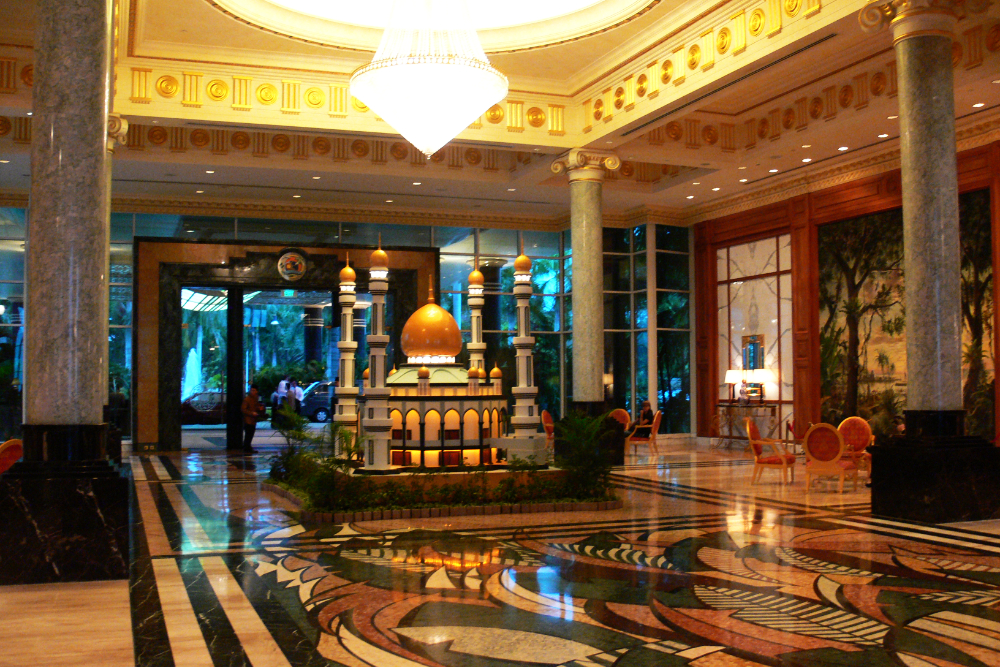
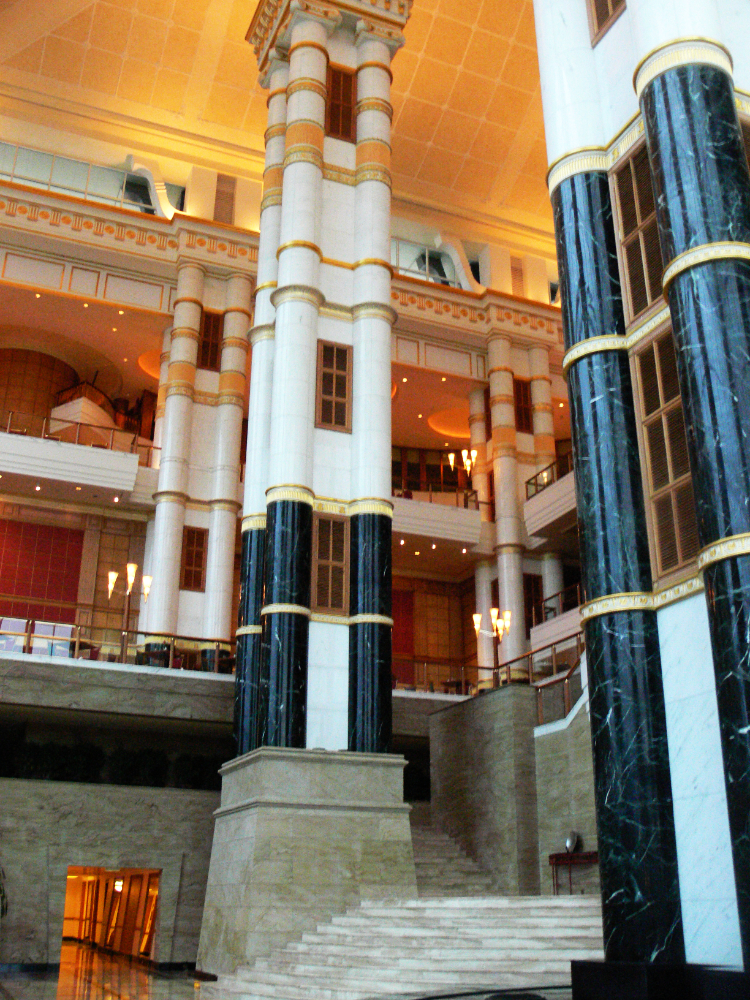
The Empire Hotel offered another look at the scale of development around Brunei’s capital. Its enormous open spaces, marble interiors, towering columns, recreational facilities, and waterfront setting made the property feel more like a resort complex than a conventional hotel.
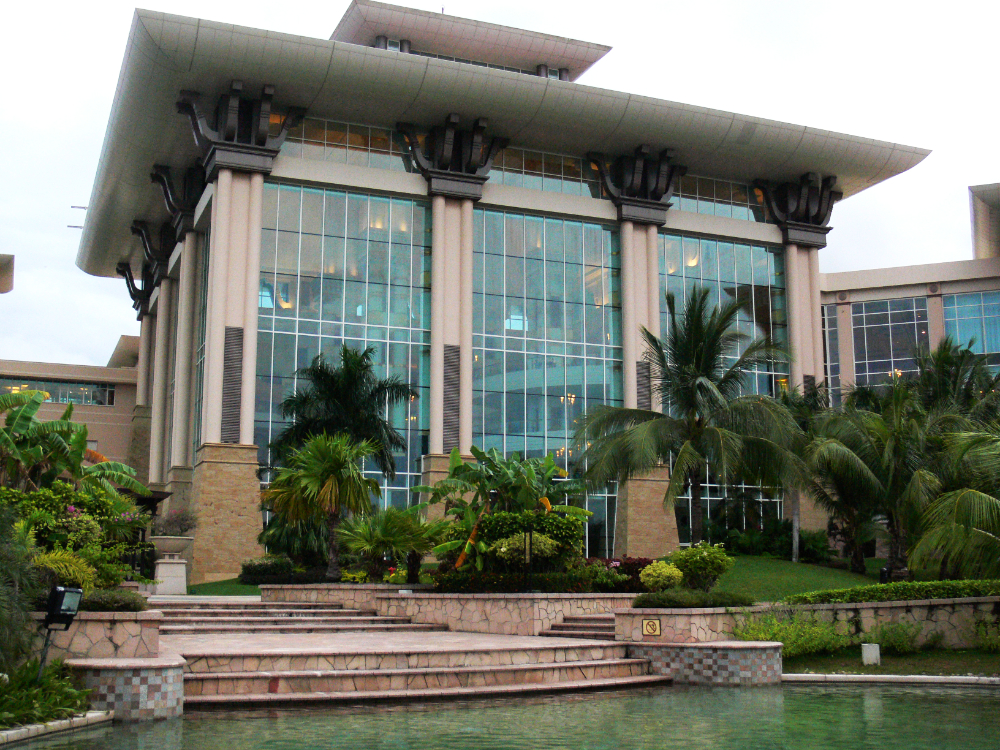
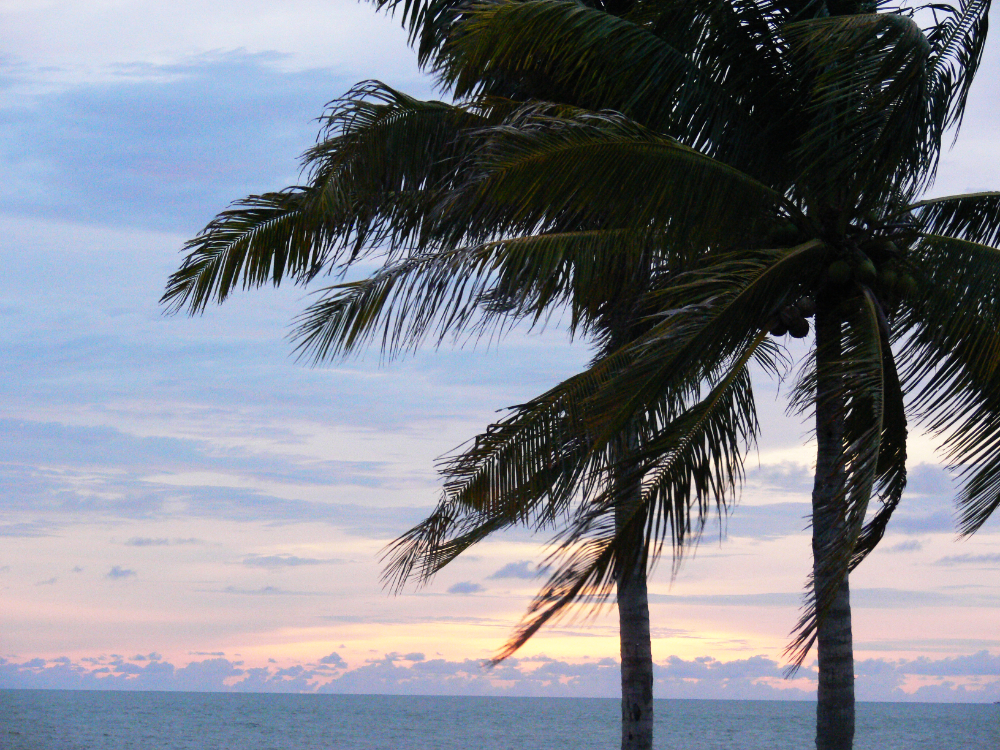
During my visit, the enormous public spaces were remarkably quiet, which made the scale of the property seem even more striking.
Neighborhoods Around Bandar Seri Begawan
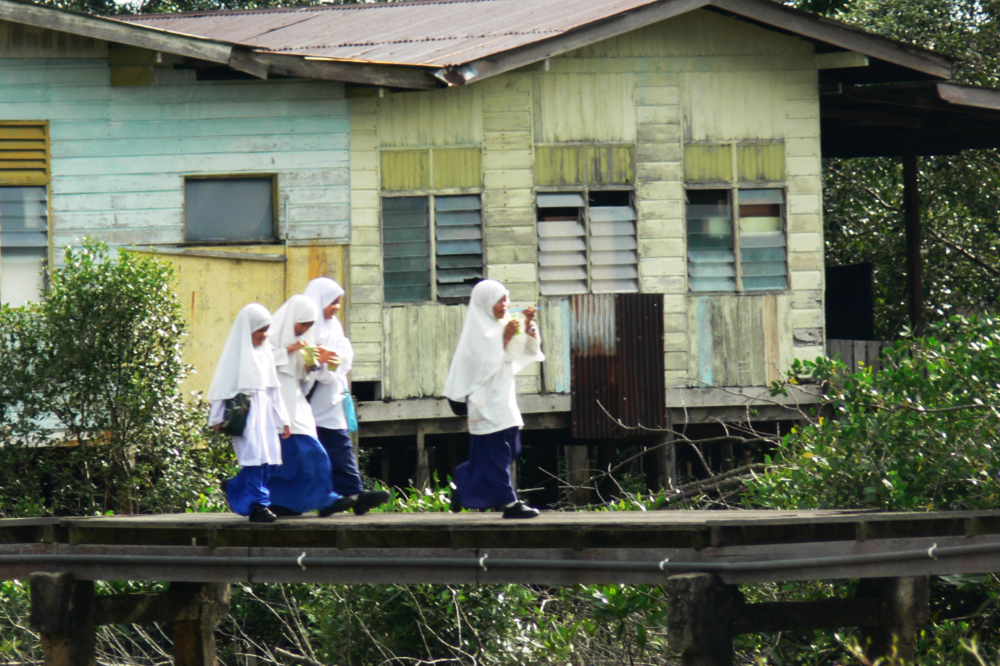
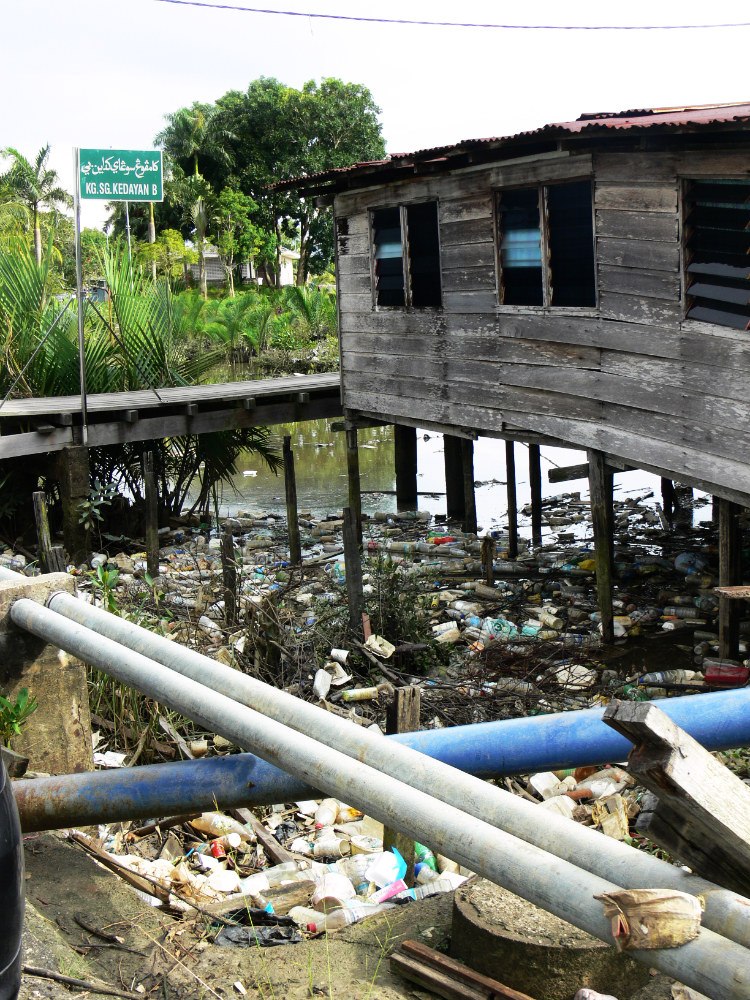
Beyond the monumental mosques, palace, hotels, and commercial areas, Bandar Seri Begawan also had quieter residential neighborhoods. Seeing these everyday parts of the city helped put the capital’s grander landmarks into context.
Kampong Ayer
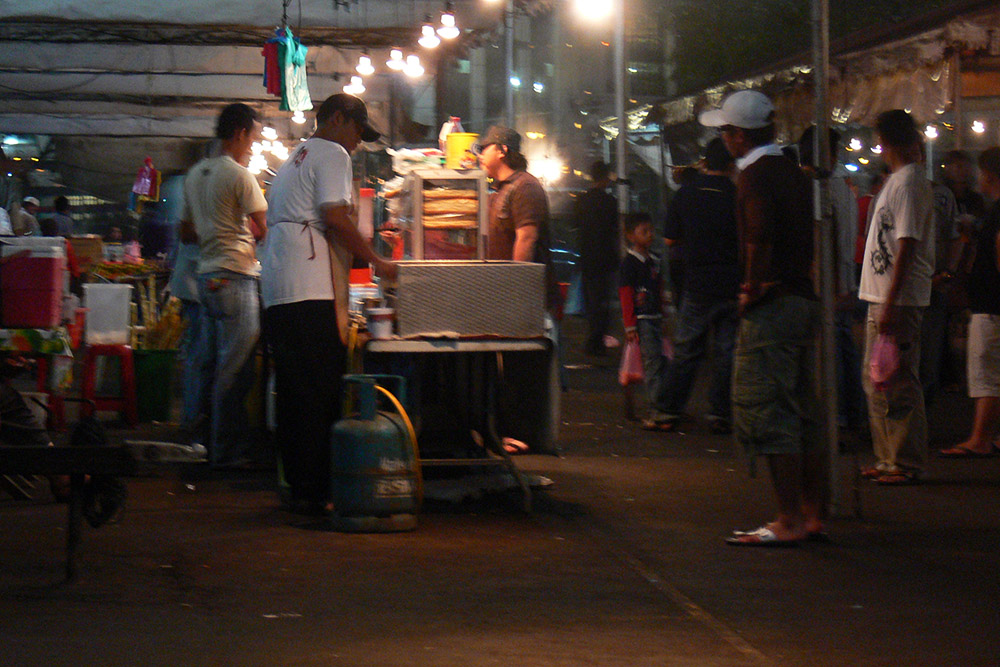
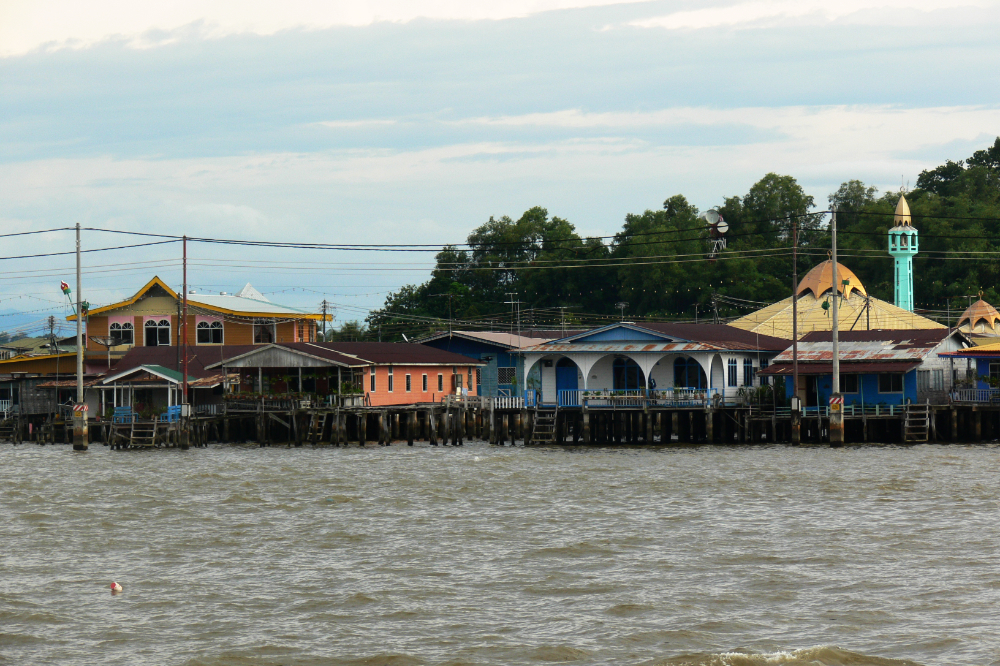
One of the most interesting parts of Bandar Seri Begawan was Kampong Ayer, the extensive water settlement along the Brunei River. Communities here have developed above the water on stilts, linked by wooden walkways, bridges, and boats.
Seeing the water settlement directly across from the modern center of Bandar Seri Begawan created one of the strongest contrasts of my visit.
Water Taxis
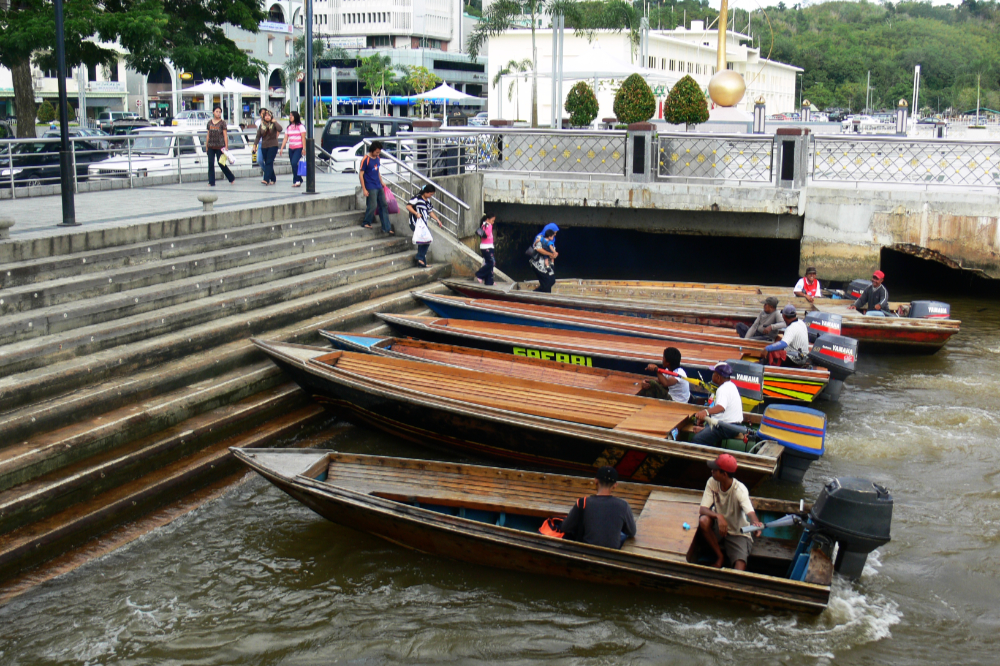
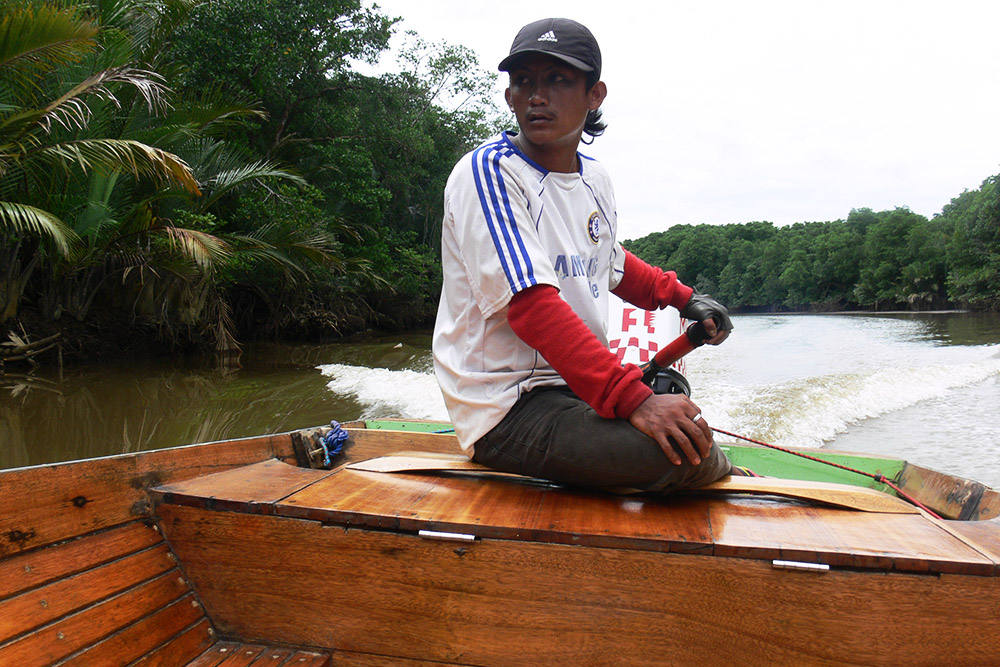
After exploring the capital and Jerudong Park, I hired a water taxi and headed along the river looking for wildlife.
Finding a boat wasn’t difficult. Drivers waited along the waterfront, and I could explain where I wanted to go and agree on a price before heading out.
Inside Kampong Ayer
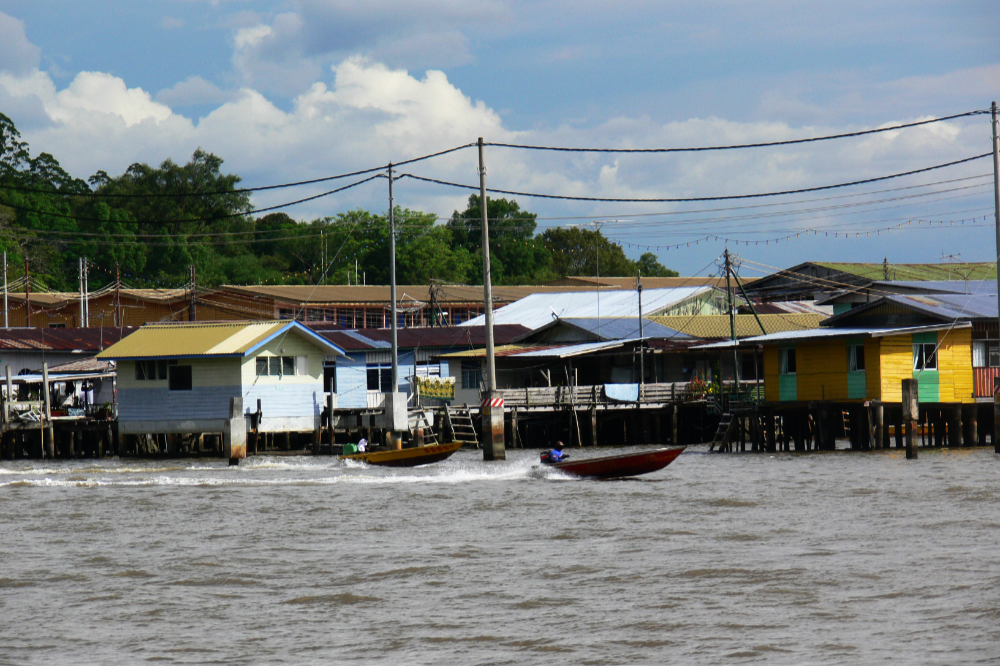
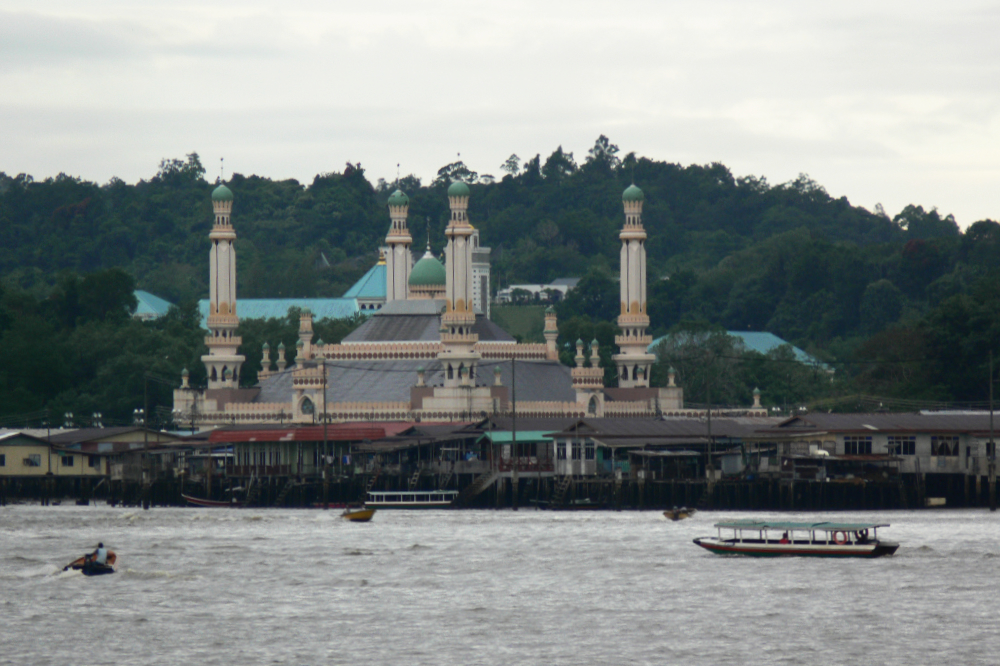
From the river, Kampong Ayer felt almost like a city of its own. Boats moved between neighborhoods while walkways connected homes and community buildings above the water.
Kampong Ayer has existed in various forms for centuries and remains one of the defining cultural landscapes of Bandar Seri Begawan.
A Gas Station for Boats
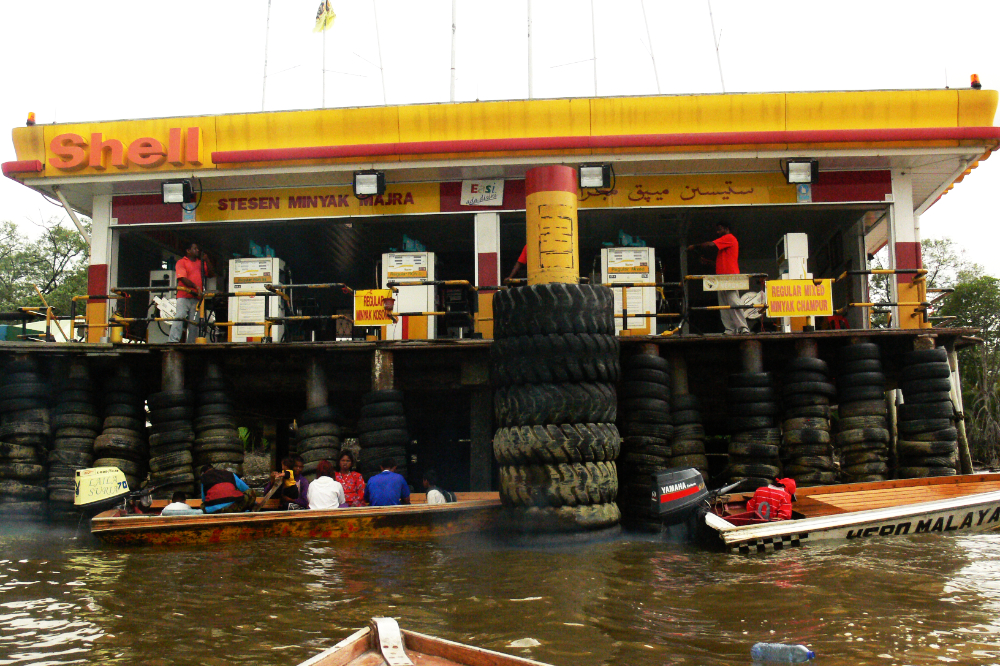
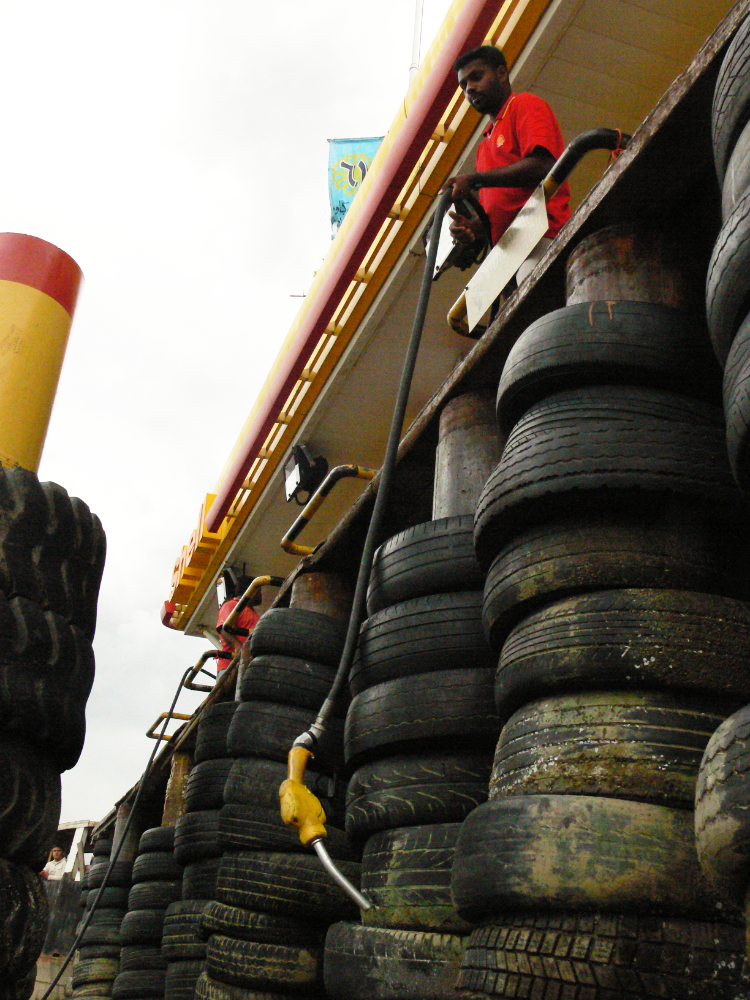
One of my favorite little details was the river gas station. Instead of pulling up in a car, boats came alongside and workers lowered fuel hoses toward the water.
It made complete sense in a city where boats functioned as taxis, but I’d never seen anything quite like it before.
Into the Mangroves
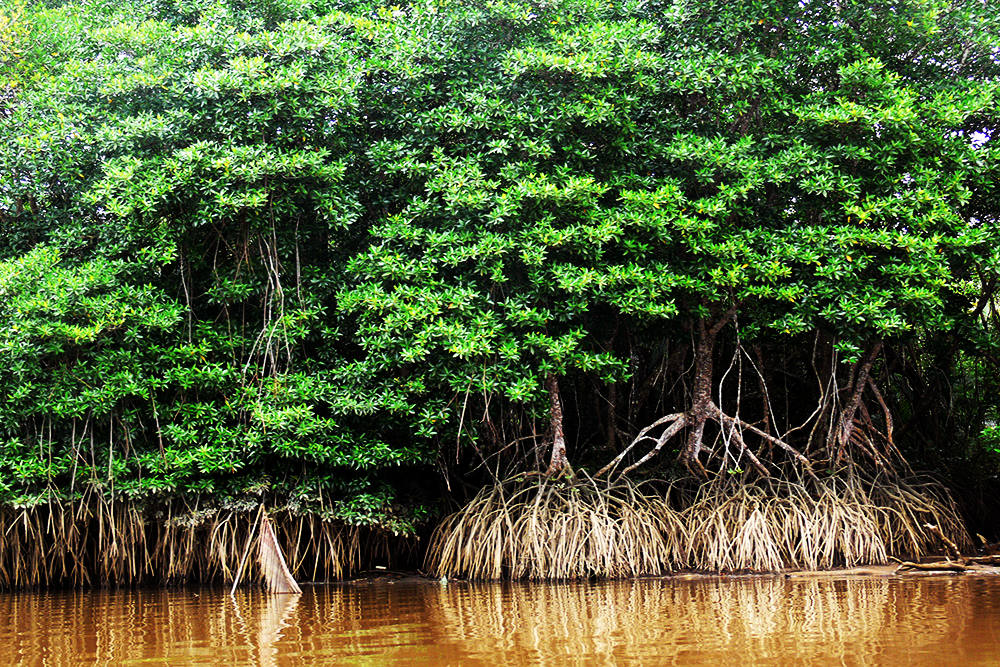
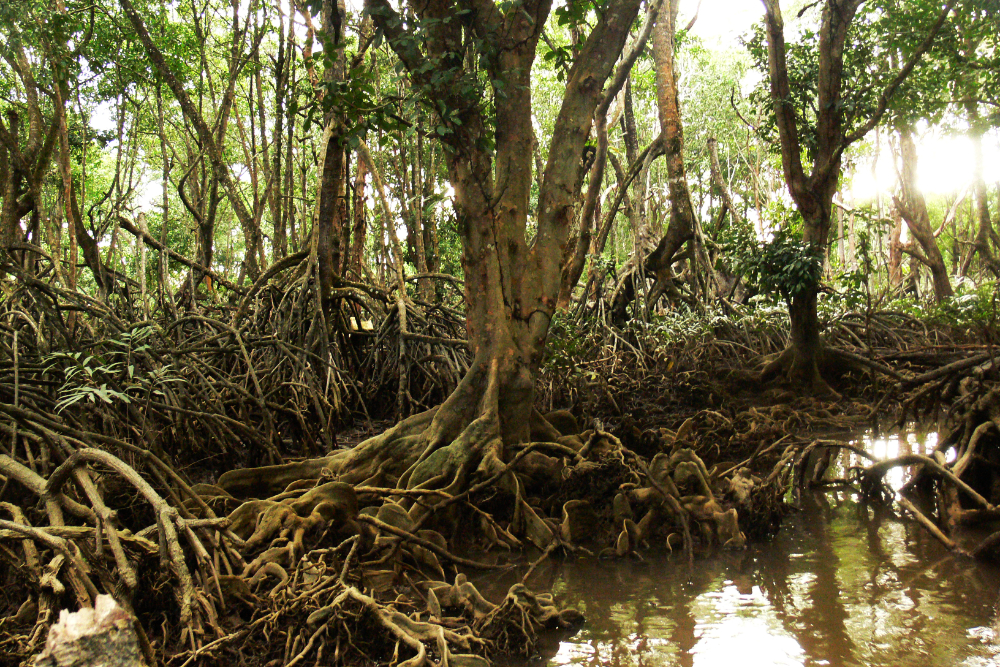
Beyond Kampong Ayer, the surroundings became much wilder. Mangroves lined the waterways, with their roots exposed or submerged as the tide changed.
I made two trips through these forests, and low tide turned out to be especially good for spotting wildlife along the exposed banks.
Monitor Lizards
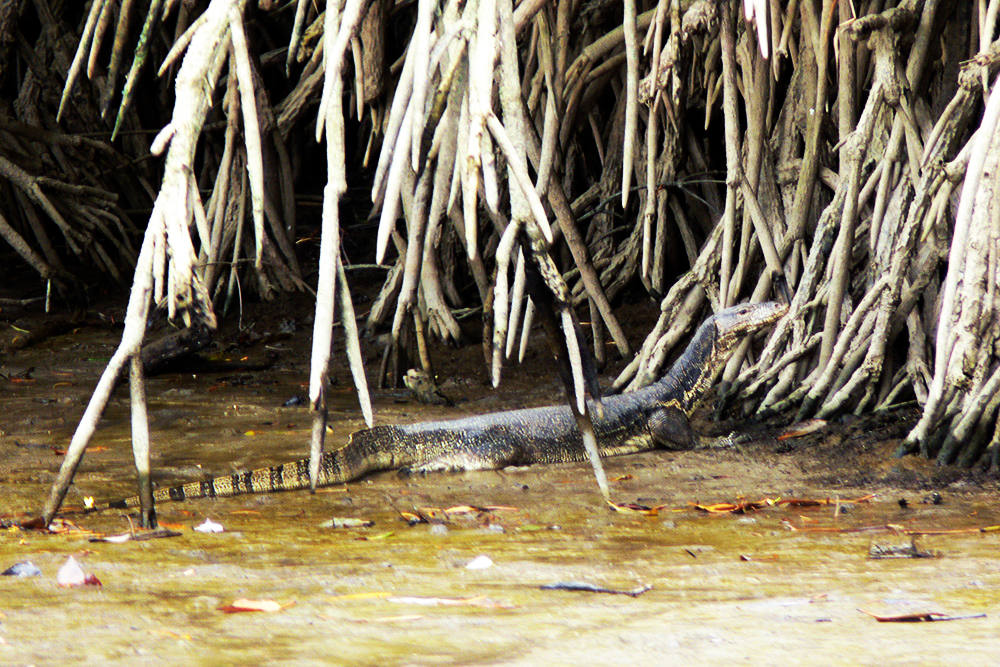
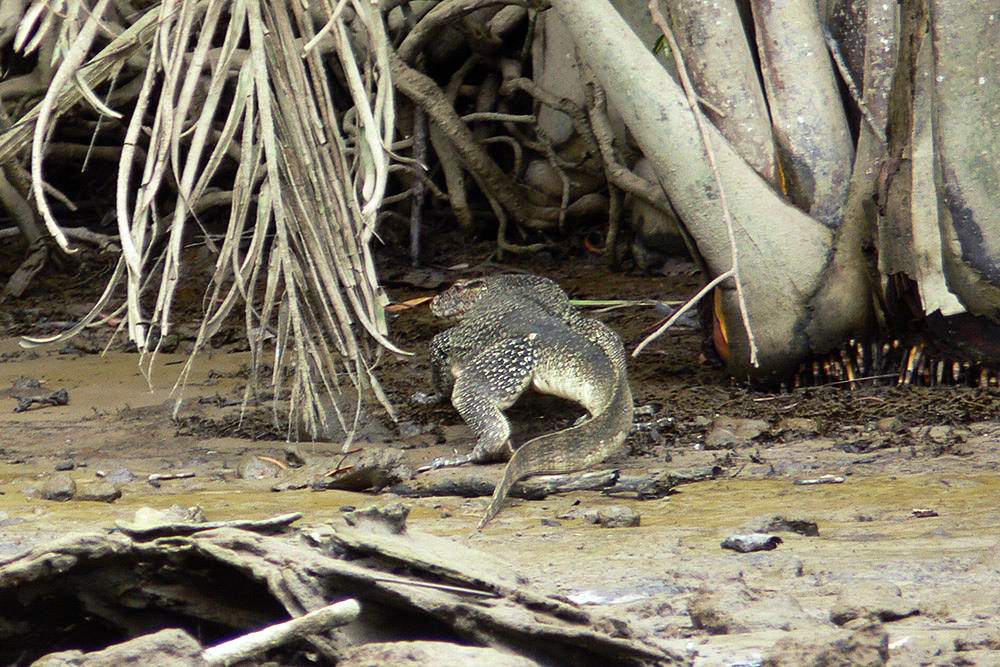
During one low-tide trip, I saw almost ten monitor lizards along the exposed riverbanks. Some were enormous.
From a distance they looked almost like miniature alligators, but the ones I encountered were shy and quickly retreated toward the forest as our boat approached.
Proboscis Monkeys
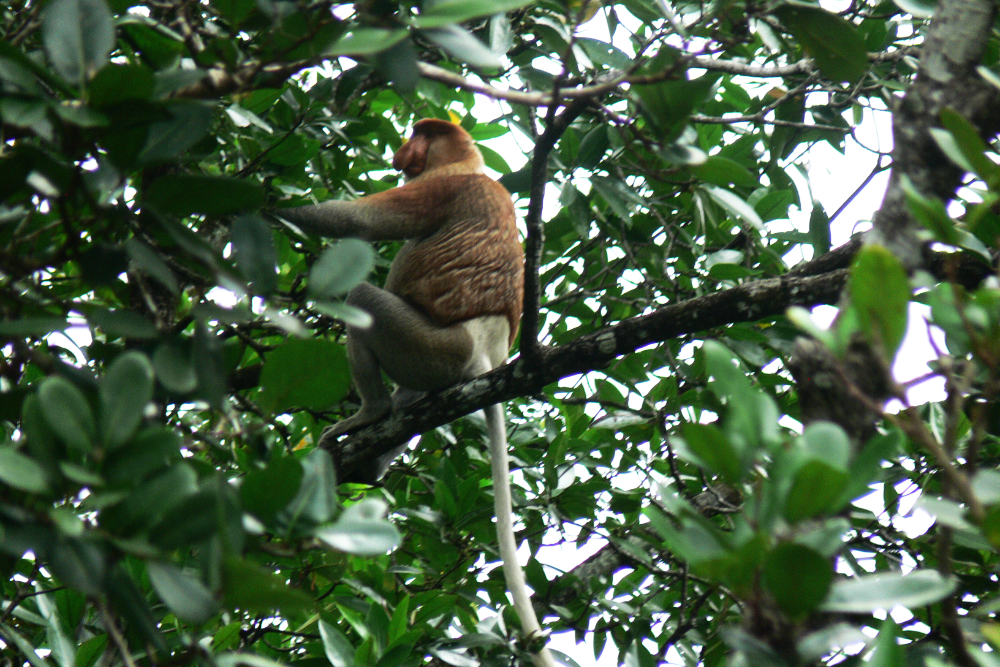
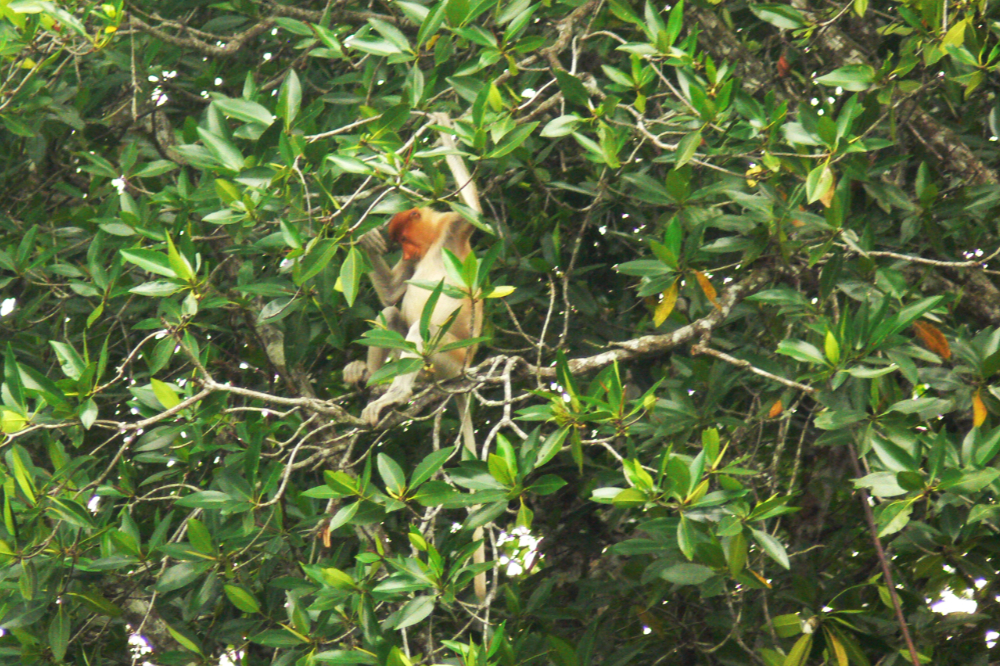
The wildlife I most wanted to see was the proboscis monkey. I had seen these unusual monkeys on television before, mostly because of the enormous noses of the males.
Seeing them in the wild made the river trip completely worth it. The male above had the exaggerated nose I associated with the species, while the other monkey seemed considerably less interested in the tourist photographing it.
My Time in Bandar Seri Begawan
Bandar Seri Begawan was full of contrasts. I could spend part of the day among gold-domed mosques, royal architecture, modern shopping centers, and an enormous luxury resort, then climb into a small water taxi and within minutes be traveling among stilt villages and mangrove forest.
Farther along the river, I could watch large monitor lizards disappear into the vegetation and search the trees for proboscis monkeys. Kampong Ayer added yet another side to the capital, with communities that have developed around the river for centuries.
For such a small and quiet capital, Bandar Seri Begawan gave me far more to explore than I expected.
Explore More of Brunei
Bandar Seri Begawan • Jerudong Park • Temburong