Temburong felt like a completely different side of Brunei. The country’s main population centers and capital are in the west, while Temburong sits to the east, separated from the rest of Brunei by Malaysian territory.
When I visited, the easiest way to reach Temburong was by water taxi. The trip took about 45 minutes and avoided having to drive through Malaysia and cross international borders along the way.
Once I arrived, the mosques, malls, and displays of wealth around Bandar Seri Begawan quickly gave way to rivers, small communities, and some of the best-preserved rainforest I saw anywhere on Borneo.
Crossing Into Temburong
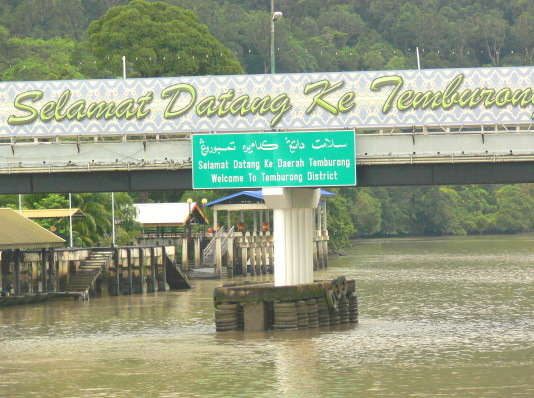
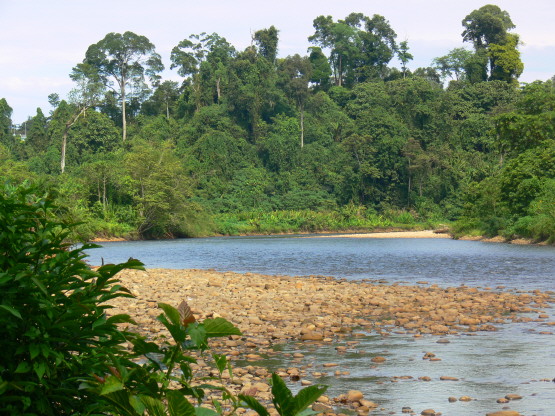
The journey itself was part of the experience. Temburong is dominated by rivers and rainforest, and traveling by boat felt like a much more appropriate way to arrive than driving.
It also immediately made the district feel more isolated from the developed western side of Brunei.
Longhouses of Temburong
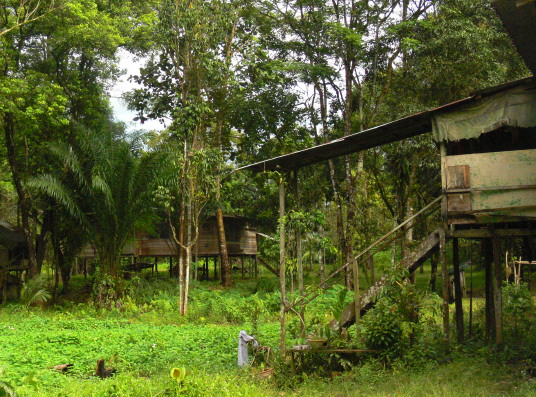
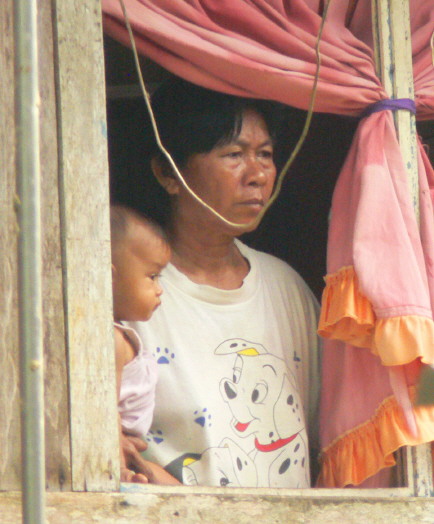
While exploring Temburong, I visited communities where people lived in traditional longhouses surrounded by rainforest.
What interested me was the mixture of traditional and modern life. Hunting and fishing were still important, yet modern vehicles and other technology were also part of everyday life. I even saw satellite television at some of the houses.
It was another example of why Temburong wasn’t simply some untouched world isolated from everything around it. Traditional ways of living and modern Brunei existed alongside each other.
Ulu Temburong National Park
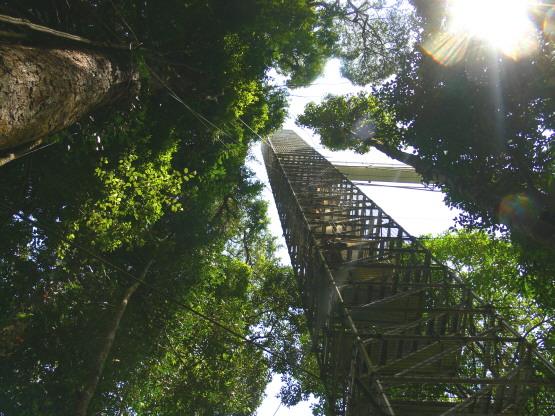
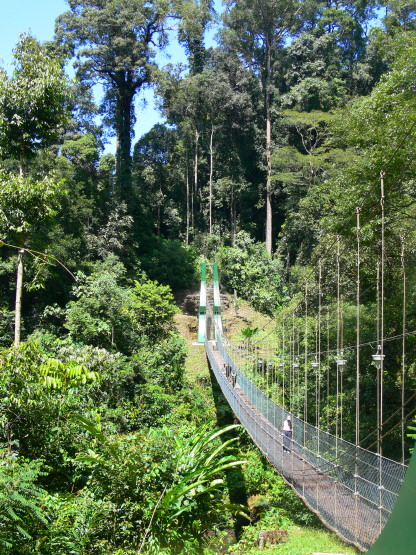
The main reason many travelers come this far into the district is Ulu Temburong National Park.
The protected rainforest contains hiking trails and places to stay overnight, but one of its most memorable features for me was the enormous canopy structure built above the forest.
From the ground, a rainforest can feel like an endless wall of vegetation. Climbing the tower completely changed my perspective.
Above the Rainforest
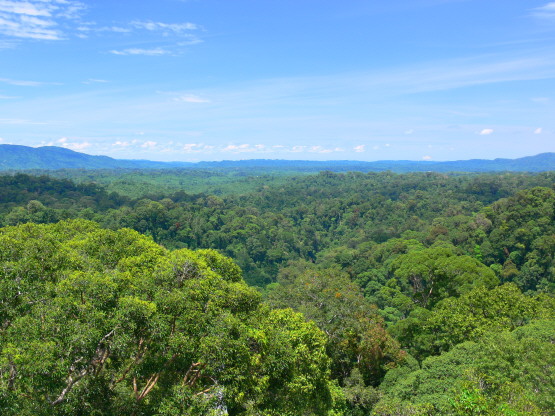
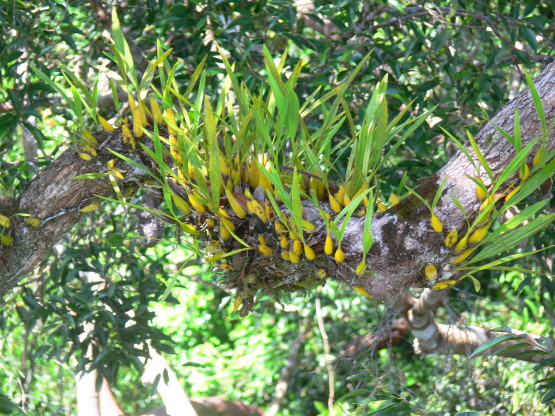
Once I climbed high enough, I could finally look across the top of the rainforest instead of through it.
It also gave me a chance to see plants and birds living high in the canopy that would have been almost impossible to notice from the forest floor.
The plant above was growing from a tree perhaps a hundred feet off the ground. There was basically another ecosystem living above my head the entire time.
A Mantis That Looked Like a Leaf
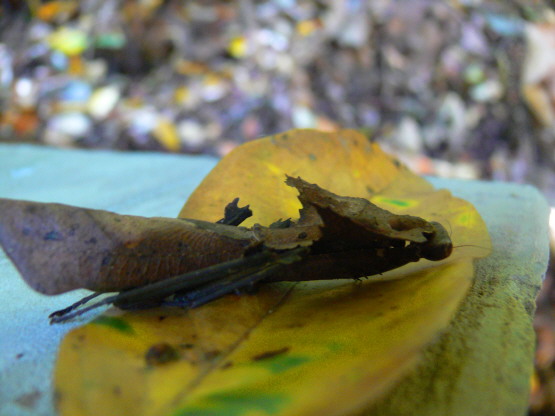
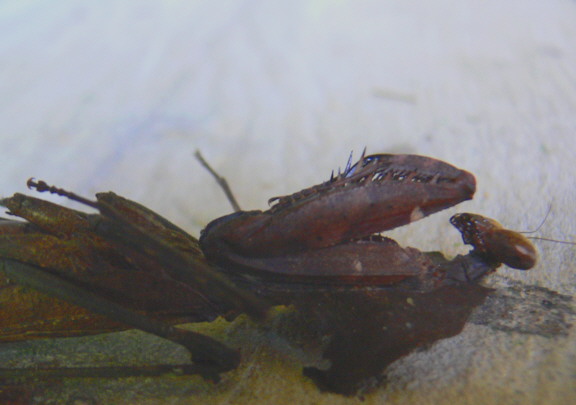
One of my favorite wildlife encounters in Temburong involved what looked like two leaves lying on top of each other.
I probably would have walked straight past them if one of the leaves hadn’t suddenly gotten up and started running around.
Even after looking closely, it still looked remarkably like a leaf. Eventually it rolled over enough for me to realize I was looking at a strange species of praying mantis.
I had seen plenty of praying mantises before, but never one with camouflage this convincing.
Giant Ants and the “Flying Rainforest”
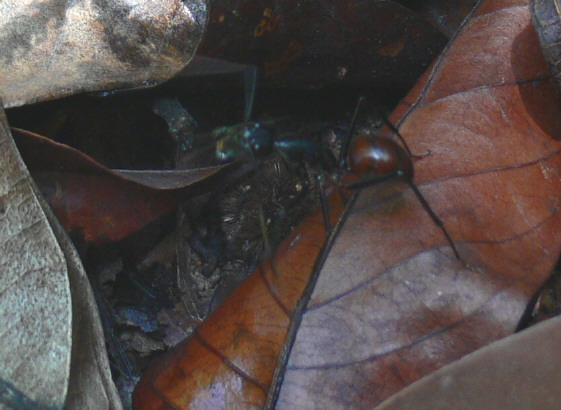
The insects didn’t get any smaller from there.
This ant was one of the biggest I had ever seen, second only to the bullet ants I encountered in Costa Rica.
Temburong also had so many strange animals adapted to life in the trees that I started thinking of it as the “flying rainforest.”
Borneo has animals capable of gliding between trees, including frogs, lizards, squirrels, and even snakes. I desperately wanted to see one of the famous gliding snakes, but never got that lucky.
I did see something gliding through the forest from a distance, and I was told it was probably a flying squirrel.
Crocodiles and Reptiles
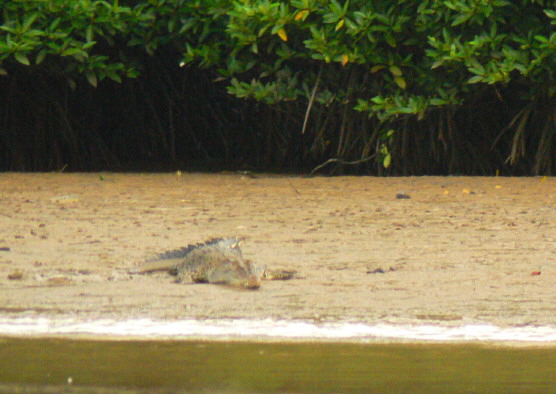
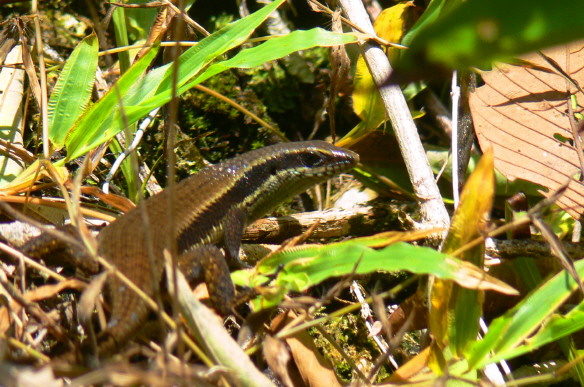
Borneo’s rainforests are also home to some much larger reptiles.
While traveling by speedboat, we passed a large crocodile resting along the riverbank. Unfortunately we went by too quickly for me to get a particularly clear photograph.
I also came across this large skink in the rainforest, a type of lizard I’ve somehow managed to encounter in several different parts of the world.
Finding an Asian Vine Snake
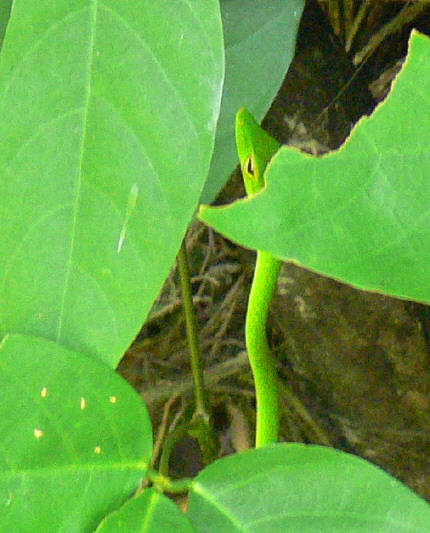
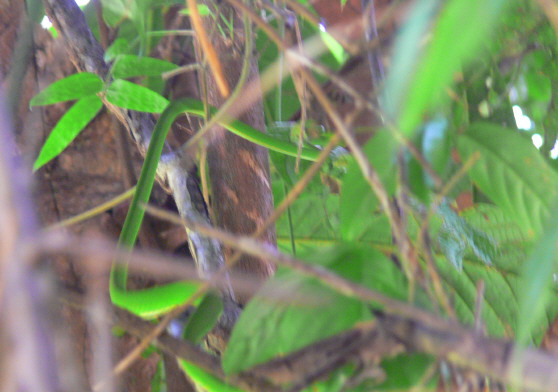
The wildlife encounter I remember most was an Asian vine snake.
I had looked at pictures of these snakes since I was a kid, so there was something surreal about suddenly finding one stretched across the trail in front of me.
It didn’t stick around for long.
The snake quickly darted into the vegetation, where its thin green body almost completely disappeared among the leaves. I managed to photograph its head sticking out from behind one leaf before it climbed into a tree and vanished into the rainforest.
I don’t know how rare it actually was to encounter one there, but that almost didn’t matter.
There’s something special about seeing an exotic animal in books and photographs your entire life and then unexpectedly finding one right in front of you in the wild.
My Time in Temburong
Temburong was the side of Brunei I had hoped existed beyond the country’s oil wealth and extravagant architecture.
I traveled there by boat, visited longhouses, climbed high above the rainforest canopy, and spent much of my time looking for wildlife that seemed designed to disappear into the forest around it.
I found giant insects, crocodiles, lizards, an incredibly well-camouflaged mantis, and finally an Asian vine snake that I had wanted to see since I was a kid.
After exploring the polished capital on the other side of the country, Temburong felt wild, remote, and completely different.
For me, that contrast was one of the best parts of traveling in Brunei.