← Continued from Denali High Camp
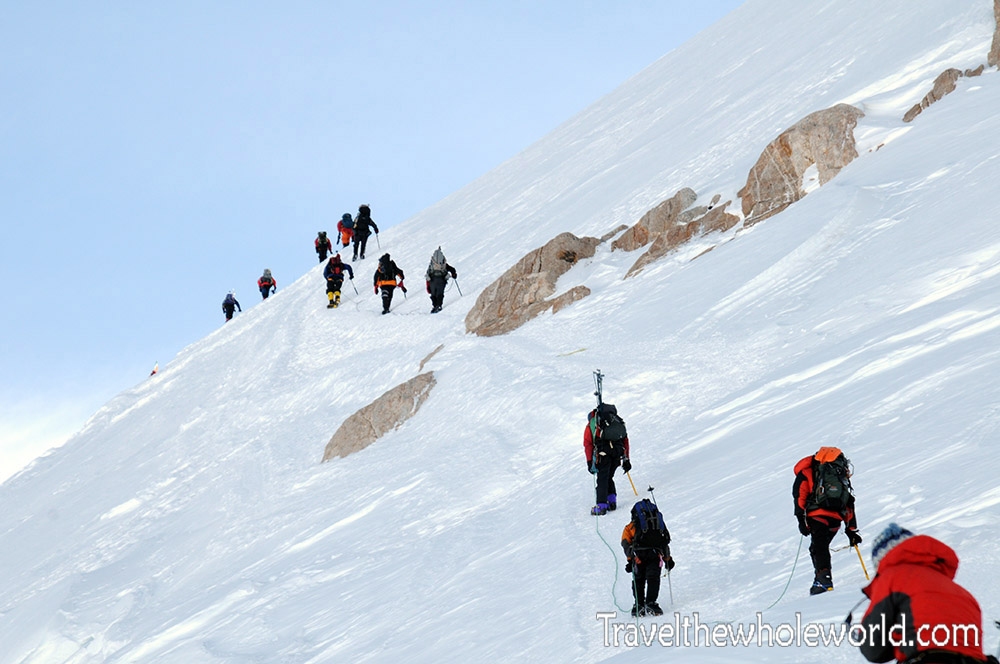
The Autobahn Above High Camp
Day 20 was nothing but waiting in our tents through another nasty storm. During a brief clearing I went outside and discovered that the Denali weather god had destroyed the statue people had worked so hard to build. Day 21 wasn’t much better. That morning we experienced the strongest winds I had ever felt in my life, with gusts reaching around 70 mph (110 km/h). Thankfully, we’d built double ice walls around our tents when we arrived at High Camp.
We were running out of both food and time, and tomorrow would be our last day regardless of the weather. We would either attempt the summit or start heading home. I anxiously woke up on Day 22, got dressed, and stepped outside my tent to find clear skies with barely a breeze. We put on our warmest clothing, stuffed our packs with emergency gear and food, and finally began our attempt for the summit—something we’d waited more than three weeks for.
Our first challenge was the Autobahn, named after several German climbers who had slid to their deaths here. From a distance it didn’t look particularly dangerous, and even while traversing it I didn’t think it seemed that bad. Considering how many lives it has taken, it’s clearly more dangerous than it looks.
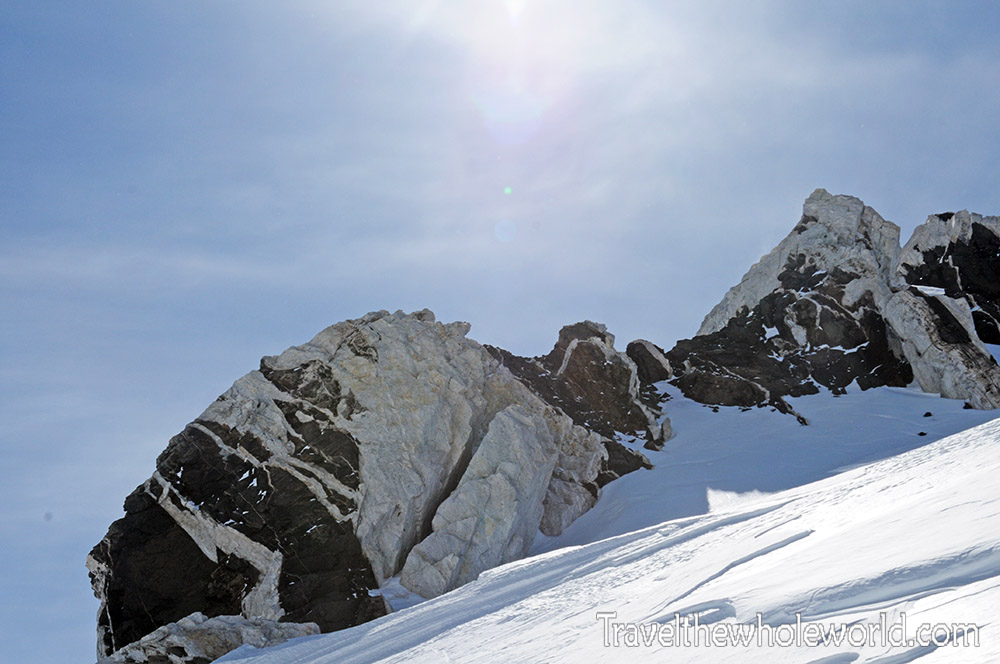
Approaching Zebra Rocks
After a couple of hours on the Autobahn we reached Denali Pass at roughly 18,000 feet (5,500 meters). The pass acts like a natural funnel for the wind, and we were suddenly being hit by gusts around 50 mph (80 km/h). Moving became difficult, but I kept hoping the winds were concentrated in the pass and things would calm down once we climbed beyond it.
We stopped briefly and our guide told us the winds were too strong and he didn’t expect us to be able to summit. My heart immediately sank. Denali had been an emotional roller coaster. There were times when I was confident everything would work out and I’d reach the summit, and other times when the entire expedition seemed hopeless. After three weeks on the mountain, we were now only hours from the summit and everything seemed to be falling apart again.
We decided to climb through Denali Pass and continue a little higher just to see what the winds were like. Above the pass are Zebra Rocks, and as I approached them each step seemed to knock the wind down another notch. By the time we reached Zebra Rocks, we had somehow climbed back into calm blue skies.
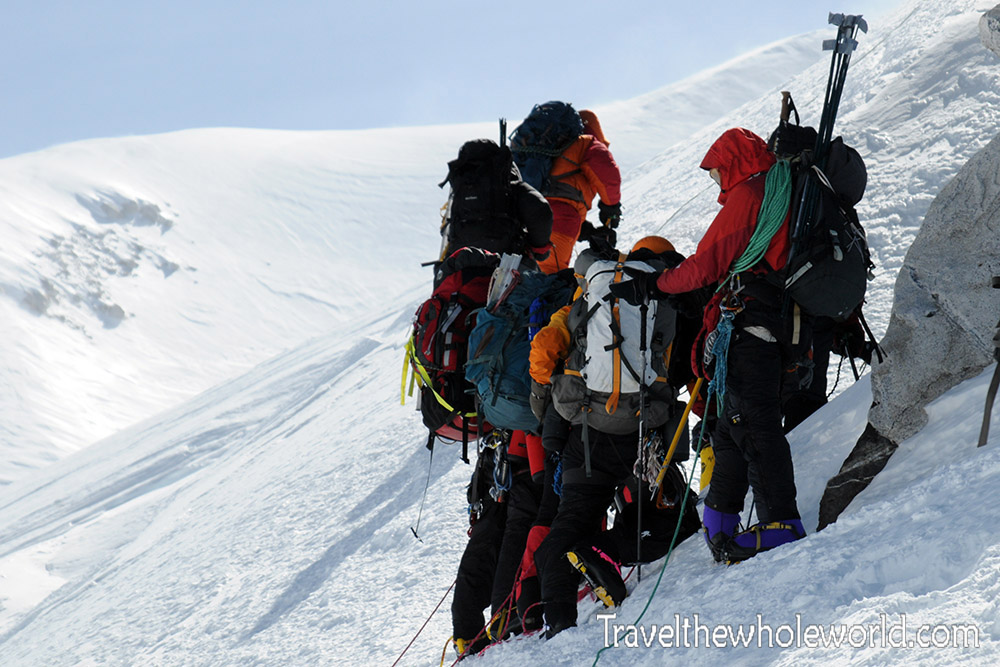
Climbers Near Zebra Rocks
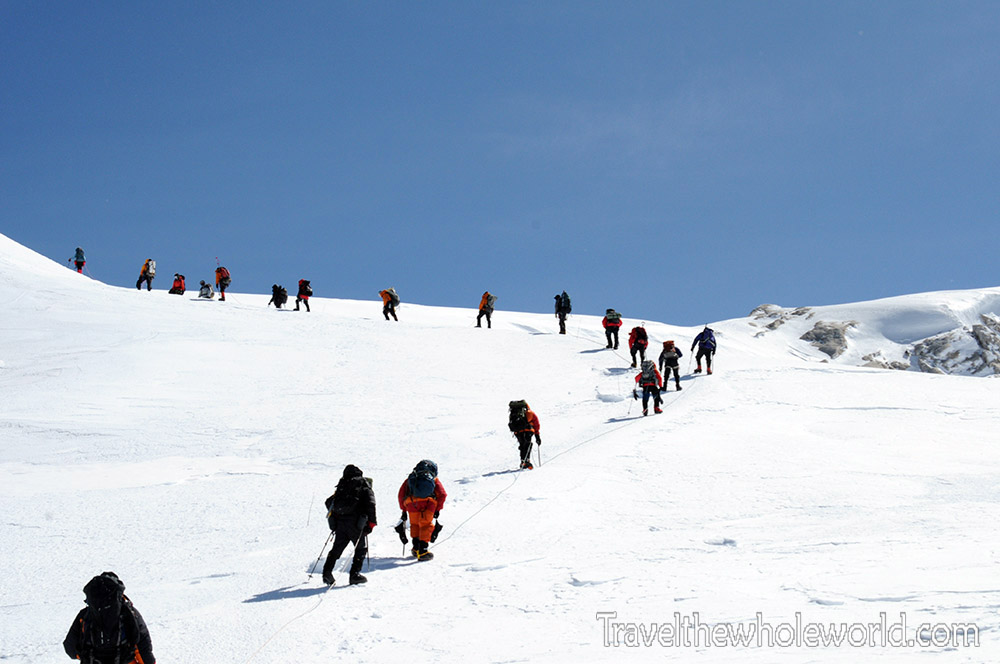
Summit Traffic After Days of Bad Weather
Passing Zebra Rocks brought us close to 19,000 feet (5,800 meters). The terrain suddenly became much easier and relatively flat. We weren’t the only climbers taking advantage of the weather window either. After so many expeditions had been trapped by storms, there was now a backlog of people all trying to reach the summit on the same day.
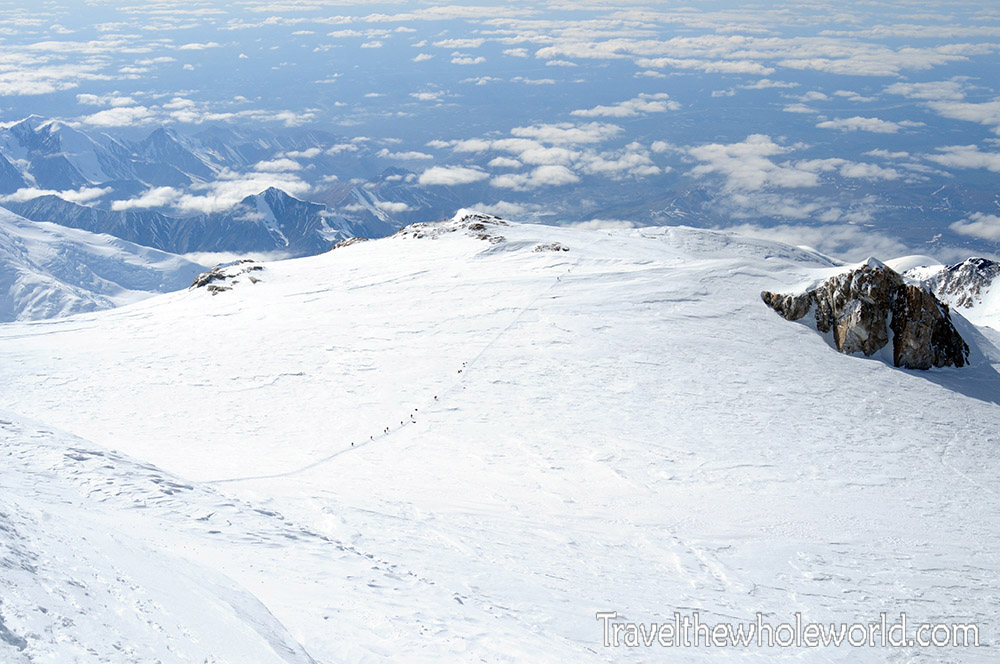
The Football Field
After climbing a few more hills we reached the famous Football Field, a relatively flat area where many climbers take their final major break before heading toward the summit. Several climbers, including us, decided to leave our packs here before continuing higher.
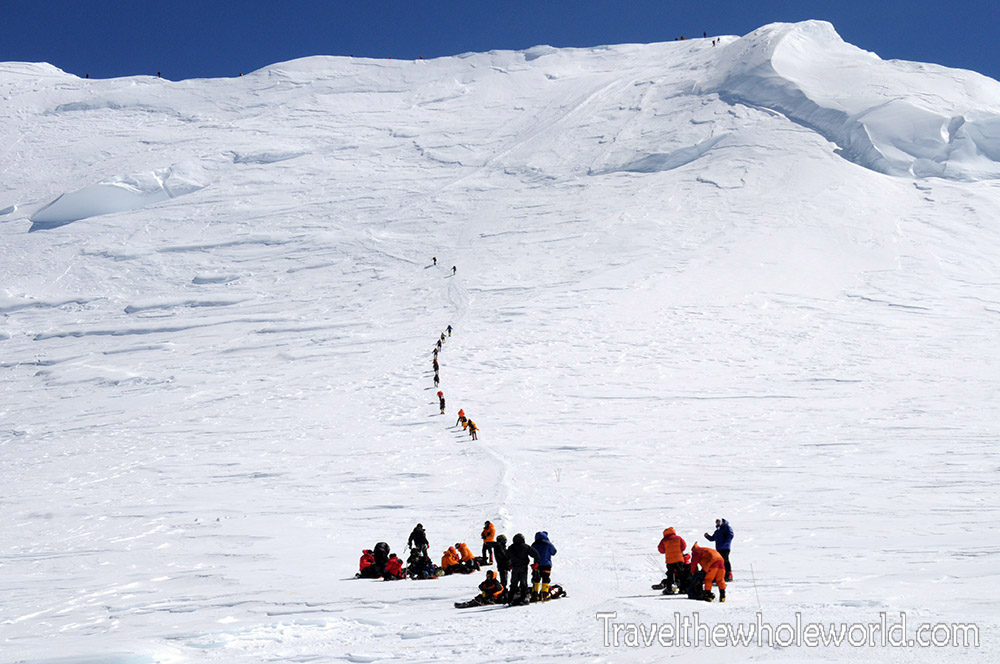
Pig Hill, Also Known as Profanity Hill
The final major climb before the summit ridge is known as Pig Hill—or, appropriately, Profanity Hill. It doesn’t look particularly difficult in photographs, but approaching 20,000 feet (6,000 meters), even a hill that looks simple can take an enormous amount of energy.
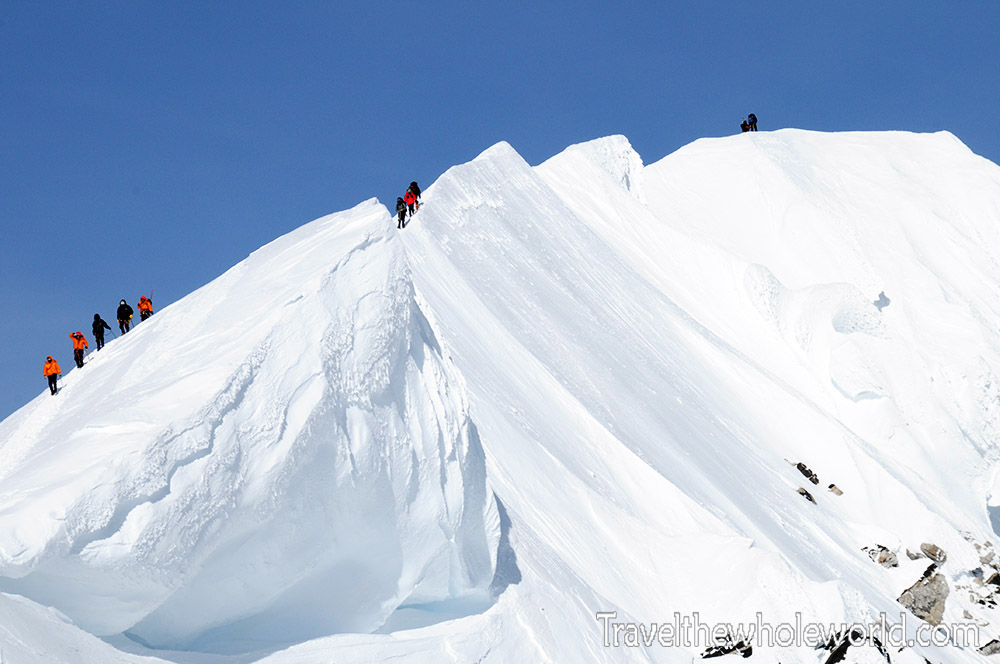
Denali’s Summit Ridge
At the top of Pig Hill, only the summit ridge remained. The final ridge is heavily corniced and extremely exposed. Under good conditions it usually takes less than twenty minutes to cross in each direction, but trying to do this in a whiteout or powerful winds would be incredibly dangerous. I also found it to be one of the most beautiful places on the entire mountain. I loved the contrast between the deep blue sky and the pure white ridge seemingly suspended in front of us.
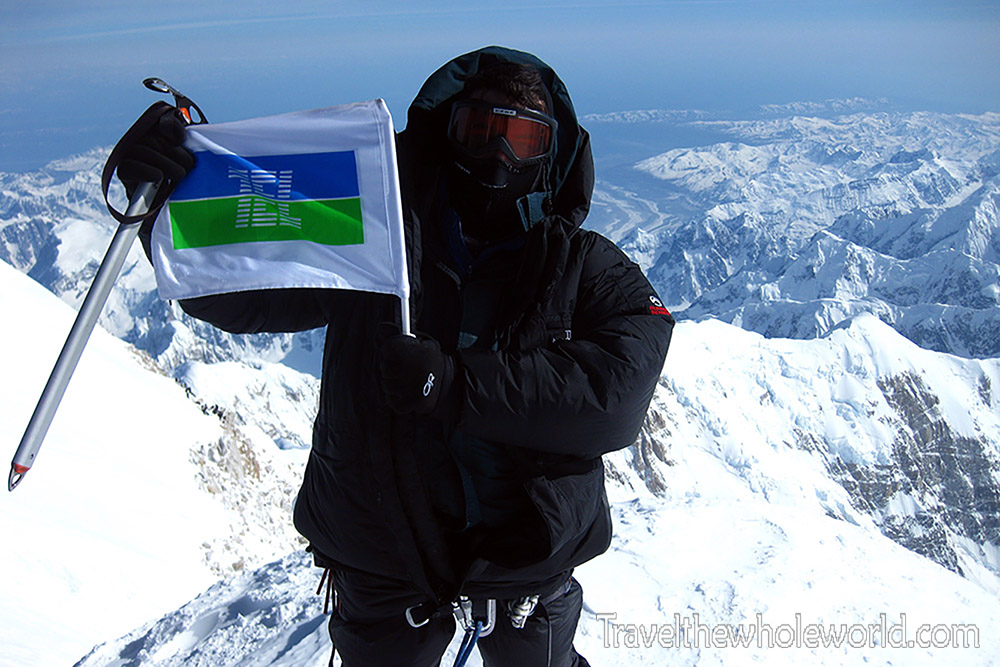
On the Summit of Denali
On the 22nd day of our expedition, I finally stood on top of North America. Earlier in the expedition I had accepted that we might never even get a chance to attempt the summit. Storm after storm kept pushing through, and there were plenty of moments when reaching the top seemed almost impossible.
Standing on Denali’s summit was an amazing feeling. All the sled pulling, fixed-rope climbing, cache carries, ice-wall building, waiting, and everything else we’d gone through hadn’t been in vain. When I reached the summit of Aconcagua the year before, I felt an overwhelming sense of accomplishment and joy. Denali had been such a struggle in so many different ways that when I finally reached the top, what I felt more than anything was relief. It wasn’t until I started descending the mountain and heading home that the accomplishment really began to sink in.
If you added together every minute it took our team to climb Denali, the expedition lasted roughly 32,000 minutes. We spent about ten of them on the summit. The winds were already getting stronger and the temperature was dropping as the day grew later, so we took our photographs, looked out across Alaska, and began the long journey back down.
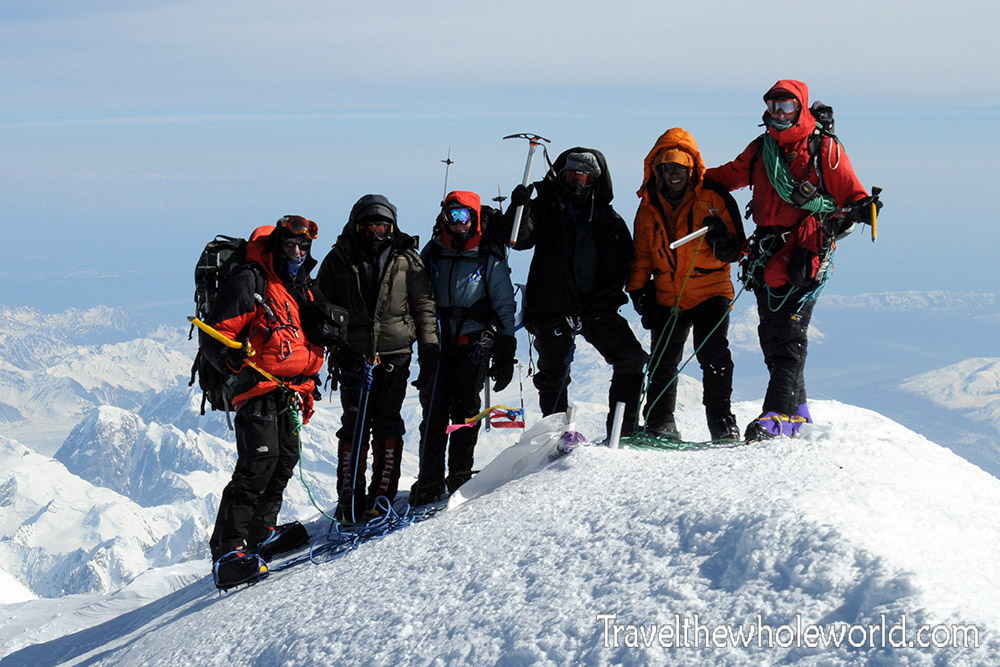
Our Expedition on Top of North America
Getting Off the Mountain
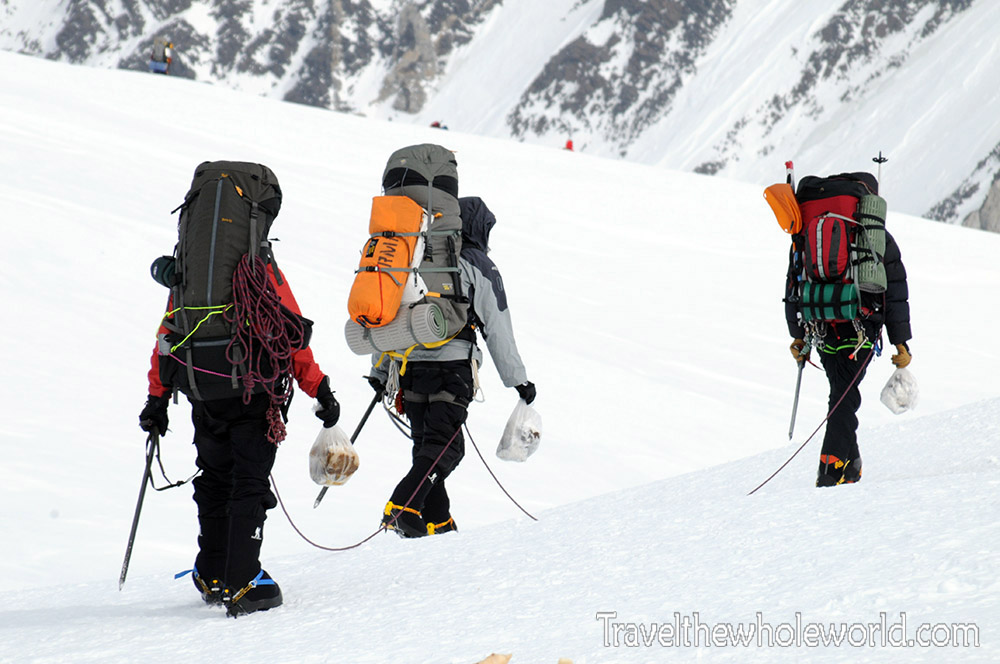
Everything We Brought Up Had to Come Back Down
After reaching the summit we returned to High Camp and crashed. On Day 23 we were only halfway finished. We had reached the summit, but now we still had to get ourselves—and everything we’d brought with us—off the mountain. You’re excited enough after summiting that the work doesn’t seem quite as bad anymore, although not everything about descending Denali is enjoyable. And yes, the climbers in the photo above are seriously carrying their crap down from High Camp.
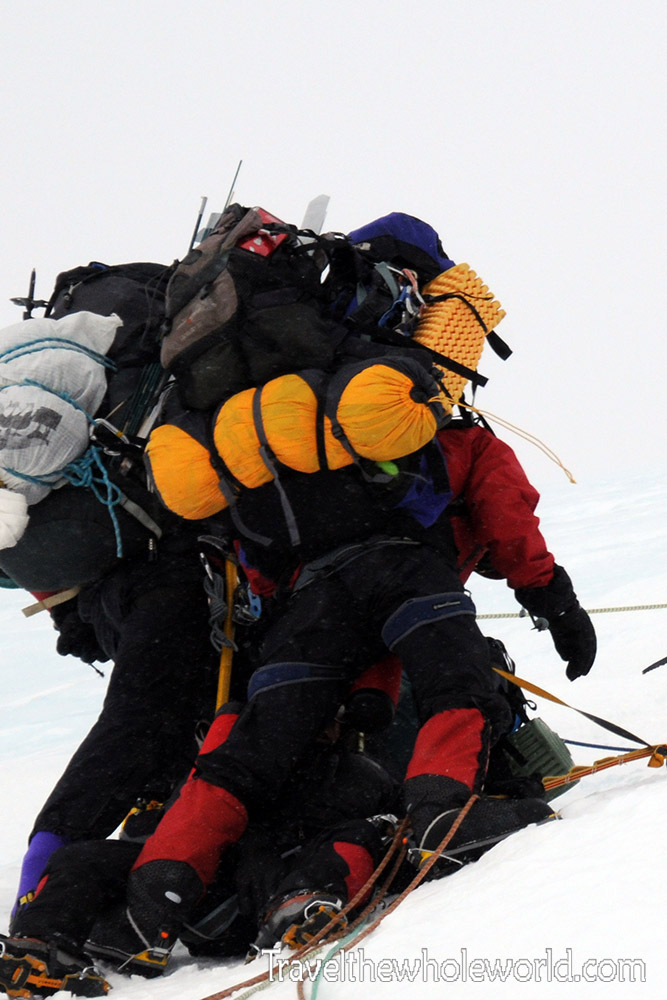
An Emergency on the Fixed Ropes
Although we were mentally celebrating our own success, the mountain wasn’t giving everyone a happy ending. After crossing the West Buttress and preparing to descend the fixed ropes, we came across a man being lowered down the mountain. We learned that he had suffered a heart attack around 19,000 feet (5,800 meters). At that altitude and on that terrain, there was no simple way to rescue him. He had actually managed to descend the West Buttress under his own power before others could begin lowering him down the fixed ropes.
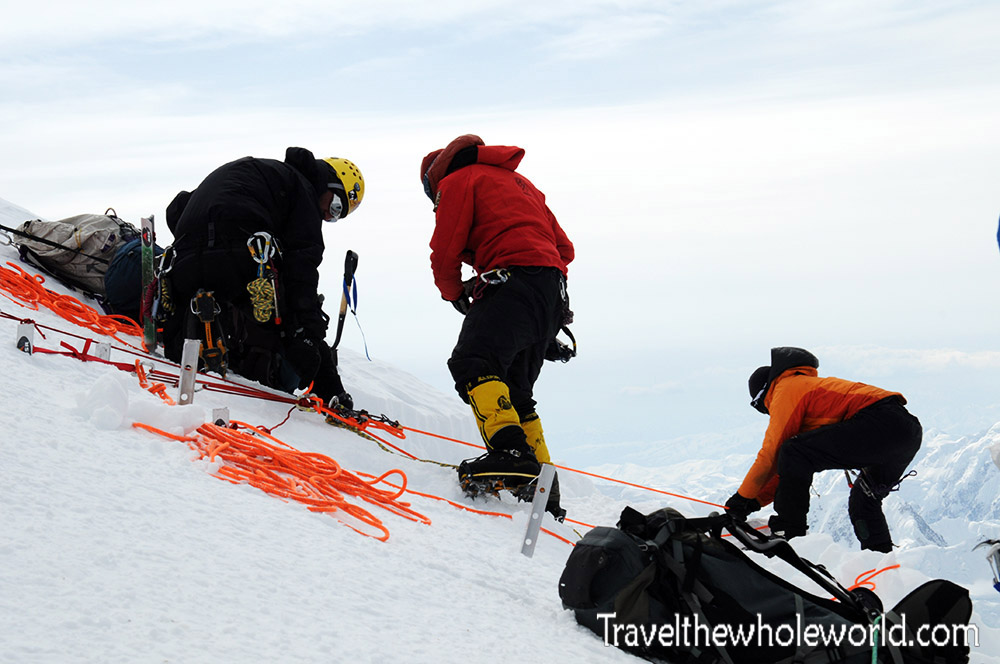
Descending the Fixed Ropes
You’d think after so much bad weather we’d finally get a full week of clear skies, but instead the bad weather quickly returned during our descent. The advantage was that we were now moving toward thicker air and safer terrain rather than climbing farther into the storm. Even so, getting off the mountain became one of the hardest days of the entire expedition.
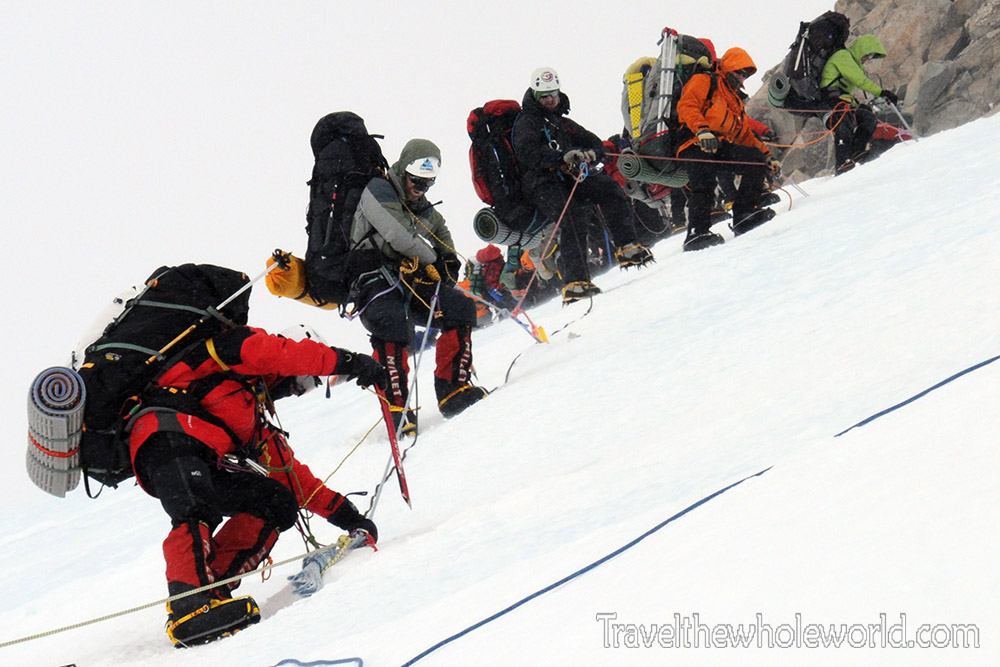
A Climber Being Assisted During the Descent
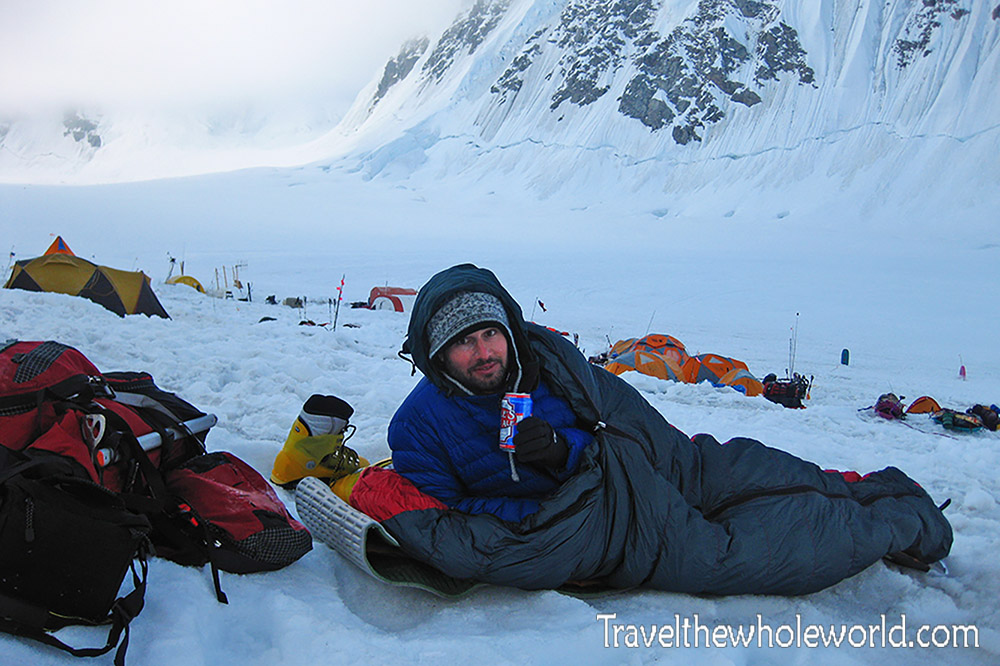
Back at Base Camp After 22 Hours of Descending
Our team decided we’d spent enough time on Denali. Instead of stopping at one of the lower camps, we moved nonstop from High Camp all the way to Base Camp—and I mean the landing strip, not Advanced Base Camp. We started around 7:30 in the morning and kept moving for 22 hours, collecting the equipment we’d left behind at each camp along the way. We finally reached the landing strip around 5:30 the following morning.
This far north, the sun never really set. We descended mostly in daylight, with only a few hours of twilight toward the end. At one point, lower on the mountain, two large geese flew directly over us. After weeks surrounded by nothing but snow, ice, rock, and climbers, seeing wildlife again felt almost strange.
When we finally reached Base Camp, we dug up beer we’d buried in the snow nearly a month earlier. We drank a little to celebrate, threw our sleeping bags directly onto the snow, and blacked out. I’d heard horror stories about climbers waiting as long as five days for weather good enough to fly out, and for a moment it looked like we might suffer the same fate. A few hours later the sky cleared and planes began landing on the glacier. Denali was finally over.
For nearly a decade, Denali remained the greatest challenge of my adventures. Years later, in 2016 and 2017, I would take on something even bigger when I climbed Mt. Everest from both Nepal and Tibet.