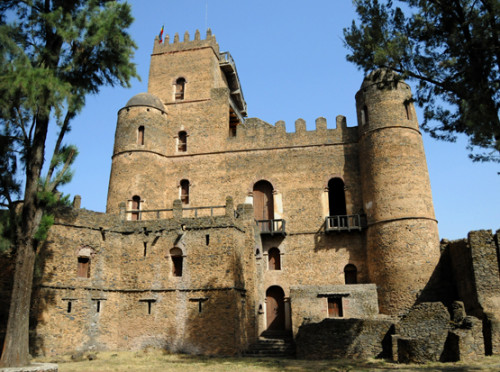
Back in 1635, Emperor Fasilides founded the city of Gondar and ruled from the Fasil Ghebbi complex he had built for himself. The complex included his own castle, and after he passed away the new emperors who took his place felt the need to add their own castles and expand Fasil Ghebbi. For nearly 200 years, the fortress complex served as the home of Ethiopia’s emperors, with Gondar as the country’s capital. The photo above shows the largest and original castle built by Fasilides.
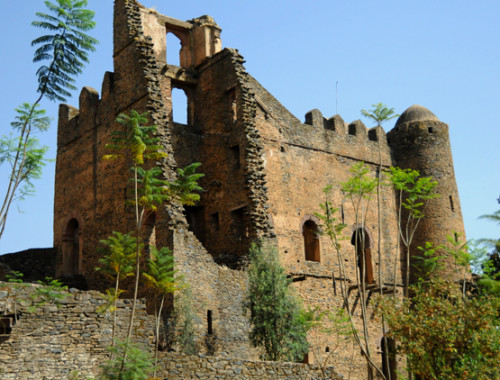
This is another of the main castles within the Fasil Ghebbi complex.
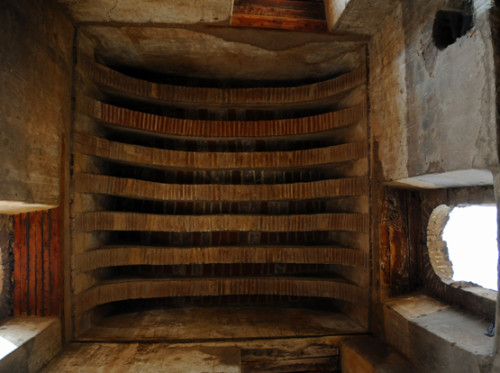
Some of the interiors of the castles are in better condition and have also been restored. These areas have been returned closer to the way they once looked, mostly by adding new wooden floors and repairing features such as the ceiling seen above.
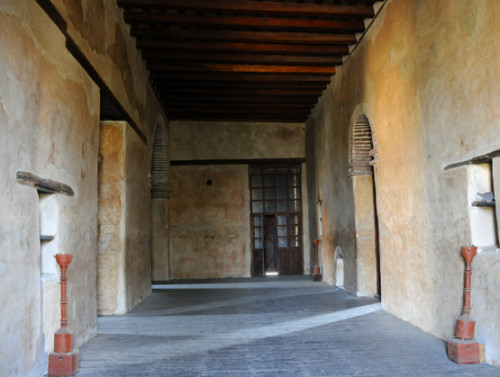
During World War II, the Italians occupied the castle while Britain was allied with Ethiopia. The British considered the Italian use of the castle as a defensive structure to make it a legitimate military target, and Gondar Castle ended up being bombed by British aircraft, resulting in the partial destruction of many parts of the fortress complex.
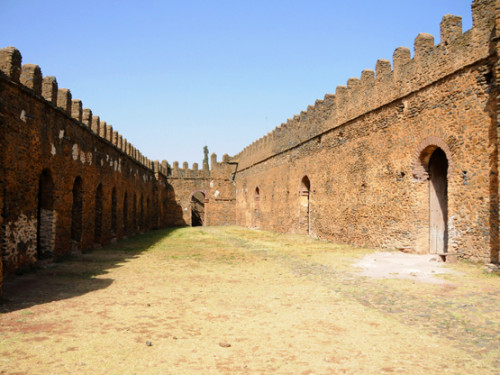
Other parts that seemed to have been restored included the castle courtyards and their horse stables, shown above.
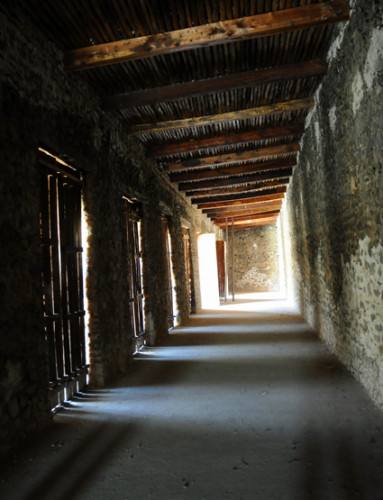
This photo shows the doors leading to the main banquet hall. Some parts of the castles were never restored and are still in ruins, or maybe there hasn’t been enough funding to recover these parts of the complex yet.
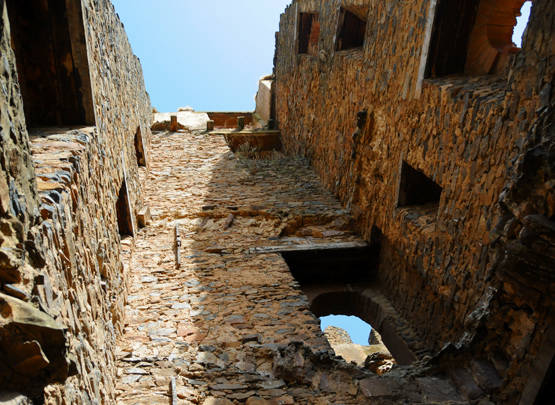
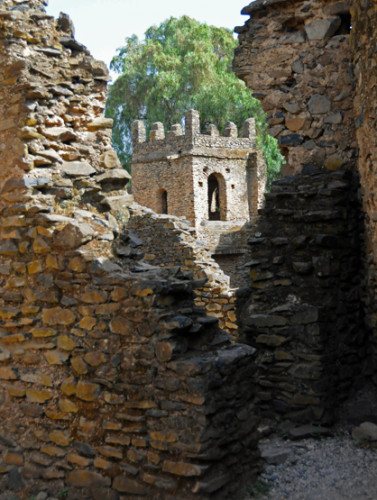
These photos show some of the deteriorating parts of the castle. I did worry about being hit in the head by falling bricks while walking under some destroyed ceilings and along beat-up walls, but everything stayed in place during my visit.
Fasilides’ Bath
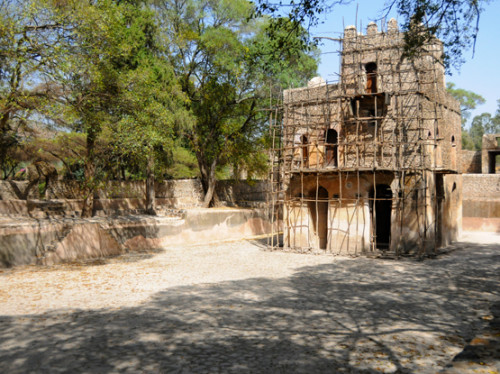
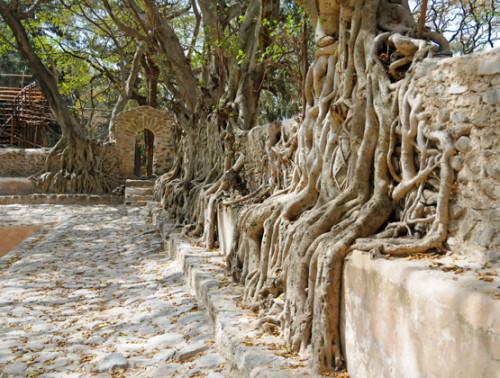
These photos are from Emperor Fasilides’ famous bath palace. Emperor Fasilides is viewed with mixed feelings today because of the religious conflicts that took place during his reign.
The bath is still used today and hosts one of Ethiopia’s most important religious ceremonies, Timkat. Unfortunately, when I visited they were doing some type of maintenance on the center structure and had drained the bath. Normally when the bath is filled with water, the center structure becomes an island and is the location where people are baptized while crowds line the outer perimeter.
Debre Berhan Selassie Church
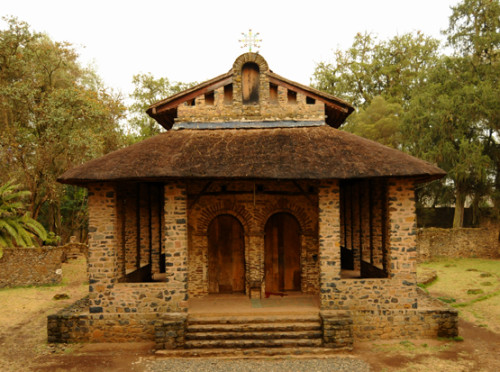
One last important place to visit in Gondar for me was another church by the name of Trinity. Honestly, I felt like I had been to so many churches during my time in Ethiopia that I almost skipped this one, but I was glad I didn’t. This church was built in the 18th century, with a unique design unlike most other churches in the country. The church is mostly constructed out of brick and bamboo, with small columns around the main structure.
The interior is covered with paintings like other churches in the country, but there is one painting inside that is insulting to another religion, so the church has a lot of controversy. None of the paintings here are restored, so they are in their original condition and have retained their colors over the centuries.
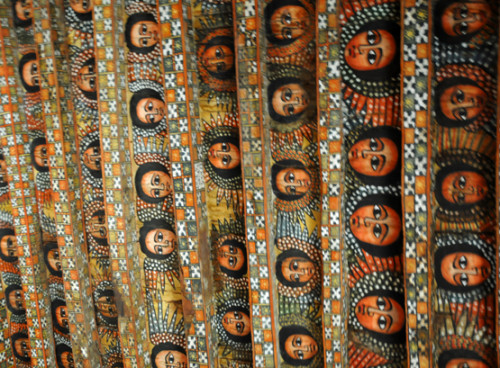
The photo above shows the church’s famous ceiling, which is covered with depictions of angels.
Birds of Ethiopia
I normally save all my wildlife photos for the end of the page, but since I didn’t do any real excursions into the wilderness of Ethiopia I can only share some photos of birds I came across during my trip.
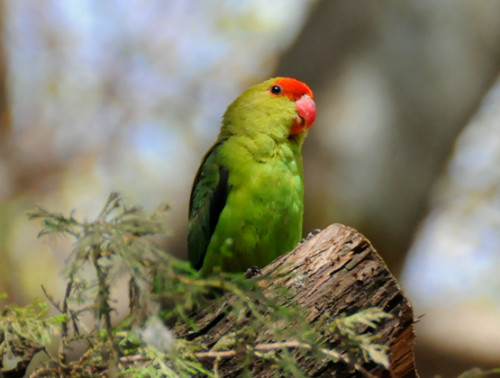
The bird above is the famous lovebird, a popular pet in the United States and probably Europe as well. As a kid I actually had a pair until they were able to escape, though I’m not sure if they made it back to Ethiopia. They are called lovebirds because pairs form strong bonds and are generally monogamous. This species is the black-winged lovebird, native to Ethiopia and Eritrea.
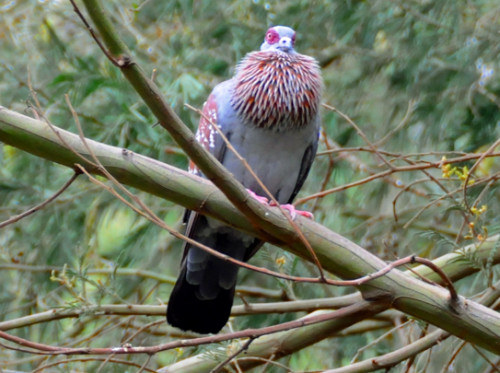
This is a not-so-attractive speckled pigeon.
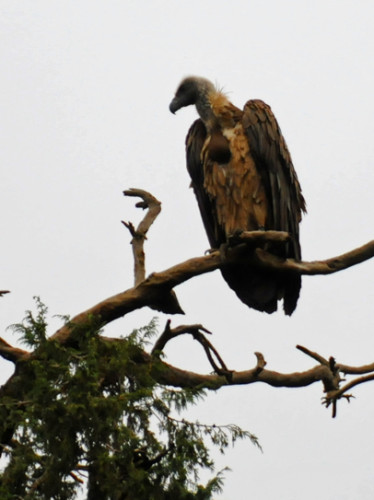
Vultures are also common where I live in Virginia, so seeing one wasn’t all that unusual to me. The vultures I have seen at home are turkey vultures, though, and were only about a third of the size of the enormous vulture above.
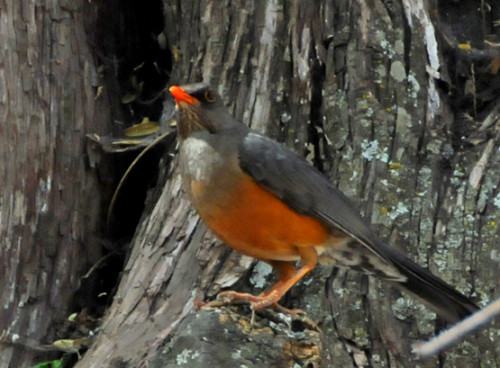
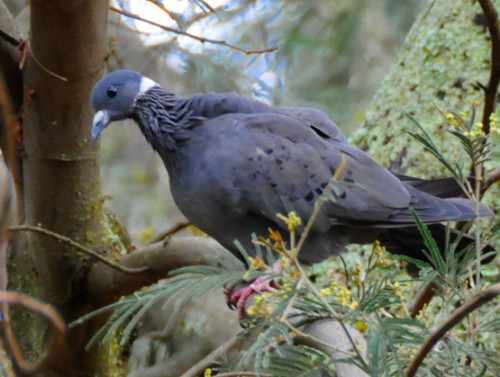
The white-collared pigeon above is endemic to this region of the world, and even though it’s just a pigeon I always like seeing new species of animals. Some of these pigeons here in Ethiopia made noises that I had confused with monkeys.
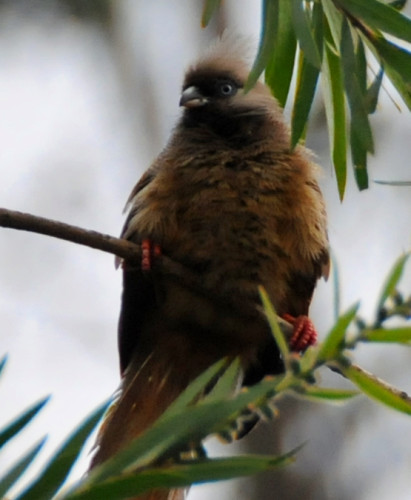
I never found out the species of the bird above.