After about eight hours of driving north from Kabul, I finally reached Mazar-i-Sharif, usually just called Mazar. Compared with Kabul, the city immediately felt calmer and more relaxed. It still looked unmistakably Afghan, but the pace felt slower and the atmosphere less intense.
The first thing I saw when entering the city was a large monument showing riders on horseback. A local initially told me it was just decoration, but I was convinced there had to be more to it. I later learned it represented buzkashi, Afghanistan’s famous horseback sport.
Entering Mazar-i-Sharif
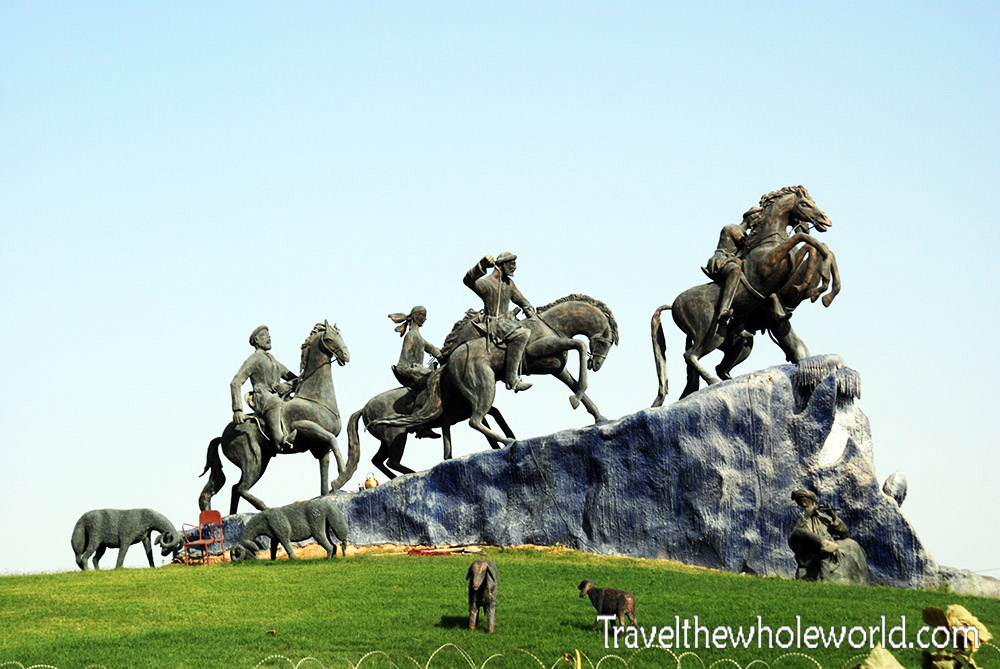
Buzkashi is played on horseback and involves riders competing for control of an animal carcass and carrying it toward a goal. I never managed to watch a match while I was in Afghanistan, but this monument was my first introduction to how important the sport is in the north.
I later heard that the statues had been painted in brighter colors. Personally, I thought they looked better the way I saw them.
A Different Feel From Kabul
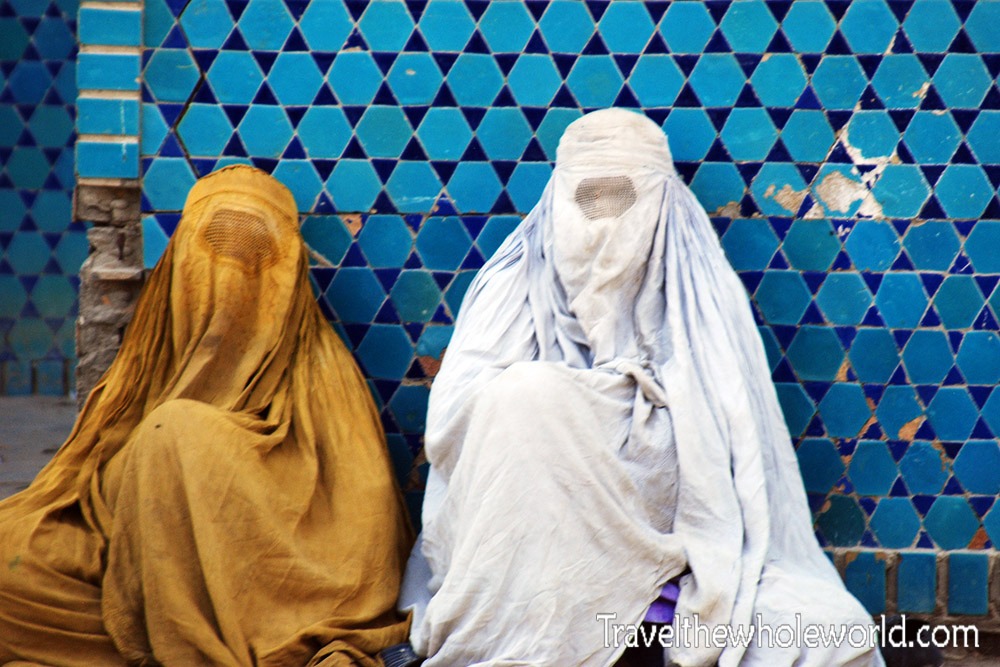
Mazar itself didn’t look dramatically different from other Afghan cities, but I noticed some small cultural differences almost immediately.
Blue burqas were still the most common, similar to what I had seen in Herat, but here I also saw white and even gold ones. Those were colors I hadn’t noticed elsewhere in the country.
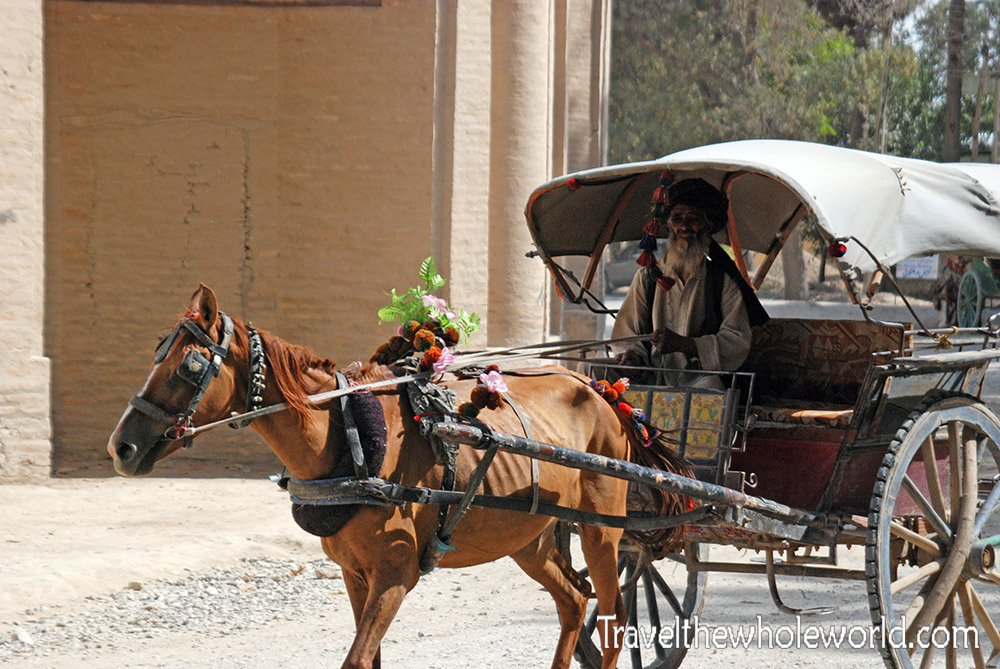
Mazar also had more of a small-town atmosphere than I expected from one of Afghanistan’s major cities. Horse-drawn carriages were common, and the streets generally felt less frantic than Kabul.
The Blue Mosque
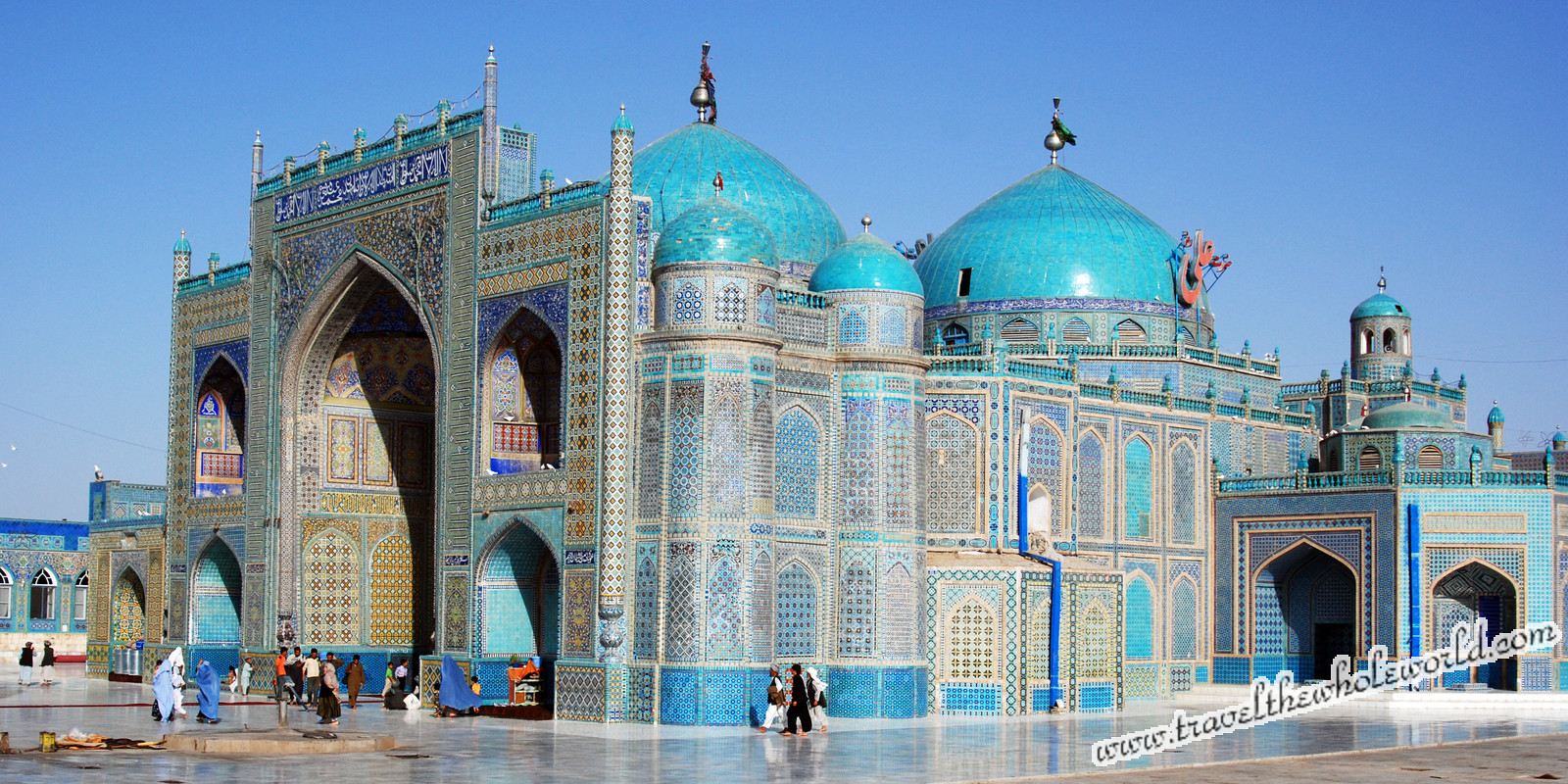
There was no question about the main attraction in Mazar: the famous Blue Mosque, also known as the Shrine of Hazrat Ali.
The site is associated with Ali ibn Abi Talib, the son-in-law and cousin of the Prophet Muhammad and one of the most important figures in Islamic history. Most traditions place Ali’s tomb in Najaf, Iraq, but another tradition claims his remains were brought to Afghanistan and buried here.
I wasn’t allowed inside the shrine itself, so I had to appreciate it from the surrounding complex.
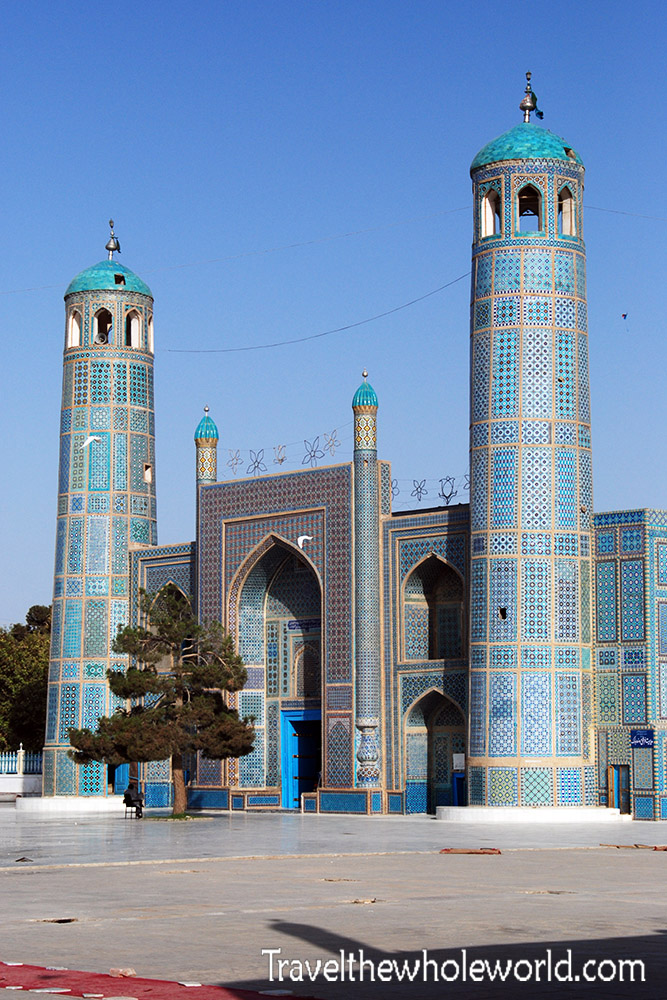
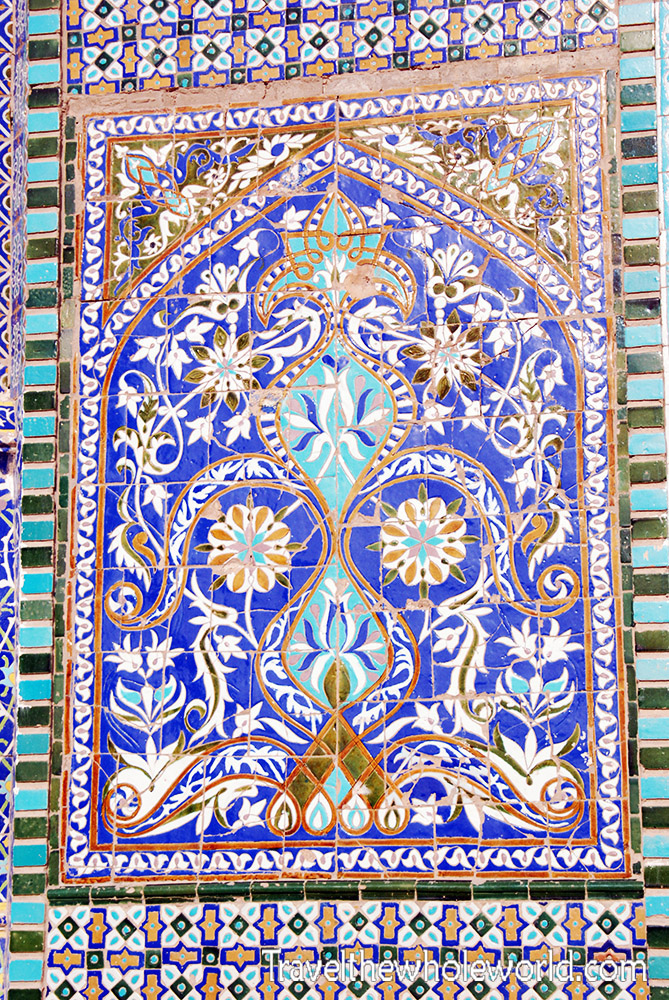
The mosque reminded me somewhat of the Friday Mosque in Herat because of the enormous amount of decorative tilework. The entire complex seemed to glow blue in the sunlight.
The White Doves
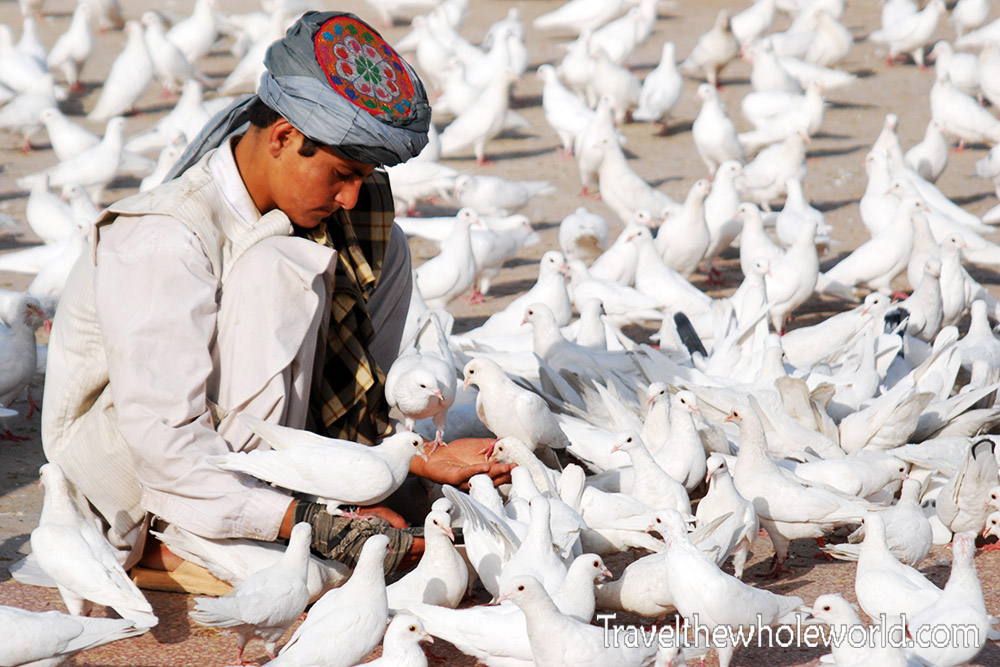
One of the strangest things about the Blue Mosque was the birds.
There were thousands of doves around the complex, and every single one I could find was white.
A local tradition says that if a colored dove comes to the shrine, it will turn white after forty days.
I took that as a challenge and seriously tried to find one that wasn’t white.
I failed.
No Gumbad Mosque
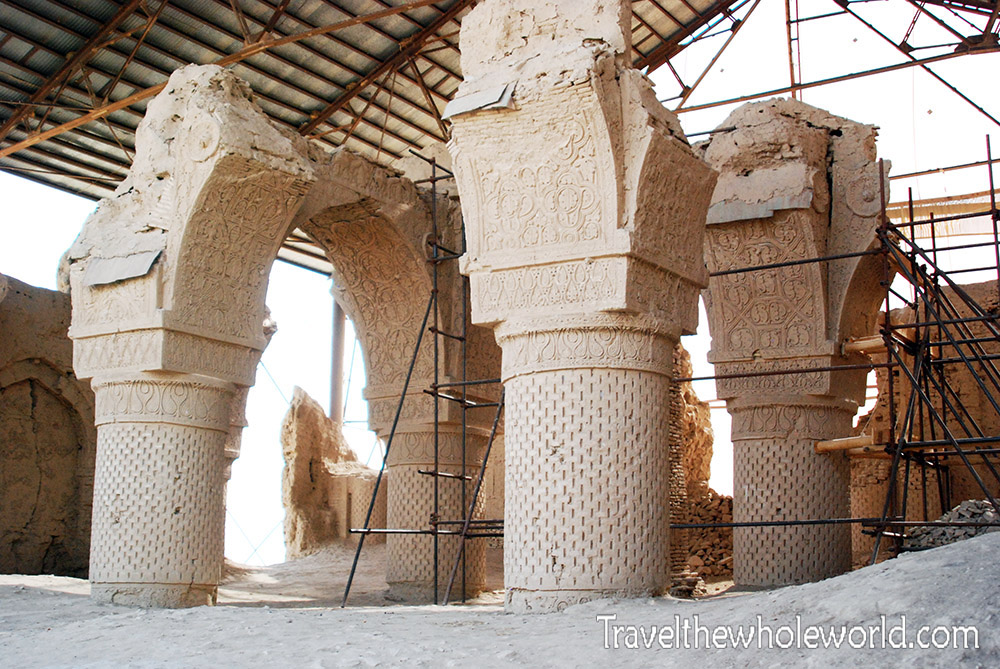
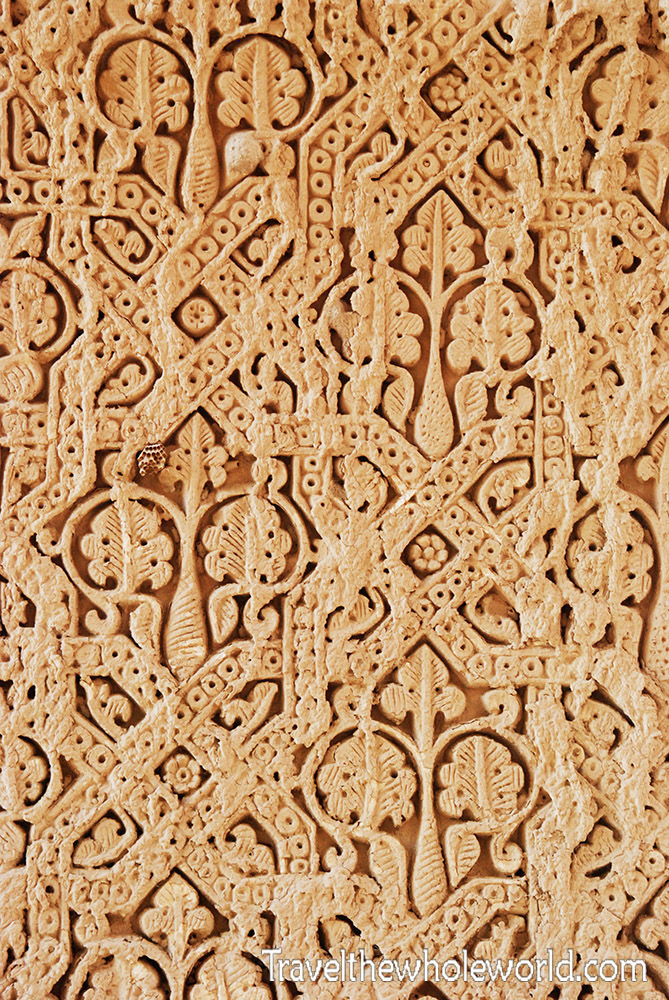
Another important religious site near Mazar was No Gumbad Mosque, sometimes called the Nine Dome Mosque.
Only fragments survive today, but the ruins include several beautiful arches and columns. When I visited, restoration work was underway.
The site felt almost abandoned. I thought I had the whole place to myself until I discovered an old man sleeping on a cot in the shade behind the ruins.
Once he woke up, he asked me for a donation.
Ancient Balkh
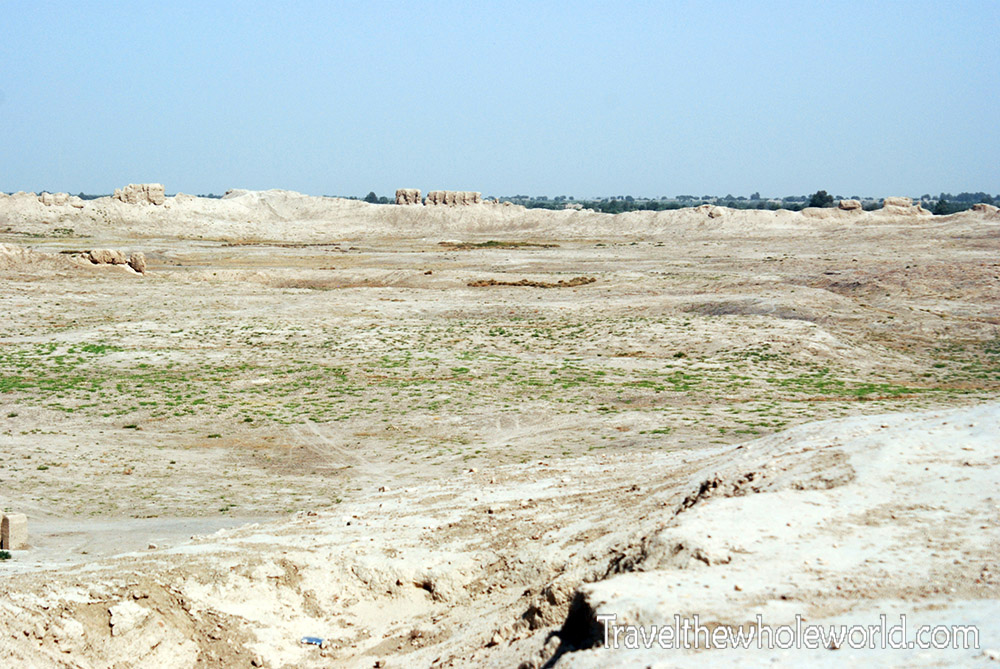
Long before the Blue Mosque existed, this region was already one of the great centers of Central Asia.
The area around modern Mazar includes ancient Balkh, which changed hands repeatedly over thousands of years and was conquered by Alexander the Great during his campaigns through the region.
Much of the surviving construction was made from mud brick, so time and weather have slowly melted the walls back into the landscape.
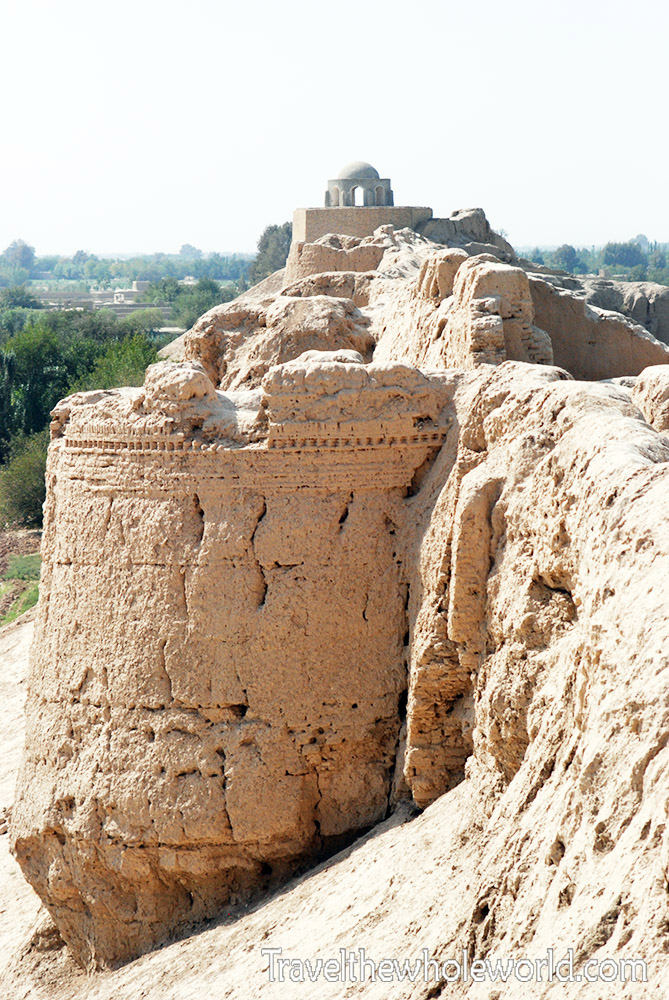
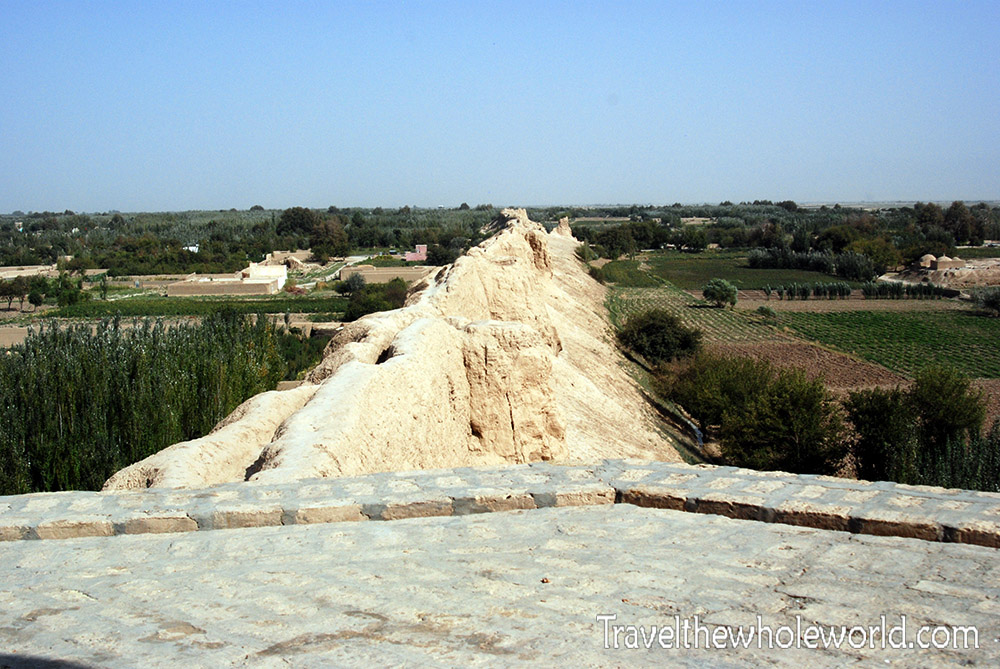
I hiked along the wall, jumping over large gaps and occasionally discovering wasp nests built into the old structure.
That added a little more excitement than I really needed.
Wildlife in the Ancient Walls
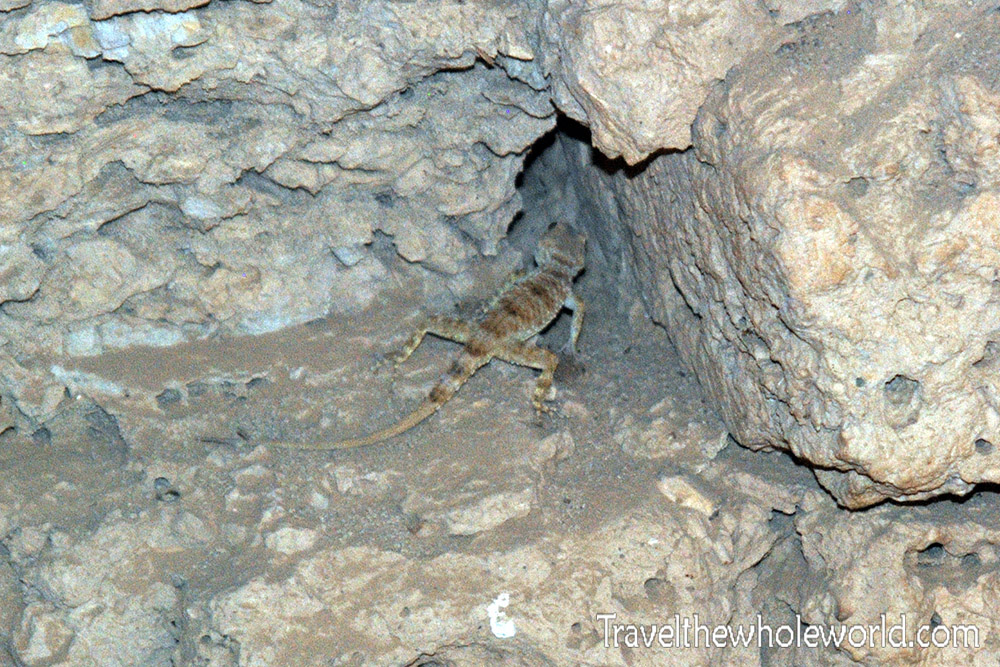
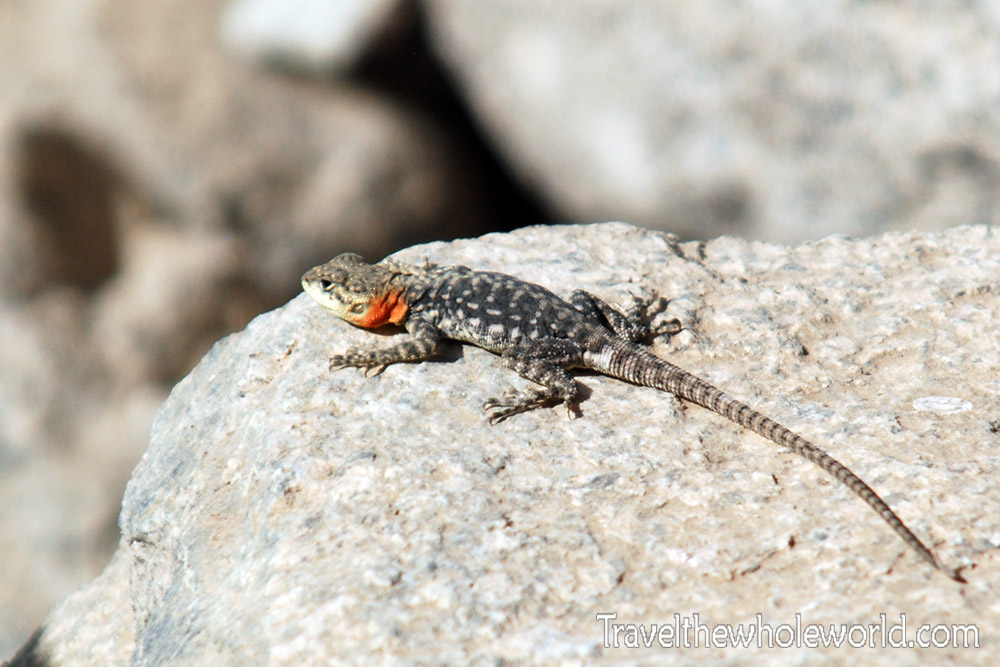
The wasps had at least attracted plenty of predators. I saw several geckos and lizards living among the ancient walls.
One of the geckos was much larger than I expected and seemed perfectly at home inside ruins that were thousands of years older than it was.
The Road Between Kabul and Mazar
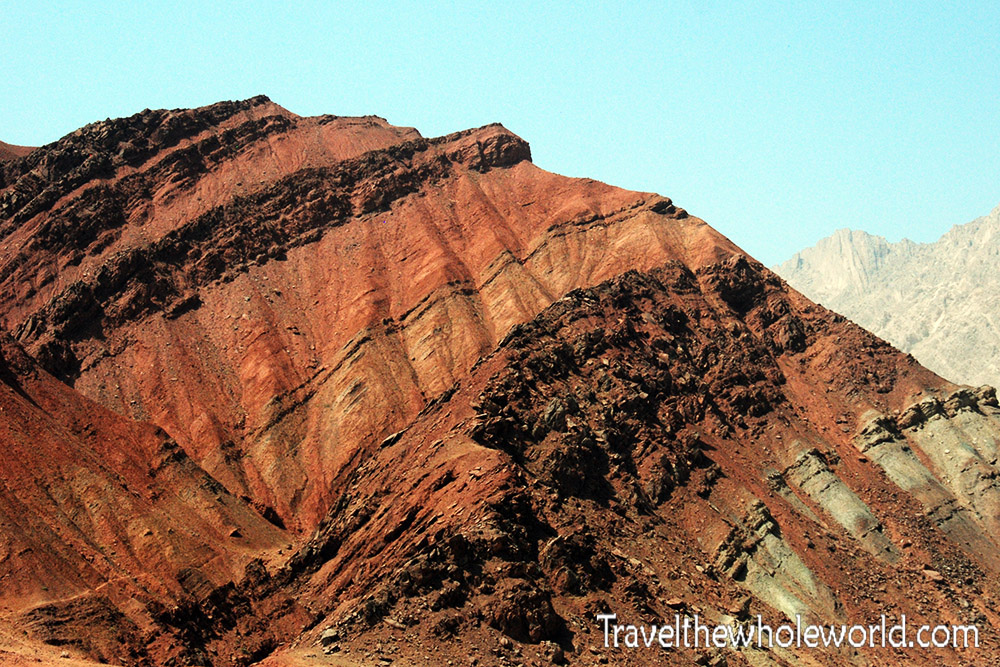
Some of my favorite photographs from this part of Afghanistan weren’t actually taken in Mazar at all. They came from the long drive between Kabul and the north.
The road crossed steep, dry mountains before eventually descending toward flatter agricultural land.
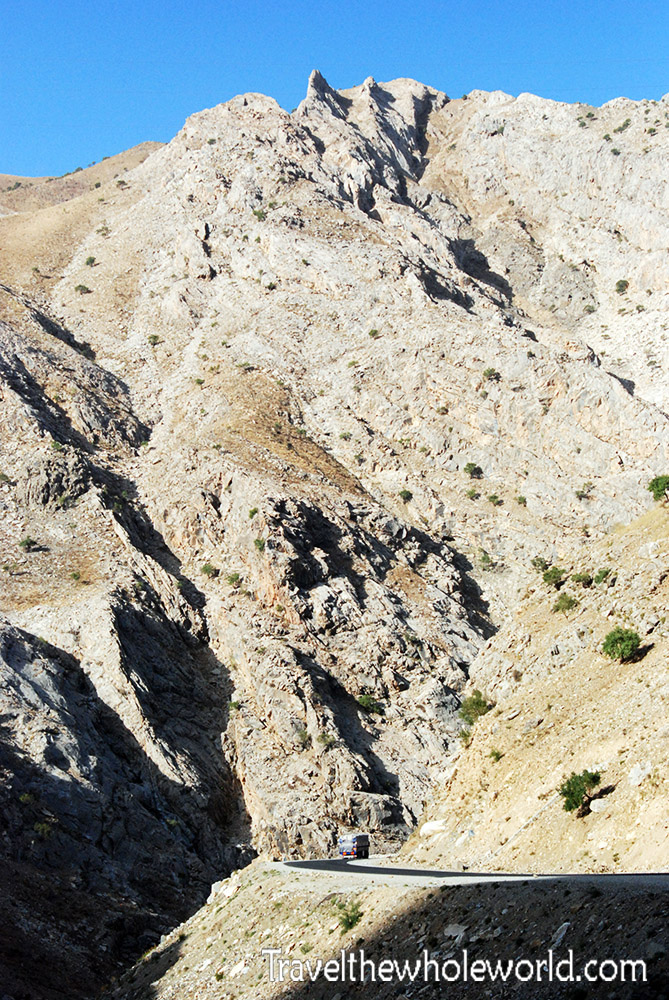
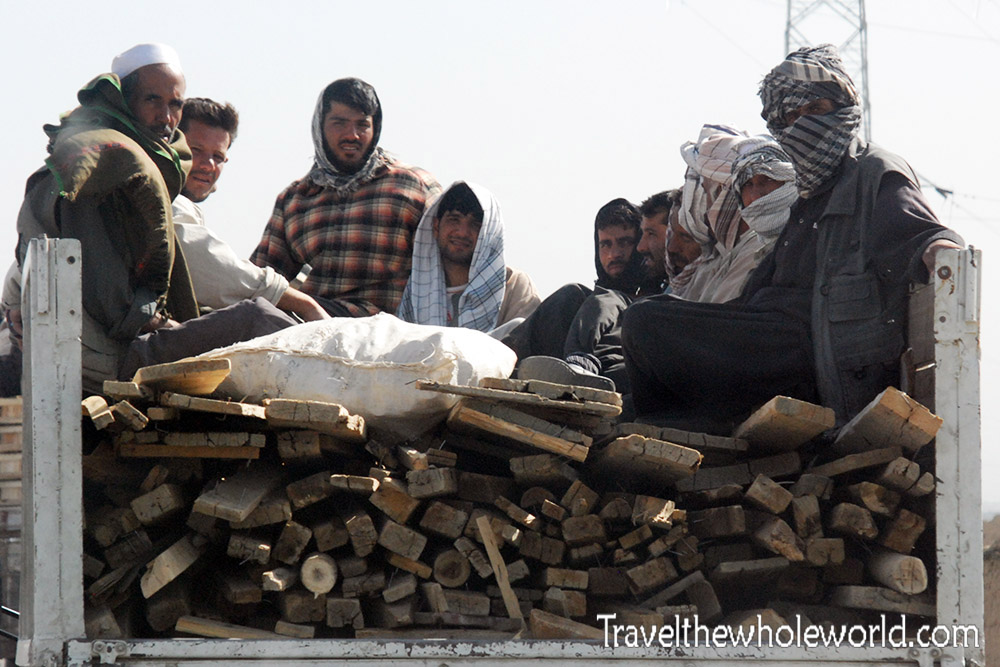
Traffic was relatively light for much of the drive. At one point I photographed a group of people riding in the back of a truck and waved as we passed.
Most of them smiled and waved back.
Through the Mountain Tunnels
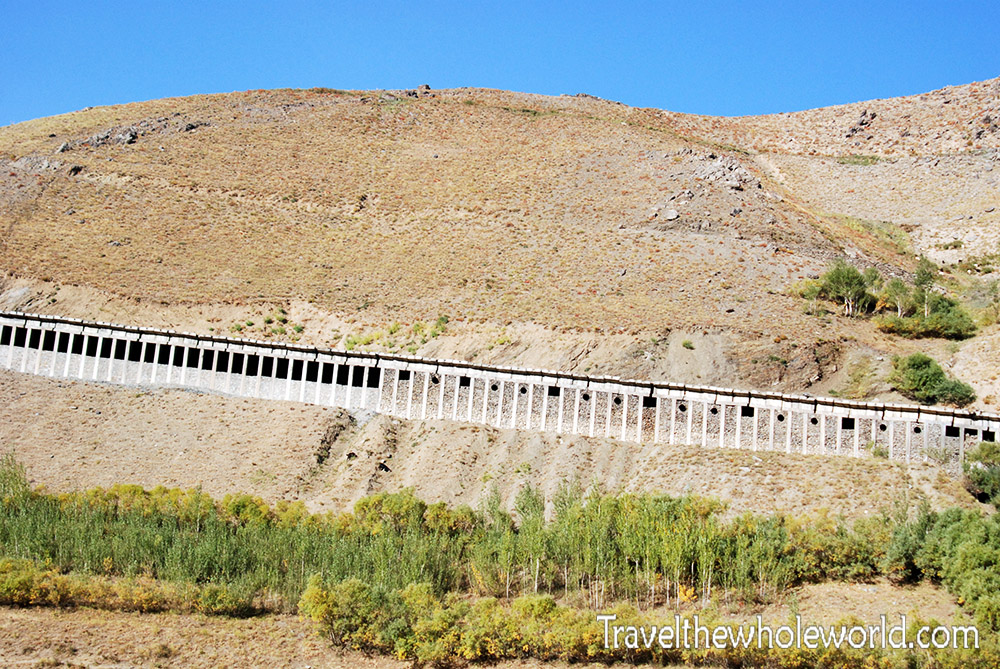
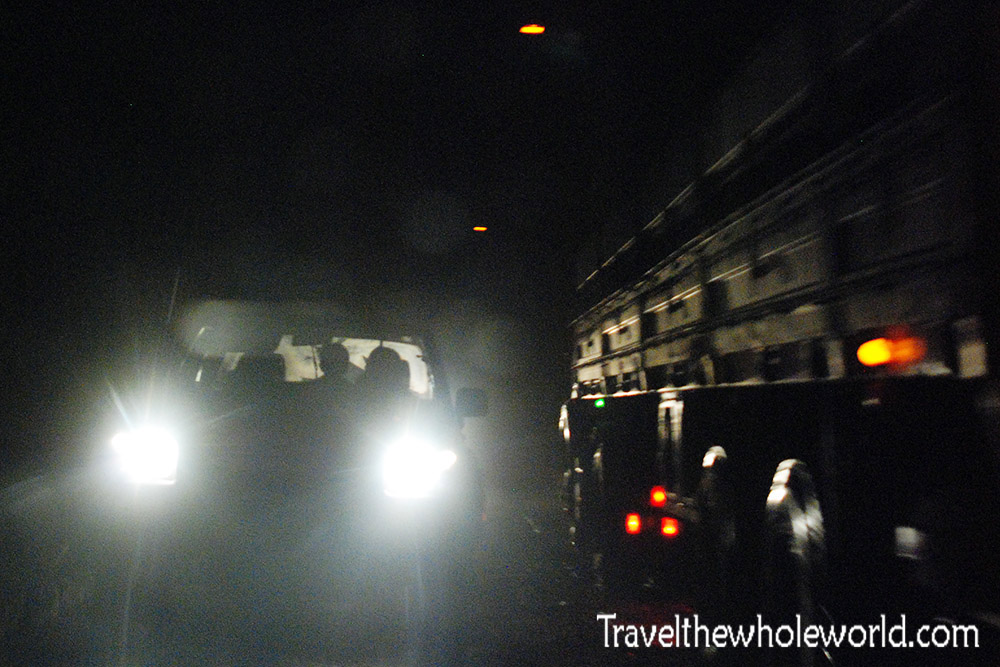
The road passed through several tunnels, including sections built into the side of the mountain so rockslides could pass over the roadway.
The larger tunnels were an experience of their own.
Years of war and neglect had left the interiors badly damaged. Even with the headlights on, some sections felt almost completely black because there was little inside to reflect the light.
Add large puddles from leaking water and it became a surprisingly interesting drive.
Following the River North
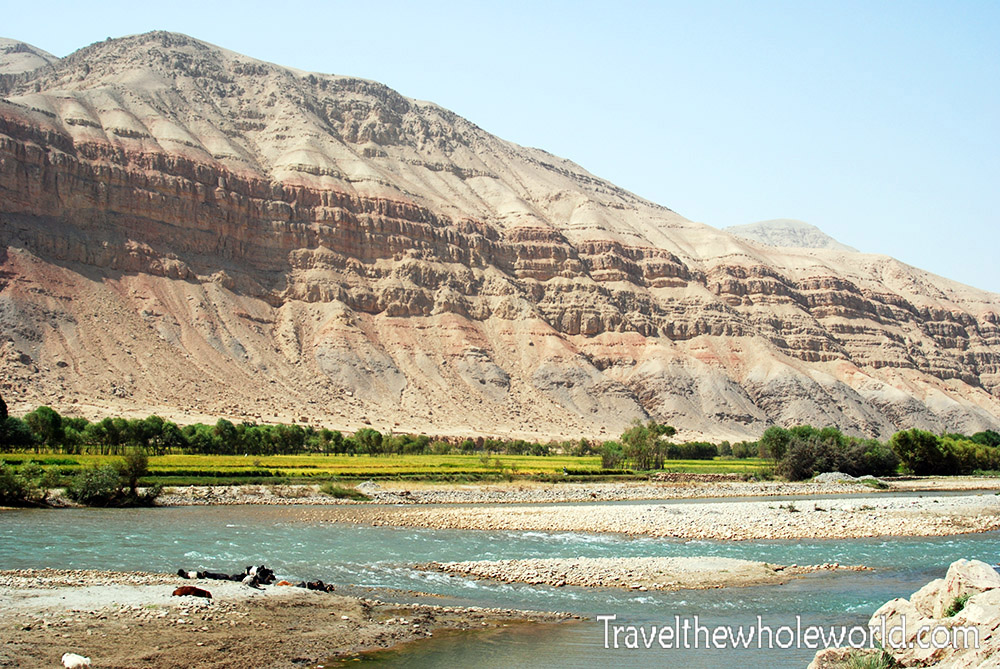
After descending from the highest mountains, the terrain gradually flattened out.
Much of the land remained extremely dry, but the road followed a fast-flowing river that supported farms and villages along its banks.
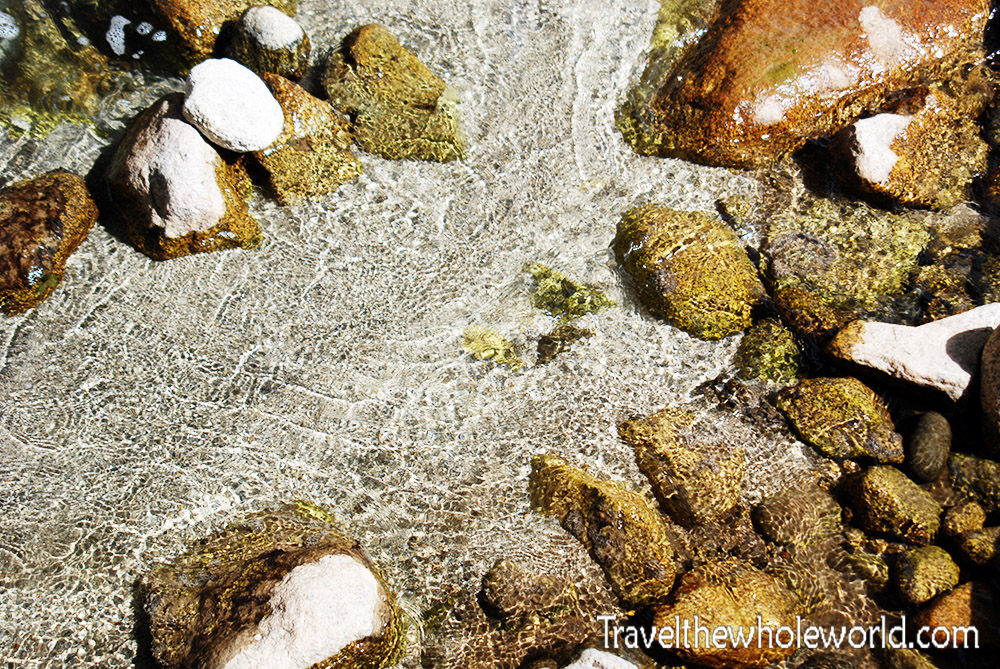
The water in some places looked incredibly clean.
I was almost tempted to drink it.
Almost.
Farming in Northern Afghanistan
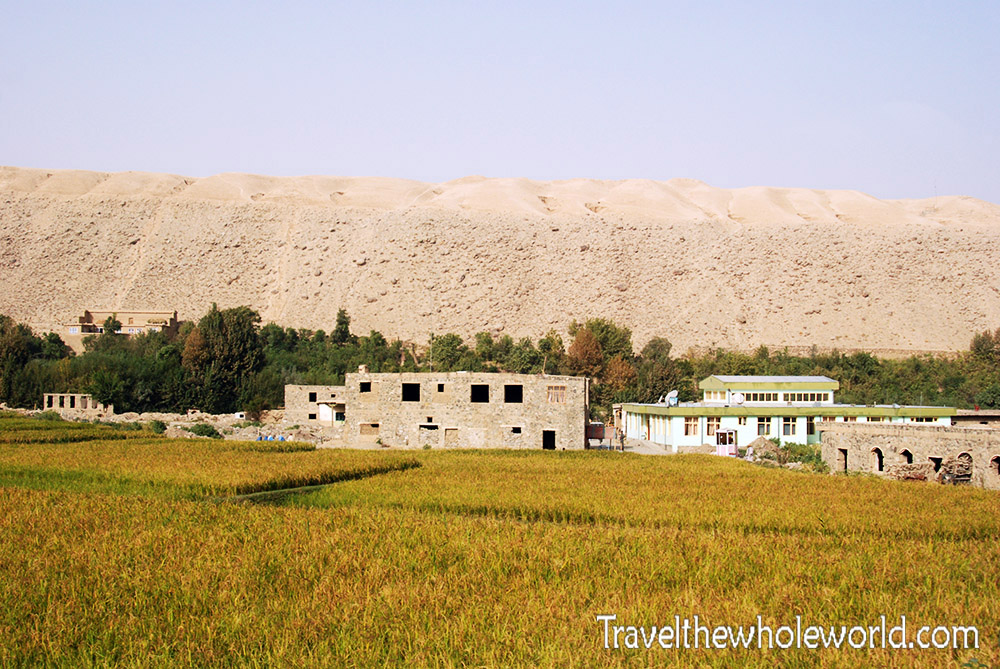
Once we reached lower elevations, I began seeing more agricultural villages. People were growing crops including rice and even corn in areas that otherwise looked incredibly dry.
When the Camels Fight Back
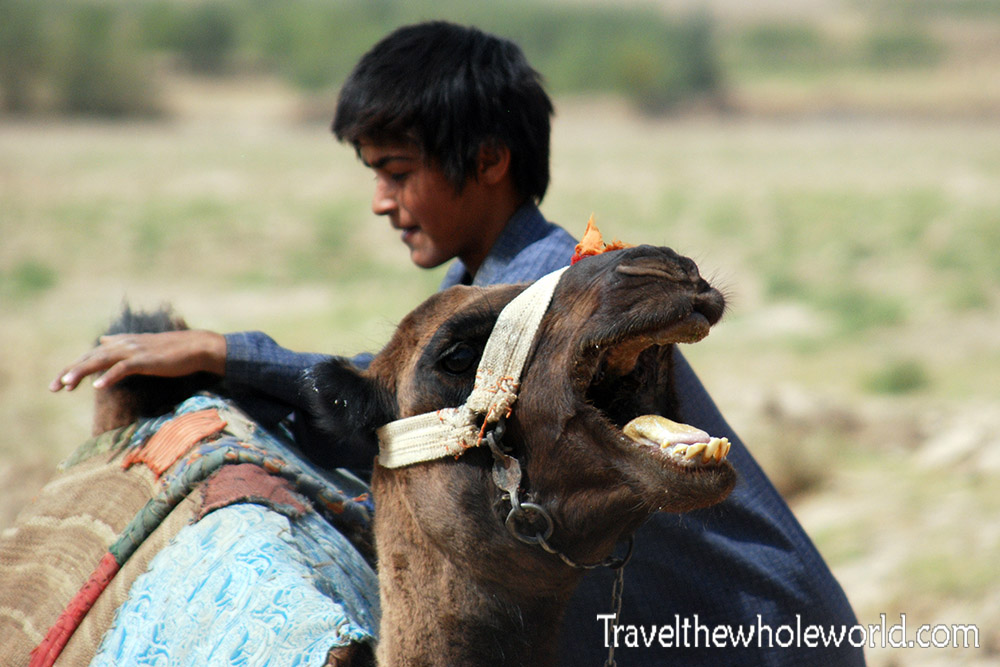
At one stop I found several domesticated camels grazing peacefully in a field.
Some local kids noticed that I was photographing them and apparently decided this was their opportunity to show off.
They started climbing onto the camels.
The camels strongly disagreed with this plan.
They had been perfectly happy eating and suddenly started screaming when the kids interrupted them. For a moment I seriously thought I was about to photograph a camel attack.
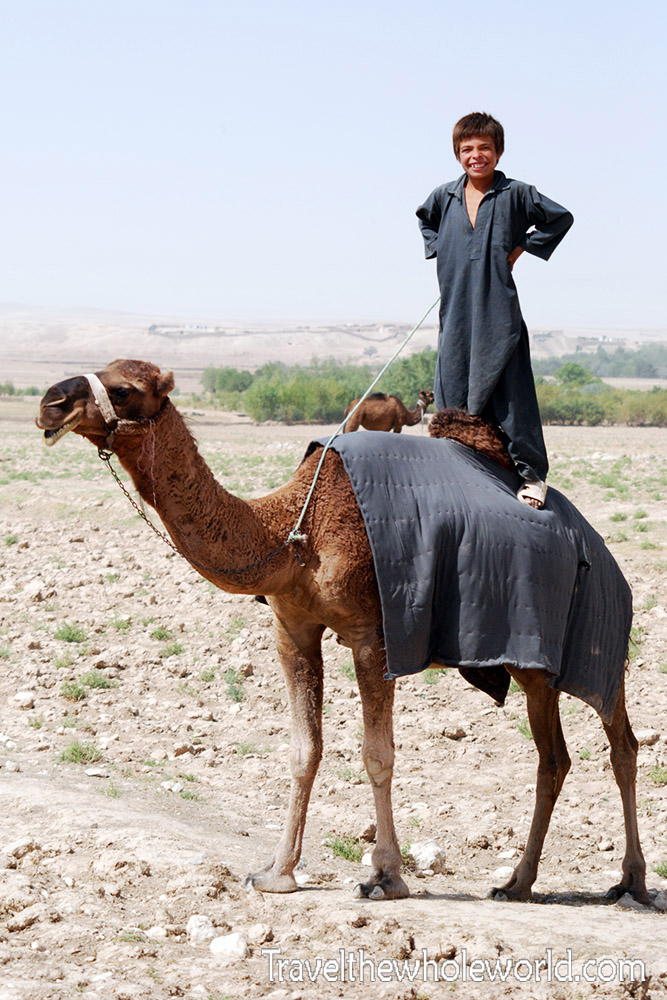
Somehow the kids won.
Villages Along the Highway
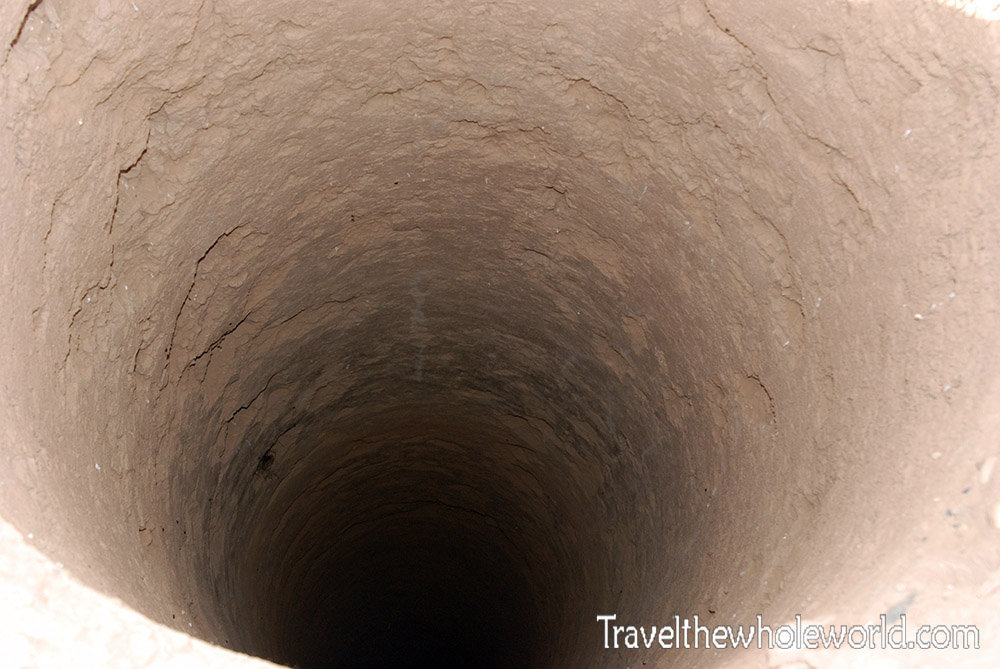
Other places along the route seemed almost abandoned. Old walls and wells were sometimes all that remained.
Without the modern highway passing nearby, some of these places looked like they could have existed almost unchanged for centuries.
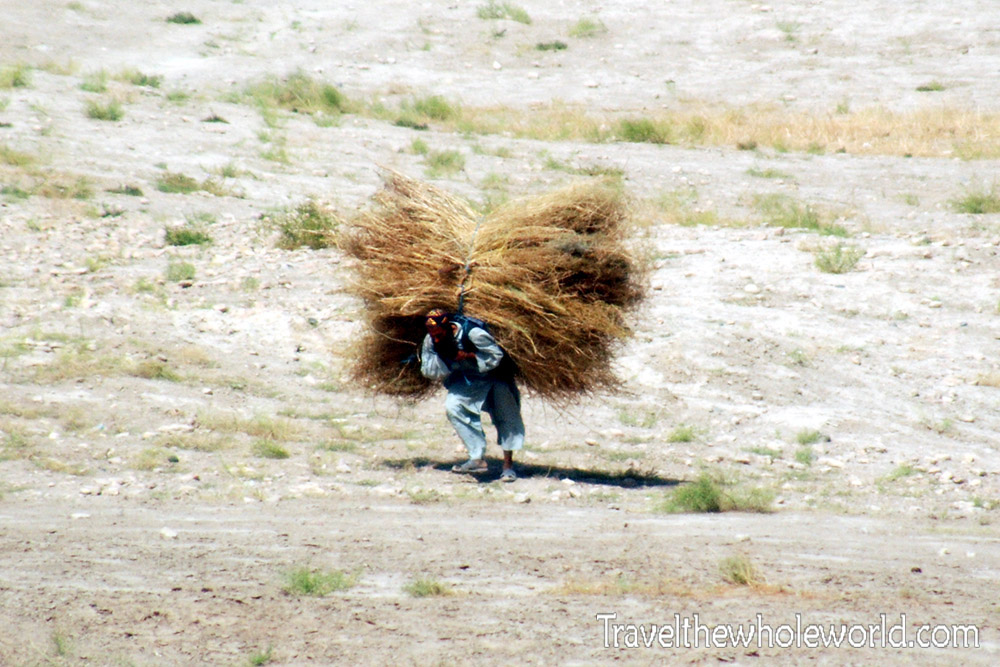
This man was carrying an absolutely ridiculous amount of hay.
I would normally expect some kind of farm animal to be doing that work.
After a lifetime of carrying loads like this, he was probably strong enough to climb Denali.
Afghanistan’s Buddhist Past
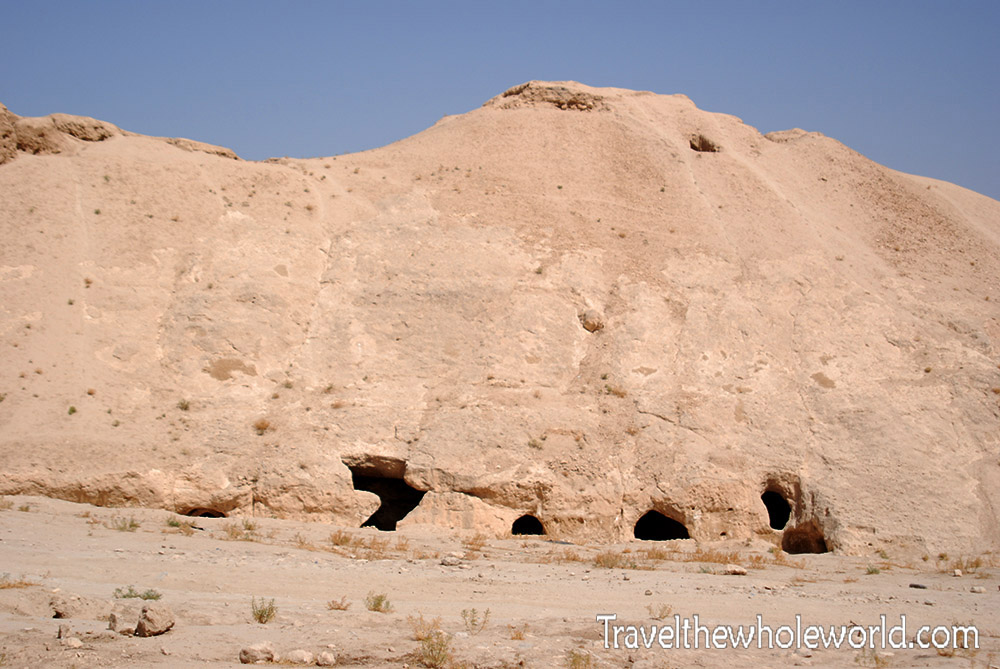
One of the most interesting stops on the road north was Takht-i Rustam.
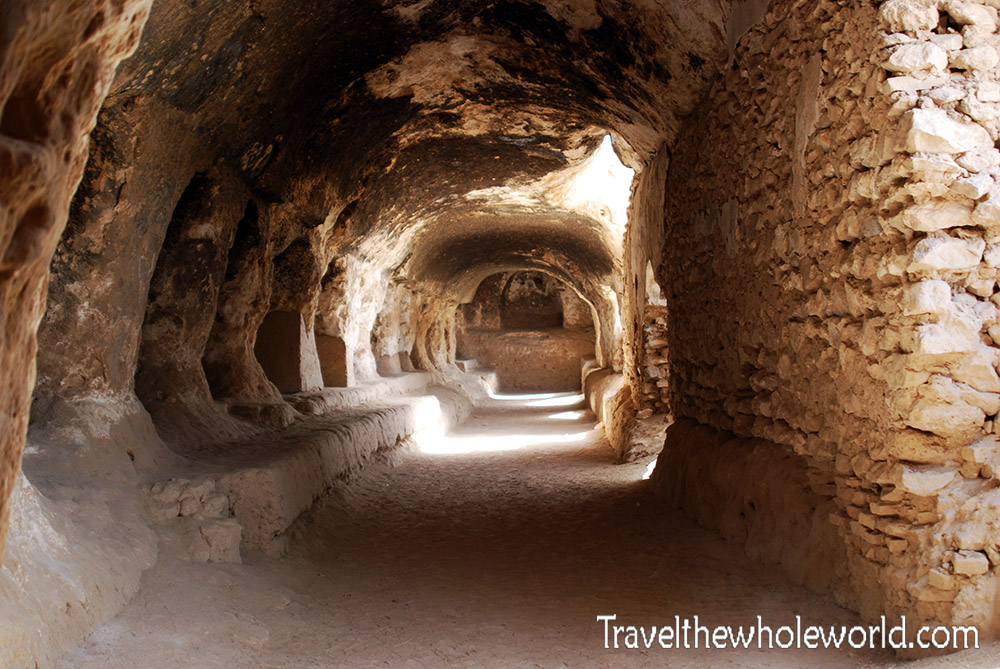
Before Islam became dominant in Afghanistan, Buddhism had a major presence across parts of the country. Here, rooms and hallways were carved directly into the rock to form a Buddhist monastic complex.
Small openings in the ceilings allowed sunlight into the otherwise dark rooms.
Takht-i Rustam
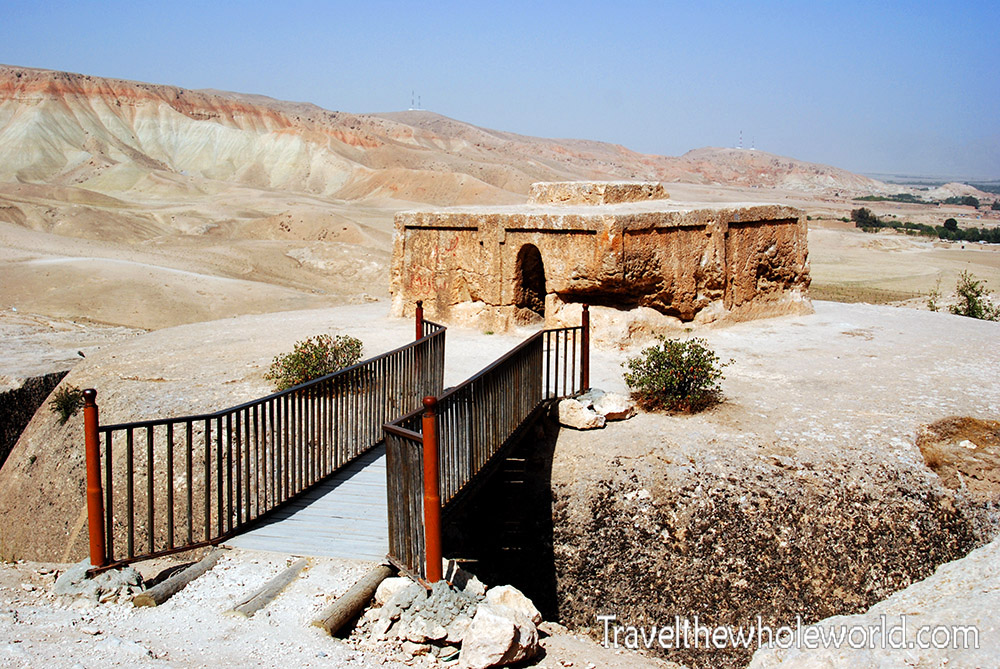
The most impressive structure was the stupa.
Unlike most stupas, which are constructed upward from the ground, this one was carved downward into solid rock. The surrounding earth was removed to create the structure rather than stones being stacked to build it.
Standing there made it difficult to imagine how different Afghanistan must have looked more than a thousand years ago, when Buddhist monasteries and communities were spread across parts of the country.
After seeing so many Islamic monuments during the trip, finding a surviving Buddhist site made Afghanistan’s history feel even deeper.
My Time in Mazar-i-Sharif
Mazar-i-Sharif was one of the most relaxed places I visited in Afghanistan, but the city itself was only part of what made this section of the trip memorable.
The Blue Mosque was easily the highlight, especially with thousands of white doves surrounding it, but nearby I could also walk through the remains of ancient Balkh and visit one of Afghanistan’s oldest surviving mosques.
Then there was the road itself: dark mountain tunnels, clear rivers, farming villages, angry camels, enormous loads of hay, and Buddhist caves carved directly into the mountains.
By the time I returned toward Kabul, northern Afghanistan had shown me another completely different side of the country.