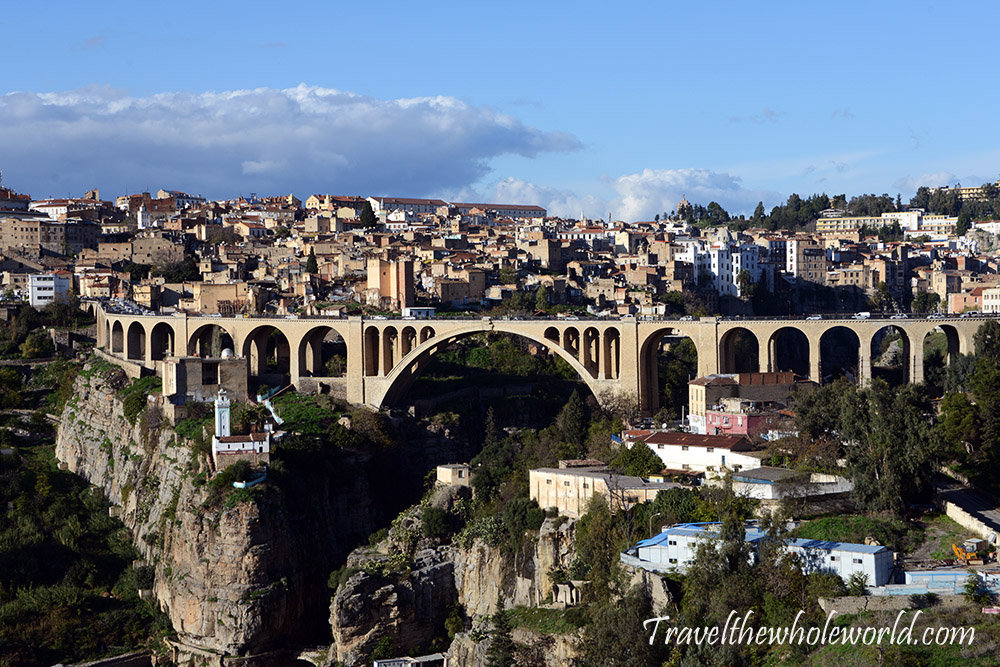
Constantine is probably the most amazing city I visited in Algeria. Filled with ancient history, beautiful architecture, and some of the most dramatic urban landscapes I’ve ever seen, it was easily one of the highlights of my trip through North Africa.
I’ve visited several cities around the world that call themselves the “City of Bridges,” but none deserve the title quite like Constantine. The city is built around enormous ravines and cliffs, making its bridges an essential part of both its infrastructure and its identity. Above is one of the largest and most impressive of them, the Sidi Rached Viaduct.
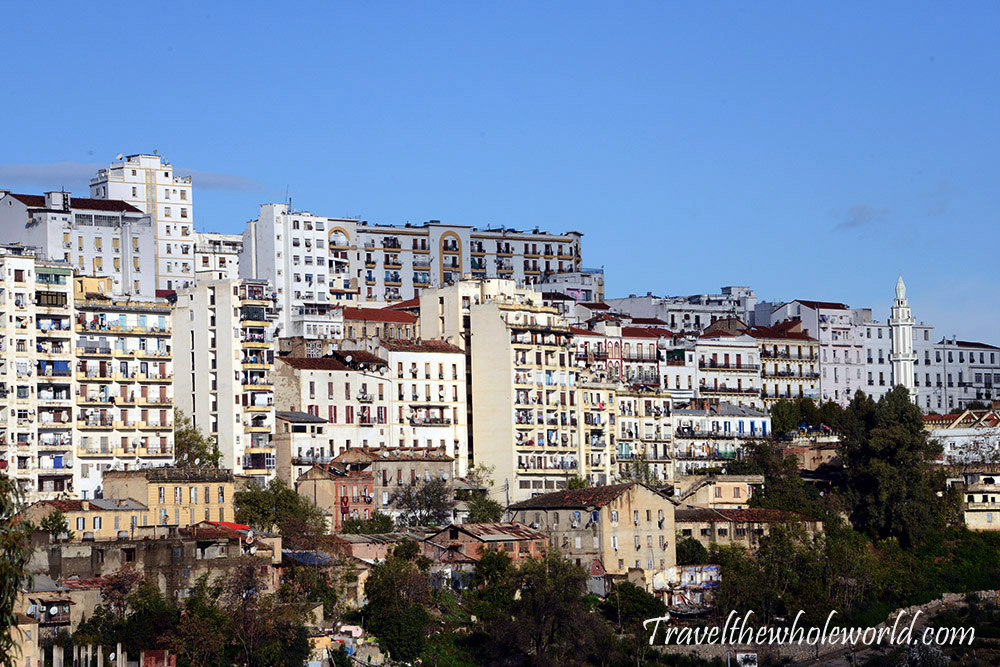
From certain parts of downtown, Constantine can initially look like any other large Algerian city. The center is packed with buildings, traffic, shops, and pedestrians. Walk a little farther, however, and suddenly the streets reach the edge of a massive gorge.
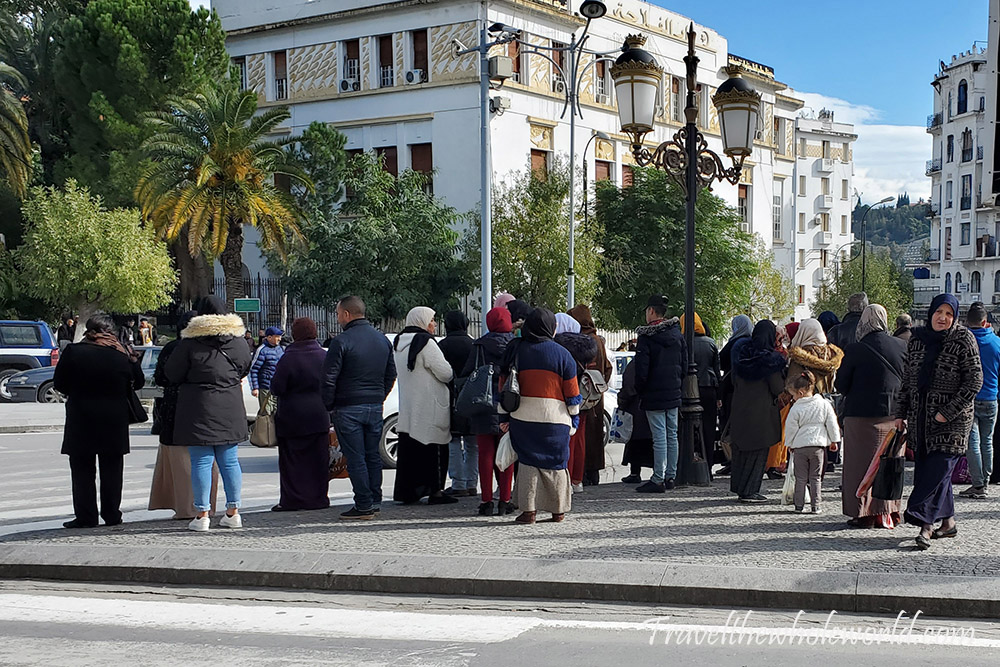
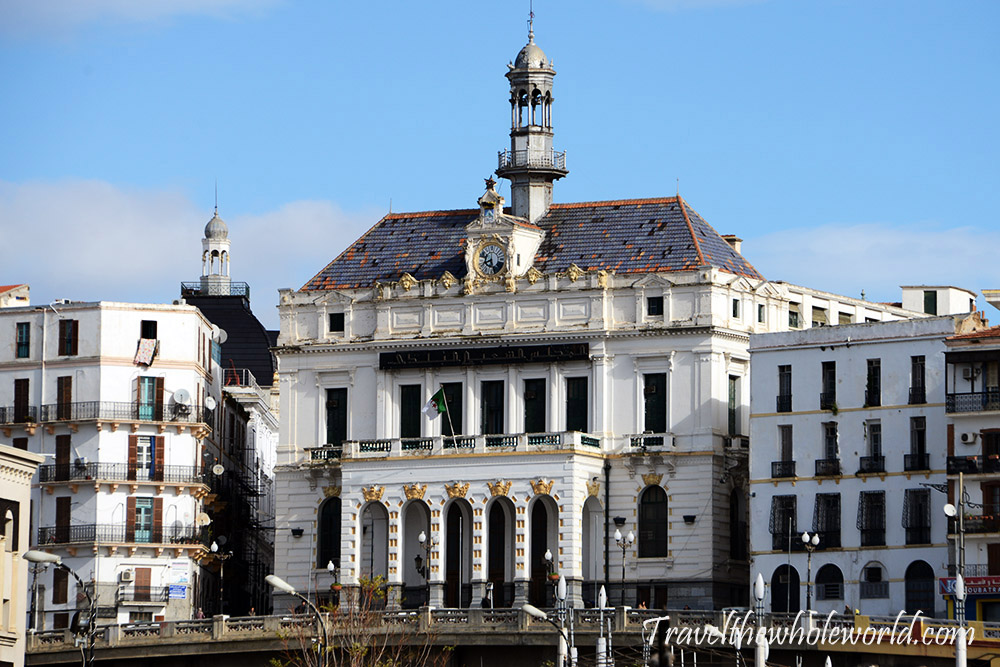
Constantine didn’t seem quite as dominated by French colonial architecture as Algiers, although there are still plenty of reminders of that period. Above is the city’s former courthouse. A local friend pointed out that it was considerably more beautiful than its modern replacement. After seeing both, I had to agree.
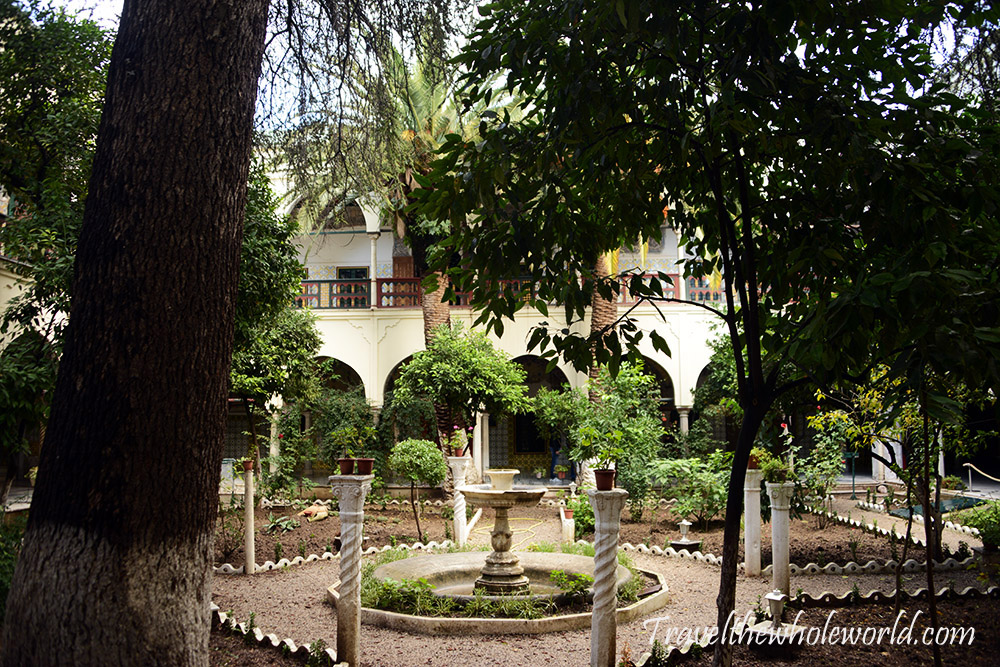
One of Constantine’s most important cultural sites is Ahmed Bey Palace. The palace was constructed during the rule of Ahmed Bey in the 19th century and contains several courtyards surrounded by elaborately decorated rooms and galleries.
Above is the Garden of Oranges, one of the palace’s peaceful interior courtyards. Once you step inside, the busy city outside feels surprisingly far away.
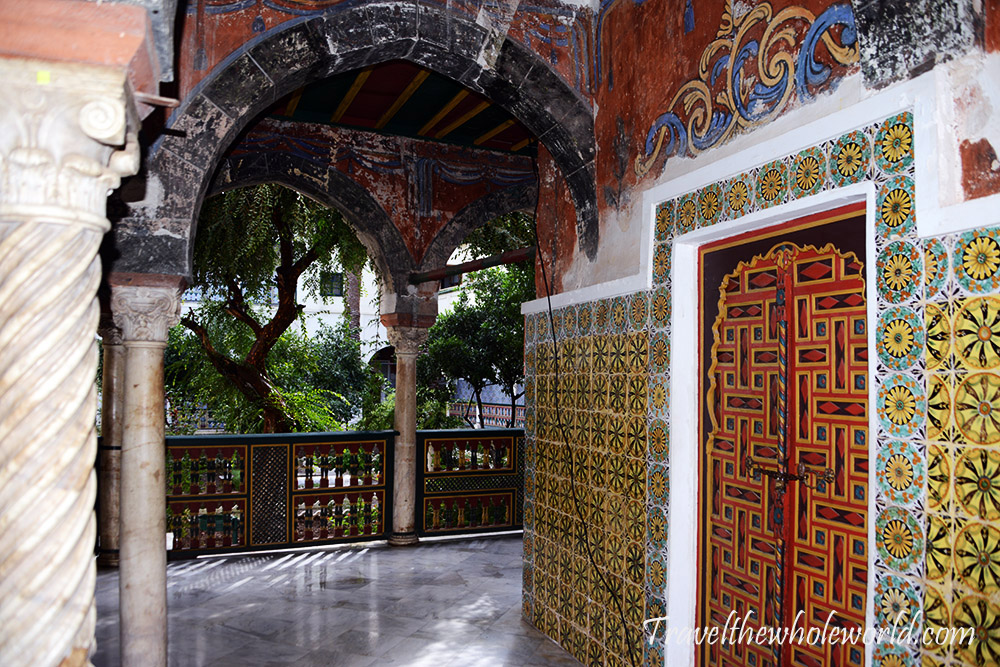
The palace contains hundreds of marble columns, while seemingly every doorway, wall, and room has some form of intricate decoration. It’s easy to imagine how extraordinary this place must have seemed to visitors during the 19th century.
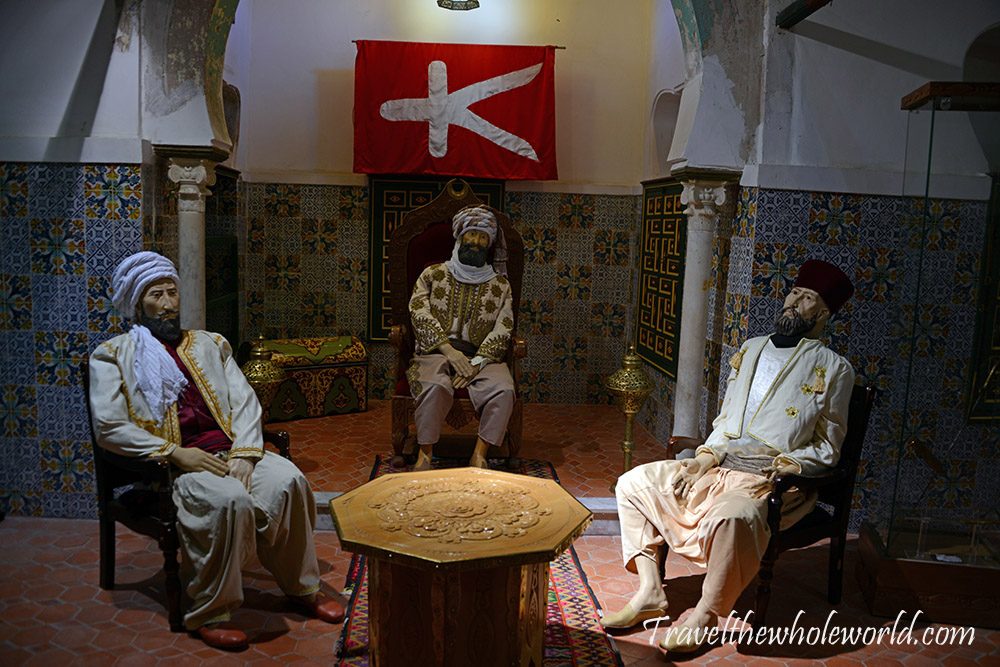
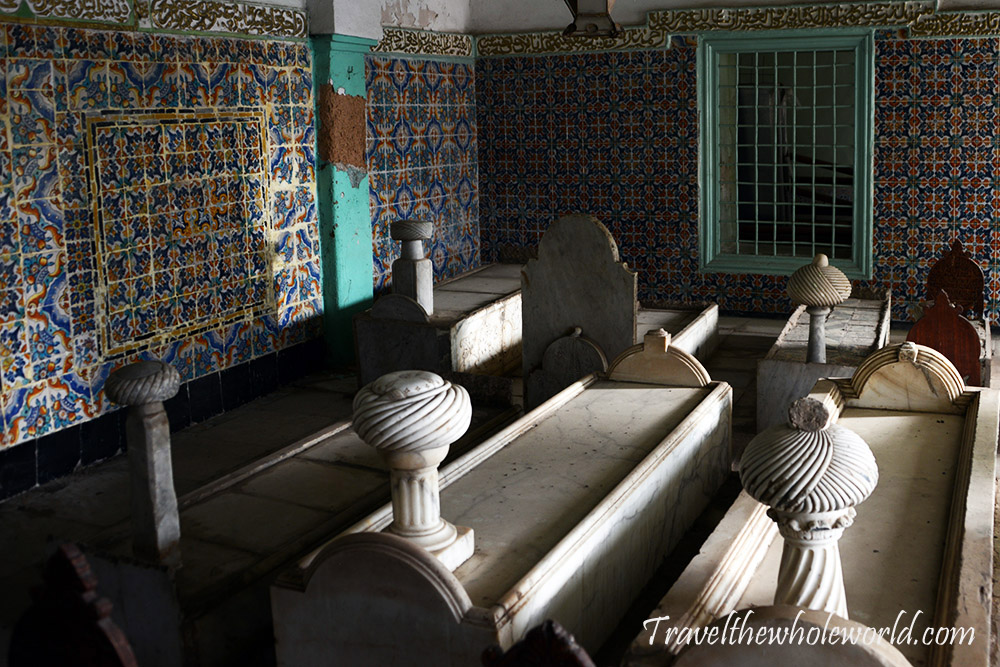
One room even contains lifelike figures depicting Ahmed Bey meeting with his officers. After visiting the palace, I also saw the tomb of Ahmed Bey, who died in 1850.
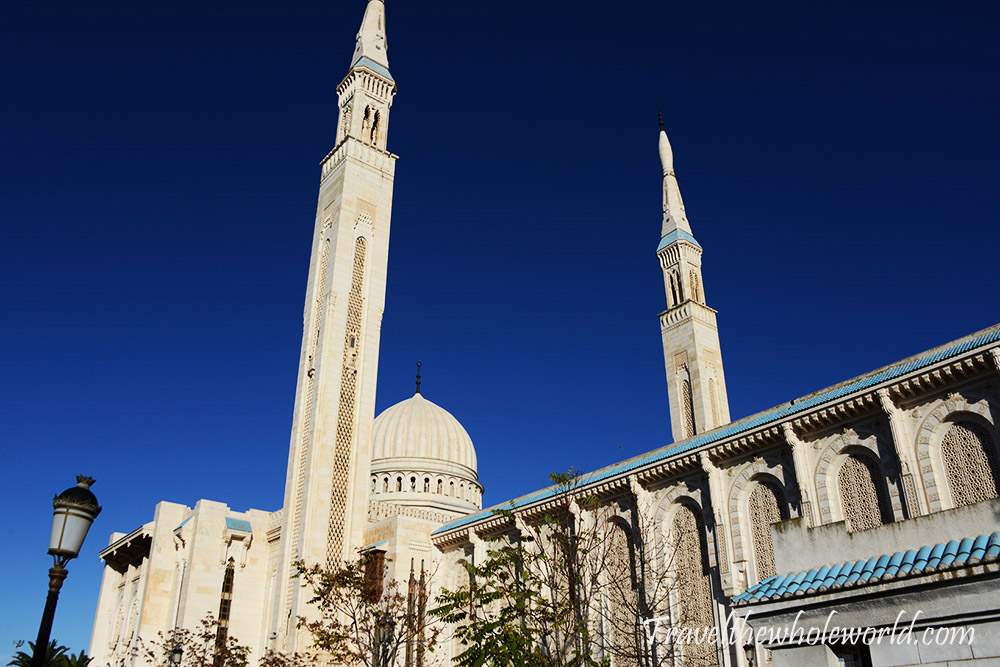
While some of Constantine’s historic sites can be surprisingly difficult to find without local help, you can’t possibly miss the Emir Abdelkader Mosque. Its enormous minarets rise high above the surrounding neighborhoods and can be seen from much of the city.
This was probably the most beautiful mosque I had seen anywhere in Africa at the time. It was also so large that I struggled to find a position where I could properly fit the entire building into a photograph. I especially loved the towering twin minarets.
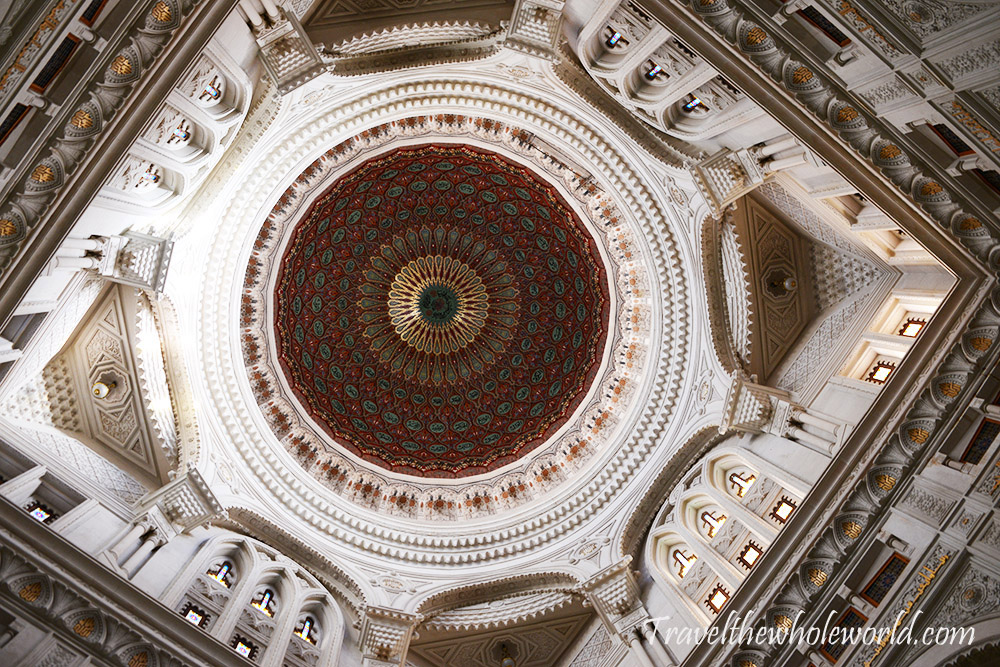
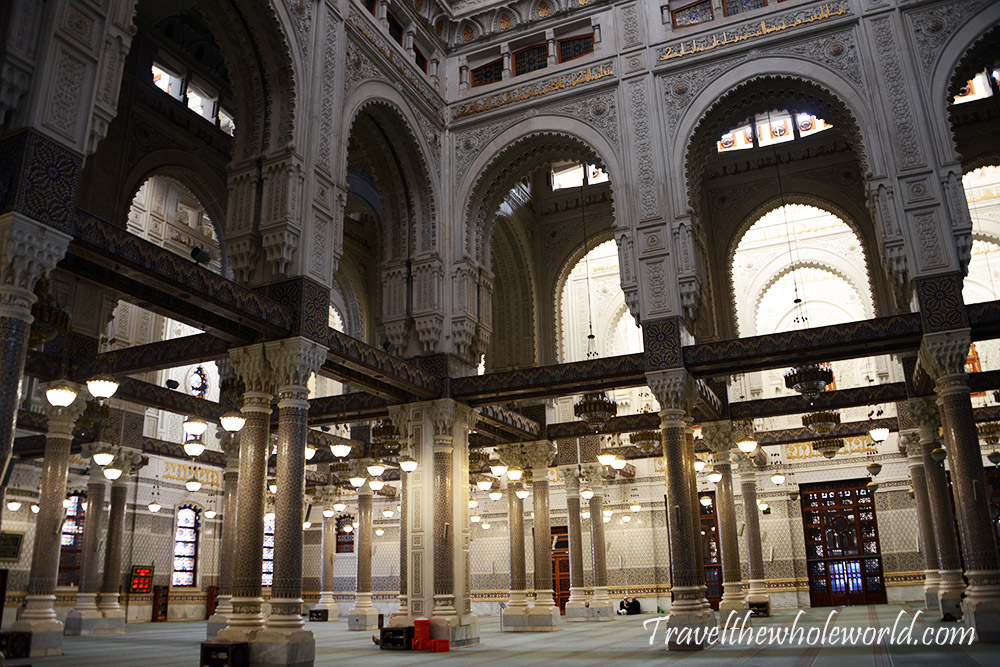
The enormous complex can accommodate thousands of worshippers and also incorporates an Islamic university. The scale continues inside, where the dome rises above the beautifully decorated prayer hall.
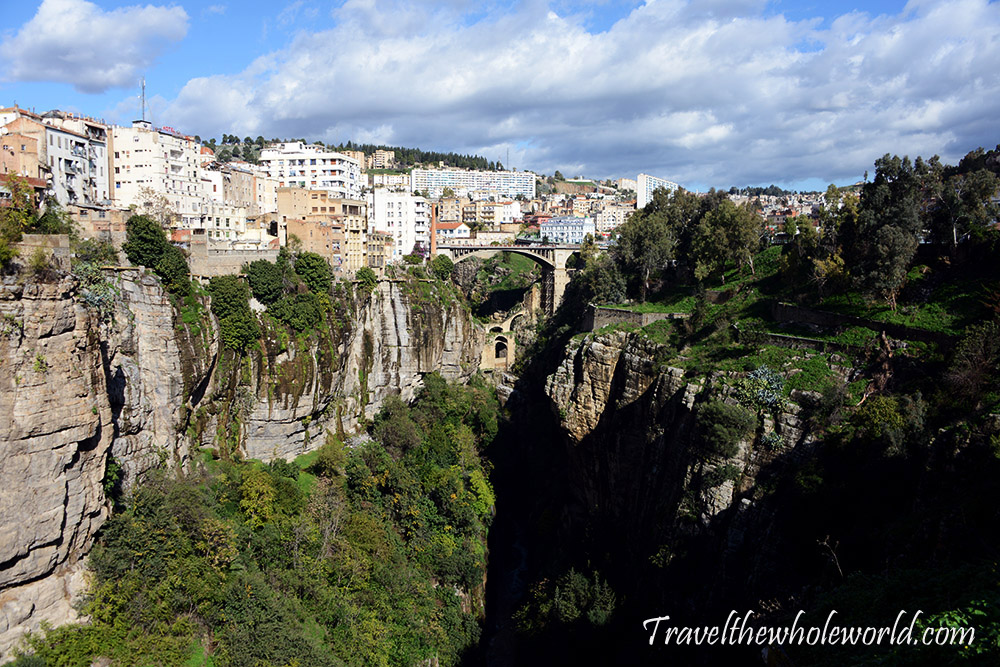
Eventually, almost any walk through Constantine leads to one of its bridges. The gorge cuts directly through the heart of the city, with buildings seemingly balanced along the edges of vertical cliffs.
I had seen photographs of these houses long before coming here, but the landscape was much more impressive in person. The rock climber in me immediately wanted to explore the walls below the city. There have to be some incredible routes hidden in there, and perhaps few other places where someone’s house could practically serve as the anchor at the top of a climb.
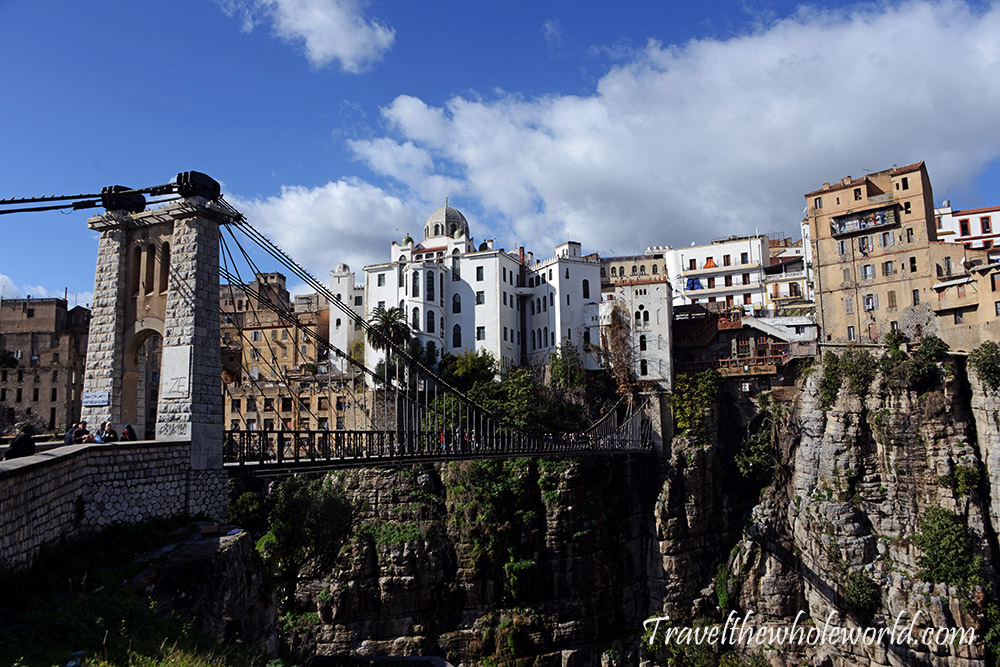
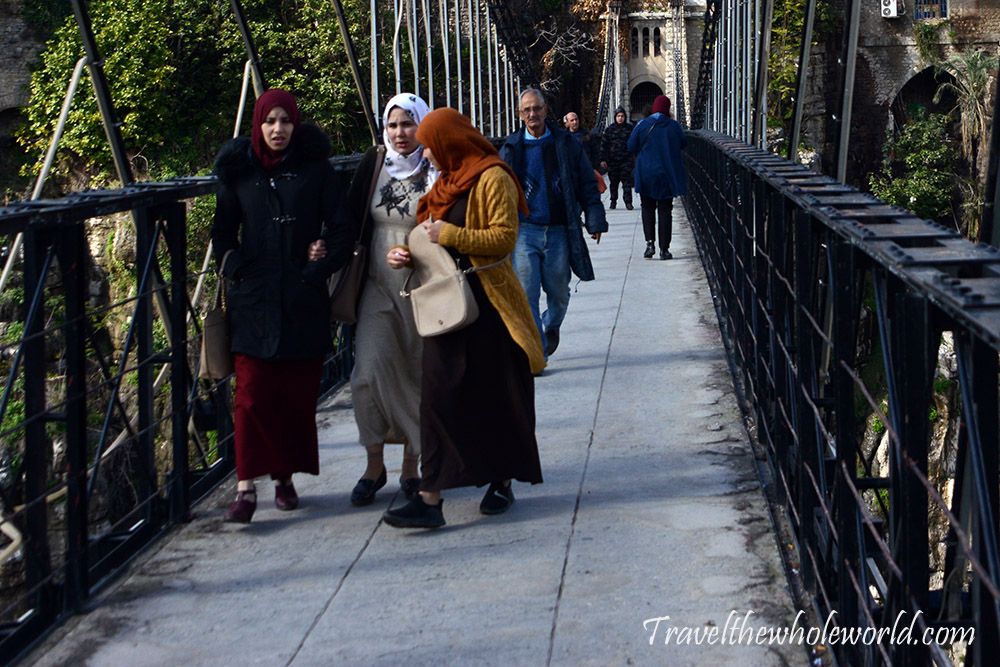
One of my favorite bridges was Mellah Slimane, a pedestrian bridge crossing the gorge near the center of the city. There always seemed to be a steady stream of people crossing it.
What made the experience even more interesting was the elevator at one end of the bridge. Instead of climbing the steep streets and stairs back up through the city, you could simply pay a small fee and ride an elevator. Most people chose the elevator.
Naturally, I did too. At least once.
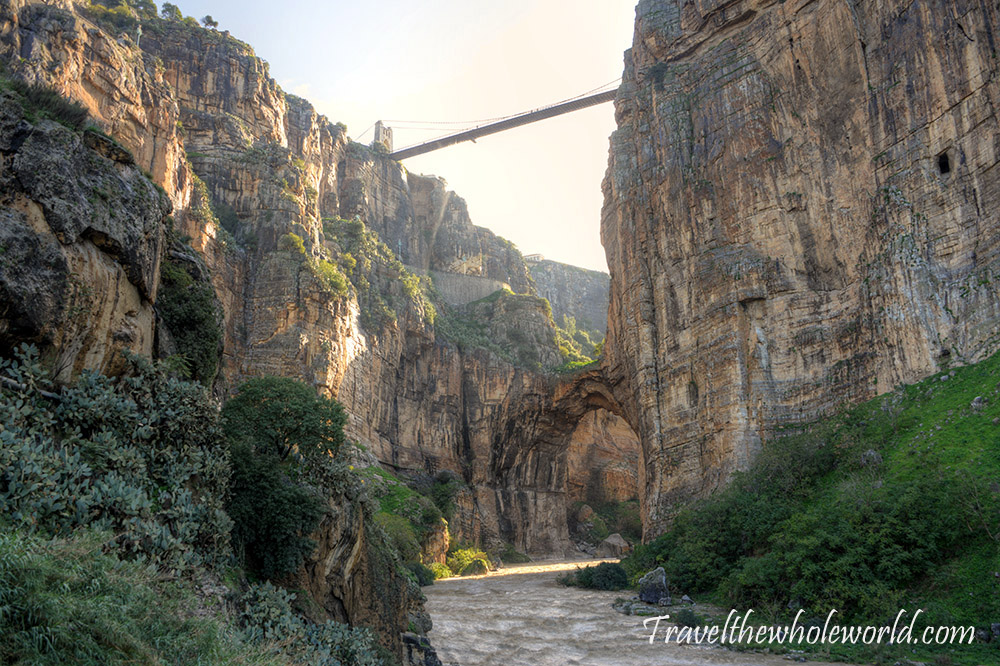
Then there was Sidi M’Cid.
Honestly, it’s difficult to choose a favorite bridge in Constantine. This was one of the first major sights I saw after arriving, and it immediately showed me why the city was so special. Sidi M’Cid Bridge stretches high across the massive gorge, with sheer canyon walls, the river far below, and a natural rock bridge visible beyond it.
It was one of the most incredible urban landscapes I had ever seen. Looking down into the gorge, it’s hard enough to imagine someone deciding to build a city here in the first place. It’s even more remarkable that they succeeded.
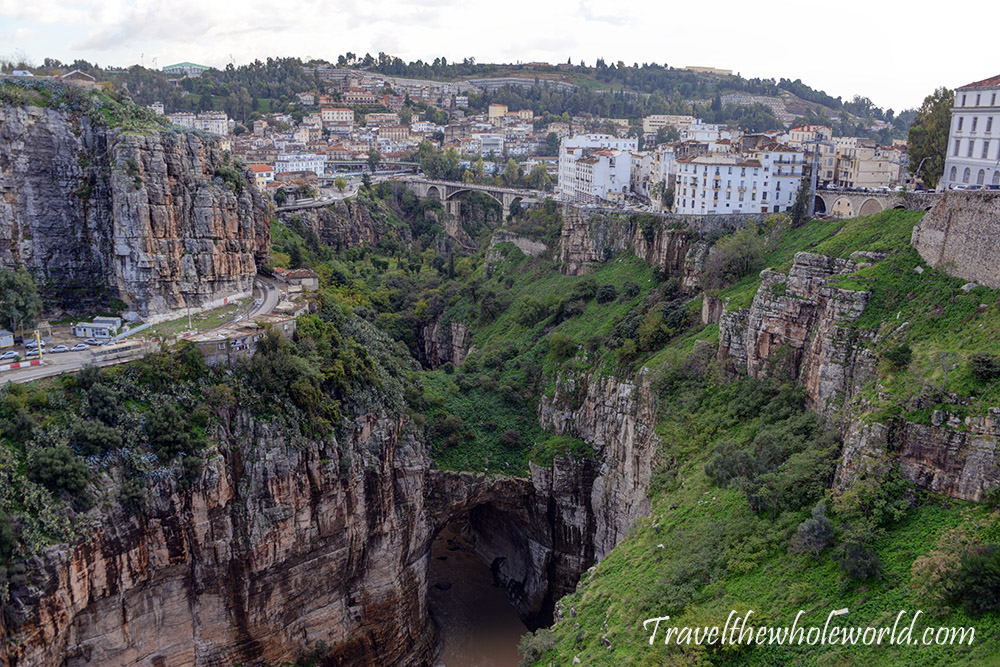
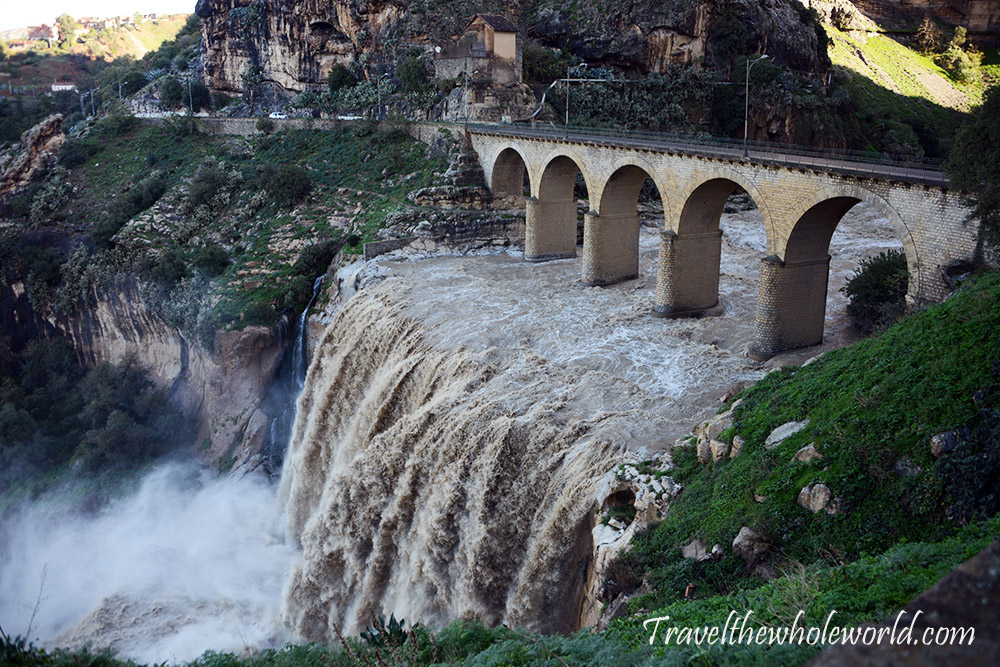
If the bridges and cliffs weren’t dramatic enough, the river was raging when I visited. Local friends told me they had rarely seen the water so high. The force of the river threw enough mist into the air that small rainbows occasionally appeared above the gorge, although never quite where I could get a good photograph of them.
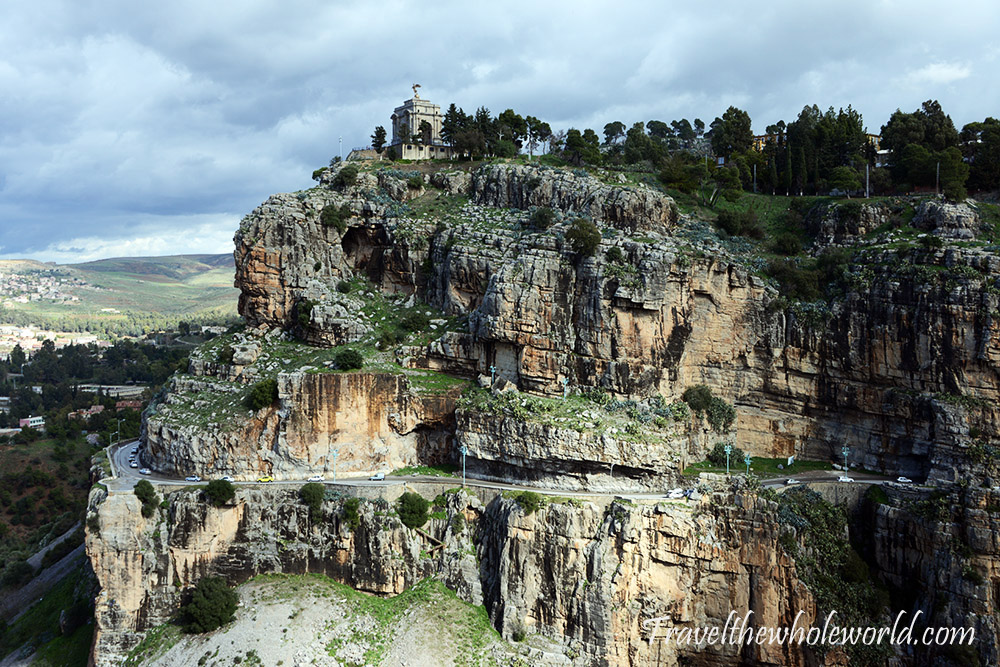
From Sidi M’Cid Bridge, another monument is clearly visible on the heights across the gorge. I crossed the bridge on foot and followed a short climb to investigate.
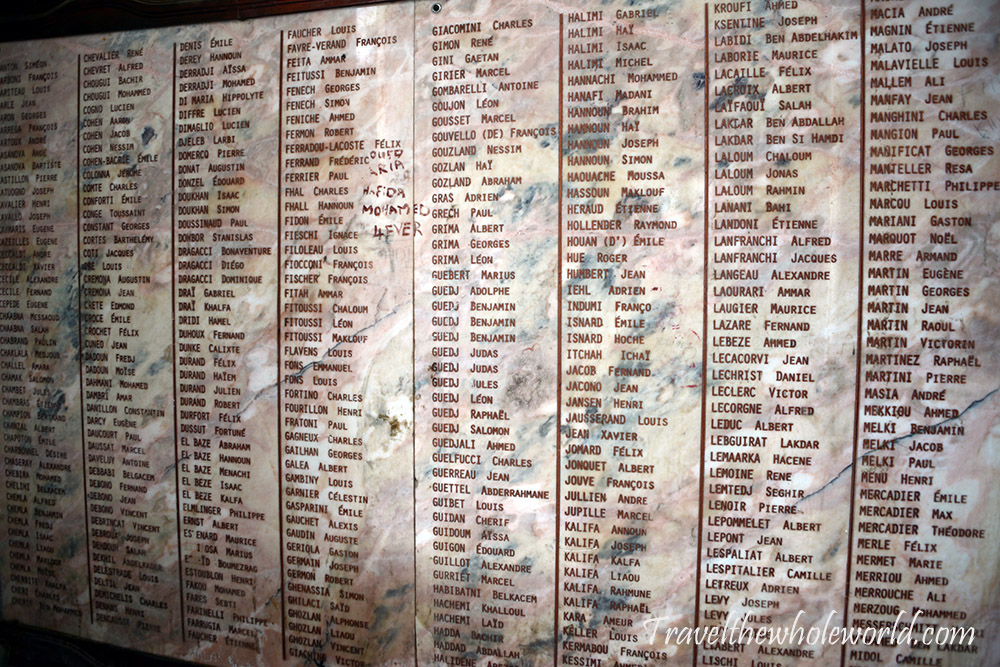
It turned out to be Constantine’s World War I memorial. Inside are hundreds of names commemorating people from the region who died during the war, another reminder of the complicated history connecting Algeria and France.
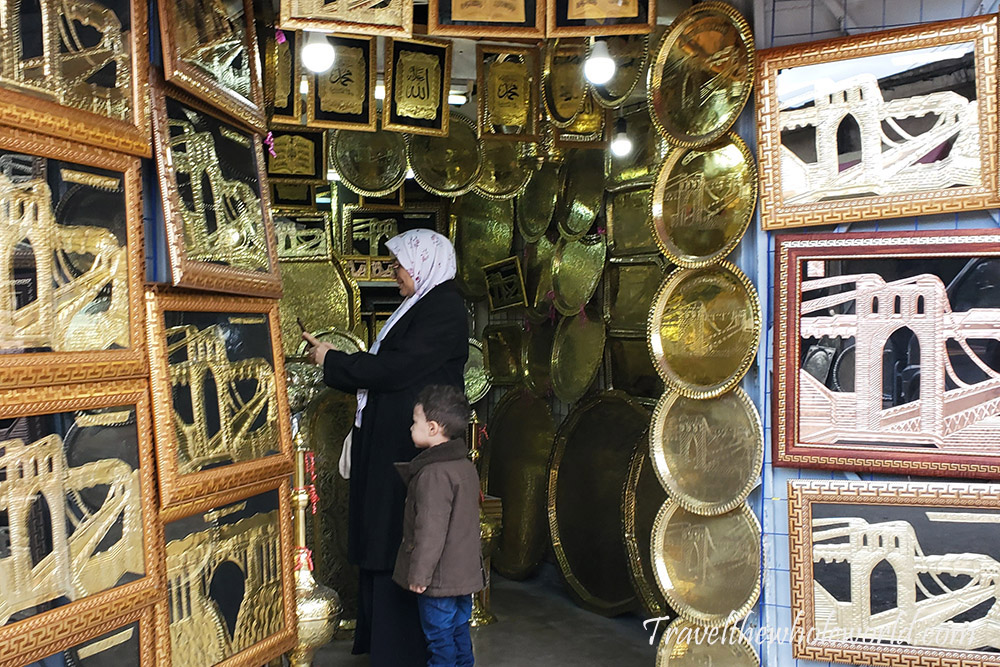
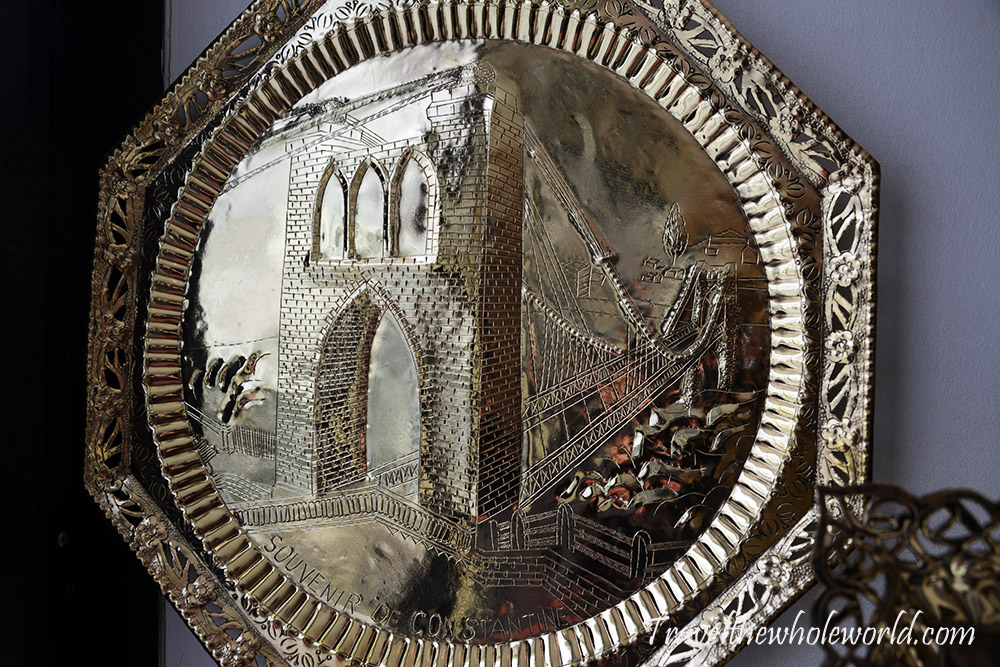
The bridges may be Constantine’s most recognizable feature, but the city is also known for its traditional craftsmanship. In some neighborhoods I found artisans hammering away in small workshops, creating decorative plates and other pieces of metalwork.
The workshops themselves were concentrated in certain streets, but the finished pieces could be found for sale throughout the city. Below is one example I saw displayed at my hotel.
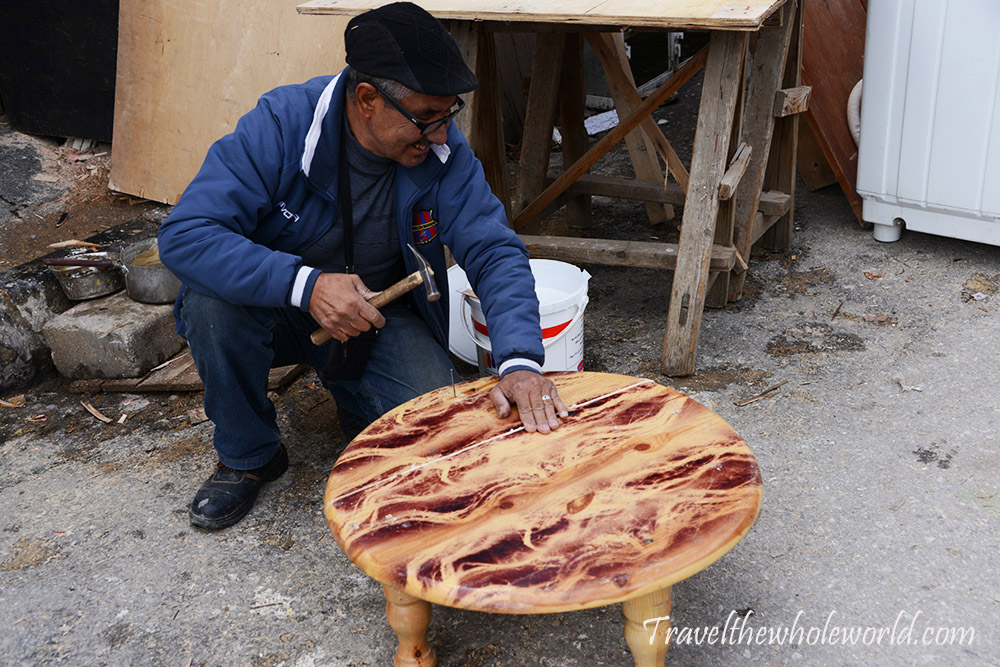
Metalwork was the craft I noticed most, but the commercial streets were filled with all kinds of workshops and wholesalers selling electronics, plastics, wood products, and other goods. This man was nice enough to let me photograph him while he worked with wood inside his shop.
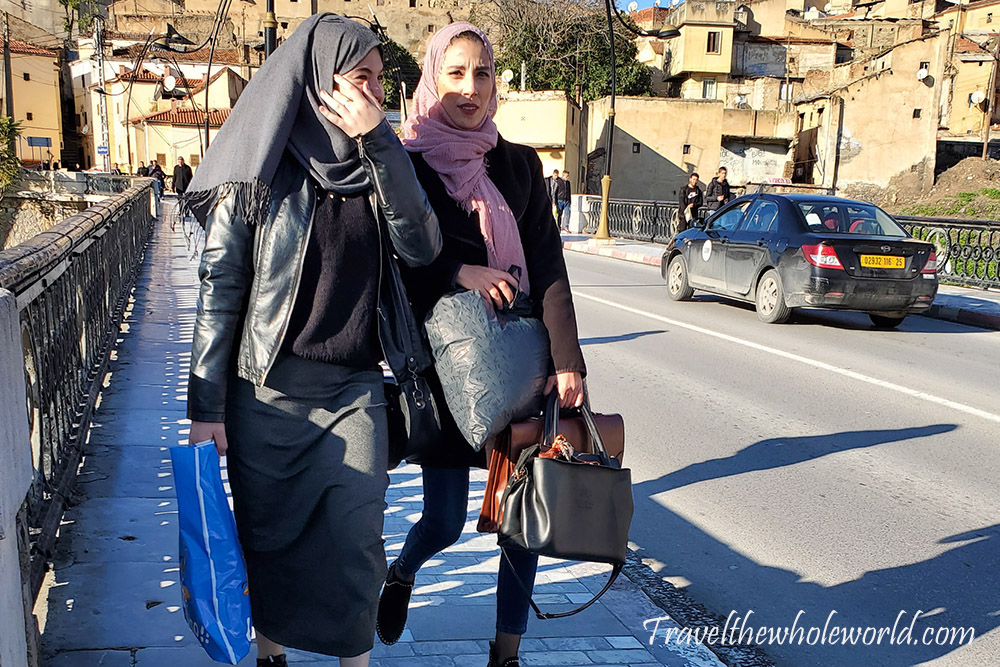
Constantine was the last major stop on my trip through Algeria. After Djanet, days in the Sahara, and exploring Algiers, I was starting to slow down a little. Instead of rushing from attraction to attraction, I spent more time simply roaming the streets and watching everyday life around the city.
I couldn’t resist taking this photo of two women carrying enough shopping bags to look like they’d just survived Black Friday.
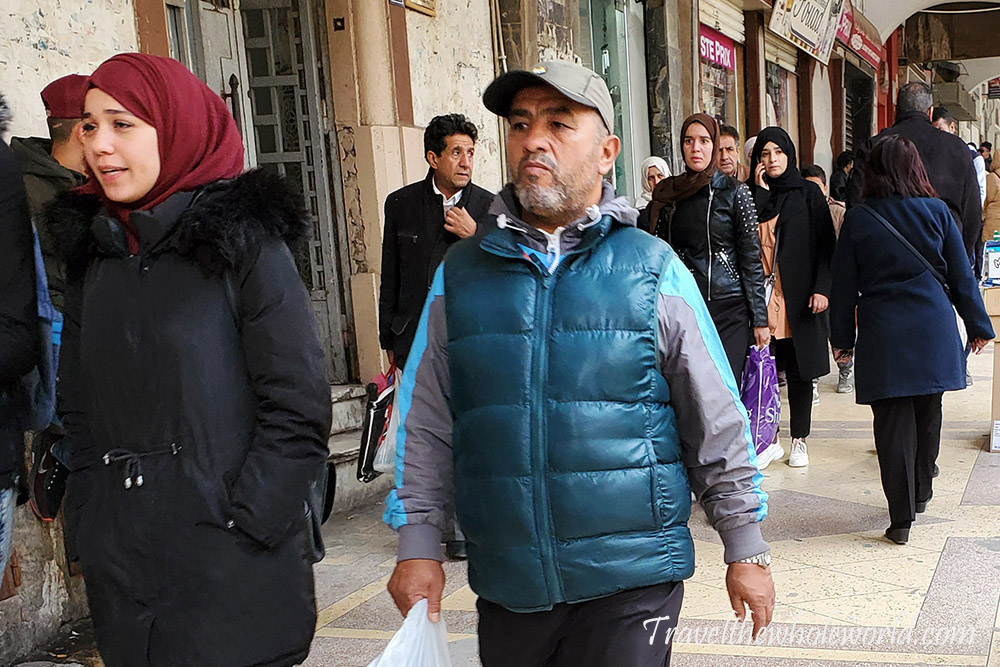
The main shopping areas were packed with pedestrians, small stores, markets, and street life. After spending so much of the trip photographing monuments and landscapes, it was nice to spend some time experiencing the city without much of an agenda.
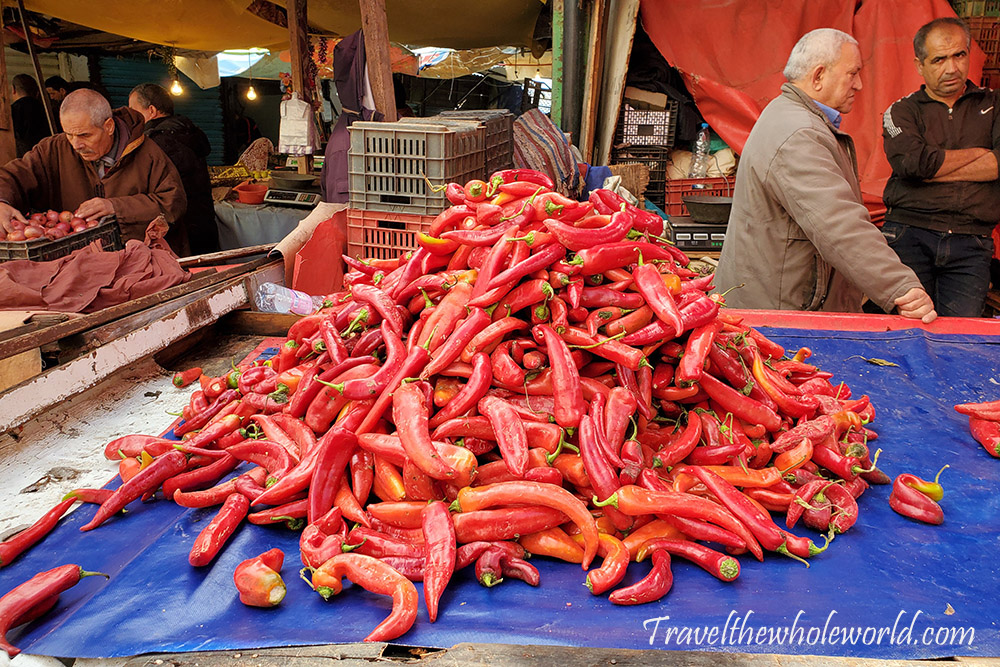
In the food market I found plenty of the usual fruits and vegetables, but one thing that really stood out was the amount of harissa for sale. At the time, I actually assumed harissa was some kind of local pepper because there was so much of it.
A few months later I saw harissa served as a sauce back in Minneapolis and finally looked it up. It turns out harissa is a North African chili paste, so at least I was right about it being local to this part of the world.
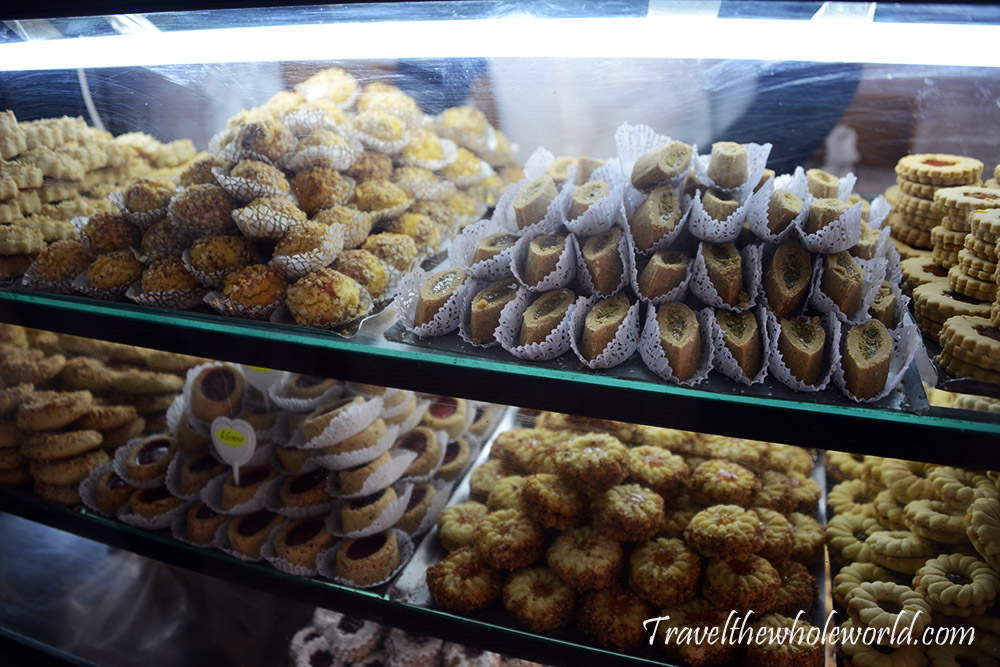
There was certainly no shortage of sweets either. Bakeries throughout the city had displays filled with pastries and desserts, which made wandering around the shopping districts considerably more dangerous for my appetite.
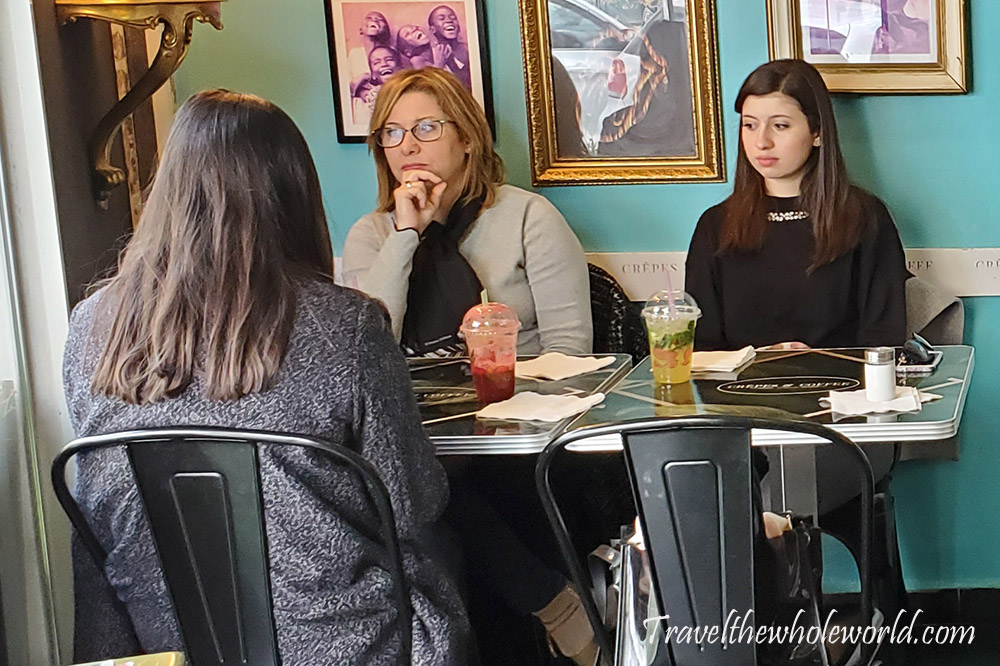
On my final day, I was ready to stop exploring and simply relax for a while. I searched online from my hotel and found a coffee shop with great reviews. After a surprisingly long walk into an increasingly quiet neighborhood, I became convinced the directions had to be wrong.
Then I stumbled across this place.
It seemed popular with younger people and couples, and turned out to be exactly what I wanted: somewhere to get lunch, drink some coffee, and sit around people-watching without worrying about what I needed to see next.
Constantine was a fitting place to finish my trip through Algeria. The palaces, mosques, markets, and history were memorable, but nothing compared with the landscape itself. Few cities I’ve visited have been built in such an improbable place. Standing on one of Constantine’s bridges with the Rhumel Gorge disappearing beneath me was one of those views that photographs simply couldn’t capture as well as being there.
Explore More of Algeria
Algiers • Constantine • Djanet • the Sahara