One of the things I like most about Arizona is how quickly the landscape can change. Most people picture the state as endless desert, but drive north from Phoenix and the saguaros eventually disappear, the elevation climbs, and suddenly you’re surrounded by pine forests and mountains. On this trip I traveled through some of the most interesting parts of northern and central Arizona, including Flagstaff, Oak Creek Canyon, Sedona, Jerome, and Montezuma Castle.
Flagstaff
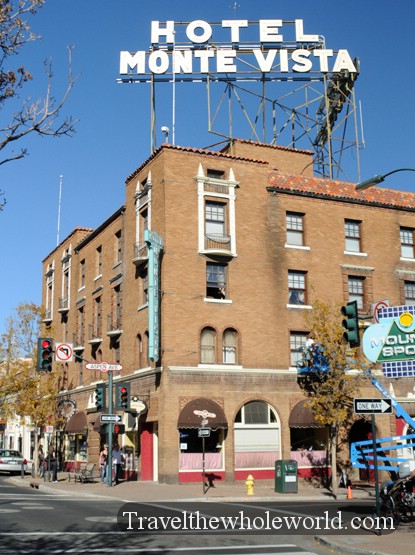
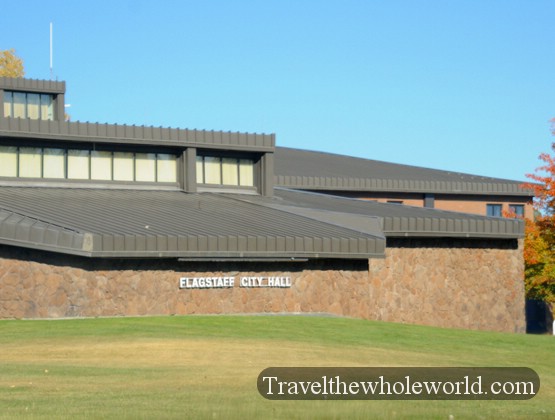
Flagstaff is probably best known to travelers as a gateway to the Grand Canyon, but I think it’s worth exploring on its own. Sitting at nearly 7,000 feet (2,130 meters), the city feels completely different from Phoenix a little more than two hours to the south. Instead of desert and cactus, Flagstaff is surrounded by ponderosa pine forest and mountains.
The historic downtown isn’t particularly old by world standards, but it has plenty of character. One of its landmarks is Hotel Monte Vista, which opened in the 1920s and still dominates part of downtown. Nearby was Flagstaff City Hall, which I thought might have been the least attractive city hall I’d ever photographed. Maybe it looks better now.


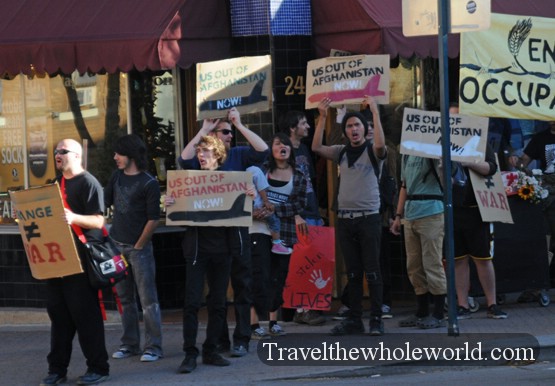
For a relatively small city, Flagstaff had a surprising amount happening downtown. I encountered one of the loudest street preachers I’ve ever heard in the United States, screaming loudly enough that I could hear him from more than a block away.
A few blocks away I came across a restaurant displaying a sign telling customers not to bring firearms inside, and not far from there was a group of protesters demonstrating against the war in Afghanistan. It was an interesting mixture of people and politics packed into a relatively small downtown and made Flagstaff feel much livelier than I expected.
Oak Creek Canyon
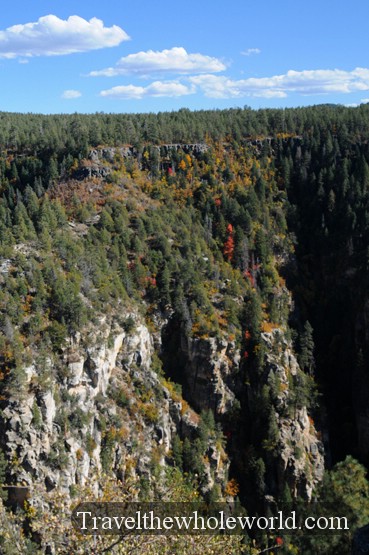
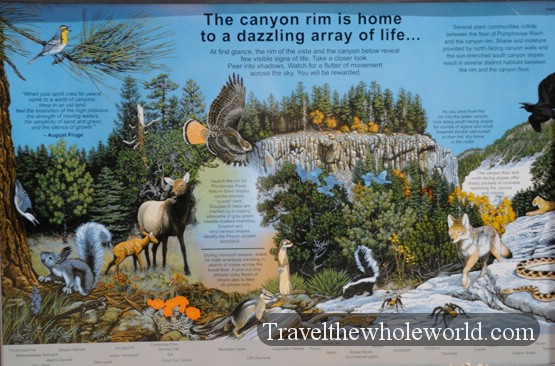
The Grand Canyon might overshadow nearly every other canyon in Arizona, but it certainly isn’t the only one worth seeing. Traveling south from Flagstaff toward Sedona brought me through the forests and canyons of northern Arizona, including the spectacular Oak Creek Canyon.
I was there in October, when some of the deciduous trees were changing from green to yellow and red among the pines. Seeing autumn colors in Arizona wasn’t something I had really expected. Between the elevation, forests, and cooler temperatures, this part of the state felt almost nothing like the Arizona I had pictured before visiting.
Sedona and the Red Rocks
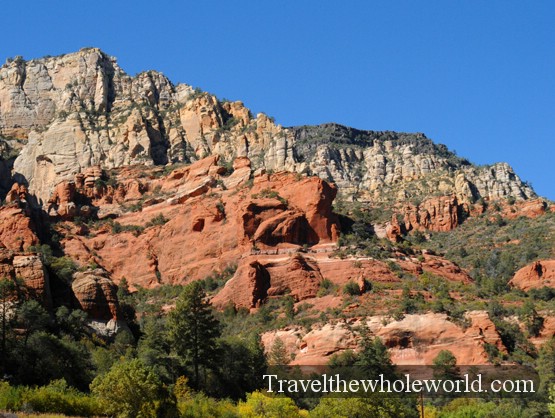
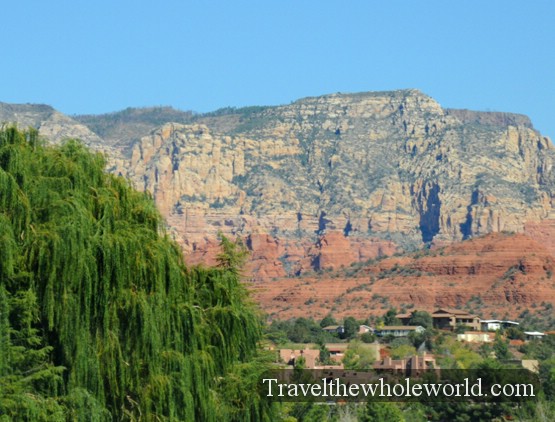
Continuing south brought me into Sedona and one of the most recognizable landscapes in Arizona. Massive red and orange rock formations rise around the town, creating scenery that looks dramatically different depending on the angle and the light.
Sedona itself was much greener than I expected. Trees and vegetation filled the town beneath the surrounding red cliffs, including some enormous weeping willows. It was an impressive contrast between a developed town and the dry, rugged landscape surrounding it.
Slide Rock
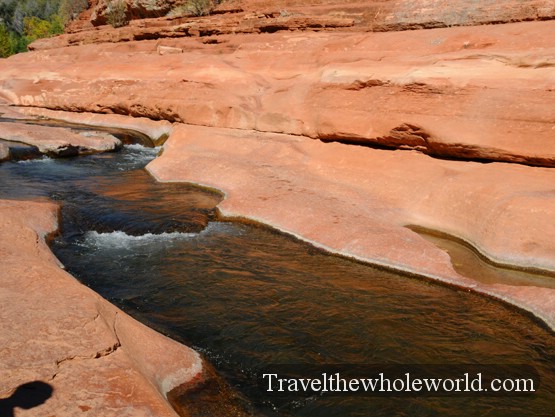
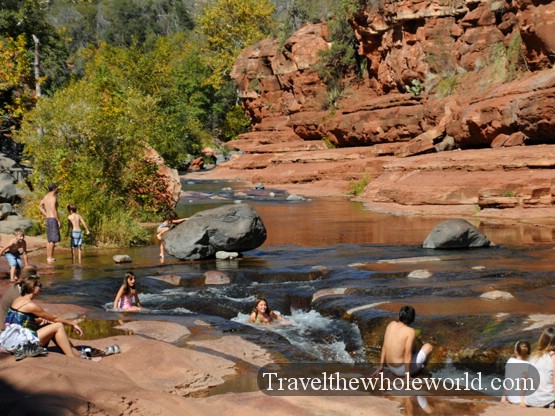
Near Sedona is Slide Rock, where Oak Creek has spent thousands of years carving a smooth channel through the sandstone. The result is essentially a natural water slide. During warmer weather, people swim in the creek and let the current carry them through the narrow rock chute.
It was another good example of how varied this part of Arizona is. Within a relatively short distance I had gone from high-elevation pine forest to enormous red-rock formations and then to people swimming through a creek carved into the sandstone.
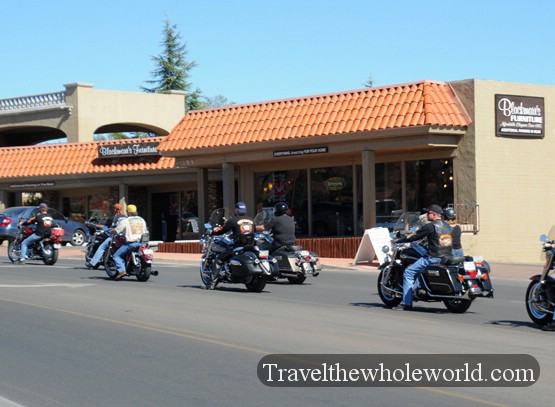
I also noticed plenty of motorcyclists traveling through the area. Bikers and snowbirds both seem to love Arizona, and it’s easy to understand why, especially during the cooler months. Winters that can be miserable farther north are often beautiful here.
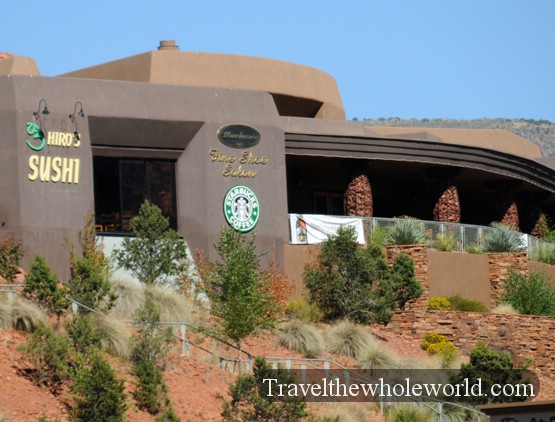
I sometimes thought about how difficult life must have been in this landscape before modern infrastructure. Heat and drought that today might mean turning up the air conditioning or buying more water could once have been matters of survival. Modern Arizona is obviously a completely different world. You can drive through the desert surrounded by incredible scenery and then stop in Sedona for sushi and Starbucks.

Montezuma Castle
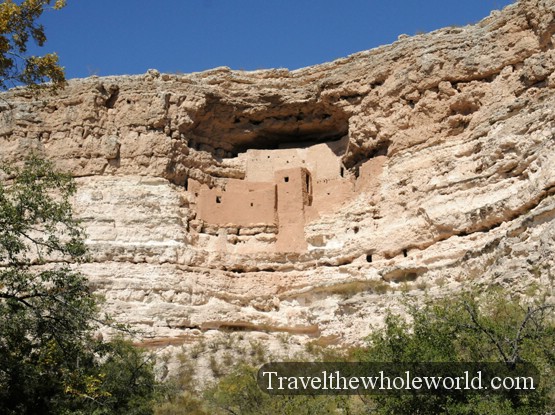
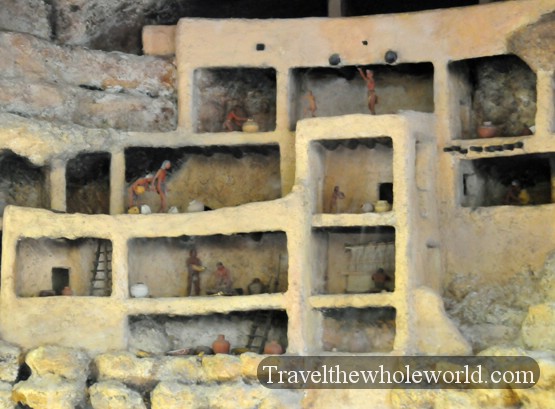
Much of the historic architecture I encountered in Arizona dated back only a century or so, which isn’t surprising considering Arizona didn’t become a state until 1912. Montezuma Castle was completely different.
Despite the misleading name, the structure has nothing to do with the Aztec emperor Montezuma. It is a remarkably well-preserved Indigenous cliff dwelling built into a limestone cliff hundreds of years before Europeans reached the region. Seeing something this old still standing in Arizona gave me a much better sense of how deep the human history of the Southwest really is.
The Mining Town of Jerome
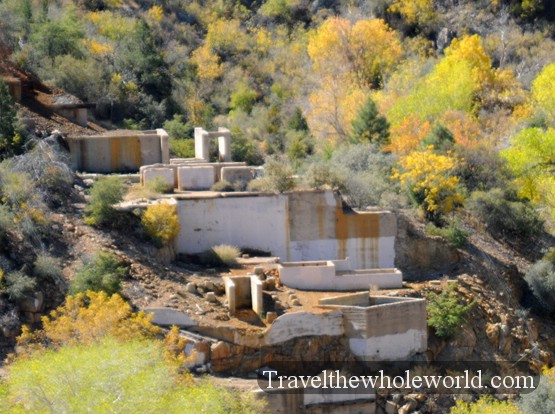
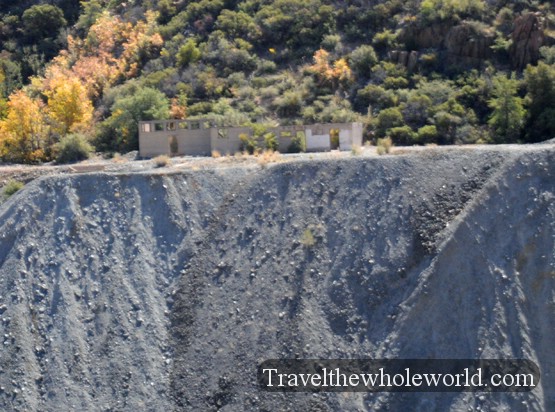
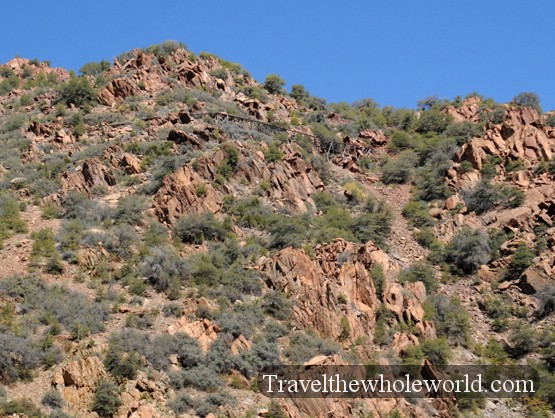
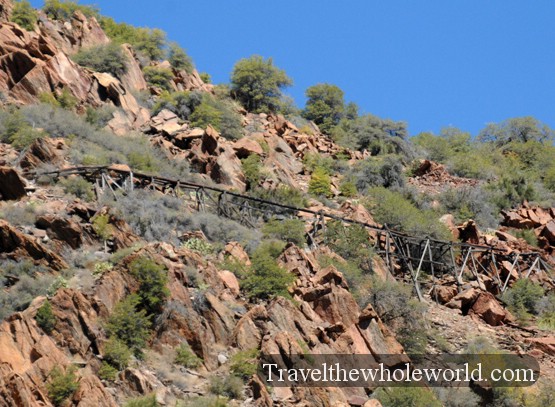
Farther west, the landscape has another story. Jerome grew on Cleopatra Hill because of the enormous deposits of copper beneath the surrounding mountains. Heavy mining began here in the late 1800s and continued for decades, leaving industrial ruins scattered across the steep terrain.
Some of the most interesting remains were the old structures and mining tracks built directly onto the mountainside. Even abandoned, they give a sense of how much infrastructure was once packed into these hills.
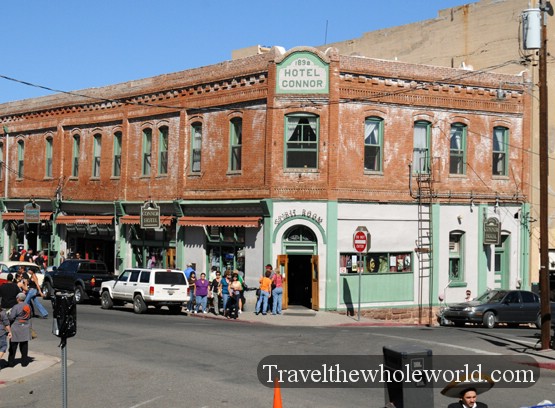
Jerome grew into one of Arizona’s most notorious mining towns. At its peak it had thousands of residents and developed a reputation for saloons, gambling, prostitution, and the other businesses that tended to follow mining money around the American West. When the mines eventually closed, most of the population disappeared and Jerome nearly became a ghost town.
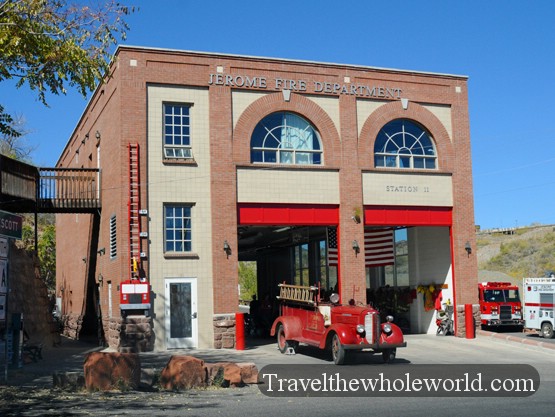
Tourism eventually gave it a second life. Instead of miners, the steep streets are now filled with visitors exploring old buildings, restaurants, bars, shops, and the remains of the town’s mining history.
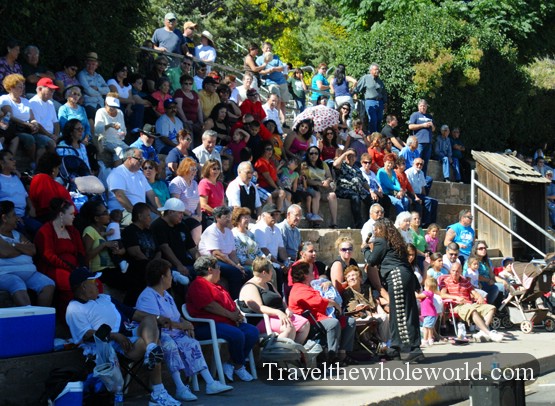
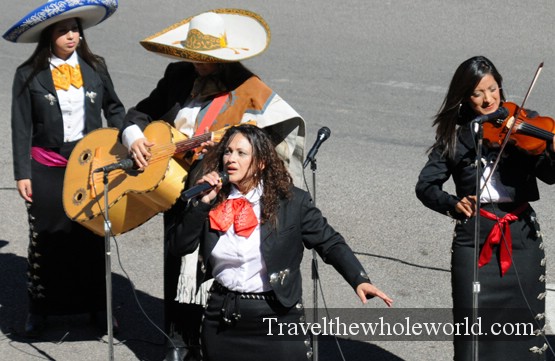
When I visited on a Saturday afternoon, Jerome was anything but a ghost town. Crowds filled the streets and a mariachi band was playing outside. I liked that contrast. The mines that created the town were long gone, but instead of disappearing with them, Jerome had managed to reinvent itself around the history they left behind.
Driving through Flagstaff, Oak Creek Canyon, Sedona, Montezuma Castle, and Jerome showed me a side of Arizona that is easy to miss if you think of the state as nothing more than the Grand Canyon and desert. In a relatively small area I had gone from mountain forests and autumn leaves to ancient cliff dwellings, red-rock canyons, swimming holes, abandoned copper mines, and an old Wild West town.
Arizona turned out to be far more varied than I had expected.
“`
Explore More of Arizona
Mt. Humphrey • Flagstaff • Phoenix • the Grand Canyons