When it was finally time for me to climb Humphreys Peak, the highest mountain in Arizona, I couldn’t have asked for a much worse weather forecast. The only day I had available called for increasingly strong winds through the afternoon, eventually reaching around 70 mph (110 km/h). I seriously considered not even driving to the mountain. I could spend the day somewhere else in Arizona, perhaps visiting Navajo Nation or returning to the Grand Canyon, rather than deliberately walking into terrible weather.
But this was my only opportunity, so I decided to give it a chance. My plan was simple: start early, try to reach the summit around noon, and get back below the exposed upper mountain before the worst of the wind arrived.
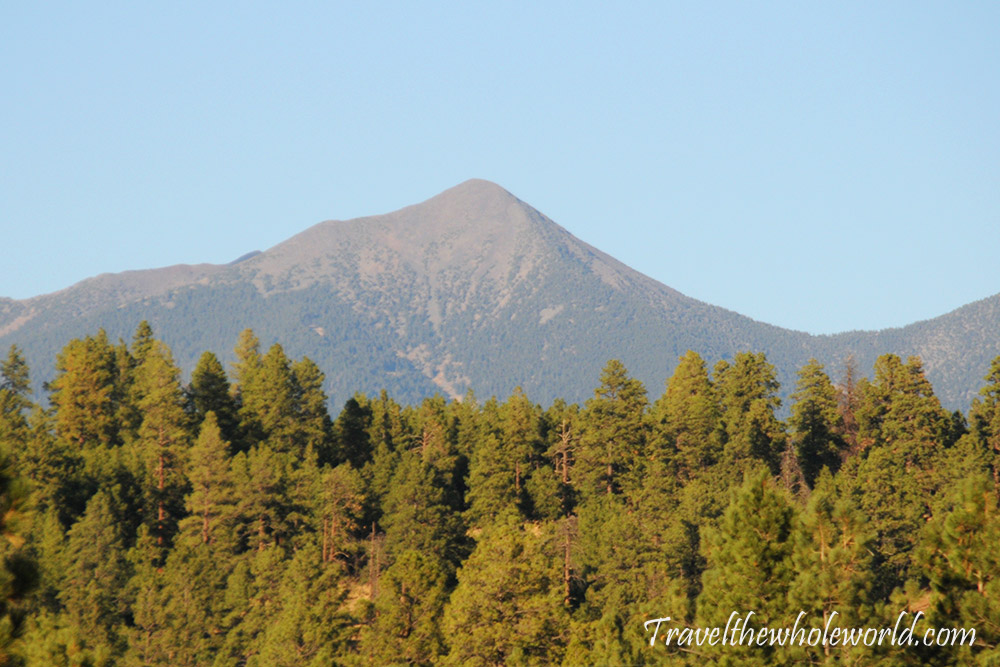
Visibility was already so poor that morning that I couldn’t even get a proper look at the mountain I was about to climb. Strangely enough, it wasn’t until after the trip, while looking through old photographs on my computer, that I realized I had seen Humphreys Peak before. I had photographed the mountain almost exactly ten years earlier, during early fall before the heavy winter snow arrived.
Finding the Trail
Of all the mountains I’ve climbed, Humphreys Peak might have had the most confusing start. Even afterward I wasn’t entirely sure where I had officially been supposed to begin. My map showed the trail starting somewhere around the ski area, but I couldn’t find anything that looked like an obvious hiking trail. Eventually I just started walking uphill along a broad ski run and hoped for the best.
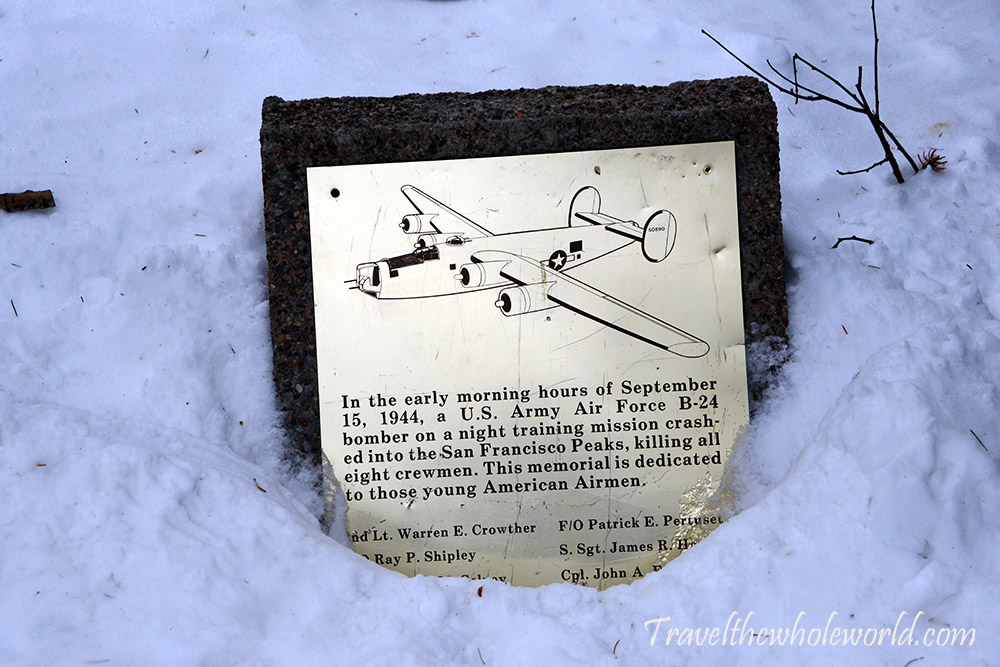
A few minutes later I came across a sign mentioning the wreckage of a B-24 bomber that had crashed on the mountain in 1944. I remembered hearing about the wreck and hoped I might somehow find it higher up, although everything I had read suggested the site could be difficult to locate even in good summer weather. At least the sign gave me some confidence that I hadn’t started in completely the wrong place.
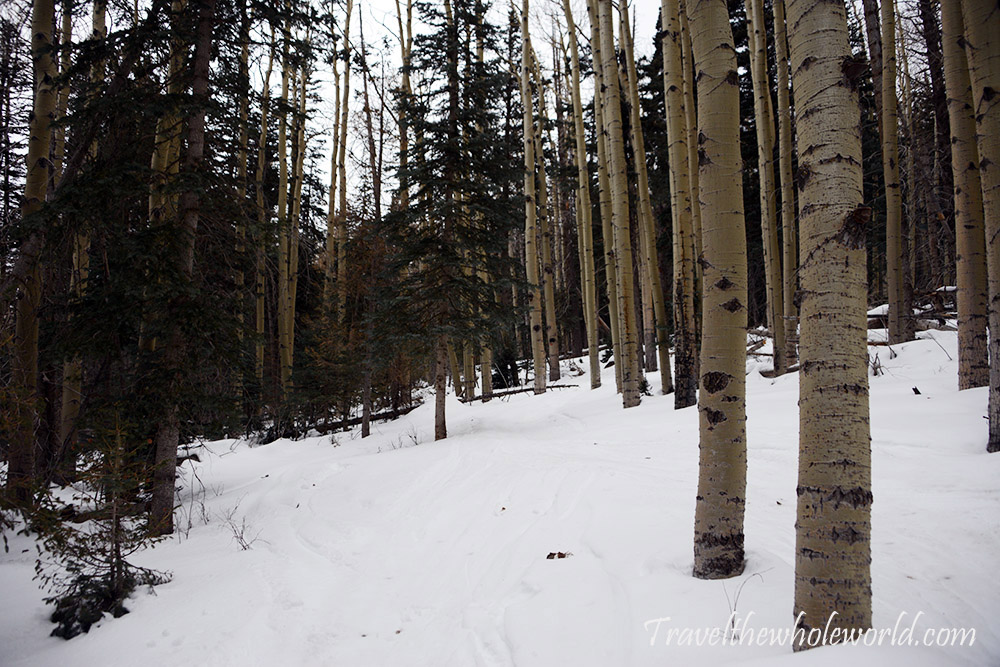
After the memorial I crossed another ski run and eventually noticed a marker tied to a tree. I still have no idea how anyone without a map would have known to cross the slope at exactly that spot, but I was happy to finally be in the woods and apparently on the trail.
Then I came across something I wasn’t expecting at all: a sign saying a winter permit was required.
I had specifically remembered reading that Humphreys Peak required no permits or other red tape. I knew nearby Agassiz Peak had strict climbing restrictions because of sensitive alpine plants near the summit, but I hadn’t expected anything similar here. I would have had no problem getting a permit if I’d known beforehand. By then, however, I was already on the mountain and running slightly behind schedule. Going all the way back to the car and spending another hour or two figuring out where to get one wasn’t going to happen.
Alone on the Mountain
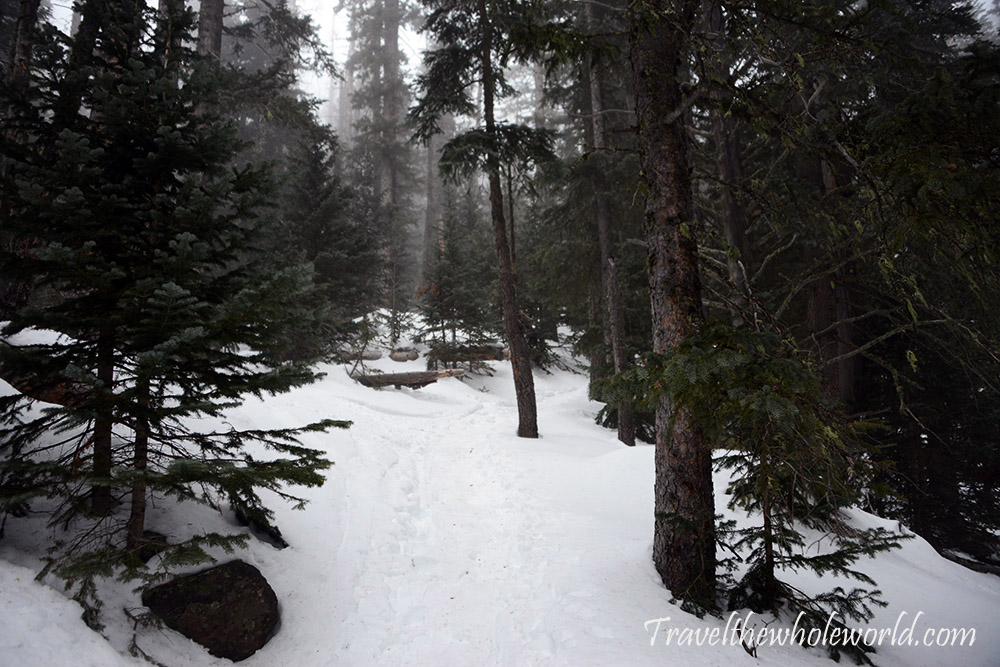
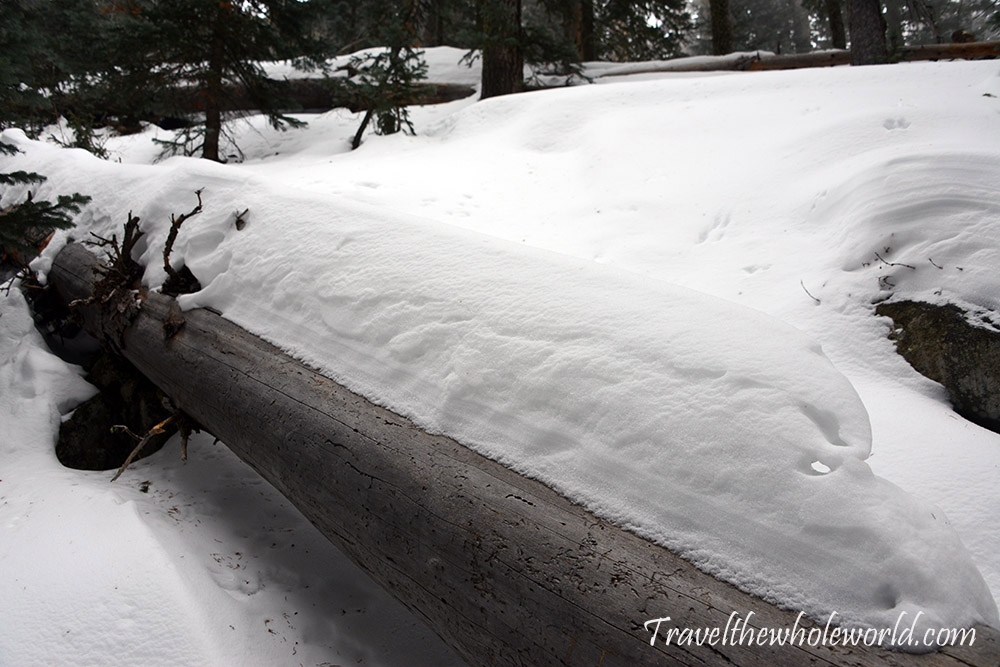
So far the conditions were easy, as they usually are lower on a mountain. It hadn’t snowed for several days, and I had expected hikers from the previous week to have packed down the trail. Before arriving, I had actually been more worried about snow on the road than snow on the mountain.
Only three weeks earlier I had failed to climb Nevada’s highest point because the road conditions were so bad that I couldn’t even get within 1,000 meters of the trailhead. Humphreys Peak was different. In the middle of winter, thousands of people come to the ski area, so keeping the access road open is considerably more important than maintaining some remote mountain road for a handful of hikers.
I had driven in behind a long line of cars and briefly wondered if the trail might be crowded. It turned out nearly everyone was there to ski. Once I entered the forest, I found myself alone.
About an hour later I was surprised to hear voices ahead. For a moment I wondered whether they were rangers coming down the mountain and whether I should prepare myself for an expensive conversation about that permit. Instead I found three other climbers heading uphill.
We spoke briefly, and I learned that none of them had permits either, which at least made me feel morally better about the situation. They cheerfully told me they would see me at the summit.
“Hopefully,” I replied.
With the wind forecast, I still thought there was about a fifty-fifty chance I would turn around.
The Snow Wins
I had been so focused on the wind that I made the mistake of underestimating the snow.
Until around 10,500 feet (3,200 meters), the trail had been nicely packed and I had been moving at an excellent pace. If those conditions continued, I probably could have reached the summit in less than three hours.
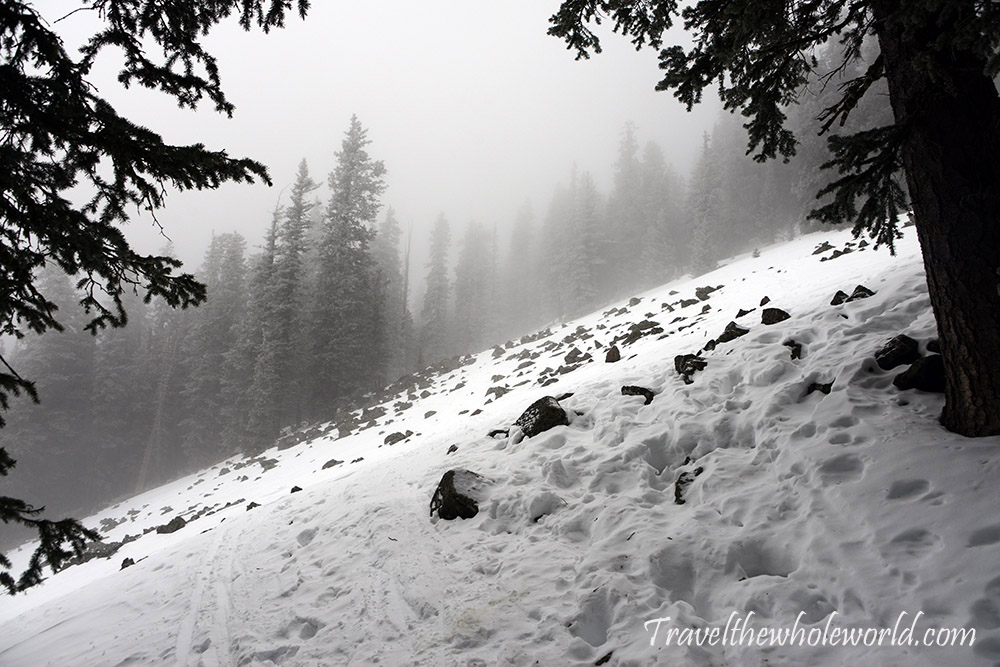
Then I reached a slope created by a rockslide.
It looked harmless enough, but as soon as I started crossing I began dropping into pockets of snow that sometimes swallowed me to the waist. I would pull myself out, take another few steps, and disappear again. A crossing that should have taken a minute probably took ten. The entire time I imagined the three climbers behind me catching up and watching me flounder around in the snow.
When I finally reached the other side, I looked back and was relieved that they weren’t there to witness it.
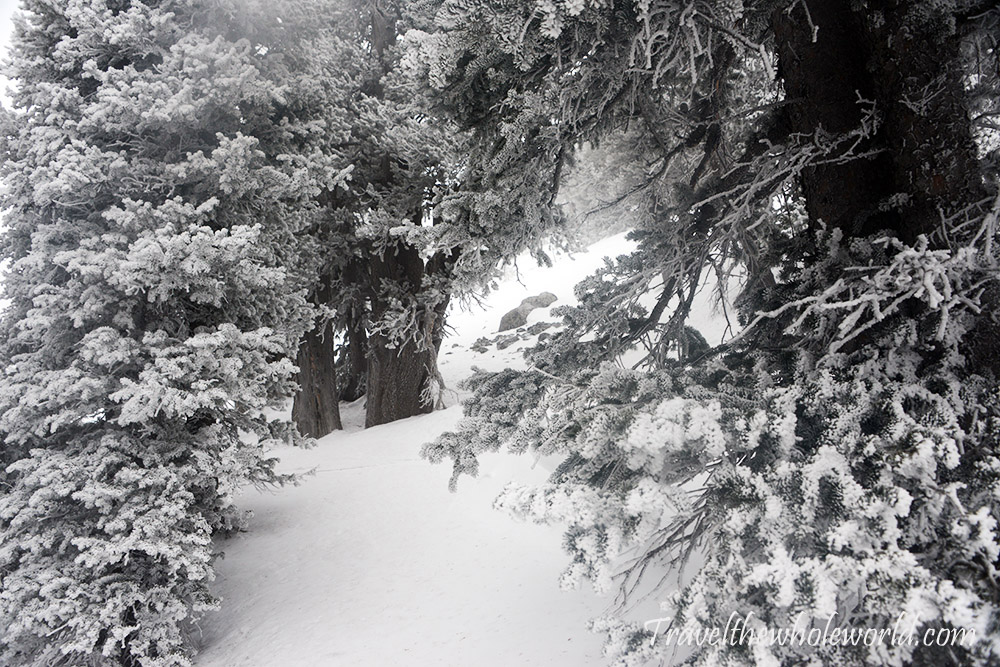
Once I was back on the trail I enjoyed a short stretch of easy hiking, but soon the deep snow returned. The frustrating part was that there was almost no way to tell which areas would support my weight. I would carefully place a foot on what looked like solid snow, shift my weight forward, and suddenly plunge to my waist again.
After another fifteen minutes of essentially swimming in place, I accepted the obvious: this wasn’t going to work without snowshoes.
I was moving so slowly that continuing would almost guarantee I was still high on the mountain when the worst winds arrived. I turned around, bitterly disappointed and mostly angry at myself for not bringing the equipment I needed.
A Second Chance
On the way down, a desperate idea came to me.
I couldn’t remember whether the other three climbers had been wearing snowshoes, but if they had made it through this section, I could follow the trail they broke through the deep snow. I expected to run into them within a few minutes.
Instead, they seemed to have disappeared.
At another rockslide I noticed footprints leaving the trail and heading directly uphill. The official trail used a series of switchbacks, but the slope wasn’t particularly steep, so apparently the others had chosen a more direct route. At that point I was happy to do the same.
Almost immediately I could move at a reasonable pace again. There were still occasional pockets of deep snow, but compared with what I had just been fighting, it felt wonderful. Suddenly the summit seemed possible again.
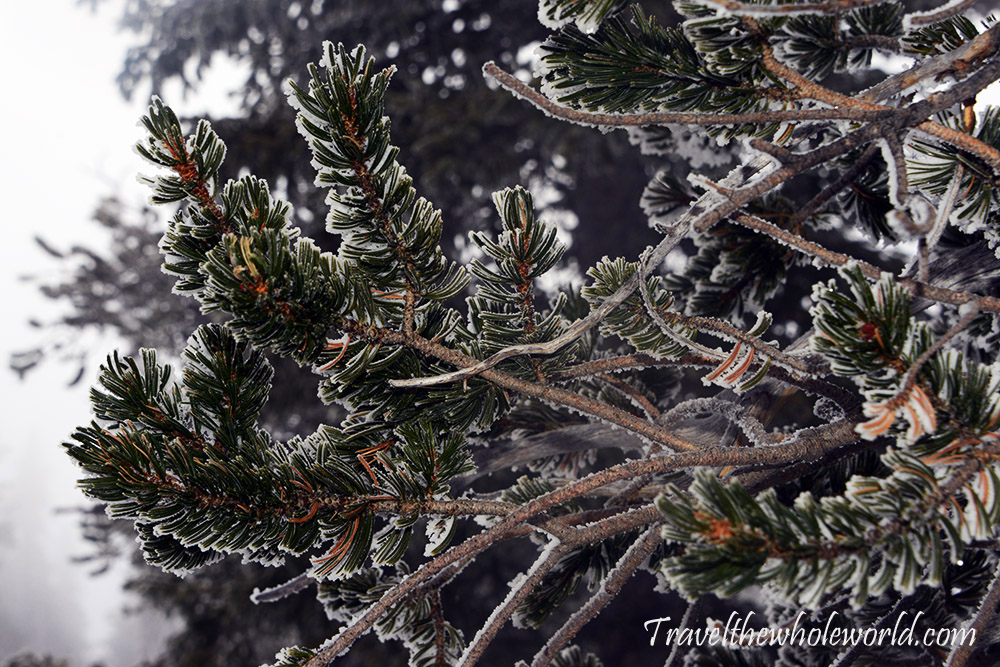
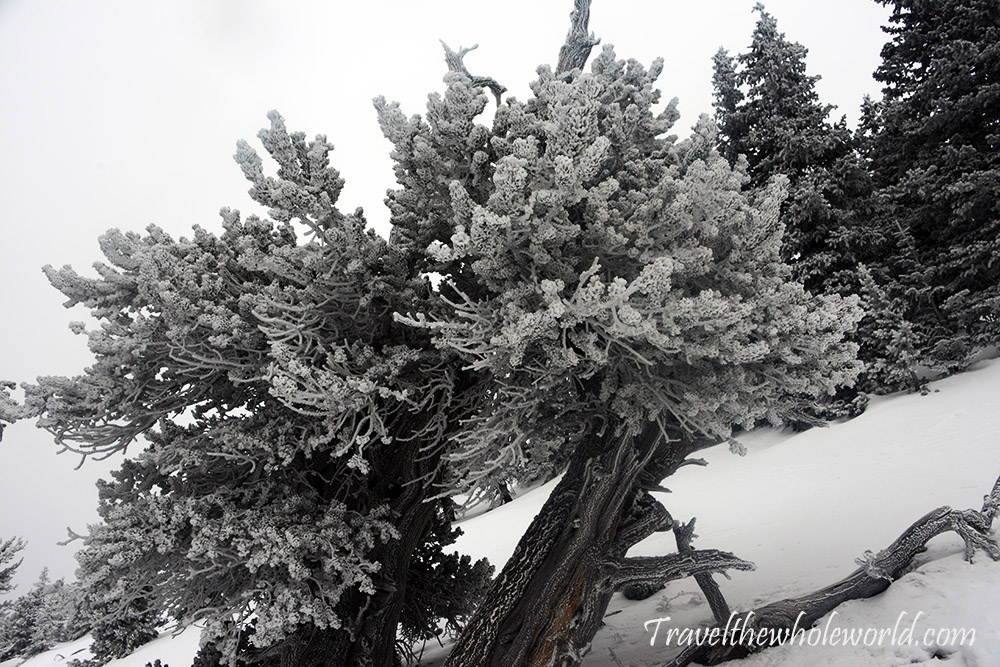
By the time I approached 11,000 feet (3,350 meters), thick rime ice covered the surrounding trees and the mountain increasingly looked frozen solid.
The B-24 Wreckage
I kept expecting to catch the other climbers, but after another thirty minutes it was clear that we had gone in different directions. By then I had no idea where the actual trail was. The tracks I’d followed had initially belonged to several people, but eventually they seemed to narrow to only one or two hikers.
Being off trail in winter, I had long since given up any thought of finding the B-24 wreckage. I wasn’t even certain which side of the mountain it was on.
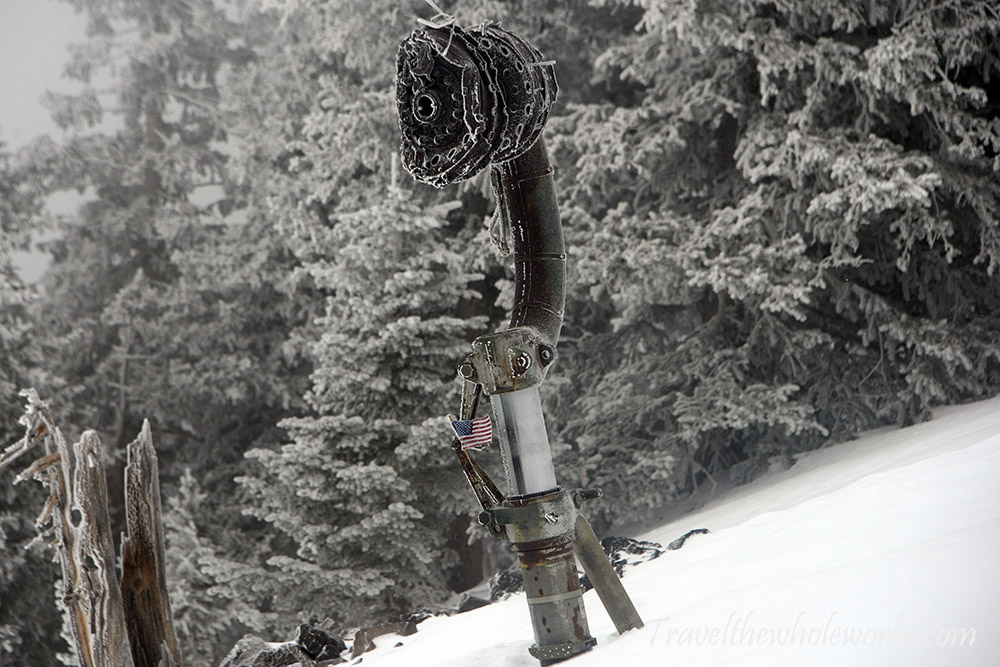
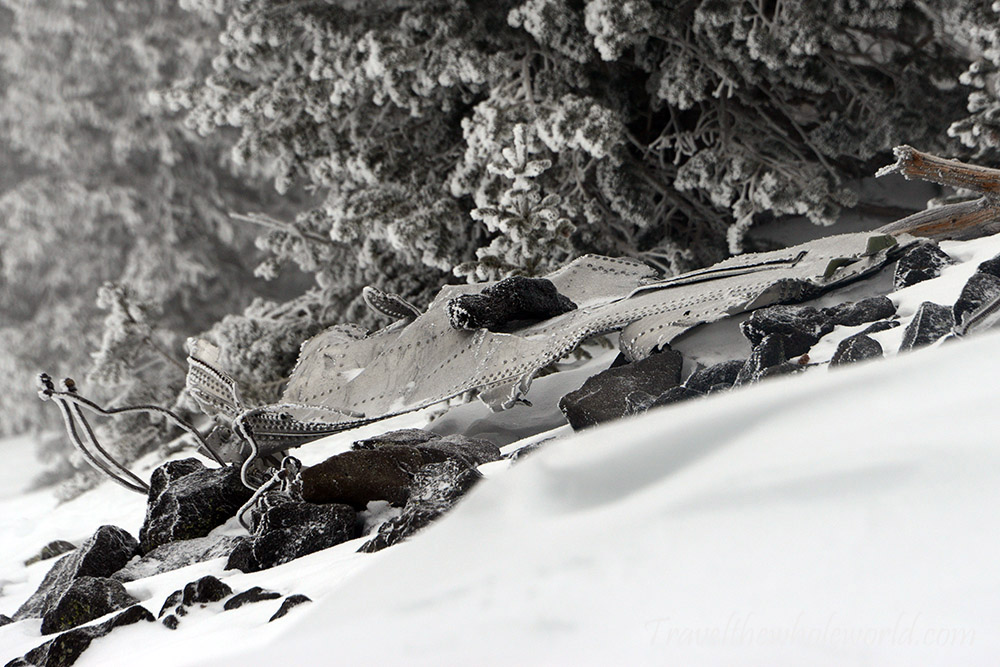
Then, at roughly 11,300 feet (3,440 meters), I walked directly into it.
I could hardly believe my luck. After failing to find the trail, losing the three climbers, and blindly following old footprints up the mountain, I had somehow stumbled onto one of the places I’d hoped to see.
The B-24 crashed here in September 1944, killing all eight servicemen aboard. Having spent years in the Marines and having worked around aircraft myself, I felt a special connection to the men who died on the mountain. I stayed for a short while, drank some water, and put on my crampons before continuing upward.
Into the Rime Ice
I thought finding the bomber wreckage might somehow put me back on the official trail, but I still couldn’t see it. By then I wasn’t too concerned. My direct route had been working surprisingly well.
Sometime later, however, the final person whose footprints I had been following must have turned around. Suddenly there were no tracks at all.
I was approaching 12,000 feet (3,650 meters), but fortunately the snow became firmer and easier to cross as I climbed higher. The closer I came to the summit ridge, the stronger the wind became and the shallower the snow became. Eventually the wind had stripped some areas completely bare.
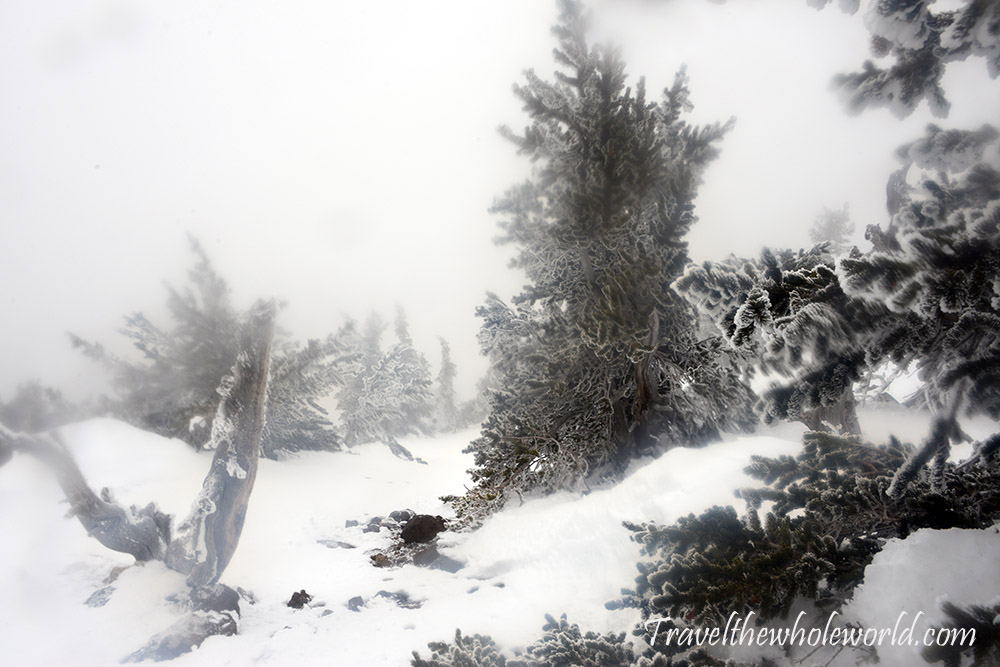
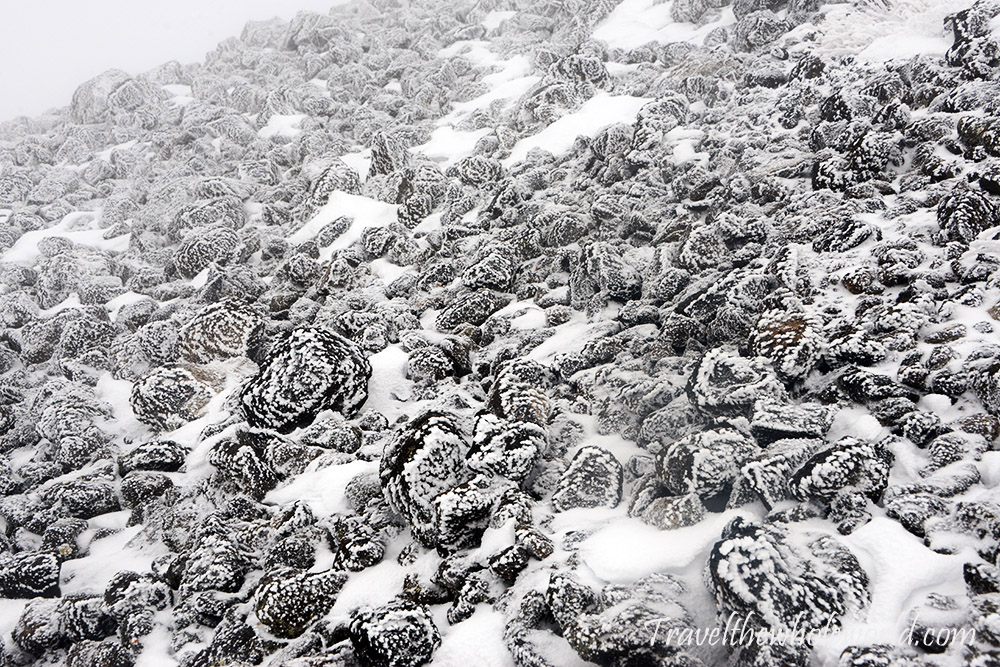
Almost as impressive as the wind was the rime ice. It coated the trees, rocks, trail markers, my camera, and eventually my face. Taking photographs became increasingly difficult.
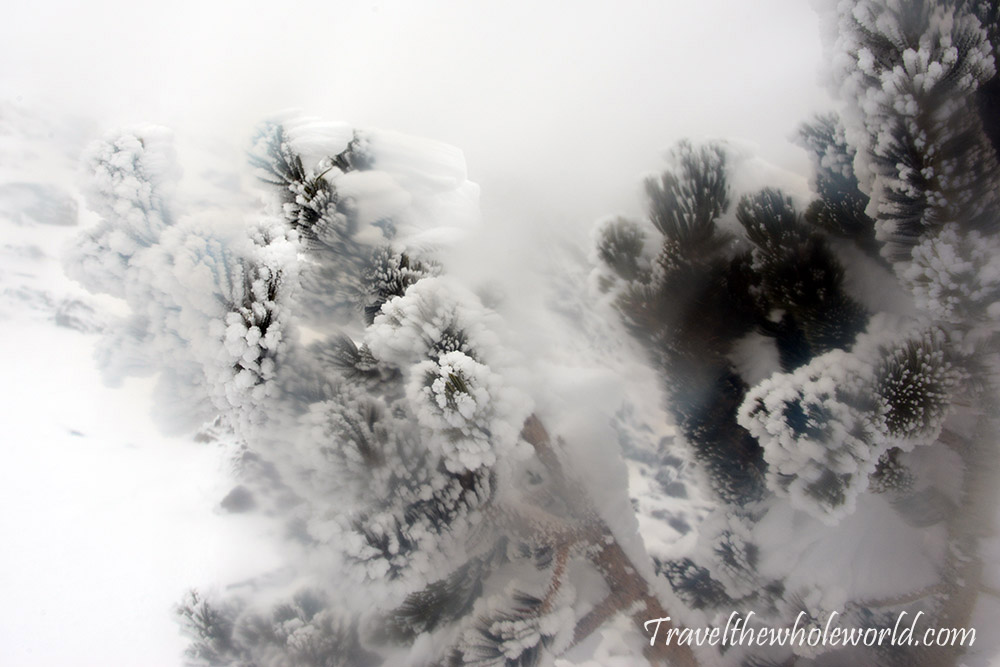
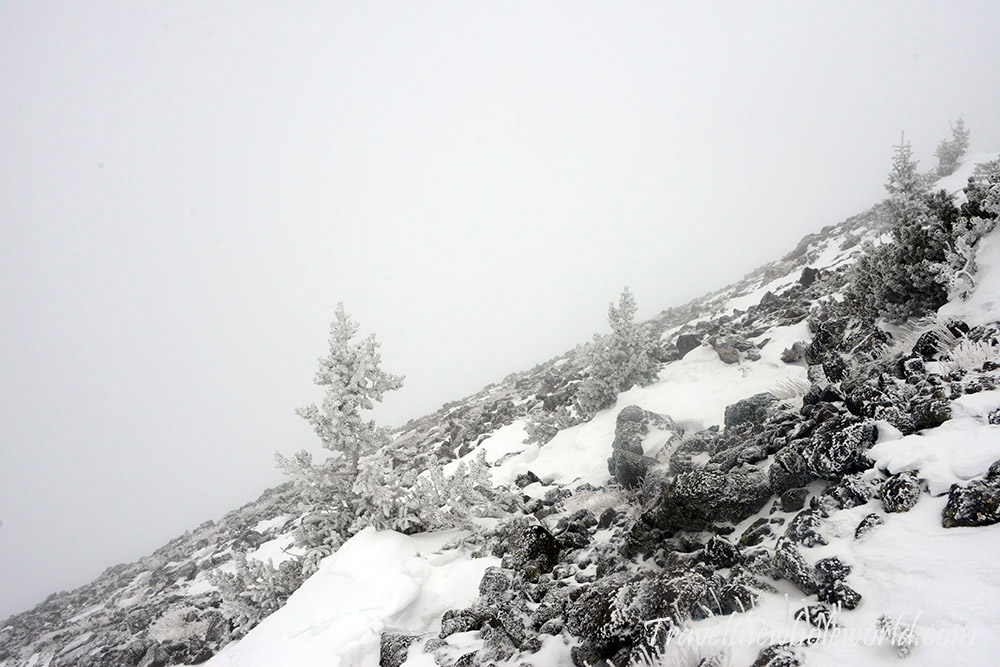
Just below the ridge I began finding patches of hard ice mixed with completely exposed rock. The wind was too strong for deep snow to accumulate here. Although I was now entering the worst weather of the day, I actually felt more confident about reaching the summit. I had gone from thinking my chances were fifty-fifty to something closer to seventy-five percent.
Back on the Trail
Hiking off trail is never ideal, especially alone in deteriorating winter weather. I had felt better after meeting the three other climbers because I was certain I would eventually see them again. Somehow I never did.
I couldn’t imagine that they had reached the first difficult snow slope only minutes after we spoke and immediately turned around, so I always suspected they had climbed one of the rockslides directly uphill and eventually decided to bail once they reached the worsening weather. If so, I couldn’t argue with their decision.
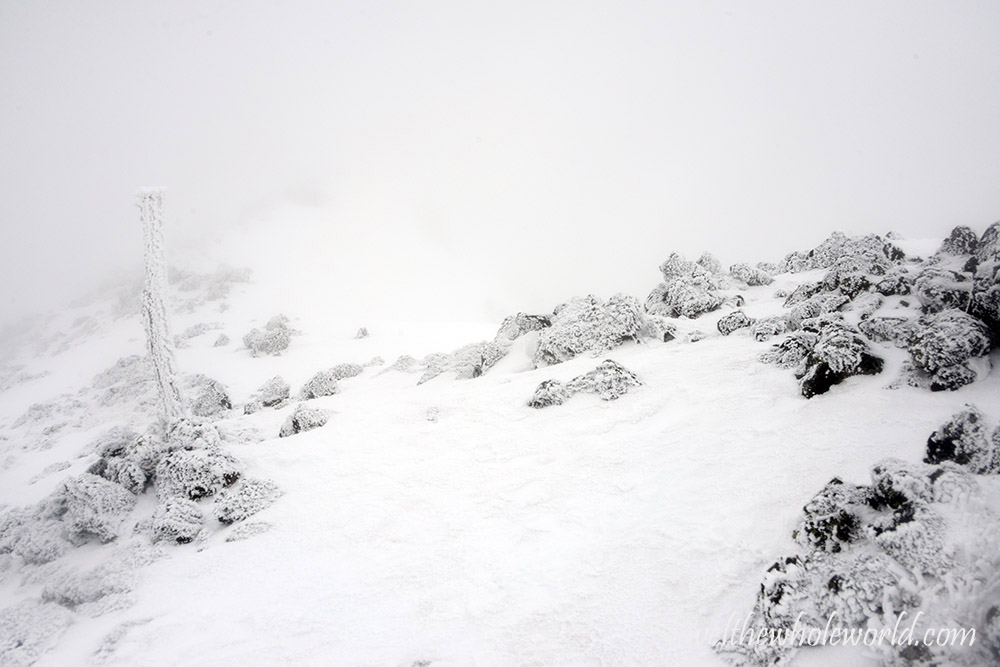
Being alone, off trail, and surrounded by poor visibility had started to bother me. Then I spotted something sticking out of the ice ahead. From a distance I couldn’t tell whether it was a dead tree or a post.
As I got closer, I realized it was a trail marker.
I was finally back where I was supposed to be.
The Summit Ridge
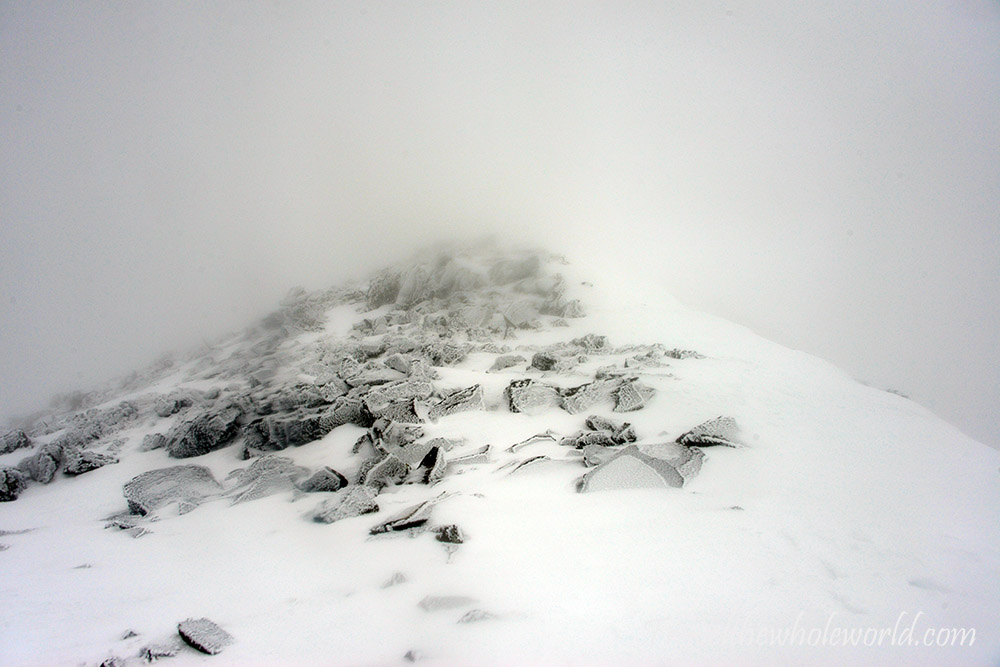
Once I climbed fully onto the ridge, conditions deteriorated rapidly. Visibility was extremely poor and the wind was fierce. It was the kind of weather that sat right on the edge of what I was comfortable climbing in.
I had attempted two other mountains where the wind became strong enough to physically knock me off balance. In both cases, turning around had been an immediate and obvious decision. Humphreys wasn’t quite at that level. The wind was powerful, but I could still walk normally without being blown from my feet.
The ridge also gave me an easy feature to follow despite the poor visibility. If conditions suddenly became much worse, my escape route was simple: leave the exposed ridge and descend back toward the forest. Once I dropped a few hundred feet, I expected the trees and terrain to shelter me from the worst of the wind.
With that in mind, I cautiously continued toward the summit.
Standing on Top of Arizona
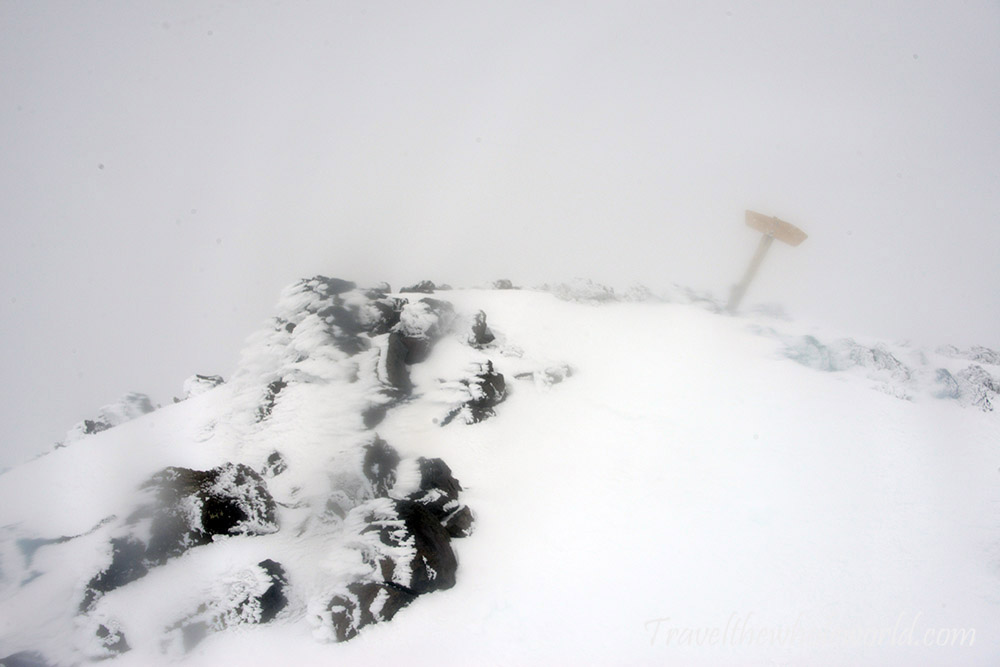
The final stretch was miserable. Rime ice continued building on everything around me, visibility remained terrible, and the wind never let up.
Then the summit sign appeared through the white.
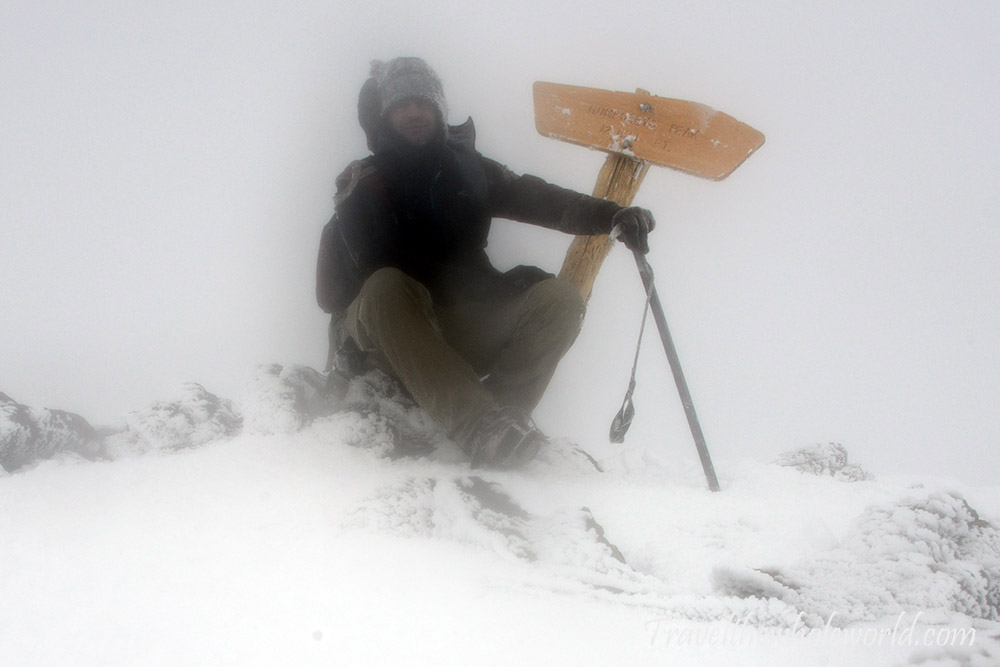
I had reached the highest point in Arizona at 12,637 feet (3,852 meters).
There were obviously no spectacular summit views that day. I could barely see the sign in front of me, much less the enormous landscape that would normally stretch across northern Arizona. Still, I was thrilled to have reached another state high point after nearly abandoning the climb much lower on the mountain.
I’d be lying if I said I wasn’t also a little concerned standing alone on the summit with almost no visibility and fierce wind surrounding me. Interestingly, the strongest gusts seemed to hit not directly on the summit but a few hundred feet below it. Knowing I would have to descend straight back into them added another little shot of anxiety.
Fortunately, the danger disappeared almost as quickly as it had arrived. Once I dropped off the exposed ridge, the wind became far less threatening. Around 11,500 feet (3,500 meters) there was almost no wind at all, and by 10,500 feet (3,200 meters) the forest was peaceful.
It was difficult to believe that such a harsh environment existed only a short distance above me.
I had started the day worried almost entirely about the wind, only to nearly fail because of deep snow. I had lost the trail, turned around, changed my mind, followed the tracks of climbers I never saw again, accidentally stumbled across the wreckage of a World War II bomber, regained the trail near the summit ridge, and eventually stood on the highest point in Arizona in a world of wind, fog, and ice.
It certainly wasn’t the way I expected to climb Humphreys Peak, but those tend to be the days I remember best.
“`