At 22,841 feet (6,962 meters), Aconcagua is the highest mountain in both the Western and Southern Hemispheres and the highest mountain in the world outside of Asia. Rising from the Andes of western Argentina near the Chilean border, it is a massive, dry mountain notorious for its extreme altitude and powerful winds.
Aconcagua has several routes to the summit, ranging from non-technical climbs to extremely difficult technical routes such as the South Face. I climbed the Normal Route, which doesn’t require technical ice climbing or roped travel, but that certainly doesn’t make it easy. Reaching the summit meant spending weeks in the Andes, gradually moving from the valleys below the mountain to camps above 20,000 feet.
This was my journey from Mendoza to the highest point in South America. I’ve divided the expedition into three parts below. Each section leads to the full story from that part of the climb.
Explore Mendoza to Camp Confluencia →
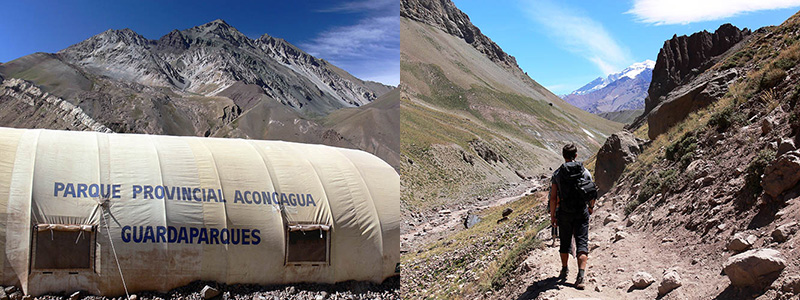
My expedition began in Mendoza before heading deep into the Andes and eventually entering Aconcagua Provincial Park. The first days included acclimatization hikes and the trek through the Horcones Valley to Camp Confluencia. At these lower elevations the journey still felt more like a normal hike, with colorful mountains, wildlife, and increasingly impressive views of Aconcagua ahead.
Explore Confluencia to Base Camp →
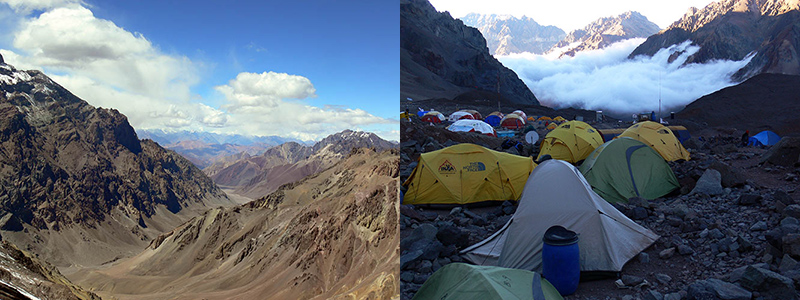
From Confluencia, the route continues deeper into the mountains toward Plaza de Mulas, Aconcagua’s enormous base camp at roughly 14,000 feet (4,300 meters). By this point the altitude becomes impossible to ignore, Aconcagua towers above camp, and the expedition begins transitioning from the long approach to the actual climb.
Explore Base Camp to the Summit →
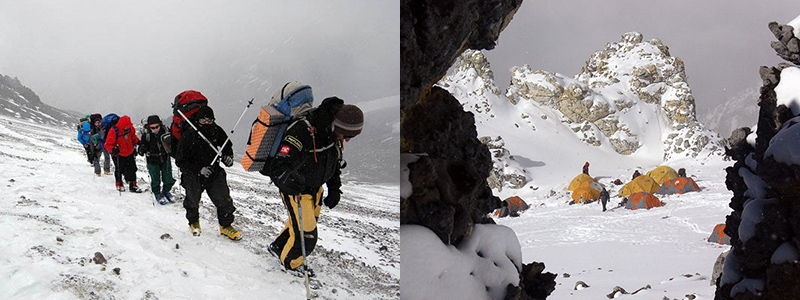
Above base camp, everything becomes more difficult. Over the next week I moved progressively higher up the mountain, eventually spending nights above 20,000 feet (6,000 meters). Severe winds, freezing temperatures, steep terrain, and extreme altitude made the final stage by far the most challenging part of the expedition.
Explore My Aconcagua Climbing Guide →
Interested in climbing Aconcagua yourself? I’ve put together what I learned from preparing for and climbing the mountain, including my training program, gear list, what to expect at the different camps, and other tips that may help you prepare for your own expedition.