My climb of Grossglockner began with a drive up the winding mountain roads of eastern Tyrol toward Lucknerhaus. Along the way I passed small Austrian villages like Grossdorf, where winter was already beginning to loosen its grip. Down in the valleys there wasn’t much snow left, but that changed quickly as I climbed higher into the mountains.
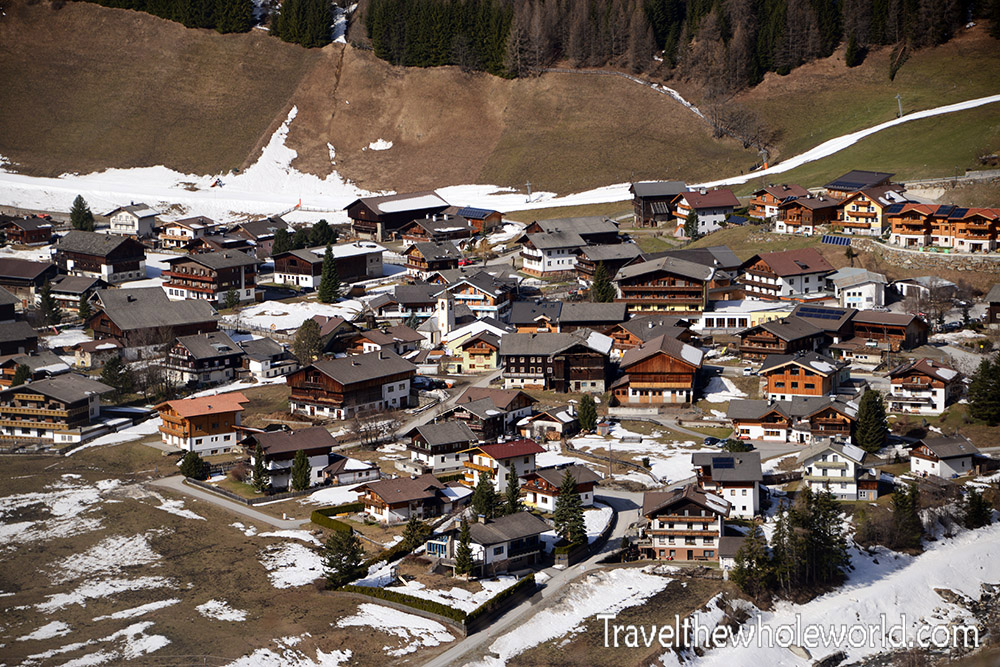
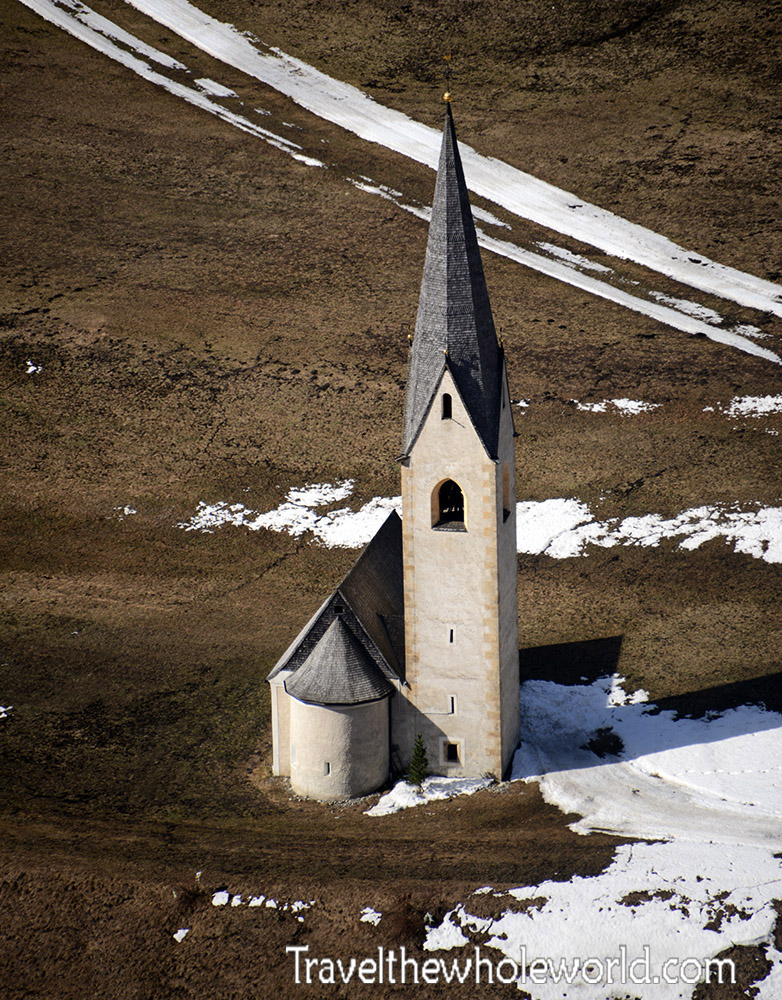
Lucknerhaus itself wasn’t particularly photogenic. It was basically the end of the road and a large parking area where people begin their adventures into the mountains, although there was also a guesthouse and restaurant.
This trip was my introduction to something I hadn’t fully appreciated about climbing in the Alps: mountain huts are everywhere. The tradition has existed for generations, and on many popular alpine routes you’re rarely more than a few hours from some form of refuge. Compared with spending night after night in a tent, the idea of hiking into the mountains and finding a bed, hot meal, and beer waiting for you seemed almost suspiciously civilized.
Starting Toward Grossglockner
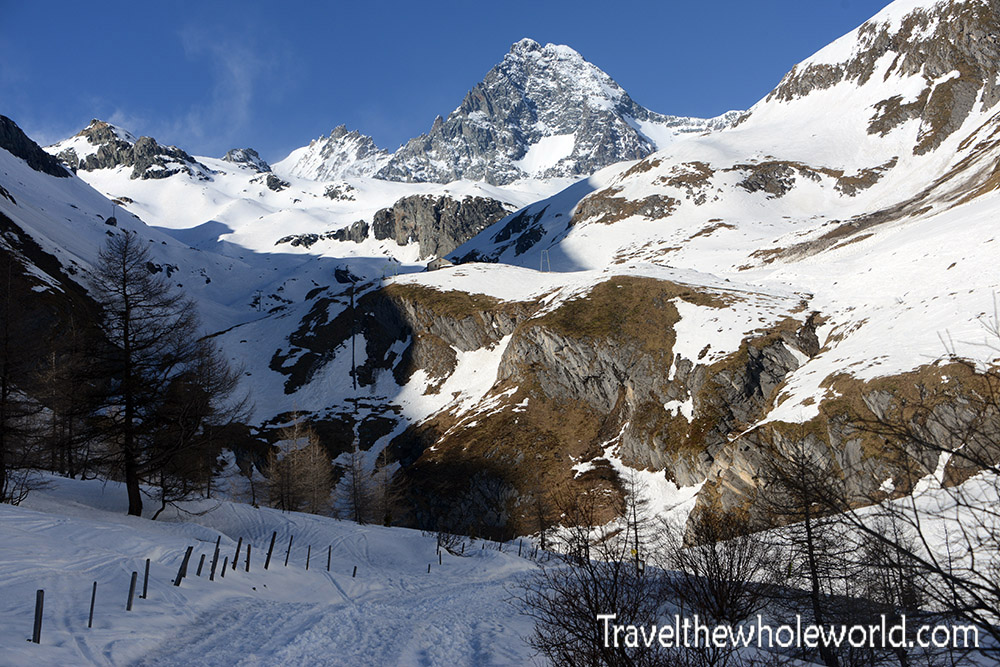
Early in the climb I had an excellent view of the entire mountain. From down in the valley, the summit looked considerably farther away than something I was supposed to be standing on the following day.
The normal strategy is to spend the first day climbing to one of the mountain huts around 3,000 meters, sleep there, and finish the remaining elevation the next morning. From the valley floor, I would gain roughly 6,000 feet—almost 2,000 meters—before reaching Austria’s highest point.
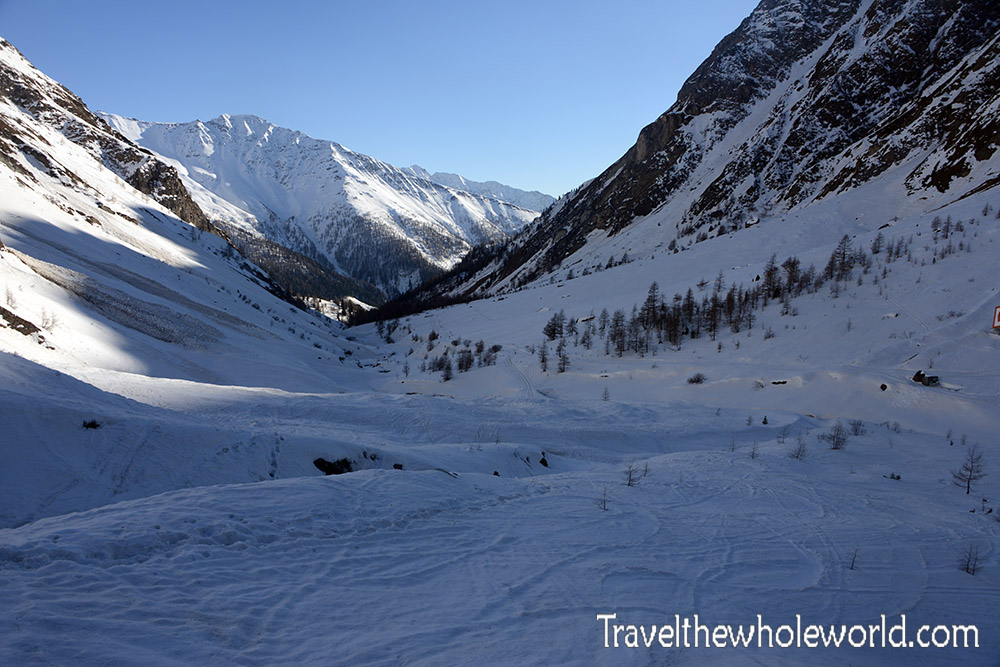
Grossglockner reaches 3,798 meters (12,461 feet), so altitude wasn’t the major concern here. I could gain elevation quickly without needing the long acclimatization schedule required on much higher mountains. My fitness, unfortunately, was another issue entirely.
Into the Snow
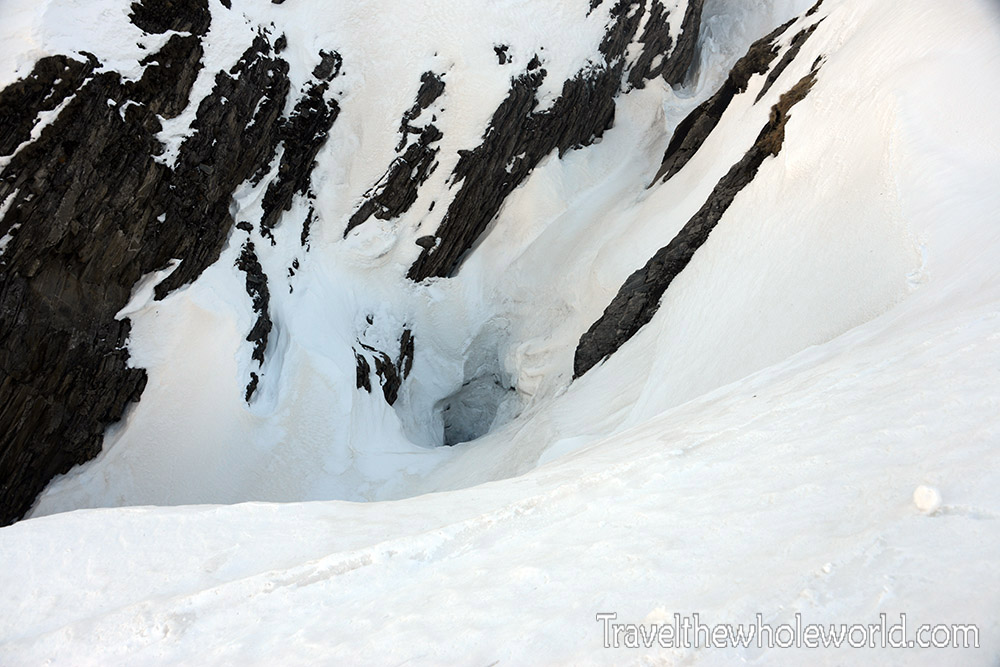
The terrain wasn’t particularly steep yet, but that didn’t mean everything was harmless. At one point I passed a deep hole at the bottom of a snowy slope that looked just about large enough to swallow a person.
I had no intention of testing that theory.
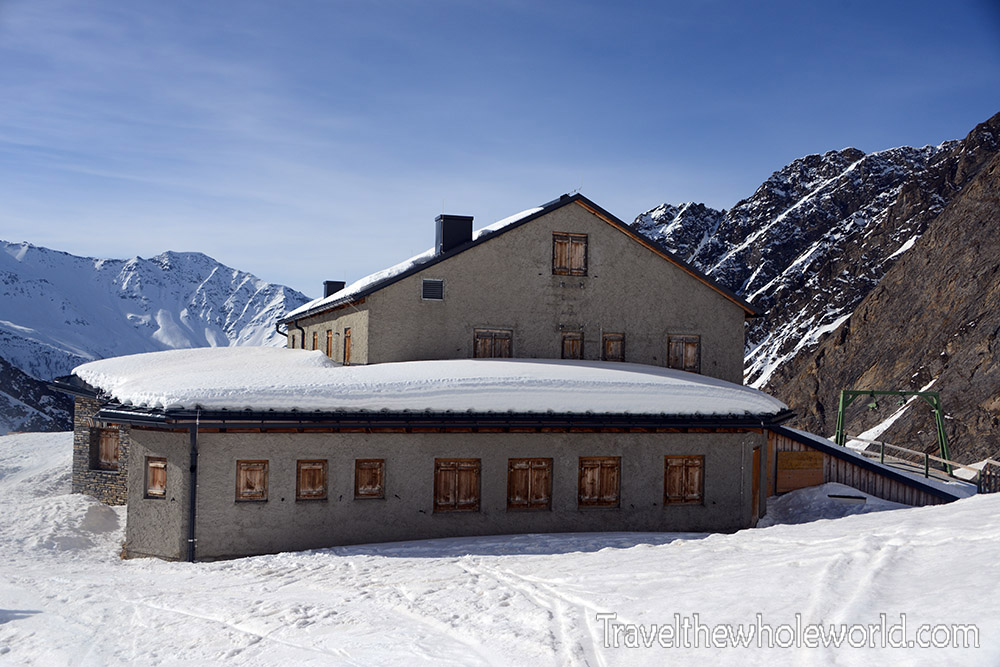
After an hour or two we passed the first mountain hut. It was still closed for the winter, although spring was approaching and it probably wasn’t far from reopening.
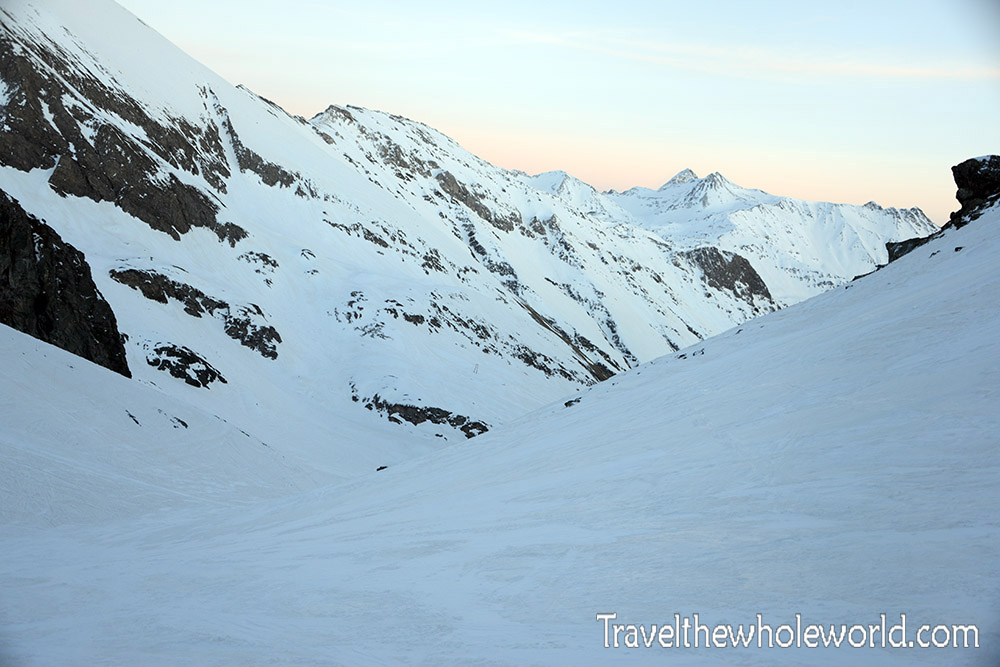
The climb continued steadily up the valley. Most of the terrain wasn’t difficult, but the final approach toward Stüdlhütte became noticeably steeper.
Back in the Mountains
I was nowhere near the level of fitness I’d had for climbs like Denali or Aconcagua. I was carrying a roughly 40-pound (18-kilogram) pack, and even 10,000 feet (3,000 meters) felt noticeable after being away from serious climbing for a while.
But that suffering was exactly why I was here.
This was my first real return to the mountains as I started preparing for Everest. Grossglockner was nowhere close to Everest in altitude or overall difficulty, but I needed to start rebuilding my mountain fitness somewhere.
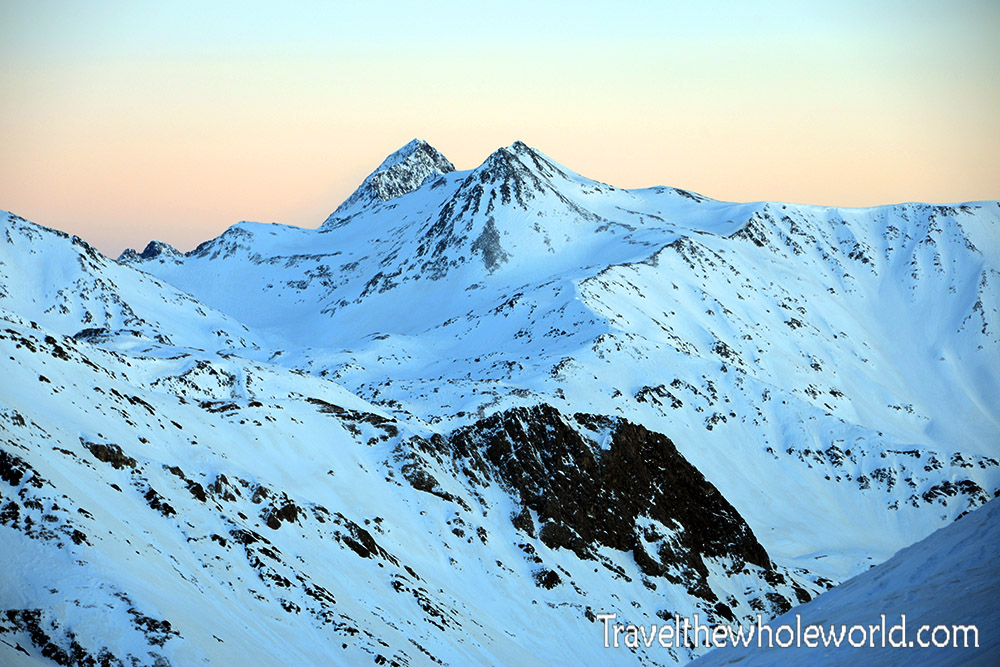
I slowly forced myself onto the ridge and finally reached Stüdlhütte. Looking back down the valley from here gave me one of the most beautiful alpine views I’d seen anywhere in Austria.
A Night at Stüdlhütte
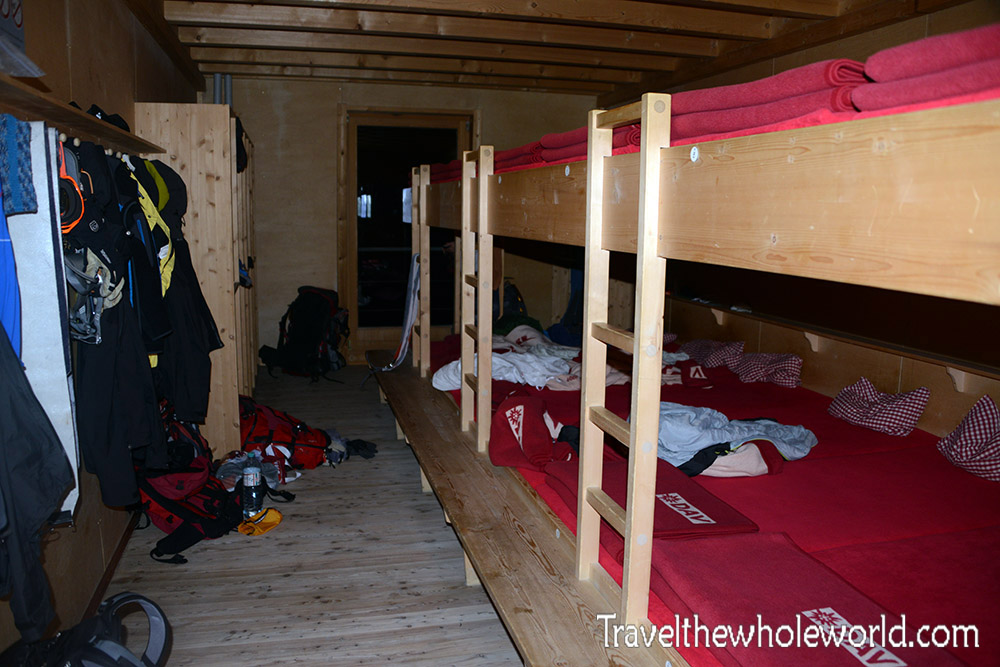
For some reason I never photographed the outside of Stüdlhütte, but it was a large multi-story blue mountain hut and considerably more comfortable than anything I was accustomed to sleeping in while climbing.
At first I almost felt like staying in a hut was cheating. If I added up all my expeditions, I’d probably spent months of my life sleeping in tents in the mountains. Then I saw a normal bed and got over that feeling pretty quickly.
There was even a restaurant and a good selection of beer. At dinner, it seemed like nearly everyone had a beer sitting in front of them.
The downside was the price. My meal came to somewhere around $50, which seemed impressive for a mountain hut. I had carried several days of food in my already heavy pack, but I couldn’t resist ordering dinner that first night. After that bill, I suddenly became much more enthusiastic about eating the food I’d carried up myself.
Summit Morning
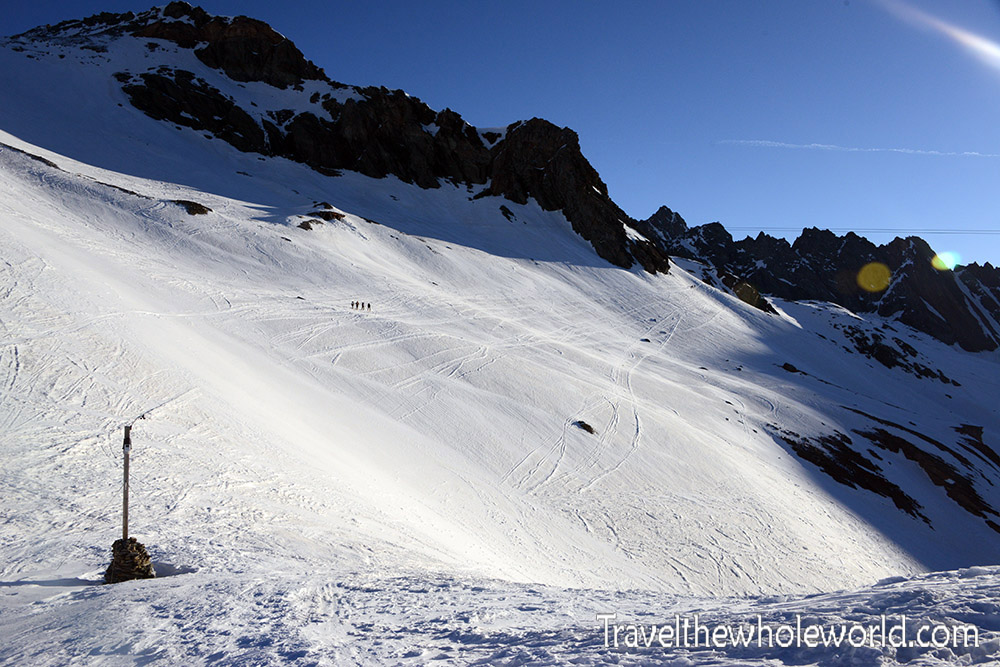
Early the next morning we began our summit attempt. The first section was a moderate traverse across snow. It wasn’t steep enough to require using the ice axe, so we put on crampons and continued with trekking poles.
I also noticed that almost everyone else on the mountain seemed to be carrying skis. Their plan was considerably smarter than mine: climb to the summit and then ski most of the way back down.
I’d only skied a handful of times in my life, so that wasn’t an option for me. Watching everyone else eventually disappear downhill at high speed definitely made me want to improve.
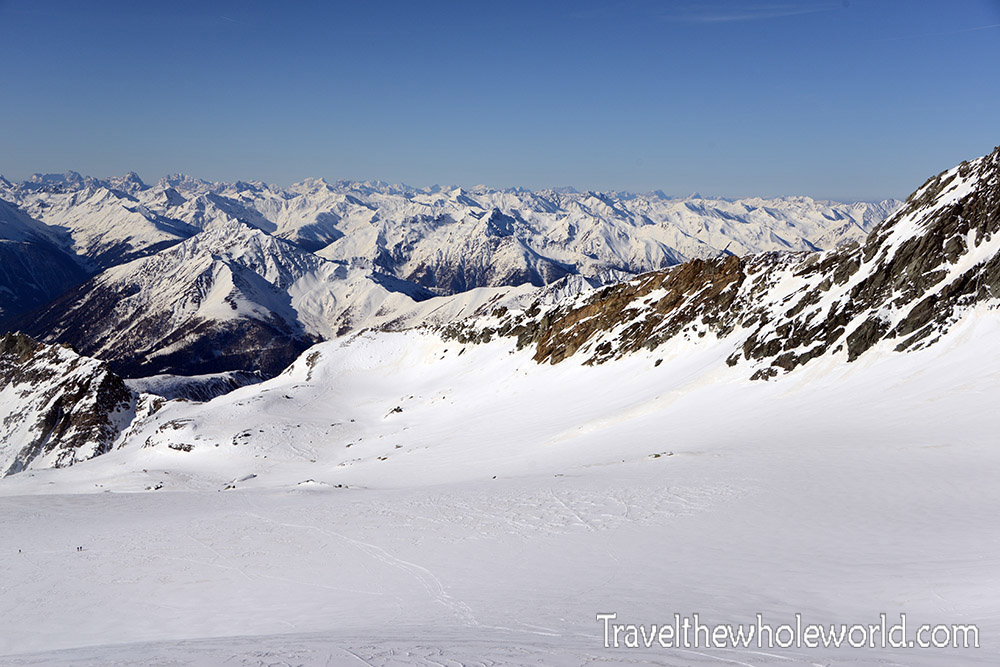
The Mountain Comes Into View
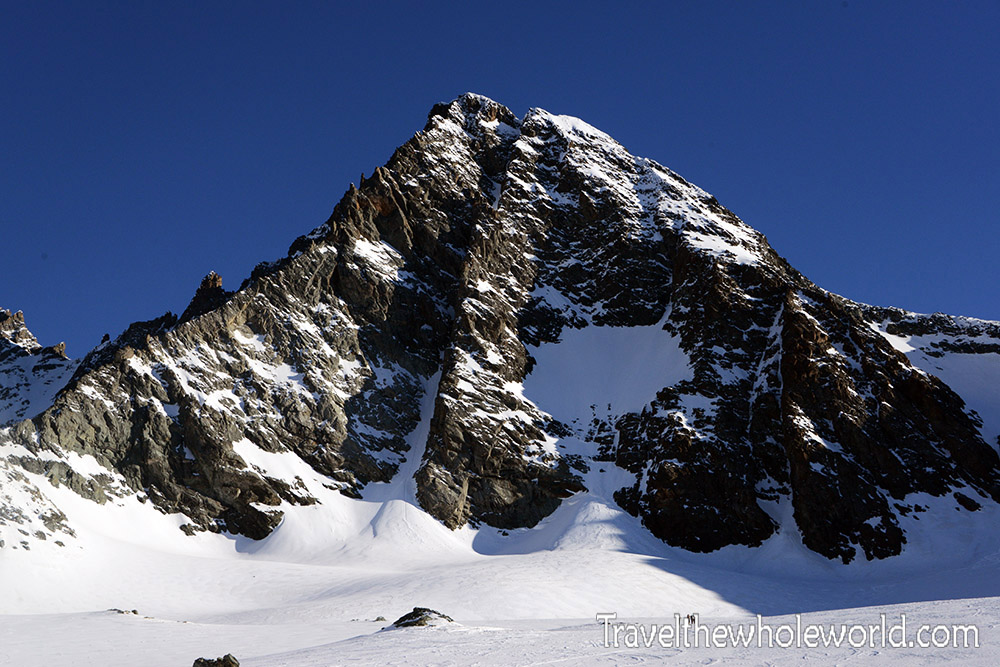
After the traverse and some additional climbing, we finally had a much closer view of the summit.
Oddly enough, the route now took us temporarily away from the mountain. We crossed toward a moderately steep snow bowl and climbed it to reach a rocky ridge.
The ridge had a fixed cable that could be used for additional security, although going uphill I didn’t find it particularly necessary. It also didn’t seem very long.
On the descent later that day, somehow the exact same ridge seemed to have doubled in length.
Erzherzog-Johann-Hütte
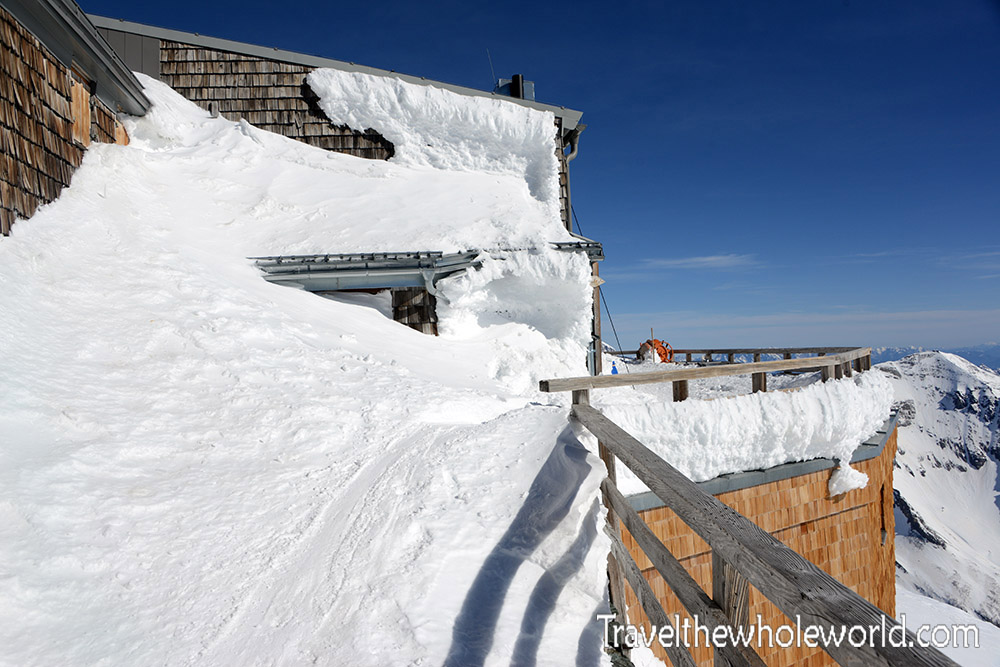
After perhaps half an hour on the ridge, we reached Erzherzog-Johann-Hütte, dramatically positioned high on the mountain. It was buried in deep snow and clearly wasn’t going to be serving anyone dinner anytime soon.
From here we were finally approaching the most serious part of the climb.
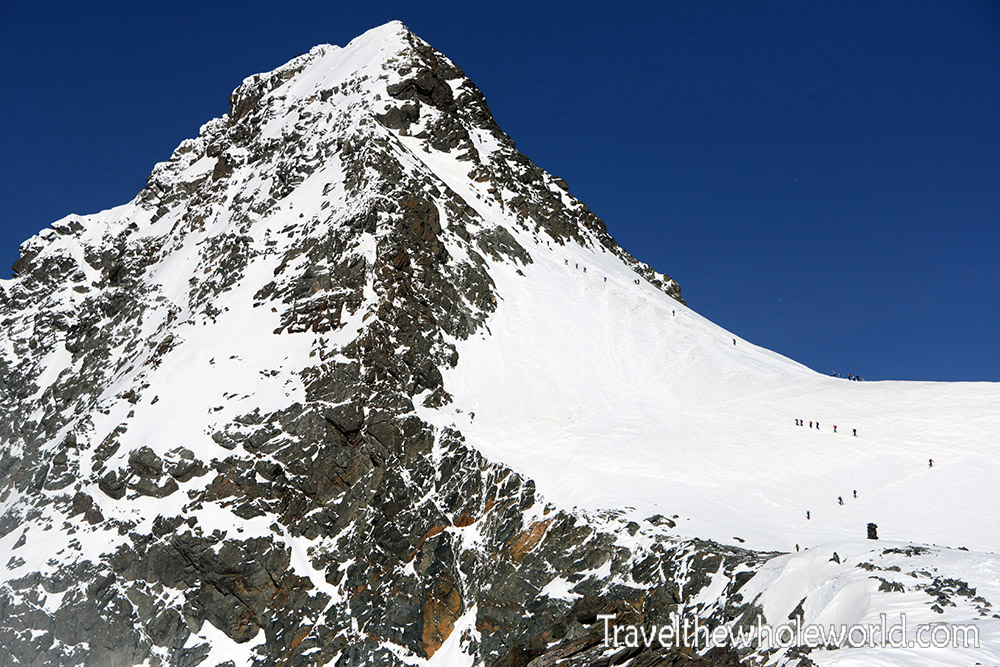
A relatively flat section brought us toward the base of the summit pyramid. Ahead was the steepest snow we’d encountered so far.
This was where the trekking poles finally went away and the ice axes came out.
Climbing to the Summit Ridge
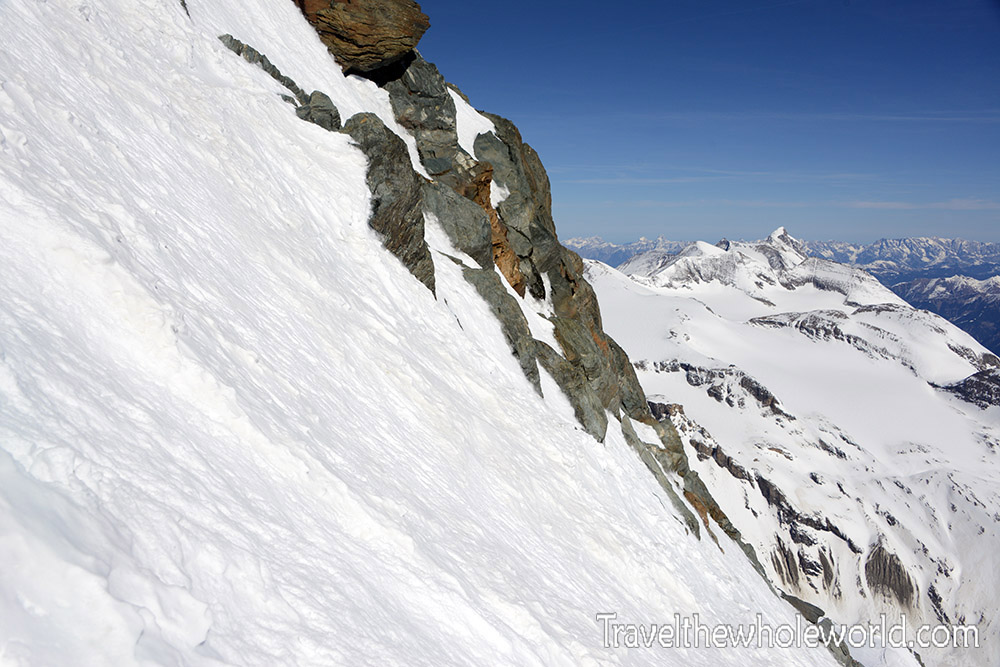
The snow here was extremely deep. I remember thinking that if I slipped, I might simply disappear into it rather than accelerate down the mountain.
I wasn’t interested in finding out.
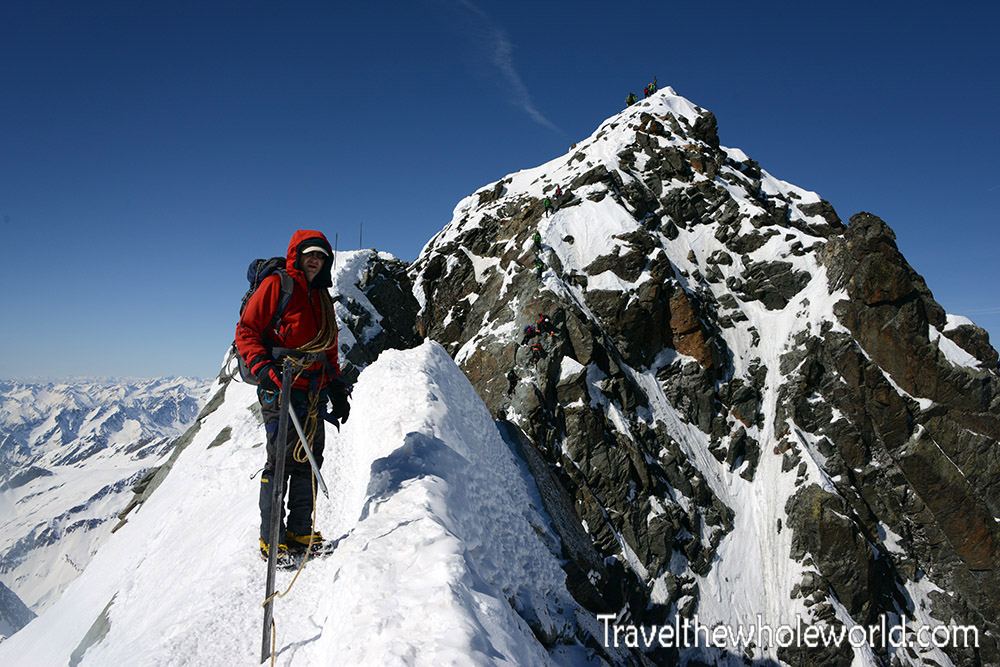
Once we reached the ridge, the character of the climb completely changed.
There were serious rocky drops on both sides, and a few sections narrowed to perhaps a foot across. Unlike the deep snow below, there was nothing forgiving about falling here. A mistake in the wrong place could easily be fatal.
Fortunately, much of the ridge had fixed anchor points and metal posts where we could clip in for protection.
The Glocknerscharte
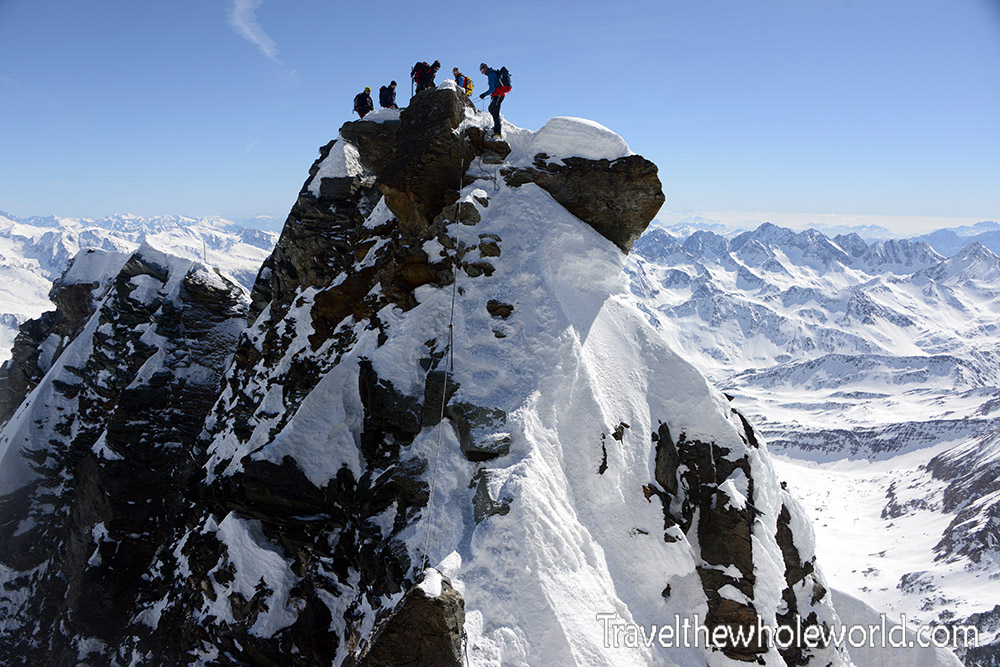
Beyond the first exposed ridge we reached the famous Glocknerscharte, the final major obstacle before the summit.
The Glocknerscharte is the narrow saddle separating Kleinglockner from the main summit of Grossglockner. Reaching it requires descending briefly before climbing back up toward the highest point.
This is where the climb became most technical.
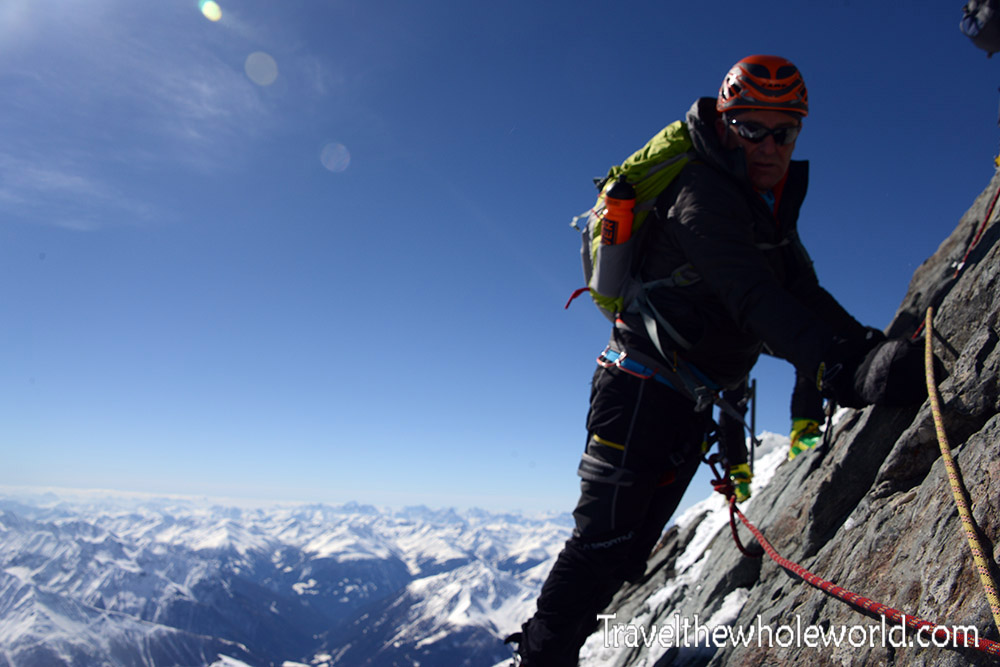
I had hoped that climbing during this time of year might give us the summit almost entirely to ourselves. Apparently several other teams had the same idea.
There isn’t much room for passing around the Glocknerscharte, so we encountered a small alpine traffic jam as teams climbing up and down tried to squeeze past one another.
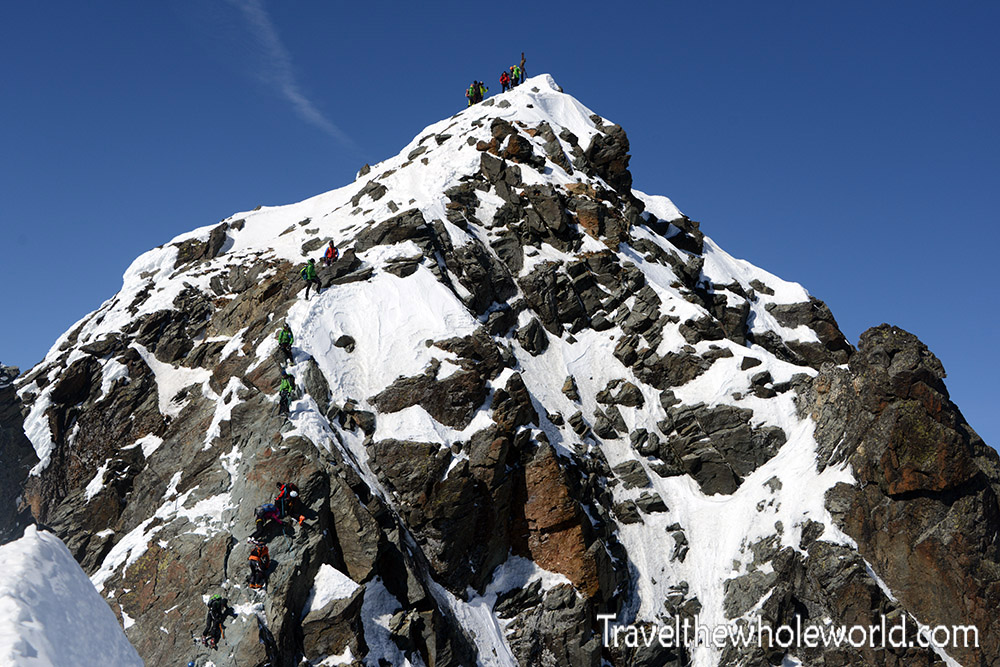
From the saddle, the final climb involved exposed rock with protection available along the route. It wasn’t technically difficult rock climbing, but with crampons, snow, exposure, and other climbers moving in both directions, it demanded attention.
Standing on Top of Austria
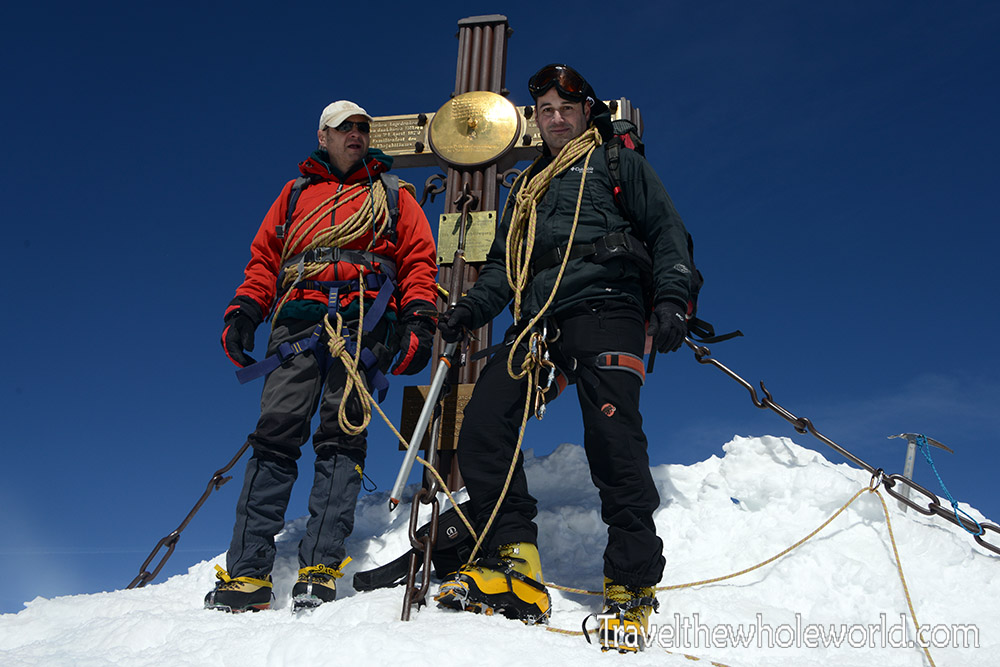
After the final rock climb, there was only a short walk left.
We had reached the summit of Grossglockner at 3,798 meters (12,461 feet), the highest point in Austria.
Standing there felt especially satisfying because the mountain had made me work much harder than its altitude suggested. I’d climbed mountains that were vastly higher and objectively more difficult, but being out of shape had forced me to pay for nearly every meter of this one.
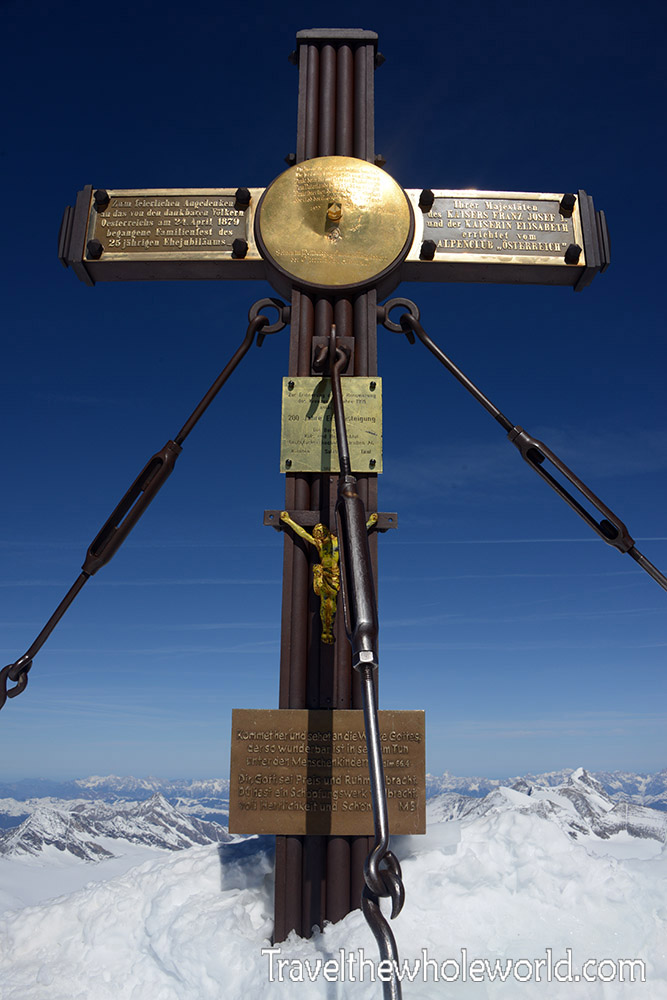
Like many alpine summits, Grossglockner is crowned by a Gipfelkreuz, or summit cross. A wooden cross was first placed here only a few years after the mountain’s first ascent in 1800.
That original cross didn’t survive for long. In 1880, a much larger iron cross weighing hundreds of pounds was installed on the summit. More than a century later, it was still standing above us on the highest point in Austria.
The Long Way Back Down
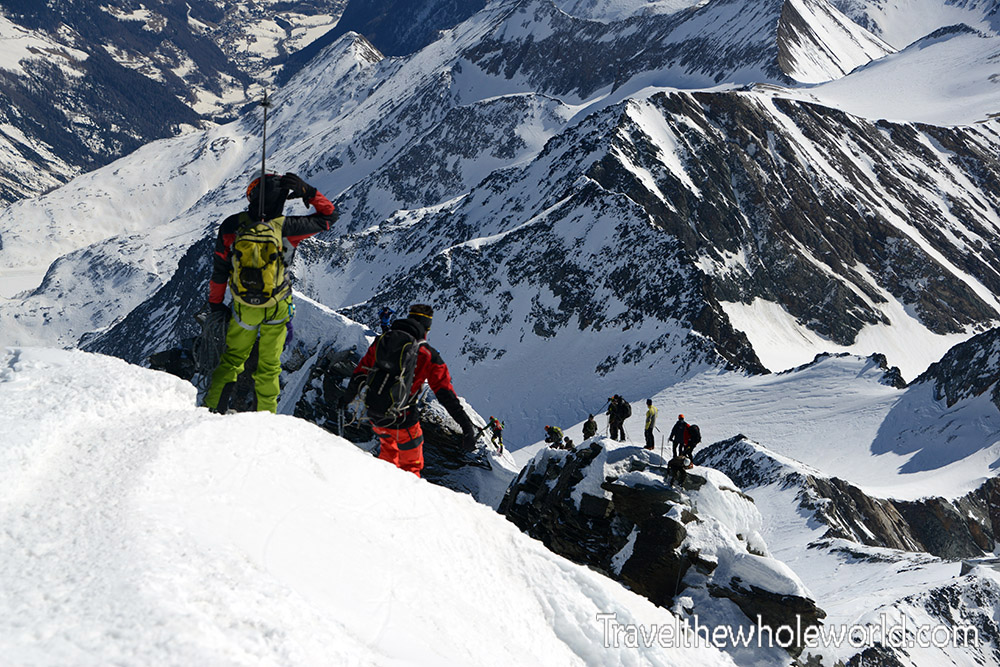
I had suffered considerably getting to the top. Again, Grossglockner wasn’t remotely close to the hardest mountain I’d climbed, but my poor fitness made sure I paid a price anyway.
Now the torture was supposedly over.
Most of the other climbers descended the rocky summit ridge and then, once they reached suitable snow, simply clicked into their skis and disappeared toward Stüdlhütte.
I still had to walk.
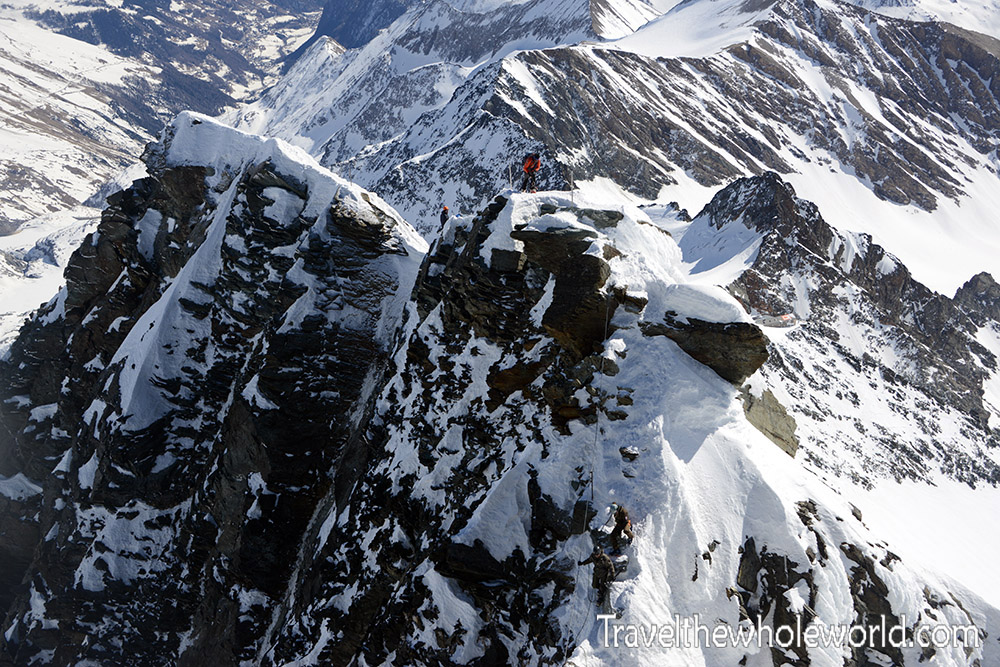
There was some traffic on the descent, but once we were below the summit ridge the technical difficulties gradually disappeared and we made our way back toward Stüdlhütte.
Grossglockner was a short climb compared with the major expeditions I’d done elsewhere in the world, but it packed an enormous amount into two days. The valleys were beautiful, the hut system was completely different from the expedition climbing I was accustomed to, and the final ridge had some of the most dramatic exposure I’d encountered at the time.
I arrived thinking of the European Alps as relatively small mountains. I left with considerably more respect for them.
And perhaps most importantly for me then, I was finally climbing again.
Video From the Climb
“`