Alabama is a state of contrasts, stretching from the Appalachian foothills of the north to the beaches and wetlands of the Gulf of Mexico. Along the way are caves, forests, historic cities, and a culture shaped by the Deep South.
Alabama also played an enormous role in American history. Montgomery served as the first capital of the Confederacy and, nearly a century later, became one of the centers of the Civil Rights Movement. Birmingham and Mobile have their own very different histories, while northern Alabama offers some surprisingly wild landscapes underground.
I’ve divided my travels through Alabama into the destinations below. Each section leads to the full story and photos from that part of the state.
Explore Montgomery →
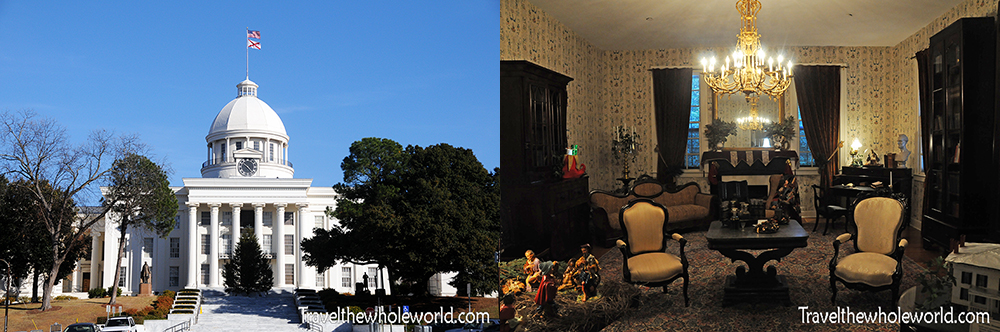
Alabama’s capital has played a major role in two very different chapters of American history. Montgomery became the first capital of the Confederacy during the Civil War, and many buildings connected to that period still stand today.
Nearly a century later, Montgomery became one of the most important cities of the Civil Rights Movement. Martin Luther King Jr. preached here, Rosa Parks refused to give up her bus seat here, and the Montgomery Bus Boycott helped launch a movement that would change the country.
Explore Birmingham →
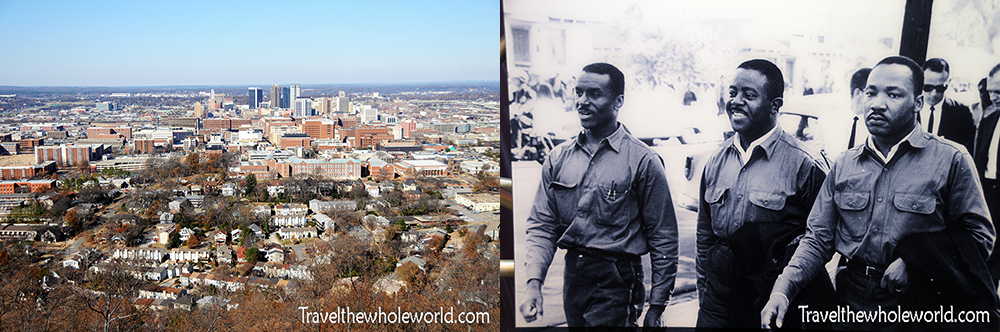
Birmingham grew into Alabama’s largest city through the iron and steel industries that once dominated the region. That industrial history is still visible around the city, including at Vulcan Park, where a giant statue of the Roman god of fire overlooks Birmingham from Red Mountain.
The city also played a major role in the Civil Rights Movement and has several important historic sites connected to that period. Today, Birmingham combines that history with the restaurants, nightlife, museums, and entertainment of Alabama’s largest metropolitan area.
Explore Cathedral Caverns →
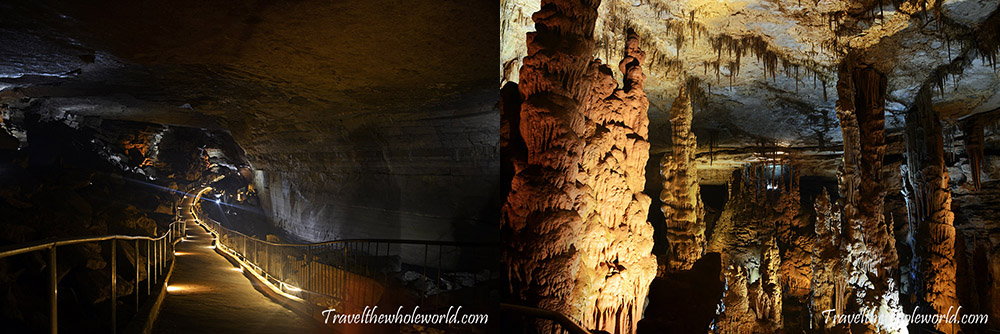
Few people would expect Alabama to have some of the most spectacular caves I’ve seen in the United States. Cathedral Caverns has an enormous entrance leading into a massive underground system filled with stalagmites, stalactites, flowstone, and other formations.
Cathedral Caverns can be explored on a guided tour along a developed walkway, but northern Alabama is filled with many other caves as well. Some require permits and serious technical skills to enter, with everything from enormous pits to underground waterfalls hidden beneath the landscape.
Explore Mobile →
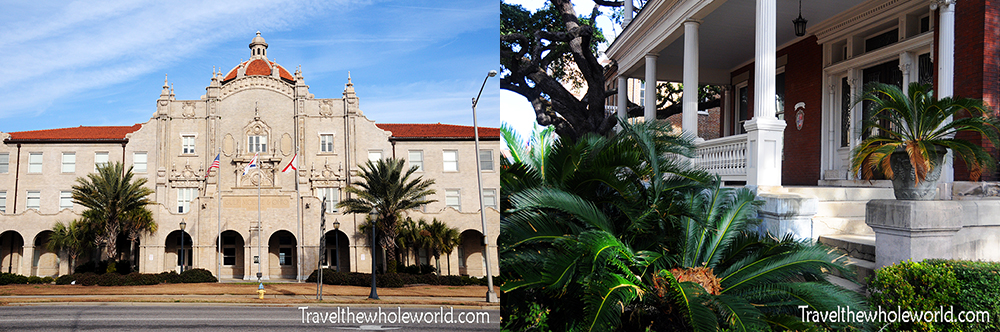
Founded by the French in 1702, Mobile is one of the oldest cities on the Gulf Coast and has spent its history under a remarkable number of flags. Control passed from France to Britain, Spain, the United States, the Confederacy, and finally back to the United States.
That mixture of cultures helped give Mobile a character very different from Alabama’s inland cities. The city is also famous for its Mardi Gras tradition, which began here long before the celebration became synonymous with New Orleans.
Explore Gulf Shores →
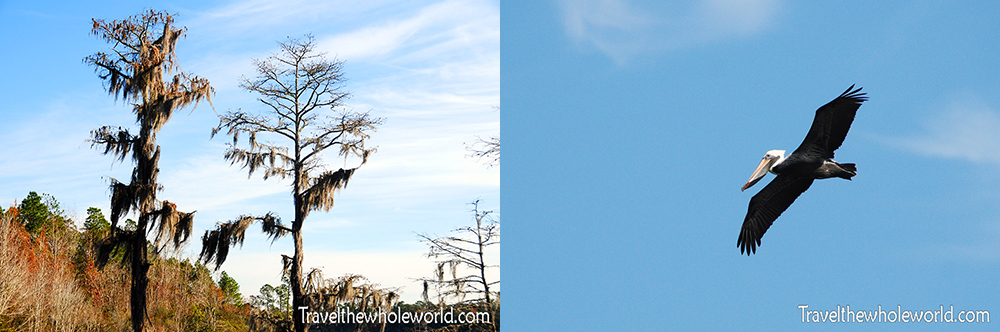
At the southern end of Alabama, Gulf Shores feels like a completely different part of the state. White sandy beaches line the Gulf of Mexico, with warm subtropical water, hotels, restaurants, and everything you’d expect from a beach destination.
Alabama’s Gulf Coast receives far less attention than neighboring Florida, which can also mean smaller crowds. Away from the developed beaches, the surrounding wetlands, waterways, and protected areas provide a completely different environment with plenty of wildlife and excellent birdwatching.