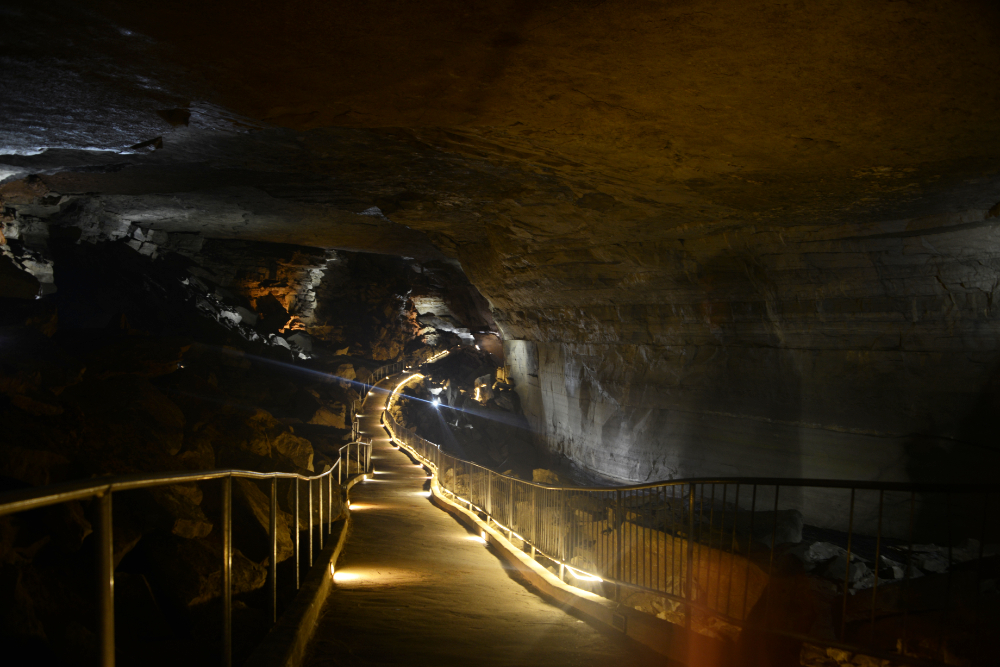
Who would have thought that the Tennessee and Alabama region would have thousands and thousands of world-class caves! Cathedral Caverns is just one of the cave systems here and has been bringing in visitors since the 1950s. It was originally privately owned and went through a few owners before the state eventually purchased it and reopened it to the public in 2000. That wasn’t too long before my visit, but a lot of improvements had already been made to the infrastructure, including lit pathways that extend deep into the cave.
Visiting Cathedral Caverns is only possible on a guided tour. I got lucky and almost had a personal tour since only two other people showed up. With such a small group, we were able to get a lot more information and move through the cave at a leisurely pace.
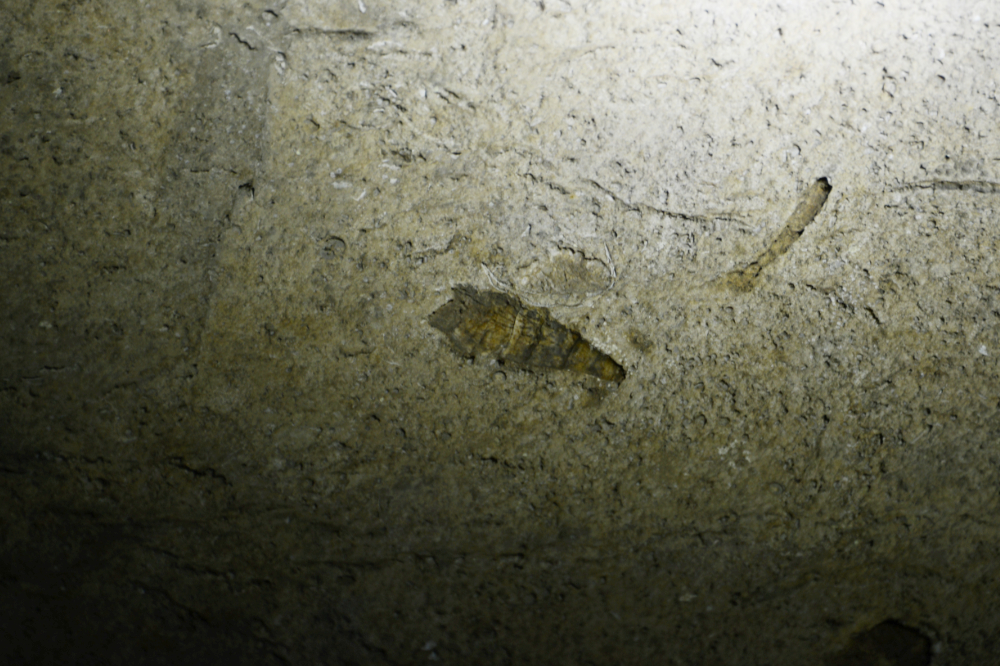
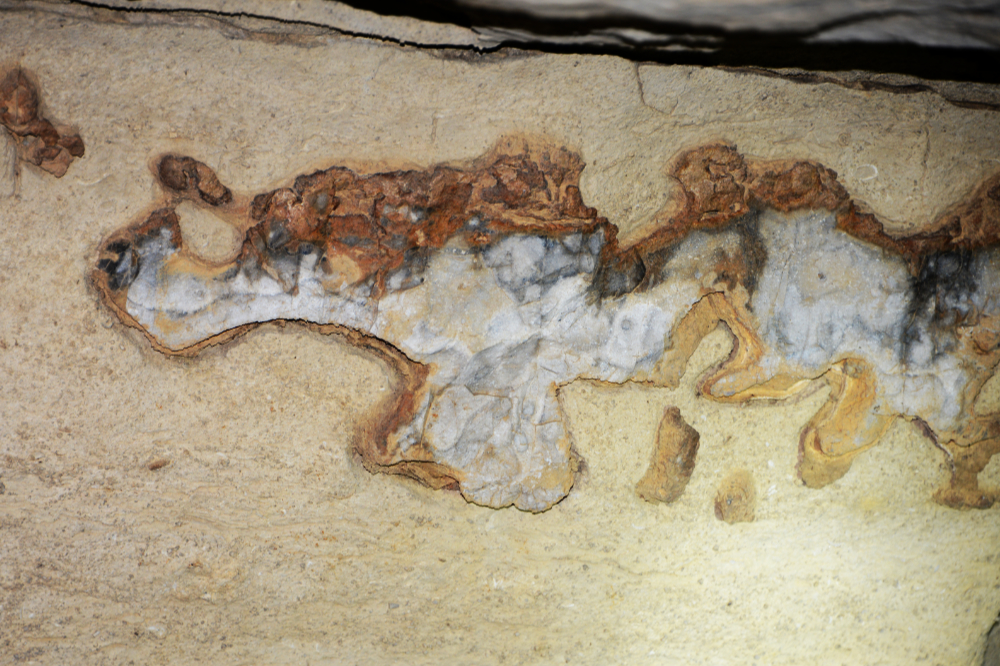
Our guide pointed out ancient sea shells left behind from when this region of Alabama was underwater. Even more impressive were the ancient sea sponges below. According to our guide, these sponges marked the waterline of an ancient ocean and appeared to stretch for around 100 feet (30 meters).
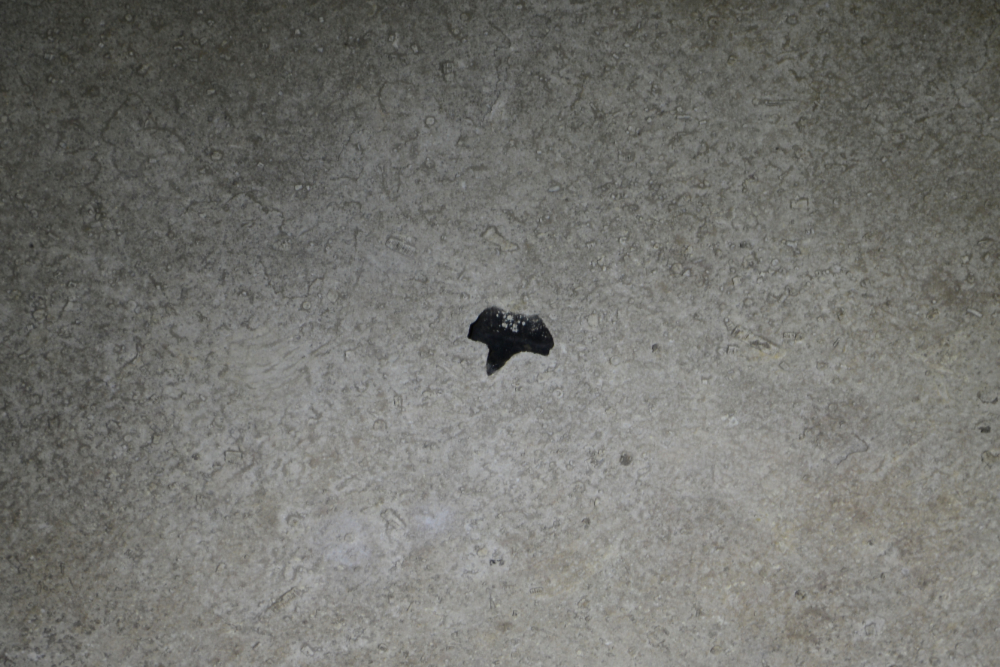
Sea shells are something you might expect to find in a cave, but this thing stuck in the ceiling I would never have believed if the guide hadn’t pointed it out. We were told it was an ancient shark tooth, possibly from a megalodon! I suppose it makes sense. Shark teeth aren’t that difficult to find along beaches, so one ending up embedded here isn’t impossible. Even stranger, our guide told us this was one of nine known shark teeth inside the cave.
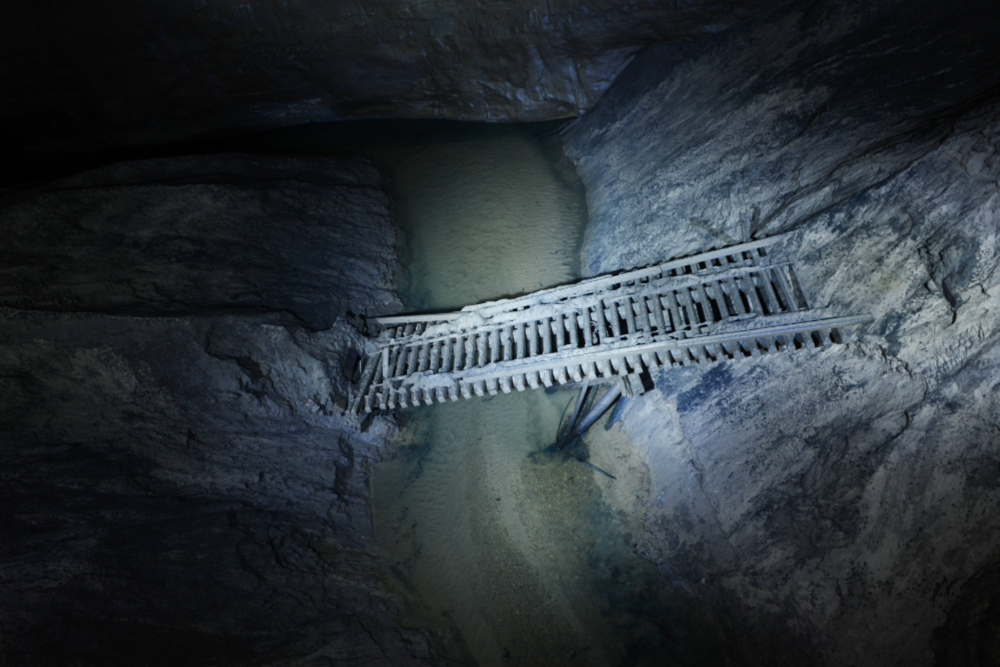
Although Cathedral Caverns now has modern bridges and lighted walkways, some of the old bridges and boardwalks still remain. I thought this old bridge looked like something straight out of an Indiana Jones movie. The cave’s original owner, Jacob Gurley, was responsible for building much of the early infrastructure. Even after selling the cave, he remained involved with it for the rest of his life.
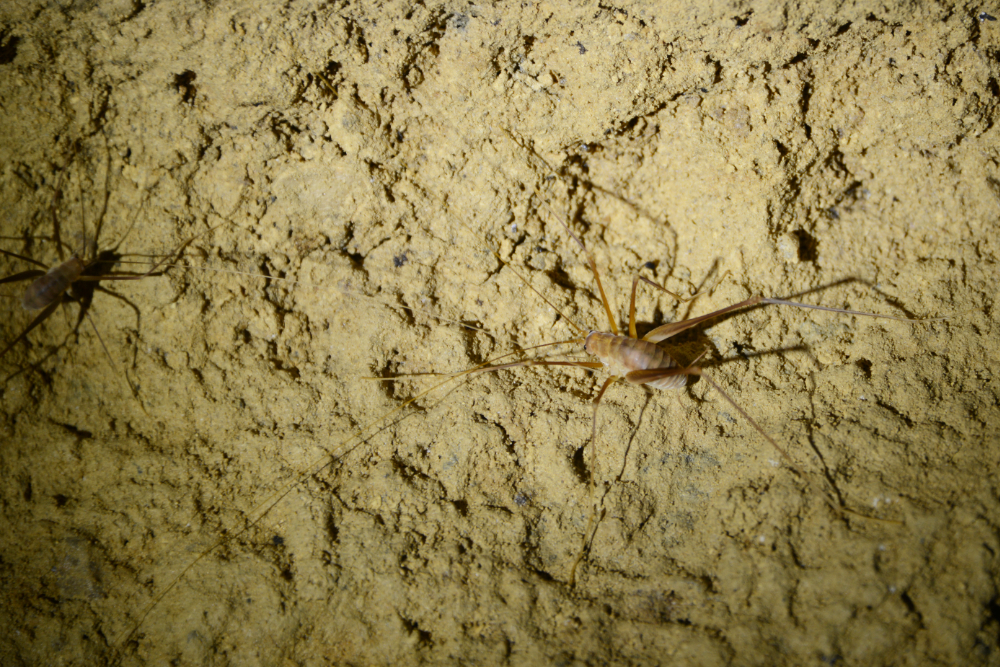
Remnants of old bridges and ancient sea creatures are always exciting, but sometimes live animals are even better—even if it’s a gross cave cricket! These things didn’t bother me much when I was younger, but as I’ve gotten older I’ve somehow found them more and more disgusting. The cave crickets I saw here seemed twice the size of ones I’d seen before. Luckily, none of them attempted to jump on me!
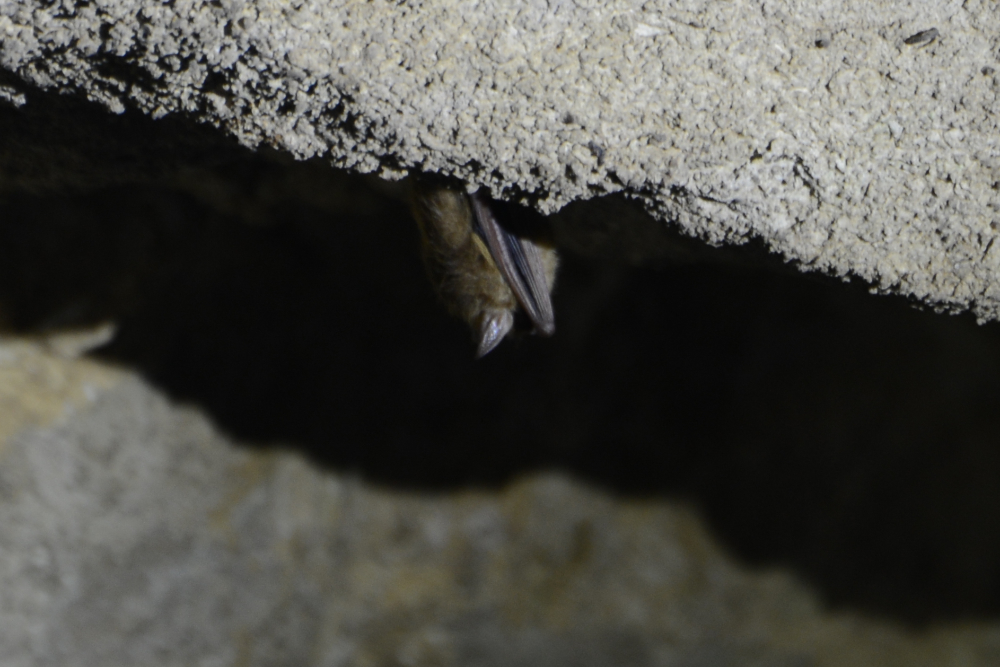
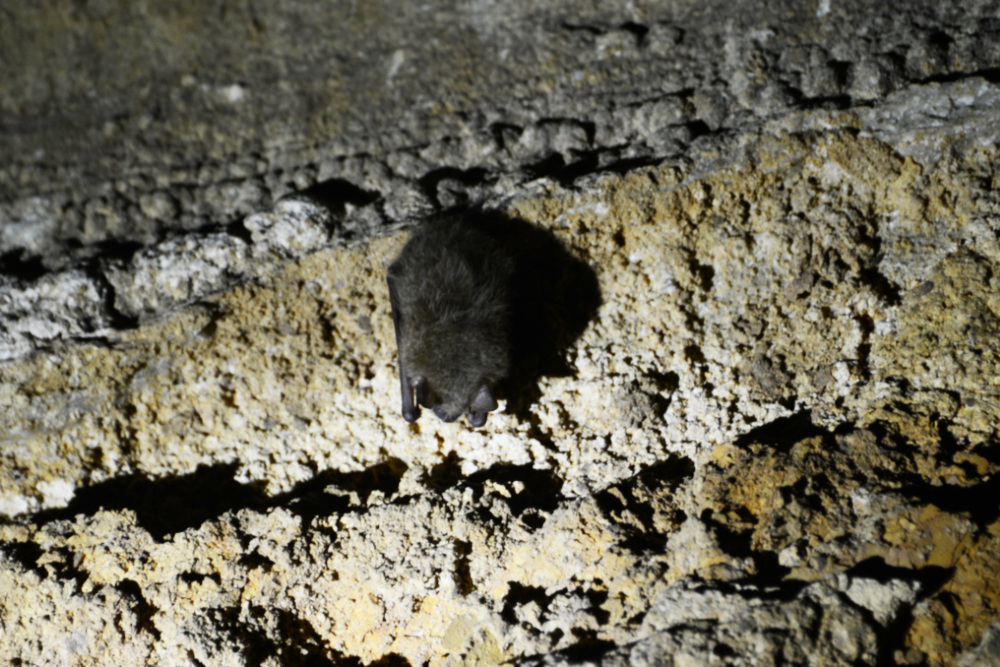
The good thing about Cathedral Caverns was that there were tons of bats. Rather than gathering together in large groups, the ones I saw seemed to prefer hanging out alone. The bats above and below were two different ones among the dozen or so I spotted. They were really tiny, maybe around the size of a mouse. The one below didn’t seem to care at all that we were only about 10 feet (3 meters) away.
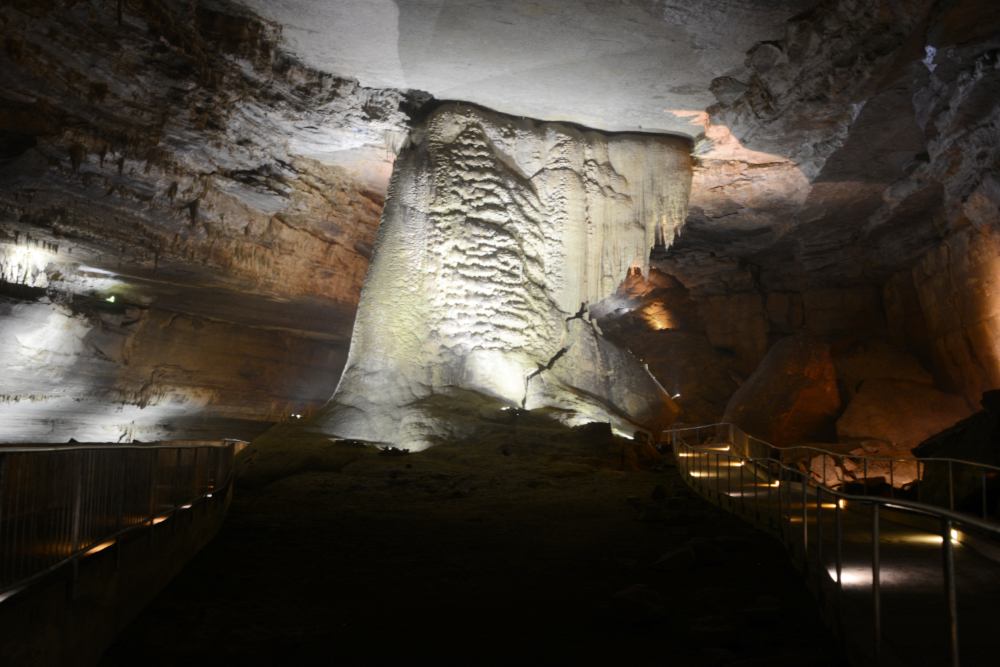
The rest of my photos from Cathedral Caverns show some of its natural underground formations. Many have names, including this massive formation known as the Goliath Column. Cave columns form when stalactites growing down from the ceiling eventually connect with stalagmites growing up from the floor. What may have begun as a relatively skinny connection became this enormous formation over an incredible amount of time.
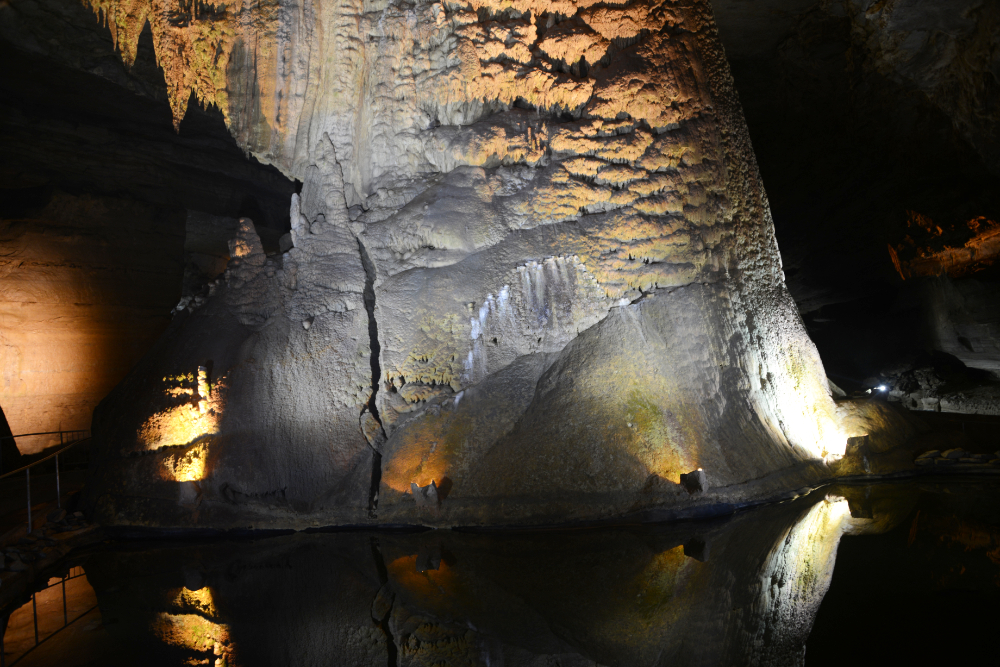
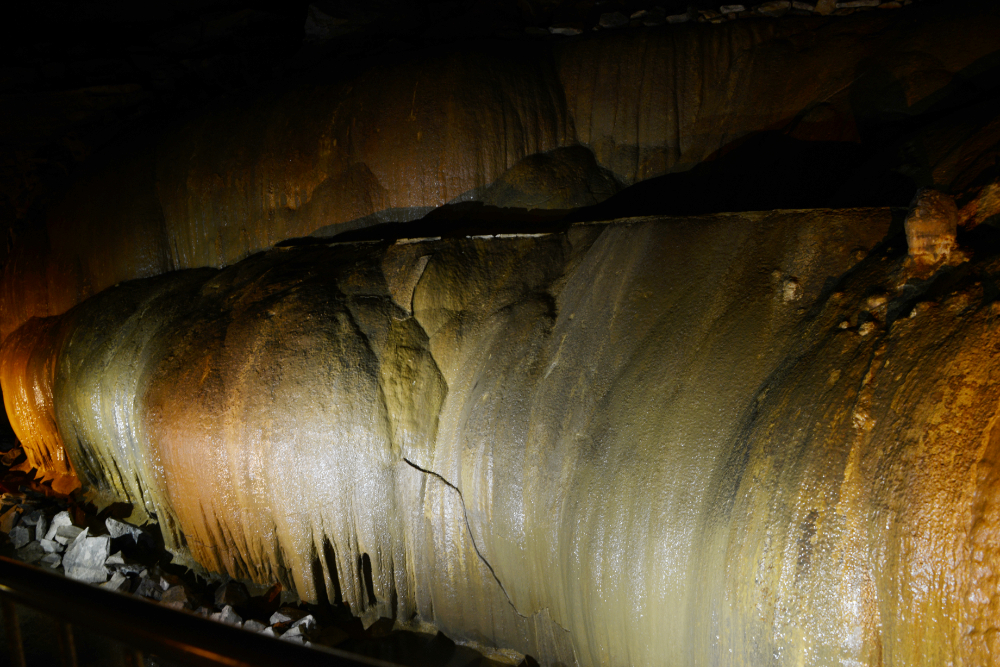
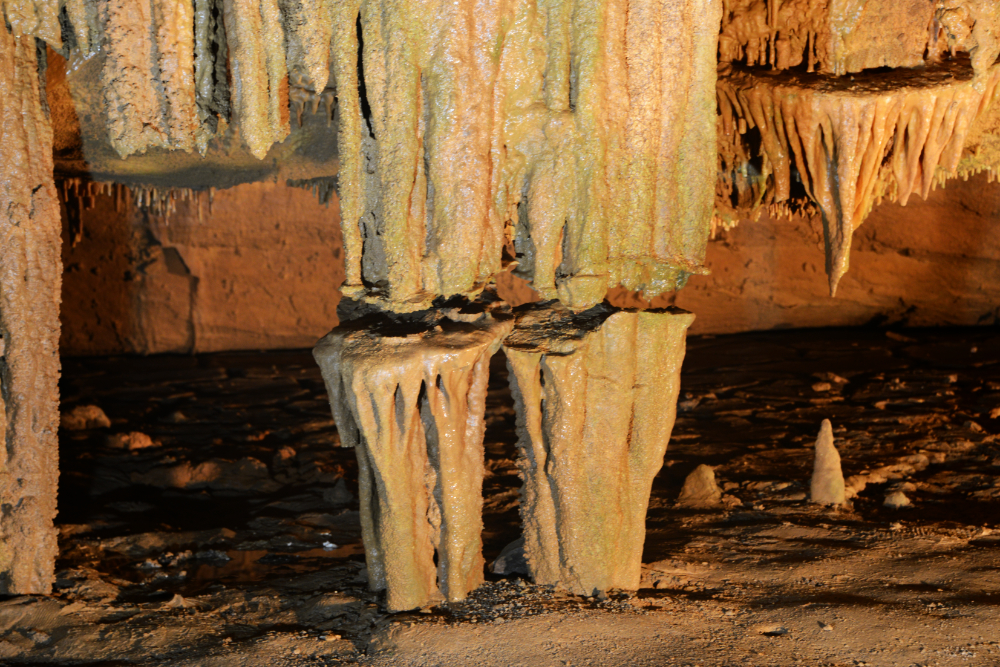
Other formations looked totally different, like this incredibly smooth and colorful surface created by water flowing over it for ages. Below were some broken columns that looked as though they had once been suspended above the floor before eventually collapsing. I was told that a minor earthquake caused them to break and also left a large crack in the Goliath Column.
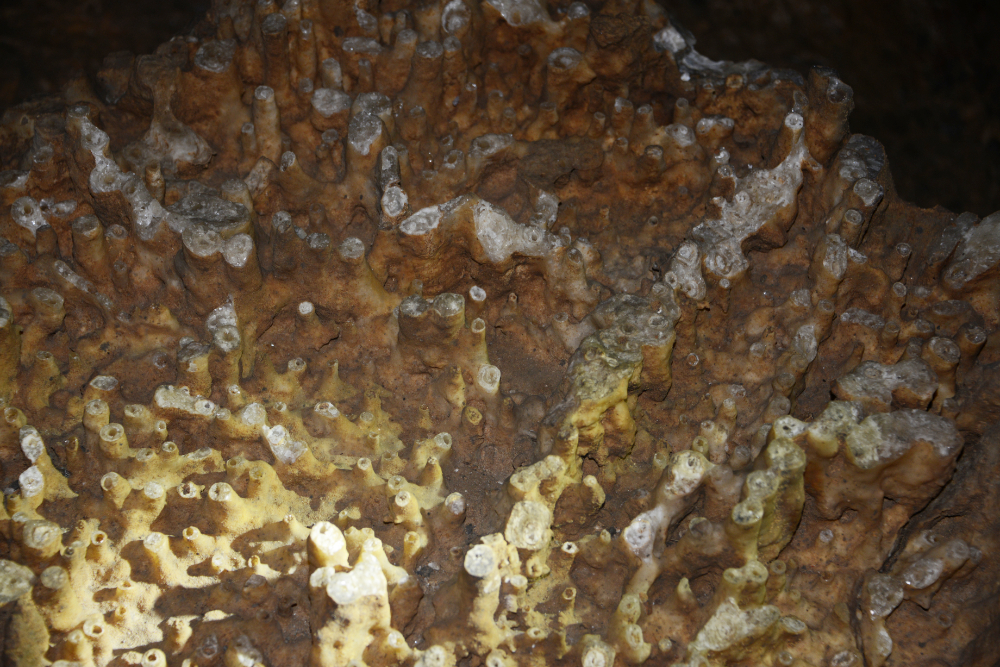
I’ve been inside several caves, so by this point it had pretty much been drilled into my head how most of the common formations are created. One thing I hadn’t learned about before this trip was straw formations. They’re hollow, tube-like stalactites that hang from the ceiling like drinking straws. One had fallen to the floor and shattered, so I was able to see what the hollow interior looked like.
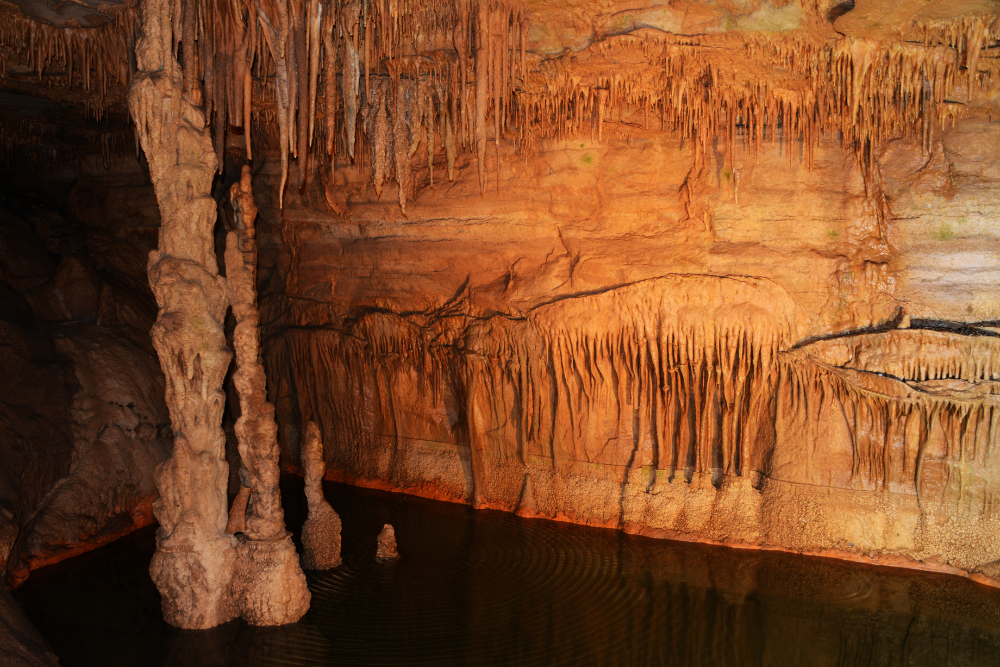
Not much was going on here, just a small pool of water that caught my attention because of the ripples. They seemed to continue nonstop even though I couldn’t feel any kind of vibration while standing inside the cave.
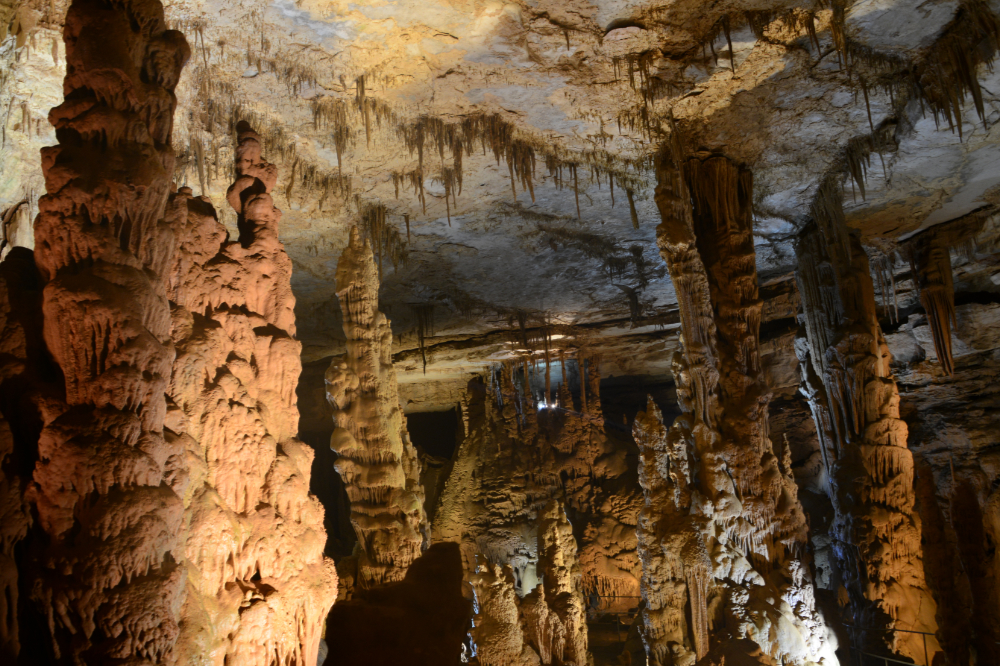
I’ll have to admit that if it weren’t for the bats and remains of ancient sea creatures near the beginning, I probably wouldn’t have found the first part of the cave nearly as interesting. For a good distance the scenery was mostly massive blocks of rock. As we traveled deeper, more formations began appearing until we finally reached this area known as the Stalactite Forest.
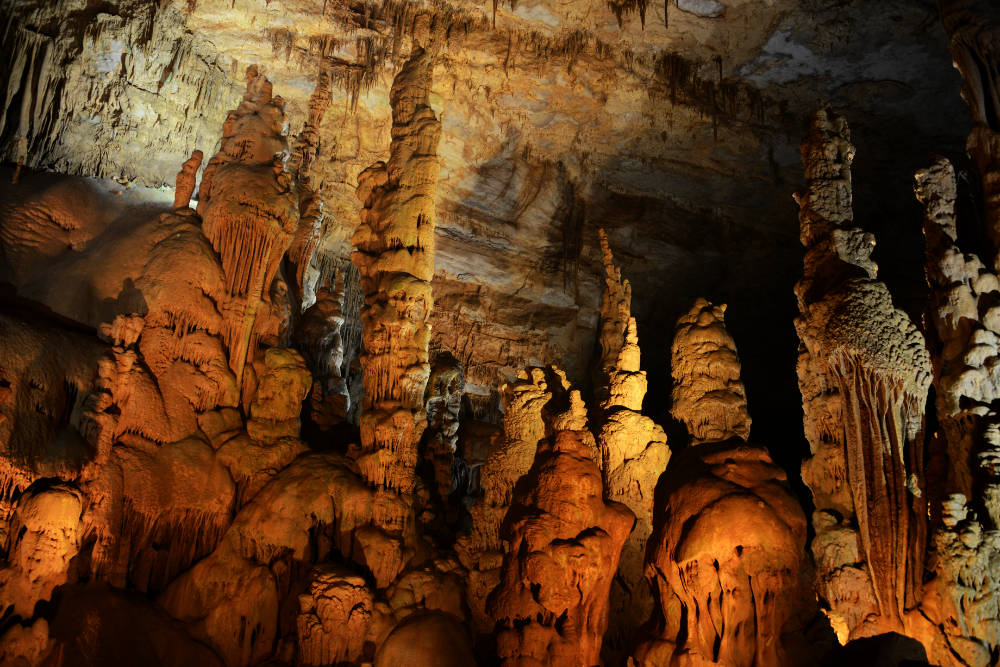
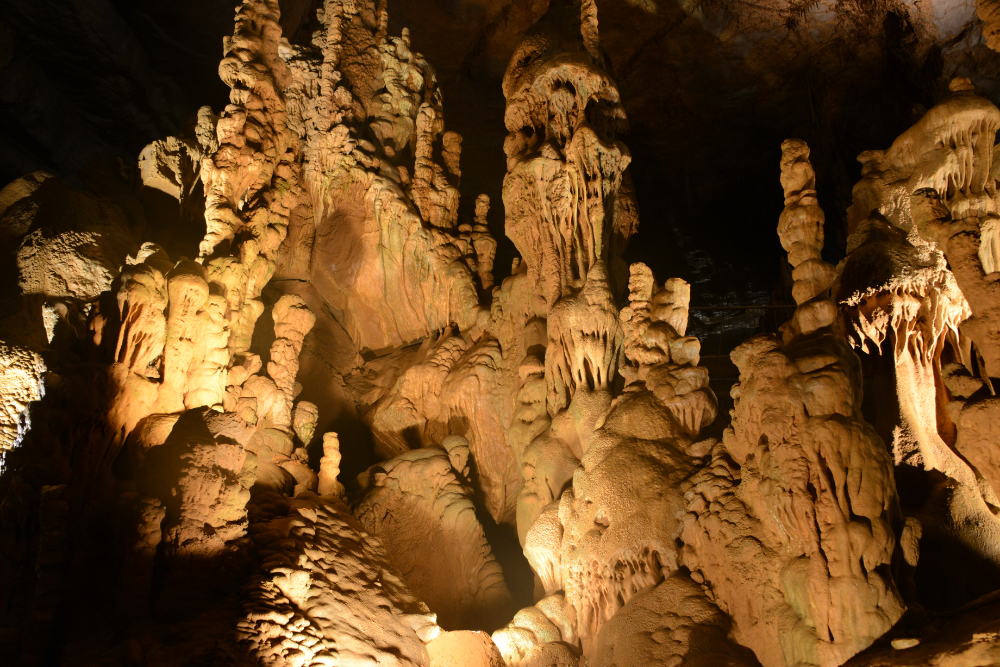
The Stalactite Forest is an area where hundreds, if not thousands, of stalactites and stalagmites have grown together. They came in just about every shape and size imaginable.
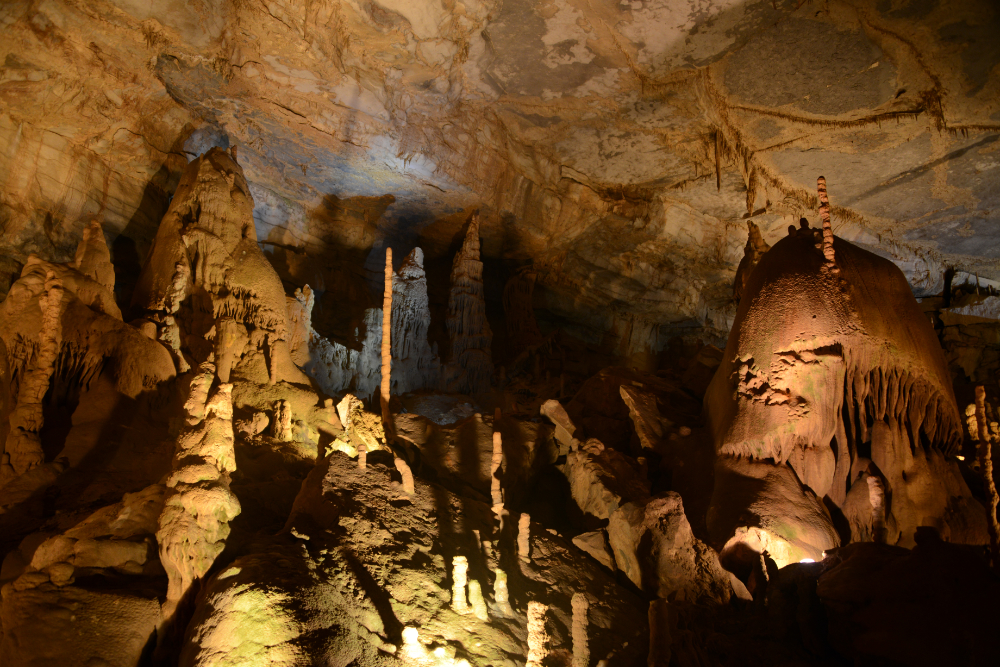
The skinny stalagmite in the distance looked to be around 30 feet (10 meters) tall. Considering how narrow it was, I was amazed that something so tall and thin was still standing. Whatever its exact age, it had obviously taken an enormous amount of time to reach that size.
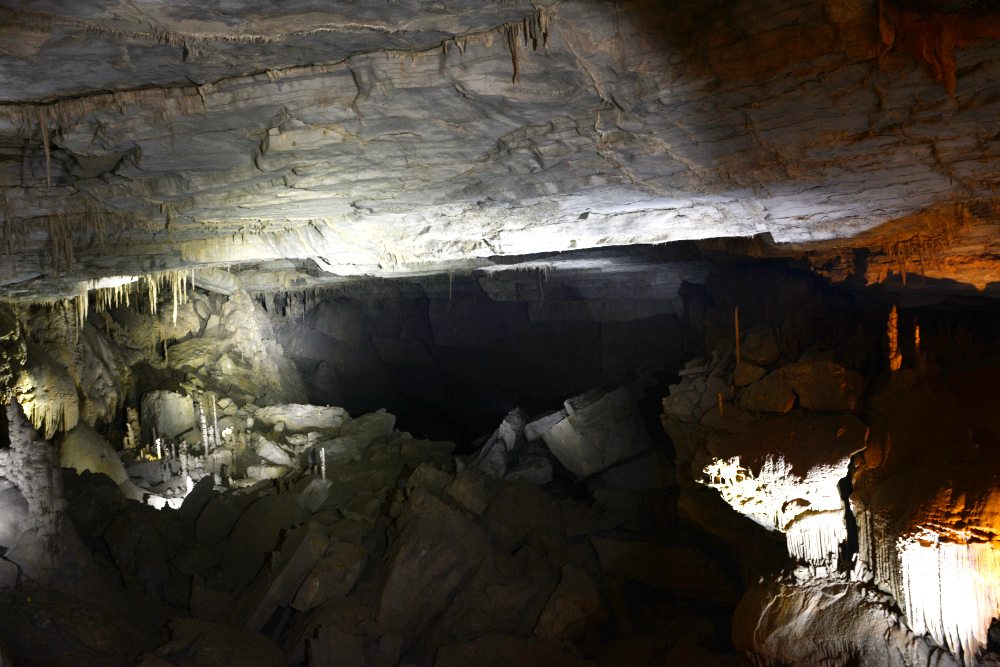
Eventually the lit pathway reaches the end of the public tour. The photograph above makes it obvious that the cave itself keeps going. According to our guide, this point was only around halfway into the known depth of the cave, and somewhere farther inside was another Stalactite Forest even larger than the one we had just visited.
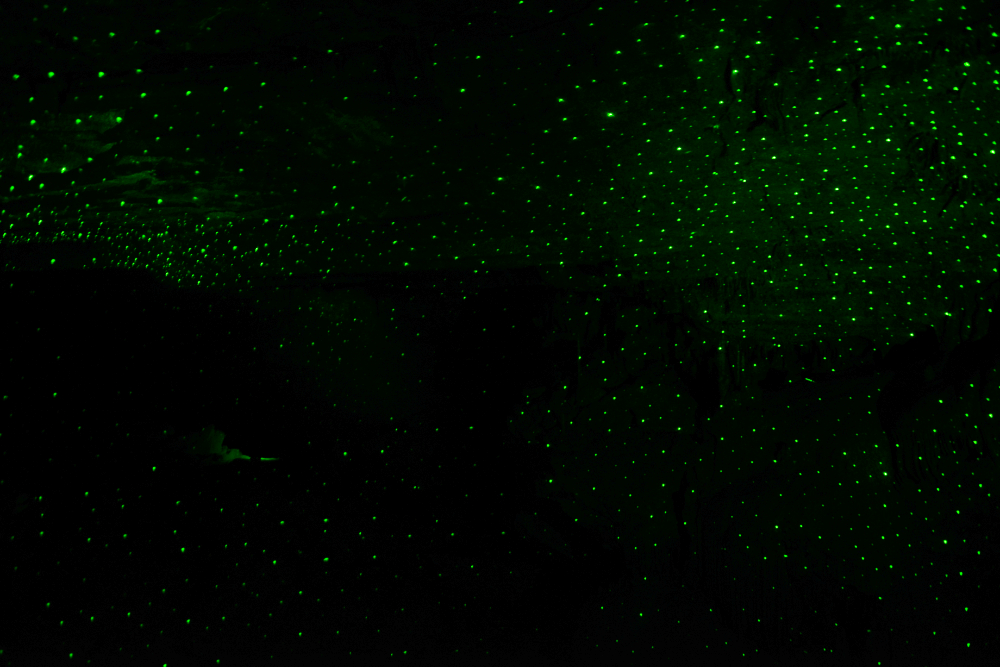
I had already put my camera back into my backpack when our guide turned off all the lights to show us true darkness. I’ve experienced this a few times inside caves, where opening or closing your eyes makes absolutely no difference. Afterward, another switch was thrown and small points of light appeared across random objects in the cavern. I had to quickly pull my camera back out, so I’m disappointed with the photograph above. It was much more impressive in person!
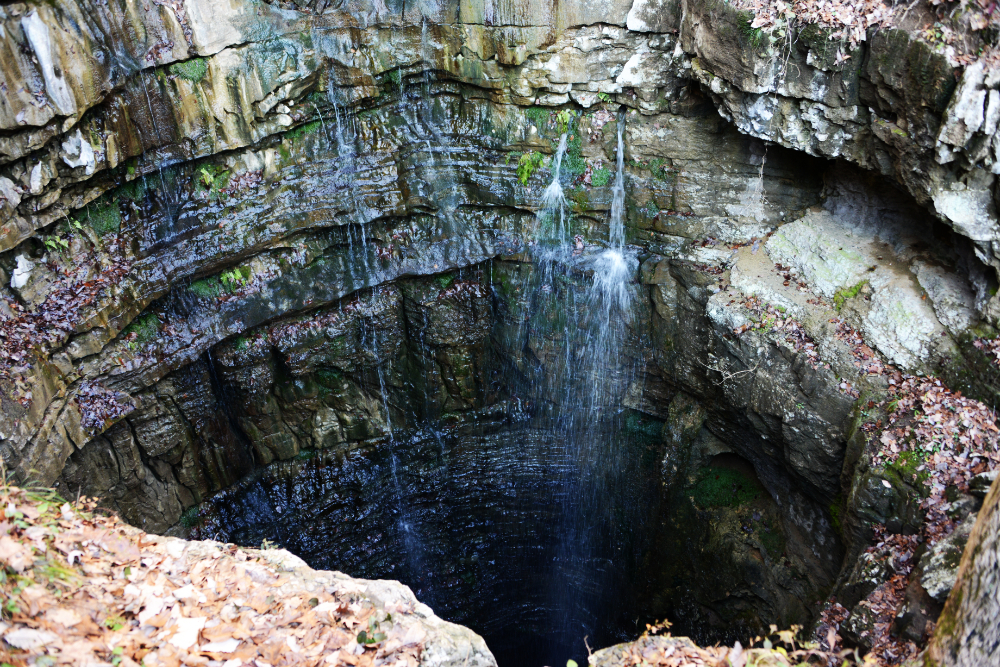
Cathedral Caverns is one of the most popular and accessible caves in northern Alabama, but it’s just one of literally thousands in the region. The cave I had really wanted to visit was Stephens Gap after seeing some incredible photographs of it years earlier.
Visiting Stephens Gap requires a permit, and experienced visitors can rappel and explore deeper sections with the proper equipment and group. I came alone, so as tempting as it was, I wasn’t about to try dropping over the edge into this incredible abyss by myself.
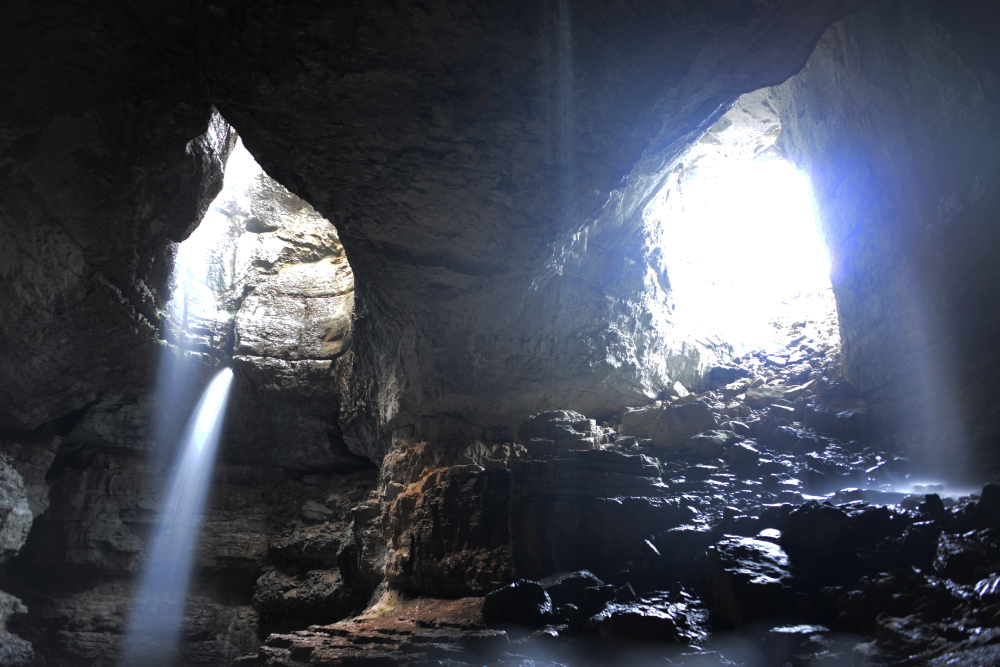
Luckily, there are two different entrances into Stephens Gap. The second entrance is a slippery scramble that can be used without rappelling as long as you’re cautious. Getting to the cave required a hike of nearly a mile, which was easy except for all the annoying mud from recent rainstorms.
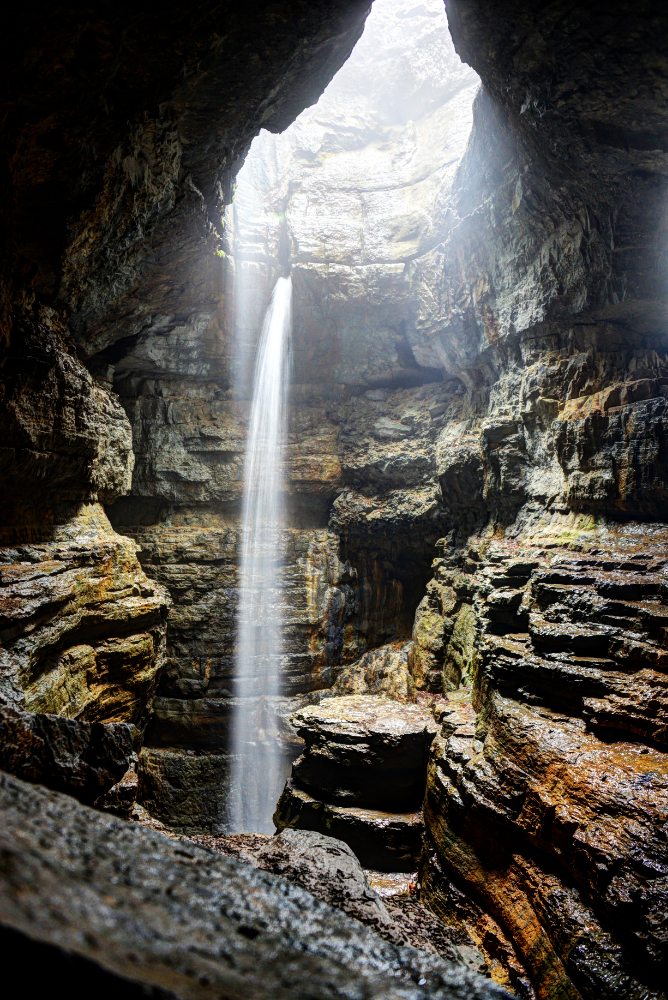
The rain at least came with a reward once I got inside: this beautiful underground waterfall.
Explore More of Alabama
Cheaha Mountain • Birmingham • Cathedral Caverns • Gulf Shores • Mobile • Montgomery