Located at nearly 70 degrees north, Tromso took me farther into the Arctic than I had ever been. Despite its extreme latitude, the climate is surprisingly mild compared with places at similar latitudes in Alaska and Canada. During my winter visit temperatures ranged from about 20F to 35F (-5C to 3C), and it was even above freezing at times.
Tromso has become one of the most popular bases for exploring Arctic Norway. It has all the infrastructure of a small city while being surrounded by mountains, fjords, and wilderness. It’s also far enough above the Arctic Circle to experience the midnight sun in summer and polar night in winter. I came just after the winter solstice, primarily hoping to see the northern lights.
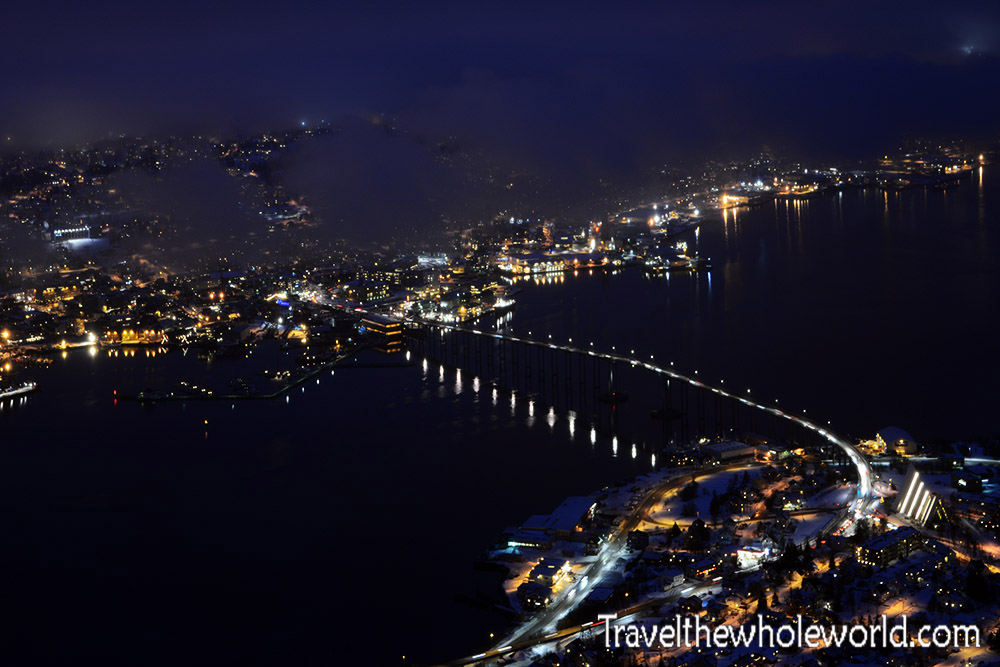
One of the best places to see Tromso is from the mountain above Tromsdalen, reached by cable car from across the harbor. This is where I took the first photo on the page. From the top you can look across Tromso, the surrounding waterways, and the mountains beyond. During winter it’s also possible to see the northern lights from around the city when conditions cooperate, although many tours head farther into the countryside to escape artificial light and search for clearer skies.
Polar Night in Tromso
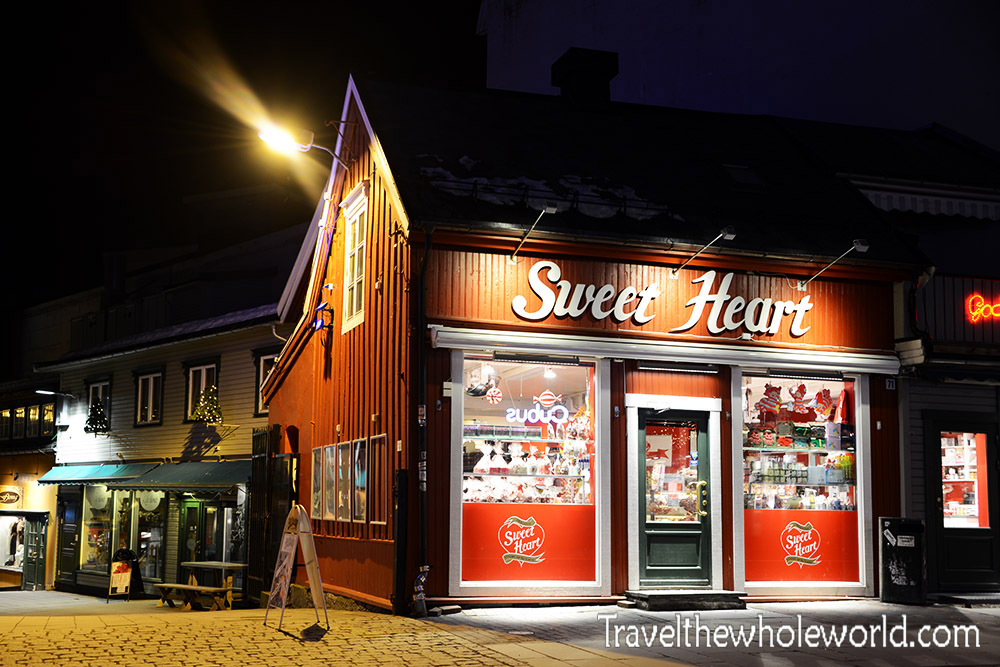
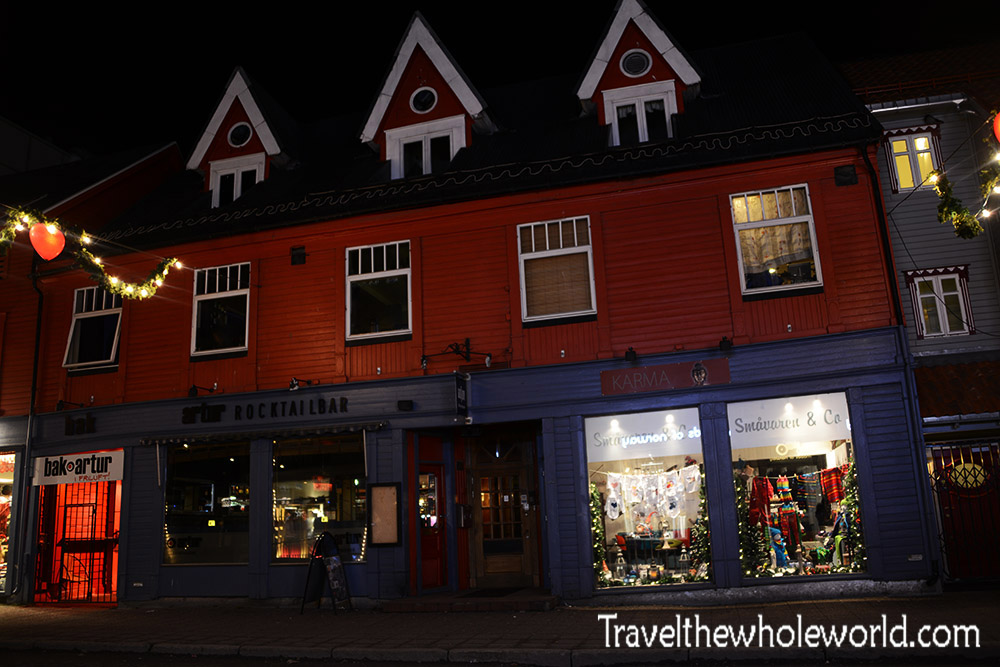
I visited Tromso just after the winter solstice, when the sun doesn’t rise above the horizon. Instead, around the middle of the day there are a few hours of twilight. The photo above might look like it was taken in the middle of the night, but it was actually around 3pm. It feels strange at first to walk toward brightly lit shops expecting them to be closed, only to realize that this is simply a normal afternoon here.
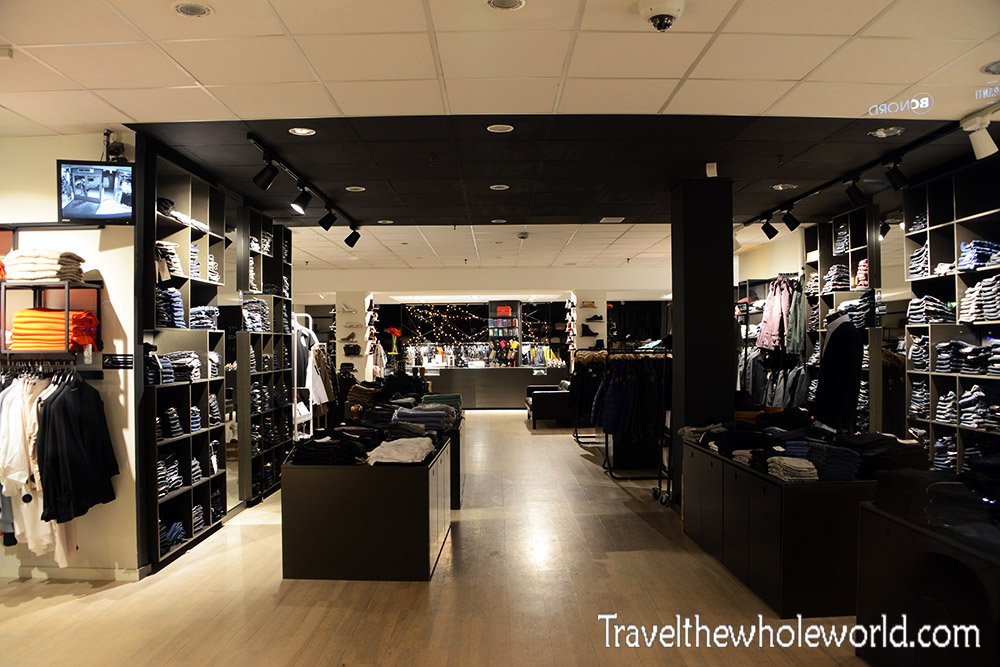
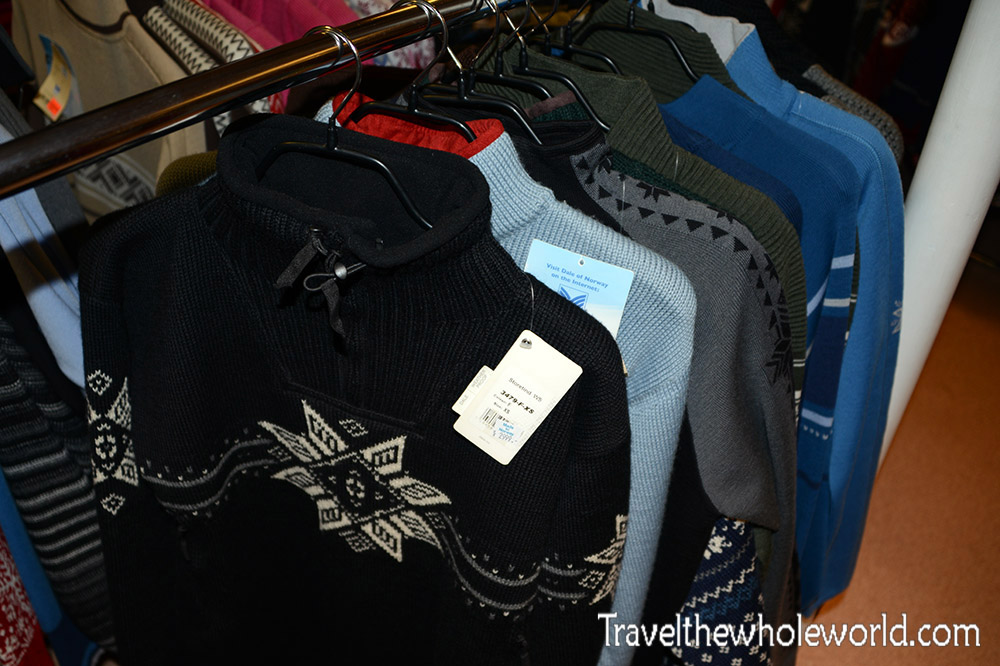
Once you’re inside the stores, Tromso feels much like any other Norwegian city. One thing that definitely stood out to me, however, was the price of almost everything. Norway was already one of the most expensive countries I had visited, and Tromso seemed particularly expensive. The wool sweaters below were selling for around $500 during my visit!
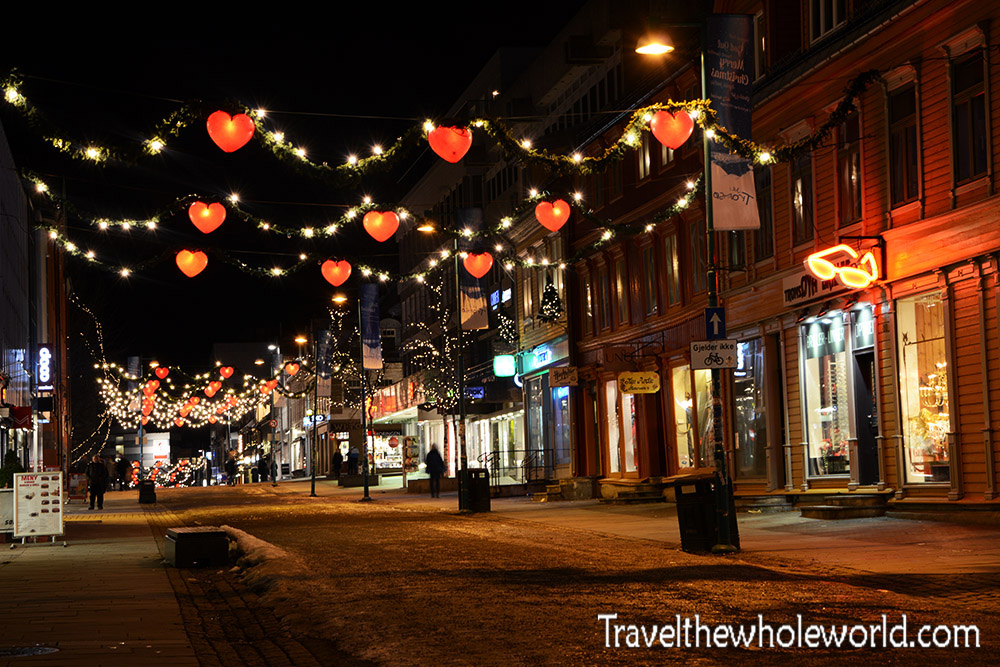
Here’s Tromso’s main street in the city center during the polar night. There were some festive decorations hanging across the street, although personally I would have welcomed even more light. Visiting for a week was one thing, but living through weeks without a sunrise would definitely take some adjustment.
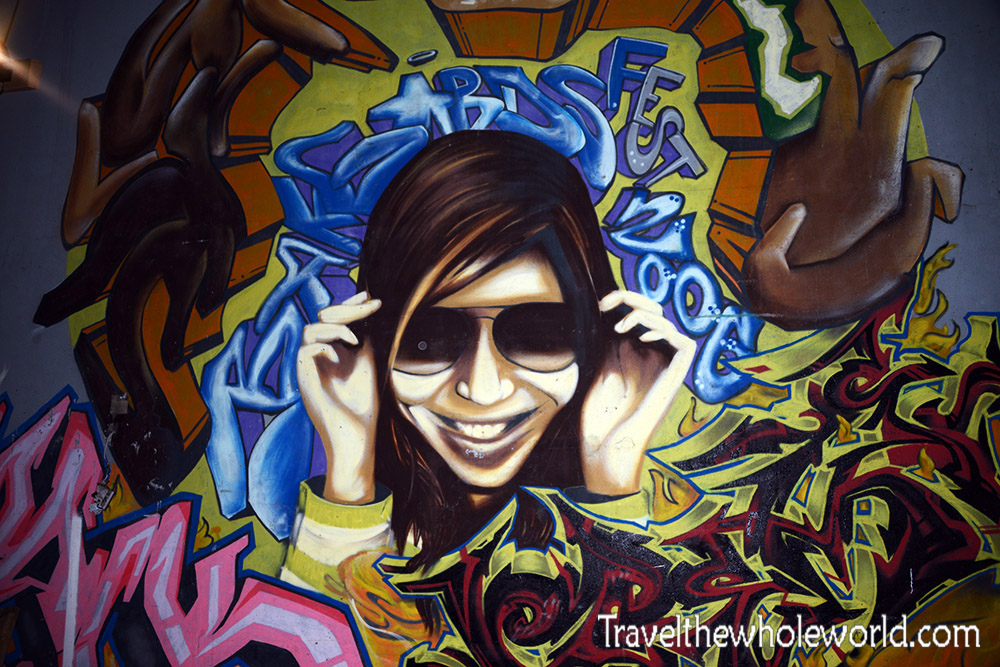
Despite being so far into the Arctic, Tromso is still very much a functioning city rather than some isolated northern outpost. Walking around downtown I came across shops, restaurants, nightlife, street art, and all the other things you’d expect to find in a city much farther south.
The Cost of Tromso
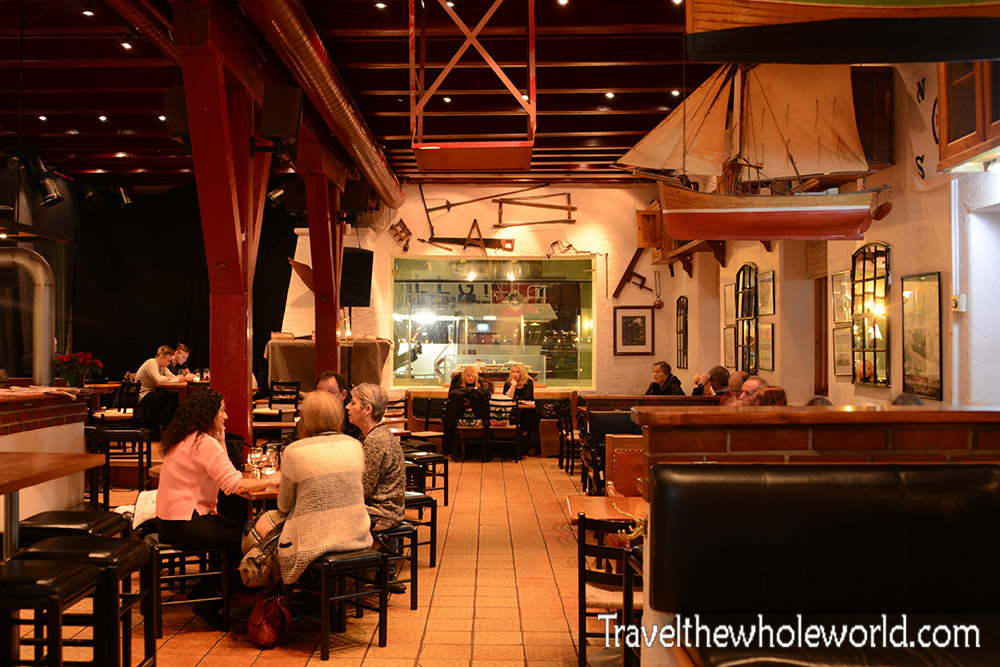
The biggest downside of Tromso for me was the cost of eating out. I remember finding restaurants where an ordinary lunch could cost around $50, while even a hamburger at one of the cheaper places I found was roughly $35. Those were the prices during my visit, and eventually I decided that eating every meal in restaurants simply wasn’t worth it.
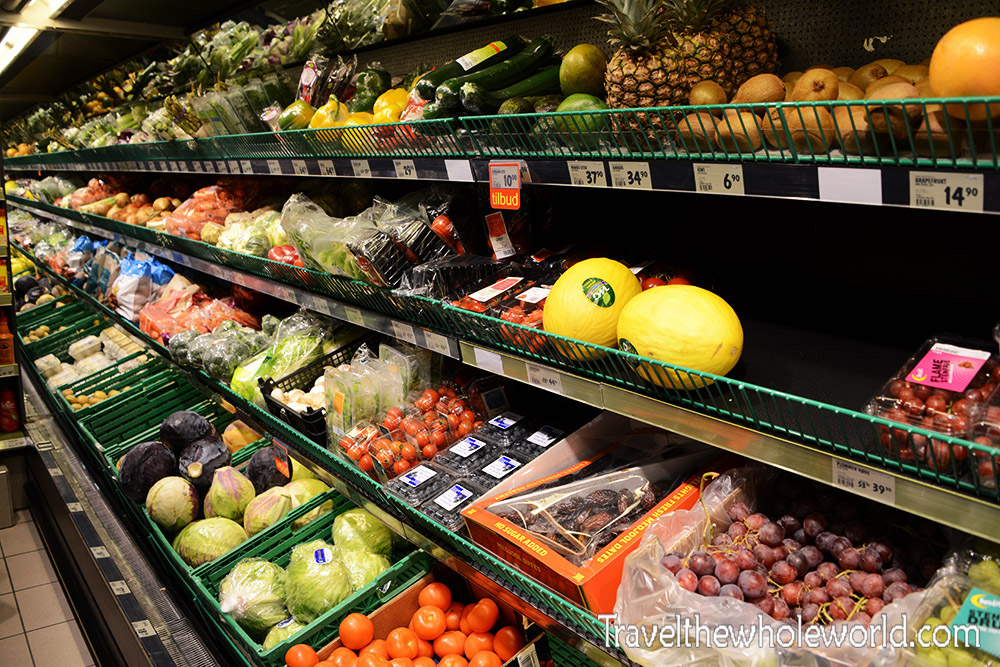
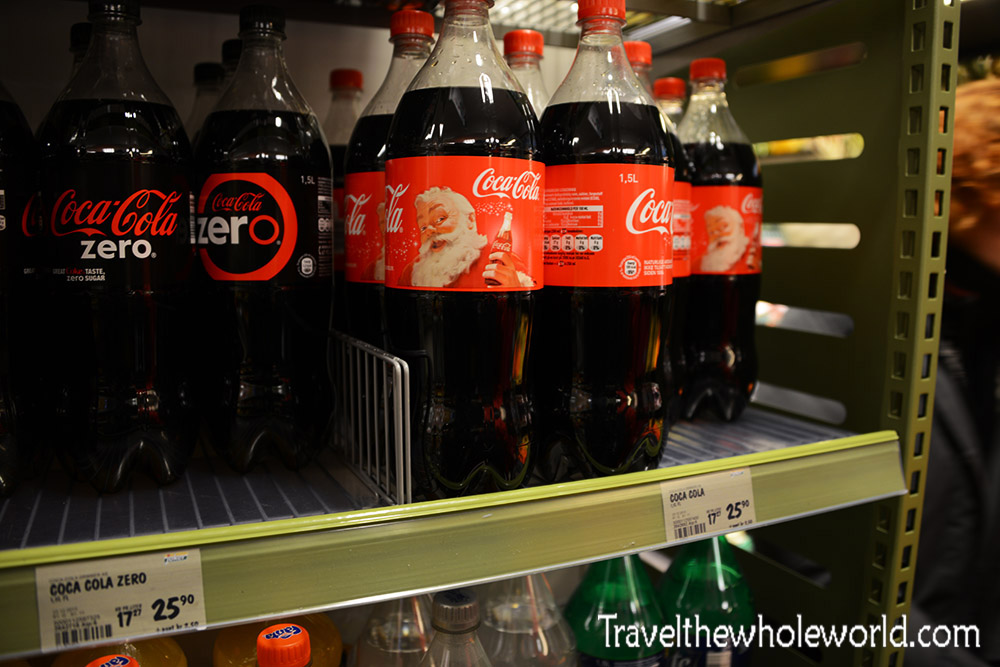
I ended up buying some of my meals from grocery and convenience stores instead. Even there the prices surprised me. I photographed the drinks below because a 1.5-liter bottle of Coke was around $5 at the time. Tromso remains one of the most expensive places I’ve personally traveled, although finding cheaper food at grocery stores made the trip much more manageable.
Exploring Tromso
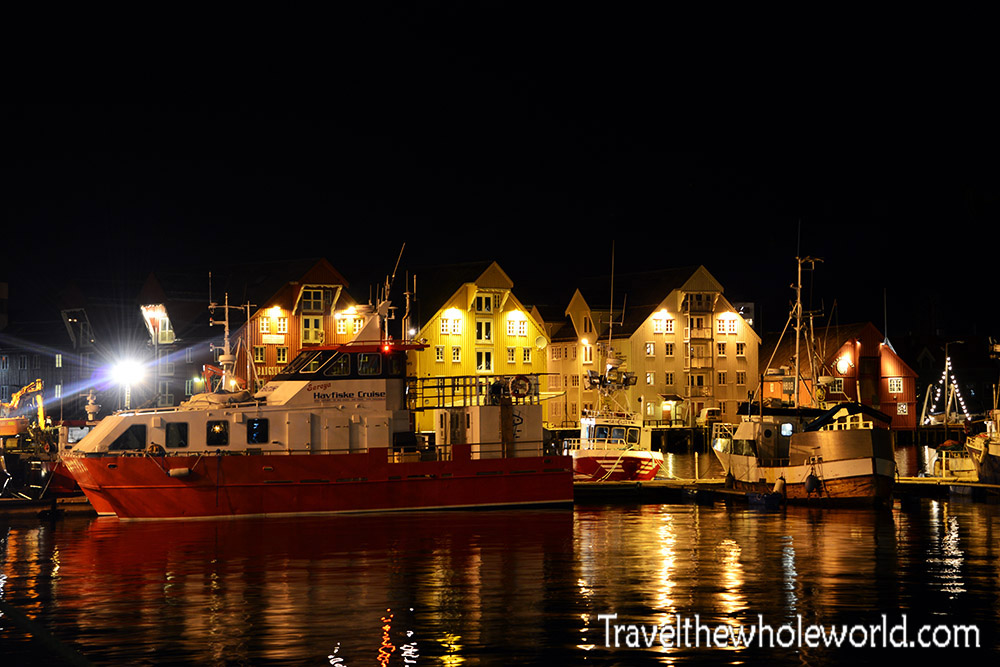
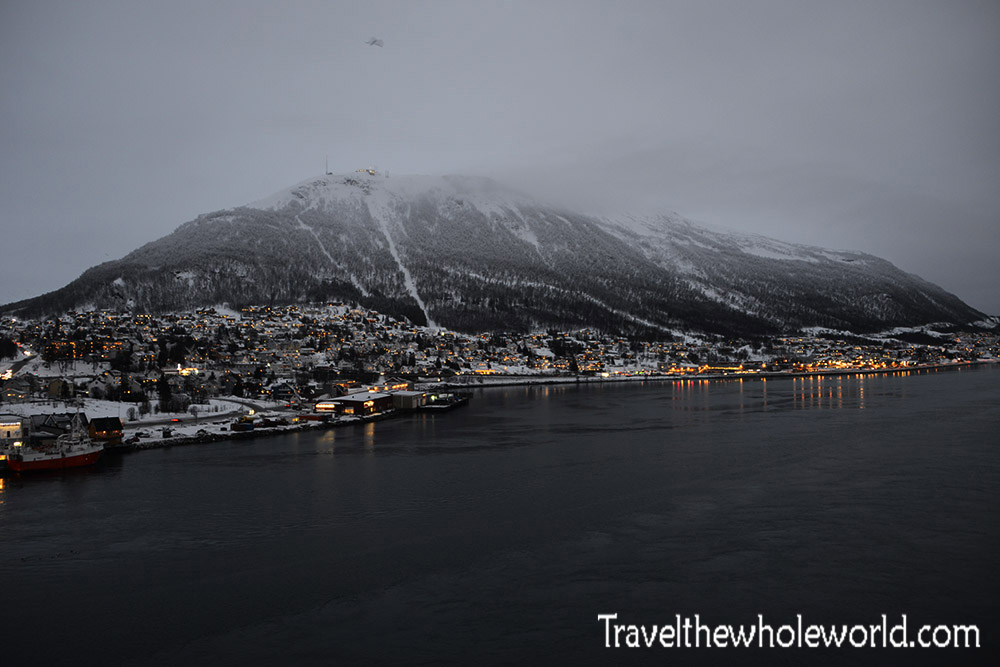
Luckily, one of my favorite things to do while traveling is simply walk around and explore, which doesn’t cost anything. During the winter I found the harbor to be one of my favorite parts of Tromso. The waterfront was more brightly lit than some other parts of the city, and even during the polar night I could make out the mountains and fjords surrounding the city.
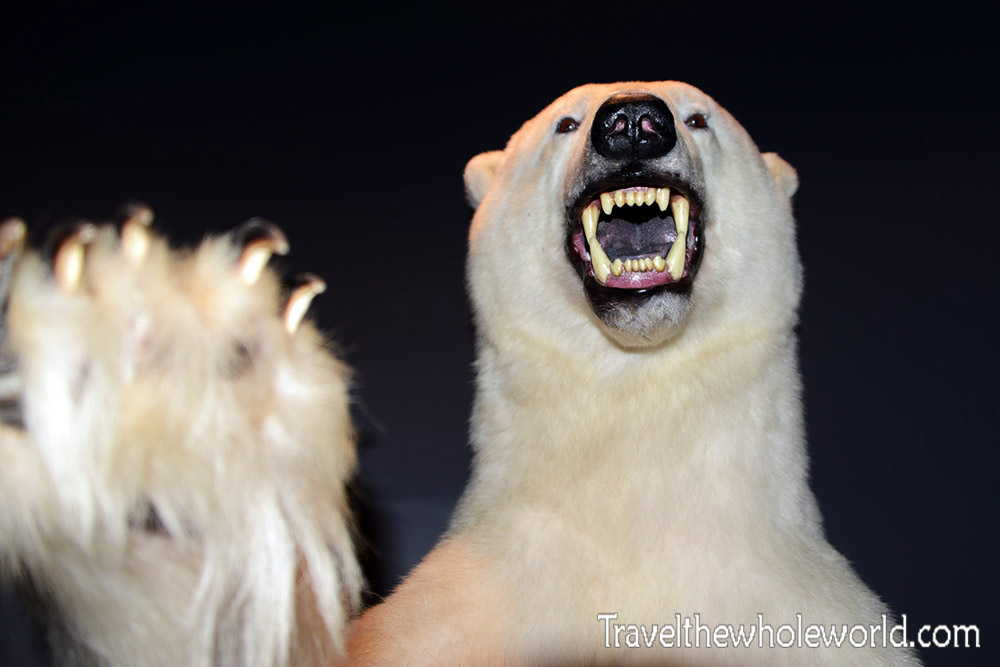
And what about polar bears? Tromso itself isn’t a polar bear destination. For most travelers, the closest encounter in town will be something like this stuffed polar bear I found displayed inside a hotel. Travelers hoping to see wild polar bears in Norway generally have to venture much farther north to the Svalbard archipelago.
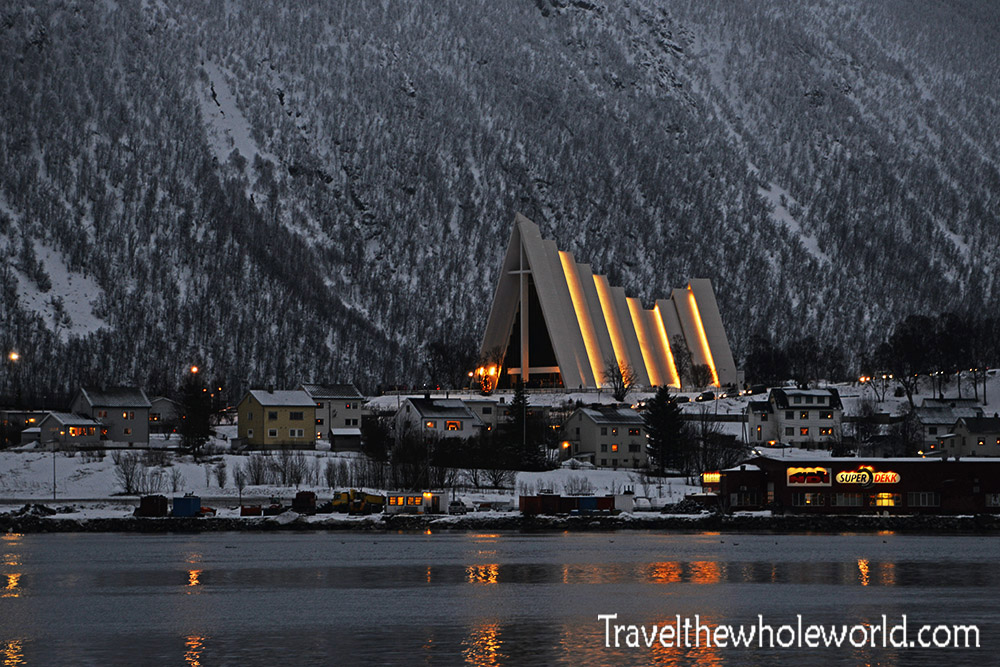
Across the harbor in Tromsdalen is one of the area’s most recognizable landmarks, the Arctic Cathedral. Despite the name, it’s actually a parish church rather than a cathedral. Completed in 1965, the building became famous for its distinctive triangular architecture and enormous stained-glass window.
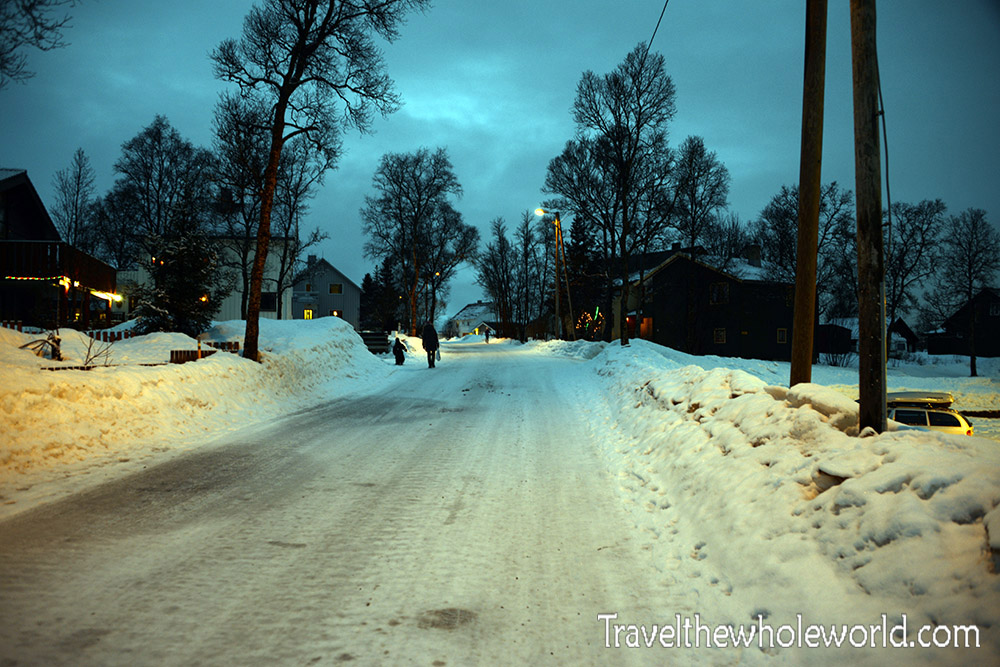
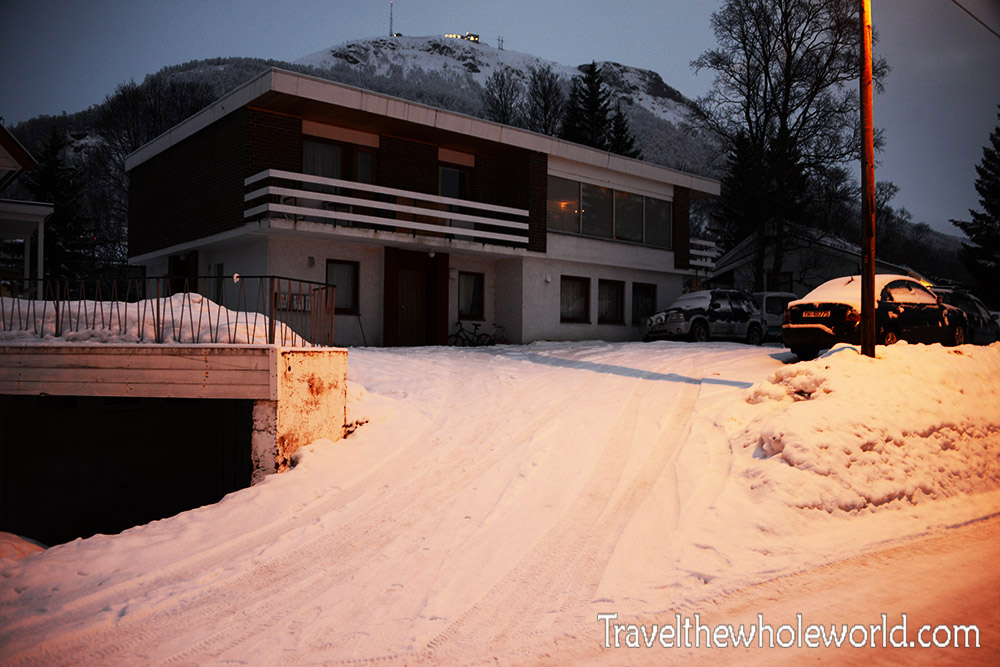
To reach the Arctic Cathedral I walked across the Tromso Bridge into Tromsdalen. This is also where you’ll find the cable car that climbs more than 1,300 feet (400 meters) above the city. I came through the neighborhood around midday, during the brightest part of the winter twilight. Snowfall like this would cause chaos back home, but here it was simply part of everyday winter life.
Polaria
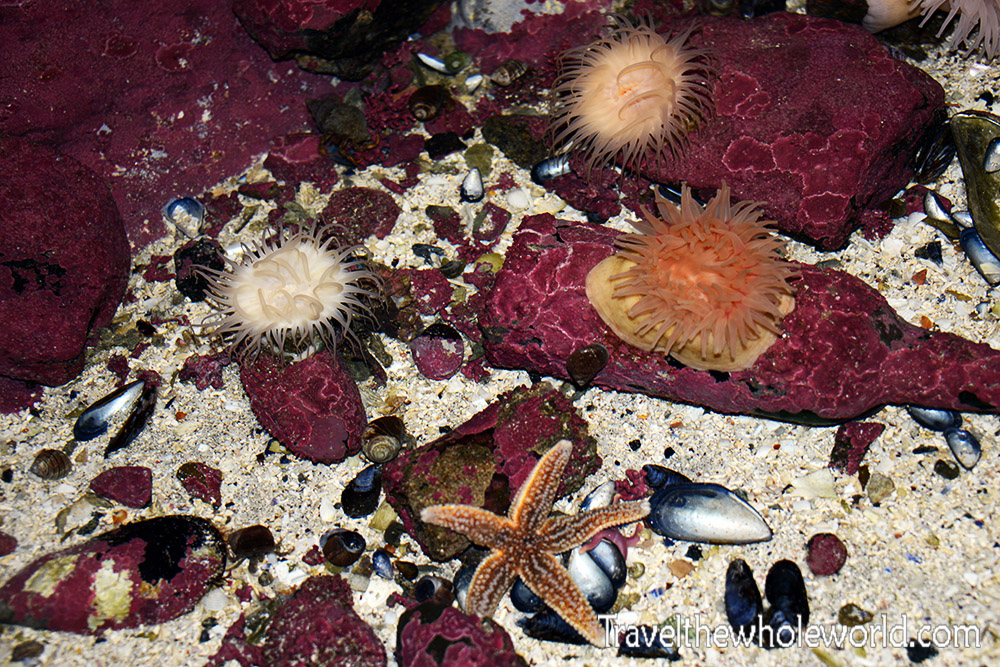
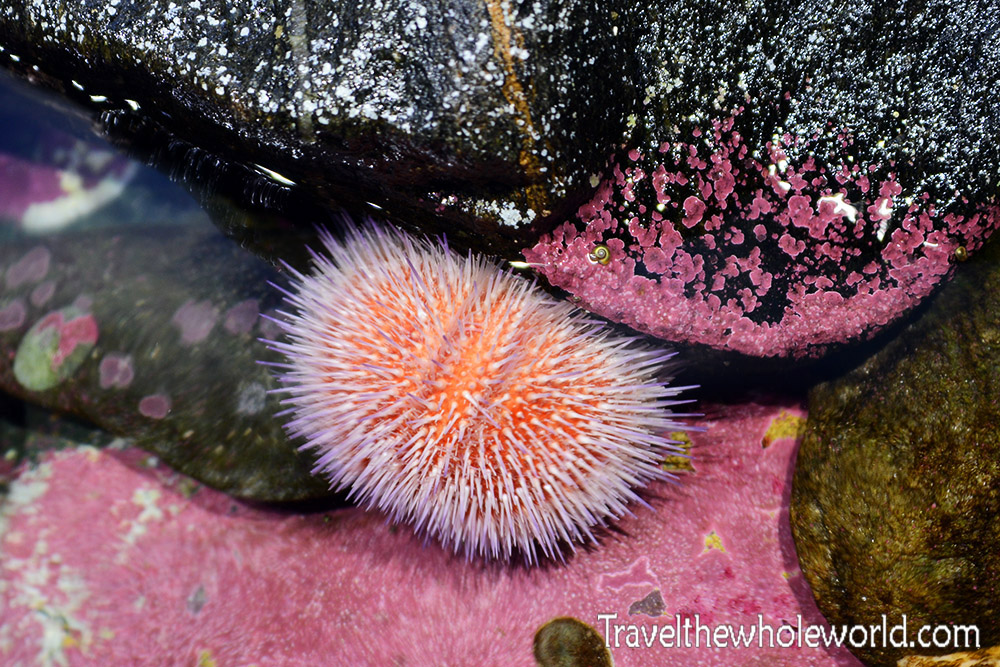
After going up the mountain, one of my favorite attractions in Tromso was Polaria. The Arctic experience center and aquarium has exhibits covering northern Norway, the northern lights, Arctic wildlife, and Svalbard. The aquariums also provide a look beneath the cold waters surrounding northern Norway, where some of the invertebrates are surprisingly colorful.
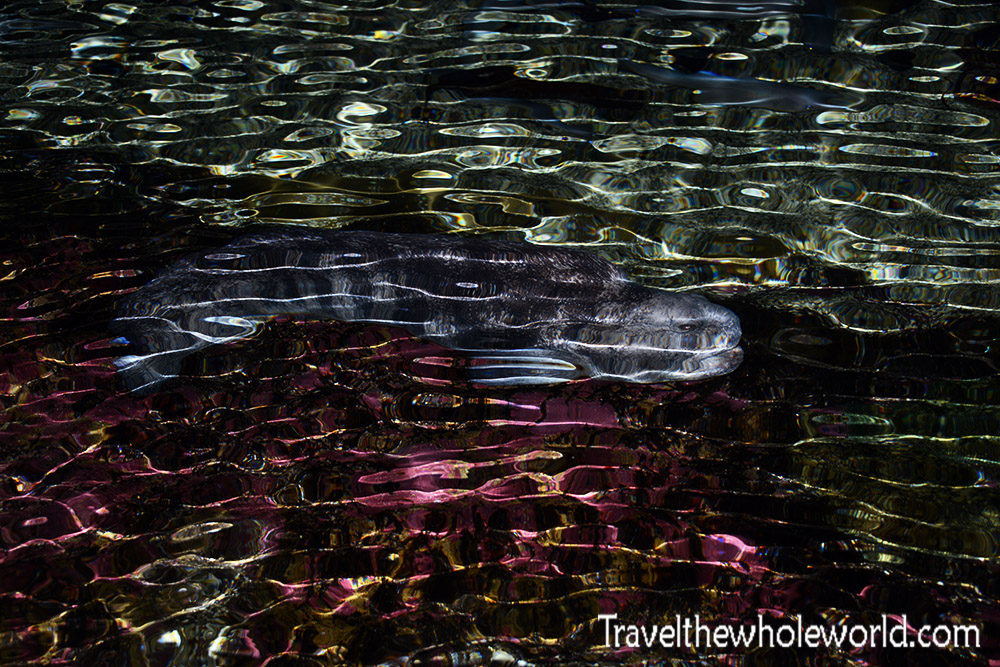
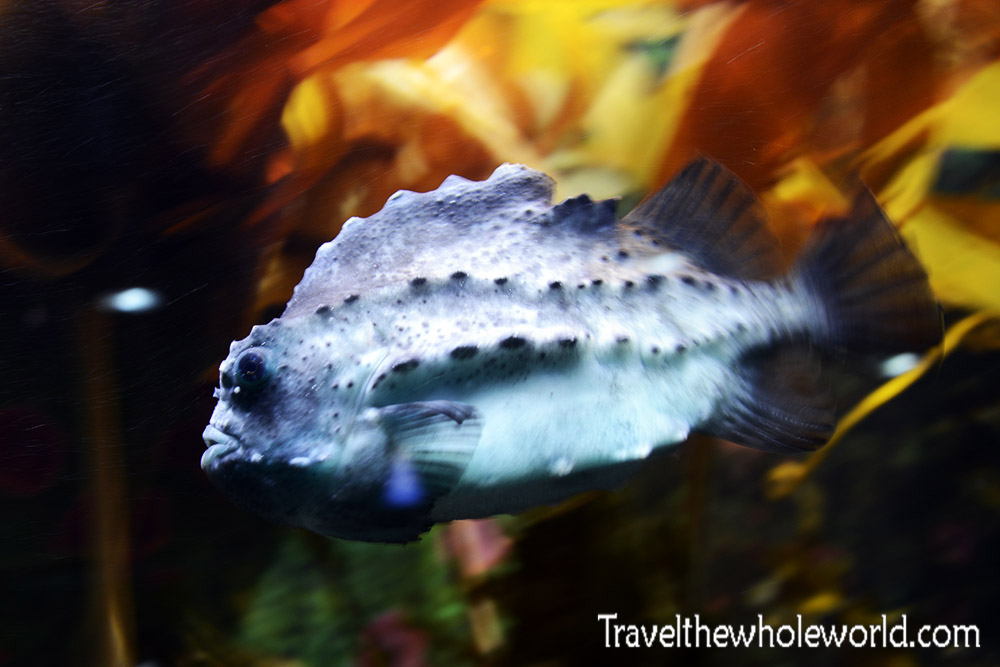
The fish themselves weren’t quite as colorful as some of the other marine life, but they were interesting to see up close. The large fish above was difficult to photograph because I was looking down into open water, while the one below was much easier to see through the side of its tank. That guy looked more like a rock with fins to me!
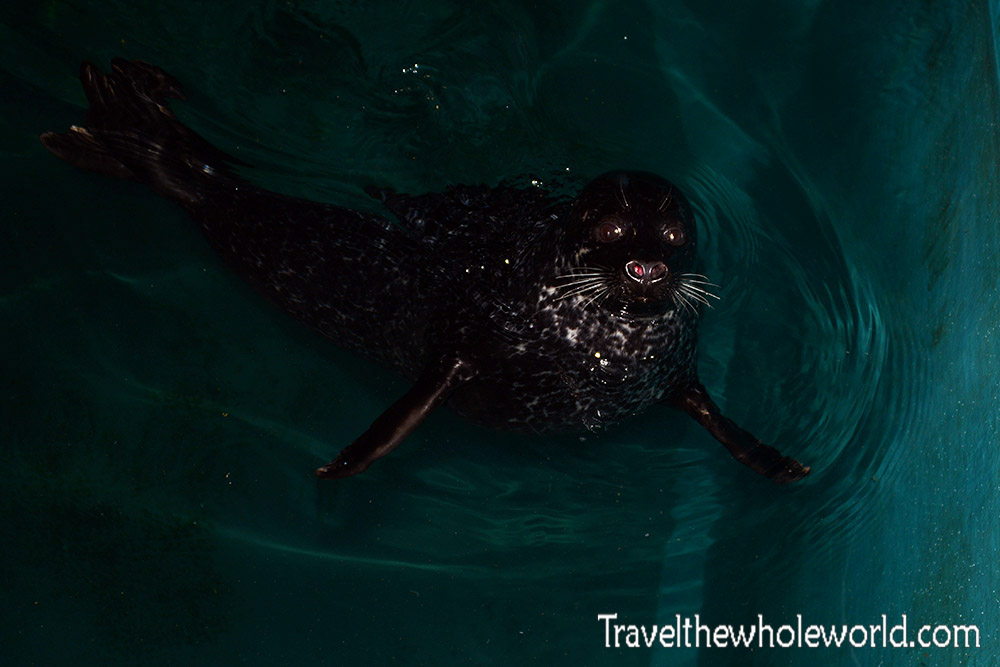
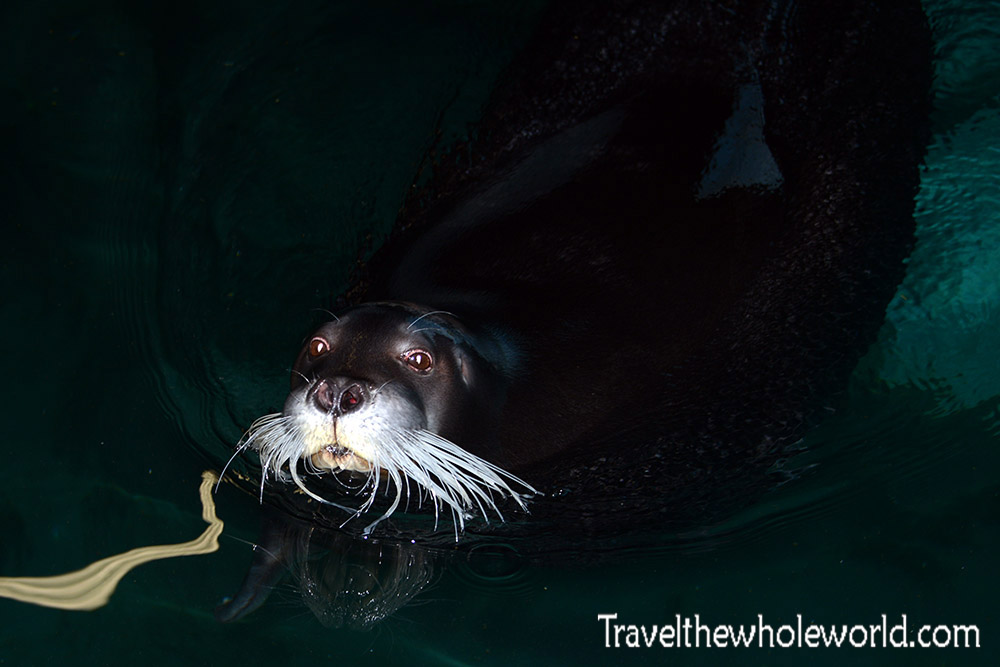
One of Polaria’s highlights during my visit was its bearded seals. I missed the scheduled feeding because I chose to spend the brief daylight hours outside exploring Tromso, but I returned later and still had plenty of time to watch them swimming through the pool. After spending so much of the trip surrounded by Arctic scenery, Polaria was a good place to learn more about the wildlife living in the environment I had been exploring.